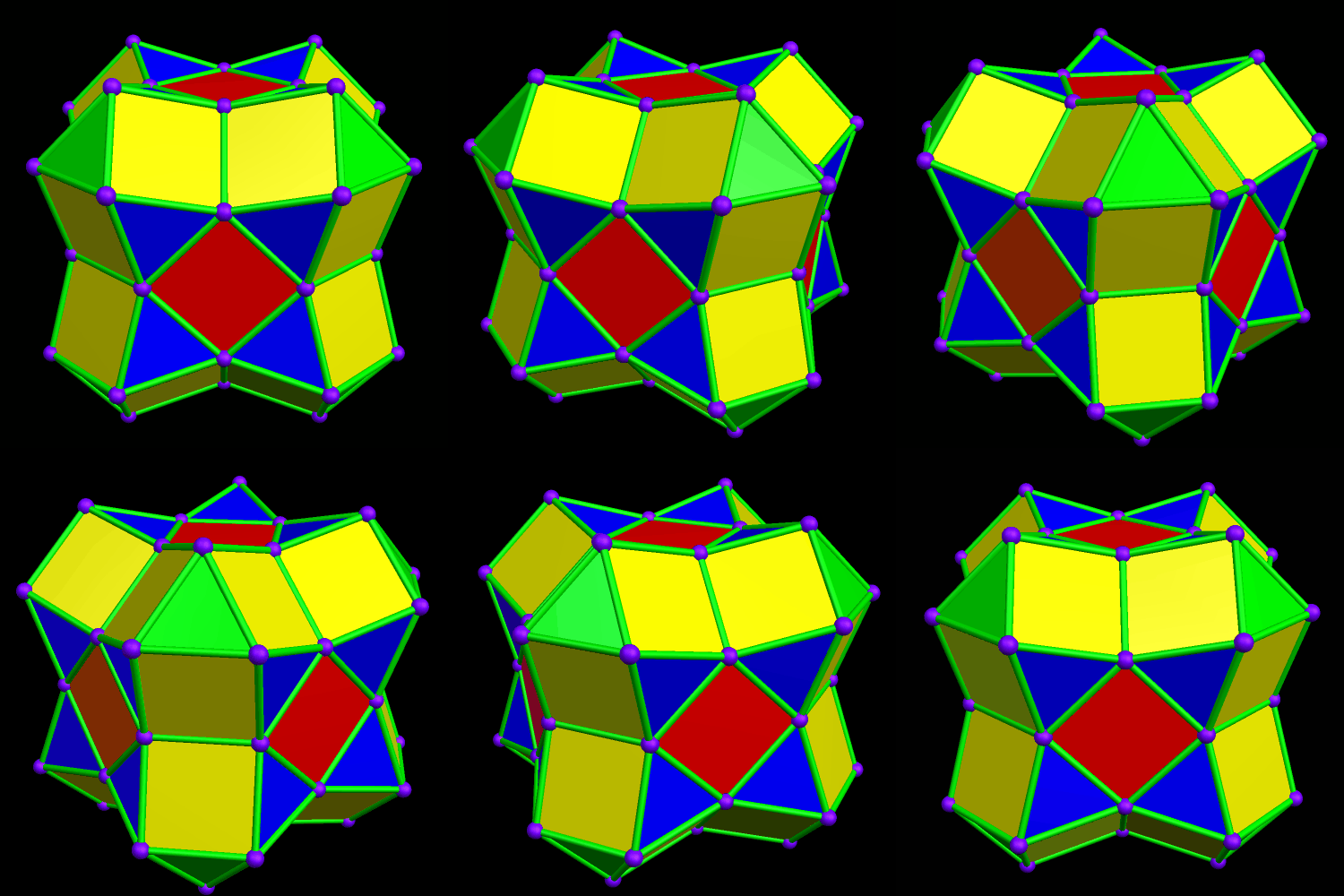
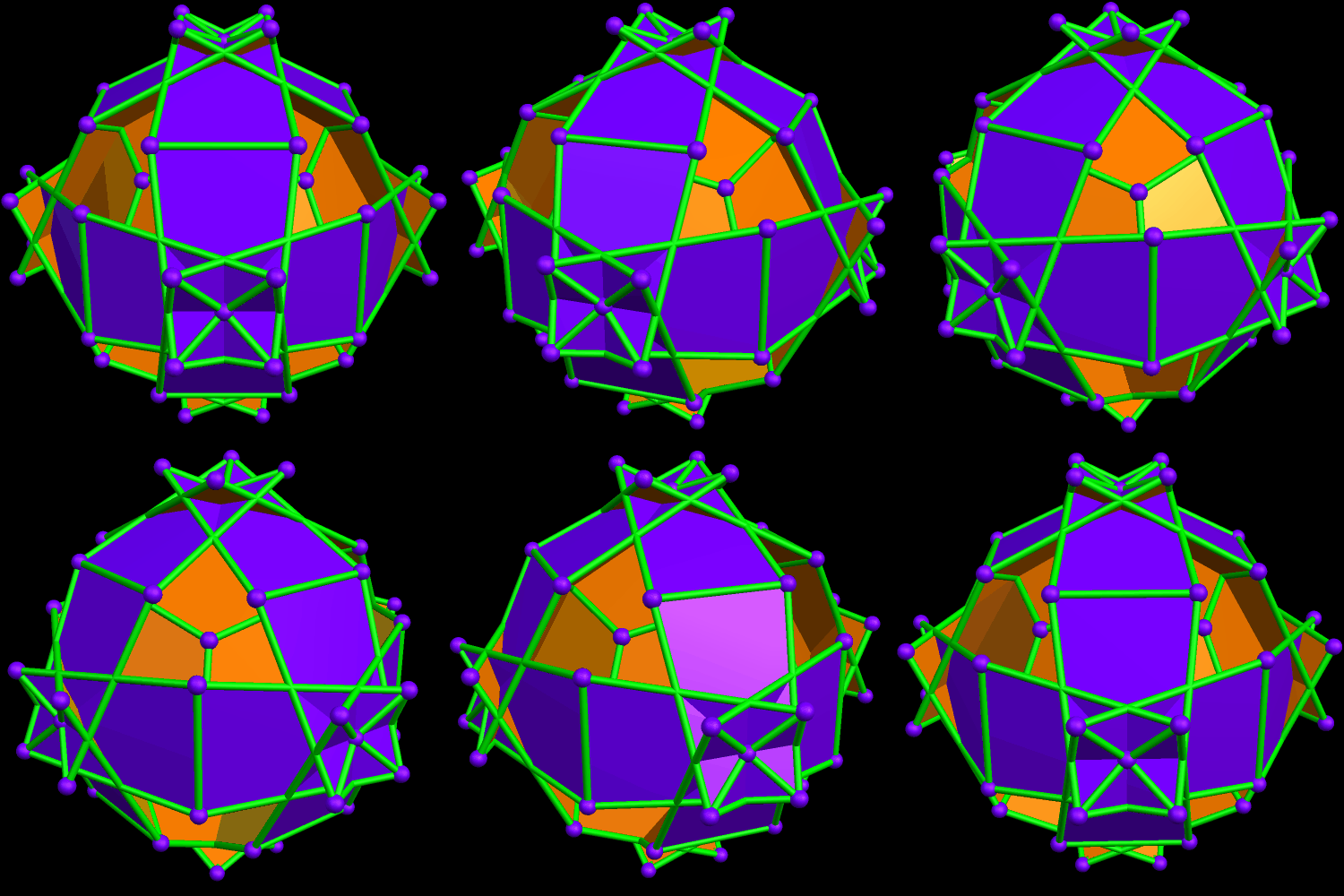
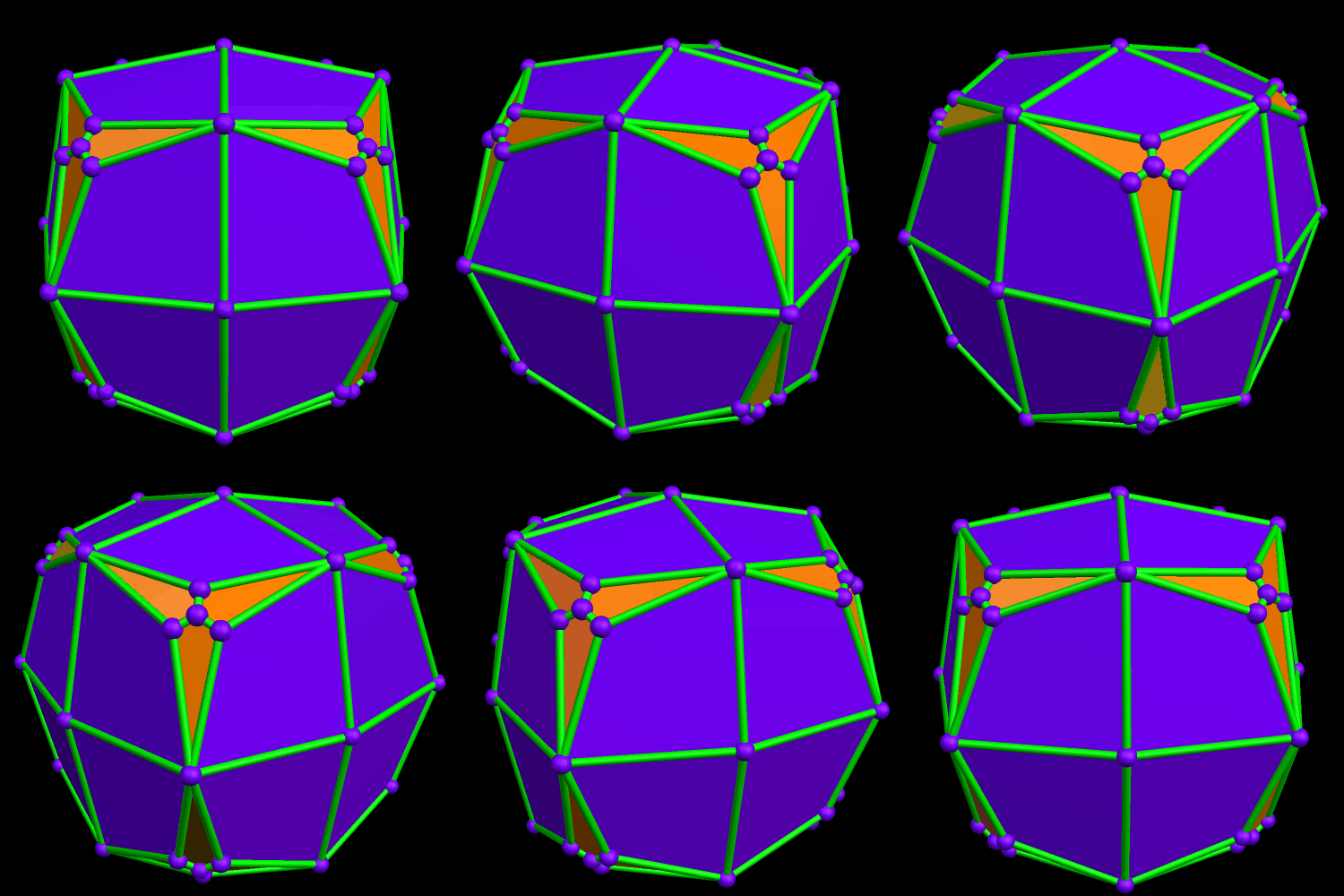
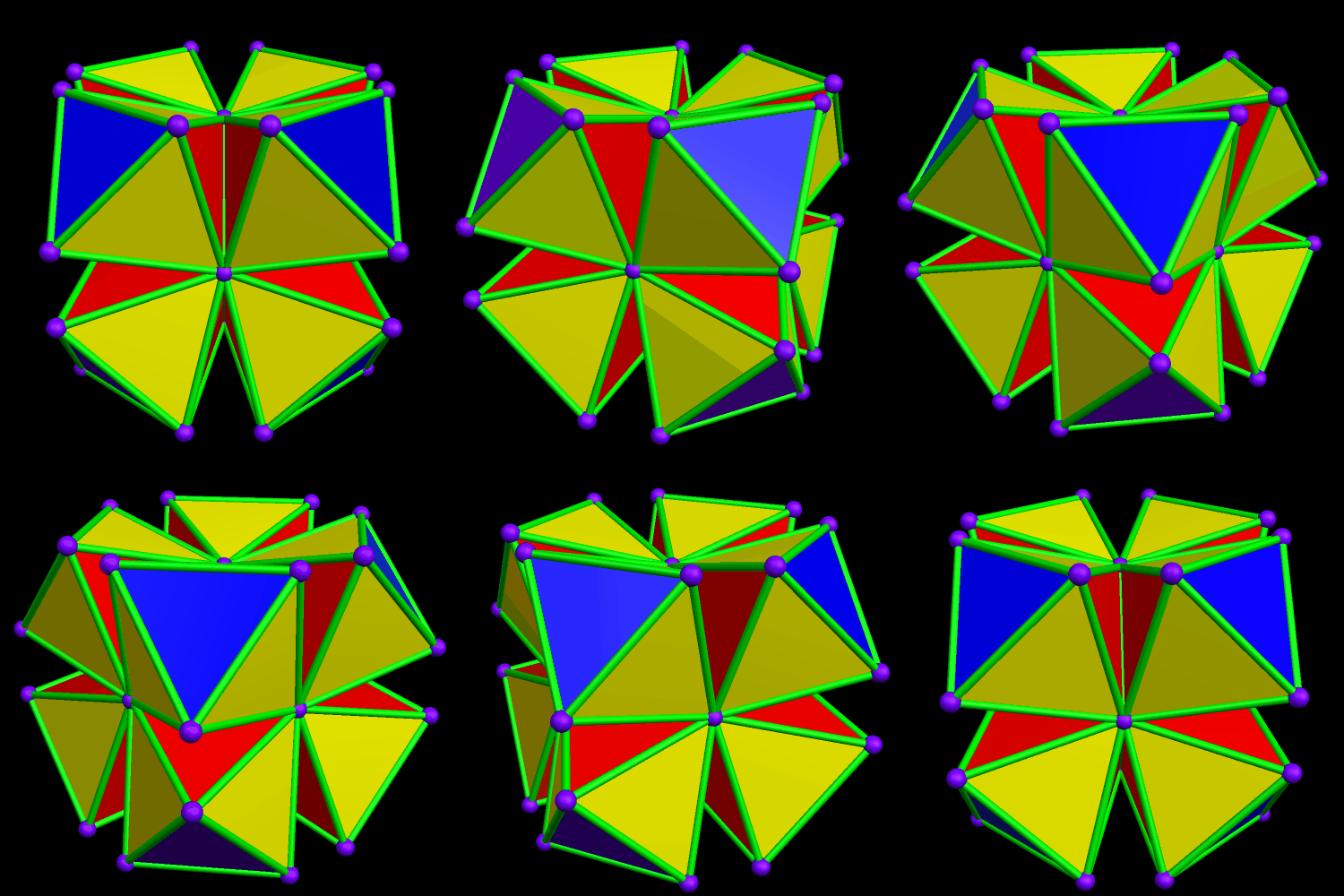
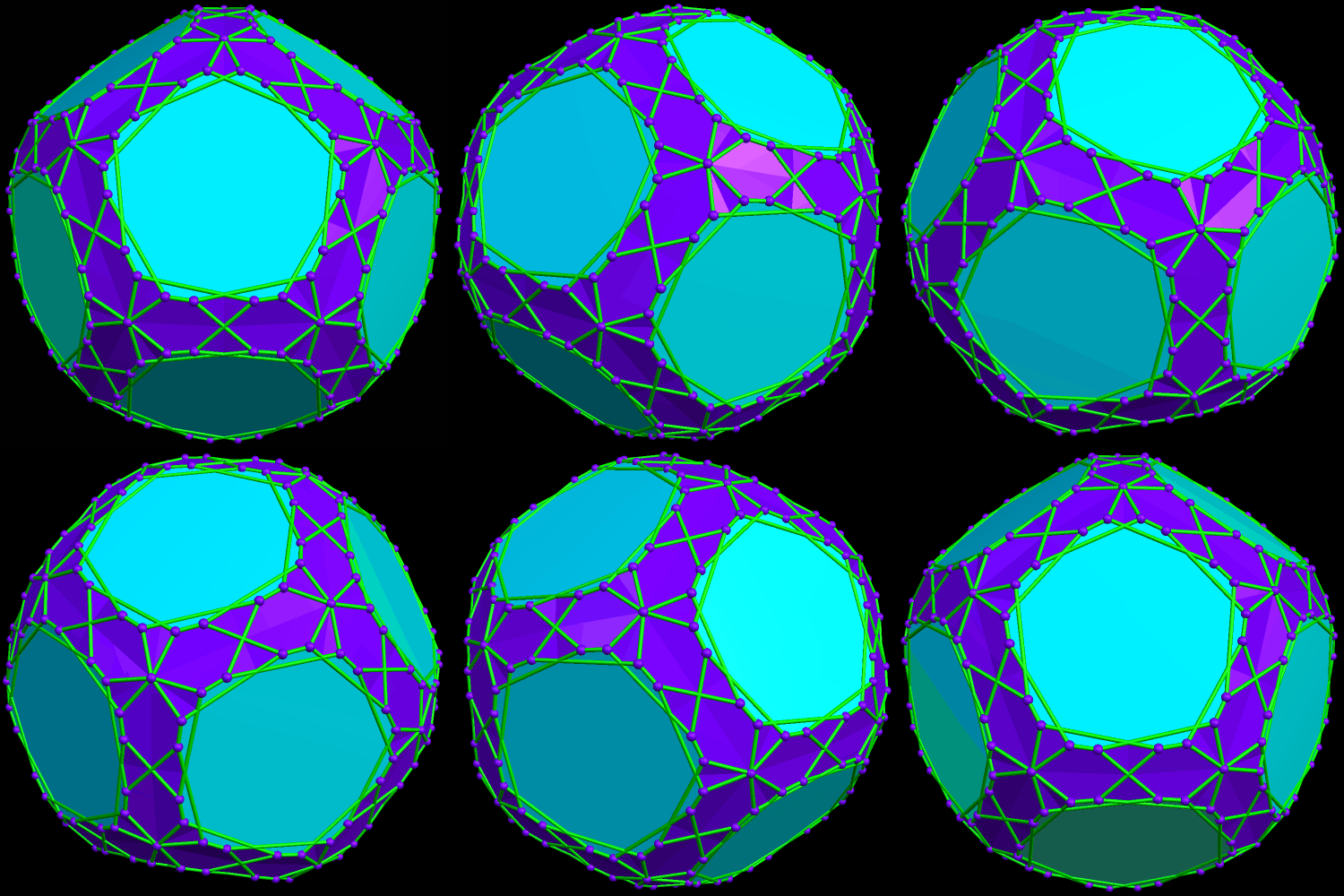
Three Polyhedral Clusters of Icosahedra

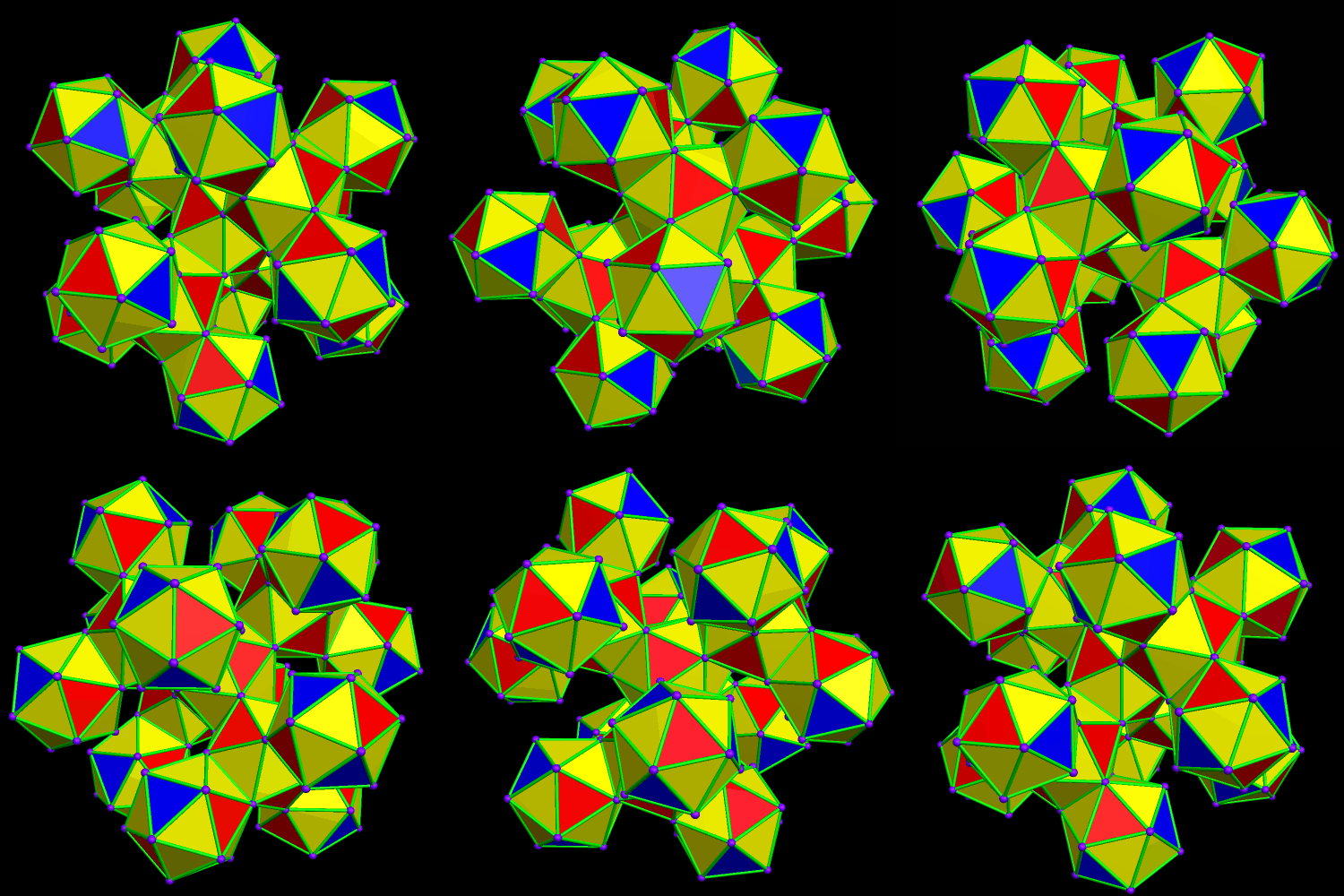
In the last post on this blog, there were three images, and the first of these was a rotating icosahedron, rendered in three face-colors. After making it, I decided to see what I could build, using these tri-colored icosahedra as building blocks. Augmenting the central icosahedron’s red and blue faces with identical icosahedra creates this cubic cluster of nine icosahedra:

cube of icosahedra

If, on the other hand, this augmentation is performed only on the blue faces of the central icosahedron, the result is a tetrahedral cluster of five icosahedra:

5 icosa

The next augmentation I performed started with this tetrahedral cluster of five icosahedra, and added twelve more of these icosahedra, one on each of the blue faces of the four outer icosahedra. The result is a cluster of 17 icosahedra, with an overall icosahedral shape.

icosa made of icosa

All of these images were made using Stella 4d, which is available at http://www.software3d.com/Stella.php.

On Icosahedra, and Pyritohedral Symmetry

Icosa pyrito & two tets

In this icosahedron, the four blue faces are positioned in such a way as to demonstrate tetrahedral symmetry. The same is true of the four red faces. The remaining twelve faces demonstrate pyritohedral symmetry, which is much less well-known. It was these twelve faces that I once distorted to form what I named the “golden icosahedron” (right here: https://robertlovespi.wordpress.com/2013/02/08/the-golden-icosahedron/), but, at that point, I had not yet learned the term for this unusual symmetry-type.

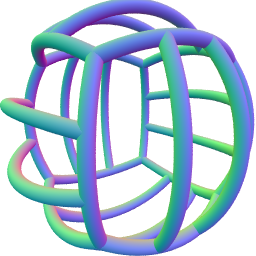
To most people, the most familiar object with pyritohedral symmetry is a volleyball. Here is a diagram of a volleyball’s seams, found on Wikipedia.

Volleyball_seams_diagram

Besides the golden icosahedron I found, back in 2013, there is another, better-known, alteration of the icosahedron which has pyritohedral symmetry, and it is called Jessen’s icosahedron. Here’s what it looks like, in this image, which I found at http://en.wikipedia.org/wiki/Jessen%27s_icosahedron.

Jessen_icosahedron

The rotating icosahedron at the top of this post was made using Stella 4d, a program which may be purchased, or tried for free (as a trial version) at http://www.software3d.com/Stella.php.

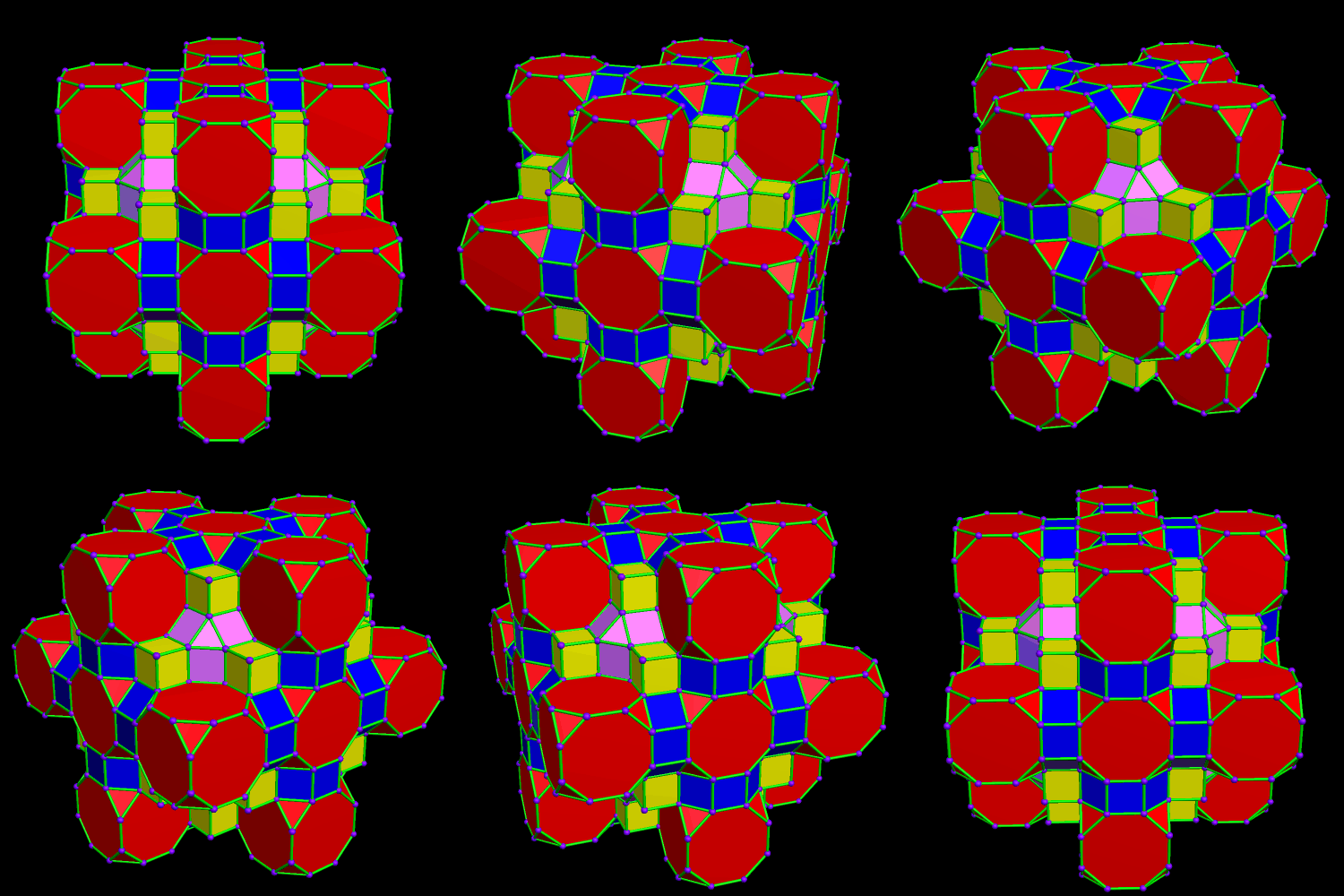
A Space-Filling Arrangement of Polyhedra Using Truncated Cubes, Rhombcuboctahedra, Cubes, and Octagonal Prisms

space filling attempt with RCO and cubes and truncated cubes and octagonal prisms

This image above has only one polyhedron-type hidden from view, in the center:  a red truncated cube. Next, more of this pattern I just found will be added.

space filling attempt with RCO and cubes and truncated cubes and octagonal prisms 2

The next step will be to add another layer of blue octagonal prisms.

space filling attempt with RCO and cubes and truncated cubes and octagonal prisms 3And now, more yellow cubes.

space filling attempt with RCO and cubes and truncated cubes and octagonal prisms 4This was an accidental discovery I made, just messing around with Stella 4d, a program you may try for yourself at http://www.software3d.com/Stella.php. The next cells added will be red truncated cubes.

space filling attempt with RCO and cubes and truncated cubes and octagonal prisms 5

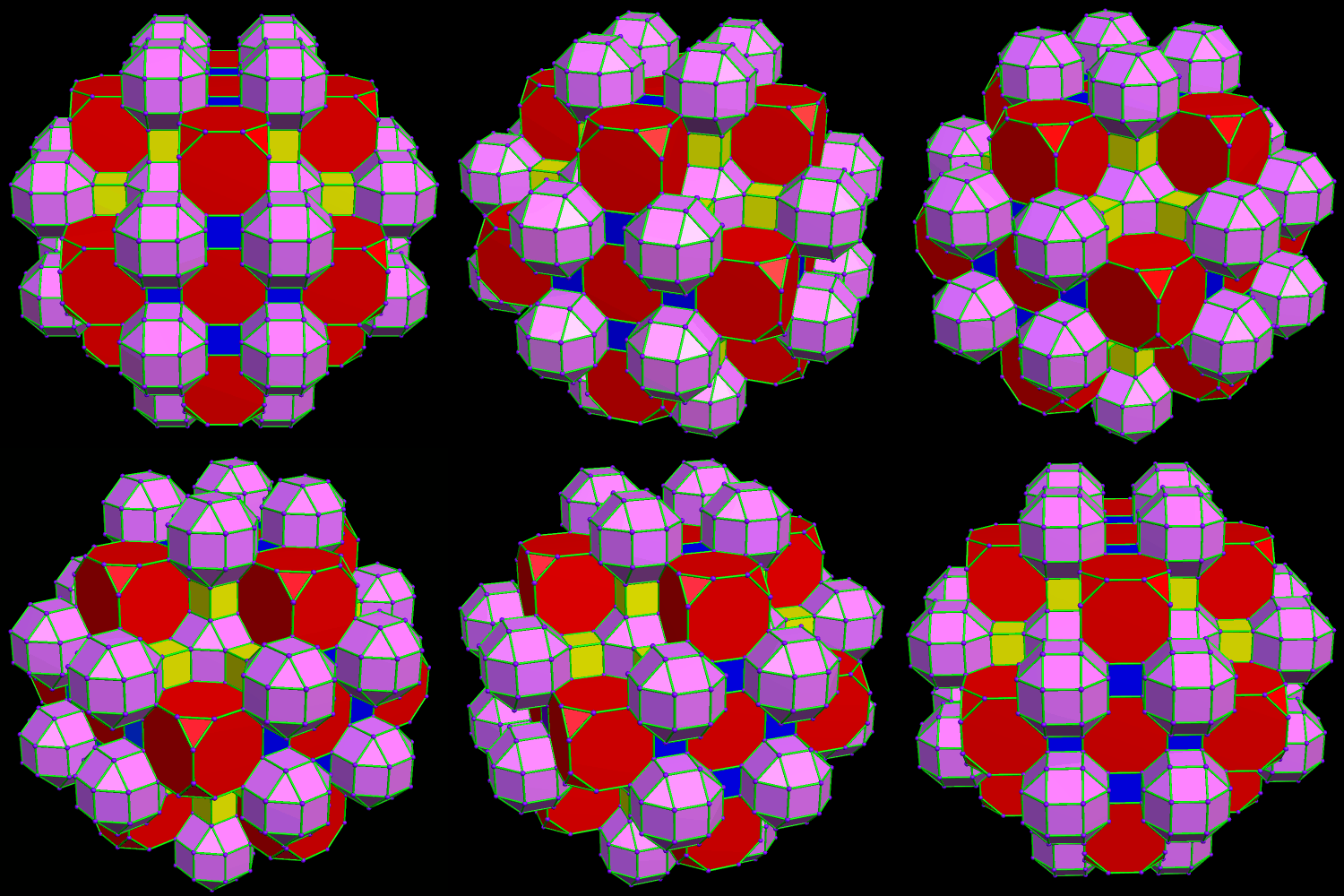
Next up, I’ll add a set of pink rhombcuboctahedra.

space filling attempt with RCO and cubes and truncated cubes and octagonal prisms 6The next set of polyhedra added: some yellow cubes, and blue octagonal prisms.

space filling attempt with RCO and cubes and truncated cubes and octagonal prisms 7Now I’ll add more of the red truncated cubes.

space filling attempt with RCO and cubes and truncated cubes and octagonal prisms 8At this point, more yellow cubes are needed.

space filling attempt with RCO and cubes and truncated cubes and octagonal prisms 9The next polyhedra added will be pink rhombcuboctahedra.

space filling attempt with RCO and cubes and truncated cubes and octagonal prisms 10

And now, more of the blue octagonal prisms.

space filling attempt with RCO and cubes and truncated cubes and octagonal prisms 11

As long as this pattern is followed, this may be continued without limit, filling space, without leaving any gaps.

“How are you today?”

how are you

At least in this part of the world, “How are you today?” — or variations thereof — is commonly used as a way to start conversations, as a bit of “small talk.” The odd part of this social convention is that, when people ask this, they usually don’t really want to hear an honest answer — or, indeed, any answer at all that isn’t part of the standard “small talk” script.

The usual answer (“Fine, thanks,” or something like it) is yet another empty phrase — more small talk. Unusual answers, though, have great potential for fun. I first encountered this idea in a class I took, many years before, where the teacher told us that his habit was to answer, instead, with an upbeat, “Getting better!” I’ve tried this, and the facial expressions often seen, in response, are indeed quite entertaining. Small talk is annoying — to me, anyway — but disrupting it, by simply deviating from the usual script, can be a lot of fun.

Here are some other possible answers, but this game is probably most fun if you make up your own.

  • “I’m glad you asked. Actually, my feet hurt. Do you know why?”
  • “Well, I’d feel a lot better if I hadn’t just blown my whole budget for the week on chocolate. It tasted good when I ate it all for breakfast this morning, though!”
  • “Hopefully, I’ll be able to answer your question in a few minutes. Say, where’s the nearest restroom?”
  • “Terrible. My beloved pet cricket just died.”
  • “I’m hoping it gets better soon. Could you recommend a good mechanic nearby, as well as a chiropractor?”
  • “I’m feeling great! There is nothing like a couple of extra-strength placebos to start the day!”
  • “I’m okay now, but I’m not looking forward to this afternoon at all. You have heard about the giant asteroid heading straight for us, right? It’s supposed to hit somewhere near downtown, at about four o’clock.”
  • “Well, I’m broke. May I borrow fifty bucks until next month?”

While I do greatly value honesty, I obviously exclude jokes from the category of lies. Also, suggestions for other funny responses, in comments, would be much appreciated.

A Polyhedral Investigation, Starting with an Augmentation of the Truncated Octahedron

If one starts with a central truncated octahedron, leaves its six square faces untouched, and augments its eight hexagonal faces with trianglular cupolae, this is the result.

AUGMENTED TRUNCTAED OCTAHEDRON

Seeing this, I did a quick check of its dual, and found it quite interesting:

DUAL OF AUGMENTED TRUNCATED OCTAHEDRON

After seeing this dual, I next created its convex hull.

Convex hull x

After seeing this convex hull, I next creating its dual:  one of several 48-faced polyhedra I have found with two different sets of twenty-four kites as faces, one set in six panels of four kites each, and the other set consisting of eight sets of three kites each. I think of these recurring 48-kite-faced polyhedra as polyhedral expressions of a simple fact of arithmetic: (6)(4) = (8)(3) = 24.

48 KITES AGAiN

I use Stella 4d (available at http://www.software3d.com/Stella.php) to perform these polyhedral transformations. The last one I created in this particular “polyhedral journey” is shown below — but, unfortunately, I cannot recall exactly what I did, to which of the above polyhedra, to create it.

Convex hull OF AUGMENTED CUBOCTAHEDRON

A Cluster of Nine Octahedra, and Related Polyhedra

If one starts with a central octahedron, then augments each of its eight triangular faces with identical octahedra, this is the result.

9 Octahedra

It is then possible to augment each visible triangle of this cluster with yet more octahedra, which produces this result, in which some octahedra overlap each other.

Meta-9 Octahedra

After making this, I wanted to see its convex hull:  the smallest, tightest-fitting convex polyhedron which can contain a given non-convex polyhedron. (I use Stella 4d: Polyhedron Navigator to perform these manipulations of polyhedra, and this program makes this a fast and easy process. If you’d like to try this software, even as a free trial download, the website to visit is http://www.software3d.com/Stella.php.) Here’s what this convex hull, which bears a resemblance to the rhombcuboctahedron, looks like.

Convex hull of meta-9-octahedron

Looking for previously-unseen, and interesting, polyhedra, I then starting stellating this convex hull. I did find something interesting — to me, anyway — after only two stellations.

2nd stellation of Convex hull of meta-9-octahedron

That concluded my latest polyhedral investigation, but I certainly don’t intend it to be my last.

On Triangle Congruence, and Why SSA Does Not Work

Those who have taught geometry, when teaching triangle congruence, go through a familiar pattern. SSS (side-side-side) triangle congruence is usually taught first, as a postulate, or axiom — a statement so obvious that it requires no proof (although demonstrations certainly do help students understand such statements, even if rigorous proof is not possible). Next, SAS (side-angle-side) and ASA (angle-side-angle) congruence are taught, and most textbooks also present them as postulates. AAS (angle-angle-side) congruence is different, however, for it need not be presented without proof, for it follows logically from ASA congruence, paired with the Triangle Sum Theorem. With such a proof, of course, AAS can be called a theorem — and one of the goals of geometricians is to keep the number of postulates as low as possible, for we dislike asking people to simply accept something, without proof.

At about this point in a geometry course, because the subject usually is taught to teenagers, some student, to an audience of giggling and/or snickering, will usually ask something like, “When are we going to learn about angle-side-side?”

The simple answer, of course, is that there’s no such thing, but there’s a much better reason for this than simple avoidance of an acronym which many teenagers, being teenagers, find amusing. When I’ve been asked this question (and, yes, it has come up, every time I have taught geometry), I accept it as a valid question — since, after all, it is — and then proceed to answer it. The first step is to announce that, for the sake of decorum, we’ll call it SSA (side-side-angle), rather than using a synonym for a donkey (in all caps, no less), by spelling the acronym in the other direction. Having set aside the silliness, we can then tackle the actual, valid question: why does SSA not work?

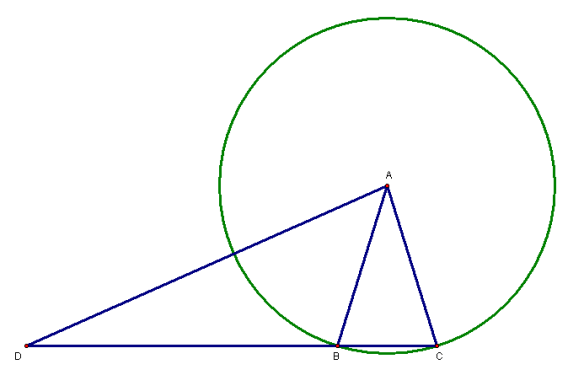
This actually is a question worth spending class time on, for it goes to the heart of what conjectures, theorems, proof, and disproof by counterexample actually mean. When I deal with SSA in class, I refer to it, first, as a conjecture:  that two triangles can be shown to be congruent if they each contain two pairs of corresponding, congruent sides, and a pair of corresponding and congruent angles which are not included between the congruent sides, of either triangle. To turn a conjecture into a theorem requires rigorous proof, but, if a conjecture is false, only one counterexample is needed to disprove its validity. Having explained that, I provide this counterexample, to show why SSA does not work:
no SSA

In this figure, A is at the center of the green circle. Since segments AB and AC are radii of the same circle, those two segments must be congruent to each other. Also, since congruence of segments is reflexive, segment AD must be congruent to itself — and, finally, because angle congruence is also reflexive, angle D must also be congruent to itself.

That’s two pairs of corresponding and congruent segments, plus a non-included pair of congruent and corresponding angles, in triangle ABD, as well as triangle ACD. If SSA congruence worked, therefore, we could use it to prove that triangle ABD and triangle ACD are congruent, when, clearly, they are not. Triangle ACD contains all the points inside triangle ABD, plus others found in isosceles triangle ABC, so triangles ABD and ACD are thereby shown to have different sizes — and, by this point, it has already been explained that two triangles are congruent if, and only if, they have the same size and shape. This single counterexample proves that SSA does not work.

Now, can this figure be modified, to produce an argument for a different type of triangle congruence? Yes, it can. All that is needed is to add the altitude to the base of isosceles triangle ABC, and name the foot of that altitude point E, thereby creating right triangle AED.

HL

It turns out that, for right triangles only, SSA actually does work! The relevant parts of the right triangle, shown in red, are segment DA (congruent to itself, in any figure set up this way), segment AE (also congruent to itself), and the right angle AED (since all right angles are congruent to each other). However, as I’ve explained to students many times, we don’t call this SSA congruence, since SSA only works for right triangles. To call this form of triangle congruence SSA (forwards or backwards), when it only works for some triangles, would be confusing. We use, instead, terms that are specific to right triangles — and that’s how I introduce HL (hypotenuse-leg) congruence, which is what SSA congruence for right triangles is called, in order to avoid confusion. Only right triangles, of course, contain a hypotenuse.

This is simply one example of how to use a potentially-disruptive student question — also known as a teenager being silly — and turn it around, using it as an opportunity to teach something. Many other examples exist, of course, in multiple fields of learning.

An Alteration of the Icosahedron/Dodecahedron Compound

Dual of Convex hull

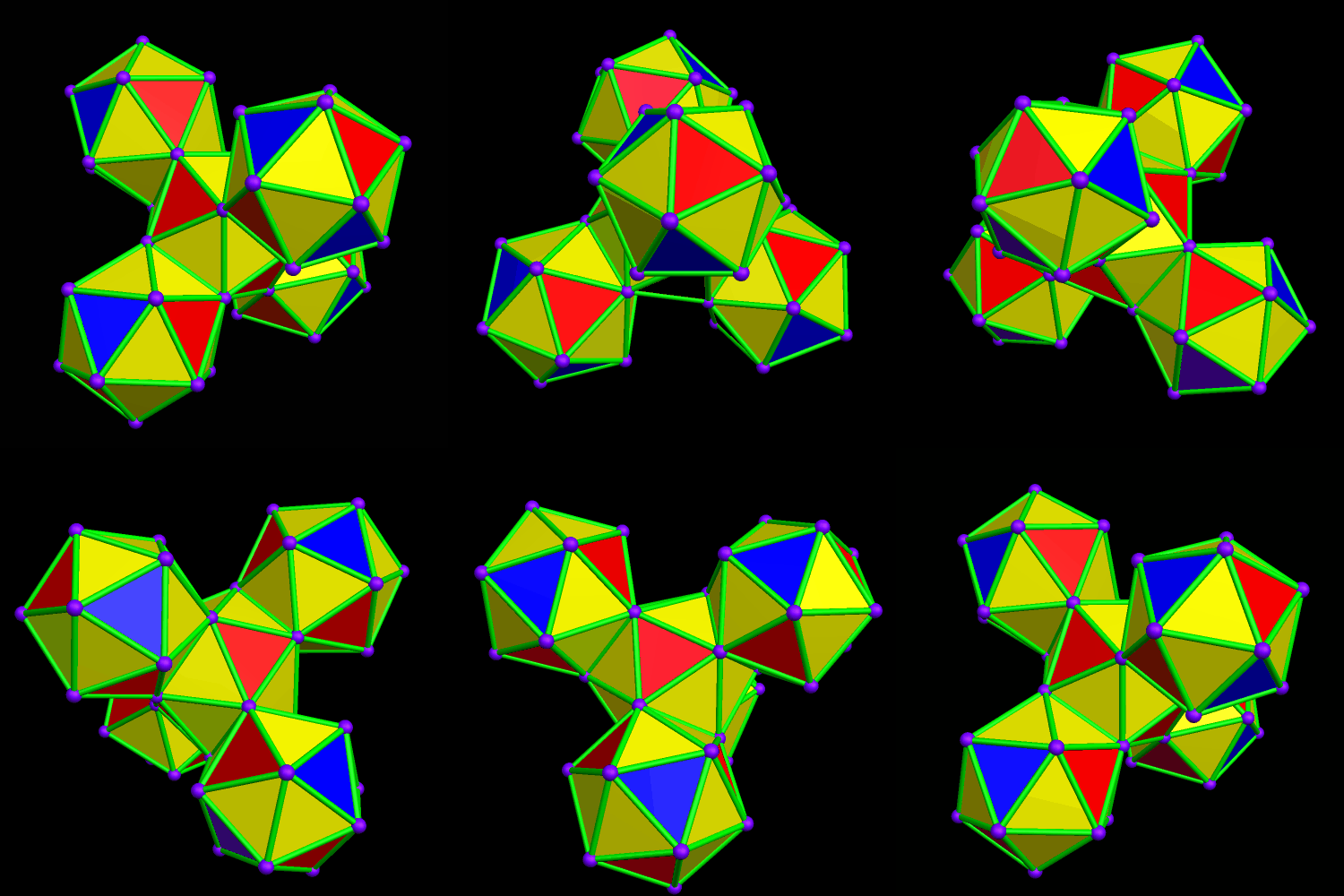
The dual of the icosahedron is the dodecahedron, and a compound can be made of those two solids. If one then takes the convex hull of this solid, the result is a rhombic triacontahedron. One can then made a compound of the rhombic triacontahedron and its dual, the icosidodecahedron — and then take the convex hull of that compound. If one then makes another compound of that convex hull and its dual, and then makes a convex hull of that compound, the dual of this latest convex hull is the polyhedron you see above.

I did try to make the faces of this solid regular, but that attempt did not succeed.

All of these polyhedral manipulations were were performed with Stella 4d:  Polyhedron Navigator, available at http://www.software3d.com/Stella.php.

Two Different Clusters of Thirty-One Rhombicosidodecahedra

31 RID version A

The cluster above was formed by starting with one rhombicosidodecahedron, and then augmenting each of its thirty square faces with another rhombicosidodecahedron. If you examine the single rhombicosidodecahedron below, though, you’ll see that this can be done in two different ways, each of which produces a cluster with the same degree of symmetry as the original. (If less symmetry is acceptable, there are far more than two different ways to obtain such clusters, but that does not interest me.)

Rhombicosidodeca

When new rhombicosidodecahedra are attached to the square faces of this central rhombicosidodecahedron, they new ones can be oriented such that pentagons are placed above pentagons, and triangles above triangles — or the new ones can be oriented the other way, so that pentagons are placed above triangles, and triangles above pentagons. One of these possibilities produces the cluster at the top of this post. The other possibility produces the cluster shown below.

31 RID version BAll of these polyhedral manipulations were performed using a program called Stella 4d: Polyhedron Navigator, which may be purchased (or tried for free, as a trial download) at http://www.software3d.com/Stella.php.

72-Faced Snub Dodecahedron Variant, and Related Polyhedra

72 faced snub dodecahedron variant mirror image

Like the snub dodecahedron itself, which this resembles, this polyhedron is chiral, meaning it exists in left- and right-handed forms. One version is shown above, and its mirror-image is shown below.

72-faced snub dodecahedron variant

With any chiral polyhedron, it is possible to make a compound out of the two mirror-images. Here is the enantiomorphic-pair compound for this polyhedron.

Compound of enantiomorphic pair

After making this compound, I was curious about what sort of convex hull it would have, so I used the program I employ for these polyhedral investigations, Stella 4d (available at http://www.software3d.com/Stella.php), to find out:

Convex hull of compound on enantiomorphic pair

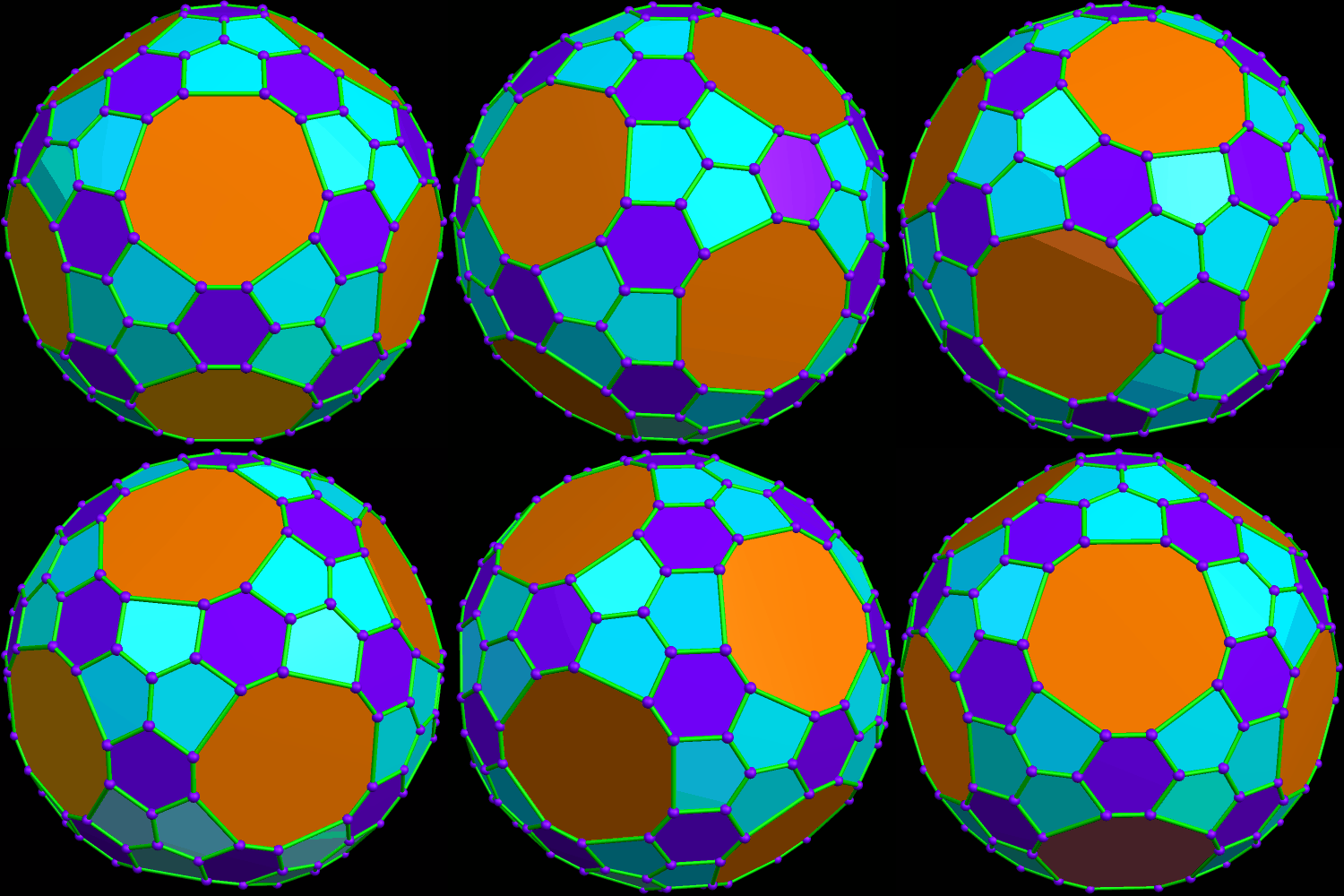
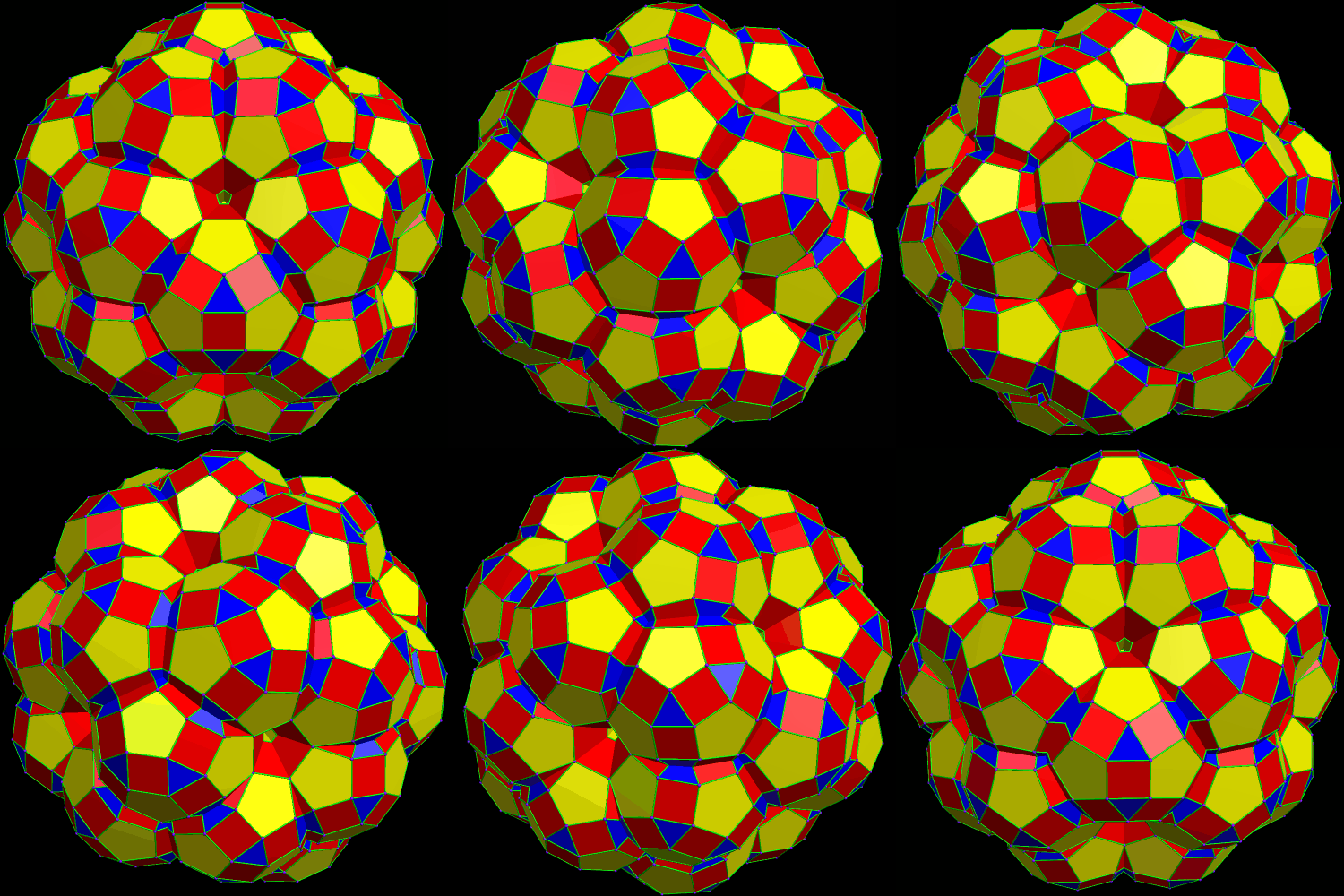
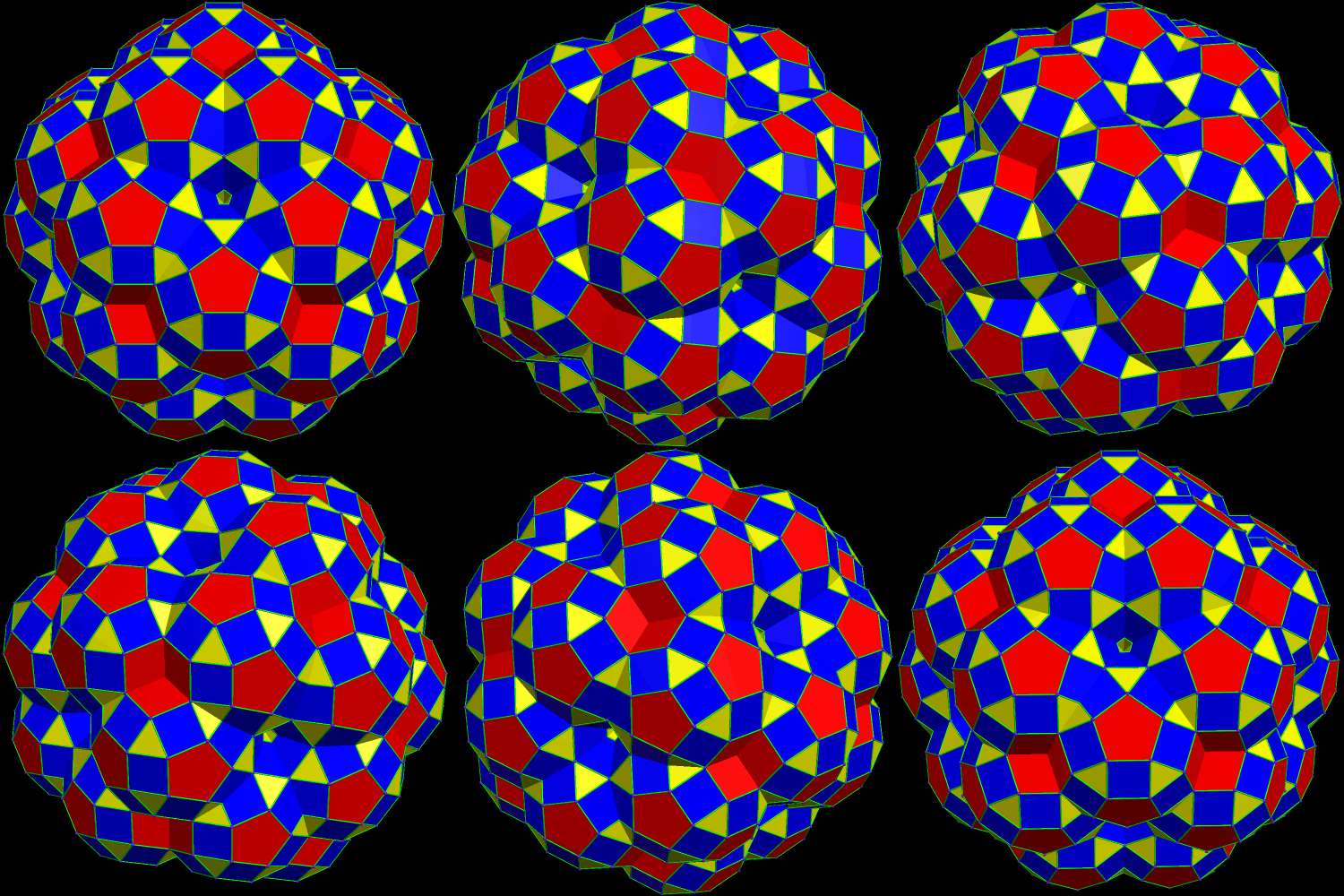
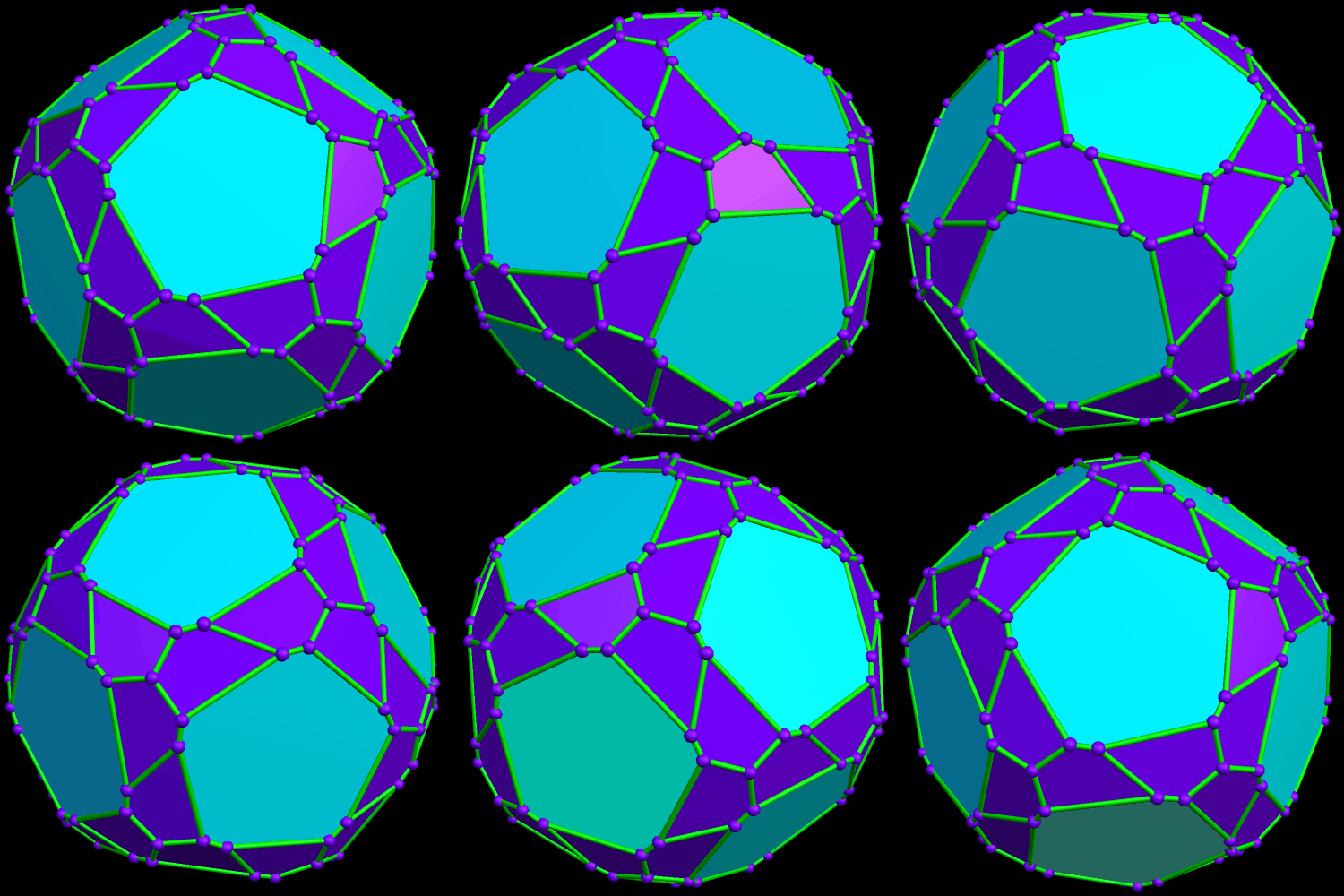
This polyhedron contains irregular icosagons, which are twenty-sided polygons. After playing around with this for a while, I was able to construct a related polyhedron in which the icosagons were regular — and that was one of the polyhedra seen on the post immediately before this one, which I then altered to form the others there. Had I not actually seen it happen myself, I would not have suspected there would be any connection between the snub dodecahedron, and polyhedra containing regular icosagons.