Unknown's avatar

About RobertLovesPi

I go by RobertLovesPi on-line, and am interested in many things, a large portion of which are geometrical. Welcome to my own little slice of the Internet. The viewpoints and opinions expressed on this website are my own. They should not be confused with those of my employer, nor any other organization, nor institution, of any kind.

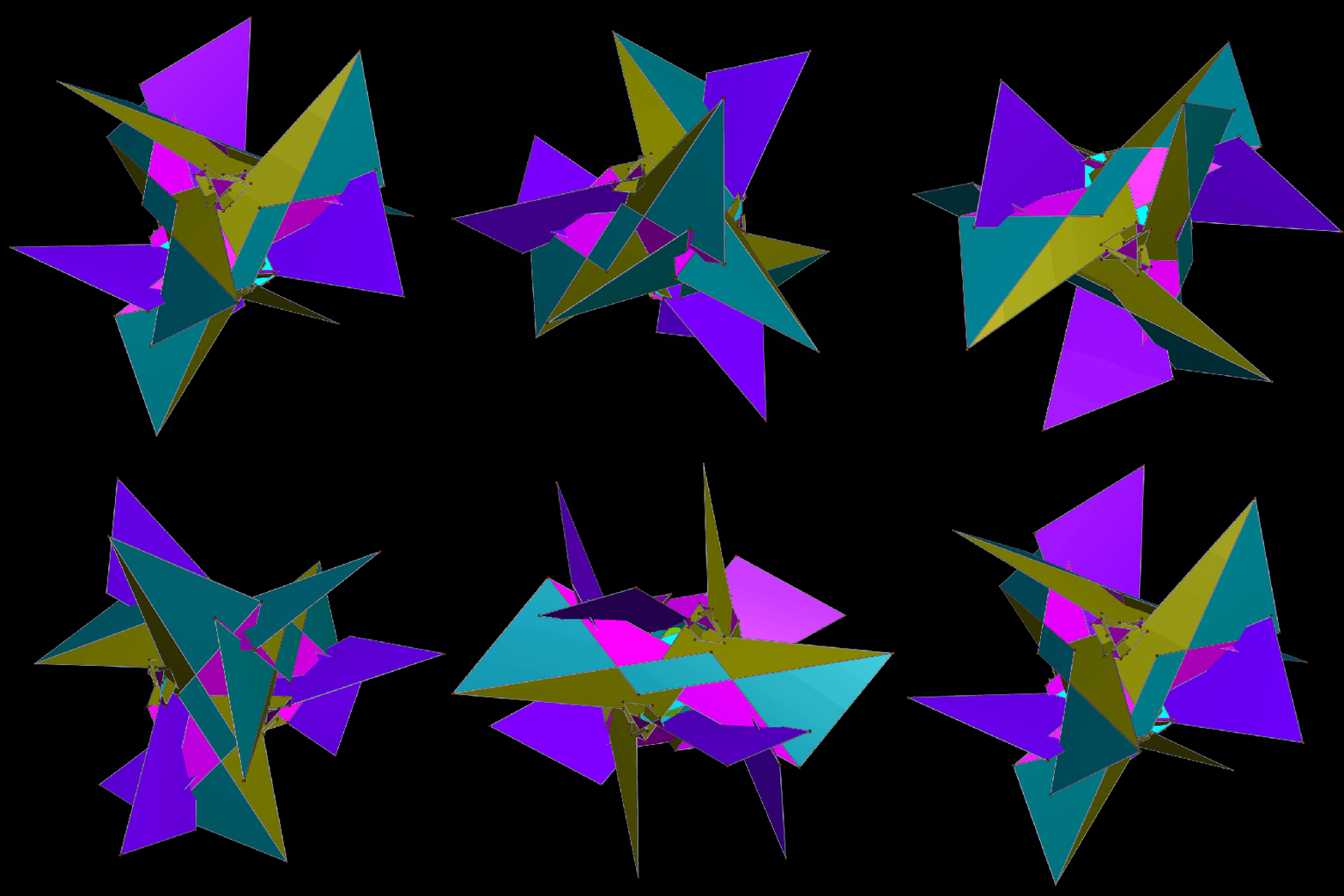
Alien Space Probe

space probe

Created using Stella 4d, available here.

Spectral Golden Spiral II

Image

spectral golden spiral 2

Deliberately Difficult to Watch

difficult to watch

I’ve never tried this before: create a rotating polyhedral image which is difficult to watch, using disorienting effects, such as the rotation of the images of spirals on the rotating faces. The spiral is made of golden gnomons (obtuse triangles with a base:leg ratio which is the golden ratio). This image, alone and without comment, is shown in the previous post, and was made using Geometer’s Sketchpad and MS-Paint. In the preparation for this post, it was further altered, including the projection of it onto the faces of a great rhombicosidodecahedron, and creating this rotating .gif. This part of the process was performed using a program called Stella 4d: Polyhedron Navigator, available here. You be the judge, please: is it, in fact, difficult to watch? Did I accomplish my (admittedly rather odd) goal?

Spectral Golden Spiral

Image

Spectrral Golden Spiral

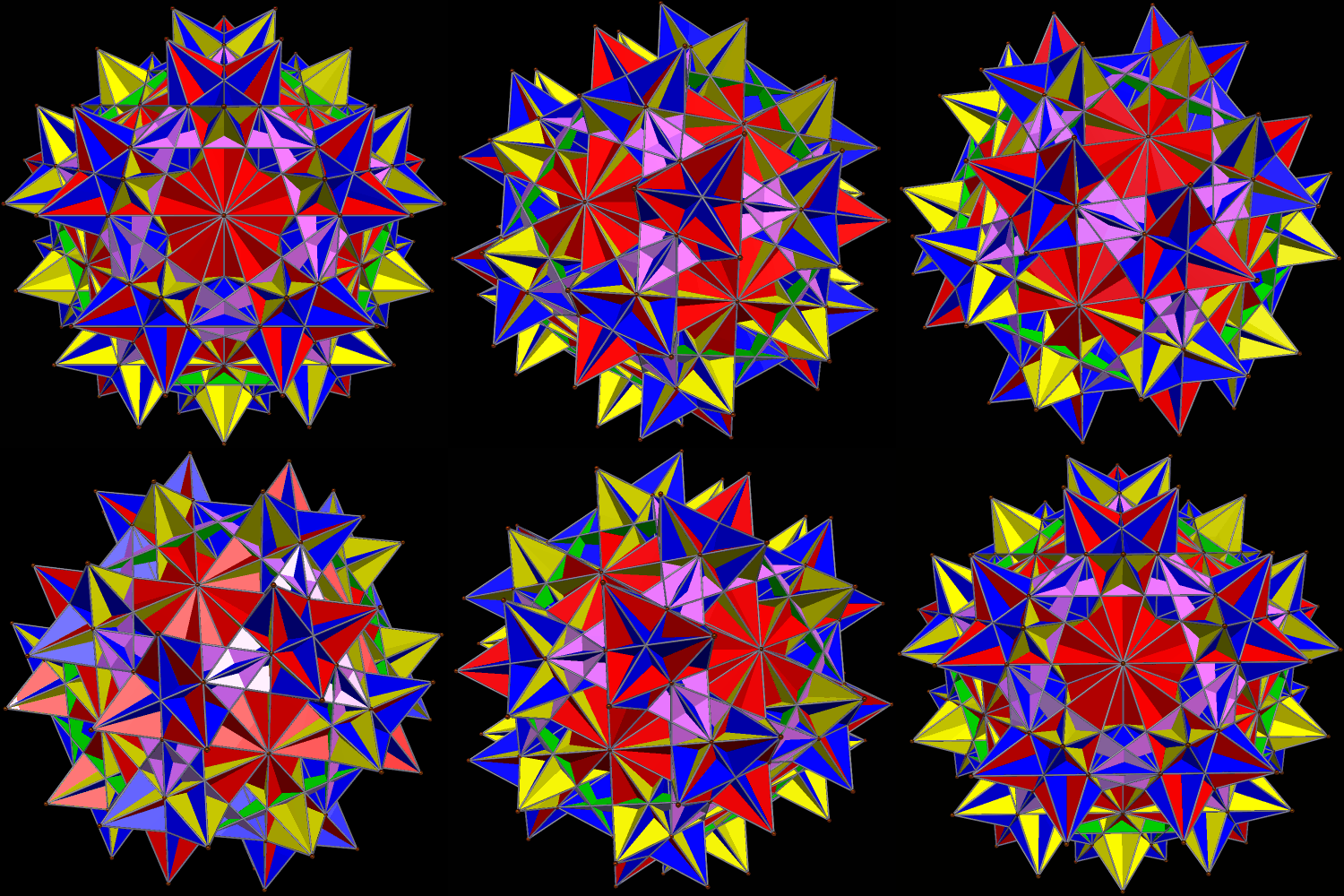
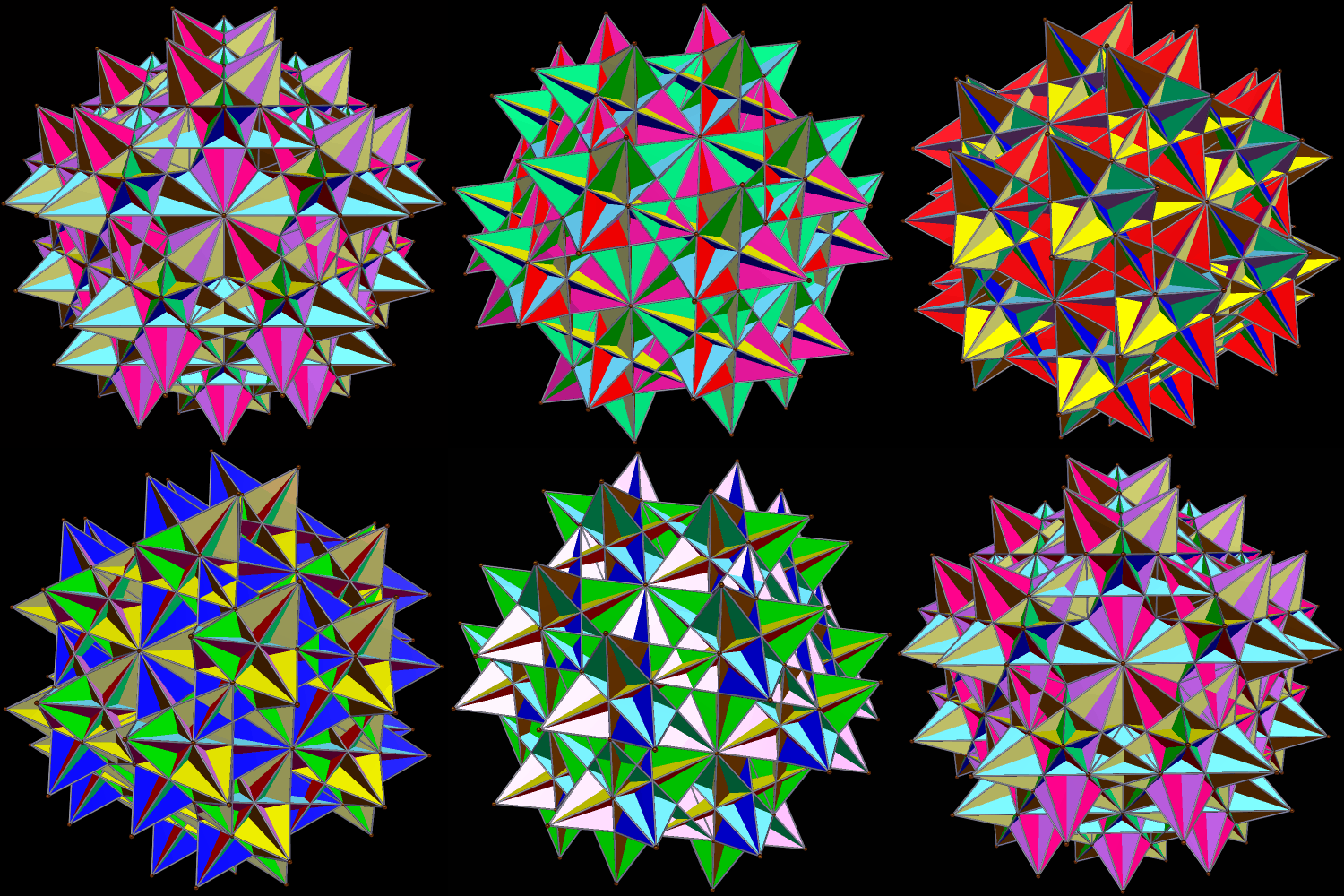
Two Views of an Icosahedron, Augmented with Great Icosahedra

If colored by face-type, based on face-position in the overall solid, this “cluster” polyhedron looks like this:

Augmented Icosa using grt icosas

There is another interesting view of this polyhedral cluster I like marginally better, though, and that is to separate the faces into color-groups in which all faces of the same color are either coplanar, or parallel. It looks like this.

Augmented Icosa using grt icosas parallel faces colored together

Both versions were created by augmenting each face of a Platonic icosahedron with a great icosahedron, one of the four Kepler-Poinsot solids. I did this using Stella 4d: Polyhedron Navigator, available here.

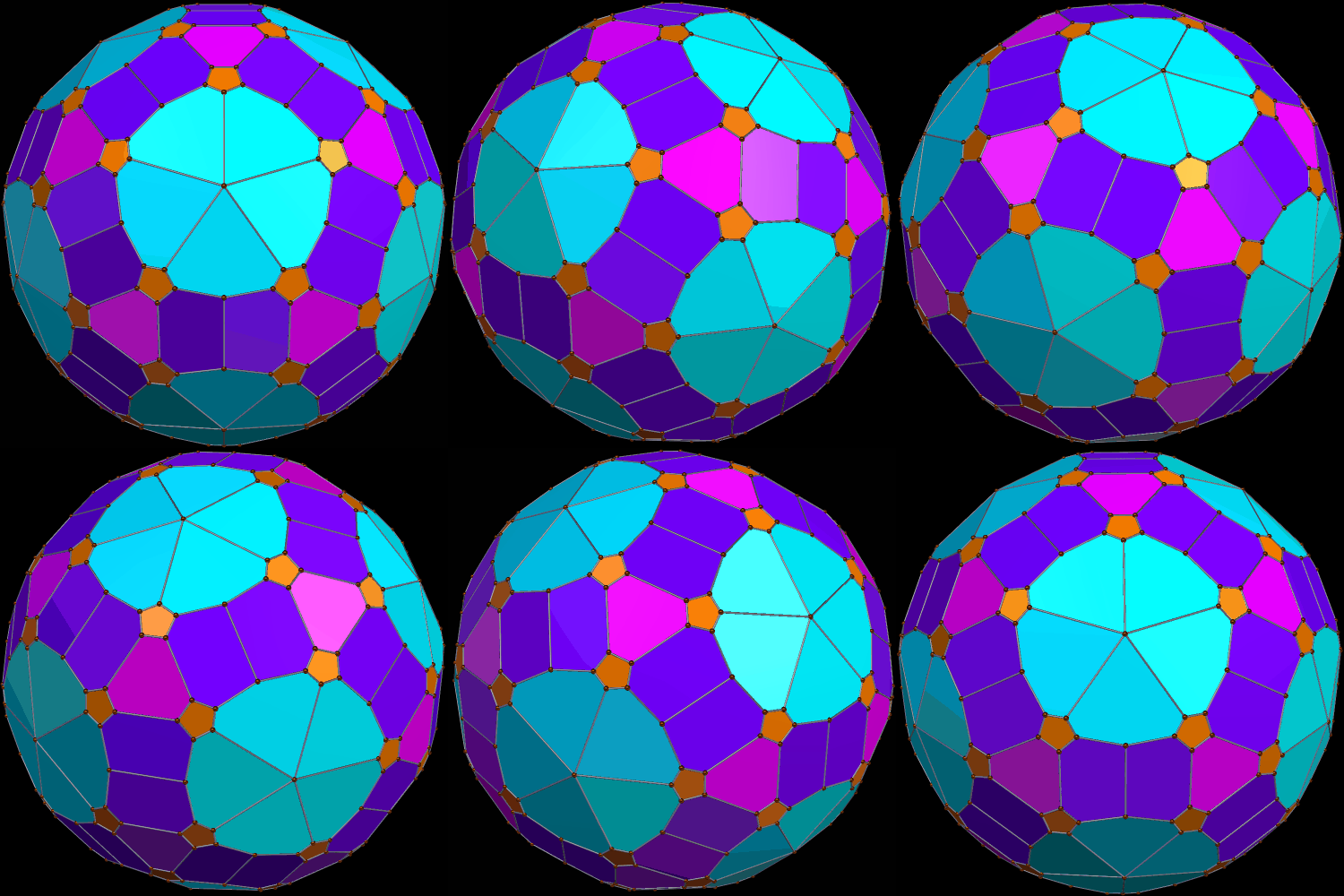
A Polyhedron with Exactly 200 Faces

200 faces 60 pentagons and 140 hexagons

Sixty of the faces of this polyhedron are pentagons (orange), and the other 140 are hexagons of three types (blue, pink, and purple). I made it using Stella 4d, a program available at http://www.software3d.com/Stella.php.

Bashing Some Democrats, for a Change

I am sick of certain Bernie Sanders supporters who write about the “Hitlarites” who support Hillary Clinton.

I am also sick of the Hillary Clinton supporters who mock her opponent as “Barnie” Sanders, as in Barney the Clown, or perhaps Barney the purple dinosaur.

My guess is that both Hillary Clinton and Bernie Sanders, themselves, are embarrassed by these rude factions of their own supporters, and wish they would just shut up, and sit down.

They’re not helping anyone, except for Donald Trump.

My Personal, Presidential Anti-Endorsement

Image

against

I’m not a Democrat. On the other hand, the Republicans are not in the habit of giving me any other viable options.

The “Trick Johnson” (?) — A Near-Miss Johnson Solid, Surrounded by Hilariously Mistranslated Japanese

I did not discover this polyhedron, although I wish I had, for it has quite a clever design.

The page where I found it (poorly-translated English version, where it’s called the “Trick Johnson,” whatever that means) is at http://www.geocities.jp/ikuro_kotaro/koramu/1053_g2.htm). I generally don’t repost much work by others here, but, for the “Trick Johnson,” I’m making an exception. By appearance, it’s a near-miss to the Johnson solids, based on combining characteristics of the dodecahedron, the snub cube, and the snub dodecahedron. It has chiral four-fold dihedral symmetry.

If you understand Japanese, I’m sure there’s a lot of interesting information at that linked page. If, on the other hand, you don’t, there’s still a good reason to follow that link: making fun of Google-Chrome’s built-in translator.

“Come very! It makes it the.” Say what?

Near-Miss Candidate Update #2

With some work, I was able to figure out how to make my second near-miss candidate from two posts ago, using Stella 4d (available here), but the results show it is a “near near miss,” not a near miss. Like the first one, the triangles are visibly irregular — and so are the green rectangles; there are also four edge lengths, the longest of which is ~11% longer than the shortest. This is not close enough to qualify as a near-miss.

BELTED POLYHEDRON 11 PERCENT EDGE DEVIATION 4 EDGE LENGTHS

Not long after I made the image above, a friend I shall simply call T. (until and unless I have his permission to publish his full name) e-mailed me his own versions he made, also using Stella. Here’s what they look like. Each can be enlarged with a click.

These are improved in the sense that the triangles (and squares, in the second one) are regular, but this was done at the expense of the pentagons. At the top and bottom of the figures, the edges where pentagons meet other pentagons are ~6.8% shorter than the other edges of each figure.

These last two are more likely to qualify for actual “near-miss” status — that has yet to be decided — but I need to make it clear than I did not discover them alone, but as part of a team. In my versions, after all, the flaws are more severe. Also, we do not yet know whether or not a different individual or team found these same polyhedra earlier, as often happens.