
I propose that 384,400 km (238,855 miles), the average distance from the Earth to the Moon, be called a “moon unit.” Example: “The mileage of my car is over one moon unit.”
I propose that 384,400 km (238,855 miles), the average distance from the Earth to the Moon, be called a “moon unit.” Example: “The mileage of my car is over one moon unit.”

It really works. I encourage everyone to try this themselves.
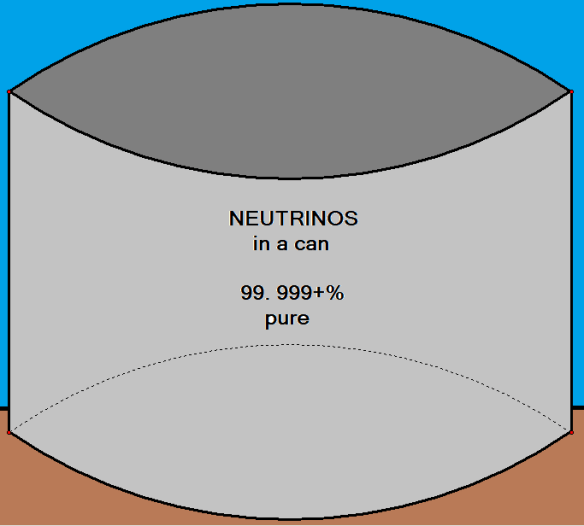
I just noticed that I can elect to pay attention to my breathing, or ignore it, but one or the other keeps happening. Changing which one I focus on changes the way I think. This is interesting.


“Dysphoria” is the antonym of “euphoria.” Exposure to facts increases your risk of developing Trump Dysphoria Disorder, or TDD. To avoid the pain and suffering associated with TDD, you may wish to avoid any media outlets which are not Fox News.

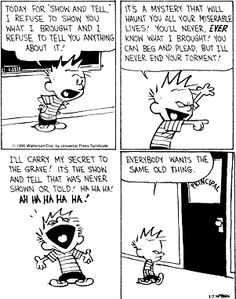
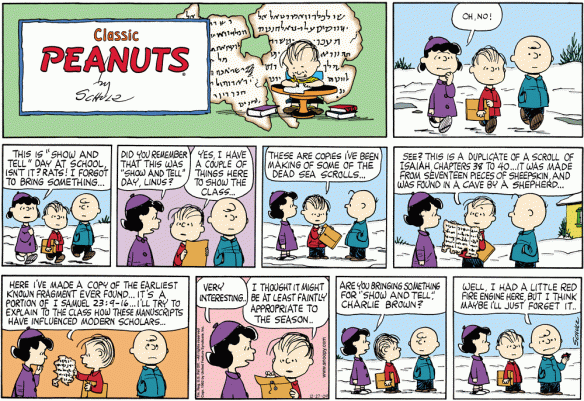
The cartoonists Charles Schultz knew, and Bill Watterson knows, an immense amount about the uniquely American way to celebrate Christmas.
 .
.
Their work speaks for itself. 
I hope you enjoy these cartoons, and have both a Happy Christmas and Merry New Year.

Please buy the books with these comic strips. They’re easy to find on Amazon, and many other places.

Books make excellent gifts, not just for holidays, but at any time. Christmas is also a time associated with eating good food, too, of course. Calvin’s table manners are atrocious, of course, but his parents do try.
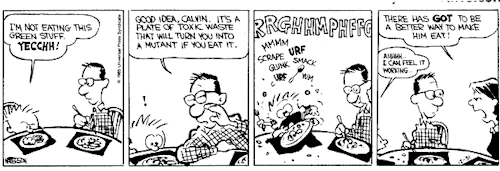

Christmas Break, Winter vacation, or whatever you choose to call it gives us all time to be with our families and friends.

Santa Claus is also a big part of Christmas in America. Whether we like it or not, the same is true of capitalism.

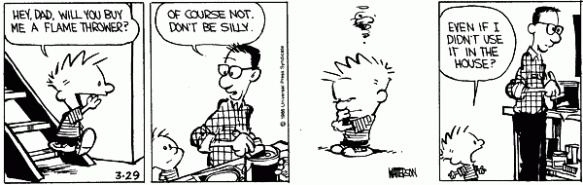

Reality often clashes with our ideals. That’s part of being human, in any season.




An emotionally-charged phrase, “true meaning of Christmas,” is repeatedly explained, forgotten, rediscovered, celebrated, etc. — and, of course, we argue about it. We’re Americans, after all.
Sometimes, we also listen to each other. Other times, we don’t, even when we need to, and the opportunity presents itself.

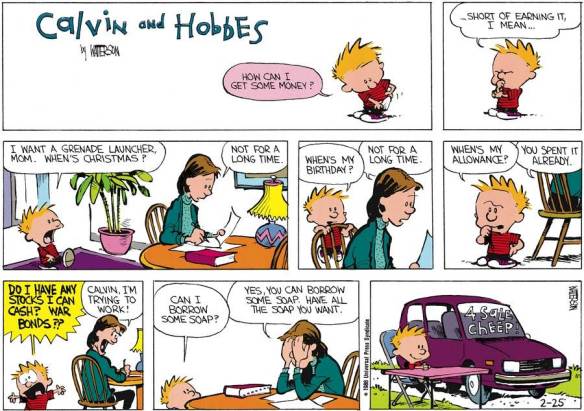
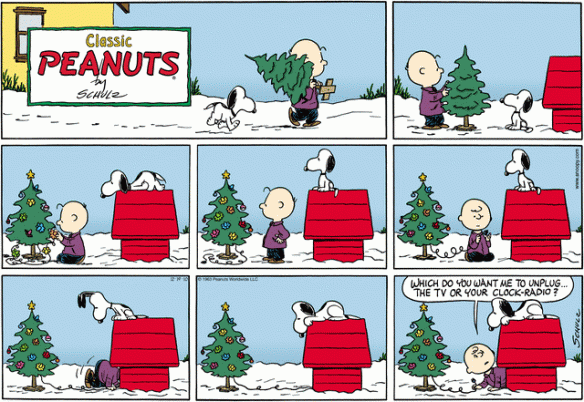
The holiday season is often rough on those of us who struggle with depression. These cartoonists tackled such issues head-on. However, they never claimed to have all the answers.
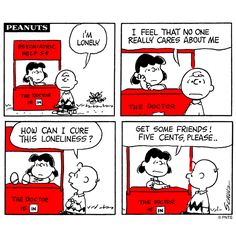
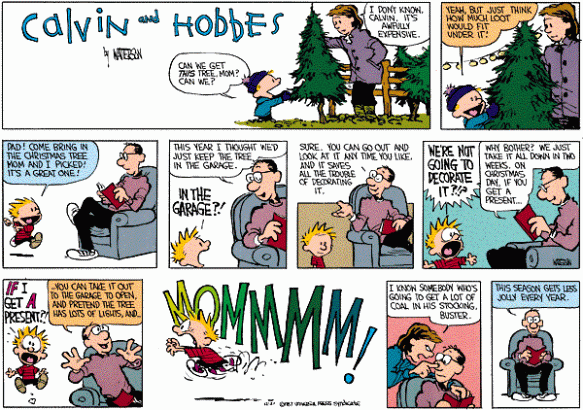
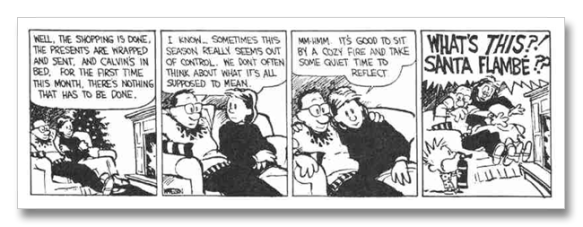
Happy Christmas, and Merry New Year, to you and yours.

Peace be with you.
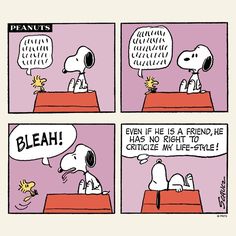


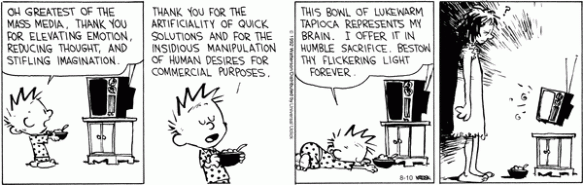

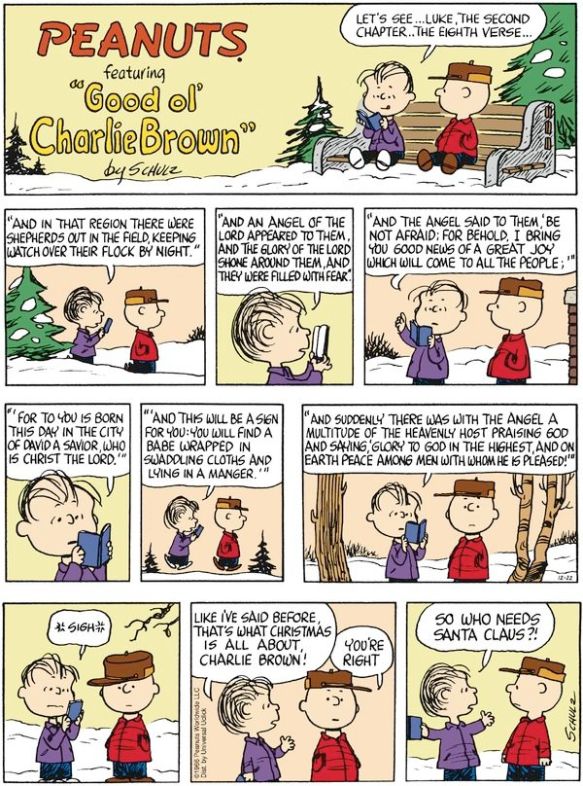
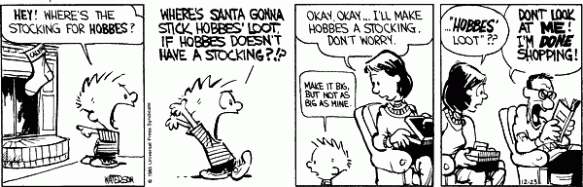
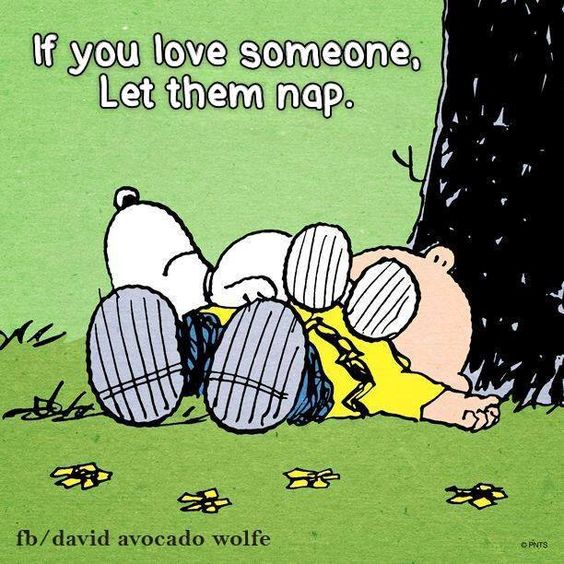

One thing both comic strips have in common is a focus on children and childhood. Reading them can help one keep from losing the essence of youth, no matter what age one reaches.

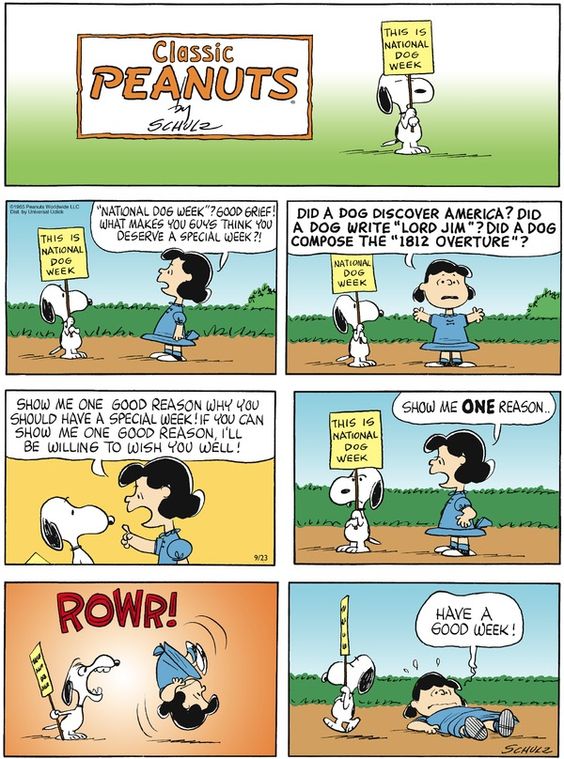

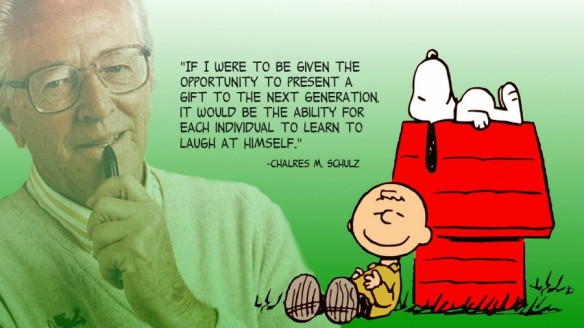
Bill Watterson, Charles Schultz: thank you for sharing your ideas about Christmas, and life itself, with us, over the decades. I’ll let Schultz have the last word.
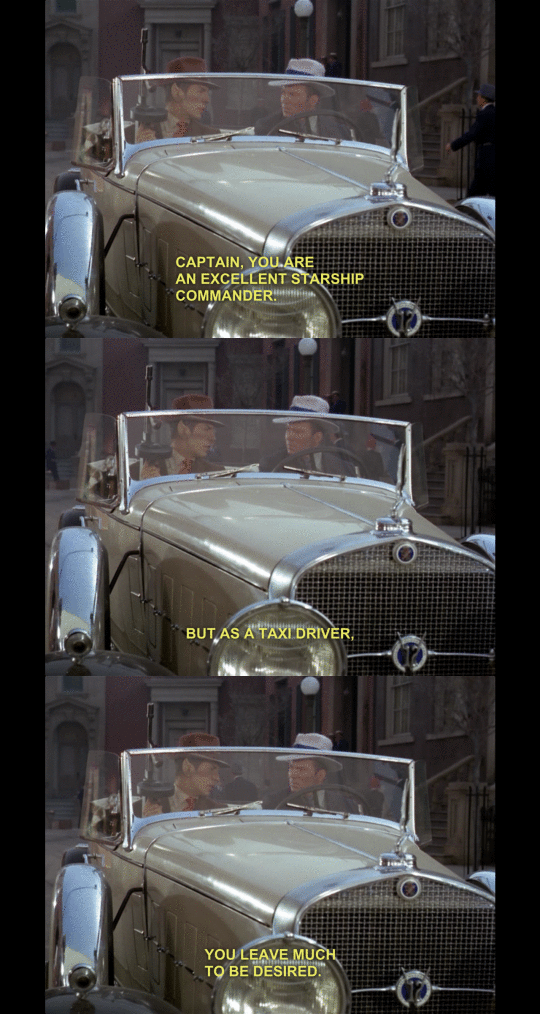
I did not take the Star Trek screenshots; I merely assembled the .gif at http://www.makeagif.com.
Math jokes are almost universally awful — or, at least, it seems that way to me, since I spend a lot of time around ninth graders. Hearing “Gee, I’m a tree” or “Pi are square? No, pies are round, and cake are square!” will generally elicit a groan from me, and each new cadre of students seems to think they invented these fossilized puns. An even worse “joke” is the giggling one should expect from, say, 7th graders, if one squares the number thirteen in their presence.
I do know exactly one good math joke, though. I didn’t hear it from a student. If you’re curious, read on. Only the embellishments are original; I didn’t make up the joke, itself, though, nor do I know who did.
My source for the image below is this fellow WordPress blogger’s photography blog.

So a physicist, chemist, and a lawyer enter a balloon race together. Theirs is the last balloon to leave, because the lawyer had been in court, arrived late, and caused a short delay in departure. The consequences of this were serious, though, for a sudden cross-wind blew them off course, right after takeoff. Soon, they couldn’t even see any of the other balloons in the race, and none of them recognized any landmarks in the landscape below.
Soon, they had no idea where they were, and started getting worried about making it to their next classes on time — or back to court, in the case of the lawyer. The chemist was particularly worried. “What are we going to do?” asked the chemist.
The physicist replies, “I have an idea!” He cups his hands, leans out, and yells, as loud as he can, “Hello! Where are we?”
The balloon flies on for at least two long, anxious minutes as the trio waits, silently, for an answer. Eventually, they hear, from a great distance, a voice. “Hello! You’re lost!”
The physicist looks at the other two, and says, “That, my friend, was a mathematician.”
“How,” asked the lawyer, “could you possibly know that?”
“Three things,” replied the physicist. He held up one finger. “First, it took him a long time to answer.”
“Second,” he continued, holding up two fingers, “the answer, when it finally came, was absolutely correct.”
A third finger joined the first two. “Third, the answer, when it finally came, was completely useless!”
 RobertLovesPi.net