Not Poker — Chess. I Am Not Captain Kirk.

Not Chess Mr Spock

poker

Something I have in common with the fictional Captain Kirk, from the original Star Trek series, is that I enjoy playing both poker and chess. In the scene depicted above, from the episode “The Corbomite Maneuver,” the Enterprise is facing an adversary who dramatically outpowers them — and Kirk escapes the situation with an outrageous bluff, right after making this reference to the game of poker.

Unlike Captain Kirk, however, I am not skilled at bluffing, with two consequences:  (1) I’m a terrible poker player, and (2) I do not attempt bluffing as a strategy, unless I am actually playing poker.

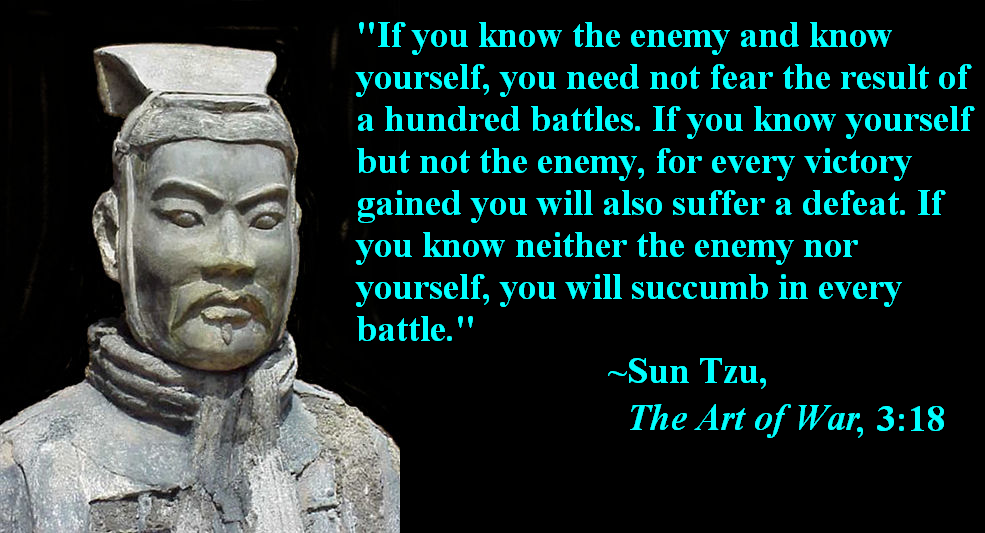
I’ve been an activist for a large variety of causes, for decades, and, because of this activism, have acquired a rather large number of adversaries. Many of them have figured out that I don’t bluff, but some — rather surprisingly, considering they have known me for years — have not. The amusing thing, to me, is that I’ve always been quite open about this, but some still fail to realize it, despite my candor on the subject. When engaged in any struggle, I only make statements I believe to be true, for one simple reason: I’m so terrible at bluffing, or other forms of lying, that any untrue statement I were to make would be instantly recognized as dishonest. Since I figured this out, about myself, decades ago, I deliberately choose to only employ strategies which are completely honest. It would be stupid, after all, for me to employ strategies with which I know I have weak skills.

So, unless I’m actually playing real poker, and am engaged in any sort of struggle, I’m basically playing metaphorical chess. This involves figuring out what my opponents are thinking, devising strategies to counter theirs, and remaining at least three moves ahead of my adversaries, at all times. I’m far more like Mr. Spock than I am like Captain Kirk, and always have been. This isn’t going to change.

I find it hilarious that I can post these absolutely-true statements right here,  on the Internet, where anyone can see them — and have full confidence that those who persist in their mistaken belief that I’m bluffing, about anything, will continue to make this enormous error in judgment — until it’s too late. For them, that is.
sun_tzu_strategy

Like, Do You Like “Like,” or Do You Just “Like” “Like?”

like

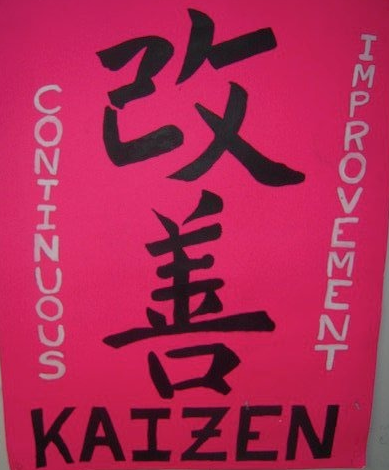
Kaizen

kaizen

I painted this many years ago, as a classroom poster, and then moved it from classroom to classroom, for years, until the posterboard on which it was painted was finally too damaged for further use. At some point, I will have to make a replacement.

Kaizen is a Japanese word which translates only loosely into English, as “continuous improvement.” To me, it means more than that:  it means never being content with simply staying the person I am today, and going to sleep, each night, with the sincere intention to be a better person tomorrow.

Does this always actually work, as each day becomes the next one? No, I must admit that it doesn’t — but that does nothing to change the fact that keeping the kaizen principle in mind is an excellent way to live one’s life. On a year-to-year basis, it works much better, in practice, than it does from day to day. I am confident that I am a better person now than I was 365 days ago, even though there have, of course, been ups and downs, as the last year has passed.

Setbacks, which happen to everyone, are no reason to give up, and personal improvement, in all important parts of life, will always be a goal worth pursuing.

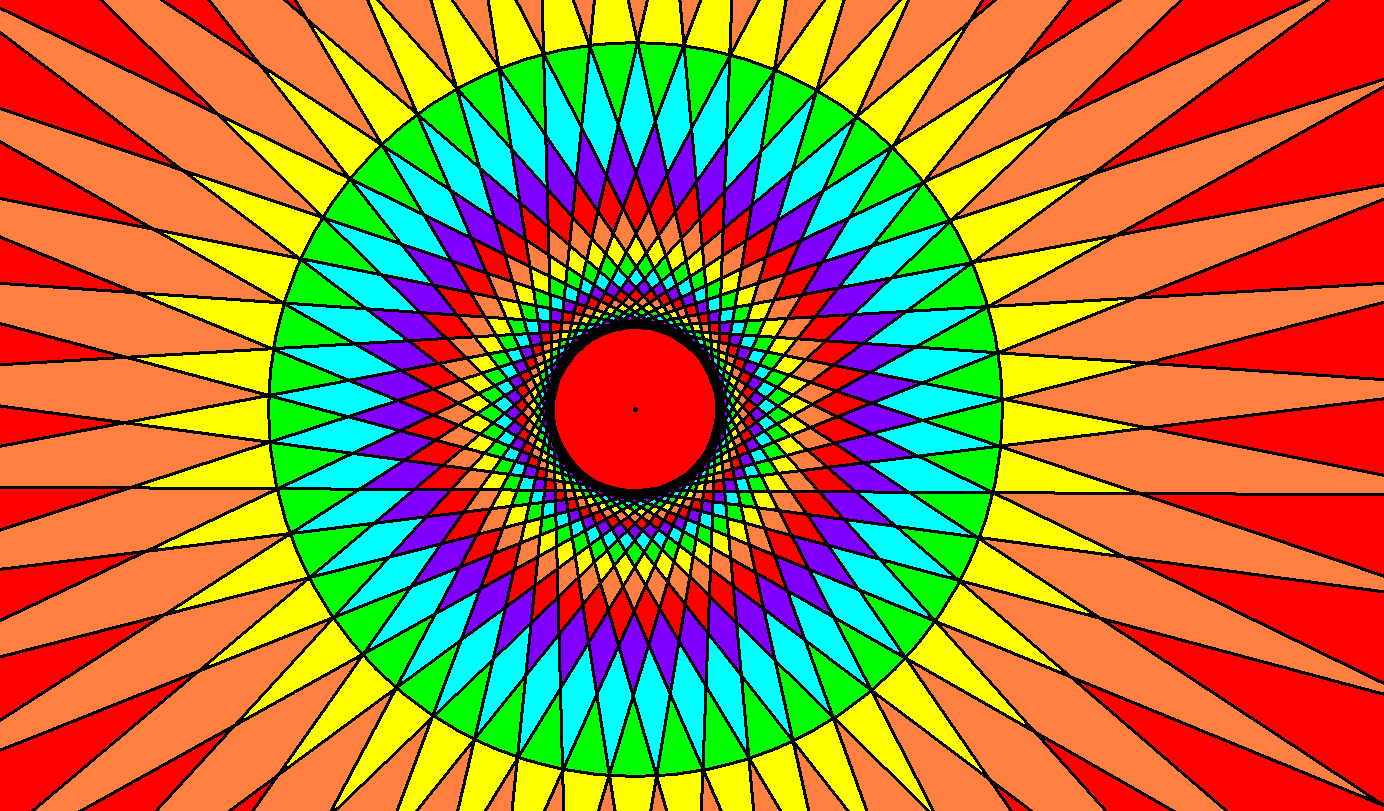
A Star with 49 Points, to Celebrate the 49-Hour Weekend Caused by the End of Daylight Saving Time, Tomorrow, in Most of the USA

49

This is the weekend that Daylight Saving Time (or DST) ends in most parts of the USA, which means that this is the only weekend of the year, here, which lasts 49 hours, rather than the usual 48.

To celebrate this once-a-year event, I created the design above, based on the number 49. I started by making one heptagram, inscribed in a circle. The heptagram I used is one of two which exist, and is also called the {7/3} star heptagon. It looks like this:

7star

After making one of these, I then rotated it 1/49th of a full rotation, repeatedly, until I had seven of them inscribed in the circle. Seven times seven, of course, is 49, so this created one type (many are possible) of 49-pointed star. Also, I had already extended the line segments to form lines, so that this geometrical design would extend outside the circle. Next came thickening and blackening these lines, as well as the circle, and re-coloring the red points to be black, as well.

All of this work was performed using Geometer’s Sketchpad. I then took a screenshot, moved the design to MS-Paint, and used that program to add the colors seen in the image at the top of this post.

I don’t like Daylight Saving Time, and never have, but I do enjoy the end of it, when it arrives once each year, and we get our “missing” hour returned to us — the one which was stolen from one of our weekends in the Spring.

To those who live in areas which do not observe DST, such as most of Arizona, you are fortunate — at least in this one respect. Heart attacks actually increase when DST starts each year — a fact which can be easily verified with Google. There are other problems with DST, as well. Daylight Saving Time (one of the worst ideas Benjamin Franklin ever had) should be abolished. Everywhere.

A Recurring Asperger’s-Related Conversation

This conversation has happened more than once, since I discovered I am an “Aspie,” as many of those with Asperger’s call ourselves, and then received all the confirmation I needed from a doctor of mine, without paying for expensive testing, and an official diagnosis. I did not seek testing and diagnosis because no treatment exists for Asperger’s — and I would not want one, if it existed, anyway. The conversation below is paraphrased, for the ideas involved matter far more than the exact words which were used — and, also, slightly different words were used each time this conversation happened.

Me:  “I’d like to share something with you. I’ve discovered one of the reasons I’m so different from other people — I believe I have Asperger’s Syndrome.”

Friends/Colleagues:   “Oh, we figured that out months ago! We were just afraid to tell you because we thought you’d be offended, and get angry at us, if we mentioned it.”

Me (laughing):  “Don’t worry about it at all! I’m not the slightest bit offended, nor angry. You see, I like being the way I am!”

Several of my friends figured this out before I did, it seems, but we all know about it now — and I prefer it that way. There is no shame in being open about being an Aspie — it is part of who I am. I would not want to be without Asperger’s, in fact, for a great many reasons. Other posts on this blog, in the “Asperger’s” category, explain some of these reasons, and I invite anyone who is curious to read any, or all, of them.

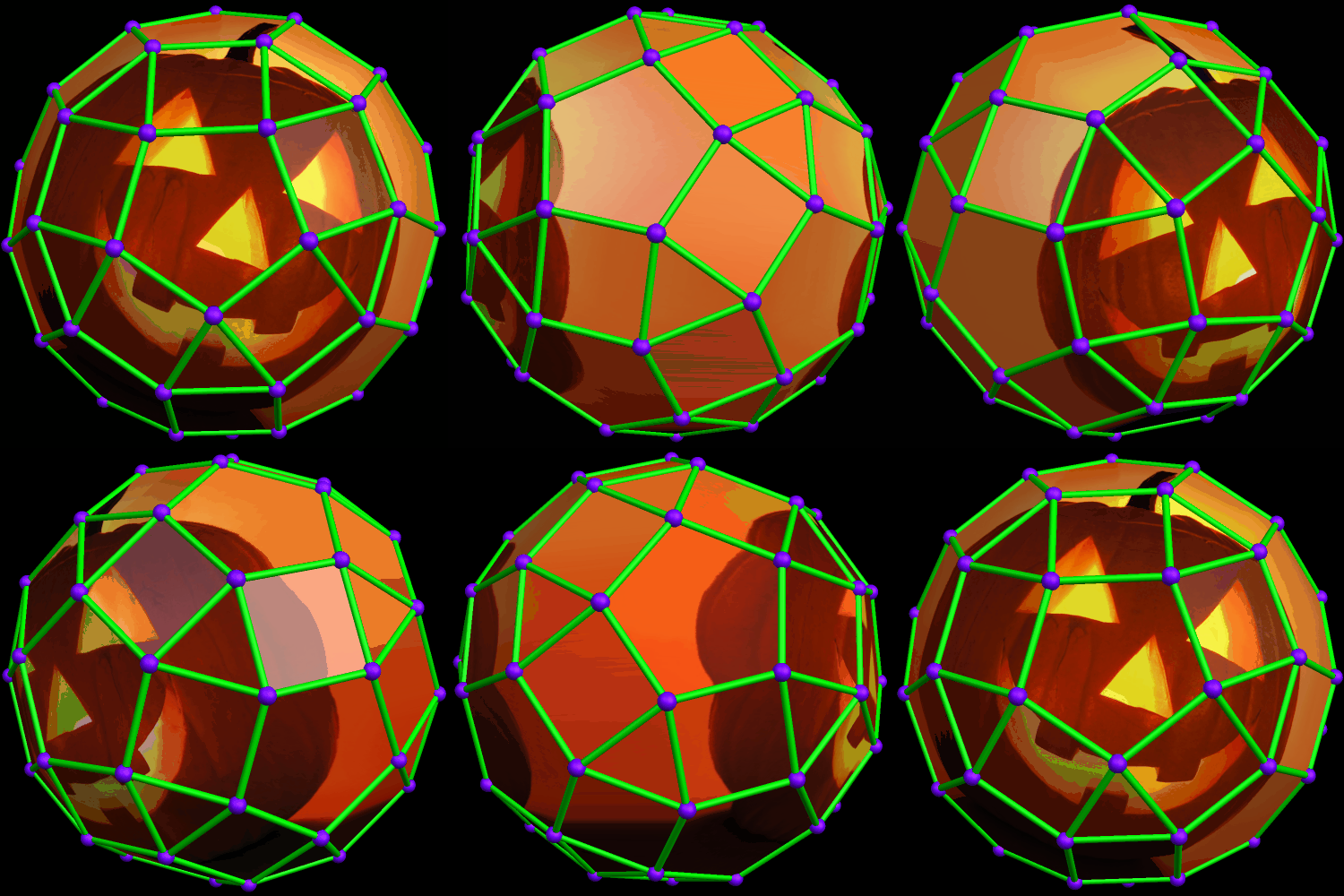
A Halloween Rhombicosidodecahedron

Rhombicosidodeca

This Jack-o-Lantern picture was found with a Google image-search, and then I projected it onto a rhombicosidodecahedron, and created this rotating .gif file, using Stella 4d — a program available at http://www.software3d.com/Stella.php. Happy Halloween!

On Mental Health: My Reasons for Letting the Sunshine In

141025_0000

There are quite a few posts on this blog on the subject of mental health, and they can be easily found by simply looking at that category, in the pull-down menu on the right side of your screen. In these posts, I have been quite candid about such things as my own panic disorder, PTSD, and Asperger’s Syndrome.

What I have not done, until now, is explain my reasons for my openness on this subject.

First and foremost, I am trying to do what I can to remove the stigma which surrounds the entire subject of mental illness. This stigma is harmful, for it keeps millions of people who need help from mental health professionals from seeking it, out of fear of being labeled and/or ostracized — or worse. I learned this the hard way:  by experiencing it. I had my first panic attack at age 16. Like most panic attacks, this one lasted perhaps twenty minutes, or less. Few people have panic attacks that last longer than that — unless they fail to seek treatment, and the panic attacks continue to happen, which is what happened to me.

Over time, panic disorder tends to become worse, if not treated. The fear of the panic attacks themselves becomes an issue, for those who have them frequently, and such fear can lead to people avoiding situations where they fear a panic attack would be particularly embarrassing, and/or debilitating — somewhere like, for example, the middle of a Walmart, or their church, or their workplace. In some cases, untreated panic disorder leads to full-blown agoraphobia, with some people actually reaching the point where they simply do not leave their homes at all — until they die.

In my case, I avoided treatment for my own panic disorder (or any other mental health problem) for about a decade, specifically because of my fear of the stigma of mental illness. I tried to keep my panic attacks a secret, but, of course, that did not stop them. They grew in intensity, and the duration of the attacks increased as well. A ten-hour panic attack — something which is incredibly rare — is what finally drove me to get over my fear of this stigma, and make an appointment with the man who is still my psychiatrist.

In the years that followed, I grew more and more disturbed by the existence of this stigma, and finally made a decision:  I would do whatever I could to neutralize it, for the benefit of others. I do not wish anyone to suffer the effects of deliberately delaying needed medical treatment. After much thinking, I eventually figured out one thing I can do, toward this end: be open about such matters, simply to help others know that mental illness can, with appropriate help, become transformed into mental health. In other words, as with many other illnesses, those with mental health problems can, and do, get better. This is why I have chosen the category-name “mental health” for these posts, rather than “mental illness.”

Of the particular struggles I have which involve issues of mental health, PTSD is the most difficult to treat . . . but I work hard, with the help of my doctor, to get better. What’s more, it is working, although I cannot claim this work is complete. I want everyone to know that getting better is a goal which is both realistic, and achievable.

With Asperger’s, my motivation for openness is somewhat different, for this condition is not actually a mental illness at all, as evidenced by the fact that it was recently “de-listed” from the latest version of the DSM (Diagnotic and Statistical Manual of Mental Disorders). Asperger’s Syndrome is simply a difference in the way some people think, as opposed to an actual disease. Some “Aspies” (our culture’s own nickname for ourselves), however, do suffer greatly, because of the difficulties involved in interacting socially with others, especially non-Aspies. I share what I have figured out, on this subject, with two goals in mind: (1) helping my fellow Aspies who struggle, and sometimes suffer, because of these differences, in any way I can, and (2) helping non-Aspies understand us better, so that these difficulties in interaction between Aspies and non-Aspies can become less of a problem — for everyone.

Finally, it simply feels good to no longer be trapped, in a metaphorical closet, regarding these things which are, after all, part of my life. As the saying goes, borrowed from the gay rights activists who invented it, “closets are for clothes, not for people.”

I much prefer letting the sunshine in.

What Is Art? Here’s Andy Warhol’s Answer.

Warhol

Until finding this quote, I had no idea Andy Warhol was an economist.

“How Tall Are You?”

metric system

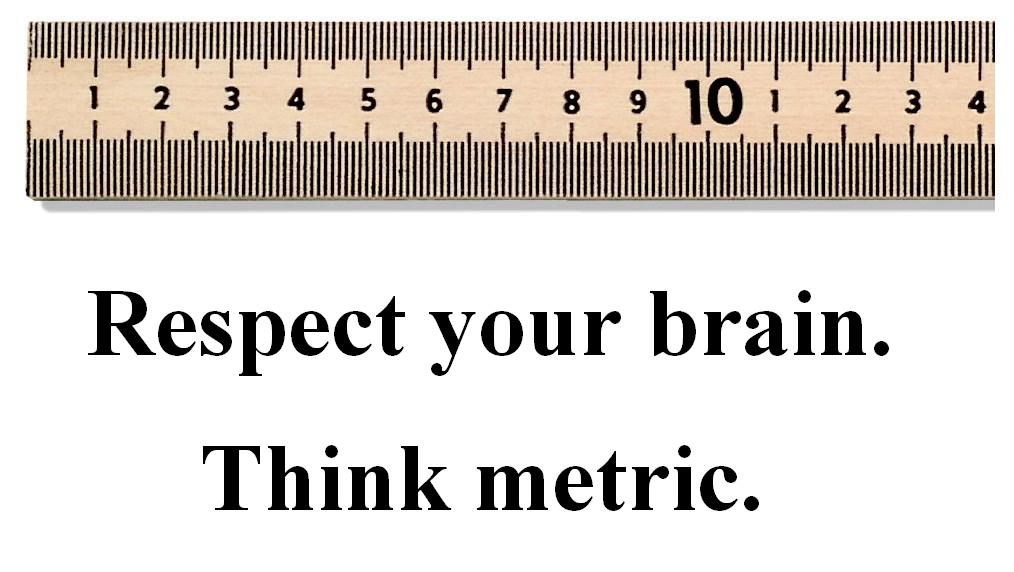
When I am asked for my height, anywhere — especially at school — I answer the question honestly. I am 1.80 meters tall.

I also live in the USA, one of only three remaining countries (the other two holdouts are Liberia and Myanmar) which have stubbornly refused to adopt the metric system. However, I am every bit as stubborn as other Americans, but, on this issue, I choose to be stubborn in the opposite direction.

It should surprise no one who knows me well that my classroom, whether I am teaching science or mathematics, is, by design, an all-metric zone. After all, like >99% of people, I have ten fingers (assuming thumbs are counted as fingers), ten toes, and almost always use the familiar base-ten number system when counting, measuring, doing arithmetic, or doing actual mathematics. (Doing arithmetic is not the same thing as doing real mathematics, any more than spelling is equivalent to writing.) Using the metric system is consistent with these facts, and using other units is not.

Admittedly, I do sometimes carry this to an extreme, but I do so to make a point. Metric units are simply better than non-metric units. Why should anyone need to memorize the fact that there are 5,280 feet in one mile? It actually embarrasses me that I have that particular conversion-factor memorized. By “extreme,” I mean that I have been known to paint the non-metric side of meter sticks black, simply to make it impossible for students in my classes to confuse inches and centimeters, and prevent them from measuring anything with the incorrect units.

To those who object that American students need to understand non-metric units, I simply point out that there are plenty of other teachers who take care of that. This is, after all, the truth.

Often, after giving my height as 1.80 meters, I am asked to give it in other units. Unless the person asking is a police officer (in, say, a traffic-stop situation), however, I simply refuse to answer with non-metric units. What do I say, instead? “I’m also 180 centimeters tall. Would you like to know my height in kilometers?”

If pressed on this subject in class — and it comes up, because we do lab exercises where the height of people must be measured — I will go exactly this far:  I am willing to tell a curious student that there are 2.54 centimeters in an inch, 12 inches in a foot, and 3.28 feet in a meter. Also, I’m willing to loan calculators to students. Beyond that, if a student of mine really wants to know my height in non-metric units, he or she simply has to solve the problem for themselves — something which has not yet happened. I do not wish to tell anyone my height in feet and inches, for I do not enjoy headaches, and uttering my height, in those units I despise, would certainly give me one. Also, obviously, you won’t find my height, expressed in non-metric units, on my blog, unless someone else leaves it here, in a comment — and I am definitely not asking anyone to do that.

I might, just for fun, at some point, determine my height in cubits. For all I know, a person’s height, measured with their own cubits, might be a near-constant. That would be an interesting thing to investigate, and my students, now that I’ve thought about the question, might find themselves investigating this very issue, next week. The variability of cubits, from one person to another, makes them at least somewhat interesting. It also makes cubits almost completely useless, which explains why they haven’t been used since biblical times, but that’s not the point. One can still learn things while investigating something which is useless, if one is sufficiently clever about it.

Feet and inches, however, are not interesting — at all. They are obsolete, just as cubits are, and they are also . . . offensive. It is not a good thing to insult one’s own brain.

On Boiling Eggs, William Shakespeare, and Richard Feynman

Not long ago, I boiled a dozen eggs.

After accidentally misquoting Shakespeare, while watching these eggs boil (“Boil, boil, toil and trouble, fire burn and cauldron bubble”), I then correctly quoted Shakespeare at the eggs, by shouting, “You egg!” at them, as they boiled.

What . . . you’ve never talked to your food? If not, just try it some time, for it makes life more interesting. If you’re worried about people thinking you’re crazy, I have another quote, from the physicist Richard Feynman, for you to consider:  “What do you care what other people think?”

Little seems to be going right today, for correctly quoting Shakespeare meant being, at the same time, mathematically incorrect. Twelve and one are, of course, not the same number, but I’m not willing to deliberately misquote Shakespeare, for that would be, well, wrong.

I was then asked, by someone who heard me, um, shouting at boiling eggs, exactly which of Shakespeare’s plays it is, in which the line “you egg” appears. Since I did not know the answer to this question, I immediately used this situation as an opportunity to test the alleged omniscience of Google, which I test, and re-test, frequently. (So far, Google always passes these experimental tests, but I will post an announcement here if this fact ever changes.) I also googled my earlier, failed attempt to quote Shakespeare, which is how I now know that I was misquoting him.

In case you’re wondering why I was fact-checking myself, here’s another Feynman quote, offered as explanation:  “The first principle is that you must not fool yourself — and you are the easiest person to fool.” Those are words to live by — and I do.

Not only did Google know that the two-word quote I remembered (from 10th grade English class, over thirty years ago, simply because I found it funny) comes from Macbeth, Act 4, Scene 2, but it also, very helpfully, showed me the way to the YouTube video which you can see below.

For those few readers of my blog who have not already noticed this, I lead a strange life.

Of course, I certainly wouldn’t want a normal one, but, clearly, I don’t need to worry about that.