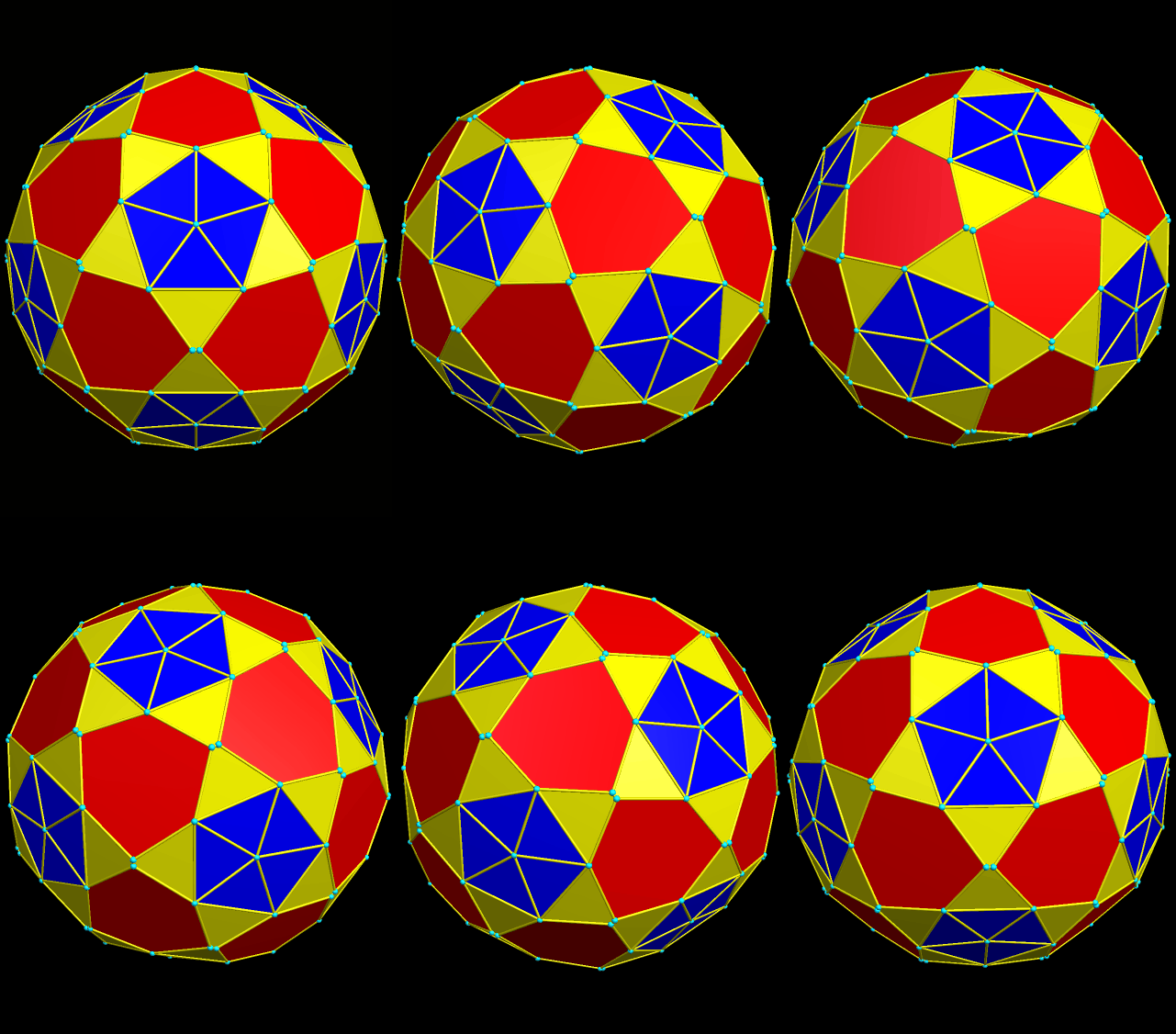
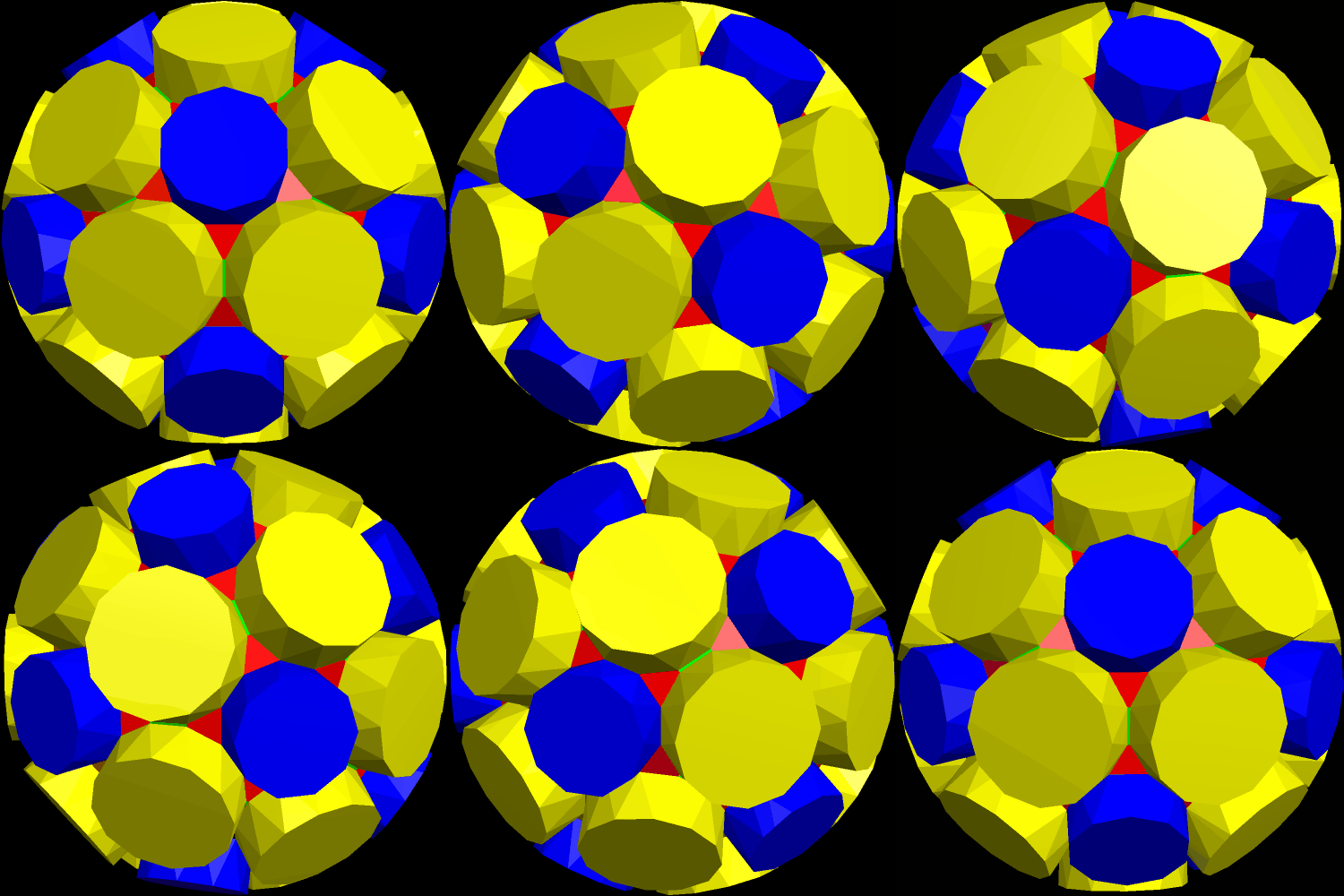
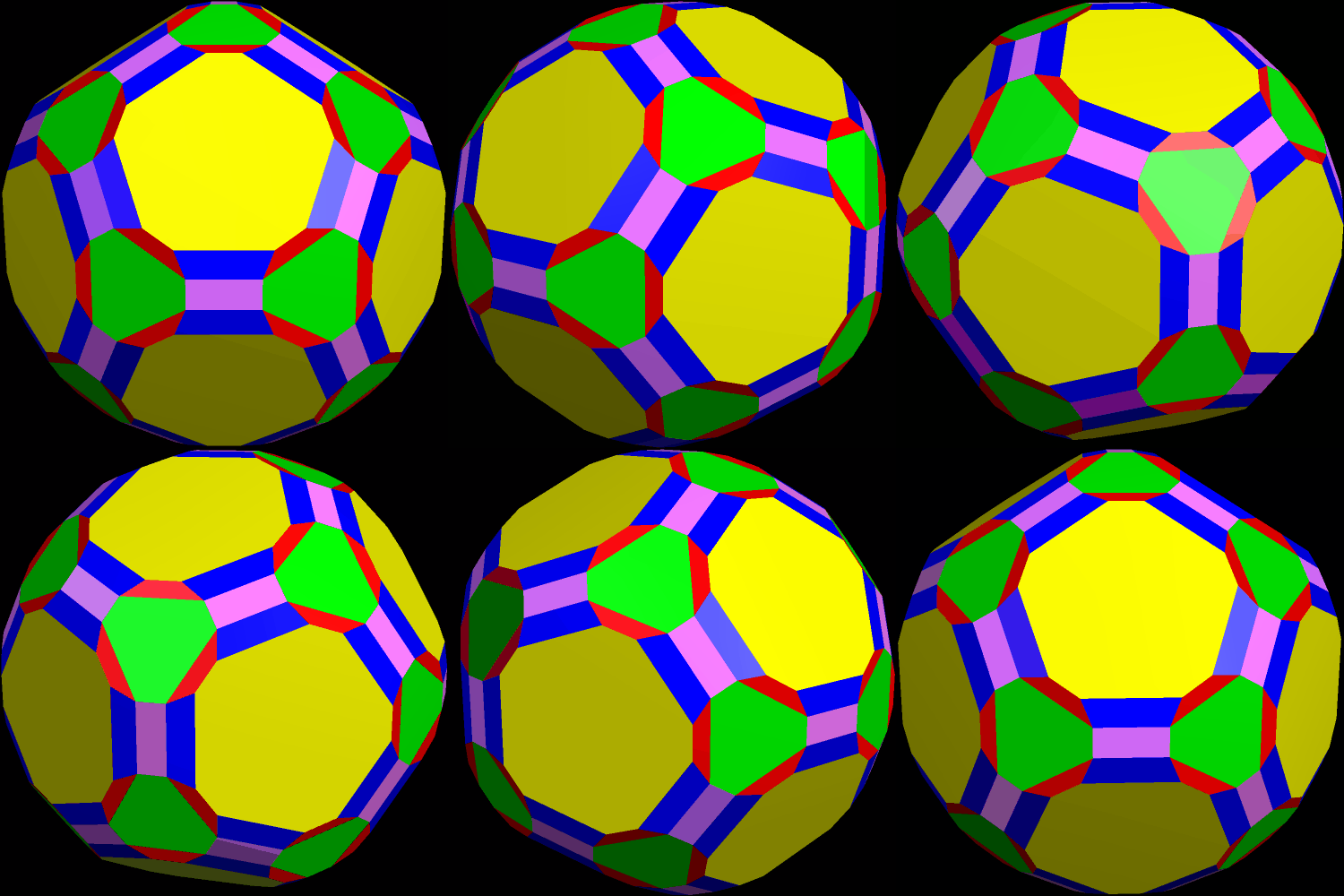
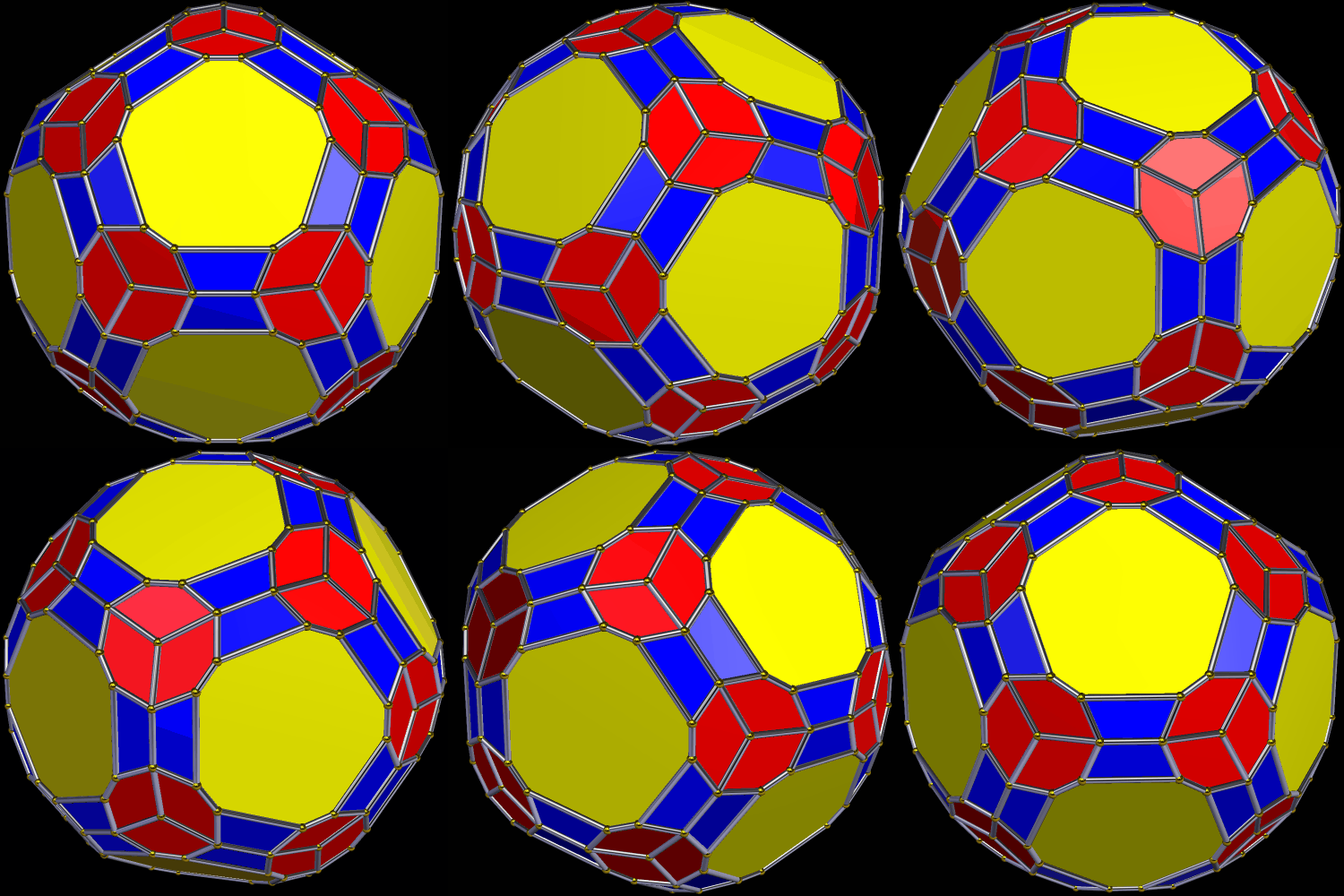
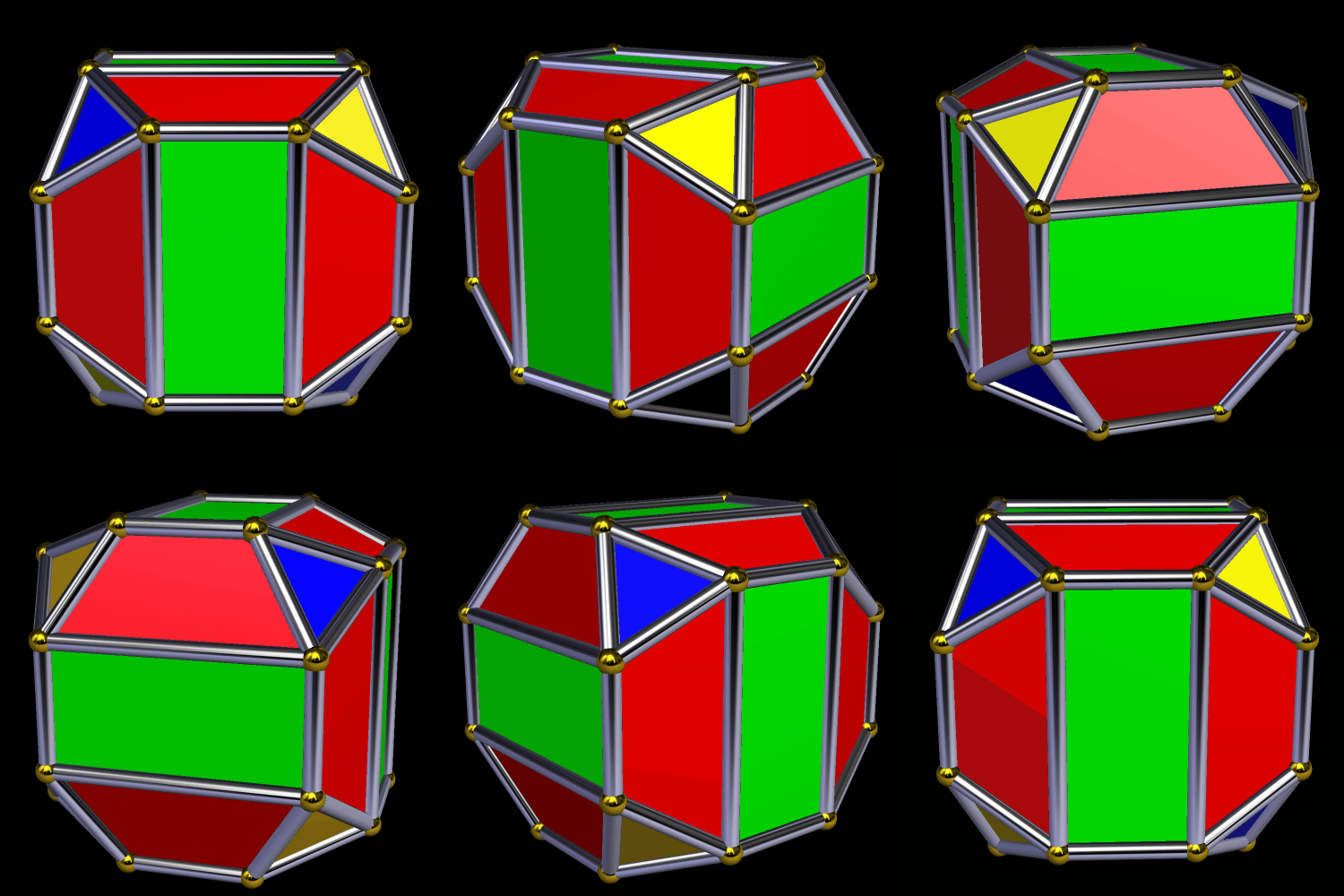
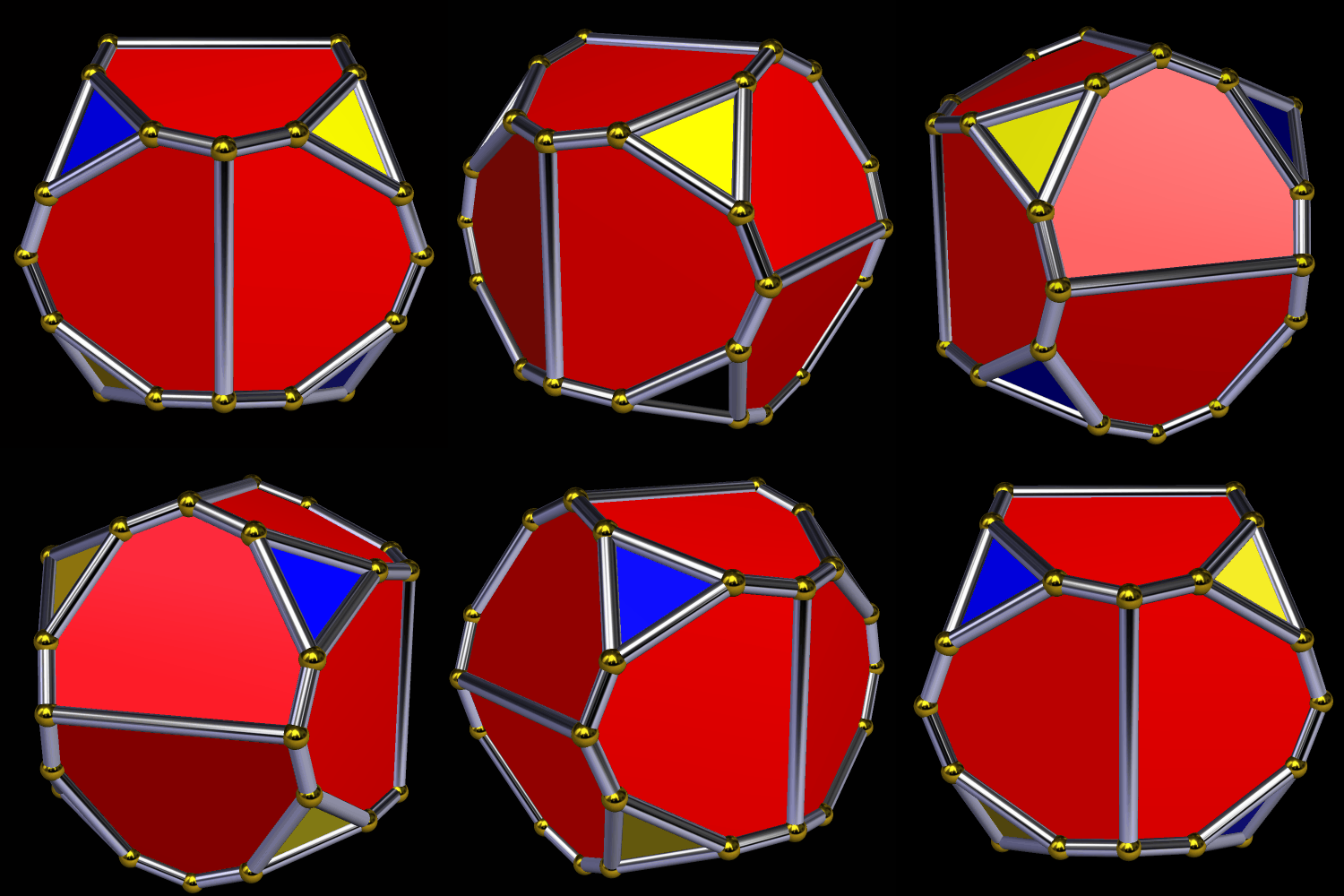
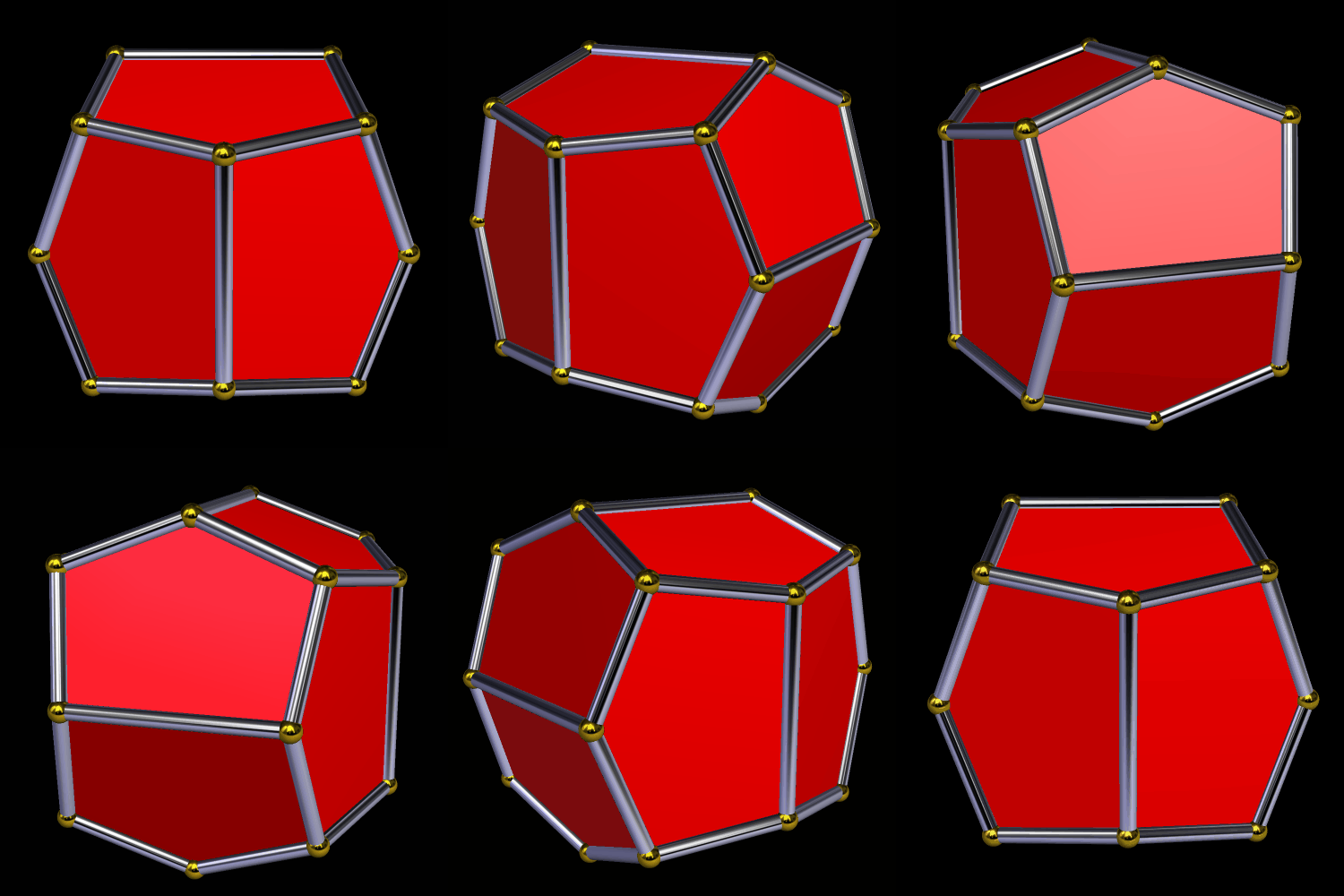
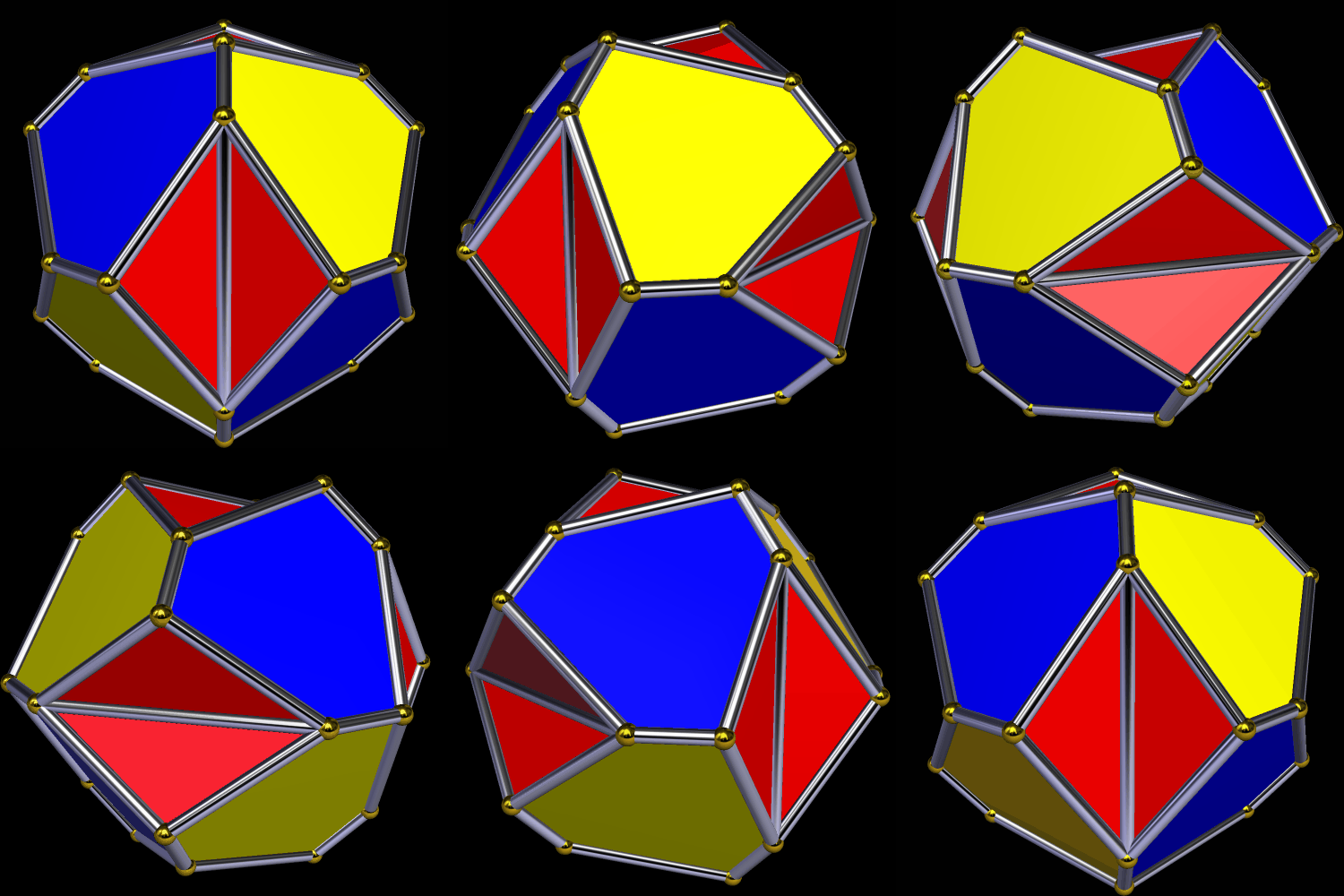
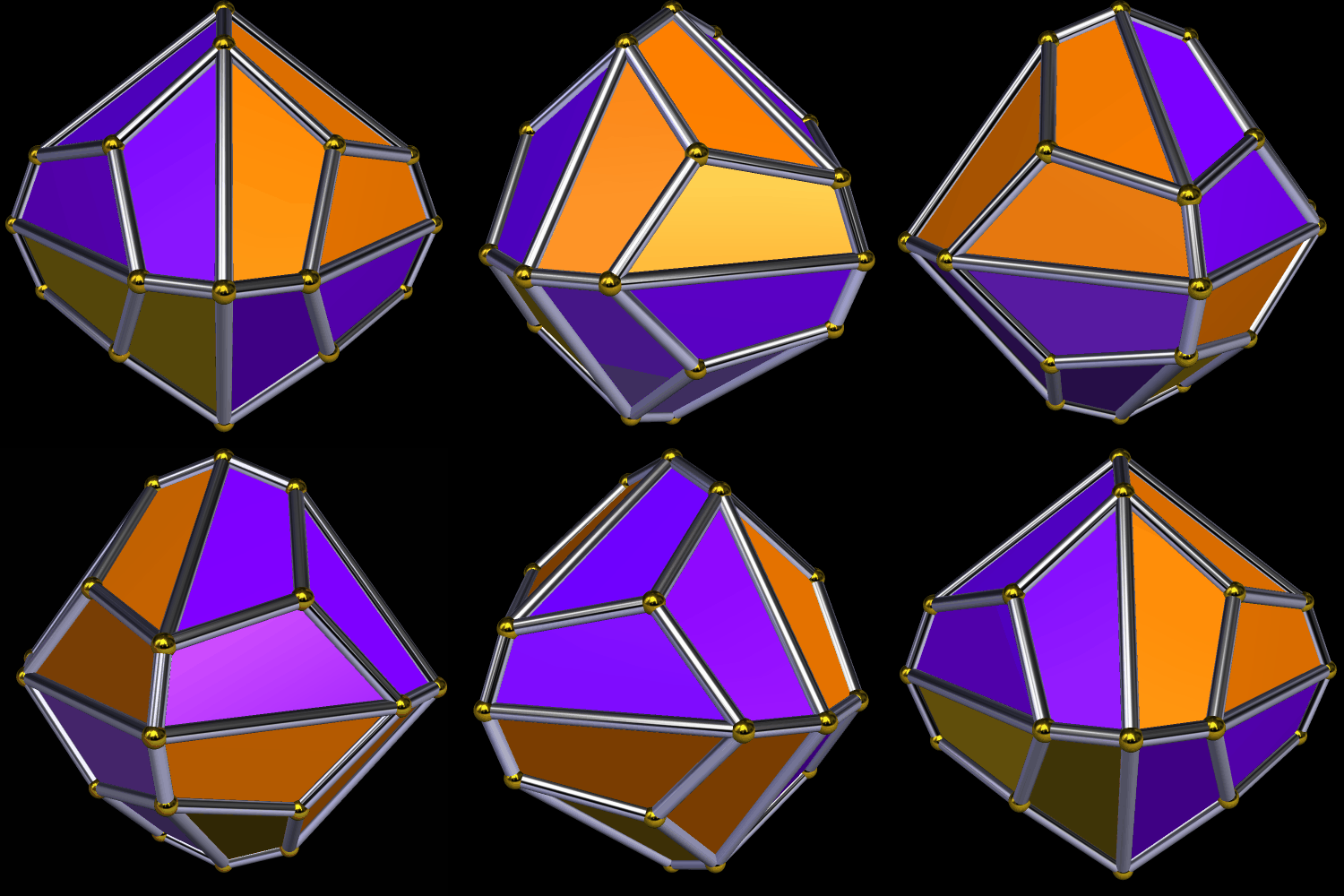
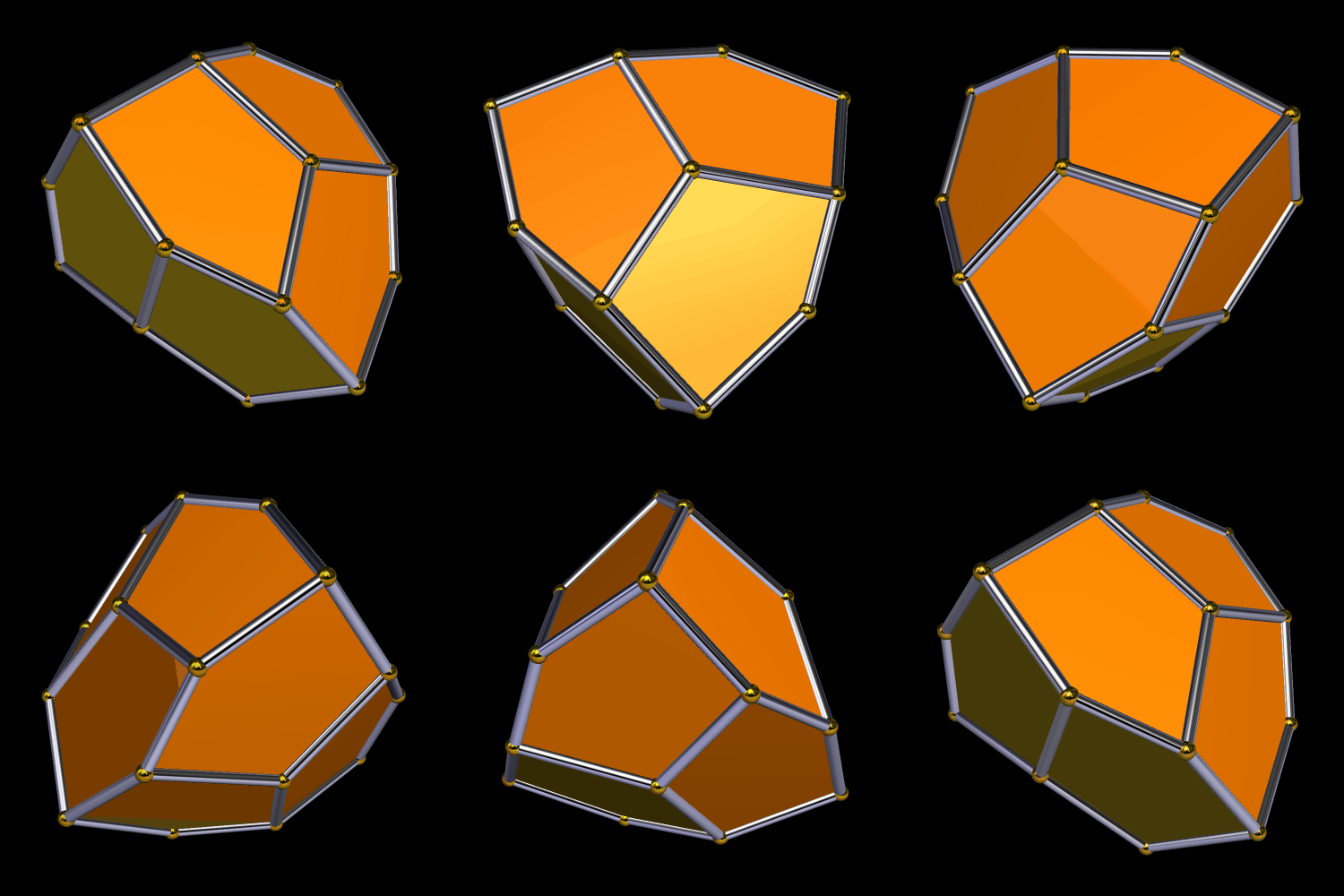
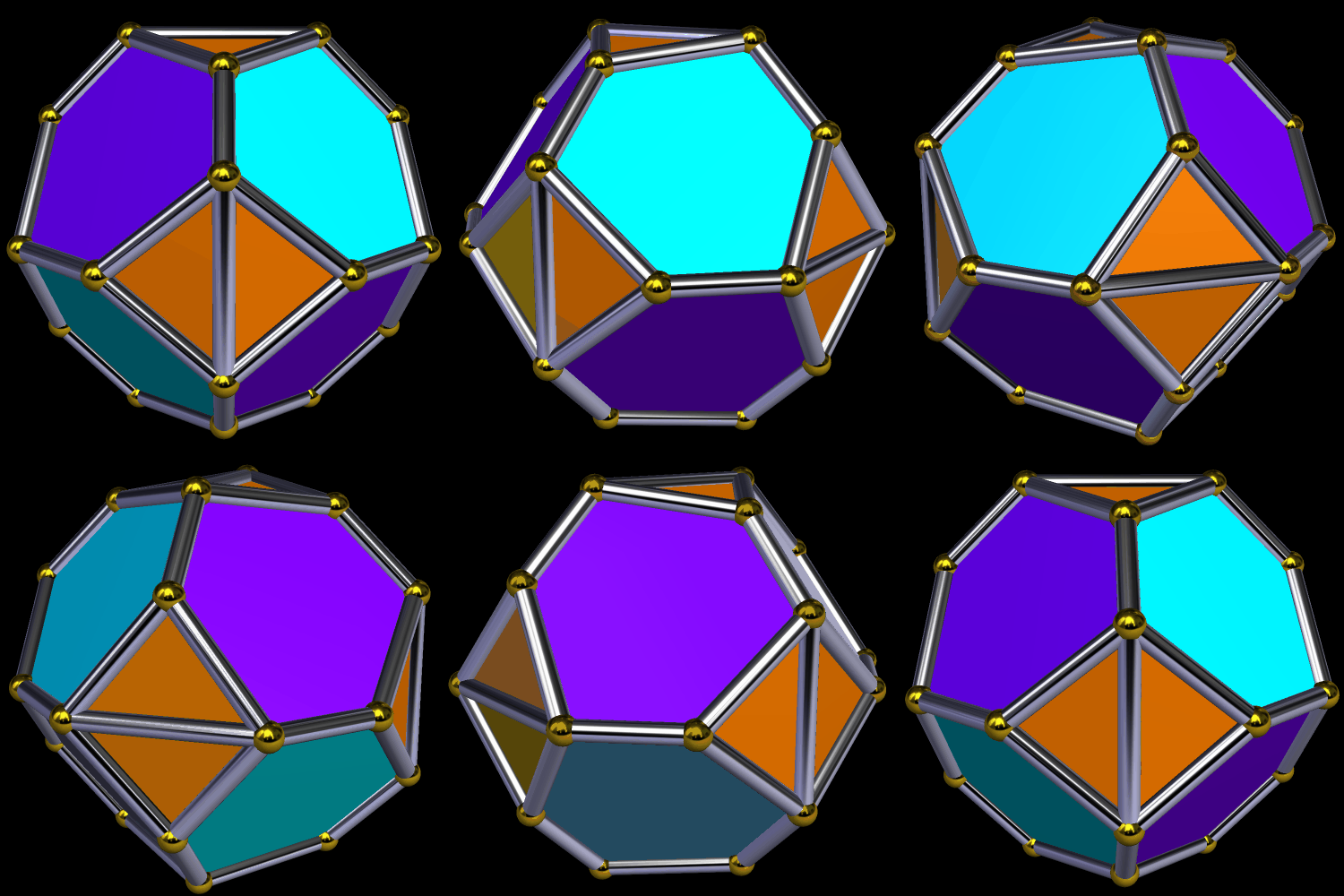
An Octahedron Made of Cubes

Augmented Cube

Software credit:  I made this using Stella 4d, which is available at http://www.software3d.com/Stella.php.

What Is a Mathematician?

erdos

A Polyhedral Journey, Beginning with Face-Based Zonohedrification of an Icosahedron

To begin this, I took an icosahedron, and made a zonish polyhedron with it, with the new faces based on the zones of the existing faces. Here’s the result.

1 face-based zonish icosahedron

Next, I started stellating the polyhedron above. At the sixth stellation, I found this. It’s a true zonohedron, and the first polyhedron shown here is merely “zonish,” because one has triangles, and the other does not. (One of the requirements for a polyhedron to be a zonohedron is that all its faces must have an even number of sides.)
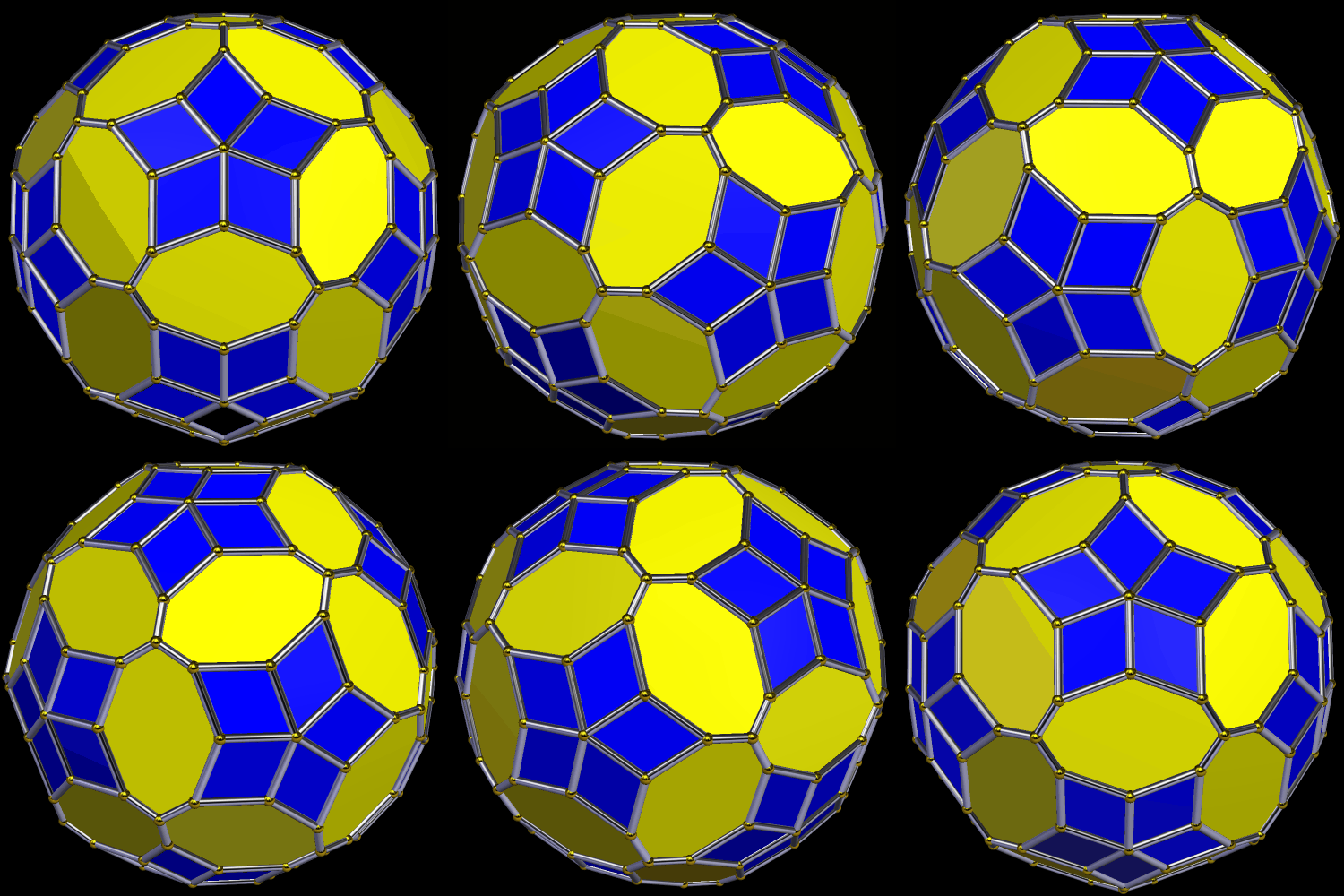
2 6th stellation face-based zonish icosahedronAfter that, I kept stellating, finding this as the 18th stellation of the first polyhedron shown here.

3 18th stellation face-based zonish icosahedron

With this polyhedron, I then made its convex hull.

4 Convex hull of 18th stellation of face-based zonish icosahedronAt this point, the irregular hexagons were bothering me, so I used Stella 4d‘s “try to make faces regular” option. (Stella 4d is polyhedron-manipulation software you can try for free, or purchase, right here.)

5 spring model of convex hull of 18th stellation of face-based icosahedron

The next step I chose was to augment all the yellow trapezoids with prisms, each with a height 1.6 times the trapezoids average edge length.
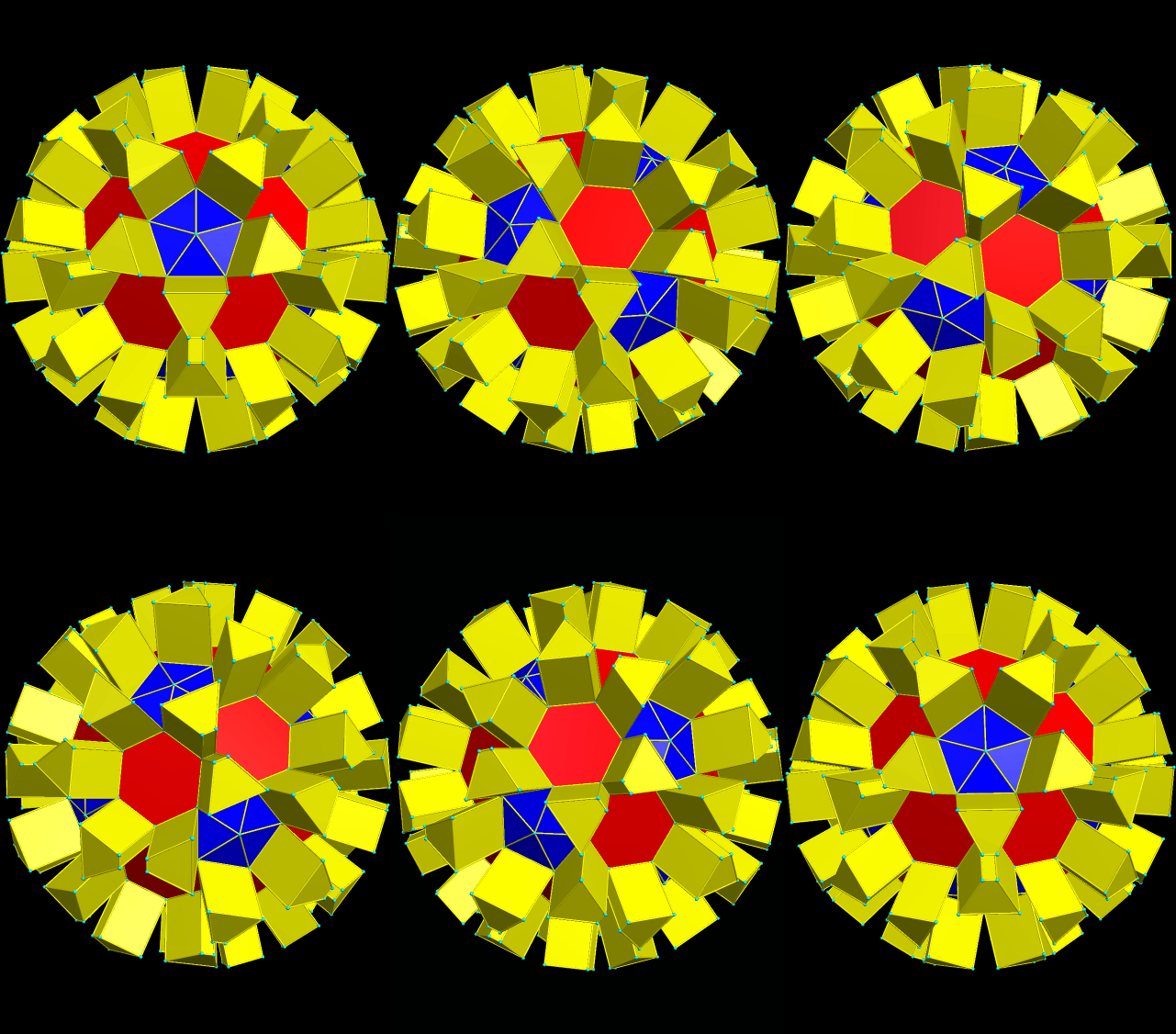
6 Augmented sping model of convex hull of 18th stellation of FBZI

The next step was, again, to make the convex hull.
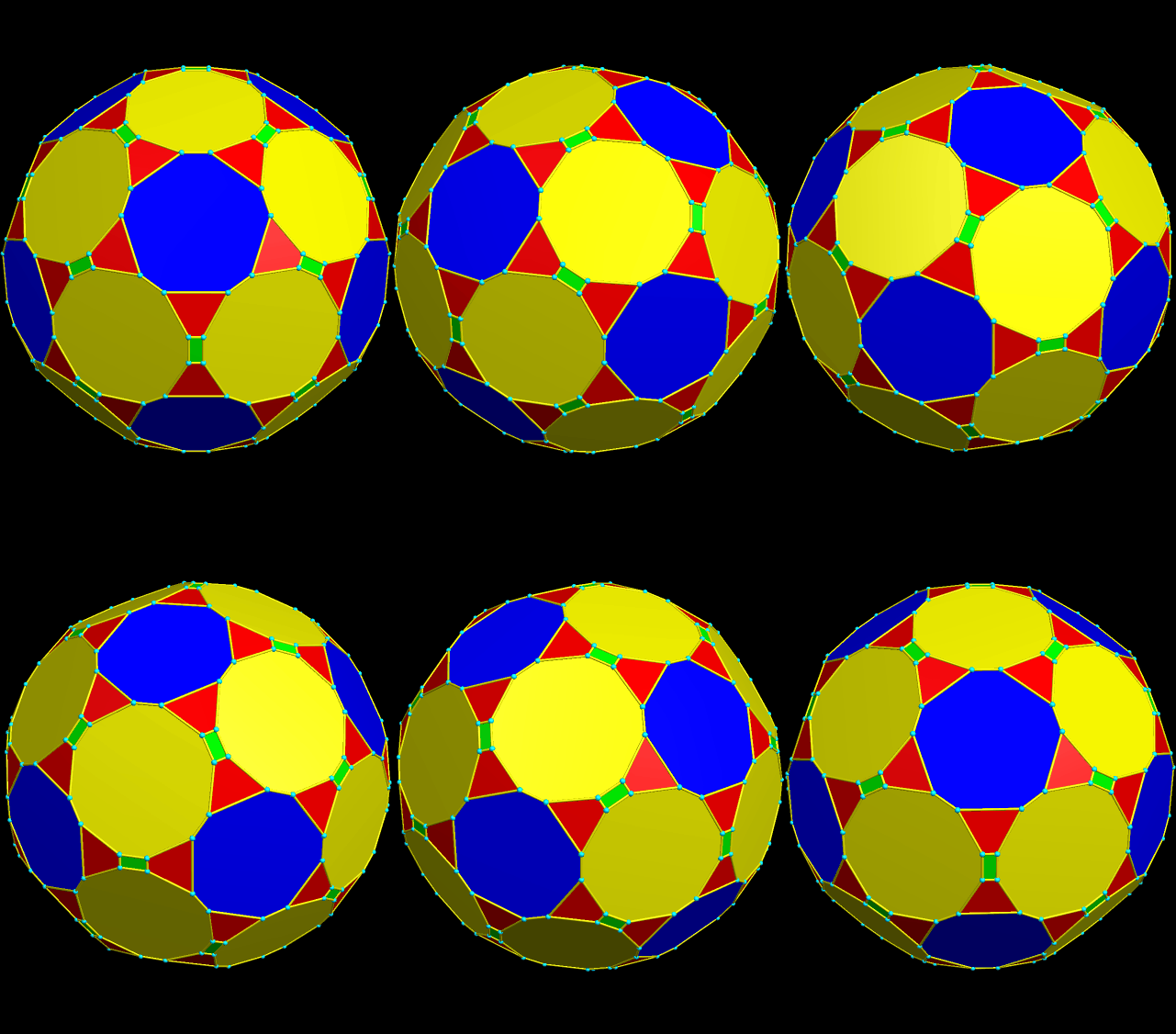
7 Convex hull of augmented convex hull

At this point, I tried “try to make faces regular” again, and was pleased with the result. The green rectangles became so thin, however, that I had to stop displaying the edges and vertices, in order for then to be seen.
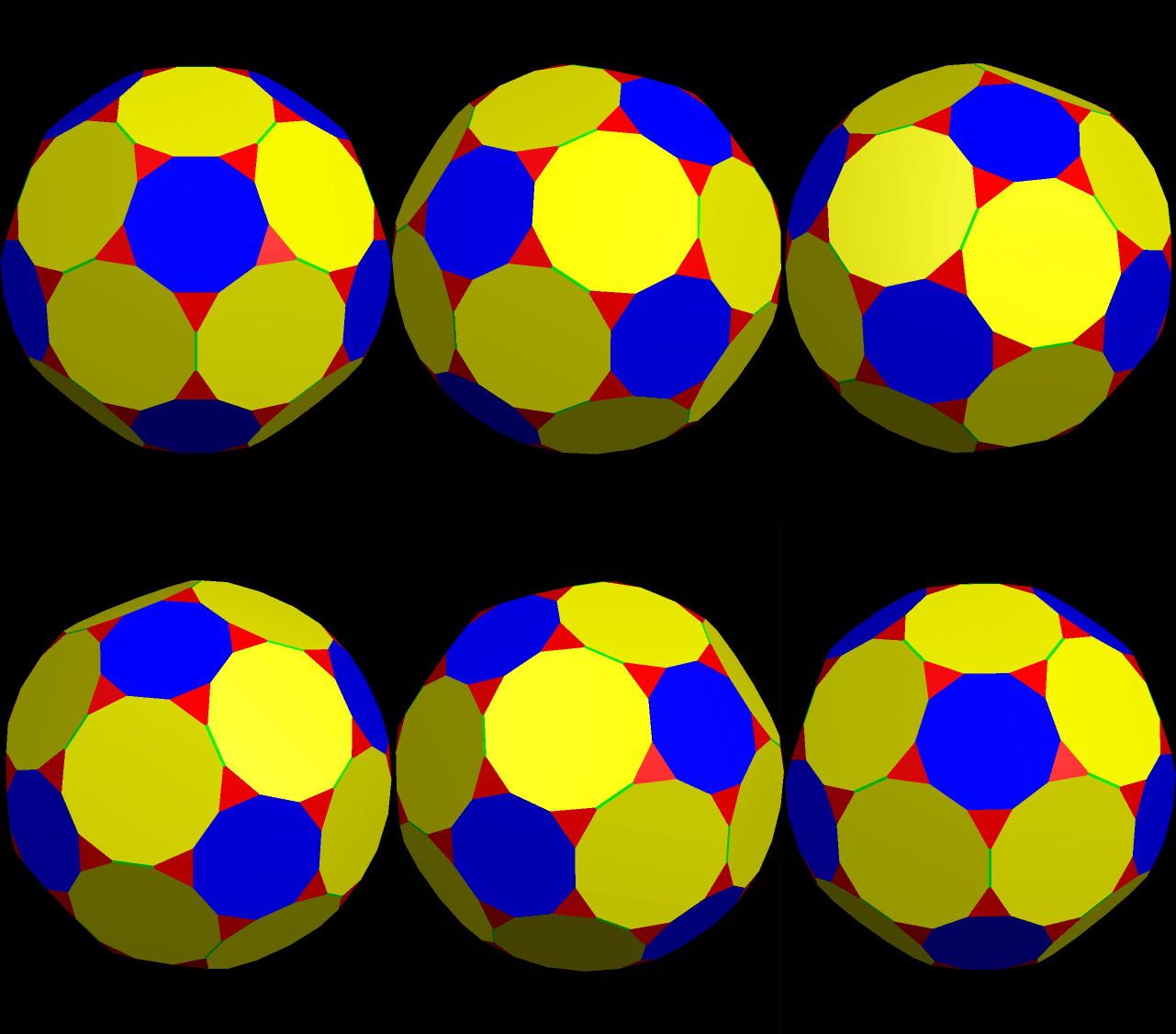
8 spring model of last oneNext, I augmented both the blue faces (decagons) and the yellow faces (dodecagons) with antiprisms, again using a height 1.6 times that of the augmented faces’ average edge-lengths.

9 Augmented Poly 9th in series

Next, I made the convex hull again — a step I often take immediately after augmenting a polyhedron.

10 Convex hull

This one surprised me, as it is more complicated than I expected. To clean things up a bit, I augmented only the trapezoids (dark pink) with prisms, and dodecagons (green) with antiprisms, again using the factor 1.6 for the augmentation-height.

11 augmented Convex hull

The next step I chose was to take the convex hull, once more. I had not yet noticed that the greater height of the trapezoidal prisms would cause the dodecagonal antiprisms to be “lost” by this step, though.
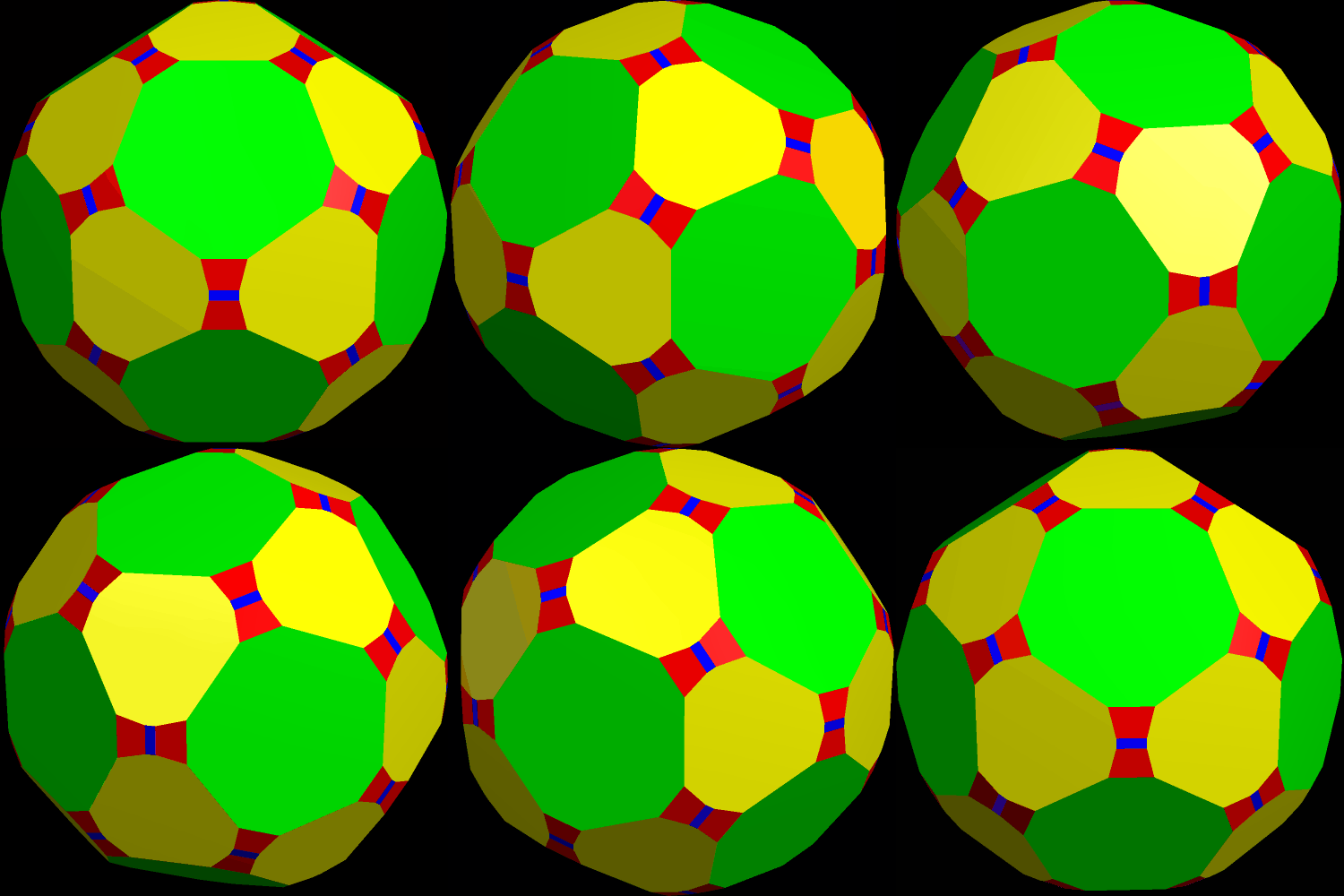
12 convex hull

Next, “try to make faces regular” was used again.

13 spring model

This last result had me feeling my polyhedral journey was going in circles, so I tried augmentation again, but in a different way. I augmented this polyhedron, using prisms, on only the red trapezoids (height factor, 1.6 again) and the blue rectangles (new height factor, 2.3 times average edge length).
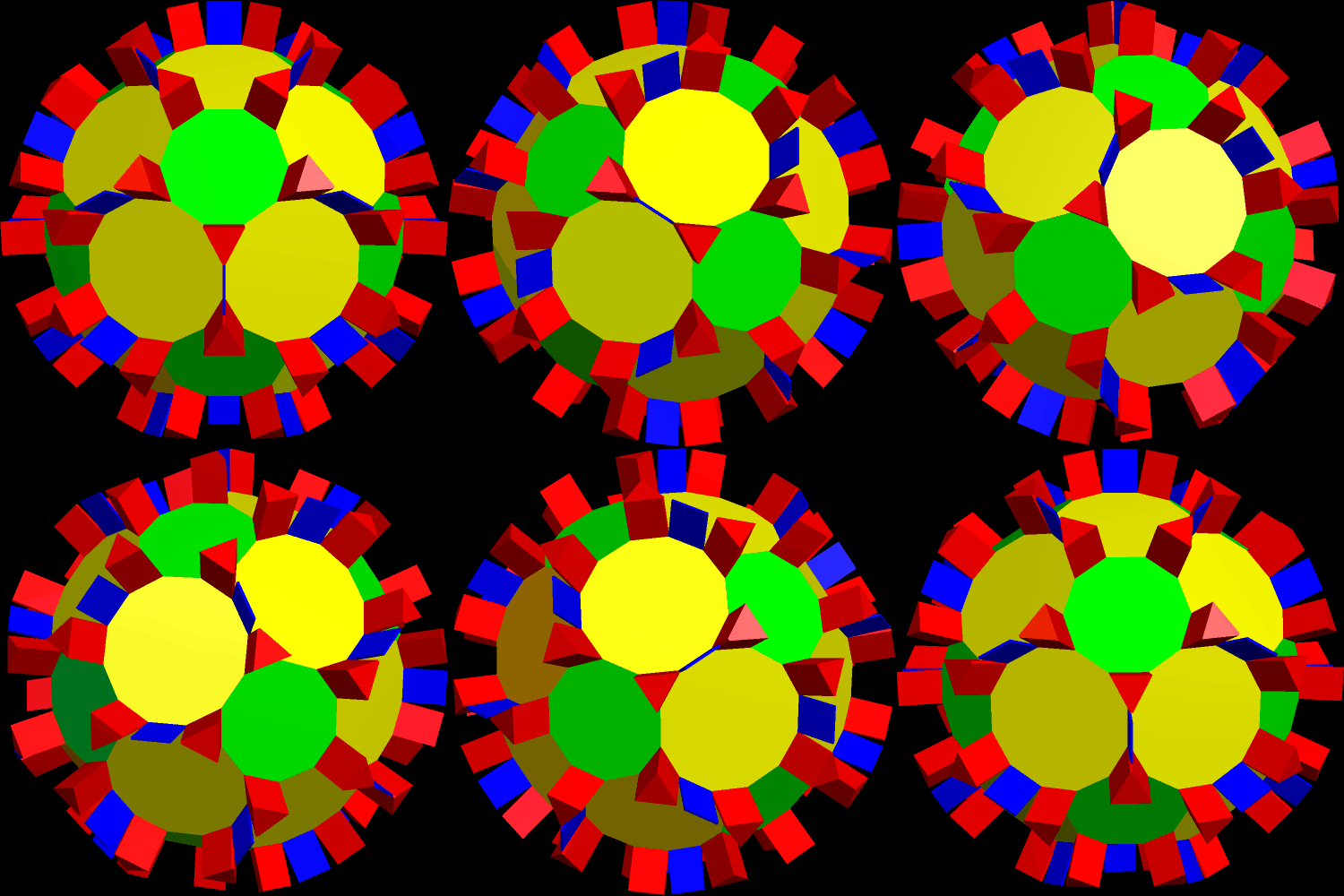
14 augmented spring model

After that, it was time to make another convex hull — and that showed me that I had, indeed, taken a new path.

15 Convex hullI found the most interesting faces of this polyhedron to be the long, isosceles trapezoids, so I augmented them with prisms, ignoring the other faces, using the new height-factor of 2.3 times average edge length this time.
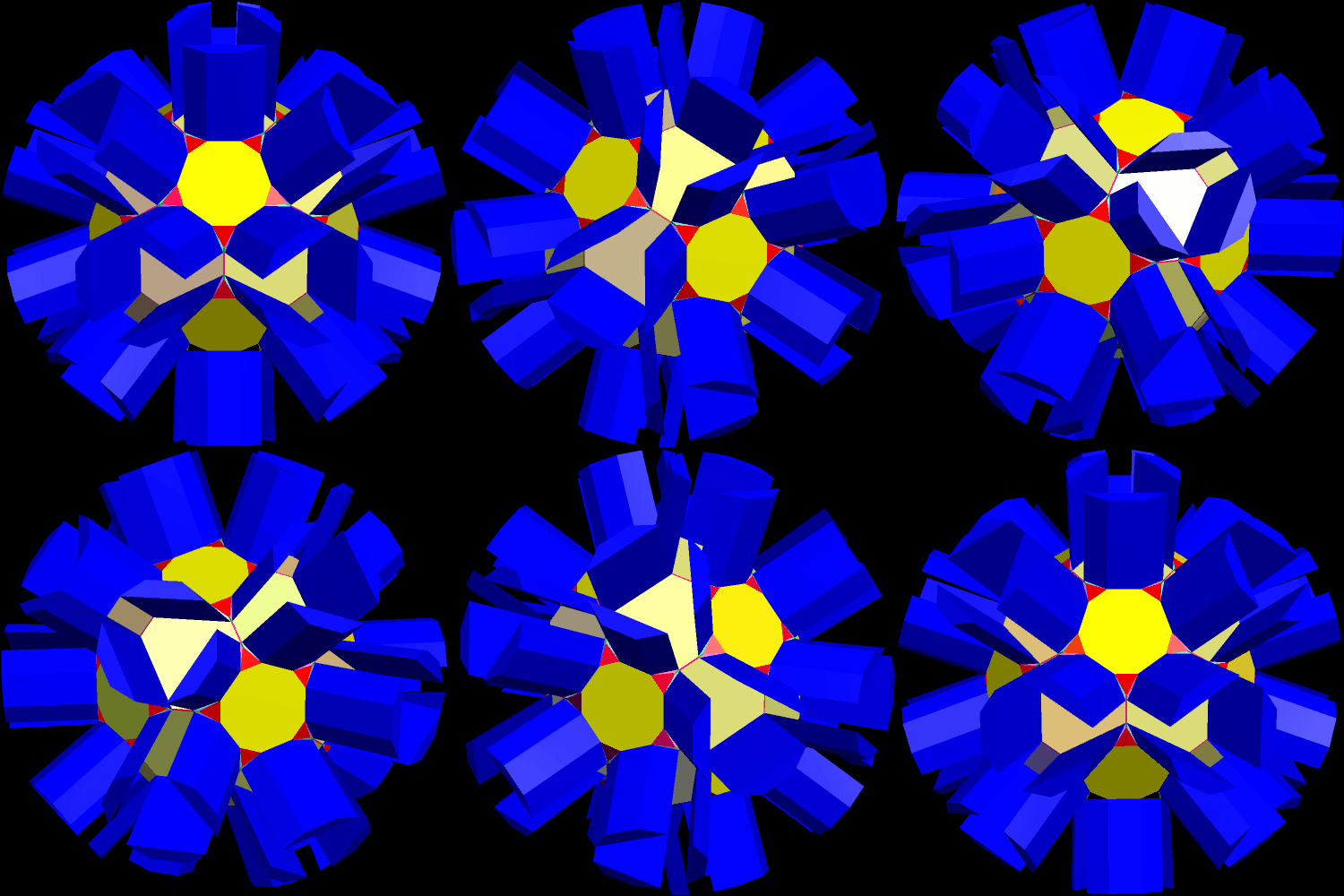
16 augmented Convex hull

Of course, I wanted to see the convex hull of this. Who wouldn’t?

17 Convex hull

I then started to stellate this figure, choosing the 14th stellation as a good place to stop, and making the edges and vertices visible once more.

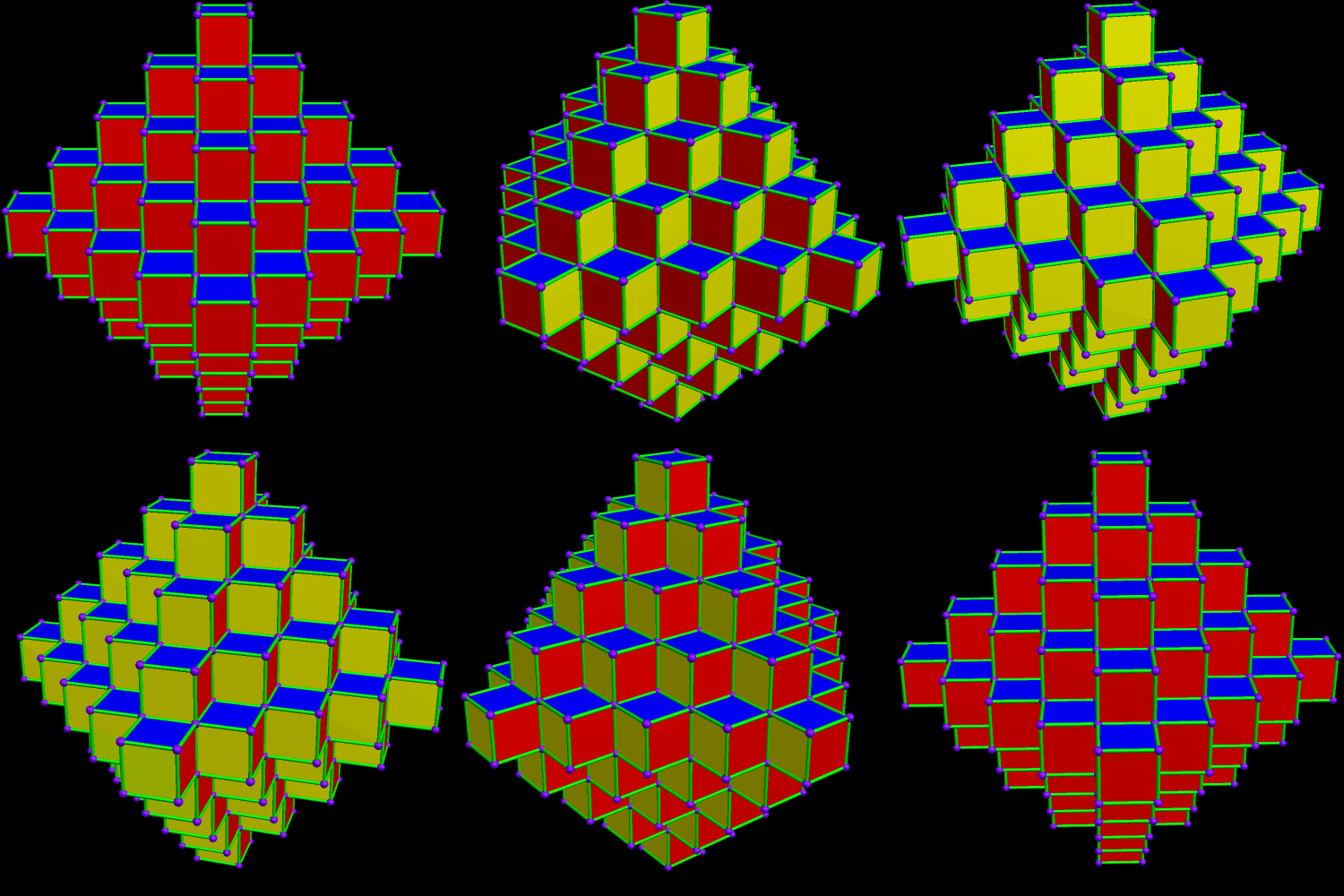
18 the 14th stellation of the previous Convex hull

A Zonish Icosahedron, and Some of Its “Relatives”

To begin this, I used Stella 4d (available here) to create a zonish polyhedron from the icosahedron, by adding zones along the x-, y-, and z-axes. The result has less symmetry than the original, but it is symmetry of a type I find particularly interesting.

zonohedrified icosahedron xyz

After making that figure, I began stellating it, and found a number of interesting polyhedra in this polyhedron’s stellation-series. This is the second such stellation:

zonohedrified icosahedron xyz 2nd stellation

This is the 18th stellation:

zonohedrified icosahedron xyz 18th stellation

The next one, the 20th stellation, is simply a distorted version of the Platonic dodecahedron.

zonohedrified icosahedron xyz 20th stellation

This one is the 22nd stellation:

zonohedrified icosahedron xyz 22nd stellation

This is the 30th stellation:

zonohedrified icosahedron xyz 30th stellation

The next really interesting stellation I found was the 69th:

zonohedrified icosahedron xyz 69th stellation

At this point, I returned to the original polyhedron at the top of this post, and examined its dual. It has 24 faces, all of which are quadrilaterals.

zonohedrified icosahedron xyz dual

This is the third stellation of this dual — and another distorted Platonic dodecahedron.

zonohedrified icosahedron xyz dual 3rd stellation

This is the dual’s 7th stellation:

zonohedrified icosahedron xyz dual 7th stellation

And this one is the dual’s 18th stellation:

zonohedrified icosahedron xyz dual 18th stellation

At this point, I took the convex hull of this 18th stellation of the original polyhedron’s dual, and here’s what appeared:

Convex hull of 18th stellation of dual of zonish icosahedron xyz

Here is this convex hull’s dual:

dual of Convex hull of 18th stellation of dual of zonish icosahedron xyz

Stella 4d, the program I use to make these (available here), has a built-in “try to make faces regular” function. When possible, it works quite well, but making the faces of a polyhedron regular, or even close to regular, is not always possible. I tried it on the polyhedron immediately above, and obtained this interesting result:

spring model of Dual of convex hull of stellation of zonish xyz icosahedron

While interesting, this also struck me as a dead end, so I returned to the red-and-yellow convex hull which is the third image above, from right here, and started stellating it. At the 19th stellation of this convex hull, I found this:

19th stellation of Convex hull of 18th stellation of dual of zonish icosahedron xyz

I also found an interesting polyhedron as the 19th stellation of the dual which is three images above:

19th stellation of dual of Convex hull of 18th stellation of dual of zonish icosahedron xyz

Cuboctahedral Cluster of Rhombic Triacontahedra

Augmented Rhombic Triaconta

Due to their high number of planes of symmetry, rhombic triacontahedra make excellent building blocks to build other polyhedra. To make this, I used a program called Stella 4d, which you can try right here.

The 109th Stellation of the Triakis Icosahedron

109th stellation of Triakis icosa

Created using Stella 4d:  Polyhedron Navigator, available here.
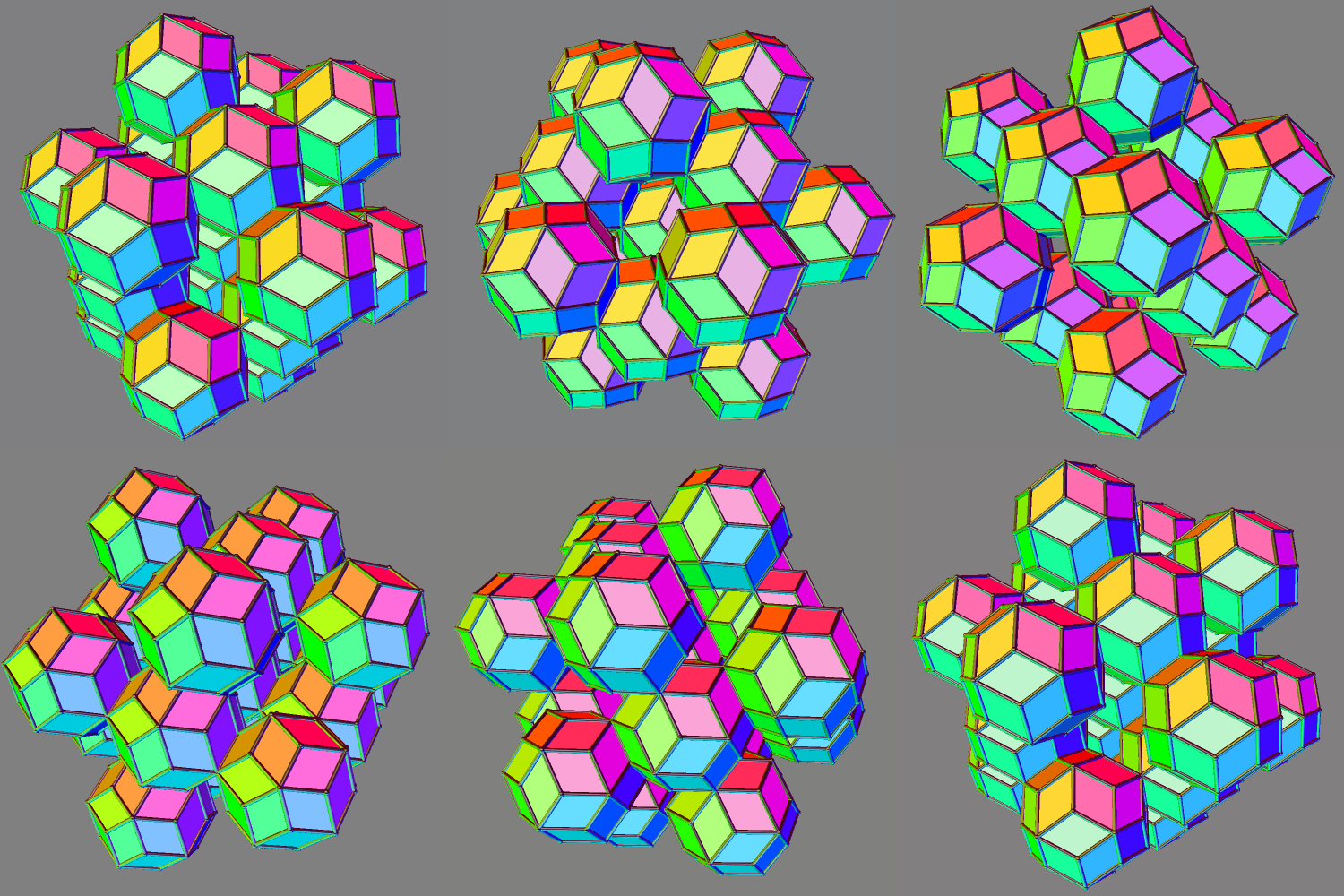
Two Different Sets of Two Dozen Flying Kites

24 kites

Because (6)(4) = 24 = (8)(3), that’s why.

bowtie octagon dual

I used Stella 4d to make each of these. A free trial download of this software is available here.

Moving Polyhedral Desktop Backgrounds for PCs

interesting

I use a rather old laptop PC, but I think this would work for desktop PCs, as well. On a lark, I tried putting a geometrical .gif file — the one you see above — on my PC, as the “wallpaper” for a desktop background. I didn’t think that would work, but, to my surprise, it did — rotational movement and all.

If you want to try the same thing with images from this blog, choose one that’s in a horizontal rectangle, to match the shape of a computer screen — they work better. I make these images with Stella 4d:  Polyhedron Navigator, which you can try here.

Zome: Strut-Length Chart and Product Review

This chart shows strut-lengths for all the Zomestruts available here (http://www.zometool.com/bulk-parts/), as well as the now-discontinued (and therefore shaded differently) B3, Y3, and R3 struts, which are still found in older Zome collections, such as my own, which has been at least 14 years in the making.

Zome

In my opinion, the best buy on the Zome website that’s under $200 is the “Hyperdo” kit, at http://www.zometool.com/the-hyperdo/, and the main page for the Zome company’s website is http://www.zometool.com/. I know of no other physical modeling system, both in mathematics and several sciences, which exceeds Zome — in either quality or usefulness. I’ve used it in the classroom, with great success, for many years.

The 9-81-90 Triangle

In a previous post (right here), I explained the 18-72-90 triangle, derived from the regular pentagon. It looks like this:

18-72-90 triangle

I’m now going to attempt derivation of another “extra-special right triangle” by applying half-angle trigonometric identities to the 18º angle. After looking over the options, I’m choosing cot(θ/2) = csc(θ) + cot(θ). By this identity, cot(9°) = csc(18°) + cot(18°) = 1 + sqrt(5) + sqrt[2sqrt(5) + 5].

Since cotangent equals adjacent over opposite, this means that, in a 9-81-90 triangle, the side adjacent to the 9° angle has a length of 1 + sqrt(5) + sqrt[2sqrt(5) + 5], while the side opposite the 9° angle has a length of 1. All that remains, now, is to use the Pythagorean Theorem to find the length of the hypotenuse.

By the Pythagorean Theorem, and calling the hypotenuse h, we know that h² = (1)² + {[1 + sqrt(5)] + sqrt[2sqrt(5) + 5]}² = 1 + {2[(1 + √5)/2] + sqrt[(2√5) + 5]}² = 1 + {2φ + sqrt[(2√5) + 5]}², where φ = the Golden Ratio, or (1 + √5)/2, since I want to use the property of this number, later, that φ² = φ + 1.

Solving for h, h = sqrt(1 + {2φ + sqrt[(2√5) + 5]}²) = sqrt{1 + 4φ² + (2)2φsqrt[(2√5) + 5] + (2√5) + 5} = sqrt{6 + 4(φ + 1) + 4φsqrt[(2√5) + 5] + (2√5)} = sqrt{6 + 4φ + 4 + 4φsqrt[(2√5) + 5] + (2√5)} = sqrt{10 + 4[(1 + √5)/2] + 4φsqrt[(2√5) + 5] + (2√5)} = sqrt{10 + 2 + (2√5) + 4φsqrt[(2√5) + 5] + (2√5)} = sqrt{12 + (4√5) + 4[1 + √5)/2]sqrt[(2√5) + 5]} = sqrt{12 + (4√5) + (2 + 2√5)sqrt[(2√5) + 5]}, the length of the hypotenuse. Here, then, is the 9-81-90 triangle:

9-81-90 triangle