A Polyhedral Cage Which Includes the Dodecahedron, the Icosahedron, and the Rhombic Triacontahedron

Image

A Polyhedral Cage Which Includes the Dodecahedron, the Icosahedron, and the Rhombic Triacontahedron

The dodecahedron’s edges pass through the purple squares (edge midpoints) and red hexagons (vertices), and have blue decagons above their pentagonal face-centers. The blue decagons’ centers also mark the vertices of the triangular faces of the icosahedron, each of which has a purple square as a side-midpoint, and a red hexagon over its face-center. The rhombic triacontahedron’s faces have blue decagons at the vertex of each acute angle, and red hexagons at the obtuse angle vertices, with purple squares above the rhombic faces’ centers.

I used Stella 4d to make this image, and you can find that program at http://www.software3d.com/Stella.php.
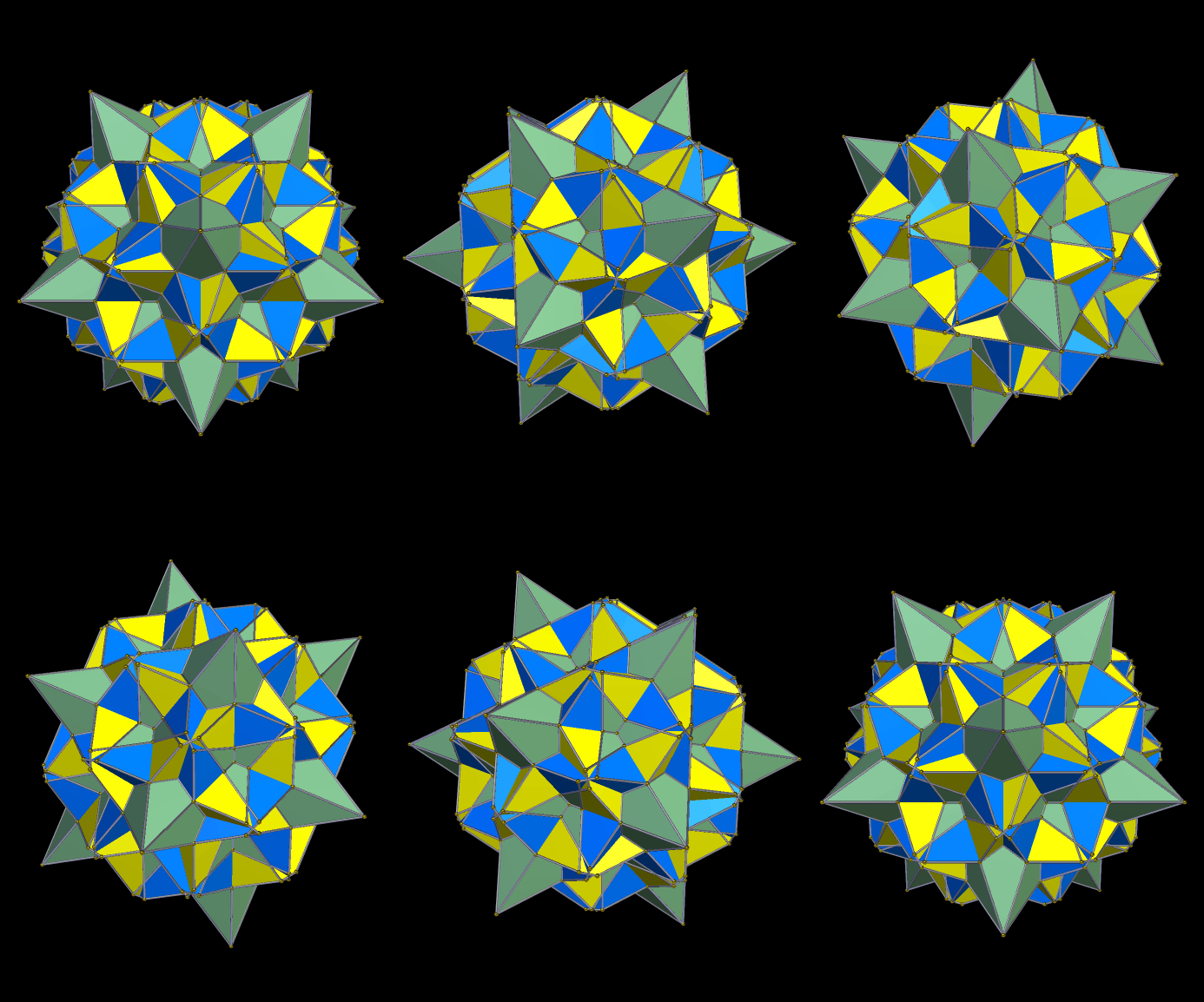
More Starry Polyhedra

Image

More Starry Polyhedra

These were all derived in various ways from the polyhedra seen in the last two posts. The rest are smaller at first, but each can be enlarged with a single click of your mouse. Each of them has icosidodecahedral symmetry.

Augmented Convex hullstellated Convex hullstellated Convex hull 2Astellated Convex hull 3stellation of mod of Compound of enantiomorphic pairstellation of mod of Compound of enantiomorphic pair 2stellation of mod of Compound of enantiomorphic pair 3

I used Stella 4d to make these images, and you can find that program at http://www.software3d.com/Stella.php.

Starry Dual Polyhedron

Image

Starry Dual Polyhedron

This is the dual of the polyhedron seen as the second image in the last post on this blog. If colored differently, so that only parallel faces have the same color, it looks like this (click to enlarge):

Augmented Convex hull

I used Stella 4d to make these images, and you can find that program at http://www.software3d.com/Stella.php.
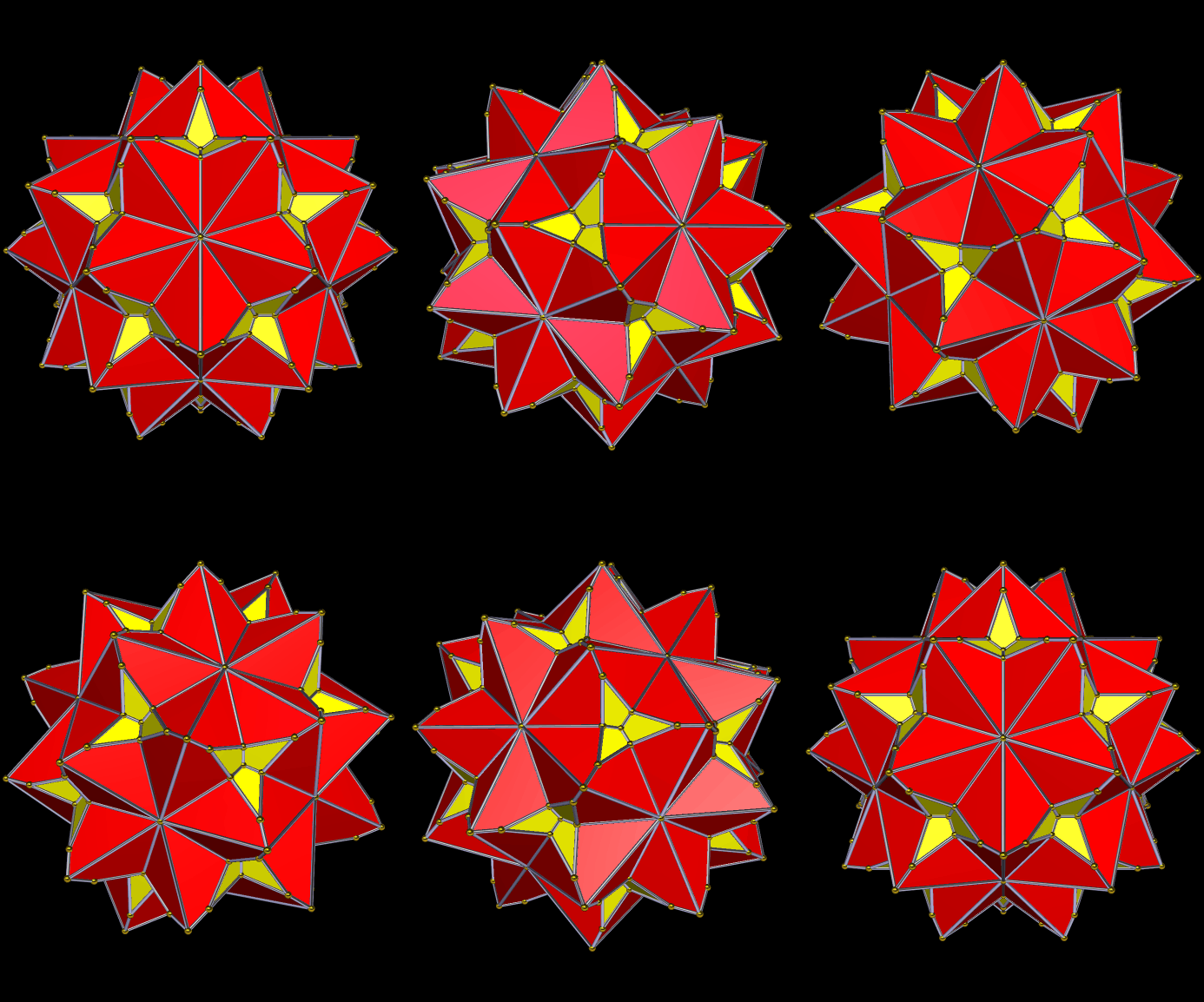
Six Pairs of Parallel Decagons

Image

Six Pairs of Parallel Decagons

Each pair is a different color. Because these decagons intersect in space, but do not meet at edges, they do not form a true polyhedron. They are merely a symmetrical configuration of twelve decagons in space, surrounding a central point.

I made this out a “true polyhedron” by hiding all the other faces from view. Before the hiding and recoloring of faces, this looked this way (you can click on it to enlarge it):

Augmented Convex hull

I used Stella 4d to make these images, and you can find that program at http://www.software3d.com/Stella.php.

A Gallery of Twenty-One Polyhedra with Icosidodecahedral Symmetry

Image

Multiple Variants of the Icosidodecahedron

Click on the smaller pictures, if you wish to enlarge them, one at a time.

convex hull of prismaugmented RTCConvex hull of prismaugmented strombic hexacontahedronConvex hull of reaugmented convex hull of augmented RTCConvex hull qConvex hull z dualConvex hull z

Those last two were duals of each other. The next two are as well.

300-faced dual of 362-faced expanded snub dodecahedron convex hull augmented with 3x prisms362-faced expanded snub dodecahedron convex hull augmented with 3x prismsDual of Convex hullID variant

These next two are duals, as are the pair that follows them.

variant on the SSDdual of variant of SSDpolyhedron xpolyhedron x dual

regularized convex hull of prism-augmented RTCtwisted Convex hullStellated rainbow thingConvex hull

I’ll finish with one more dual pair.

UnnamedUnnamed

All of these were made using Stella 4d:  Polyhedron Navigator, which is available at http://www.software3d.com/Stella.php.

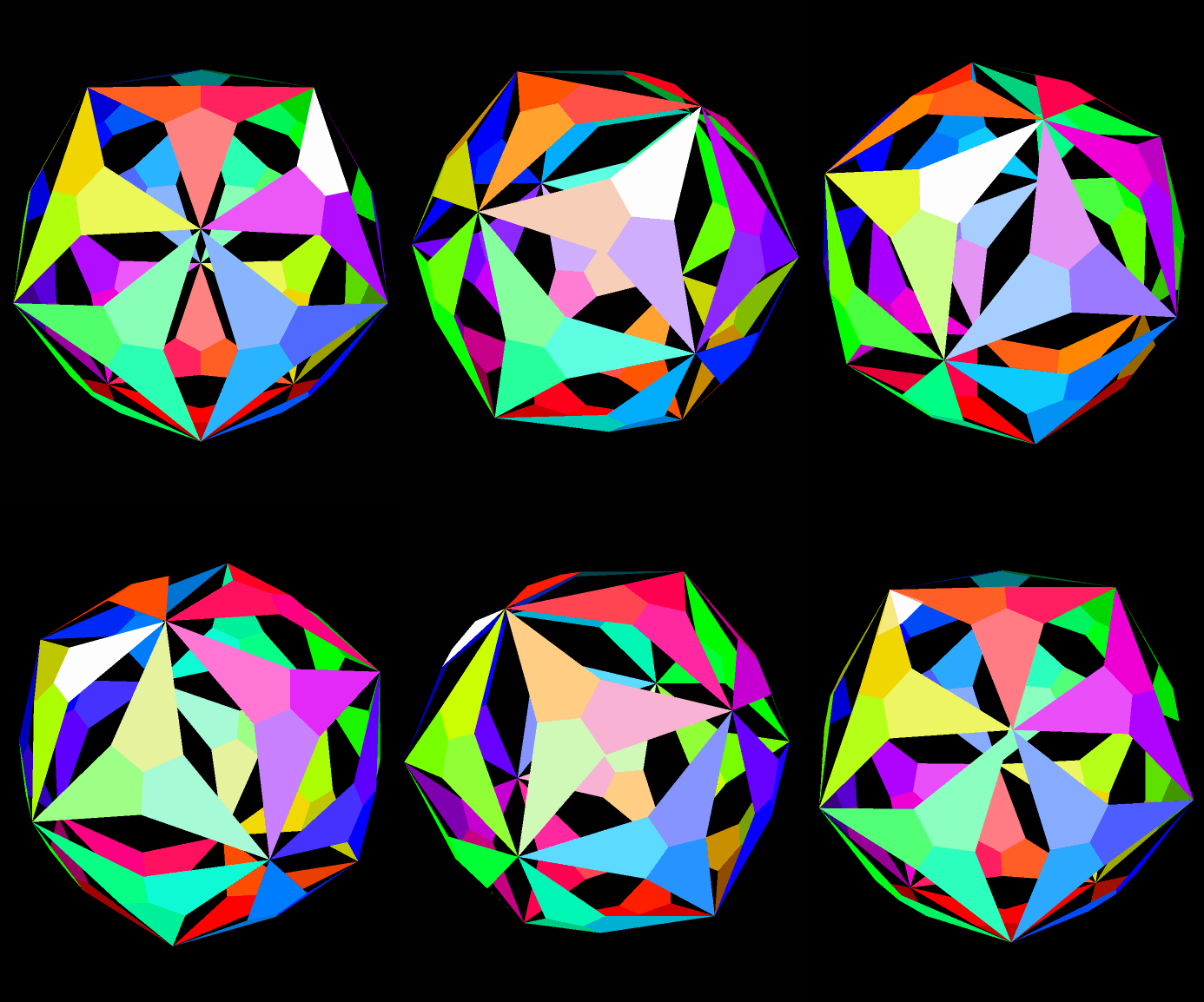
Twenty Rotating Triskelions, Made of Kites

Image

Twenty Rotating Triskelions, Made of Kites

Created using Stella 4d, software available at http://www.software3d.com/Stella.php.
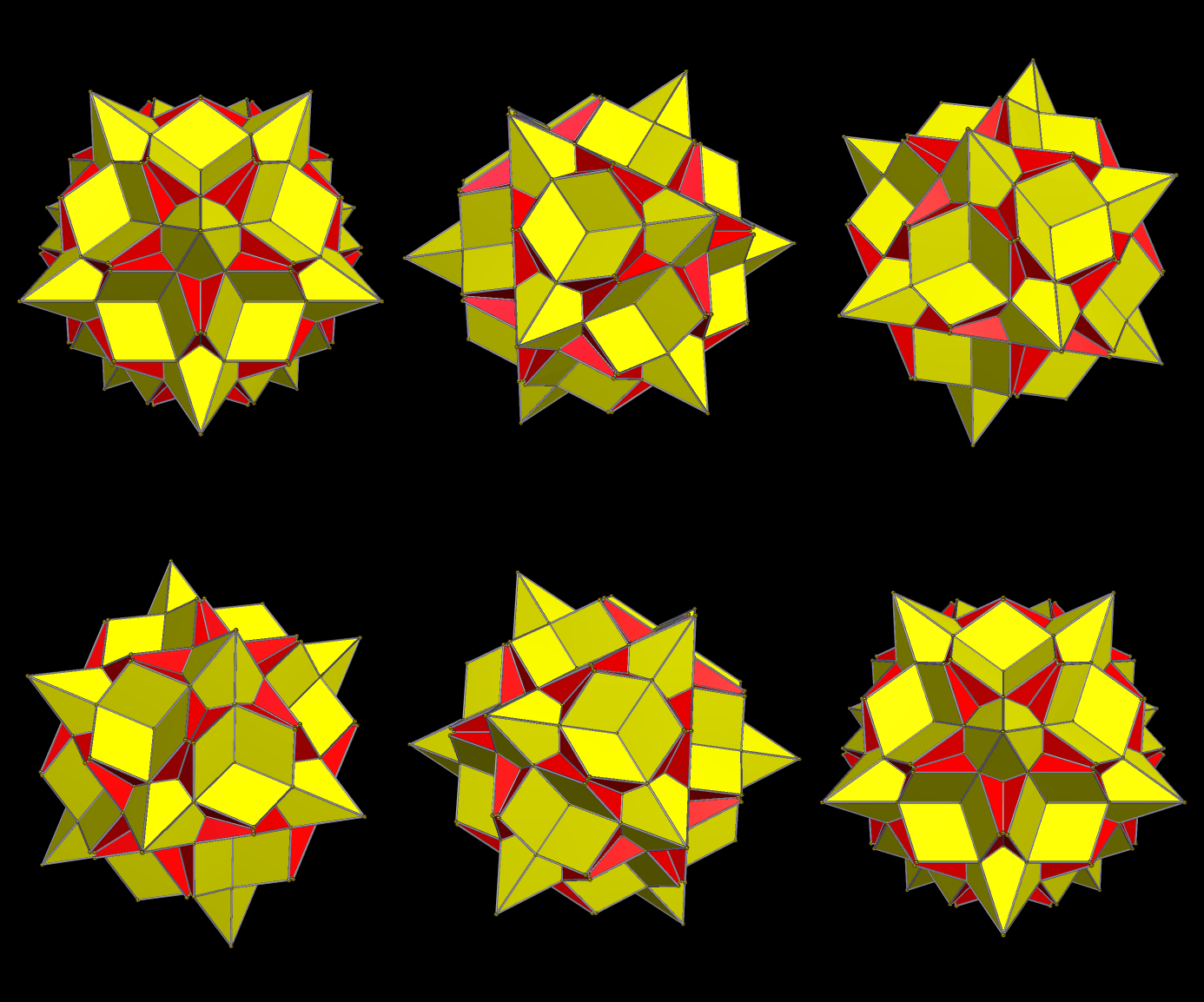
Stellated Polyhedron Featuring Self-Intersecting Regular Decagons

Image

Stellated Polyhedron Featuring Self-Intersecting Regular Decagons

I created this using Stella 4d: Polyhedron Navigator, a program you can find athttp://www.software3d.com/Stella.php.
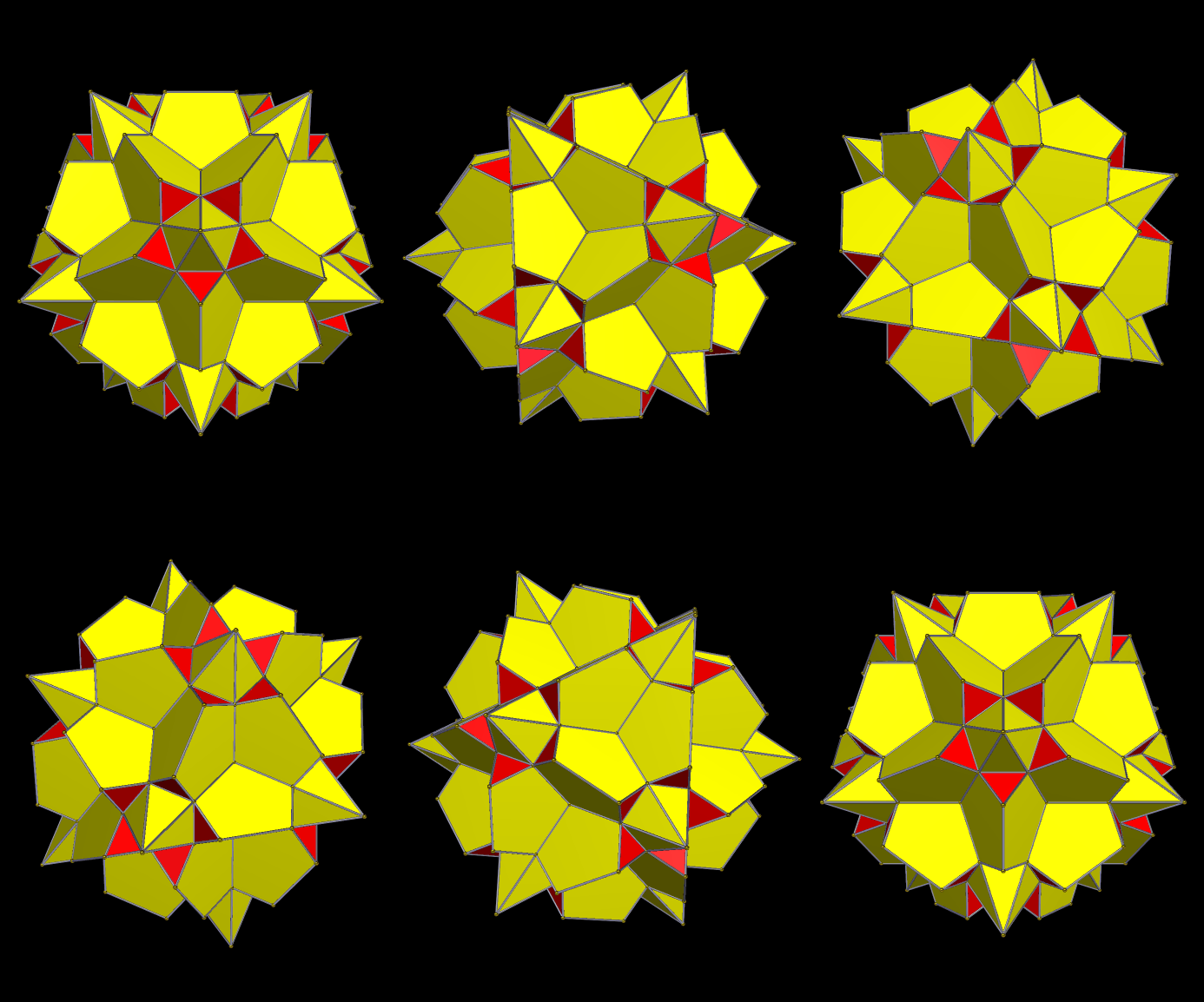
Two Chiral Polyhedra

Image

Two Chiral Polyhedra

To make this, I started with the dual of the great rhombicosidodecahedron, a polyhedron known as the dysdyakis triacontahedron. I then augmented half of its faces with tall prisms (thereby creating the chirality in this polyhedron), and took the convex hull of the result. The sixty red triangles are the tops of the augmentation-prisms.

A stellation of the above polyhedron, and a color-change, produced this result, also chiral. It may be enlarged with a click.

Stellated Convex hull based on expanded RTC

These polyhedra were created using Stella 4d, a program which you may buy — or try for free, as a trial download — at http://www.software3d.com/Stella.php.
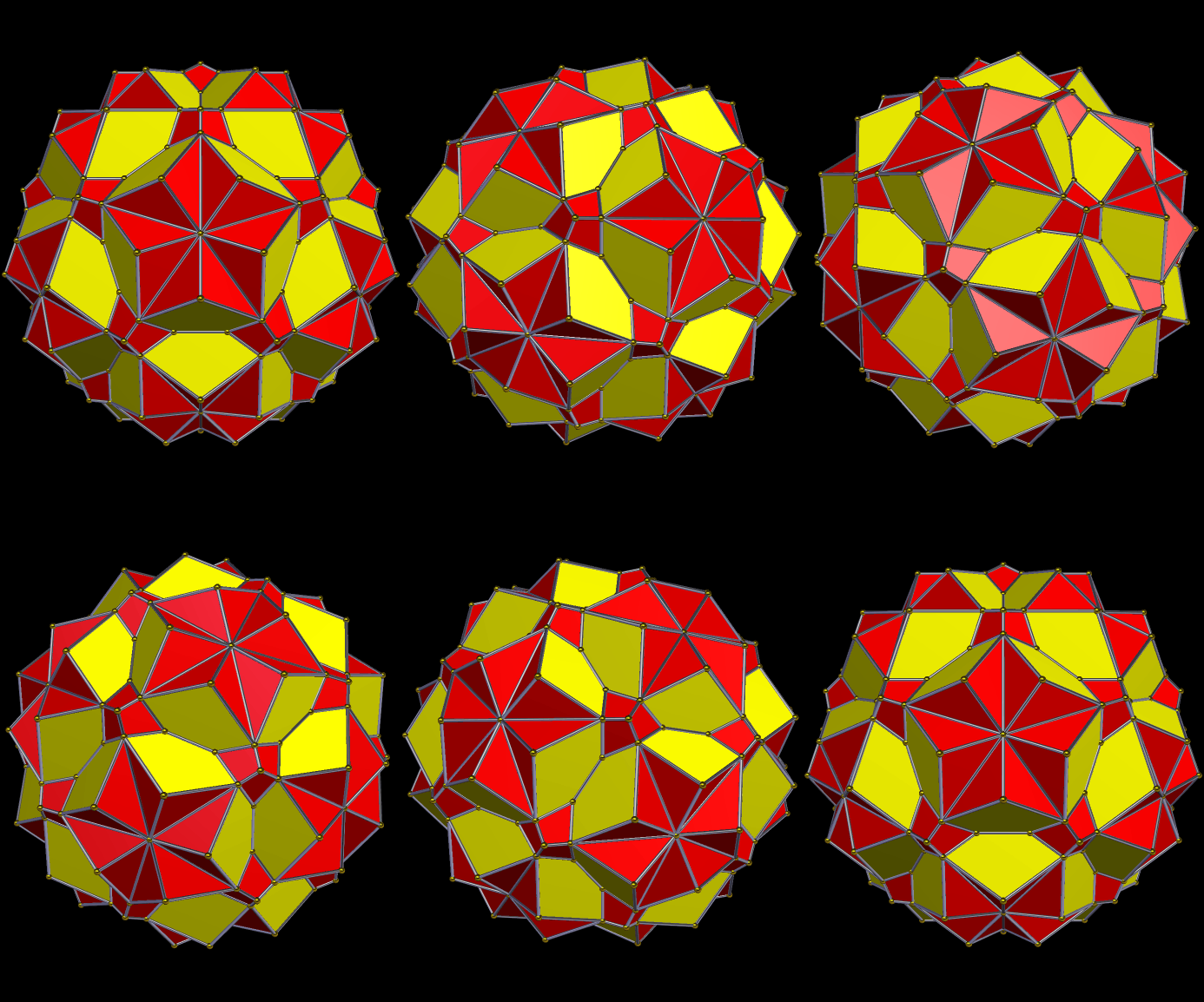
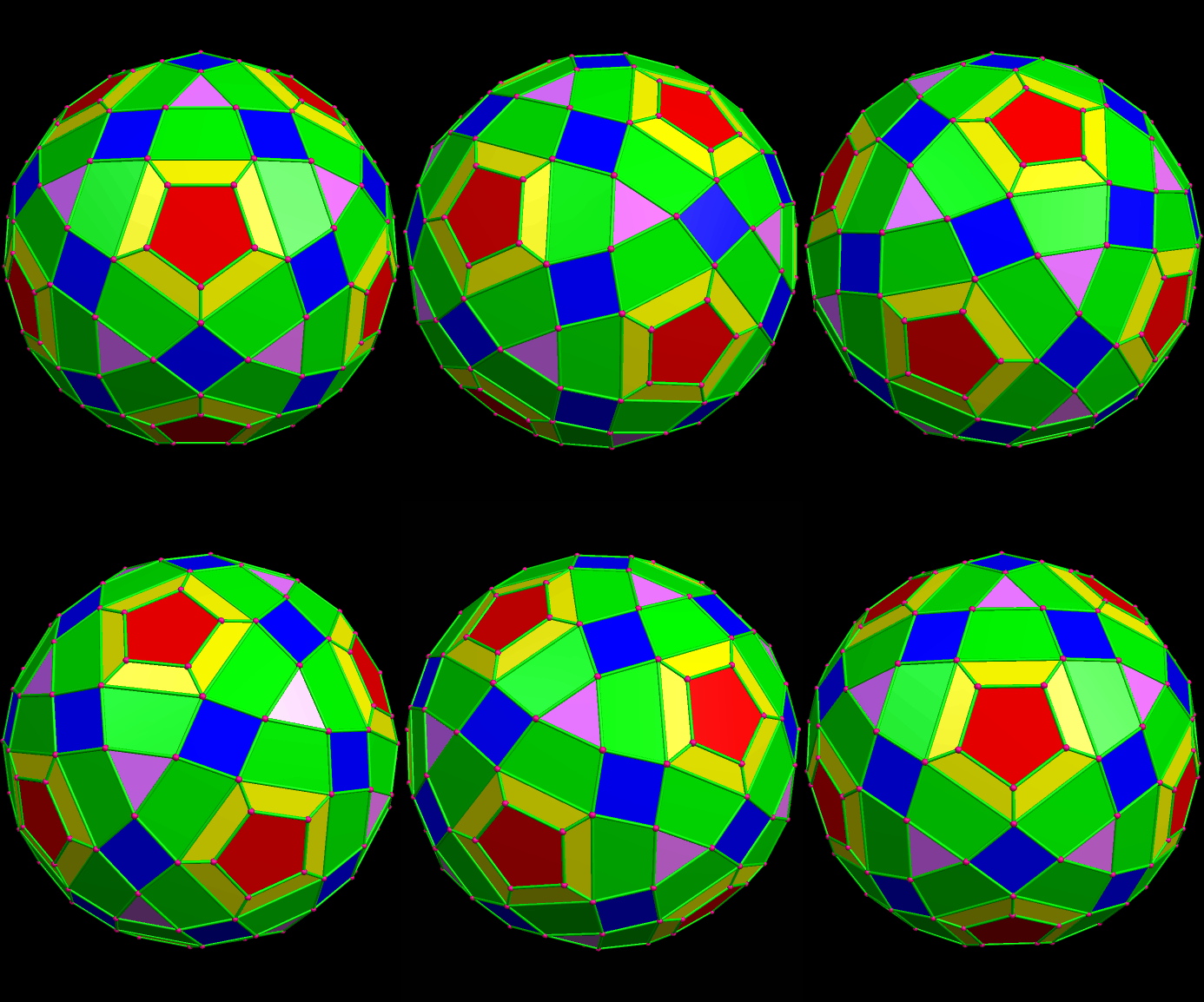
A Polyhedron Featuring Sixty Irregular, Convex Hexagons and Thirty Rhombi

Image

A Polyhedron Featuring Sixty Irregular, Convex Hexagons and Thirty Rhombi

I created this using Stella 4d: Polyhedron Navigator, a program you can find at http://www.software3d.com/Stella.php.

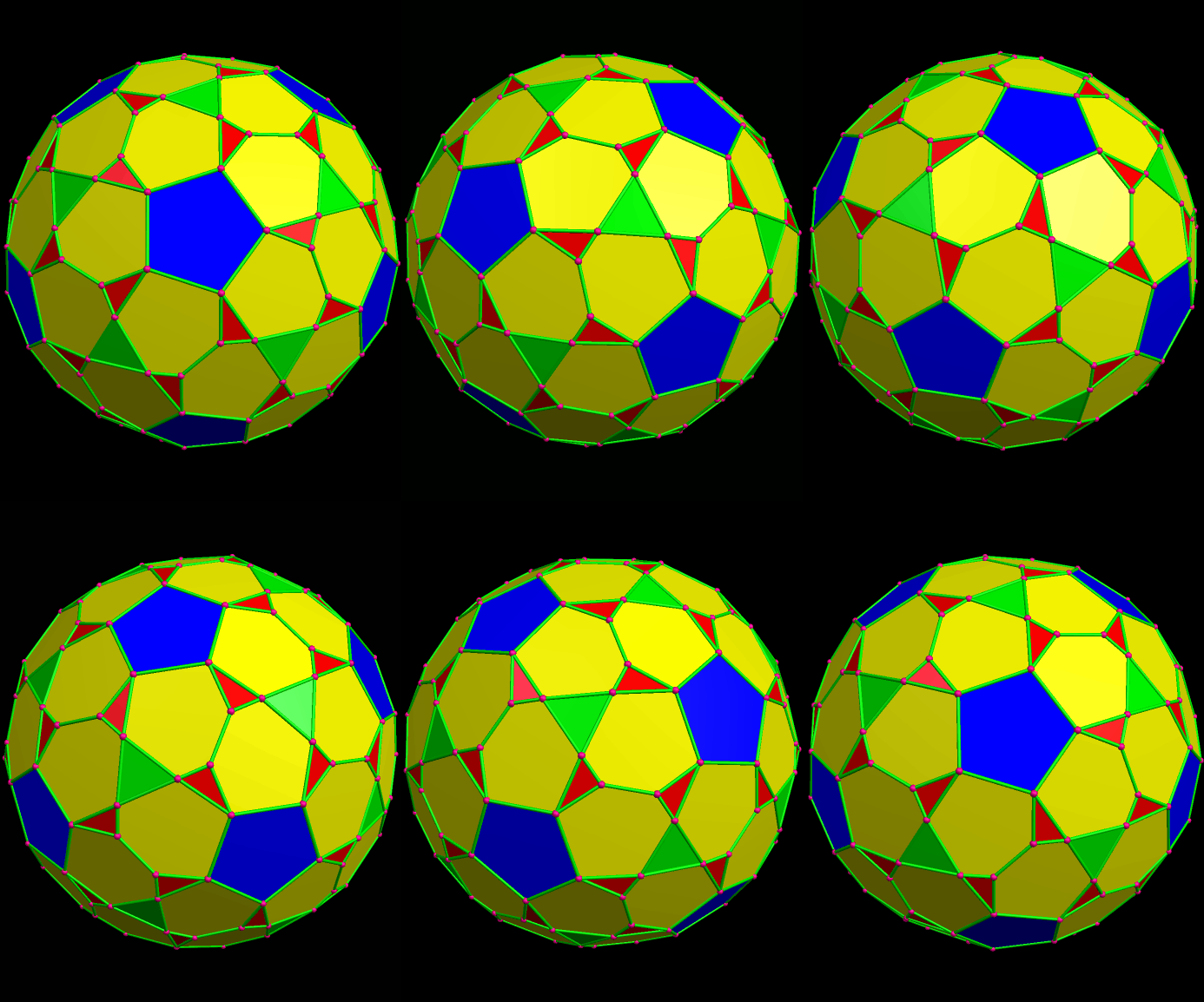
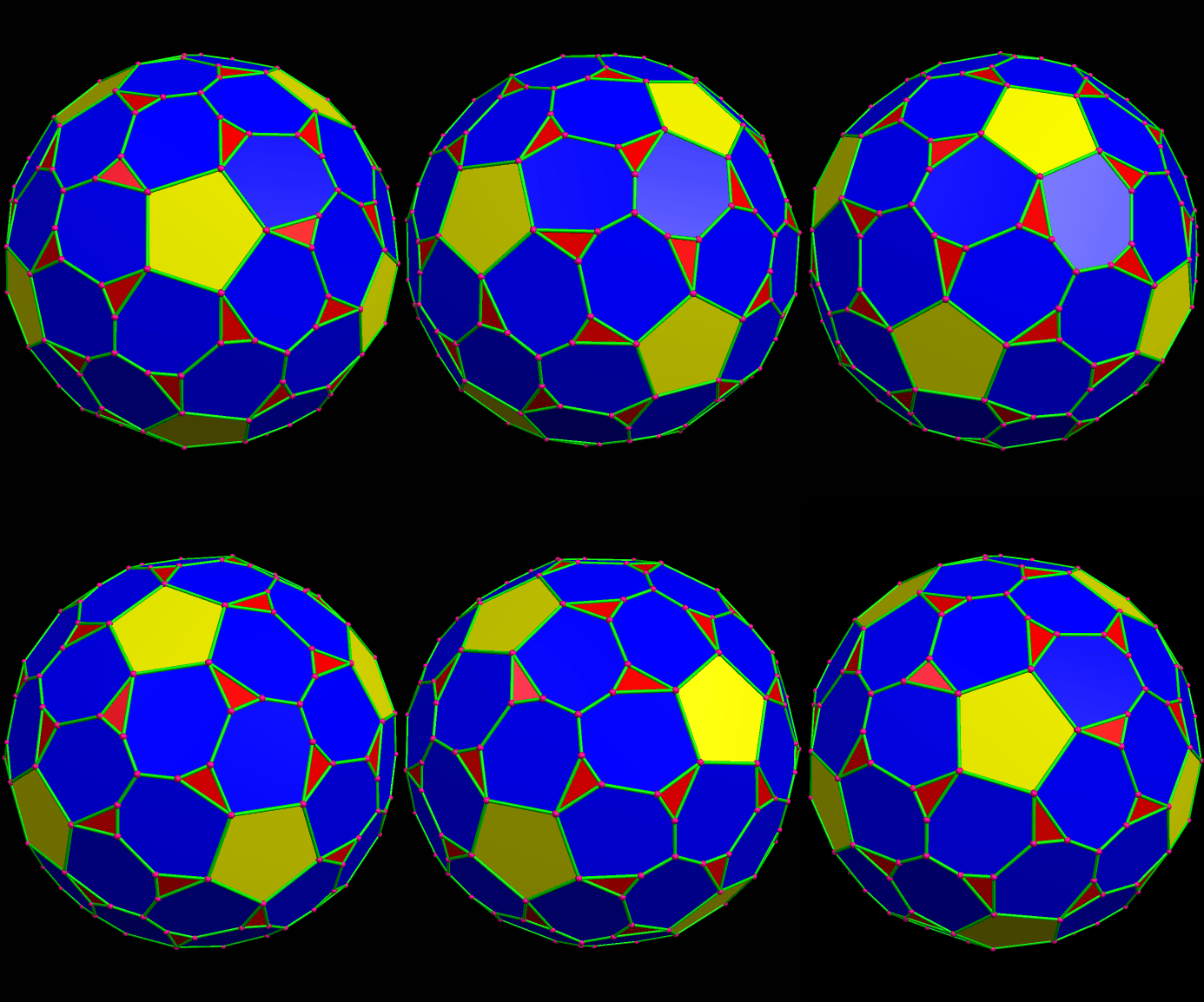
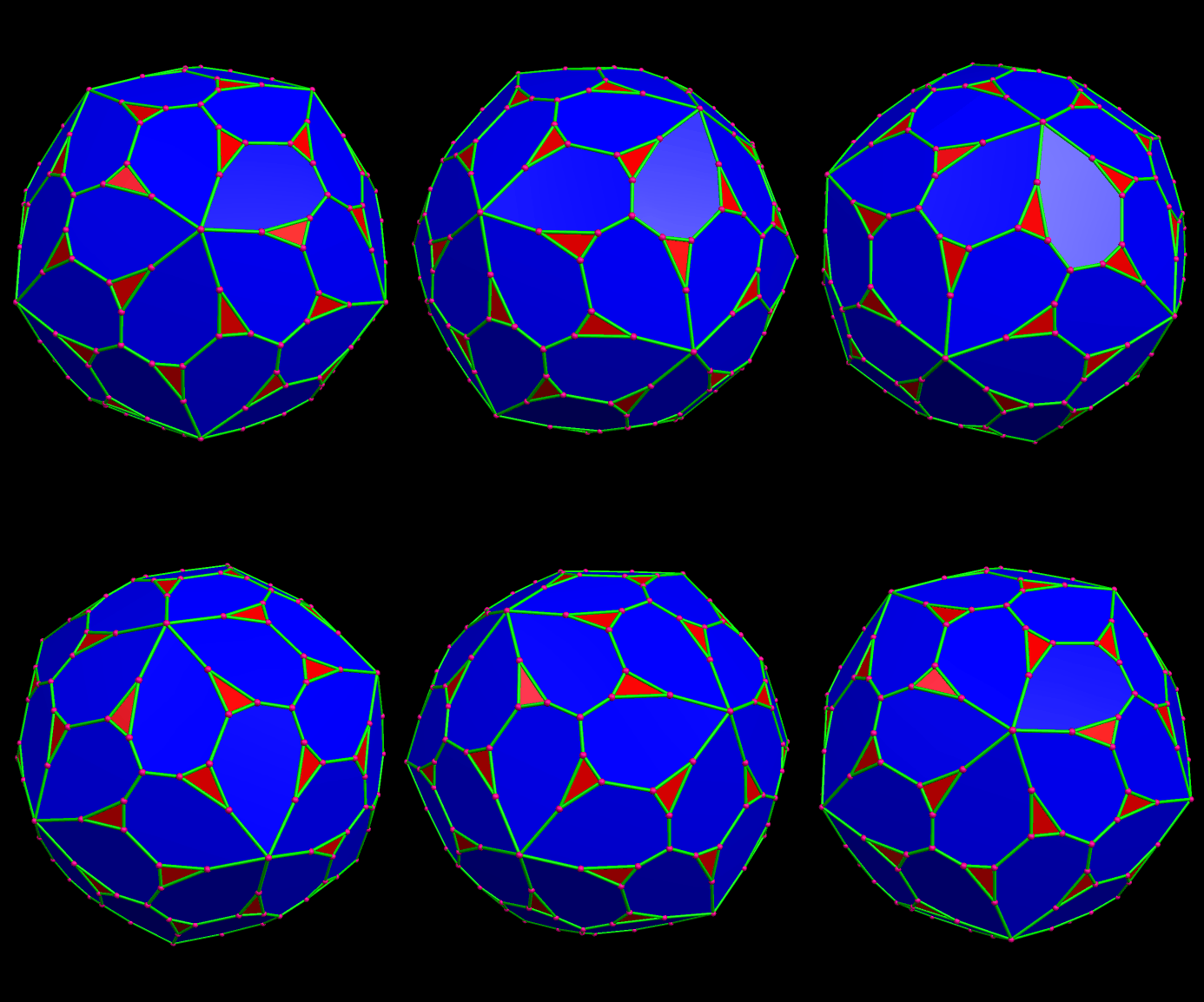
A Polyhedron Featuring Sixty Octagons and Sixty Triangles

Image

A Polyhedron Featuring Sixty Octagons and Sixty Triangles

If someone had asked me if it were possible to form a symmetric polyhedra out of irregular triangles and octagons, using exactly sixty of one type each, I would have guessed that it were not possible. Why does it work here? Part of the reason is that each triangle borders three octagons, and each octagon borders three triangles — a necessary, but not sufficient, condition. This is a partial truncation of an isomorph of the pentagonal hexacontahedron, the dual of the snub dodecahedron. As such, no surprise — it’s chiral.
This was made while stumbling about in the wilderness of the infinite number of possible polyhedra using Stella 4d: Polyhedron Navigator. You can get it here: http://www.software3d.com/Stella.php.