This is a ball-and-stick molecular image (found on Wikipedia) of an olanzapine (Zyprexa) molecule. It’s the medication prescribed, by my psychiatrist, to treat Brief Psychotic Disorder, which I’ve had, secretly, for years.
When I take my meds as prescribed, I’m an atheist and a skeptic. In this state, I can easily handle many science and mathematics problems, well enough to teach at the high school level in both subject fields. If I miss a dose or two, however, one of the first set of symptoms that appears is religious beliefs, seemingly coming out of nowhere.
Later, when I’m medicated again, it becomes clear that those religious beliefs were actually delusional. I don’t think I’ve ever had a non-delusional religious belief.
This happened near the end of Summer school, about four years ago. I haven’t been able to write about it until now, but my life is now separated into the unknowing part before this day, when I was so often angry without knowing why, and the part after I painfully found the truth which explains this anger.
The three-second video above was correct — for weeks afterwards, I couldn’t handle the truth, and was having one PTSD attack after another as a result. There was a break between Summer School and the resumption of the normal school year in the Fall, and that’s a good thing, because I had a lot of “repair work” to do before I was fit to be around large numbers of people again.
All of this followed what I refer to as a “proselytizing attack.” The person aggressively proselytizing to meat me was also a teacher, and the only thing he did right was to avoid this activity in the presence of students. In another religion, one inflicted on my family, by my father, when I was a teenager (Soka Gakkai, a variant of Buddhism), the technique he used is called shakabuku, which translates from the Japanese as “bend and flatten” — although this teacher was, of course, using a Christian version of shakabuku. My entire family was subjected to these efforts to “bend and flatten” us, during my father’s four or so years as a practicing Soka Gakkai member. Many years earlier, before I was born, he had actually been a minister in a certain Protestant Christian denomination. There were many other “religions of the year” my father dragged us to, as I was growing up. If one wishes to raise a skeptic, that method is quite likely to work, but I would hardly call it good parenting.
I tried to politely end these unpleasant after-school conversations, explaining to the other teacher that I only have two ways which work, for me, to gain confidence in ideas: mathematical proof, and the scientific method. What he was looking for was faith, a different form of thinking, and one which is alien to me — my mind simply will not “bend” in such a direction, which helps explain why proselytizing efforts of the “bend and flatten” variety never have the desired effect with me.
Polite efforts to end this rude behavior repeatedly failed. No one else was nearby at the moment I finally snapped — so I could say whatever I wanted to the other teacher, while remaining unheard by others.
“Listen,” I said, “do you really want to know how to get fewer atheists in the world? I can tell you exactly how to do that.”
He said that, yes, of course, he did want to know how to do this.
“Here’s how,” I said. “It’s simple, really. Just tell your fellow Christians to stop raping children!”
He had no reply, for, in the wake of such things as the Catholic Church’s pedophilia scandal, and similar scandals in other churches, there is no satisfactory reply to such a statement. The truth of it is self-evident (provided one does not generalize the statement to encompass all Christians, for that would clearly be false), and the message to stop the “Christian shakabuku” had finally penetrated this other teacher’s mental defenses. I then realized something that explained the intensity of my dislike for this man: he used a voice with a hypnotic quality, a trick my father also used to influence, and manipulate, others.
I turned around, walked away, and he did not follow. I returned to my classroom, where I had work left to do, such as preparing for the next school day’s lessons, before leaving. I was also acutely aware that I was in far too heightened an emotional state to safely drive. Therefore, to calm down, I played the following song, at maximum volume, on repeat, perhaps a dozen times, scream-singing along with the vocals, as I prepared my classroom for the next day.
After venting enough fury to be able to safely drive home, I did so . . . and listened to this song some more, along with another song by Muse, the two of which I used to scream myself into exhaustion.
I finally collapsed into sleep, but it wasn’t restful, for I was too angry — for weeks — to ever reach deep sleep. I knew only dark, emerging memories and half-memories, as well as horrific dreams that temporarily turned sleep into a form of torture, rather than a healing process. Not being stupid, I got the therapy I obviously needed, after the proselytizing-attack, and my reaction to it, caused the truth to fall painfully into place. By the time the school year began, I could once again function.
My earliest memory is from age 2 1/2, and involves surviving an attack of a type that often kills infants and young children: shaken baby syndrome. This was described as the “story within the story” told, right here, in the context of Daredevil fan-fiction. It was bad enough when that memory surfaced, but this was even worse. The only “good” thing about what I had learned had been done to me was that it was before age 2 1/2, and, for this reason, could not become a “focused,” clear memory, as my recollection of the near-death-by-shaking is. Instead of sharp memories, I was getting imagery like this . . .
. . . But the intensity of my reaction left me with no doubt about what had happened, at an age when I was too young to defend myself, nor even tell anyone else.
Years later, I even abandoned the term “atheist,” choosing to simply use “skeptic” instead, a switch which angered far more people — atheists, of course — than I ever expected. I now realize a major reason I made that change, and it’s the fact that I have seen so many obnoxious atheists using “atheistic shakabuku” — and I am, for obvious reasons, hypersensitive to any form of shakabuku, whether it be religious or anti-religious. Humans are not meant to be painfully bent, nor flattened, and I want nothing to do with those who engage in such atrocious behavior. Whether they are religious, or not, no longer matters to me — what does mean something is, rather, their lack of respect for their fellow human beings.
To those who do engage in aggressive proseltyzing, I have only this to say: please stop. Even if you played no part in it, there is no denying that abuse, by religious authority figures, has happened to thousands, perhaps millions, of people — and one cannot know which of us have such traumatic events in our personal backgrounds. For this reason, no one knows what harm proselytizing might do to any given person.
[Note: absolutely none of this happened at my current school.]
In the Summer of 2014, with many other science teachers, I took a four-day-long A.P. Physics training session, which was definitely a valuable experience, for me, as a teacher. On the last day of this training, though, in the late afternoon, as the trainer and trainees were winding things up, some of us, including me, started getting a little silly. Physics teachers, of course, have their own version of silly behavior. Here’s what happened.
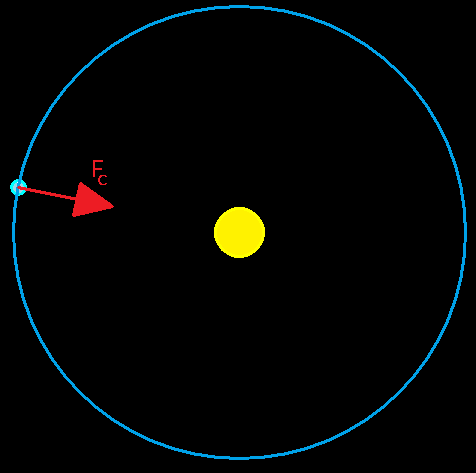
The trainer: “Let’s see how well you understand the different forces which can serve as centripetal forces, in different situations. When I twirl a ball, on a string, in a horizontal circle, what is the centripetal force?”
The class of trainees, in unison: “Tension!”
Trainer: “In the Bohr model of a hydrogen atom, the force keeping the electron traveling in a circle around the proton is the . . . ?”
Class: “Electromagnetic force!”
Trainer: “What force serves as the centripetal force keeping the Earth in orbit around the Sun?”
Me, loudly, before any of my classmates could answer: “God’s will!”
I was, remember, surrounded by physics teachers. It took the trainer several minutes to restore order, after that.
The term “evangelical atheism” may seem like a contradiction, but, hopefully, the image above clarifies what it means. It’s the zealous pushing of others to abandon religious beliefs, and it isn’t helpful to anyone.
John Lennon never, to my knowledge, publicly proclaimed a personal religious belief, but he didn’t apply the word “atheist” to himself, either; others did that. The same thing has happened repeatedly to Neil deGrasse Tyson, as he explains further, below. In both cases, these are people who are fiercely independent in their thinking, and not afraid to offend others — but that doesn’t mean they want to be associated with evangelical atheists, whose hostility to religion, and religious people, makes the world a more dangerous place. The more logical goal is a peaceful world, and that means one where the faithful and the skeptical can coexist peacefully.
For this to happen, work is needed on both sides, by the people on each side. The reasonable and moderate religious millions have religious extremists to (try to) calm down, each in their own groups, and they’ve got their hands full with that. It falls to non-religious people to deal with the extremists on the other side — the type who go beyond Richard Dawkins, Sam Harris, and the late Christopher Hitchens, all three of whom conceded, in books of theirs which I have read, that they would change their minds on the subject of the existence of a deity, shown adequate empirical evidence for the existence of one. This was a consequence of the fact that all three men have written things based on rational thought. (They’ve also let their emotions get in the way sometimes, and become overly angry, but I’m referring to their better works, especially that of Harris.)
Evangelical atheists don’t write books. They can’t calm down long enough for that. Instead, they are more likely to speak out through angry and insulting videos they post on YouTube, harassment of believers (or agnostics, or those who simply don’t want to be labeled by others) on Facebook, and, of course, old-fashioned, face-to-face bullying.
I prefer the term “skeptic” for myself, as I have explained here before, for I like that balance struck by that term: insistence on evidence, balanced by openness to new evidence, even if it contradicts previous views (about anything). I also don’t want to associate myself with the evangelical atheists, which is the primary reason I abandoned use of the word “atheist” for myself, some time ago.
This made a few evangelical atheists angry, some to the point of losing all ability to reason (predictably), to the point of open warfare on my Facebook. To stop this, I literally deactivated that account for several days, that being the easiest option to shut that down quickly.
As for Neil deGrasse Tyson and John Lennon, I will let them speak for themselves.
Religious people aren’t going away any time soon. Neither are the non-religious. If we’re going to enjoy “living life in peace,” the hatred and hostility both need to go, from both sides of the “divide of belief” . . . and that isn’t too much to ask.
Sam Harris has already written these five books, all of which I have read. I wasn’t crazy about the first one, but thoroughly enjoyed all the others. They are presented here, in order, by publication-date.
The End of Faith (2004)
Letter to a Christian Nation (2006)
The Moral Landscape: How Science Can Determine Human Values (2010)
Lying (2011)
Free Will (2012)
This month, he has a new book coming out. It’s called Waking Up: A Guide to Spirituality Without Religion. I have already pre-ordered it on Amazon, and am looking forward to its arrival.
It is a common mistake for skeptics, such as myself, to focus too much attention on religion. Do I understand why so many people lack religious belief, due to a lack of evidence to support it, and/or bad experiences with religious fanatics? Yes, I do. However, I also understand that the First Amendment, which protects my right to live my life without religious belief, equally protects the right of believers to practice the religion of their choice — and I recognize that it is unreasonable to expect one of those protections to exist, without the other, for both are important. If no one tries to force their religious beliefs on me (and very few people do), what harm do those beliefs do to me? Also, I know many people who find comfort in religious belief, especially in difficult times. I have no wish to deny others that particular form of comfort, even though I am incapable of experiencing it myself. To do so, after all, would be cruel. The world has plenty of cruelty already, and it certainly doesn’t need more.
When referring to myself, I prefer the term “skeptic,” over “atheist,” even though both labels are accurate. The reason is simple: “skeptic” covers more ground. It’s a broader term, and using it reminds me that the world is (still) filled with superstitious nonsense which has nothing whatsoever to do with religion. What’s more, non-skeptics are generally far less tied, emotionally, to the beliefs they hold which are non-religious in nature. If skeptics wish to persuade others to abandon beliefs they do not share, therefore, increased attention to non-religious beliefs offers a greater chance of success, combined with a much lower risk of alienating and/or offending people.
With these things in mind, then, I offer this list of ten easy ways to oppose, by example, some of the many secular superstitions which have not — yet — been abandoned.
When a mirror is accidentally broken, by yourself or others, remain calm, and simply clean up the mess, so no one gets cut by broken glass.
Deliberately open umbrellas indoors, after checking to make certain no one is close enough to get struck by the umbrella in the process.
When you see a ladder leaning against a building, and it is safe to do so, casually walk under it, without comment.
Ask people in tall buildings to help you find the thirteenth floor, after checking for the (usually missing) “13” button in the elevator. (If the building actually has a floor numbered “13,” though, just wait for another tall building.)
Adopt a black cat. (The cat, itself, will take care of the “crossing your path” part of the superstition.)
If you are ever offered homeopathic “medicine,” ask for at least twenty doses, to take all at once. (Twenty or more, times zero, is still zero, and homeopathic products are nothing more than harmless-but-expensive placebos.)
Stare directly into a mirror, with witnesses present, and say “redrum,” or “bloody Mary,” repeatedly.
Each time you are asked for your astrological sign, refuse to give any answer, other than “skeptic.”
Don’t throw salt over either shoulder, ever. Why waste perfectly good salt?
Whenever people ask me to name my favorite author, I always have to ask them to be more specific, for I cannot bring myself to choose just one. If gender is specified, and either fiction or non-fiction is, as well, then I am able to choose a favorite author in each of the resulting four categories.
My two favorite writers of fiction, Flannery O’Connor and Robert A. Heinlein, are shown at the top. Flannery O’Connor was often described as a Southern gothic writer with an excellent ability to describe the grotesque, mostly with short stories, while Robert Heinlein was often called the greatest of all writers in the genre of science fiction. I wish it were possible for them to write even more, but, unlike the two authors described next, they are no longer living.
Shown below O’Connor and Heinlein are my two favorite authors of non-fiction, Jung Chang and Sam Harris. Jung Chang writes about Chinese history, eloquently, from the perspective of someone who actually was a Red Guard during the utterly insane period known as the Chinese Cultural Revolution, as a teenager, but later managed to get out of the People’s Republic — and, crucially, she was also able to mentally escape the powerful cult of personality which surrounded that nation’s leader for over two decades, Chairman Mao Zedong. She has gone on to become one of Mao’s harshest critics.
Sam Harris, a neuroscientist, began his career as an author by writing books criticizing religion, in the wake of the 9/11 terrorist attacks of 2001. He has since moved on to other topics (and writing better books than his earlier work, in my opinion), such as the corrosive effects of lying, the question of the existence or non-existence of free will, and a scientific approach to dealing with issues involving good and evil. He also has a new book coming out in September.
Other than their amazing skill at the difficult craft of writing, these four have little in common . . . but who wants to read the same sort of books all the time? If you aren’t familiar with their work already, I recommend giving each of them a read, and seeing what you think of their books. For one of them, Sam Harris, you can even give some of his writing a try for free, for he maintains a blog you can check out for yourself, at http://www.samharris.org.
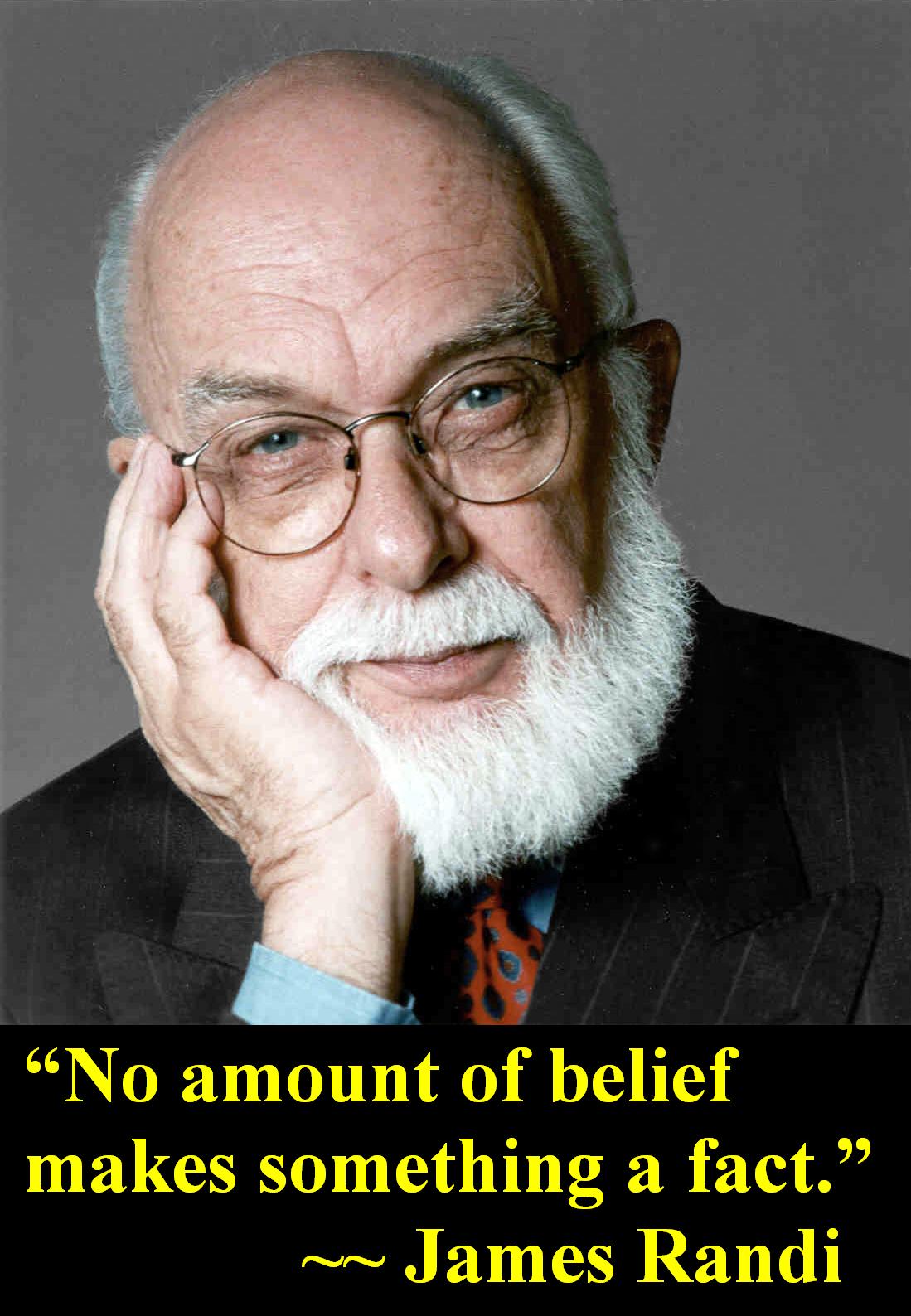
One of the high points of my life was the day I got to have several conversations with James Randi. I enjoyed them. Some others who were there, though, not so much.
An example of how one of the question-and-answer sessions went:
Question: What happens to us after we die?
Randi’s answer: What happens to a computer after you turn off the power?
Apparently the questioner was rather upset by this reply, but I didn’t figure that out myself, even though I was present. I learned about it later, from others. Randi’s response simply made sense to me.
This is a good way to explain the viewpoint known as agnostic atheism. A lot of people don’t realize this, but most atheists are also agnostic, simply because we don’t claim to have absolute certainty that no deities exist. We are atheists because we possess no beliefs in any gods, and we are also agnostics because we are willing to admit that we could, possibly, be wrong.
What’s more, many agnostic atheists find the other type of atheist (gnostic atheists, who are few in number, and who do claim certainty that no deities exist) quite irritating. It simply is not rational to claim that one knows, without doubt, that there are no gods, for one simple reason: lack of supporting evidence. There is no evidence that no gods exist. There is also no evidence for the non-existence of, say, leprechauns.
Something else many people don’t know: theists (that is, religious believers) also come in the same two types. Agnostic theists believe in at least one deity, but don’t claim absolute certainty in that belief. Gnostic theists, by contrast, are believers who do not doubt, nor question, their religious beliefs. They claim to know they are right — and, in that one way, they are just like gnostic atheists. Gnostics, of whatever type, aren’t willing to admit there is the slightest chance that they might be wrong. It’s much easier to have reasonable, productive conversations with agnostics than with gnostics — regardless of whether they are they are theists or atheists. Also, when it comes to debate, there’s simply no point in debating anything with a gnostic. One might as well argue with a rock, for a rock is exactly as likely as a gnostic to have a change of opinion.
(Note: unlike most images on this blog, this picture is not one I created myself. Only the words below the image, in this post, are mine.)






 RobertLovesPi.net