On Consistent and Inconsistent Combining of Chiralities, Using Polyhedral Augmentation

For any given chiral polyhedron, a way already exists to combine it with its own mirror-image — by creating a compound. However, using augmentation, rather than compounding, opens up new possibilities.

The most well-known chiral polyhedron is the snub cube. This reflection of it will be referred to here using the letter “A.”
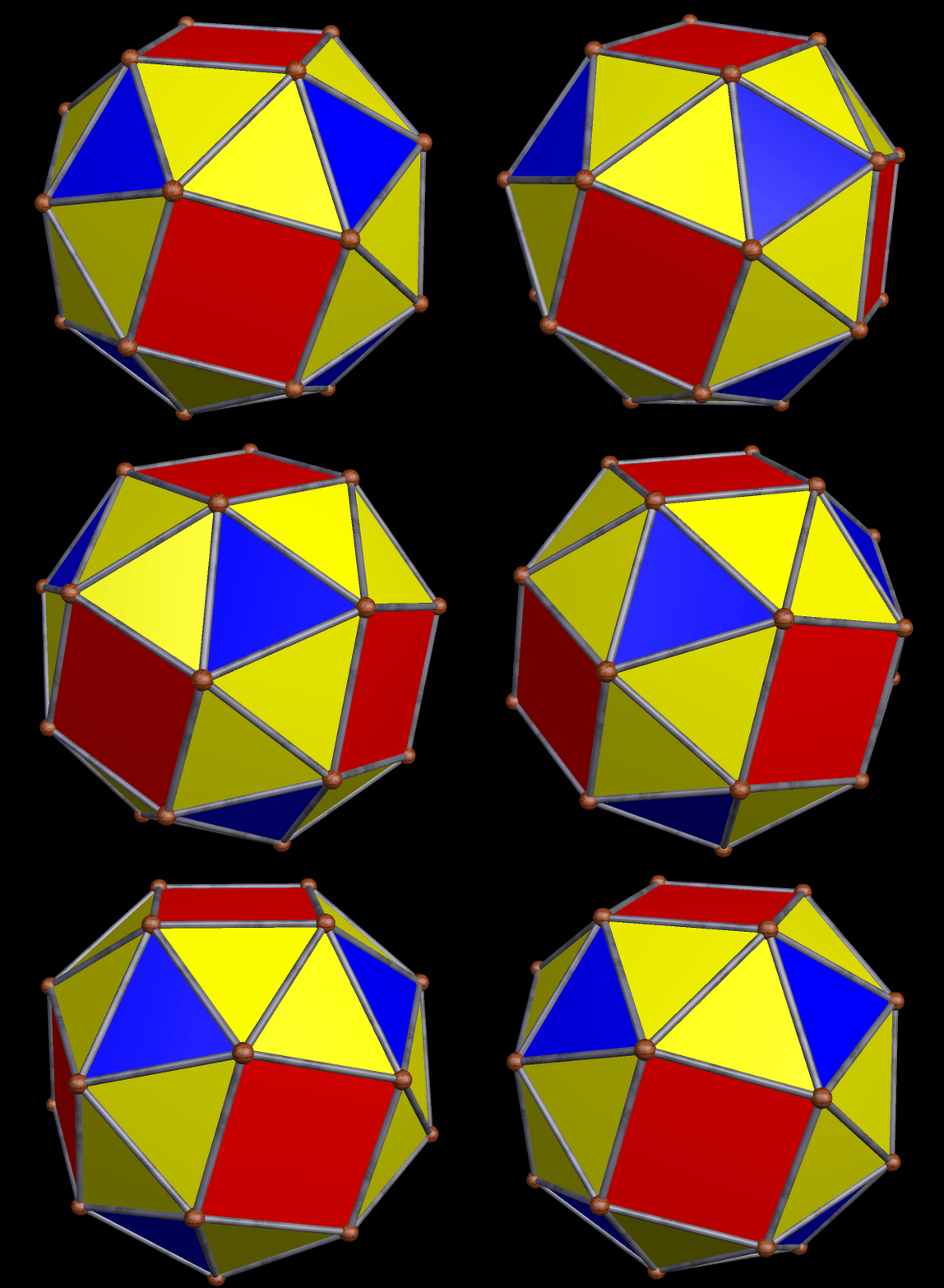
Snub Cube ATo avoid unnecessary confusion, the same direction of rotation is used throughout this post. Apart from that, though, the image below, “Snub Cube B,” is the reflection of the first snub cube shown.
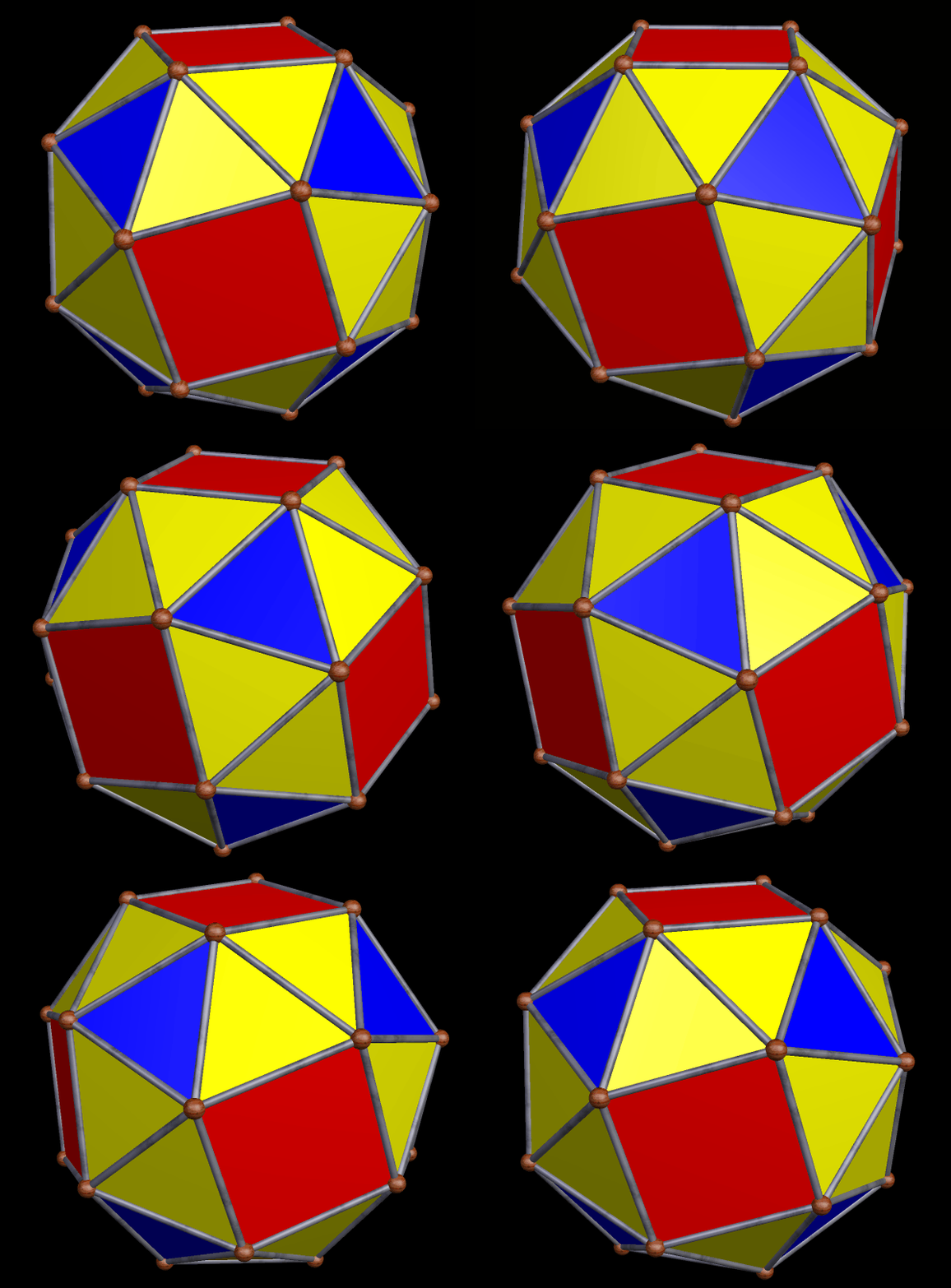
Snub Cube B

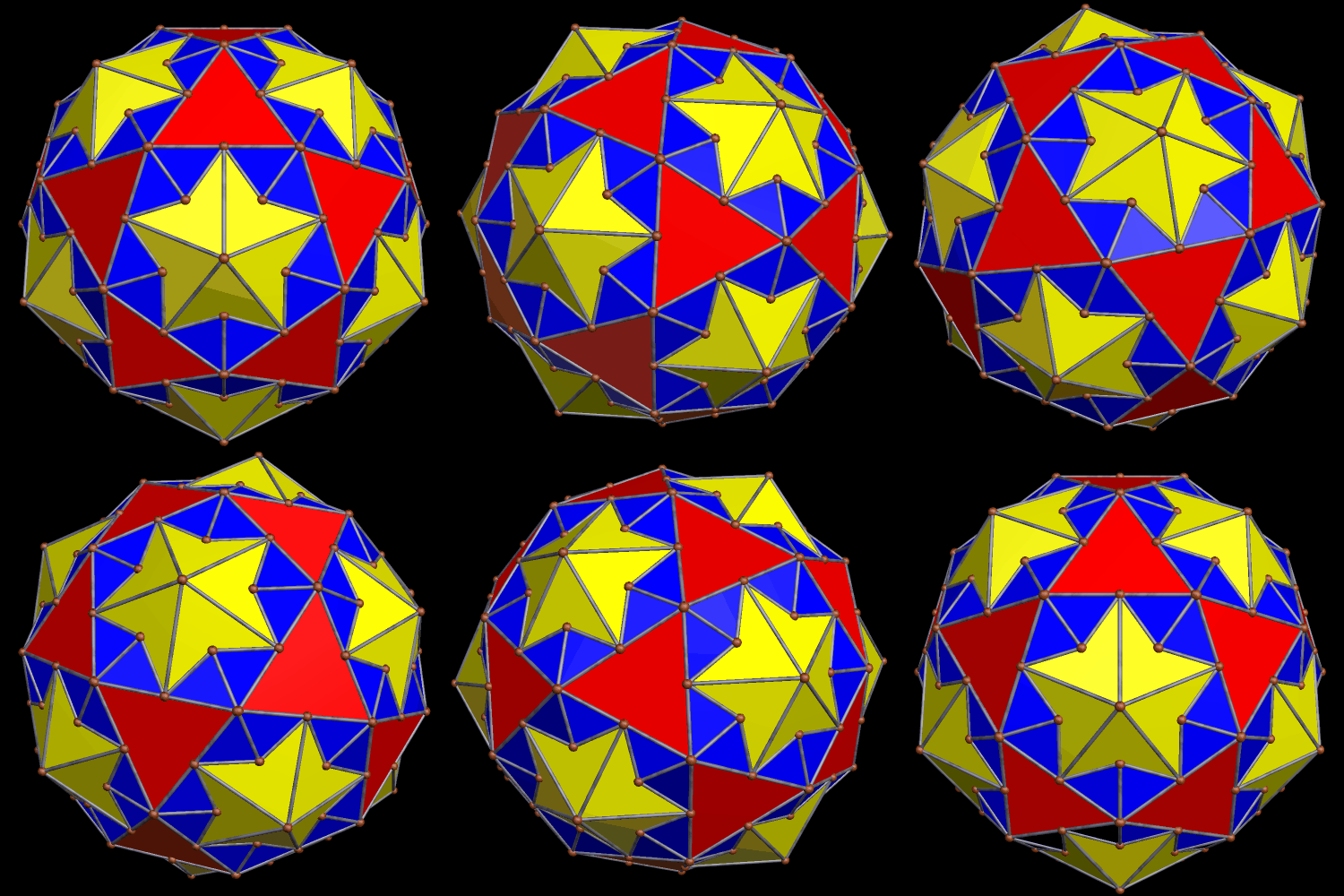
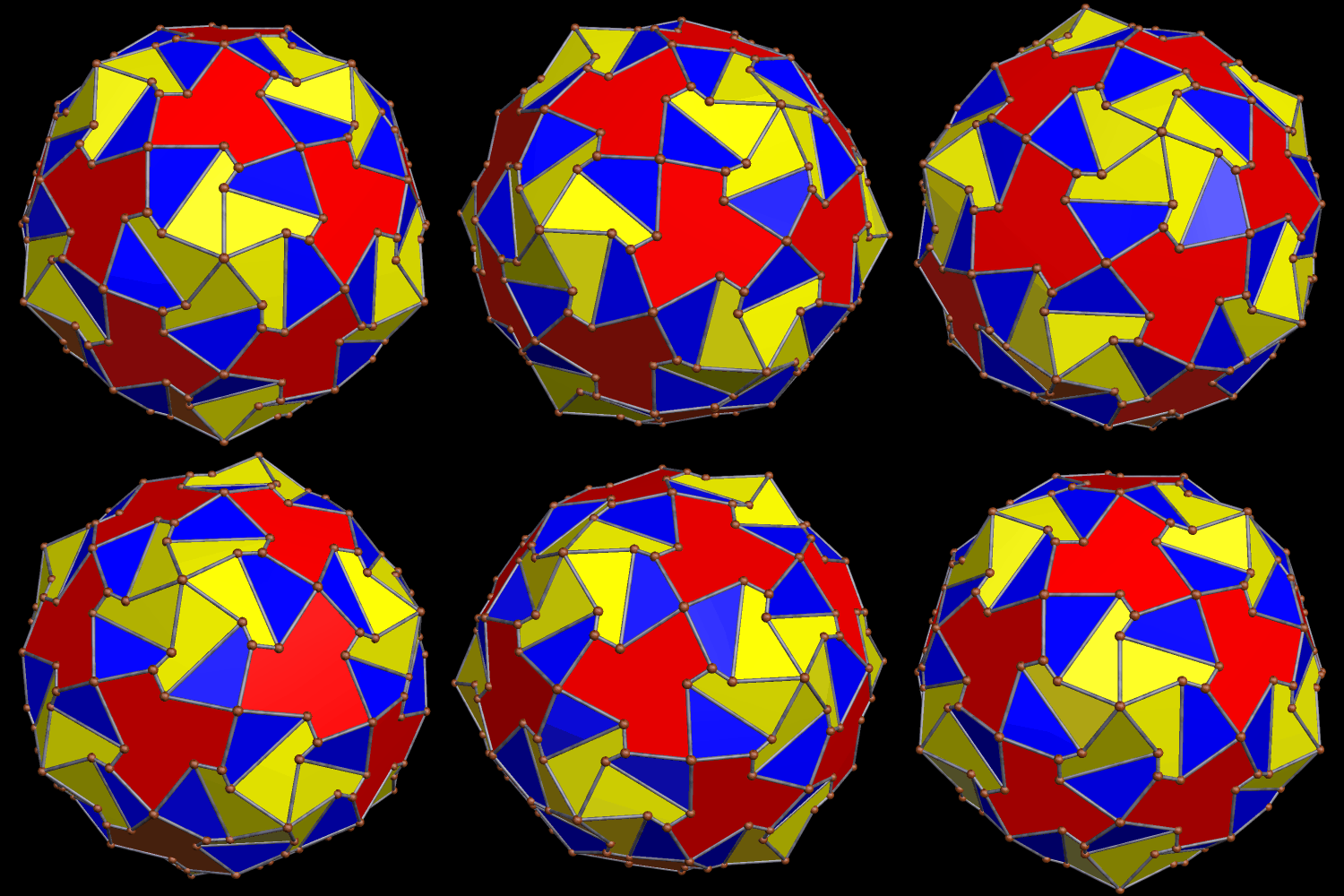
There are many ways to modify polyhedra, and one of them is augmentation. One way to augment a snub cube is to attach additional snub cubes to each square face of a central snub cube, creating a cluster of seven snub cubes. In the next image, all seven are of the “A” variety.

Snub Cube seven of them  AA

If one examines the reflection of this cluster of seven “A” snub cubes, all seven, in the reflection, are of the “B” variety, as shown here:
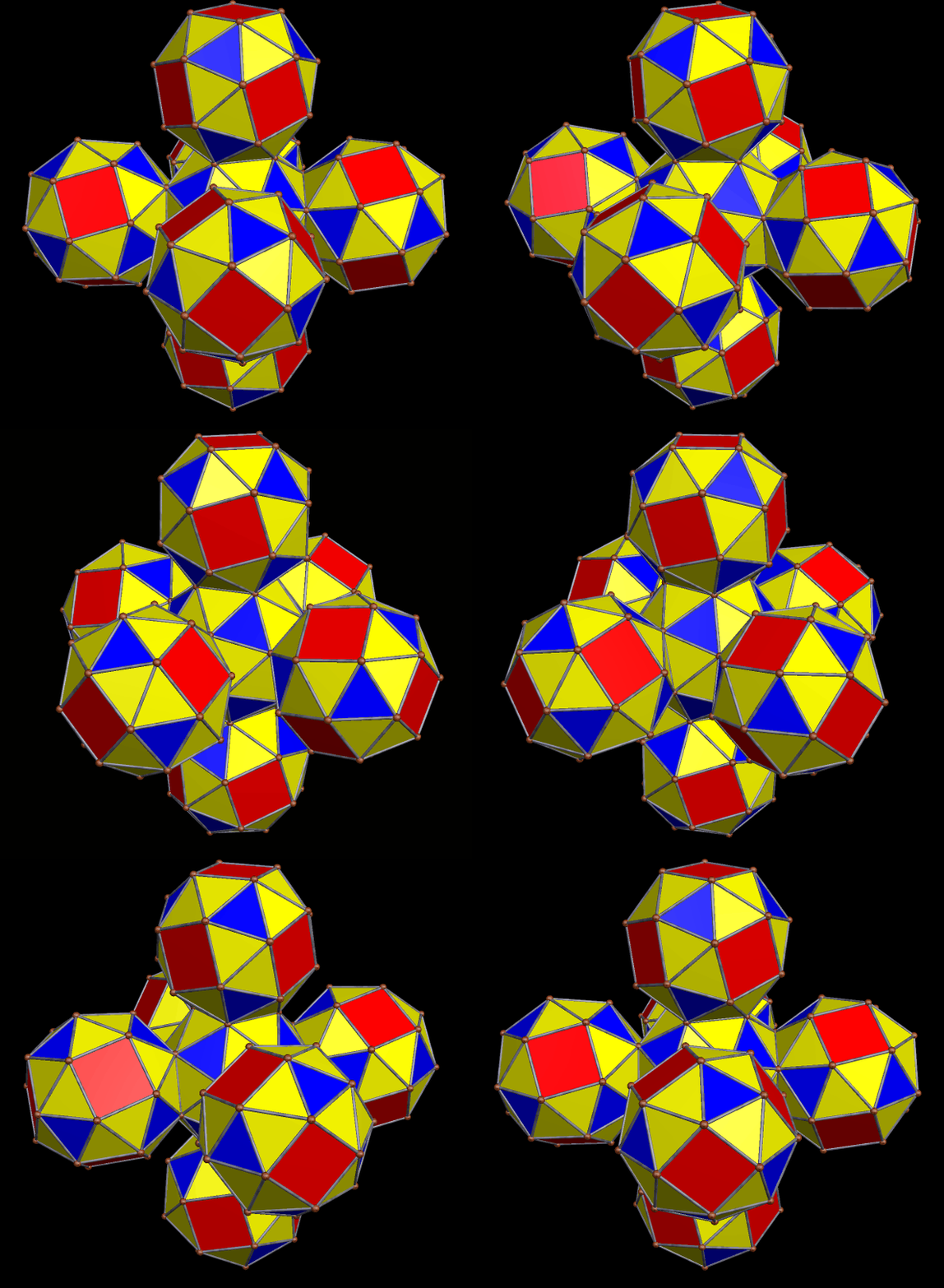
Snub Cube seven of them BB

Even though one is the reflection of the other, both clusters of seven snub cubes above have something in common: consistent chirality. As the next image shows, inconsistent chirality is also possible.

Snub Cube A augmented with B

The cluster shown immediately above has a central snub cube of the “A” variety, but is augmented with six “B”-variety snub cubes. It therefore exhibits inconsistent chirality, as does its reflection, a “B” snub cube augmented with “A” snub cubes:

Snub Cube B augmented with A

With simple seven-part snub-cube  clusters formed by augmentation of a central snub cube’s square faces by six snub cubes of identical chirality to each other, this exhausts the four possibilities. However, multiplying the possibilities would be easy, by adding more components, using other polyhedra, mixing chiralities within the set of polyhedra added during an augmentation, and/or mixing consistent and inconsistent chirality, at different stages of the growth of a polyhedral cluster formed via repeated augmentation.

All the images in this post were created using Stella 4d, which you can try for yourself at this website.

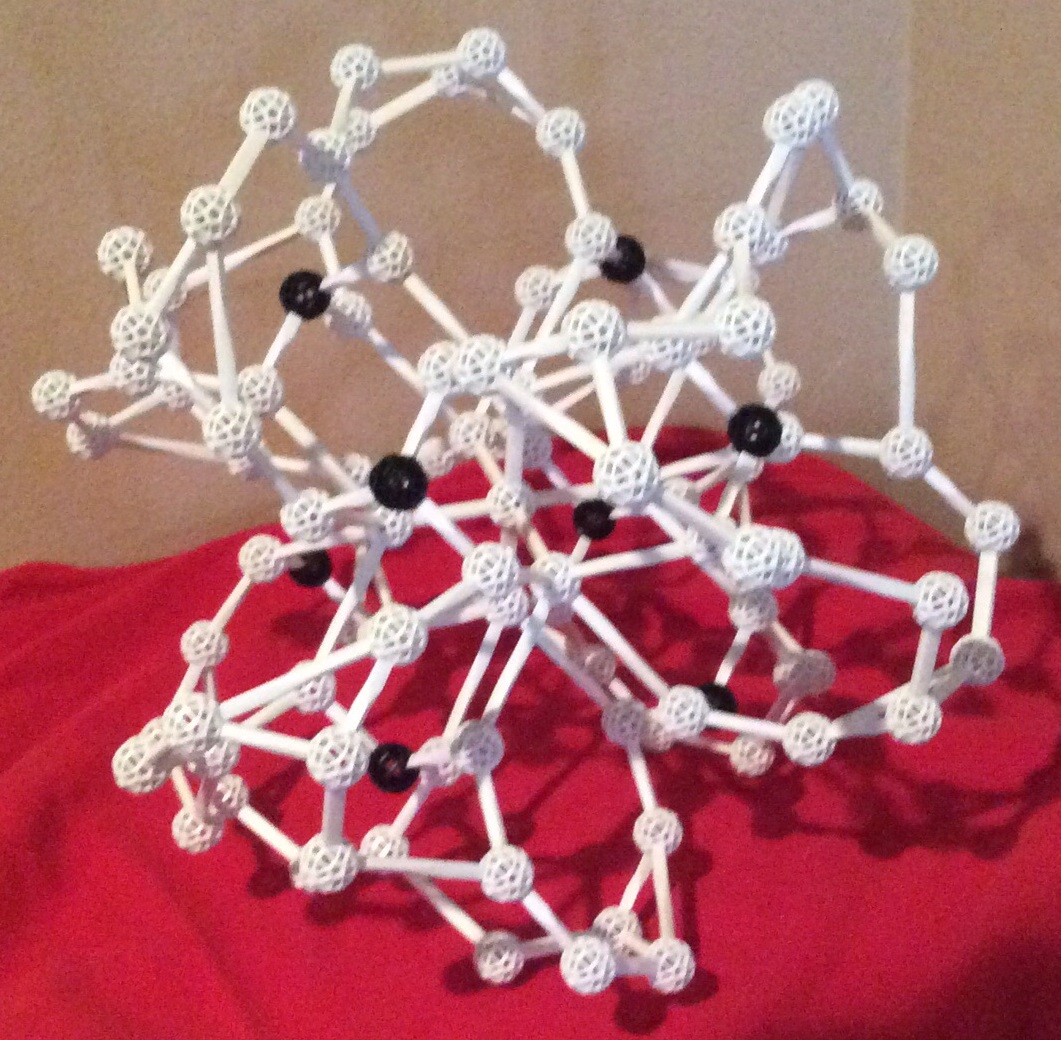
A Chiral Solution to the Zome Cryptocube Puzzle

This is my second solution to the Zome Cryptocube puzzle. In this puzzle, you start with a black cube, build a white, symmetrical, aethetically-pleasing geometrical structure which incorporates it, and then, finally, remove the cube. In addition, I added a rule of my own, this time around: I wanted a solution which is chiral; that is, it exists in left- and right-handed forms.

image (34)

It took a long time, but I finally found such a chiral solution, one with tetrahedral symmetry. Above, it appears with the original black cube; below, you can see what it looks like without the black cube’s edges.

image (35)

What Are Chiral Polyhedra? An Explanation, with Examples

Convex hhgfull

Two polyhedra are shown in this post — one which is chiral, and a similar one which is not. The non-chiral polyhedron in this pair is above. Its mirror-image is not any different from itself, except if you consider the direction of rotation.

The similar polyhedron below, however, features an overall “twist,” causing it to qualify as a chiral polyhedron. In its mirror-image (not shown, unless you use a mirror to make it visible), the “twisting” goes in the opposite direction. The direction of rotation would be reversed as well, of course, in a reflected image.

Codjfhnvexsdjag hhgfull

Multiple terms exist for mirror-image pairs of chiral polyhedra, the most well-known of which are the snub cube ansd snub dodecahedron, two of the thirteen Archimedean Solids. Some prefer to call them “enantiomers,” but many others prefer the more familiar term “reflections,” which I often use. I’ve also seen such polyhedra referred to as “left-handed” and “right-handed” forms, but I avoid these anthropomorphic terms related to handedness, simply because, if there is an established rule which would let me know whether any given chiral polyhedron is left- or right-handed, I’m not familiar with it. (Also, polyhedra do not have hands.) I could not, therefore, tell you if the example shown above would be correctly described as left- or right-handed — either because no such rule exists, or there is such a rule, but it is unknown to me. If the latter, I would appreciate it if someone would provide the details in a comment.

Both images above were created with Stella 4d, software you can try, for free, right here.

Compounds of Enantiamorphic Archimedean Solid Duals

An enantiomorphic-pair compound requires a chiral polyhedron, for it is a compound of a polyhedron and its mirror image. Among the Archimedeans, only the snub cube and snub dodecahedron are chiral. For this reason, only threir duals are chiral, among the Archimedean duals, also known as the Catalan solids.

Compound of enantiomorphic pair snub cube duals

That’s a compound of two mirror-image snub cube duals (pentagonal icositetrahedra) above; the similar compound for the snub dodecahedron duals (pentagonal hexacontahedra) is below.

Compound of enantiomorphic pair

Both these compounds were made with Stella 4d, which is available at http://www.software3d.com/Stella.php.

A Polyhedral Journey, Beginning with the Snub Cube / Pentagonal Isositetrahedron Base/Dual Compound

The snub cube and its dual make an attractive compound. Since the snub cube is chiral, its chirality is preserved in this compound.

Penta Icositetra & snub cube compound

If you examine the convex hull of this compound, you will find it to be chiral as well.

Convex hull of snub cube& dual compound

Here is the mirror image of that convex hull:

Convex hull mirror image

These two convex hulls, of course, have twin, chiral, duals:

dual of Convex hull of snub cube& dual compound

Dual of Convex hull mirror image

The two chiral convex hulls above (the red, blue, and yellow ones), made an interesting compound, as well.

Compound of enantiomorphic pair not dual

This is also true of their chiral duals:

Compound of enantiomorphic pair

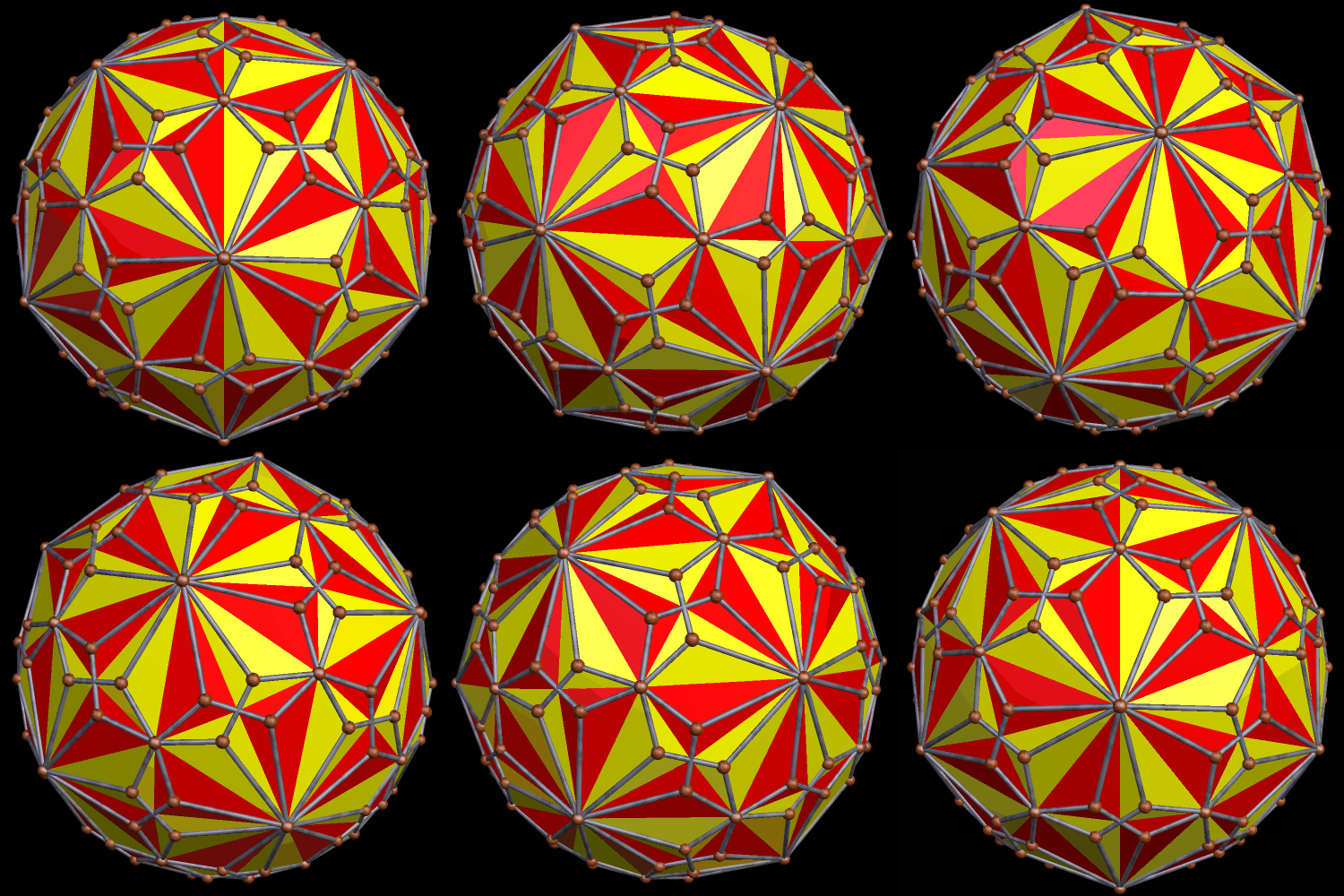
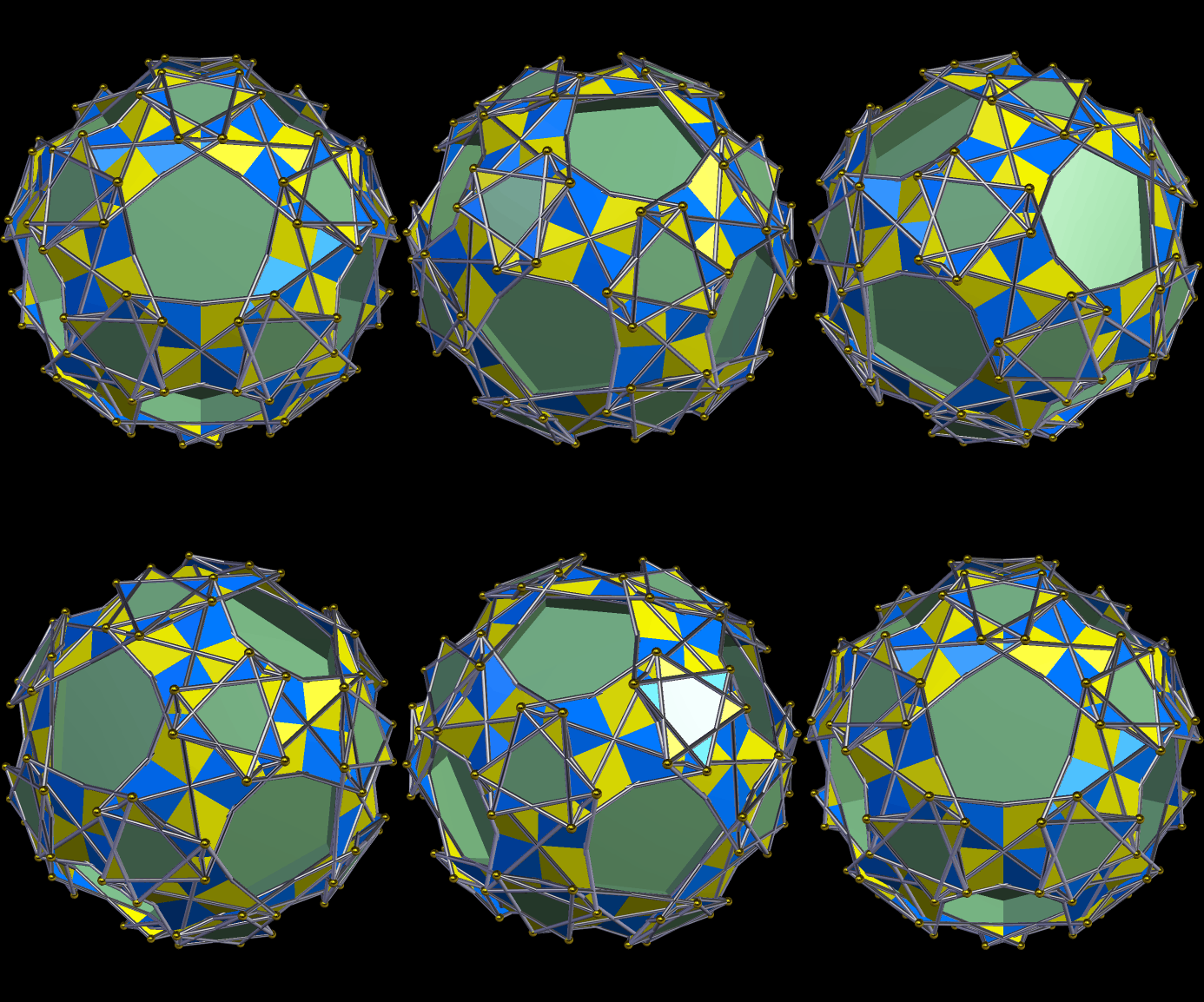
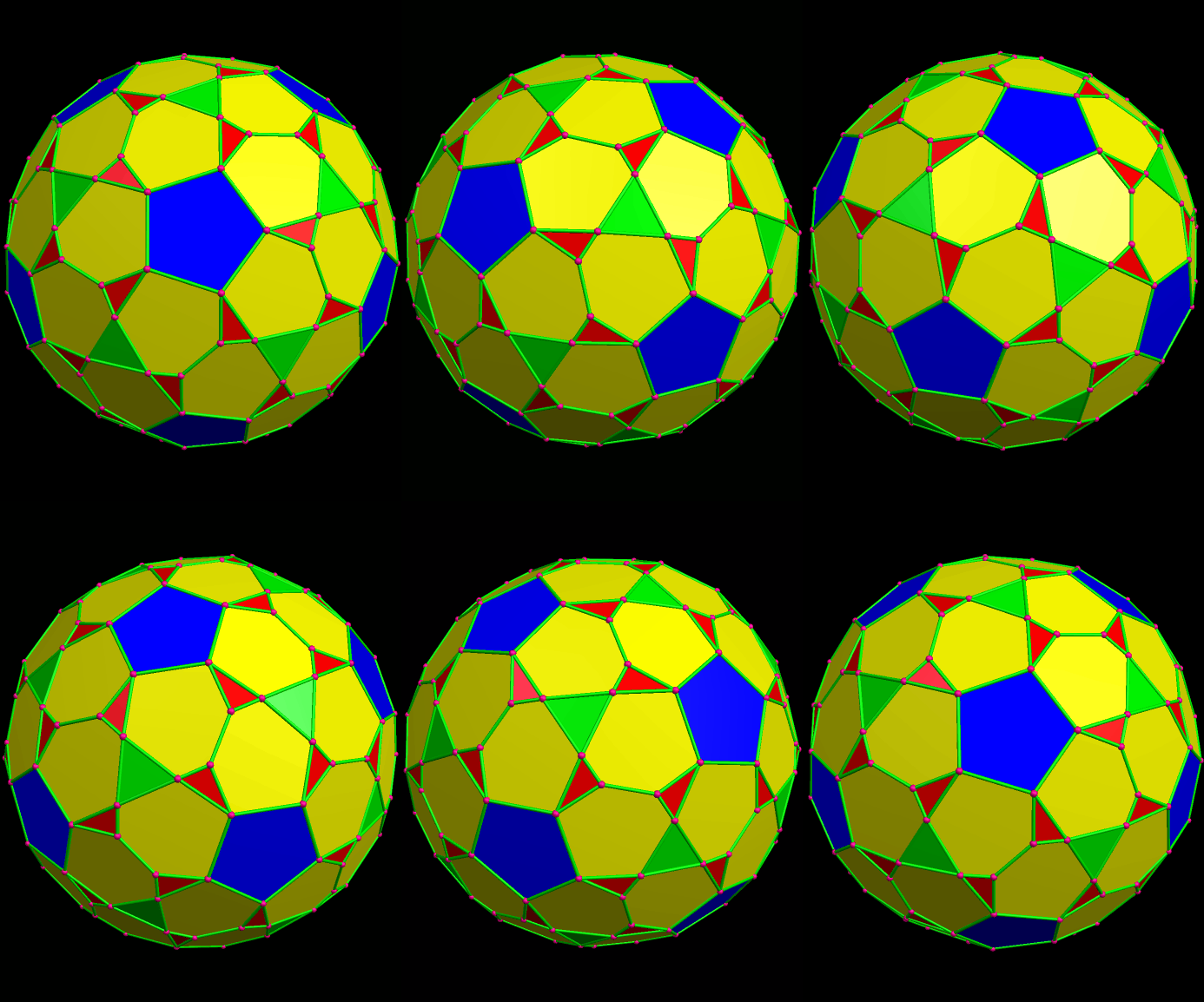
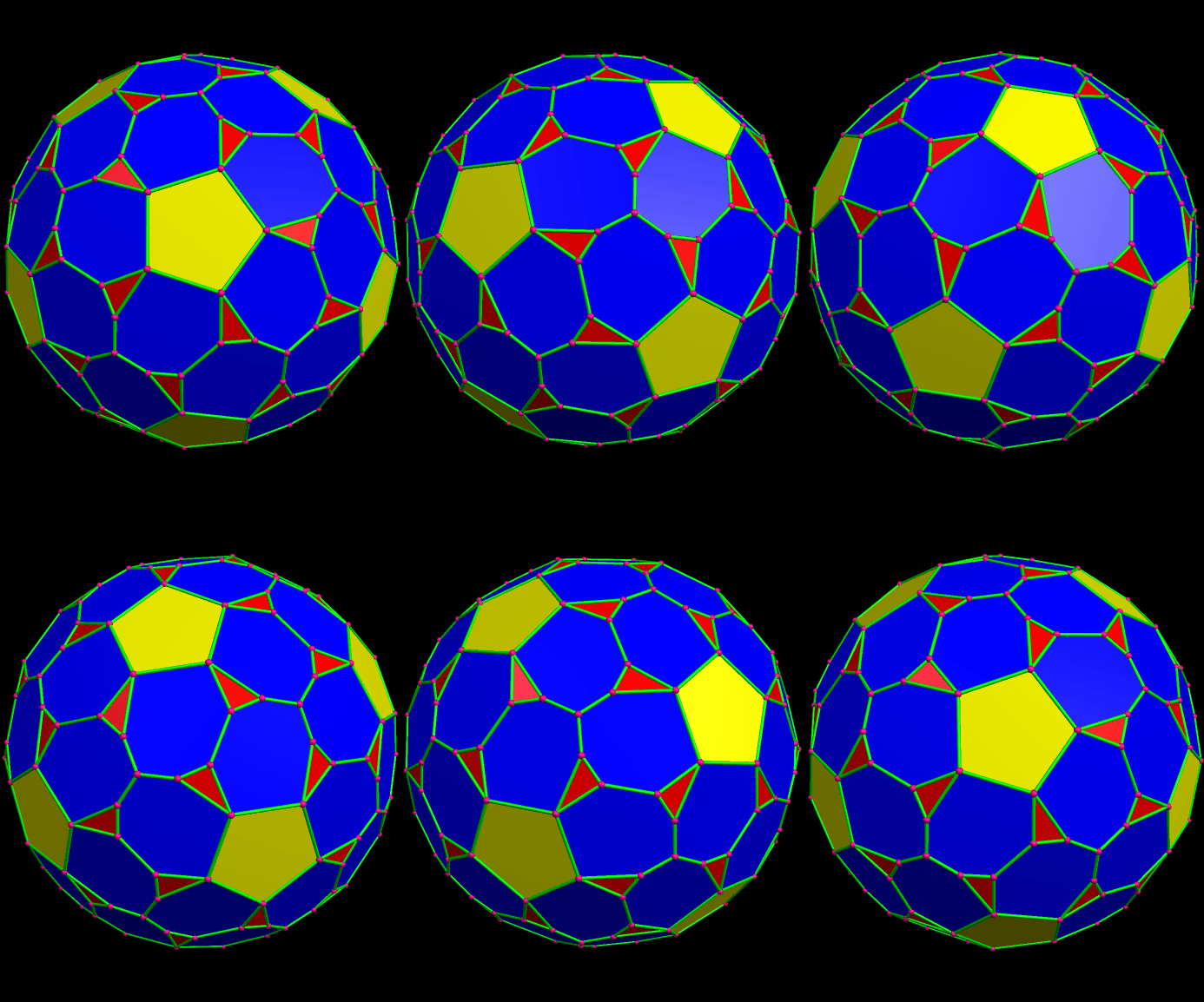
I next stellated this last figure numerous times (I stopped counting at ~200), to obtain this polyhedron:

Stellated Compound of enantiomorphic pair dual

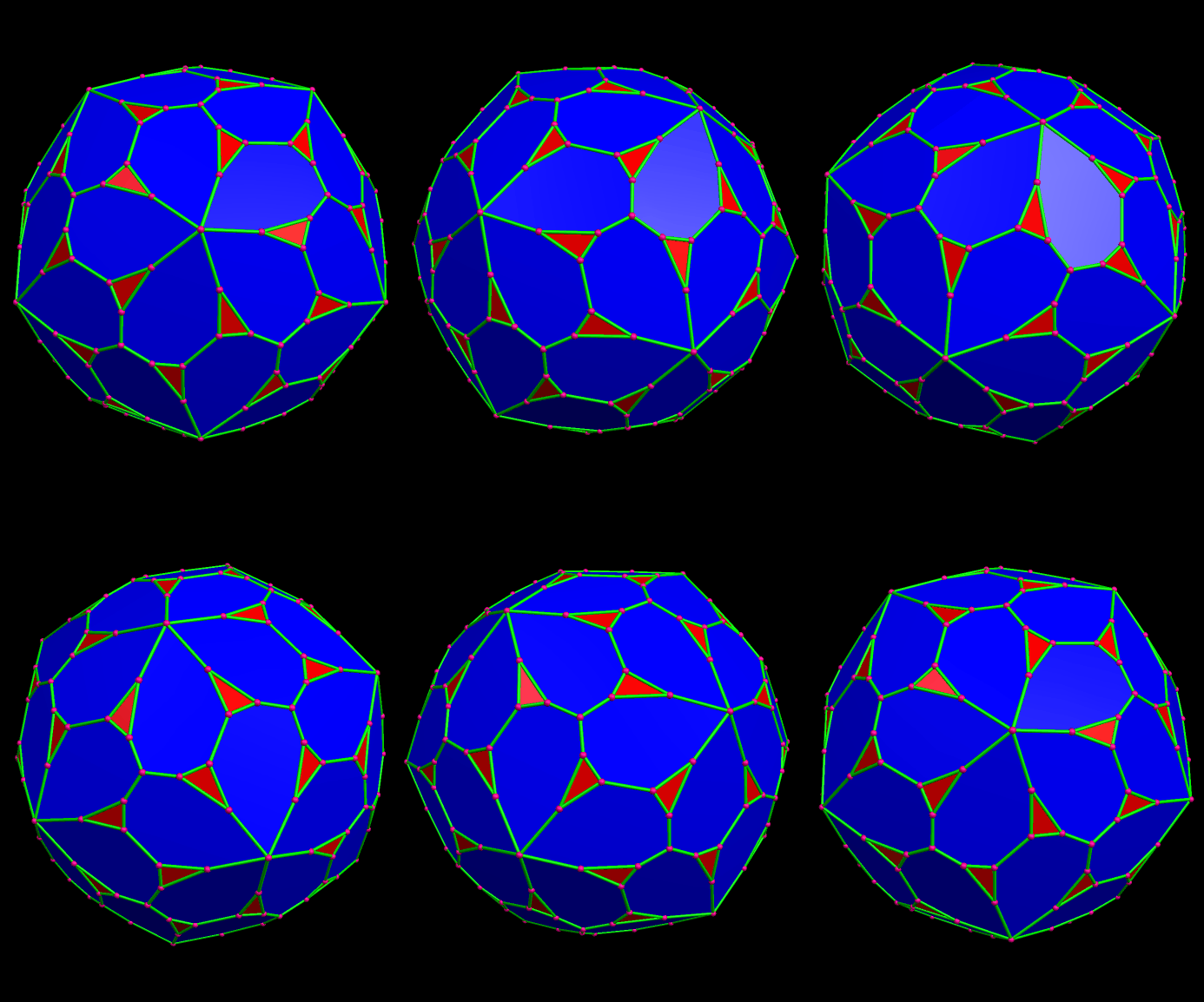
After seeing this, I wanted to know what its dual would look like — and it was a nice polyhedron on which to end this particular polyhedral journey.

dual of Stellated Compound of enantiomorphic pair dual

I  make these transformations of polyhedra, and create these virtual models, using a program called Stella 4d. It may be purchased, or tried for free, at http://www.software3d.com/Stella.php.

A Faceting of the Snub Dodecahedron

The snub dodecahedron is chiral, meaning it appears in left- and right-handed forms. This faceted version, where the same set of vertices is connected in different ways (compared to the original), possesses the same property.

Faceted Snub Dodeca

Chiral polyhedra can always be tranformed into interesting polyhedral compounds by combining them with their own mirror-images. If this is done with the polyhedron above, you get this result, presented with a different coloring-scheme.

Compound of enantiomorphic pair

Both of these images were created using Stella 4d:  Polyhedron Navigator, and you may try it at www.software3d.com/Stella.php.


Two Chiral Polyhedra

Image

Two Chiral Polyhedra

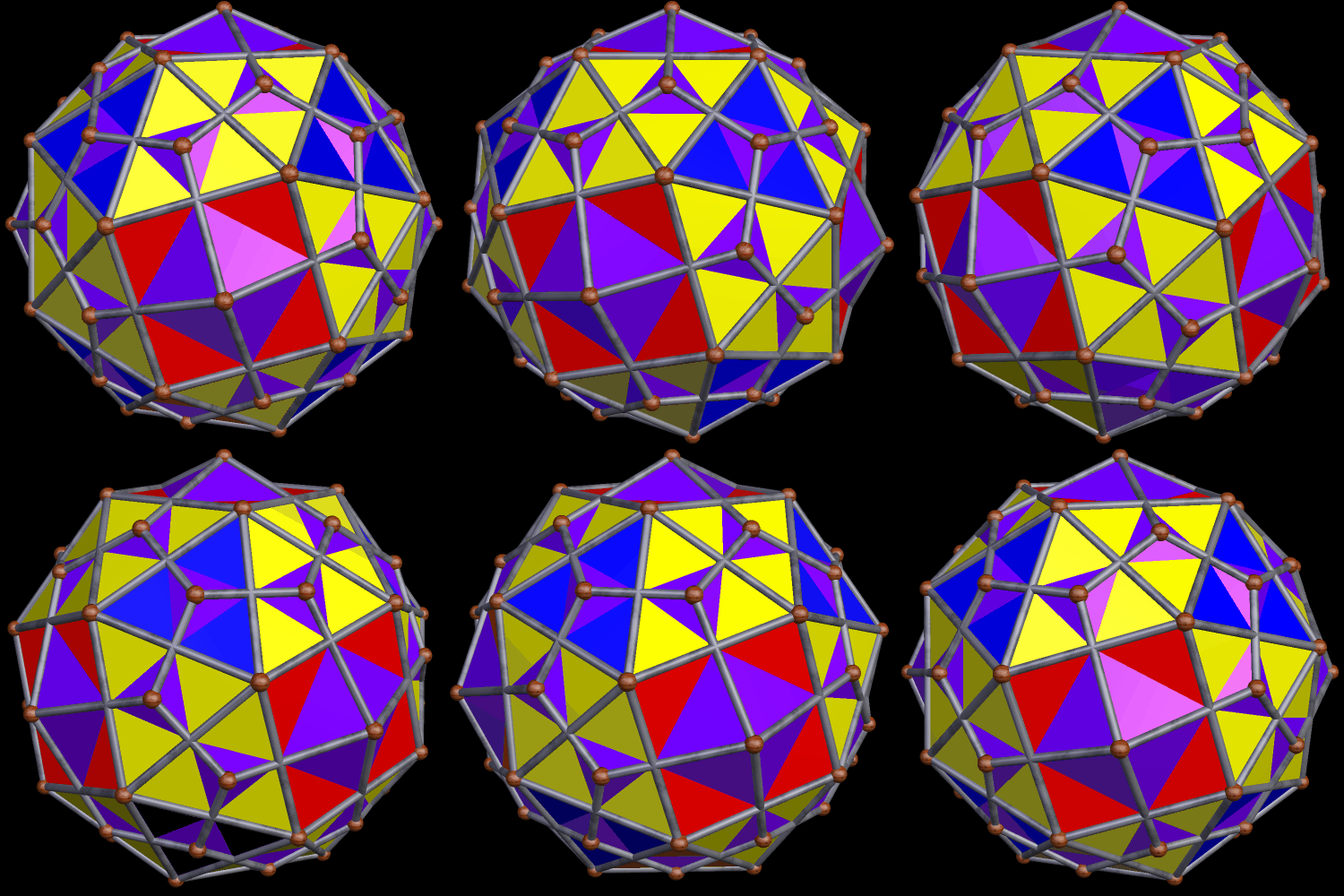
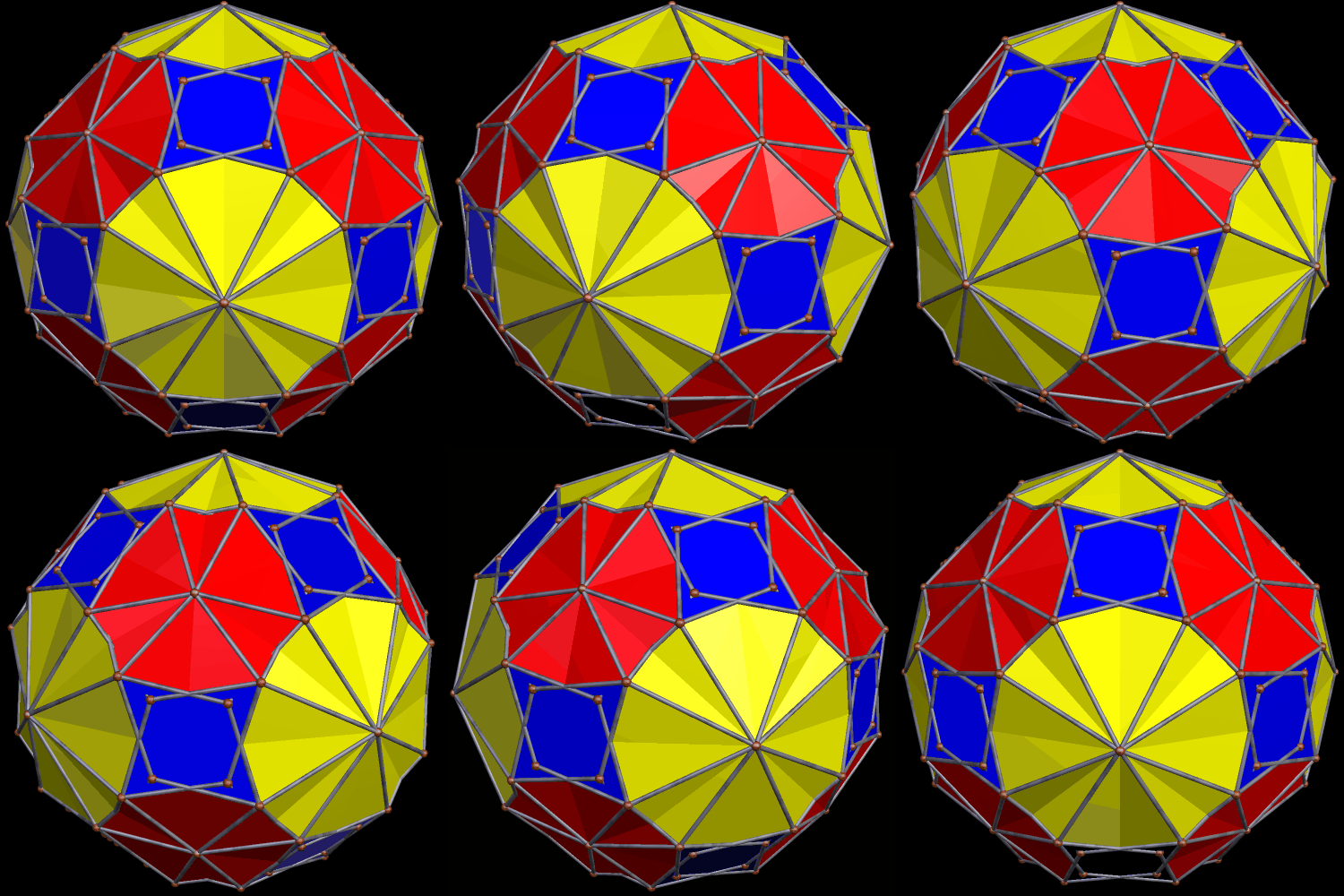
To make this, I started with the dual of the great rhombicosidodecahedron, a polyhedron known as the dysdyakis triacontahedron. I then augmented half of its faces with tall prisms (thereby creating the chirality in this polyhedron), and took the convex hull of the result. The sixty red triangles are the tops of the augmentation-prisms.

A stellation of the above polyhedron, and a color-change, produced this result, also chiral. It may be enlarged with a click.

Stellated Convex hull based on expanded RTC

These polyhedra were created using Stella 4d, a program which you may buy — or try for free, as a trial download — at http://www.software3d.com/Stella.php.

A Polyhedron Featuring Sixty Octagons and Sixty Triangles

Image

A Polyhedron Featuring Sixty Octagons and Sixty Triangles

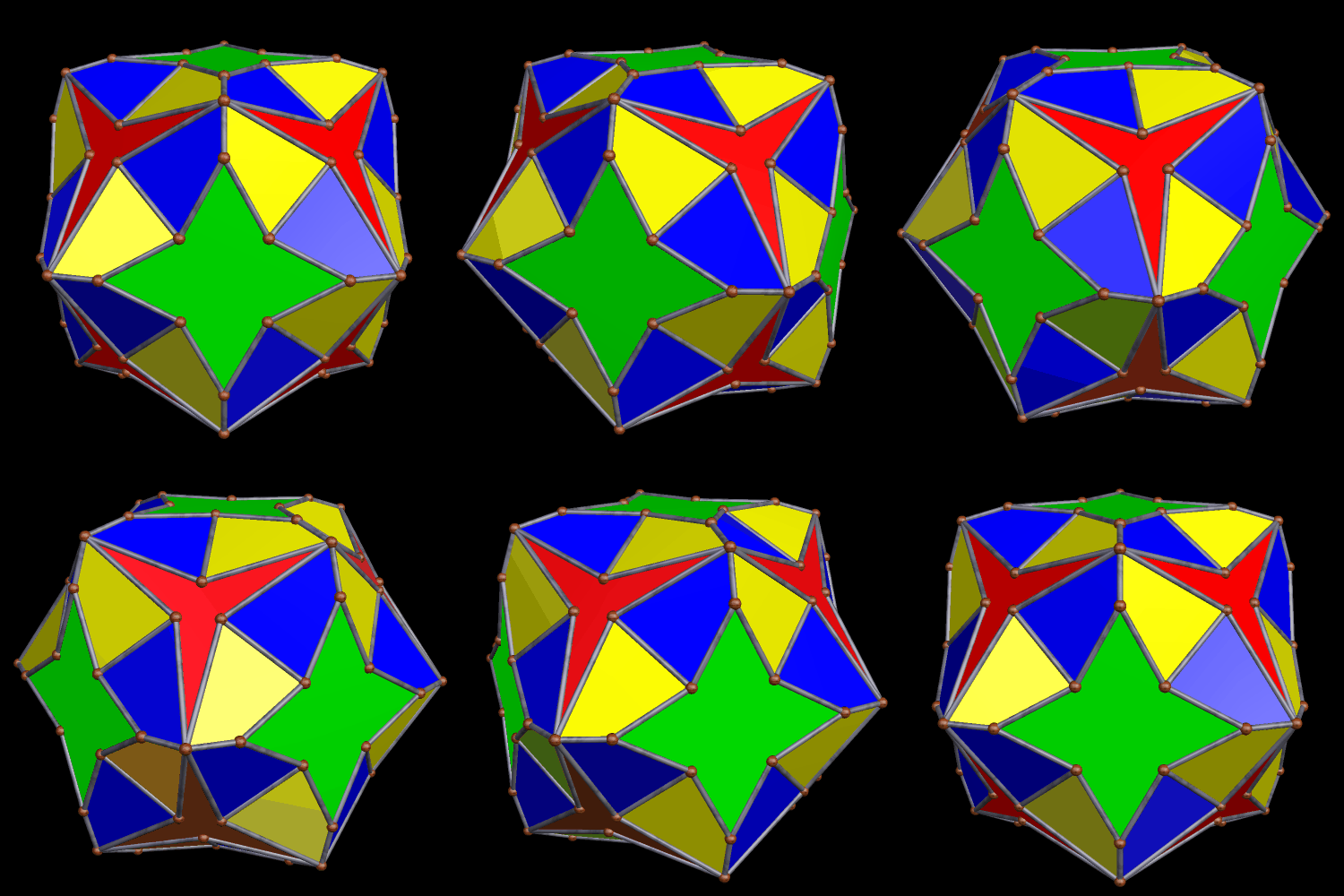
If someone had asked me if it were possible to form a symmetric polyhedra out of irregular triangles and octagons, using exactly sixty of one type each, I would have guessed that it were not possible. Why does it work here? Part of the reason is that each triangle borders three octagons, and each octagon borders three triangles — a necessary, but not sufficient, condition. This is a partial truncation of an isomorph of the pentagonal hexacontahedron, the dual of the snub dodecahedron. As such, no surprise — it’s chiral.

This was made while stumbling about in the wilderness of the infinite number of possible polyhedra using Stella 4d: Polyhedron Navigator. You can get it here: http://www.software3d.com/Stella.php.

A Chiral Tessellation

A Chiral Tessellation

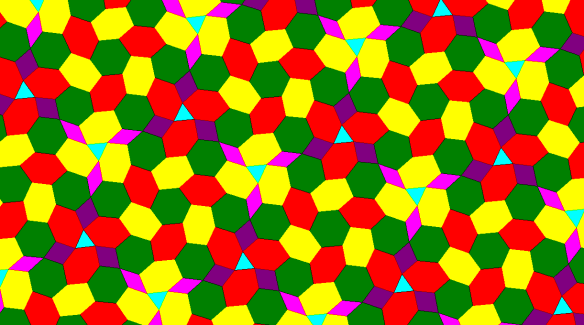
In this chiral tessellation, the blue triangles and green hexagons are regular. The yellow hexagons are “Golden Hexagons,” which are what you get if you reflect a regular pentagon over one of its own diagonals, then unify the two reflections. The pink and purple quadrilaterals are two types of rhombi, and the red hexagons are a third type of equilateral hexagon. All of the edges of all polygons here have the same length.

There are three different types of points of three-fold rotational symmetry repeated here. Two of these types are centered in the middle of blue triangles, while the third is centered in the middle of some of the green hexagons — specifically, the ones surrounded only by alternating red and yellow hexagons.

When I try to generate the mirror-image of this tessellation, it overloads Geometer’s Sketchpad, and crashes the program. However, inverting the colors of the same reflection, in MS-Paint, to make a color-variant, is easy:

weird tessellation

Snub Dodecahedron Variant

Image

Snub Dodecahedron Variant

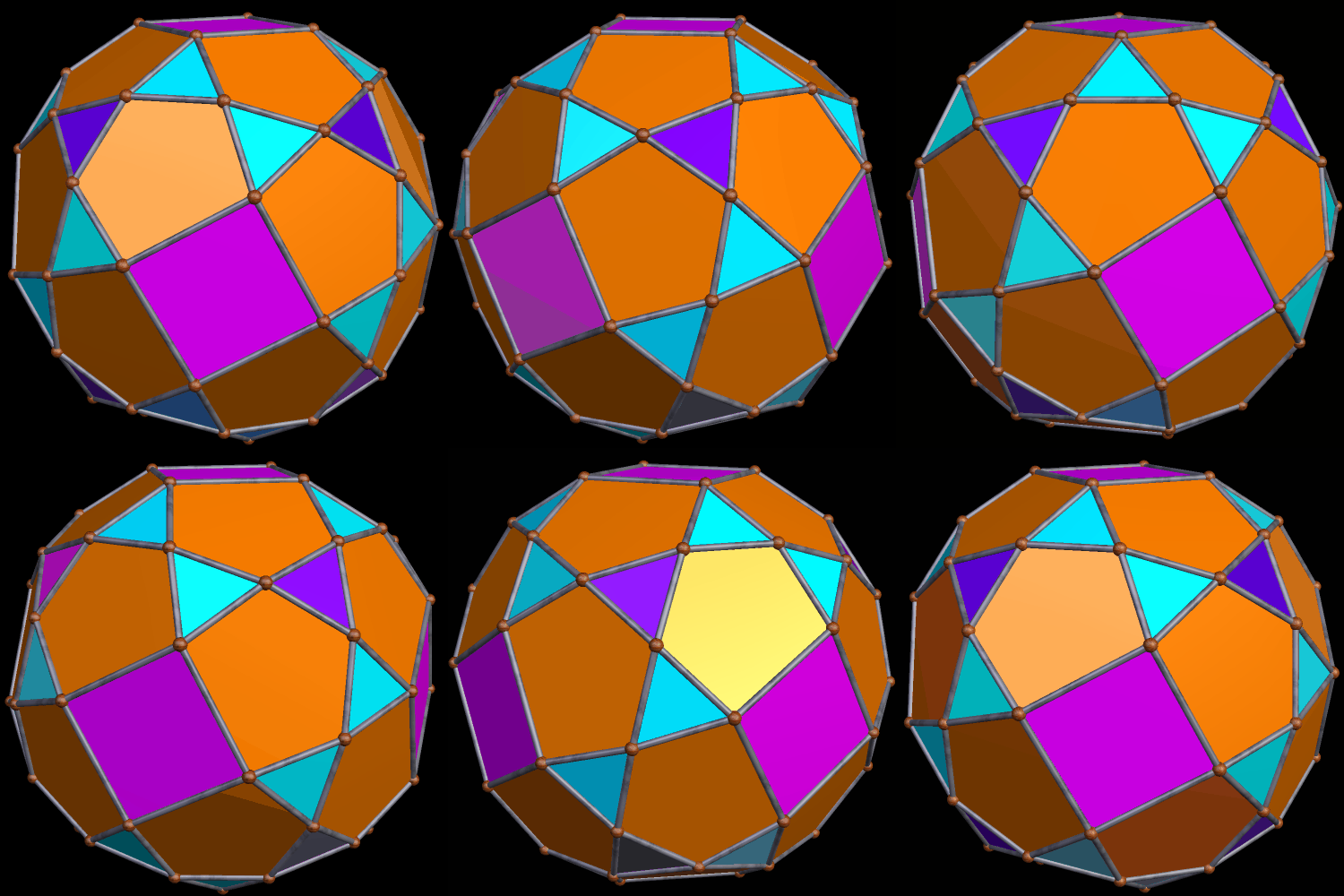
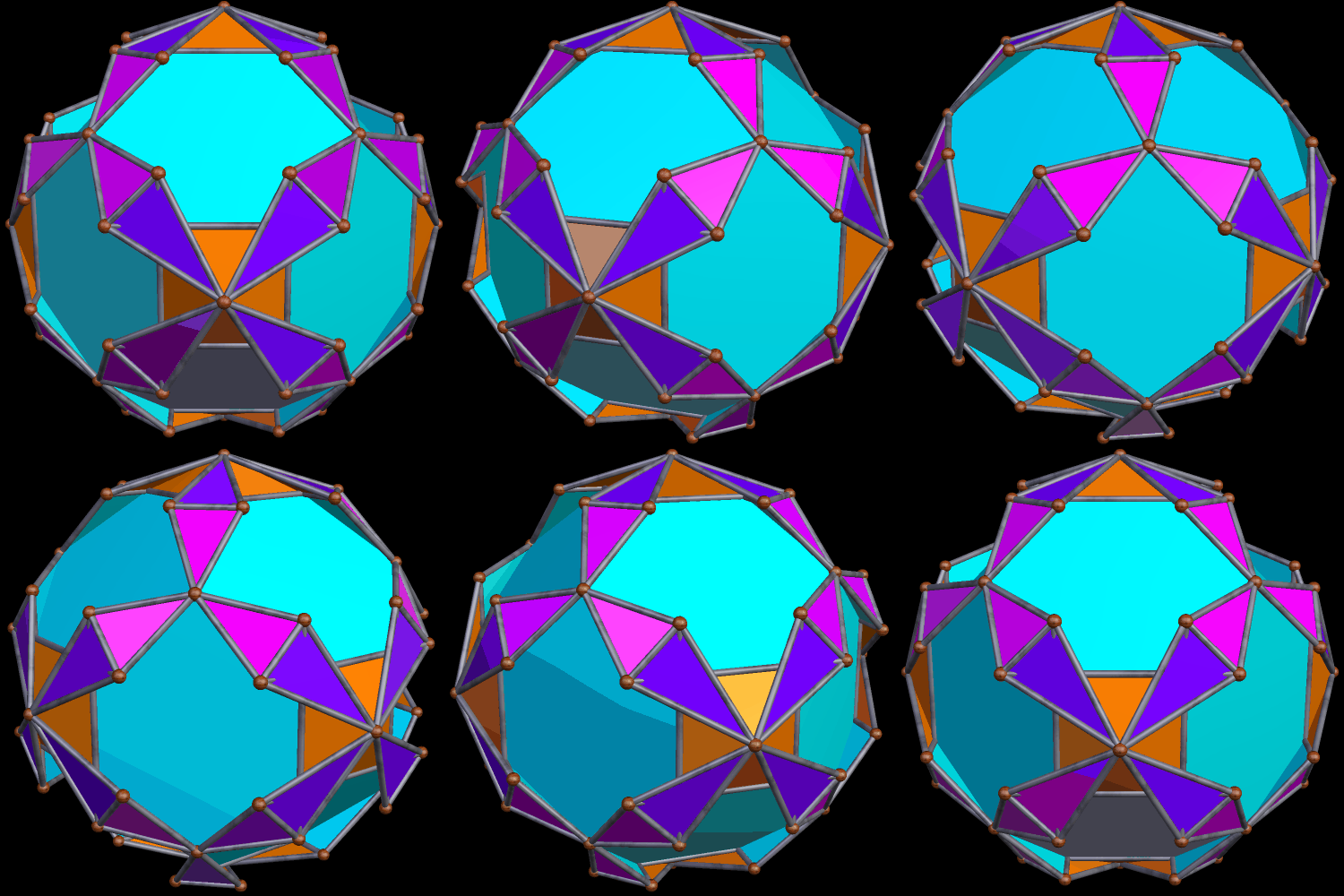
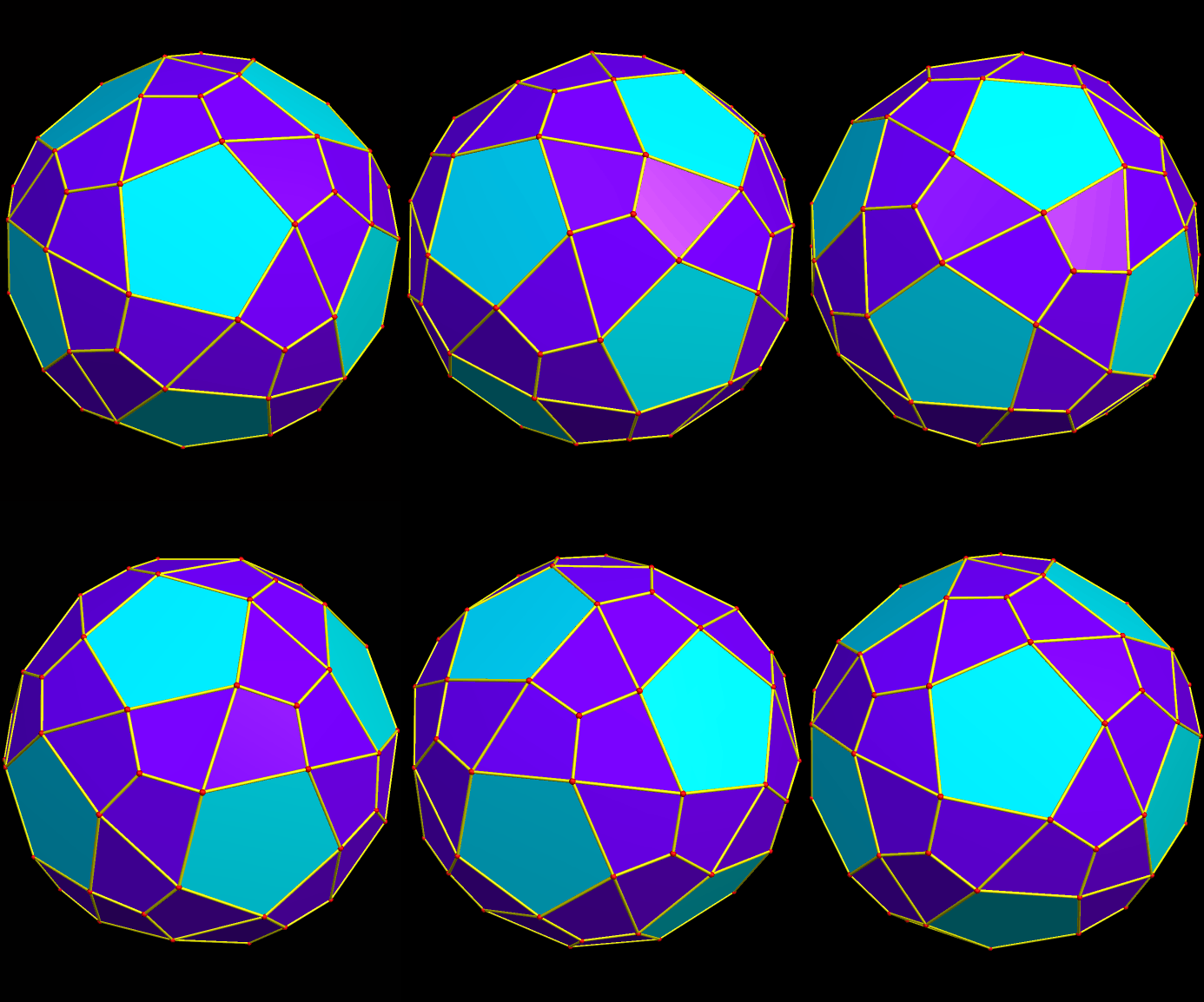
In this polyhedron, there are twelve pentagons and sixty kites. It can be made by augmenting twenty of the triangles in a snub dodecahedron with short pyramids, but the pyramid-height has to be just right, in order to make those pyramids’ lateral faces coplanar with the non-augmented triangles, which produces the kites.

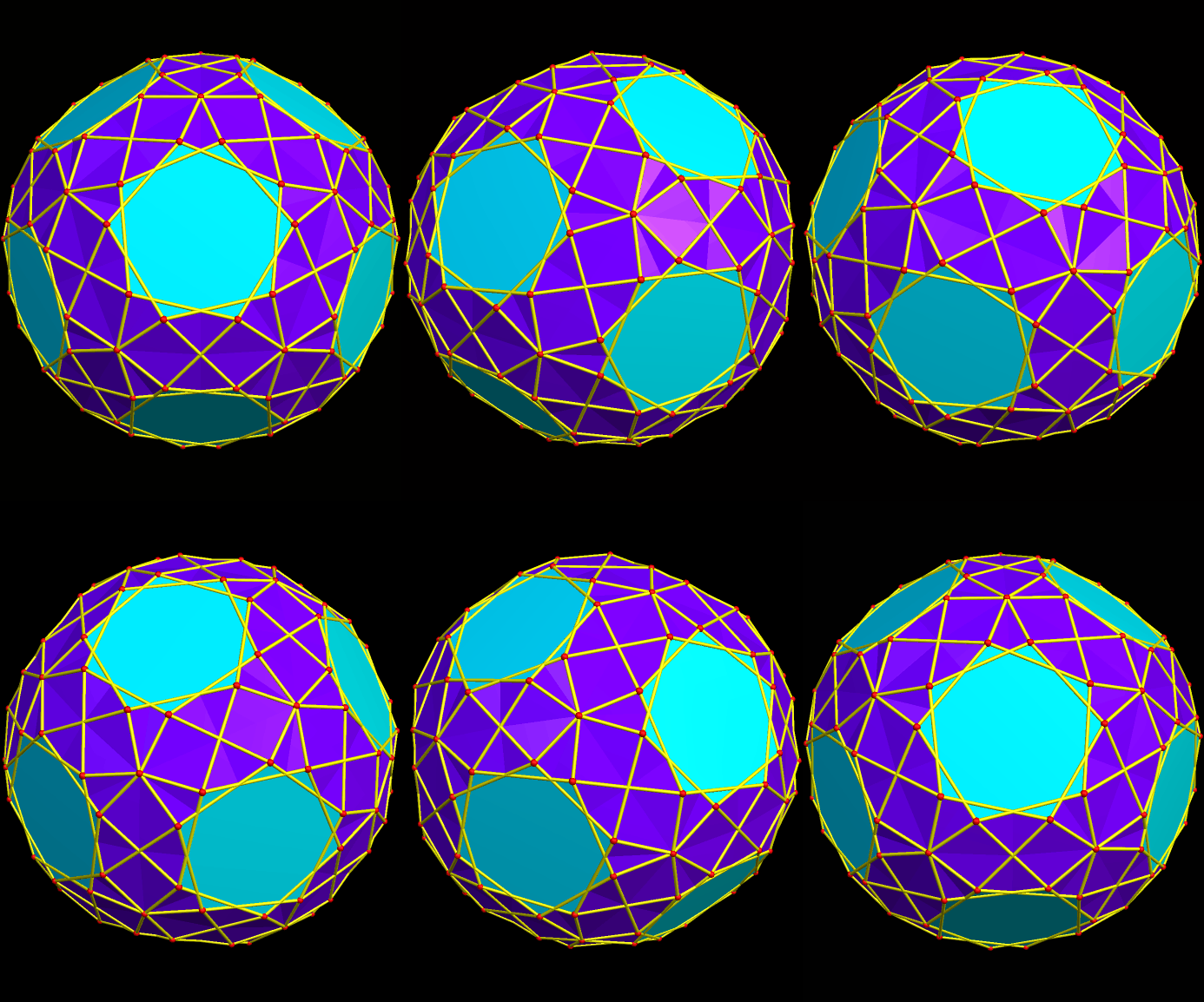
Since this polyhedron is chiral, a compound can be made by adding it to its own mirror image:

Compound of enantiomorphic pair

Both images were created using Stella 4d, software available at www.software3d.com/Stella.php.