
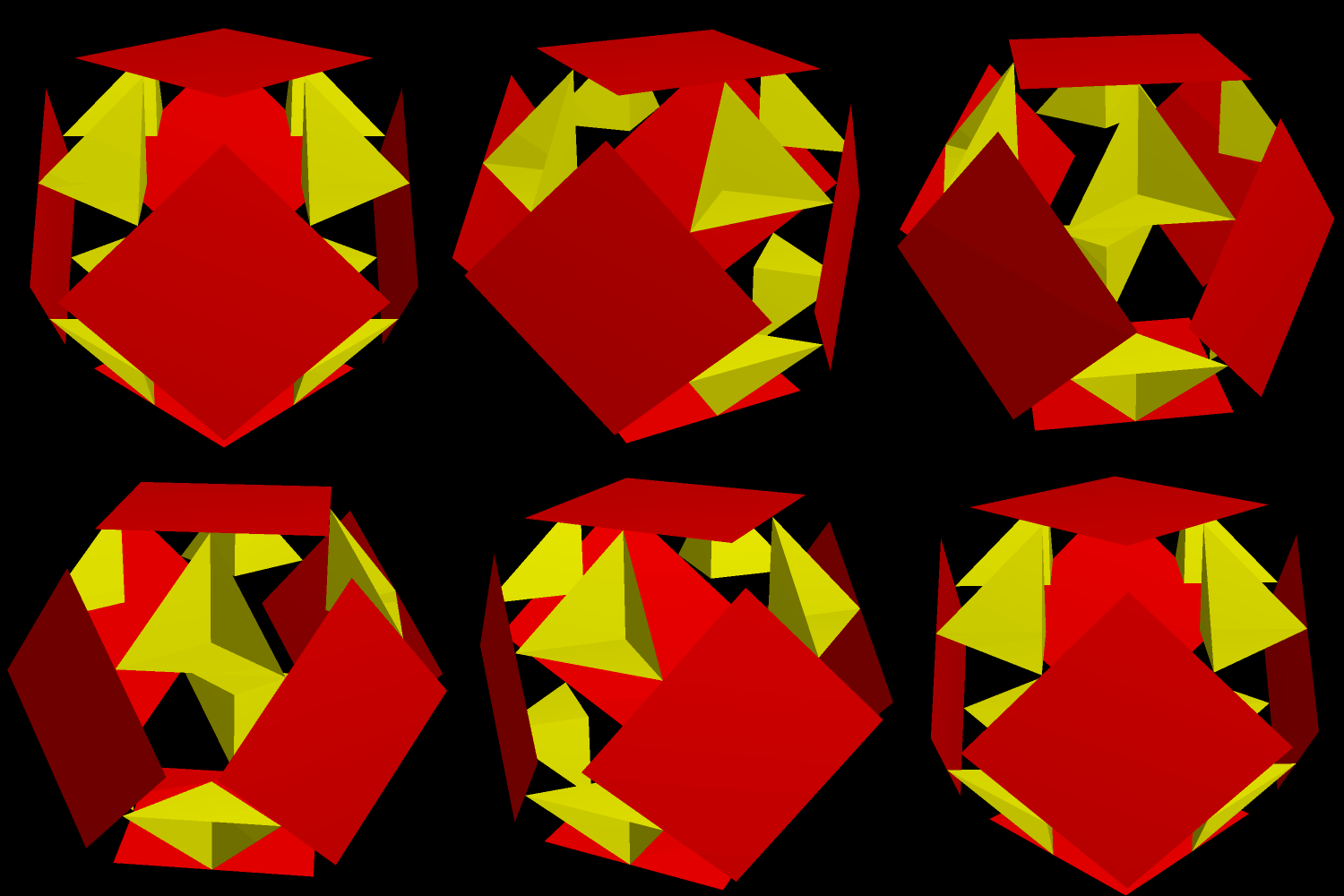
The convex hull of this solid is the cuboctahedron. To me, it looks like a hybrid of that solid, and the Stella Octangula. I created it using Stella 4d, which is available (including a free trial download) at http://www.software3d.com/Stella.php.
The convex hull of this solid is the cuboctahedron. To me, it looks like a hybrid of that solid, and the Stella Octangula. I created it using Stella 4d, which is available (including a free trial download) at http://www.software3d.com/Stella.php.
If one starts with a cuboctahedron, and then creates a zonish polyhedron from it, adding zones (based on the faces) to the faces which already exist, here is the result, below, produced by Stella 4d: Polyhedron Navigator (software you may buy or try at http://www.software3d.com/Stella.php):

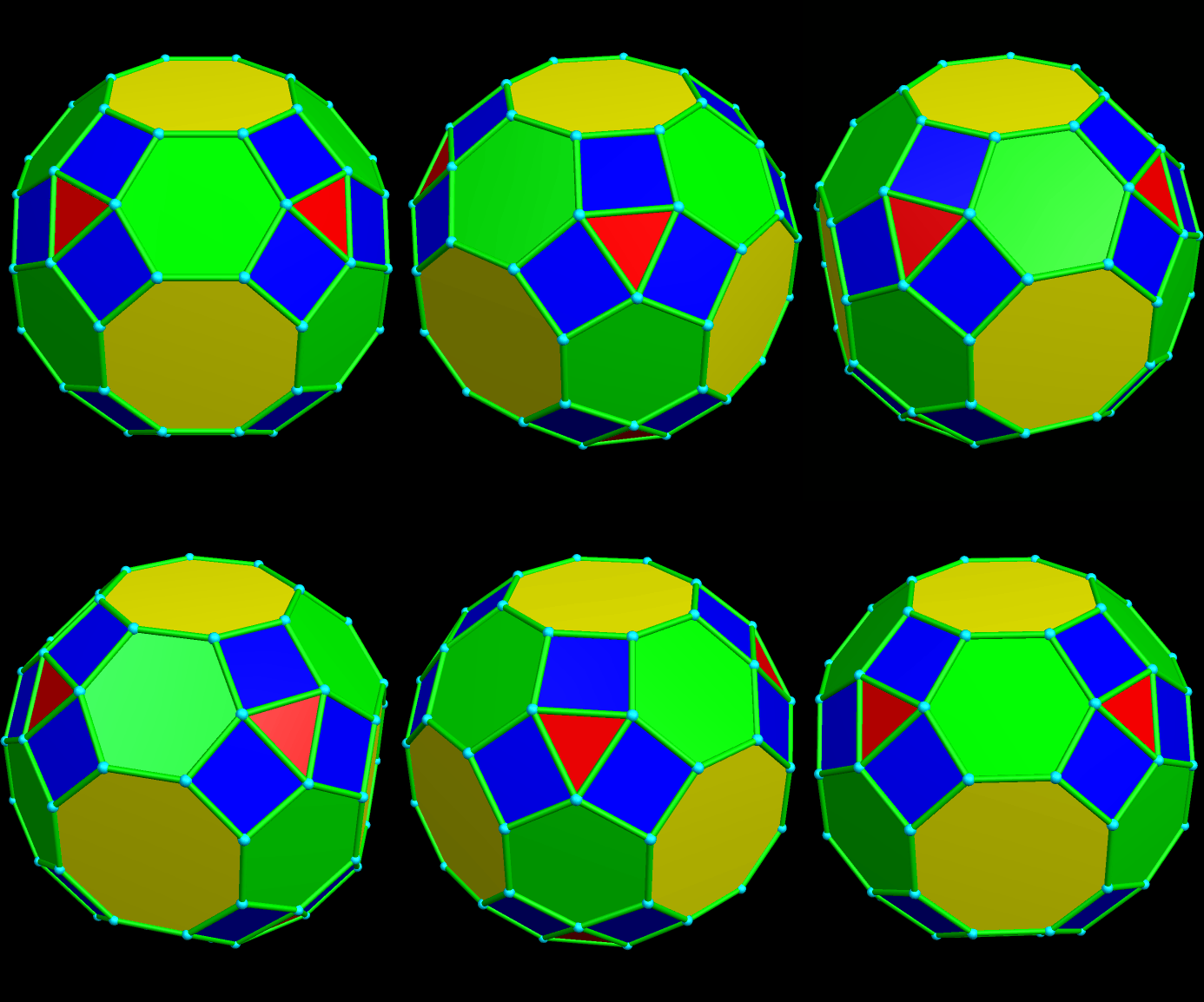
The hexagons here, in this second image, are visibly irregular. The four interior hexagon-angles next to the octagons each measure more than 125 degrees, and the other two interior angles of the hexagons each measure less than 110 degrees — too irregular for this to qualify as a near-miss to the Johnson solids. However, Stella includes a “try to make faces regular” function, and applying it to the second polyhedron shown here produces the polyhedron shown in a larger image, at the top of this post.
It is this larger image, at the top, which I am proposing as a new near-miss to the 92 Johnson solids. In it, the twelve hexagons are regular, as are the eight triangles and six octagons. The only irregular faces to be found in it are the near-squares, which are actually isosceles trapezoids with two angles (the ones next to the octagons) measuring ~94.5575 degrees, and two others (next to the triangles) measuring 85.4425 degrees. Three of the edges of these trapezoids have the same length, and this length matches the lengths of the edges of both the hexagons and octagons. The one side of each trapezoid which has a different length is the one it shares with a triangle. These triangle-edges are ~15.9% longer than all the other edges in this proposed near-miss.
My next step is to share this find with others, and ask for their help with these two questions:
Once I learn the answers to these questions, I will update this post to reflect whatever new information is found. If this does qualify as a near-miss, it will be my third such find. The other two are the tetrated dodecahedron (co-discovered, independently, by myself and Alex Doskey) and the zonish truncated icosahedron (a discovery with which I was assisted by Robert Webb, the creator of Stella 4d).
More information about these near-misses, one of my geometrical obsessions, may be found here: https://en.wikipedia.org/wiki/Near-miss_Johnson_solid

The images on the faces of this polyhedron may be seen in still black and white in the previous post. I used Geometer’s Sketchpad and MS-Paint to make the flat image, and then Stella 4d to put it all together. You may try Stella for free at http://www.software3d.com/Stella.php.
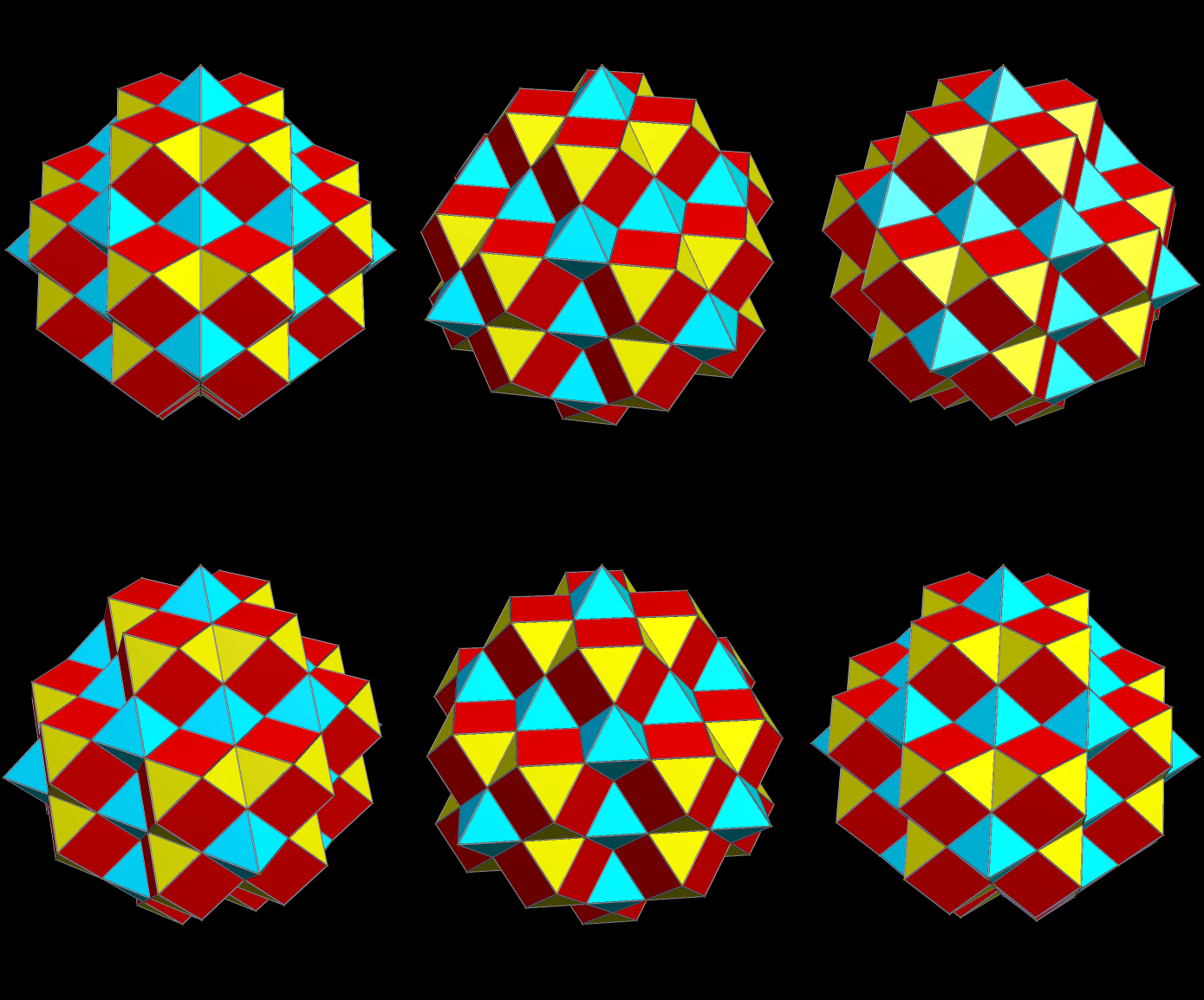
There are only a few polyhedra which can fill space without leaving gaps, without “help” from a second polyhedron. This filling of space is the three-dimensional version of tessellating a plane. Among those that can do this are the cube, the truncated octahedron, and the rhombic dodecahedron.
If multiple polyhedra are allowed in a space-filling pattern, this opens new possibilities. Here is one: the filling of space by cuboctahedra and octahedra. There are others, and they are likely to appear as future blog-posts here.
Software credit: I made this virtual model using Stella 4d, polyhedral-manipulation software you can buy, or try as a free trial download, at http://www.software3d.com/Stella.php.

A cuboctahedron sits at the center of this rotating cluster, but you can’t see it, because each of its fourteen faces (six squares and eight equilateral triangles) has another cuboctahedron, of equal size, attached to it.
Software credit: visit http://www.software3d.com/stella.php to try (or buy) the polyhedral-manipulation software I used to make this virtual model.

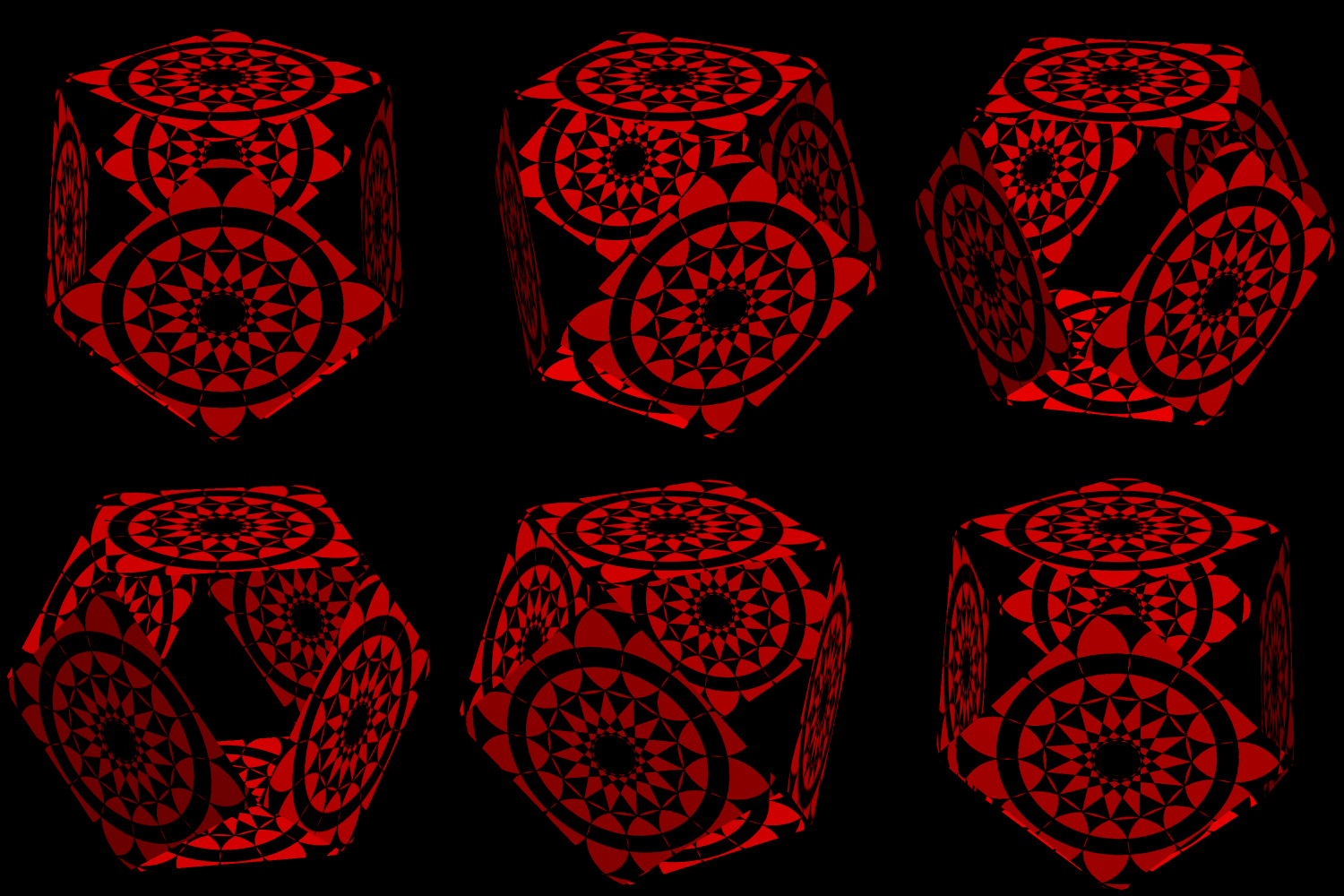
The decorations on the faces are based on the last post, and were made with Geometer’s Sketchpad and MS-Paint. Putting them on the faces and making this rotating .gif file was done with another program, Stella 4d, available at http://www.software3d.com/stella.php.
Stella 4d, a program you may try for free at http://www.software3d.com/stella.php, was used to create this rotating image.
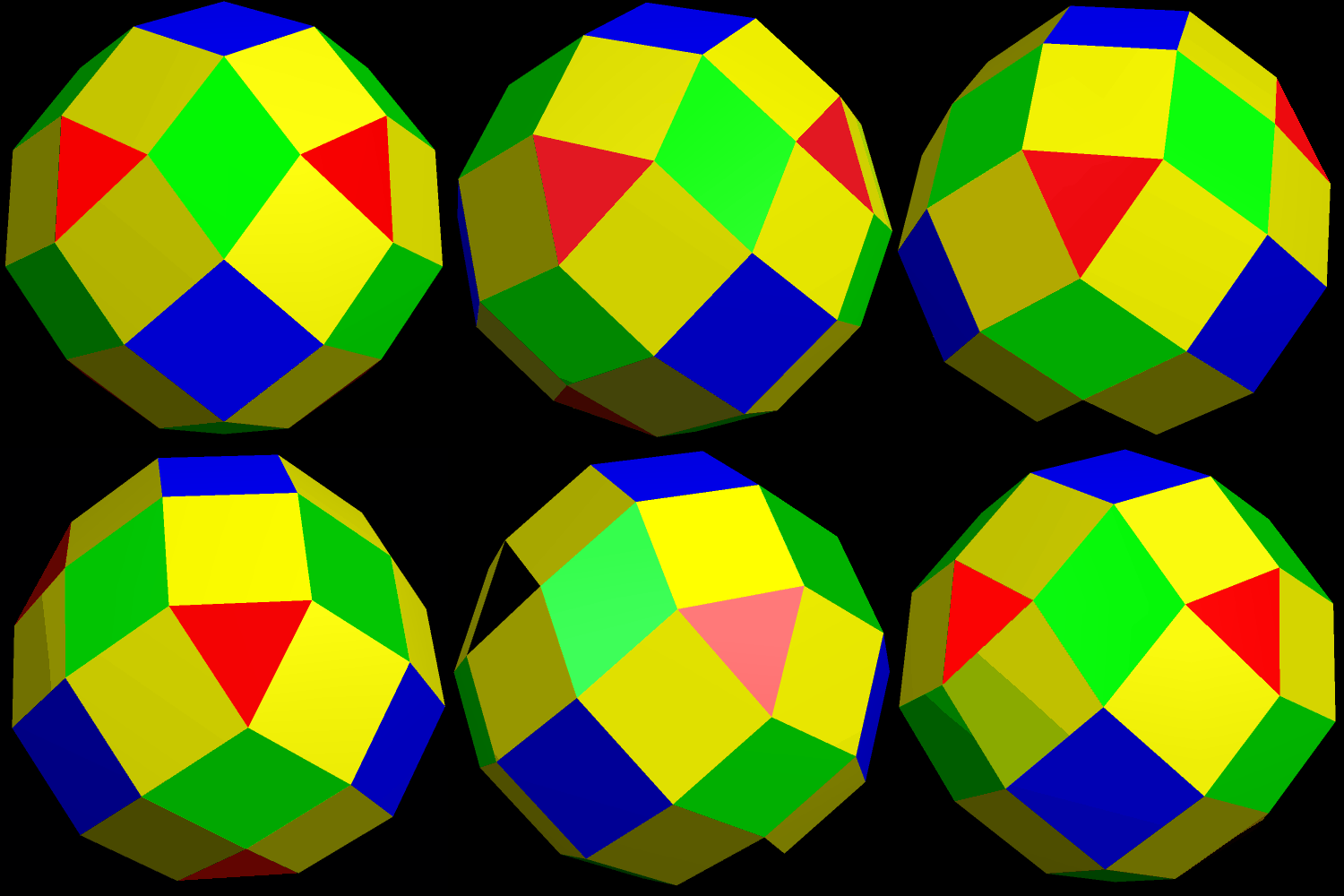
There are many ways to make intermediate forms between dual polyhedra. This was made using the expansion method. The faces of the cuboctahedron (red and blue) were moved outward, as were the green faces of the rhombic dodecahedron, until the meeting of all possible vertices. The yellow rectangles were the spaces created between faces by this expansion.
(Software credit: see http://www.software3d.com/stella.php)
Created with Stella 4d (site to try it: http://www.software3d.com/stella.php).

This is the dual of the previous post.
Note: The software I used to create this is available as a free trial download at http://www.software3d.com/stella.php.
 RobertLovesPi.net