A Torus and Its Dual, Part I

Torus

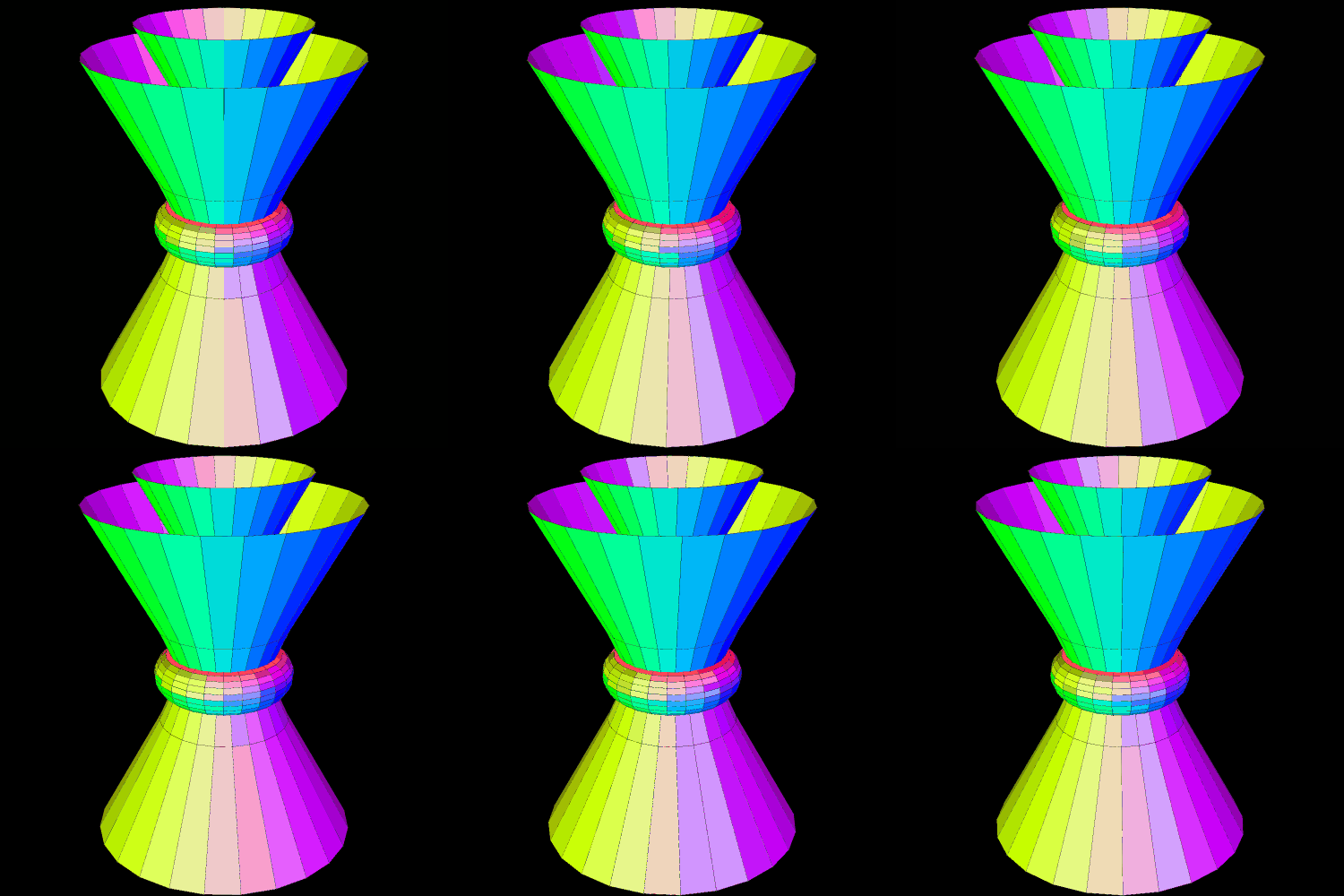
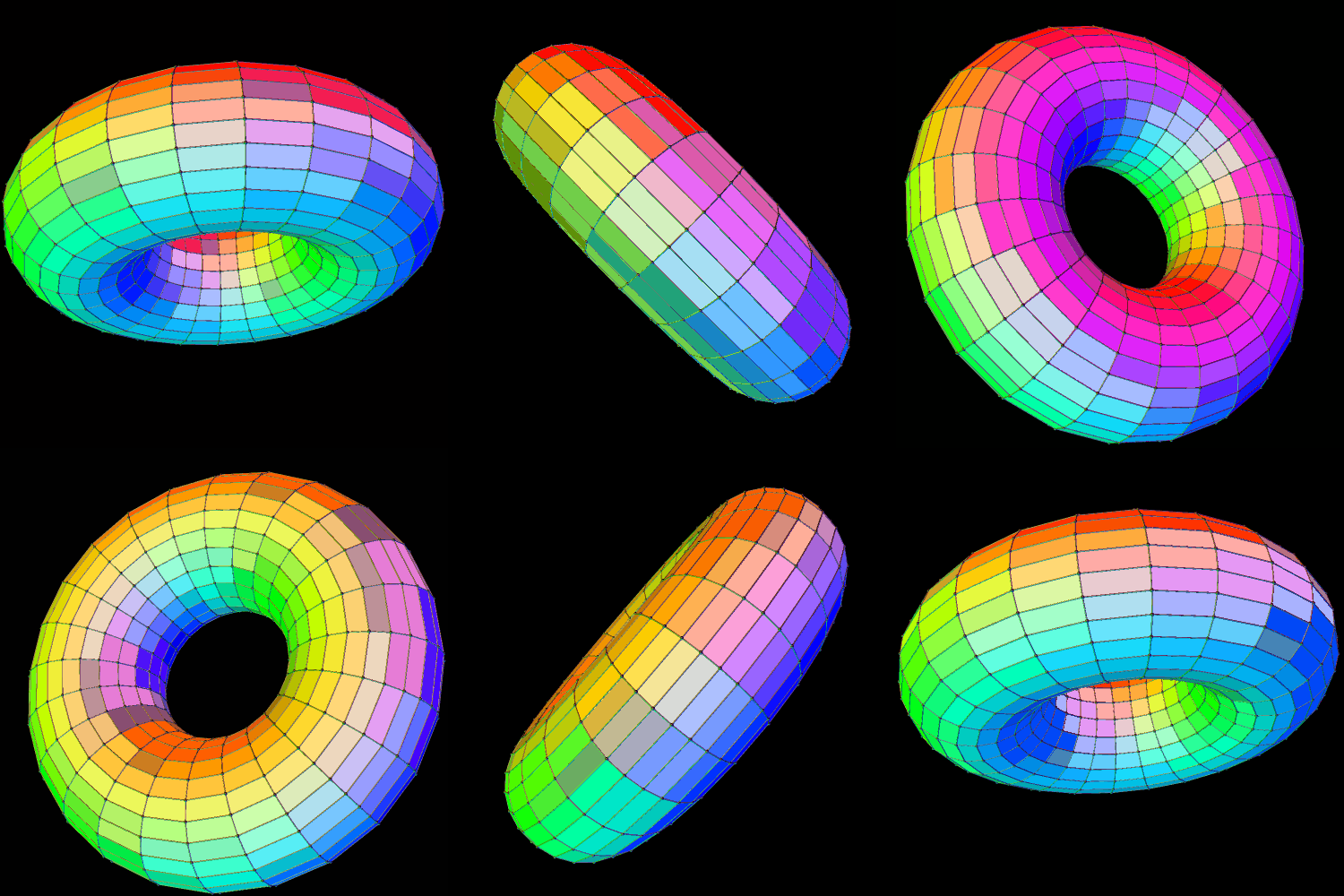
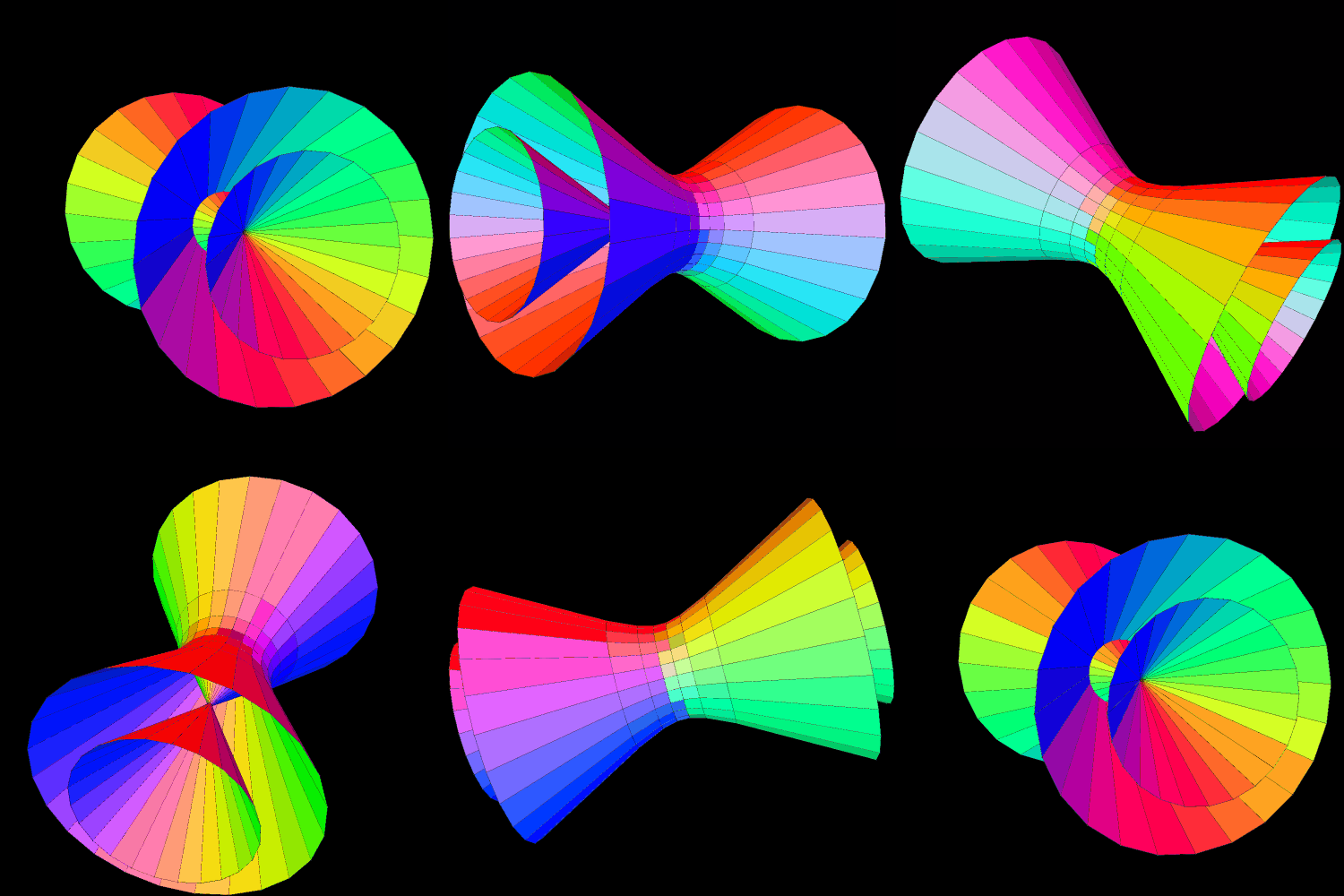
The torus is a familiar figure to many, so I chose a quick rotational period (5 seconds) for it. The dual of a torus — and I don’t know what else to call it — is not as familiar, so, for it, I extended the rotational period to 12 seconds.

Torus dual

By viewing the compound of the torus and its dual, one can see the the dual is the larger of the two, by far:

Torus dual with torus

I used Stella 4d to make these images. It’s a program you can buy, or try for free, at this website: http://www.software3d.com/Stella.php.

Beginning the Fractiles-7 Refrigerator Experiment

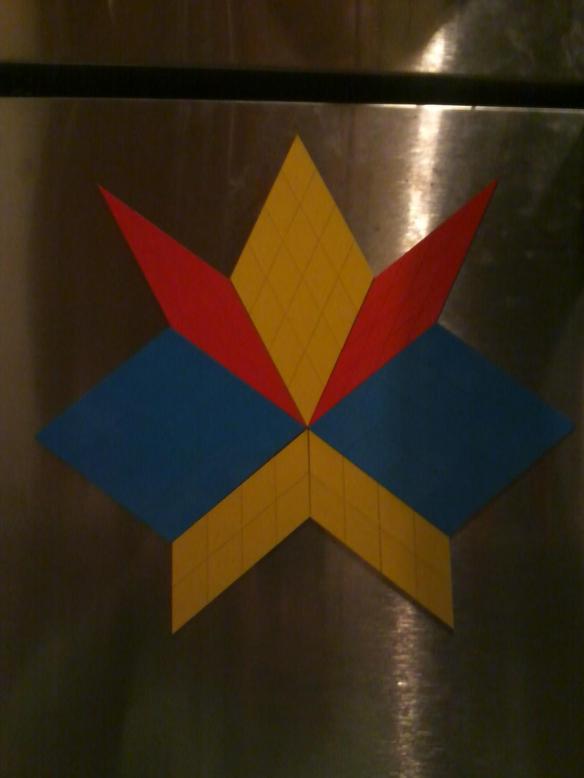
To begin this experiment, I first purchased two refrigerator-sized Fractiles-7 sets (available at http://fractiles.com/), and then, early on a Sunday, quietly arranged these rhombus-shaped magnets on the refrigerator in our apartment (population: 4, which includes two math teachers and two teenagers), using a very simple pattern.

160207_0000

Here’s a close-up of the center. There are 32 each, of three types of rhombus., in this double-set, for a total of 96 rhombic magnets, all with the same edge length.

160207_0001

The number of possible arrangements of these rhombi is far greater than the population of Earth.

The next step of the experiment is simple. I wait, and see what happens.

It should be noted that there is a limit on how long I can wait before my inner mathematical drives compel me to play with these magnets more, myself — but I do not yet know the extent of that limit.

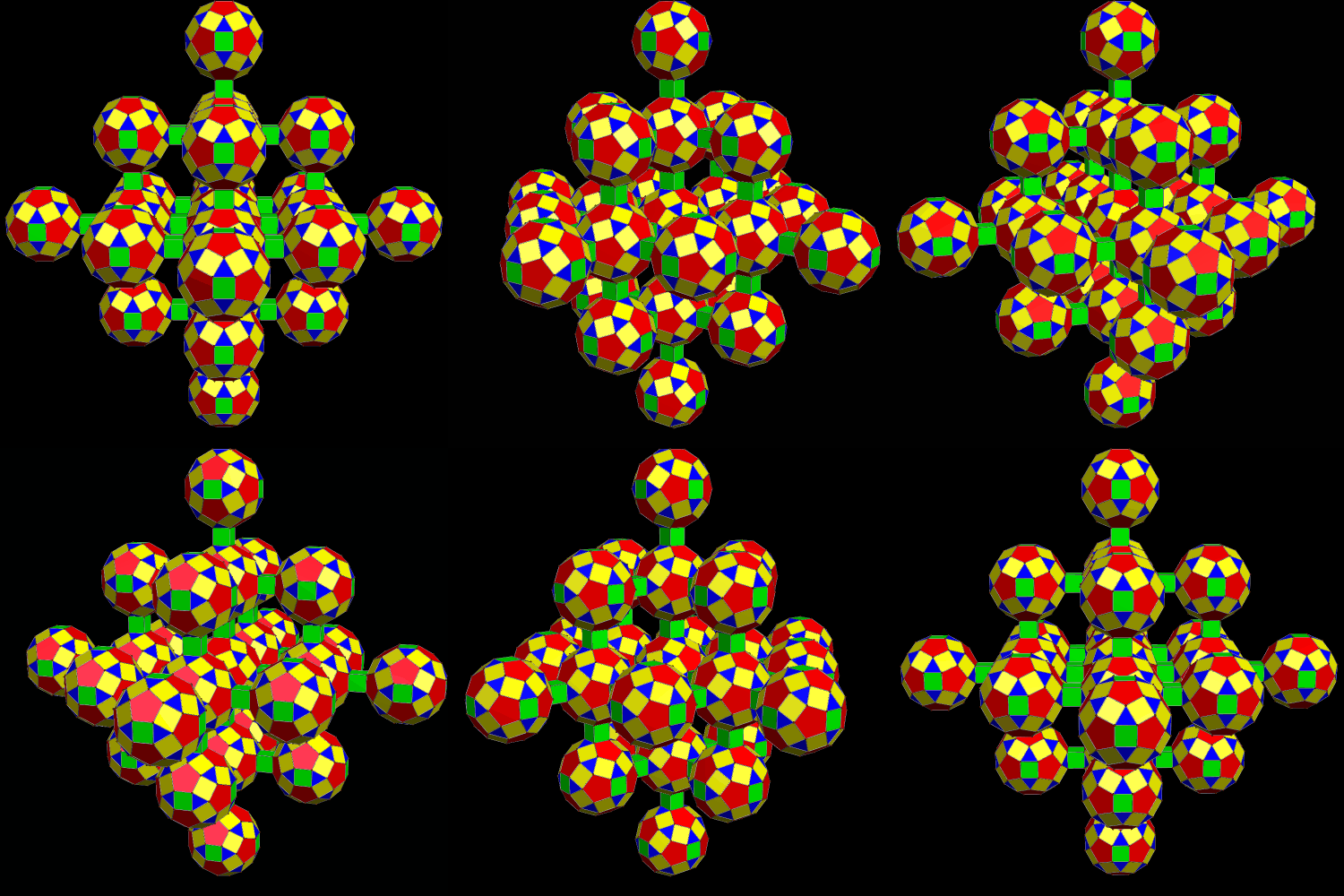
Open Octahedral Lattice of Cubes and Rhombicosidodecahedra

This pattern could be continued, indefinitely, into space.

Augmented Rhombicosidodeca

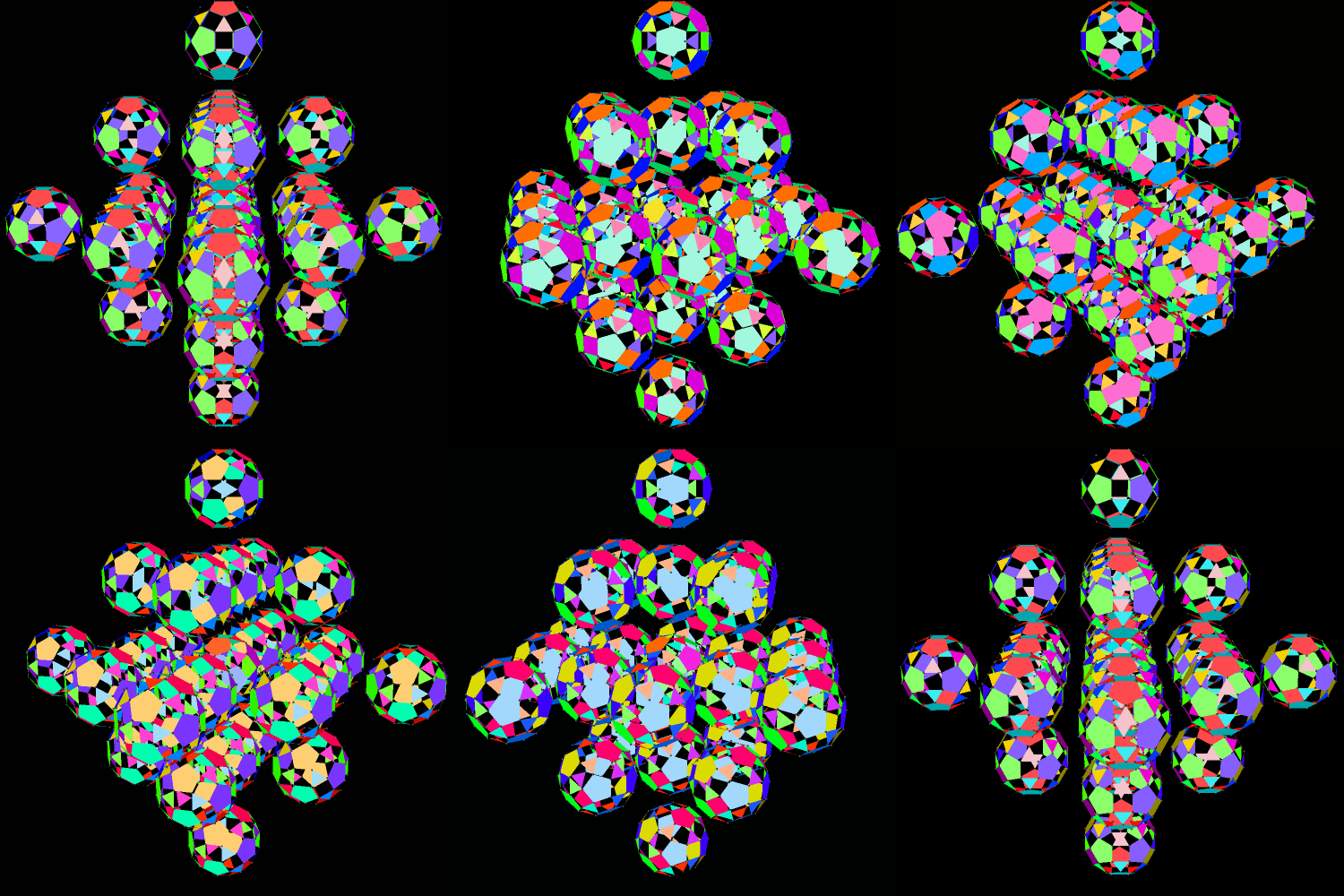
Here is a second view, in rainbow color mode, and with all the squares hidden.

Augmented Rhombicosidodeca rcm

[These images were created with Stella 4d, software you may buy — or try for free — right here.]

Six “Cubish” Polyhedra

I’m using the term “cubish polyhedra” here to refer to polyhedra which resemble a cube, if one looks only at the faces they have which feature the largest number of sides, always six in number, and with positions corresponding to the faces of a cube. In the first two examples shown, these faces are 36-sided polygons, also known as triacontakaihexagons. (Any of the images in this post may be enlarged with a click.) 

Polyhedra fitting this description have appeared on this blog before, but it had not occurred to me to name them “cubish polyhedra” until today. The next two shown have icosakaioctagons, or 28-sided polygons, as their six faces which correspond to those of a cube. Also, and unlike the triacontakaihexagons in the first two cubish polyhedra above, these icosakaioctagons are regular.

The next two cubish polyhedra shown feature, on the left, six hexadecagons (16 sides per polygon) for “cubish faces,” which are shown in yellow — and on the right, six dodecagons (12 sides each), shown in orange. This last one, with the dodecagons, is unusual among cubish polyhedra in that all of its other faces are pentagons.

All six of these cubish polyhedra were made using Stella 4d: Polyhedron Navigator, a program you can find right here.
Eight Chiral Polyhedra with Icosidodecahedral Symmetry

To see a larger version of any rotating model, simply click on it.

Each of these polyhedral images was created using a program called Stella 4d, which is available here.

Eleven Convex, Non-Chiral Polyhedra Featuring Cuboctahedral Symmetry

To enlarge any of these images, simply click on the ones you choose.

All of these images were created using Stella 4d: Polyhedron Navigator, available at http://www.software3d.com/Stella.php.

Sixteen Convex Polyhedra Featuring Icosidodecahedral Symmetry

To enlarge any single image, simply click on it.

Of the five polyhedra above, all appear to feature decagons. Upon close inspection, though, one of them actually features icosagons — with half their sides very short. Can you spot this polyhedron?

The next set of three polyhedra all feature pentadecagons.

That’s eight so far. Not enough!

Here are eight more, to round out the set of all sixteen, each of which I made using Stella 4d: Polyhedron Navigator. This program may be tried for free at http://www.software3d.com/Stella.php.

Six Convex Polyhedra Featuring Convex Dodecagons, Some of Which Are Regular

Individual images may be enlarged with a click. They were created using Stella 4d: Polyhedron Navigator, which may be tried for free at http://www.software3d.com/Stella.php.


87 Rotating Non-Convex, Non-Chiral Polyhedral Images Featuring Icosidodecahedral Symmetry, Plus Four Which Snuck In with Cuboctahedral Symmetry — Can You Find All the Intruders?

To see larger versions of any of these, simply click on the images.

24 to this point….

That’s 40 so far…

Now the count is at four dozen.

That was 26 more, so there are 48 + 26 = 74 so far.

Now the count is up to 83.

So there were 91 of these stored on my hard drive, from all my “hard work” playing with polyhedra using Stella 4d: Polyhedron Navigator. (It will be good for my computer to get all that hard drive space back!) If you’d like to try playing with the same program — for free — just try the free download at http://www.software3d.com/Stella.php.

Three Polyhedra Featuring Heptagons

For some reason I do not fully understand, polyhedra featuring heptagons, even if irregular, do not appear often, at least not in my geometrical investigations — so I was pleased to find these three, using Stella 4d: Polyhedron Navigator, available at http://www.software3d.com/Stella.php.