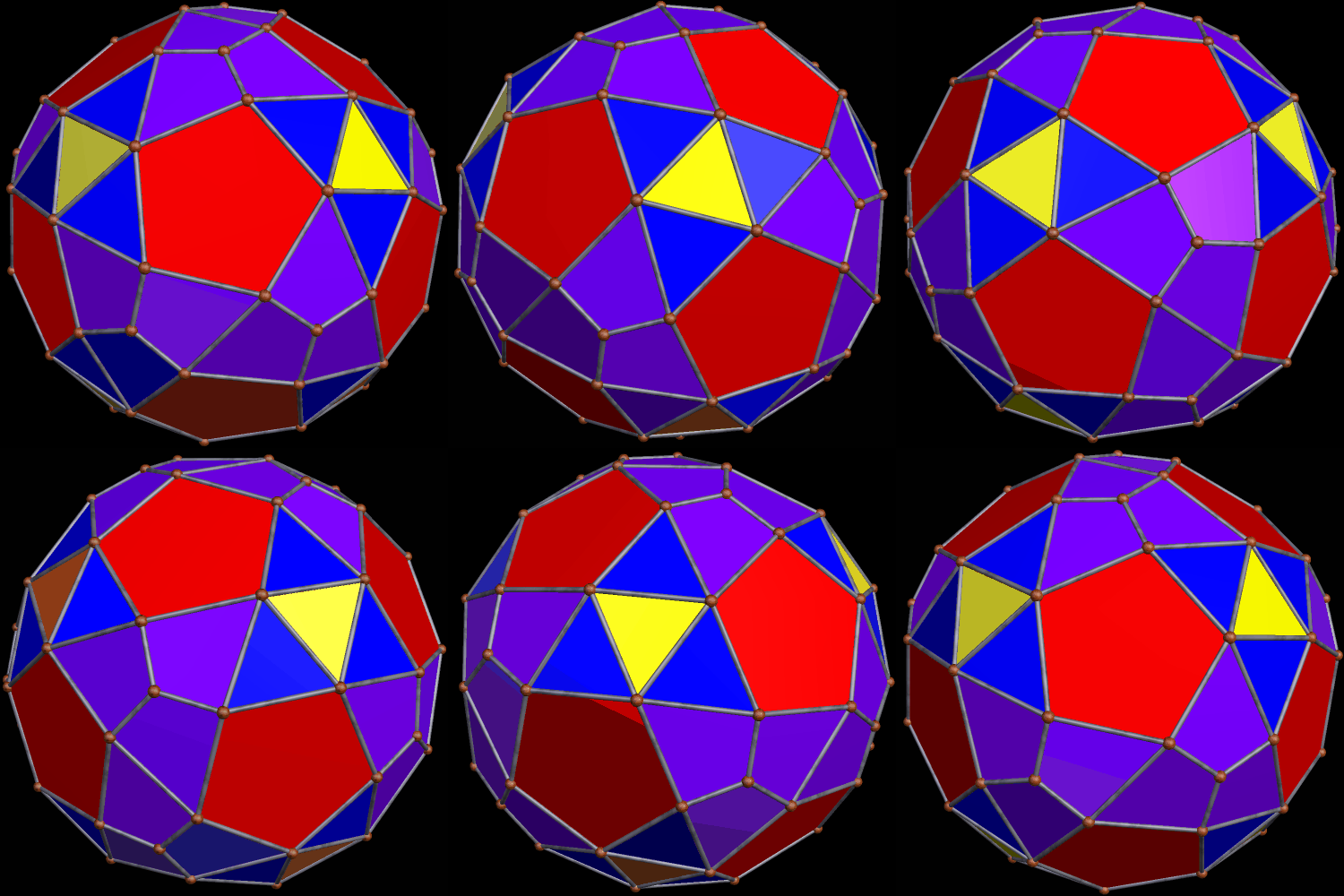
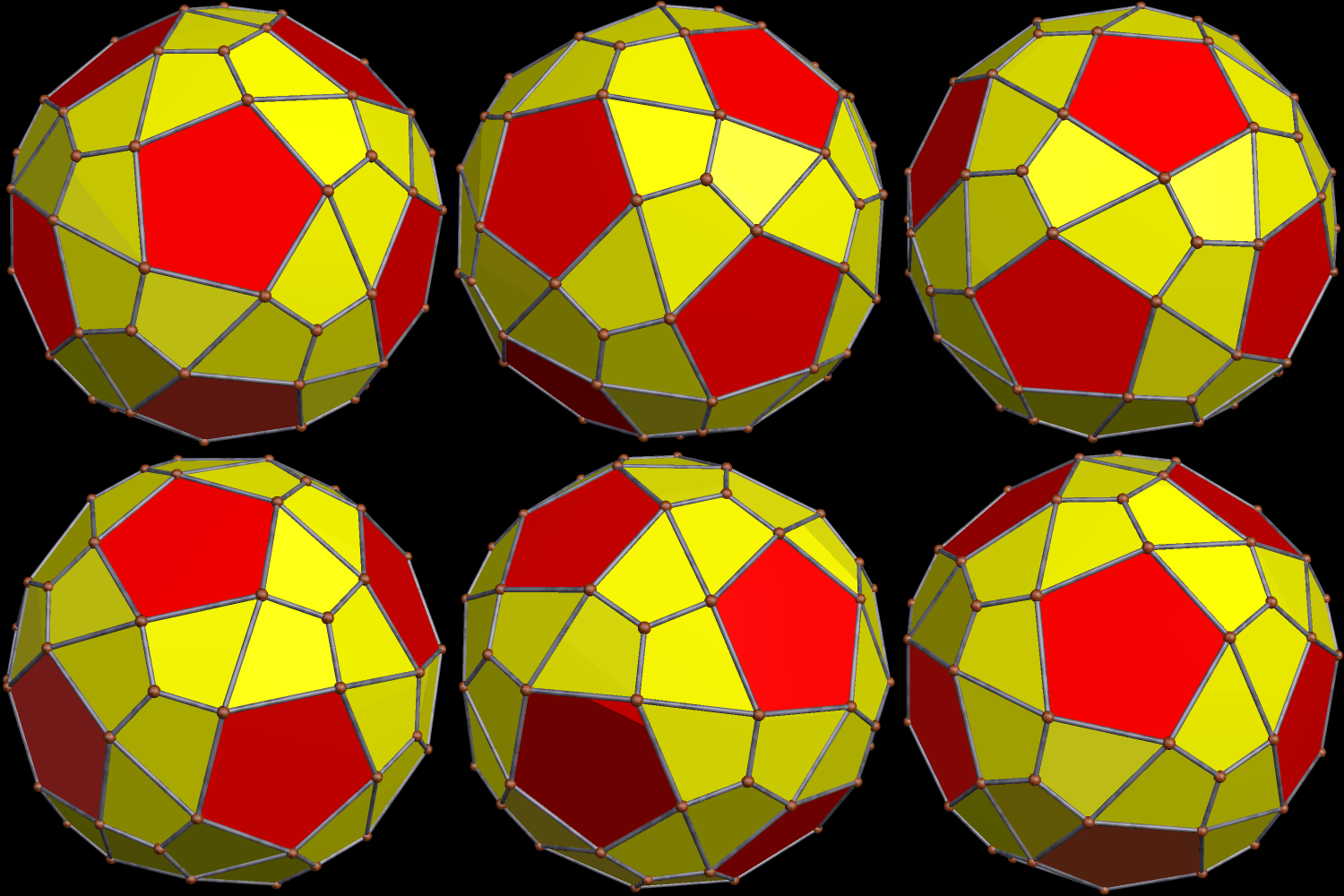
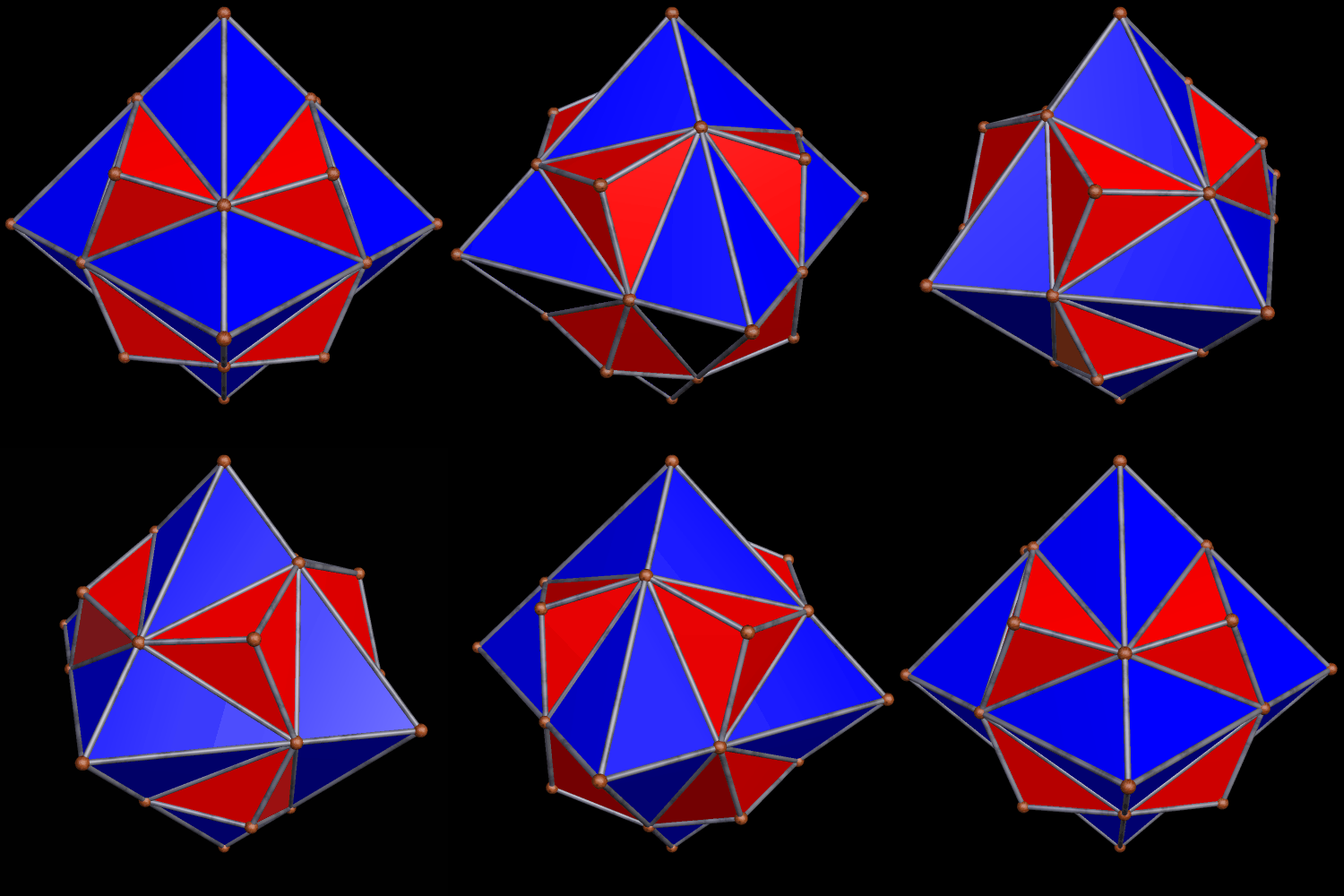
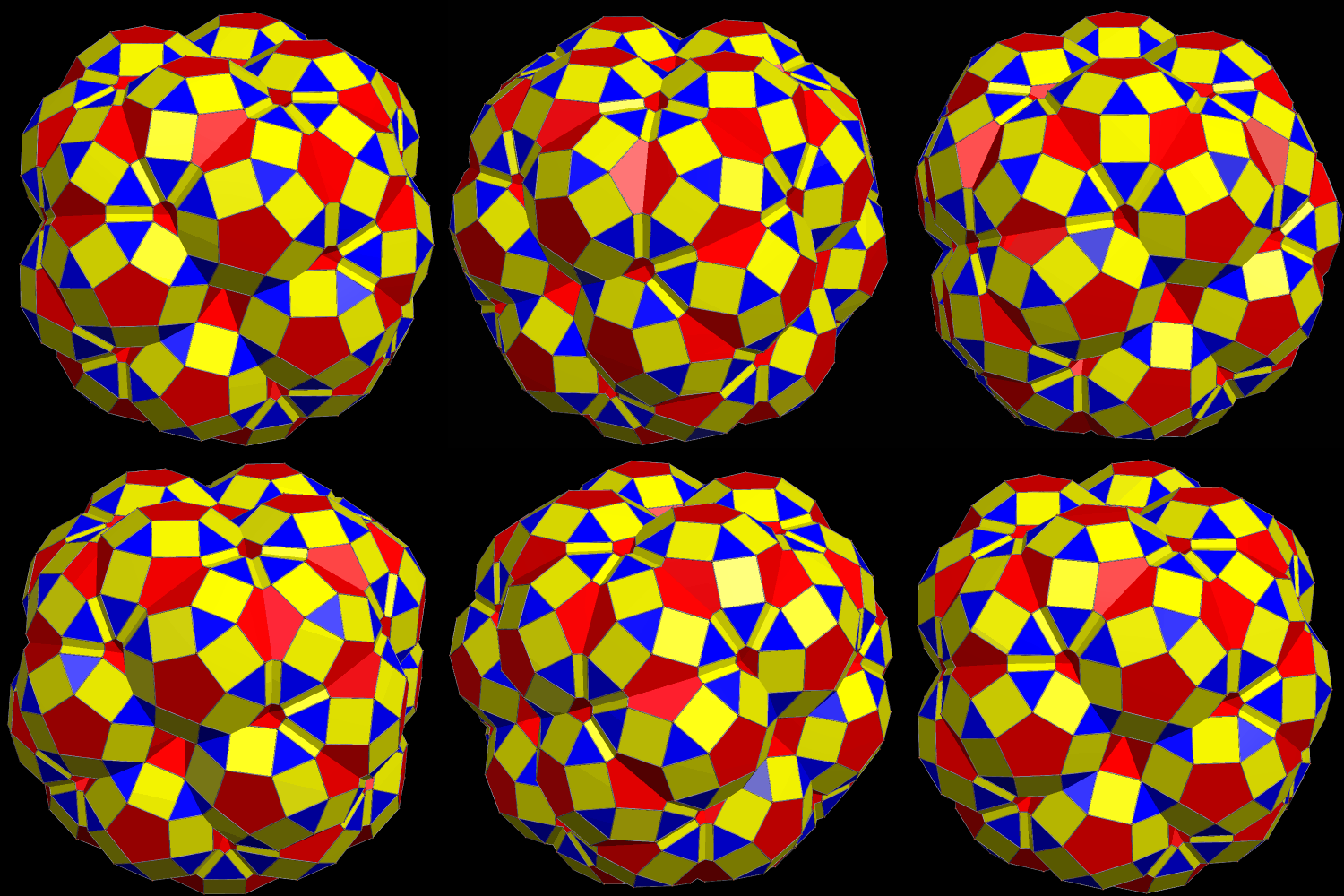
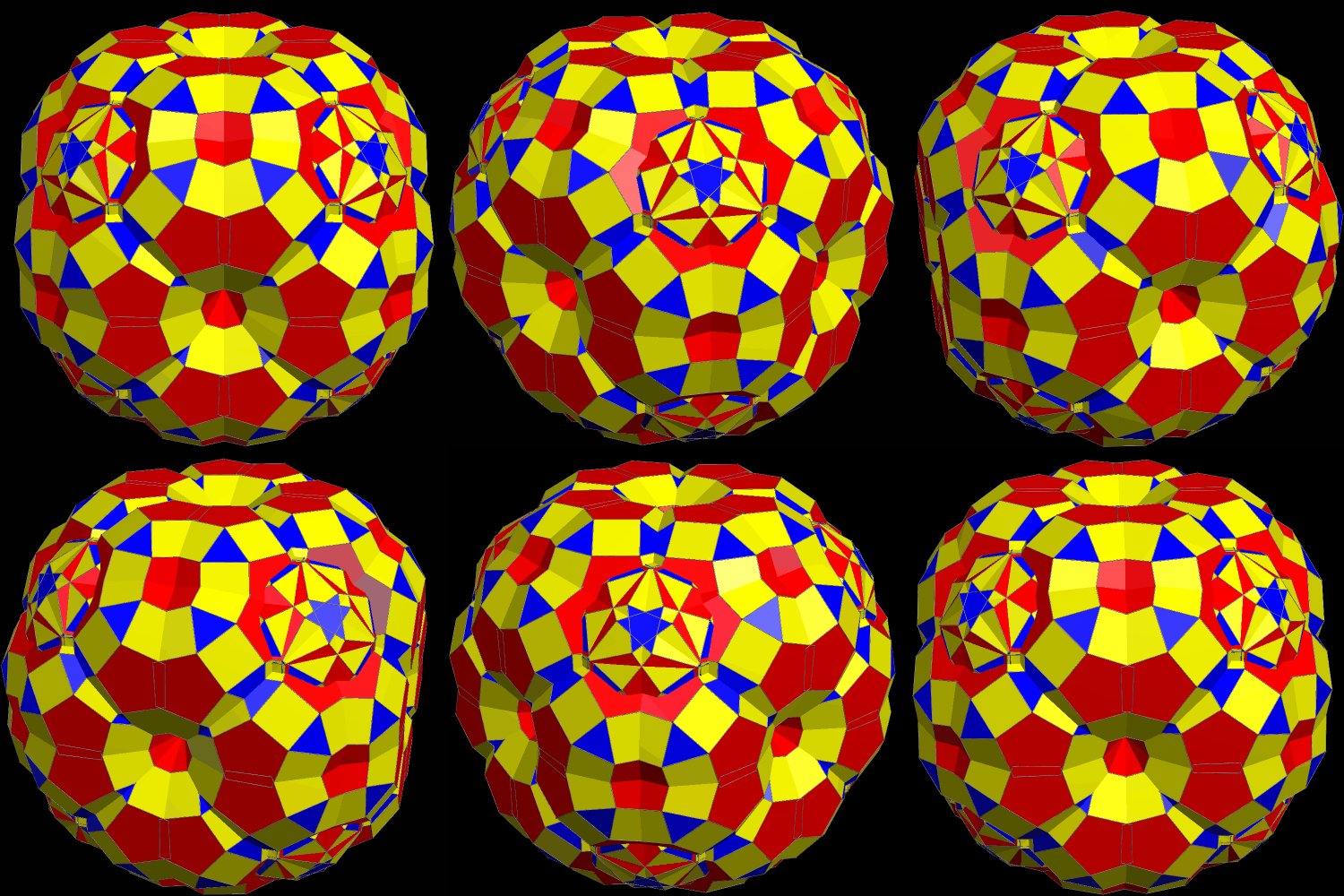
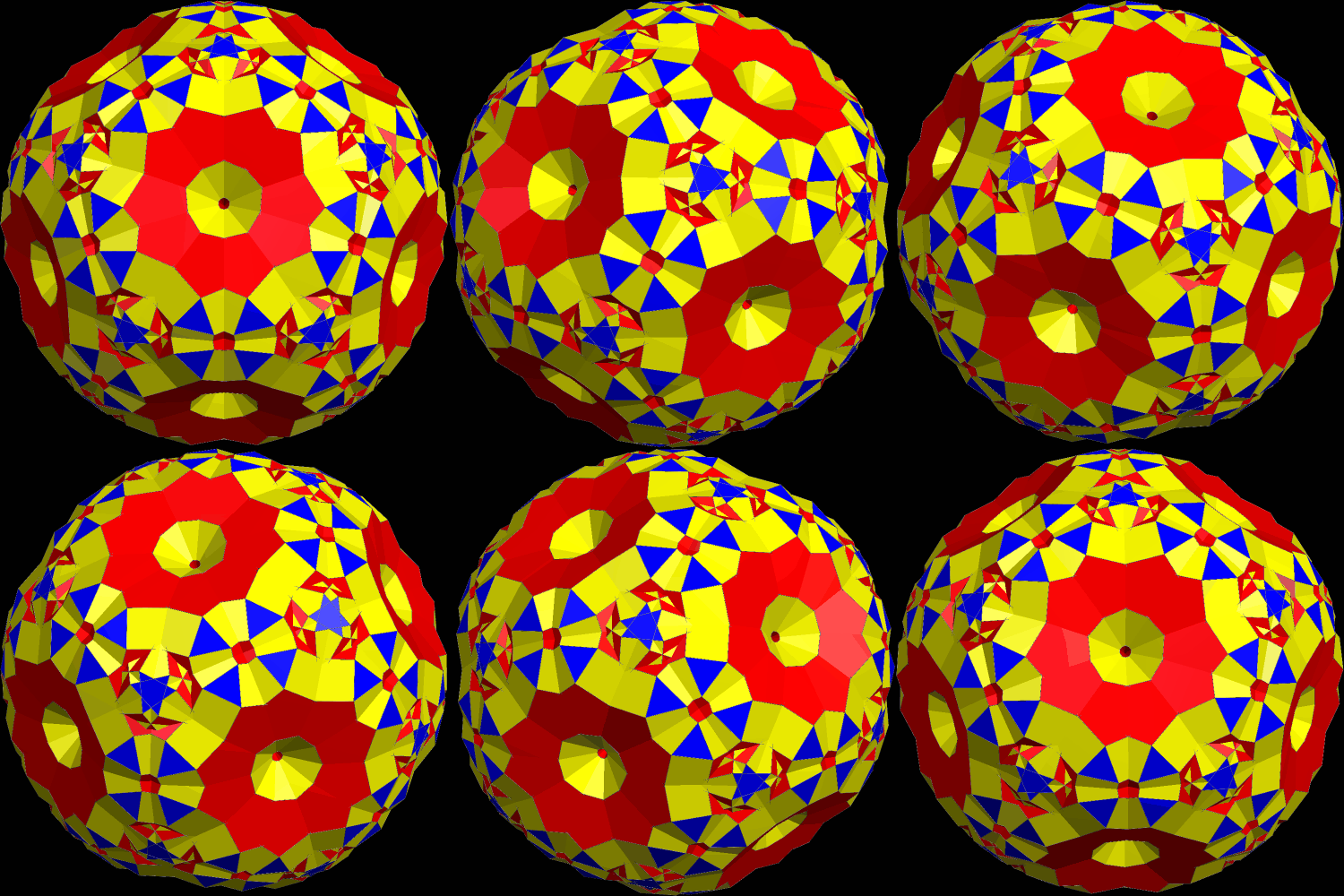
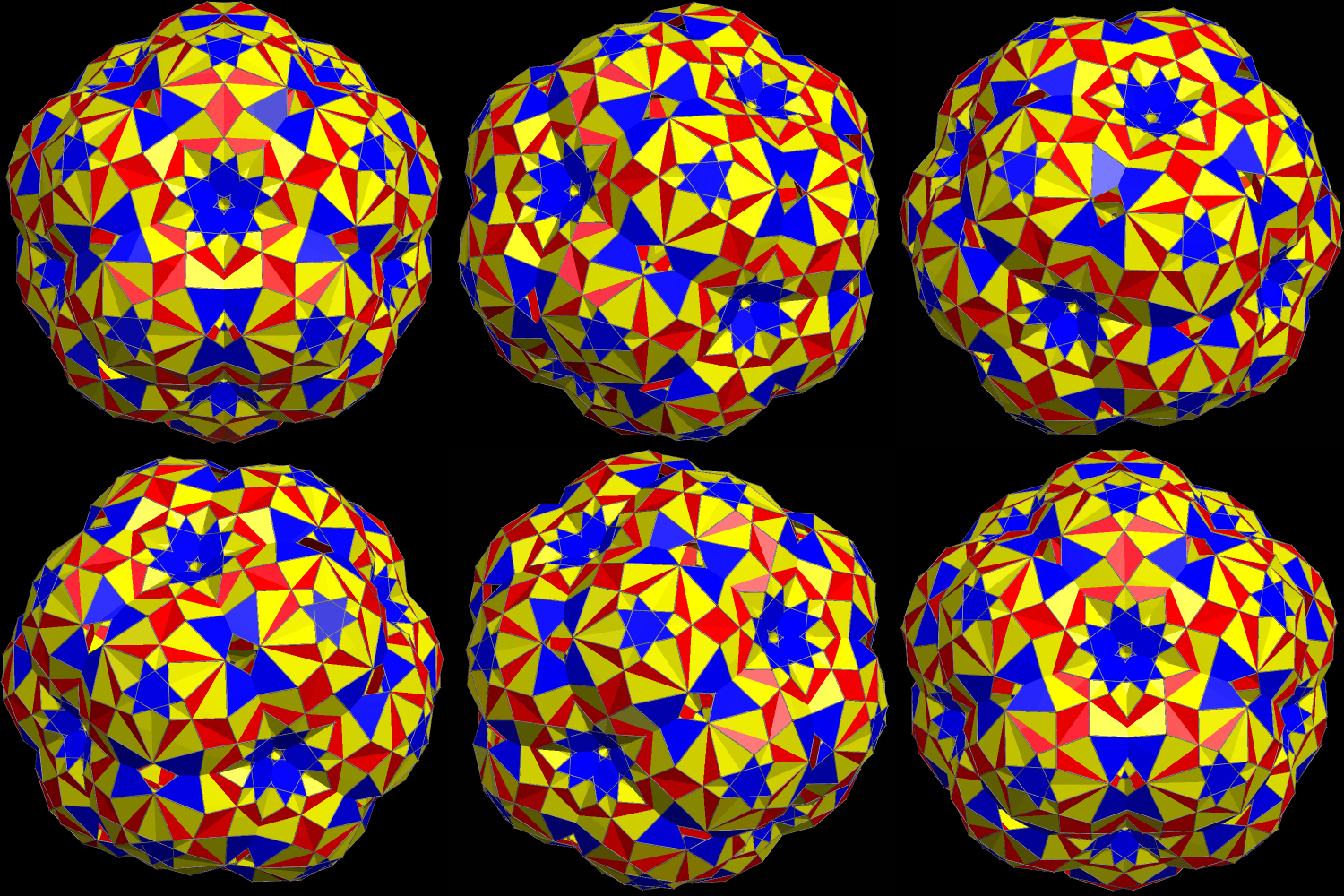
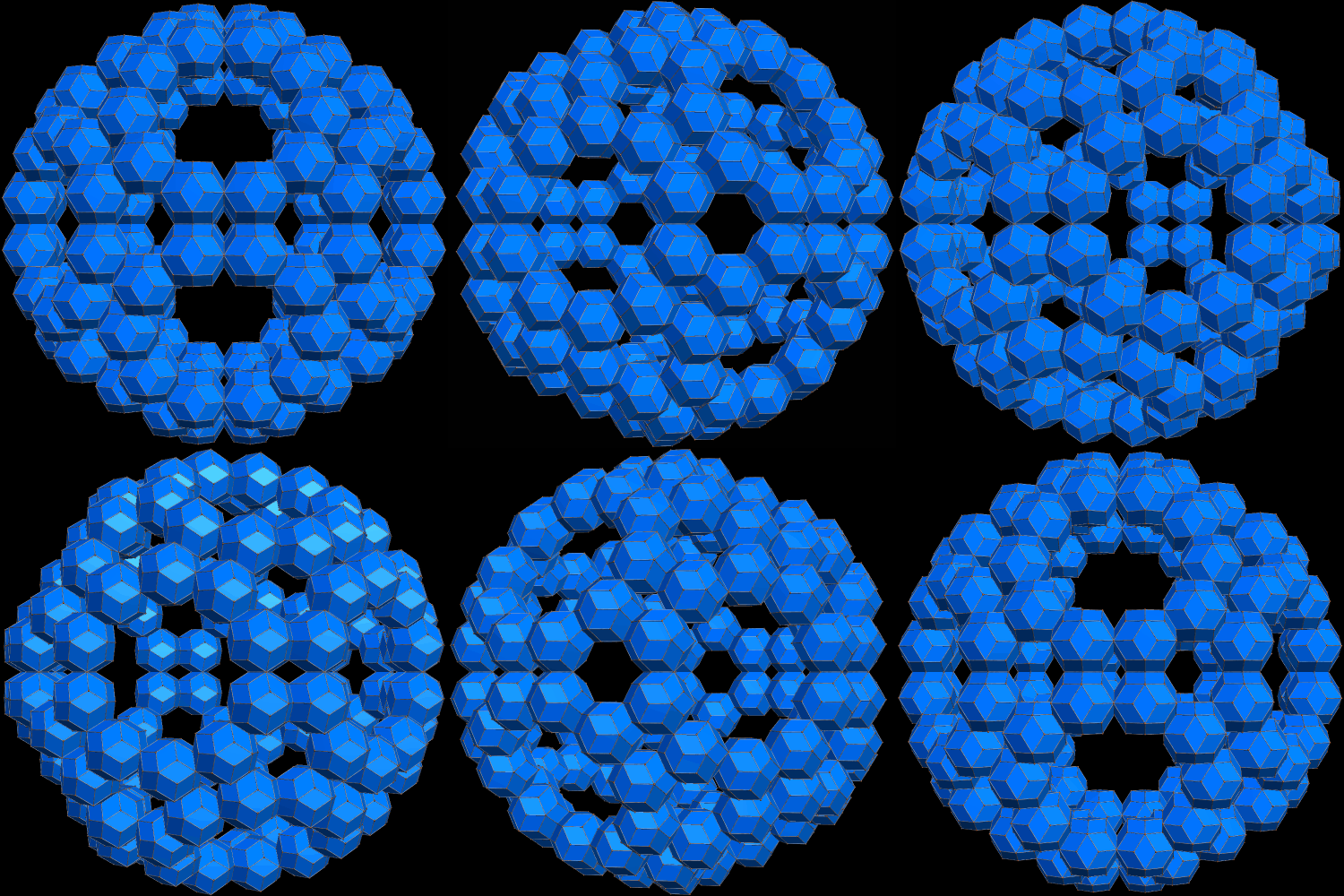
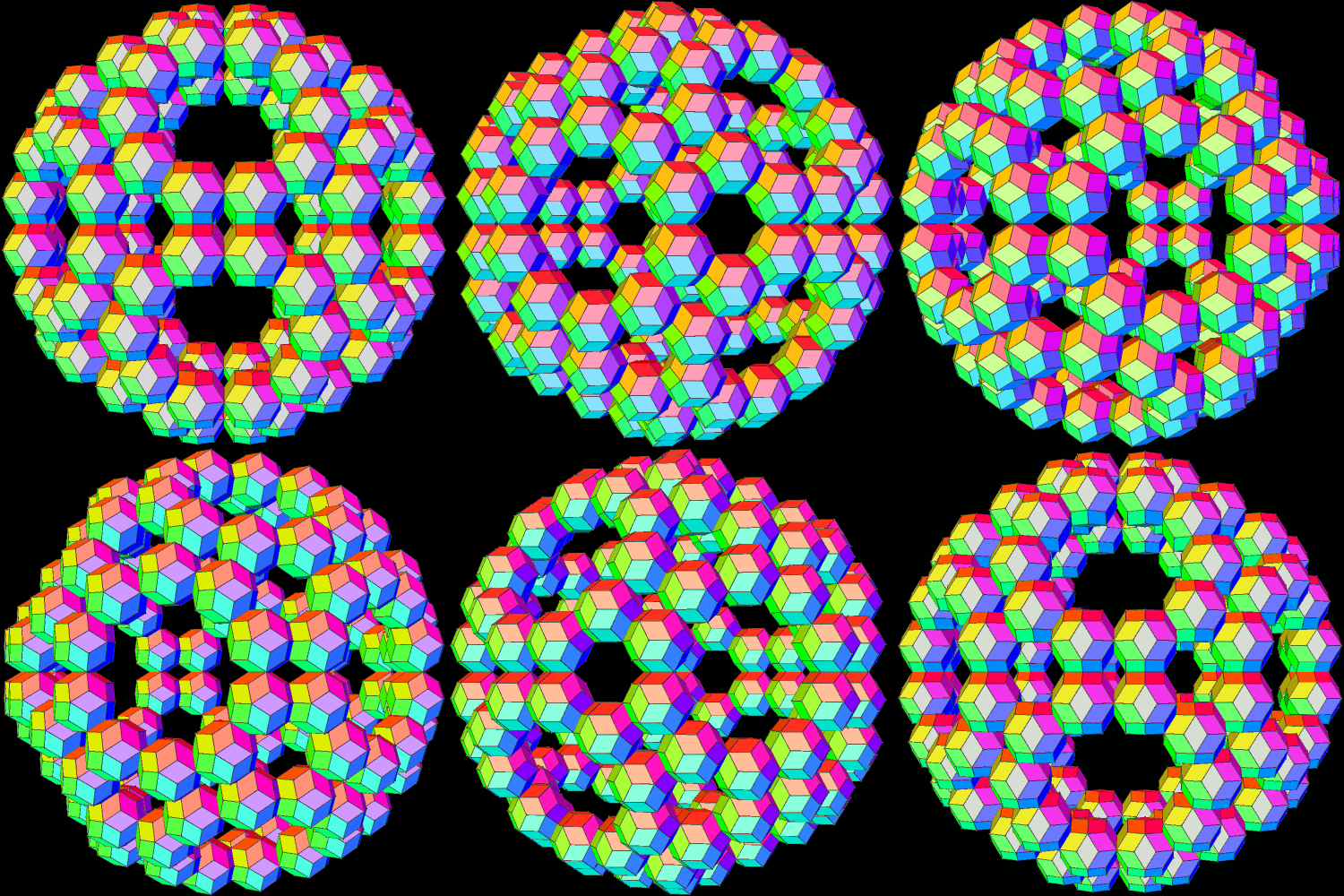
Various Views of Three Different Polyhedral Compounds: Those of (1) Five Cuboctahedra, (2) Five of Its Dual, the Rhombic Dodecahedron, and (3) Ten Components — Five Each, of Both Polyhedra.

Polyhedral compounds differ in the amount of effort needed to understand their internal structure, as well as the way the compounds’ components are assembled, relative to each other. This compound, the compound of five cuboctahedra, and those related to it, offer challenges not offered by all polyhedral compounds, especially those which are well-known.
COBOCTA 5 COLORED BY COMPONENT

The image above (made with Stella 4d, as are others in this post — software available here) is colored in the traditional style for compounds: each of the five cuboctahedra is assigned a color of its own. There’s a problem with this, however, and it is related to the triangular faces, due to the fact that these faces appear in coplanar pairs, each from a different component of the compound.
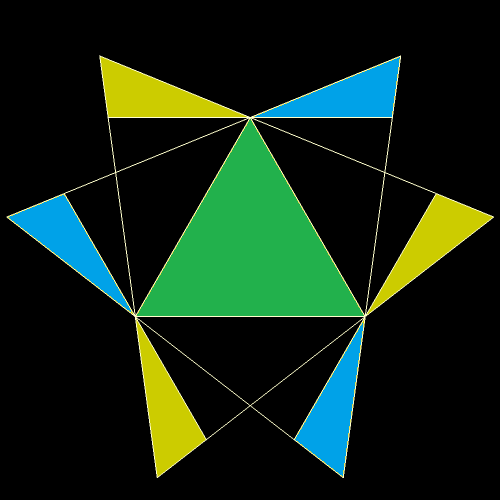
COBOCTA 5 COLORED TRIANGLE Face

The yellow regions above are from a triangular face of the yellow component, while the blue regions are from a blue triangular face. The equilateral triangle in the center, being part of both the yellow and blue components, must be assigned a “compromise color” — in this case, green. The necessity of such compromise-colors can make understanding the compound by examination of an image more difficult than it with with, say, the compound of five cubes (not shown, but you can see it here, if you wish). Therefore, I decided to look at this another way: coloring each face of the five-cuboctahedra compound by face type, instead of by component.

COBOCTA 5 COLORED BY FACE TYPE

Another helpful view may be created by simply hiding all the faces, revealing internal structure which was previously obscured.

COBOCTA 5 HOLLOW

Since the dual of the cuboctahedron is the rhombic dodecahedron, the dual of the compound above is the compound of five rhombic dodecahedra, shown, first, colored by giving each component a different color.
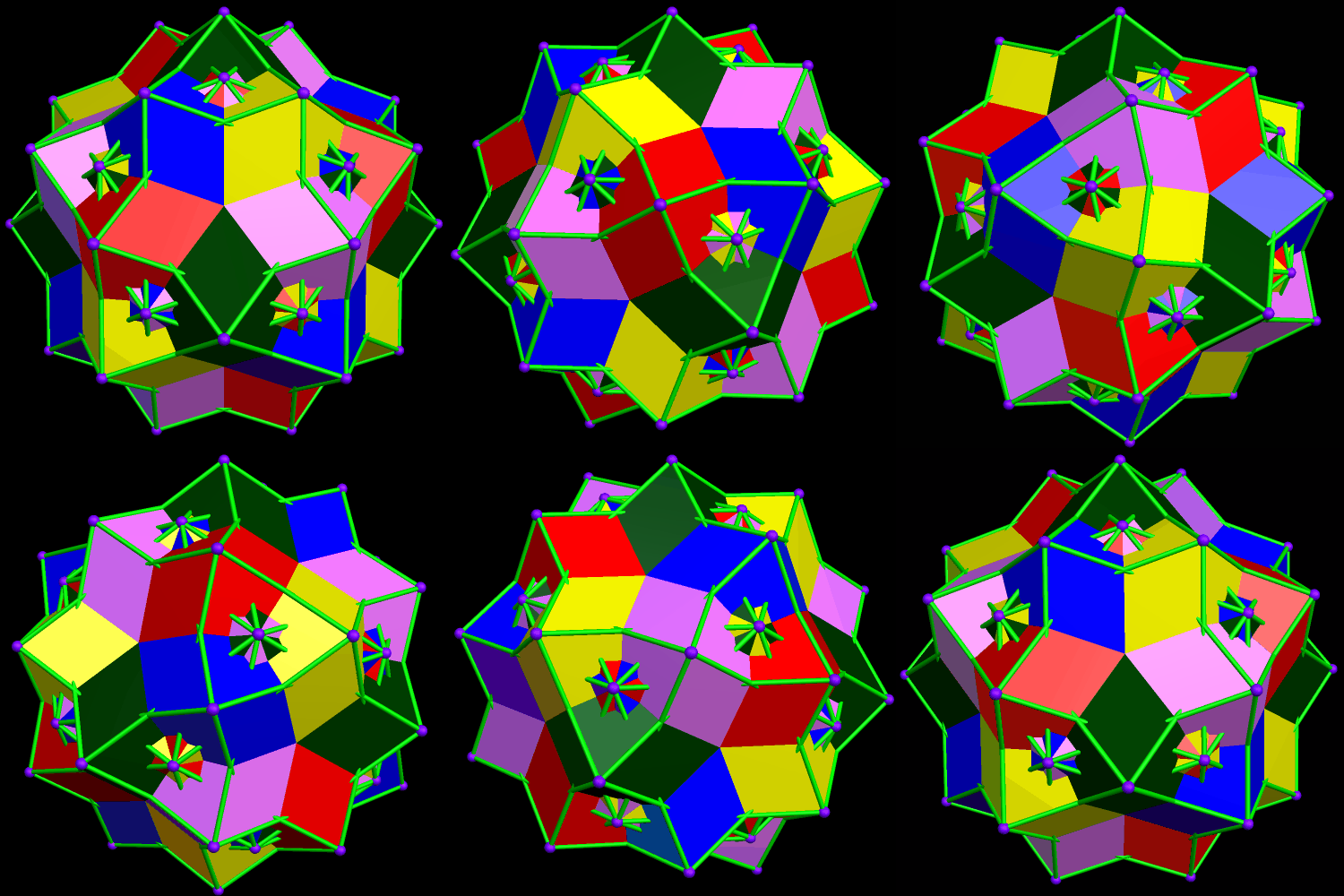
RD 5 colored by component

A problem with this view is that most of what’s “going on” (in the way the compound is assembled) cannot be seen — it’s hidden inside the figure. An option which helped above (with the five-cuboctahedra compound), coloring by face type, is not nearly as helpful here:

RD 5 colored by face type

Why wasn’t it helpful? Simple: all sixty faces are of the same type. It can be made more attractive by putting Stella 4d into “rainbow color” mode, but I cannot claim that helps with comprehension of the compound.

RD 5 colored rainbow

With this compound, what’s really needed is a “ball-and-stick” model, with the faces hidden to reveal the compound’s inner structure.
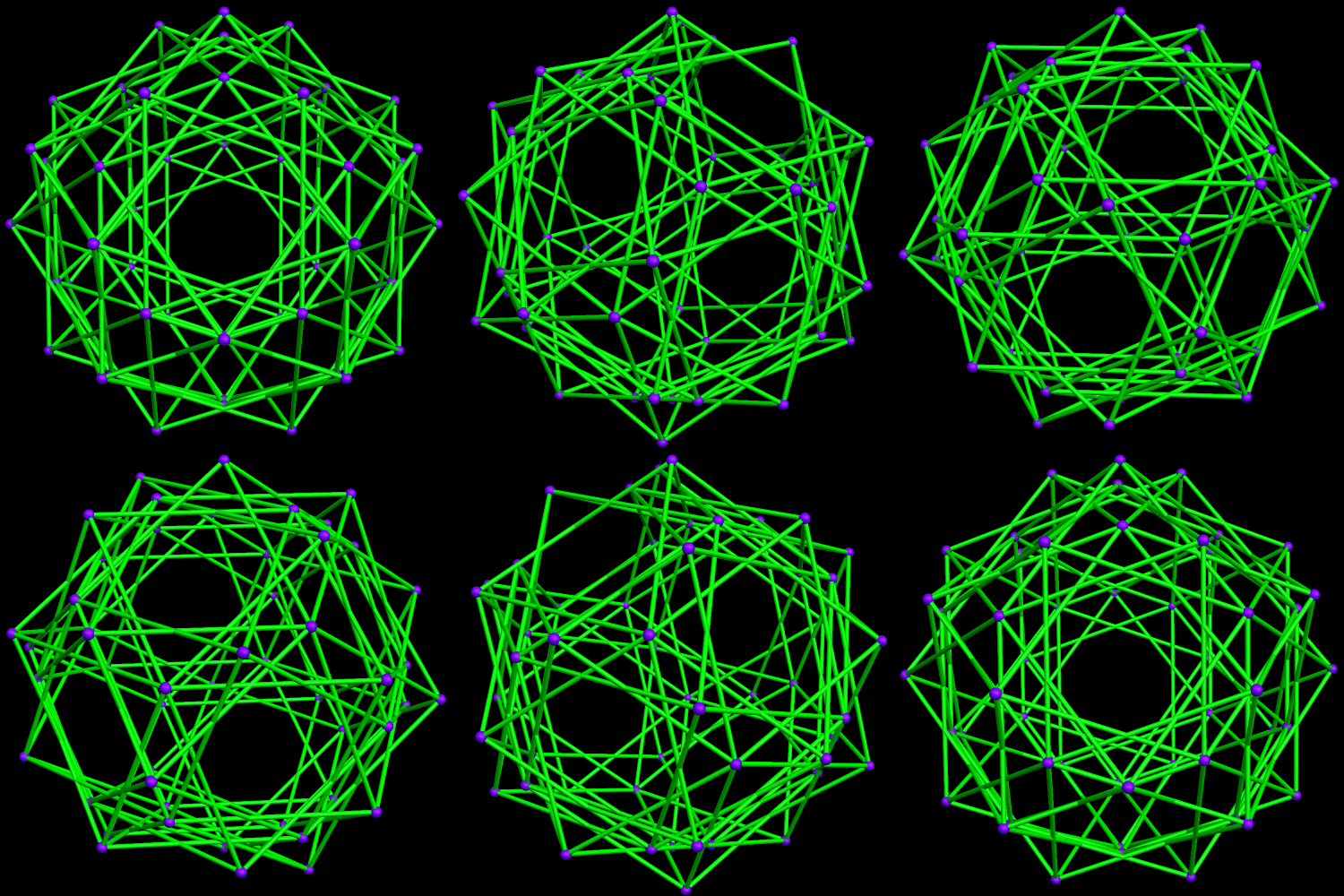
RD 5 colored hollow

Since the two five-part compounds above are duals, they can also be combined to form a ten-part compound: that of five cuboctahedra and five rhombic dodecahedra. In the first image below, each of the ten components is assigned its own color.

Compound of 5 Cuboctahedra and dual colored by component

In this ten-part compound, the coloring-problem caused in the first image in this post, coplanar and overlapping triangles of different colors, vanishes, for those regions of overlap are hidden in the ten-part compound’s interior. This is one reason why this coloring-scheme is the one I find the most helpful, for this ten-part compound (unlike the two five-part compounds above). However, so that readers may make this choice for themselves, two other versions are shown below, starting with coloring by face type.

Compound of 5 Cuboctahedra and dual colored by face typet

Finally, the hollow version of this ten-part compound. This is only a personal opinion, but I do not find this image quite as helpful as was the case with the five-part compounds described above.
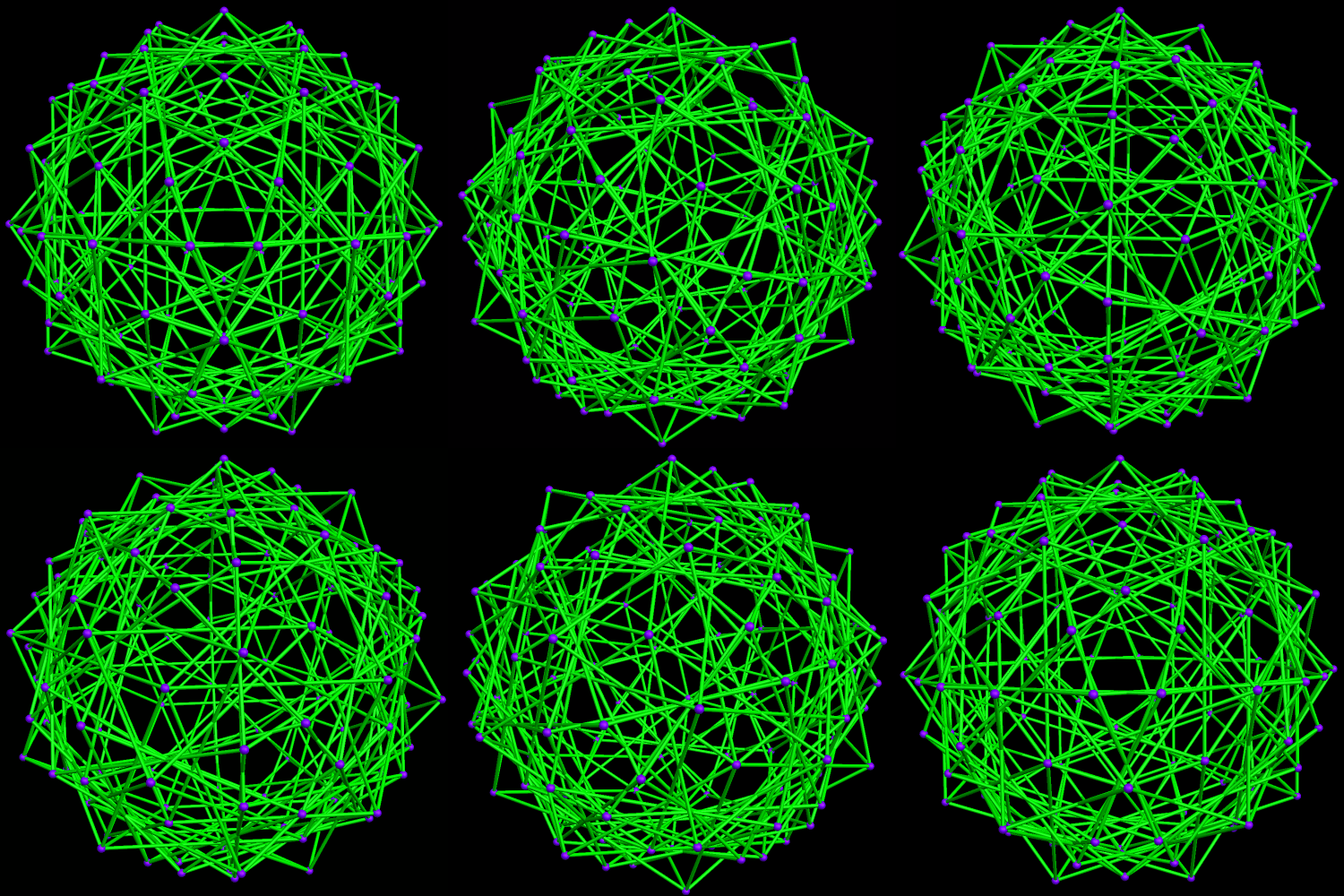
Compound of 5 Cuboctahedra and dual colored rainbow

Which of these images do you find most illuminating? As always, comments are welcome.

Flying Kites into the Snub Dodecahedron, a Dozen at a Time, Using Tetrahedral Stellation

I’ve been shown, by the program’s creator, a function of Stella 4d which was previously unknown to me, and I’ve been having fun playing around with it. It works like this: you start with a polyhedron with, say, icosidodecahedral symmetry, set the program to view it as a figure with only tetrahedral symmetry (that’s the part which is new to me), and then stellate the polyhedron repeatedly. (Note: you can try a free trial download of this program here.) Several recent posts here have featured polyhedra created using this method. For this one, I started with the snub dodecahedron, one of two Archimedean solids which is chiral.

Snub Dodeca

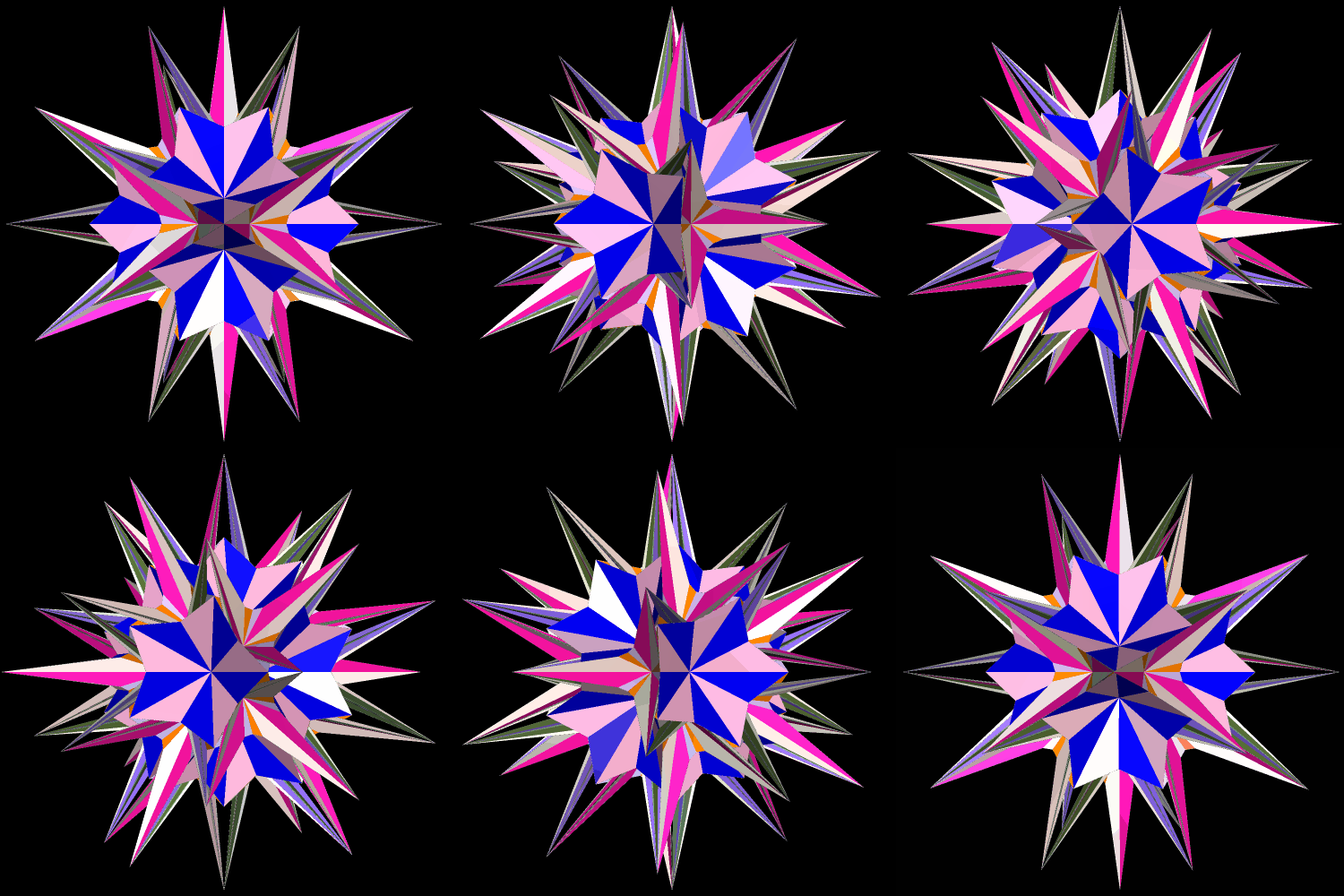
Using typical stellation (as opposed to this new variety), stellating the snub dodecahedron once turns all of the yellow triangles in the figure above into kites, covering each of the red triangles in the process. With “tetrahedral stellation,” though, this can be done in stages, producing a greater variety of snub-dodecahedron variants which feature kites. As it turns out, the kites appear twelve at a time, in four sets of three, with positions corresponding to the vertices (or the faces) of a tetrahedron. Here’s the first one, featuring one dozen kites.

Snub Dodeca variant with kites

Having done this once (and also changing the colors, just for fun), I did it again, resulting in a snub-dodecahedron-variant featuring two dozen kites. At this level, the positions of the kite-triads correspond to those of the vertices of a cube.

Snub Dodeca variant with kites 1

You probably know what’s coming next: adding another dozen kites, for a total of 36, in twelve sets of three kites each. At this point, it is the remaining, non-stellated four-triangle panels, not the kite triads, which have positions corresponding to those of the vertices of a cube (or the faces of an octahedron, if you prefer).

Snub Dodeca variant with kites 2

Incoming next: another dozen kites, for a total of 48 kites, or 16 kite-triads. The four remaining non-stellated panels of four triangles each are now arranged tetrahedrally, just as the kite-triads were, when the first dozen kites were added.

Snub Dodeca variant with kites 3

With one more iteration of this process, no triangles remain, for all have been replaced by kites — sixty (five dozen) in all. This is also the first “normal” stellation of the snub dodecahedron, as mentioned near the beginning of this post.

Snub Dodeca variant with kites 4

From beginning to end, these polyhedra never lost their chirality, nor had it reversed.

A Compound of the Octahedron, and a Pyritohedral Dodecahedron

Compound of octa and pyritohedral dodeca

This compound is the first I have seen which combines a Platonic solid (the blue octahedron) with a pyritohedral modification of a Platonic solid. Here’s what a pyritohedral dodecahedron looks like, by itself:

pyritohedral dodecahedron

Stella 4d: Polyhedron Navigator was used to make these — software you can try right here: http://www.software3d.com/Stella.php.

A (Possible) New Near-Miss to the Johnson Solids

near-miss candidate

In the polyhedron above, the octagons, hexagons, and triangles are regular. The only irregularities are found in the near-squares, which are actually isosceles trapezoids with three edges of equal length: the ones shared with the octagons and hexagons. The trapezoid-edges adjacent to the triangles, however, are ~15.89% longer than its other three edges. As a result, two of the interior angles of the trapezoids measure ~85.44º (the ones nearest the triangles), while the other two (adjacent to the shorter of the two trapezoid bases) measure ~94.56º. In a rotating model, it can be difficult to see the irregularities in these trapezoids. Were someone to build an actual physical model, however, the fact that they are not squares would be far more obvious.

In case someone would like to build such a model, here is a net you can use.

near-miss candidate

As you can see on this Wikipedia page, near-misses are not precisely defined — nor can they be, without such a definition (including something such as “no edge may be more than 10% longer than any other) being unjustifiably arbitrary. Instead, new near-miss candidates are discussed among members of the small community of polyhedral enthusiasts with an interest in near-misses, and are either admitted to the set of recognized near-misses, or not, based on consensus of opinion. This isn’t an entirely satisfactory system, but it’s the best we have, and may even be the best system possible.

The shortest definition for “near-miss Johnson solid” is simply “a polyhedron which is almost a Johnson solid.” Recently, a new (and even more informal) term has been created: the “near near-miss,” for polyhedra which are almost near-misses, but with deviations from regularity which are too large, by consensus of opinion, to be called near-misses. This polyhedron may well end up labeled a “near near-miss,” rather than a genuine near-miss.

Several questions remain at this point, and once I have found the answers, I will update this post to include them.

  • Is this close enough to being a Johnson solid to be called a near-miss, or merely a “near near-miss?”
  • Has this polyhedron already been found before? It looks quite familiar to me, and so it is entirely possible I have seen it before, and have simply forgotten when and where I saw it. On the other hand, this “I’ve seen it before” feeling may be caused by this polyhedron’s similarity to the great rhombcuboctahedron (also known as the truncated cuboctahedron, and a few other names), one of the Archimedean solids.
  • Does this polyhedron already have a name?
  • If unnamed at this time, what name would be suitable for it?

All the images in this post were created using Stella 4d, and I also used this software to obtain the numerical data given above. A free trial download of this program is available, and you can find it at http://www.software3d.com/Stella.php. Also, since it was mentioned above, I’ll close this post with a rotating image of the great rhombcuboctahedron. Perhaps a suitable name for the near-miss candidate above would be the “expanded great rhombcuboctahedron,” although it is entirely possible that a better name will be found.

Trunc Cubocta

Update #1: I now remember where I’ve seen this before: right here on my own blog! You can find that post here. I could delete this, as a duplicate post, but am choosing not to. One reason: the paths I took to create these two identical polyhedra were entirely different. Another reason is that this post includes information not included the first time around.

Update #2: This was already discussed among my circle of polyhedral enthusiasts. As I now recall, the irregularity in the quadrilaterals was agreed to be too large to call this a true “near-miss,” so, clearly, it’s a “near near-miss” instead.

Five More Clusters of Rhombicosidodecahedra

Making the four different clusters of rhombicosidodecahedra seen in the post right before this one was fun, so I decided to make more of them.

Tetrahedra 20 A augmented with 80 RIDs

There are two different forms of the compound of twenty tetrahedra. To make the polyhedral cluster above, I chose one of them, and then augmented each of its 20(4) = 80 triangular faces with a rhombicosidodecahedron.

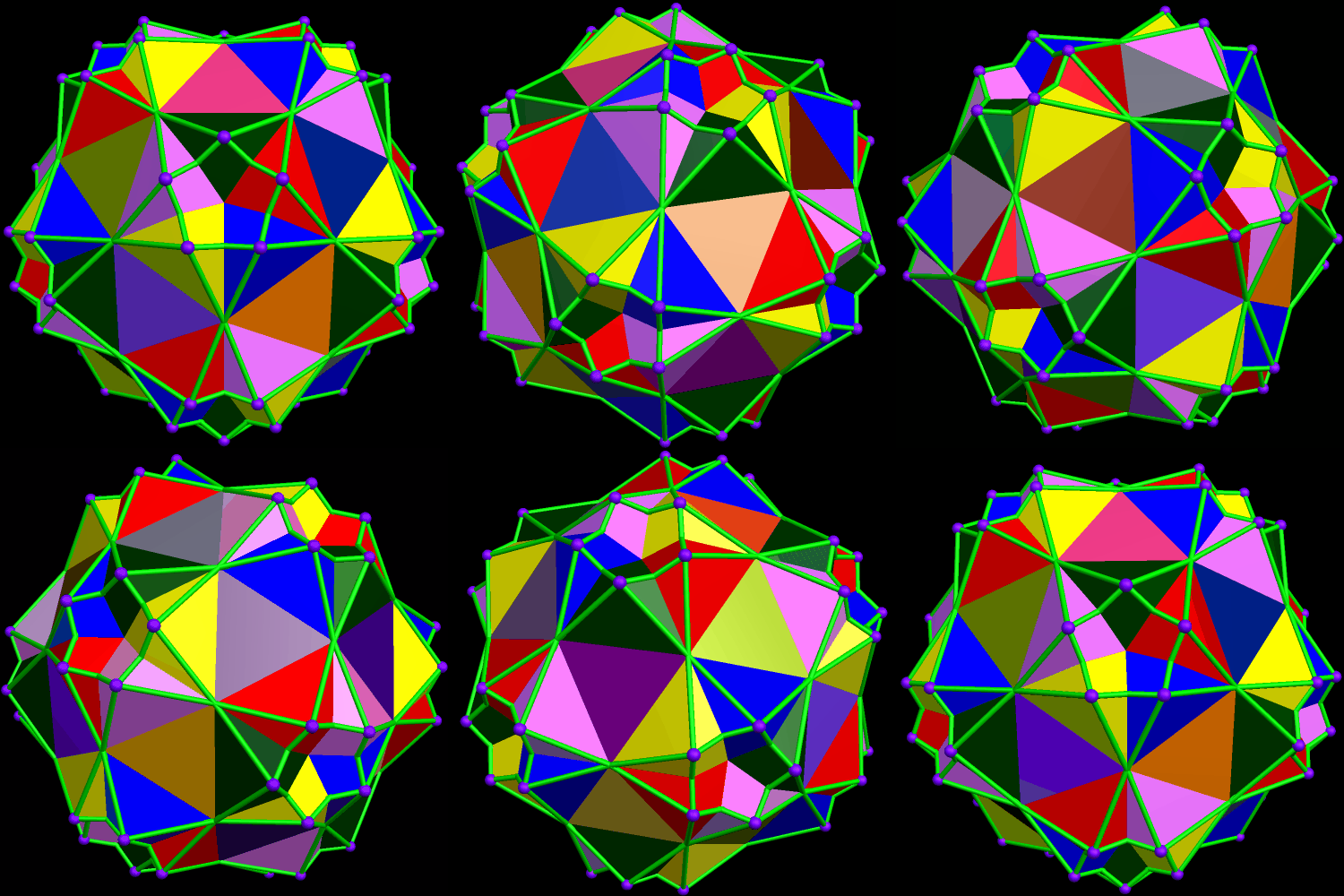
For the next of these clusters, I decided to move away from using compounds for the central, hidden figure. Instead, I chose a snub cube, and augmented each of its 32 triangular faces with a rhombicosidodecahedron. Since the snub cube is chiral, this cluster is chiral as well.

Augmented Snub Cube the 32 triangles are augmented by RIDs

Any chiral polyhedron can be combined with its mirror-image to produce a new compound, and that’s what I did to make this next cluster, which is composed of 64 rhombicosidodecahedra: I simply added the cluster above to its own reflection.

Compound of enantiomorphic pair of snub cubes with RIDs augmenting the 64 triangles

Next, I turned to the snub dodecahedron, also chiral, and with 80 triangular faces. Augmentation of all 80 produced this chiral cluster of 80 rhombicosidodecahedra:

Augmented Snub Dodeca with 80 RIDs on triangular faces it is chiral

Finally, I added this last cluster to its own mirror-image, producing this symmetrical cluster of 160 rhombicosidodecahedra.

160 RIDs augmenting the triangular faces of snub dod enan pair compound

Each of these was created using a program called Stella 4d: Polyhedron Navigator, software you can try for free right here.

Four Different Clusters of Multiple Rhombicosidodecahedra

Octa 5 augmented with 40 RIDs

To make the cluster above, I began with the compound of five octahedra, which has 5(8) = 40 faces, all of them equilateral triangles. Next, I augmented each of those triangular faces with a single rhombicosidodecahedron — forty in all.

Next, I started anew with the compound of five dodecahedra, which has 5(12) = 60 pentagonal faces, all of them regular. Each of these sixty pentagons was then augmented by a single rhombicosidodecahedron.

Dodecahedra 5 augmented by 60 RIDs

For the next cluster, I started with the most well-known compound of ten tetrahedra. There are actually two such compounds; I used the one which is the compound of the chiral five-tetrahedron compound, combined with its mirror image. Since 10(4) = 40, this cluster, like the first one in this post, contains forty rhombicosidodecahedra. Unlike the other models shown here, this one has “holes,” which you can see as it rotates, but the reason for this is a mystery to me. The same is true for the first cluster shown in this post.

Tetrahedra 10 augemnted with 40 RIDs

There also exist two compounds of eight tetrahedra each, and I used one of them for this next cluster, using the same procedure, so this cluster is composed of 8(4) = 32 rhombicosidodecahedra.

Tetrahedra 8 augmented with 32 RIDs

All four of these clusters were created with Stella 4d, a program you may try for free here.

The Compound of the Truncated Octahedron and the Rhombic Dodecahedron

RD trunct oct compound

I created this compound using Stella 4d, software you may try at this website.

A Hybrid Polyhedron: The “Offspring” of Jessen’s Icosahedron and the Great Dodecahedron

I stumbled upon this interesting hybrid of two well-known polyhedra, while simply playing around with Stella 4d, the software I use to make these rotating polyhedral images (you can try a free trial download of it here).

Jessens icosa meets the great dodeca

The faces of the above polyhedron are twelve modified regular pentagons, each with a triangular piece removed which contained one of the pentagon’s edges. Therefore, it would also be correct to refer to these modified pentagons as non-convex hexagons. These modified pentagons interpenetrate, so all that can be seen are triangular “facelets” — the parts of the faces which are not hidden inside the polyhedron. Each of these facelets is a golden gnomon (an obtuse, isosceles triangle with a base:leg ratio which is the golden ratio), and these golden gnomons come in two sizes. The larger ones were “inherited” from Jessen’s icosahedron, and there are twelve of them. The smaller golden gnomons, on the other hand, were “inherited” from the great dodecahedron, and are twenty-four in number, in eight sets of three. Like Jessen’s icosahedron itself, but unlike the great dodecahedron, this hybrid has pyritohedral symmetry.

For more information about Jessen’s icosahedron, please visit this site at Wolfram Mathworld. Also, here is an image of Jessen’s icosahedron, one of the two “parents” of the hybrid above.

Jessens Icosa

While Jessen’s icosahedron is a relatively new discovery (Børge Jessen revealed it to the world in 1967), the hybrid’s other “parent,” the great dodecahedron, has been known for much longer; Louis Poinsot discovered it in 1809, according to this source. Here’s an image of the great dodecahedron.

Great Dodeca

As you can see, the smaller golden gnomons found in the hybrid above were “inherited” from the great dodecahedron, while the larger ones came from the six indented face-pairs found in Jessen’s icosahedron.

A well-known property of Jessen’s icosahedron is that it is “shaky,” unlike most polyhedra, which are rigid. A physical model of Jessen’s icosahedron, made from paper and tape, can, in fact, be collapsed to form an octahedron. While I suspect that a physical, paper-and-tape model of this newly-discovered hybrid polyhedron would share these properties (“shakiness,” and at least some degree of collapsibility), I have not (yet) tested this conjecture.

The Great Rhombicosidodecahedron, Built from Rhombic Triacontahedra, and Its Dual

The great rhombicosidodecahedron is also known as the truncated icosidodecahedron (and, confusingly, several other names). Regardless of what it’s called, these pictures demonstrate that this Archimedean solid can be constructed using rhombic triacontahedra as building-blocks.

First, here’s one in the same color I used for the decagonal ring of rhombic triacontahedra in the last post:

GRID of Rhombic Triaconta

The next one is identical, except I used “rainbow color mode” for it.

GRID of Rhombic Triaconta RB

Also, just in case you’re curious, here’s the dual of this polyhedron-made-of-polyhedra — this time, colored by face-type.

dual of GRID of Rhombic Triaconta

These virtual models were all built using Stella 4d, software you may buy, or try for free, right here.

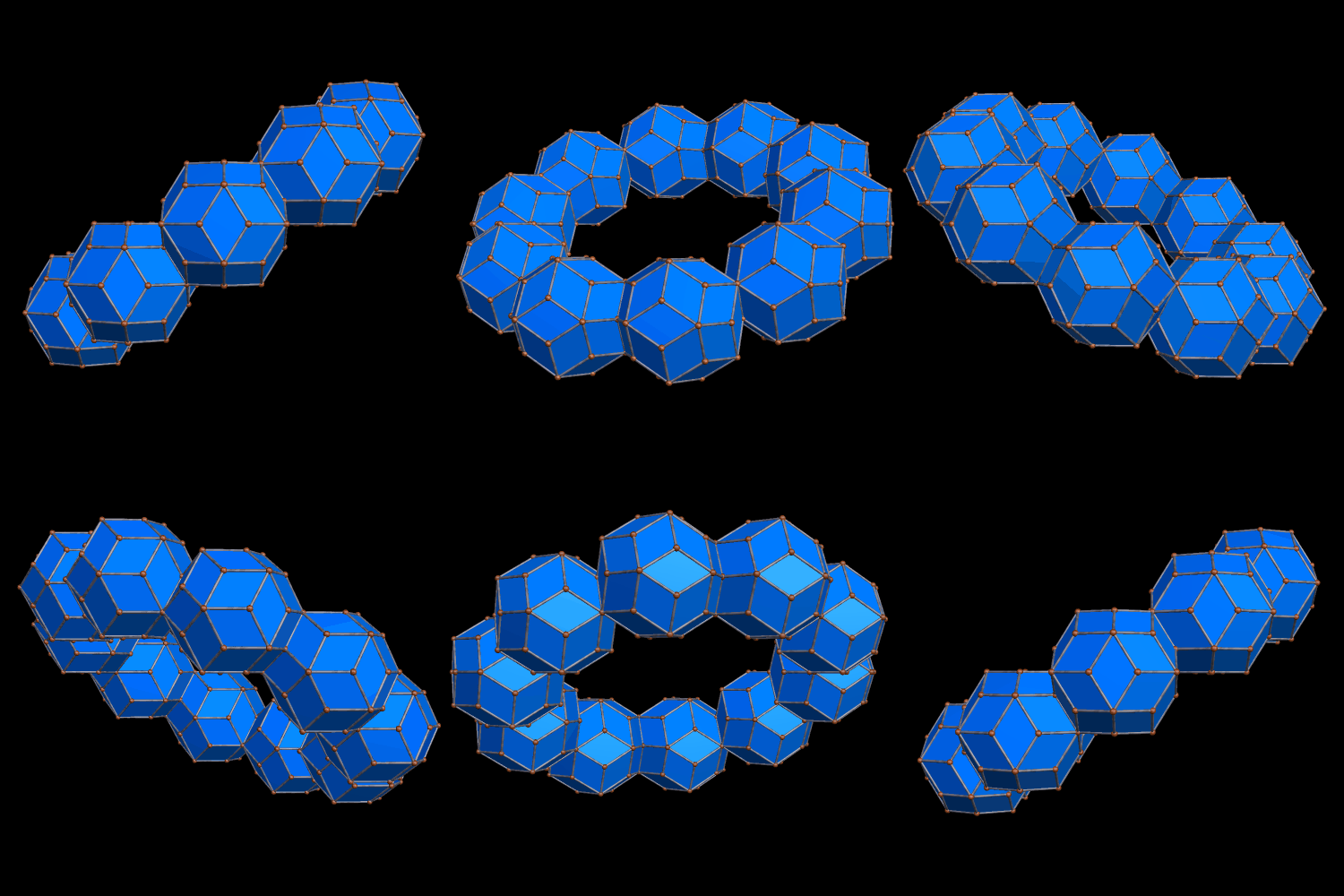
Decagonal Ring of Rhombic Triacontahedra

ring of ten Rhombic Triaconta

Ten rhombic triacontahedra fit perfectly into a decagonal ring. It’s not a “near-miss” — the fit is exact.

I made this with Stella 4d, software you can try for free, or purchase, at http://www.software3d.com/Stella.php.