Rhombic Triacontahedron Featuring Octadecagonal Designs On Its Faces

Image

Rhombic Triacontahedron Featuring Octadecagonal Designs On Its Faces

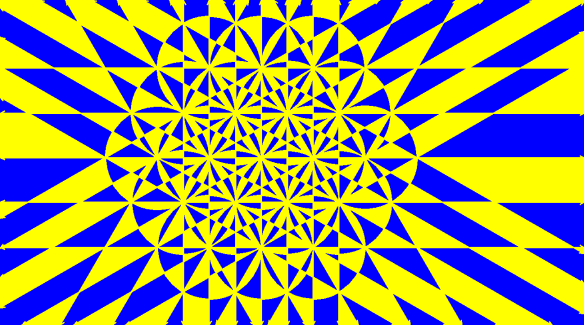
The octagonal design on each face appears in the last post here, and was made using both Geometer’s Sketchpad and MS-Paint. After cropping this image, I projected it onto the faces of this polyhedron, the rhombic triacontahedron, using Stella 4d, a program you can try for yourself at http://www.software3d.com/php.

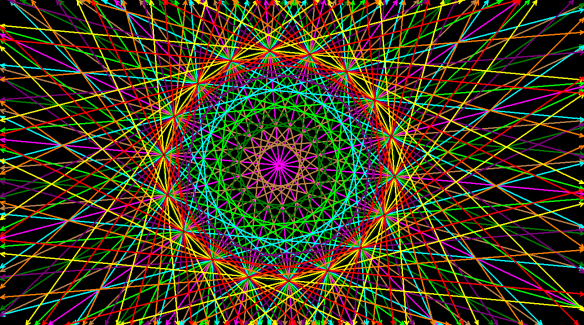
An Octadecagon, with Its Circumscribed Circle, and the Lines Containing All of Its Sides and Diagonals

Image

An Octadecagon, with Its Circumscribed Circle, and the Lines Containing All of Its Sides and Diagonals

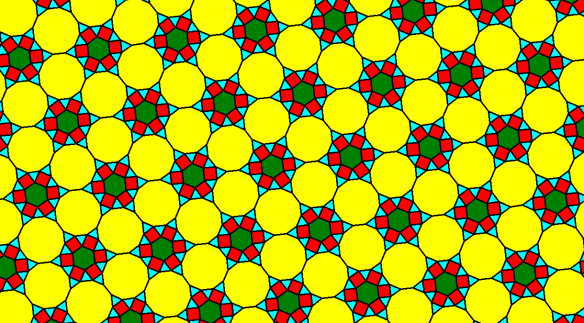
A Tessellation of Regular Polygons for the New Year MMXIV

Image

A Quasi-Regular Tessellation for the New Year MMXIV

All of the polygons in this tessellation are regular. There are only three regular tessellations, and they use, respectively, equilateral triangles, squares, and regular hexagons to tile a plane. There is also a set of eight semi-regular (or Archimedean) tessellations, which you may see here. Archimedean tessellations include more than one type of polygon, but they are vertex-transitive, meaning that each vertex has the same set of polygons surrounding it.

This is a tessellation of regular polygons, but it lacks vertex-transitivity, so it cannot be called a semi-regular (or Archimedean) tessellation. In other words, in this tessellation, there is more than one type of vertex.

There are many such tessellations with an indefinitely repeating pattern. Has this particular one been seen before? I do not know the answer to this question — but if you do, please let me know, in a comment.

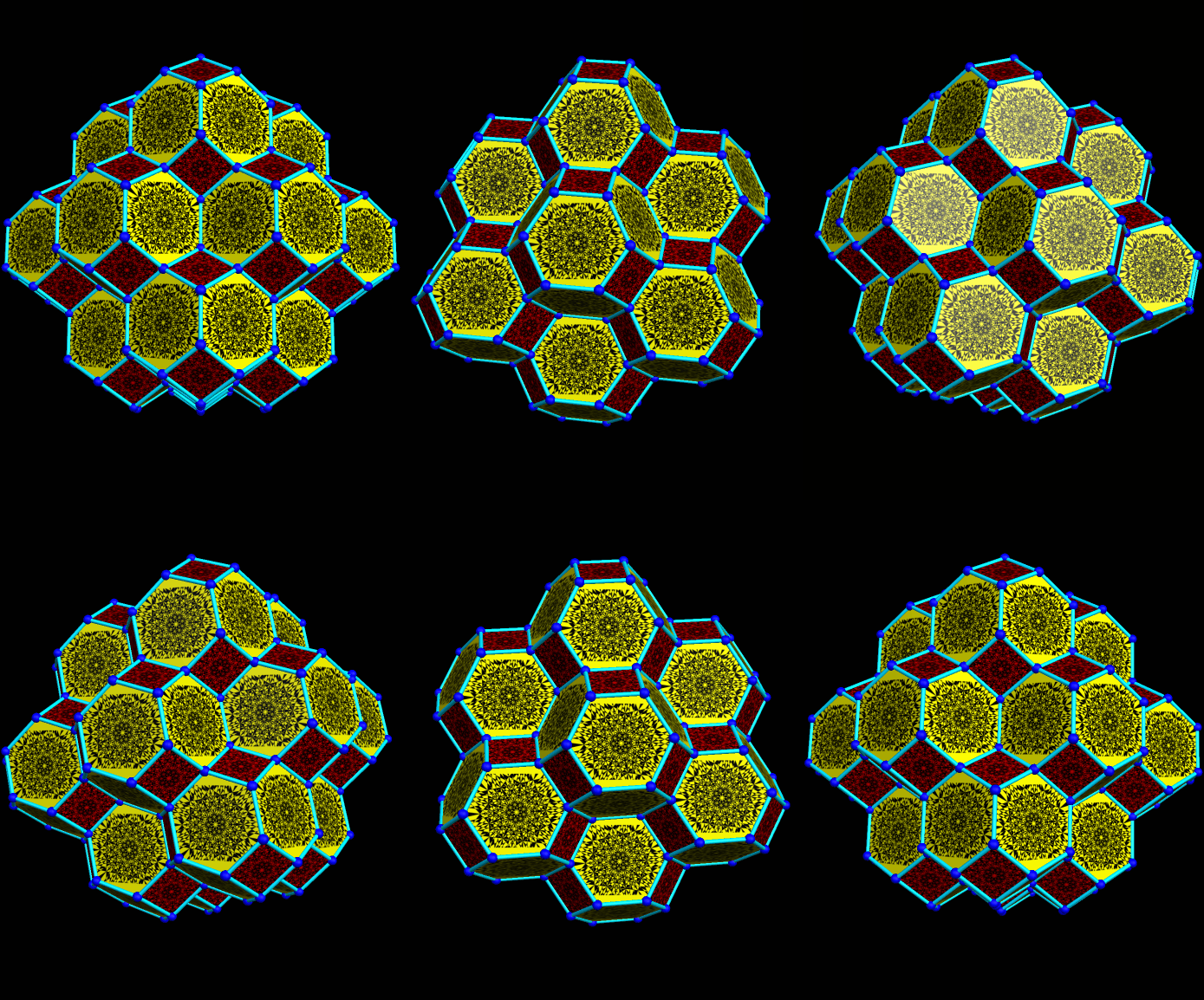
Cluster of Fifteen Decorated and Tightly-packed Truncated Octahedra

Image

Cluster of Fifteen Decorated and Tightly-packed Truncated Octahedra

This cluster was made of the same polyhedron from the previous post, repeated in a space-filling pattern, similar to a tessellation, but in three dimensions. The truncated octahedron has the property, unusual among polyhedra, that it can fill space without leaving any gaps. One of the fifteen truncated octahedra is i the center of the cluster, while another is attached to each of the central polyhedron’s fourteen faces.

Software used to create this includes three separate programs: Geometer’s Sketchpad, MS-Paint, and Stella 4d. This third program may tried for free, and/or purchased, at http://www.software3d.com/stella.php.

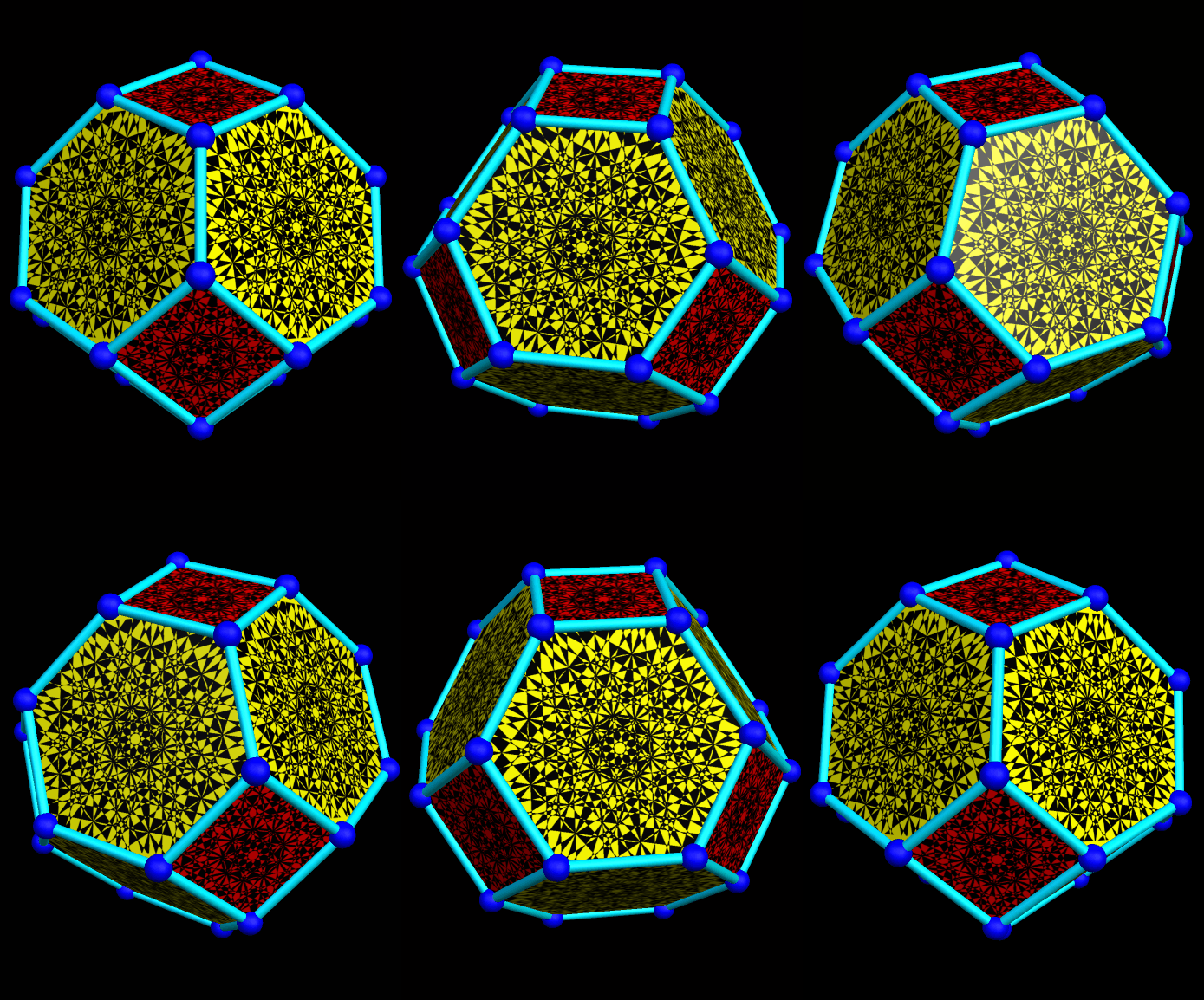
Truncated Octahedron Carousel

Image

Truncated Octahedron Carousel

The image on each face of this truncated octahedron is the one found in a previous post here, named Ten Circles, and was created with the use of two programs, Geometer’s Sketchpad and MS-Paint. As you’ll notice if you view other posts made today, though, the color scheme has been altered for this polyhedron.

Placing this image on each face of this polyhedron, as well as creating this rotating .gif file, required use of a third program, Stella 4d. This program may tried and/or purchased at http://www.software3d.com/stella.php. Unlike in the previous post, the images were “told” to stay upright while the polyhedron its rotates, creating a rotational effect in the yellow hexagonal faces, but a different effect in the red square faces. As far as I can tell, this is due to their different orientation in space, relative to the axis of rotation.

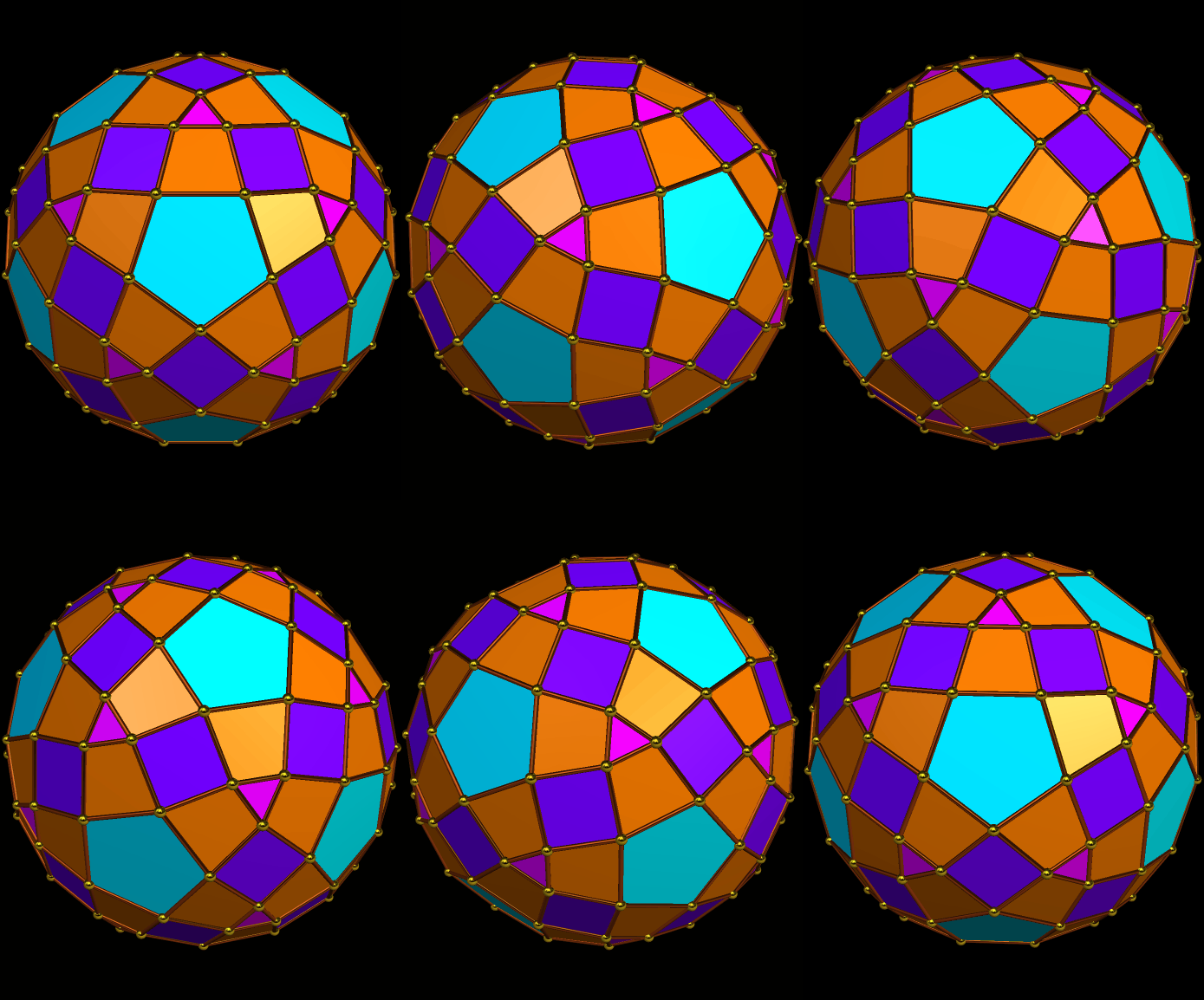
An Expansion of the Rhombicosidodecahedron, Using Trapezoids

Image

An Expansion of the Rhombicosidodecahedron, Using Trapezoids

Software credit: see http://www.software3d.com/stella.php

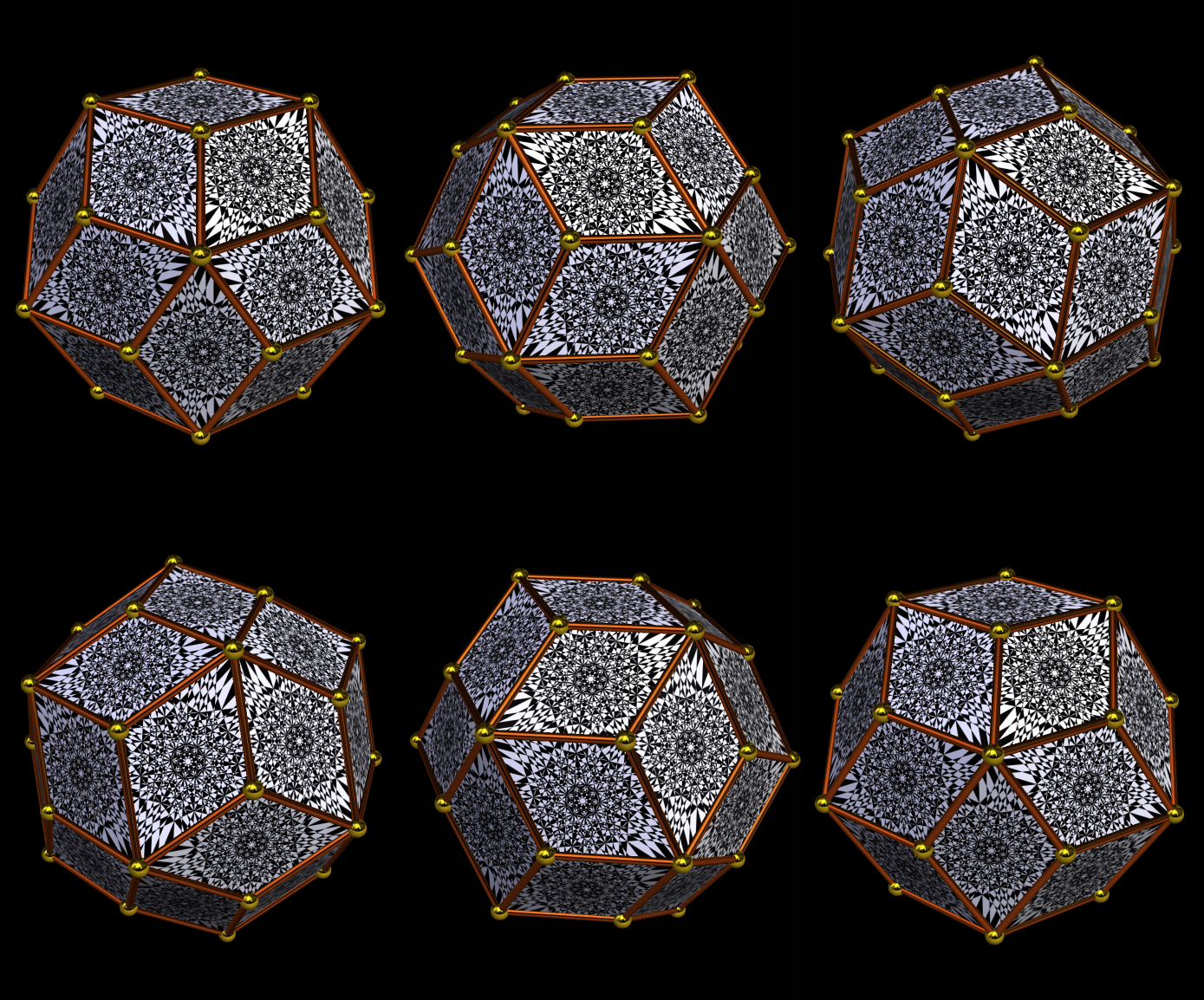
Op Art On a Rhombic Triacontahedron

Image

Op Art On a Rhombic Triacontahedron

The image on each face of this rhombic triacontahedron is the one found in the previous post here, named Ten Circles, and was created with the use of two programs, Geometer’s Sketchpad and MS-Paint.

Placing this image on each face of this polyhedron, as well as creating this rotating .gif file, required use of a third program, Stella 4d. This program may tried and/or purchased at http://www.software3d.com/stella.php.

Link

Spinning Truncated Icosahedron

I don’t reblog things here, but I do appreciate getting e-mail from my followers, and I don’t mind posting an occasional link. One of them, a gentleman named Donald, sent me this link to an interesting video of a spinning truncated icosahedron, viewed from both the inside and outside, and set to music. To see it, simply follow the link above. Thanks for the tip, Donald — this is a really cool video!

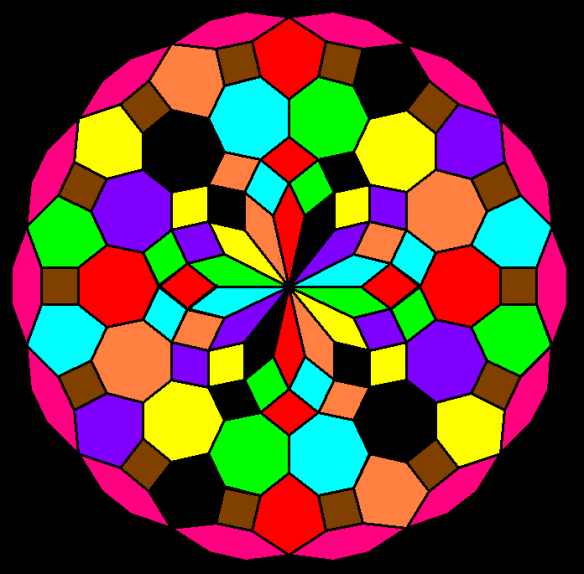
Mandala Based On Heptagons

Image

Mandala Based On Heptagons

Can you find the irregularities in the coloring-pattern? If so, please describe them in a comment.

Snowflake in Blue and Yellow

Image

Snowflake in Blue and Yellow