120 Undulating Dodecahedra

Image

120 Undulating Dodecahedra

This is a 120-cell, one of the regular polychora (four-dimensional polytopes), with its edges and vertices rendered invisible, and its dodecahedral cells shrunk somewhat, to put some empty space between them. It’s rotating in hyperspace, and what you are seeing at any given moment is a particular three-dimensional “shadow,” or projection, of the entire figure.

It’s easy to make this sort of thing with software called Stella 4d, written by an Australian friend of mine. Here’s a link to a site where you can try it, as a free trial download, before deciding whether or not to purchase the fully-functioning version: http://www.software3d.com/stella.php.

600 Undulating Tetrahedra

Image

600 Undulating Tetrahedra

This is a 600-cell, one of the regular polychora (four-dimensional polytopes), with its edges and vertices rendered invisible, and its cells shrunk so that they do not touch. It’s rotating in hyperspace, and what you are seeing at any given moment is a particular three-dimensional “shadow,” or projection, of the entire figure.

It’s easy to make this sort of thing with software called Stella 4d, written by an Australian friend of mine. Here’s a link to a site where you can try it, as a free trial download, before deciding whether or not to purchase the fully-functioning version: http://www.software3d.com/Stella.php.

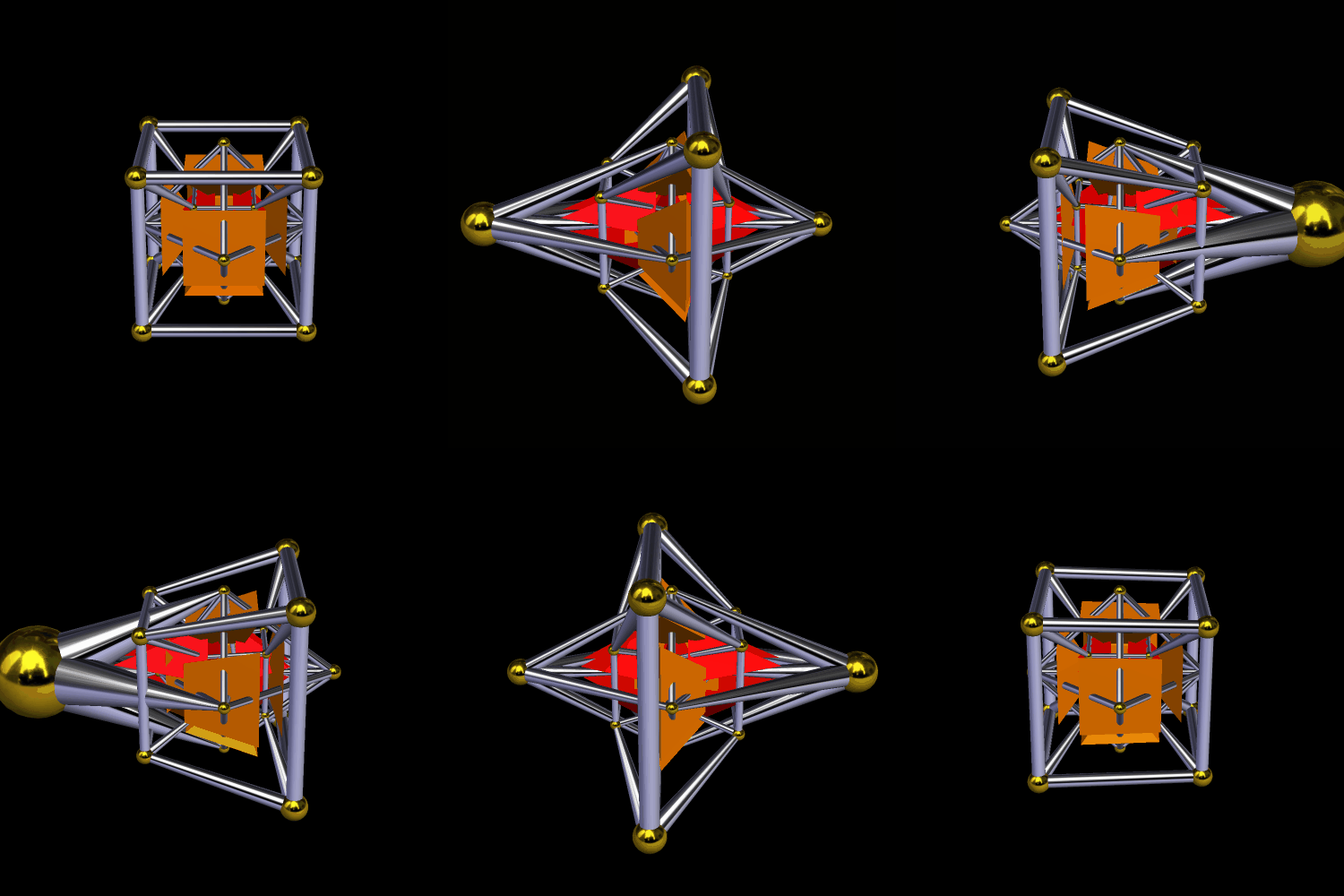
Compound of the Tesseract and Its Dual, the 16-Cell

Image

Compound of the Tesseract and Its Dual, the 16-Cell

Software used: see http://www.software3d.com/stella.php.

The Hyperspace Analogue of the Stella Octangula

The simplest polyhedron is the tetrahedron, and it is self-dual. The compound of two tetrahedra puts these duals together, and is most often called the Stella Octangula, a name Johannes Kepler gave it in the early 17th Century.

Image

In hyperspace, or 4-space, the simplest polychoron is the pentachoron, or 5-cell. Like the tetrahedron in 3-space, it is also self-dual. Here is the compound of two of them: hyperspace’s version of the Stella Octangula.

Compound of 1-Pen, 5-cell, Pentachoron and dual

Website to find the software used to make these images:  www.software3d.com/stella.php

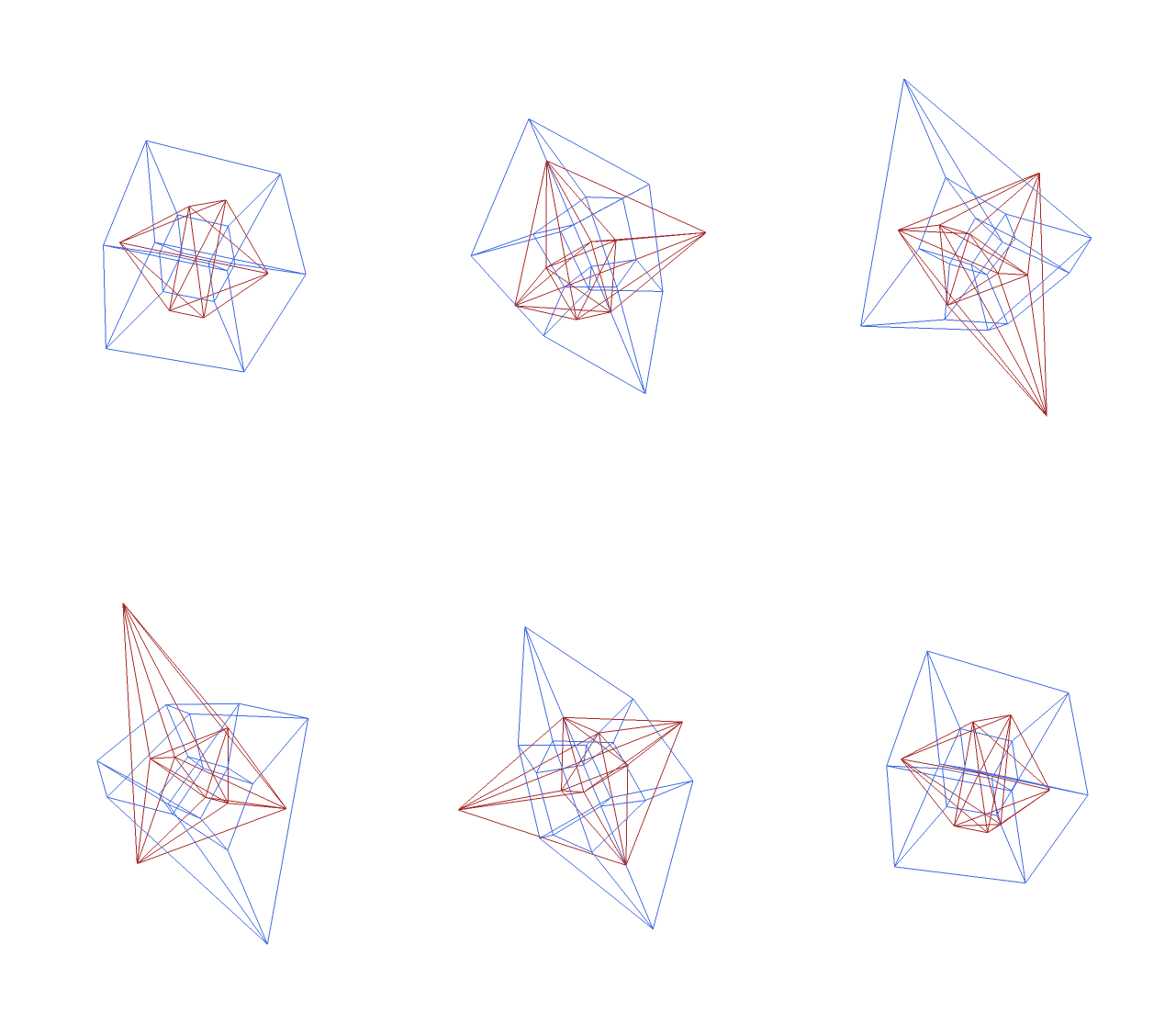
Rotating Compound of the Tesseract and Its Dual

Image

Rotating Compound of the Tesseract and Its Dual

Blue figure: a projection of the tesseract, or hypercube; also known as the 8-cell or octachoron — a four-dimensional figure composed of eight cubic cells in a regular arrangement.

Red figure: its dual, the 16-cell or hexadecachoron, which is composed of sixteen tetrahedral cells.

To buy (or just try) the software used to make this image, Stella 4d, please visit http://www.software3d.com/Stella.php.

The Two Simplest Polychora

The most familiar polychoron, to those who have heard of any of them, is the hypercube, or tesseract. It is analogous to the cube, but in four dimensions. All polychora are four-dimensional. With numbers of spatial dimensions above four, only the term “polytope” is used. Polyhedra are 3-polytopes, and polychora are 4-polytopes.

This is a three-dimensional projection of a tesseract, as it rotates in hyperspace, casting a “shadow” into our space:

Image

In three dimensions, a cube is not the simplest polyhedron. A tetrahedron (a regular triangle-based pyramid) is simpler.

The simplest polychoron is composed of five tetrahedral cells, and is analogous to the tetrahedron, but in hyperspace. Here is a rotating “hypertetrahedron.”

Image

There are even more names for these two polychora, based on the number of cells (cubes or tetrahedra). The tesseract/hypercube is composed of eight cubes, so it is called the 8-cell, as well as the octachoron. The preferred names for the hypertetrahedron are the 5-cell and the pentachoron, as it is composed of five (tetrahedral) cells.

Just as there are other Platonic solids not mentioned here, there are other regular polychora as well. The others will be subjects of upcoming posts, and one has already appeared here once (the 120-cell, or hyperdodecahedron), just three posts back.

Software note:  these .gifs were made using Stella 4d, which may be purchased, and/or tried for free (on a trial basis), at http://www.software3d.com/Stella.php.

Rotating Hyperdodecahedron

Image

Rotating Hyperdodecahedron

This moving image of a projection of the four-dimensional 120-cell was made using Stella 4d, software you can try for free here: http://www.software3d.com/stella.php