How I Hit My Personal Mathematical Wall: Integral Calculus

Hitting the wall

To the best of my recollection, this is the first time I have written publicly on the subject of calculus. The fundamental reason for this, explained in detail below, is something I rarely experience: embarrassment.

Unless this is the first time you’ve read my blog, you already know I like mathematics. If you’re a regular follower, you know that I take this to certain extremes. My current conjecture is that my original motivation to learn how to speak, read, and write, before beginning formal schooling, was that I had a toddler-headful of mathematical ideas, no way to express them (yet), and learned to use English in order to change that. Once I could understand what others were saying, read what others had written, write things down, and speak in sentences, I noticed quickly that interaction with other people made it possible to bounce mathematical ideas around, using language — which helped me to develop and expand those mathematical ideas more quickly. Once I started talking about math, as anyone who knows me well can verify, I never learned how to shut up on the subject for longer than ten waking hours at a time.

A huge part of the appeal of mathematics was that I didn’t have to memorize anything to do it, or learn it. To me, it was simply one obvious concept at a time, with one exposure needed to “get it,” and remember it as an understood concept, rather than a memorized fact. (Those math teachers of mine who required lots of practice, over stuff I already knew, did not find me easy to deal with, for I hated being forced to do that unnecessary-for-me chore, and wasn’t shy about voicing that dislike to anyone and everyone within hearing range, regardless of the situation or setting. The worst of this, K-12, was long division, especially the third year in a row that efforts were made to “teach” me this procedure I had already learned, on one specific day, outside school, years earlier.) It might seem like I have memorized certain things, such as, say, the quadratic formula, but I never actually tried to — this formula just “stuck” in my mind, from doing lots of physics problems, of different types, which required it. Similarly, I learned the molar masses of many commonly-encountered elements by repeatedly using them to show students how to solve problems in chemistry, but at no time did I make a deliberate attempt to memorize any of them. If I don’t try to memorize something, but it ends up in memory anyway, that doesn’t count towards my extremely-low “I hate memorizing things” threshhold.

When I first studied calculus, this changed. Through repeated, forced exposure in A.P. Calculus class my senior year of high school, with a teacher I didn’t care for, I still learned a few things that stuck: how to find the derivative of a polynomial, the fact that a derivative gives you the slope a function, and the fact that its inverse function, integration, yields the area under the curve of a function. After I entered college, I then landed in Calculus I my freshman year. Unbeknownst to me, I was approaching a mental wall.

My college Cal I class met early in the morning, covered material I had already learned in high school, and was taught by an incomprehensible, but brilliant, Russian who was still learning English. Foreign languages were uninteresting to me then (due to the large amount of memorization required to learn them), and I very quickly devised a coping strategy for this. It involved attending class as infrequently as possible, but still earning the points needed for an “A,” by asking classmates when quizzes or tests had been announced, and only waking up for class on those mornings, to go collect the points needed for the grade I wanted.

This was in 1985-86, before attendance policies became common for college classes, and so this worked: I got my “A” for Cal I. “That was easy,” I thought, when I got my final grade, “so, on to the next class!”

I did a lot of stupid things my freshman year of college, as is typical for college freshmen around the world, ever since the invention of college. One of these stupid things was attempting to use the same approach to Calculus II, from another professor. About 60% of the way through that course, I found myself in a situation I was not used to: I realized I was failing the class.

Not wanting an “F,” I started to attend class, realizing I needed to do this in order to pass Cal II, which focuses on integral calculus. A test was coming up. In class, the professor handed out a sheet of integration formulas, and told us to memorize them.

Memorize them.

I read the sheet of integration formulas, hoping to find patterns that would let me learn them my way, rather than using brute-force memorization-by-drill. Since I had been skipping class, I saw no such patterns. All of a sudden, I realized I was in a new situation, for me: mathematics suddenly was not fun anymore. My “figure it out on the fly” method, which is based on understanding, rather than memorization, had stopped working.

A few weeks and a failed test later, I began to doubt I would pass, and tried to drop the class. This is how I learned of the existence of drop dates for college classes, but I learned it too late: I was already past the drop date.

I did not want an F, especially in a math class. Out of other options, I started drilling and memorizing, hated every minute of it, but did manage to bring my grade up — to the only “D” I have on any college transcript. Disgusted by this experience, I ended up dropping out of college, dropped back in later, dropped out again, re-dropped back in at a different university, and ended up changing my major to history, before finally completing my B.A. in “only” seven years. I didn’t take another math class until after attempting to do student teaching, post-graduation . . . in social studies, with my primary way of explaining anything being to reduce it to an equation, since equations make sense. This did not go well, so, while working on an M.A. (also in history) at a third college, I took lots of science and math classes, on the side, to add additional teaching-certification areas in subjects where using equations to explain things is far more appropriate, and effective. This required taking more classes full of stuff I already knew, such as College Algebra and Trigonometry, so I took them by correspondence (to avoid having to endure lectures over things I already knew), back in the days when this required the use of lots of postage stamps — but no memorization. To this day, I would rather pay for a hundred postage stamps than deliberately memorize something.

In case you’re wondering how a teacher can function like this, I will explain. Take, for example, the issue of knowing students’ names. Is this important? Yes! For teaching high school students, learning the names of every student is absolutely essential, as was quite evident from student teaching. However, I do this important task by learning something else about each student — how they prefer to learn, for example, or something they intensely like, or dislike — at which point memorization of the student’s name becomes automatic for me. It’s only conscious, deliberate memorization-by-drill that bothers me, not “auto-memorization,” also known as actually understanding something, or, in the case of any student, learning something about someone.

I don’t know exactly why my to-this-point “wall” in mathematics appeared before me at this point, but at least I know I am in good company. Archimedes knew nothing of integral calculus, nor did his contemporaries, for it took roughly two millennia longer before Isaac Newton and Gottfried Leibniz discovered this branch of mathematics, independently, at roughly the same time.

However, now, in my 21st year as a teacher, I have now hit another wall, and it’s in physics, another subject I find fascinating. Until I learn more calculus, I now realize I can’t learn much more physics . . . and I want to learn more physics, for the simple reason that it is the only way to understand the way the universe works, at a fundamental level — and, like all people, I am trapped in the universe for my entire life, so, naturally I want to understand it, to the extent that I can. (A mystery to me: why isn’t this true for everyone else? We’re all trapped here!) Therefore, I now have a new motivation to learn calculus. However, I want to do this with as much real understanding as possible, and as little deliberate memorization as possible, and that will require a different approach than my failed pre-20th-birthday attempt to learn calculus.

I think I need exactly one thing, to help me over this decades-old wall: a book I can read to help me teach myself calculus, but not a typical textbook. The typical mathematics textbook takes a drill-and-practice approach, and what I need is a book that, instead, will show me exactly how various calculus skills apply to physics, or, failing that, to geometry, my favorite branch of mathematics, by far. If any reader of this post knows of such a book, please leave its title and author in a comment. I’ll then buy the book, and take it from there.

One thing I do not know is the extent to which all of this is related to Asperger’s Syndrome, for I was in my 40s when I discovered I am an “Aspie,” and it is a subject I am still studying, along with the rest of the autism spectrum. One thing Aspies have in common is a strong tendency to develop what we, and those who study us, call “special interests,” such as my obsession with polyhedra, evident all over this blog. What Aspies do not share is the identity of these special interests. Poll a hundred random Aspies, and only a minority will have a strong interest in mathematics — the others have special interests in completely different fields. One thing we have in common, though, is that the way we think (and learn) is extremely different from the ways non-Aspies think and learn. The world’s Aspie-population is currently growing at a phenomenal rate, for reasons which have, so far, eluded explanation. The fact that this is a recent development explains why it remains, so far, an unsolved mystery. One of things which is known, however, is the fact that our status as a rapidly-growing population is making it more important, by the day, for these differences to be studied, and better understood, as quickly as the speed of research will allow, in at least two fields: medicine, and education.

Only one thing has fundamentally changed about me, regarding calculus, in nearly 30 years: I now want to get to the other side of this wall, which I now realize I created for myself, when I was much younger. I am also optimistic I will succeed, for nothing helps anyone learn anything more than actually wanting to learn it, no matter who the learner is, or what they are learning. In this one respect, I now realize, I am no different than anyone else, Aspie or non-Aspie. We are all, after all, human beings.

A Lesson Involving the Social Use of Color

colors

RobertLovesPi’s social-interaction lesson of the day: different colors of fabric can actually mean something else, besides simply reflecting different wavelengths of light, and these meanings can shift quickly. (I already knew this could happen once per day, but was only just taught that this is also possible for n = 2, allowing me to extrapolate that, for the general case, n > -1, presumably with an upper limit set by the individual’s speed at changing clothes.)

As far as I can tell, n = 0 on weekends and legal holidays, in most cases, and n = 1 on most workdays (but not today, when the needed reflection-wavelength shifts from ~475 nm to ~550 nm after I leave the city of Sherwood, Arkansas, bound for a spot approximately 20 km South of there, in Little Rock, which is still in the same county).

Apparently my key to understanding this stuff is finding a way to analyze it mathematically. Also, posting such “new” discoveries to my blog increases the odds of me remembering them. However, unlike my last such finding (it involved chocolate chips not being a sandwich topping at Subway), I did NOT figure these things out “all by myself.” In fact, without help from two very important people, I doubt I ever would have figured them out at all!

Geometry Problem Involving Two Circles (See Comments for Solution)

This is a puzzle I made up not long ago. After trying to solve it for a bit (no success yet, but I haven’t given up), I decided to share the fun.

A small circle of radius r is centered on a large circle of radius R. It is a given that 0 < r < R. In terms of r and R, what fraction of the smaller circle’s circumference lies outside the larger circle?

two circles

I am 90% certain there is an extremely simple way to do this, using only things I already know. It’s frustrating that the answer isn’t simply leaping out of the computer screen, at me. For simple math problems, that’s what usually happens . . . so either this is merely deceptively simple, or I am missing something.

Two Views of the Truncated Tesseract

19 truncated tesseract orthogonal projection

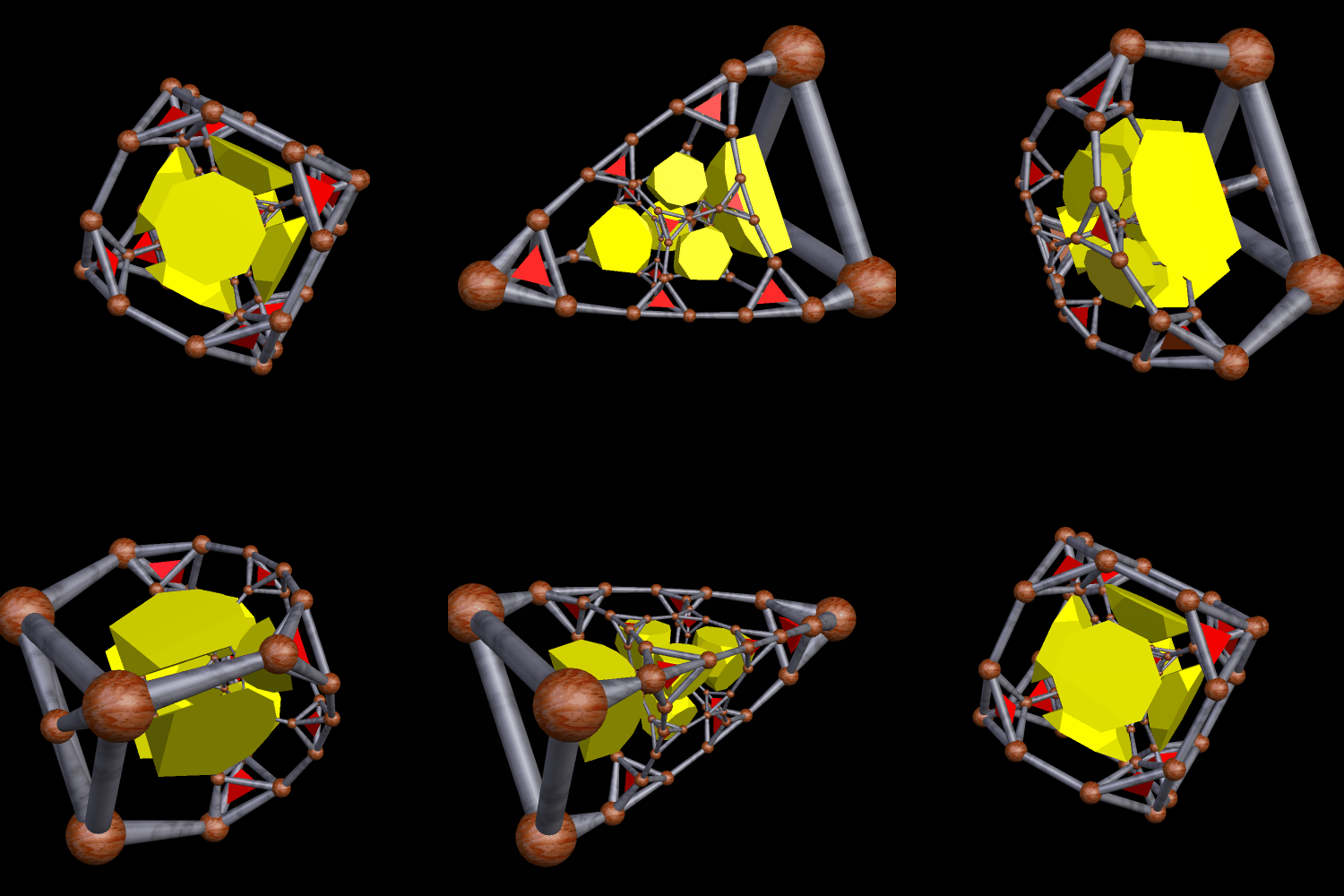
The figure above, rotating in hyperspace, is an orthogonal projection of a four-dimensional polychoron known as the truncated tesseract. It is analogous to the truncated cube, one of the Archimedean solids. The image below is of the same figure, but is shown as a perspective projection.

19-Tat perspective projection

Both images were created using Stella 4d, software you can buy (with a free trial download available, first) at http://www.software3d.com/Stella.php. It’s great software, and a friend of mine wrote it — but no, he doesn’t pay me to give his program free advertising, as some have wondered.

Elementary School Mathematics Education Mysteries

mystery

Since these two problems are really the exact same problem, in two different forms, why not just use “x” to teach it, from the beginning, in elementary school, instead of using the little box? The two symbols have the exact same meaning!

To the possible answer, “We use an ‘x’ for multiplication, instead, so doing this would be confusing,” I have a response: why? Using “x” for multiplication is a bad idea, because then students have to unlearn it later. In algebra, it’s better to write (7)(5) = 35, instead of 7×5 = 35, for obvious reasons — we use “x” as a variable, instead, almost constantly. This wouldn’t be as much trouble for students taking algebra if they had never been taught, in the first place, that “x” means “multiply.” It’s already a letter of the alphabet and a variable, plus it marks spots. It doesn’t need to also mean “multiply.”

Why are we doing things in a way that causes more confusion than is necessary? Should we, as teachers, not try to minimize confusion? We certainly shouldn’t create it, without a good reason for doing so, and these current practices do create it.

These things may not be mysteries to others, but they certainly are to me.

[Note: for those who do not already know, I am a teacher of mathematics. However, I do not have any experience teaching anything at the elementary level. For this particular post, that’s certainly relevant information.]

One Dozen Precious Metal Cubes: A Problem Involving Geometry, Chemistry, and Finance (Solution Provided, with Pictures)

The troy ounce is a unit of mass, not weight, and is used exclusively for four precious metals. At this time, the prices per troy ounce, according to this source for current precious metal prices, for these four elements, are:

  • Gold, $1,094
  • Palladium, $600
  • Platinum, $965
  • Silver, $14.82

(As a side note, it is rare for platinum to have a lower price per troy ounce than gold, as is now the case. I would explain the reasons this is happening, except for one problem: I don’t understand the reasons, myself, well enough to do so. Yet.)

A troy ounce equals 31.1034768 grams, but, for most purposes, 31.103 g, or even 31.1 g, works just fine.

Also, as you can see here, these “troy elements” are all in one part of the periodic table. This is related to the numerous similarities in these elements’ physical and chemical properties, which is itself related, of course, to the suitability of these four elements for such things as jewelry, coinage, and bullion.

1371846764_periodic_table_of_elements

To determine the volume of a given mass of one of these metals, it is also necessary to know their densities, so I looked them up, using Google (they are not listed on the periodic table above):

  • Gold, 19.3 g/cm³
  • Palladium, 11.9 g/cm³
  • Platinum, 21.46 g/cm³
  • Silver, 10.49 g/cm³

In chemistry, of course, one must often deal with elements (as well as other chemicals) in terms of the numbers of units (such as atoms or molecules), except for one problem: this is absurdly impractical, due to the outrageously small size of atoms. Despite this, though, it is necessary to count such things as atoms in order to do much chemistry at all, so chemists have devised a “workaround” for this problem: when counting units of pure chemicals, they don’t count such things as atoms or molecules directly, but count them a mole at a time. A mole is defined as a number of things equal to the number of atoms in exactly 12 grams of pure carbon-12. To three significant figures, this number is 6.02 x 10²³. To deal with moles, since atoms have differing masses, we need to know the molar mass (mass of one mole) of whatever we are dealing with to convert, both directions, between moles and grams. Here are the molar masses of the four troy-measured elements, as seen on the periodic table above, below each element’s symbol.

  • Gold, 196.97 g
  • Palladium, 106.42 g
  • Platinum, 195.08 g
  • Silver, 107.87 g

I’ve given these numbers  as the information needed to solve the following problem: rank one dozen precious metal cubes (descriptions follow) by ascending order of volume. There are three cubes each of gold, palladium, platinum, and silver. Four of the twelve (one of each element) have a mass of one troy ounce each. Another four each have a value, at the time of this writing, of $1,000. The last set of four each contain one mole of the element which composes the cube, and, again, there is one of each of these same four elements in the set.

If you would like to do this problem for yourself, the time to stop reading is now. Otherwise (or to check your answers against mine), just scroll down.

.

.

.

.

.

.

.

.

.

.

.

In the solutions which follow, a rearrangement of the formula for density (d=m/v) is used; solved for v, this equation becomes v = m/d. In order, then, by both volume and edge length, from smallest to largest, here are the twelve cubes:

Smallest cube: one troy ounce of platinum

One tr oz, or 31.103 g, of platinum would have a volume of v = m/d = 31.103 g / (21.46 g/cm³) = 1.449 cm³. A cube with this volume would have an edge length equal to the its volume’s cube root, or 1.132 cm. (This explanation for the calculation of the edge length, given the cube’s volume, is omitted in the items below, since the mathematical procedure is the same each time.)

Second-smallest cube: $1000 worth of gold

Gold worth $1000, at the time of this posting, would have a troy mass, and then a mass in grams, of $1000.00/($1,094.00/tr oz) = (0.914077 tr oz)(31.103 g/tr oz) = 28.431 g. This mass of gold would have a volume of v = m/d = 28.431 g / (19.3 g/cm³) = 1.47 cm³. A cube with this volume would have an edge length of  1.14 cm.

Third-smallest cube: $1000 worth of platinum

Platinum worth $1000, at the time of this posting, would have a troy mass, and then a mass in grams, of $1000.00/($965.00/tr oz) = (1.0363 tr oz)(31.103 g/tr oz) = 32.231 g. This mass of platinum would have a volume of v = m/d = 32.231 g / (21.46 g/cm³) = 1.502 cm³. A cube with this volume would have an edge length of  1.145 cm.

Fourth-smallest cube: one troy ounce of gold

One tr oz, or 31.1 g, of gold would have a volume of v = m/d = 31.1 g / (19.3 g/cm³) = 1.61 cm³. A cube with this volume would have an edge length of 1.17 cm.

Fifth-smallest cube: one troy ounce of palladium

One tr oz, or 31.1 g, of palladium would have a volume of v = m/d = 31.1 g / (11.9 g/cm³) = 2.61 cm³. A cube with this volume would have an edge length of 1.38 cm.

Sixth-smallest cube: one troy ounce of silver 

One tr oz, or 31.103 g, of silver would have a volume of v = m/d = 31.103 g / (10.49 g/cm³) = 2.965 cm³. A cube with this volume would have an edge length of 1.437 cm.

Sixth-largest cube: $1000 worth of palladium

Palladium worth $1000, at the time of this posting, would have a troy mass, and then a mass in grams, of $1000.00/($600.00/tr oz) = (1.6667 tr oz)(31.103 g/tr oz) = 51.838 g. This mass of palladium would have a  volume of v = m/d = 51.838 g / (11.9 g/cm³) = 4.36 cm³. A cube with this volume would have an edge length of  1.63 cm.

Fifth-largest cube: one mole of palladium

A mole of palladium, or 106.42 g of it, would have a volume of v = m/d = 106.42 g / (11.9 g/cm³) = 8.94 cm³. A cube with this volume would have an edge length of 2.07 cm.

Fourth-largest cube: one mole of platinum

A mole of platinum, or 195.08 g of it, would have a volume of v = m/d = 195.08 g / (21.46 g/cm³) = 9.090 cm³. A cube with this volume would have an edge length of 2.087 cm.

Third-largest cube: one mole of gold

A mole of gold,  or 196.97 g of it, would have a volume of v = m/d = 196.97 g / (19.3 g/cm³) = 10.2 cm³. A cube with this volume would have an edge length of  2.17 cm.

Second-largest cube: one mole of silver

A mole of silver, or 107.87 g of it, would have a volume of v = m/d = 107.87 g / (10.49 g/cm³) = 10.28 cm³. A cube with this volume would have an edge length of 2.175 cm.

Largest cube: $1000 worth of silver

Silver worth $1000, at the time of this posting, would have a troy mass, and then a mass in grams, of $1000.00/($14.82/tr oz) = (67.48 tr oz)(31.103 g/tr oz) = 2099 g. This mass of gold would have a volume of v = m/d = 2099 g / (10.49 g/cm³) = 200.1 cm³. A cube with this volume would have an edge length of  5.849 cm.

Finally, here are pictures of all 12 cubes, with 1 cm³ reference cubes for comparison, all shown to scale, relative to one another.

dozen cubes

A third of these cubes change size from day-to-day, and sometimes even moment-to-moment during the trading day, if their value is held constant at $1000 — which reveals, of course, which four cubes they are. The other eight cubes, by contrast, do not change size — no precious metal prices were used in the calculation of those cubes’ volumes and edge lengths, precisely because the size of those cubes is independent of such prices, due to the way those cubes were defined in the wording of the original problem.

Silly U.S. Map Puzzles #4a and 4b

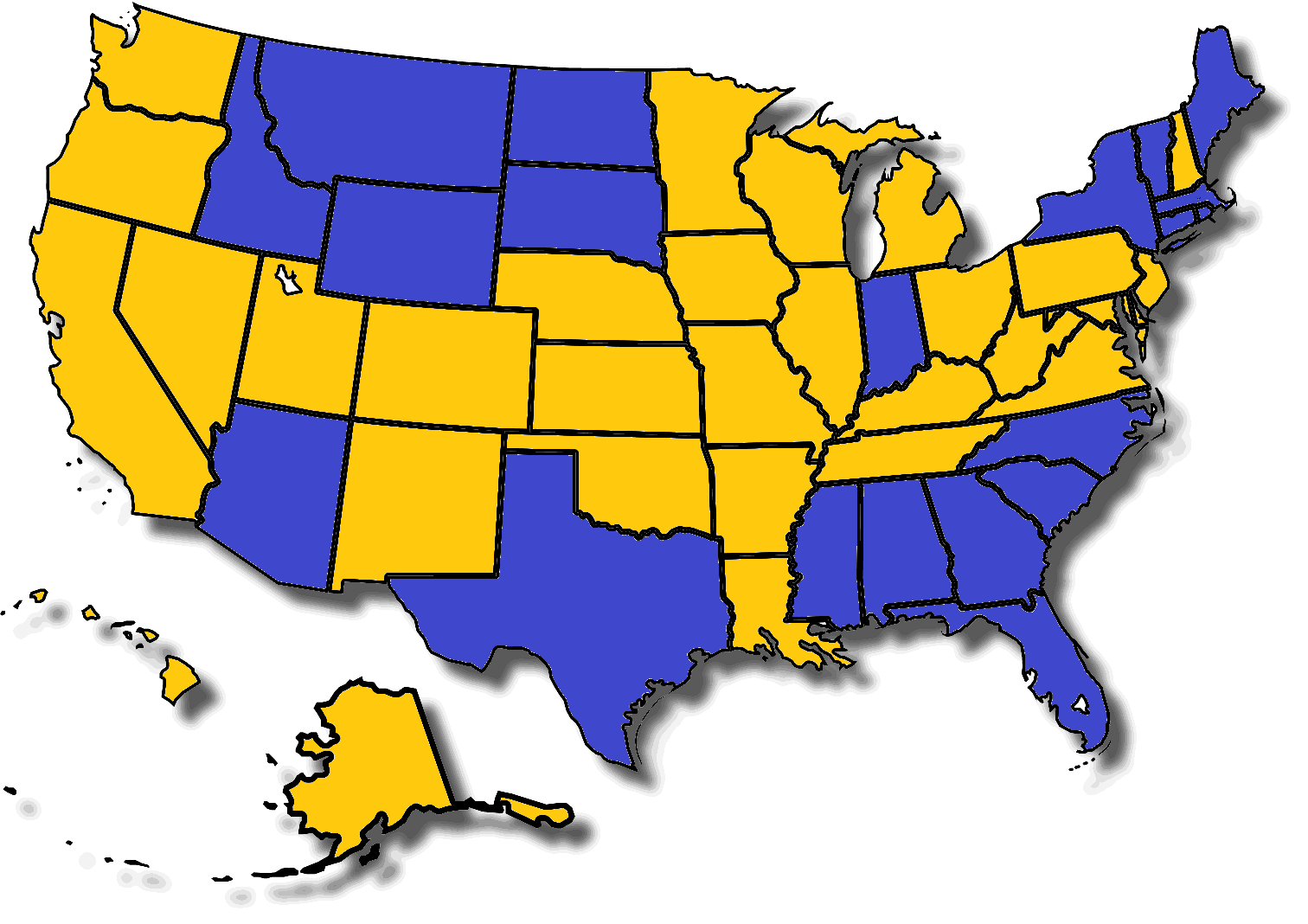
First, for puzzle #4a, what are the meanings of the colors on this map?

mapquiz4a-letters

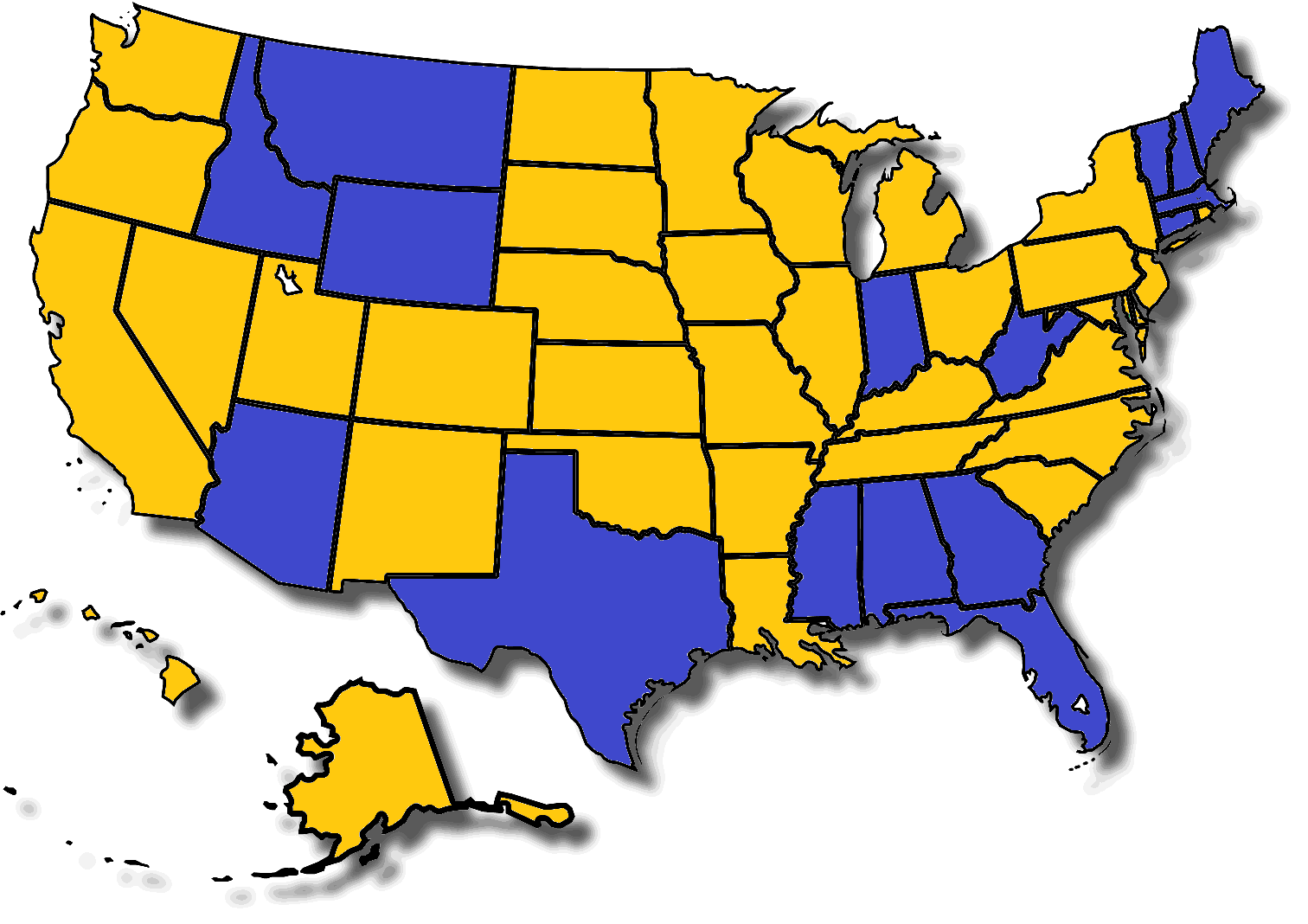
For puzzle #4b, what do the colors mean on this second, similar map?

mapquiz4b-characters

To find the answers, simply scroll down.

.

.

.

.

.

.

Keep scrolling….

.

.

.

.

.

Solution:

In the first map, consider the number of letters in the name of each state. Is this number prime or composite?

In the second map, consider the number of characters, rather than letters, in each state’s name. This number is different for states with two-word names, due to the single character, a blank space, needed to separate the two words. Again: prime, or composite?

On Binary Planets, and Binary Polyhedra

Faceted Augmented Icosa

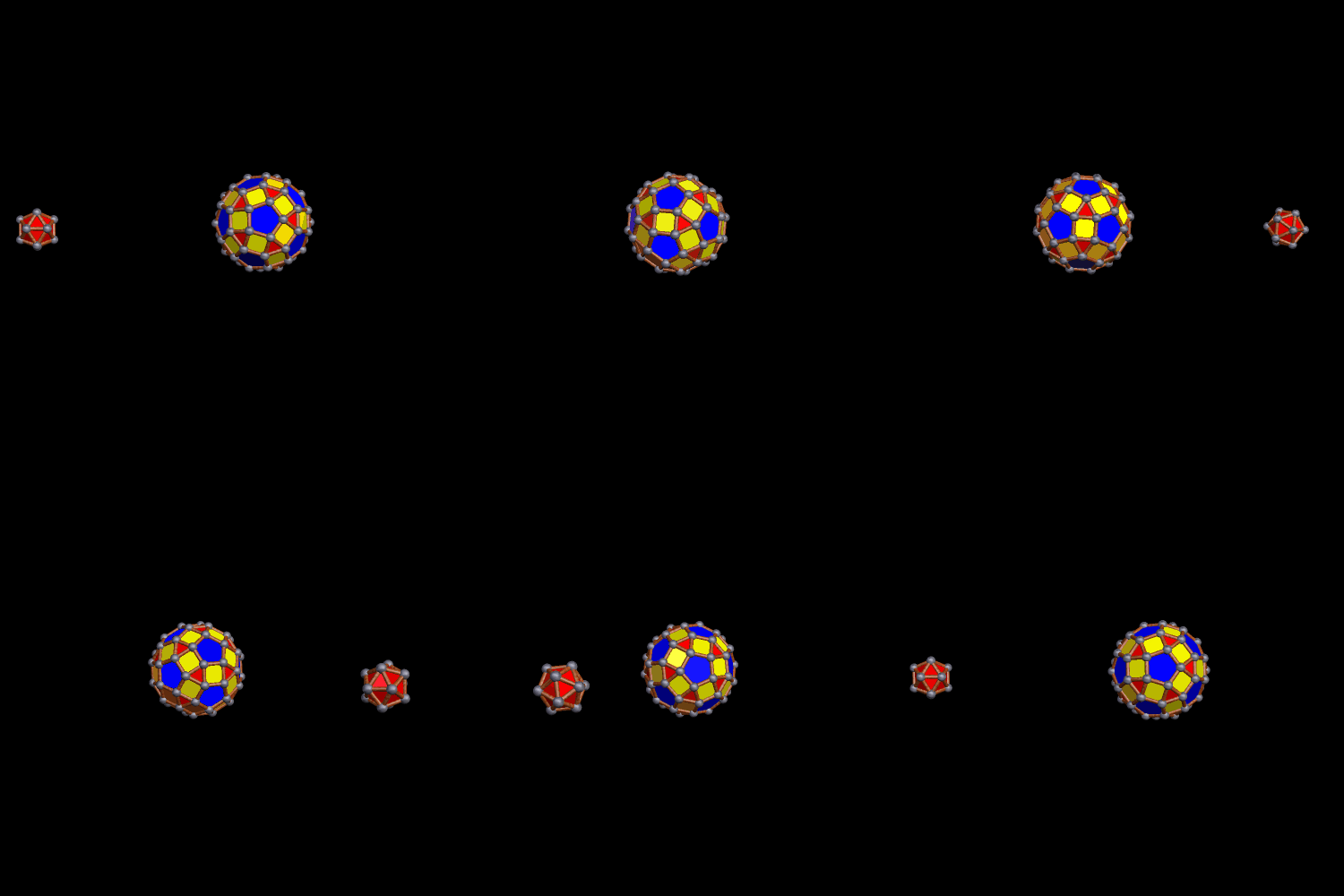
This image of binary polyhedra of unequal size was, obviously, inspired by the double dwarf planet at the center of the Pluto / Charon system. The outer satellites also orbit Pluto and Charon’s common center of mass, or barycenter, which lies above Pluto’s surface. In the similar case of the Earth / Moon system, the barycenter stays within the interior of the larger body, the Earth.

I know of one other quasi-binary system in this solar system which involves a barycenter outside the larger body, but it isn’t one many would expect: it’s the Sun / Jupiter system. Both orbit their barycenter (or that of the whole solar system, more properly, but they are pretty much in the same place), Jupiter doing so at an average orbital radius of 5.2 AU — and the Sun doing so, staying opposite Jupiter, with an orbital radius which is slightly larger than the visible Sun itself. The Sun, therefore, orbits a point outside itself which is the gravitational center of the entire solar system.

Why don’t we notice this “wobble” in the Sun’s motion? Well, orbiting binary objects orbit their barycenters with equal orbital periods, as seen in the image above, where the orbital period of both the large, tightly-orbiting rhombicosidodecahedron, and the small, large-orbit icosahedron, is precisely eight seconds. In the case of the Sun / Jupiter system, the sun completes one complete Jupiter-induced wobble, in a tight ellipse, with their barycenter at one focus, but with an orbital period of one jovian year, which is just under twelve Earth years. If the Jovian-induced solar wobble were faster, it would be much more noticeable.

[Image credit: the picture of the orbiting polyhedra above was made with software called Stella 4d, available at this website.]

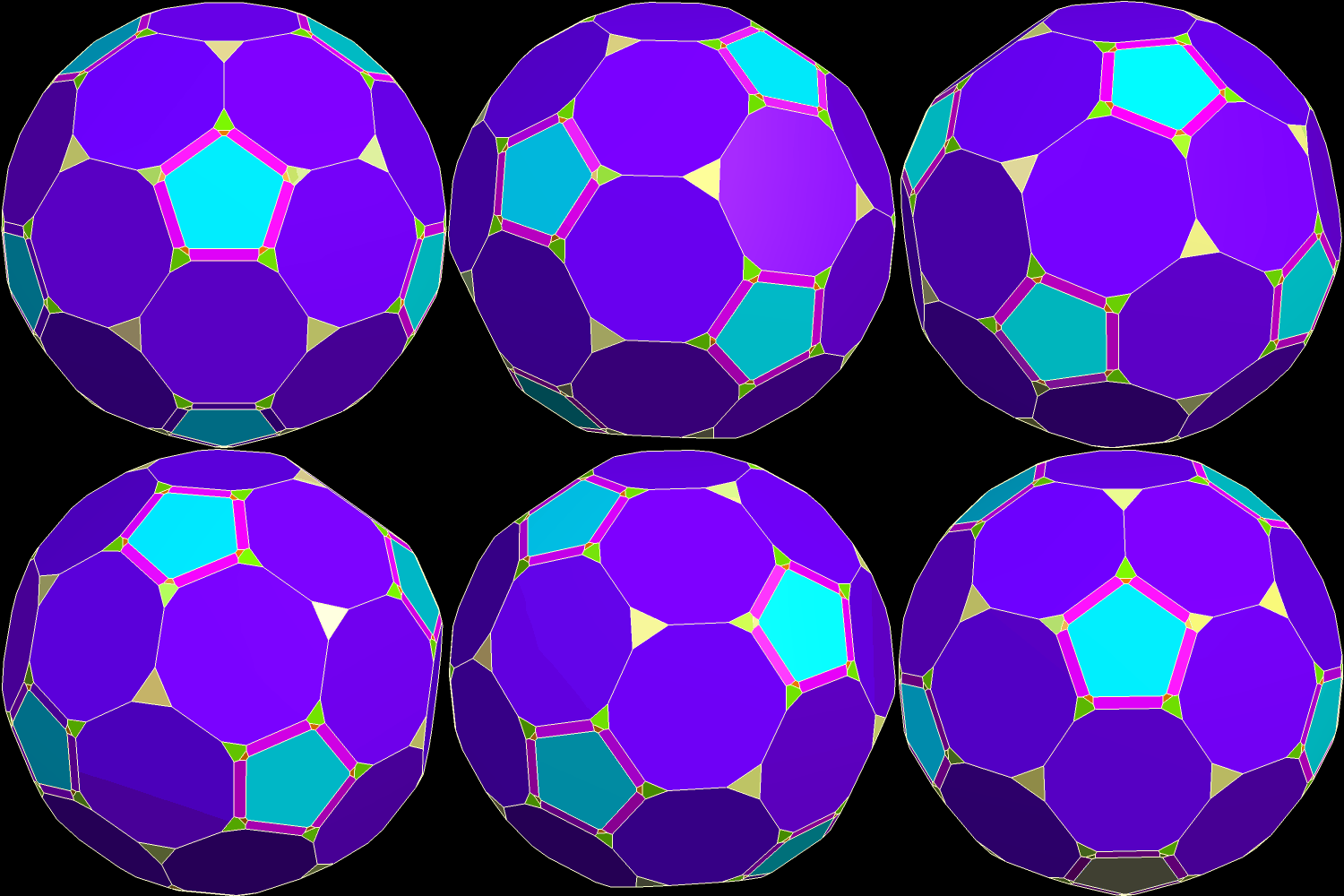
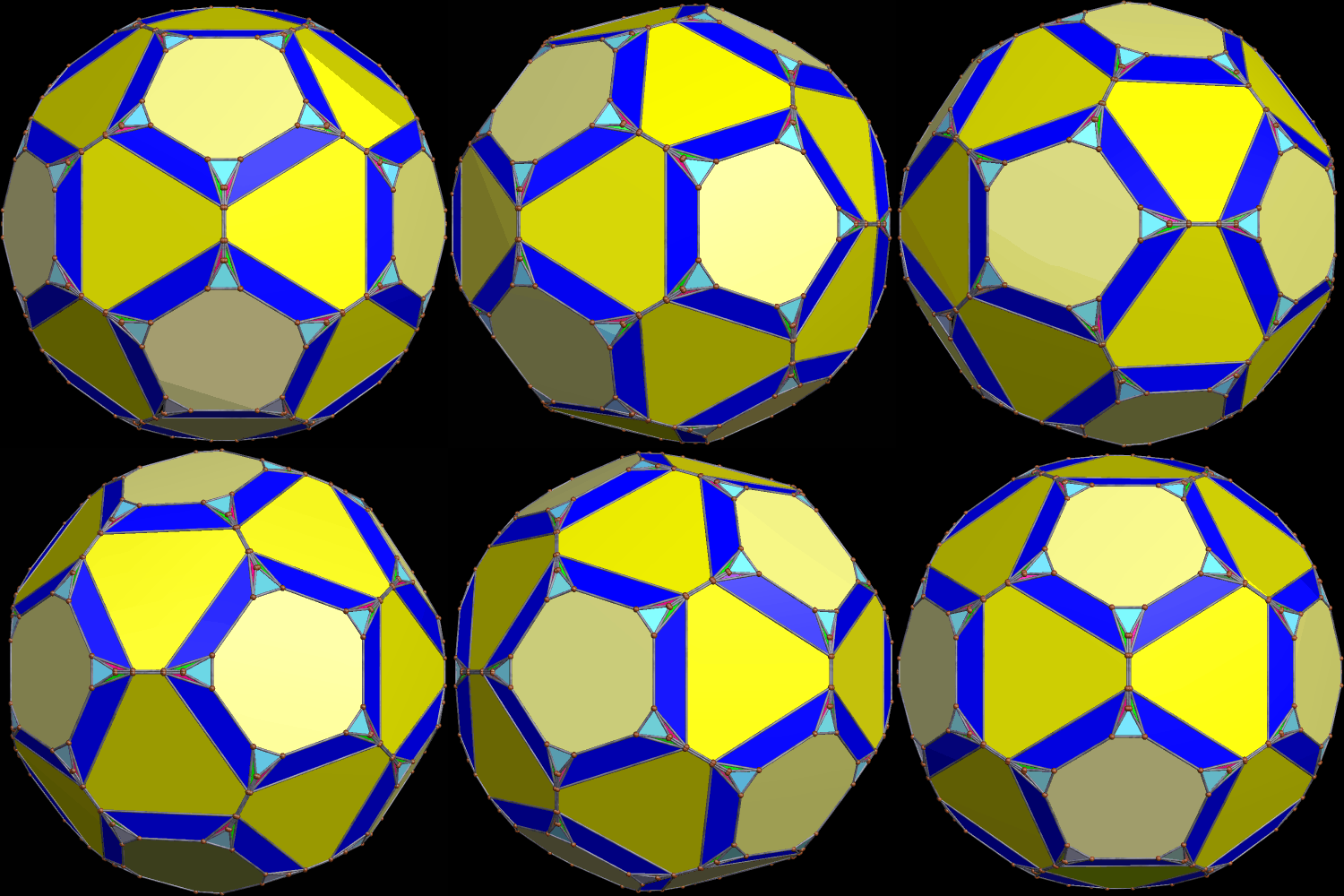
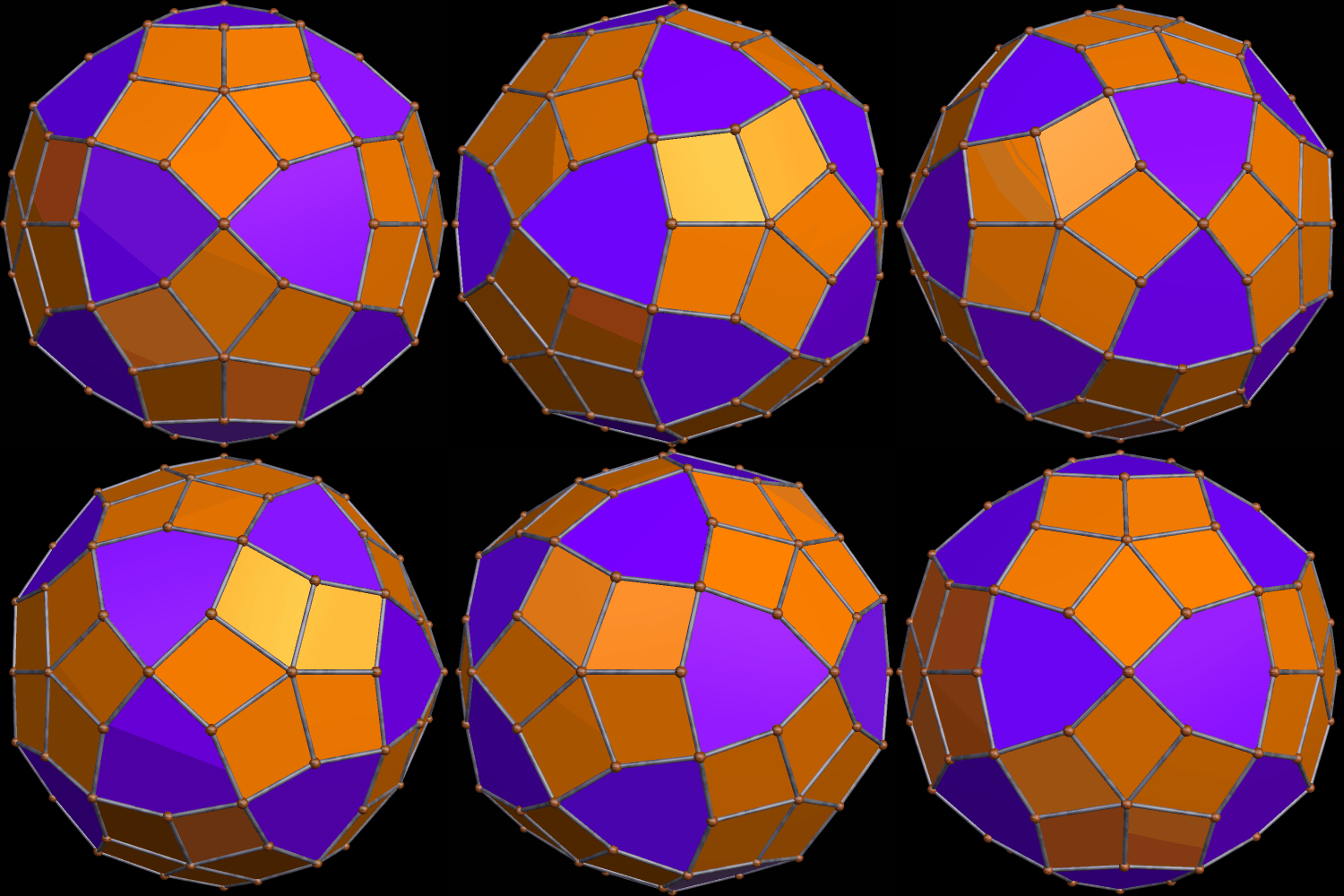
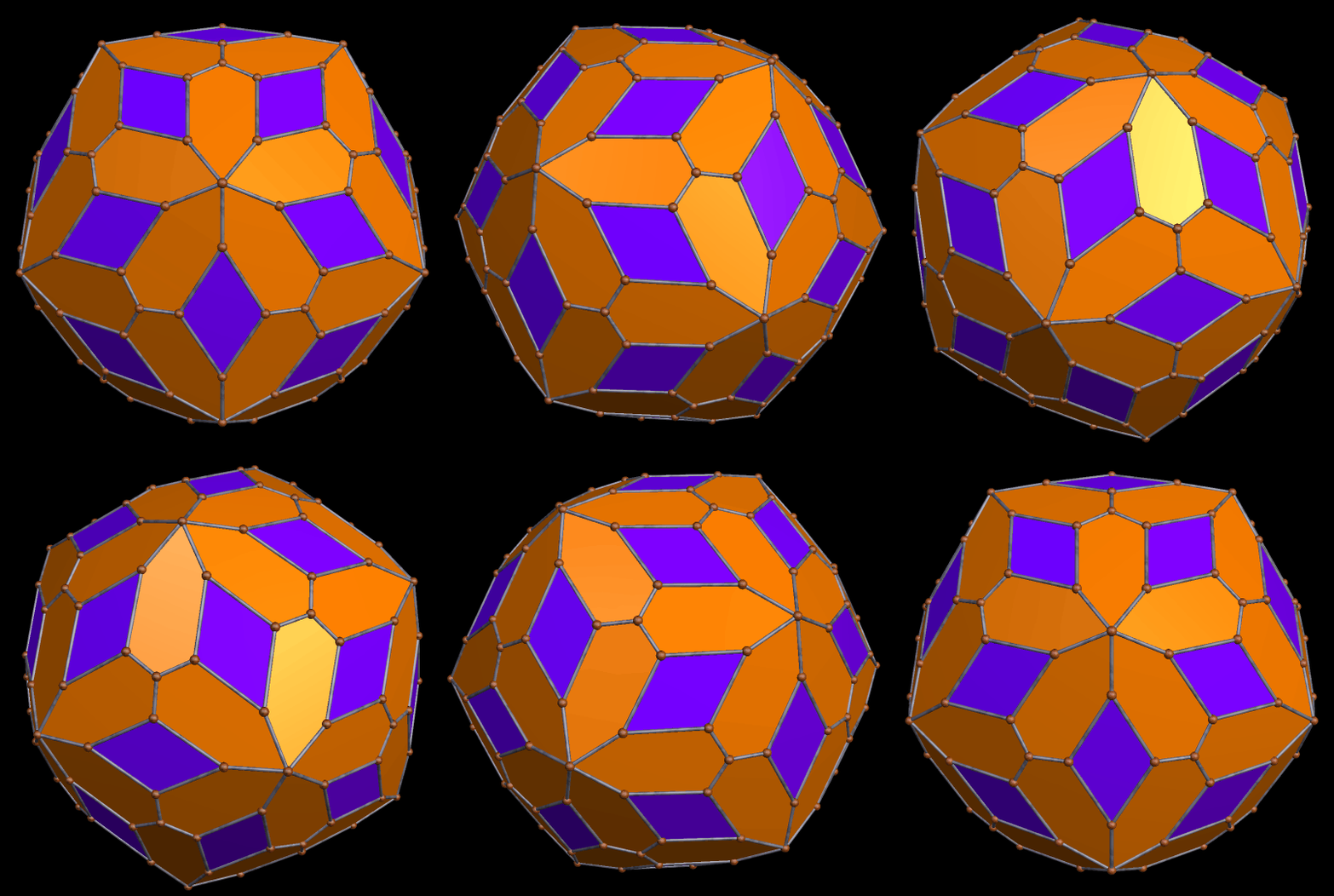
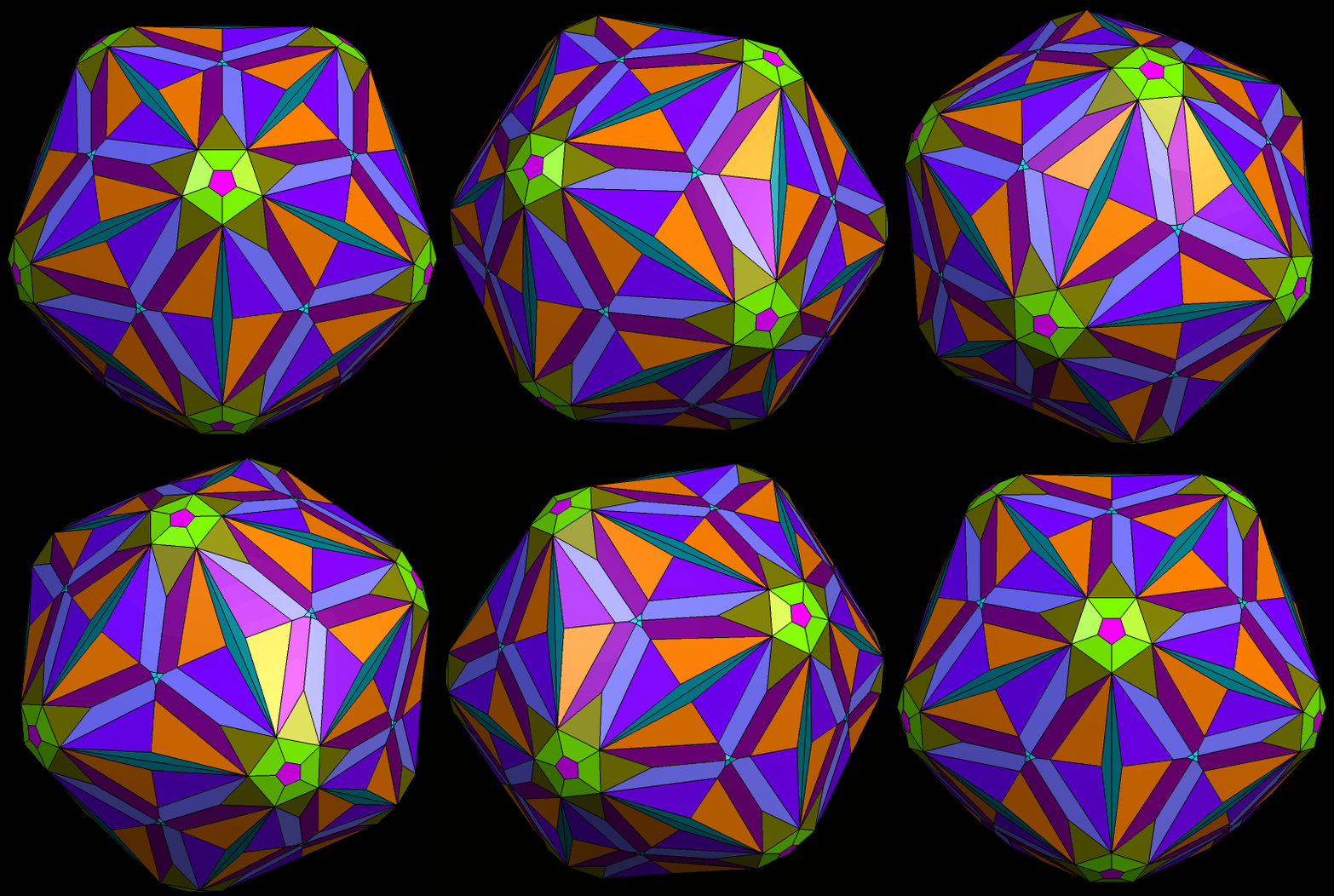
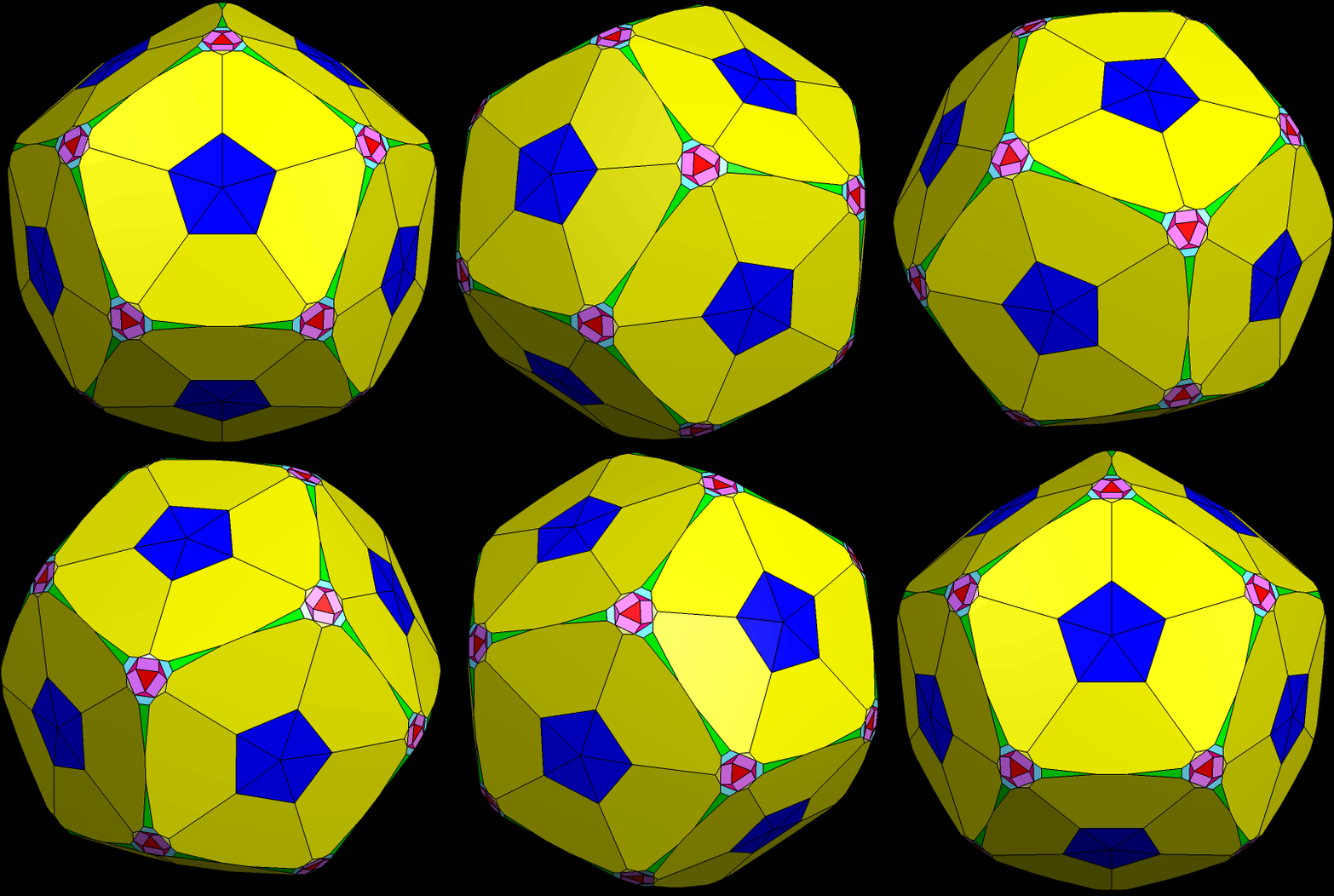
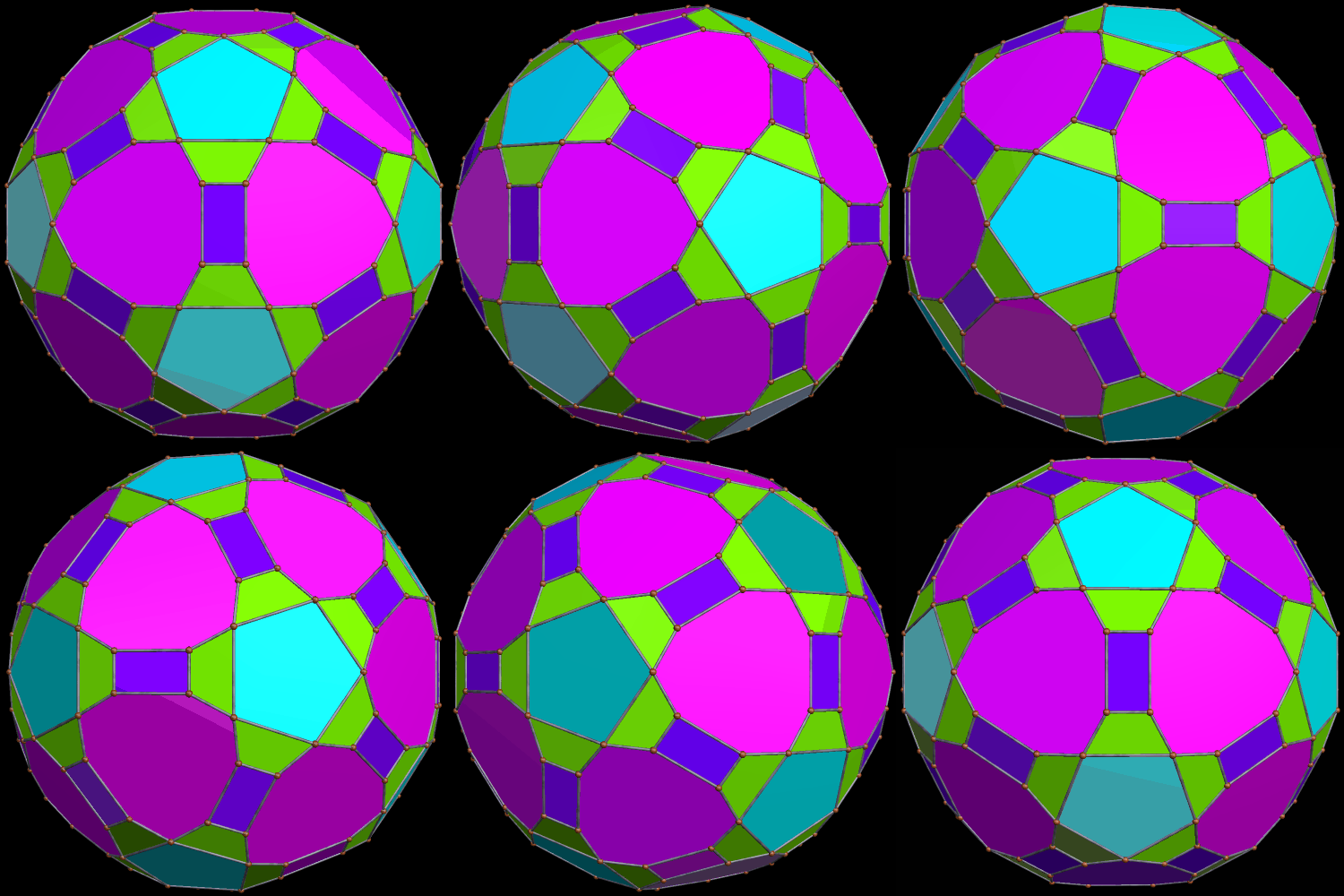
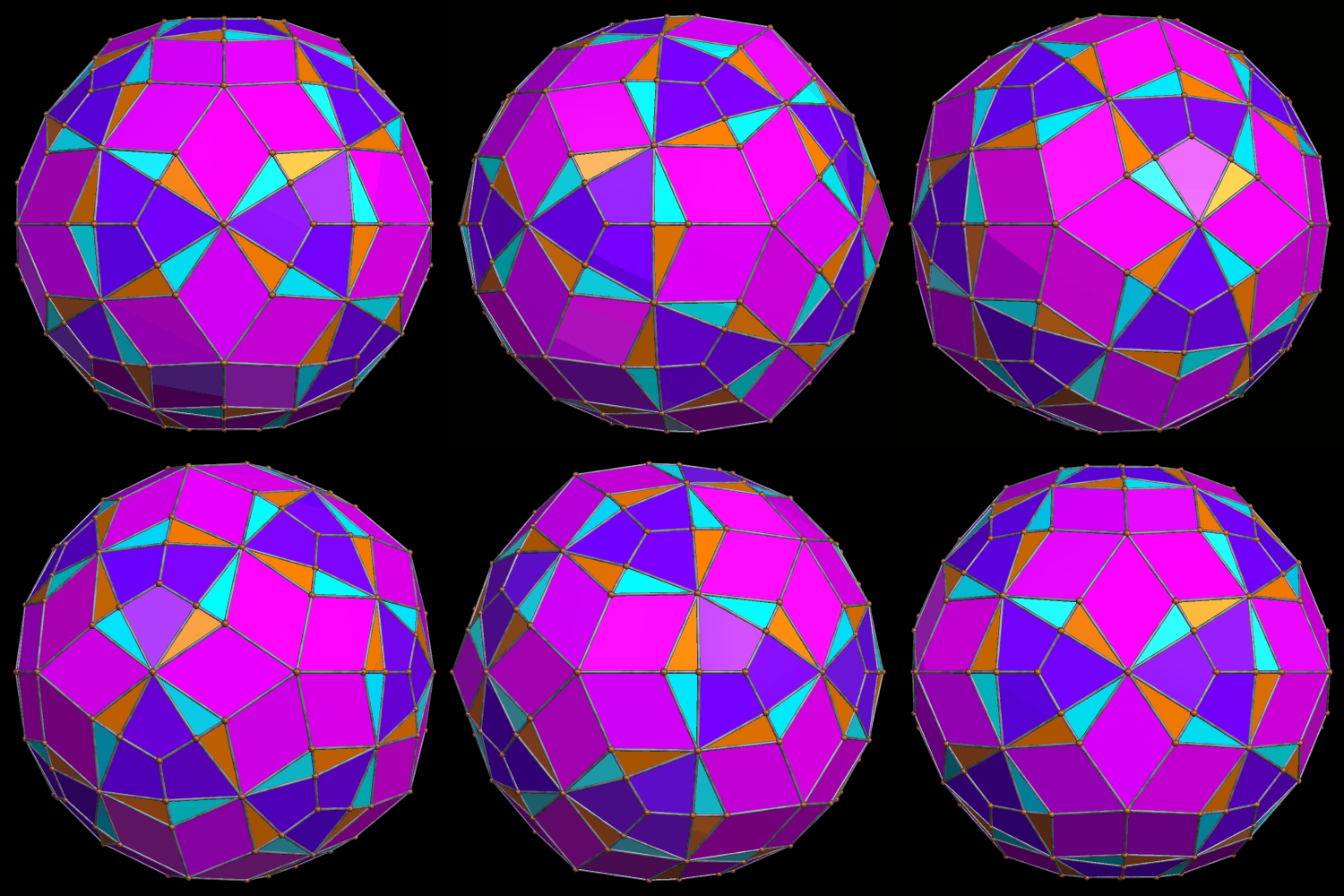
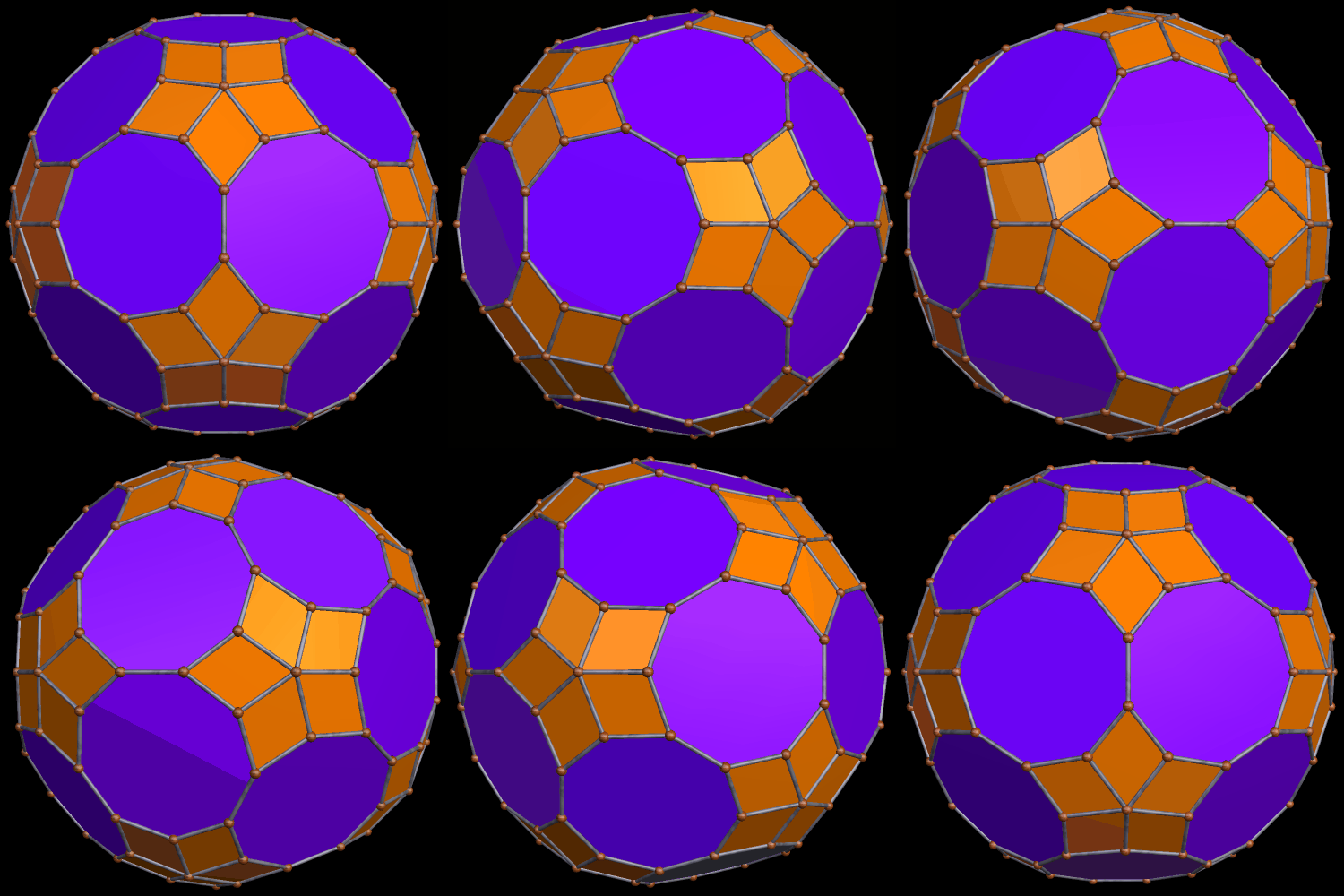
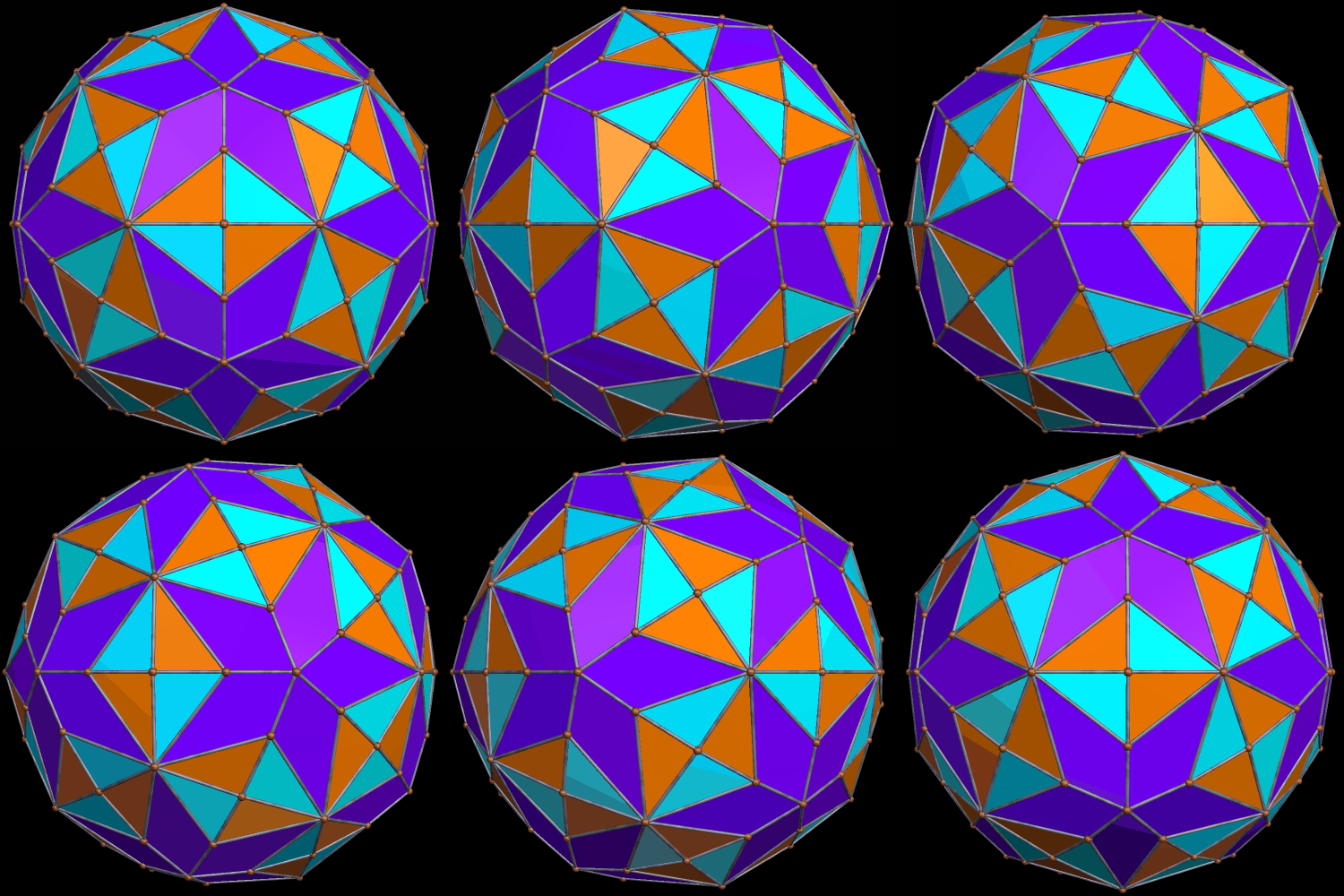
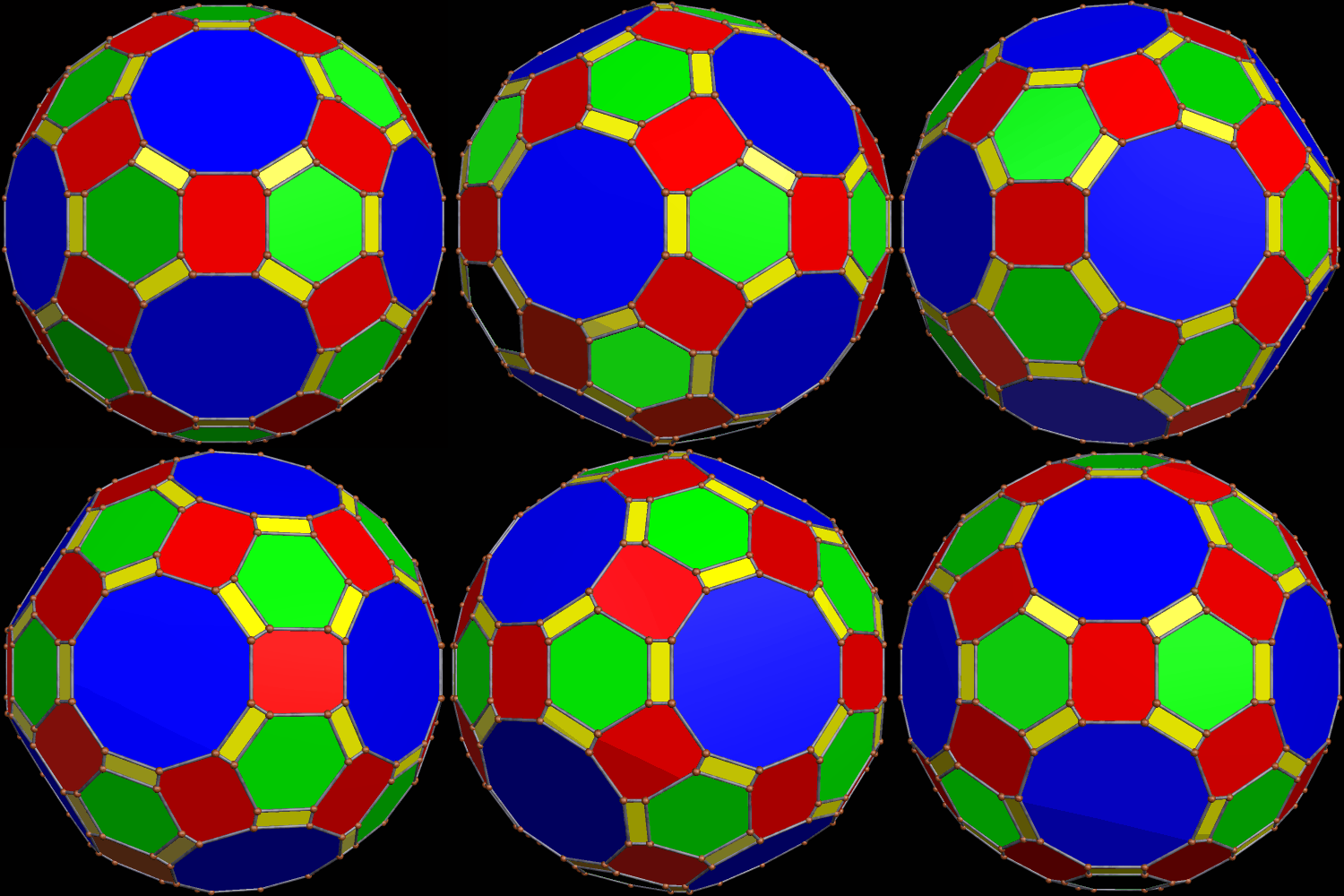
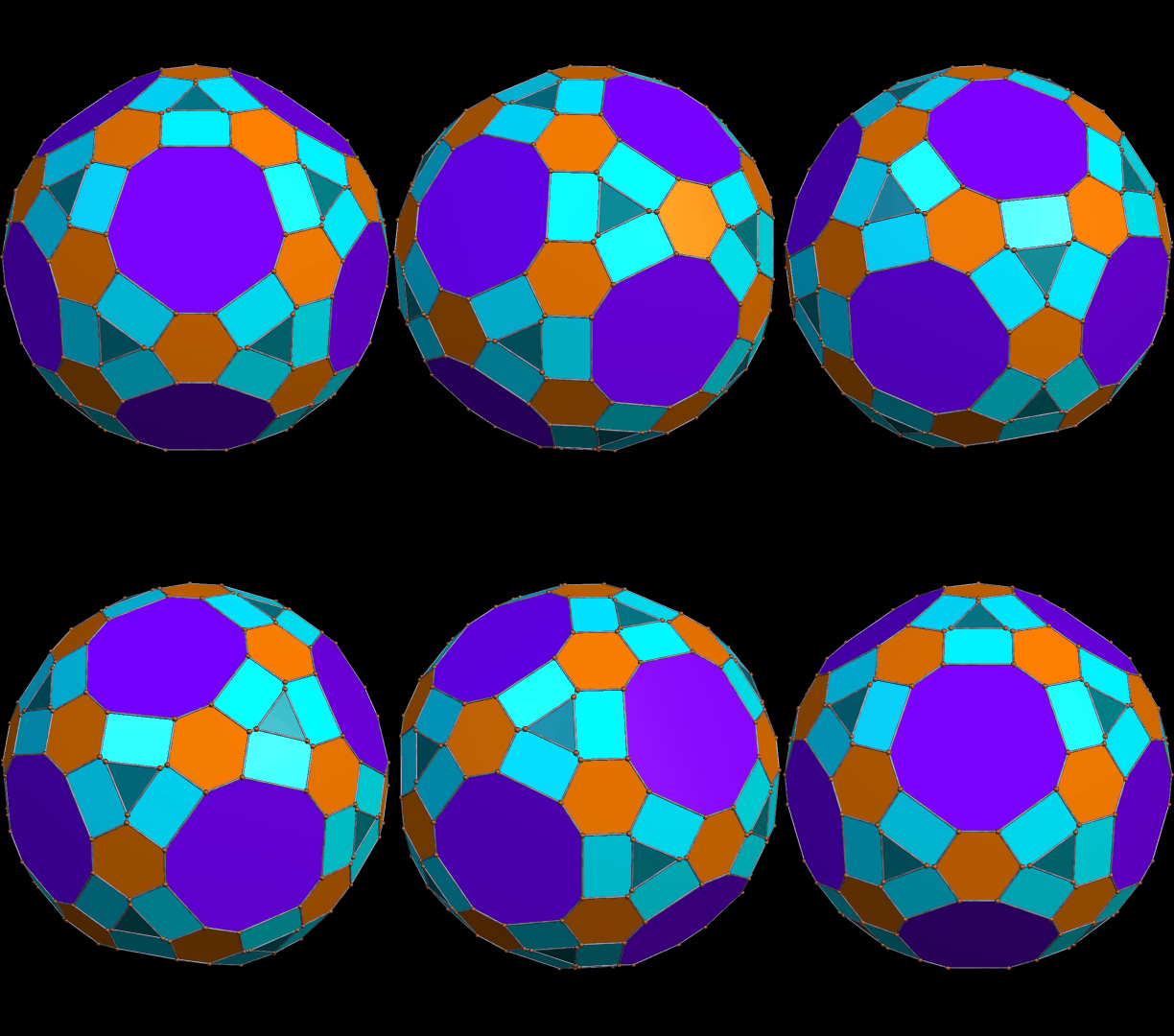
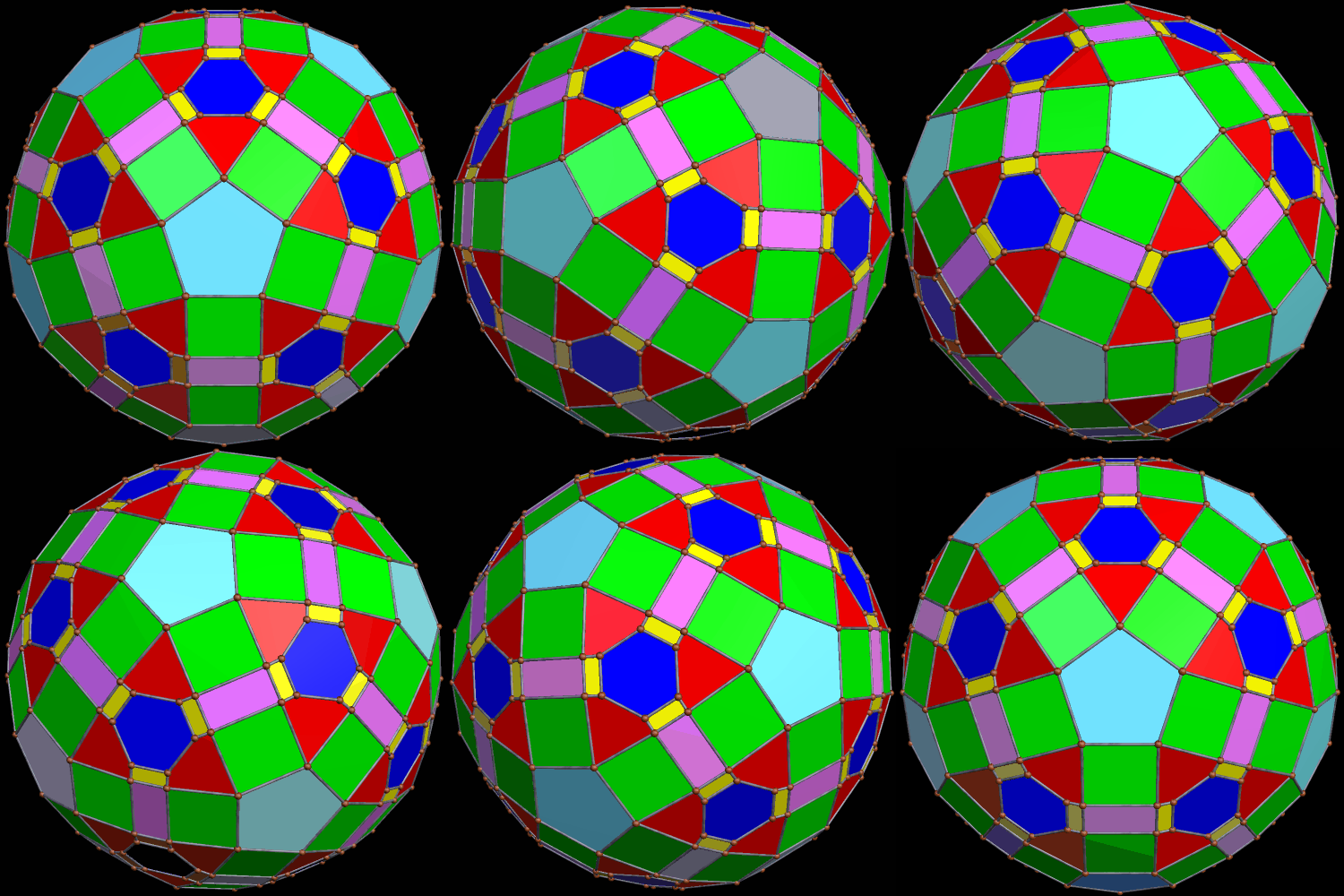
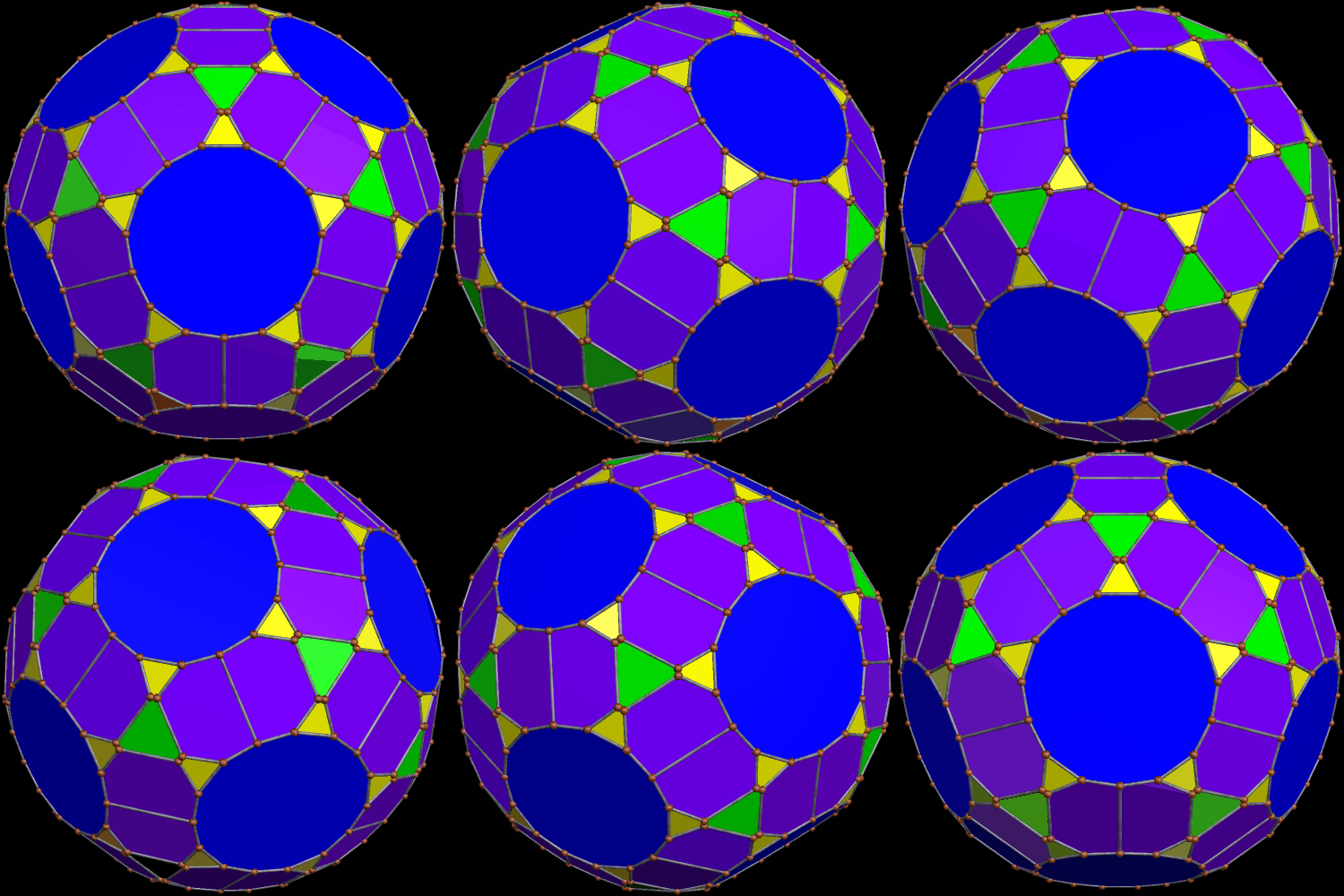
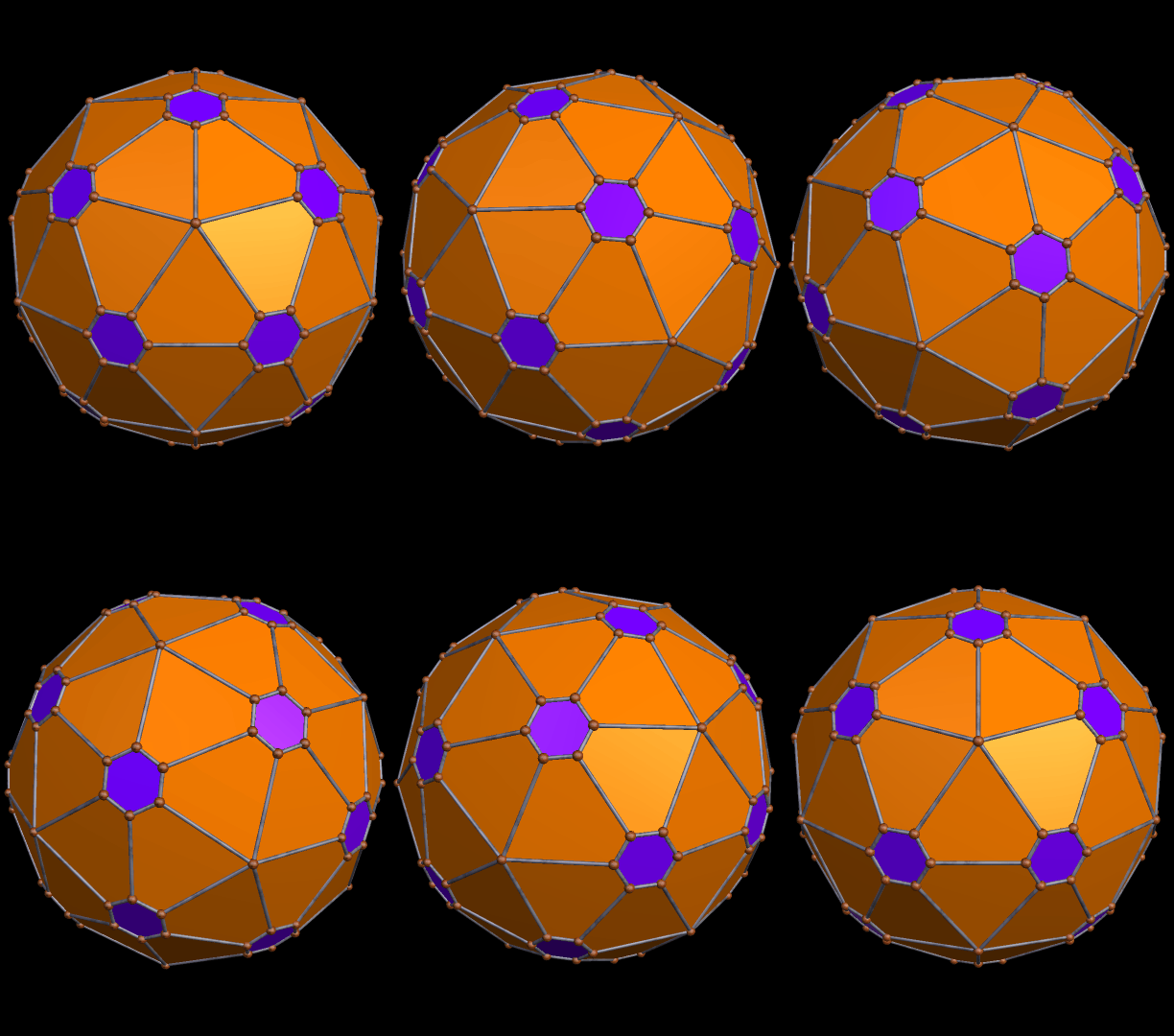
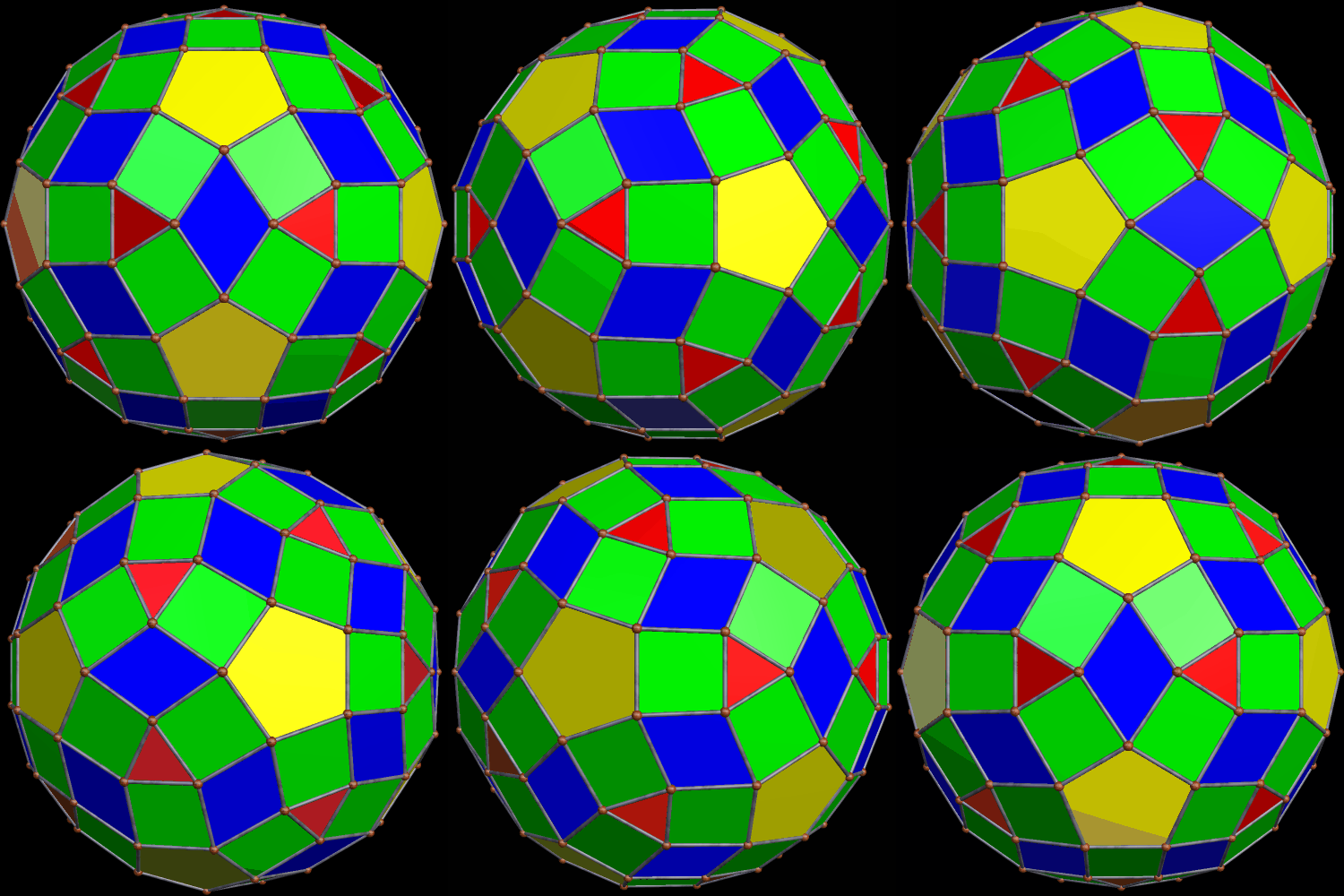
Thirty-Four Rotating, Convex, and Non-Chiral Polyhedra with Icosidodecahedral Symmetry

Most in the field call this type of symmetry “icosahedral,” but I prefer the term George Hart uses — along with “cuboctahedral” in place of “octahedral.”

Each polyhedral image here was created with Stella 4d: Polyhedron Navigator. At this linked page, you can try a trial version of that program for free.

12 icosagons and stuff

Dual of Convex huull

272 faces in 12 reg dec & 120 scalene triangles and 60 isos triangles and 60 isos traps and 20 reg hexagons

Convex hnbghjull

Convex hull 20 8 and 12

By the way, when I described these polyhedra, in this post’s title, as non-chiral, I was not referring to the coloring-schemes used here, many of which obviously are chiral, but only the shapes themselves.

Convex hull LP

convex hull of synthetic comet nucleus

Dual of Convex hull

Convexxx hull

Convhgfehgx hull

That 10 GB space-upgrade, which most bloggers don’t ever need, is really coming in handy right now. In other words, some of these .gif files are huge!

Convhgfex hull

Dual of Chgonvex hulgfl

Dual of Chgonvex hull

Dual of Cjhfjonvex hull

Dualhhc of Convex hull

Why, yes, I am including some words after every fifth polyhedron. That will help, later, when I count them for the title of this post.

Dual of Conjhvex hull

enneagons and kites

Enneagons, Pentagon, isostraps, and rectangles

exansiaon Convex hull

Expanded GRID

I’m not sure why that last one is spinning the opposite direction from the others. Perhaps this polyhedron is trying to start a trend. On the other hand, it could just simply upside-down.

Faceted Stellated Dual of Convex hull

metaexpanded RID

ID variation

intermediate form

jdshfgs

That’s twenty-five so far.

metaRID

pentadecagons two types hexagons and trapezoids

RID variant

RTC and RID blend

Stellated Poly

Clearly, I should have checked the number of files in that file folder before deciding to simply post them all together, based on what they have in common. That’s thirty so far.

sixty pentagons and twenty hexagons

twenty regular dodecagons

Unnabsghfmed

what is this thing

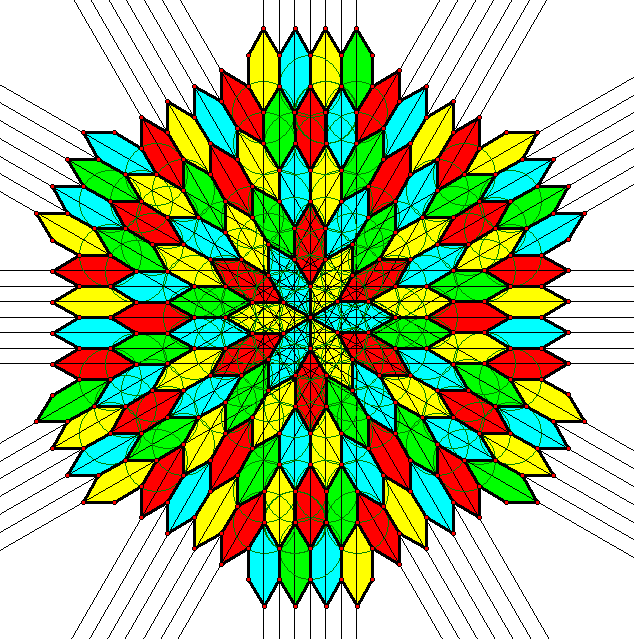
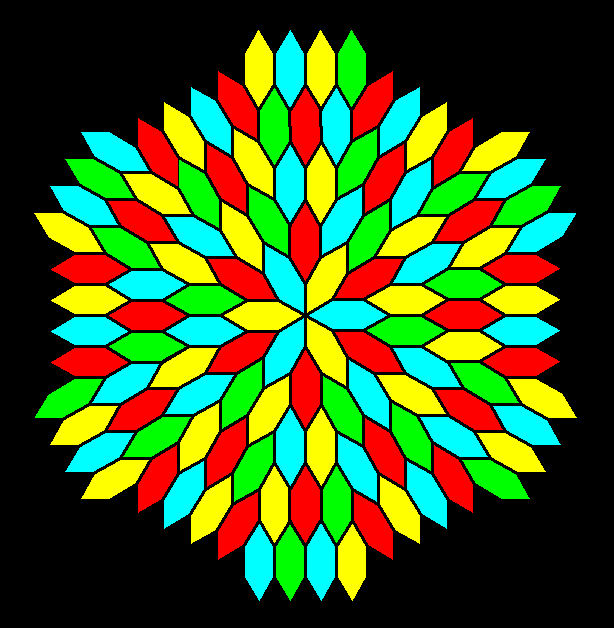
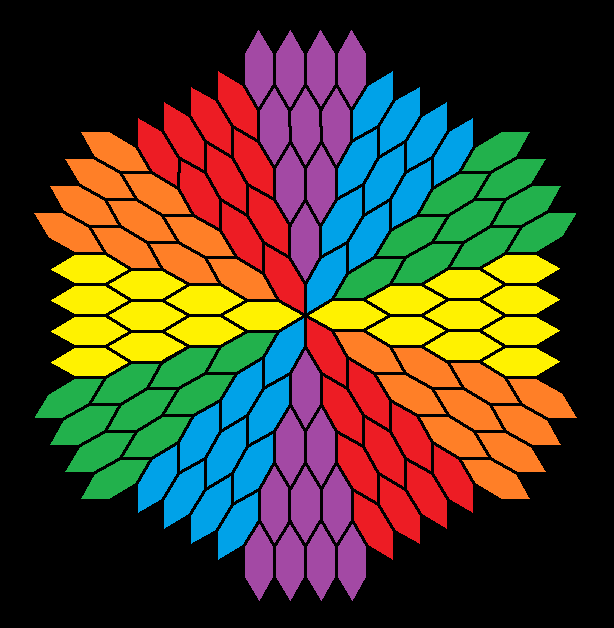
Order-Six Radial Tessellations of the Plane, Using Elongated and Equilateral Hexagons, Rendered with Twelve Different Coloring-Schemes

I explored radial tessellations of the plane, using only hexagons, in this earlier post. Order-three tessellations of this type are the familiar regular-hexagon tessellations of the plane. With higher-order all-hexagon radial tessellations, though, the hexagons must be elongated, although they can still remain equilateral, and all congruent, with bilateral symmetry. In that previous post, examples were shown of order 4, 5, and 8, in addition to the familiar order-3 regular-hexagon tessellation.

This left out order-6, of which I show many examples below. As it turns out, this particular radial tessellation lends itself particularly well to a variety of coloring-schemes. In the first picture, the construction-circles, -points, and -lines I used are shown; in the rest, they are hidden.

No upper limit exists to the order-number of these all-hexagon radial tessellations — although the larger that number gets, the thinner the hexagons become, relative to their edge length. At some point (which I expect would vary from person to person), as the order-number increases, the hexagons needed will become so thin that they will no longer be recognizable as hexagons.

frequency 6 radial tessellation of hexagons with construction lines

Next, with construction artifacts hidden, are some two-color designs I found.

frequency 6 radial tessellation of hexagons without construction lines 2-color

frequency 6 radial tessellation of hexagons without construction lines 2-color version two

Here are some which use three colors each:

frequency 6 radial tessellation of hexagons without construction lines 3-color version colored by another system

frequency 6 radial tessellation of hexagons without construction lines 3-color version two

frequency 6 radial tessellation of hexagons without construction lines 3-color

frequency 6 radial tessellation of hexagons without construction lines 3-color version colored by rings

I also found some four-color patterns with interesting symmetry:

frequency 6 radial tessellation of hexagons without construction lines

frequency 6 radial tessellation of hexagons without construction lines. four colors version 2png

Finally, here are some which each use six colors.

frequency 6 radial tessellation of hexagons without construction lines 6-color version two

frequency 6 radial tessellation of hexagons without construction lines 6-color version colored by another system

frequency 6 radial tessellation of hexagons without construction lines 6-color