A Music Video for “Ride Into the Sun,” by the Velvet Underground

This music video, for a Velvet Underground classic written by Lou Reed, John Cale, Sterling Morrison and Maureen Tucker, was made today — for a song originally recorded in 1969, the year after I was born. I used Windows Movie Maker to assemble it, and “painted” the preview-pic for the video, using MS-Paint. Other programs I used, for other images in the video, include Geometer’s Sketchpad, MS-Paint (again) and Stella 4d: Polyhedron NavigatorOf all these computer programs, my favorite is Stella 4d, which you may try for free at http://www.software3d.com/Stella.php.

Zonohedra, Zonish Polyhedra, and Another Puzzle

In a recent post, I showed many images of zonohedra, then challenged readers to figure out, from the images, what zonohedra are: polyhedra with only zonogons as faces. Zonogons, I then explained, are polygons with (A) even numbers of edges, and with opposite edges always (B) congruent and (C) parallel. Here is another collection of zonohedra. (Individual images may be enlarged with a click.)

The next set of polyhedra shown, below, are not true zonohedra (as all the ones above are), but merely “zonish polyhedra.” From examination of the pictures above and below, can you figure out the difference between zonohedra and zonish polyhedra?

When you are ready to see the solution to the puzzle, simply scroll down.

.

.

.

.

.

.

.

.

.

.

While zonohedra have only zonogons as faces, this restriction is “loosened” for zonish polyhedra. Such solids are formed by zonohedrifying non-zonohedral polyhedra, and letting at least some of the faces of the resulting polyhedra remain non-zonogonal. Zonish polyhedra  are called “zonish” because many (usually most) of their faces are zonogons, but not all of them — in each case, some non-zonogonal polygons (such as triangles and/or pentagons, with their odd numbers of edges) do appear. Non-zonogonal polygons are not required to have odd numbers of edges, of course: simply having opposite edges be parallel, but of different lengths, is enough to prevent a polygon (such as a hexagon, octagon, or decagon) from being a zonogon. 

~~~

Software credit: I used Stella 4d to make these images. This program may be tried for free at this website.

Some Zonohedra, and a Puzzle

Every zonohedron is a polyhedron, but not all polyhedra are zonohedra. Examples of zonohedra appear below. If you don’t already know what zonohedra are, can you figure out the definition from the examples shown, before reading the definition below the pictures?

Answer below (scroll down a bit):

.

.

.

.

.

.

.

Zonohedra are polyhedra with only zonogons as faces. A zonogon is a polygon with an even number of sides, and also with opposite sides congruent and parallel.

Software credit: I used Stella 4d to make these virtual, rotating zonohedra. This program may be tried for free at http://www.software3d.com/Stella.php.

Five Polyhedra Featuring Kites, as Well as Other Polygons, as Faces

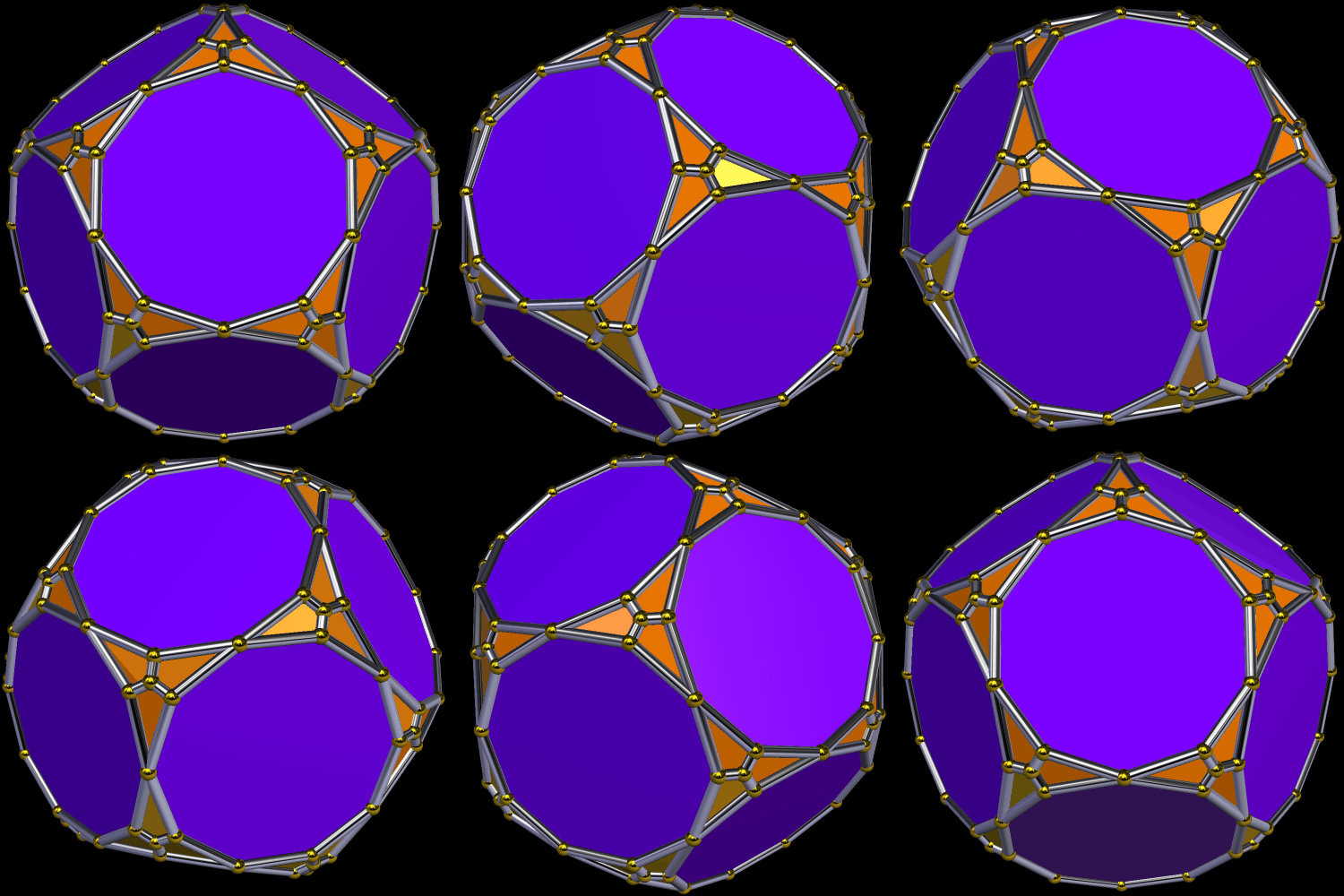
90 faces 30 rhombi and 60 kites

Convex hull of trunc icosa and dual compound

octagons and kites

kites and pentagons

kites traps and pentagons

Software credit: I used Stella 4d (available at http://www.software3d.com/Stella.php) to create these polyhedral images.

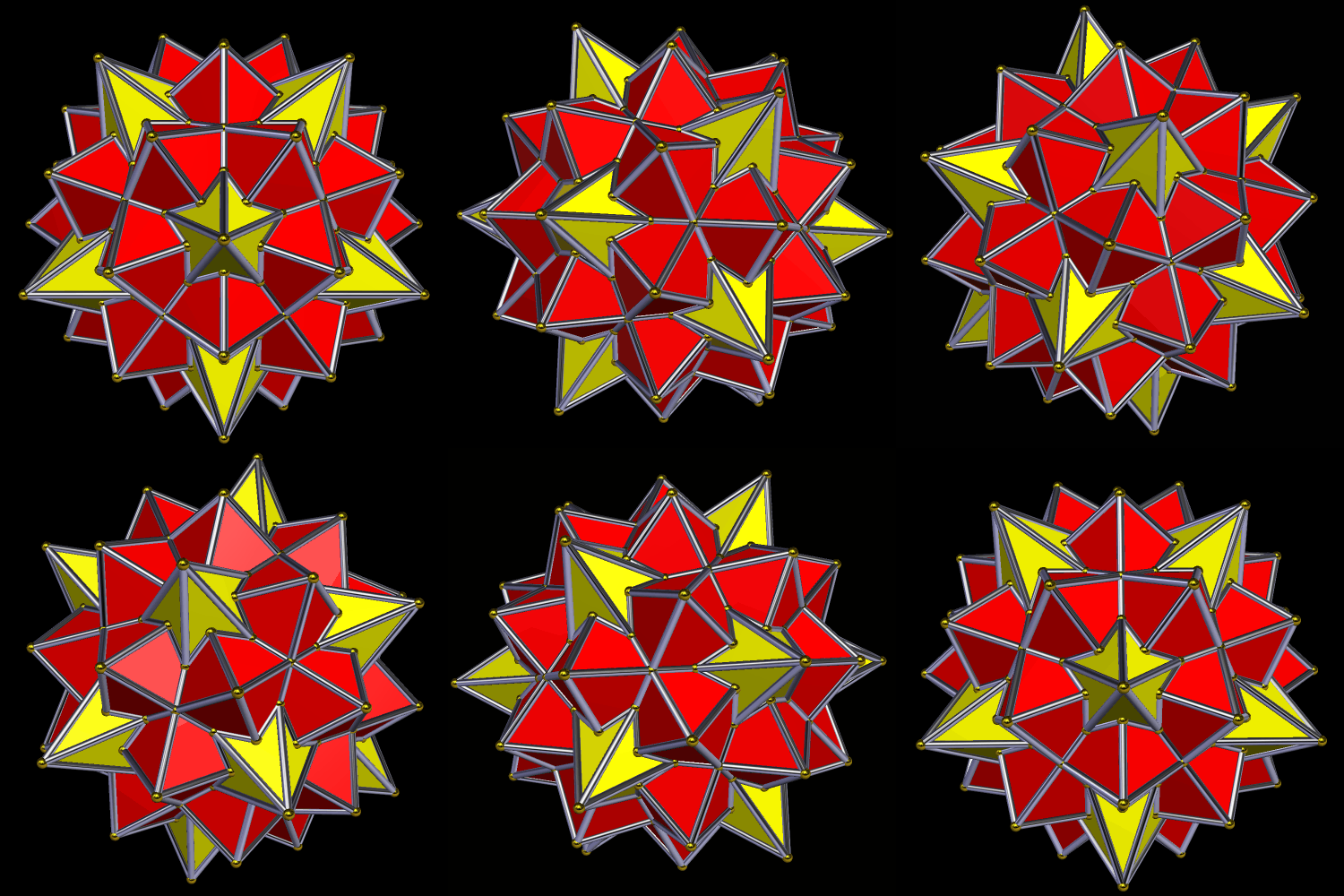
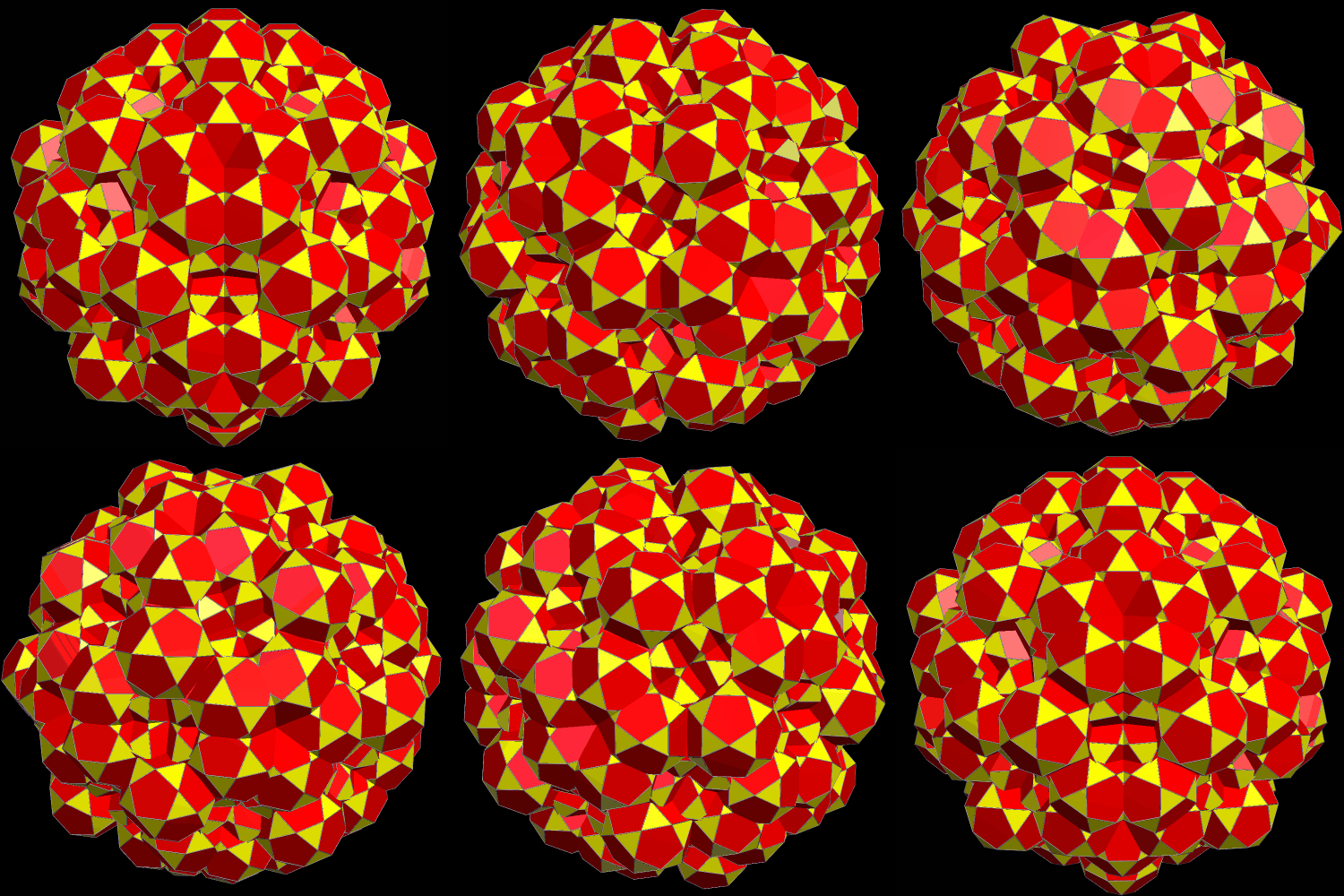
Three Polyhedra with Only Pentagonal Faces

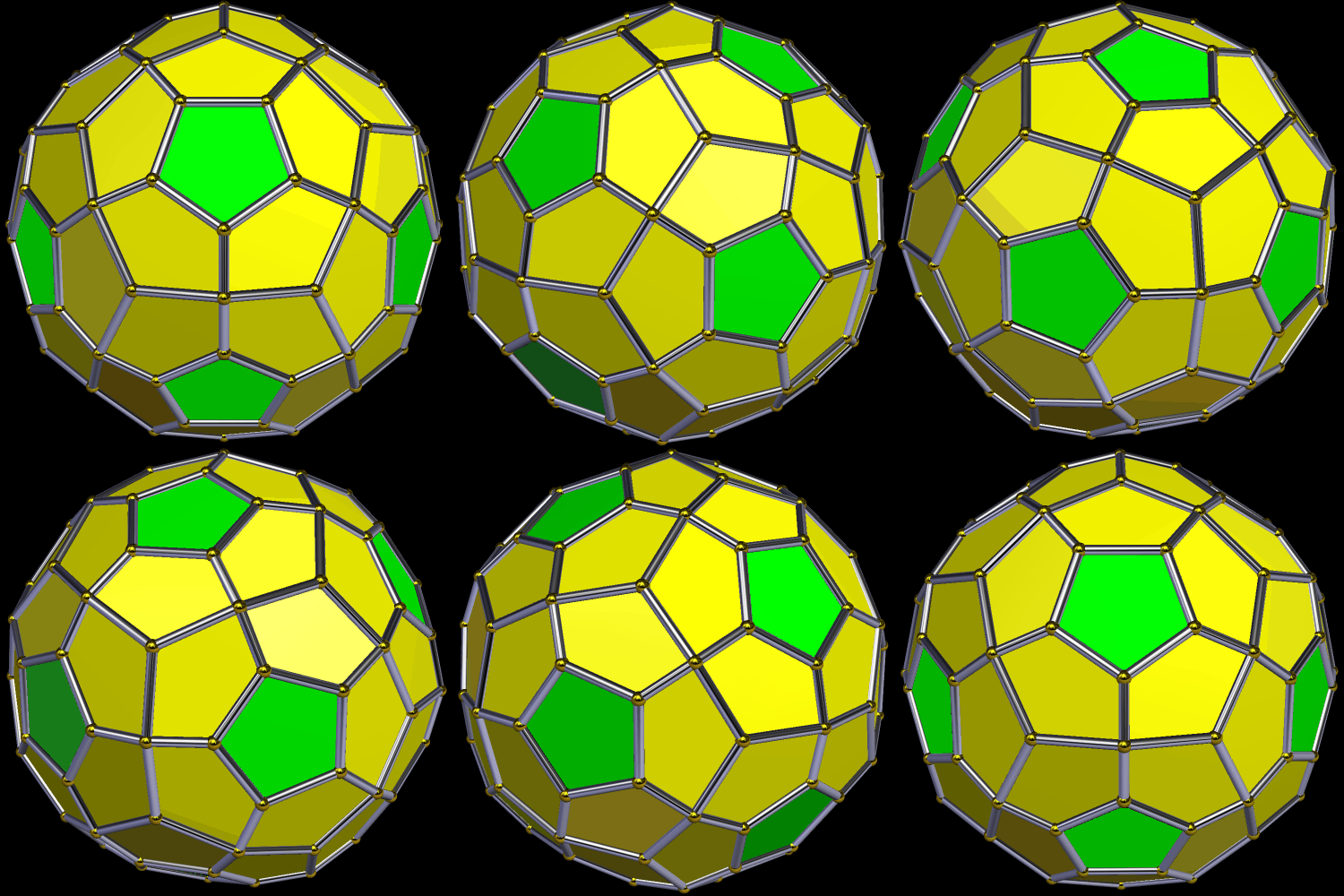
72 pentagons

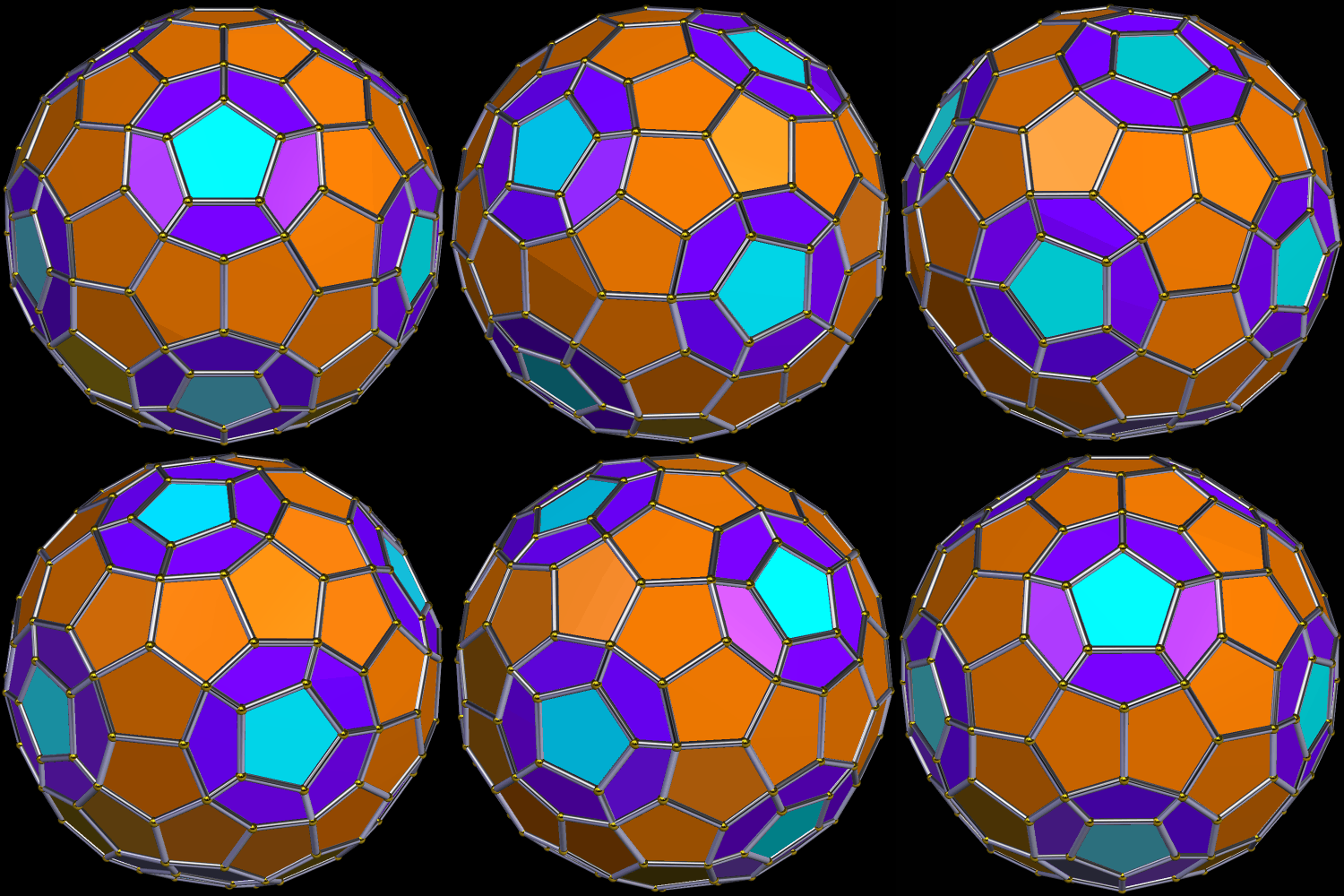
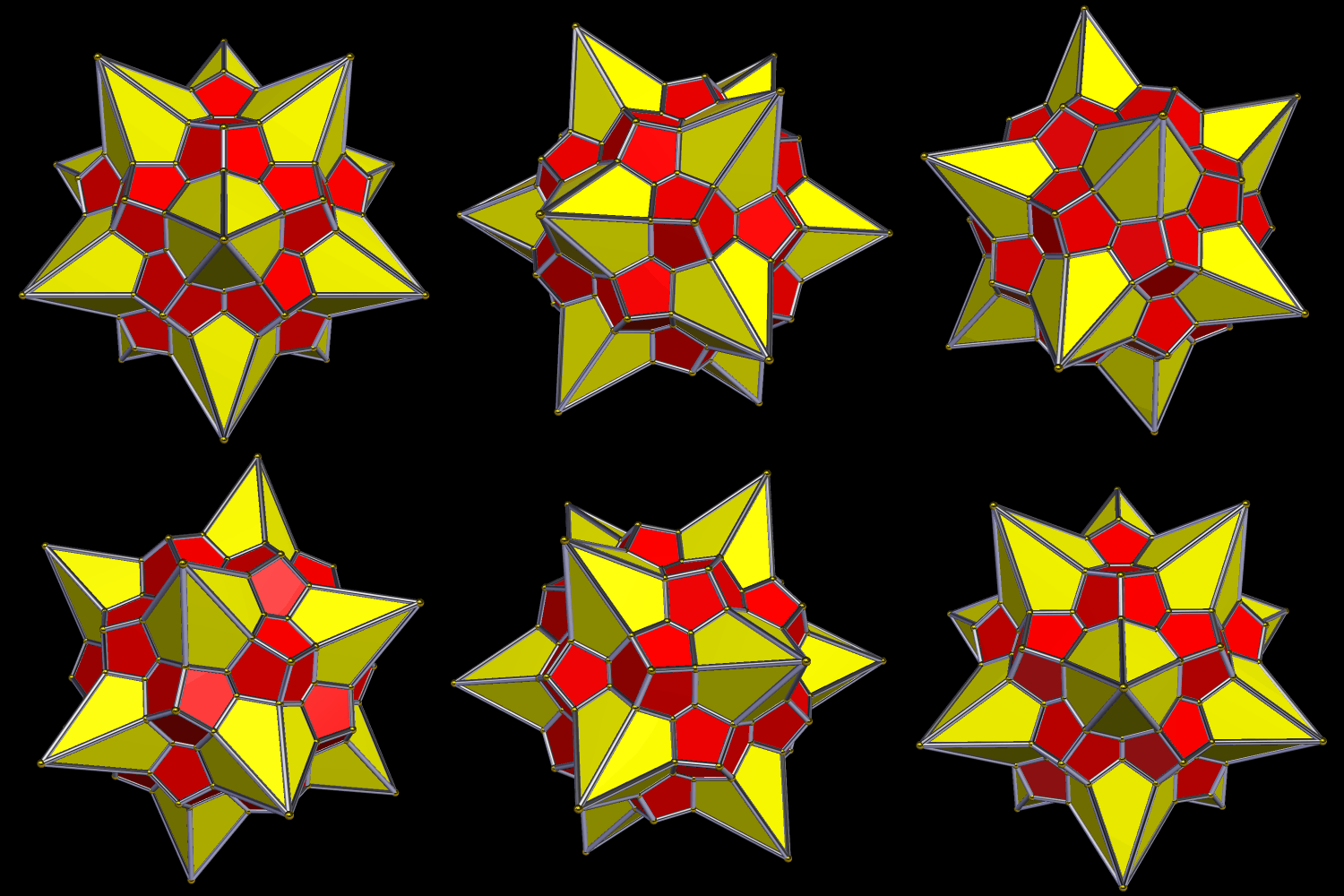
The polyhedron above has 72 pentagonal faces of two types. The next one below has three different types of pentagon for its 132 faces. After that is a polyhedron with sixty faces, all of which are non-convex pentagons.

132 pentagons

60 concave pentagons

All three of these all-pentagon polyhedra were created using Stella 4d: Polyhedron Navigator. This program is available here.

Some Stellations of the Truncated Dodecahedron

The stellation-series of the truncated dodecahedron contains some interesting polyhedra. Selections from this series appear below.

24th Stellated Trunc Dodeca chiral

The polyhedron above is the 24th stellation of the truncated dodecahedron, while the one below is the 25th stellation.

25th stellation of Trunc Dodeca

27th Stellated Trunc Dodeca chiral

The polyhedron immediately above is the truncated dodecahedron’s 27th stellation. The one shown below is the 29th stellation.

29th Stellated Trunc Dodeca chiral

36th Stellated Trunc Dodeca chiral

The last two polyhedra in this post are the truncated dodecahedron’s 36th stellation (above), and its 70th stellation (below).

70th Stellated Trunc Dodeca

These images were created using Stella 4d, software available here.


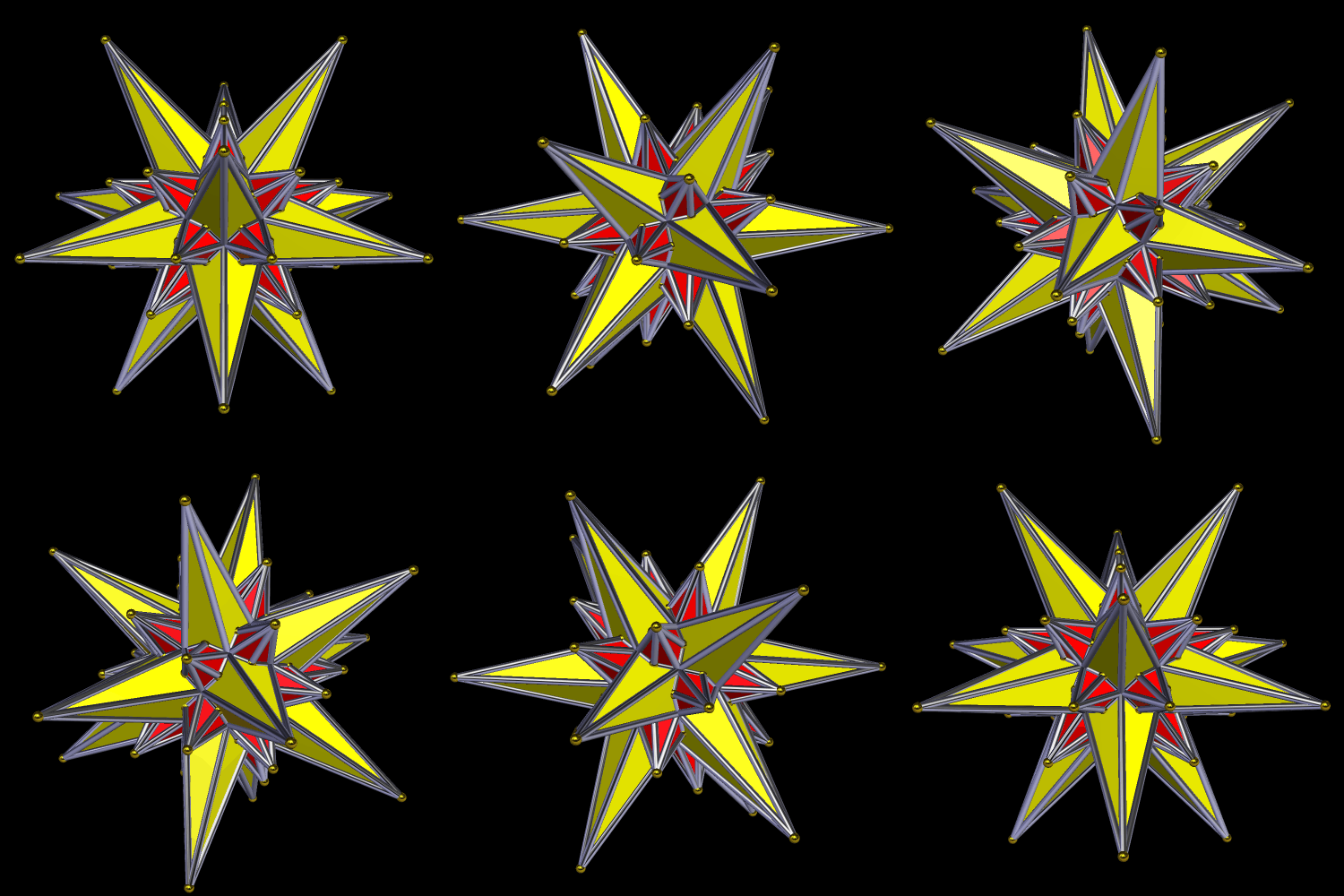
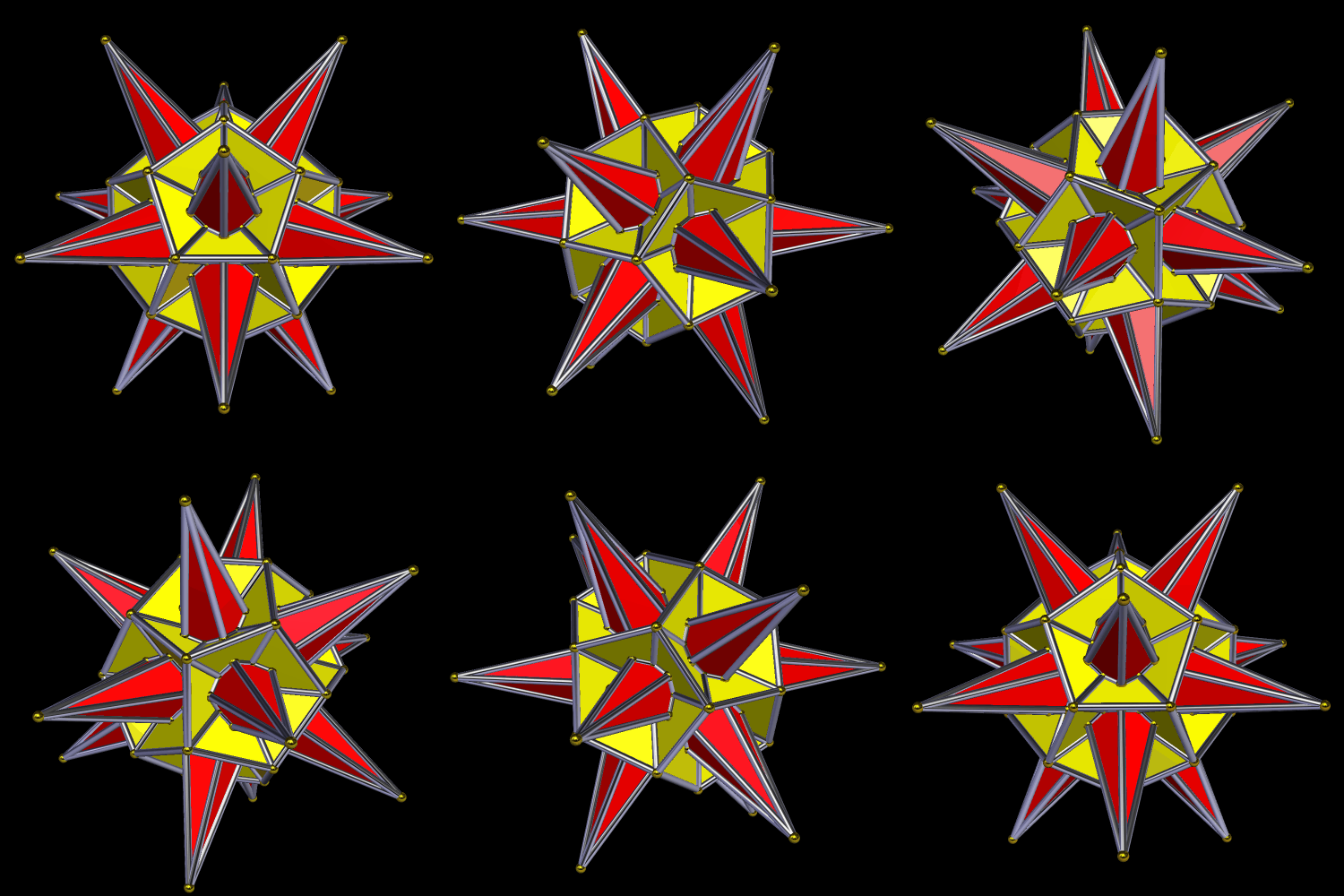
The 11th, 13th, and 15th Stellations of the Icosahedron

First, this is the 11th stellation.

Stellated Icosa the 11th

Next, the 13th:

13th Stellated Icosa

And, finally, the 15th stellation of the icosahedron:

15th Stellated Icosa

I used Stella 4d, which you can find here, to make these.

Two Different Cluster-Polyhedra

Augmented Icosa with RIDs

An icosahedron is hidden from view in the center of this cluster-polyhedron. To create the cluster, each of the icosahedron’s triangles was augmented with a rhombicosidodecahedron. The resulting cluster has the overall shape of a dodecahedron.

To create the next cluster-polyhedron, I started with the one above, and then augmented each of its triangular faces with icosidodecahedra. 

large cluster os icosidodecahedrons.gif

I used a program named Stella 4d: Polyhedron Navigator to create these cluster-polyhedra. This software may be bought (or tried for free) at this website

An Expansion of the Rhombic Enneacontahedron with 422 Faces, Together with Its 360-Faced Dual

422 faces expansion of the REC

The polyhedron above had 422 faces and 360 vertices. In dual polyhedra, these numbers are reversed, so the next polyhedra (the dual of the first one) has 360 faces and 422 vertices. Both were created using Stella 4d, available here.

422 faces expansion of the REC the dual with 360 faces

A Polyhedral Journey, Beginning With an Expansion of the Rhombic Triacontahedron

The blue figure below is the rhombic triacontahedron. It has thirty identical faces, and is one of the Catalan solids, also known as Archimedean duals. This particular Catalan solid’s dual is the icosidodecahedron.

Rhombic Triaconta

I use a program called Stella 4d (available here) to transform polyhedra, and the next step here was to augment each face of this polyhedron with a prism, keeping all edge lengths the same.

Rhombic Triaconta augmented

After that, I created the convex hull of this prism-augmented rhombic triacontahedron, which is the smallest convex figure which can enclose a given polyhedron.

Convex hull

Another ability of Stella is the “try to make faces regular” function. Throwing this function at this four-color polyhedron above produced the altered version below, in which edge lengths are brought as close together as possible. It isn’t possible to do this perfectly, though, and that is most easily seen in the yellow faces. While close to being squares, they are actually trapedoids.
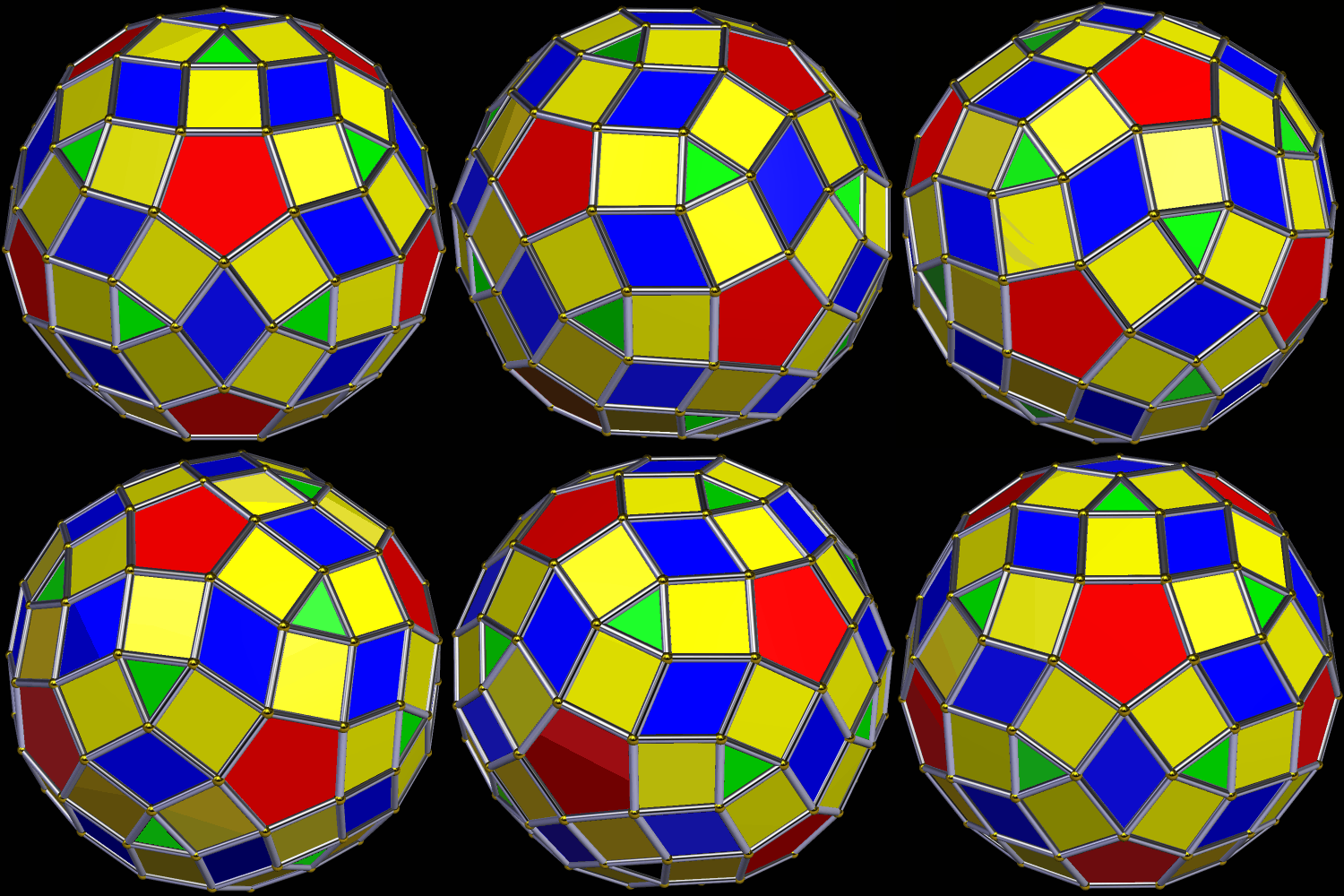
ch after ttmfr

For the next transformation, I looked at the dual of this polyhedron. If I had to name it, I would call it the trikaipentakis icosidodecahedron. It has two face types: sixty of the larger kites, and sixty of the smaller ones, also.
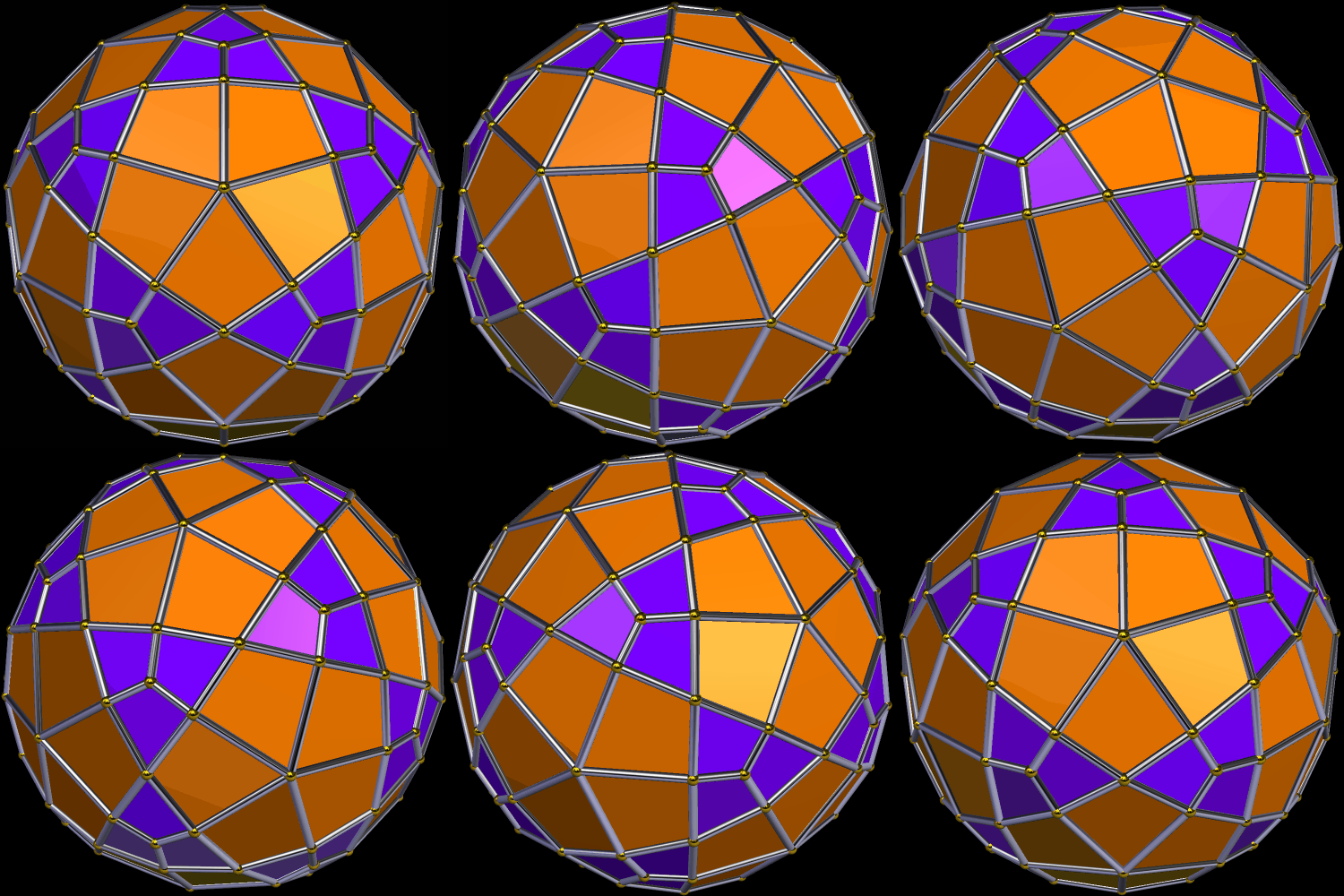
ch after ttmfr dual

Next, I used prisms, again, to augment each face. The height used for these prisms is the length of the edges where orange kites meet purple kites.

aug ch after ttmfr dual

Lastly, I made the convex hull of the polyhedron above. This convex hull appears below.
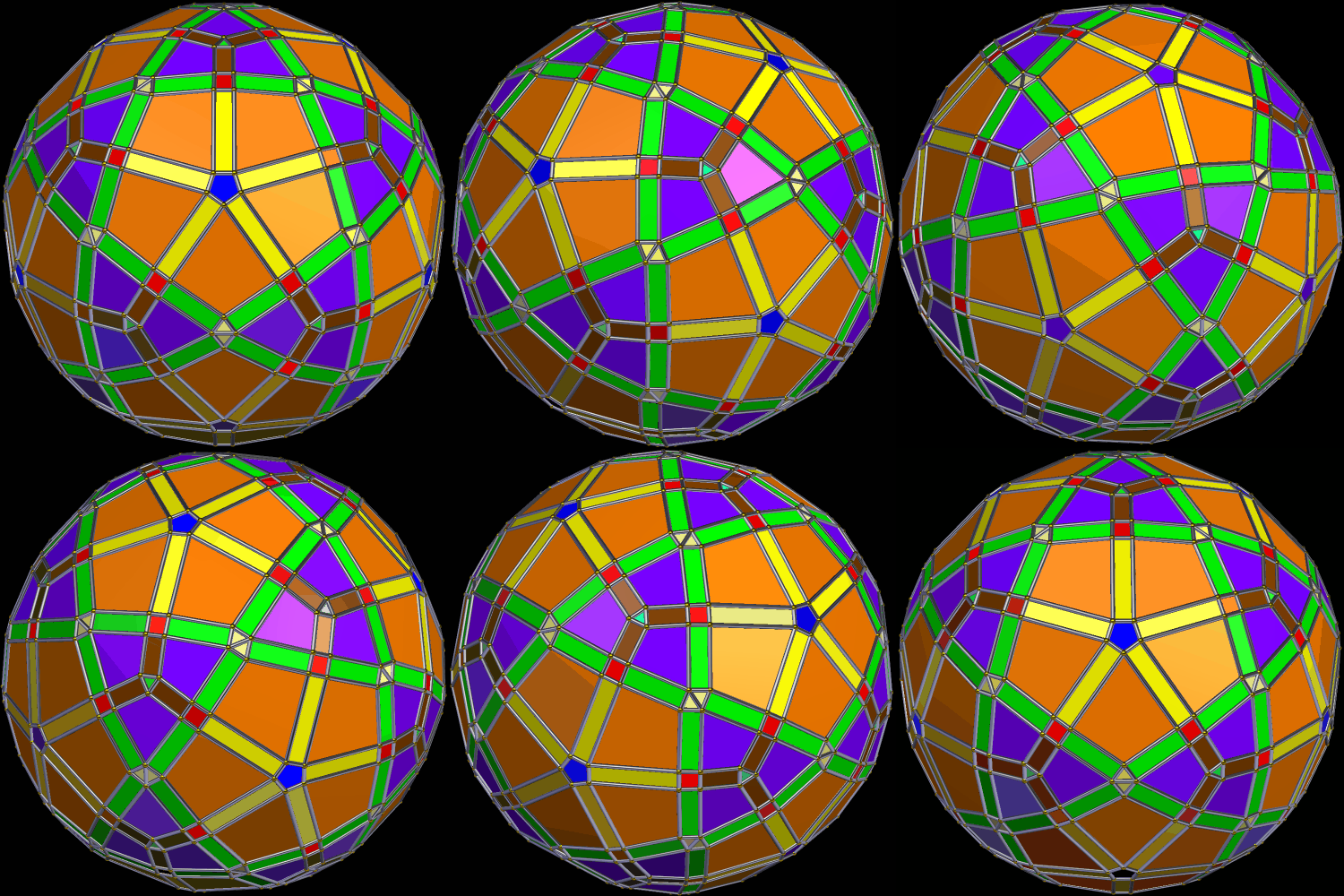
Convex hull again