First, this is the 11th stellation.
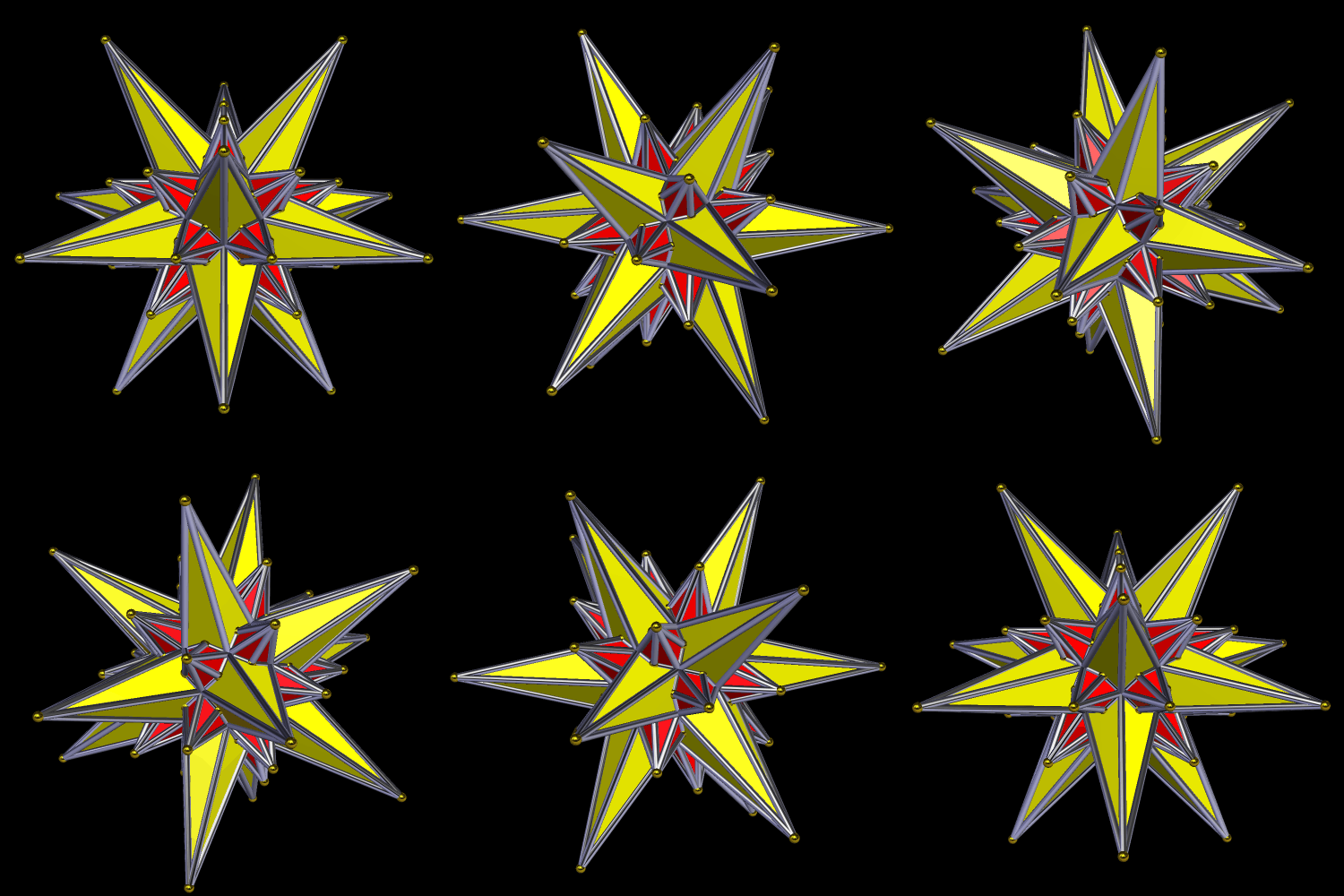
Next, the 13th:

And, finally, the 15th stellation of the icosahedron:
I used Stella 4d, which you can find here, to make these.
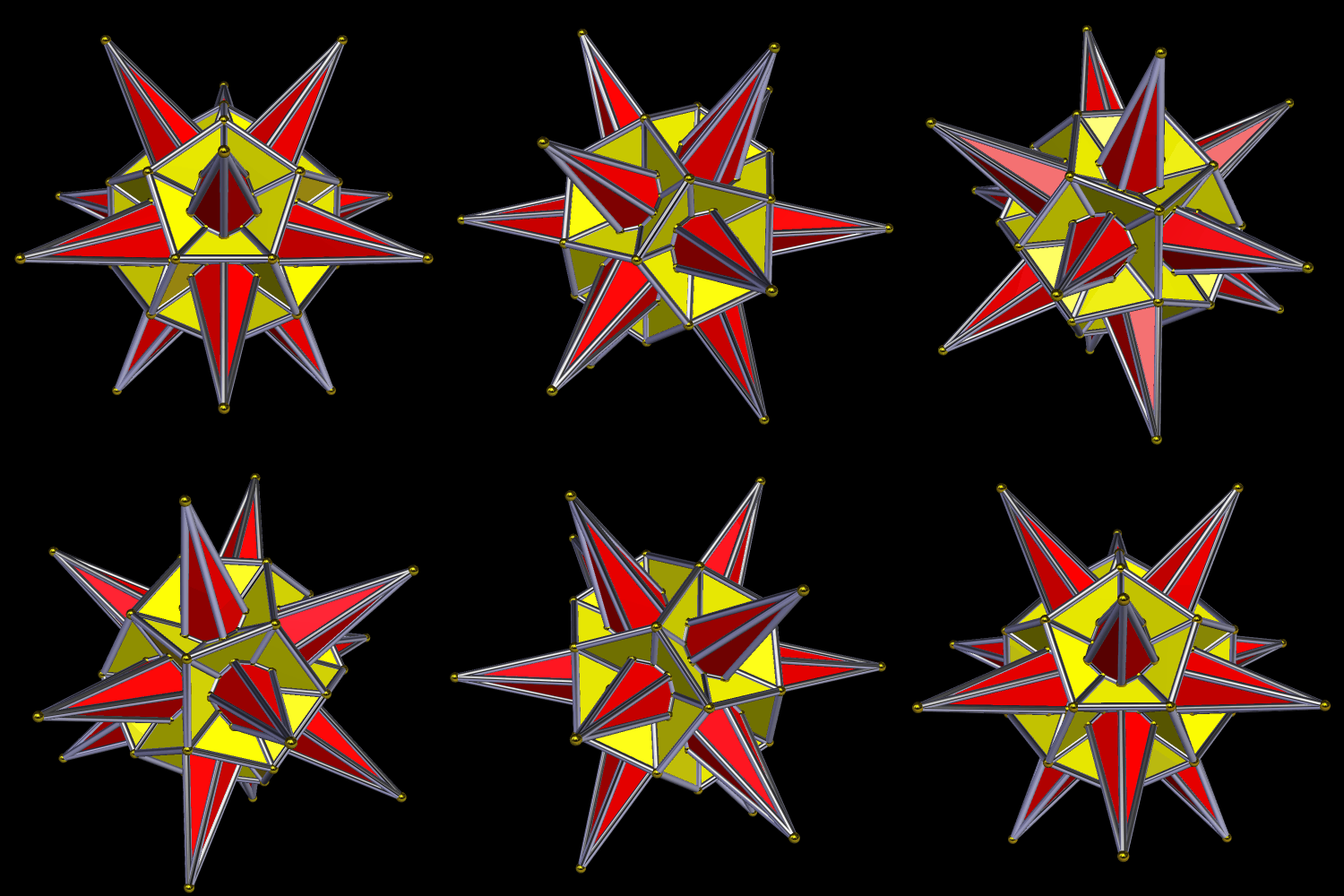
First, this is the 11th stellation.
Next, the 13th:
And, finally, the 15th stellation of the icosahedron:
I used Stella 4d, which you can find here, to make these.

An icosahedron is hidden from view in the center of this cluster-polyhedron. To create the cluster, each of the icosahedron’s triangles was augmented with a rhombicosidodecahedron. The resulting cluster has the overall shape of a dodecahedron.
To create the next cluster-polyhedron, I started with the one above, and then augmented each of its triangular faces with icosidodecahedra.
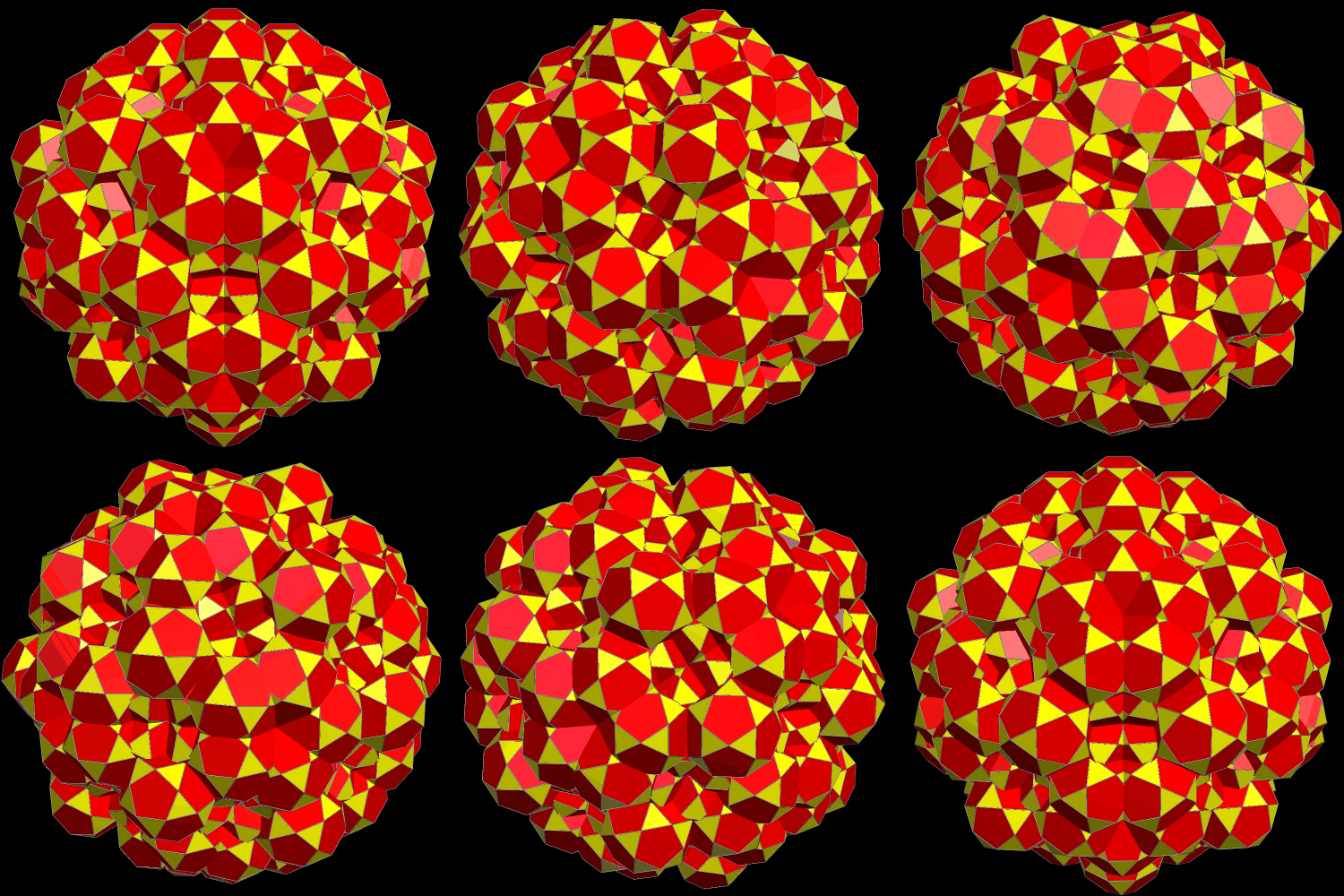
I used a program named Stella 4d: Polyhedron Navigator to create these cluster-polyhedra. This software may be bought (or tried for free) at this website.
The blue figure below is the rhombic triacontahedron. It has thirty identical faces, and is one of the Catalan solids, also known as Archimedean duals. This particular Catalan solid’s dual is the icosidodecahedron.

I use a program called Stella 4d (available here) to transform polyhedra, and the next step here was to augment each face of this polyhedron with a prism, keeping all edge lengths the same.

After that, I created the convex hull of this prism-augmented rhombic triacontahedron, which is the smallest convex figure which can enclose a given polyhedron.

Another ability of Stella is the “try to make faces regular” function. Throwing this function at this four-color polyhedron above produced the altered version below, in which edge lengths are brought as close together as possible. It isn’t possible to do this perfectly, though, and that is most easily seen in the yellow faces. While close to being squares, they are actually trapedoids.
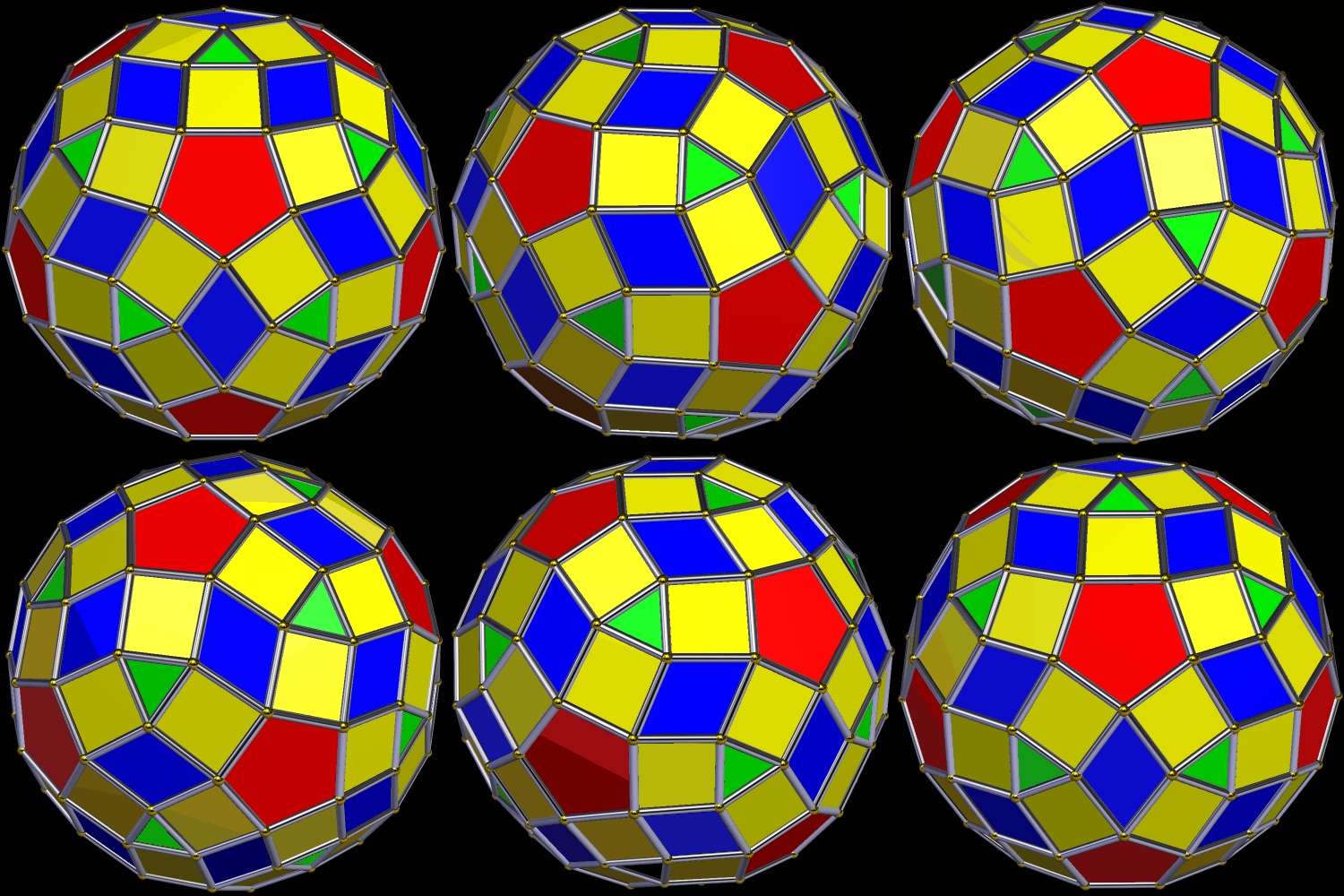
For the next transformation, I looked at the dual of this polyhedron. If I had to name it, I would call it the trikaipentakis icosidodecahedron. It has two face types: sixty of the larger kites, and sixty of the smaller ones, also.
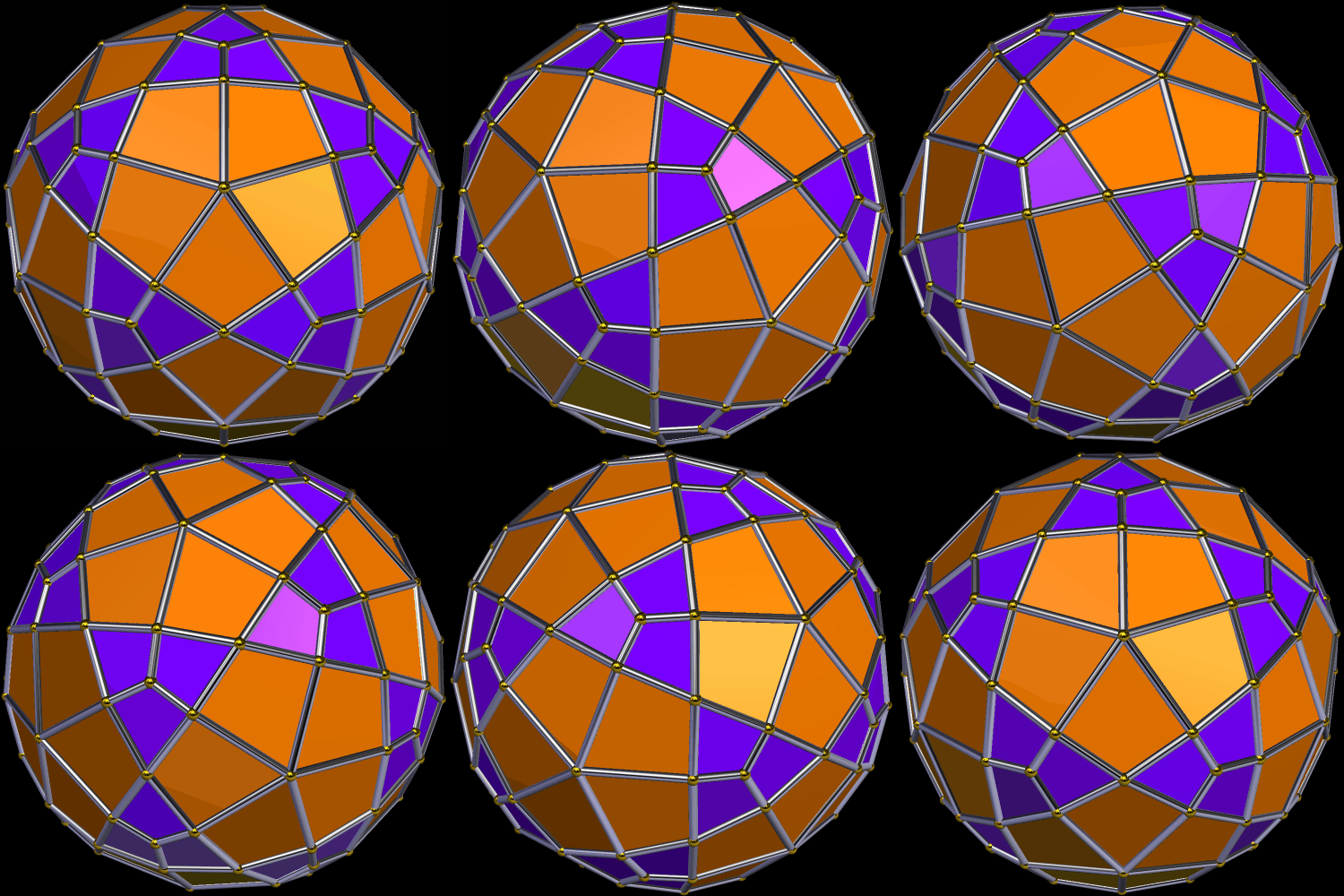
Next, I used prisms, again, to augment each face. The height used for these prisms is the length of the edges where orange kites meet purple kites.

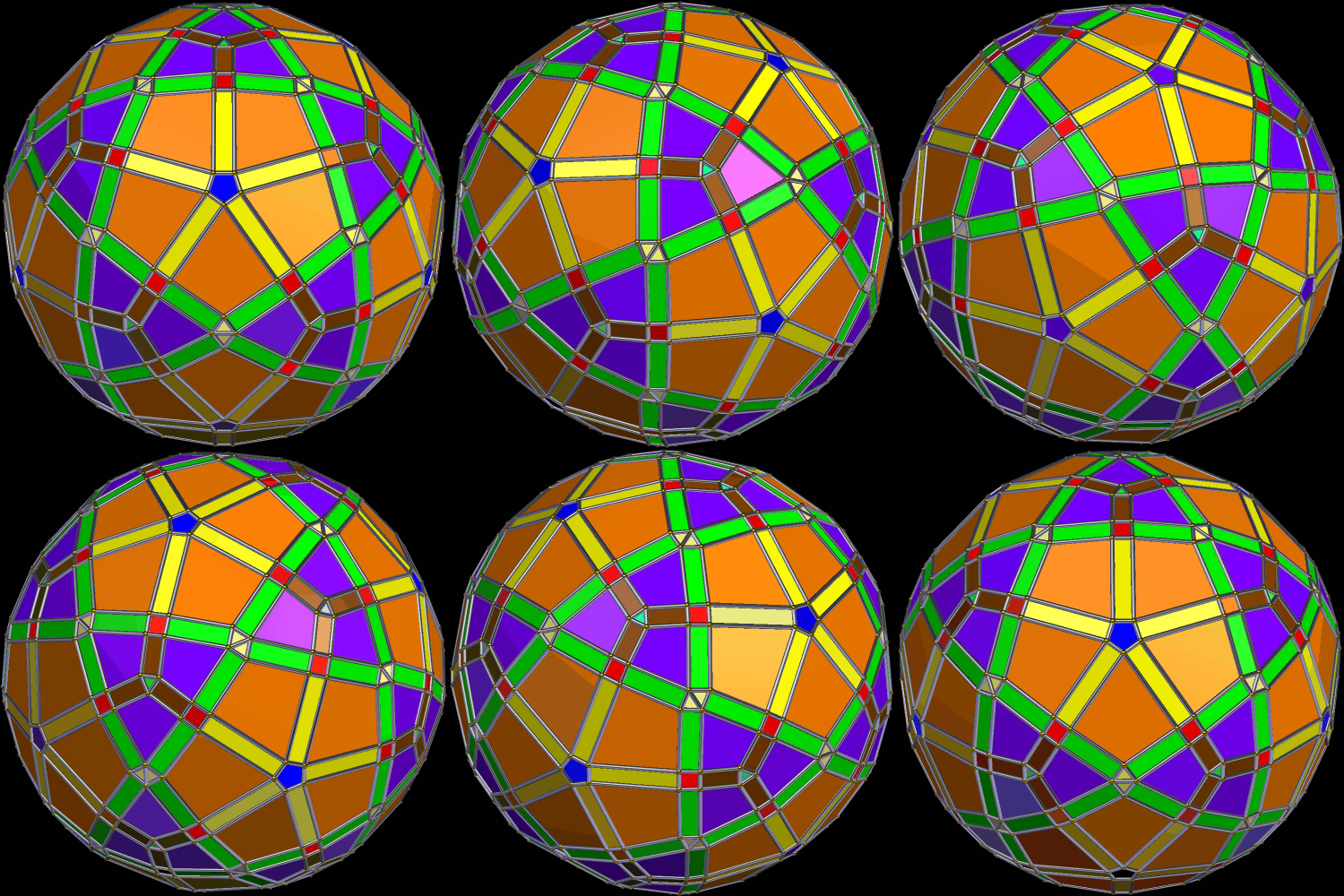
Lastly, I made the convex hull of the polyhedron above. This convex hull appears below.
Caltrops, when resting on a horizontal surface, have a sharp, narrow point sticking straight up. Stepping on such objects is painful. Most polyhedra do not have such a shape; the most well-known example of an exception to this is the tetrahedron. This fact is well-known to many players of role-playing games, who often use the term “d4” for tetrahedral dice, and who usually try to avoid stepping on them. Here are some other polyhedra which resemble caltrops. All were made using Stella 4d, software available at this website. The first two images may be made larger by simply clicking on them.


The third example, made with the same program, varies this idea somewhat: in physical form, resting on a floor, this caltrop-polyhedron would have three, not just one, potentially foot-damaging “spikes” sticking straight up.

Mathematicians have discovered more than one set of rules for polyhedral stellation. The software I use for rapidly manipulating polyhedra (Stella 4d, available here, including as a free trial download) lets the user choose between different sets of stellation criteria, but I generally favor what are called the “fully supported” stellation rules.
For this exercise, I still used the fully supported stellation rules, but set Stella to view these polyhedra as having only tetrahedral symmetry, rather than icosidodecahedral (or “icosahedral”) symmetry. For the icosahedron, this tetrahedral symmetry can be seen in this coloring-pattern.
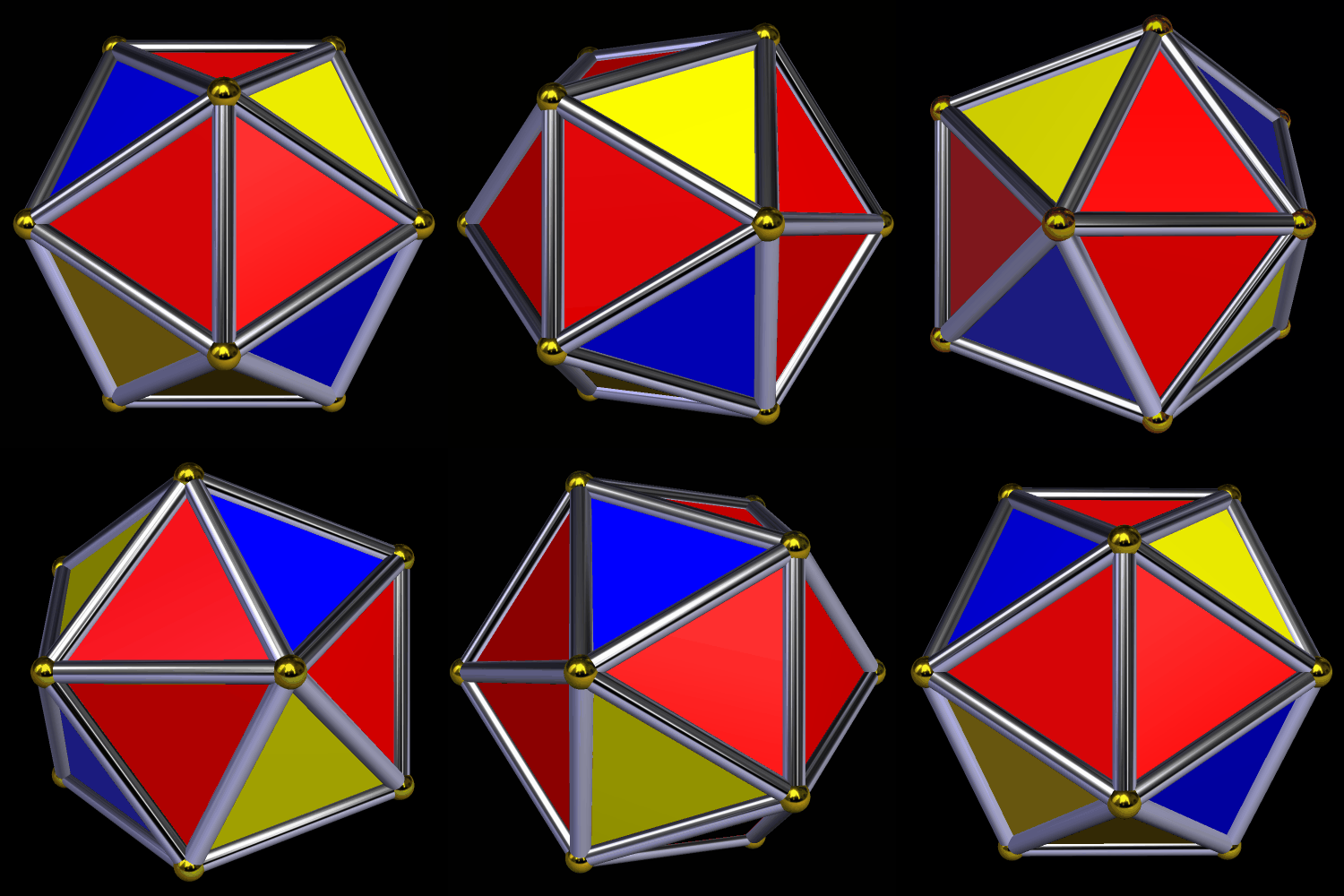
The next image shows what the icosahedron looks like after a single stellation, when performed through the “lens” of tetrahedral symmetry. This stellation extends the red triangles as kites, and hides the yellow triangles from view in the process.
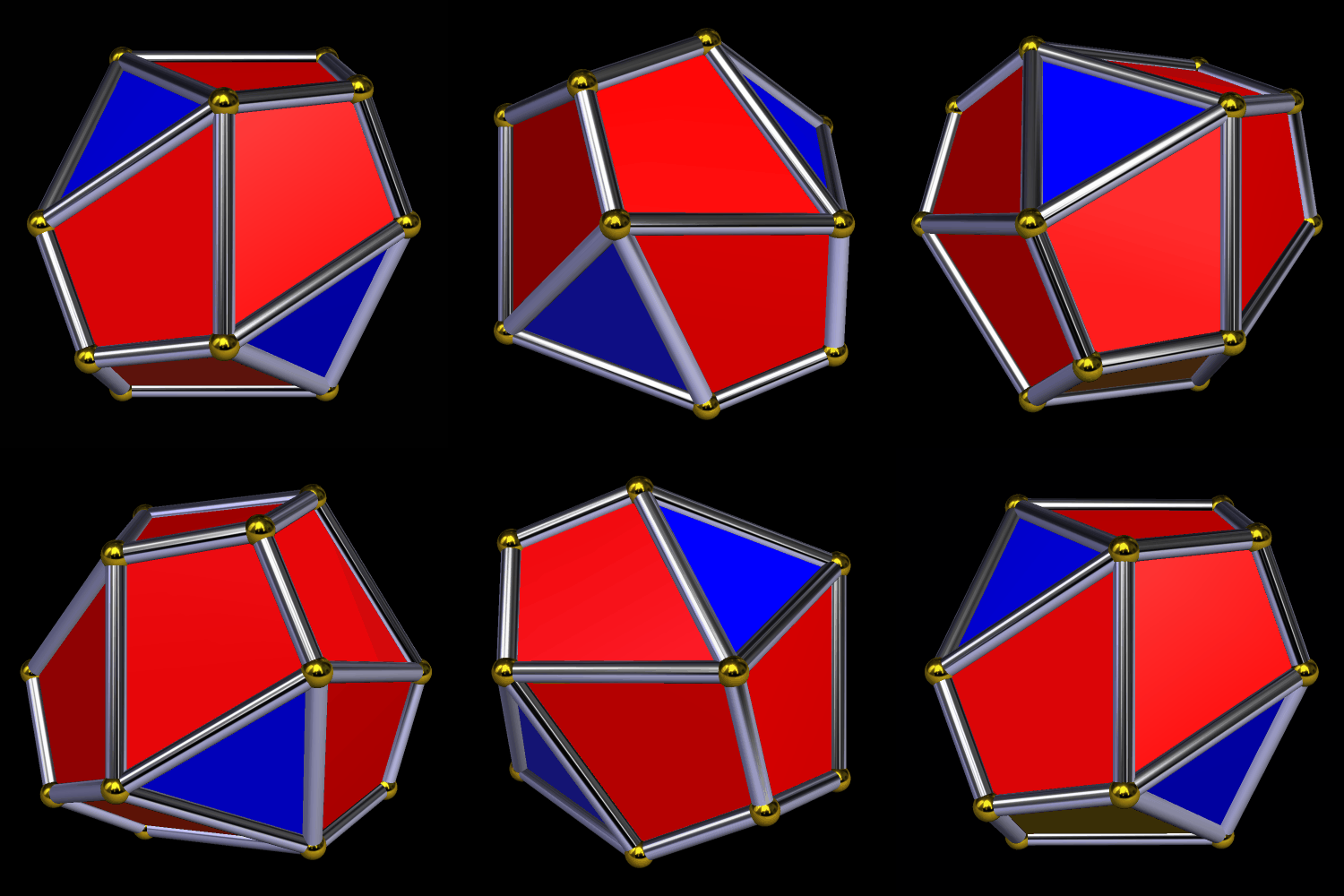
The second such stellation produces this polyhedron — a pyritohedral dodecahedron — by further-extending the red faces, and obscuring the blue triangles in the process.

The third tetrahedral stellation of the icosahedron produces another pyritohedral figure, which further demonstrates that pyritohedral symmetry is related to both icosidodecahedral and tetrahedral symmetry.
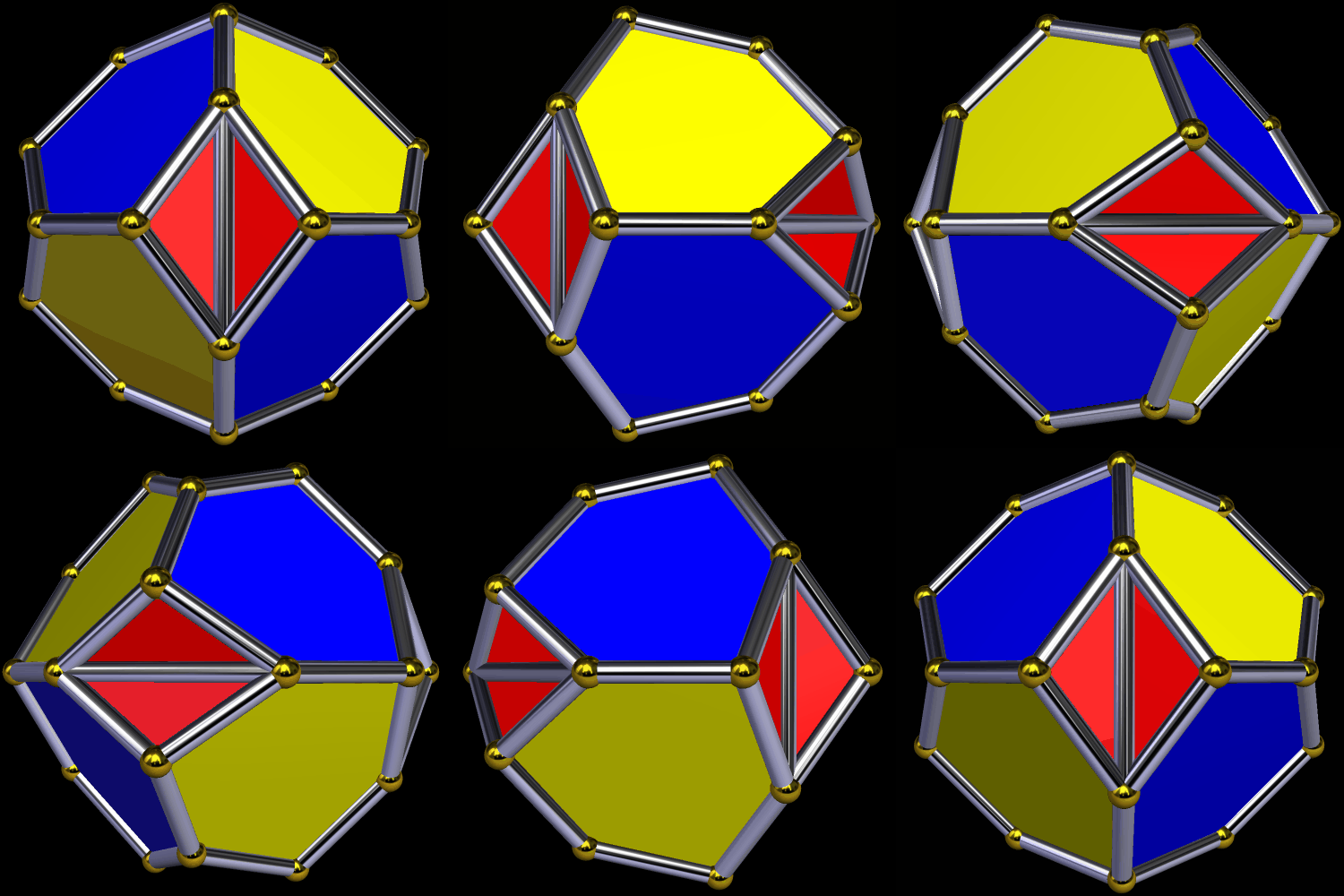
The fourth such stellation produces a Platonic octahedron, but one where the coloring-scheme makes it plain that Stella is still viewing this figure as having tetrahedral symmetry. Given that the octahedron itself has cuboctahedral (or “octahedral”) symmetry, this is an increase in the number of polyhedral symmetry-types which have appeared, so far, in this brief survey.

Next, I looked at the fifth tetrahedral stellation of the icosahedron, and was surprised at what I found.

While I was curious about what would happen if I continued stellating this polyhedron, I also wanted to see this fifth stellation’s convex hull, since I could already tell it would have only hexagons and triangles as faces. Here is that convex hull:

For the last step in this survey, I performed one more tetrahedral stellation, this time on the convex hull I had just produced.
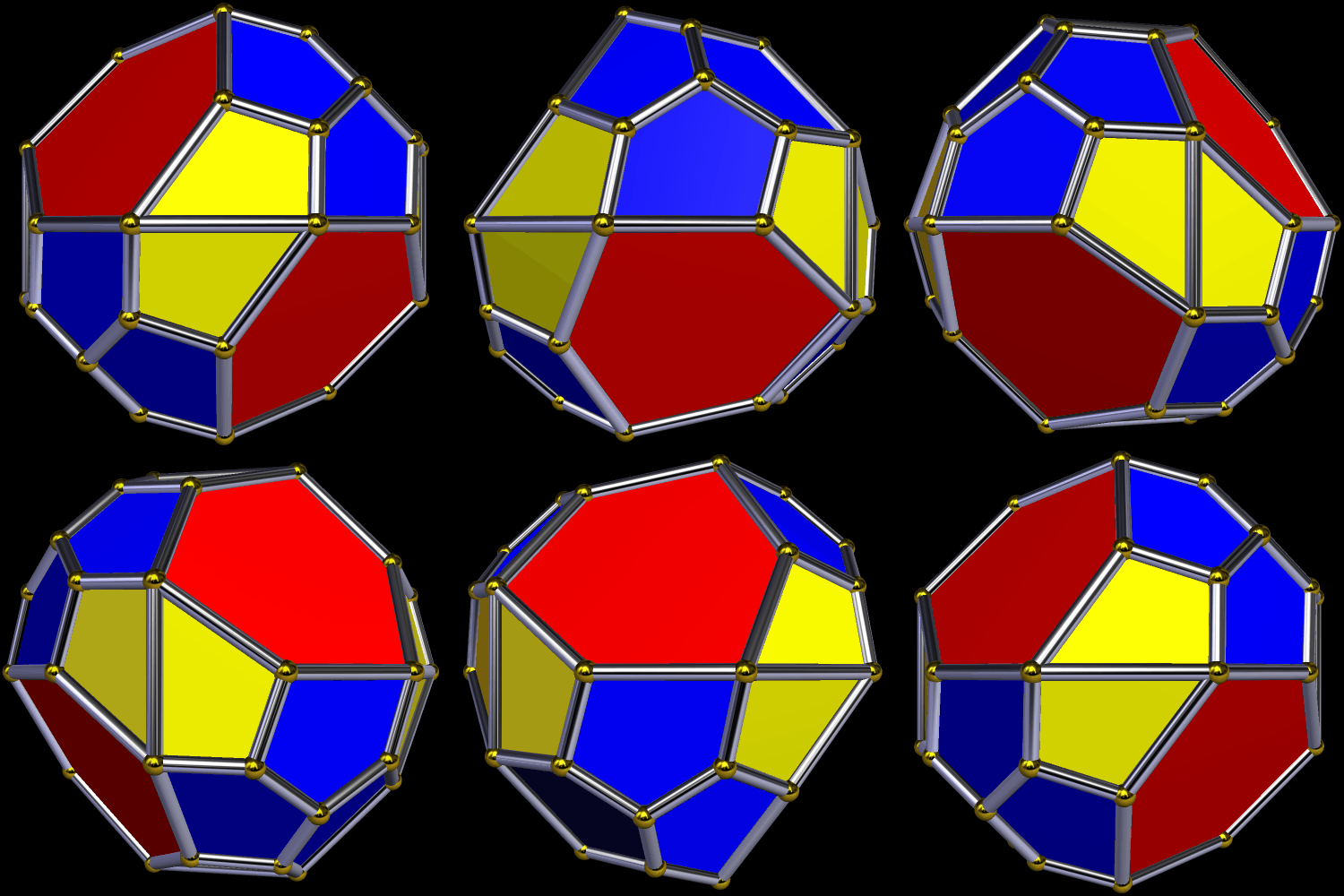
If colored by face-type, based on face-position in the overall solid, this “cluster” polyhedron looks like this:
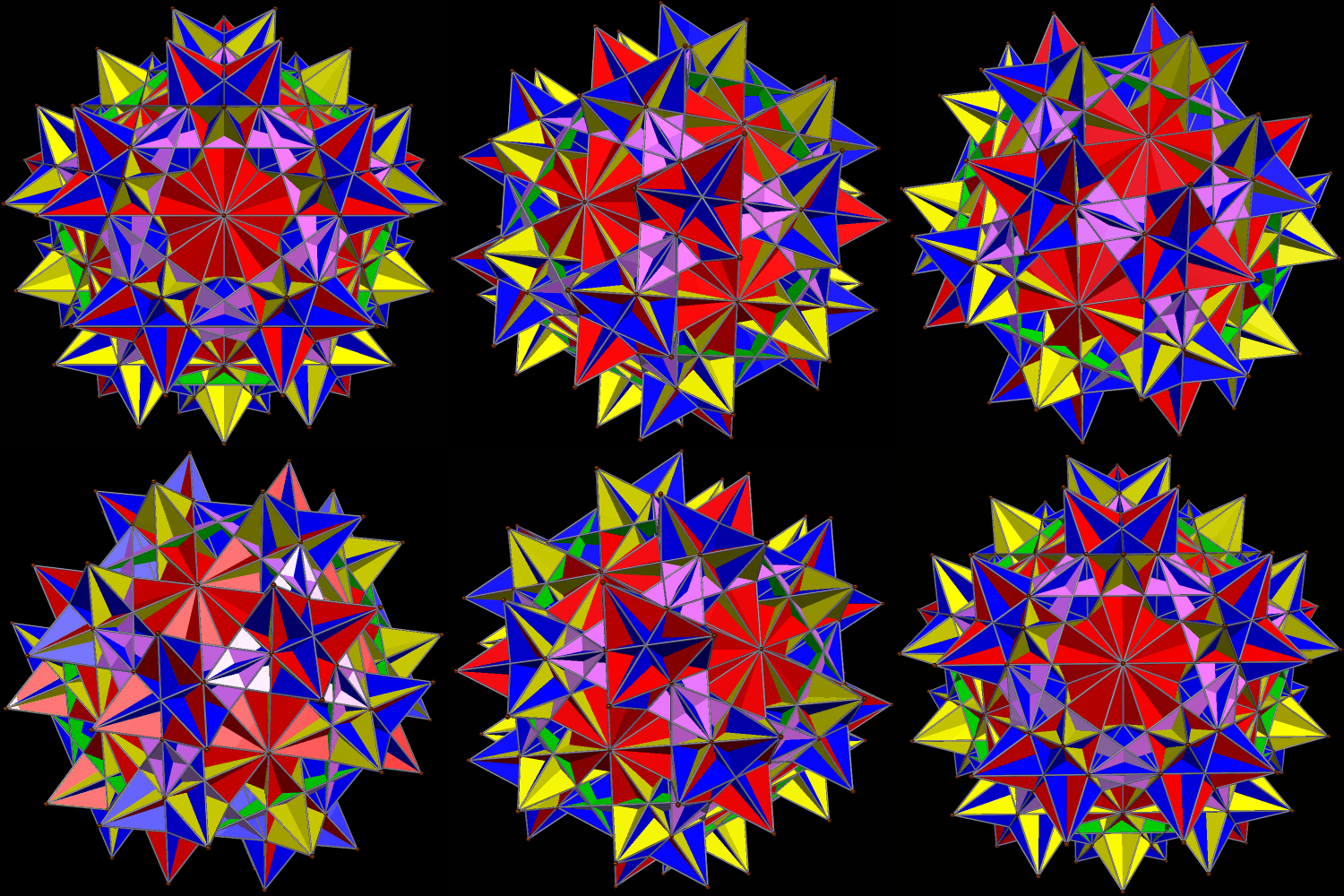
There is another interesting view of this polyhedral cluster I like marginally better, though, and that is to separate the faces into color-groups in which all faces of the same color are either coplanar, or parallel. It looks like this.
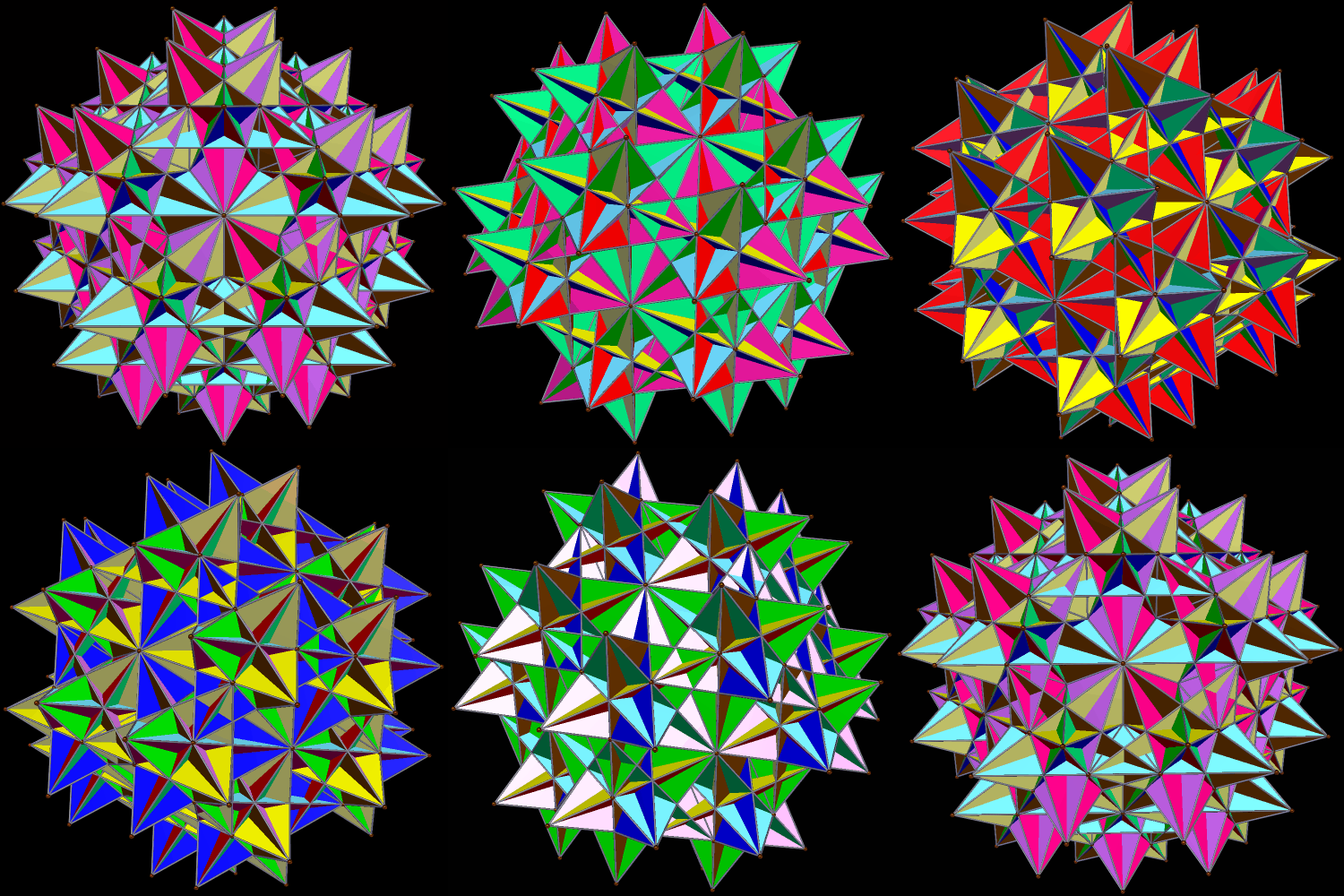
Both versions were created by augmenting each face of a Platonic icosahedron with a great icosahedron, one of the four Kepler-Poinsot solids. I did this using Stella 4d: Polyhedron Navigator, available here.
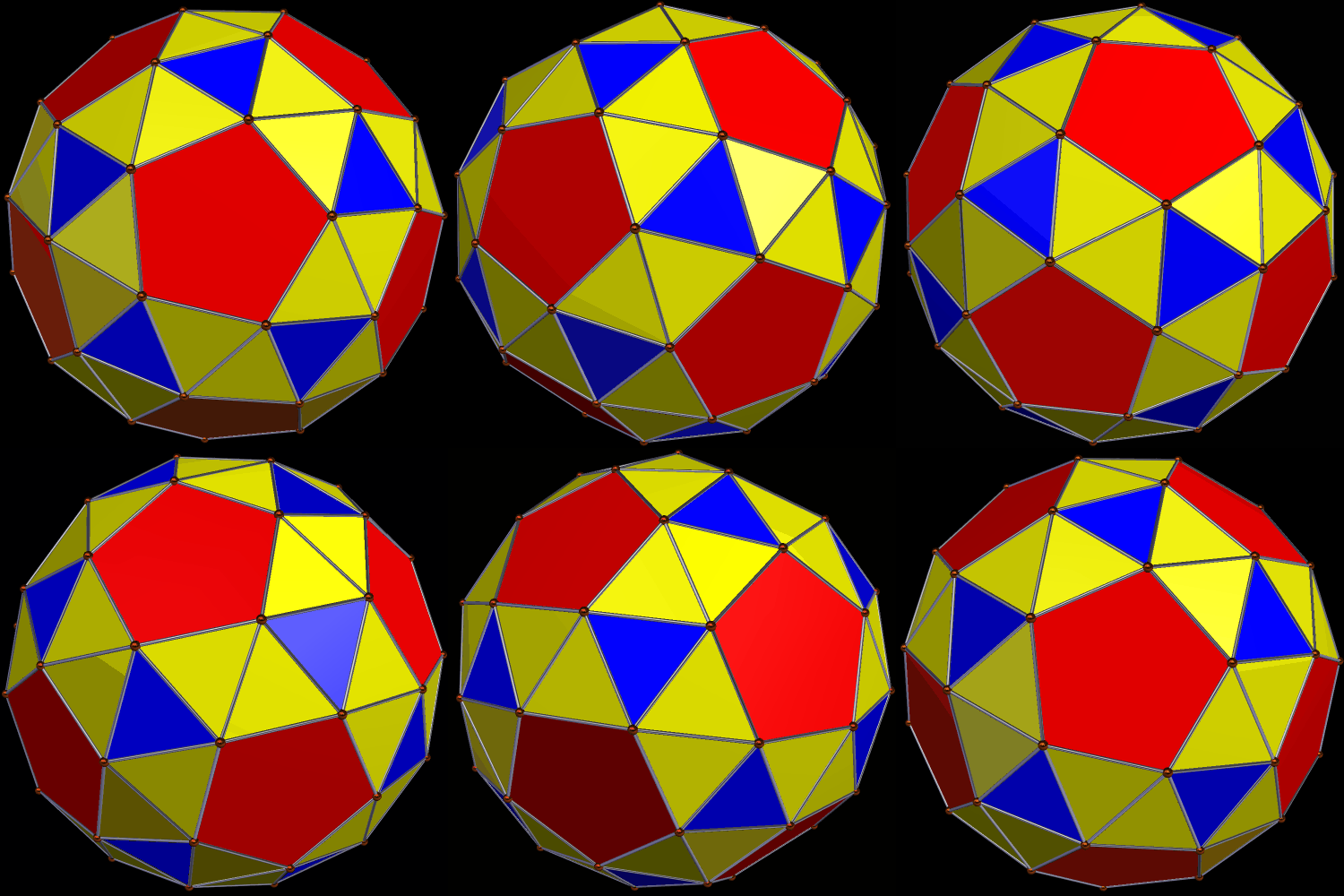
The dual of the snub dodecahedron (above) is called the pentagonal hexacontahedron (below, left). The compound of the two is shown below, at right. (Any of the smaller images here may be enlarged with a click.)


Like all chiral polyhedra, both these polyhedra can form compounds with their own mirror-images, as seen below.


Finally, all four polyhedra — two snub dodecahedra, and two pentagonal hexacontahedra — can be combined into a single compound.

This polyhedral manipulation and .gif-making was performed using Stella 4d, a program you can find here.
These two polyhedra are the truncated tetrahedron on the left, plus at least one faceted version of that same Archimedean solid on the right. As you can see, in each case, the figures have the same set of vertices — but those vertices are connected in a different way in the two solids, giving the polyhedra different faces and edges.


(To see larger images of any picture in this post, simply click on it.)
The next three are the truncated cube, along with two different faceted truncated cubes on the right. The one at the top right was the first one I made — and then, after noticing its chirality, I made the other one, which is the compound of the first faceted truncated cube, plus its mirror-image. Some facetings of non-chiral polyhedra are themselves non-chiral, but, as you can see, chiral facetings of non-chiral polyhedra are also possible.


The next two images show a truncated octahedron, along with a faceted truncated octahedron. As these images show, sometimes faceted polyhedra are also interesting polyhedra compounds, such as this compound of three cuboids.


The next polyhedra shown are a truncated dodecahedron, and a faceted truncated dodecahedron. Although faceted polyhedra do not have to be absurdly complex, this pair demonstrates that they certainly can be.


Next are the truncated icosahedron, along with one of its many facetings — and with this one (below, on the right) considerably less complex than the faceted polyhedron shown immediately above.


The next two shown are the cuboctahedron, along with one of its facetings, each face of which is a congruent isosceles triangle. This faceted polyhedron is also a compound — of six irregular triangular pyramids, each of a different color.


The next pair are the standard version, and a faceted version, of the rhombcuboctahedron, also known as the rhombicuboctahedron.


The great rhombcuboctahedron, along with one of its numerous possible facetings, comes next. This polyhedron is also called the great rhombicuboctahedron, as well as the truncated cuboctahedron.


The next pair are the snub cube, one of two Archimedean solids which is chiral, and one of its facetings, which “inherited” its chirality from the original.


The icosidodecahedron, and one of its facetings, are next.


The next pair are the original, and one of the faceted versions, of the rhombicosidodecahedron.


The next two are the great rhombicosidodecahedron, and one of its facetings. This polyhedron is also called the truncated icosidodecahedron.


Finally, here are the snub dodecahedron (the second chiral Archimedean solid, and the only other one, other than the snub cube, which possesses chirality), along with one of the many facetings of that solid. This faceting is also chiral, as are all snub dodecahedron (and snub cube) facetings.


Each of these polyhedral images was created using Stella 4d: Polyhedron Navigator, software available at this website.
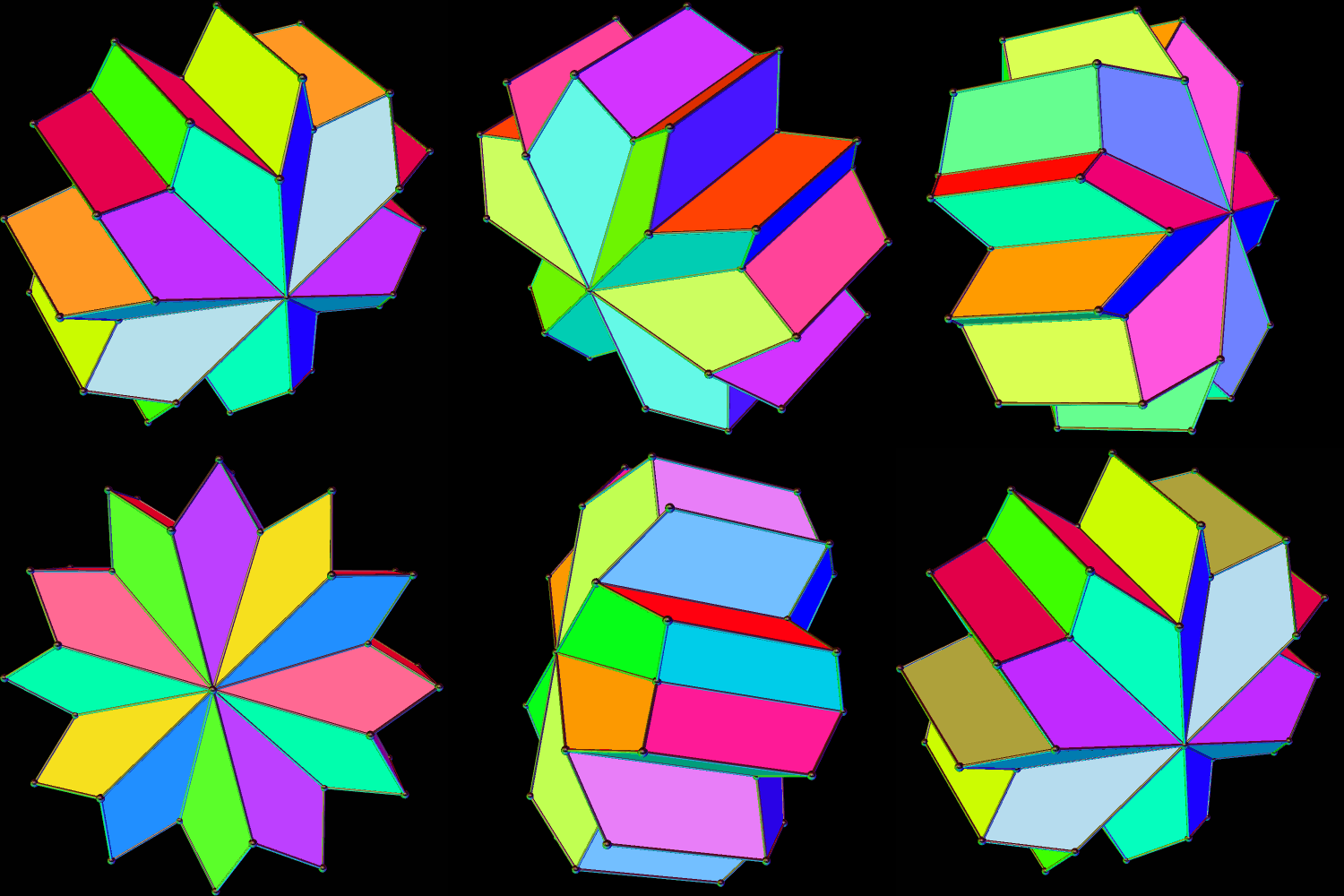
Created using Stella 4d, available at http://www.software3d.com/Stella.php.
I noticed that I could arrange eight great rhombcuboctahedra into a ring, but that ring, rather than being regular, resembled an ellipse.

I then made a ring of four of these elliptical rings.

After that, I added a few more great rhombcuboctahedra to make a meta-rhombcuboctahedron — that is, a great rhombcuboctahedron made of rhombcuboctahedra. However, it’s squashed. (I believe the official term for this is “oblate,” but “squashed” also works, at least for me.)

So now I’m wondering if I can make this more regular. In other words, can I “unsquash” it? I notice that even this squashed metapolyhedron has regular rings on two opposite sides, so I make such a ring, and start anew.

I then make a ring of those . . .

. . . And, with two more ring-additions, I complete the now-unsquashed meta-great-rhombcuboctahedron. Success!

To celebrate my victory, I make one more picture, in “rainbow color mode.”

[All images made using Stella 4d, available here: http://www.software3d.com/Stella.php.]
 RobertLovesPi.net