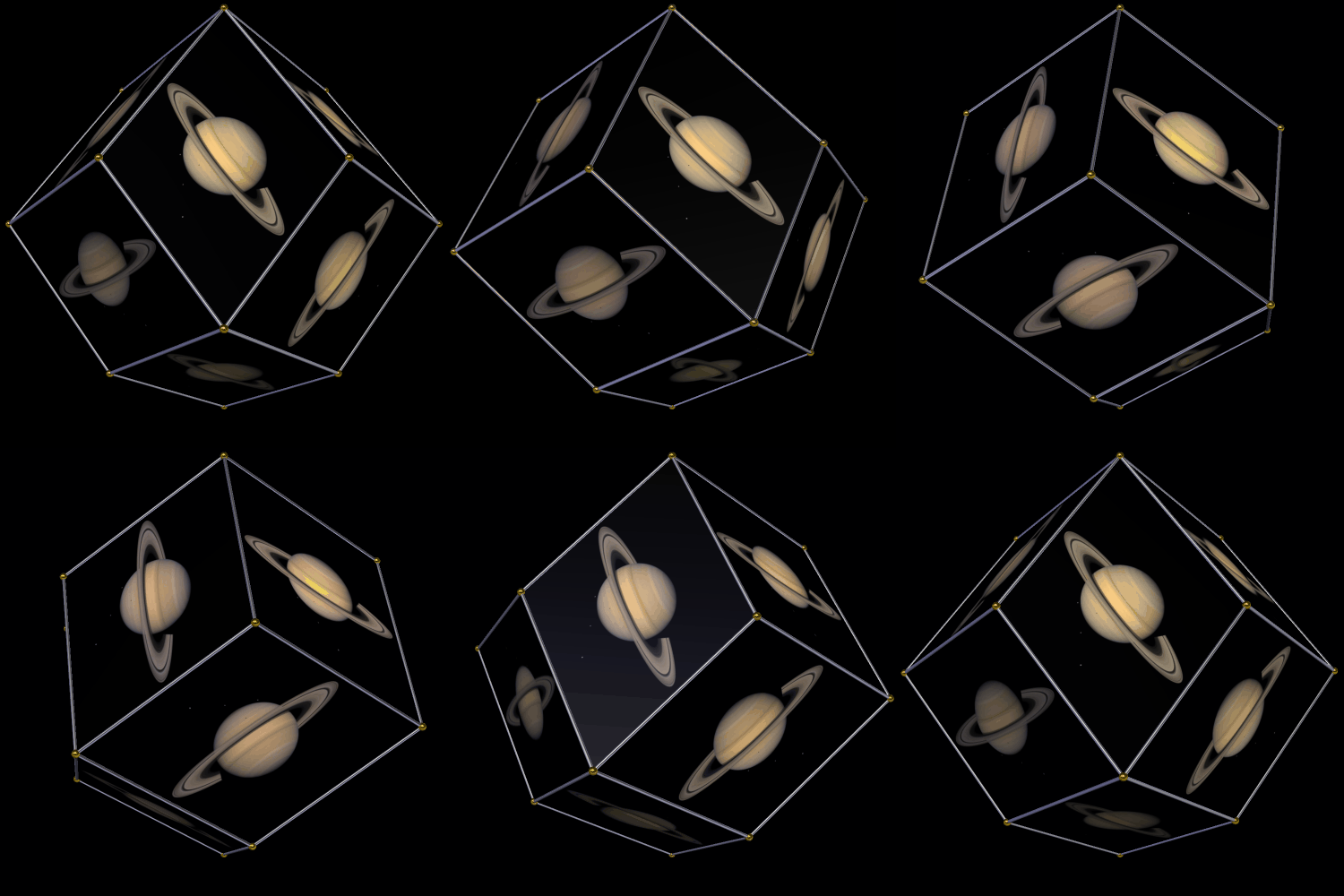
The image of Saturn was taken by NASA, and I put it on the faces of a rhombic dodecahedron, and created this image, with a program called Stella 4d. You can try this program for free at http://www.software3d.com/Stella.php.
The image of Saturn was taken by NASA, and I put it on the faces of a rhombic dodecahedron, and created this image, with a program called Stella 4d. You can try this program for free at http://www.software3d.com/Stella.php.
The truncated octahedron is well-known as the only Archimedean solid which can fill space, by itself, without leaving any gaps. The cluster below shows this, and has the overall shape of a rhombic dodecahedron.

It’s easier to see the rhombic dodecahedral shape of this cluster when looking at its convex hull:
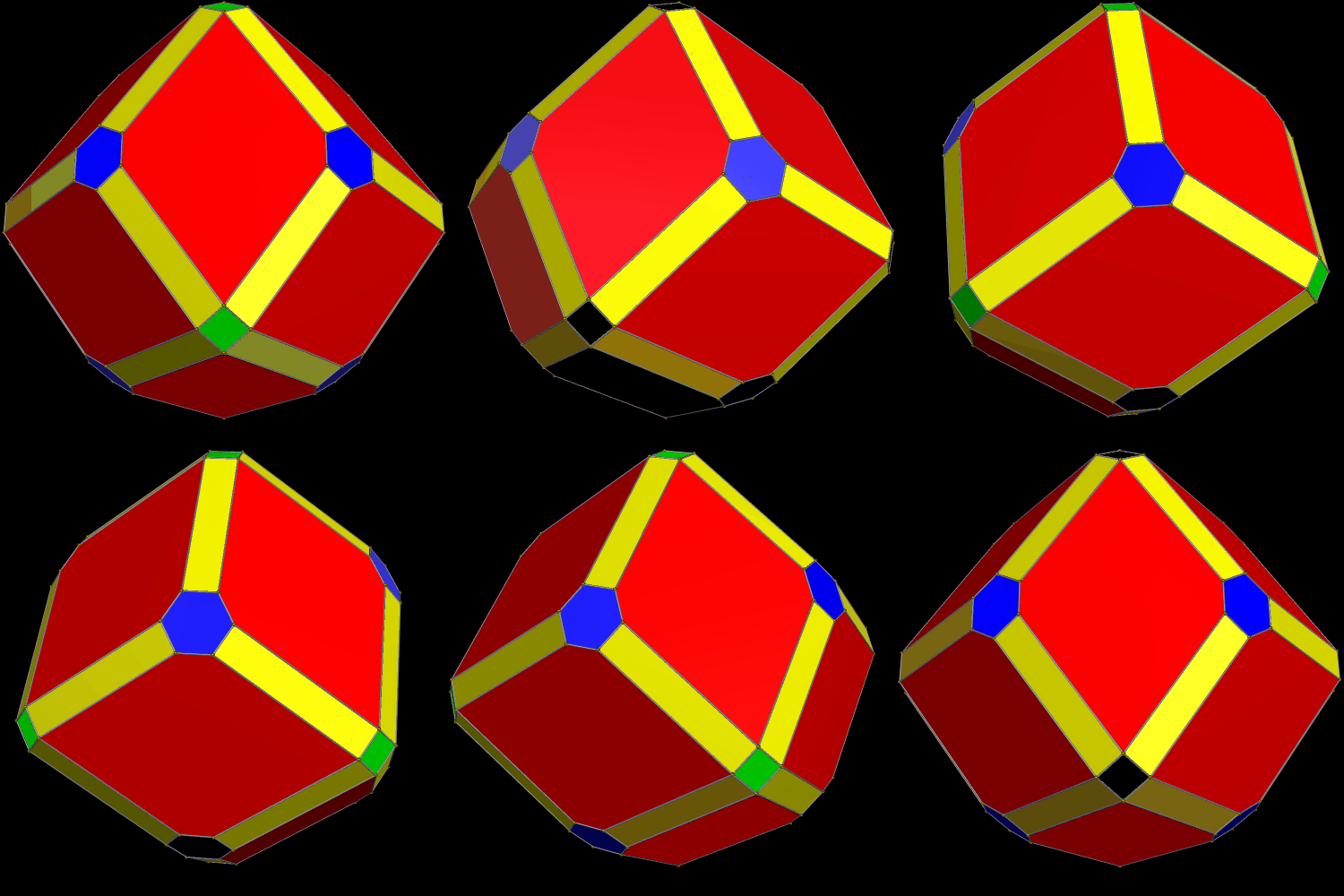
Both images here were made using Stella 4d, which you can try for free right here.

Programs used to make this included Geometer’s Sketchpad, MS-Paint, and Stella 4d: Polyhedron Navigator, which was used to assemble everything else into what you see here. You may try Stella for free at http://www.software3d.com/Stella.php.

I used Stella 4d to make this polyhedral compound, and this program may be tried for free at this website.

Created using Stella 4d, a program available at this website: http://www.software3d.com/Stella.php.

I made this using Stella 4d, software you can find at http://www.software3d.com/Stella.php. I also make a second version, with larger spheres and cylinders for the vertices and edges:
As it turns out, eight icosahedra form this rhombic ring, by augmentation:

Measured from the centers of these icosahedra, the long and short diagonal of this rhombus are in a (√2):1 ratio. How do I know this? Because that’s the only rhombus which can made this polyhedron, a rhombic dodecahedron, dual to the cuboctahedron.
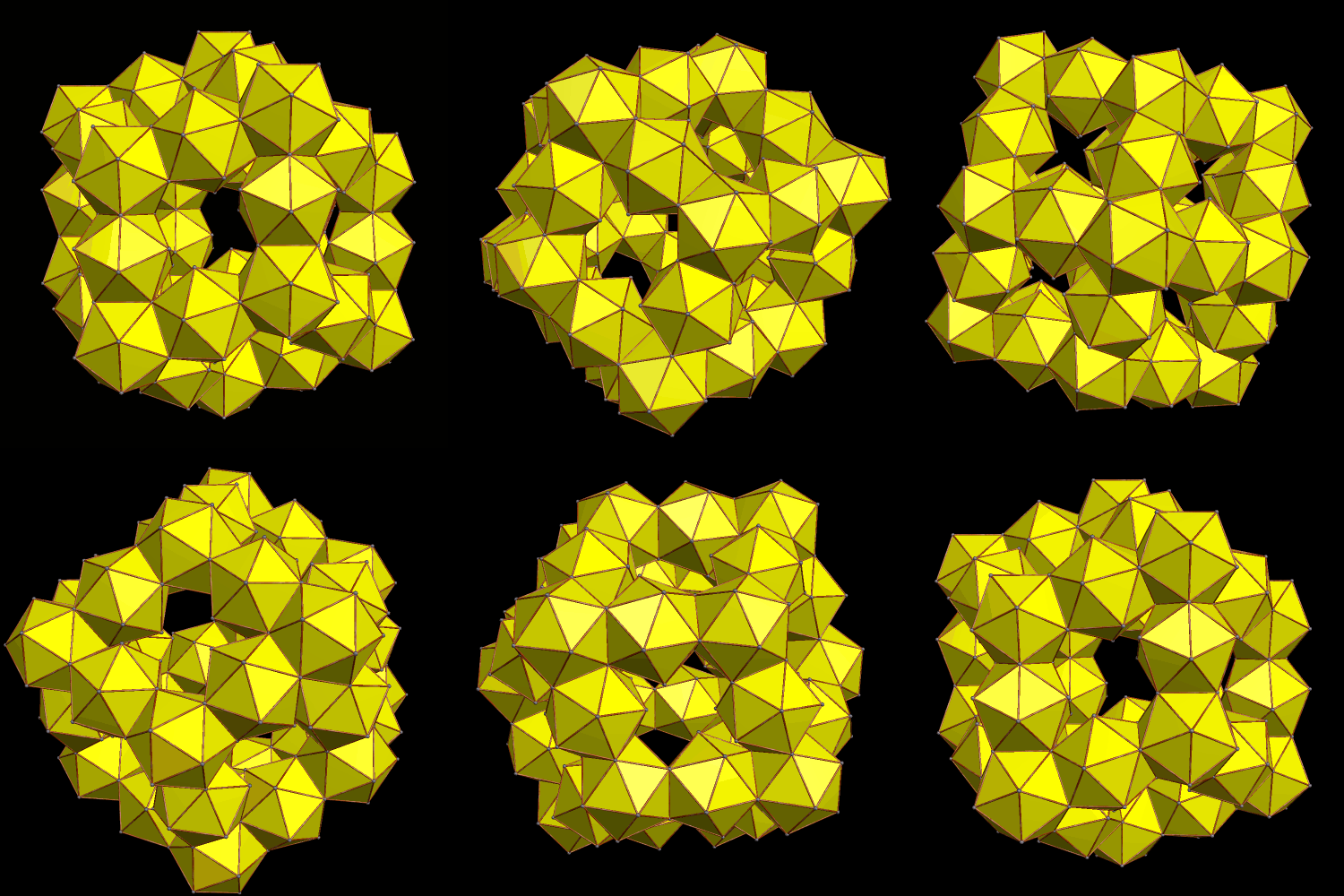
This rhombic dodecahedral cluster of icosahedra could be extended to fill space, since the rhombic dodecahedron itself has this property, an unusual property for polyhedra. Whether space-filling or not, the number of icosahedron per rhombic-dodecahedron edge could be increased to 5, 7, 9, or any greater odd number. Why would even numbers not work? This is a consequence of the fact that opposite faces of an icosahedron are inverted, relative to each other; a pair of icosahedra (or more than one pair, producing odd numbers > 1 when added to the vertex-icosahedron) must be attached to the one at a rhombic-dodecahedron-vertex to make these two inversions bring the triangular face back around to its original orientation, via an even number of half-rotations, without which this consruction of these icosahedral rhombi cannot happen.
Here’s another view of this rhombic dodecahedron, in “rainbow color” mode:

All images above were produced using Stella 4d, software which may be tried for free right here.
Polyhedral compounds differ in the amount of effort needed to understand their internal structure, as well as the way the compounds’ components are assembled, relative to each other. This compound, the compound of five cuboctahedra, and those related to it, offer challenges not offered by all polyhedral compounds, especially those which are well-known.
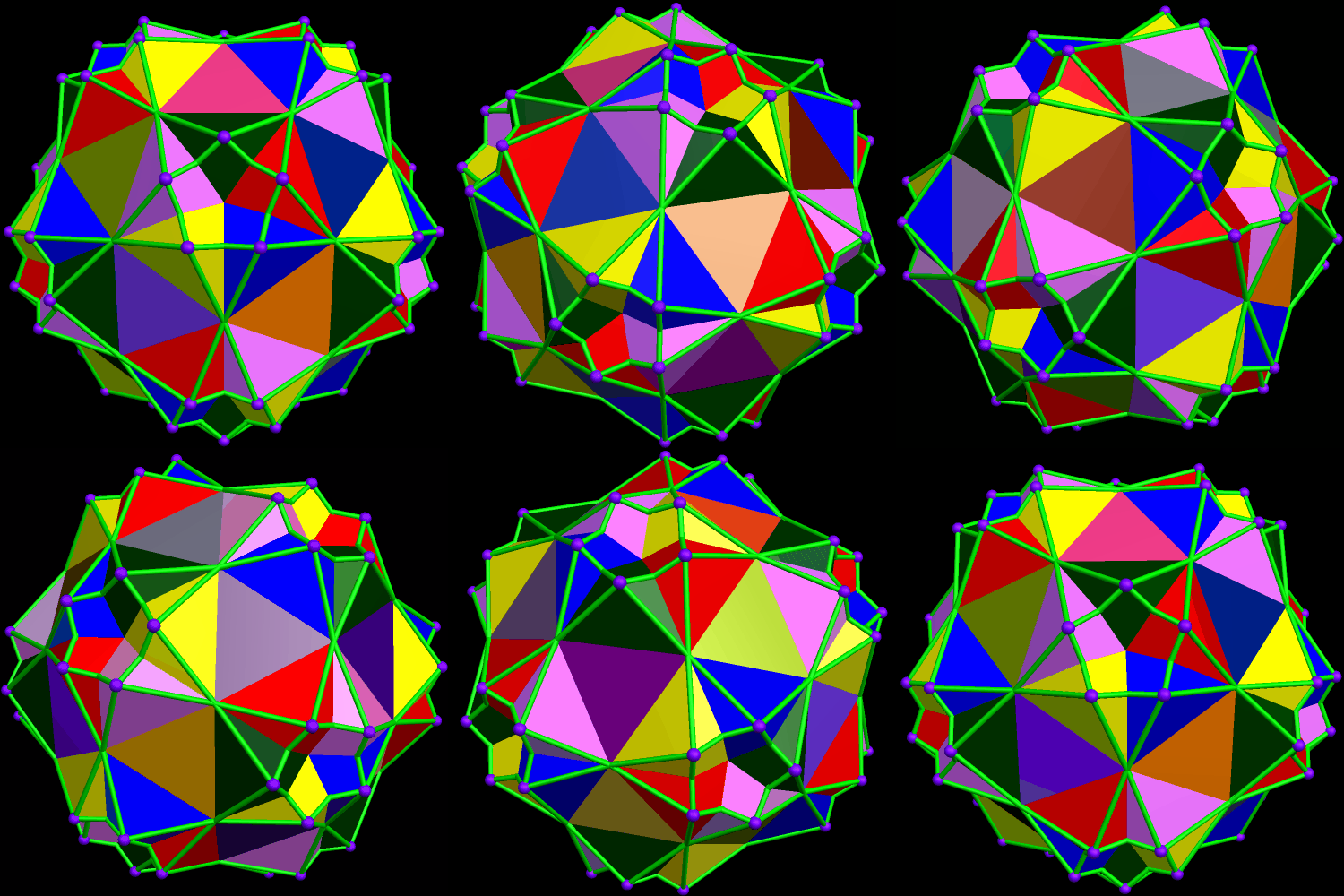
The image above (made with Stella 4d, as are others in this post — software available here) is colored in the traditional style for compounds: each of the five cuboctahedra is assigned a color of its own. There’s a problem with this, however, and it is related to the triangular faces, due to the fact that these faces appear in coplanar pairs, each from a different component of the compound.
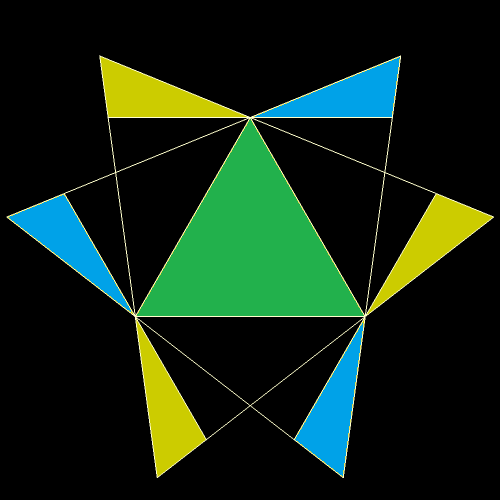
The yellow regions above are from a triangular face of the yellow component, while the blue regions are from a blue triangular face. The equilateral triangle in the center, being part of both the yellow and blue components, must be assigned a “compromise color” — in this case, green. The necessity of such compromise-colors can make understanding the compound by examination of an image more difficult than it with with, say, the compound of five cubes (not shown, but you can see it here, if you wish). Therefore, I decided to look at this another way: coloring each face of the five-cuboctahedra compound by face type, instead of by component.

Another helpful view may be created by simply hiding all the faces, revealing internal structure which was previously obscured.

Since the dual of the cuboctahedron is the rhombic dodecahedron, the dual of the compound above is the compound of five rhombic dodecahedra, shown, first, colored by giving each component a different color.
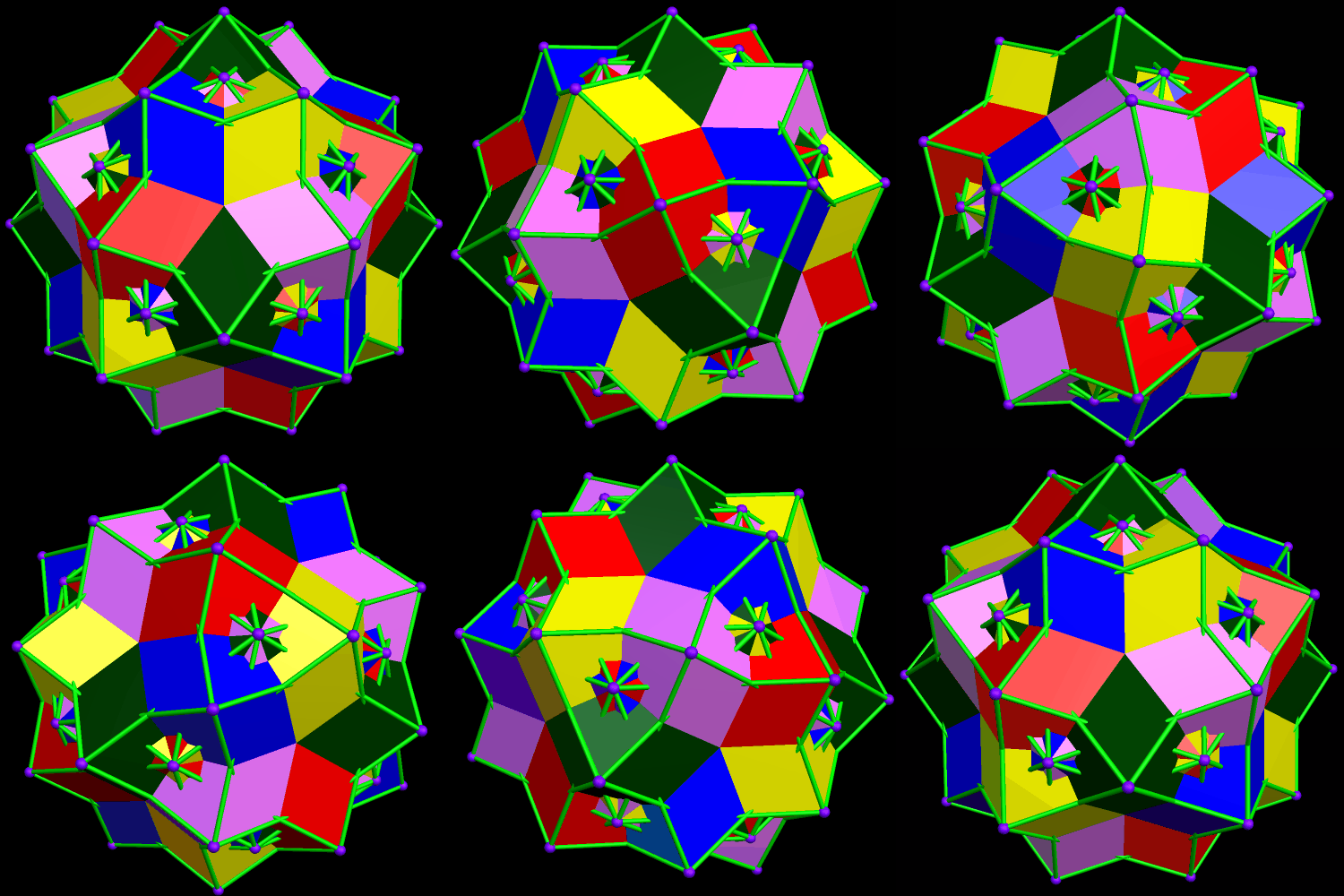
A problem with this view is that most of what’s “going on” (in the way the compound is assembled) cannot be seen — it’s hidden inside the figure. An option which helped above (with the five-cuboctahedra compound), coloring by face type, is not nearly as helpful here:

Why wasn’t it helpful? Simple: all sixty faces are of the same type. It can be made more attractive by putting Stella 4d into “rainbow color” mode, but I cannot claim that helps with comprehension of the compound.

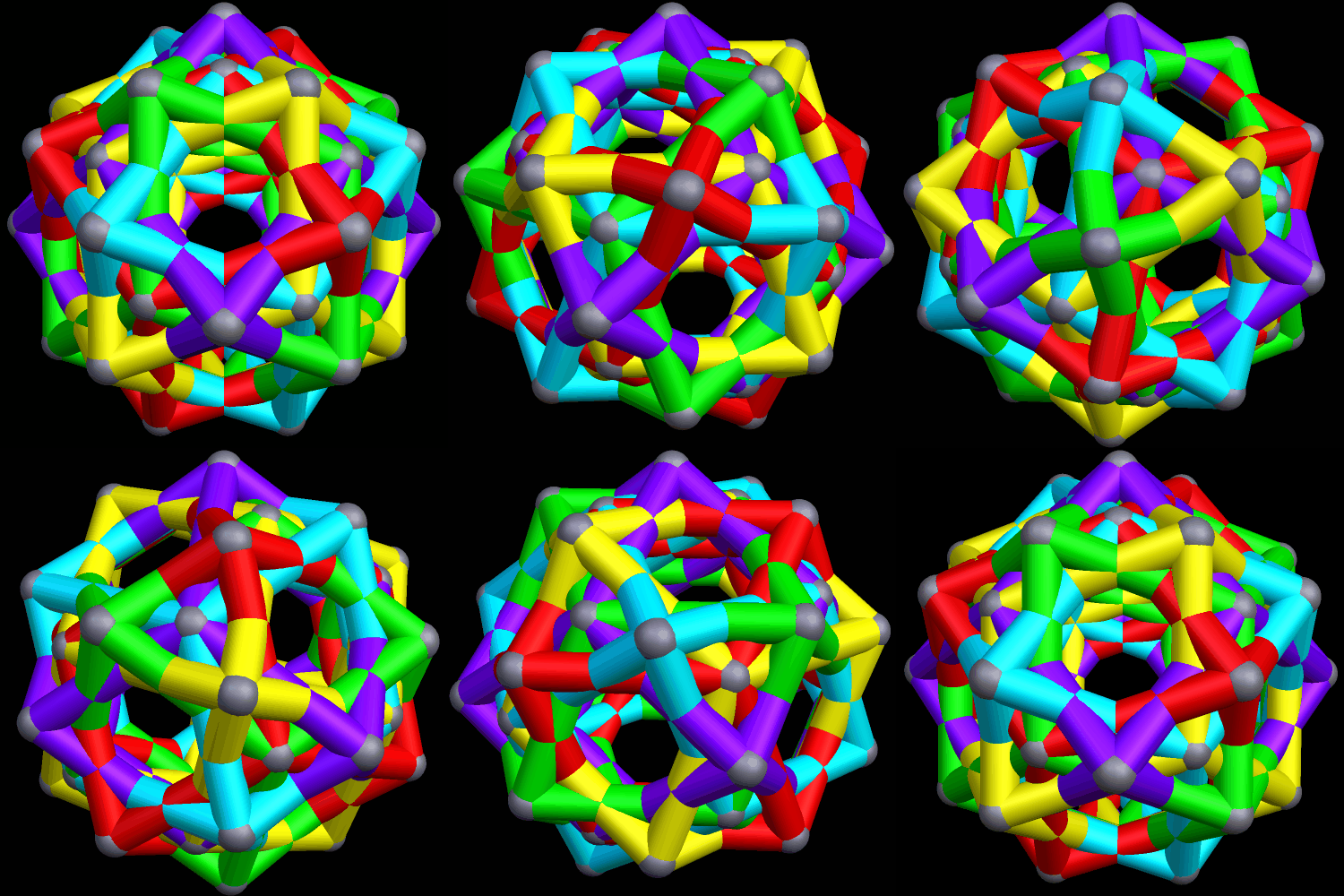
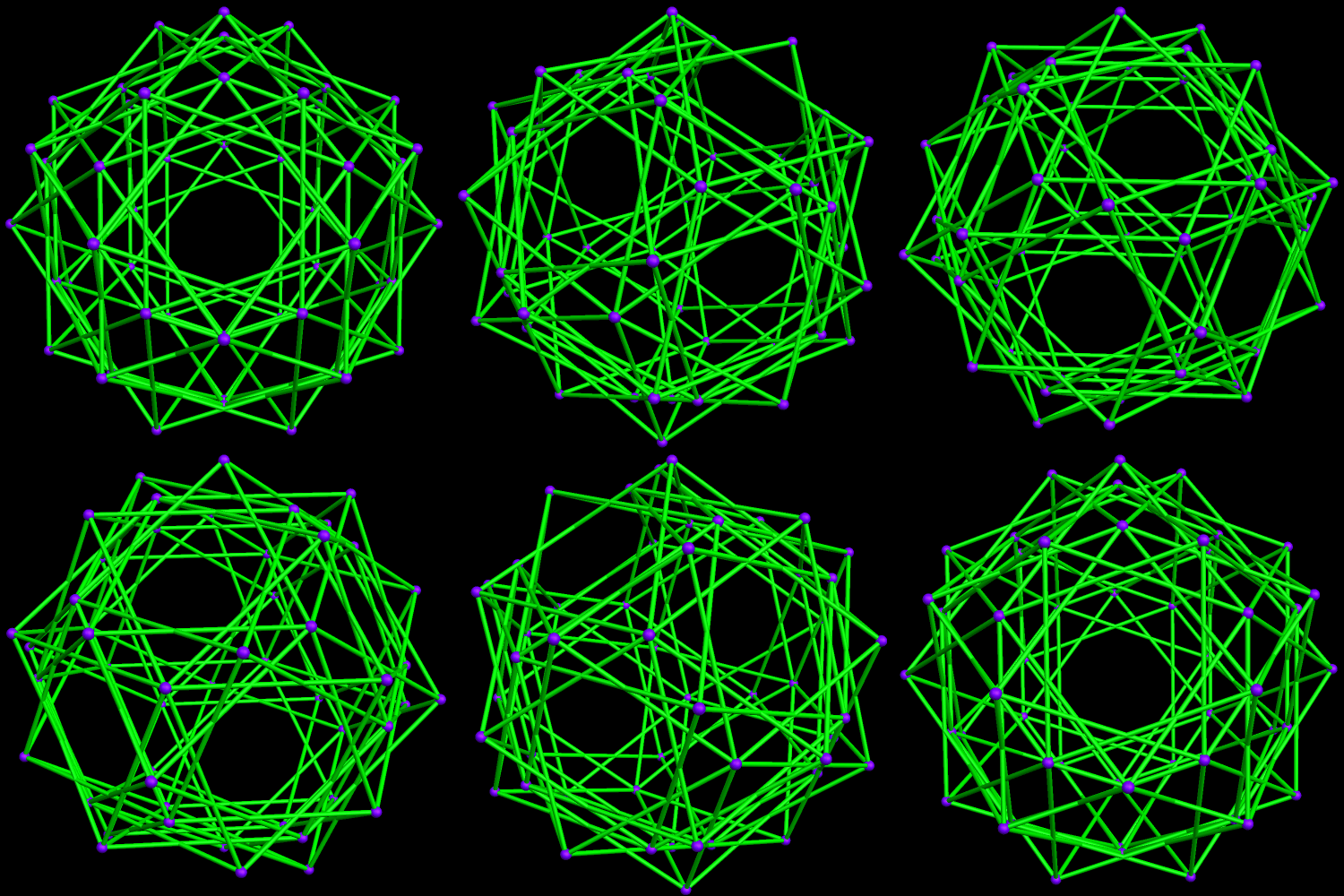
With this compound, what’s really needed is a “ball-and-stick” model, with the faces hidden to reveal the compound’s inner structure.
Since the two five-part compounds above are duals, they can also be combined to form a ten-part compound: that of five cuboctahedra and five rhombic dodecahedra. In the first image below, each of the ten components is assigned its own color.

In this ten-part compound, the coloring-problem caused in the first image in this post, coplanar and overlapping triangles of different colors, vanishes, for those regions of overlap are hidden in the ten-part compound’s interior. This is one reason why this coloring-scheme is the one I find the most helpful, for this ten-part compound (unlike the two five-part compounds above). However, so that readers may make this choice for themselves, two other versions are shown below, starting with coloring by face type.

Finally, the hollow version of this ten-part compound. This is only a personal opinion, but I do not find this image quite as helpful as was the case with the five-part compounds described above.
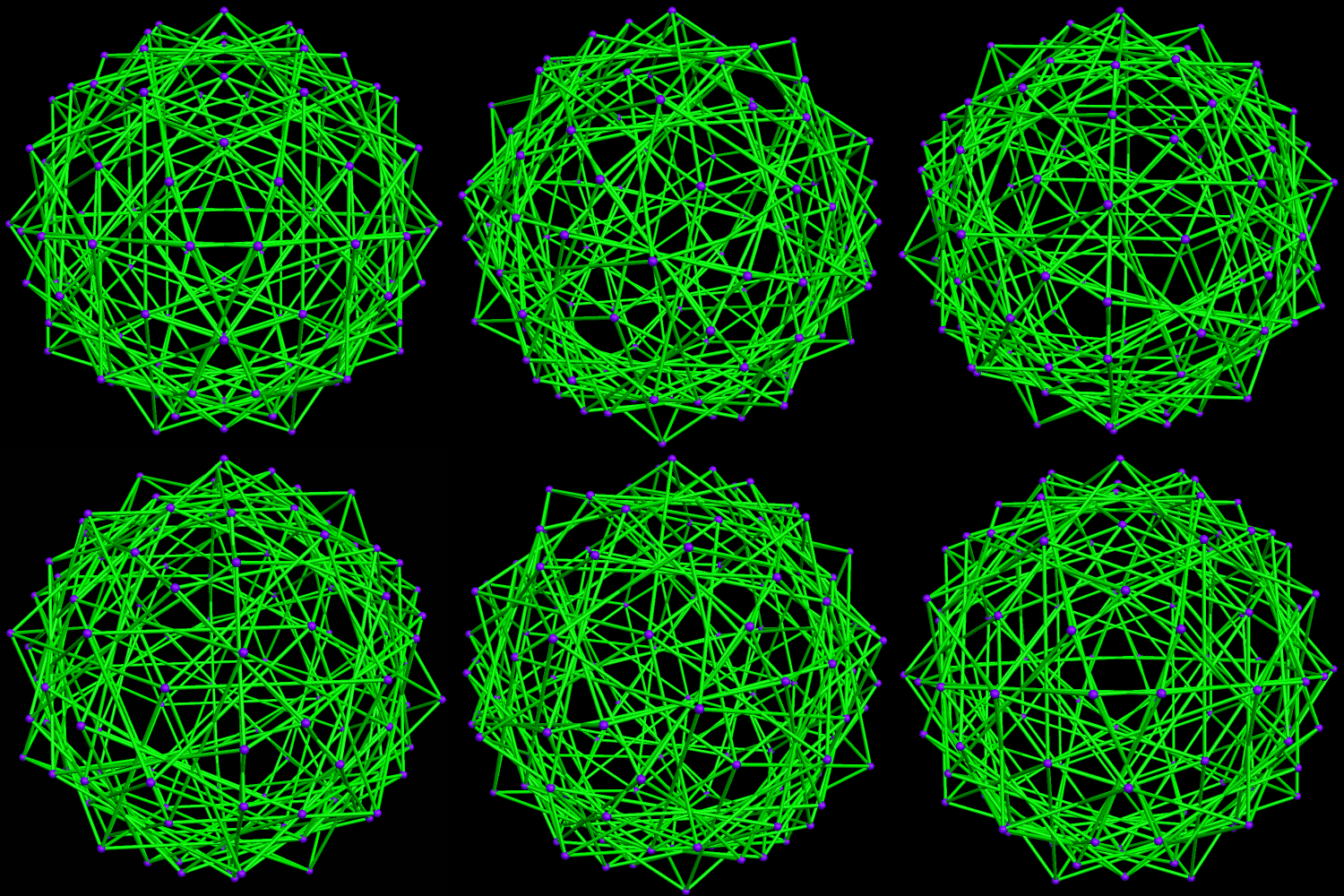
Which of these images do you find most illuminating? As always, comments are welcome.

I created this compound using Stella 4d, software you may try at this website.
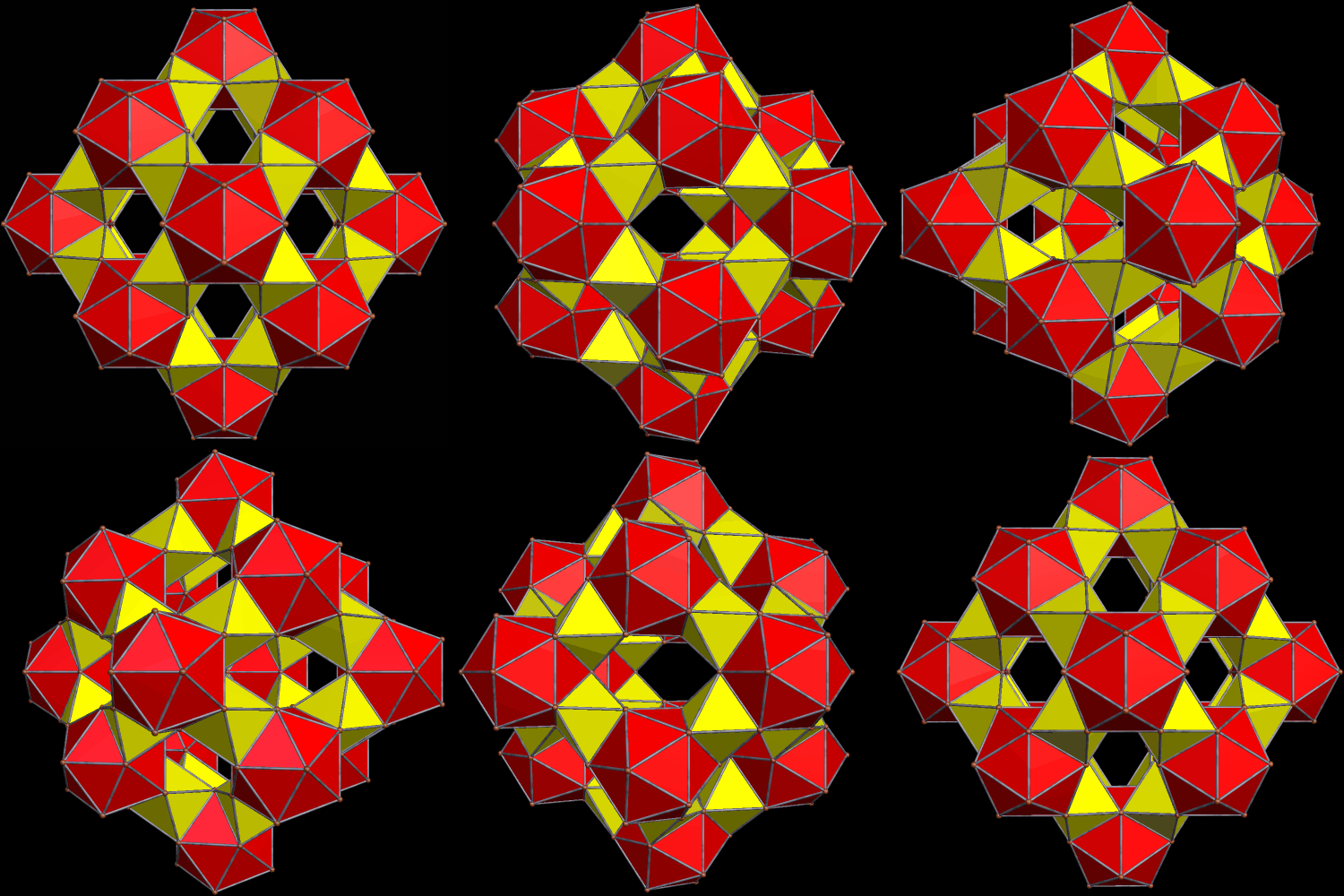
I assembled this using Stella 4d, software available here.
 RobertLovesPi.net