A Tetrahedral Exploration of the Icosahedron

Mathematicians have discovered more than one set of rules for polyhedral stellation. The software I use for rapidly manipulating polyhedra (Stella 4d, available here, including as a free trial download) lets the user choose between different sets of stellation criteria, but I generally favor what are called the “fully supported” stellation rules.

For this exercise, I still used the fully supported stellation rules, but set Stella to view these polyhedra as having only tetrahedral symmetry, rather than icosidodecahedral (or “icosahedral”) symmetry. For the icosahedron, this tetrahedral symmetry can be seen in this coloring-pattern.
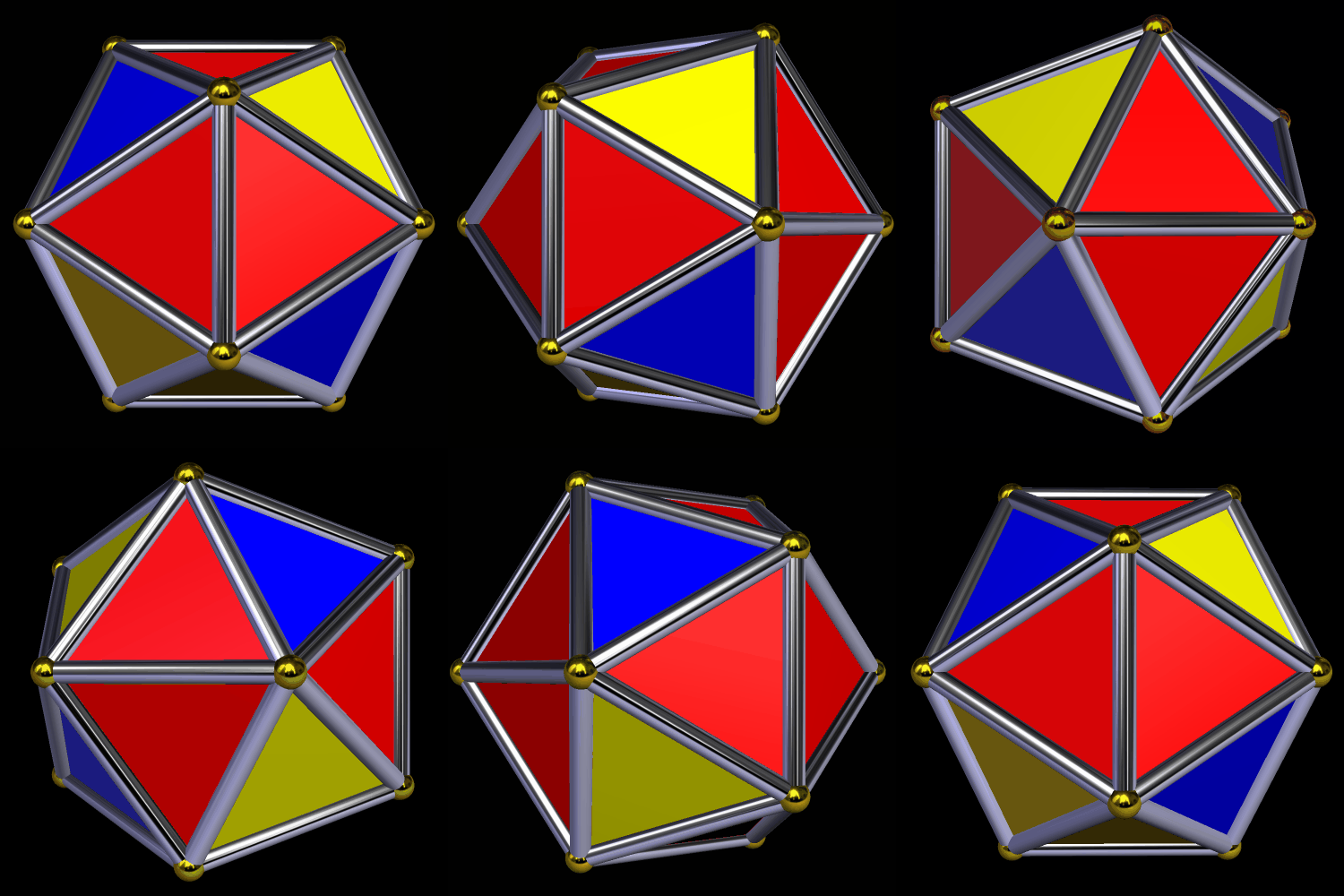
Icosa showing tet symm

The next image shows what the icosahedron looks like after a single stellation, when performed through the “lens” of tetrahedral symmetry. This stellation extends the red triangles as kites, and hides the yellow triangles from view in the process.
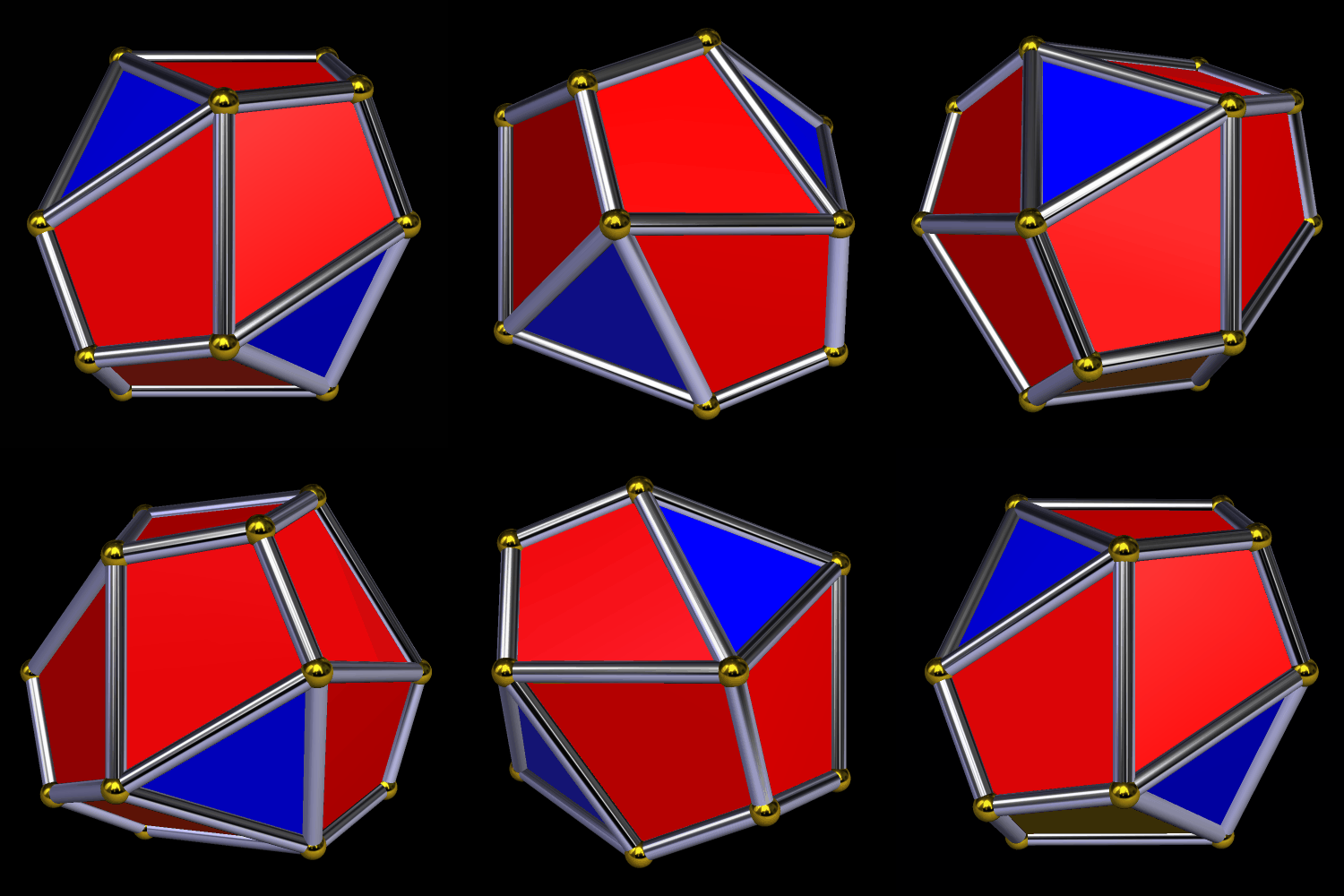
Icosa showing tet symm stellation 1

The second such stellation produces this polyhedron — a pyritohedral dodecahedron — by further-extending the red faces, and obscuring the blue triangles in the process.

Icosa showing tet symm stellation 2 pyritohedral dodecahedron

The third tetrahedral stellation of the icosahedron produces another pyritohedral figure, which further demonstrates that pyritohedral symmetry is related to both icosidodecahedral and tetrahedral symmetry.
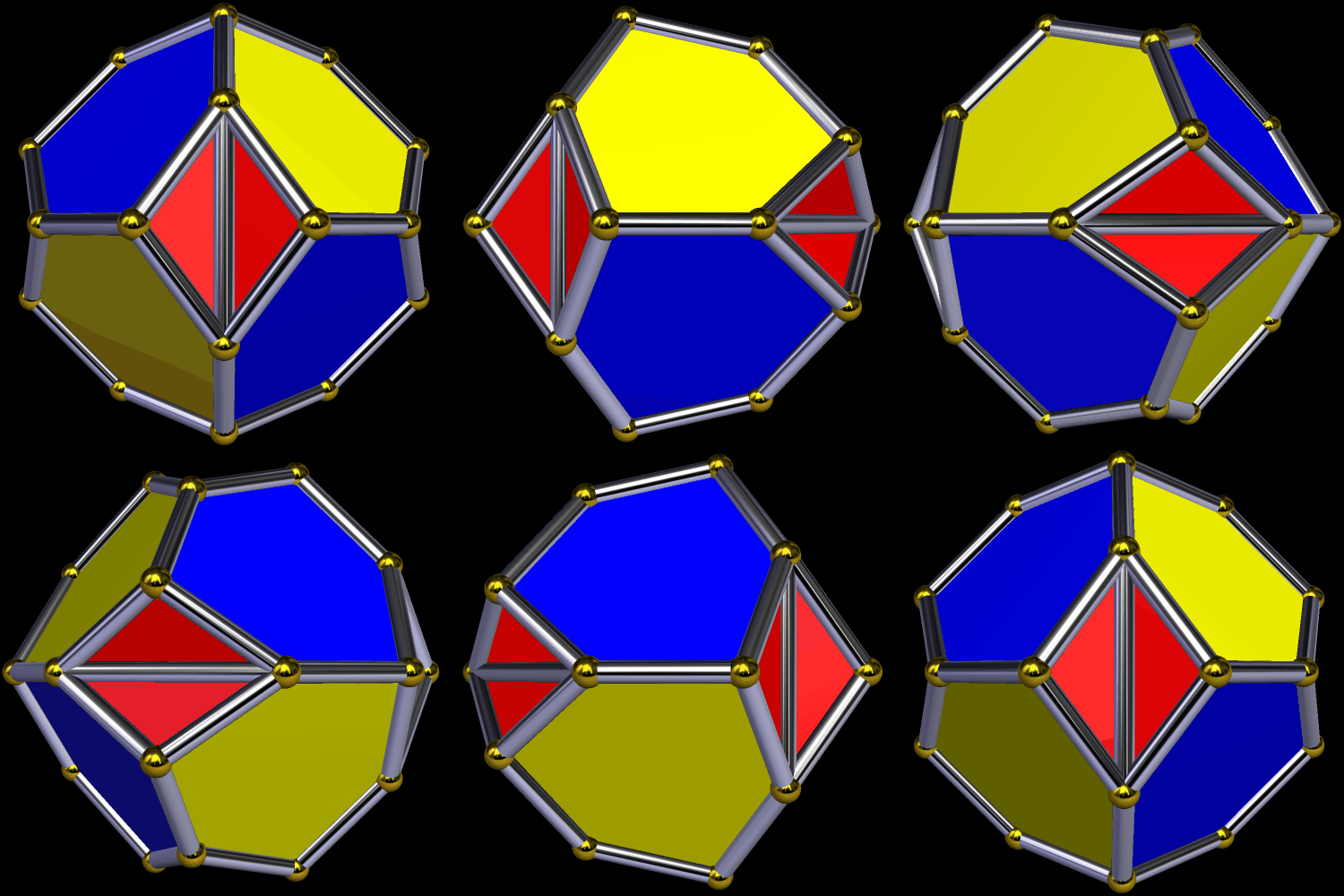
Icosa showing tet symm stellation 3

The fourth such stellation produces a Platonic octahedron, but one where the coloring-scheme makes it plain that Stella is still viewing this figure as having tetrahedral symmetry. Given that the octahedron itself has cuboctahedral (or “octahedral”) symmetry, this is an increase in the number of polyhedral symmetry-types which have appeared, so far, in this brief survey.

Icosa showing tet symm stellation 4 an octahedron with 2 face types

Next, I looked at the fifth tetrahedral stellation of the icosahedron, and was surprised at what I found.

Icosa showing tet symm stellation 5

While I was curious about what would happen if I continued stellating this polyhedron, I also wanted to see this fifth stellation’s convex hull, since I could already tell it would have only hexagons and triangles as faces. Here is that convex hull:

Icosa tet sym stellation 5's Convex hull

For the last step in this survey, I performed one more tetrahedral stellation, this time on the convex hull I had just produced.
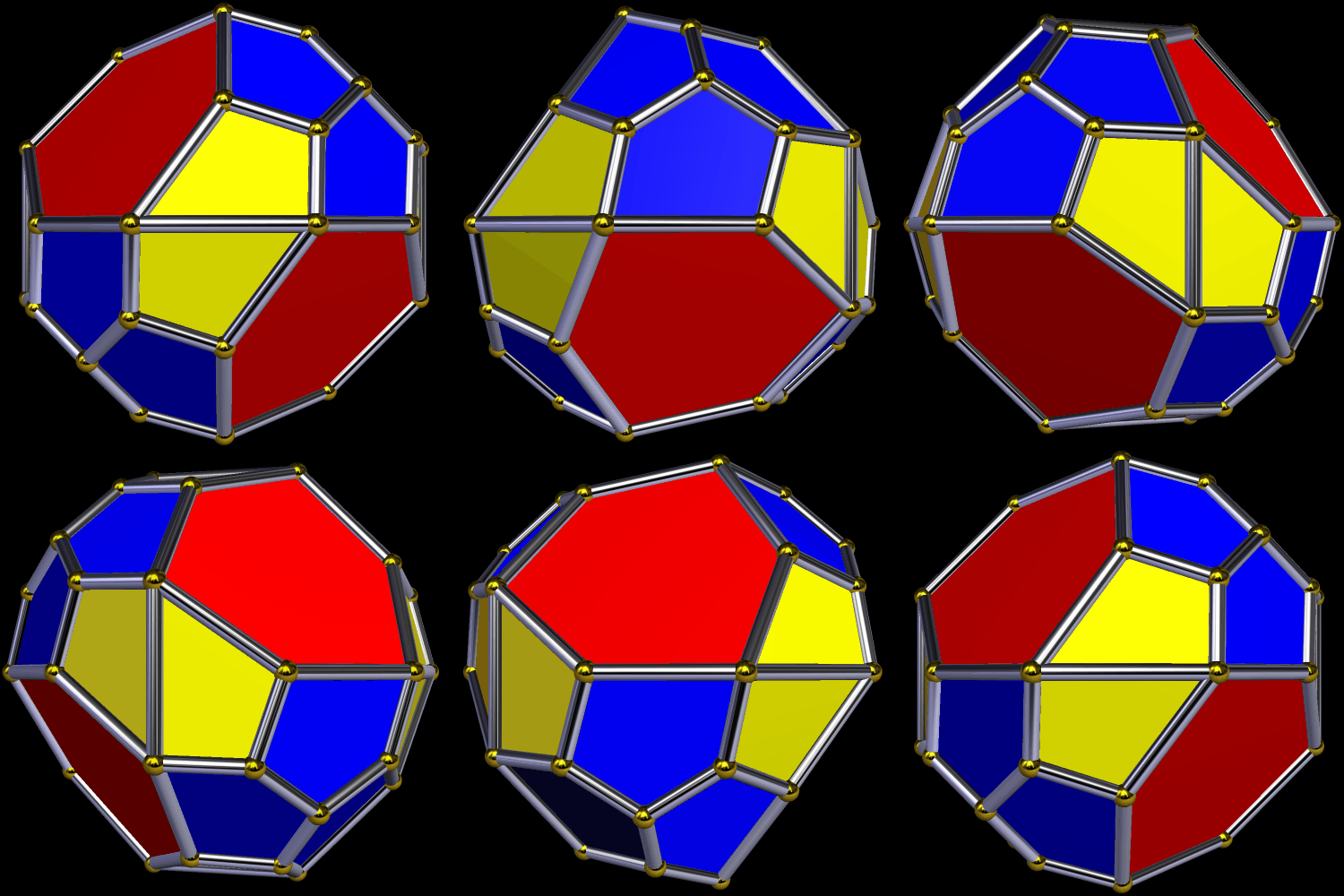
Icosa tet sym stellation 5's Convex hull ist stellation

A Hybrid of the Tetrahedron and the Great Dodecahedron

I made this by stellating a dodecahedron repeatedly, but doing so with Stella 4d, the polyhedral-manipulation software I use (available here), set to use tetrahedral symmetry, rather than the higher-order icosahedral symmetry (which I often call “icosidodecahedral” symmetry) inherent to Platonic dodecahedra.

Hybrid of great Dodeca and the tet

The same polyhedron appears below, but with the coloring-scheme, rotational direction, and rotational speed all set differently.

Tetrahedron meets great dodecahedron

The Compounds of Five Octahedra and Five Cubes, and Related Polyhedra

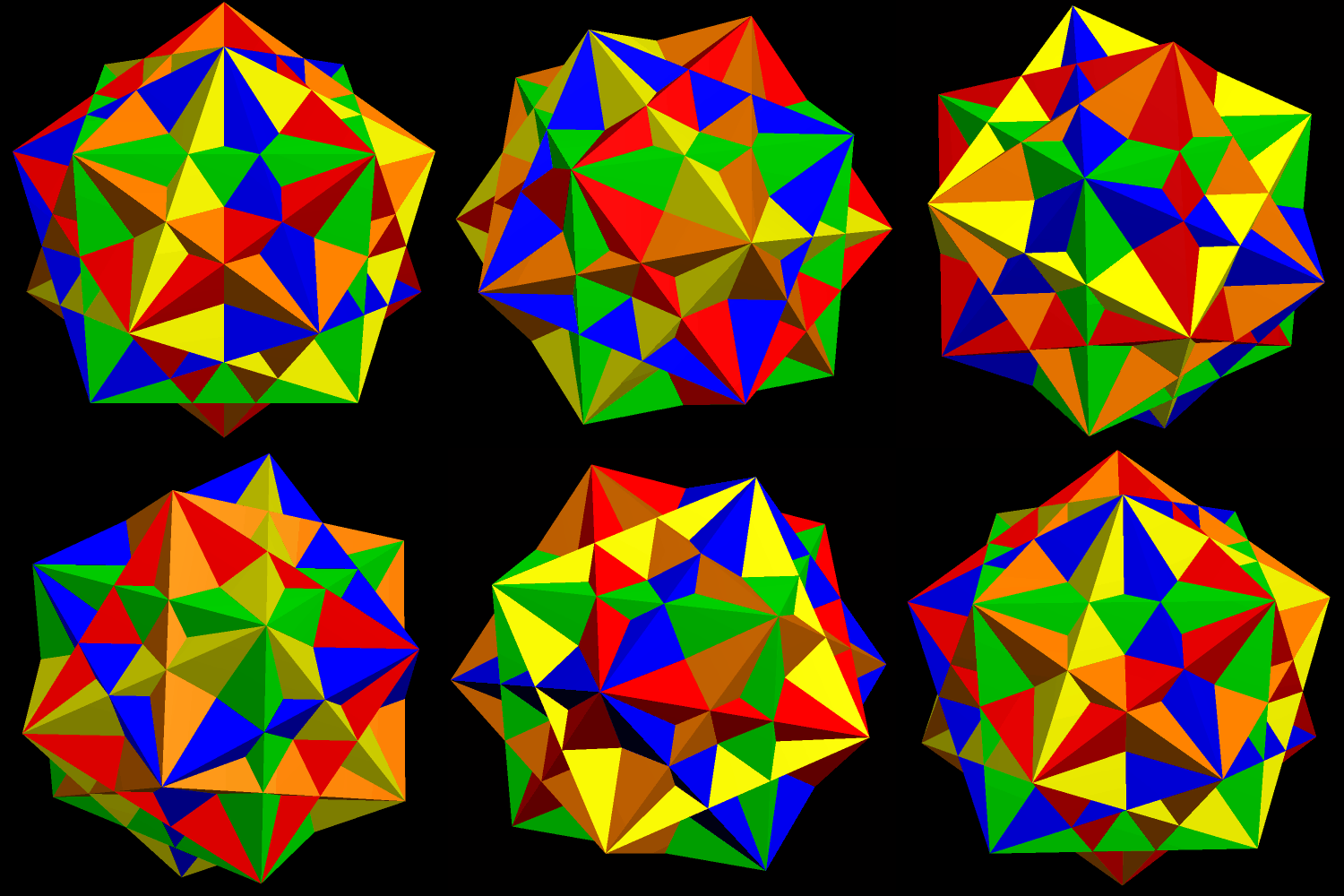
This is the compound of five octahedra, each a different color.

Cubes 5

Since the cube is dual to the octahedron, the compound of five cubes, below, is dual to the compound above.

cubes-5a

Here are five cubes and five octahedra, compounded together, and shown with the same five colors used above.

Cubes 5 and octahedra 5

This is the same compound, except with all squares/cubes having one color, and triangles/octahedra having another, made by changing the color-scheme used by Stella 4d (the program I use to make these images; it’s available here).

Cubes 5 and octahedra 5 colored by face-type

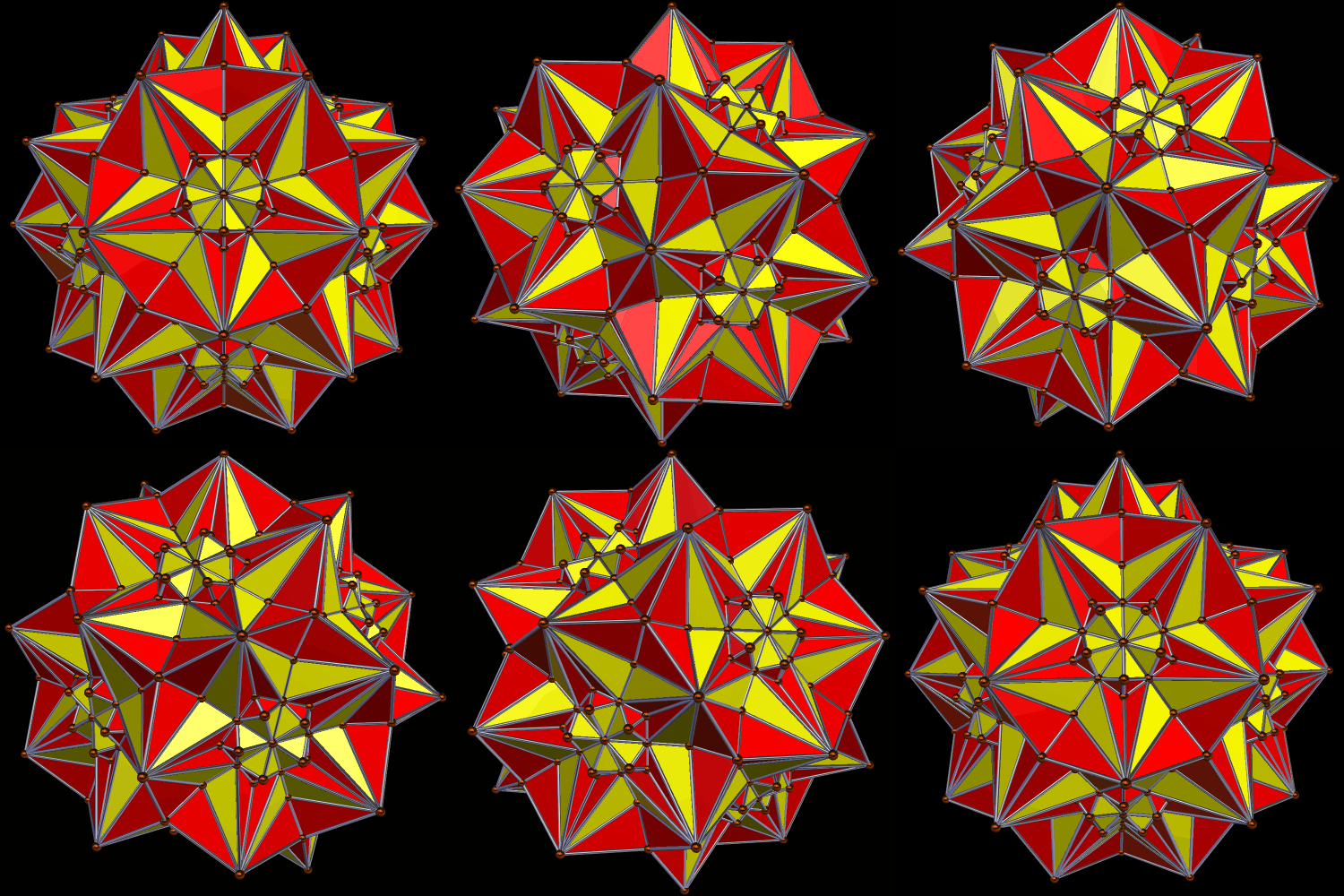
After seeing the two-color version of this ten-part compound, I decided to start stellating it, looking for stellations with an interesting appearance. Here is the 23rd stellation of the ten-part compound, colored by face-type.

Compound of 5 Cubes and dual 23rd stellation

Next, the 27th stellation, which is chiral, unlike the stellation showed above.

Compound of 5 Cubes and dual 27th stellation

The 33rd stellation also has an interesting appearance (using, I admit, completely subjective criteria for “interesting”), while still having easily-noticable differences to the stellations shown above.

Compound of 5 Cubes and dual 33rd stellation

At the 35th stellation, another interesting chiral polyhedron is found. Unexpectedly, its direction of “twist” appears opposite that seen in the 27th stellation. (It could well be that this “twist-reversal” is a common phenomenon in stellation-series — simply one I have never noticed before.)

Compound of 5 Cubes and dual 35th stellation

Next, the ten-part compound’s 39th stellation.

Compound of 5 Cubes and dual 39th stellation

After the 39th stellation, I entered a sort of “desert,” with many stellations in a row which did not strike me as interesting, often with only tiny differences between one and the next. The 194th stellation, though, I liked.

Compound of 5 Cubes and dual 194th stellation

Although I liked the 194th stellation, I didn’t want to risk trudging through another “desert” like the one which preceded it, so I jumped ahead to the final valid stellation, after which the series “wraps around” to its beginning.

Compound of 5 Cubes and dual final valid stellation

Next, I made another rotating image of this final valid stellation, this time with the color-scheme set to “rainbow color mode.”

Compound of 5 Cubes and dual final valid stellation rbc

I couldn’t resist taking this one stellation further, to see the beginning of the stellation-series, since I knew I might have entered it somewhere in the middle, rather than at the beginning.

Compound of 5 Cubes and dual final valid stellation next one rbc

What I found, I immediately recognized as the rhombic triacontahedron. In some ways, this was surprising, and in other ways, it was not. The compound of five cubes is, itself, a stellation of the rhombic triacontahedron — but what I started stellating also included the compound of five octahedra, which, so far as I know, is not part of the rhombic triacontahedron’s (very) long stellation-series. Also, I know what the rhombic triacontahedron’s final stellation looks like, and it isn’t the final stellation shown above, but is, instead, this:

final-stellation-of-the-rhombic-triaconta

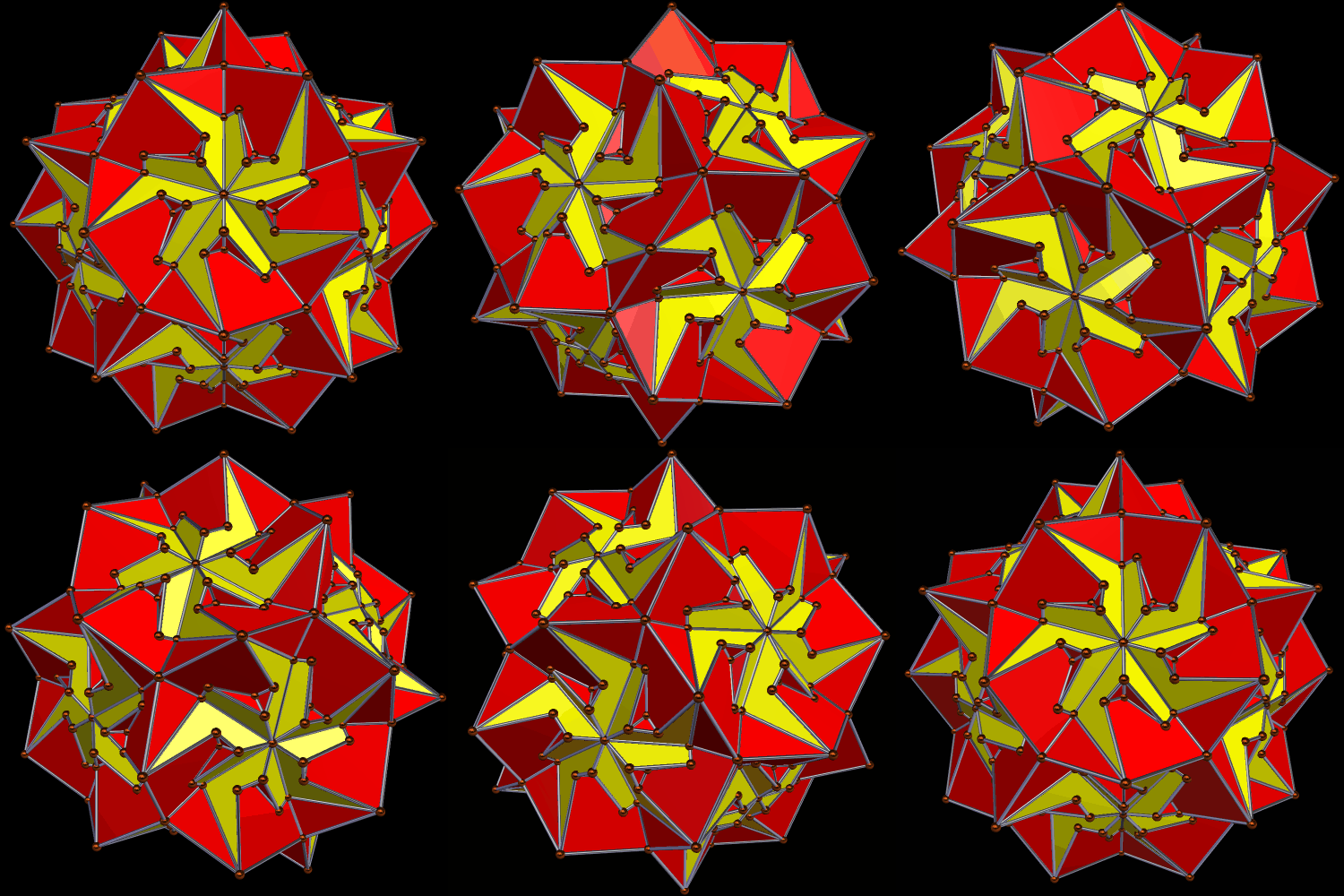
To try to better-understand just what was going on here, I went back, and deliberately left out the five-cube part of the ten-part compound (which is a stellation of the rhombic triacontahedron), which left me just with the compound of five octahedra — and then I had Stella produce this compound’s final stellation.

Octahedra 5 final stellation

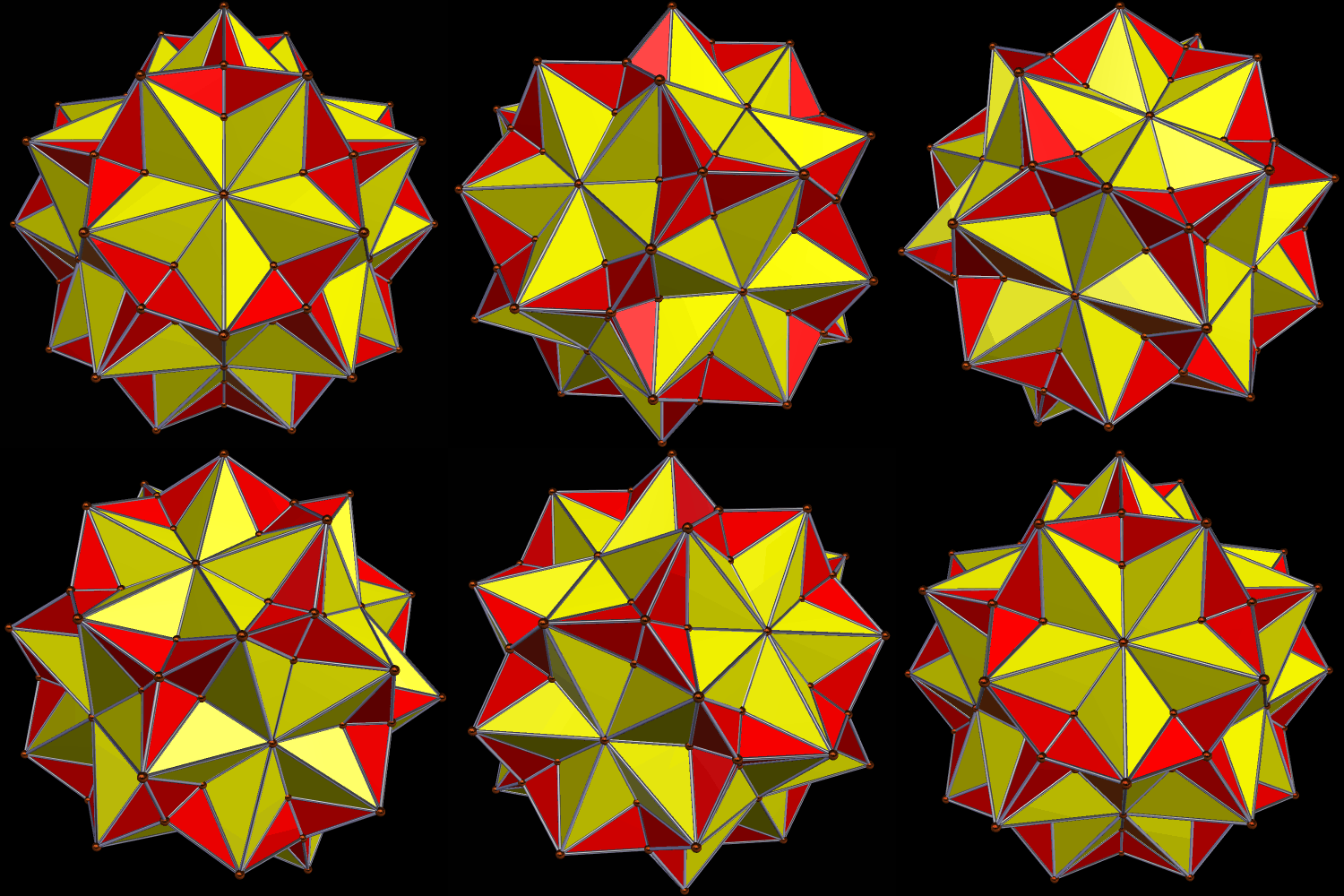
This was another polyhedron I recognized: the final stellation of the icosahedron. To verify that my memory was correct, I stellated it one more time. Sure enough, this is what I got:

Octahedra 5 final stellation one more

This reminded me that the compound of five octahedra is the second stellation of the icosahedron, helping to explain some of this. I also noticed that the five-octahedron compound can be seen as a faceting of the icosidodecahedron. (The icosidodecahedron is dual to the rhombic triacontahedron, and faceting is the reciprocal function of stellation.) However, I have no idea why the final stellation of the ten-part compound above appears as it does.

It is my opinion that a productive polyhedral investigation usually does more than answer questions; it also raises new ones. At least in my mind, that’s exactly what has happened. Therefore, I think this was a perfectly good way to begin the new year.

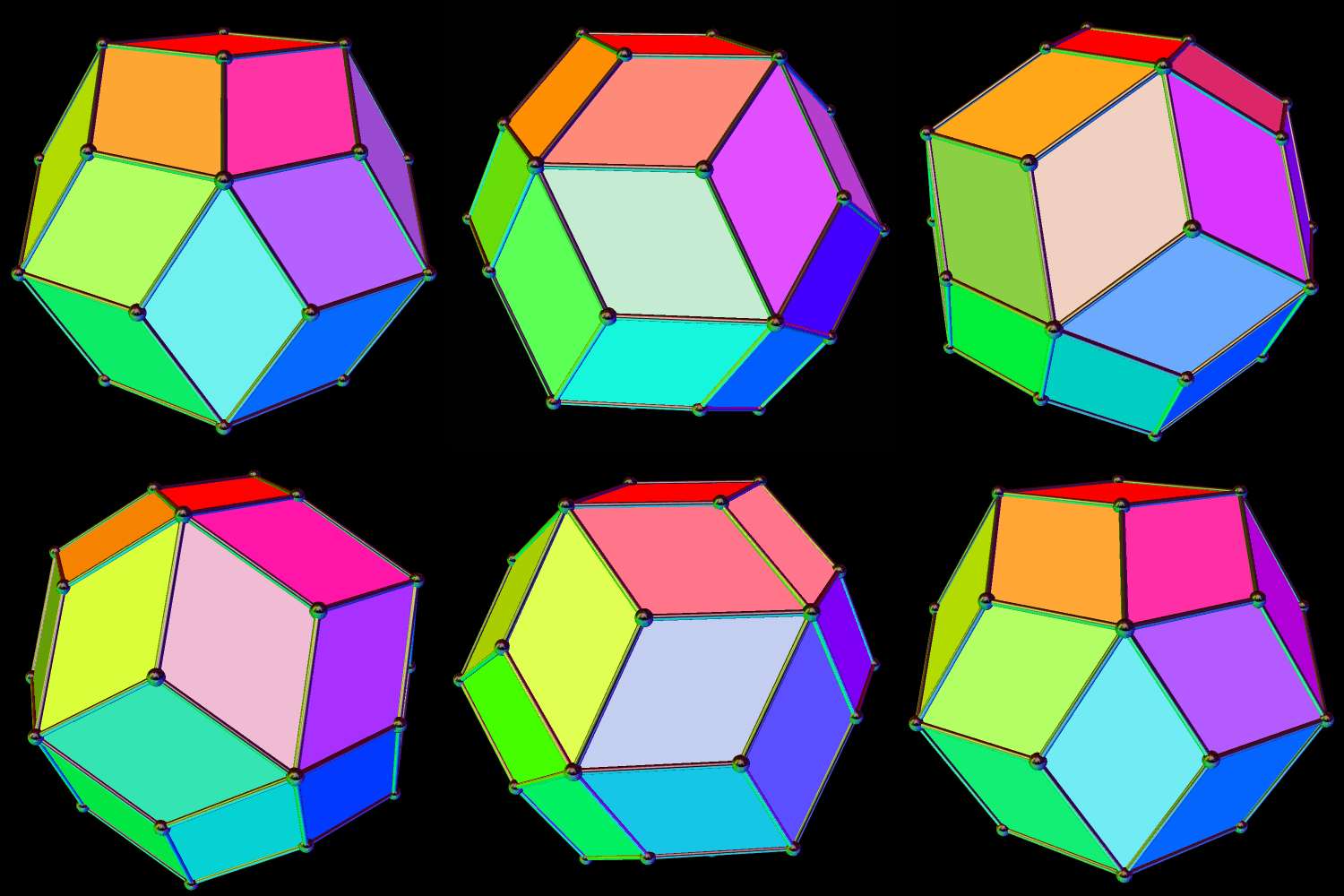
A Compound of Ten Thin Parallelopipeds, Together with Its Final Stellation

Stellated Strombic Hexeconta rainbow

The polyhedron above also appeared in the post immediately before this one, as the second of three images. However, here it is presented in “rainbow color mode.”

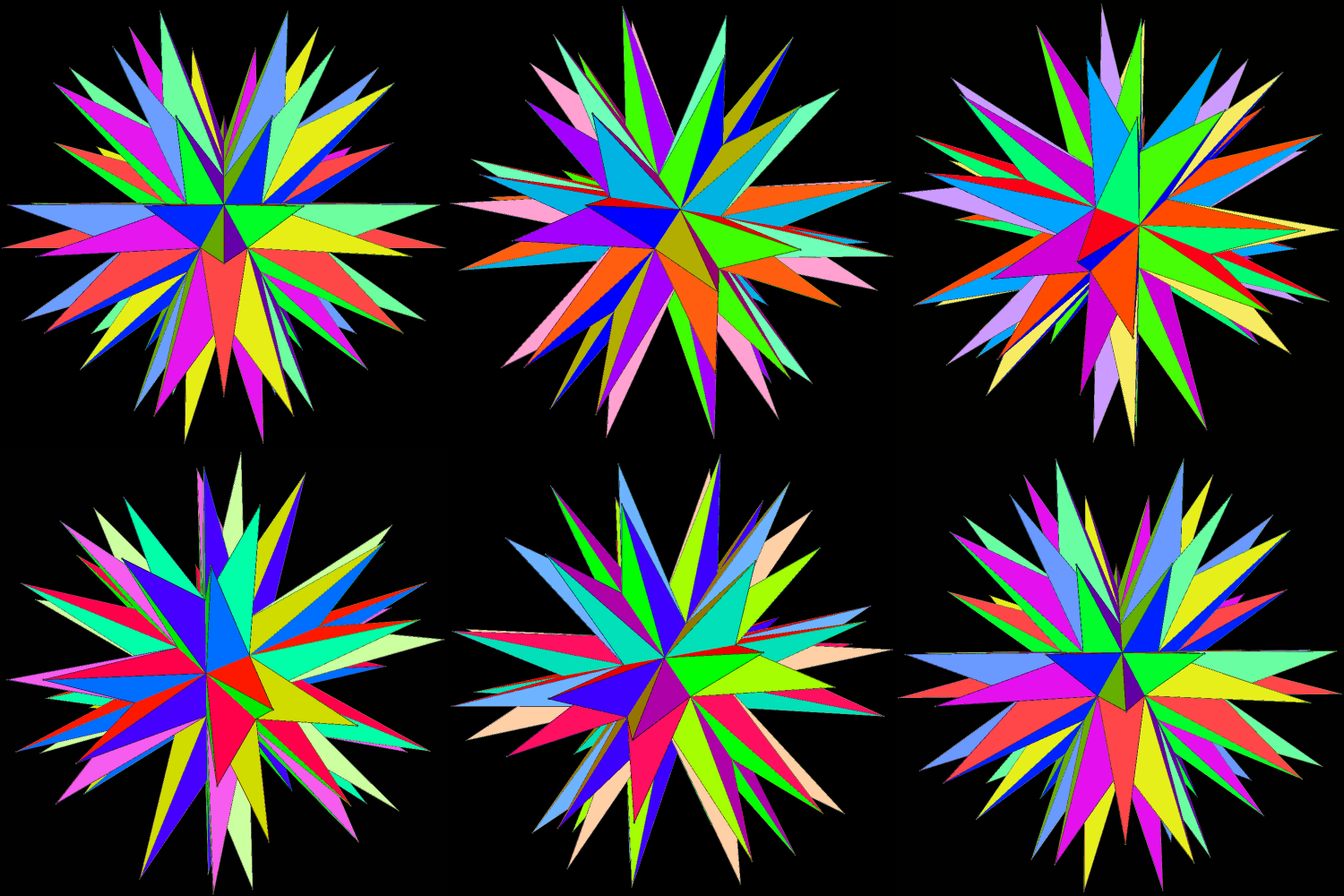
This is its final stellation:

Stellated Strombic Hexeconta rainbow final valid stellation

Both virtual models were created with Stella 4d, software you may try for yourself at this website.

The Small Ditrigonal Icosidodecahedron, Together with Its Fifth Stellation

Faceted Dodeca

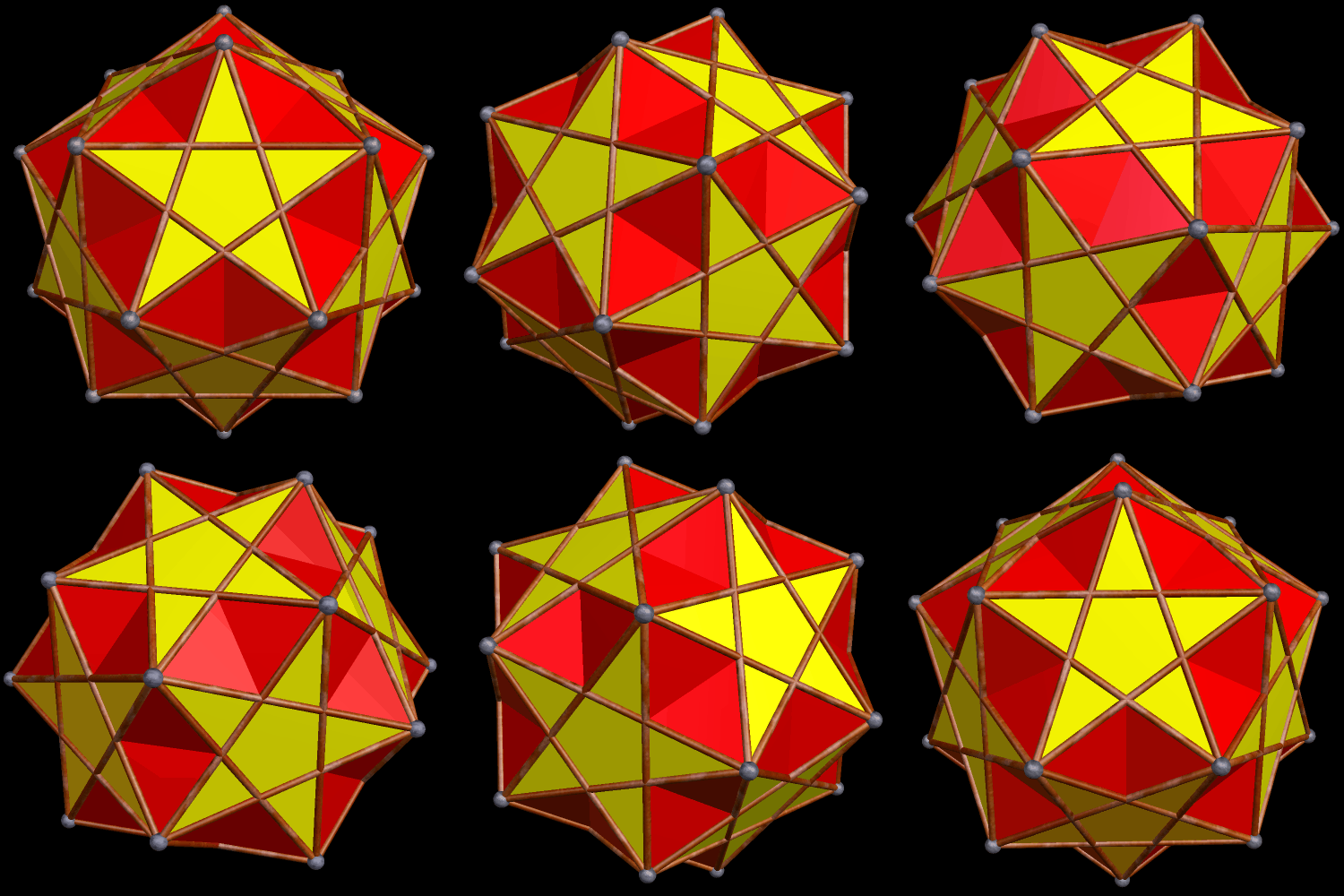
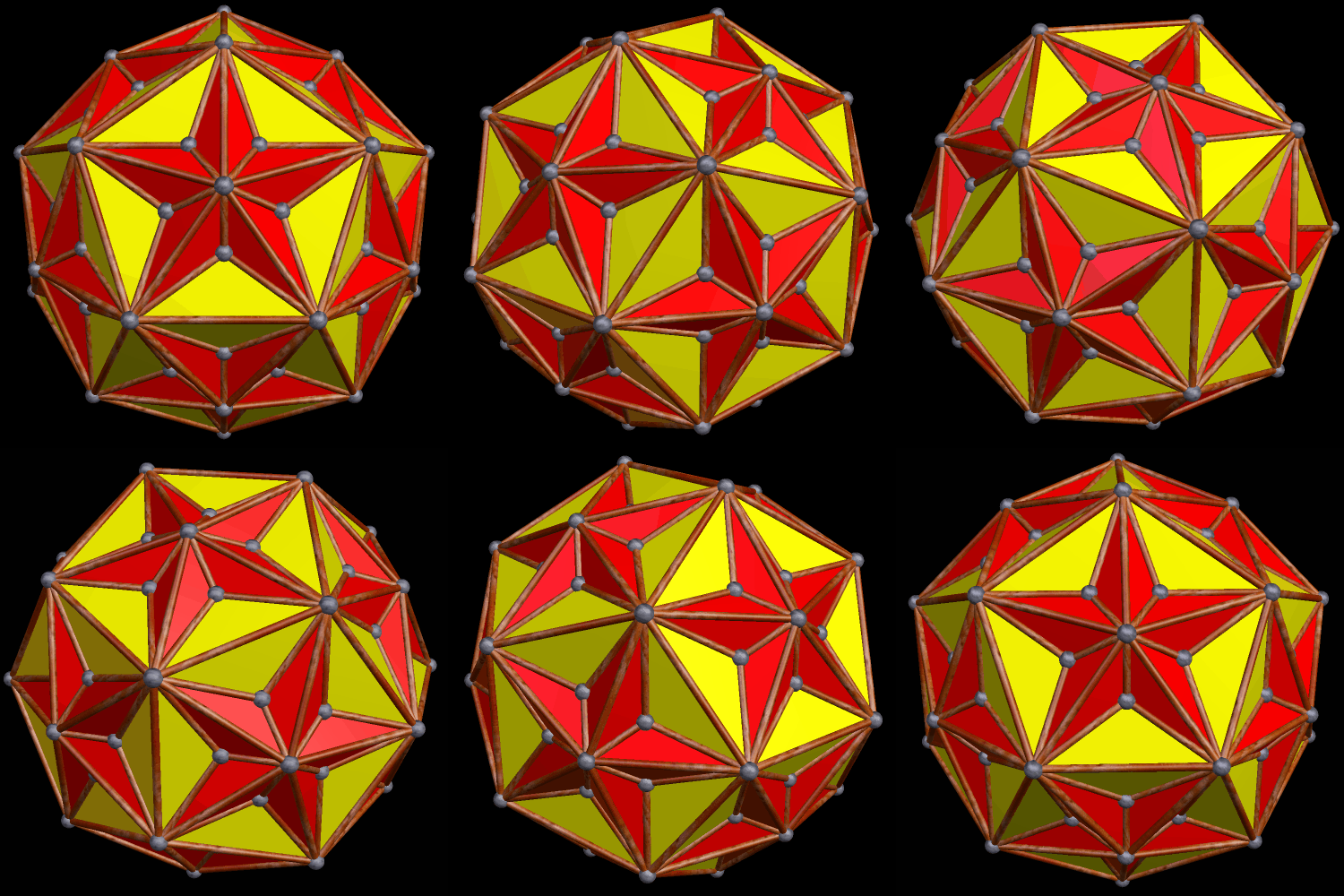
I made the polyhedron above by performing a faceting of the dodecahedron, and only realized, after the fact, that I had stumbled upon one of the uniform polyhedra, a set of polyhedra I have not yet studied extensively. It is called the small ditrigonal icosidodecahedron, and its faces are twelve star pentagons and twenty equilateral triangles, with the triangles intersecting each other. Below is its fifth stellation, which appears to be a compound of a yellow dodecahedron and a red polyhedron which I do not (yet) recognize, although it does look quite familiar.

5th stellation of the Small Ditrigonal Icosidodeca

Both images were created using Stella 4d, software you can try right here.

The 21st and 22nd Stellations of the Truncated Dodecahedron

Stellation of a polyhedron involves extending its faces and/or edges into space to form other polyhedra, often with a star-like appearance, which is where the words “stellation,” “stellate,” and “stellated” originate. (“Stella” is Latin for “star.”)

Since this can be done repeatedly, long stellation-series exist for many polyhedra. In the case of the truncated dodecahedron, it was the 21st and 22nd stellations which I found the most aesthetically pleasing.

Here is the 21st stellation of this polyhedron:

Trunc Dodeca 21st stellation

And here is the 22nd:

Trunc Dodeca 22nd stellation

Both of these polyhedra were created with Stella 4d, software you may try for yourself, right here.

The Final Stellation of the Compound of Five Icosahedra

Stellated 5 Icosahedra final stellation

This was made using Stella 4d, software available at http://www.software3d.com/Stella.php.

Eight Selections from the Stellation-Series of the Rhombic Enneacontahedron

33rd stellation of the rhombic triacontahedron

The stellation-series of the rhombic enneacontahedron has many polyhedra which are, to be blunt, not much to look at — but there are some attractive “gems” hidden among this long series of polyhedral stellations. The one above, the 33rd stellation, is the first one attractive one I found — using, of course, my own, purely subjective, esthetic criteria.

The next attractive stellation I found in this series is the 80th stellation. Unlike the 33rd, it is chiral.

80th stellation of the rhombic triacontahedron

And, after that, the 129th stellation, which is also chiral:

129th stellation of the rhombic triacontahedron

Next, the 152nd (and non-chiral) stellation:

152nd stellation of the rhombic enneacontahedron

I also found the non-chiral 158th stellation worthy of inclusion here:

158th stellation of the rhombic enneacontahedron

After that, the chiral 171st stellation was the next one to attract my attention:

171st stellation of the rhombic enneacontahedron

The next one to attract my notice was the also-chiral 204th stellation:

204th stellation of the rhombic enneacontahedron

Some polyhedral stellation-series are incredibly long, with thousands, or even millions, of stellations possible before one reaches the final stellation, after which stellating the polyehdron one more time causes it to “wrap around” to the original polyhedron. Knowing this, I lost patience, and simply jumped straight to the final stellation of the rhombic triacontahedron — the last image in this post:

final stellation of the rhombic enneacontahedron

All of these images were created using Stella 4d: Polyhedron Navigator, a program available at http://www.software3d.com/Stella.php. For anyone interested in seriously studying polyhedra, I consider this program an indispensable research tool (and, no, I receive no compensation for all this free advertising for Stella which appears on my blog). There’s a free trial version available — why not give it a try?

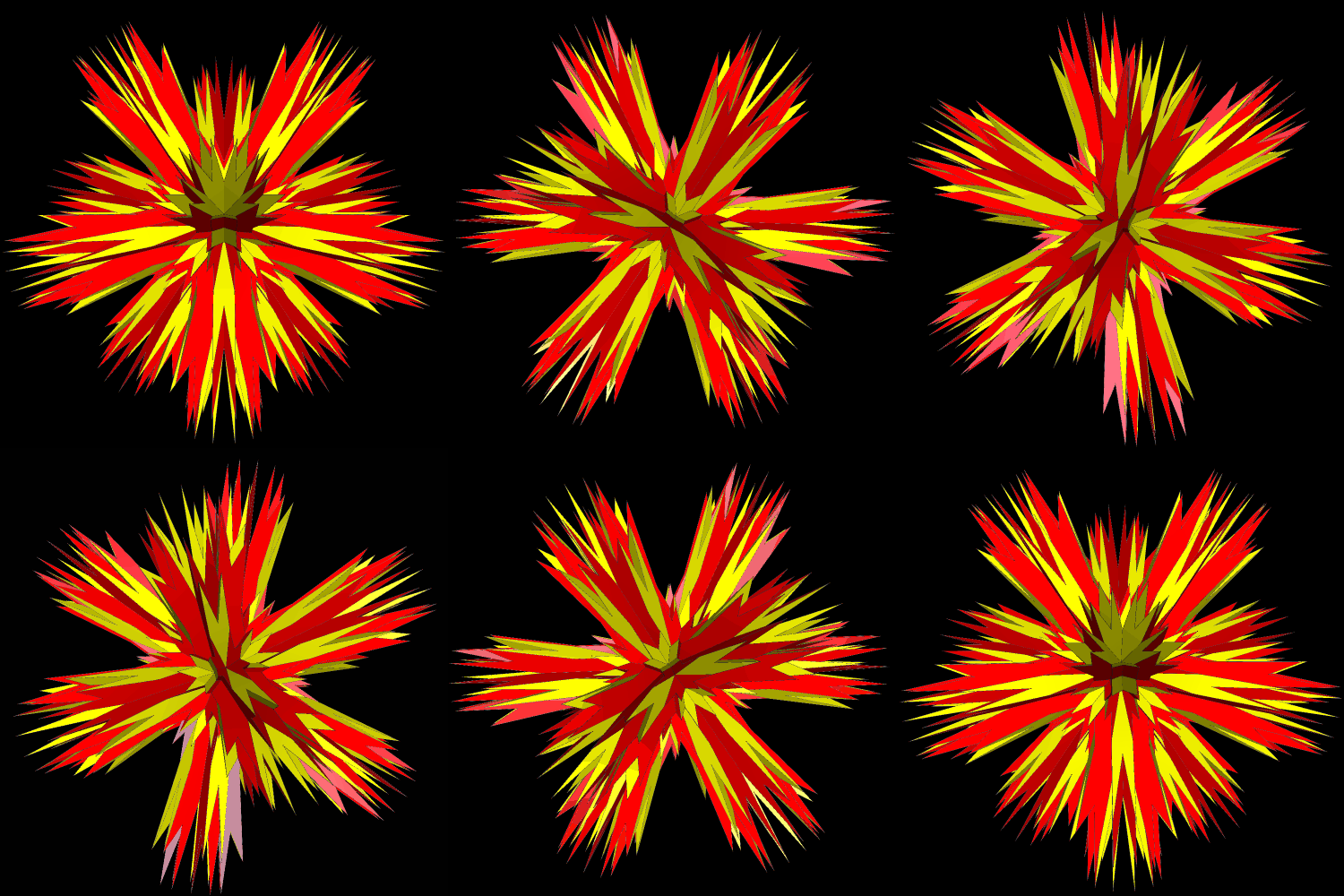
The Final Stellation of the Rhombic Triacontahedron, Together with Its Dual, a Faceting of the Icosidodecahedron

final stellation of the Rhombic Triaconta

Sharp-eyed, regular readers of this blog will notice that this is the same polyhedron shown in the previous post, which was described as the “final stellation of the compound of five cubes,” due to the coloring scheme used in the first image there, which had five colors “inherited” from each of the differently-colored cubes in the five-cube compound. This image, by contrast, is shown in rainbow-color mode.

How can the rhombic triacontahedron and the compound of five cubes have the same final stellation? Simple: the compound of five cubes is, itself, a member of the stellation-series of the rhombic triacontahedron. Because of this, those two solids end up at the same place, after all possible stellations are completed, just as you will reach 1,000, counting by ones, whether you start at one, or start at, say, 170.

I am grateful to Robert Webb for pointing this out to me. He’s the person who wrote Stella 4d, the software I use to make these images of rotating polyhedra. His program may be found at http://www.software3d.com/Stella.php — and there is a free trial version available for download, so you can try Stella before deciding whether or not to purchase the fully-functioning version.

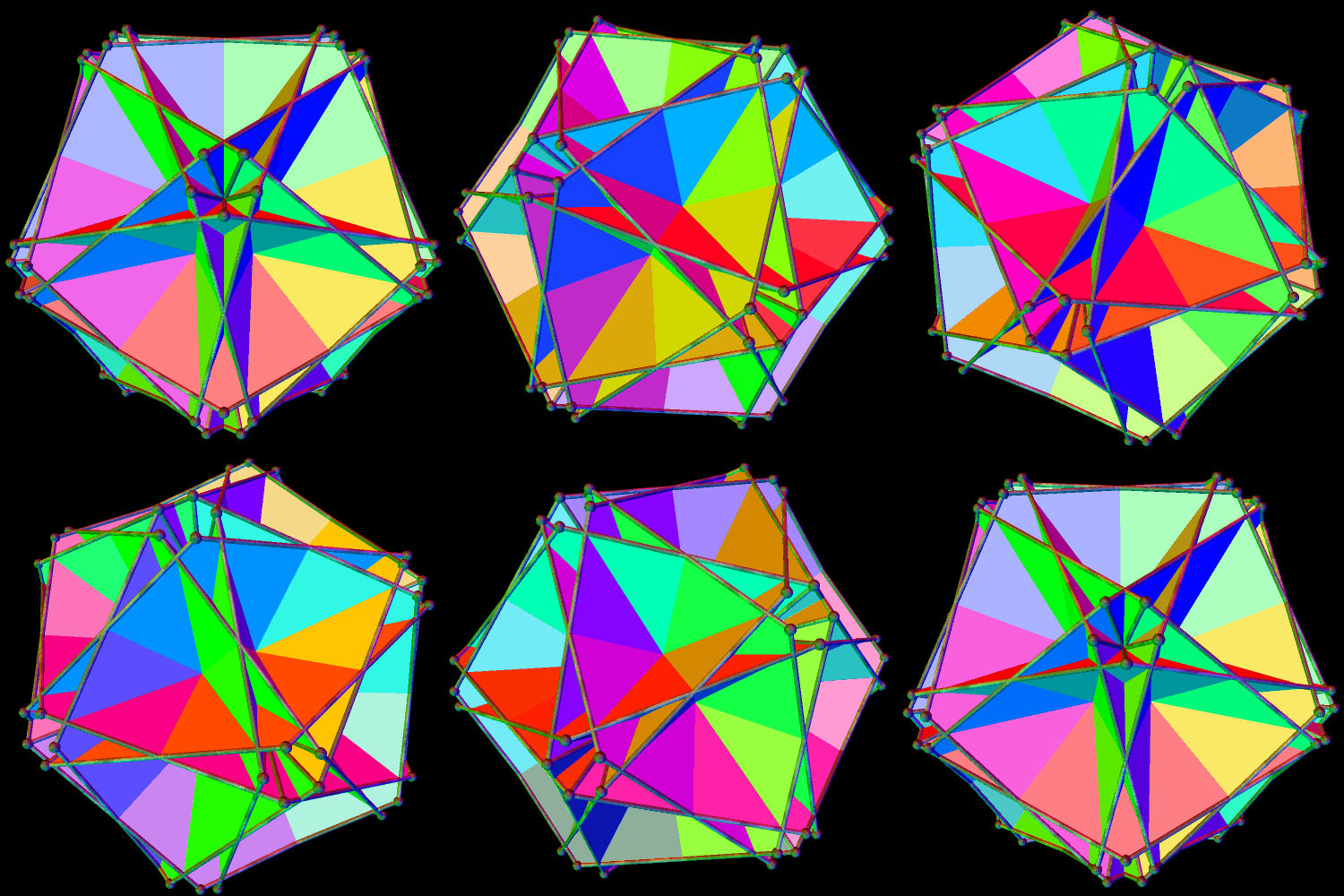
Since faceting is the reciprocal process of stellation, the dual of the polyhedron above is a faceted icosidodecahedron, for the icosidodecahedron is the dual of the rhombic triacontahedron. Here is an image of that particular faceting of the icosidodecahedron, colored, this time, by face-type:

Faceted Icosidodeca dual of final stellation of RTC

The Final Stellation of the Compound of Five Cubes

Stellated 5 Cubes final stellation colors derived from compound

The version of the final stellation of the compound of five cubes shown above has its colors derived from the traditional five-color version of the original compound, itself. The one below, by contrast, has its colors selected by face-type, without regard for the original compound.

Stellated 5 Cubes final stellation colored by face type

Both of these virtual models were created with Stella 4d: Polyhedron Navigator, software available at this website. Also, for more about this particular polyhedron, please see the next post.