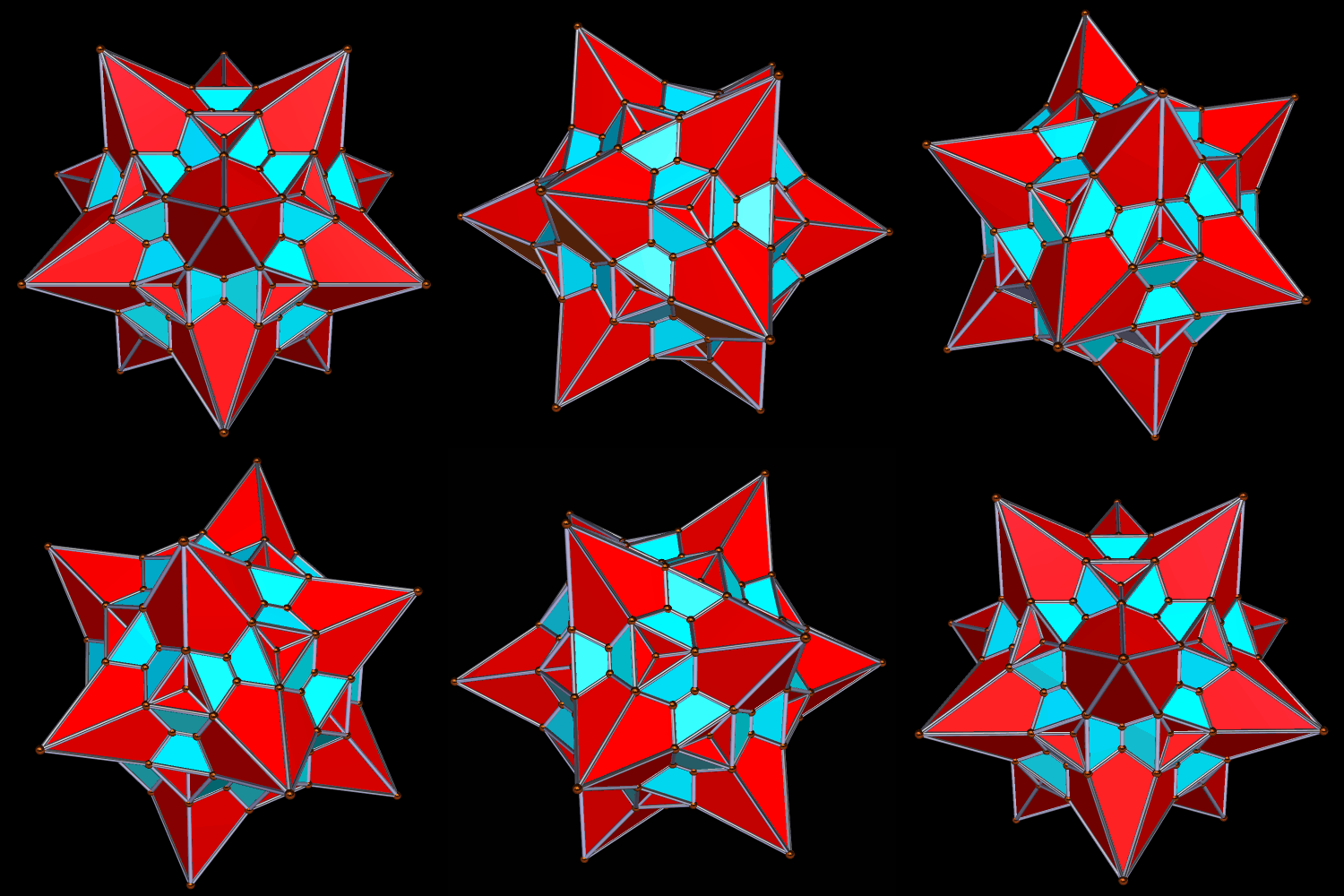
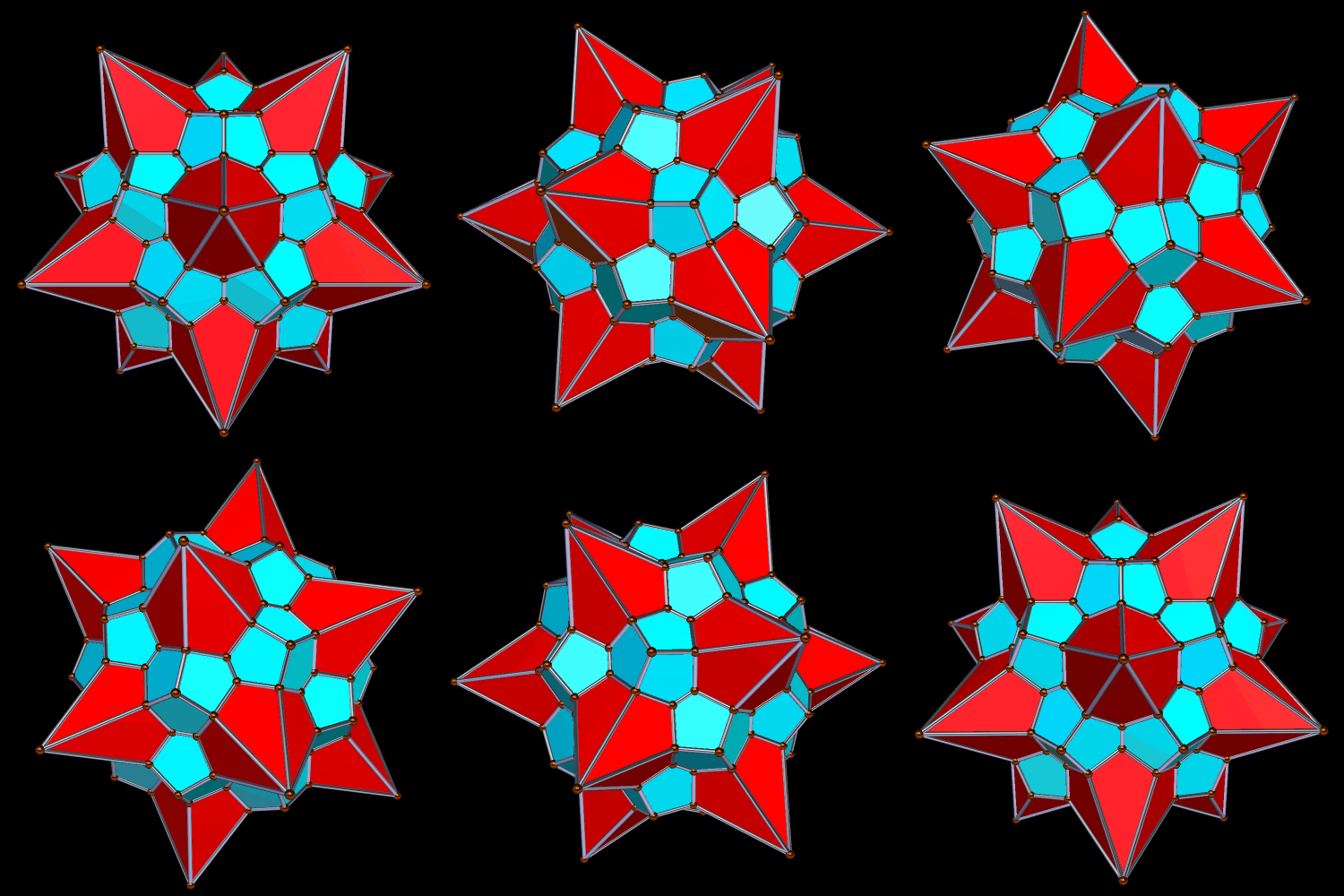
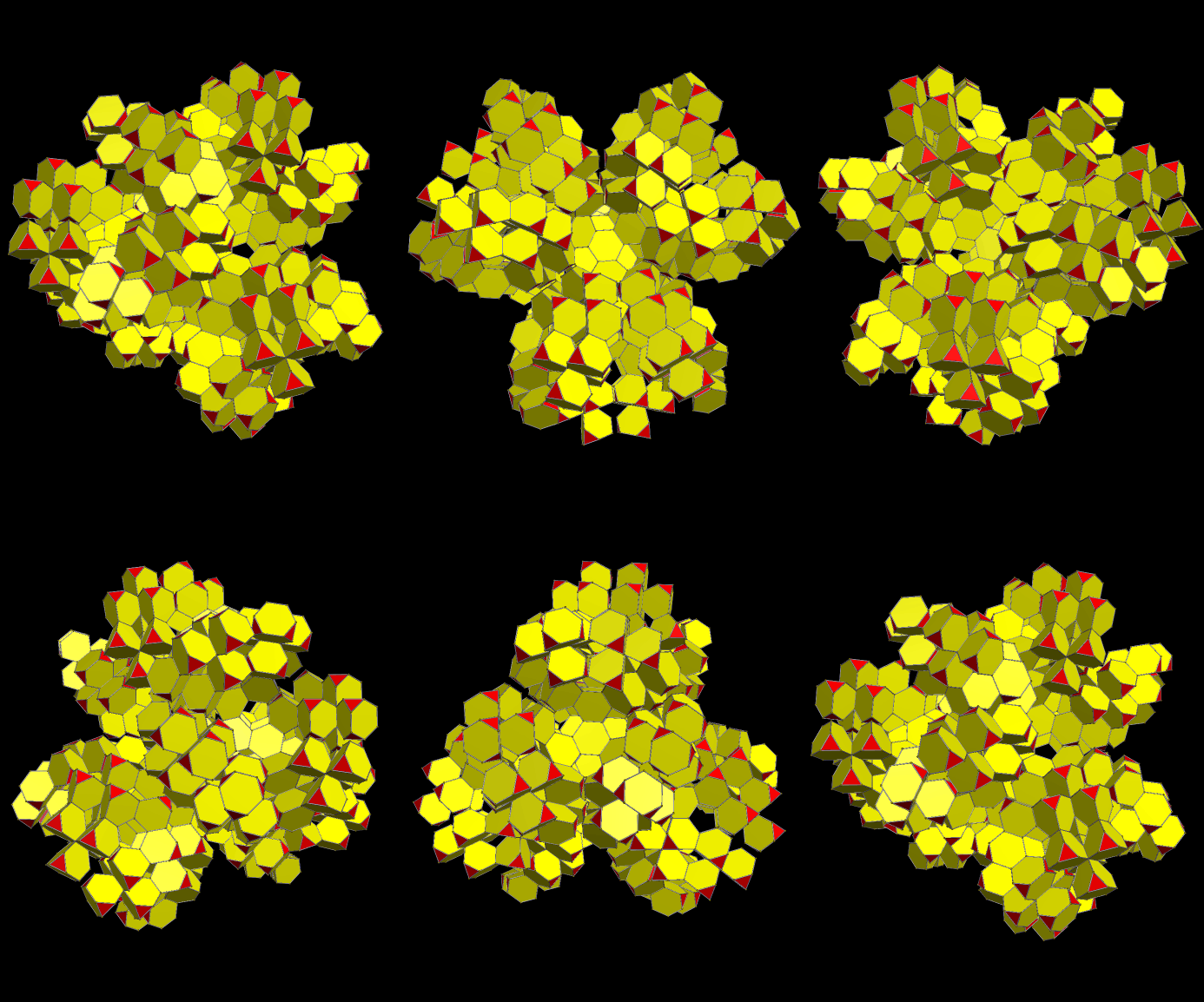
Selected Stellations of the Truncated Dodecahedron

This is the truncated dodecahedron. It is one of the Archimedean solids.
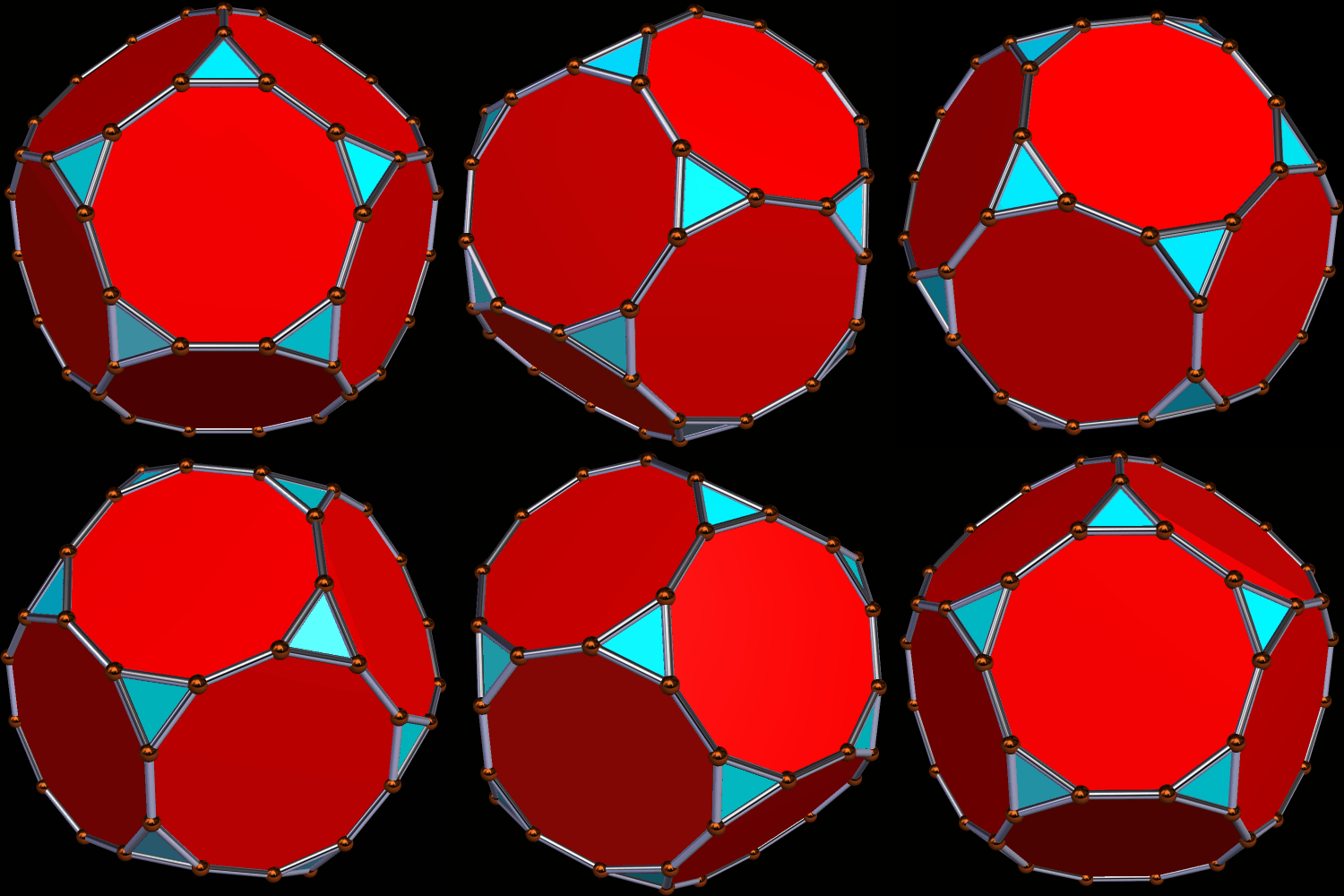
Trunc Dodeca

This polyhedron has a long stellation-series, from which I selected several on aesthetic grounds. The figure immediately below is the truncated dodecahedron’s 16th stellation.
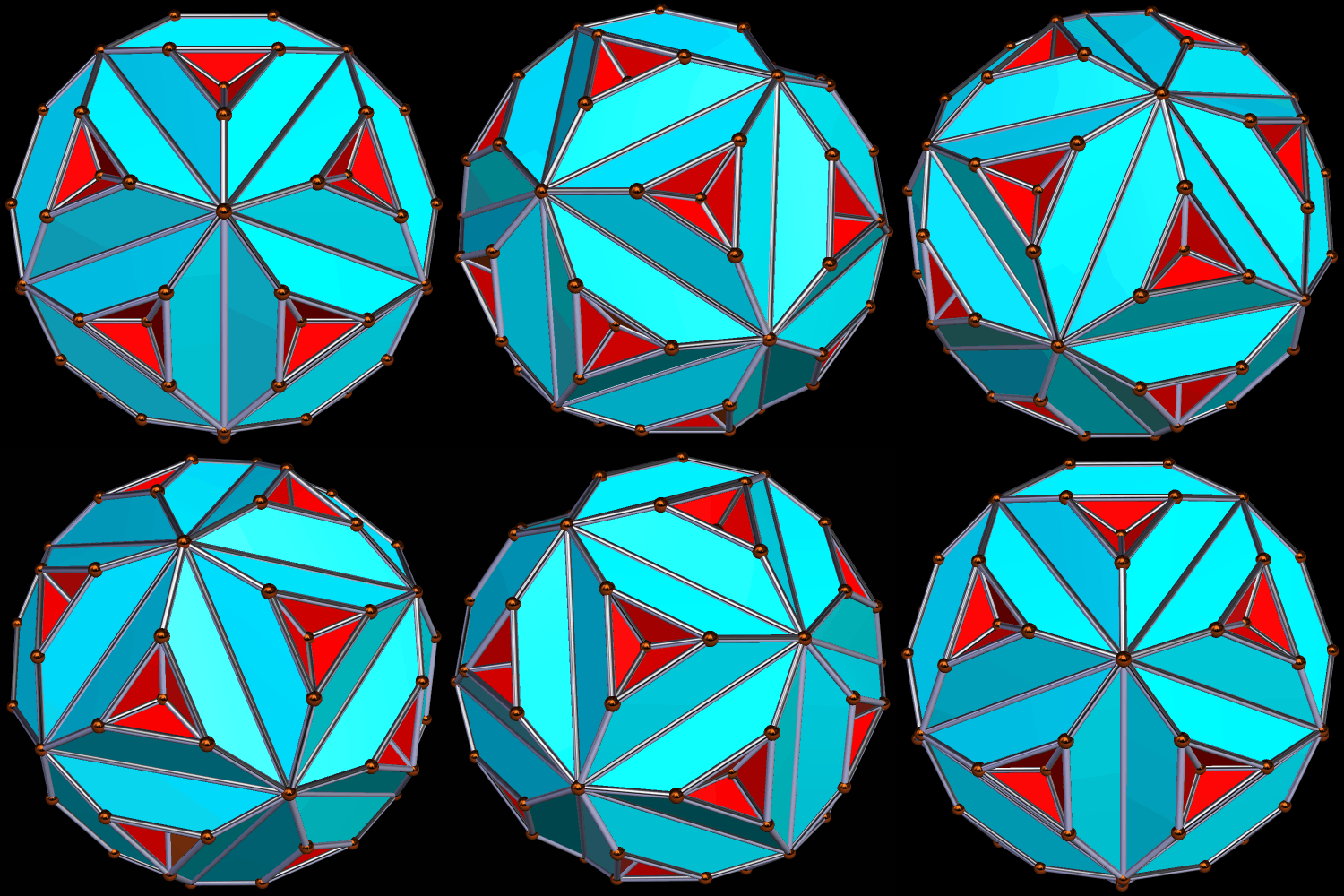
16th stellation of Trunc Dodeca

Here is the 21st stellation.

21st stellation of Trunc Dodeca

It’s easy to stellate polyhedra rapidly, and make many other changes to them, with Stella 4d: Polyhedron Navigator. You can try it for free at http://www.software3d.com/Stella.php.

25th stellation of Trunc Dodeca.gif

The stellation shown immediately above is the 25th, and the one shown immediately below is the 27th.

27th stellation of Trunc Dodeca

Here is the next stellation: the 28th. Unlike the ones shown above, it is chiral.
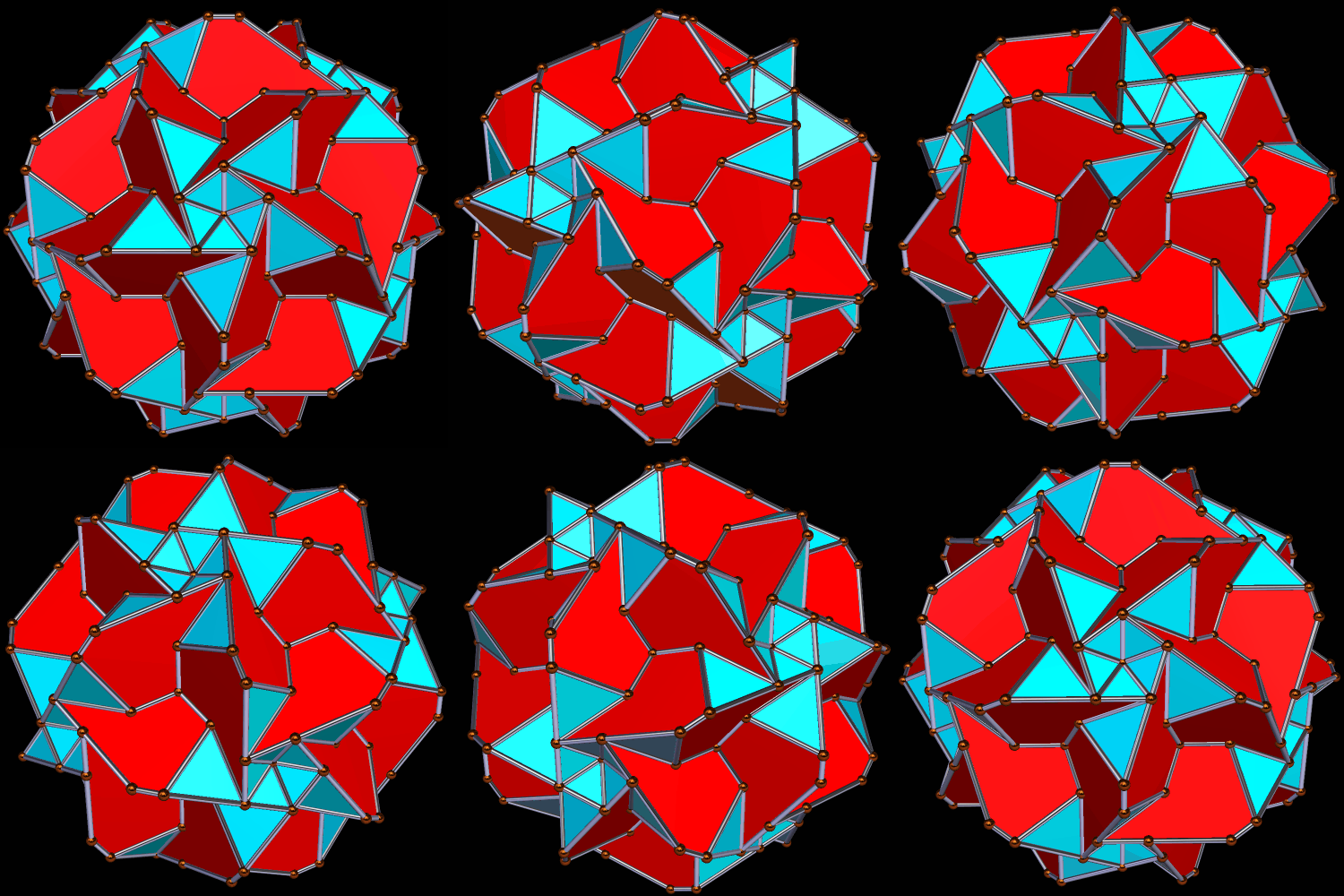
28th stellation of Trunc Dodeca.gif

This is the truncated dodecahedron’s 31st stellation.

31st stellation of Trunc Dodeca.gif

This one is the 38th stellation.

38th stellation of Trunc Dodeca.gif

This one is the 44th.

44th stellation of Trunc Dodeca.gif

The last one shown here is called the truncated dodecahedron’s final stellation because, if it is stellated once more, it returns to the original truncated dodecahedron.
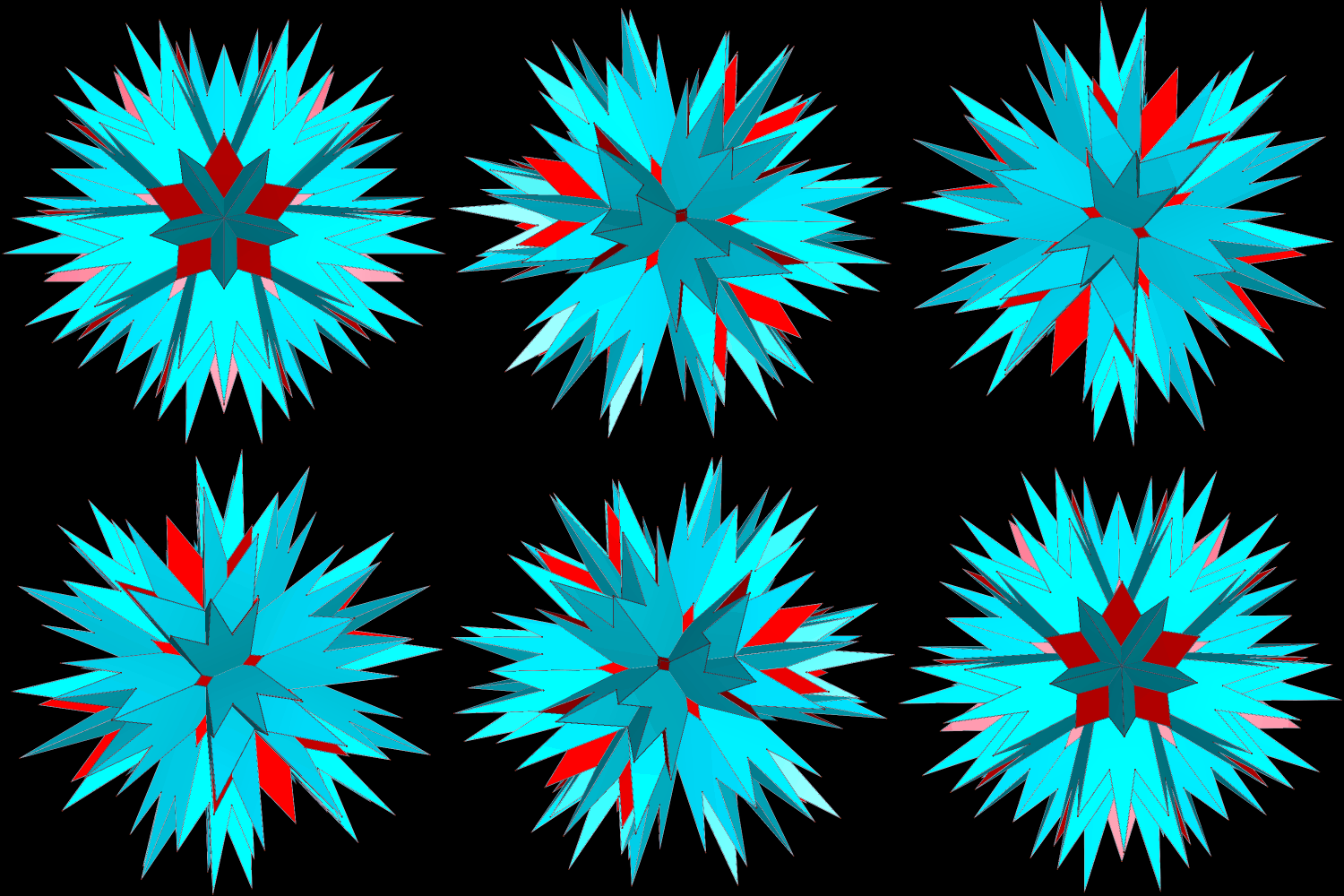
Final stellation of Trunc Dodeca

Some Tetrahedral Stellations of the Truncated Cube

I created these with Stella 4d, which you may try for free at this website. To make a given polyhedral stellation appear larger, simply click on it.

The Truncated Cube, with Two Variations Featuring Regular Dodecagons

This is the truncated cube, one of the thirteen Archimedean solids.

trunc-cube

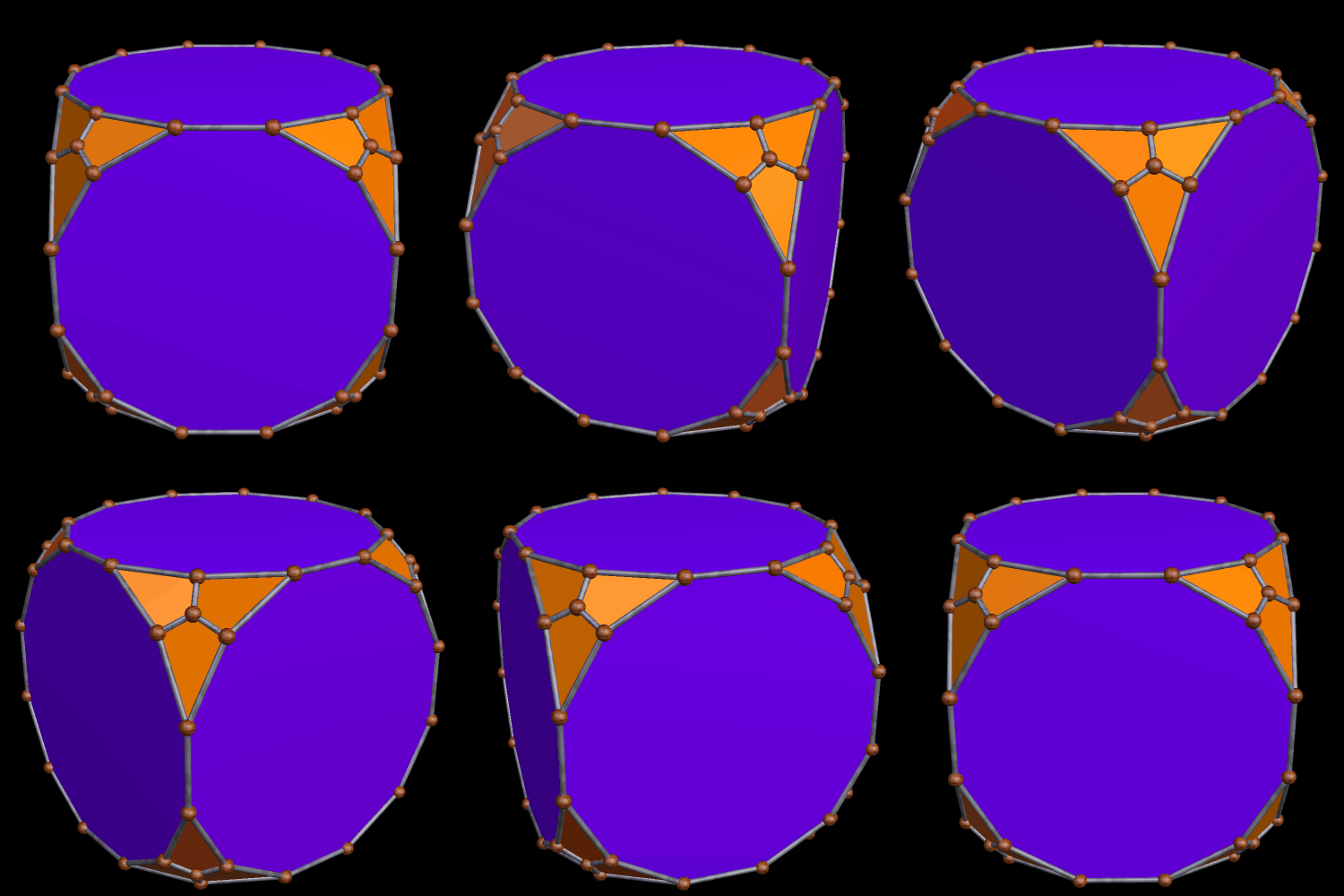
If the truncation-planes are shifted, and increased in number, in just the right way, this variation is produced. Its purple faces are regular dodecagons, and the orange faces are kites — two dozen, in eight sets of three.

dodecagons-and-kites

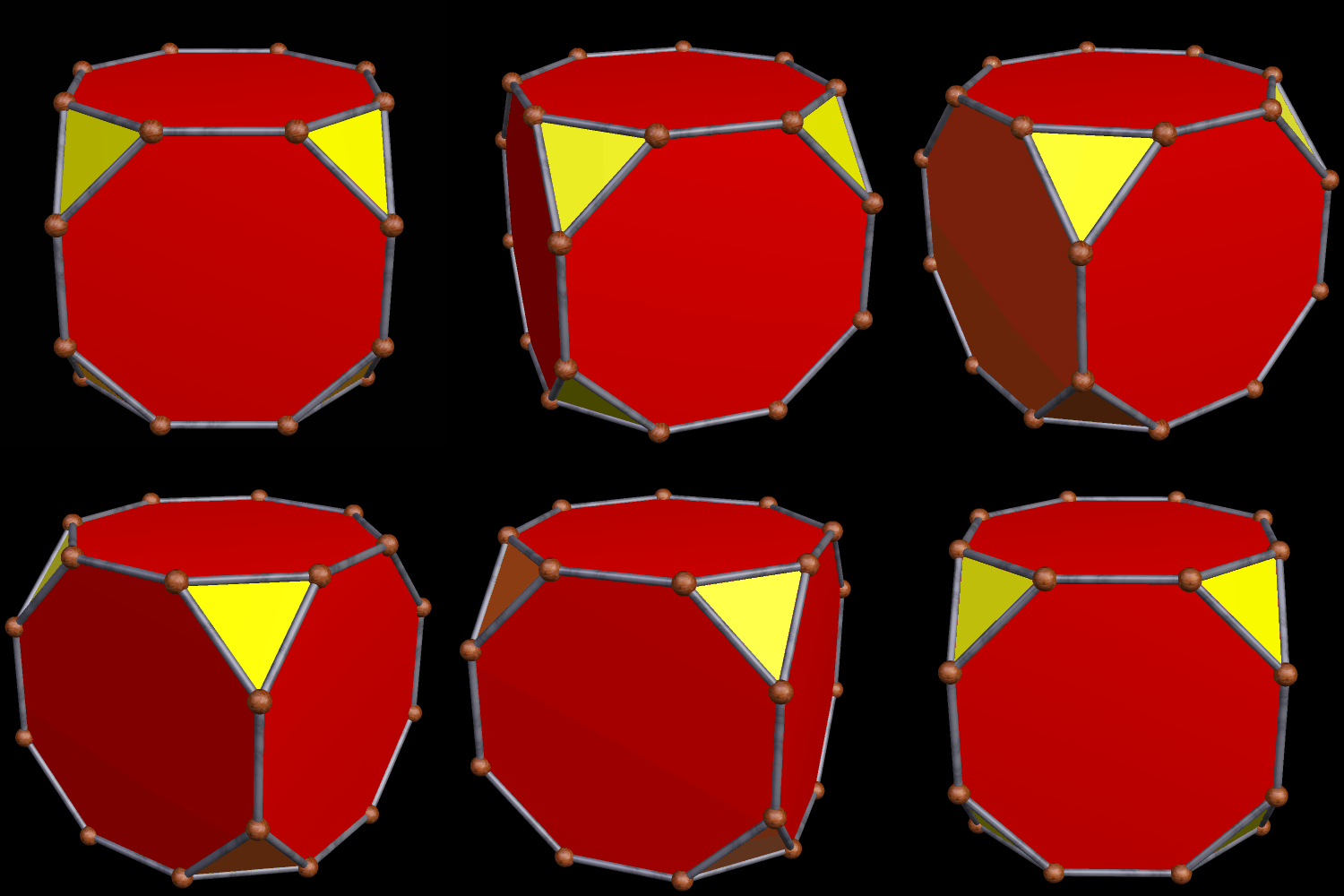
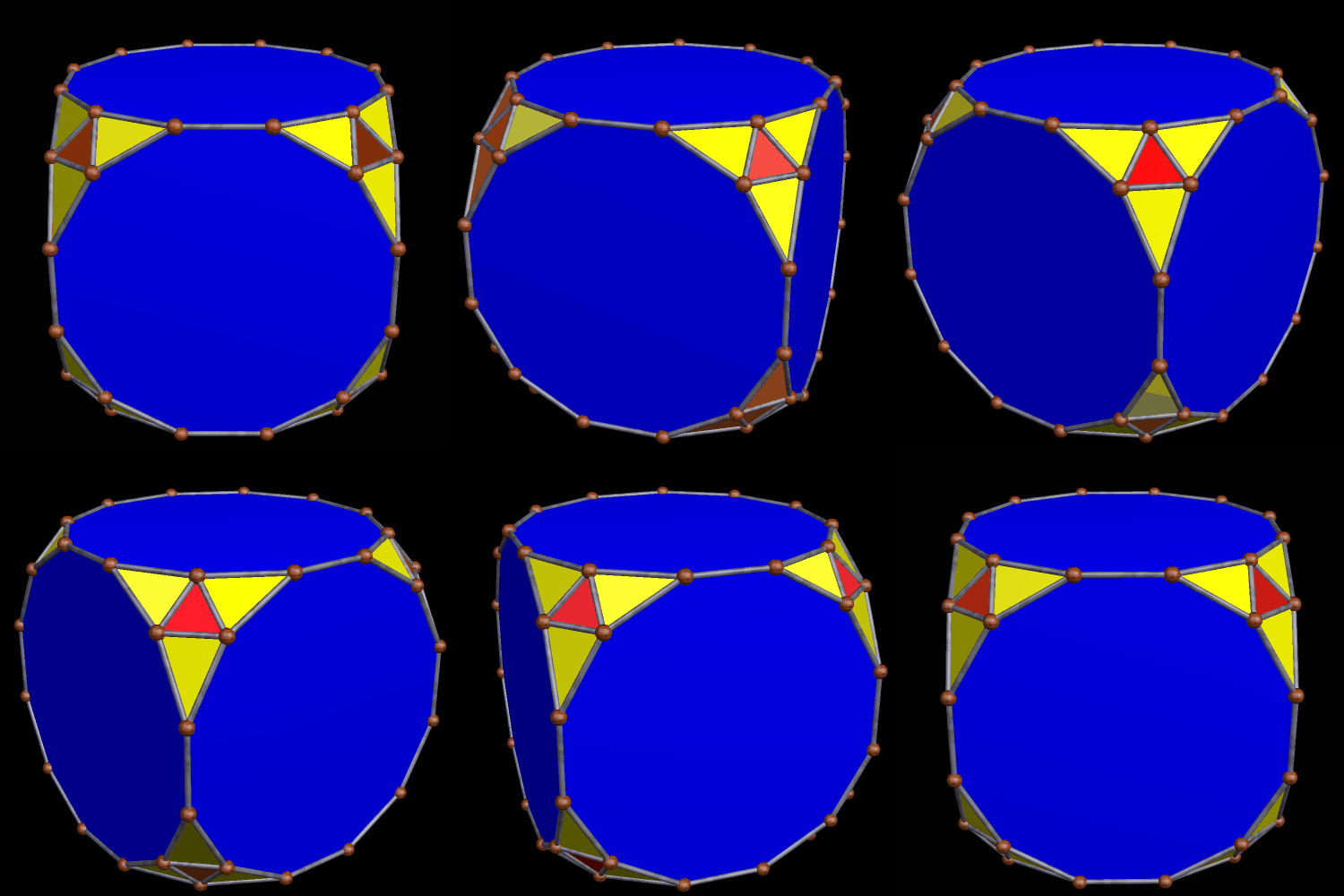
Applying yet another truncation, of a specific type, produces the next polyhedron. Here, the regular dodecagons are blue, and the red triangles are equilateral. The yellow triangles are isosceles, with a vertex angle of ~41.4 degrees.

vetex-angle-41p4-degrees

All three of these images were produced using Stella 4d, available at this website.

An Oblique Truncation of the Tetrahedron

kite-bounded tetrahedron

This polyhedron has sixteen faces: four equilateral triangles, and a dozen kites. It was created using Stella 4d, which may be found at http://www.software3d.com/Stella.php.

A Faceted Truncated Tetrahedron, or Seven Tetrahedra Joined at Their Edges — Your Choice

Faceted Trunc Tetra

I made this by faceting a truncated tetrahedron, giving it faces which are interpenetrating, red, equilateral triangles, as well as yellow crossed-edged hexagons. It can also be viewed as a central tetrahedron, with six more tetrahedra attached to its edges. This was made with Stella 4d, available at this website.

Partially Truncated Platonic and Rhombic Dodecahedra

chiral polyhedron featuring a dozen hexagons and four triangles

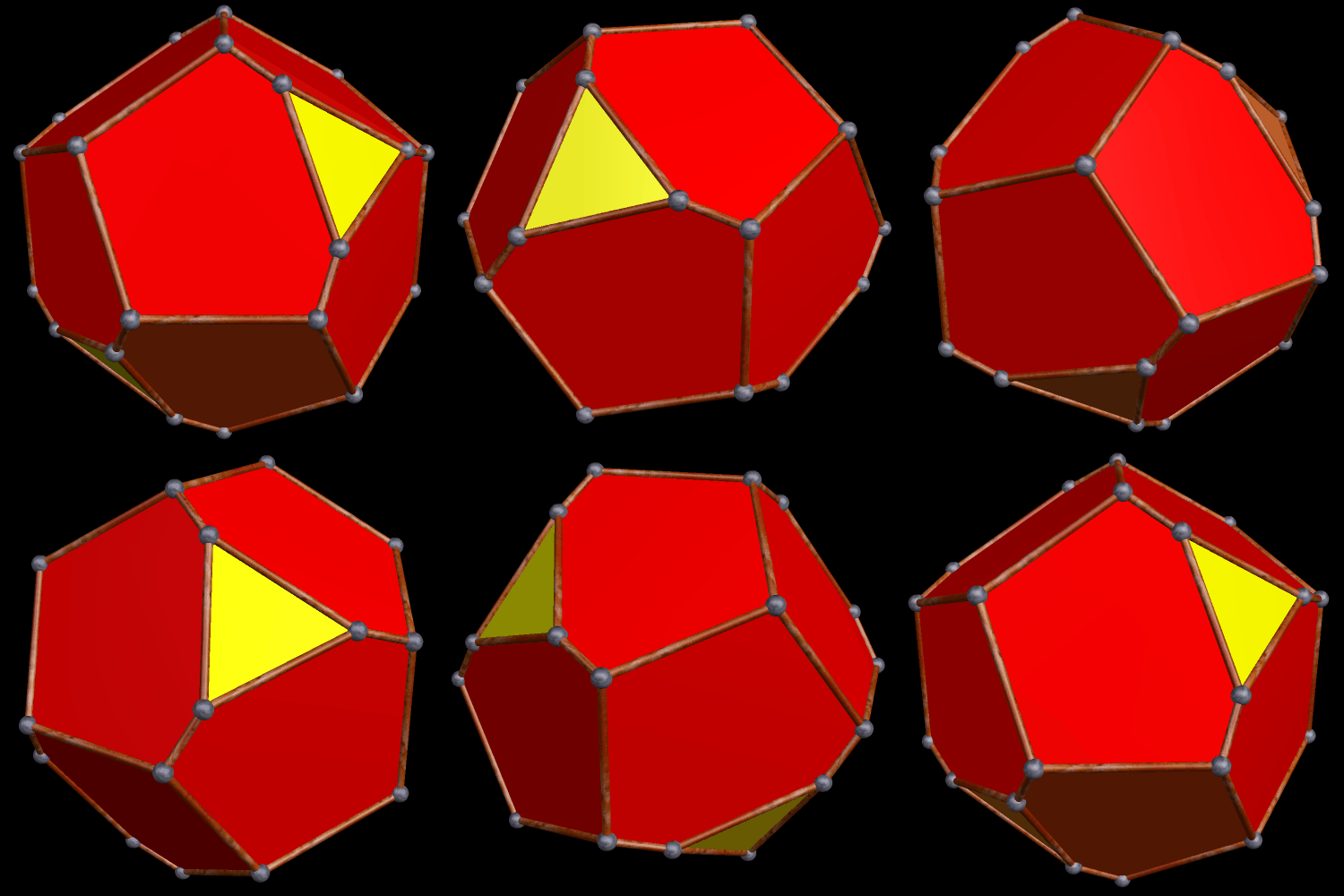
Each of these dodecahedra were modified by truncations  at exactly four of their three-valent vertices. As a result, each has four equilateral triangles as faces. In the one above, the Platonic dodecahedron’s pentagonal faces are modified into a dozen irregular hexagons by these truncations, while, in the one below, the rhombic dodecahedron’s faces are modified into twelve irregular pentagons.

dozen pents 4 triangles

Both of these polyhedra were created using Stella 4d, software you can try for yourself at this website.

Four Different Facetings of the Great Rhombcuboctahedron

faceted GRCO

Faceted Trunc Cubocta 2

Faceted Trunc Cubocta 4

Faceted Trunc Cubocta

All four of these rotating images were created using software called Stella 4d: Polyhedron Navigator. You can buy this program, or try it for free, at this website. Faceting is the inverse function of stellation, and involves connecting the vertices of an already-established polyhedron in new ways, to create different polyhedra from the one with which one started. For each of these, the convex hull is the great rhombcuboctahedron, itself.

A Dodecahedron with Four Symetrically-Truncated Vertices

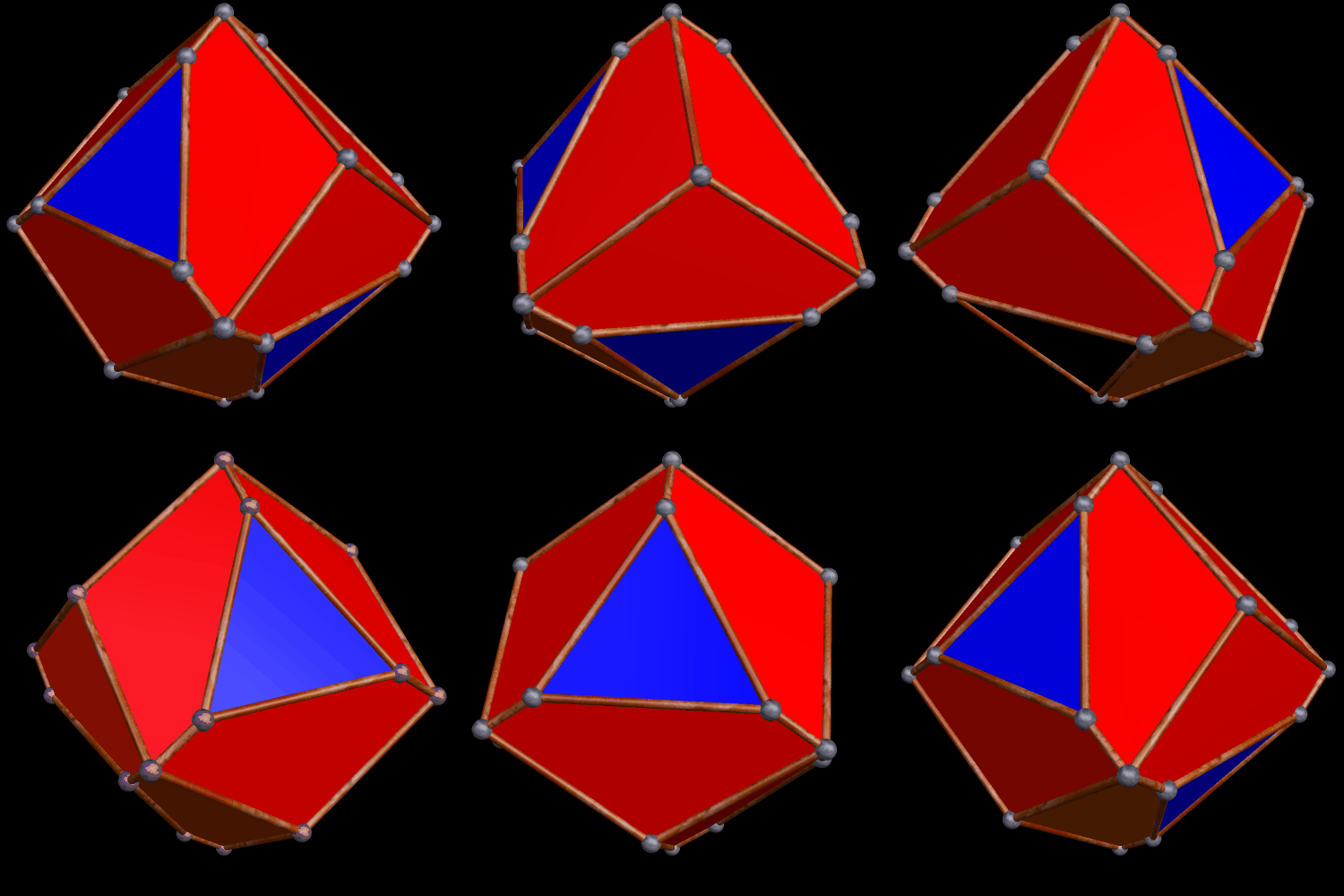
dodeca with 4 verts truncated tet symm

Dodecahedra have icosahedral (also called icosidodecahedral) symmetry. In the figure above, this symmetry is changed to tetrahedral, by truncation of four vertices with positions corresponding to the vertices (or, instead, faces) of a tetrahedron. The interchangeability of vertices and faces for the tetrahedron is related to the fact that the tetrahedron is self-dual.

[Image created using Stella 4d, available here.]

A Twice-Truncated Cube

twice-truncated cube

Truncating a cube once yields an Archimedean solid with six octagonal faces, and eight triangular faces, all regular. A second truncation can be made to produce the solid shown above. It also has, as faces, six regular octagons and eight equilateral triangles — and, in addition, twenty-four isosceles triangles.

I made this using Stella 4d, software you can try for yourself at www.software3d.com/Stella.php.

Sprawling Clusters of Truncated Tetrahedra

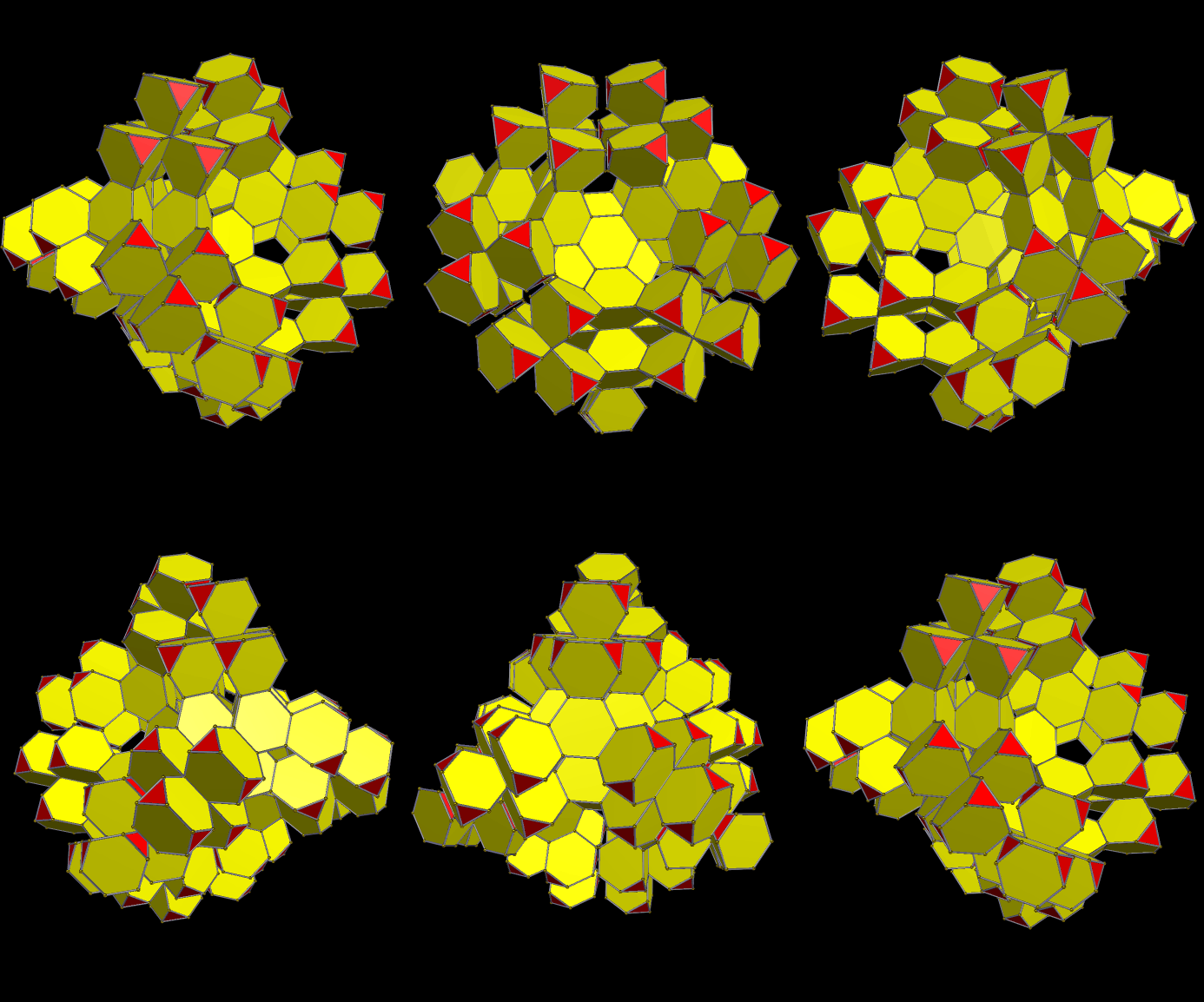
Truncated tetrahedra make interesting building blocks. In the images below, the truncated tetrahedron “atoms” are grouped into four-part “molecules,” each with a triangular face pointed toward the molecular center, which is found in a small tetrahedral hole between the four truncated tetrahedra. These four-part “molecules” are then attached to other,  always with three coplanar triangular faces from one “molecule” meeting three from the other. If you start from a central “molecule,” and let such a cluster grow for a small number of iterations, you get this:

Cluster Truncateed Tetra

What does the cluster above look like if even more truncated tetrahedra are added, but without allowing overlap to occur? Like this:

Image

Like the truncated tetrahedron itself, these sprawling clusters have tetrahedral symmetry. To keep such symmetry while building these clusters, of course, one must be careful about the exact placement of the pieces — and doing this becomes more difficult as the cluster grows ever larger. I was able to take this one more step:

Image

All of these images were created using Stella 4d: Polyhedron Navigator. This program is available at http://www.software3d.com/Stella.php.