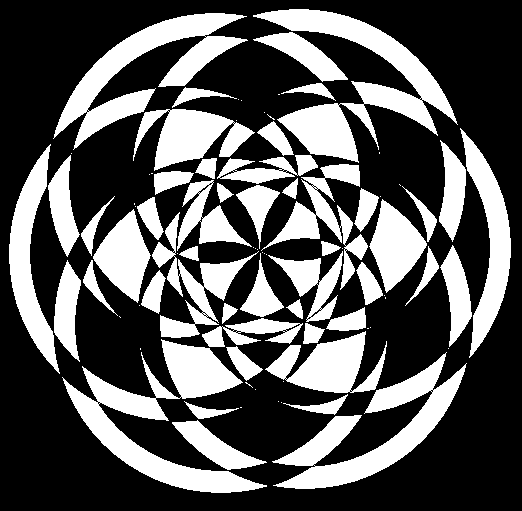
Triskelion Based on the Golden Ratio

Image

Triskelion Based on the Golden Ratio

Incongruous Mandala

There’s no relationship (of which I am aware) between the Golden Ratio and regular hexagons — so of course I had to try to combine them. The results are yours to judge.

mandala

Snowflake Mandala II

Image

Snowflake Mandala III

The Hyperspace Analogue of the Stella Octangula

The simplest polyhedron is the tetrahedron, and it is self-dual. The compound of two tetrahedra puts these duals together, and is most often called the Stella Octangula, a name Johannes Kepler gave it in the early 17th Century.

Image

In hyperspace, or 4-space, the simplest polychoron is the pentachoron, or 5-cell. Like the tetrahedron in 3-space, it is also self-dual. Here is the compound of two of them: hyperspace’s version of the Stella Octangula.

Compound of 1-Pen, 5-cell, Pentachoron and dual

Website to find the software used to make these images:  www.software3d.com/stella.php

Rhombicosidodecahedron with Invisible Squares

The essential facts about this Archimedean solid: it has 62 faces total (12 pentagons, 20 triangles, and 30 squares, with the squares hidden here), 120 edges, and 60 vertices.

Rhombicosidodeca

To see the software used to produce this .gif image, just visit www.software3d.com/Stella.php.

Coquette

Image

Coquette

acrylic on canvas; 16″ x 20″

Ringed Heptastar

Image

Ringed Heptastar

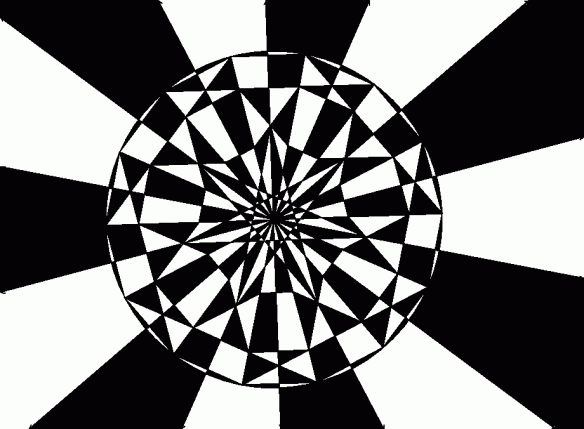
Heptagon-based Op Art

Image

Heptagon-based Op Art

Mandala Featuring Many Pentagons

Image

mandala

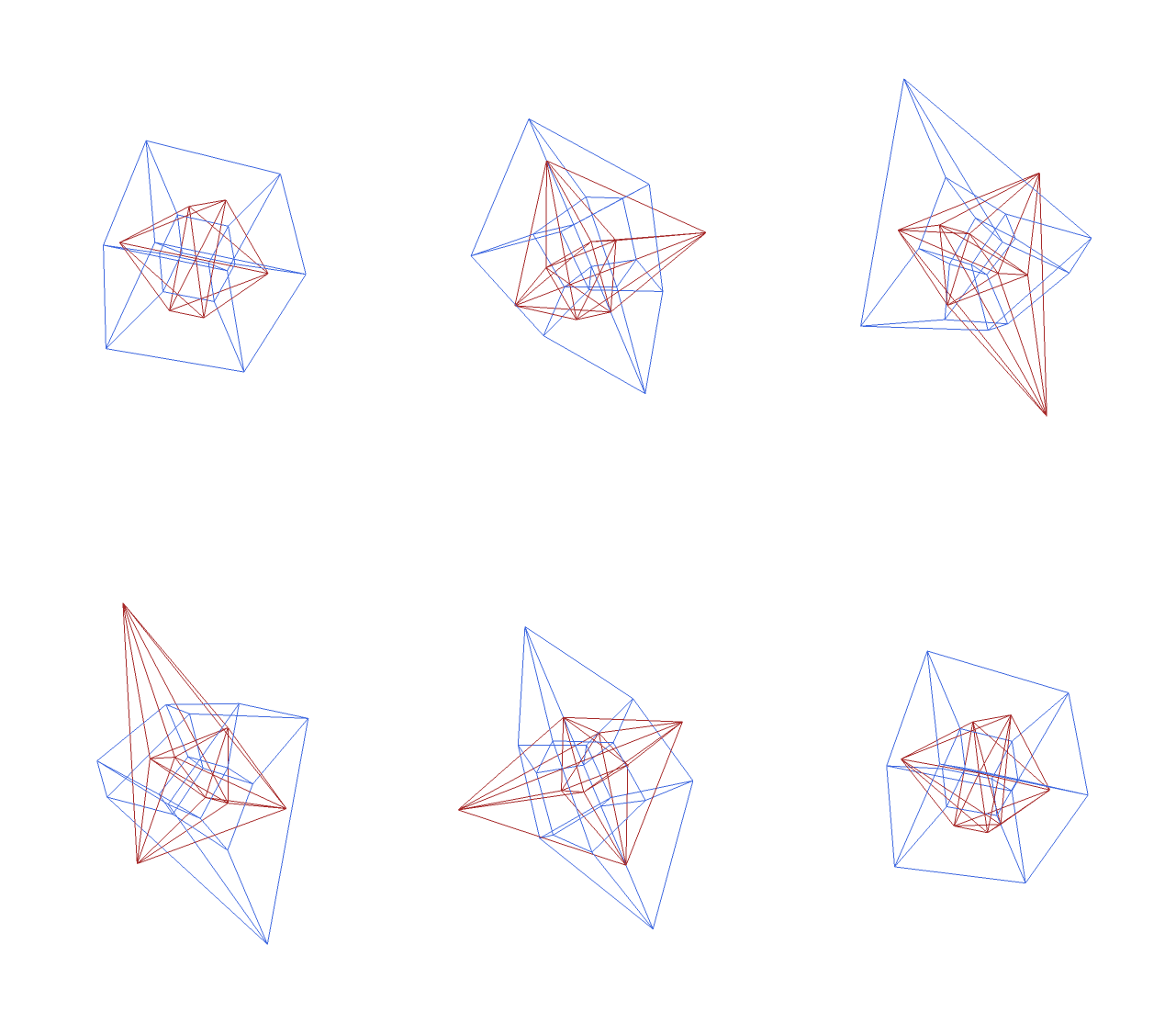
Rotating Compound of the Tesseract and Its Dual

Image

Rotating Compound of the Tesseract and Its Dual

Blue figure: a projection of the tesseract, or hypercube; also known as the 8-cell or octachoron — a four-dimensional figure composed of eight cubic cells in a regular arrangement.

Red figure: its dual, the 16-cell or hexadecachoron, which is composed of sixteen tetrahedral cells.

To buy (or just try) the software used to make this image, Stella 4d, please visit http://www.software3d.com/Stella.php.