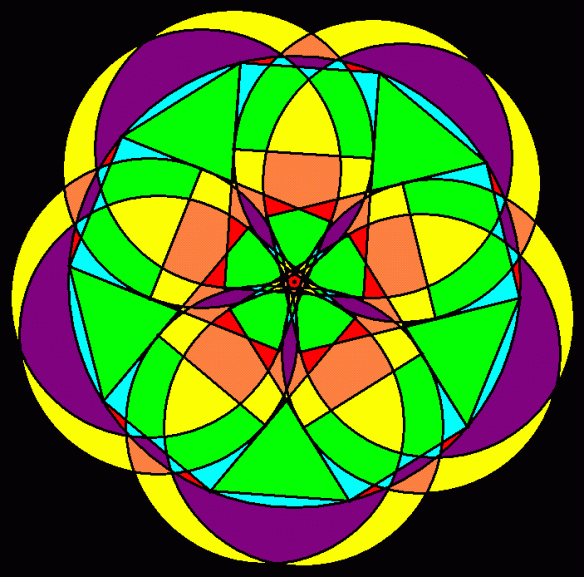
Hello, India!

Image

Hello, India!

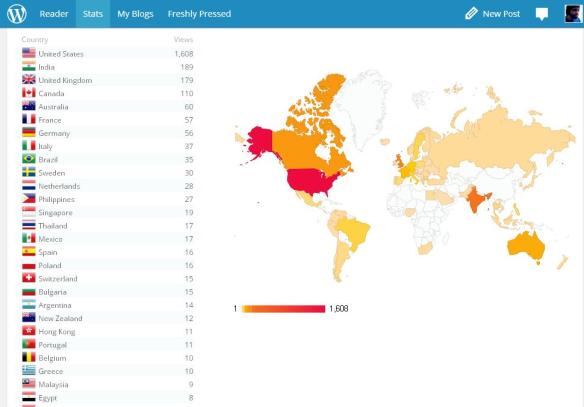
Since I’ve started blogging on WordPress, there have been several surprises, but the most puzzling to me is the recent rise in popularity of my blog in India. I live in the USA, so it’s no surprise that most hits on my blog come from here. However, I have no explanation for why India is #2.

This blog has a high math content, compared to most blogs. Might that have something to do with it?

Whatever the reason, I’m glad I have readers there.

The part of this map I don’t like involves China, Iran, and North Korea: zero hits from each nation. That has nothing to do with the content of my blog, of course, but with heavy censorship in each of those countries, all of which have notoriously bad human-rights records. In at least one of those nations (Iran), my blog has been read, but that doesn’t show up on this map because of the extreme lengths my friends in Iran have to go to simply to surf the web without detection and interference from Tehran.

I would like, someday, to visit all of these countries. In the cases of Iran, North Korea, and China, though, I’m waiting for regime changes first.
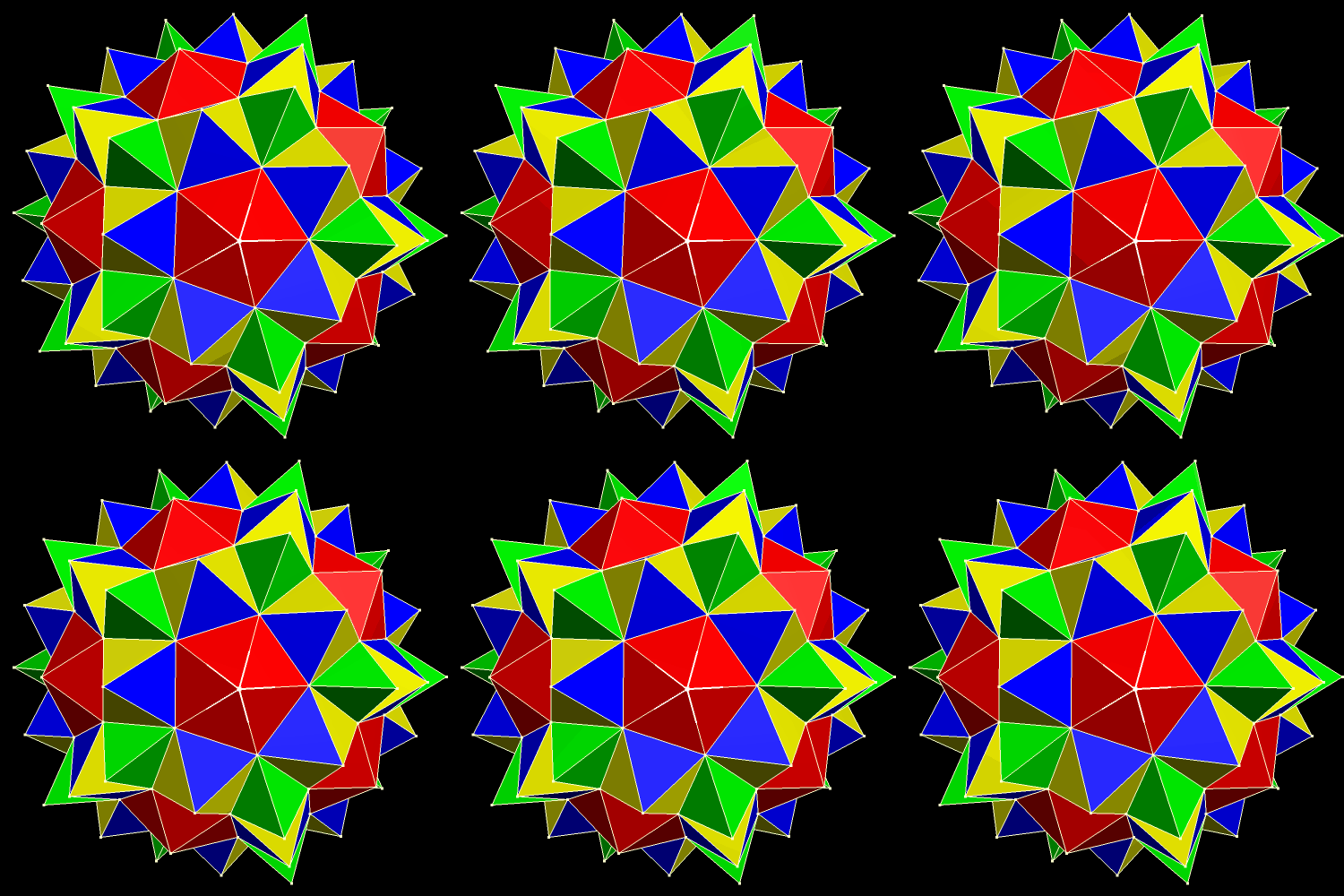
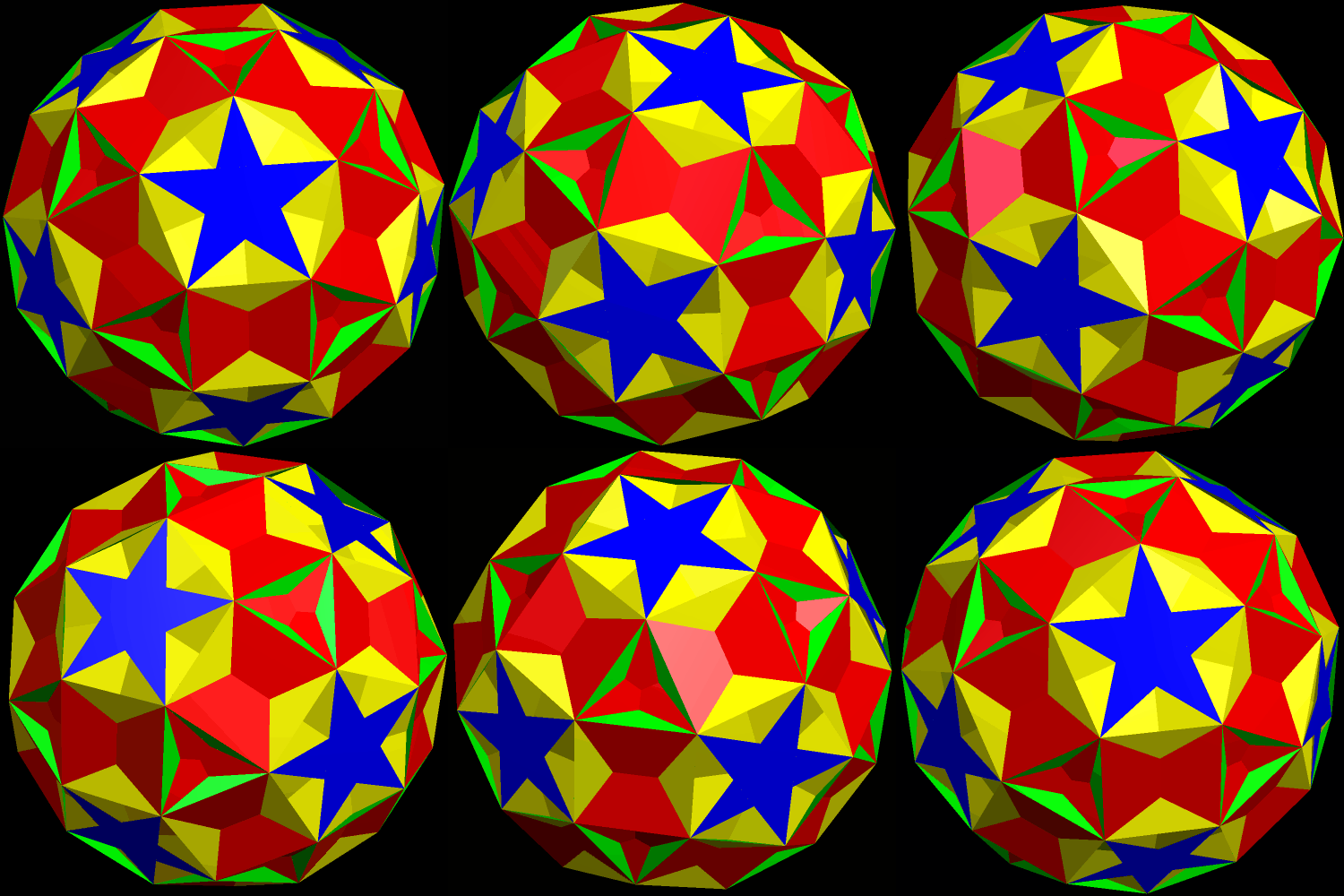
Augmented Rhombicosidodecahedron

Image

Augmented Rhombicosidodecahedron

Each face of a rhombicosidodecahedron has been augmented with a pyramid, with all edges being kept the same length.

Software used: see http://www.software3d/stella.php

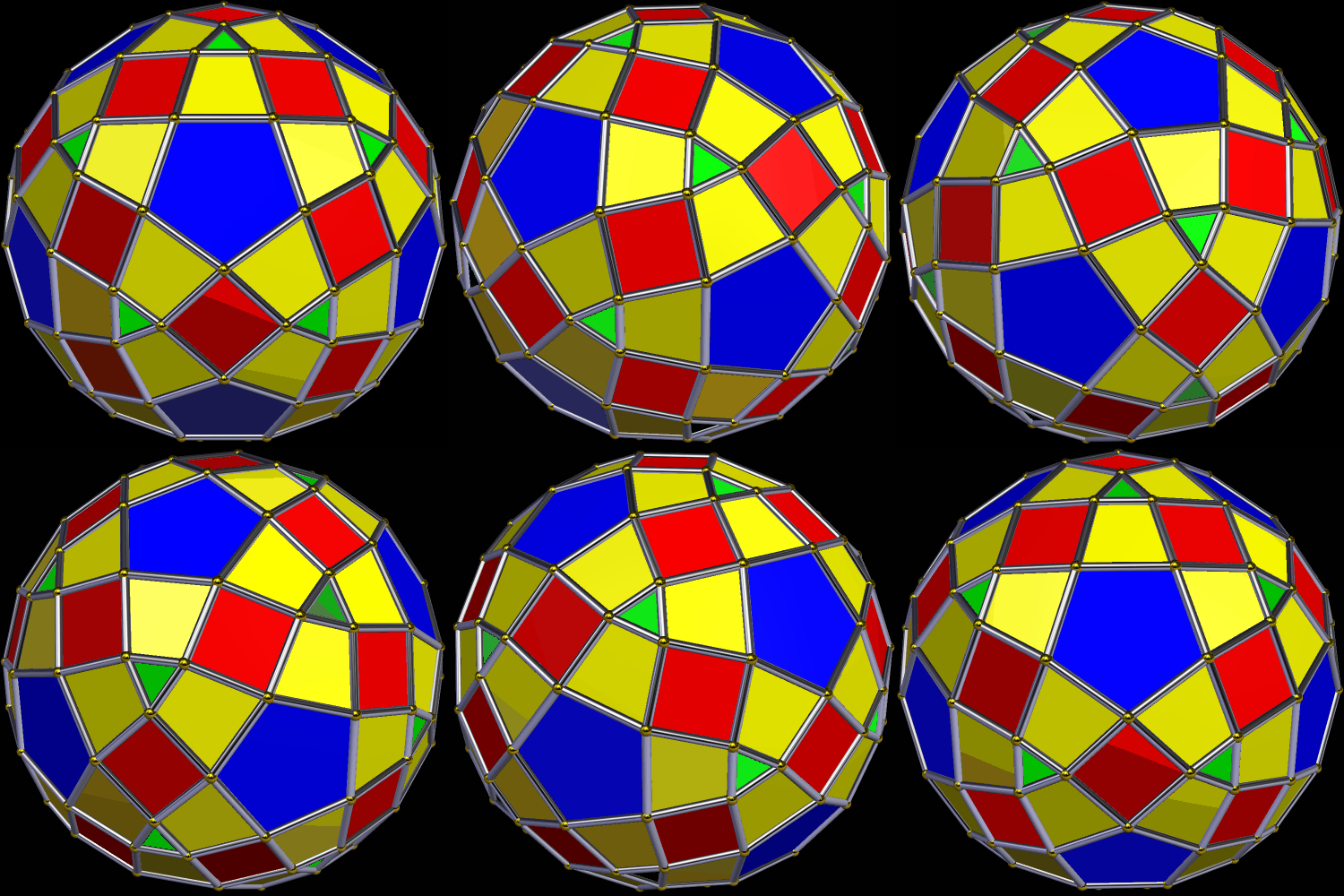
Faceted Rhombicosidodecahedron

Image

Faceted Rhombicosidodecahedron

Software credit: http://www.software3d.com/stella.php

Faceted Rhombic Dodecahedron

Image

Faceted Rhombic Dodecahedron

The faces of this polyhedron are 24 congruent isosceles triangles. It was created using software you can try at http://www.software3d.com/stella.php.

Starfish

Image

Starfish

Invitation

Image

Invitation

Painted 2002
acrylic on canvas
12″x16″

The 18-72-90 and 36-54-90 Triangles

It is well-known that an altitude splits an equilateral triangle into two 30-60-90 triangles, and that a diagonal splits a square into two 45-45-90 triangles. The properties of these “special right triangles,” as they are often called, are well-understood, and shall not be described here.

What happens if other polygons are split by diagonals, altitudes, or pieces thereof? Can more triangles be found which can allow, for example, exact determination of certain trigonometric ratios?

Yes, and the logical place to start looking is in the regular pentagon.

Image

In this diagram, the yellow triangle is the 18-72-90 triangle. Its hypotenuse is a diagonal of the pentagon, and its short leg is a half-side of the pentagon. Since sides and diagonals of regular pentagons are in the Golden Ratio, (1 + √5)/2, these two sides must be in twice that ratio. Let their lengths, then, be 1 (short leg) and 1 + √5 (hypotenuse), for those are simple, and in the specified ratio. The Pythagorean Theorem may then be applied to find the length of the long leg; the result is sqrt((2√5) + 5). Yes, nested radicals appear at this point, and they resist efforts to make them go away. No one promised this would be simple!

The blue triangle is the 36-54-90 triangle. Its long leg is a half-diagonal of the pentagon, while its hypotenuse is a full side of the pentagon. These triangle sides must, therefore, be in half the Golden Ratio, so the simplest lengths for those sides (which work) are 1 + √5 for the long leg, and 4 for the hypotenuse. Applying the Pythagorean Theorem to find the length of the short leg, nested radicals appear again in the solution:  sqrt(10 – 2√5).

Expanded Rhombicosidodecahedron

Image

Expanded Rhombicosidodecahedron

Software credit: http://www.software3d.com/stella.php

Compound of Three Rectangular Solids

Image

Compound of Three Rectangular Solids

Created using software found at http://www.software3d.com/stella.php

Octagonal Mandala

Image

Octagonal Mandala