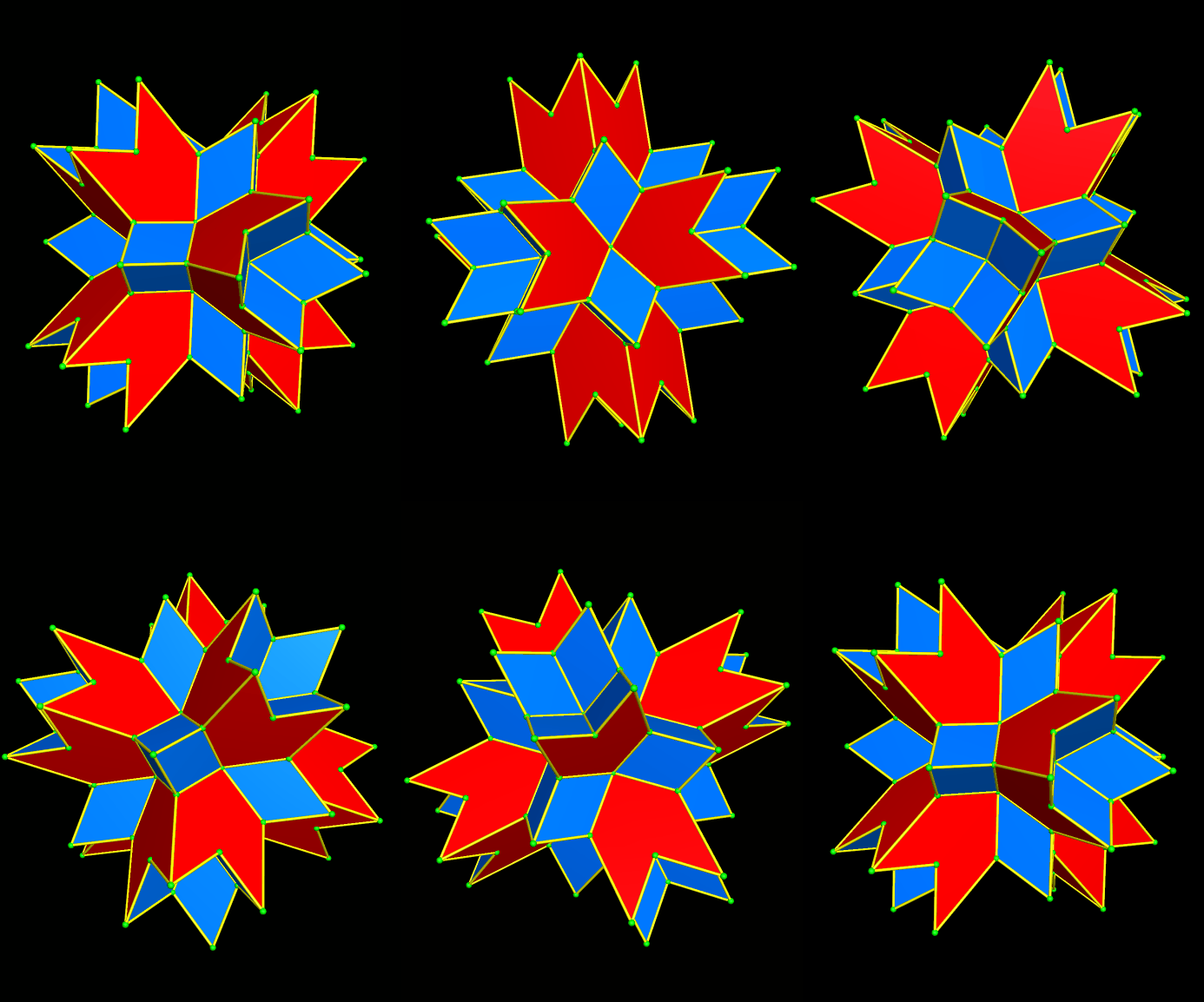
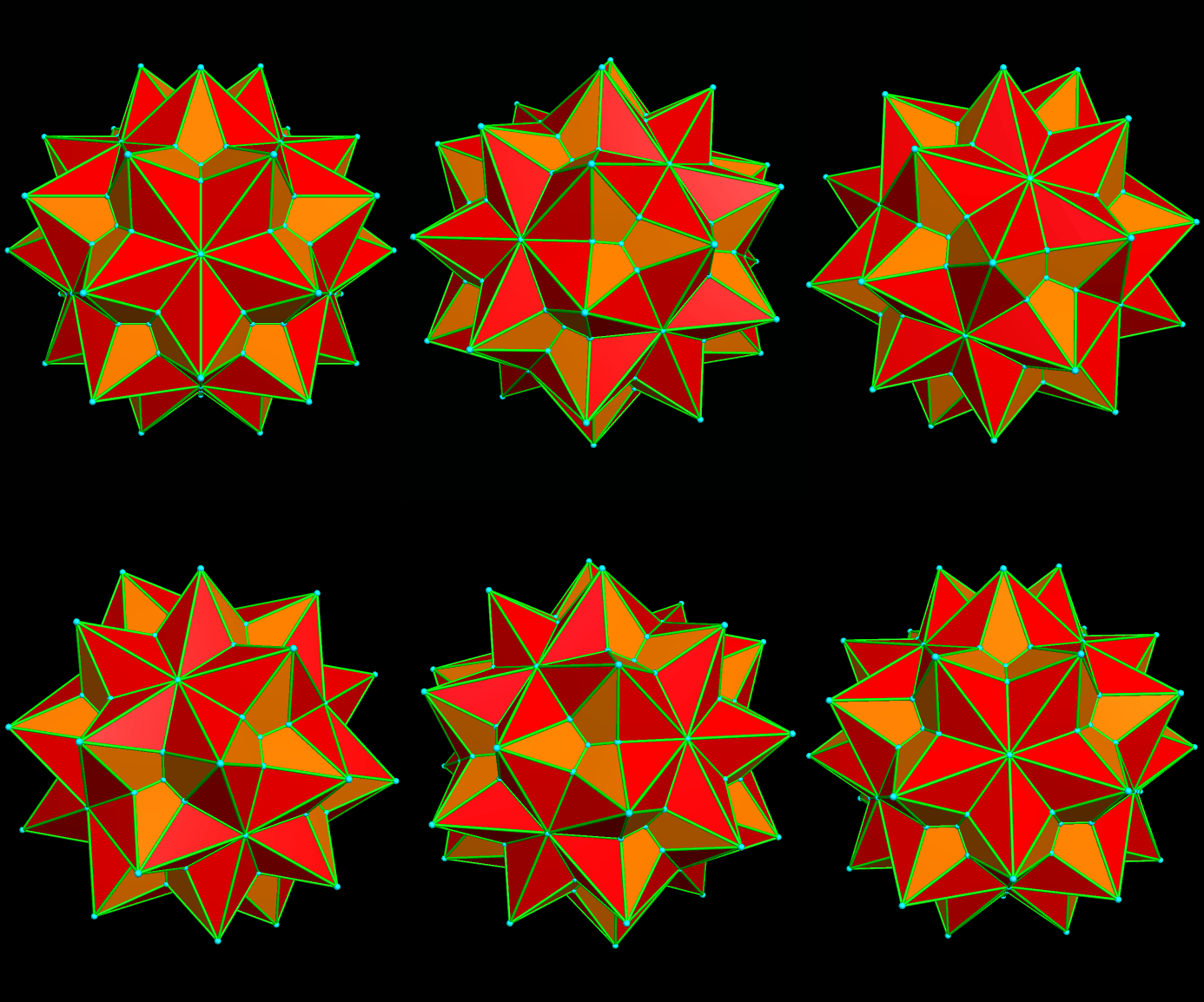
A Variant of the Rhombicosidodecahedron Featuring Enhanced Pentagons

Image

A Variant of the Rhombicosidodecahedron Featuring Enhanced Pentagons

Created using Stella 4d, available at http://www.software3d.com/Stella.php,

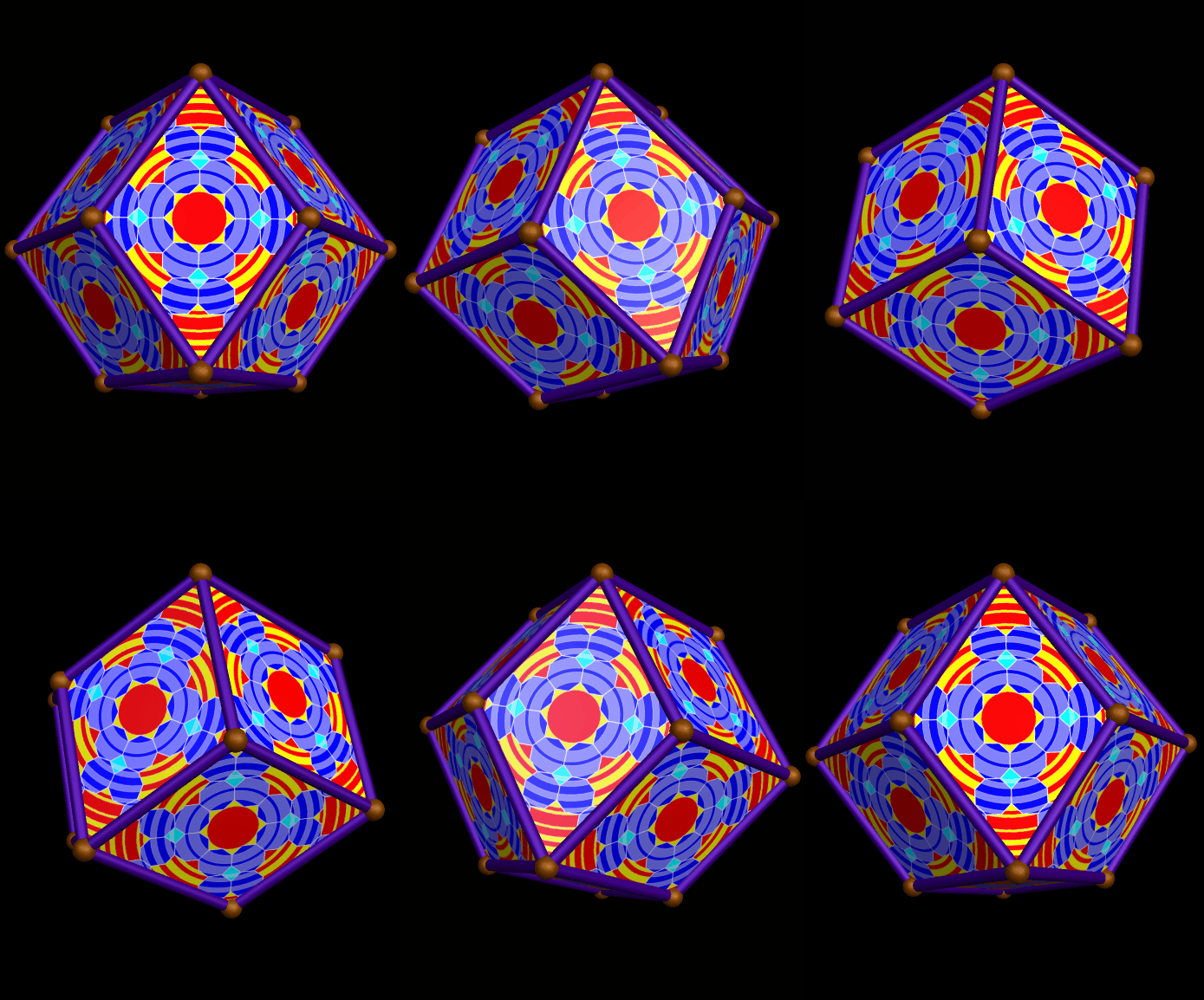
A Rhombic Dodecahedron, Decorated with Rippled Tessellations

Image

A Rhombic Dodecahedron, Decorated with Rippled Tessellations

The decorations on each face were created using the design, made using Geometer’s Sketchpad and MS_Paint, shown here. I then used Stella 4d, available at this website, to project this flat image onto each face of this polyhedron, and make this rotating image.

A Pentagonal Icositetrahedron, Decorated with Rippled Tessellations, Along with Its Compound with Its Own Mirror-Image

Image

A Pentagonal Icositetrahedron, Decorated with Rippled Tessellations

The decorations on each face were created using the design, made using Geometer’s Sketchpad and MS_Paint, from this post: https://robertlovespi.wordpress.com/2014/05/28/rippling-tessellation-using-squares-regular-octagons-and-octaconcave-equilateral-hexadecagons/. I then used Stella 4d, available at http://www.software3d.com/Stella.php, to project this flat image onto each face of this chiral polyhedron, the dual of the snub cube, and make this rotating image.

Next, I used Stella to add this figure to its own mirror-image, to make a compound — something that is always possible with chiral polyhedra. Here is the result.

Compound of enantiomorphic pair

Carousel

Image

Carousel

Created using Stella 4d, software you can download at http://www.software3d.com/Stella.php.

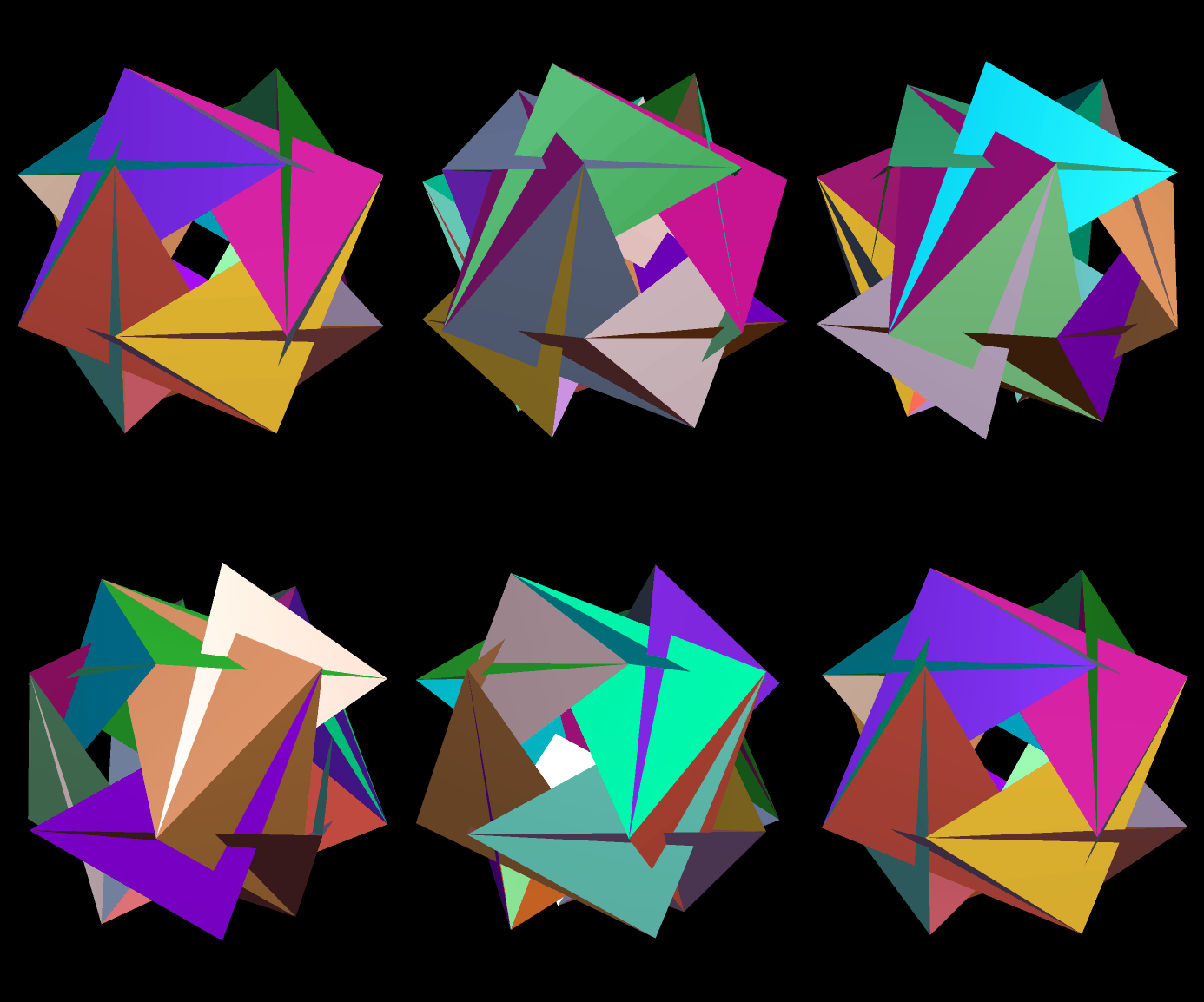
Slow Dissection of a Loosely-Defined “Faceted” Rhombcuboctahedron

Image

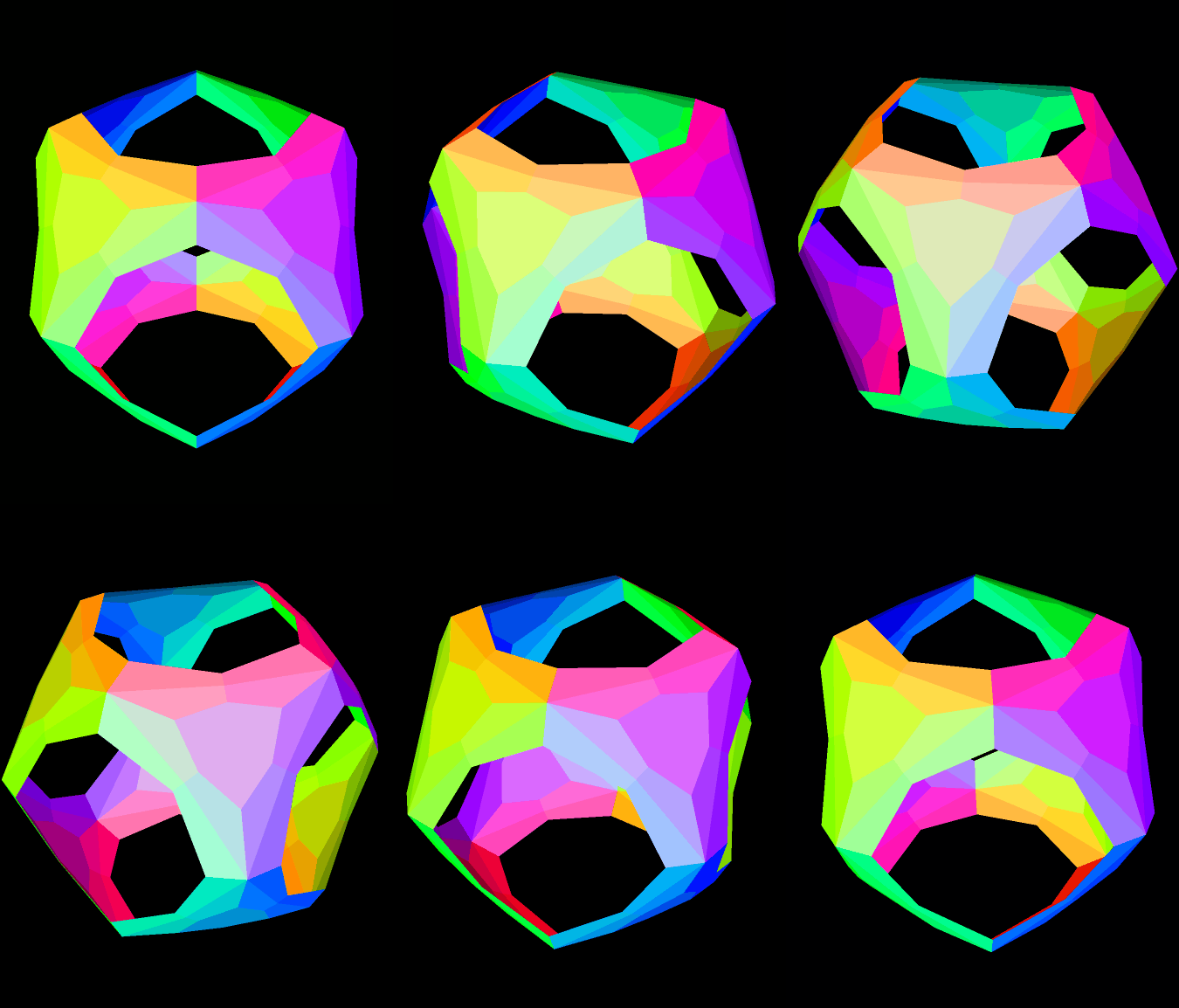
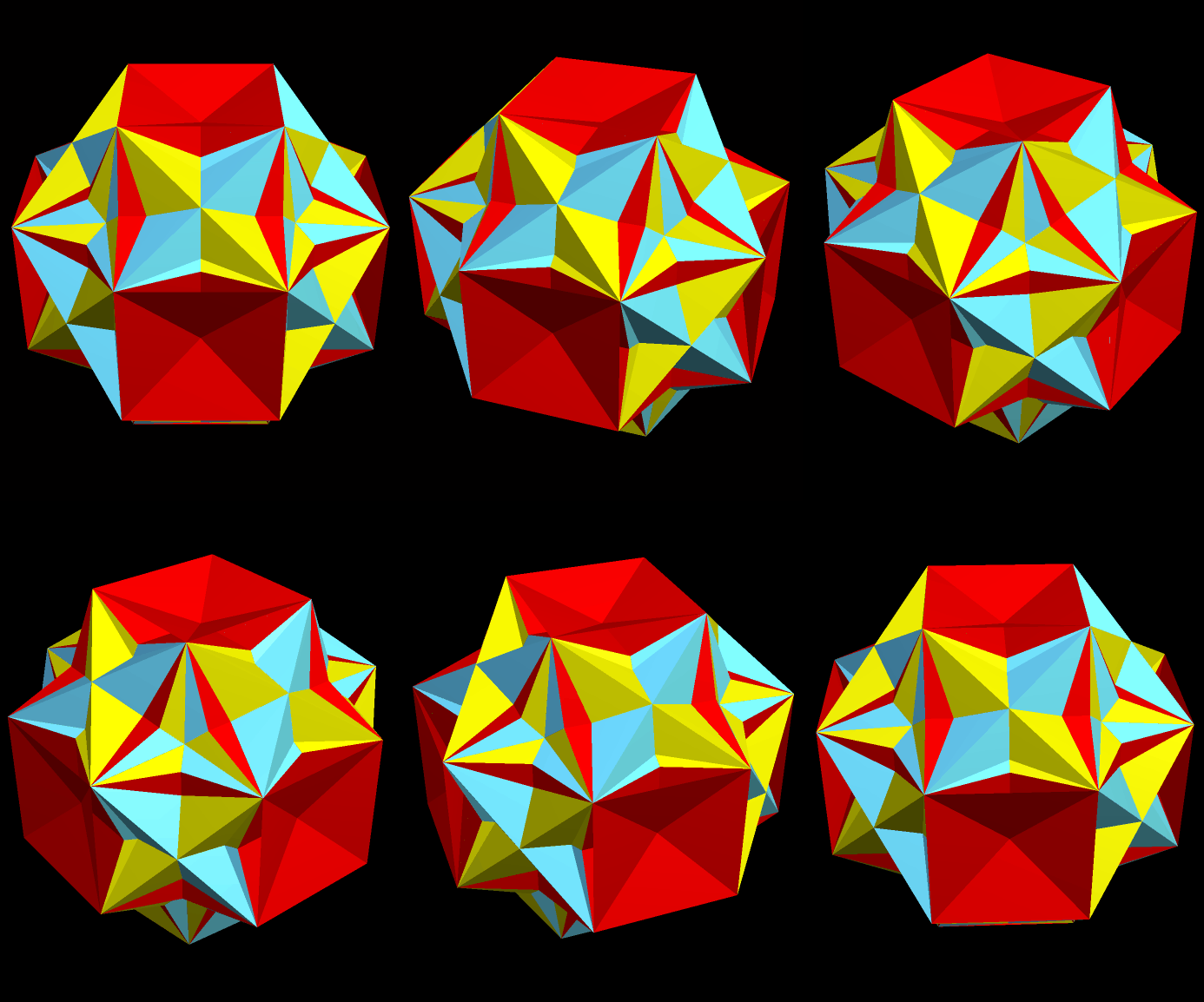
If you look at the second image from the post two entries ago, and wonder what it would look like without the pink faces, wonder no longer: it’s what you see above.

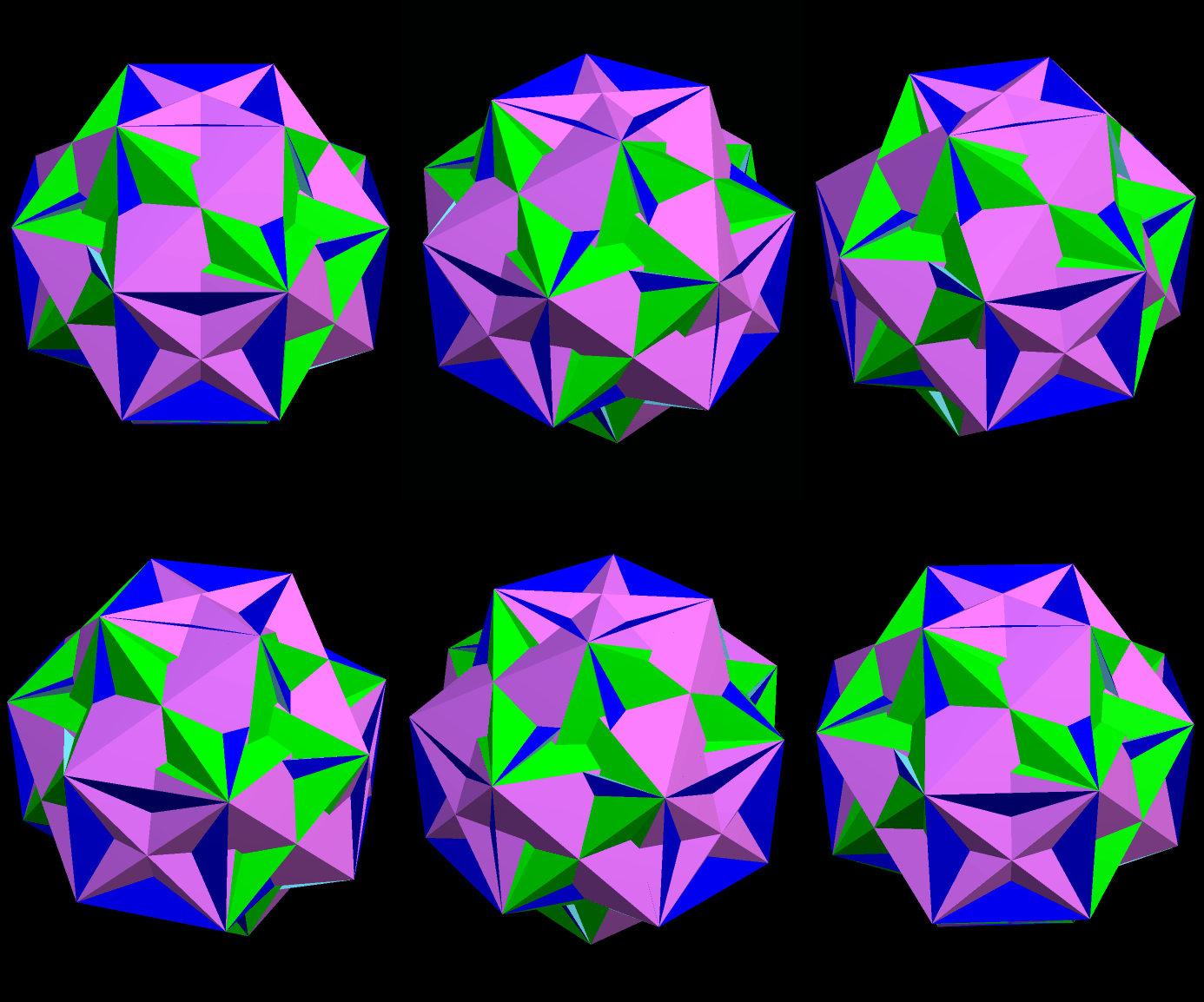
Next, the red polygons are hidden, and this is what is left (you may click these smaller images if you wish to enlarge them).

RCO faceting another with red gone

The green faces are hidden next.

RCO faceting another with red gone and now green gone

The next step is to remove the pink faces visible in the interior.

RCO faceting another with red gone and now green gone and now interior pink gone

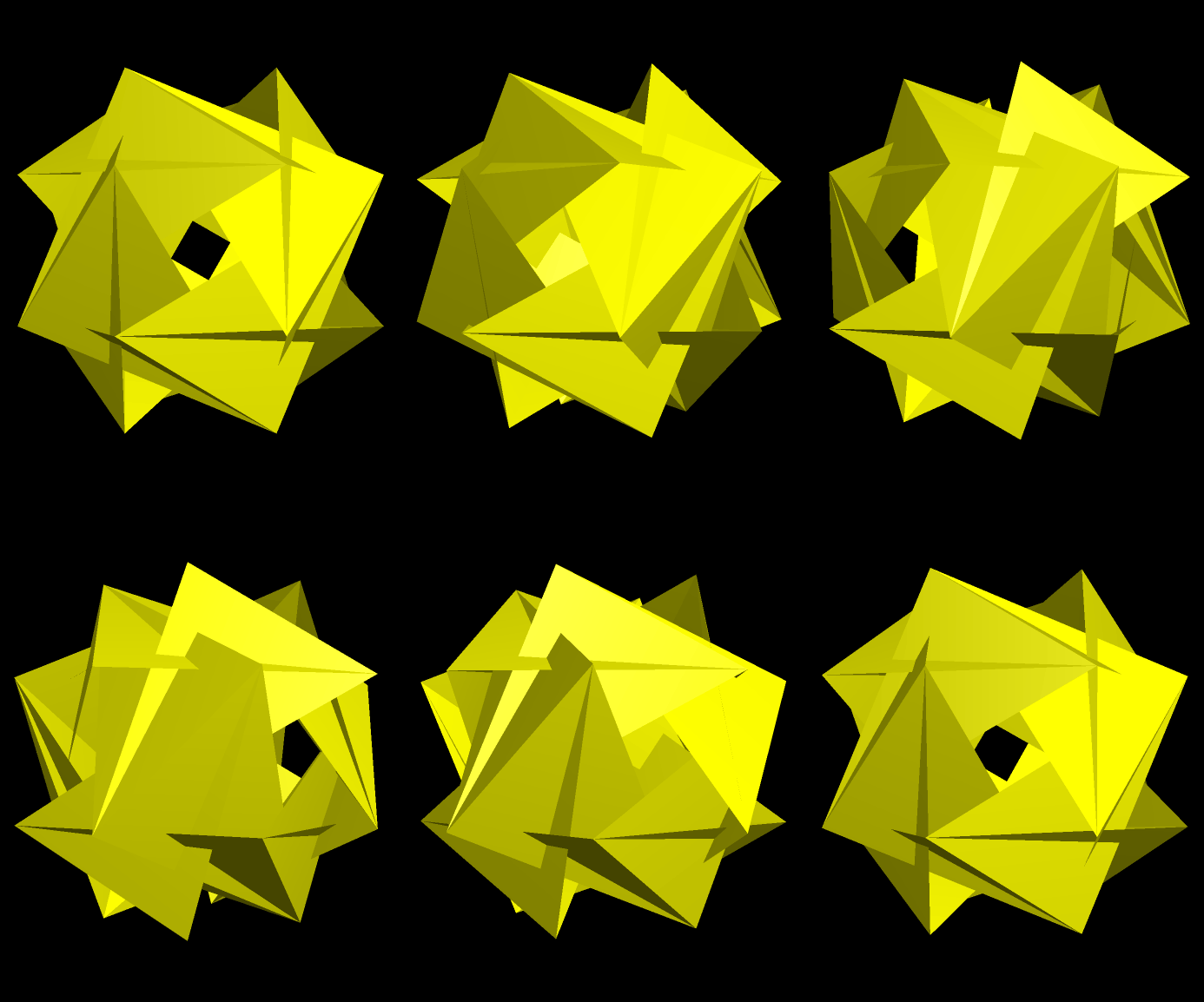
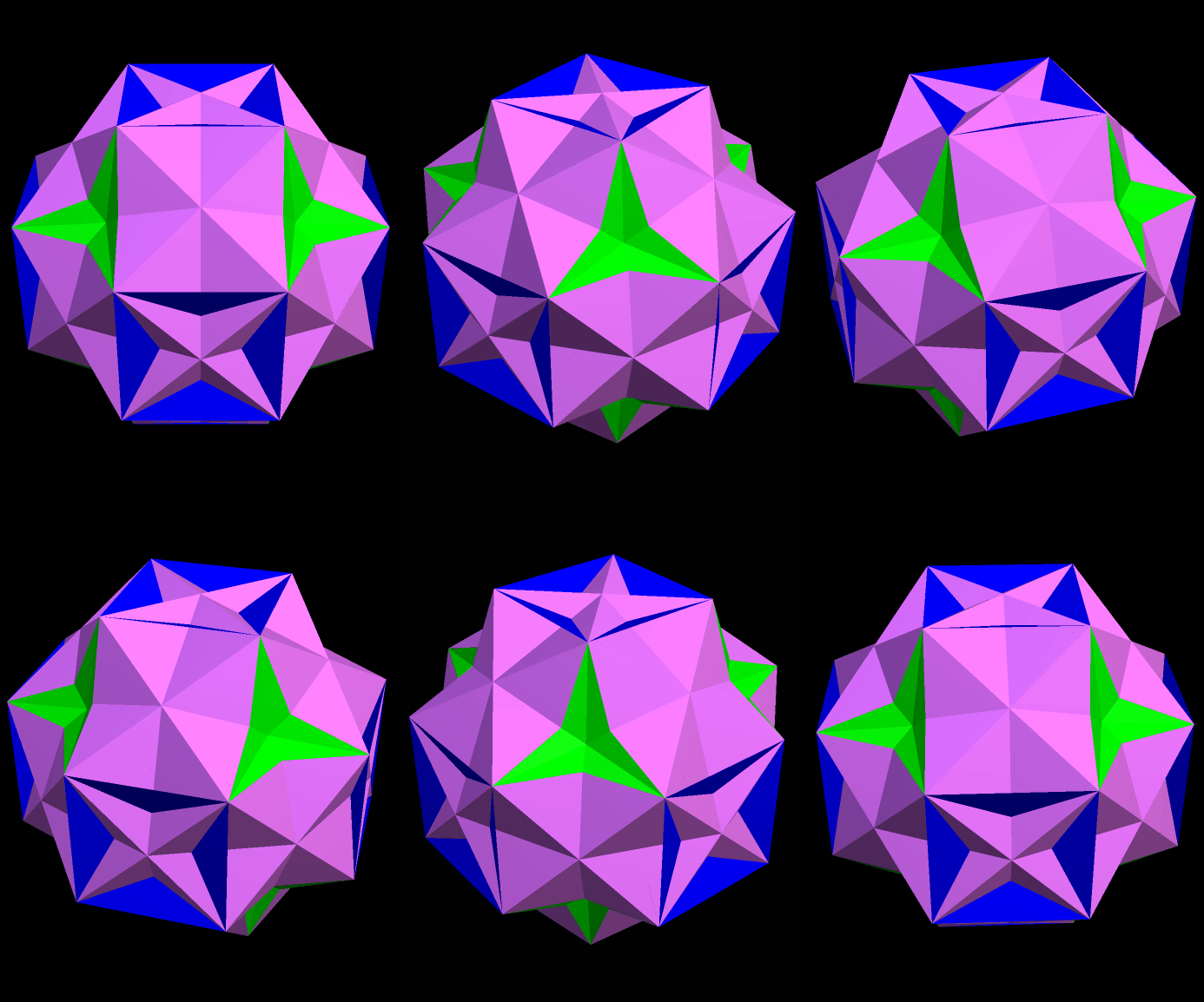
Next, removal of the blue faces leaves only the yellow ones left.

RCO faceting another with red gone and now green gone and now interior pink gone only yellow left now

The last step:  change the color scheme, so as to more easily be able to tell one face from another.

RCO faceting another with red gone and now green gone and now interior pink gone only yellow left now new colors

All of this polyhedron-manipulation, I did with Stella 4d, software I consider an indispensable research-tool. It is available at http://www.software3d.com/Stella.php.

The Dual of the Enantiomorphic Pair of Polyhedra from the Last Post

Image

The Dual of the Enantiomorphic Pair of Polyhedra from the Last Post

The last post had two images, and this is the dual of the second one. I was therefore surprised when I ran into this while playing around with Stella 4d, a program which allows easy polyhedron manipulation. (See http://www.software3d.com/stella.php for free trial download.)

Why did it surprise me?

Well, isn’t a polyhedron. for one thing. It is a collection of irregular and concentric polygons which intersect, but they don’t meet at edges. This doesn’t normally happen, so it requires explanation. I figured it out pretty quickly.

I’ve been using the loosest possibly definition for “faceting,” not insisting that faces meet at each edge in pairs, and even making some faces invisible in order to see the interior structure of the “polyhedra.” Since this breaks the faceting-rules, it isn’t surprising that the dual would fail to be a true polyhedron.

That’s my guess, anyway.

A Chiral Faceting of the Rhombcuboctahedron, and Its Compound with Its Own Mirror-Image

Image

A Chiral Faceting of the Rhombcuboctahedron, and Its Compound with Its Own Mirror-Image

Once I realized this particular faceting is chiral, I knew I’d want to make a compound of it, and its own mirror-image. As it turns out, that compound is, in my opinion, more attractive:

Compound of enantiomorphic pair

Both these polyhedra were made with Stella 4d, software you can find at http://www.software3d.com/Stella.php.

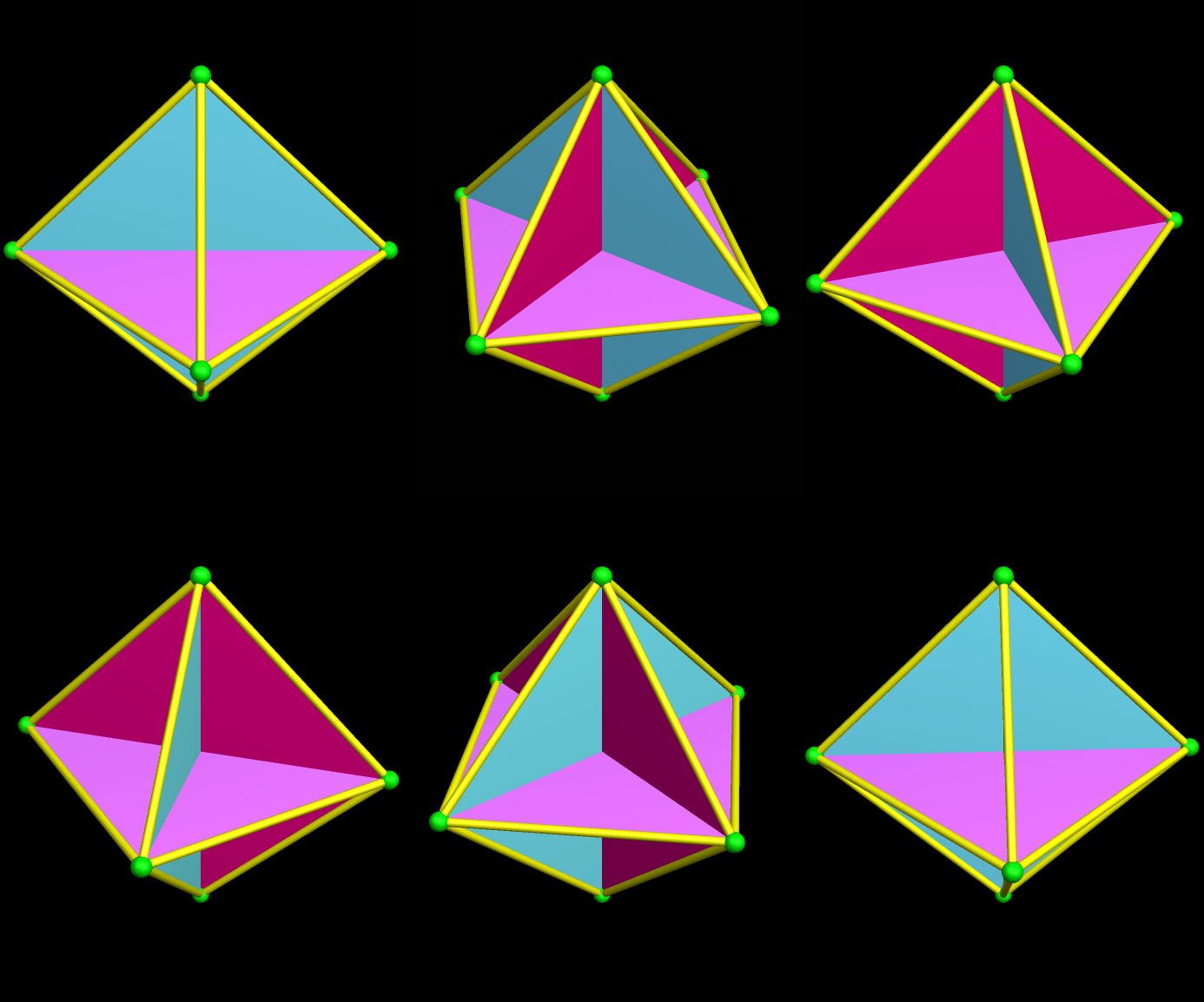
An Excavated Octahedron with Non-Zero Volume, and an Octahedral Nulloid

Image

An Excavated Octahedron, and an Octahedral Nulloid

This is an octahedron which has had short pyramids excavated from each of its faces. If the pyramids are made taller, their vertices coincide at the octahedron’s center. At that point, unlike in the figure above, the polyhedron’s volume reaches zero — turning it into a special type of polyhedron called a nulloid:

Tetrahemihexa

You may click on this second picture to enlarge it, if you wish.

Software credit: I made these images using Stella 4d, which you can find at http://www.software3d.com/Stella.php.

The Ninth Stellation of the Cube/Octahedron Compound

Image

The Ninth Stellation of the Cube/Octahedron Compound

Software credit: I made this using Stella 4d, which you can find at http://www.software3d.com/Stella.php.

The Twelfth Stellation of the Icosahedron/Dodecahedron Compound

Image

The Twelfth Stellation of the Icosahedron/Dodecahedron Compound

Software credit: I made this using Stella 4d, which you can find at http://www.software3d.com/Stella.php.