
I made this using Stella 4d, software you can find at http://www.software3d.com/Stella.php. I also make a second version, with larger spheres and cylinders for the vertices and edges:
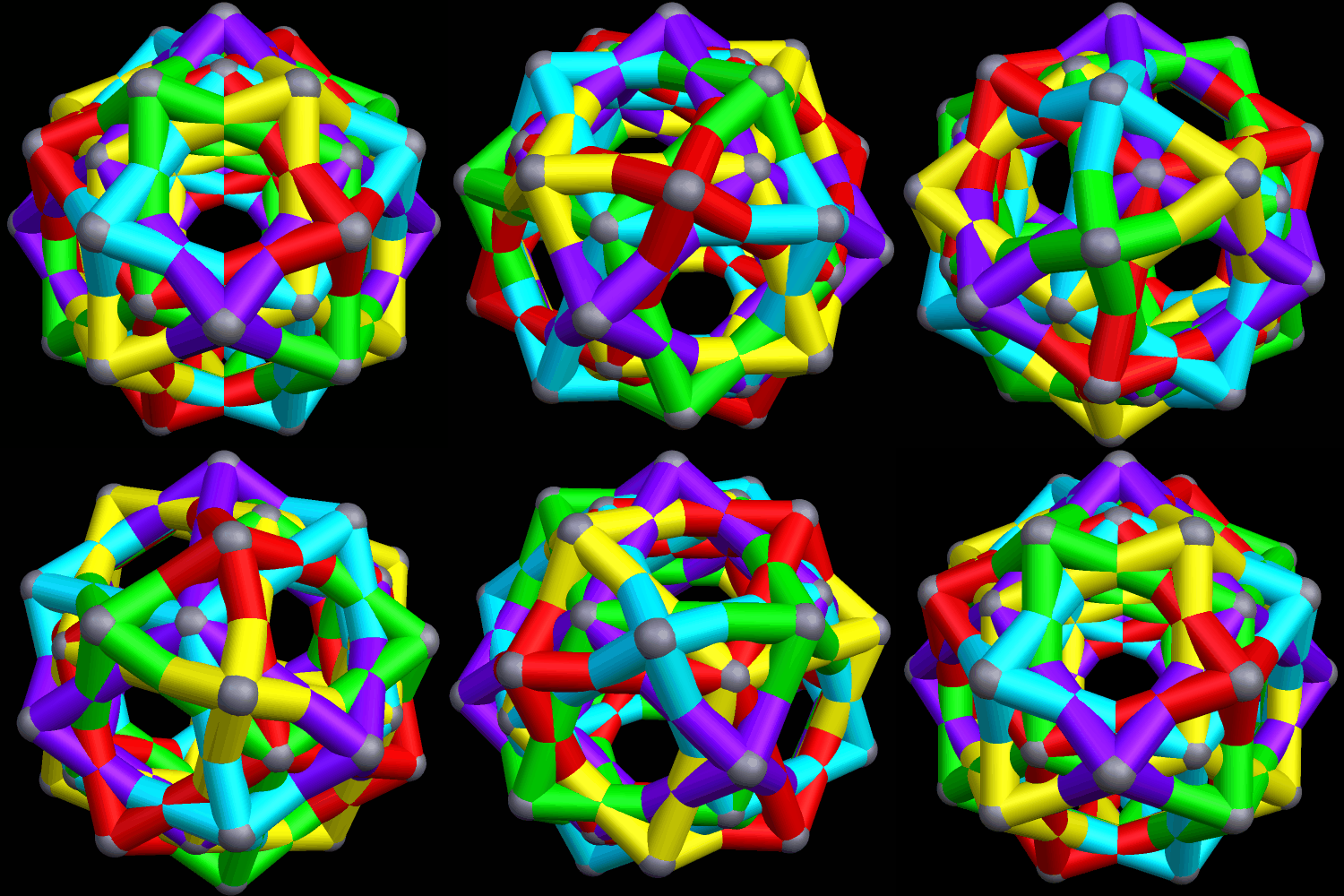
I made this using Stella 4d, software you can find at http://www.software3d.com/Stella.php. I also make a second version, with larger spheres and cylinders for the vertices and edges:
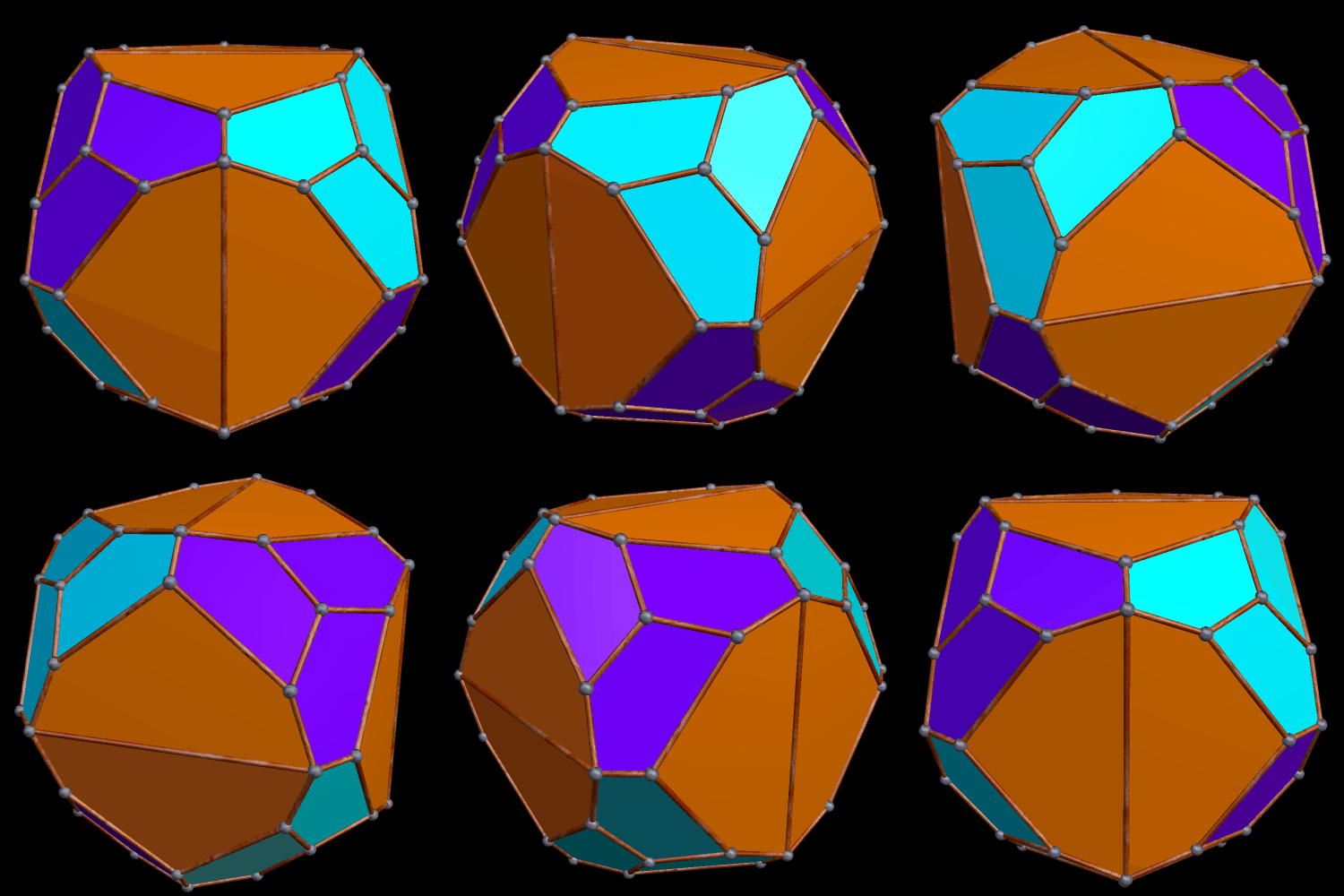
This polyhedron was created using Stella 4d, software which can be found here. It has pyritohedral symmetry.
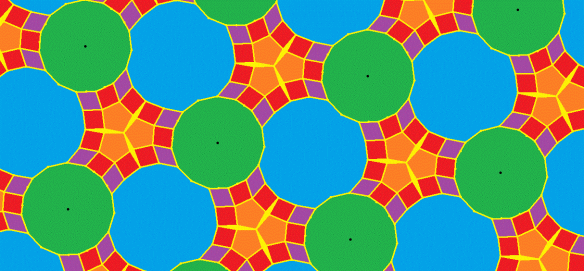
Other polygons included in this tessellation include several types of rhombi, as well as triconcave octadecagons. The pattern is chiral, but the chirality is subtle. (Hint: look near the pentagons.)

Software credit: I made this using Stella 4d, available here.


Why do people so often, and completely incorrectly, say they “can’t wait” for things? No one ever says this, it seems, unless they already are waiting for whatever they are talking about.
A seasonal example: “I can’t wait for Christmas!”
When I hear this, I generally point out to people that they are already waiting, and therefore, obviously, they can do so.
What is it with this? Why do so many people say this thing that clearly makes no sense at all?
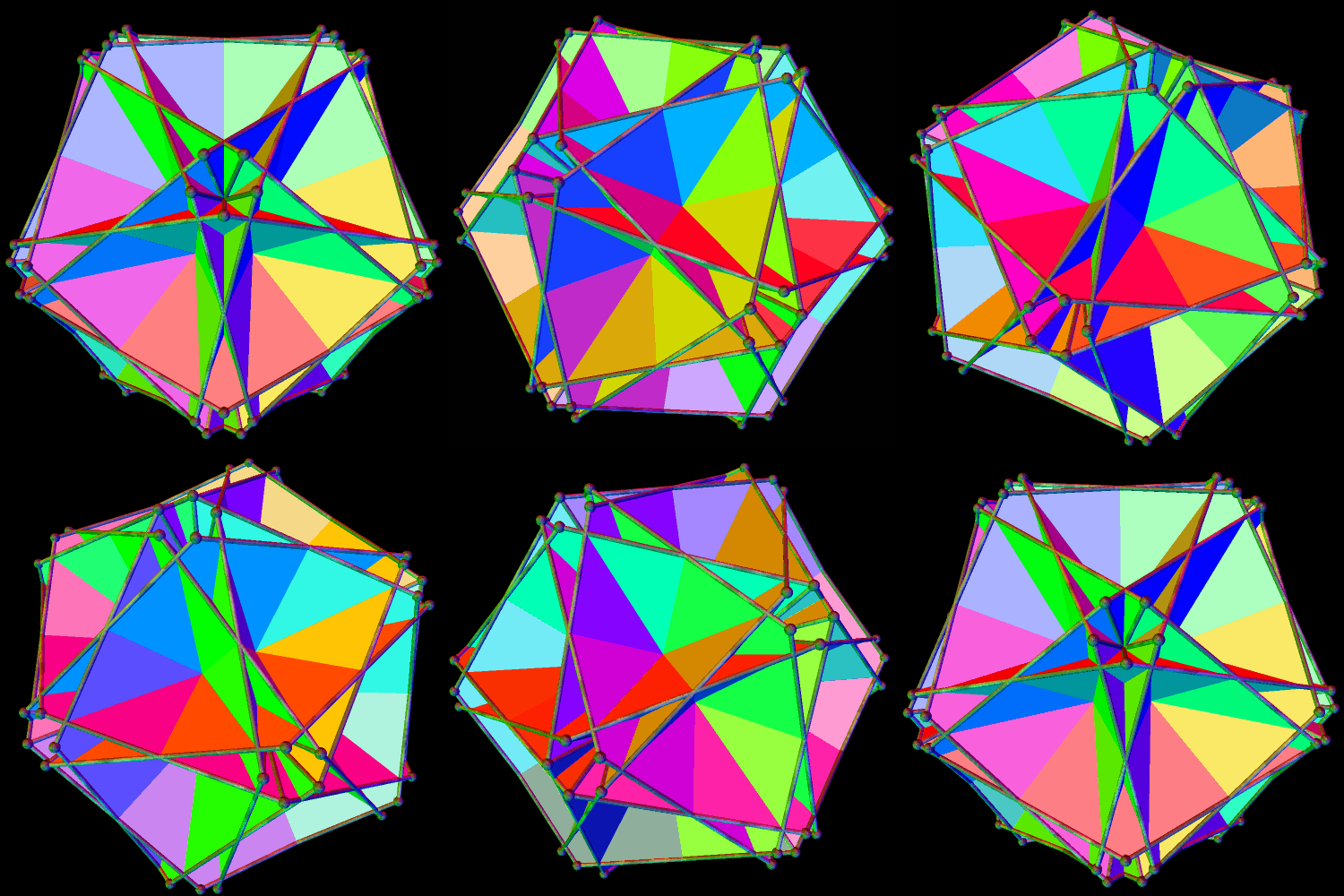
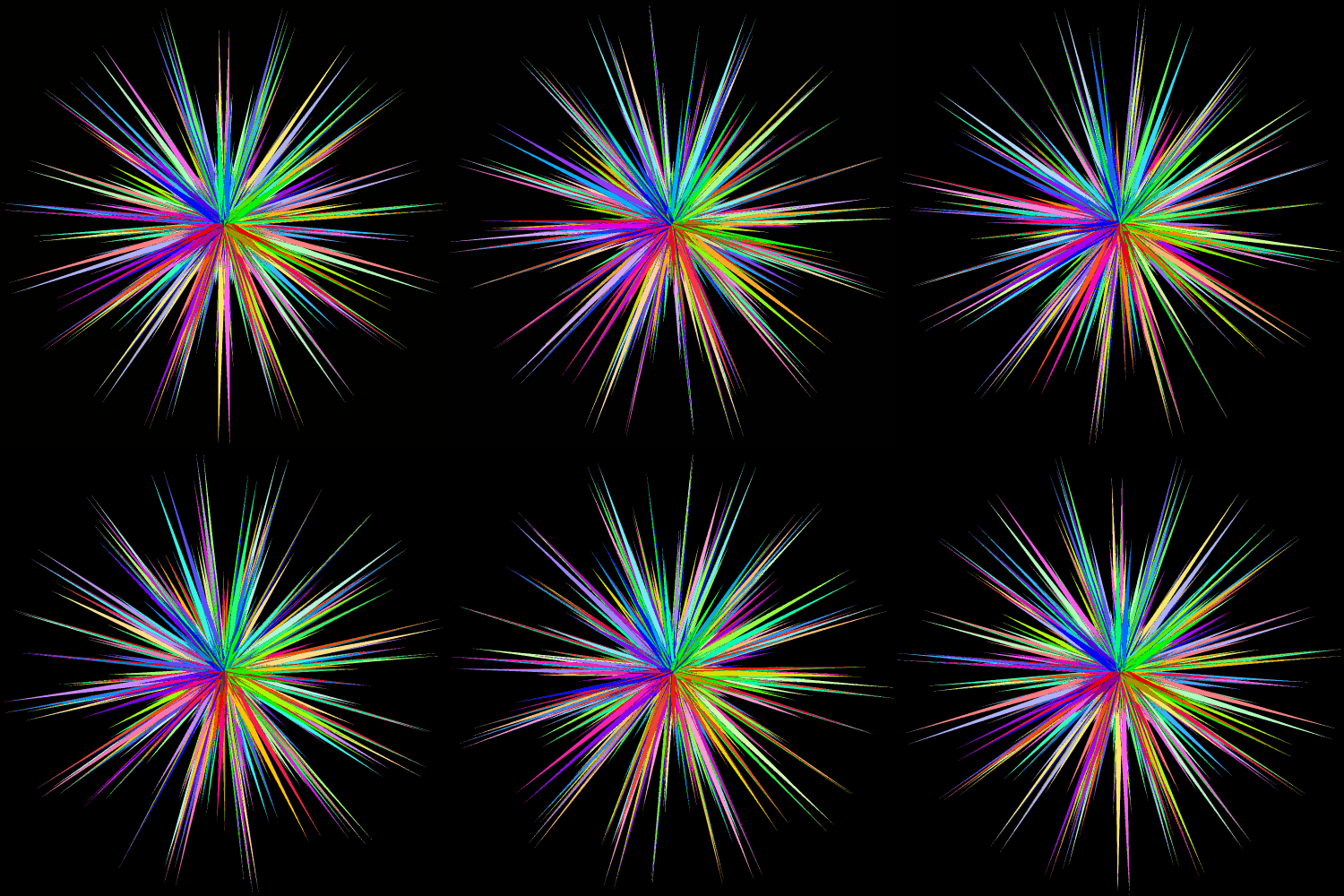
The polyhedron above also appeared in the post immediately before this one, as the second of three images. However, here it is presented in “rainbow color mode.”
This is its final stellation:
Both virtual models were created with Stella 4d, software you may try for yourself at this website.
Thinking about the post immediately before this one led me to see if I could connect opposite triangular faces of a rhombicosidodecahedron to form a ten-part compound — and it worked with Stella 4d just as it had when I “previewed” it in my head.

The interesting dual of the above polyhedral compound, also a ten-part compound, I was not able to preview in my head (although that would be a nice ability to have), but creating it was easy with Stella:

It is difficult, in the dual, to tell what the ten components are. To help with this, in the next image, all but one component has been removed. This reveals the components of the dual to be rhombus-faced parallelopipeds which are quite flattened, compared to most parallelopipeds I have seen before. This polyhedron is isomorphic to the cube, just as the elongated octahedra in the first compound were each isomorphic to the Platonic octahedron. Given that the cube and octahedron are duals, this is no surprise.

Stella 4d may be tried for free, as a trial download, at this website: http://www.software3d.com/Stella.php.
The creator of Stella 4d, the program I used to make these rotating polyhedral images, is Robert Webb (and the software itself may be tried for free here). Recently, on Facebook, he displayed a paper model of this compound of fifteen cuboids, pointed out that it is a faceting of the icosidodecahedron, and I (being me) took that as a challenge to make it myself. Here is my first result, in which all fifteen cuboids have different colors.

I then realized that RW had rendered his in only five colors, so I studied his post more carefully, and made the appropriate adjustments to do the same:

If you’d like to find the Stella page on Facebook, here is a link to it.
 RobertLovesPi.net