The Convex Hull of a Prism-Augmented Icosidodecahedron As a (Possibly) New Near-Miss Candidate

Image

The Convex Hull of a Prism-Augmented Icosidodecahedron As a New Near-Miss Candidate

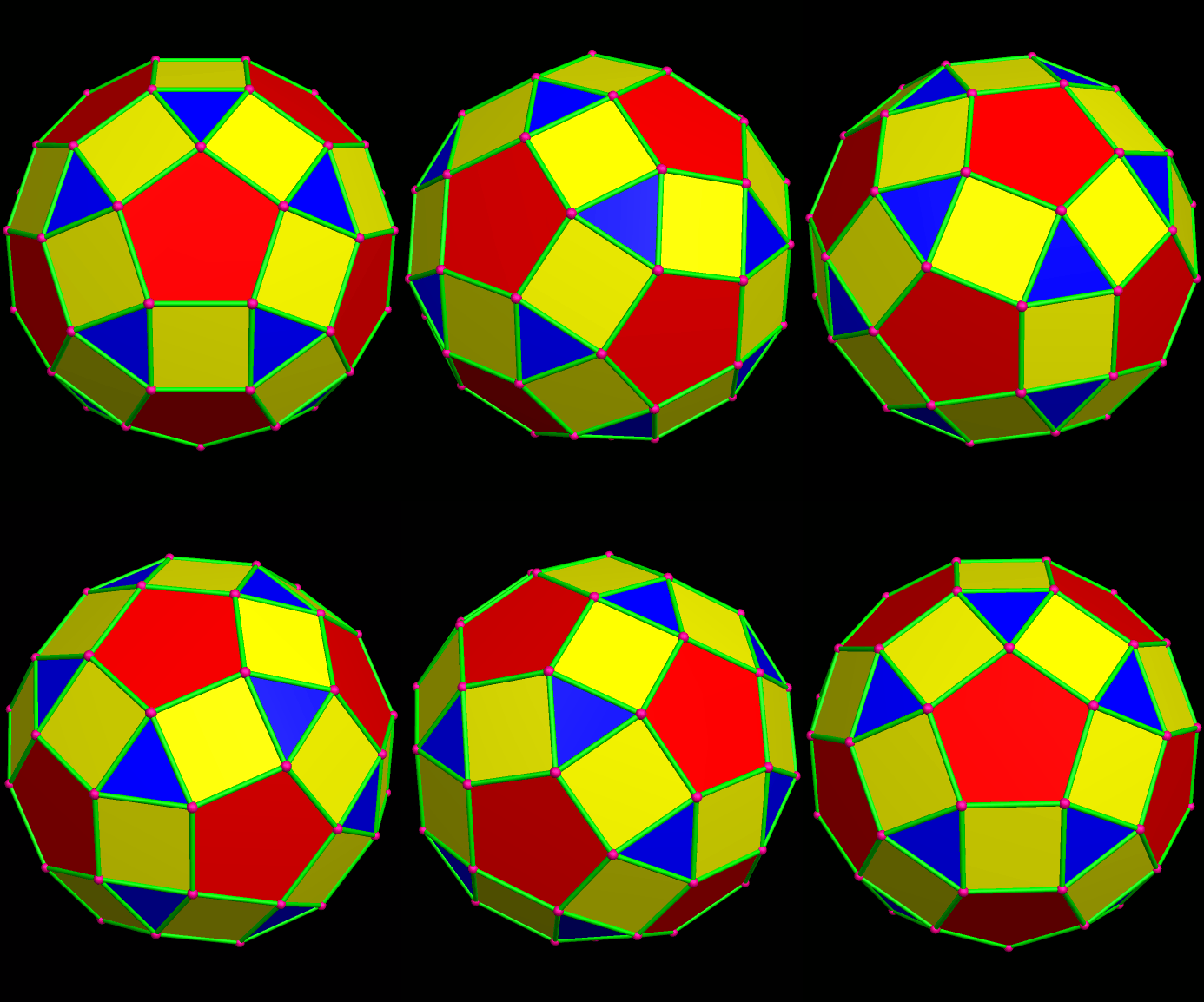
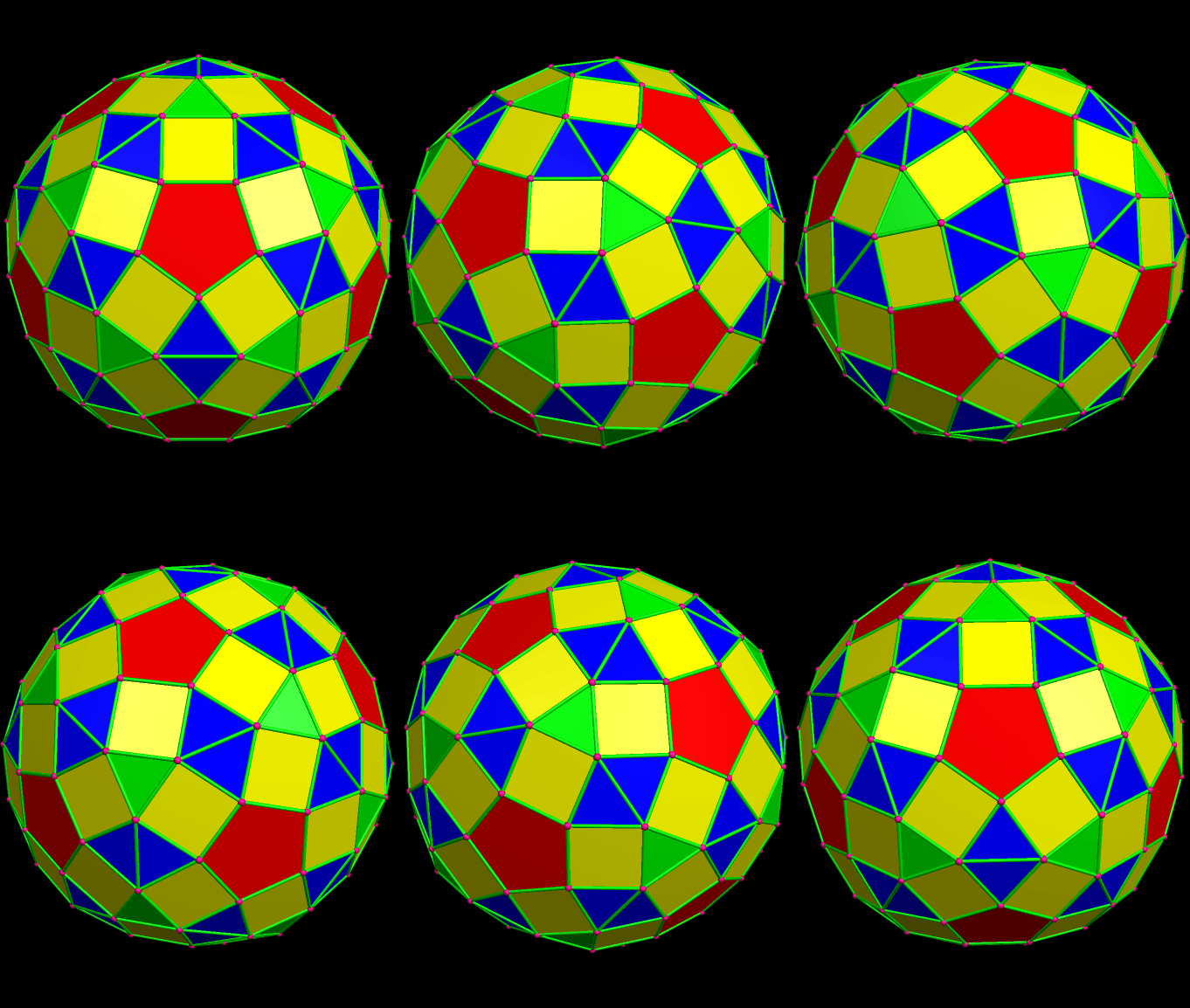
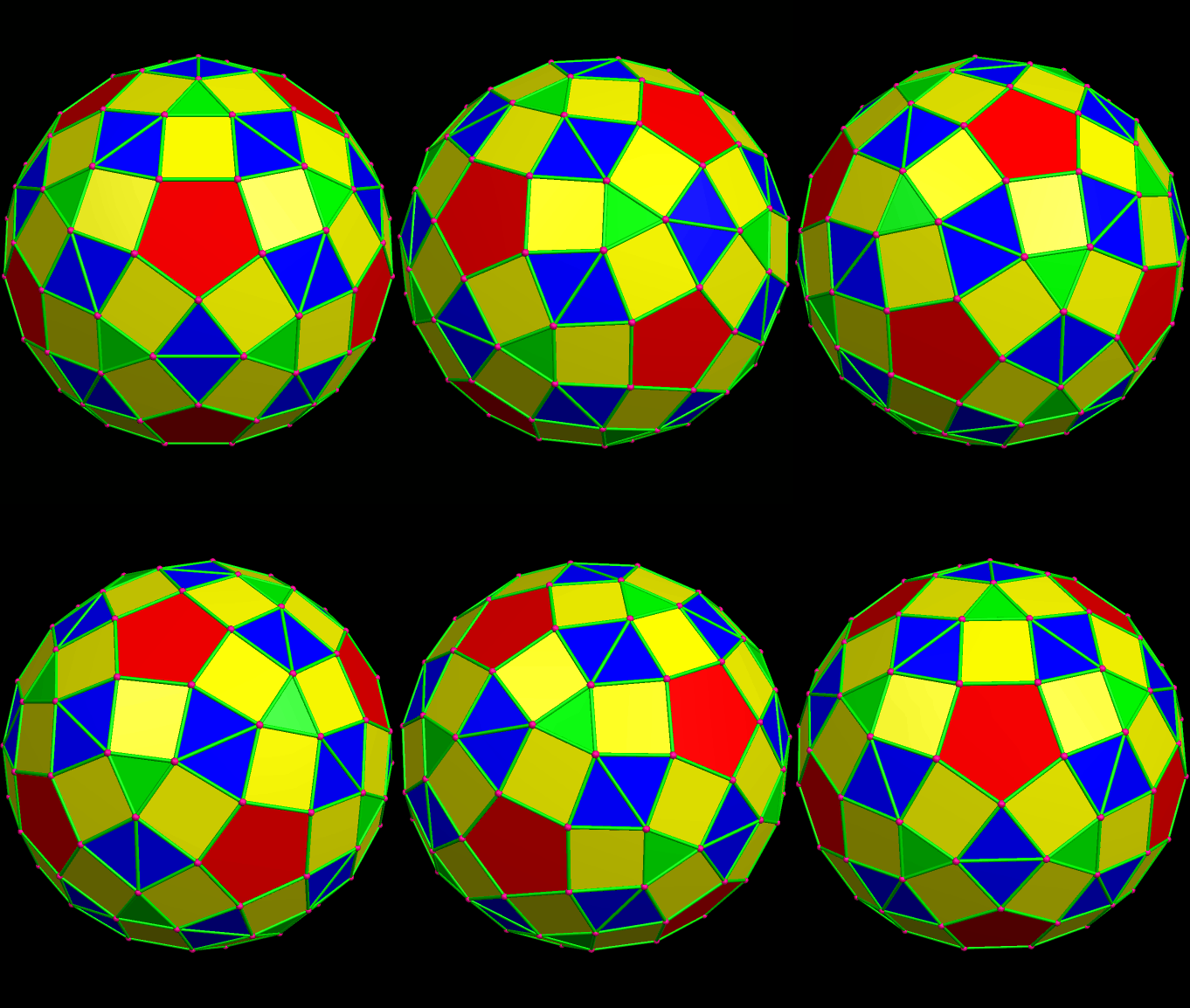
To make this polyhedron using Stella 4d: Polyhedron Navigator (a program which is available at this website), I started with an icosidodecahedron, augmented all faces with prisms of height 1.6 times greater than their bases’ edge length, and then took the convex hull of the result. I’m proposing it as a candidate for the loosely defined group of polyhedra called near-misses to the 92 Johnson solids: convex polyhedra which are almost, but not quite, Johnson solids, due to slight irregularity in some of their faces.

In this case, the pentagons and green triangles are regular, and have the same edge length. The blue triangles, however, are isosceles, with vertex angles of ~67.6687 degrees. The yellow almost-squares are actually rectangles, with edges next to blue triangles which are ~2.536% longer than the edges next to pentagons or green triangles.

I stumbled upon this design earlier today, while simply exploring polyhedra more-or-less randomly, using Stella. Below is the prototype I found at that time, which I merely made a .gif of, but did not perform measurements on.
NM1

In this prototype, the most significant difference I can detect is in the yellow faces, which are trapezoids, rather than rectangles, since the pentagon edge-length is slightly longer than that of the green triangles.

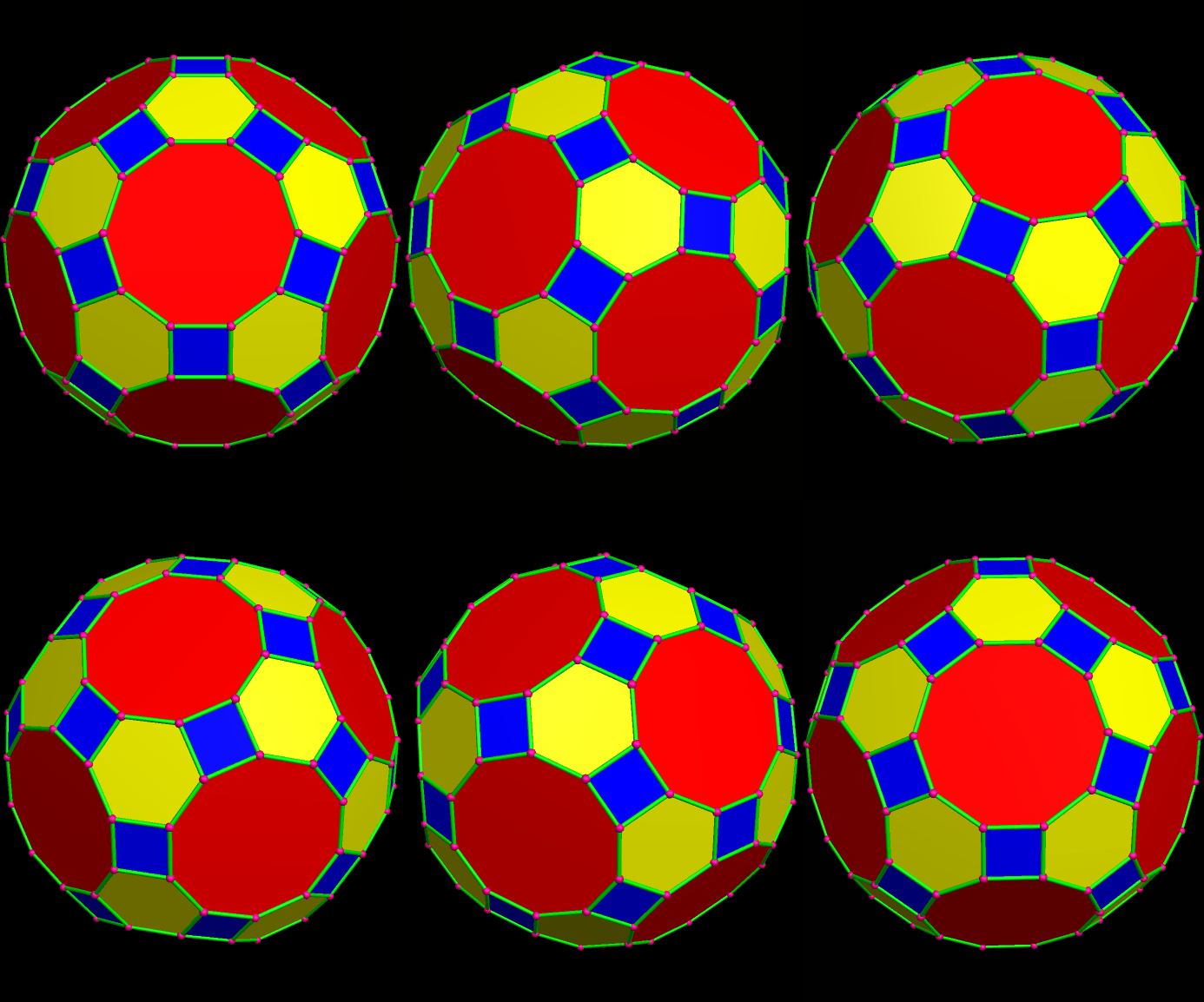
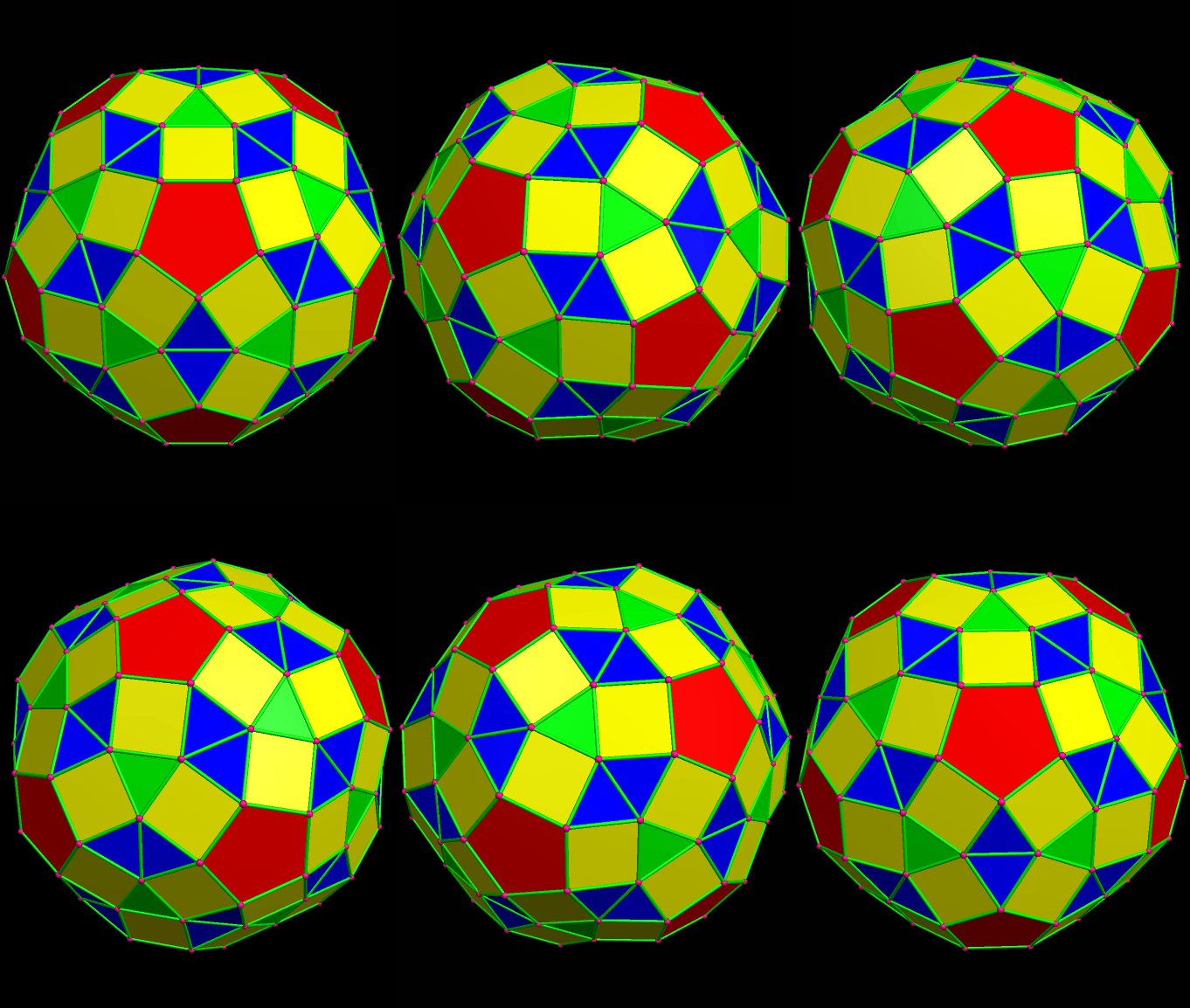
Stella has a “try to make faces regular” function built-in to try to help improve upon polyhedra such as these, but here’s what happens when that function is used on the first polyhedron shown above:
NMNC

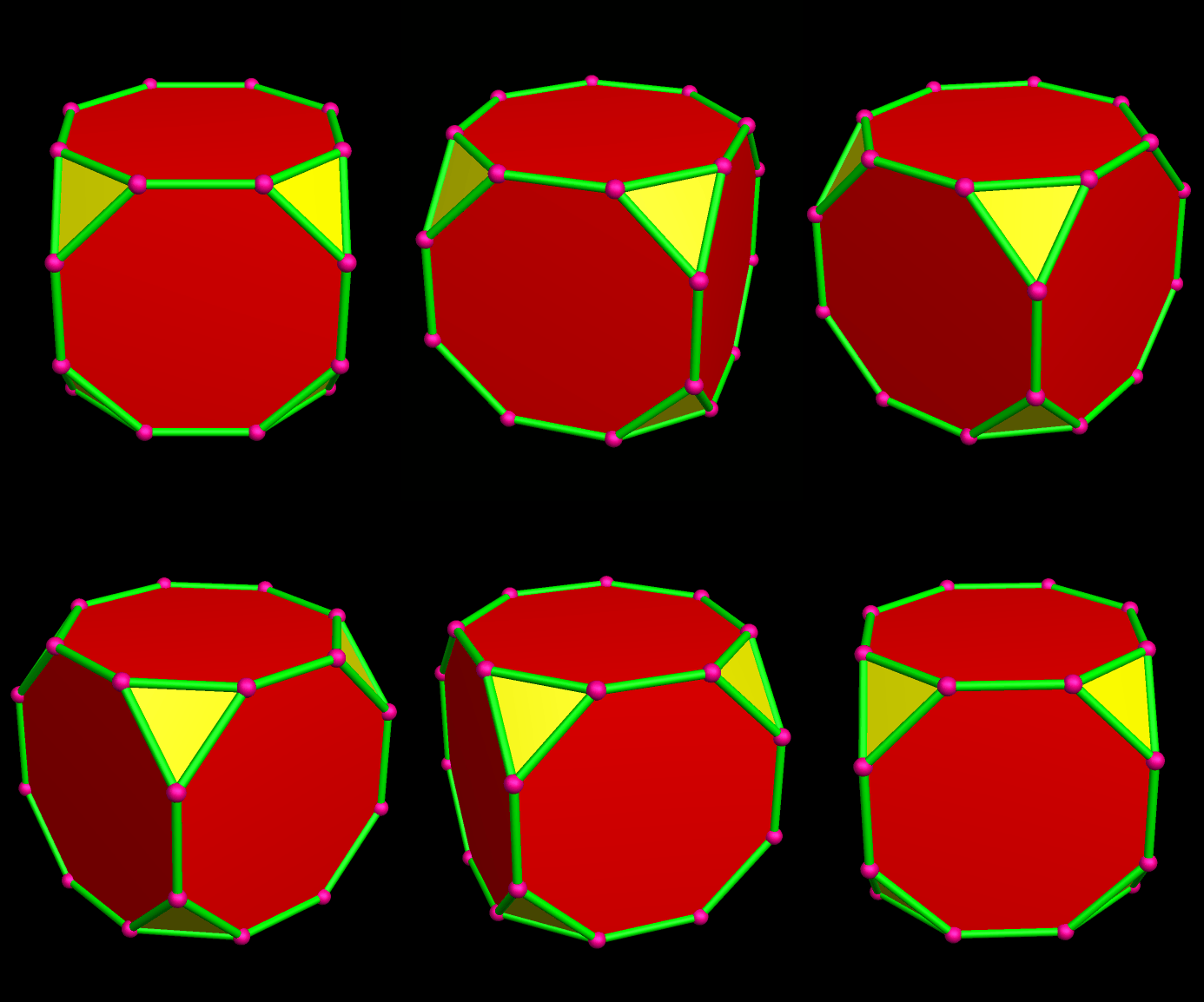
Behold! It worked — all of the faces are perfectly regular. However, that caused another problem to appear, and you can see it most easily by looking at the blue triangle-pairs:  this polyhedron is slightly non-convex. It’s also easily described as a truncated dodecahedron, with each of the twelve decagonal faces augmented by a pentagonal rotunda.

I’ll show this to some other people who are polyhedron-experts, and will update this post with what I find after I’ve talked to them. My questions for them, as usual in such situations, are two in number:

1. Has this polyhedron been found before?

2. Is it close enough to regularity to qualify for “near-miss” status?

If it hasn’t been found before, but is judged unworthy of “near-miss” status, it will at least join the newly-described group I call “near near-misses” — polyhedra which don’t quite qualify for near-miss status, by visual inspection. Obviously, this new group’s definition is even more “fuzzy” than that of the near-misses, but there is a need for such a category, nonetheless.

[Update:  Robert Webb, who wrote Stella 4d (and is not the blogger here, despite our sharing a first name), has seen this before, so it isn’t an original discovery of mine. He doesn’t accept it as a near-miss on the grounds that it naturally “wants” to be non-convex, as seen in the last of the three images in this post, and I agree with his reasoning. I’m therefore considering this to be a “near-near-miss.”]

Twelve Rotating Images of Barred Spiral Galaxy NGC1300

Image

Twelve Rotating Images of Barred Spiral Galaxy NGC 1300

After using Google to find the image of this galaxy, I used software called Stella 4d (available at http://www.software3d.com/Stella.php) to project it onto the twelve pentagonal faces of an icosidodecahedron, and then hid the triangular faces, as well as the vertices and edges — and then set the galaxies to rotate on the faces, as well as around the axis of the polyhedron.

Another View of the Regular Henkaipentacontagon

Image

Another View of the Regular Henkaipentacontahedron

This is simply the inverted-color version of the second image in the last post on this blog, where I explain how to construct this 51-sided polygon using compass and straightedge, starting with the heptadecagon, which has 17 sides.

Constructing the Henkaipentacontagon: A Regular Polygon with 51 Sides

Constructing the Henkaipentacontagon:  A Regular Polygon with 51 Sides

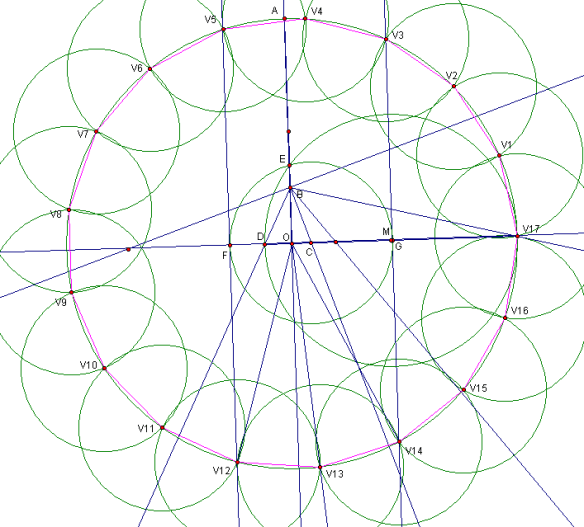
After completing the heptadecagon construction shown in the last post on this blog, I wondered if I could pull off a similar trick to the one mentioned there of combining the pentagon and triangle constructions to construct a regular pentadecagon — but using the heptadecagon and triangle, instead, to construct a regular polygon with (17)(3) = 51 sides, known as the henkaipentacontagon.

The answer: yes, I was able to, but certainly not in the simplest way possible, for I ended up having to go to 204, first, to get to 51. First, I extended two adjacent radii of the heptadecagon in the upper left as rays, just to give me room to work. Next, I placed point Bon the lower of those two rays, to be used as the center of the large circle in which to construct my 51-sided regular polygon. I then constructed a line through B1 which was parallel to the upper of these two rays, thus duplicating the ~21.17647º central angle of the heptadecagon, but in the center of my new, larger circle. Next, I constructed the yellow equilateral triangle with this heptadecagon-central-angle inside it, in such a way that the lower half of the yellow triangle would be a 30-60-90 triangle,  ΔA1B1C1, with the ~21.17647° angle inside, and sharing a ray with, this triangle’s 30° angle. By subtraction, that made a ~8.8235° angle, with its vertex at the center of the largest circle shown.

Next, I divided ~8.8235 into 360 . . . and, to my dismay, didn’t get a whole number as an answer, but 40.8, instead. I then noticed that one can multiple 40.8 by five, and obtain 204 as the product. Armed with this knowledge, I used my ~8.8235° angle, and 204 circles of equal radius, to locate 204 points, evenly-spaced, around the large circle.

51 is one-fourth of 204, so I connected every fourth point around the large circle with heavy blue segments, and made those 51 points (one fourth of the total) blue, as well. These blue points and segments are the sides and vertices of the regular henkaipentacontagon, shown inscribed, above, inside the largest circle in the diagram.

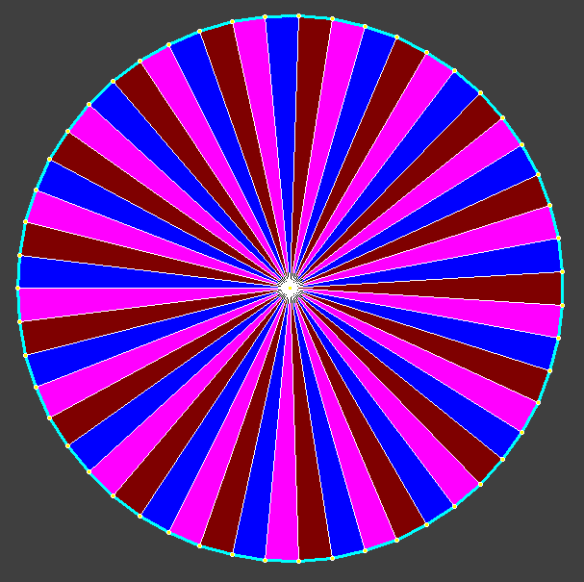
Since this polygon looks a lot like a circle, I then rendered a lot of things from the diagram above invisible, in order to produce this second image:  the henkaipentacontagon alone, with different colors for its vertices and sides, all radii added, and three alternating colors for the 51 triangles each formed by two adjacent radii and a side.

51gon

Constructing the Heptadecagon

Image

Constructing the Heptadecagon

I have just completed my first construction of the regular heptadecagon — a construction that even the ancient Greeks were never able to figure out. They did figure out how to construct a regular pentadecagon (by combining the constructions for the regular pentagon and triangle), and I once replicated that discovery, meaning that I figured it out independently.

The regular heptadecagon construction, however, I did not figure out independently. I used instructions found here (http://www.mathpages.com/home/kmath487.htm), which built on the work of Carl Friedrich Gauss, who, in 1796, at the age of 19, became the first person in history to determine that such a construction is possible with the traditional Euclidean tools.

A word of warning, if you attempt to replicate this construction yourself: points M and G are merely close together, but are not in the same place. Point M is the center of the circle which passes through points D and V17, while point G is one of the two points of intersection of (1) the line passing through points O and V17, and (2) the circle centered at C, and passing through E.

Gauss (and other mathematicians, building on his work) also showed, later, that constructions are possible for regular polygons with 257 sides, as well as 65,537 sides. I might, someday, replicate the construction of the regular polygon with 257 sides.

A man named Johann Gustav Hermes once spent ten years completing a 200-page manuscript showing how to construct the regular polygon with 65,537 sides, and I believe he actually performed the construction, as well. I will not be constructing this polygon — ever. I will, however, figure out a proper name for it. Let’s see . . . it’s the heptakaitriacontakaipentacosioikaipentachilikaihexamyriagon. Try saying that five times in a row, quickly!

A Proposed New Unit for Angle Measure: The Euclid

Image

A Proposed New Unit for Angle Measure:  the Euclid

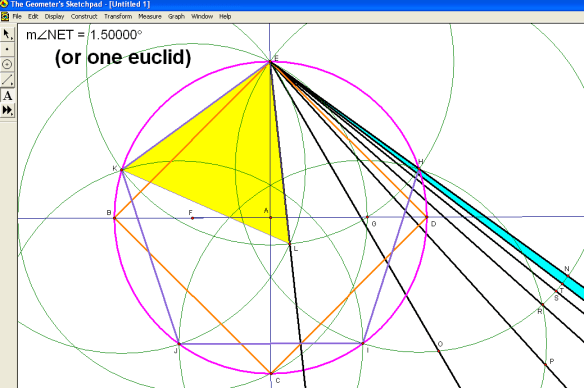
Some angles are constructible, in the Euclidean sense that they may be constructed with the traditional geometricians’ construction-tools: a compass, and an unmarked straightedge. Examples include every angle shown above, such as the 108° interior angles of the purple regular pentagon, or the 60° angles of the yellow triangle. Angle LEN is constructible as well, and measures 48° — but to construct it, one must use compass-and-straightedge subtraction (the 108° pentagon angle HEK, minus the 60° triangle angle KEL). After constructing this 48° angle, I bisected it repeatedly, to show that angles measuring 24, 12, 6, and 3, and 1.5 degrees may be constructed as well. The 1.5° angle NET is shown with a blue interior.

Many other angles are non-constructible. For example, the angle between two adjacent radii of a regular enneagon (also called a nonagon) measures 40°, and so, because it has been proven that the regular enneagon cannot be constructed with the traditional Euclidean tools, it follows that 40° angles are non-constructible. If they were constructible, however, the subtraction-trick I used earlier to construct a 48° angle could be used, again, to construct an 8° angle (48° – 40°) — so 8° angles, therefore, are also non-constructible. Since repeatedly bisecting an 8° angle would yield angles measuring 4, 2, 1, 0.5, o.25, etc. degrees, all of these angle-measures are for non-constructible angles.

With the one degree angle on the non-constructible list, that throws into question the practice of using degrees to measure angles. As for other established units of angle measure, they have the same problem. It is not possible to construct an angle measuring one radian — nor one gradian, either. (Gradians are little-known angle-measuring units; a right angle measures 100 gradians.)

If an angle-measurement system is to be based on units which correspond to the measure of constructible angles, the blue angle above, measuring 1.5°, is ideal . . . and I am, therefore, using this angle as the definition for a new unit of angle measure:  the euclid. If an angle measures a whole number of euclids, it is constructible, and this cannot be said for the degree, radian, nor gradian. (By the way, leaving “euclid” uncapitalized, in this context, is deliberate, for I am using it as a unit. This follows the convention set by other units named after people. For example, “Newton” refers to Sir Isaac Newton, but “newton” refers to a unit of force.)

One full rotation would be a rotation of 240 euclids. A right angle is one-fourth of that, or sixty euclids. The interior angles of equilateral triangles measure forty euclids, and the interior regular-pentagon-angle of 108° becomes 72 euclids, in this new, proposed system.

360 has been used as the basis of the degree for reasons both historical and mathematical. Sixty, and its multiple 360, appear as important numbers in several ancient cultures, and 360 also has many whole-number divisors, having a prime-number factorization of (2)(2)(2)(3)(3)(5).

However, 240 has similar properties. As I have shown, it is based on the Euclidean construction-rules from ancient Greece. The number 240 also has many whole-number divisors, since its prime-number factorization is (2)(2)(2)(2)(3)(5).

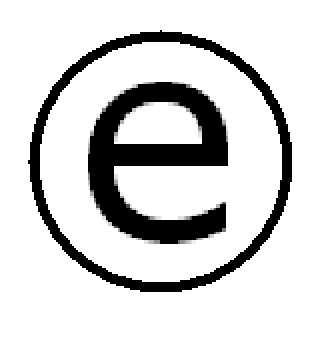
Just in case this catches on, I have created a symbol for the euclid, to be used in superscript form, as the degree symbol is used:

euclid symbol

A simple “e,” by itself, would not do, for that would cause confusion with the important number e — the base of natural logarithms, among other things. That is why I included a circle, surrounding the letter “e,” for this symbol. In superscript form, this symbol for the euclid would resemble the well-known copyright symbol — but, fortunately, the copyright symbol is not, itself, copyrighted.

A Pulsating Compound of Three Octangular Dipyramids

Image

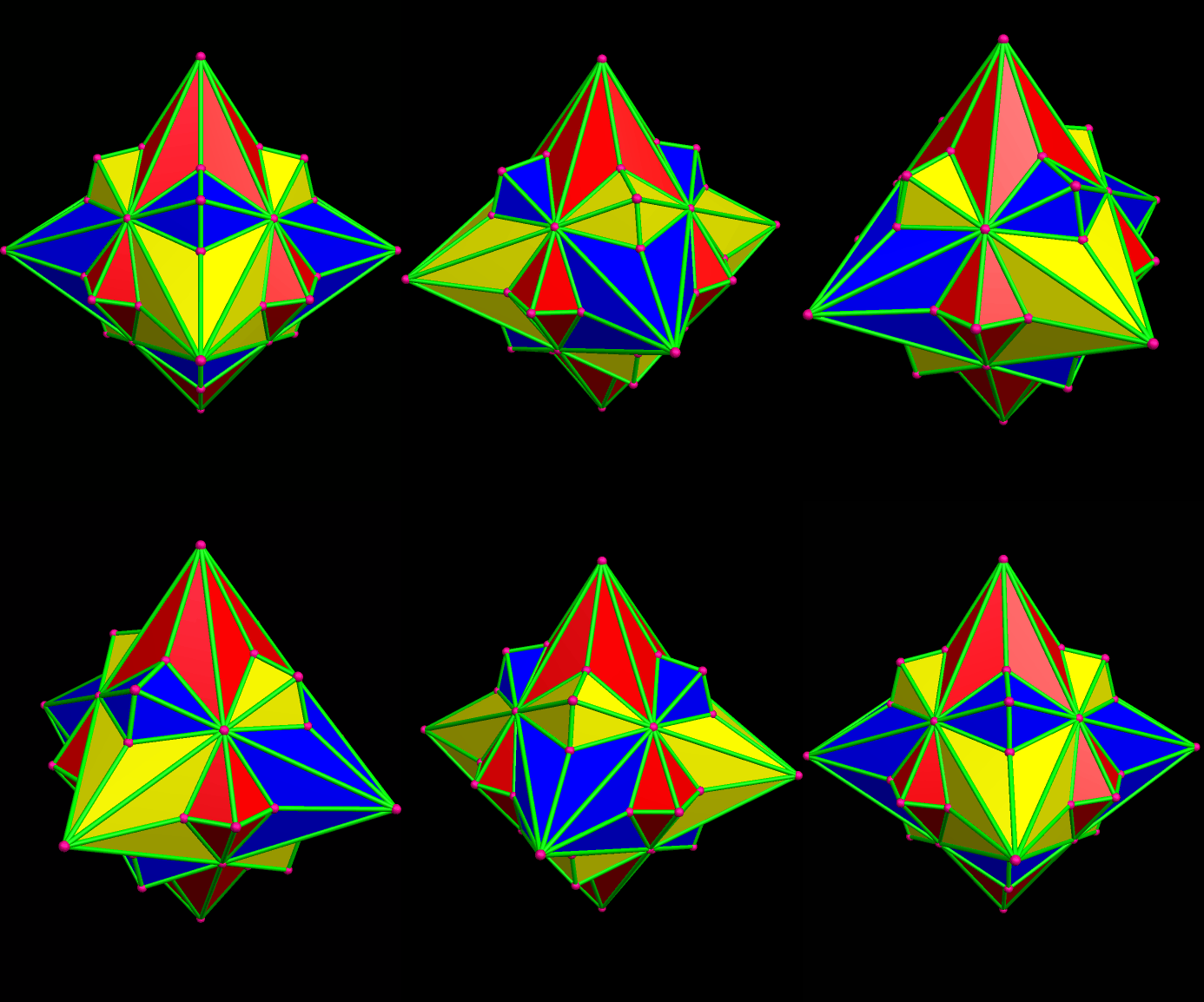
Pulsating Compound of Three Octangular Dipyramids

Software credit: see http://www.software3d.com/Stella.php for the software used (Stella 4d) to make this image. A free trial download is available.

The Archimedean Solid That Isn’t

A common definition for “Archimedean solid” goes like this:  Archimedean solids (1) are convex polyhedra, (2) include only faces which are regular, convex, non-intersecting polygons, (3) have more than one type of regular polygon used as faces, and (4) have the same set of polygons meeting at each vertex, in the same pattern. Archimedes himself enumerated the thirteen Archimedean solids, noted that two of them have mirror-images, and it has been proven that no more exist . . . provided the definition above is tweaked, just a little. Why isn’t this definition adequate? Here’s why.

ImageImage

By the definition given above, both of these polyhedra qualify as Archimedean solids . . . but only the top one is included in the official set of thirteen. It’s called the rhombcuboctahedron (or the rhombicuboctahedron). Both polyhedra shown have eighteen square faces, and eight triangular faces, all regular. In each one, also, the face-pattern around each vertex is square/square/square/triangle. However, the bottom figure, despite this, is not considered an Archimedean solid. Its existence is the reason — the only reason, to my knowledge — that the definition given above for the Archimedean solids is inadequate.

When I first encountered these two polyhedra side-by-side, I was reading Peter Cromwell’s excellent book, Polyhedra, and it showed them as simple black-and-white wire-frame images. It took an embarrassing amount of time for me to spot the difference between them, so please don’t feel bad if you also are having trouble seeing it. To spot the difference, if you haven’t already, watch the triangles. In the top image, which is a true Archimedean solid, the four triangles at the top of the polyhedron stay right above the corresponding four triangles at the bottom of the same polyhedron. In the second image, however, this is not the case, due to a 45° rotation of the bottom “cap” of the polyhedron shown.

To fix this problem, and exclude the second figure, an extra requirement has been added to the list that defines the Archimedean solids:  not only must each vertex be locally identical, but there must also be a global isometry shared by all vertices. In lay terms, that means that you can look at any vertex you choose, and see the same pattern for the other vertices, their orientation relative to each other, and the orientation of the faces surrounding them, as well. The first polyhedron shown here passes this test, but the second does not.

This troublesome-but-interesting second polyhedron has several names. I usually call it the pseudorhombcuboctahedron. Other names include the pseudorhombicuboctahedron (note the extra “i”), and Miller’s solid (based on the work of J.C.P. Miller, as described in Cromwell’s book). As #37 in Norman Johnson’s set of 92 Johnson solids, of which it is unambiguously a member, it is called the elongated square gyrobicupola. Finally, there are people who disagree with what I have written above . . . and they often refer to the bottom polyhedron shown as, simply, “the fourteenth Archimedean solid.”

Image credit:  both pictures above were generated using Stella 4d, software you can buy, or try for free, at www.software3d.com/Stella.php.

Five of the Thirteen Archimedean Solids Have Multiple English Names

Image

Four Archimedean Solids with Multiple English Names

I call the polyhedron above the rhombcuboctahedron. Other names for it are the rhombicuboctahedron (note the “i”), the small rhombcuboctahedron, and the small rhombicuboctahedron. Sometimes, the word “small,” when it appears, is put in parentheses. Of these multiple names, all of which I have seen in print, the second one given above is the most common, but I prefer to leave the “i” out, simply to make the word look and sound less like “rhombicosidodecahedron,” one of the polyhedra coming later in this post.

Trunc Cubocta

My preferred name for this polyhedron is the great rhombcuboctahedron, and it is also called the great rhombicuboctahedron. The only difference there is the “i,” and my reasoning for preferring the first name is the same as with its “little brother,” above. However, as with the first polyhedron in this post, the “i”-included version is more common than the name I prefer.

Unfortunately, this second polyhedron has another name, one I intensely dislike, but probably the most popular one of all — the truncated cuboctahedron. Johannes Kepler came up with this name, centuries ago, but there’s a big problem with it: if you truncate a cuboctahedron, you don’t get square faces where the truncated parts are removed. Instead, you get rectangles, and then have to deform the result to turn the rectangles into squares. Other names for this same polyhedron include the rhombitruncated cuboctahedron (given it by Magnus Wenninger) and the omnitruncated cube or cantitruncated cube (both of these names originated with Norman Johnson). My source for the named originators of these names is the Wikipedia article for this polyhedron, and, of course, the sources cited there.

Rhombicosidodeca

This third polyhedron (which, incidentally, is the one of the thirteen Archimedean solids I find most attractive) is most commonly called the rhombicosidodecahedron. To my knowledge, no one intentionally leaves out the “i” after “rhomb-” in this name, and, for once, the most popular name is also the one I prefer. However, it also has a “big brother,” just like the polyhedron at the top of this post. For that reason, this polyhedron is sometimes called the small rhombicosidodecahedron, or even the (small) rhombicosidodecahedron, parentheses included.

Trunc Icosidodeca

I call this polyhedron the great rhombicosidodecahedron, and many others do as well — that is its second-most-popular name, and identifies it as the “big brother” of the third polyhedron shown in this post. Less frequently, you will find it referred to as the rhombitruncated icosidodecahedron (coined by Wenninger) or the omnitruncated dodecahedron or icosahedron (names given it by Johnson). Again, Wikipedia, and the sources cited there, are my sources for these attributions.

While I don’t use Wenninger’s nor Johnson’s names for this polyhedron, their terms for it don’t bother me, either, for they represent attempts to reduce confusion, rather than increase it. As with the second polyhedron shown above, this confusion started with Kepler, who, in his finite wisdom, called this polyhedron the truncated icosidodecahedron — a name which has “stuck” through the centuries, and is still its most popular name. However, it’s a bad name, unlike the others given it by Wenninger and Johnson. Here’s why: if you truncate an icosidodecahedron (just as with the truncation of a cuboctahedron, described in the commentary about the second polyhedron pictured above), you don’t get the square faces you see here. Instead, the squares come out of the truncation as rectangles, and then edge lengths must be adjusted in order to make all the faces regular, once more. I see that as cheating, and that’s why I wish the name “truncated icosidodecahedron,” along with “truncated cuboctahedron” for the great rhombcuboctahedron, would simply go away.

Here’s the last of the Archimedean solids with more than one English name:

Trunc Cube

Most who recognize this shape, including myself, call it the truncated cube. A few people, though, are extreme purists when it comes to Greek-derived words — worse than me, and I take that pretty far sometimes — and they won’t even call an ordinary (Platonic) cube a cube, preferring “hexahedron,” instead. These same people, predictably, call this Archimedean solid the truncated hexahedron. They are, technically, correct, I must admit. However, with the cube being, easily, the polyhedron most familiar to the general public, almost none of whom know, let alone use, the word “hexahedron,” this alternate term for the truncated cube will, I am certain, never gain much popularity.

It is unfortunate that five of the thirteen Archimedean solids have multiple names, for learning to spell and pronounce just one name for each of them would be task enough. Unlike in the field of chemistry, however, geometricians have no equivalent to the IUPAC (International Union of Pure and Applied Chemists), the folks who, among other things, select official, permanent names and symbols for newly-synthesized elements. For this reason, the multiple-name problem for certain polyhedra isn’t going away, any time soon.

(Image credit:  a program called Stella 4d, available at www.software3d.com/Stella.php, was used to create all of the pictures in this post.)

Zonohedron Based On the Edges and Vertices of a Great Rhombcuboctahedron

Image

Zonohedron Based On the Edges and Vertices of a Great Rhombcuboctahedron

This polyhedral monster has 578 faces of 26 types. In the image above, hexagons of any type are red, rhombi of any type (including squares) are yellow, and the blue faces are octagons. If each face-type is given a different color, though, this zonohedron looks like this:

Zonohedrified Trunc Cubocta

Another coloring-scheme — the best one, in my opinion — is like the first one here, except that regular hexagons are given their own color (purple), and squares are given their own as well (black):

Zonohedrified Trunc Cubocta 

All three images were created with Stella 4d, software available at http://www.software3d.com/Stella.php.