The 600-cell is a four-dimensional, convex, regular polychoron. Its dual is the 120-cell, also known as the hyperdodecahedron. Since the dual of the dodecahedron is the icosahedron, the 600-cell is sometimes called the “hypericosahedron,” That might lead one to think that the cells of a 600-cell are icosahedra, but they are actually tetrahedra. These tetrahedra meet twenty at a vertex, which is another way the icosahedron is involved in this figure.
I just finished a Zome model of a three-dimensional “shadow” of a 600-cell. It’s a challenging model to make. Built with B1, Y1, R1, and R0 Zomestruts, it’s about the size of a basketball. Instructions for building it may be found at https://www.pmedig.com/Zome_600cell.html.
If you’d like to try Zometools for yourself, or want some for your kids, the website to visit is http://www.zometool.com. I’ve been a happy customer of theirs for over twenty years.

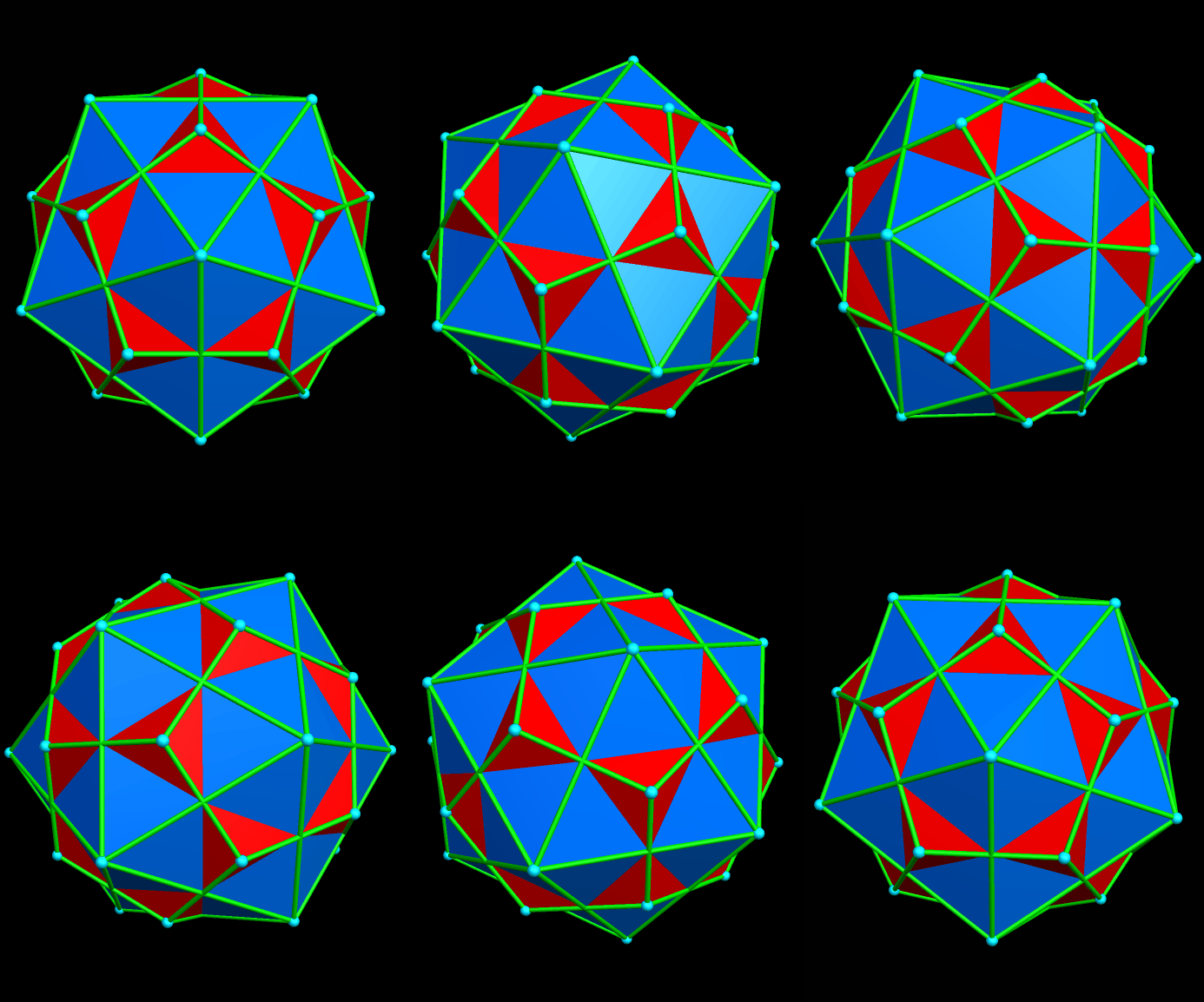
Here are two more models of the 600-cell. Rather than being physically built, these are virtual models. They show the polychoron rotating in hyperspace, thus changing the appearance of its three-dimensional “shadow” on a continual basis. This rotation in hyperspace differs in the two images shown, along with the coloring of the models.

These virtual models were created using Stella 4d, which you can try for free at http://www.software3d.com/Stella.php.




 RobertLovesPi.net