A Variant of Kepler’s Stella Octangula

Image

A Variant of Kepler's Stella Octangula

Johannes Kepler named the compound of two tetrahedra the “stella octangula,” thus helping make it one of the best-known polyhedral compounds today. This variant uses triakis tetrahedra in place of the Platonic tetrahedra in that compound. The triakis tetrahedron is a Catalan solid, and is dual to the truncated tetrahedron.

Software credit: see http://www.software3d.com/stella.php to try or buy Stella 4d, the software I used to create this image.

The Compound of Six Dodecahedra

Image

The Compound of Six Dodecahedra

Some polyhedral compounds are well-known, such as the compound of five cubes, while others are less famous. I had never heard of this compound before building one today (virtually, not as a physical model). However, a quick Google-search told me that I was not the first person to discover it.

Software credit: see http://www.software3d.com/stella.php to try or buy Stella 4d, the software I used to create this image.

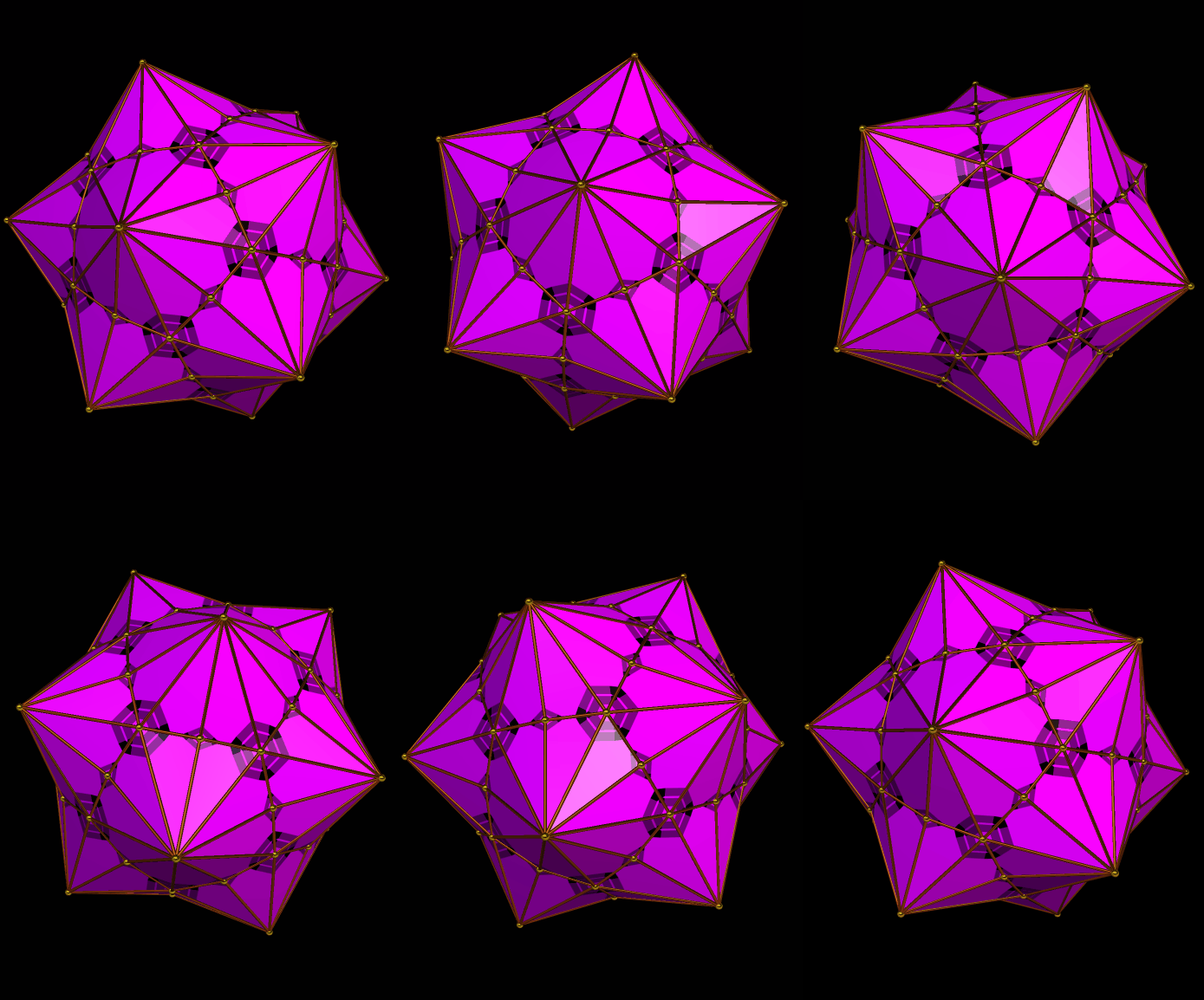
The Pentagonal Hexacontahedron, and Related Polyhedra

Image

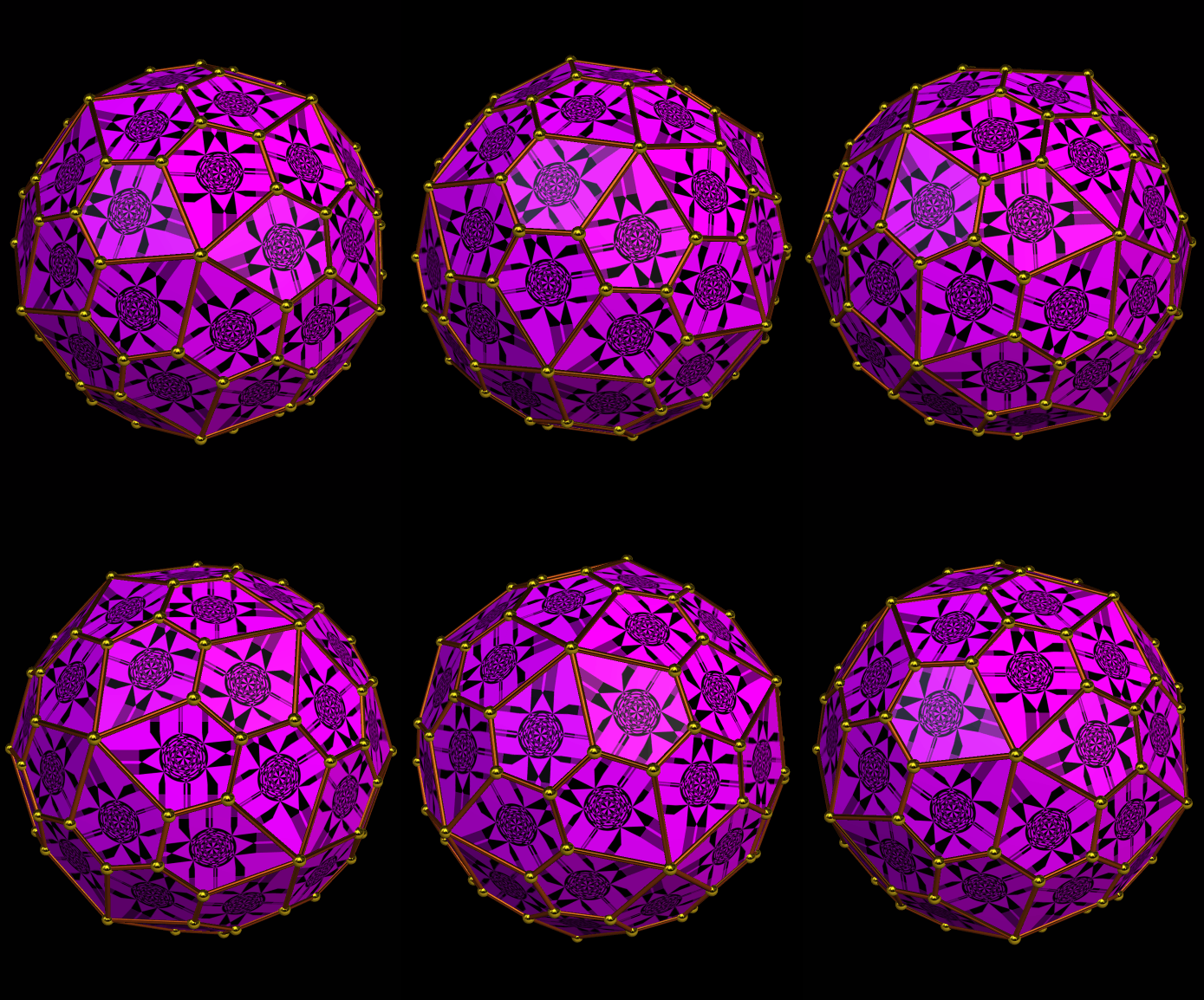
The Pentagonal Hexacontahedron

As the dual of the snub dodecahedron, which is chiral, this member of the Catalan Solids is also chiral — in other words, it exists in left- and right-handed versions, known an entantiomers. They are mirror-images of each other, like left and right gloves or shoes. Here’s the other one, by comparison:

Penta Hexeconta enantiomer

It is always possible to make a compound, for a chiral polyhedron, from its two enantiomers. Here’s the one made from the two mirror-image pentagonal hexacontahedra shown above:
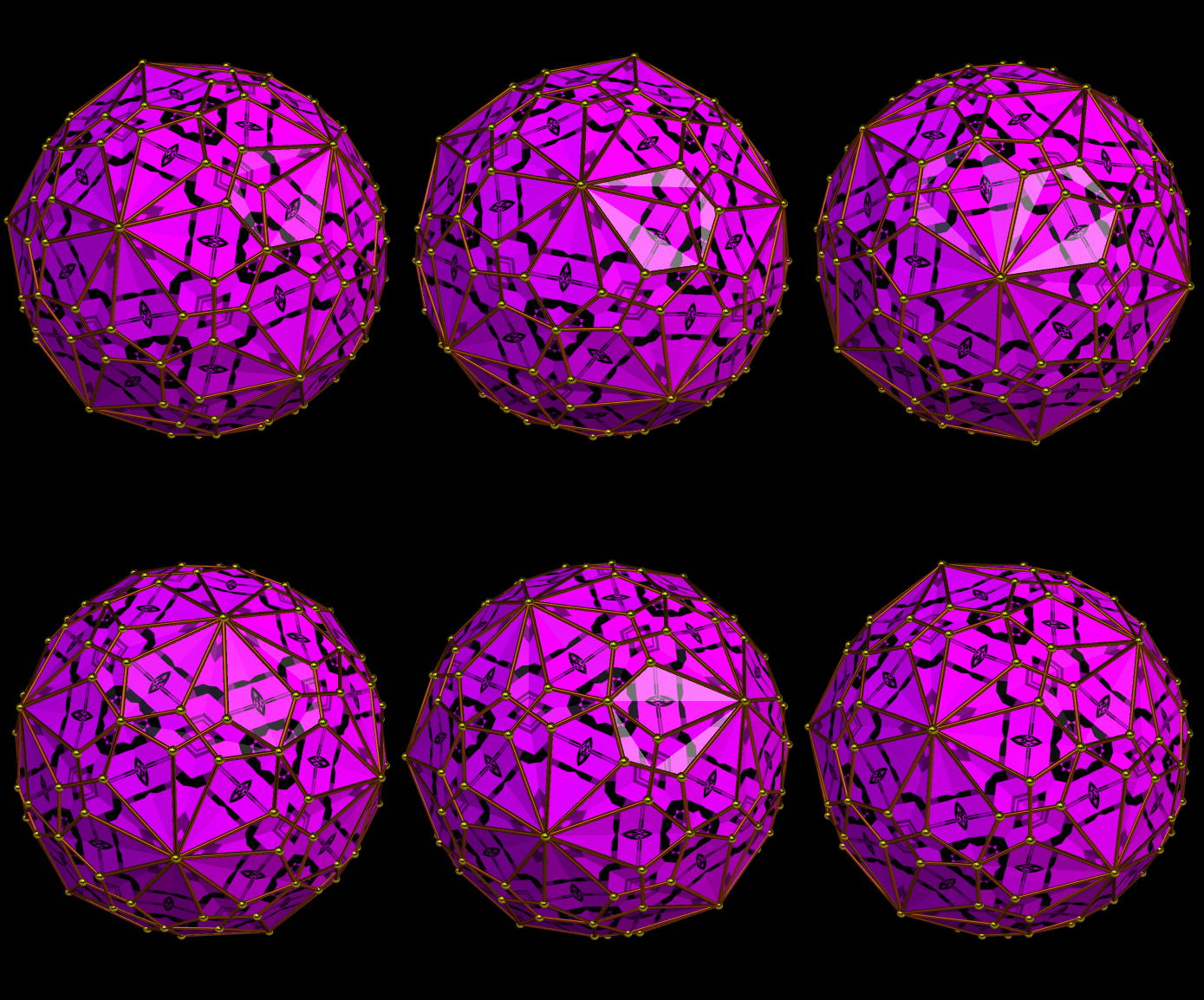
Compound of enantiomorphic pair

Stellating this enantiomorphic-pair-compound twenty-one times produces this interesting result:

stellating

And, returning to the unstellated enantiamorphic-pair-compound, here is its convex hull:

Convex hull

This convex hull strikes me as an interesting polyhedron in its own right, so I tried stellating it several times, just to see what would happen. Here’s one result, after seventeen stellations:

Stellation17

Software credit:  I made these rotating images using Stella 4d:  Polyhedron Navigator. That program may be bought at http://www.software3d.com/Stella.php, and has a free “try it before you buy it” trial download available at that site, as well. I also used Geometer’s Sketchpad and MS-Paint to produce the flat purple-and-black image found on faces near the top of this post (and, by itself, in the previous post on this blog), but I know of nowhere to get free trial downloads of these latter two programs.

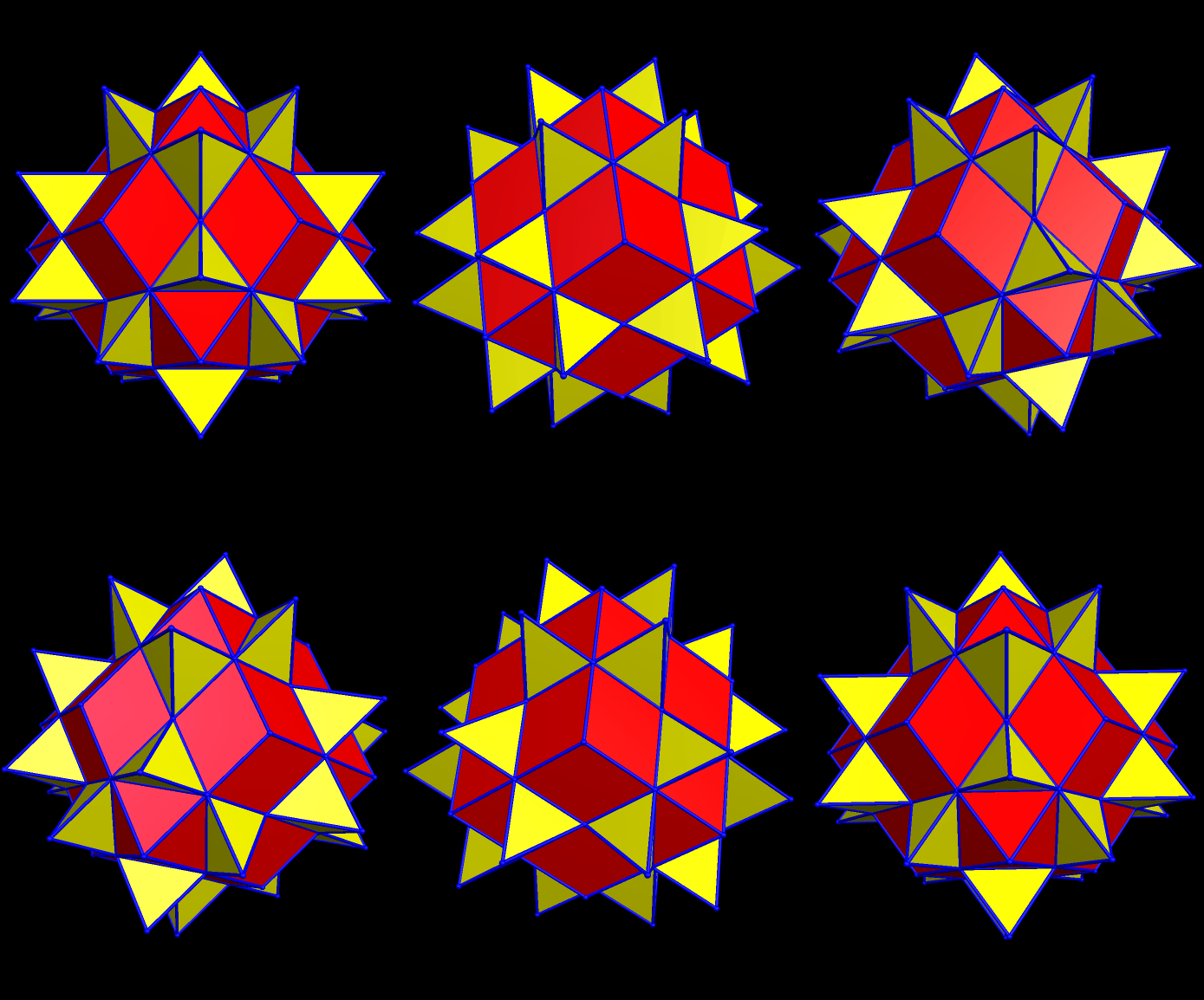
The Compound of the Rhombic Dodecahedron and Its Own Third Stellation

Image

The Compound of the Rhombic Dodecahedron and Its Own Third Stellation

Software credit: see http://www.software3d.com/stella.php

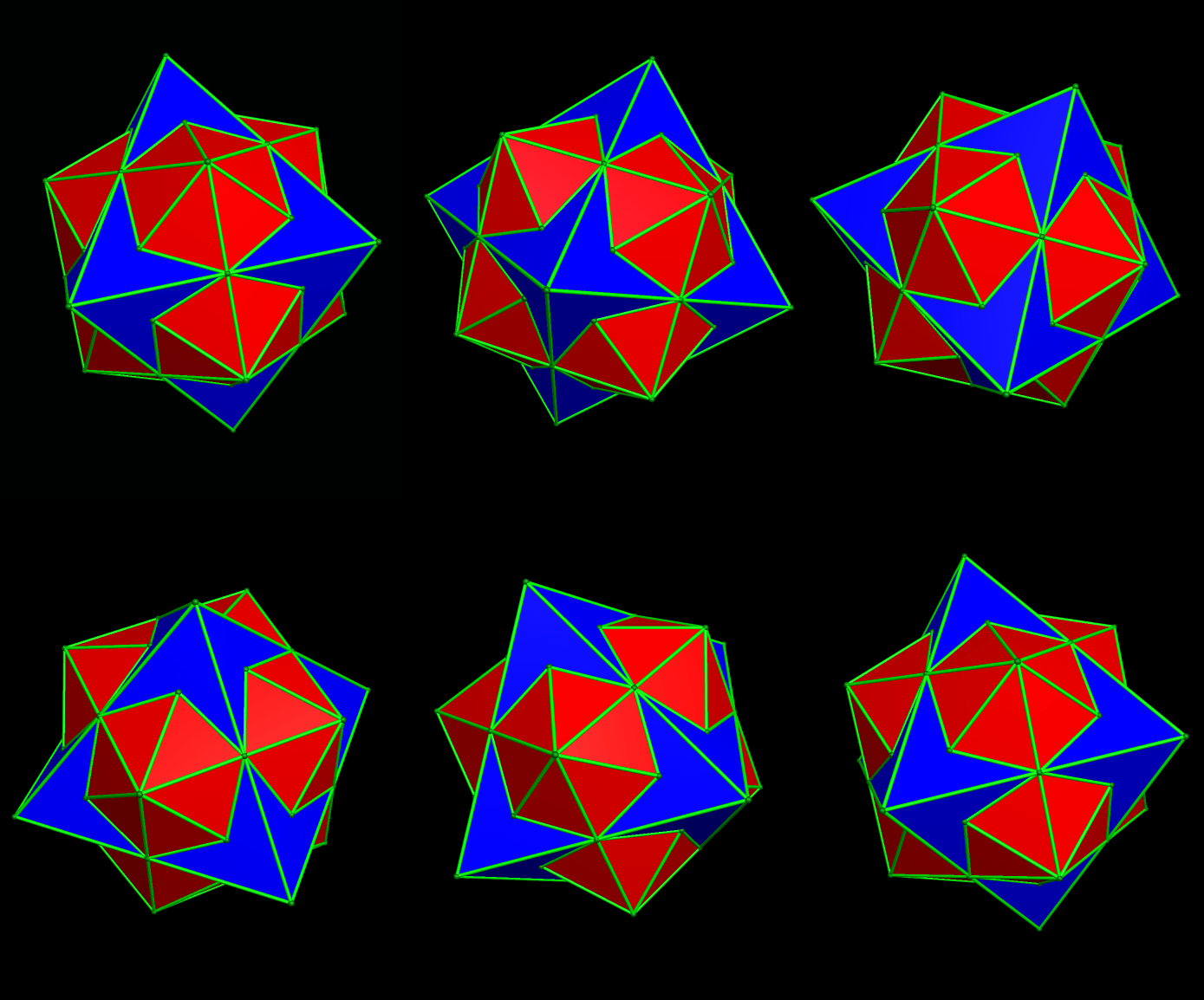
Compound of the Great Dodecahedron and the Sixth Stellation of the Icosahedron

Image

Compound of the Great Dodecahedron and a Stellated Polyhedron

The great dodecahedron here is red, and the yellow polyhedron is the sixth stellation of the icosahedron.

Software credit: http://www.software3d.com/stella.php

Compound of the Octahedron and the Tetrakis Hexahedron

Image

Compound of the Octahedron and the Tetrakis Hexahedron

This polyhedral compound was found by repeatedly-stellating the 38-faced polyhedron featured in the last post.

Software credit: http://www.software3d.com/stella.php

The Stella Octangula, Combined with the Cube/Octahedron Compound

Image

The Stella Octangula, Combined with the Cube/Octahedron Compound

Software credit: http://www.software3d.com/stella.php

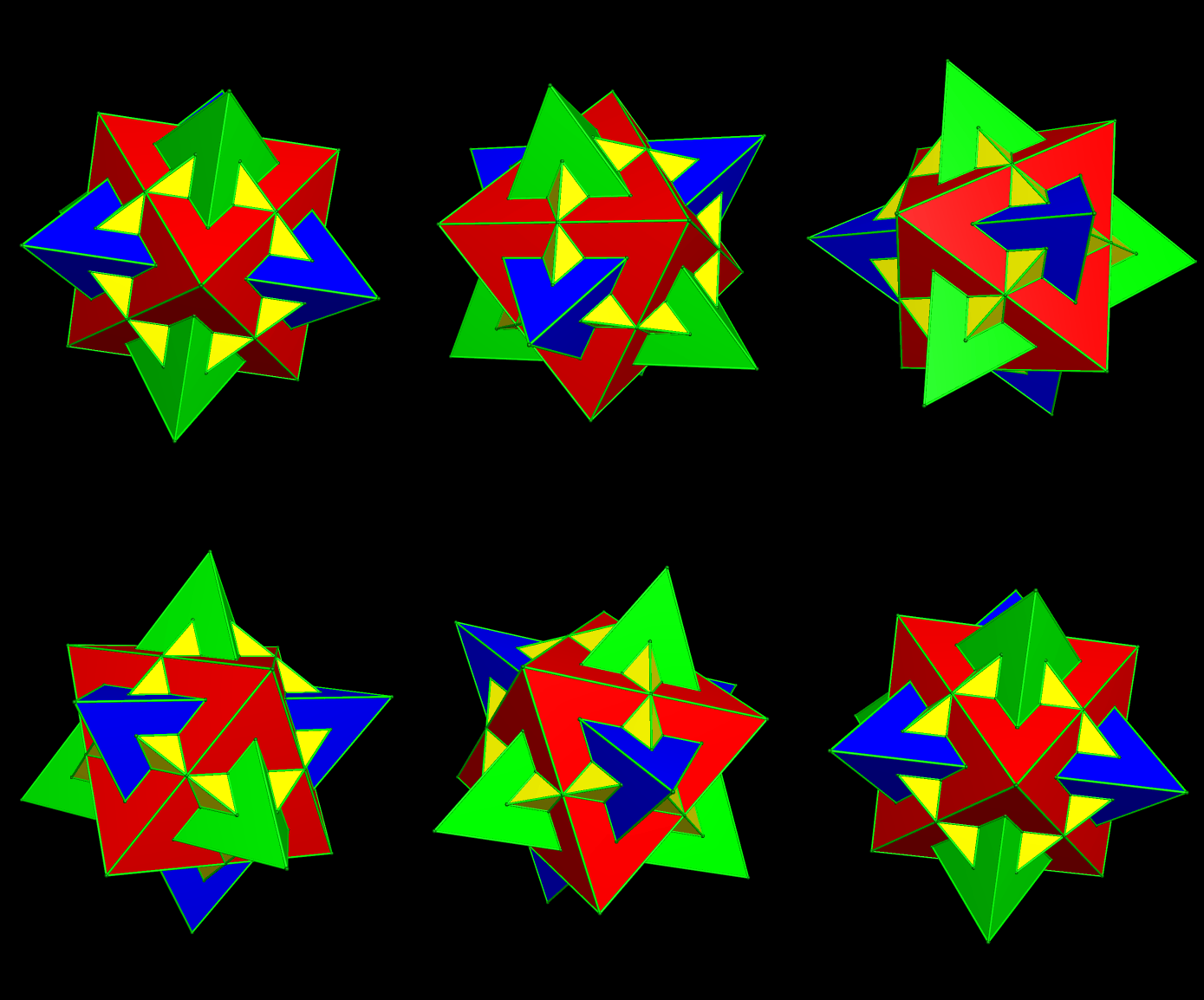
Compound of Four Triangular Prisms

Image

Compound of Four Triangular Prisms

Software credit: see http://www.software3d.com/stella.php

Compound of the Truncated Icosahedron and Its Dual, the Pentakis Dodecahedron

Image

Compound of the Truncated Icosahedron and Its Dual, the Pentakis Dodecahedron

Software credit: see http://www.software3d.com/stella.php

A Twisted Version of the Stella Octangula

Image

A Twisted Version of the Stella Octangula

For comparison, here’s the non-twisted, traditional Stella Octangula:

Tetra

Software credit: http://www.software3d.com/stella.php