
This is the compound of the icosahedron and its dual, the dodecahedron. I made this rotating image using Stella 4d , which is available here.
This is the compound of the icosahedron and its dual, the dodecahedron. I made this rotating image using Stella 4d , which is available here.

I recently re-discovered this “lost work,” which I made using Geometer’s Sketchpad, in 2011 — before I started this blog, which is why it has not appeared here before.
Someone found this, and “liked” it, in my old Facebook pictures. I had forgotten all about it, until this happened. It is a mandala, made of rhombi, with nine-fold symmetry, made in 2010 with Geometer’s Sketchpad — two years before I started this blog.

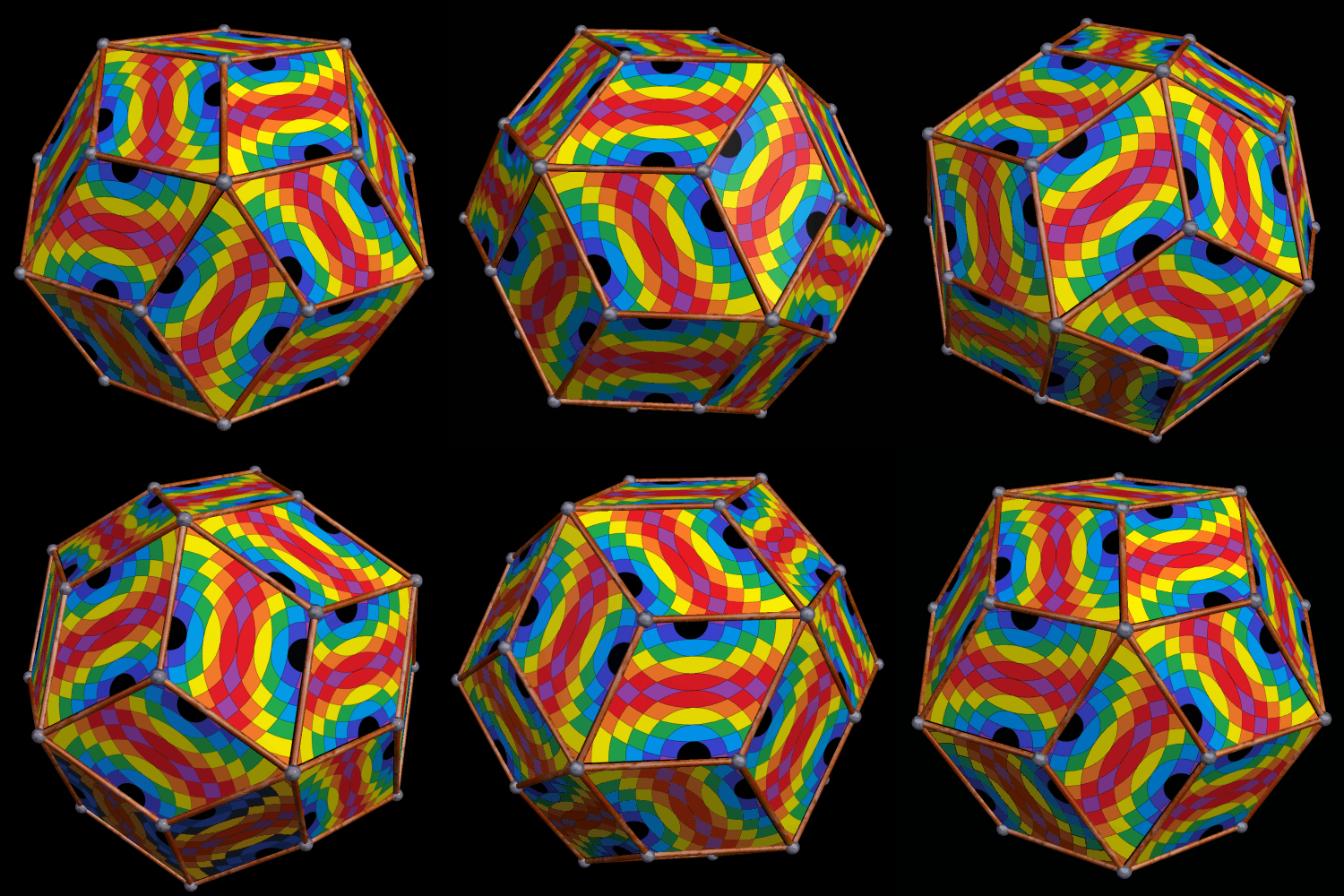
It took three programs to make this. First, outlines of the “double rainbow” patterns on each face were constructed using Geometer’s Sketchpad. A screenshot from that program was then pasted into MS-Paint, which was used to add color to the outline of the pattern on each face. Next, the colorized image was projected onto each face of a rhombic triacontahedron, using Stella 4d: Polyhedron Navigator — the program that put this all together, and what I used to generate the rotating .gif above. Stella is available at http://www.software3d.com/Stella.php, with a free trial download available.
Interestingly, while this polyhedron itself is not chiral, the coloring-pattern of it, shown above, is.
With only small modifications, Stella can produce a very different version:
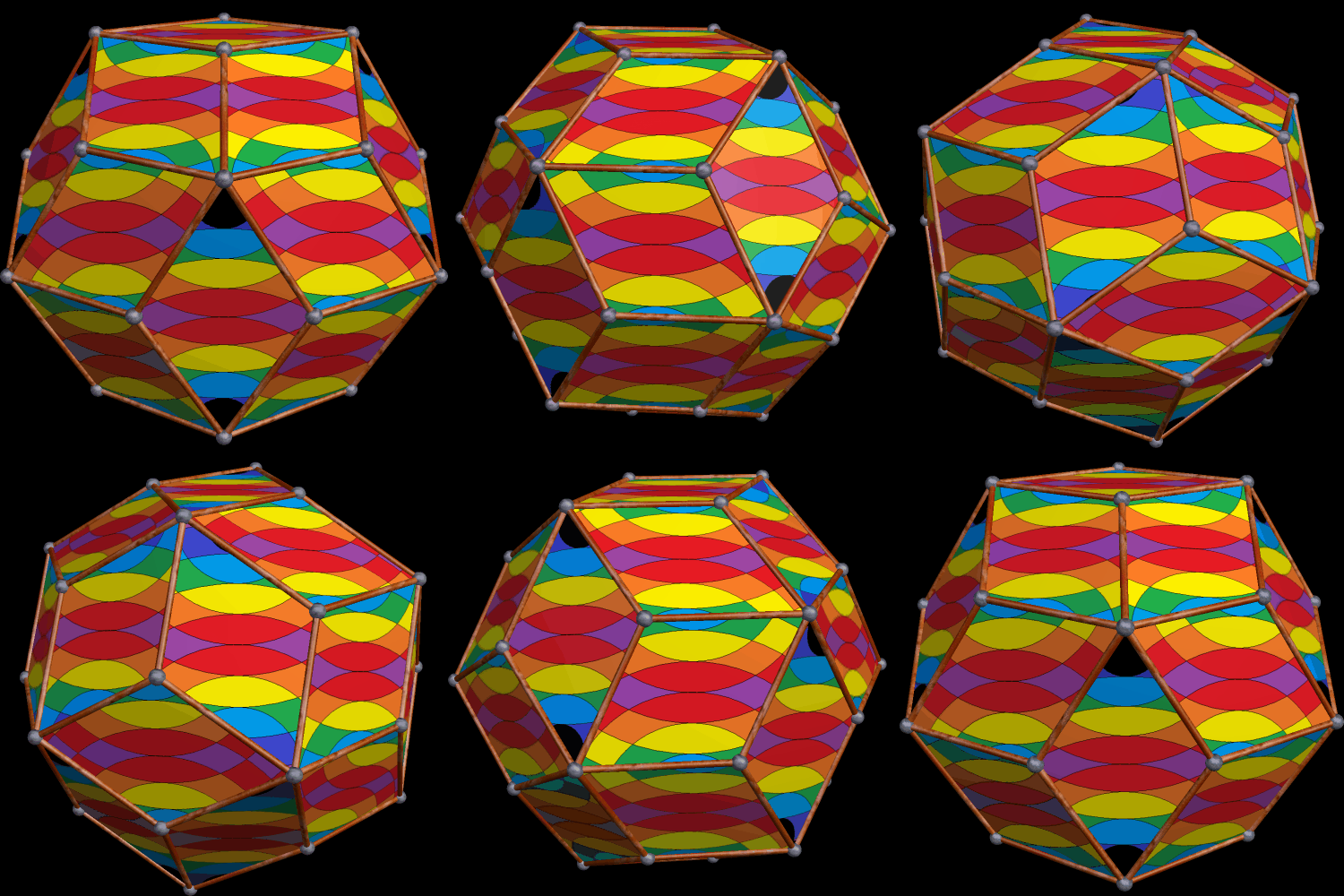
Which one do you like better?
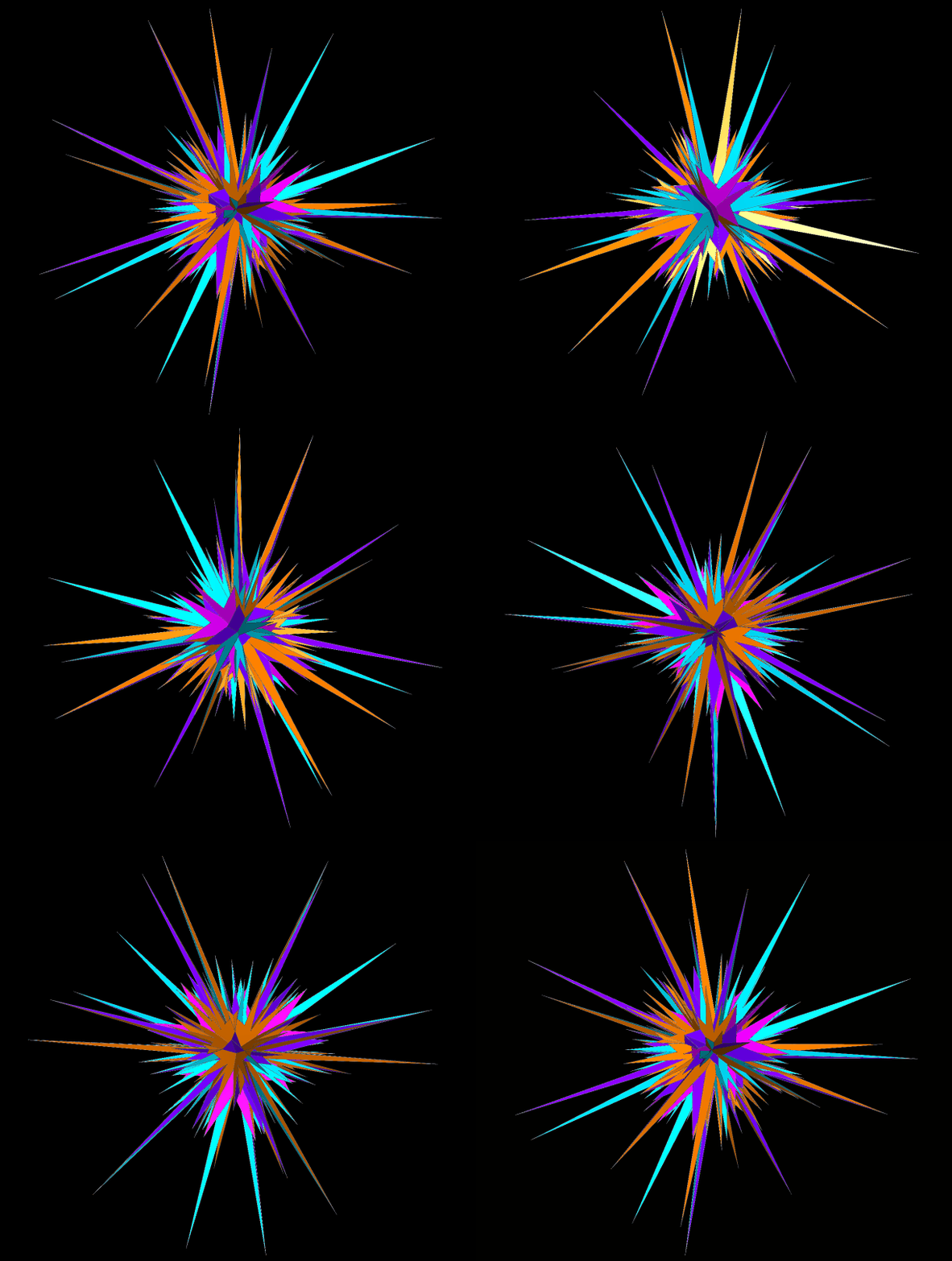
Image created using Stella 4d, available here.
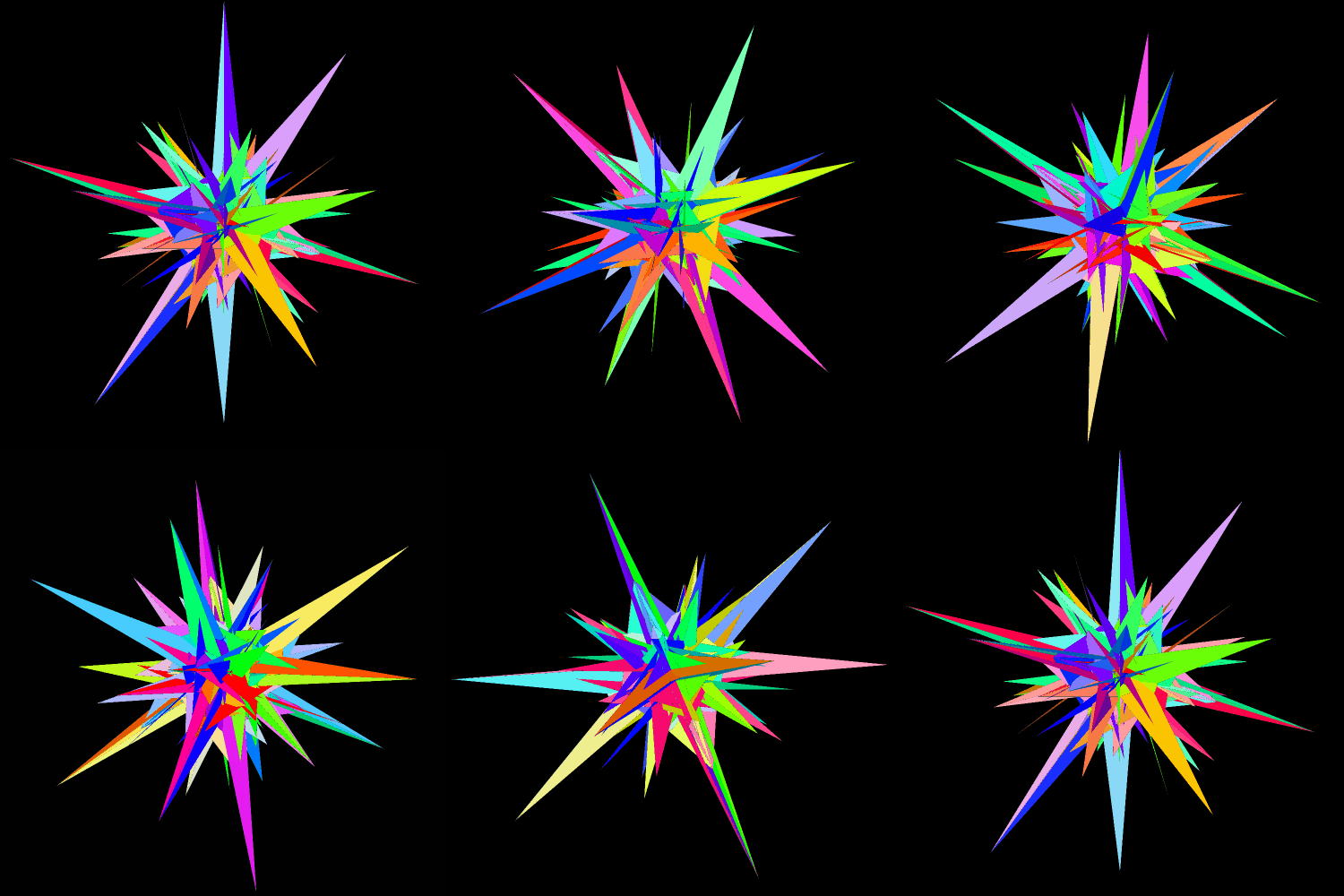
I made this using Stella 4d, which you can find here.

Created using Stella 4d, available here.
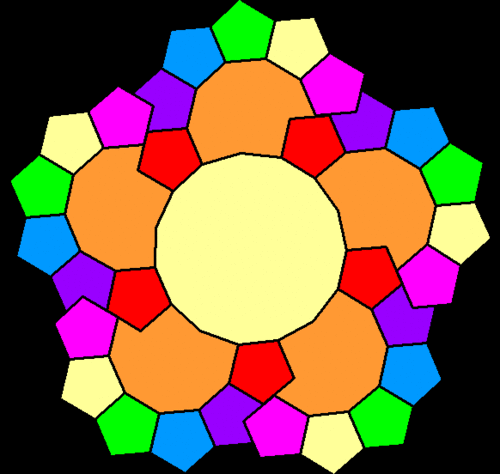
I recently found a bunch of my “lost” geometrical art which never found its way to this blog before, and here’s the latest piece of it. Created in 2012, it has a central pentadecagon, five orange decagons partially hidden behind other polygons, and many pentagons, all of them regular.
First, the newer version I just made:
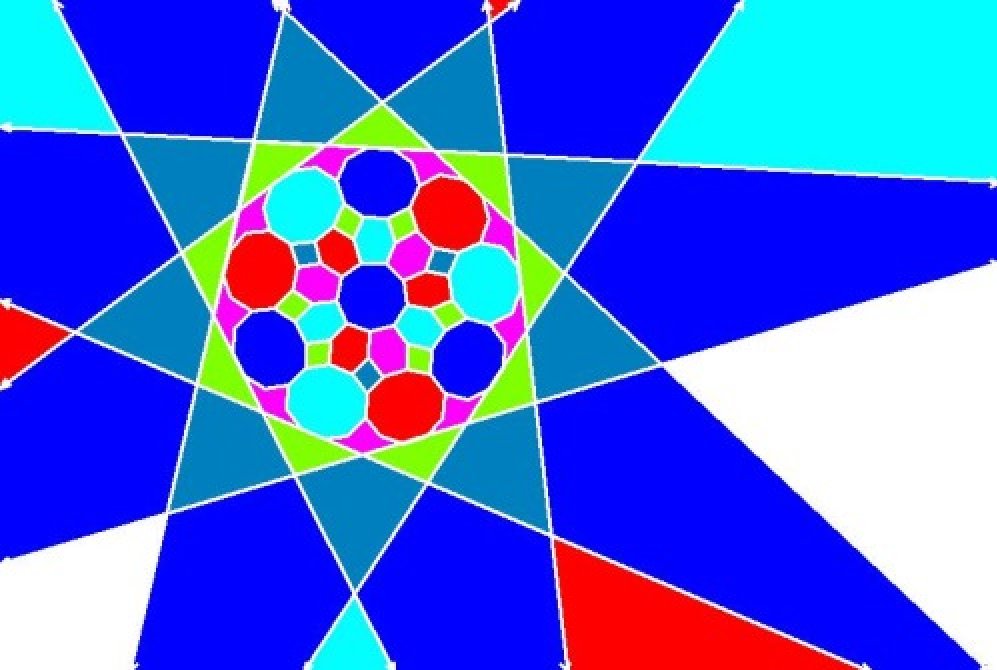
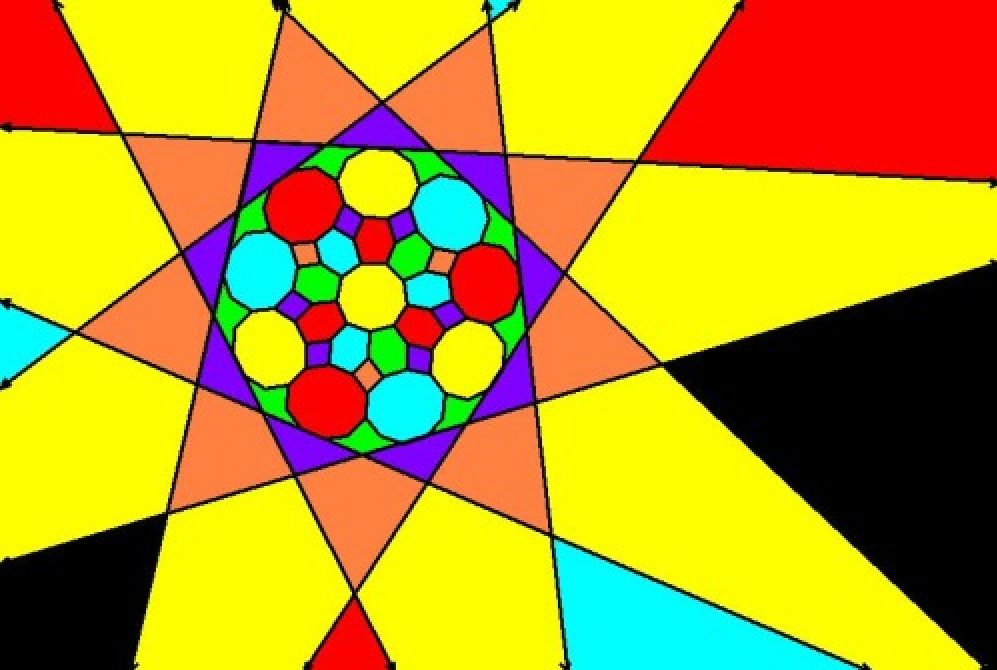
Next, the 2013 version, which I recently found, along with a bunch of other previously-lost stuff from around then. The two are simply color-inversions of each other, according to the rules for color-inversion used by MS-Paint.
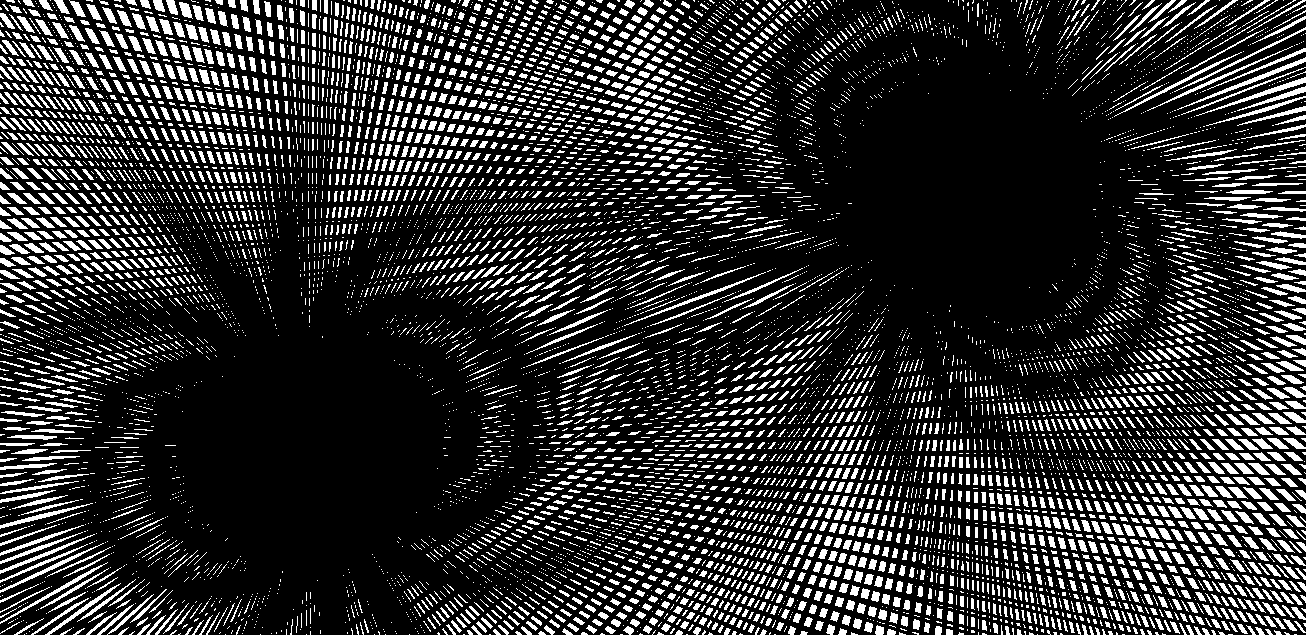
The image of two black spiders above is created by interference, and is an example of an interference pattern. The figures which are interfering are four points (and the rays which go with them), two close together on the right, and two close together on the left, but with the two pairs in different orientations. Each point has 240 rays emanating from it, and the rays are equidistant (in terms of angle measure), making each of these rays one euclid (1.5º) apart from its nearest neighbors.
 RobertLovesPi.net