SpinStar

Image

spinstar

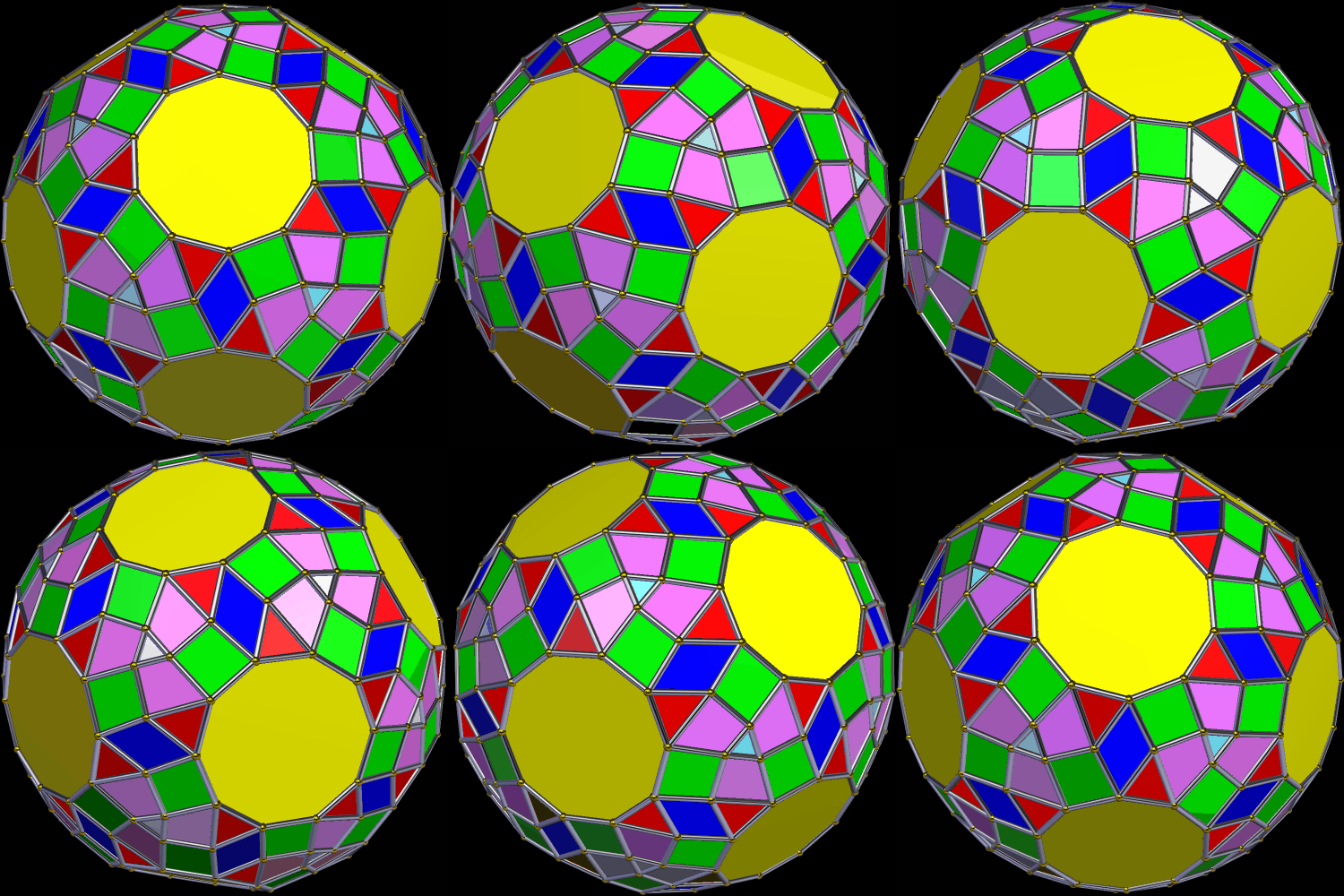
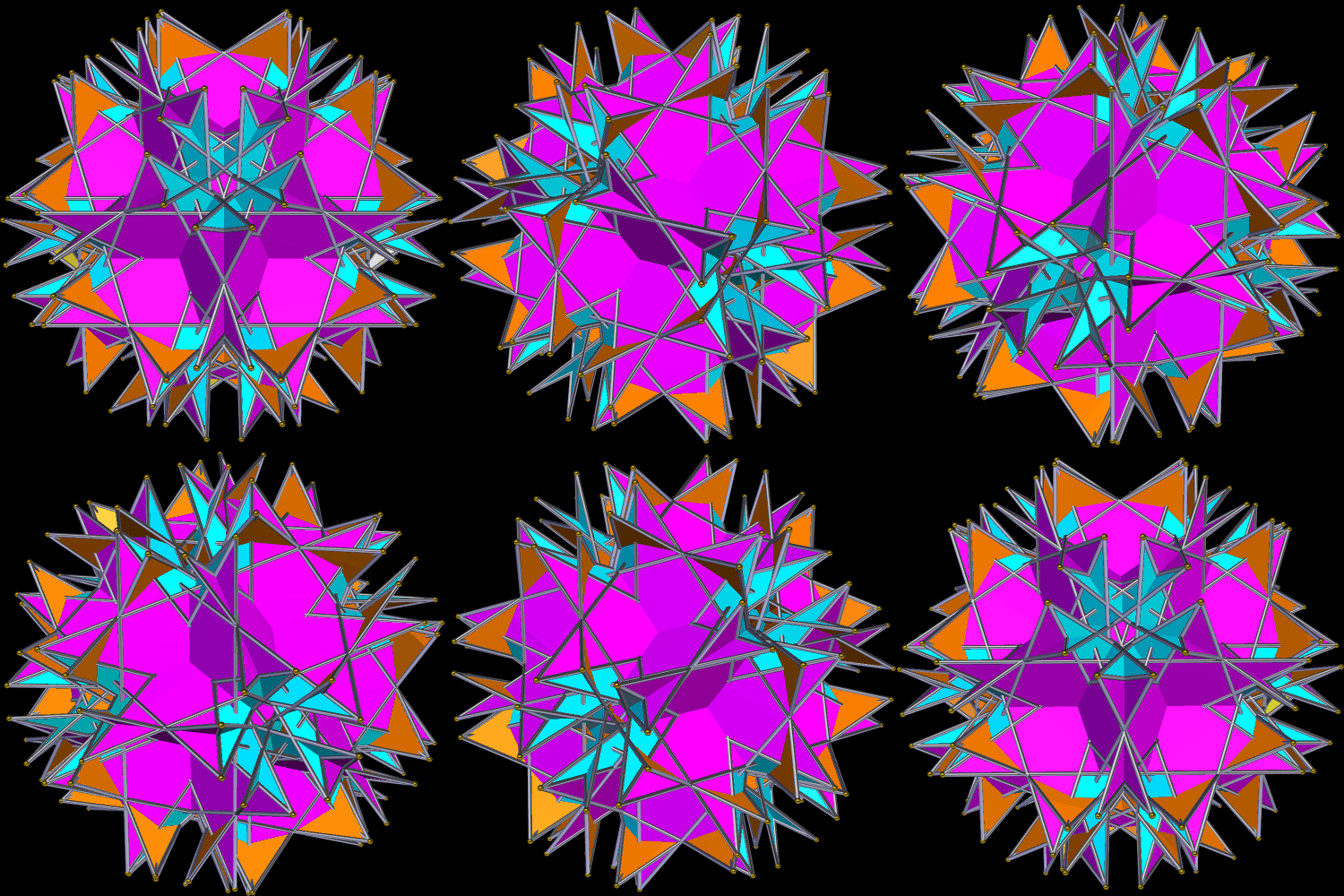
A Pyritohedral Polyhedron Featuring Only Hexagonal and Rhombic Faces

Zonohedrified Stellated Icosa face-based zonohedron starting with a pyritohedral dodecahedron

Software credit: I used Stella 4d to make this, and you can find that program at http://www.software3d.com/Stella.php, with a free trial download available there.

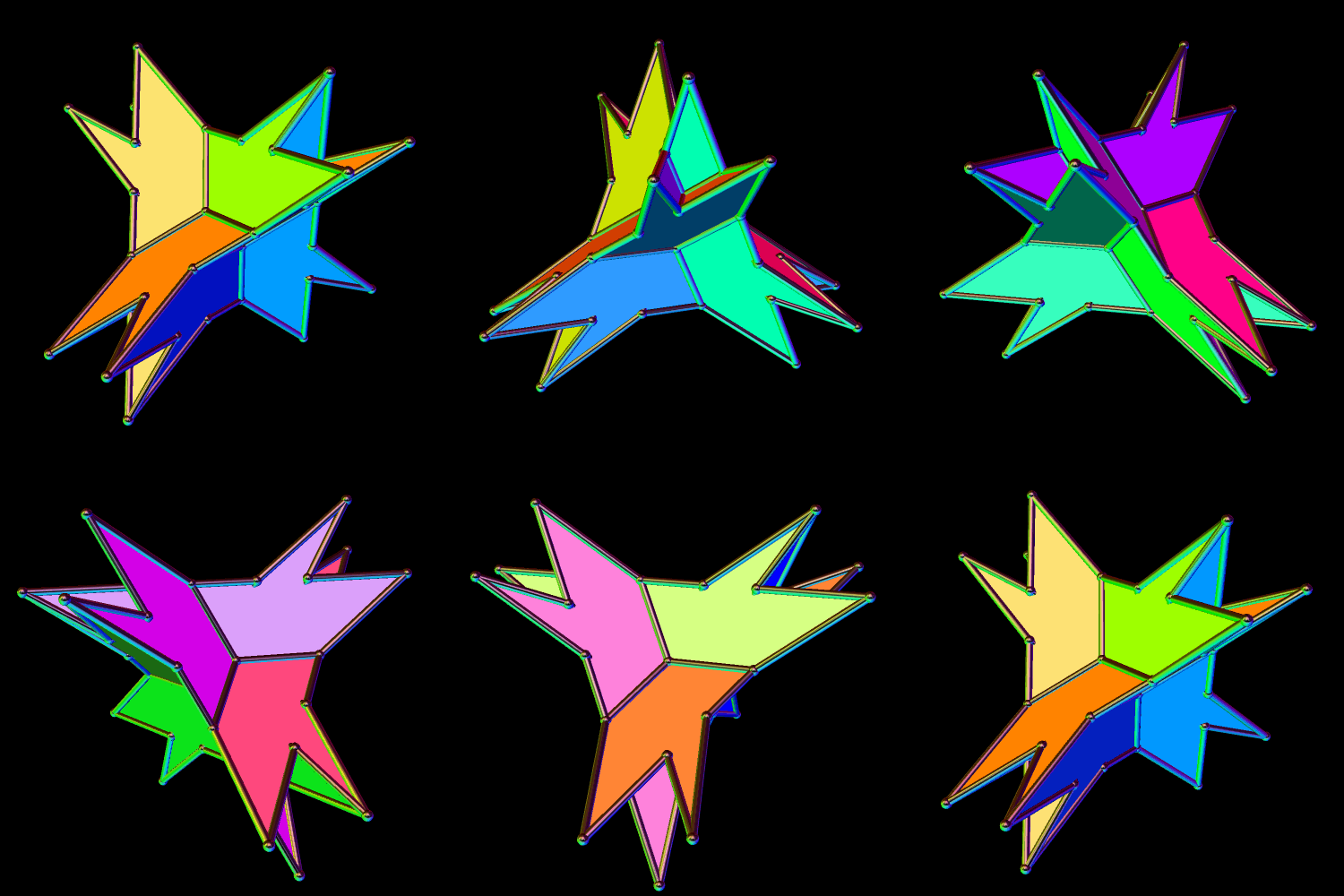
Three Polyhedra Which Resemble Caltrops

Caltrops, when resting on a horizontal surface, have a sharp, narrow point sticking straight up. Stepping on such objects is painful. Most polyhedra do not have such a shape; the most well-known example of an exception to this is the tetrahedron. This fact is well-known to many players of role-playing games, who often use the term “d4” for tetrahedral dice, and who usually try to avoid stepping on them. Here are some other polyhedra which resemble caltrops. All were made using Stella 4d, software available at this website. The first two images may be made larger by simply clicking on them.

The third example, made with the same program, varies this idea somewhat: in physical form, resting on a floor, this caltrop-polyhedron would have three, not just one, potentially foot-damaging “spikes” sticking straight up.

12-pointed caltrop


An Oblique Truncation of the Tetrahedron

kite-bounded tetrahedron

This polyhedron has sixteen faces: four equilateral triangles, and a dozen kites. It was created using Stella 4d, which may be found at http://www.software3d.com/Stella.php.

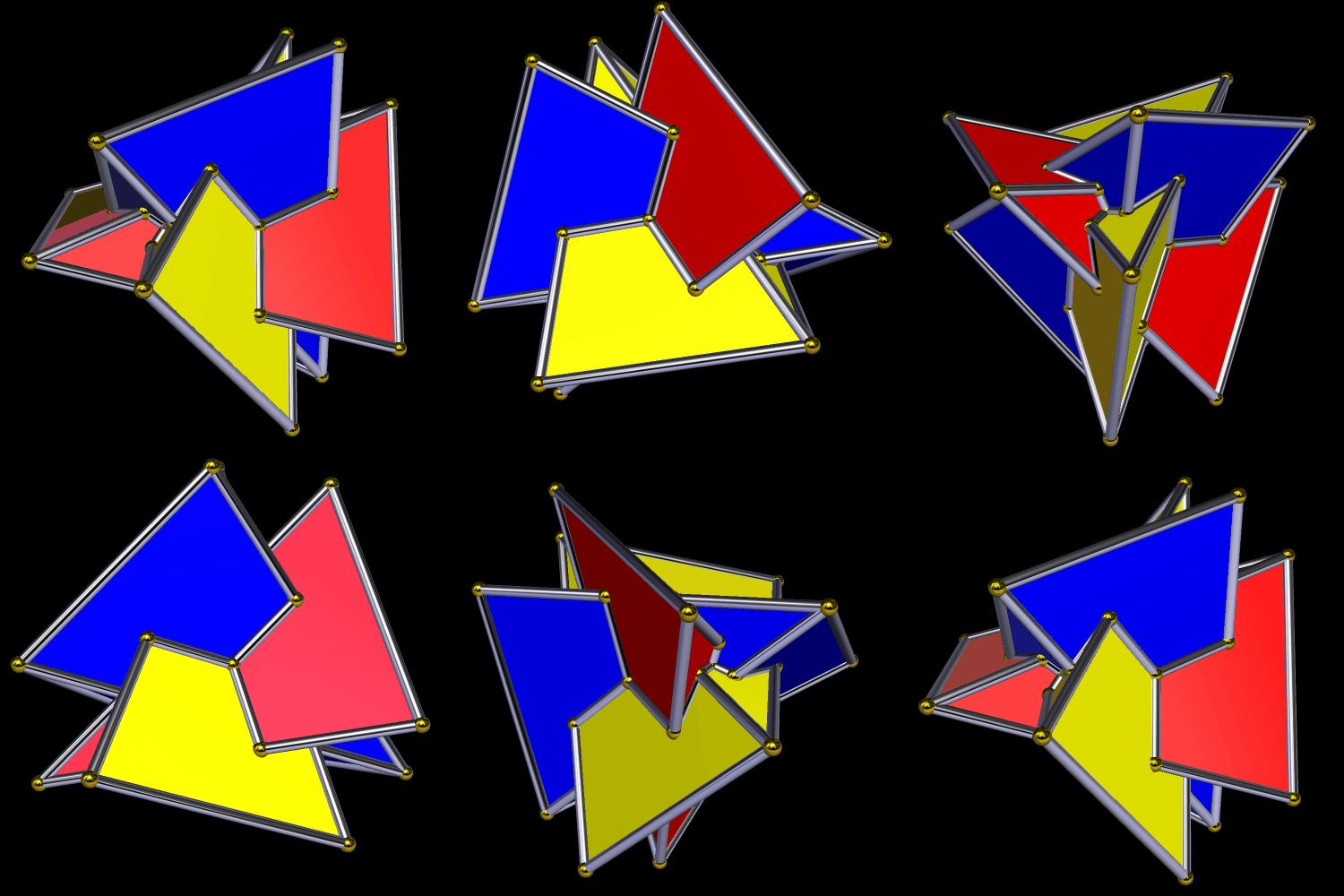
Compound of Three Tetrahedral Wedges

3 wedge compound.gif

Software used: Stella 4d, available here.

A Polyhedron with 48 Faces, and Cuboctahedral Symmetry

48 faces half of each type

In this polyhedron, half the faces are the two dozen light-blue kites, and the other half are isosceles triangles. I made it using Stella 4d, software you can buy, or try for free, at this website.

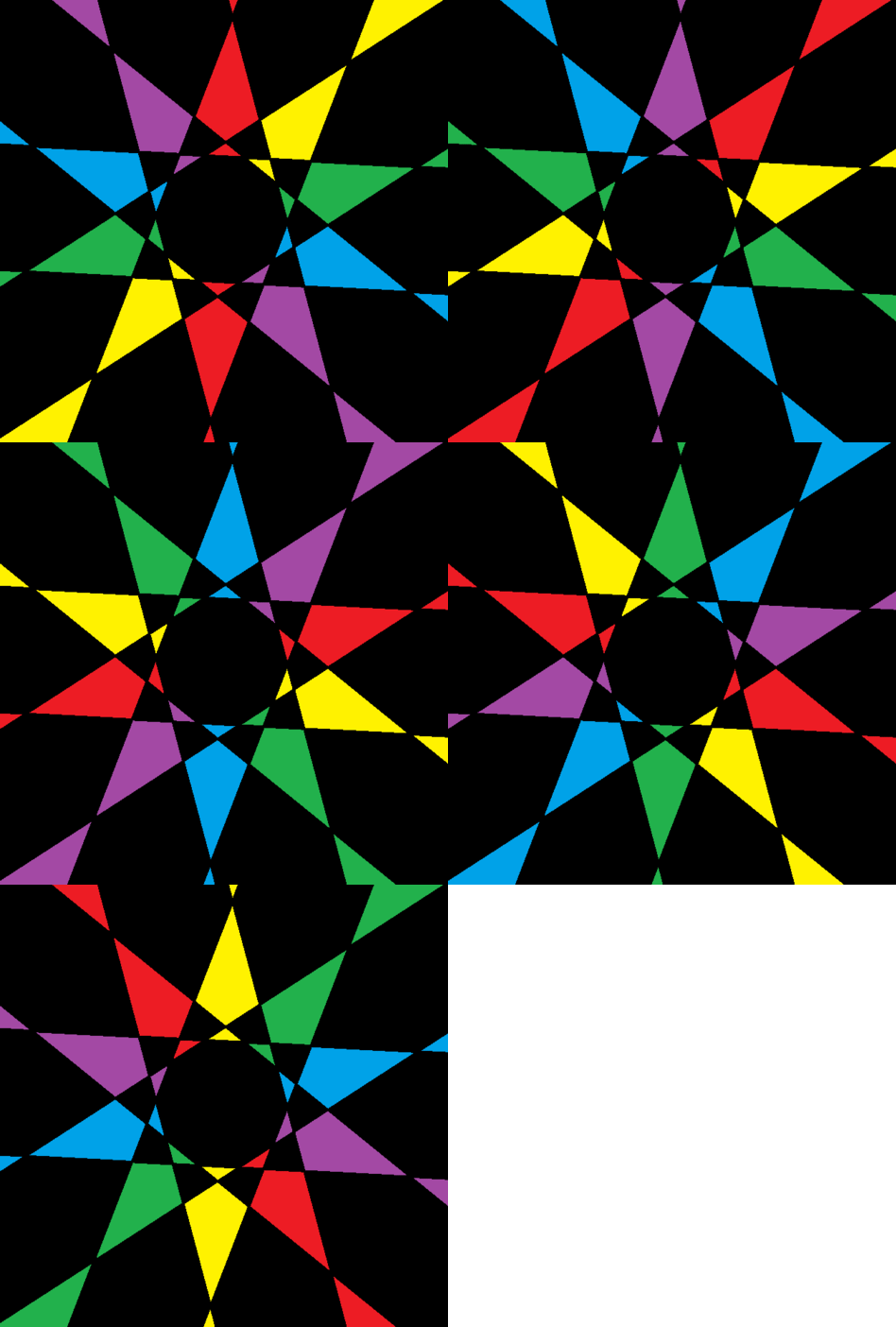
An Illusion of Spin

an_illusion_of_spin.gif

I used three things to make this: Geometer’s Sketchpad (to make one black and white version; the whole thing is made of semicircles), MS-Paint (to color the six different versions which appear here), and the website http://www.makeagif.com (to assemble the six separate still images into one .gif file, with the illusion of motion). The surprising thing to me was how fast the process was, once I had the idea of my goal for a finished product.

A Radial Tessellation, on the Topic of the Difficulty in Tessellating with Regular Pentagons

Image

pentagon tessellation

A Tetrahedral Exploration of the Icosahedron

Mathematicians have discovered more than one set of rules for polyhedral stellation. The software I use for rapidly manipulating polyhedra (Stella 4d, available here, including as a free trial download) lets the user choose between different sets of stellation criteria, but I generally favor what are called the “fully supported” stellation rules.

For this exercise, I still used the fully supported stellation rules, but set Stella to view these polyhedra as having only tetrahedral symmetry, rather than icosidodecahedral (or “icosahedral”) symmetry. For the icosahedron, this tetrahedral symmetry can be seen in this coloring-pattern.
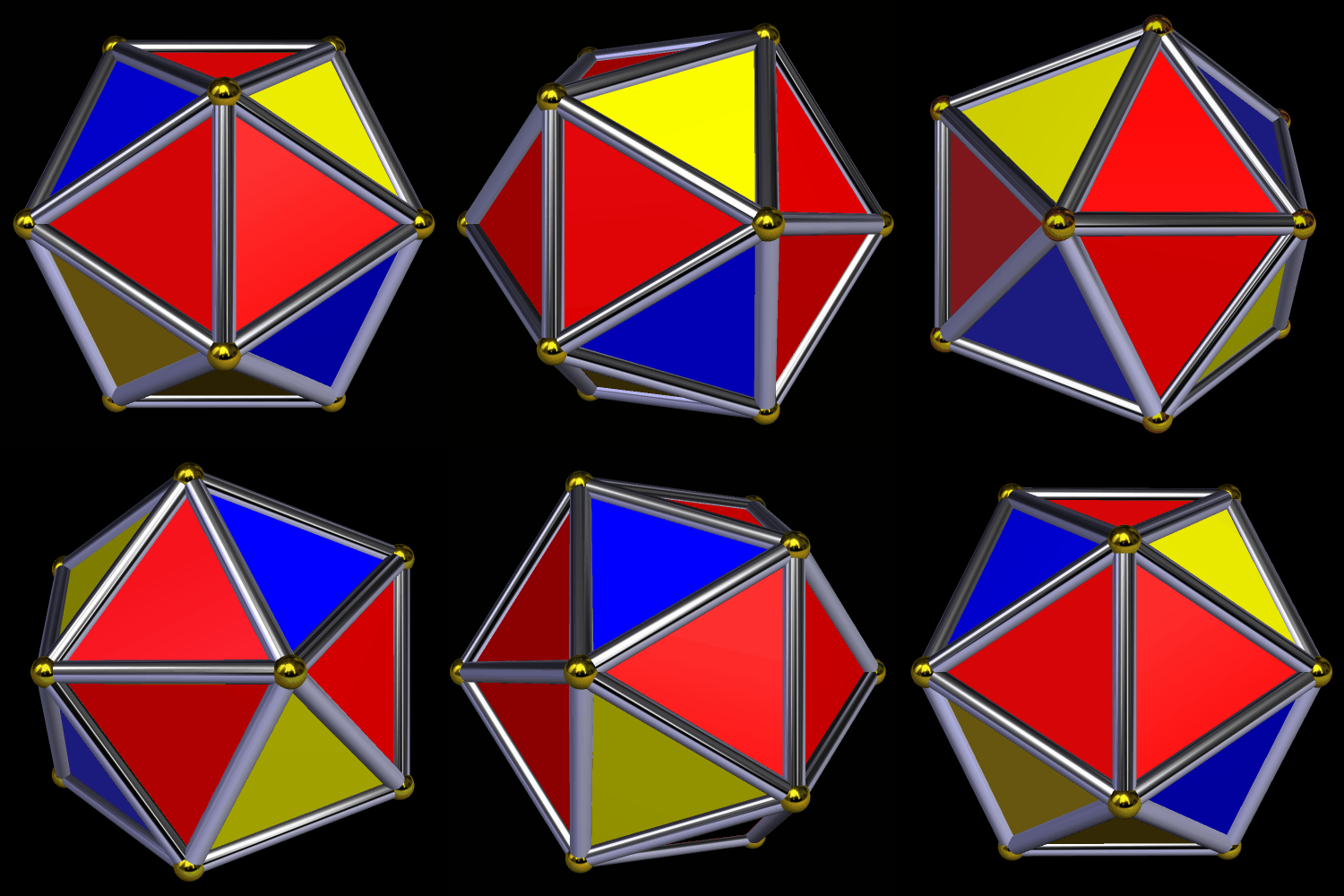
Icosa showing tet symm

The next image shows what the icosahedron looks like after a single stellation, when performed through the “lens” of tetrahedral symmetry. This stellation extends the red triangles as kites, and hides the yellow triangles from view in the process.
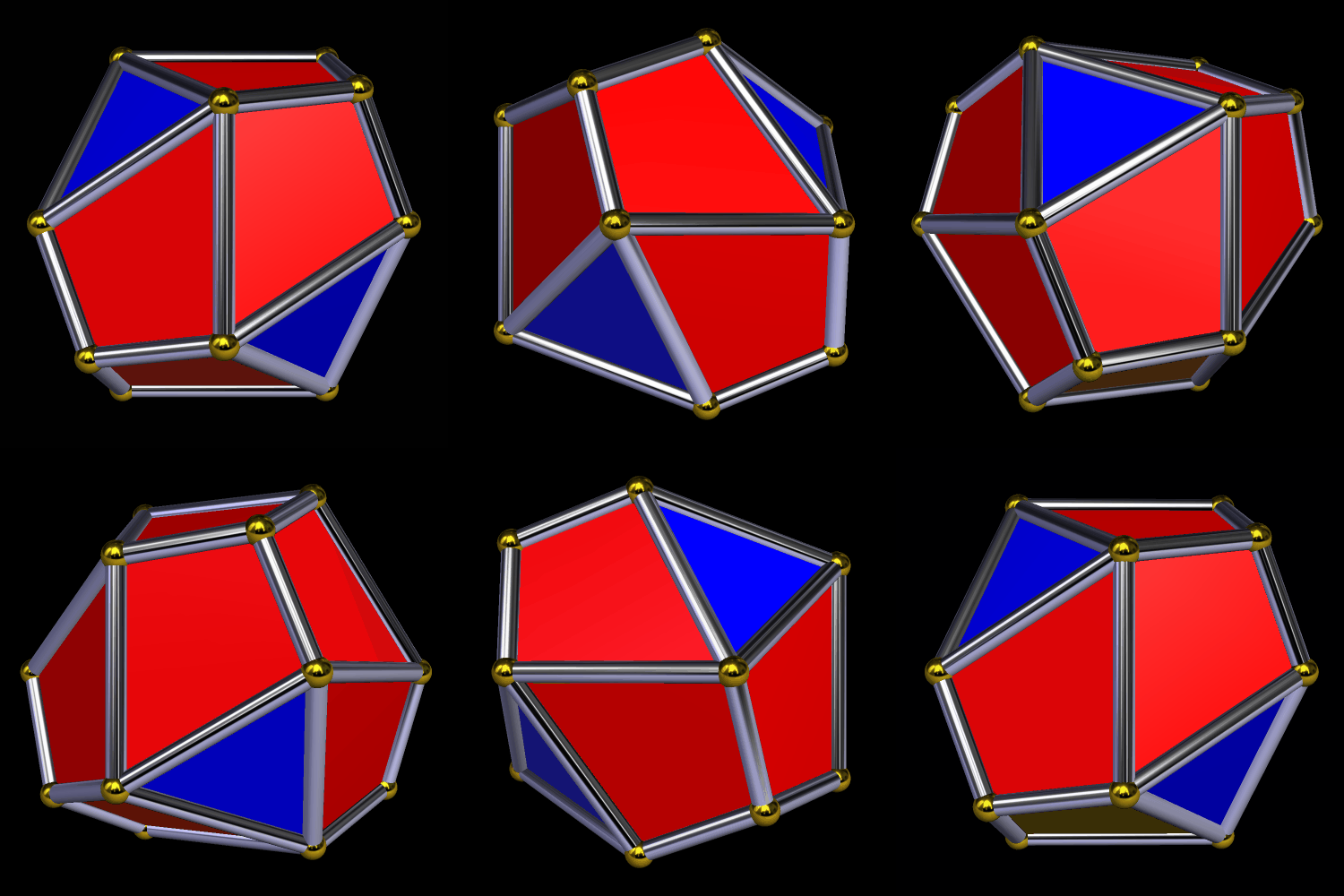
Icosa showing tet symm stellation 1

The second such stellation produces this polyhedron — a pyritohedral dodecahedron — by further-extending the red faces, and obscuring the blue triangles in the process.

Icosa showing tet symm stellation 2 pyritohedral dodecahedron

The third tetrahedral stellation of the icosahedron produces another pyritohedral figure, which further demonstrates that pyritohedral symmetry is related to both icosidodecahedral and tetrahedral symmetry.
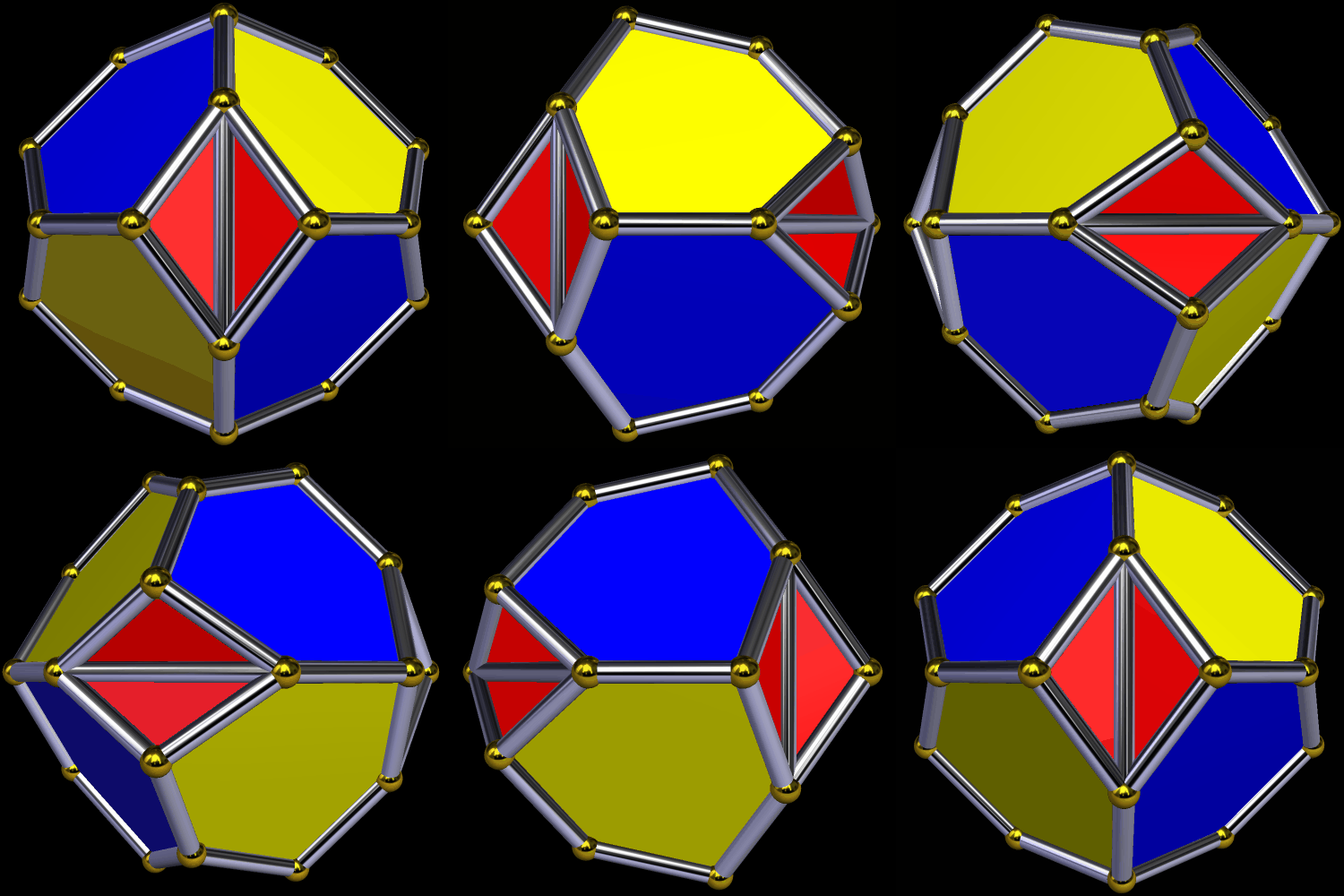
Icosa showing tet symm stellation 3

The fourth such stellation produces a Platonic octahedron, but one where the coloring-scheme makes it plain that Stella is still viewing this figure as having tetrahedral symmetry. Given that the octahedron itself has cuboctahedral (or “octahedral”) symmetry, this is an increase in the number of polyhedral symmetry-types which have appeared, so far, in this brief survey.

Icosa showing tet symm stellation 4 an octahedron with 2 face types

Next, I looked at the fifth tetrahedral stellation of the icosahedron, and was surprised at what I found.

Icosa showing tet symm stellation 5

While I was curious about what would happen if I continued stellating this polyhedron, I also wanted to see this fifth stellation’s convex hull, since I could already tell it would have only hexagons and triangles as faces. Here is that convex hull:

Icosa tet sym stellation 5's Convex hull

For the last step in this survey, I performed one more tetrahedral stellation, this time on the convex hull I had just produced.
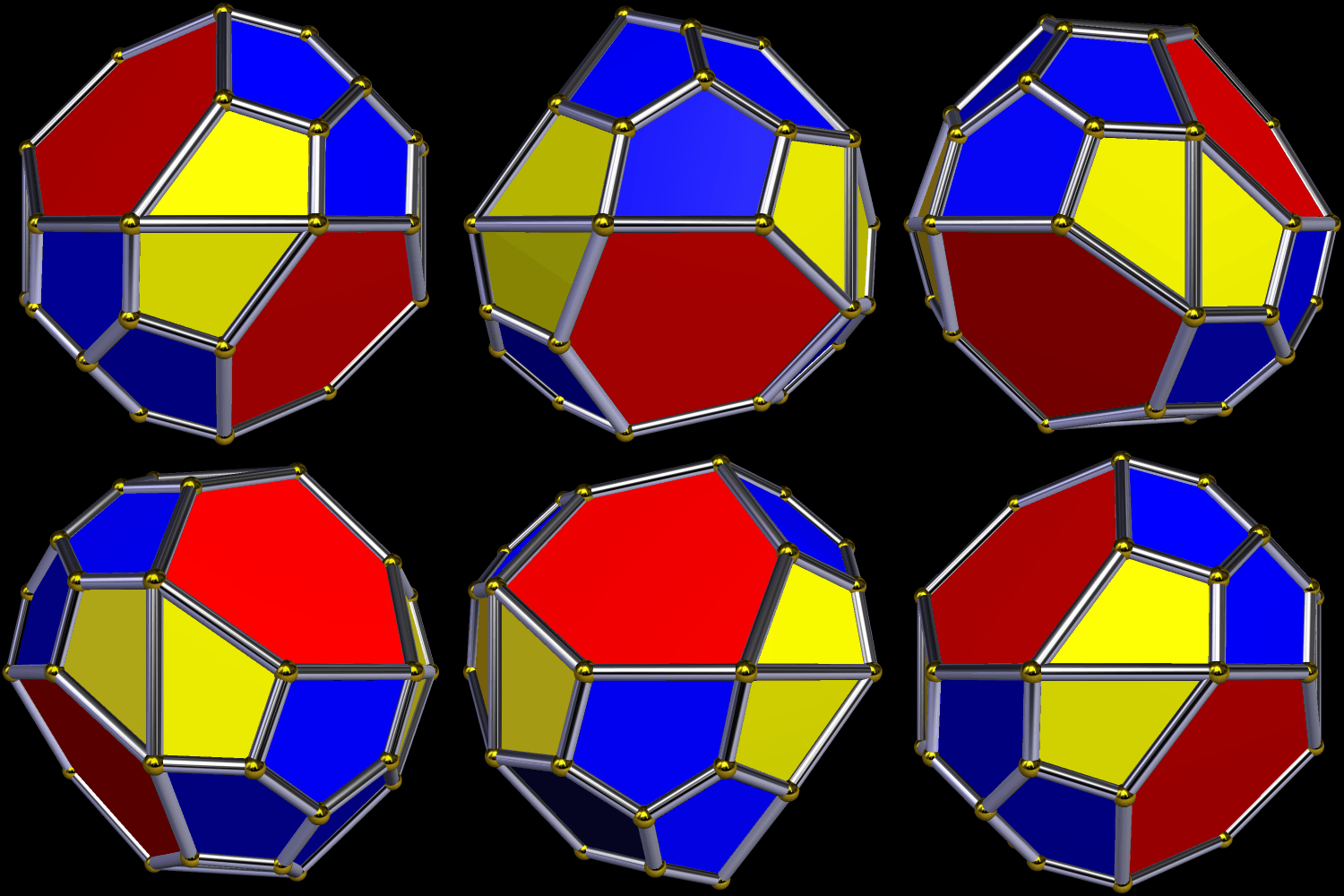
Icosa tet sym stellation 5's Convex hull ist stellation

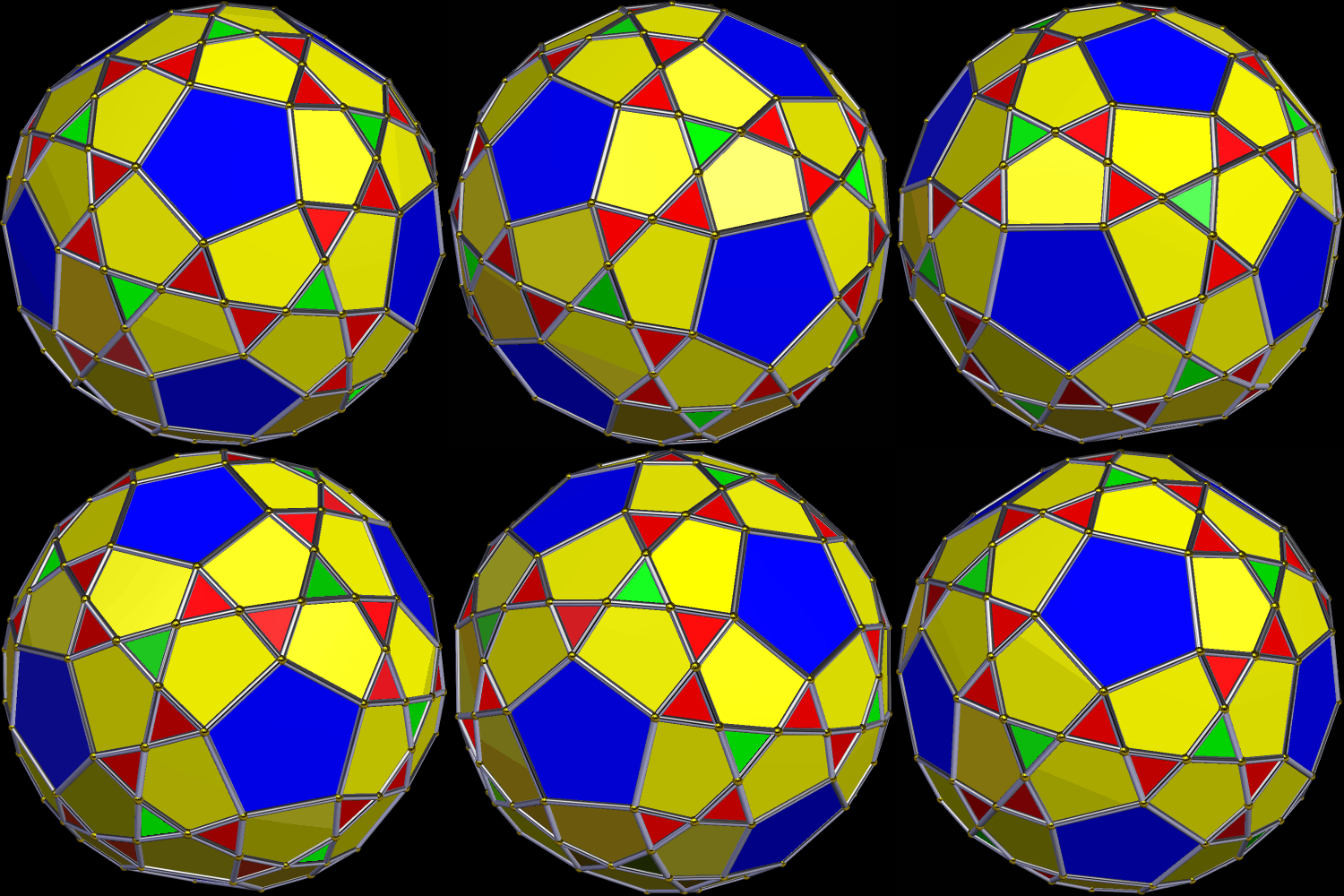
Variations of the Snub Dodecahedron

Convex hull of a triangle-expansion of the snub dodecahedron

To make the first of these variations, above, I augmented each triangular face of a snub dodecahedron with an antiprism 2.618 times as tall as the triangles’ edge length, and then took the convex hull of the result. The other polyhedra shown, below, were obtained by various other manipulations of the snub dodecahedron, all performed using a program called Stella 4d: Polyhedron Navigator, which you can try right here.

expanded snub truncated dodecahedron

The variant above looked like it needed a name, so I called it an expanded snub truncated dodecahedron. As for the one below, it is one of many facetings of the snub dodecahedron.

Faceted snub dodecahedron

Finally, the last figure shown (stumbled upon during a “random walk” with Stella) is one of many possible figures which are non-convex relatives of the snub dodecahedron.

nco thing