
The patterns on the faces are from the last post here, immediately before this one. I used Stella 4d: Polyhedron Navigator to make this, and you can try this software for free at this website.
The patterns on the faces are from the last post here, immediately before this one. I used Stella 4d: Polyhedron Navigator to make this, and you can try this software for free at this website.

The fourteen heptagrams, also known as {7/3} star heptagons, meet at a common vertex in the center of the whole diagram. I did the math using Geometer’s Sketchpad, and then colored the result using MS-Paint.
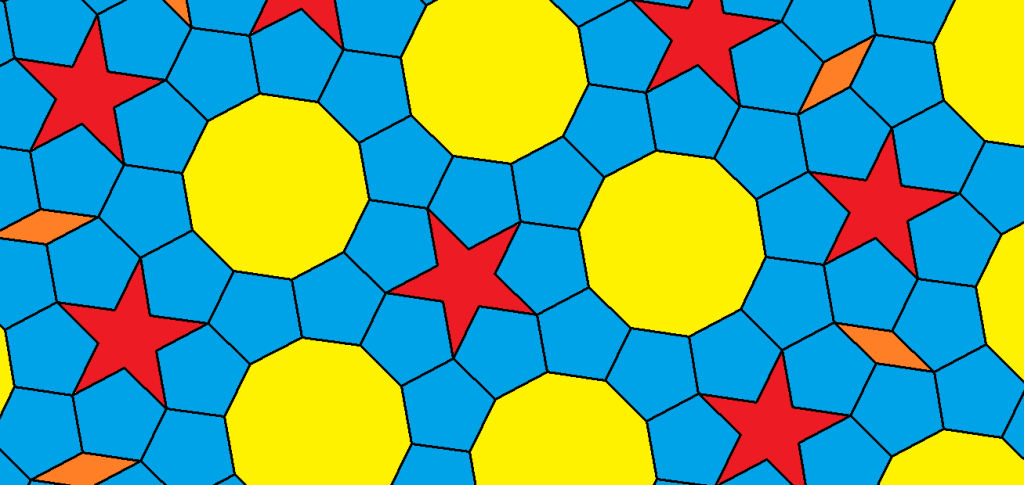
It’s hard to get regular pentagons, regular star pentagons, regular decagons, and related polygons to tessellate the plane while maintaining radial symmetry. This is my latest attempt.

To get started packing space with cuboctahedra and octahedra, I started with a single octahedron, then augmented its square faces with additional cuboctahedra.

Next, I augmented each triangular face with a blue octahedron.

Next, I augmented each square face with a cuboctahedron.
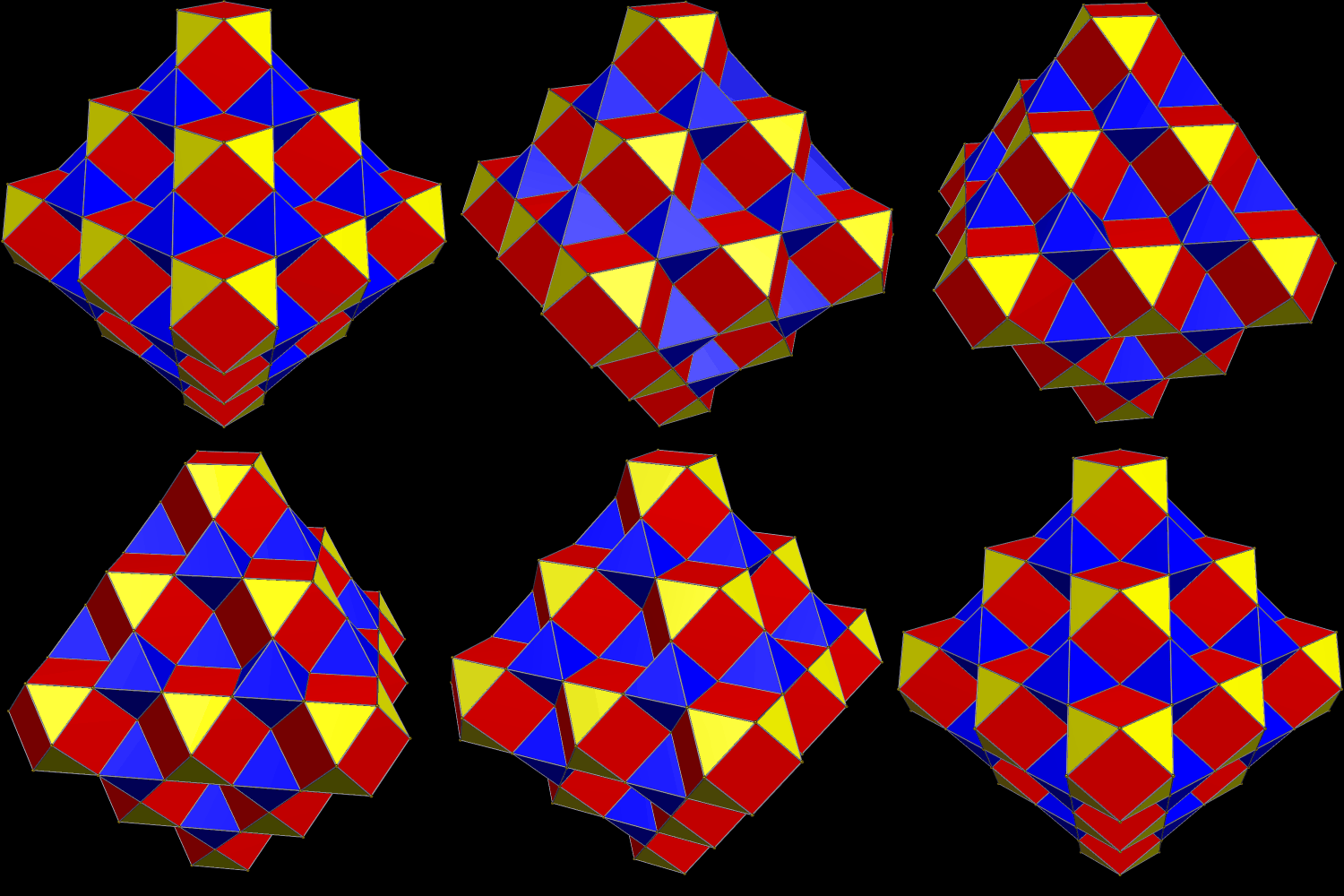
Next, I added still more cuboctahedra.
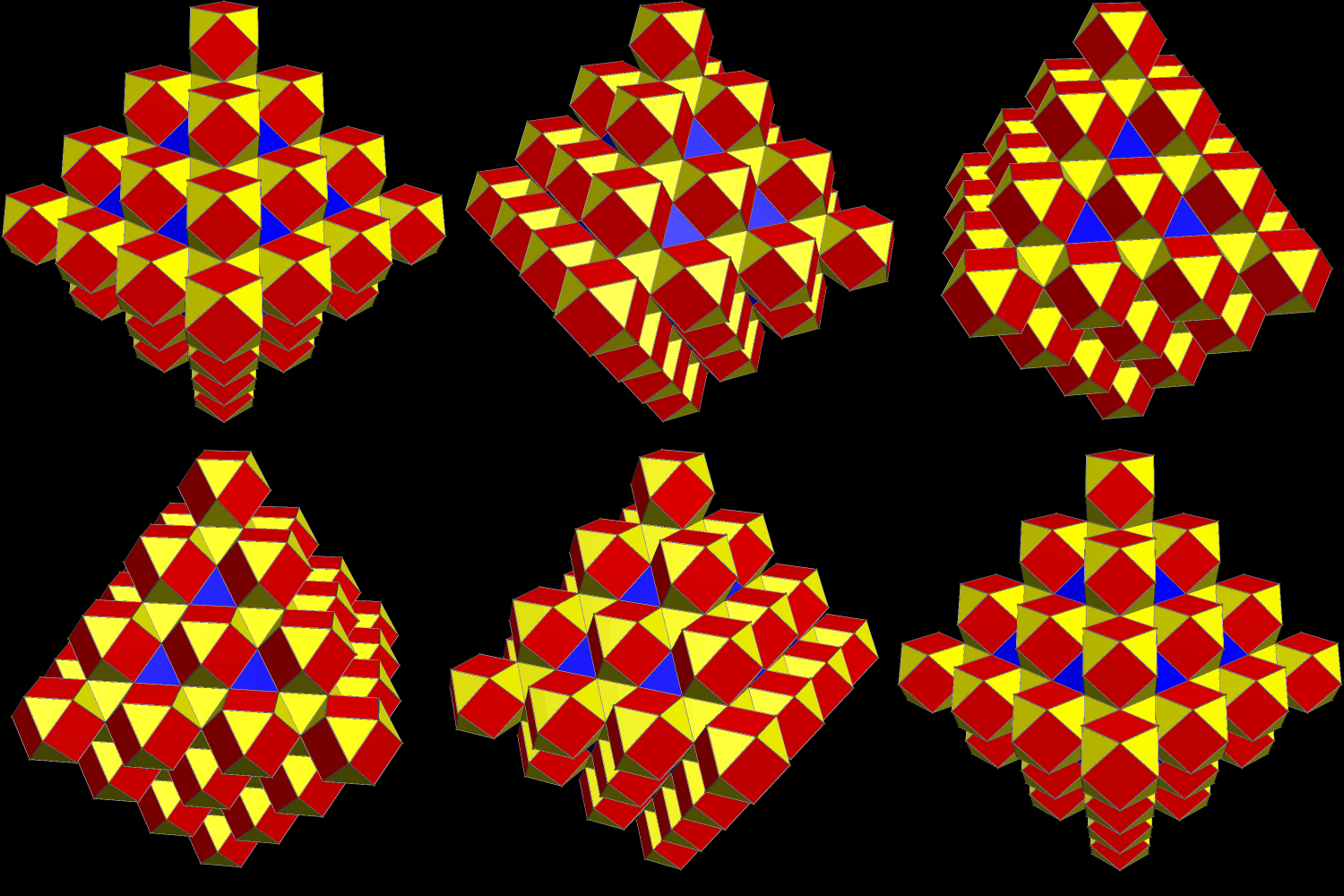
The next step was to augment the yellow triangular faces with blue octahedra.

I next added more cuboctahedra.

This process may be continued without limit. I used a program called Stella 4d to make these models, and you can try this software yourself, for free, at this website.

I made this using Stella 4d, software you can try for free at this website.


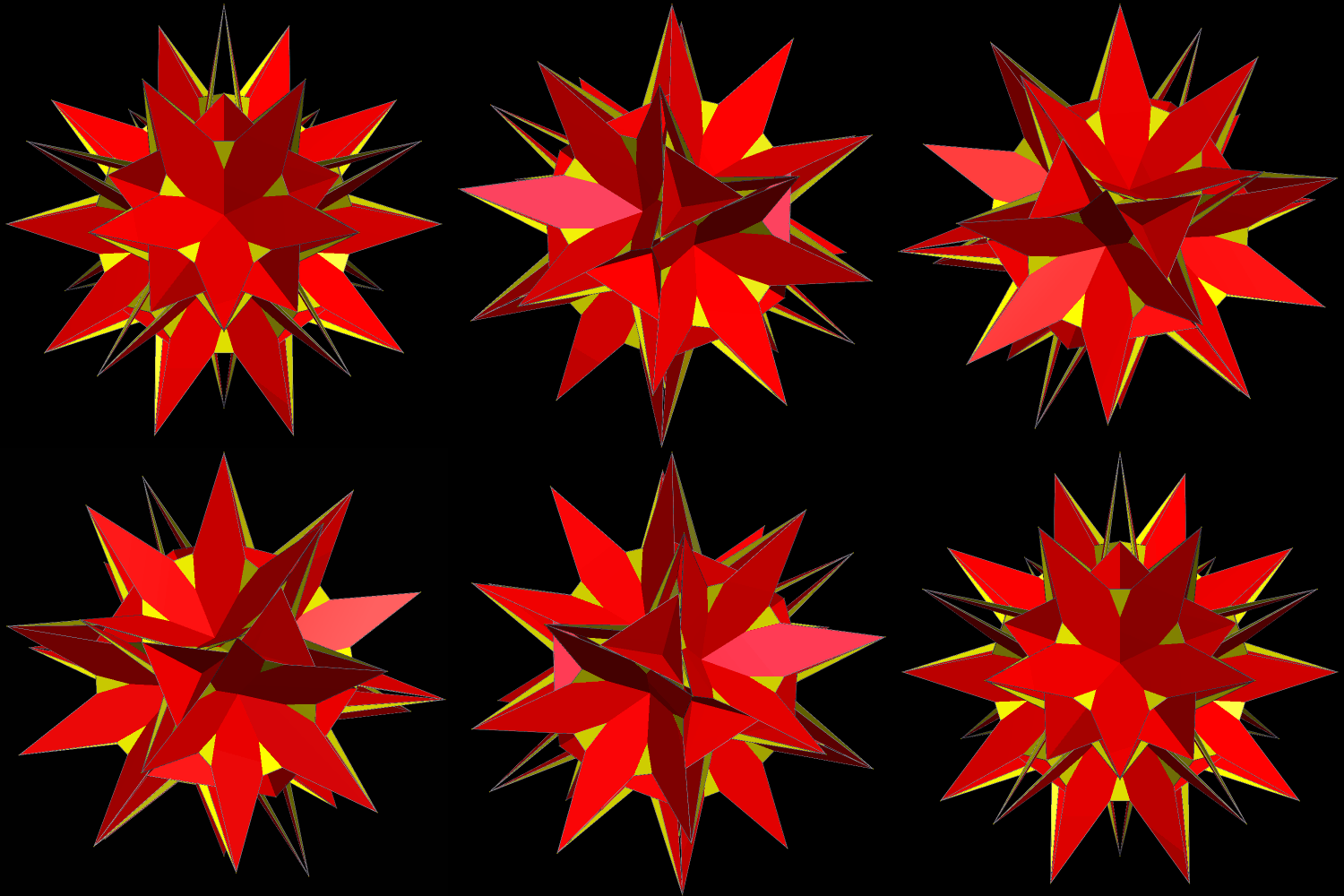
This compound is the 16th stellation of the tetrakis hexahedron, the Catalan solid which is the dual of the Archimedean truncated octahedron. I made it using Stella 4d, which you can try for free at http://www.software3d.com/Stella.php.

To make the polyhedron shown above, I started with an icosahedron . . .

. . . and then I augmented each face with a triangular cupola, with this polyhedron’s hexagonal faces pointed outward.

I made these images using Stella 4d, which you can try for free at this website.
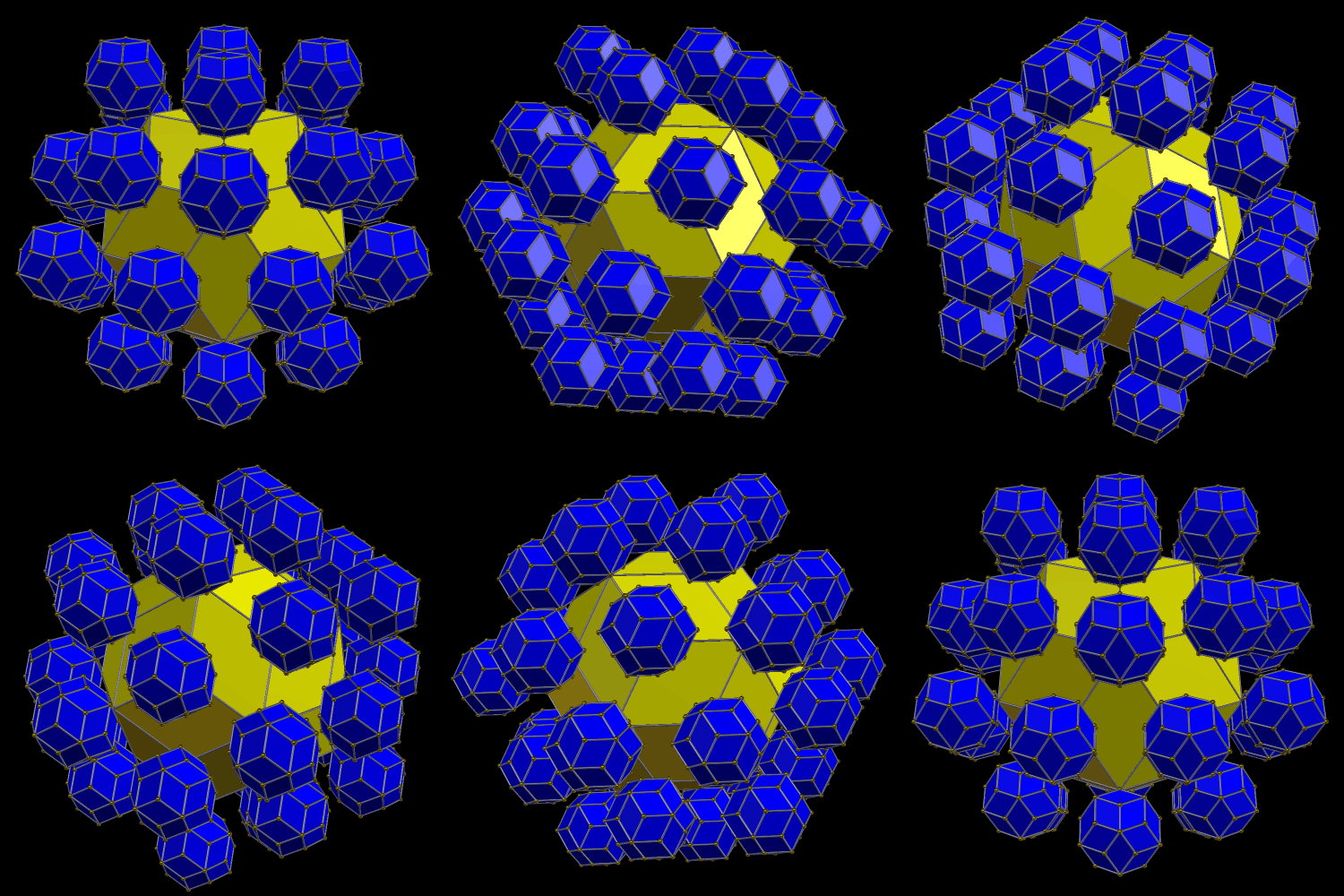
The first image shows a central yellow rhombic triacontahedron, with smaller, blue rhombic triacontahedra attached to each of its thirty-two vertices. The second polyhedron shown is the dual of the first one, with colors chosen by the number of sides per face in the second image — pentagons red, and triangles yellow. The convex hull of this second polyhedral complex shown would be an icosidodecahedron, itself the dual of the rhombic triacontahedron.
I use software called Stella 4d: Polyhedron Navigator to make the rotating polyhedral images on this blog. You can try Stella for yourself, for free, at http://www.software3d.com/Stella.php.
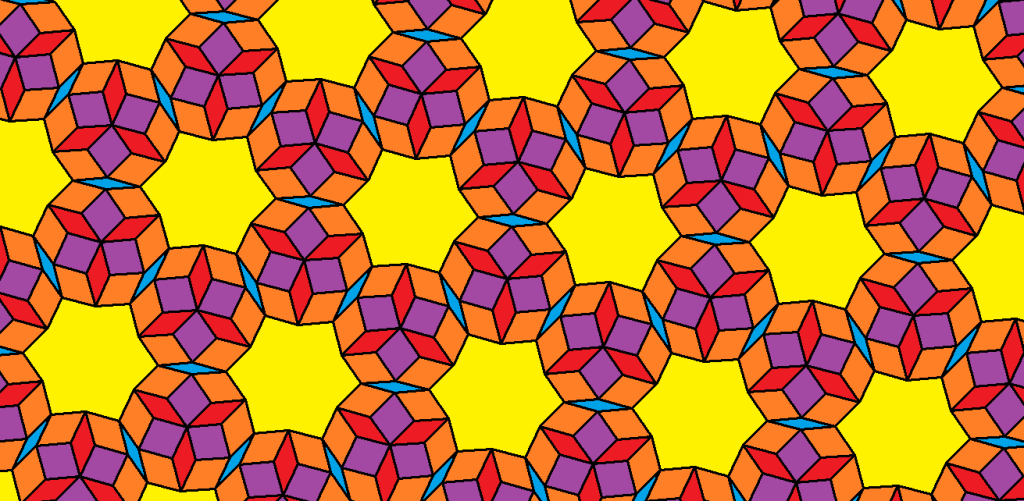
This particular tessellation is full of angles measuring 20 degrees, 40 degrees, and other angles which are not constructable using the traditional rules of Euclidean constructions. This is because this tessellation is based on a matrix which includes regular enneagons.
 RobertLovesPi.net