
All of the edges of this polyhedron have the same length. I made it using Stella 4d: Polyhedron Navigator, which you can try for free at this website.
All of the edges of this polyhedron have the same length. I made it using Stella 4d: Polyhedron Navigator, which you can try for free at this website.
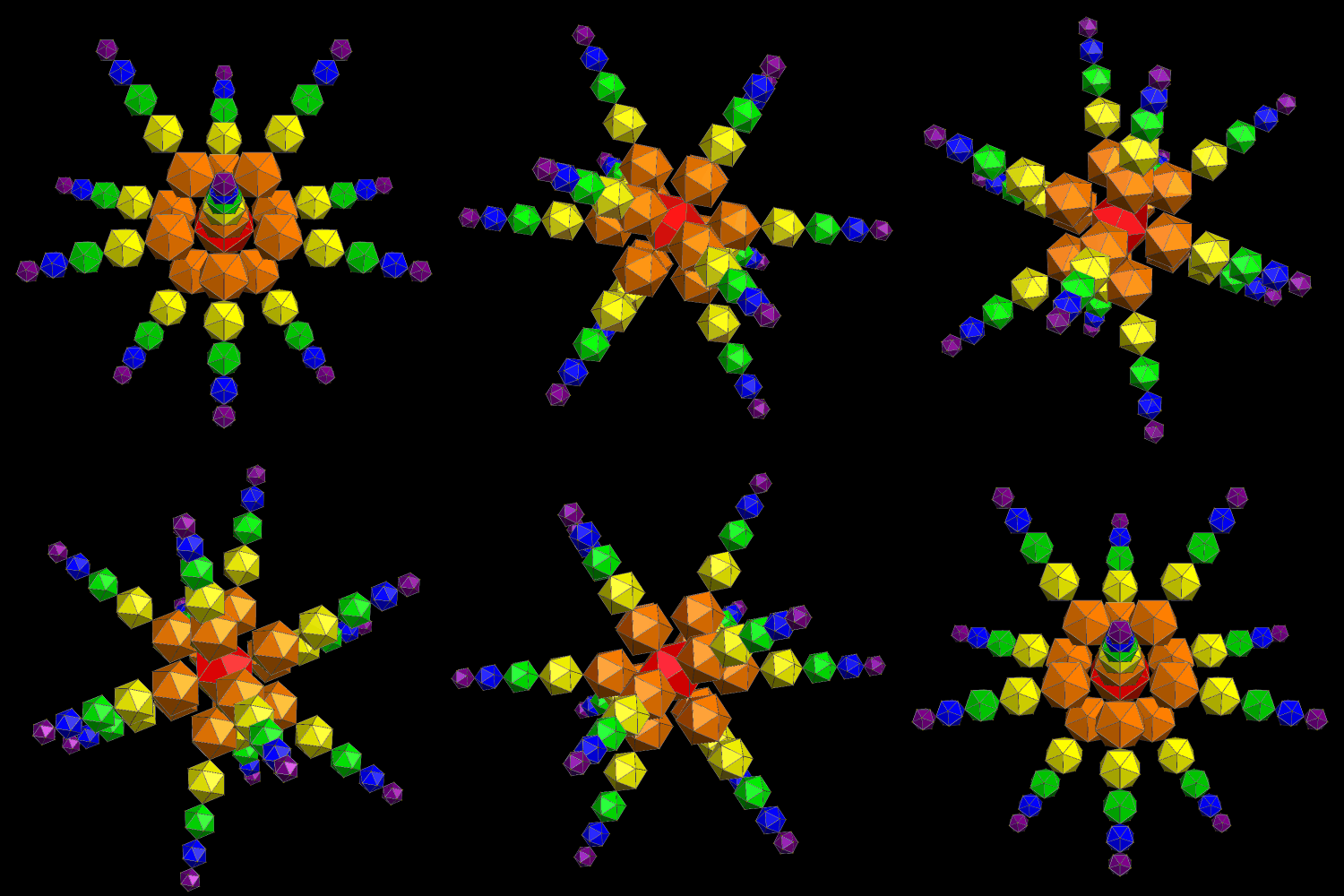
Stella 4d: Polyhedron Navigator has a “put models on vertices” function which I used to build this cluster of 61 icosahedra. If you’d like to try this software for yourself, there is a free trial download available at http://www.software3d.com/Stella.php.

Stella 4d: Polyhedron Navigator has a “put models on vertices” function which I used to build this cluster of cubes. If you’d like to try this software for yourself, there is a free trial download available at http://www.software3d.com/Stella.php.

Stella 4d: Polyhedron Navigator has a “put models on vertices” function which I used to build this cluster of 101 dodecahedra. If you’d like to try this software for yourself, there is a free trial download available at http://www.software3d.com/Stella.php.
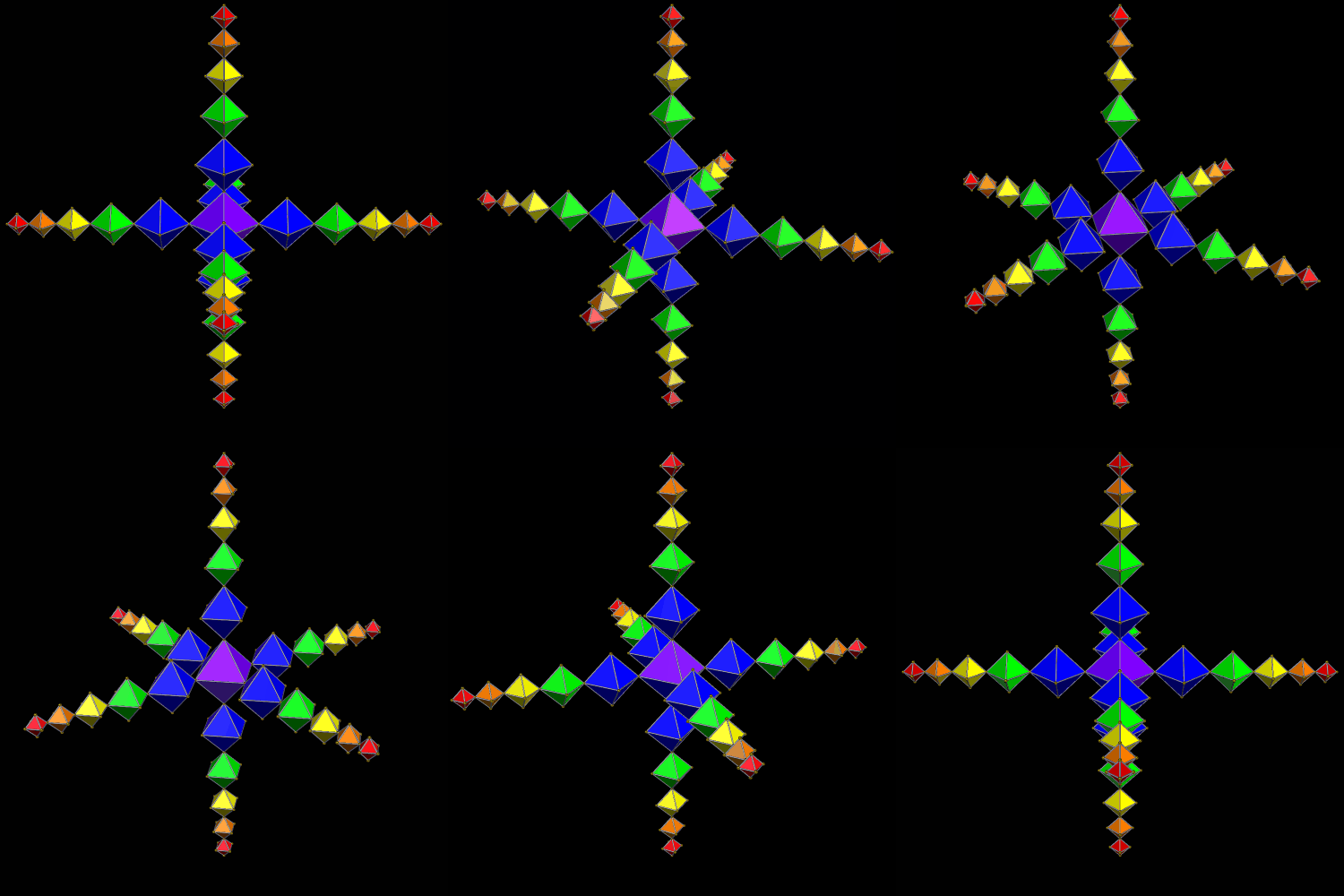
Stella 4d: Polyhedron Navigator has a “put models on vertices” function which I used to build this complex of octahedra. If you’d like to try this software for yourself, there is a free trial version available at http://www.software3d.com/Stella.php.

Stella 4d: Polyhedron Navigator has a “put models on vertices” function which I used to build this complex of tetrahedra. If you’d like to try this software for yourself, there is a free trial version available at http://www.software3d.com/Stella.php.
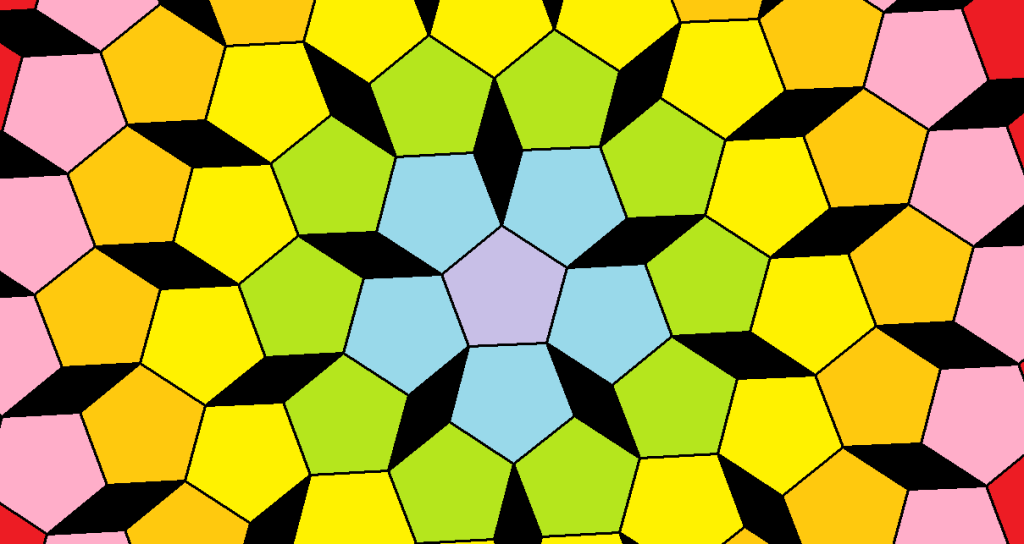
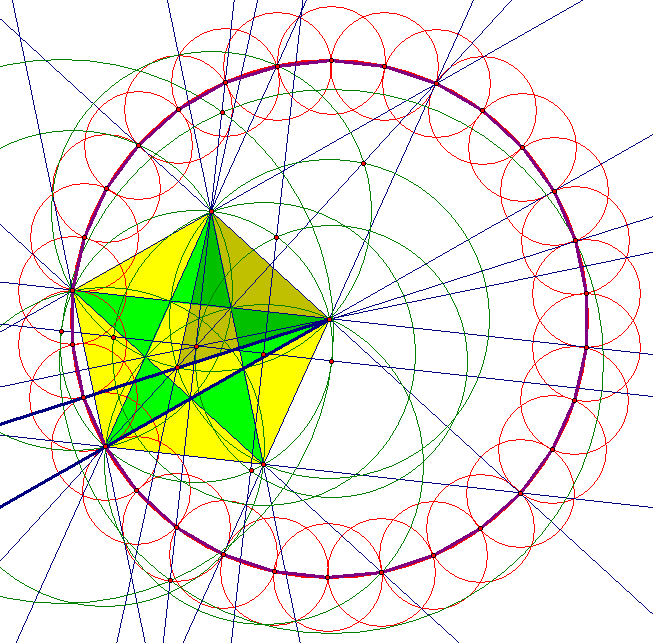
Steps of this construction:

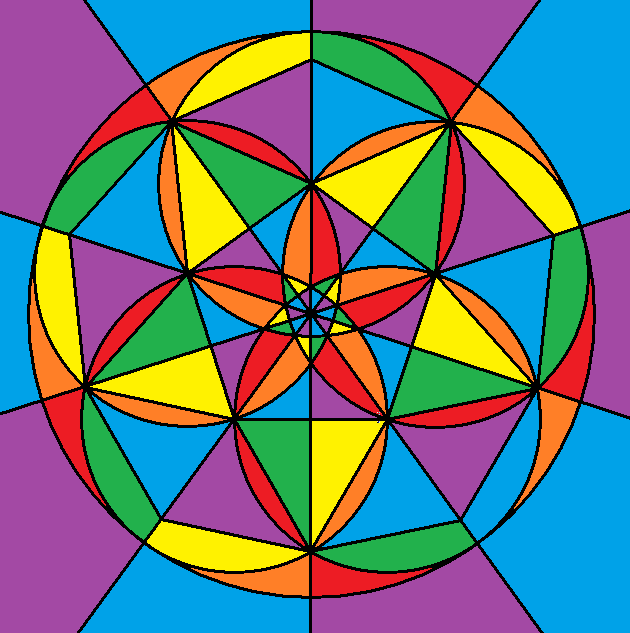
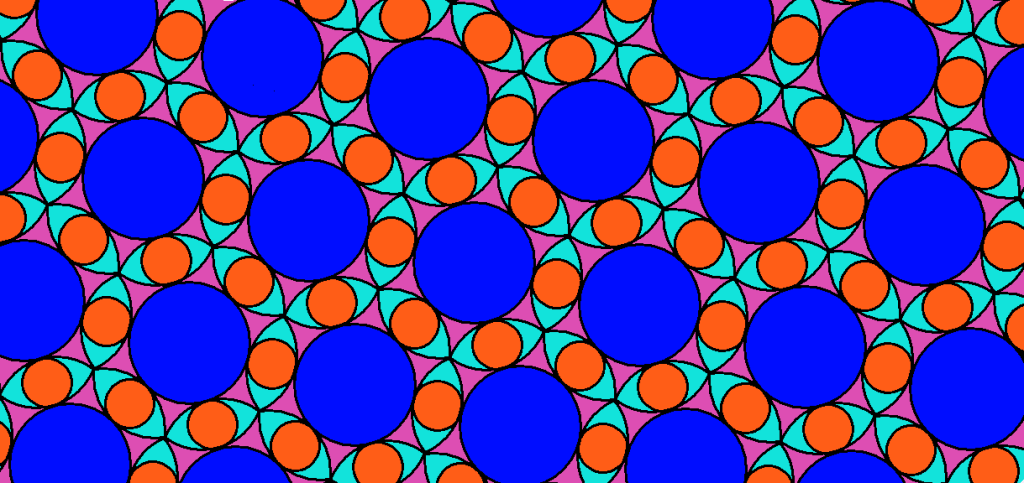
This collection of curves was built around a tessellation of the plane using regular hexagons. To make the second version, I inverted the colors, except for the black circles and arcs.
 RobertLovesPi.net