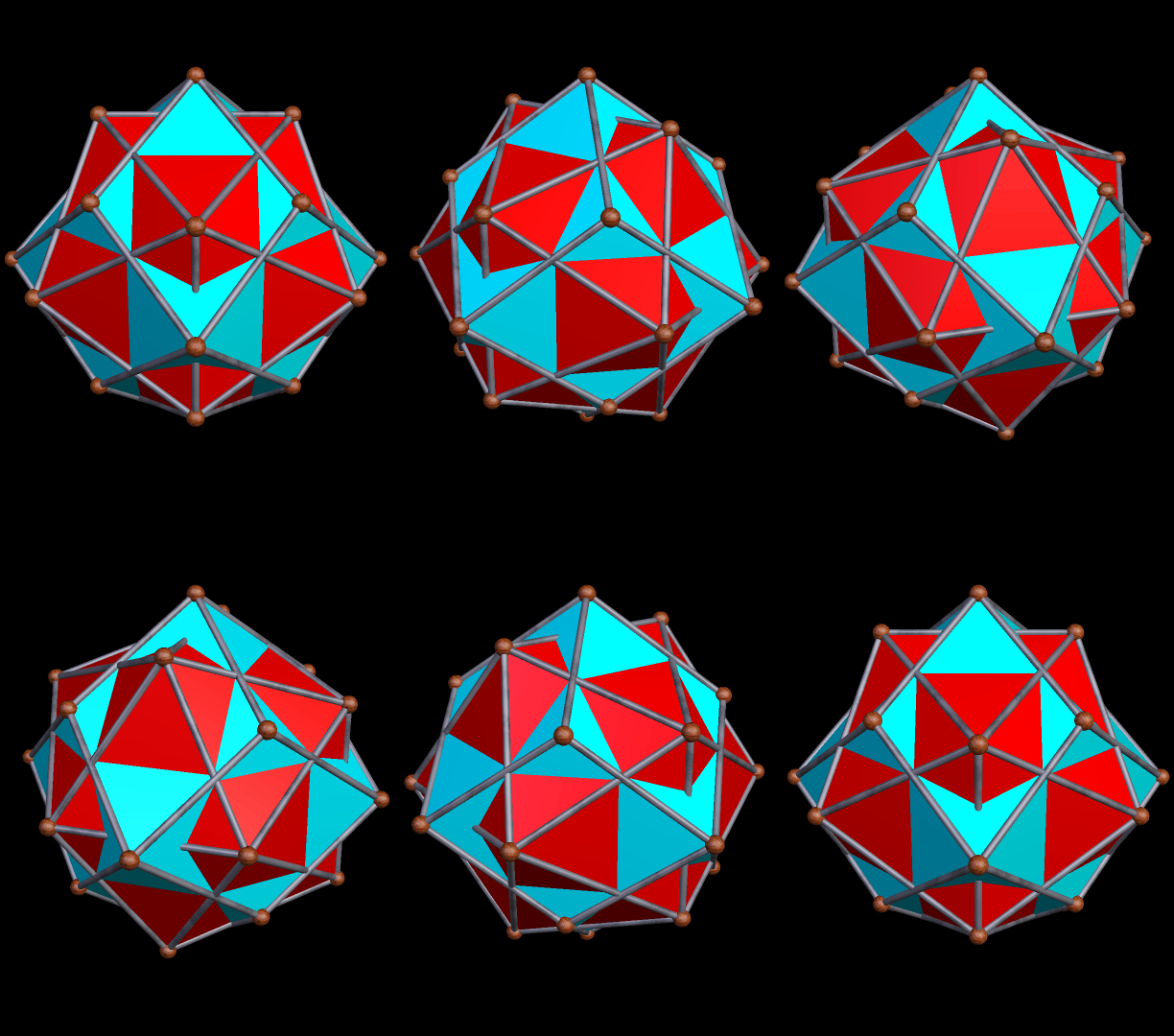
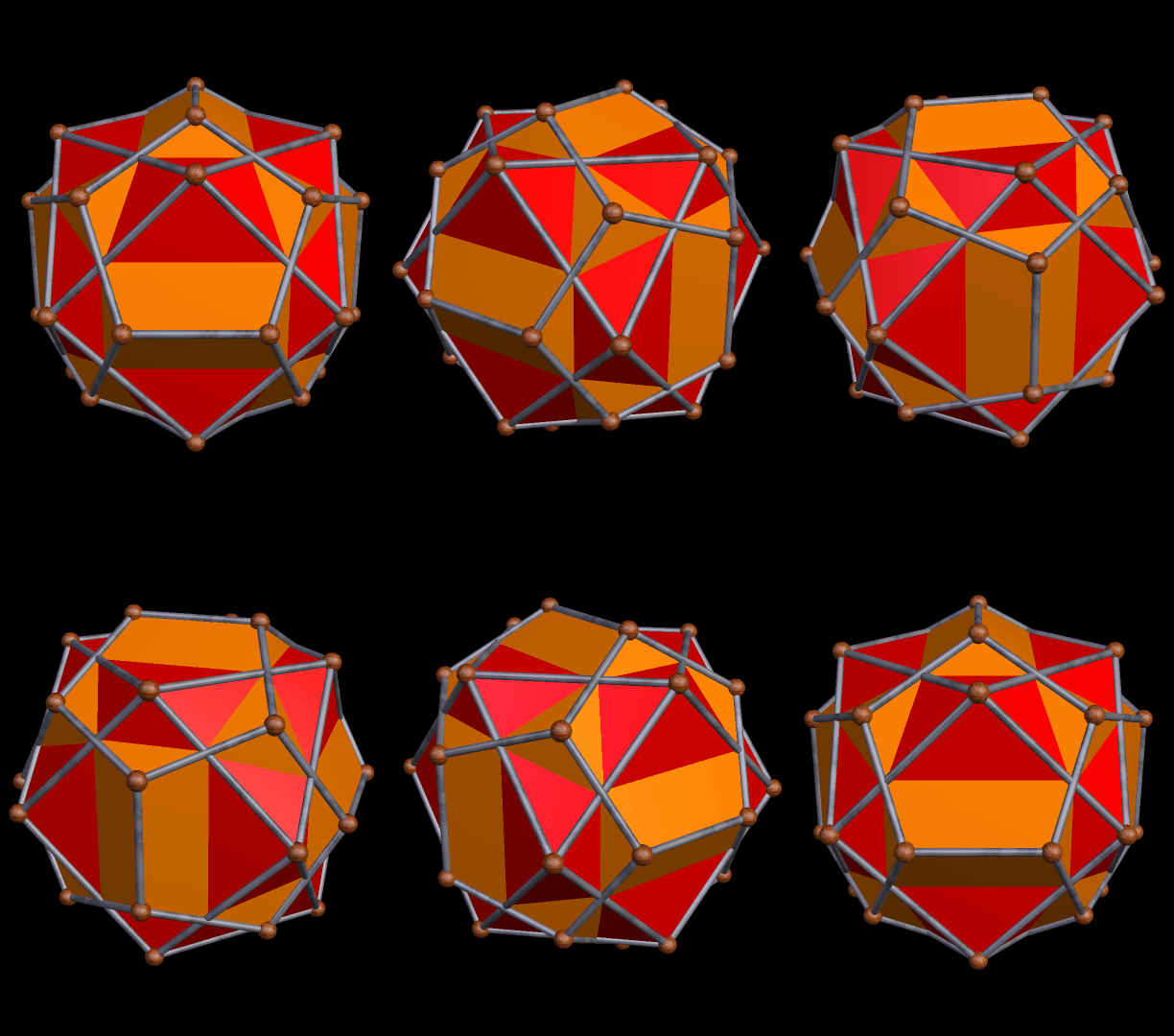
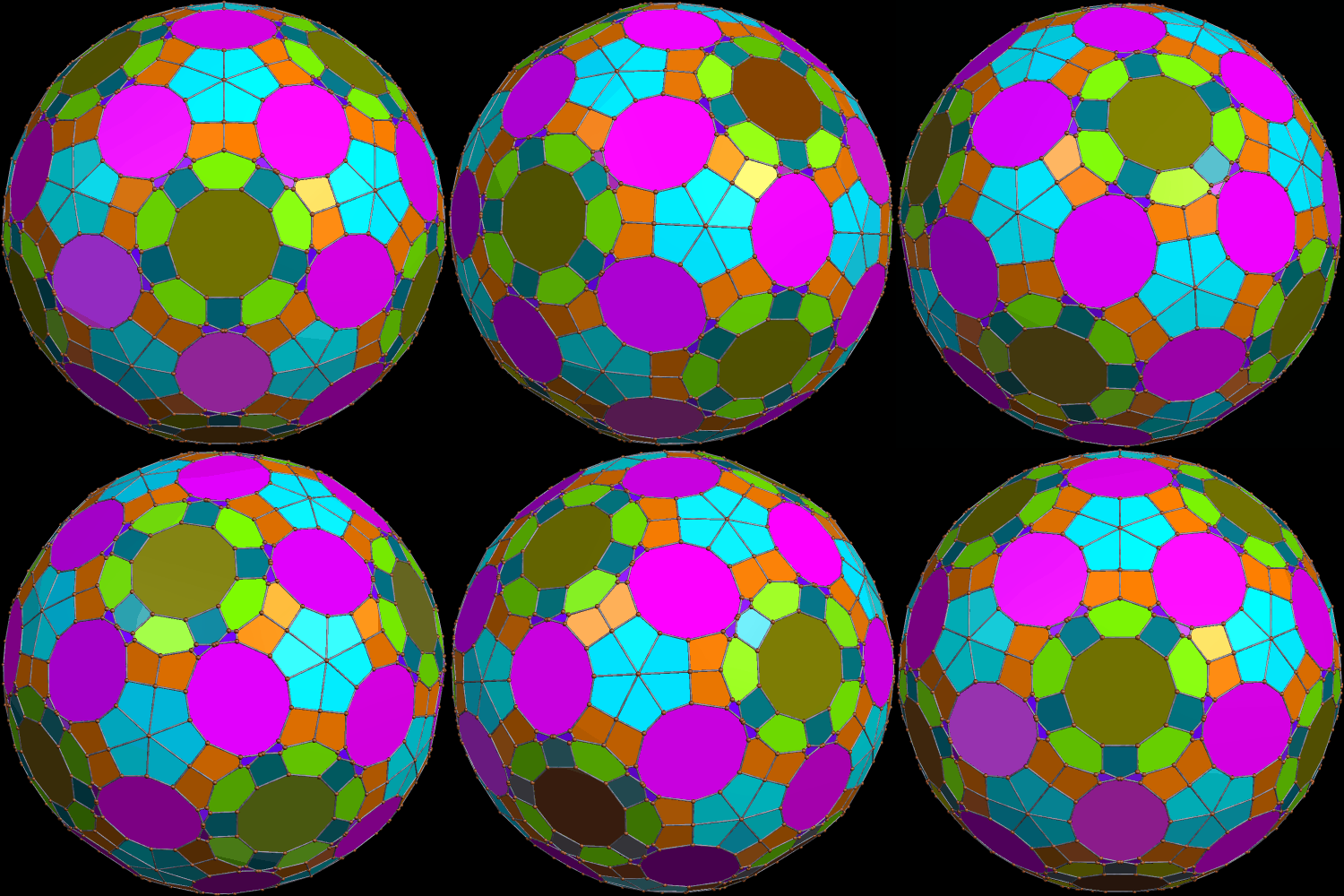
Shown above: the compound of the icosahedron and the rhombic dodecahedron. Below is its dual, the compound of the dodecahedron and the cuboctahedron.
Both these compounds were created using the “add/blend polyhedron from memory” function in Stella 4d: Polyhedron Navigator. To check out this program for yourself, just follow this link.
To make the rotating polyhedral compound at the top, from an octahedron and an icosahedron, I simply combined these two polyhedra, using Stella 4d, which may be purchased (or tried for free) here.
In the process, I demonstrated that it is possible to combine a figure with octahedral (sometimes called cuboctahedral) symmetry, with a figure with icosahedral (sometimes called icosidodecahedral) symmetry, to produce a figure with pyritohedral symmetry.
Now I can continue with the rest of my day. No matter what happens, I’ll at least know I accomplished something.
Two polyhedra are shown in this post — one which is chiral, and a similar one which is not. The non-chiral polyhedron in this pair is above. Its mirror-image is not any different from itself, except if you consider the direction of rotation.
The similar polyhedron below, however, features an overall “twist,” causing it to qualify as a chiral polyhedron. In its mirror-image (not shown, unless you use a mirror to make it visible), the “twisting” goes in the opposite direction. The direction of rotation would be reversed as well, of course, in a reflected image.
Multiple terms exist for mirror-image pairs of chiral polyhedra, the most well-known of which are the snub cube ansd snub dodecahedron, two of the thirteen Archimedean Solids. Some prefer to call them “enantiomers,” but many others prefer the more familiar term “reflections,” which I often use. I’ve also seen such polyhedra referred to as “left-handed” and “right-handed” forms, but I avoid these anthropomorphic terms related to handedness, simply because, if there is an established rule which would let me know whether any given chiral polyhedron is left- or right-handed, I’m not familiar with it. (Also, polyhedra do not have hands.) I could not, therefore, tell you if the example shown above would be correctly described as left- or right-handed — either because no such rule exists, or there is such a rule, but it is unknown to me. If the latter, I would appreciate it if someone would provide the details in a comment.
Both images above were created with Stella 4d, software you can try, for free, right here.
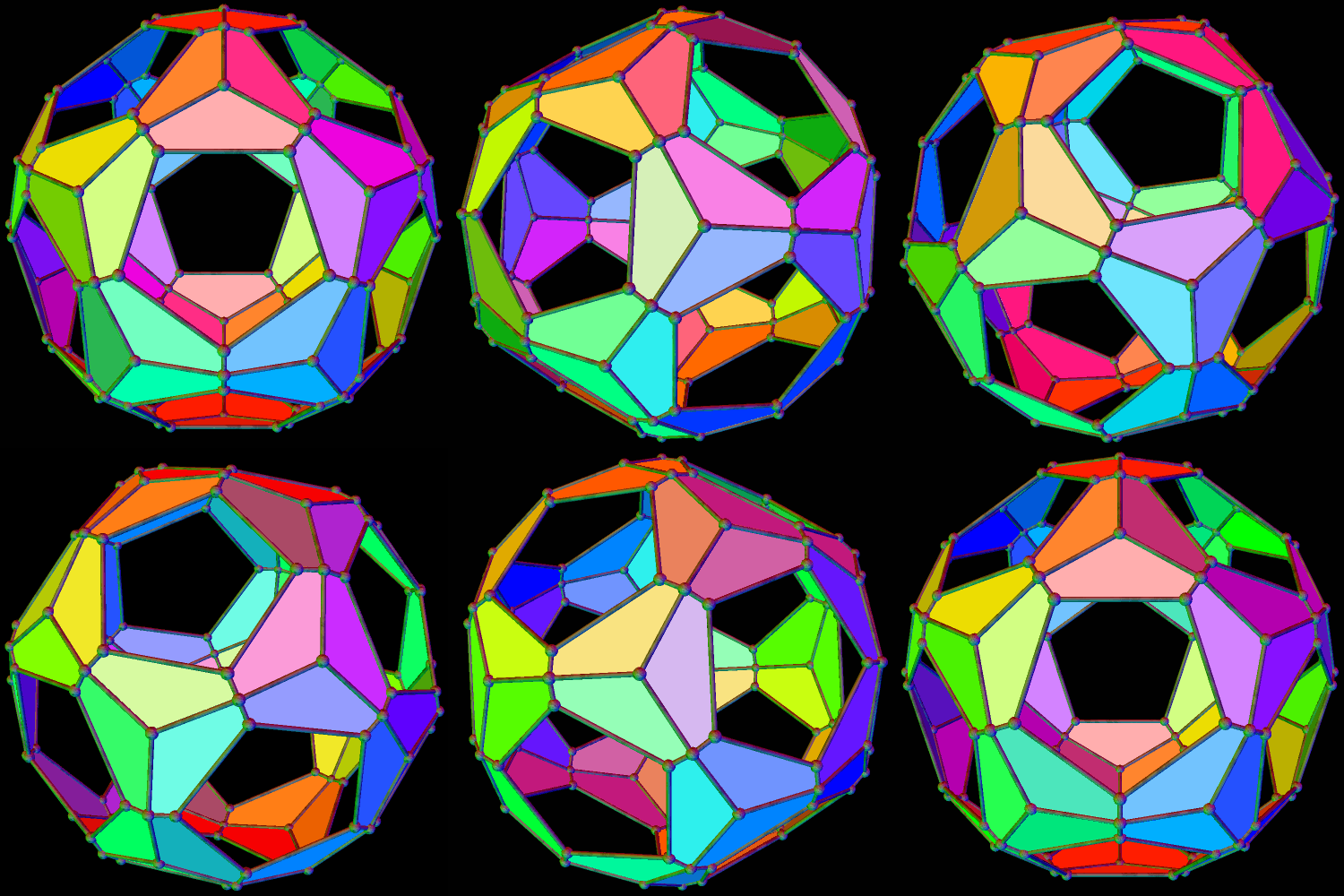
To make the next one, I rendered the twelve regular pentagons invisible, and put the remaining sixty faces in “rainbow color mode,” using Stella 4d, software you can try at this website.
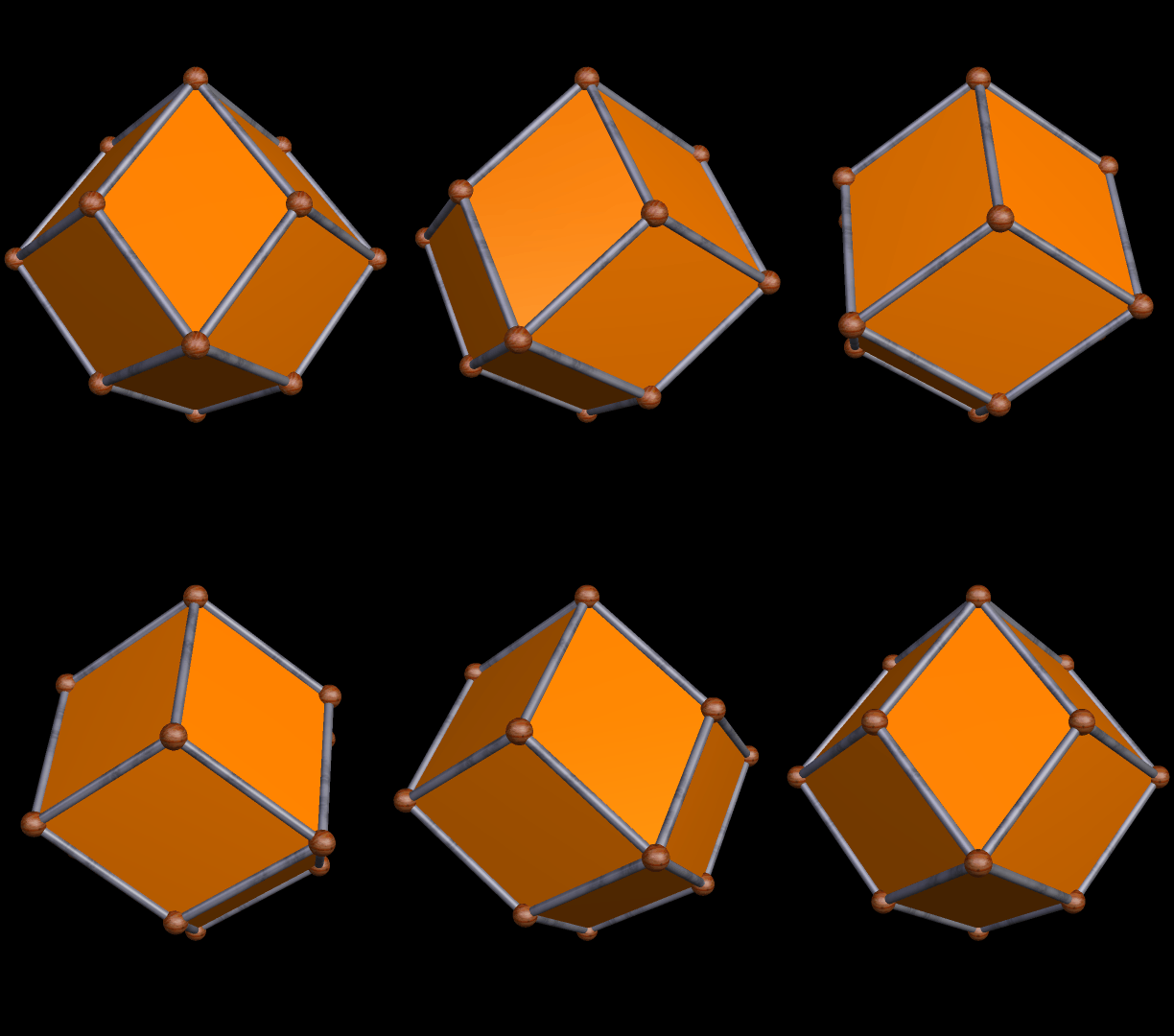
This is the rhombic dodecahedron, the dual of the Archimedean cuboctahedron.
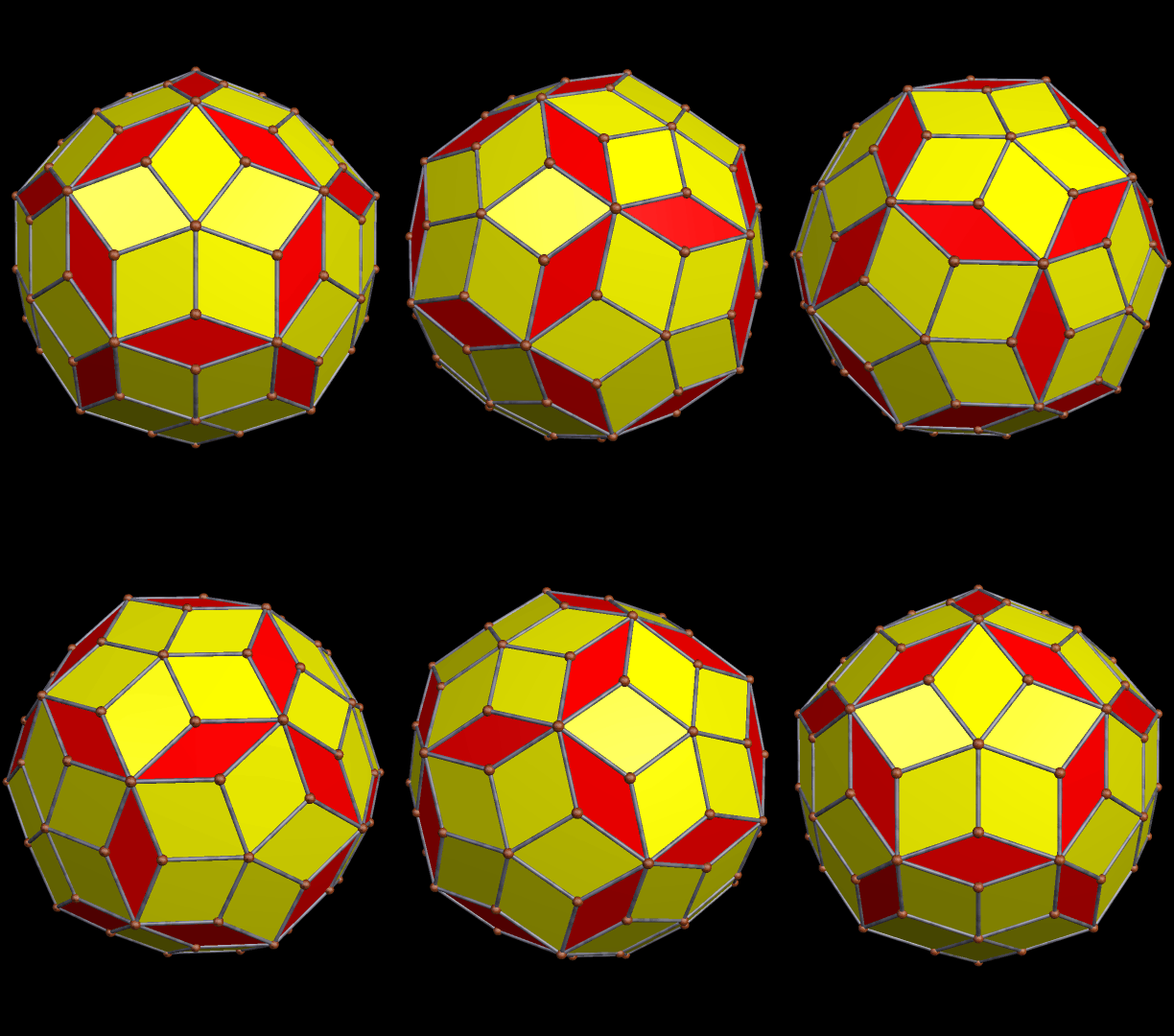
While the rhombic dodecahedron has 12 faces, there are many other polyhedra made entirely out of rhombi, and most of them have more than twelve faces. An example is the rhombic enneacontahedron, which has two face-types: sixty wide rhombi, and thirty narrow ones. It is one of several possible zonohedrified dodecahedra.
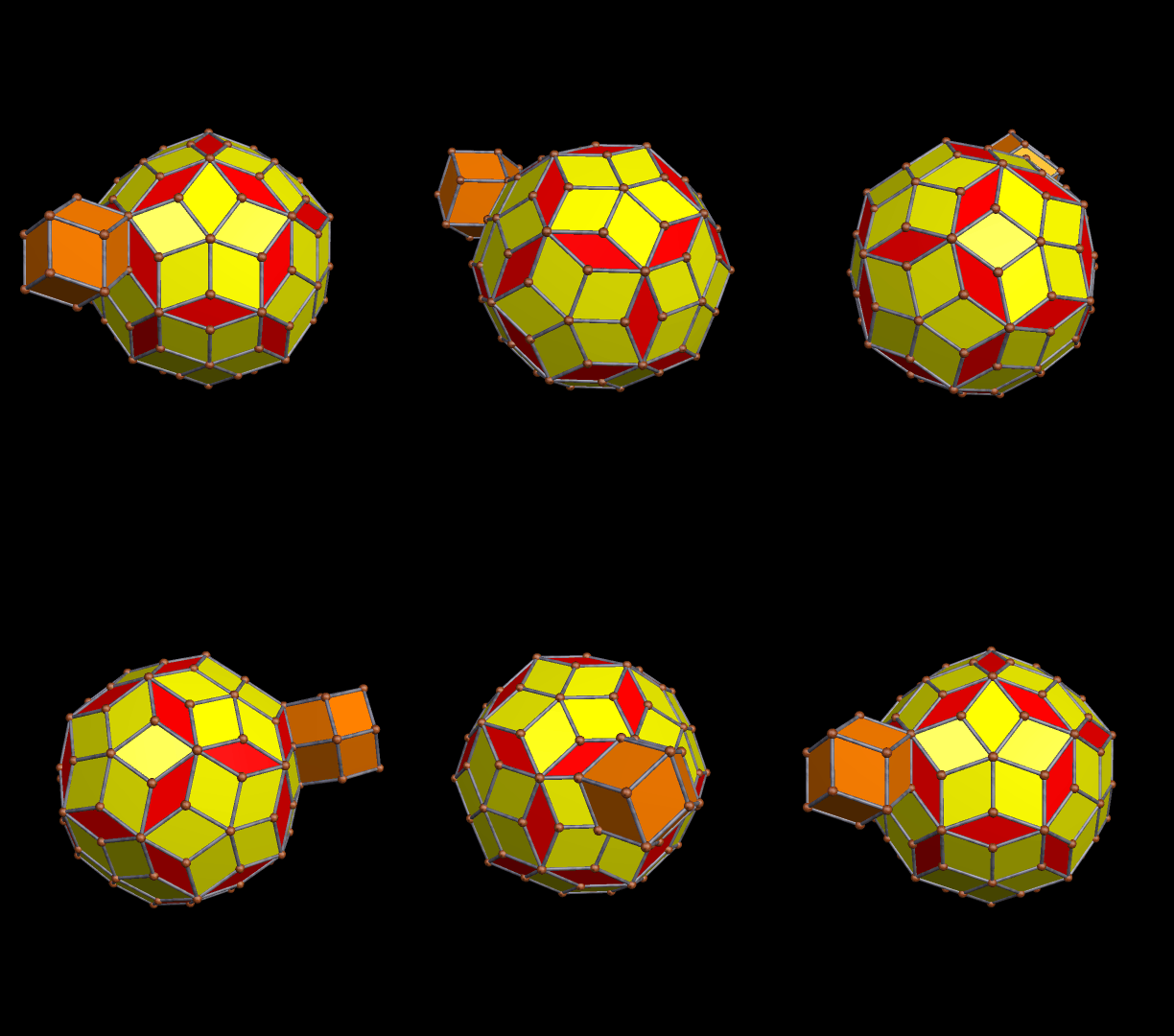
As the next figure shows, the wide rhombi of the rhombic enneacontahedron have exactly the same shape as the rhombic dodecahedron’s faces, so the two polyhedra can be stuck together (augmented) at those faces. These wide rhombi have diagonals with lengths in a ratio of one to the square root of two.
The next picture shows what happens if you take one central rhombic enneacontahedron, and augment all sixty of its wide faces with rhombic dodecahedra.
Since this polyhedral cluster in non-convex, it can be changed by creating its convex hull, which can the thought of as pulling a rubber sheet tightly around the entire polyhedron. Here’s the convex hull of the augmented polyhedron above.
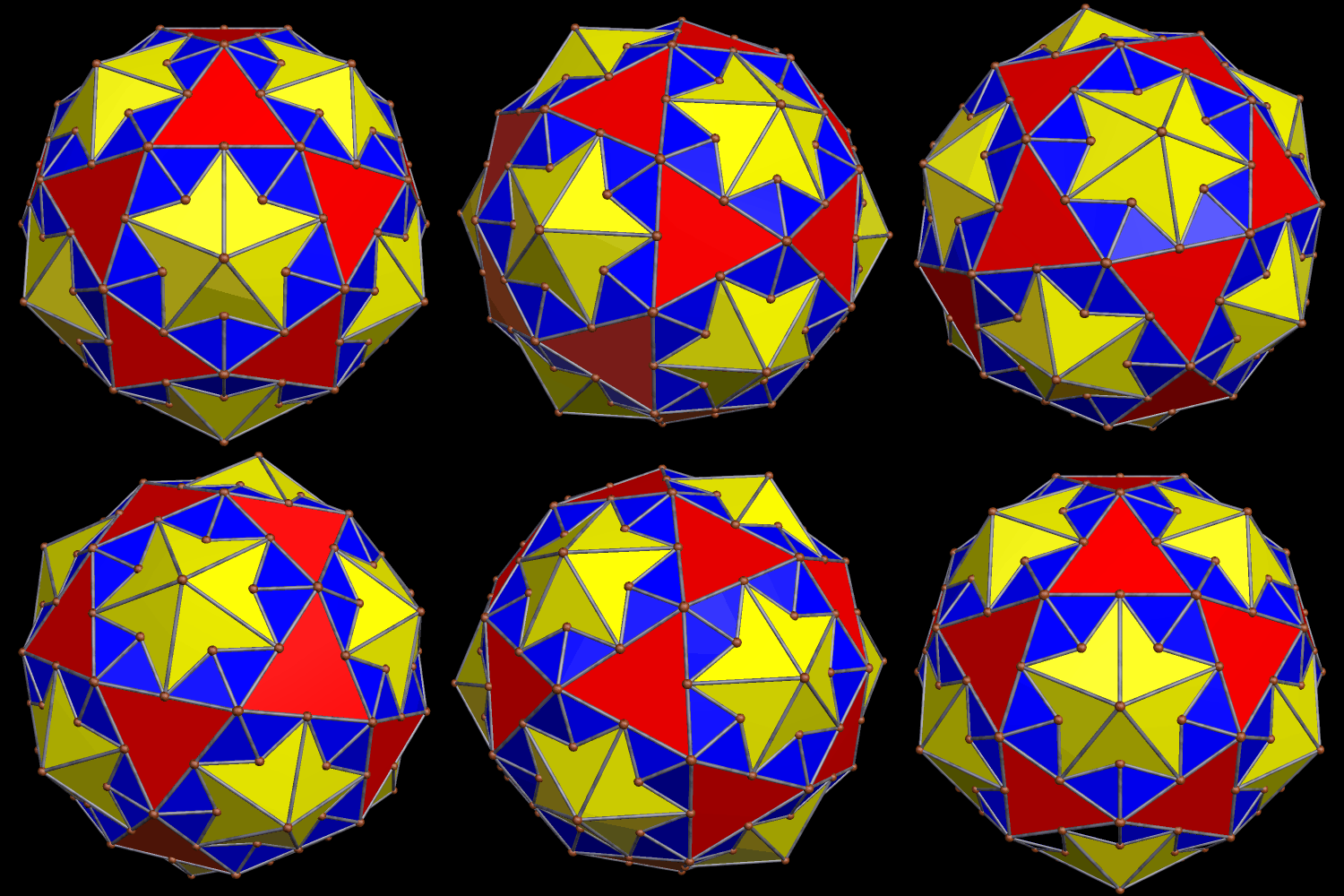
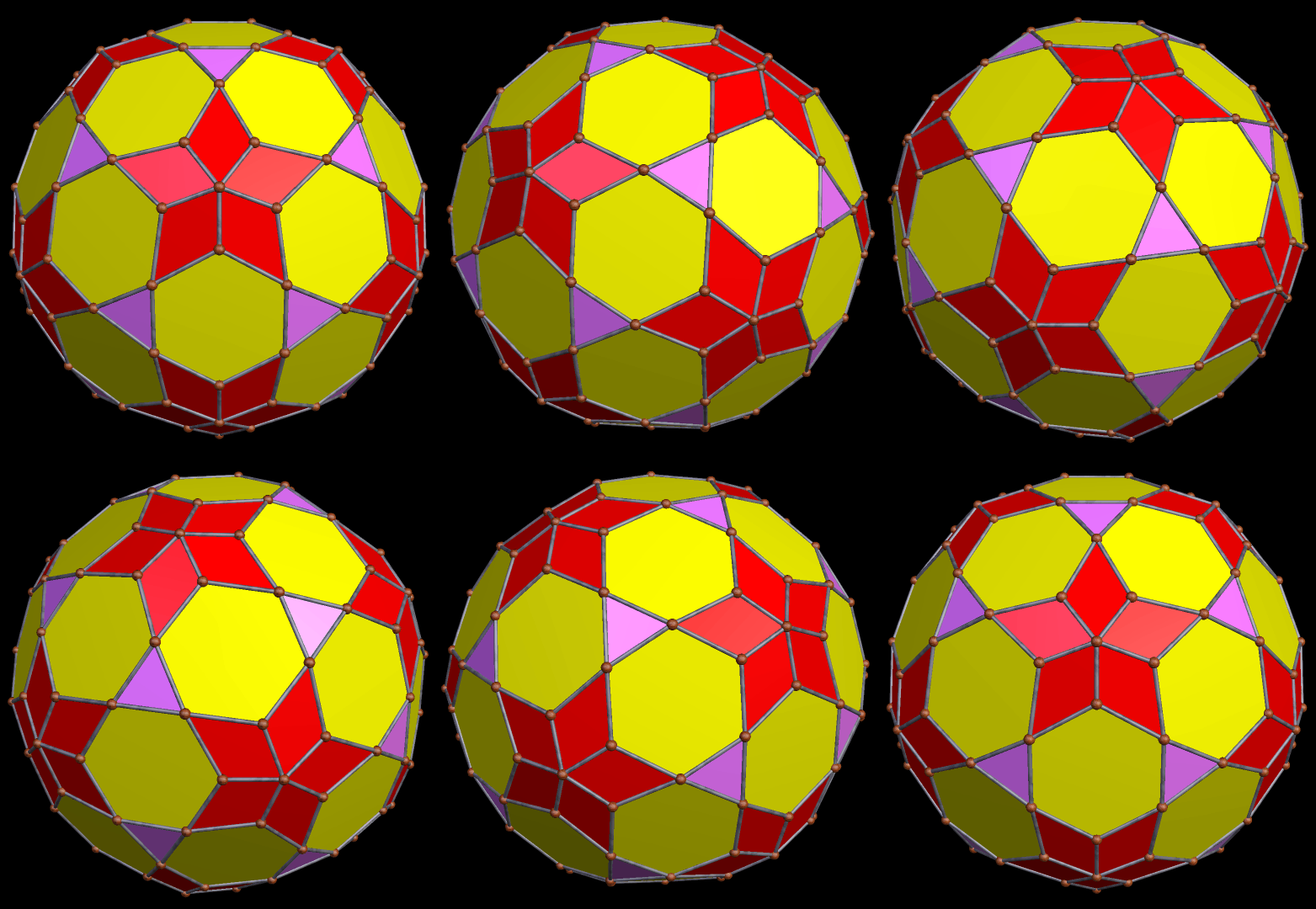
The program I use to make these rotating images, Stella 4d (which you can try here), has a function called “try to make faces regular.” If applied to the convex hull above, this function leaves the triangles and pentagon regular, and makes the octagons regular as well. However, the rhombi become kites. The rectangles merely change, getting slightly longer, while rotating 90º, but they do remain rectangles.
After creating this last polyhedron, I started stellating it. After stellating it eight times, I obtained this polyhedron:
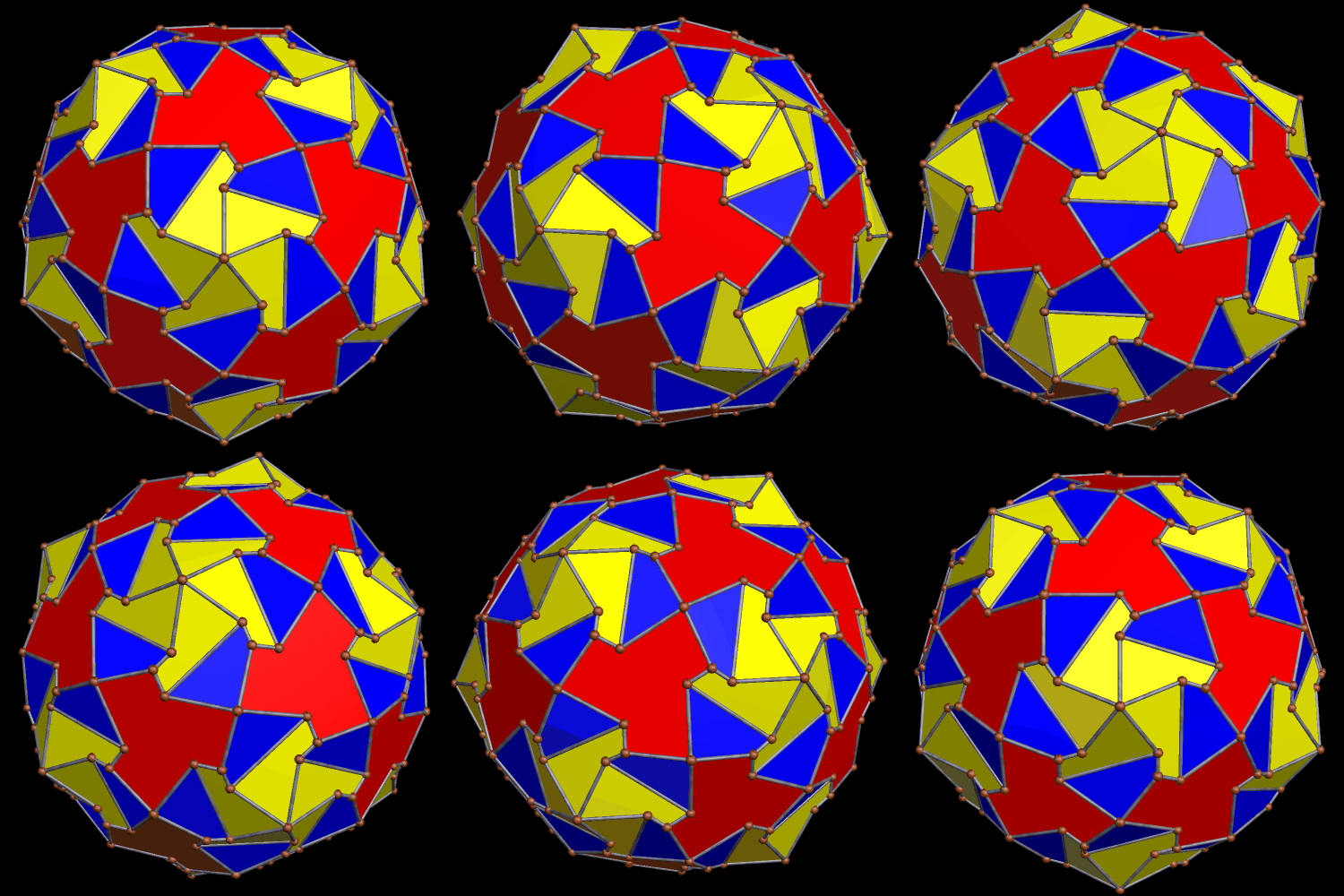
Once more, I applied the “try to make faces regular” function.
This polyhedron has five-valent vertices where the shorter edges of the kites meet. These are also the vertices of pentagonal pyramids which use kite-diagonals as base edges. By using faceting (the inverse operation of stellation), I next removed these pyramids, exposing their regular pentagonal faces.
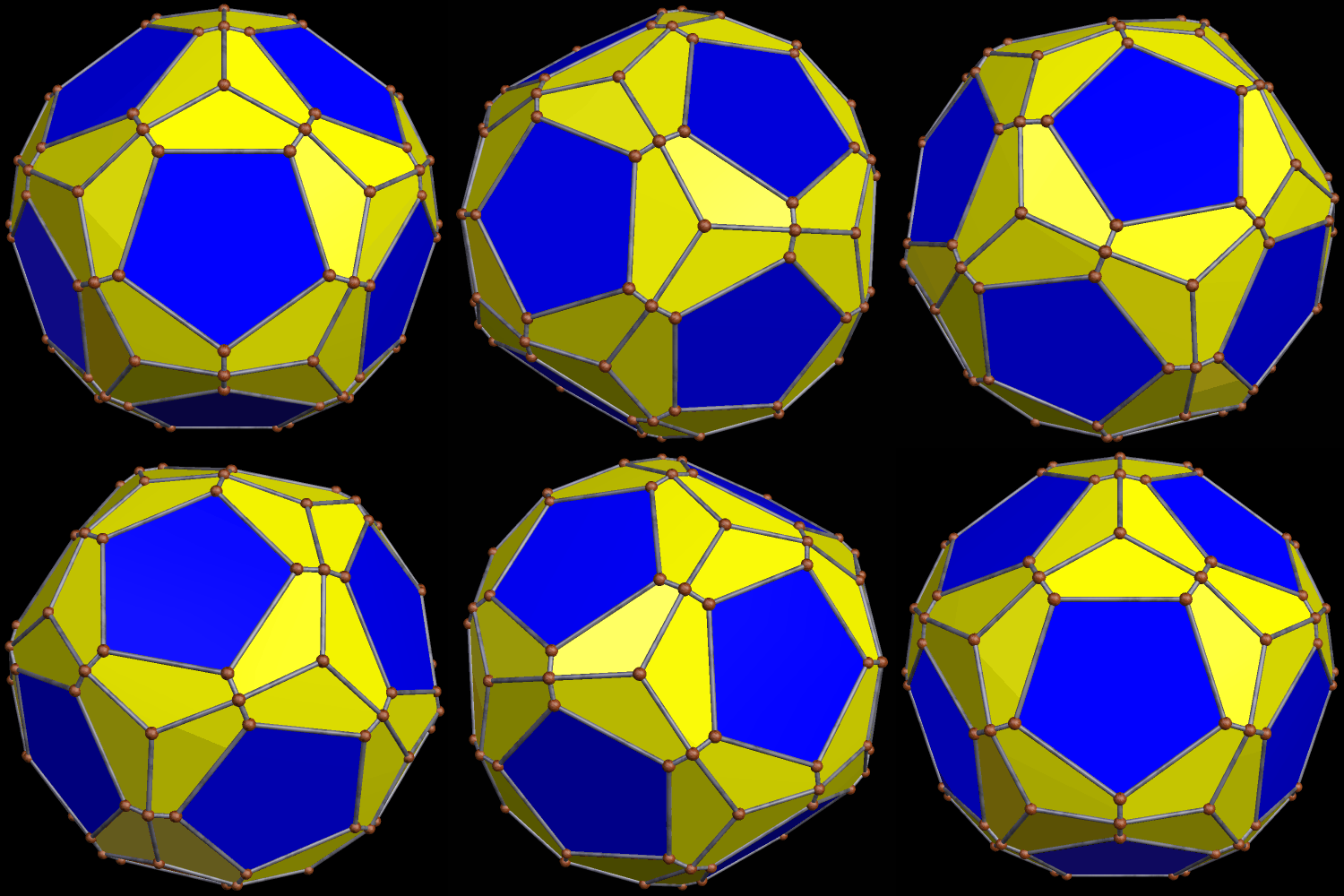
In this polyhedron, all faces are regular, except for the red triangles, which are isosceles. (There are also triangles — the pink ones — which are regular.) Each of these isosceles triangles has ~63.2º base angles, and a ~53.6º vertex angle, with legs just under 11% longer than the base. This is a judgement call, for “near-miss” to the Johnson solids has not been precisely defined, but I see an ~11% edge-length difference as too great for this to be classified as a “near-miss,” even though I would love to claim discovery of another near-miss to the Johnson solids (if it even turns out I am the first one to find this polyhedron, which may not be the case). It is close to being a near-miss, though, so it belongs in the even-less-precisely defined group of polyhedra which are called, quite informally, “near near-misses.”
For the sake of comparison, here is a similar polyhedron (included in Stella 4d‘s enormous, built-in library of polyhedra) which is recognized as a near-miss to the Johnson solids. (I do not know the name of the person who discovered it, or I would include it here — I only know it wasn’t me.) It’s called the “half-truncated truncated icosahedron,” and its longest ledges are just over 7% longer than its shorter edges, with the non-regularity of faces also limited to isosceles triangles. However, this irregularity appears in all of the triangles in the polyhedron below — and in the “near near-miss above,” the irregularity only appeared in some of the triangular faces.
Polyhedra are one of the areas (there are at least a few others) where the fields of mathematics and art intersect. Stella 4d, the program I used to make this image, is a great tool for the exploration of this region of intersection. This software may be tried for free righthere.
Dave Smith discovered the polyhedron in the last post here, shown below, with the faces hidden, to reveal how the edges appear on the back side of the figure, as it rotates. (Other views of it may be found here.)
So far, all of Smith’s “bowtie” polyhedral discoveries have been convex, and have had only two types of face: regular polygons, plus isosceles trapezoids with three equal edge lengths — a length which is in the golden ratio with that of the fourth side, which is the shorter base.
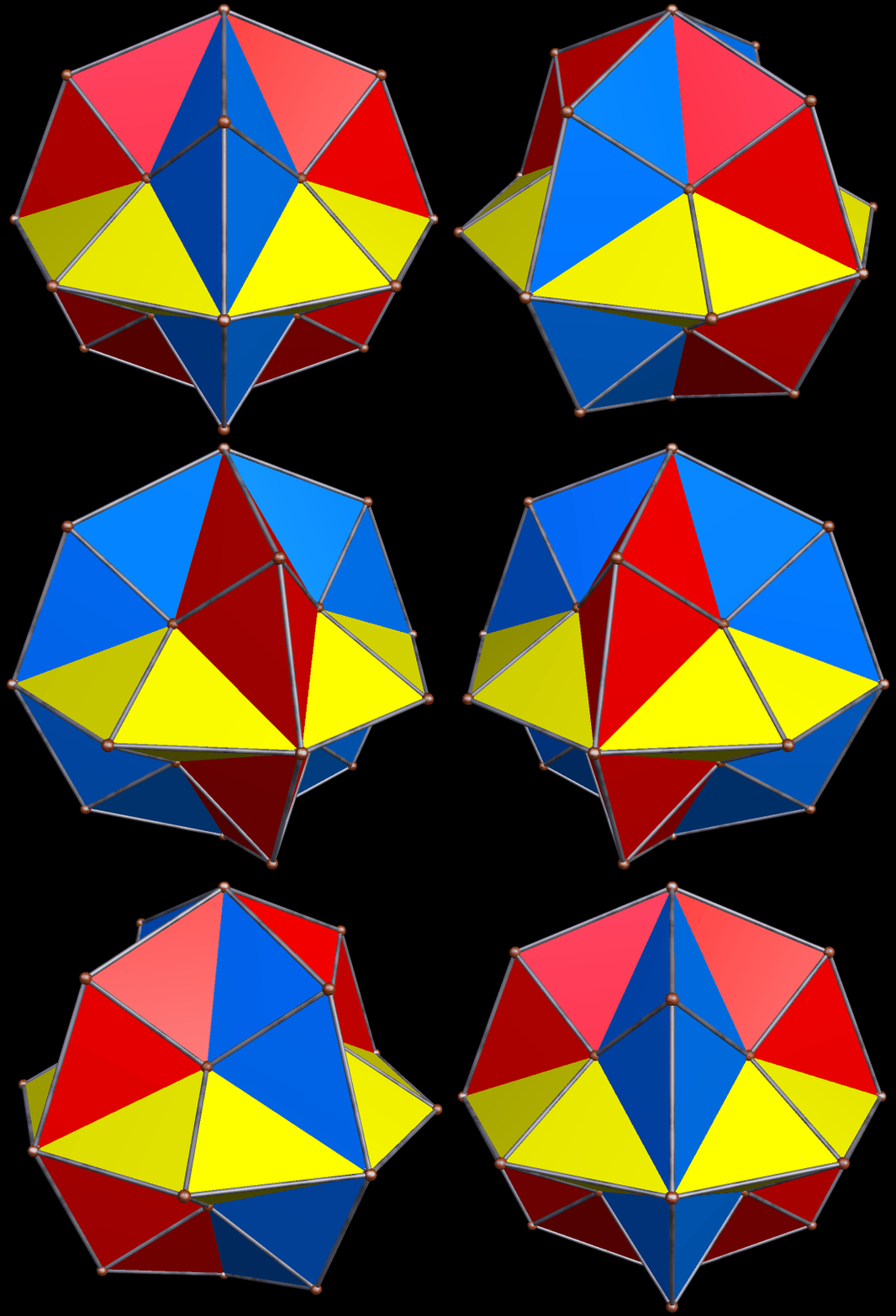
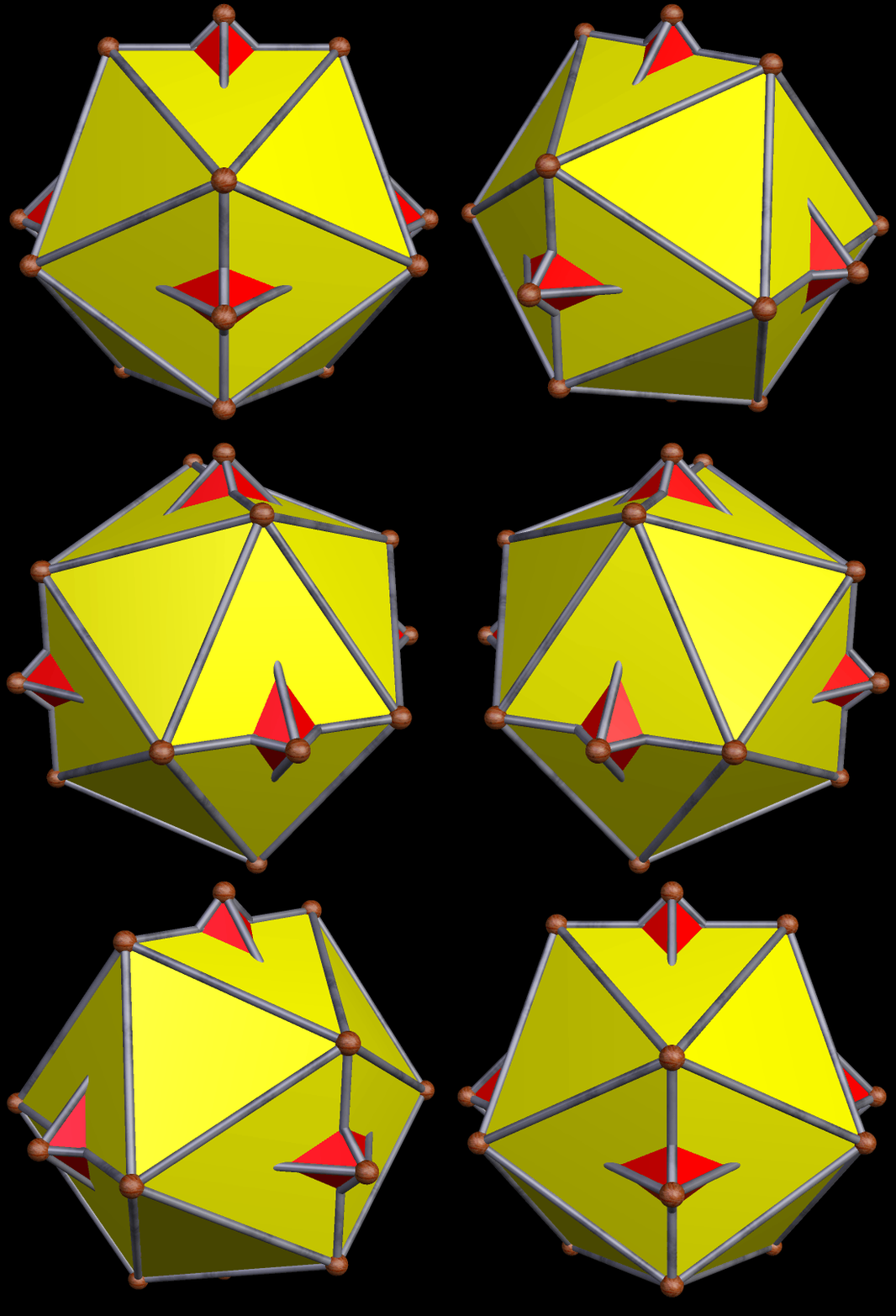
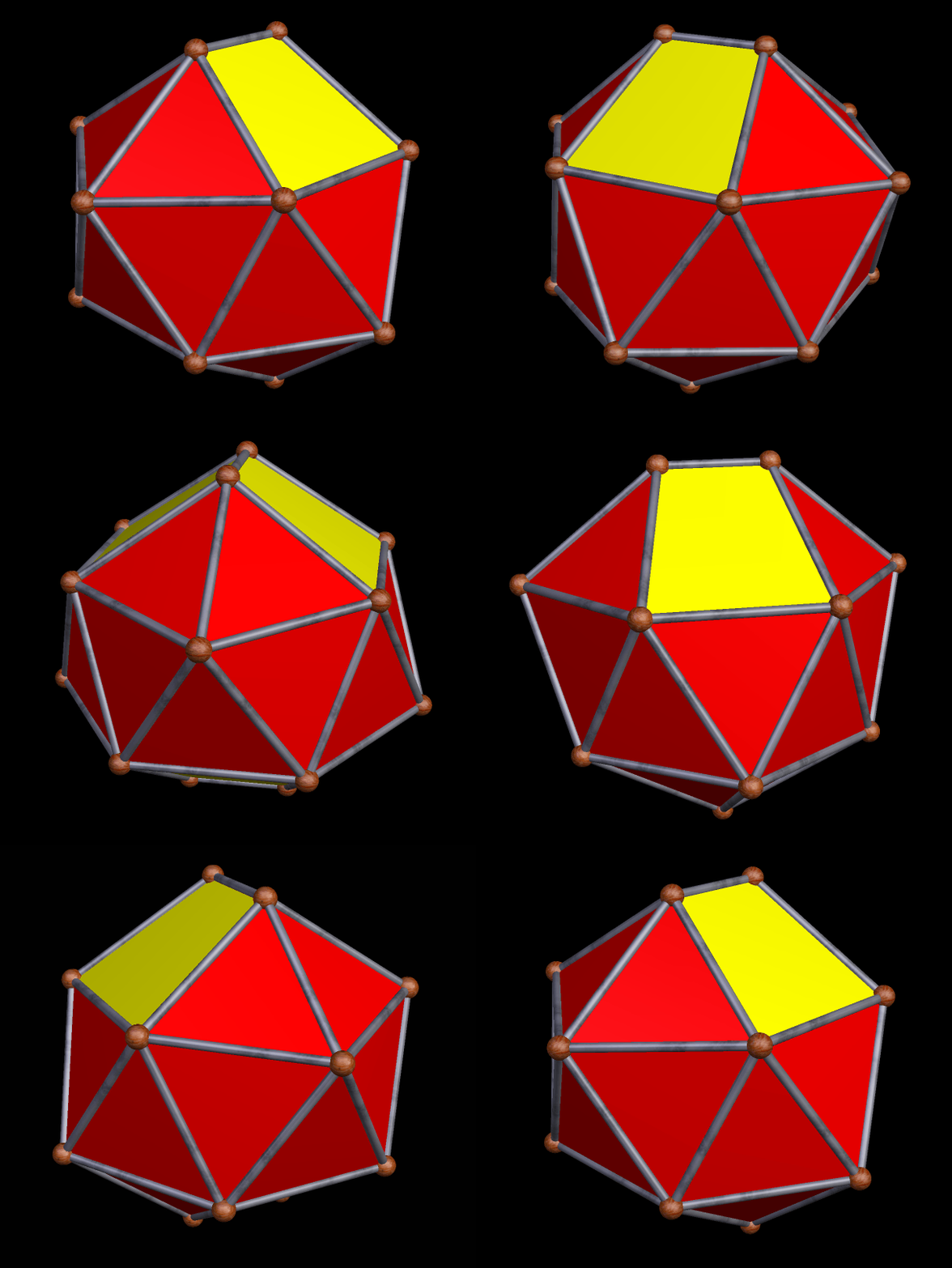
He also found another solid: the second of Smith’s polyhedral discoveries in the class of bowtie symmetrohedra. In it, each of the four pentagonal faces of the original discovery is augmented by a pentagonal pyramid which uses equilateral triangles as its lateral faces. Here is Smith’s original model of this figure, in which the trapezoids are invisible. (My guess is that these first models, pictures of which Dave e-mailed to me, were built with Polydrons, or perhaps Jovotoys.)
With Stella 4d (available here), the program I use to make all the rotating geometrical pictures on this blog, I was able to create a version (by modifying the one created by via collaboration between five people, as described in the last post) of this interesting icositetrahedron which shows all four trapezoidal faces, as well as the twenty triangles.
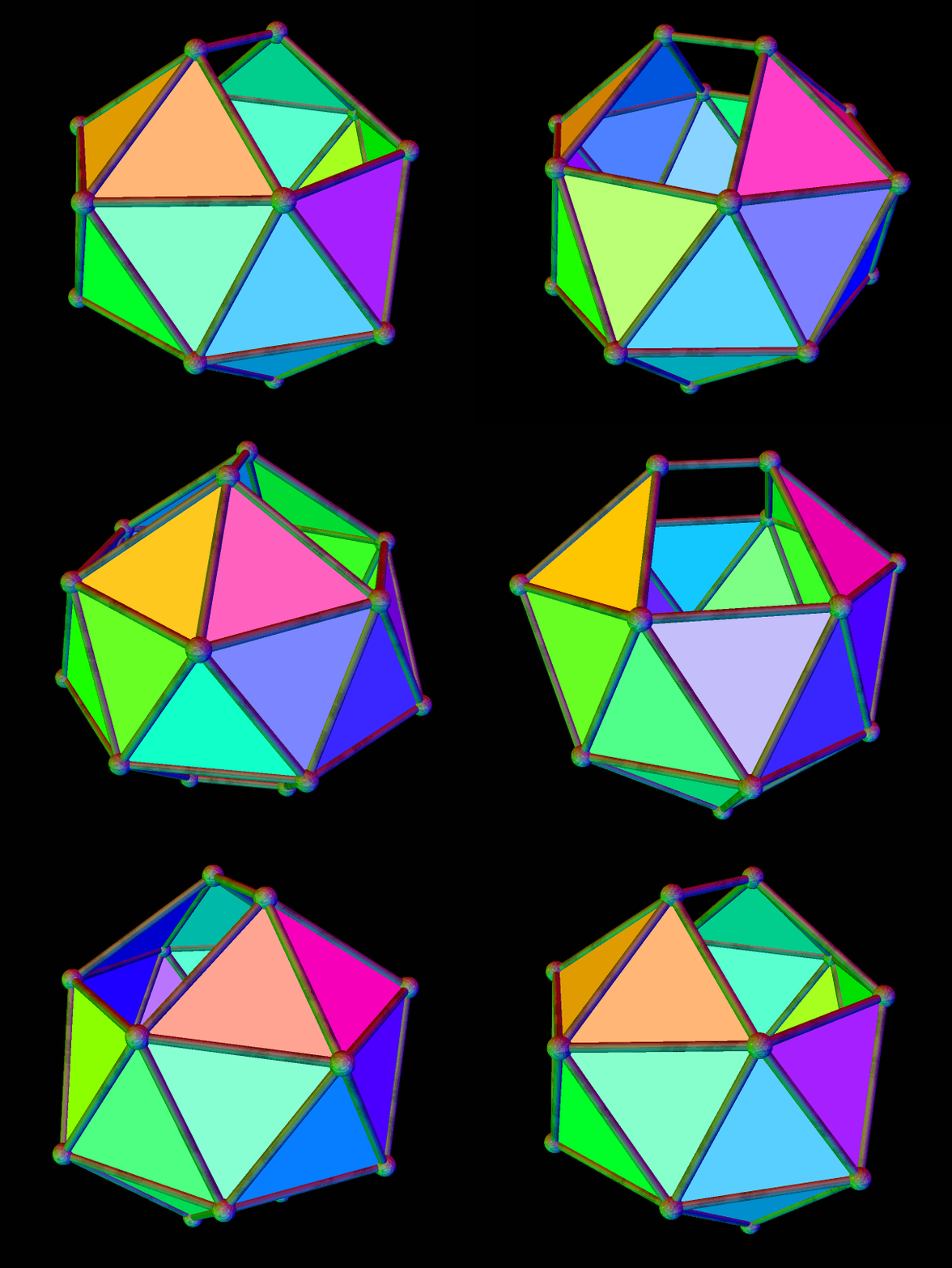
Here is another view: trapezoids rendered invisible again, and triangles in “rainbow color” mode.
It is difficult to find linkages between the tetrapentagonal octahedron Smith found, and other named polyhedra (meaning I haven’t yet figured out how), but this is not the case with this interesting icositetrahedron Smith found. With some direct, Stella-aided polyhedron-manipulation, and a bit of research, I was able to find one of the Johnson solids which is isomorphic to Smith’s icositetrahedral discovery. In this figure (J90, the disphenocingulum), the trapezoids of this icositetrahedron are replaced by squares. In the pyramids, the triangles do retain regularity, but, to do so, the pentagonal base of each pyramid is forced to become noncoplanar. This can be difficult to see, however, for the now-skewed bases of these four pyramids are hidden inside the figure.
Both of these solids Smith found, so far (I am confident that more await discovery, by him or by others) are also golden polyhedra, in the sense that they have two edge lengths, and these edge lengths are in the golden ratio. The first such polyhedron I found was the golden icosahedron, but there are many more — for example, there is more than one way to distort the edge lengths of a tetrahedron to make golden tetrahedra.
To my knowledge, no ones knows how many golden polyhedra exist, for they have not been enumerated, nor has it even been proven, nor disproven, that their number is finite. At this point, we simply do not know . . . and that is a good way to define areas in mathematics in which new work remains to be done. A related definition is one for a mathematician: a creature who cannot resist a good puzzle.






 RobertLovesPi.net