
Created using Stella 4d: Polyhedron Navigator, available for purchase (with a free trial download available, first) at www.software3d.com/Stella.php.
Created using Stella 4d: Polyhedron Navigator, available for purchase (with a free trial download available, first) at www.software3d.com/Stella.php.
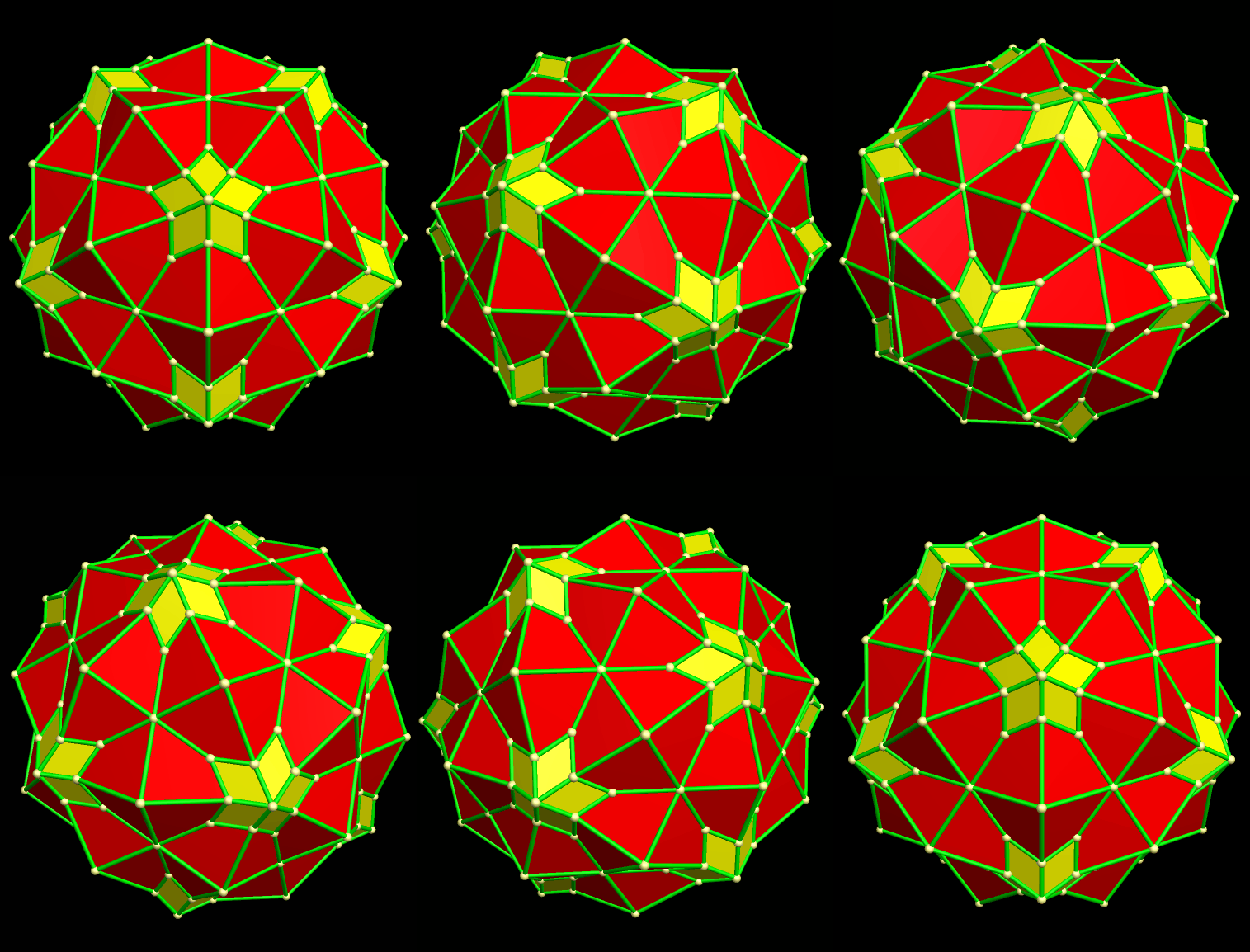
I stumbled across this compound yesterday, an example of exploratory polyhedral manipulation using Stella 4d producing an unexpected result. If you would like to experiment with a free trial download of this program, before deciding whether or not to purchase the fully-functioning version, simply click here: www.software3d.com/Stella.php.
The snub dodecahedron is chiral, meaning it appears in left- and right-handed forms. This faceted version, where the same set of vertices is connected in different ways (compared to the original), possesses the same property.

Chiral polyhedra can always be tranformed into interesting polyhedral compounds by combining them with their own mirror-images. If this is done with the polyhedron above, you get this result, presented with a different coloring-scheme.
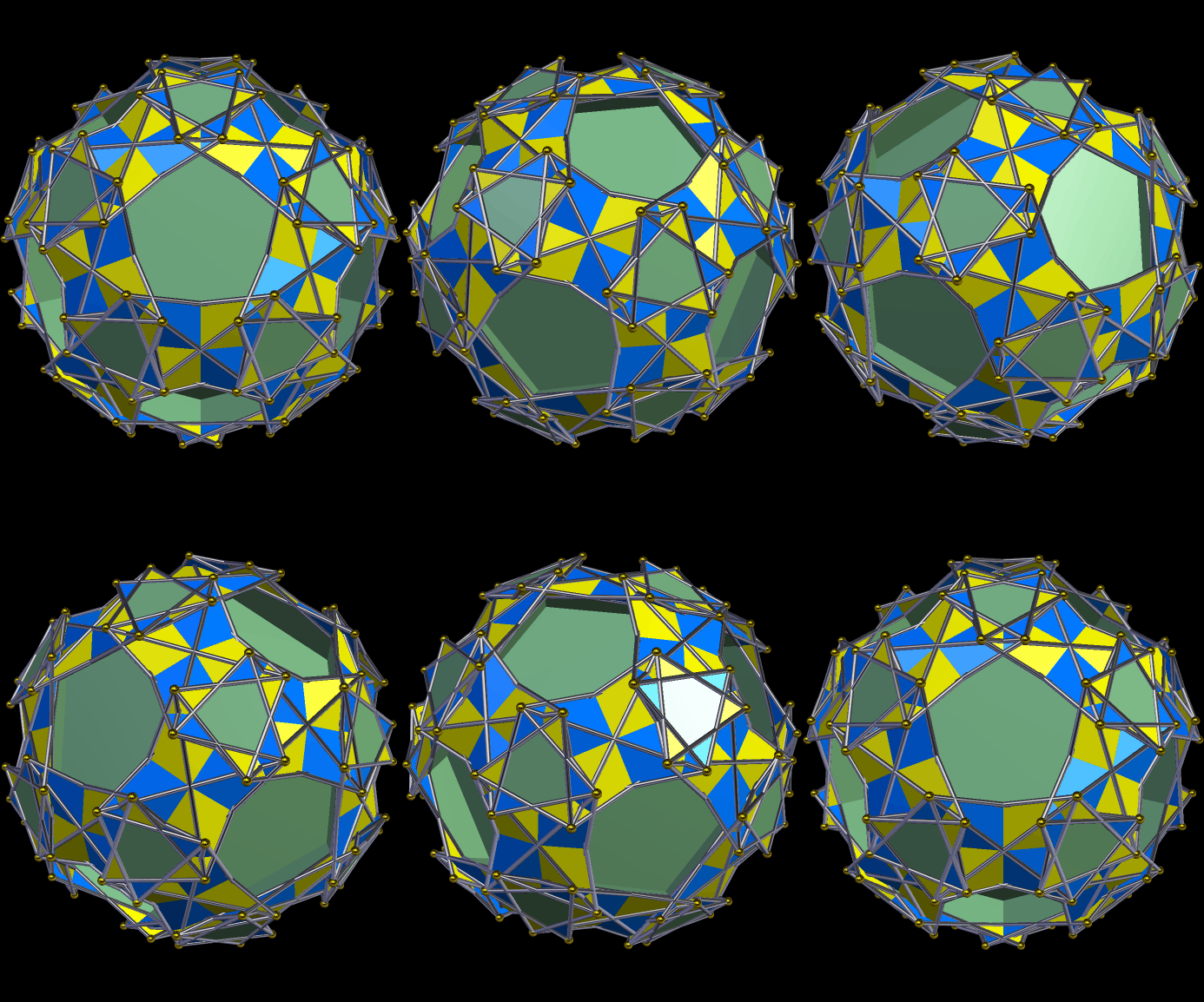
Both of these images were created using Stella 4d: Polyhedron Navigator, and you may try it at www.software3d.com/Stella.php.
The truncated isocahedron has an interesting (and long) stellation series. Here are some of the stellated forms of this polyhedron which I find particularly interesting and attractive, starting with its 41st stellation.
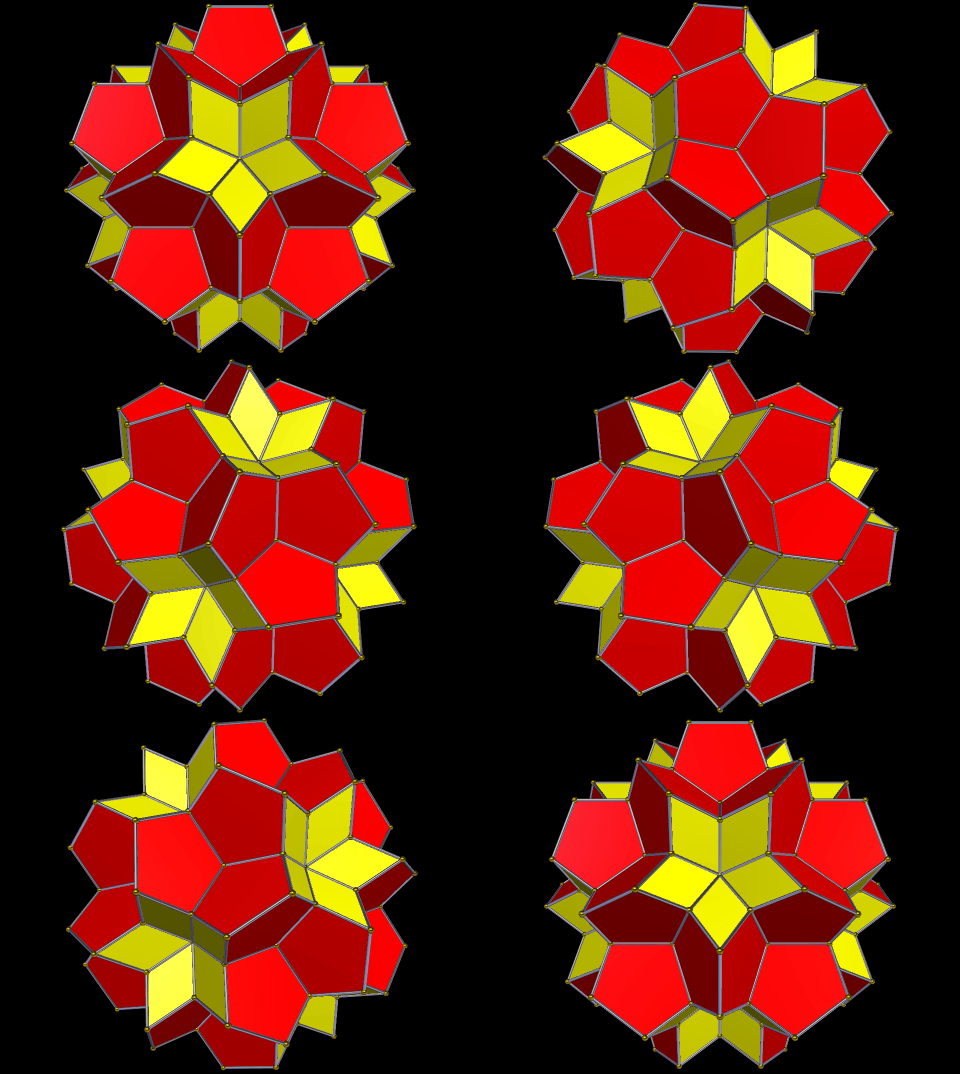
This one is the 42nd stellation:

Jumping far ahead in the series, this is the 126th stellation:

And, finally, the 148th stellation.

All four images were produced using Stella 4d: Polyhedron Navigator. You can try this program for yourself at www.software3d.com/Stella.php.
The most well-known fullerene has the shape of a truncated icosahedron, best-known outside the world of geometry as the “futbol” / “football” / “soccer ball” shape — twenty hexagons and twelve pentagons, all regular. The formula for this molecule is C60. However, there are also many other fullerenes, both larger and smaller. One of my favorites is C240, simply because I sometimes make class projects out of building fullerene models with Zome (available at www.zometool.com), and the 240-atom fullerene is the largest one which can be built using Zome. Here’s what it looks like, as molecular models are traditionally colored.

This polyhedron still has twelve pentagons, like its smaller “cousin,” the truncated icosahedron, but far more hexagons. What’s more, these hexagons do not have exactly the same shape. If this is re-colored in the traditional style of a polyhedron, rather than a molecule, it looks like this. In this image, also, the different shapes of hexagons each have their own color.

Like other polyhedra, a compound can be made from this polyhedron and its dual. In this case, the dual’s faces are shown, below, as red triangles. The original fullerene-shape is in purple for the pentagonal faces, and orange for the hexagons.

In the base/dual compound above, it can be difficult to tell exactly what this dual is, but that can be clarified by removing the original fullerene. What’s left is called a geodesic sphere — or, quite informally, a ball made of many triangles. The larger a fullerene is, the more hexagonal rings/faces it will have, and the more triangles will be found on the geodesic sphere which is its dual. For the 240-atom fullerene shown repeatedly, above, here is the dual, by itself, with different colors indicating slightly different triangle-shapes. (An exception is the yellow and green triangles, which are congruent, but have different colors for aesthetic reasons.)

I made these four rotating images using Stella 4d: Polyhedron Navigator. To try this program for yourself, simply visit www.software3d.com/Stella.php. At that site, there is a free trial download available.
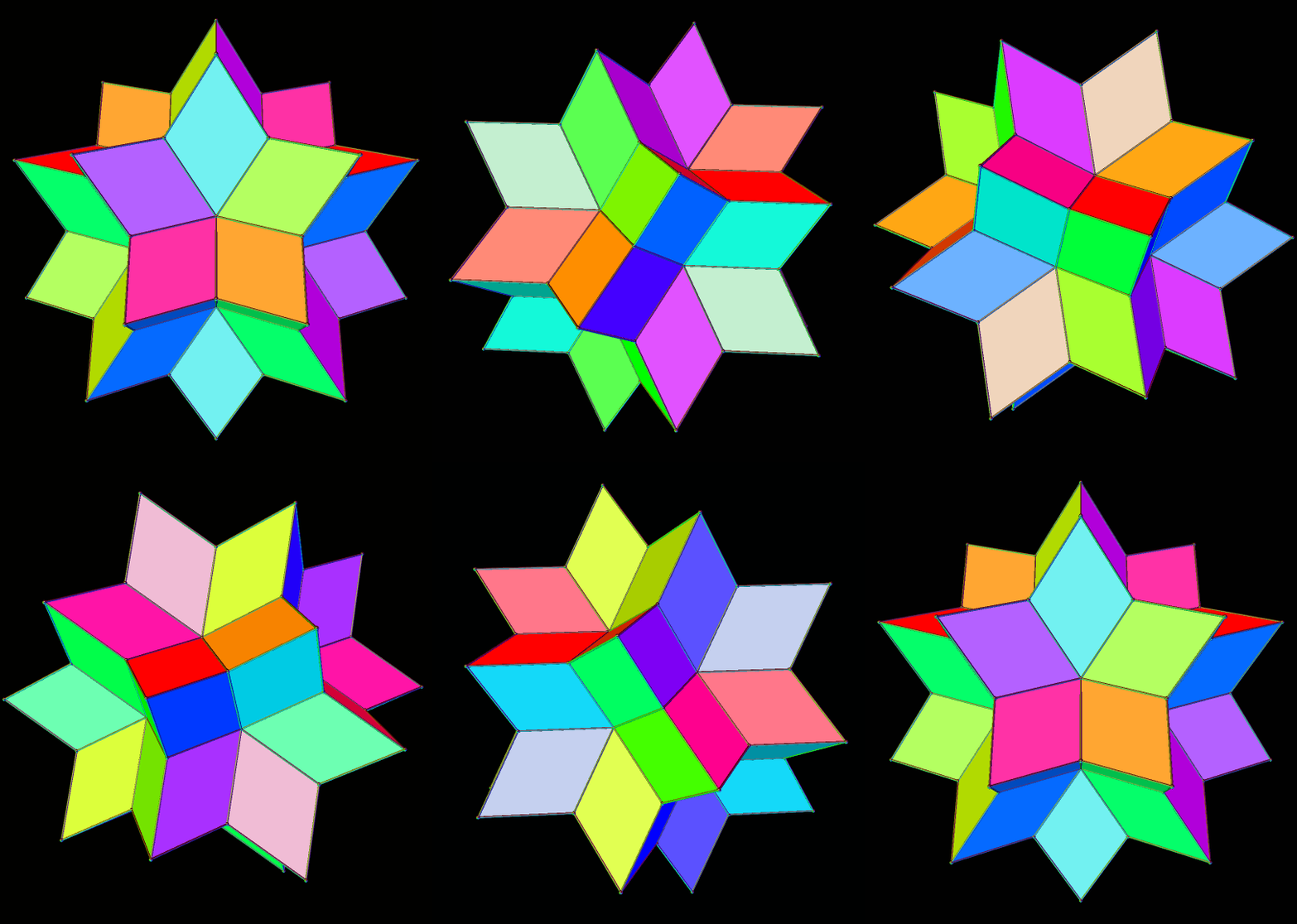
The rhombic hexacontahedron (sometimes spelled “hexecontahedron”) is one of many stellations of the rhombic triacontahedron. Its sixty faces, like the thirty faces of the rhombic triacontahedron, are golden rhombi — rhombi with diagonals in the golden ratio.
The rotating image above was produced using Stella 4d: Polyhedron Navigator, a program available at www.software3d.com/Stella.php.

I created this using Stella 4d: Polyhedron Navigator, available at www.software3d.com/Stella.php. Faceting involves connecting different sets of vertices (relative to the original polyhedron) to form new edges and faces. The new edges and faces, both, typically intersect each other, although often not as many times as in this particular example of a faceted polyhedron.

These are the third (above) and fifth (below) stellations of the triamond pentagonal bifrustrum, which I previously posted here: https://robertlovespi.wordpress.com/2014/07/30/my-lost-discovery-from-2006-the-triamond-pentagonal-bifrustrum/. These rotating images are made with Stella 4d, a program available at www.software3d.com/Stella.php.


The images on the faces of this polyhedron are based on information sent from NASA’s Lunar Reconnaisance Orbiter, as seen at http://lunar.gsfc.nasa.gov/lola/feature-20110705.html and tweeted by @LRO_NASA, which has been happily tweeting about its fifth anniversary in a polar lunar orbit recently. I have no idea whether this is actually an A.I. onboard the LRO, or simply someone at NASA getting paid to have fun on Twitter.
To get these images from near the Lunar South Pole onto the faces of a rhombic enneacontahedron, and then create this rotating image, I used Stella 4d: Polyhedron Navigator. There is no better tool available for polyhedral research. To check this program out for yourself, simply visit www.software3d.com/Stella.php.
Music: the first two tracks from the Murder By Death album Like the Excorcist, But More Breakdancing. Please visit their website, http://www.murderbydeath.com, to buy this band’s music and merchandise. While you’re there, I recommend checking their concert calendar, to see if they may be playing near you soon. Murder By Death concerts, which I’ve seen six times now, are not to be missed!
Visuals: rotating polyhedra, all with icosidodecahedral symmetry, generated using Stella 4d: Polyhedron Navigator, which you can try for yourself at http://www.software3d.com/Stella.php. The polyhedra shown are, in order of appearance:
 RobertLovesPi.net