Sam Harris: A Quote

Sam_Harris_01

Source — Waking Up:  A Guide to Spirituality Without Religion, p. 38.

“I would accept that as an axiom.” ~Spock

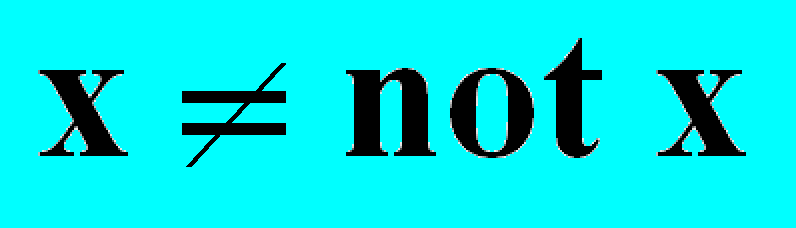
x not xI would also accept this as an axiom. It’s obviously true, but I see no way to prove it. It is not what Spock was referencing in the above quotation, but the content of the quote still applies.

Amazingly, though, I have encountered people who think this is up for debate.

It isn’t.

“A thought is an idea in transit.” ~Pythagoras, quoted on a moving rhombic dodecahedron

Rhombic Dodeca

Created using Stella 4d, available at www.software3d.com/Stella.php.

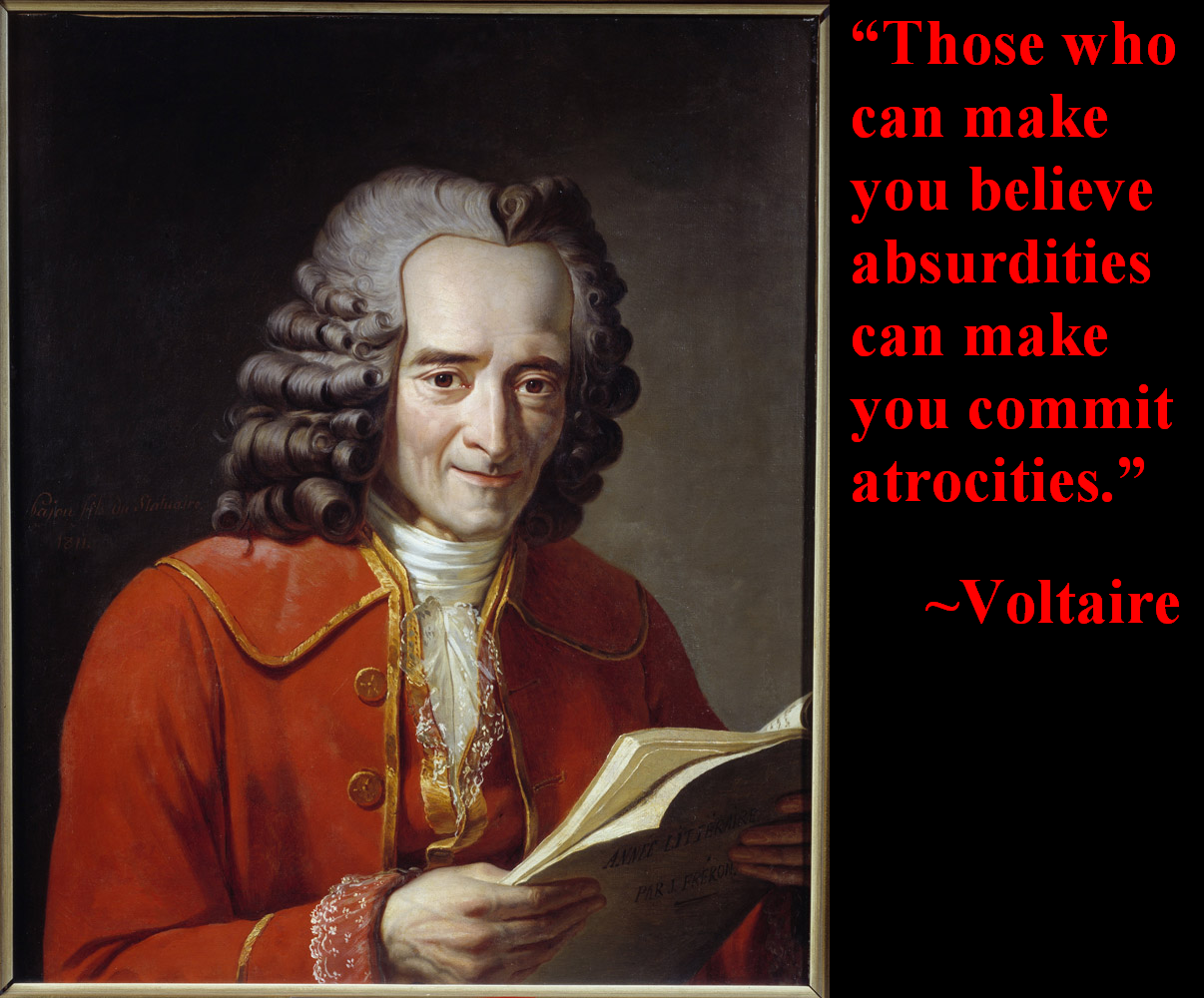
A Quote from Voltaire, on Absurdities and Atrocities

Voltaire-lisant

Examples abound. Here are two:

Absurdity #1:  Pure human races exist.

A resulting atrocity:  the Holocaust (~20 million people, including ~6 million Jews, killed by the Nazis in the 1930s and 1940s).

Absurdity #2:  Acts which are both suicidal and homicidal can be wonderful things, and can earn a person an eternal reward in paradise after death.

A resulting atrocity:  the destruction of the World Trade Center, and attacks on other targets, on September 11, 2001, which killed over three thousand people, including the hijackers themselves.

Please note that this list is far from complete. A complete list would fill several very large books. Beware of absurdities in your thinking, for they can actually be fatal.

Vincent Van Gogh, on Death, Passion, and Boredom

Image

Vincent Van Gogh, On Death, Passion, and Boredom

Mark Twain, on Education and Cats

Image

Mark Twain, On Education and Cats

Judge Strikes Down Same-Sex Marriage Ban in Arkansas

Image

Judge Strikes Down Same-Sex Marriage Ban in Arkansas

Same-sex couples are getting legally married for the first time in Arkansas — today. I live in Arkansas. I didn’t expect to see this happen in my state for at least a decade.

Thank you, Judge Piazza.

(For more information, simply google “Arkansas gay marriage.” It’s all over the news.)

James Randi, on the Limited Effectiveness of Belief

Image

James Randi, On the Effectiveness of Belief

One of the high points of my life was the day I got to have several conversations with James Randi. I enjoyed them. Some others who were there, though, not so much.

An example of how one of the question-and-answer sessions went:

Question: What happens to us after we die?
Randi’s answer: What happens to a computer after you turn off the power?

Apparently the questioner was rather upset by this reply, but I didn’t figure that out myself, even though I was present. I learned about it later, from others. Randi’s response simply made sense to me.

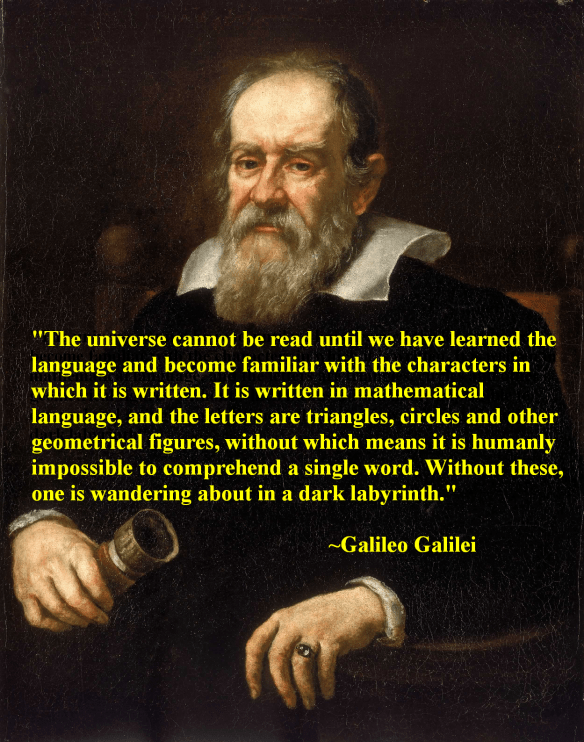
Galileo Galilei, on the Language of the Universe

Image

Galileo Galilei, On the Language of the Universe

Source for quote: https://en.wikipedia.org/wiki/Portal:Mathematics

“Give us reliable evidence and we will change our minds.”

Image

This is a good way to explain the viewpoint known as agnostic atheism. A lot of people don’t realize this, but most atheists are also agnostic, simply because we don’t claim to have absolute certainty that no deities exist. We are atheists because we possess no beliefs in any gods, and we are also agnostics because we are willing to admit that we could, possibly, be wrong.

What’s more, many agnostic atheists find the other type of atheist (gnostic atheists, who are few in number, and who do claim certainty that no deities exist) quite irritating. It simply is not rational to claim that one knows, without doubt, that there are no gods, for one simple reason: lack of supporting evidence. There is no evidence that no gods exist. There is also no evidence for the non-existence of, say, leprechauns.

Something else many people don’t know: theists (that is, religious believers) also come in the same two types. Agnostic theists believe in at least one deity, but don’t claim absolute certainty in that belief. Gnostic theists, by contrast, are believers who do not doubt, nor question, their religious beliefs. They claim to know they are right — and, in that one way, they are just like gnostic atheists. Gnostics, of whatever type, aren’t willing to admit there is the slightest chance that they might be wrong. It’s much easier to have reasonable, productive conversations with agnostics than with gnostics — regardless of whether they are they are theists or atheists. Also, when it comes to debate, there’s simply no point in debating anything with a gnostic. One might as well argue with a rock, for a rock is exactly as likely as a gnostic to have a change of opinion.

(Note: unlike most images on this blog, this picture is not one I created myself. Only the words below the image, in this post, are mine.)