
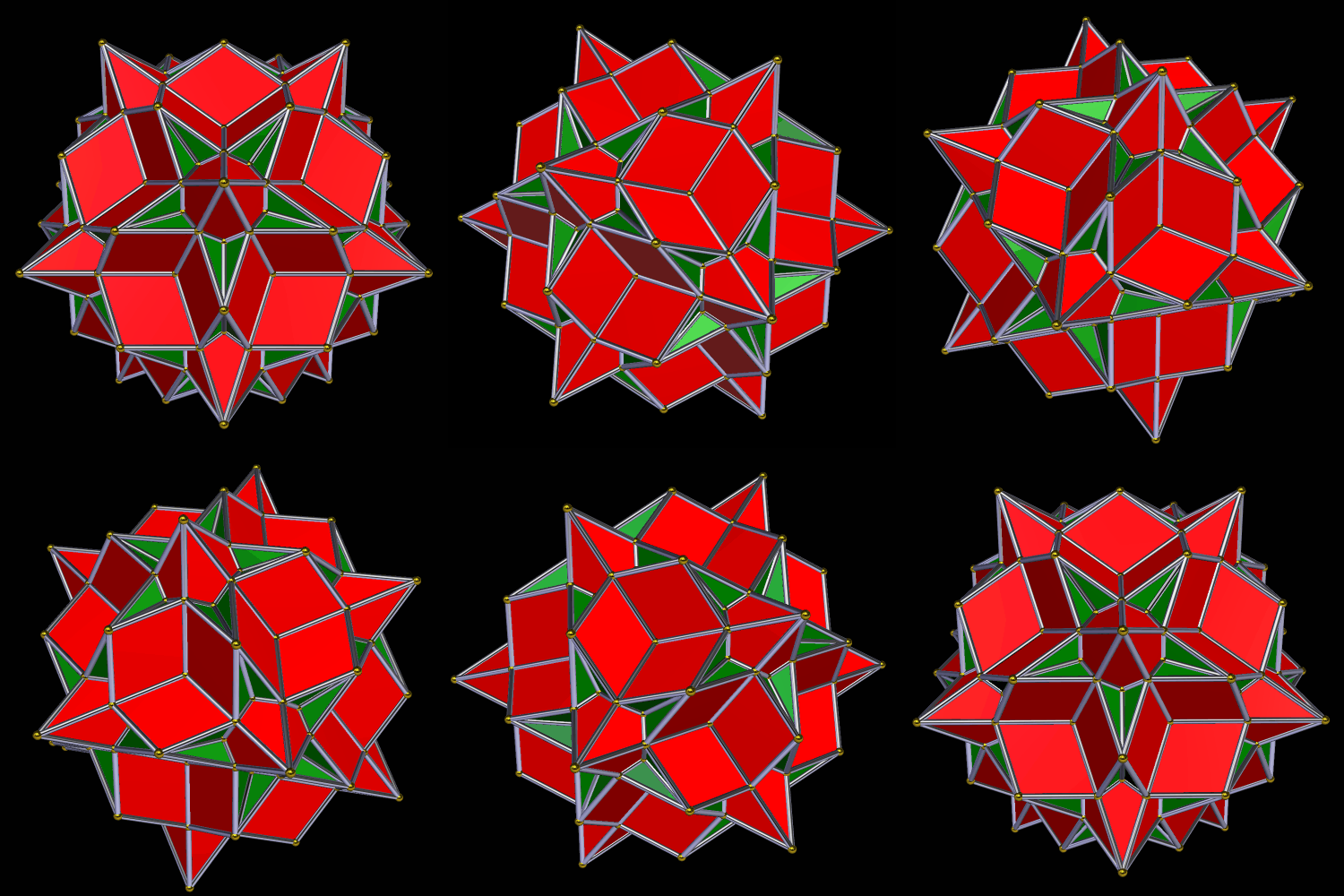


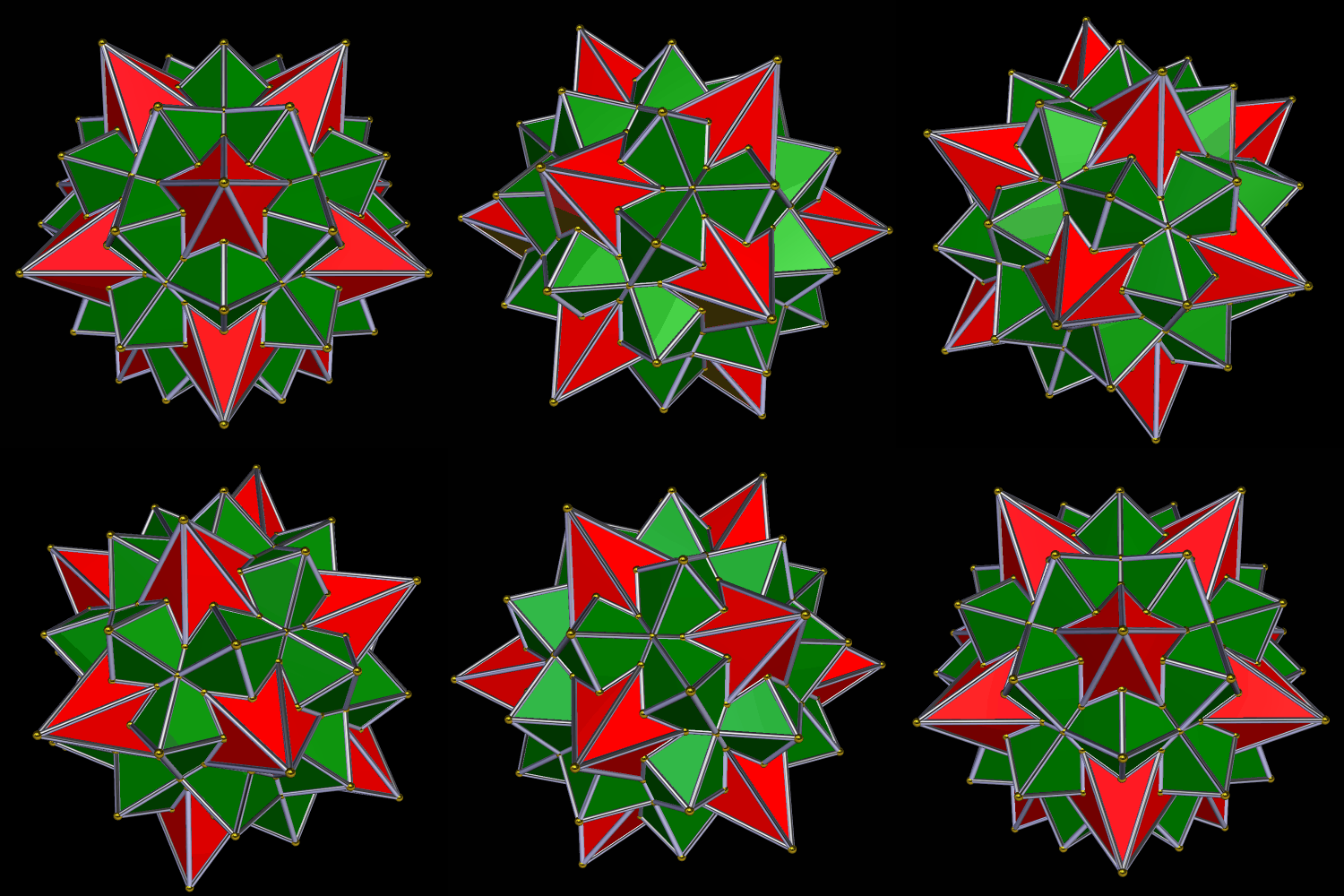

These .gifs were made using Stella 4d: Polyhedron Navigator, software you can try for free right here.
These .gifs were made using Stella 4d: Polyhedron Navigator, software you can try for free right here.
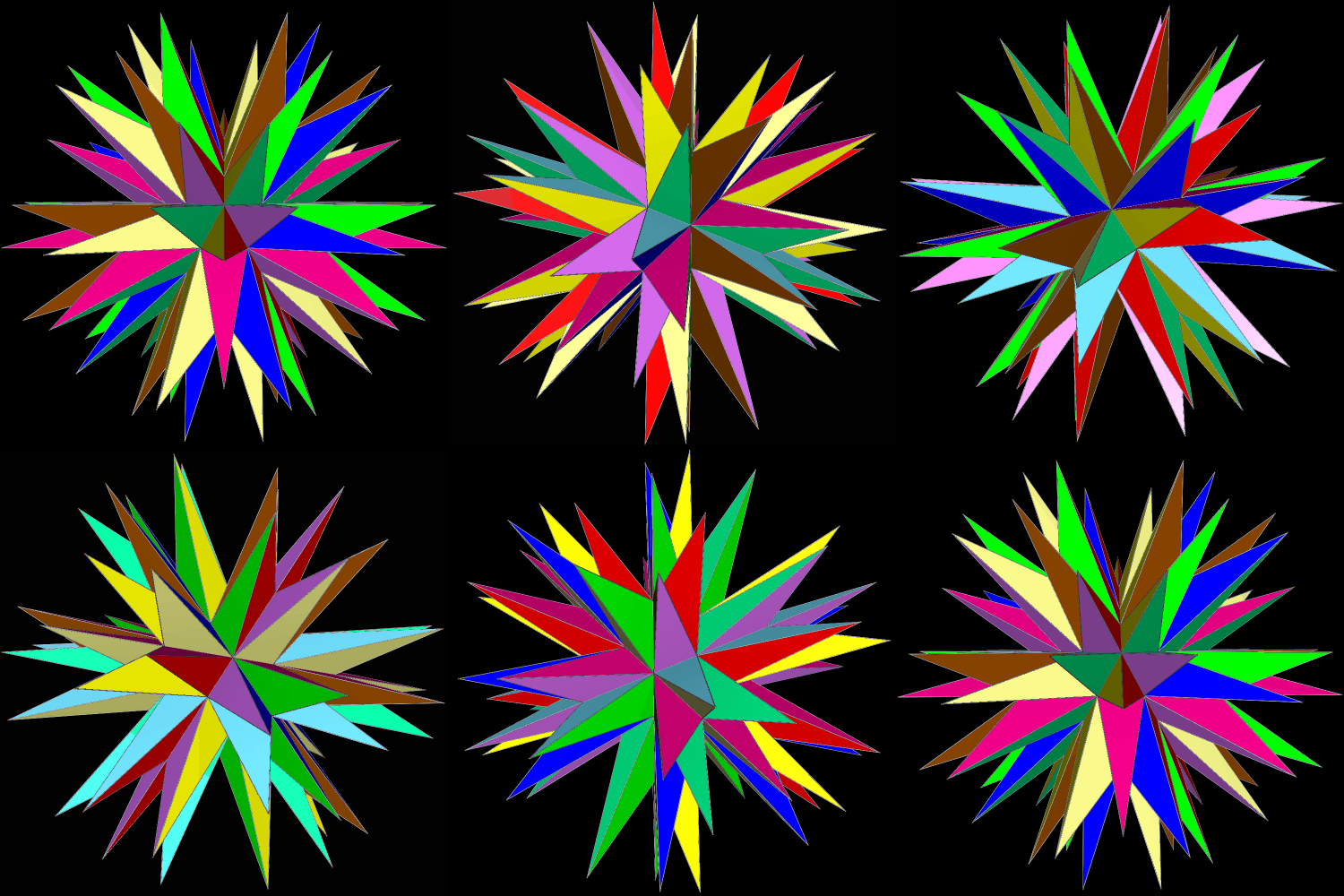
In this first image of the final stellation of the icosahedron, the faces are colored with a different color for each face, except for parallel faces, which are the same color.
The next image uses red and yellow to color the facelets by type.

Finally, the third image simply uses rainbow color mode.

I used Stella 4d to make these. You can try this program for free at this website.
This is the compound of two tetrahedra, also known as Johannes Kepler’s Stella Octangula.

I found the five variations of this polyhedral compound shown below, located deep within the stellation-series of the great rhombicuboctahedron.

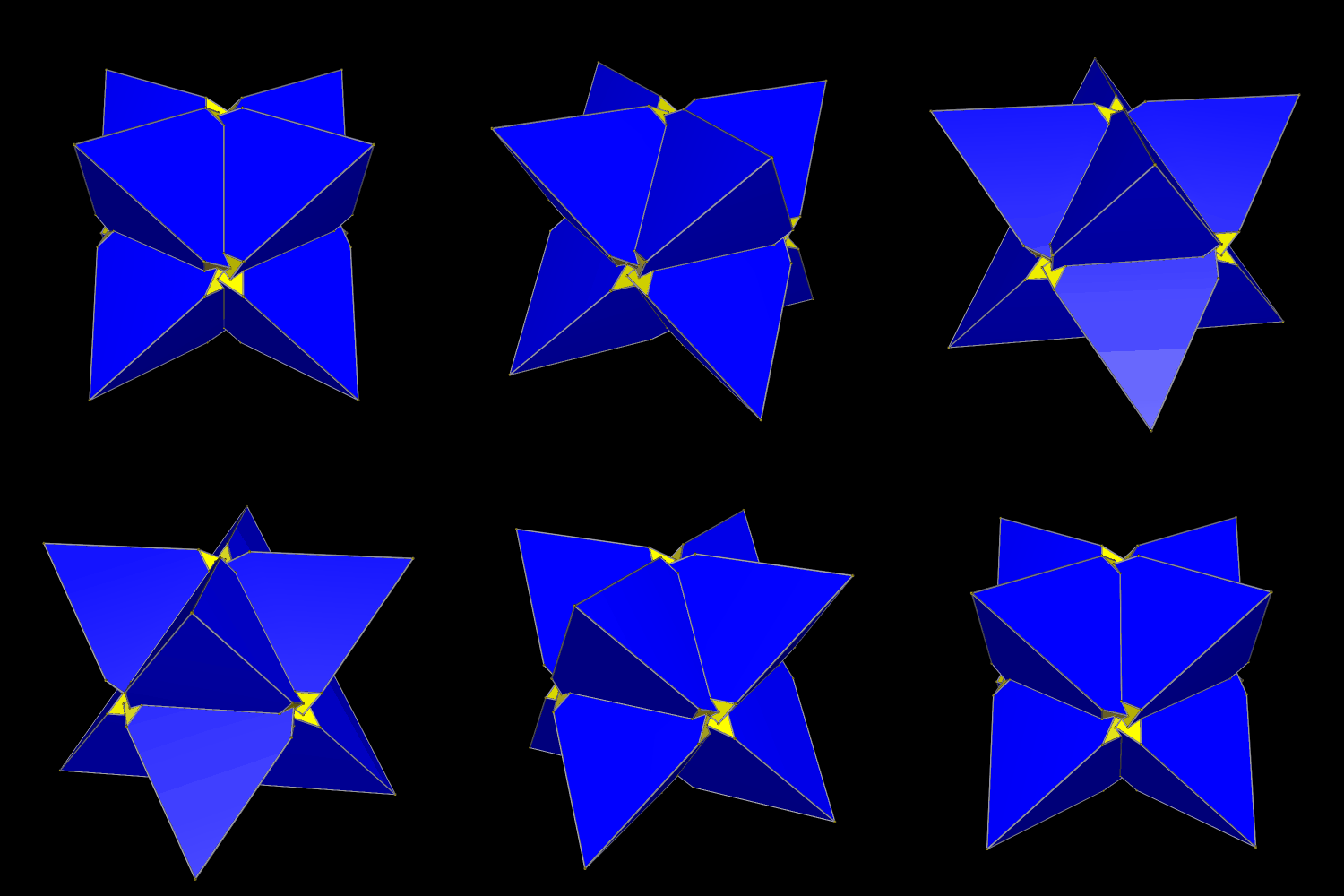


These .gif images were all made using Stella 4d, a program you can try for free at http://www.software3d.com/Stella.php.
Here’s the pentagonal icositetrahedron. It is the dual of the snub cube.
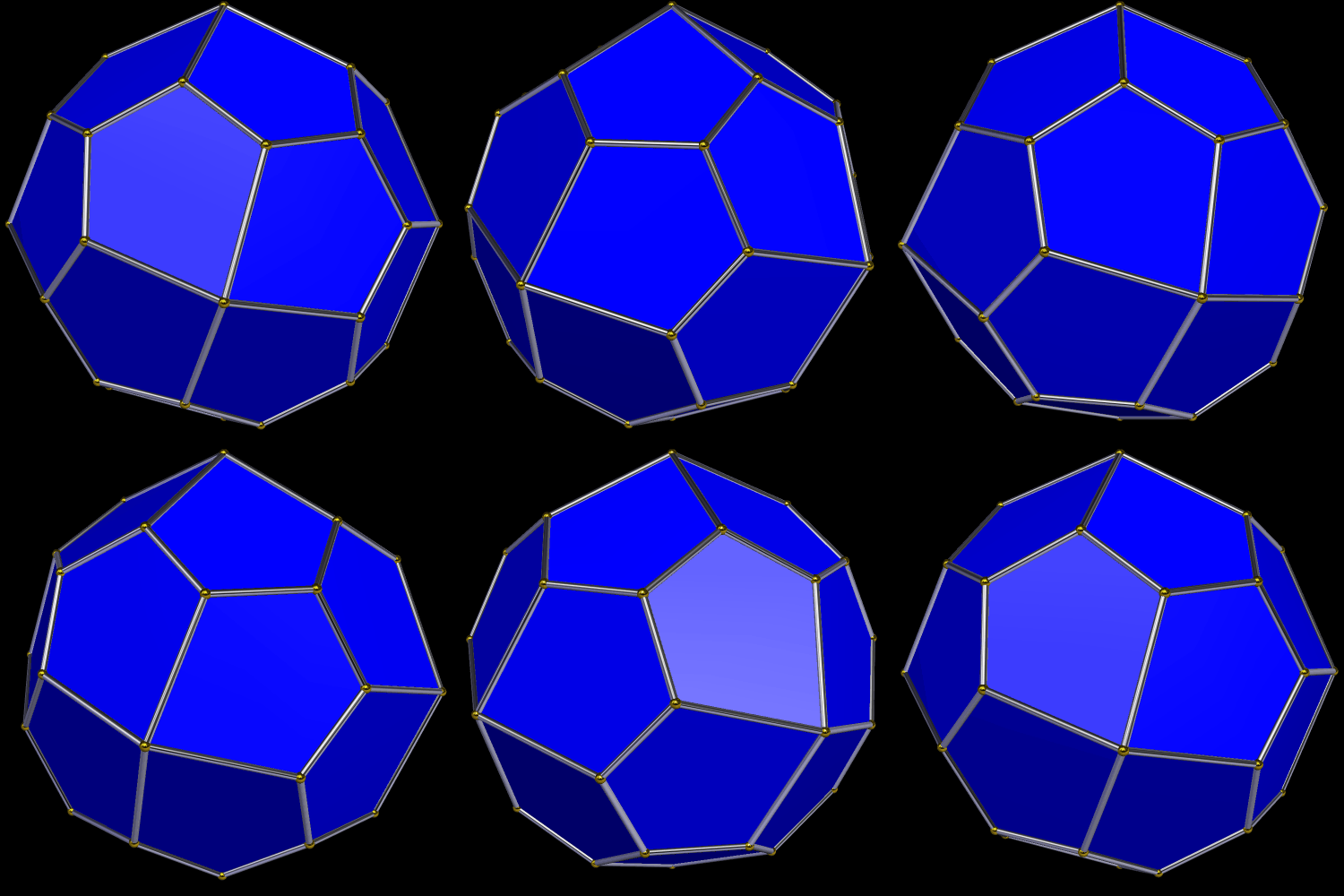
And here is its third stellation. As you can see, it’s a compound of two irregular dodecahedra.

I made these images using Stella 4d: Polyhedron Navigator. You can try this program for free at http://www.software3d.com/Stella.php.

Created using Stella 4d, which you can try for free at http://www.software3d.com/Stella.php.

This compound has three parts: two tetrahedra, plus one smaller cube. I made it using Stella 4d: Polyhedron Navigator, which you can try for free at http://www.software3d.com/Stella.php.

I made this using Stella 4d, software you can try out for free at this website: http://www.software3d.com/Stella.php.

The 18th stellation of the rhombicosidodecahedron, shown above, is also an interesting compound. The yellow component of this compound is the rhombic triacontahedron, and the blue-and-red component is a “stretched” form of the truncated icosahedron.
This was made using Stella 4d, which you can try for free right here.
To make this polyhedron using Stella 4d (available here), I began with the dodecahedron, dropped the symmetry of the model from icosahedral to tetrahedral, and then stellated it thirteen times.

This stellated polyhedron has pyritohedral symmetry, but this is easier to see in its convex hull:
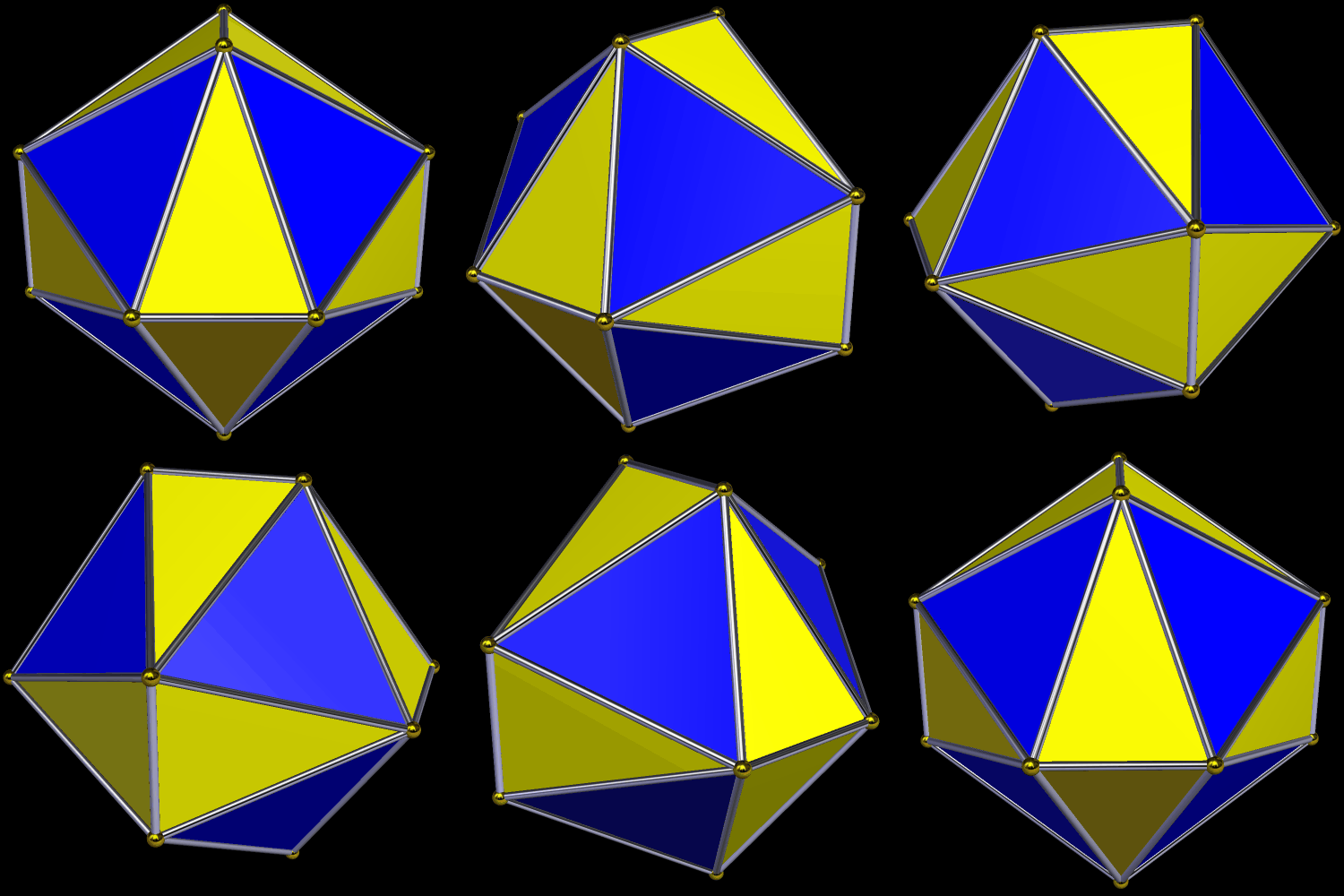
The eight blue triangles in this convex hull are equilateral, while the twelve yellow ones are golden isosceles triangles.
After seeing my post about what I called the “double icosahedron,” which is two complete icosahedra joined at one common triangular face, my friend Tom Ruen brought my attention to a similar figure he likes. This second type of double icosahedron is made of two icosahedra which meet at an internal pentagon, rather than a triangular face. Tom jokingly referred to this figure as “a double patty pentagonal antiprism in a pentagonal pyramid bun.”

It wasn’t hard to make this figure using Stella 4d, the program I use for polyhedral manipulation and image-creation (you can try it for free here), but I didn’t make it out of icosahedra. It was easier to make this figure from gyroelongated pentagonal pyramids, or “J11s” for short. This polyhedron is one of the 92 Johnson solids.

To make the polyhedron Tom had brought to my attention, I simply augmented one J11 with another J11, joining them at their pentagonal faces. Curious about what the dual of this solid would look like, I generated it with Stella.

The dual of the double J11 appears to be a modification of a dodecahedron, which is no surprise, for the dodecahedron is the dual of the icosahedron.
I next explored the stellation-series of the double J11, and found several attractive polyhedra there. This one is the double J11’s 4th stellation.
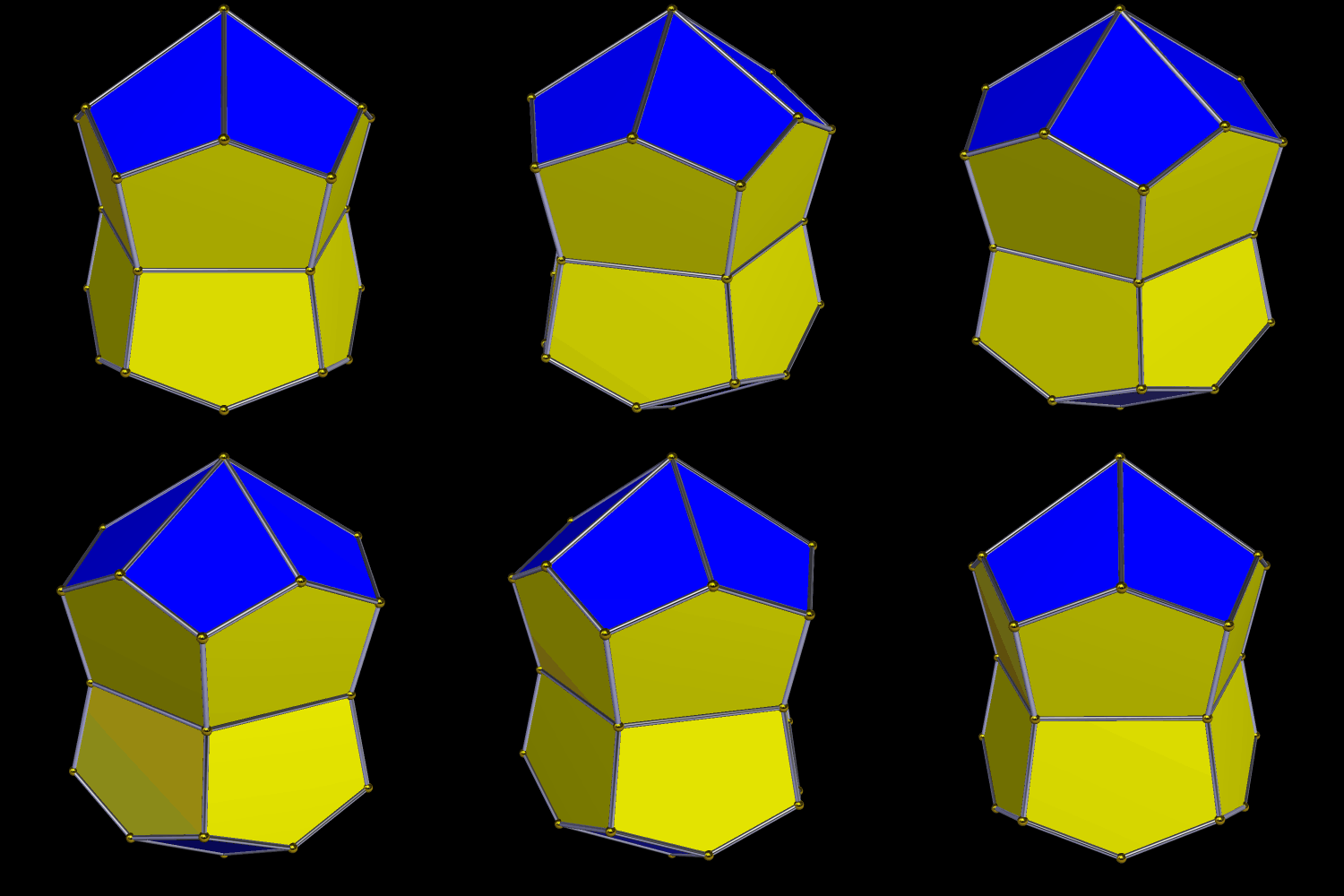
The next polyhedron shown is the double J11’s 16th stellation.

Here is the 30th stellation:

I also liked the 43rd:

The next one shown is the double J11’s 55th stellation.

Finally, the 56th stellation is shown below. These stellations, as well as the double J11 itself, and its dual, all have five-fold dihedral symmetry.

Having “mined” the double J11’s stellation-series for interesting polyhedra, I next turned to zonohedrification of this solid. The next image shows the zonohedron based on the double J11’s faces. It has many rhombic faces in two “hemispheres,” separated by a belt of octagonal zonogons. This zonohedron, as well as the others which follow, all have ten-fold dihedral symmetry.

Zonohedrification based on vertices produced this result:

The next zonohedron shown was formed based on the edges of the double J11.

Next, I tried zonohedrification based on vertices and edges, both.

Next, vertices and faces:

The next zonohedrification-combination I tried was to add zones based on the double J11’s edges and faces.

Finally, I ended this exploration of the double J11’s “family” by adding zones to build a zonohedron based on all three of these polyhedron characteristics: vertices, edges, and faces.

 RobertLovesPi.net