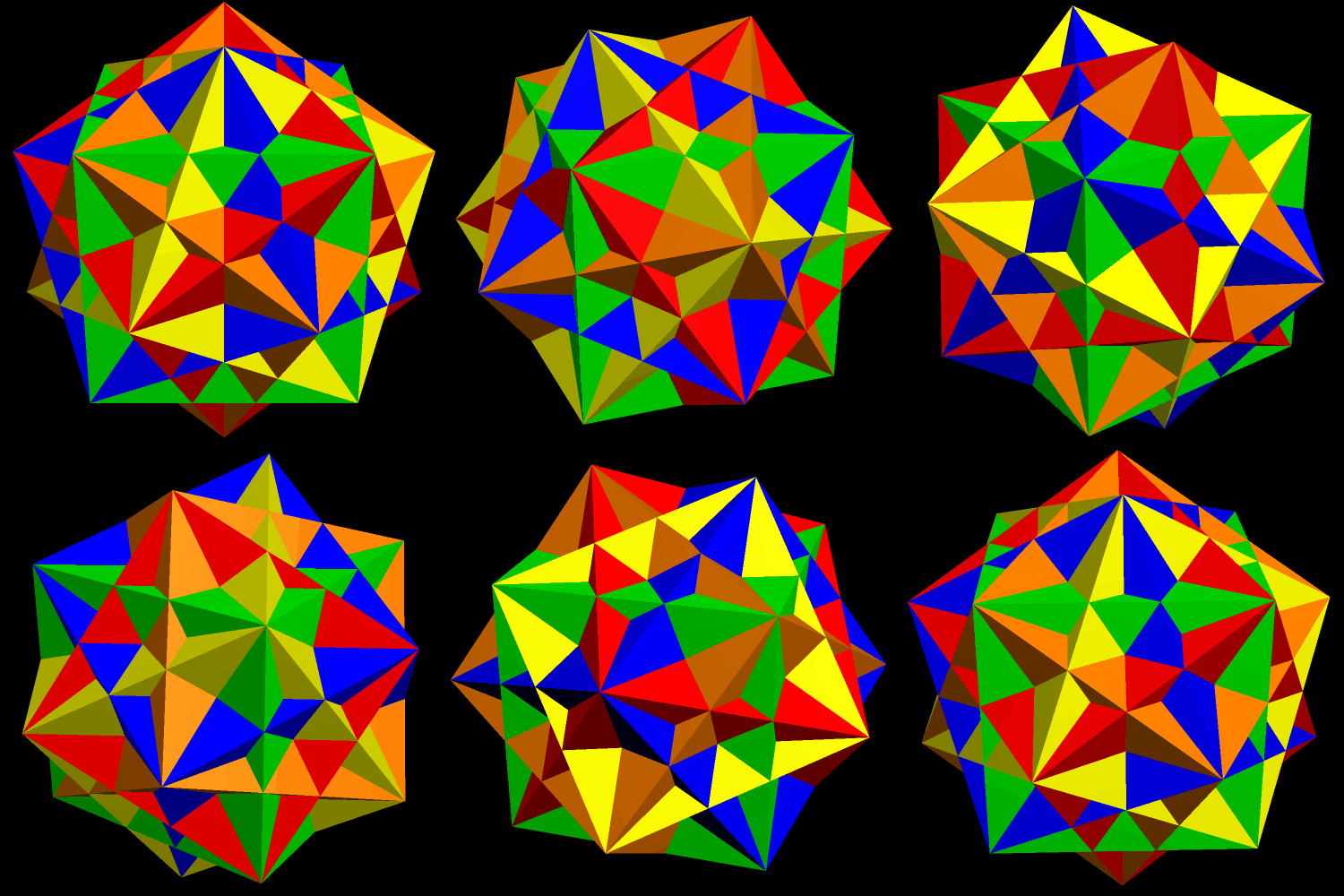
The Small Ditrigonal Icosidodecahedron, Together with Its Fifth Stellation

Faceted Dodeca

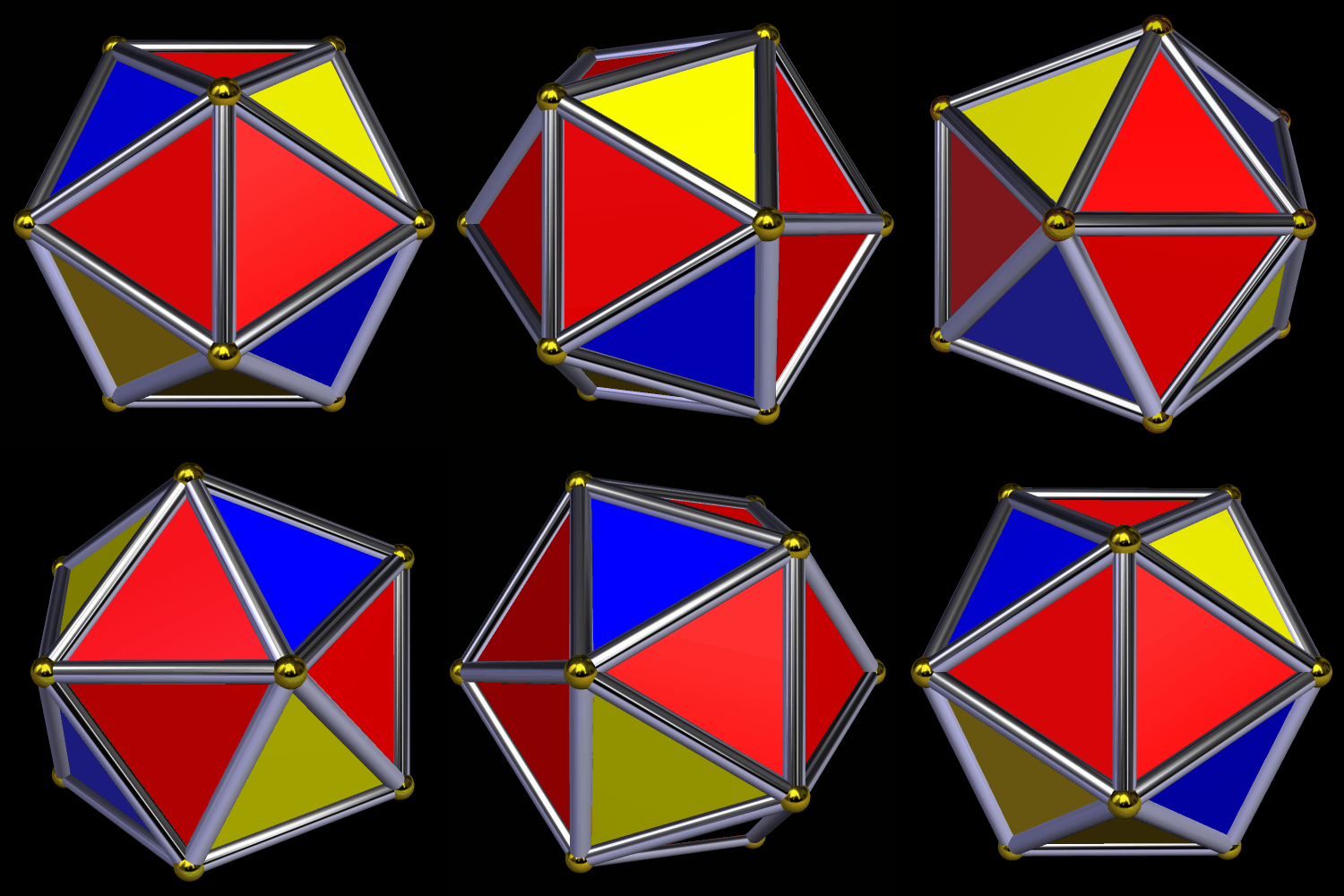
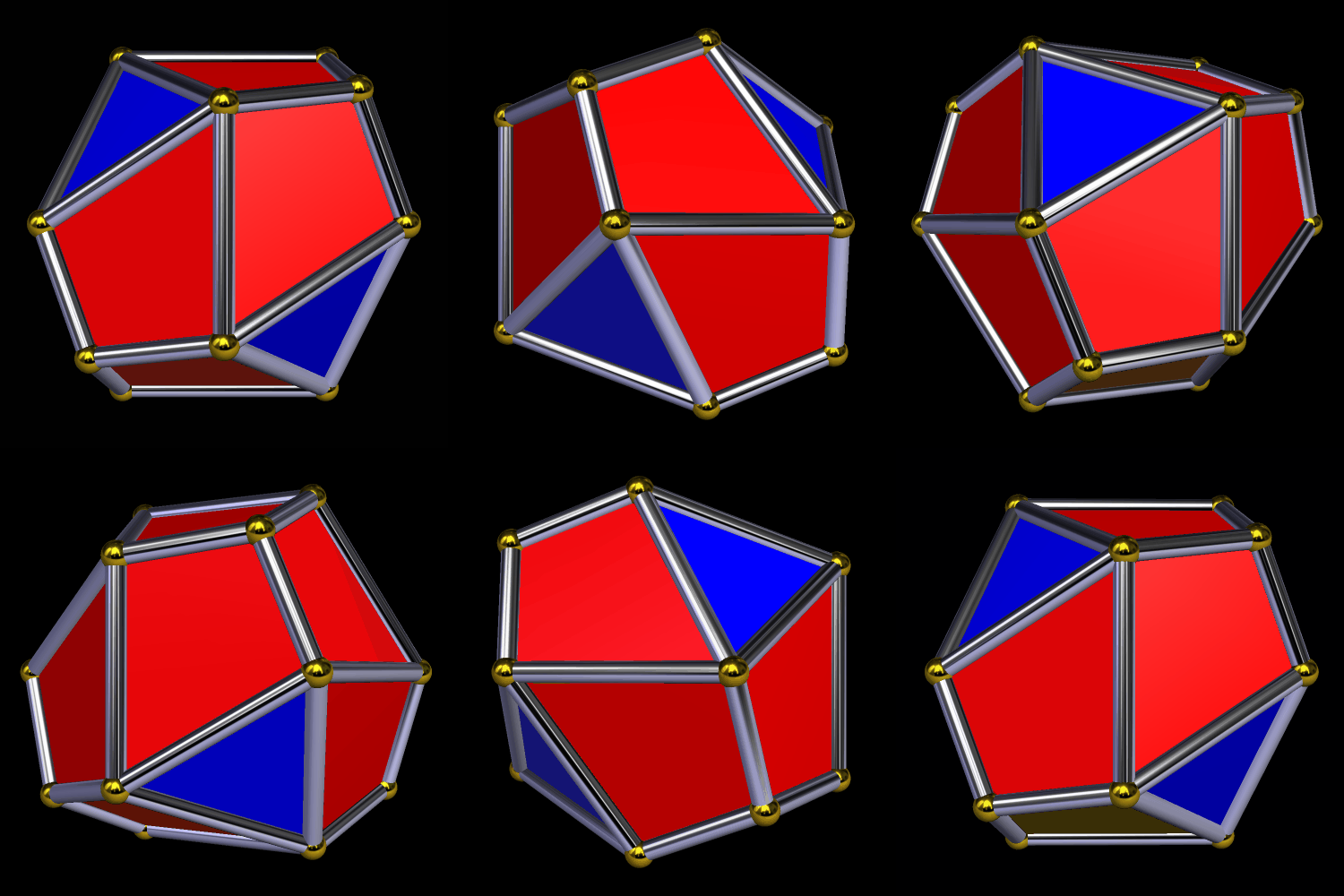
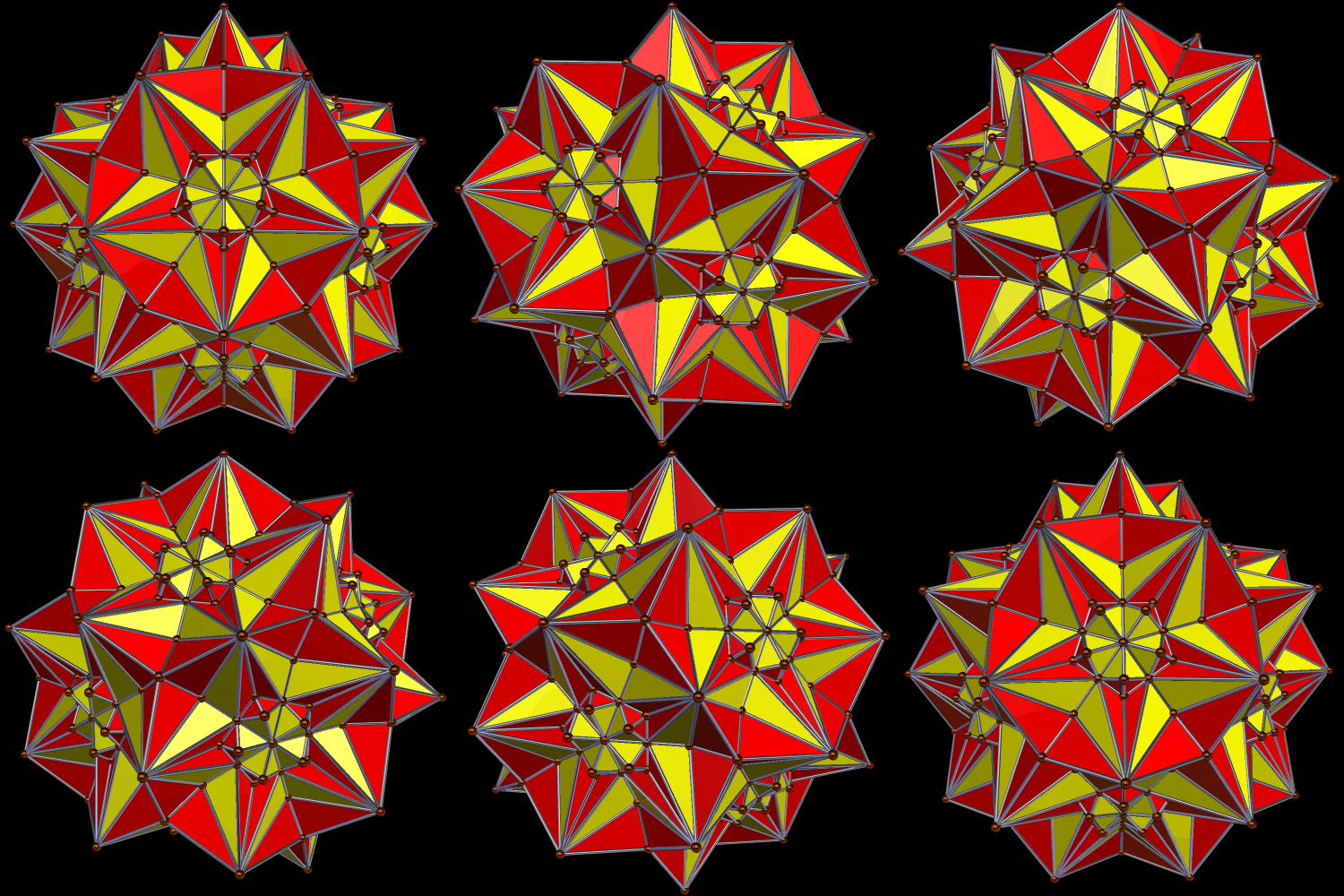
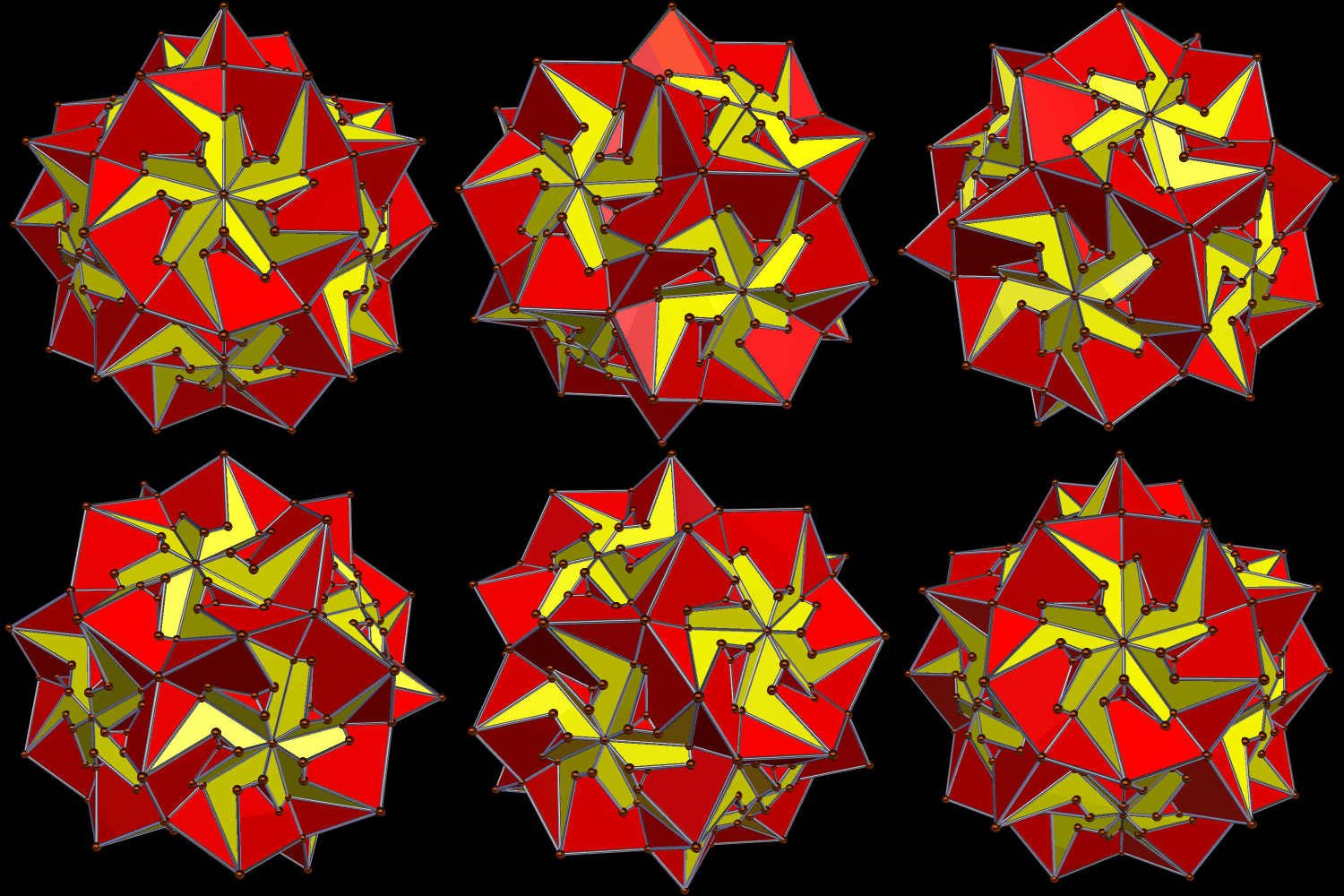
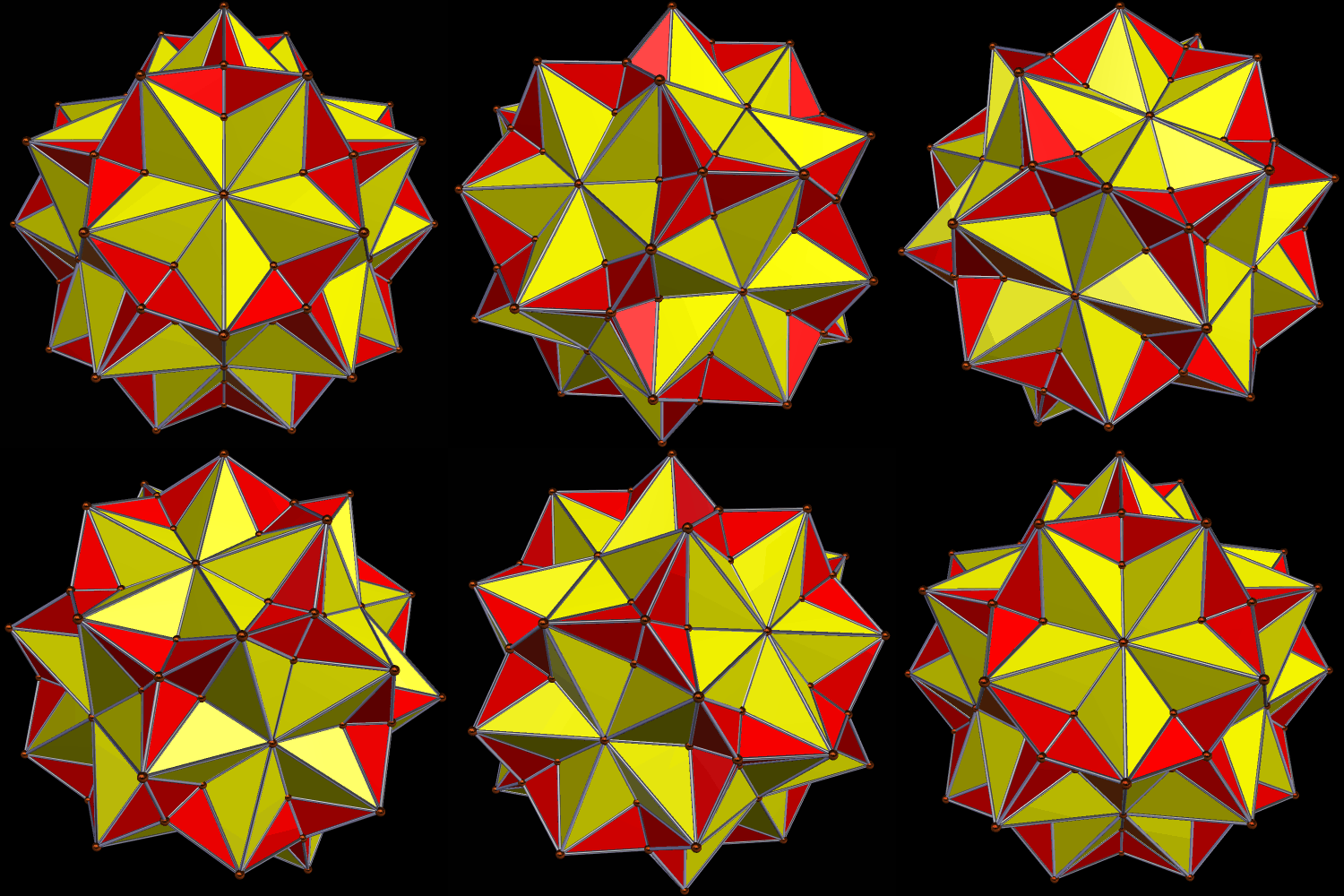
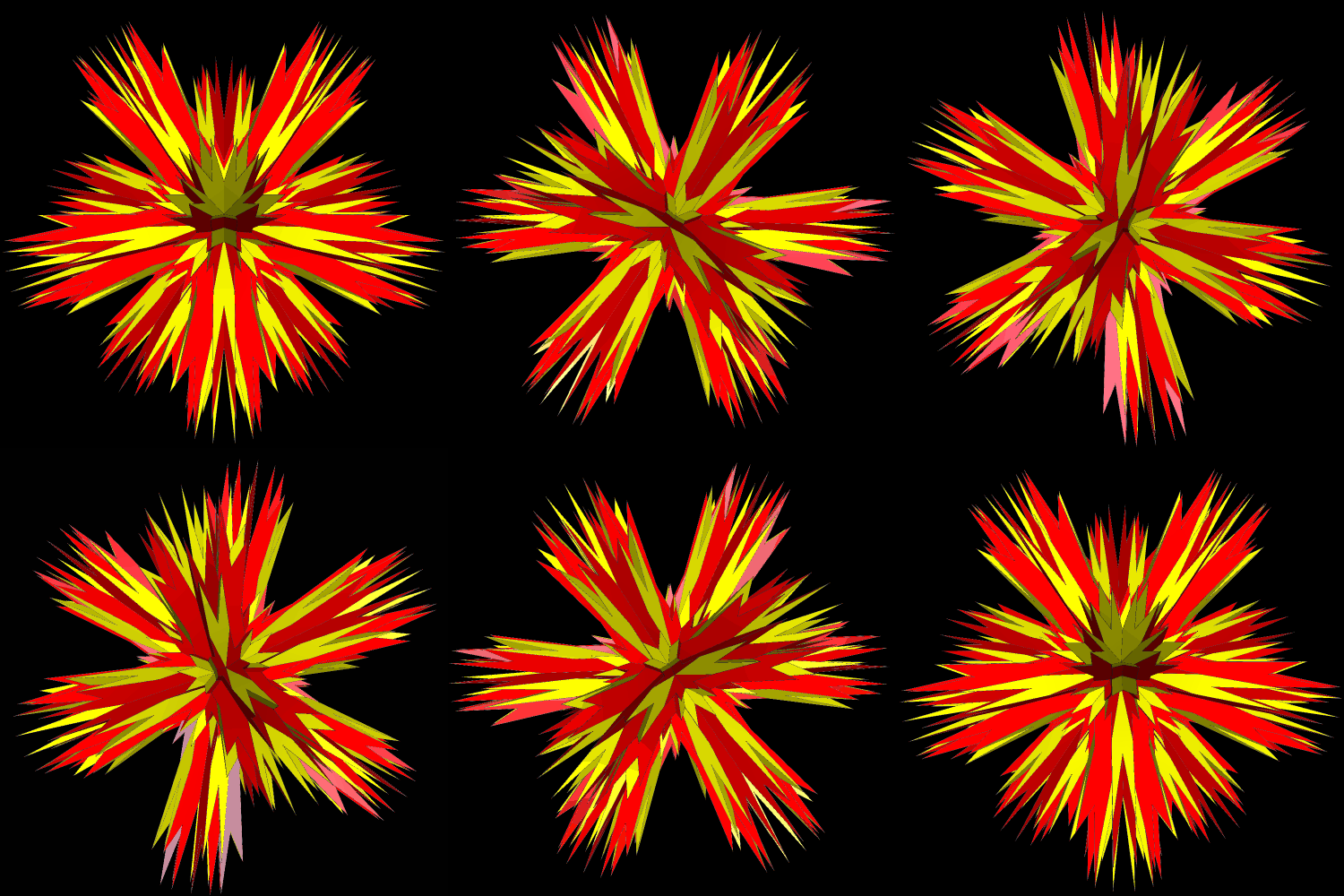
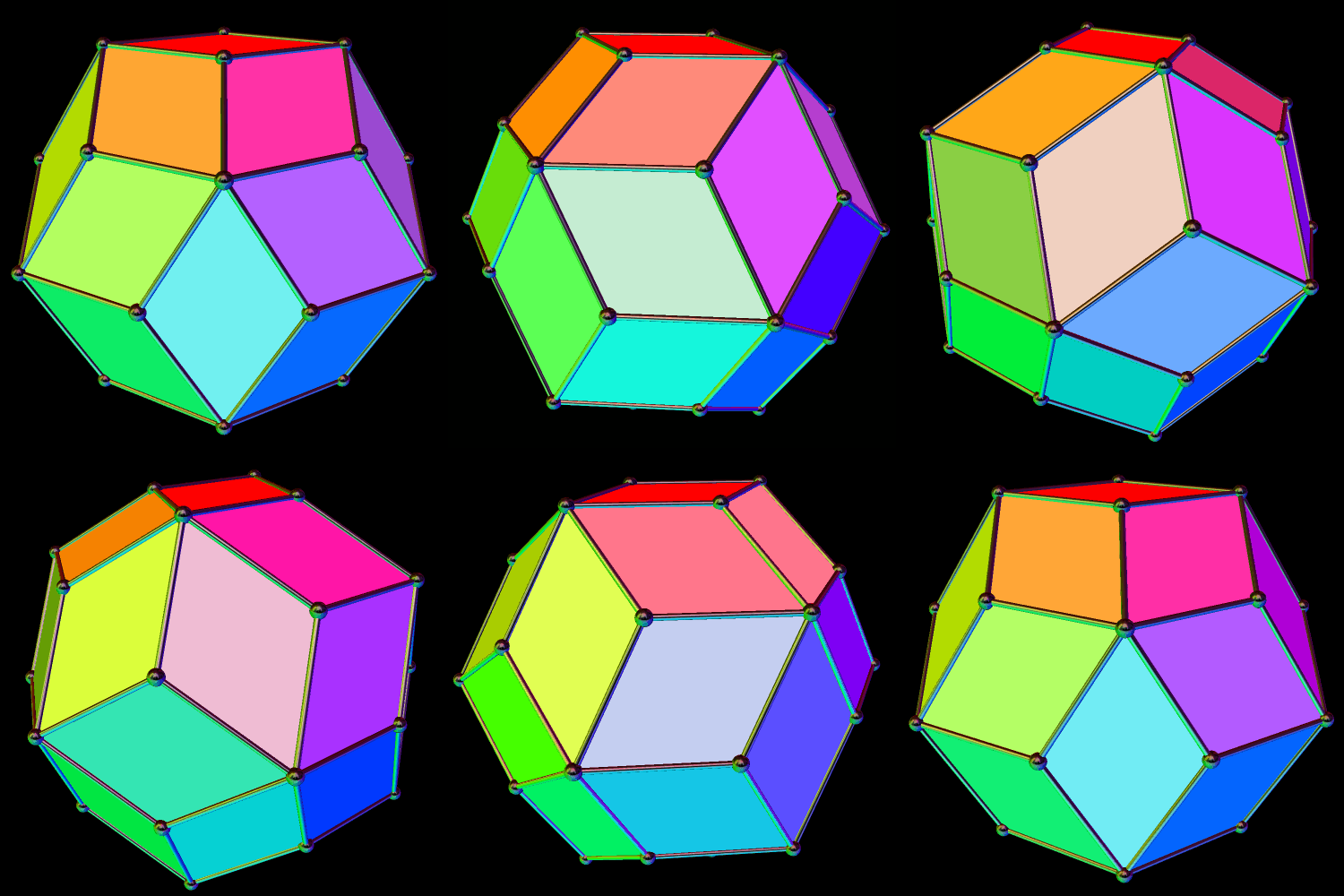
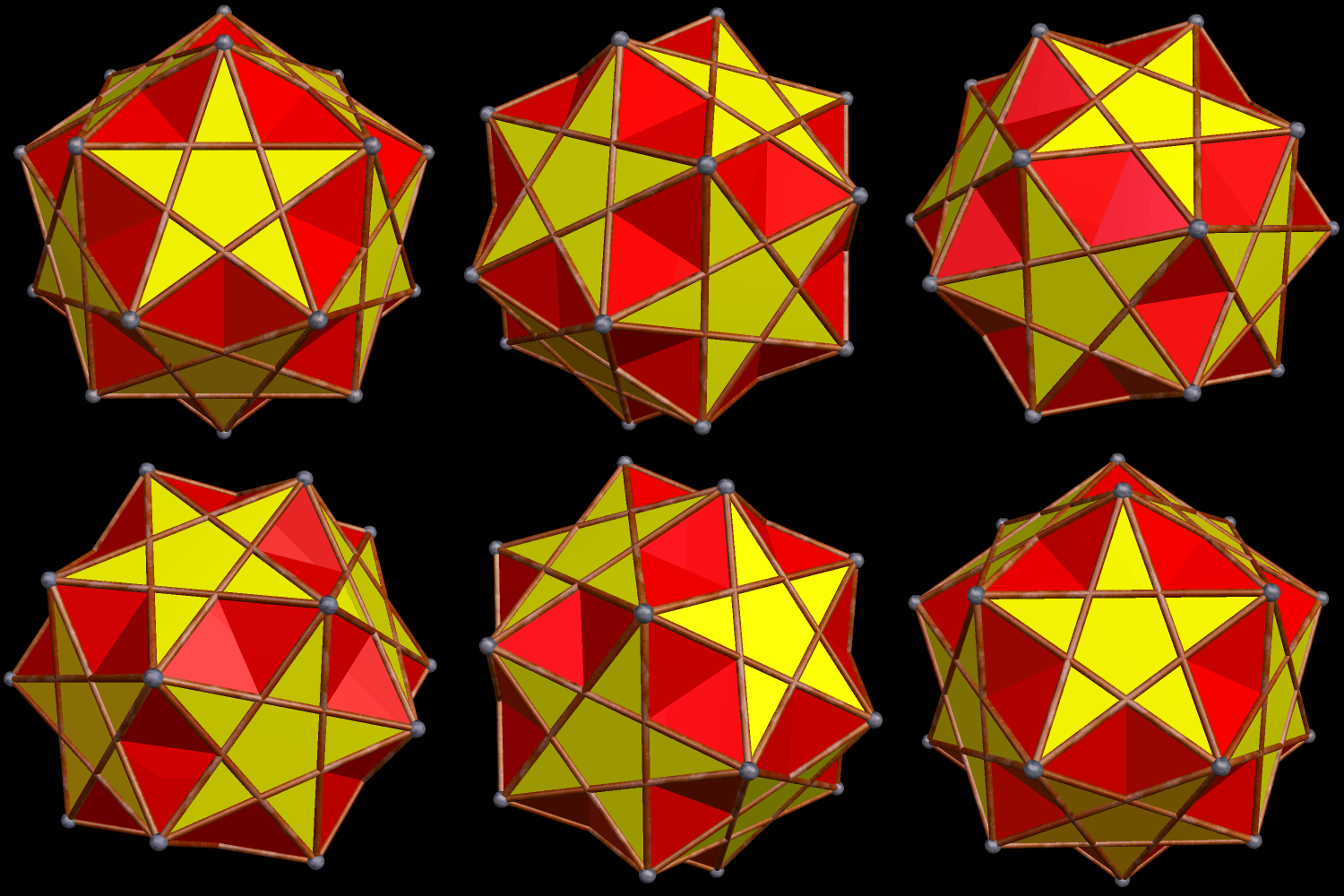
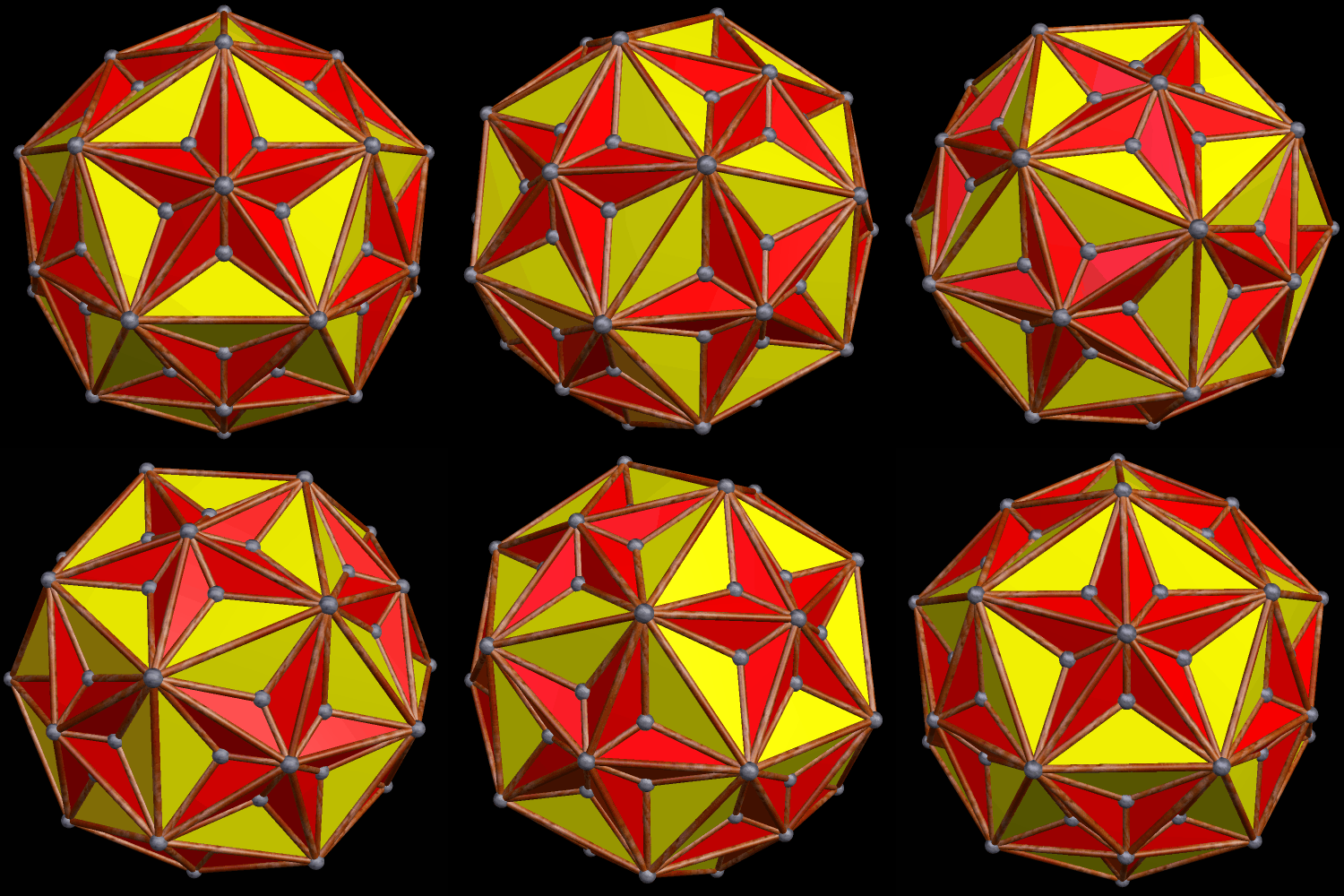
I made the polyhedron above by performing a faceting of the dodecahedron, and only realized, after the fact, that I had stumbled upon one of the uniform polyhedra, a set of polyhedra I have not yet studied extensively. It is called the small ditrigonal icosidodecahedron, and its faces are twelve star pentagons and twenty equilateral triangles, with the triangles intersecting each other. Below is its fifth stellation, which appears to be a compound of a yellow dodecahedron and a red polyhedron which I do not (yet) recognize, although it does look quite familiar.

5th stellation of the Small Ditrigonal Icosidodeca

Both images were created using Stella 4d, software you can try right here.

The 21st and 22nd Stellations of the Truncated Dodecahedron

Stellation of a polyhedron involves extending its faces and/or edges into space to form other polyhedra, often with a star-like appearance, which is where the words “stellation,” “stellate,” and “stellated” originate. (“Stella” is Latin for “star.”)

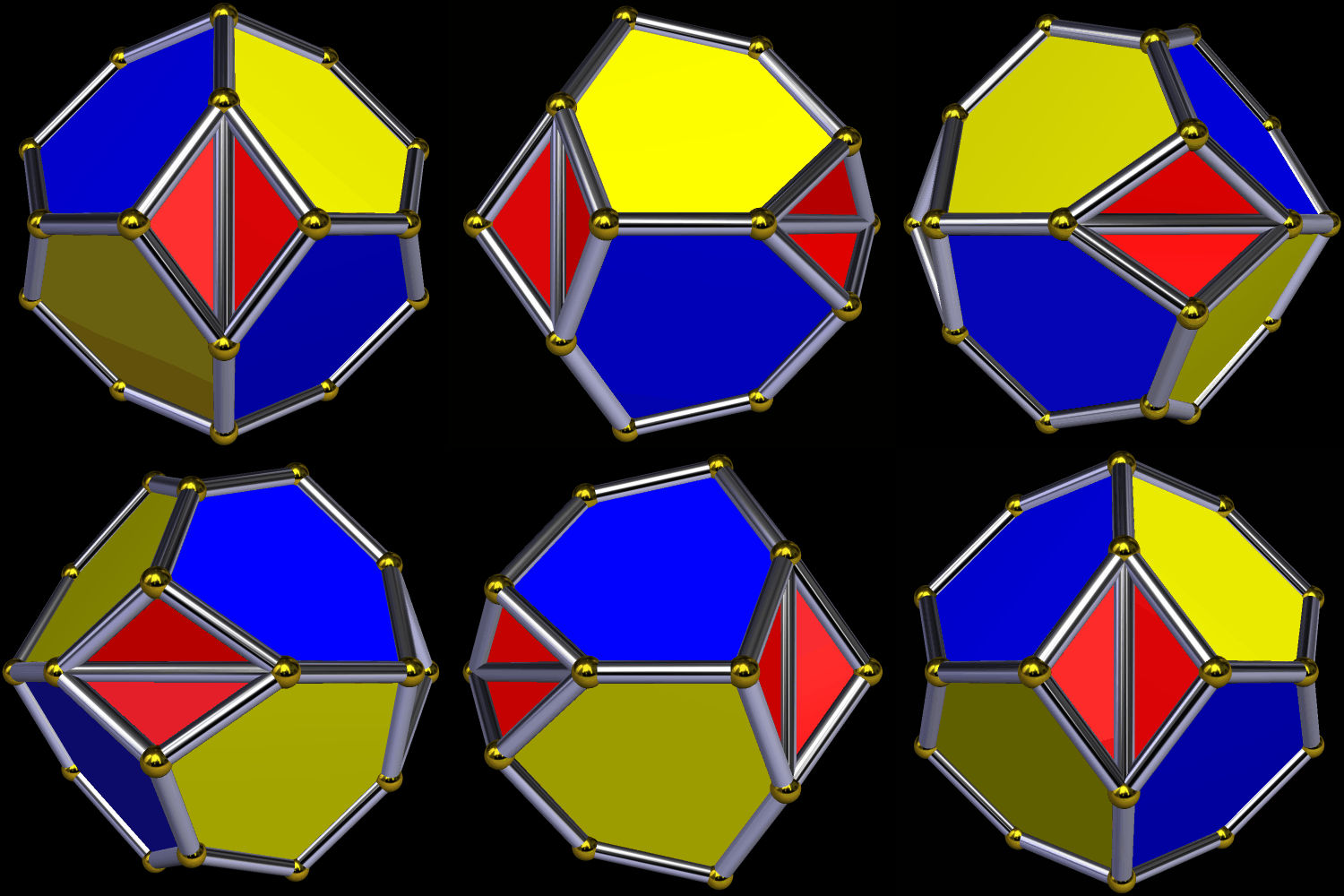
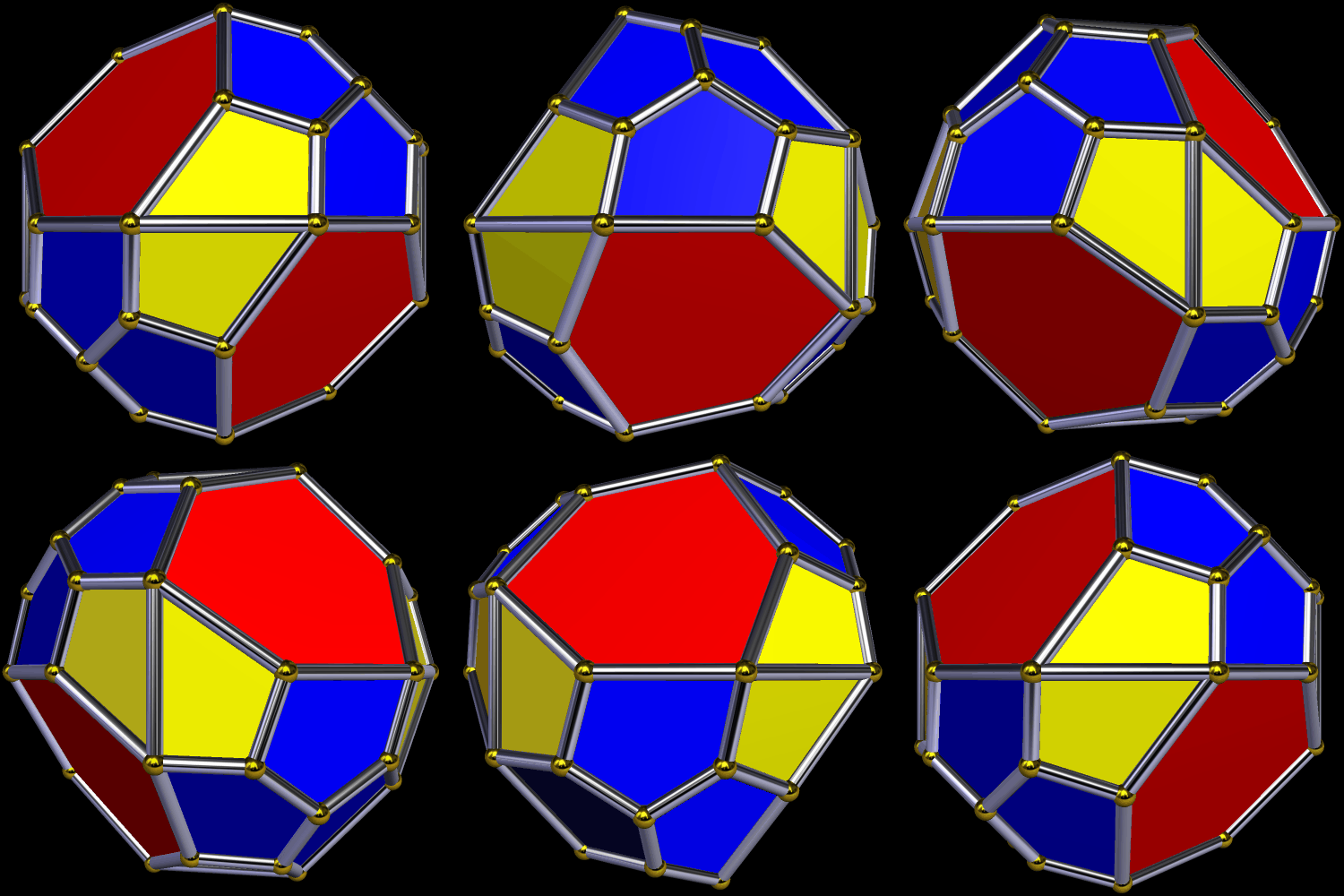
Since this can be done repeatedly, long stellation-series exist for many polyhedra. In the case of the truncated dodecahedron, it was the 21st and 22nd stellations which I found the most aesthetically pleasing.

Here is the 21st stellation of this polyhedron:

Trunc Dodeca 21st stellation

And here is the 22nd:

Trunc Dodeca 22nd stellation

Both of these polyhedra were created with Stella 4d, software you may try for yourself, right here.

Eight Selections from the Stellation-Series of the Rhombic Enneacontahedron

33rd stellation of the rhombic triacontahedron

The stellation-series of the rhombic enneacontahedron has many polyhedra which are, to be blunt, not much to look at — but there are some attractive “gems” hidden among this long series of polyhedral stellations. The one above, the 33rd stellation, is the first one attractive one I found — using, of course, my own, purely subjective, esthetic criteria.

The next attractive stellation I found in this series is the 80th stellation. Unlike the 33rd, it is chiral.

80th stellation of the rhombic triacontahedron

And, after that, the 129th stellation, which is also chiral:

129th stellation of the rhombic triacontahedron

Next, the 152nd (and non-chiral) stellation:

152nd stellation of the rhombic enneacontahedron

I also found the non-chiral 158th stellation worthy of inclusion here:

158th stellation of the rhombic enneacontahedron

After that, the chiral 171st stellation was the next one to attract my attention:

171st stellation of the rhombic enneacontahedron

The next one to attract my notice was the also-chiral 204th stellation:

204th stellation of the rhombic enneacontahedron

Some polyhedral stellation-series are incredibly long, with thousands, or even millions, of stellations possible before one reaches the final stellation, after which stellating the polyehdron one more time causes it to “wrap around” to the original polyhedron. Knowing this, I lost patience, and simply jumped straight to the final stellation of the rhombic triacontahedron — the last image in this post:

final stellation of the rhombic enneacontahedron

All of these images were created using Stella 4d: Polyhedron Navigator, a program available at http://www.software3d.com/Stella.php. For anyone interested in seriously studying polyhedra, I consider this program an indispensable research tool (and, no, I receive no compensation for all this free advertising for Stella which appears on my blog). There’s a free trial version available — why not give it a try?

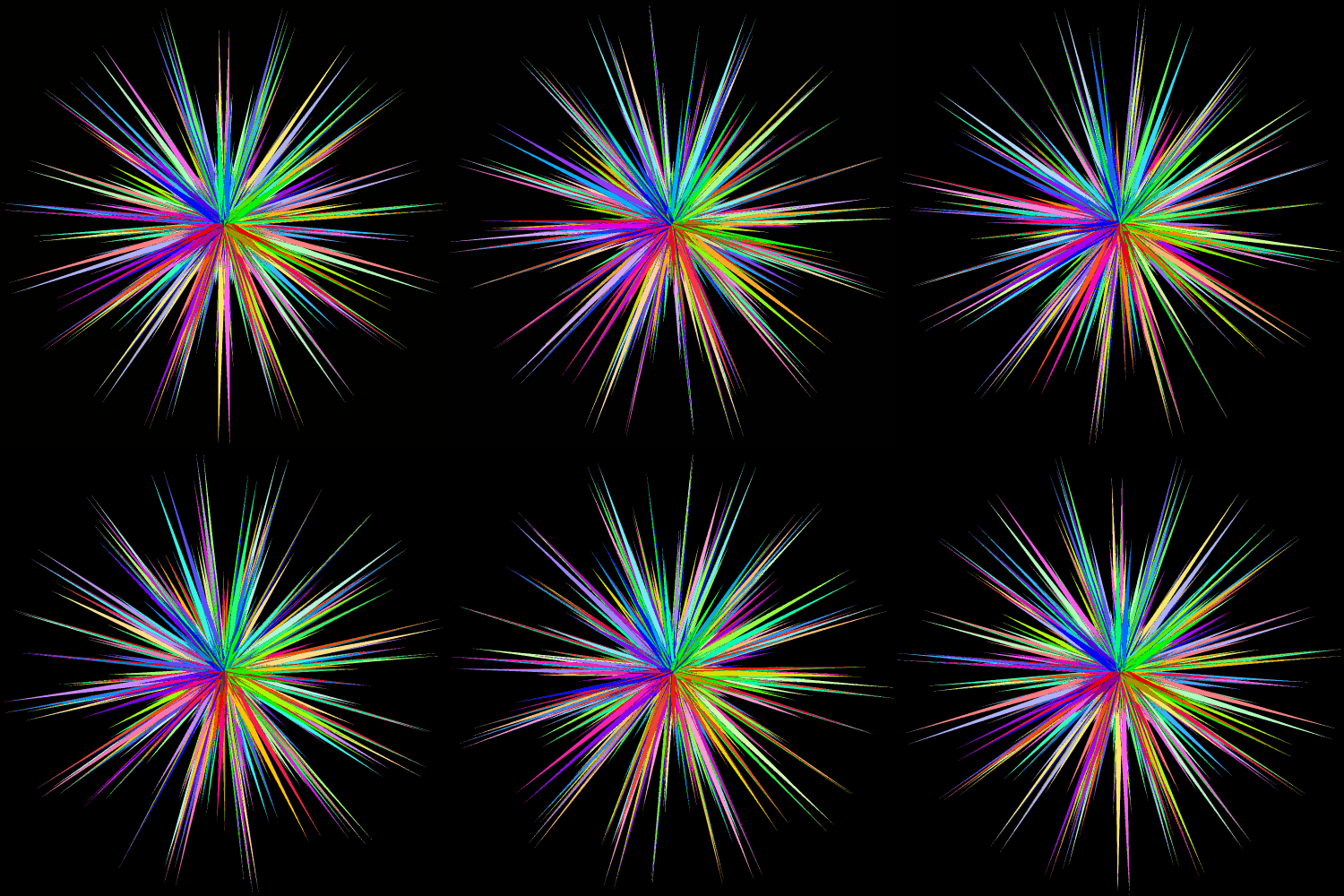
The Final Stellation of the Rhombic Triacontahedron, Together with Its Dual, a Faceting of the Icosidodecahedron

final stellation of the Rhombic Triaconta

Sharp-eyed, regular readers of this blog will notice that this is the same polyhedron shown in the previous post, which was described as the “final stellation of the compound of five cubes,” due to the coloring scheme used in the first image there, which had five colors “inherited” from each of the differently-colored cubes in the five-cube compound. This image, by contrast, is shown in rainbow-color mode.

How can the rhombic triacontahedron and the compound of five cubes have the same final stellation? Simple: the compound of five cubes is, itself, a member of the stellation-series of the rhombic triacontahedron. Because of this, those two solids end up at the same place, after all possible stellations are completed, just as you will reach 1,000, counting by ones, whether you start at one, or start at, say, 170.

I am grateful to Robert Webb for pointing this out to me. He’s the person who wrote Stella 4d, the software I use to make these images of rotating polyhedra. His program may be found at http://www.software3d.com/Stella.php — and there is a free trial version available for download, so you can try Stella before deciding whether or not to purchase the fully-functioning version.

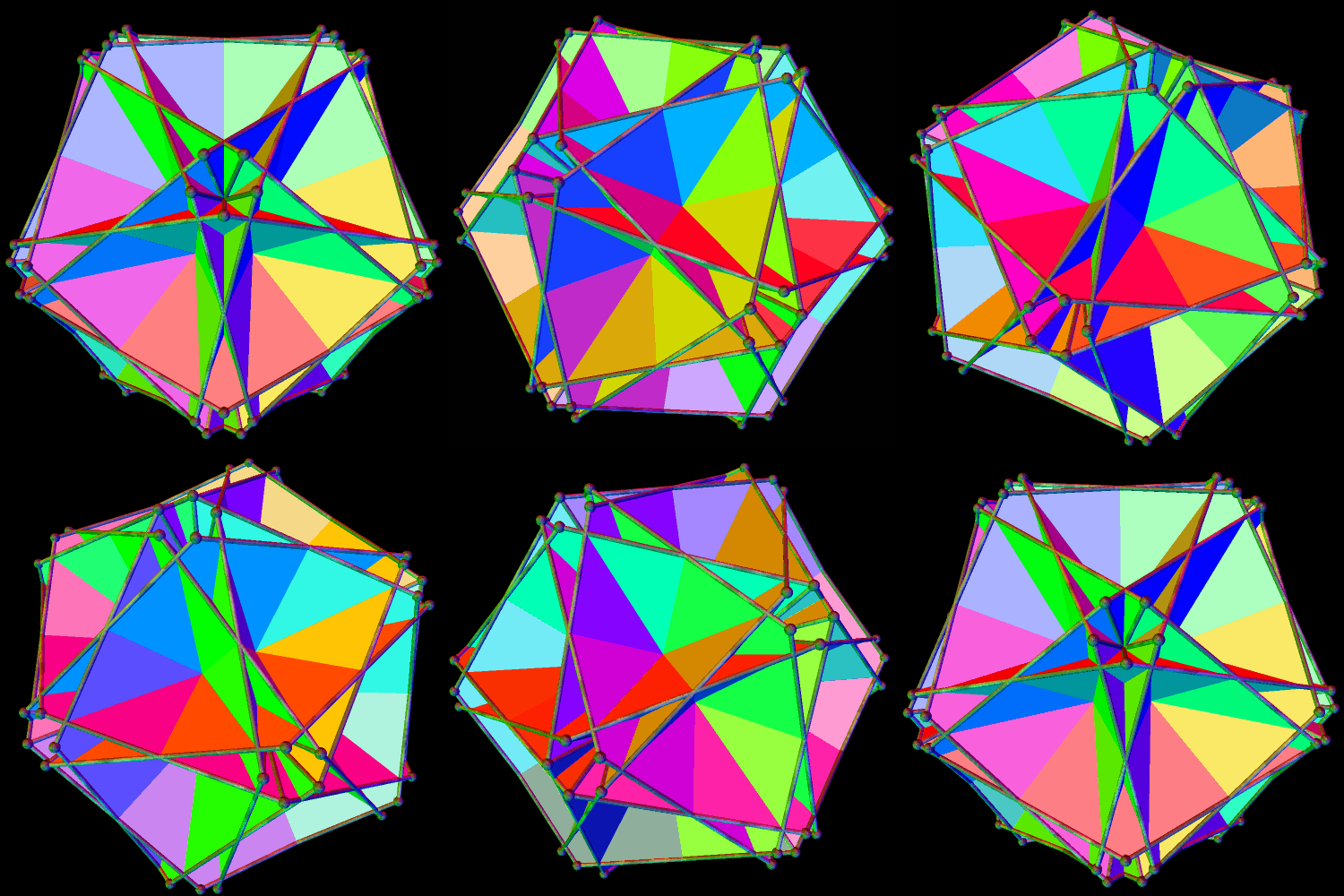
Since faceting is the reciprocal process of stellation, the dual of the polyhedron above is a faceted icosidodecahedron, for the icosidodecahedron is the dual of the rhombic triacontahedron. Here is an image of that particular faceting of the icosidodecahedron, colored, this time, by face-type:

Faceted Icosidodeca dual of final stellation of RTC

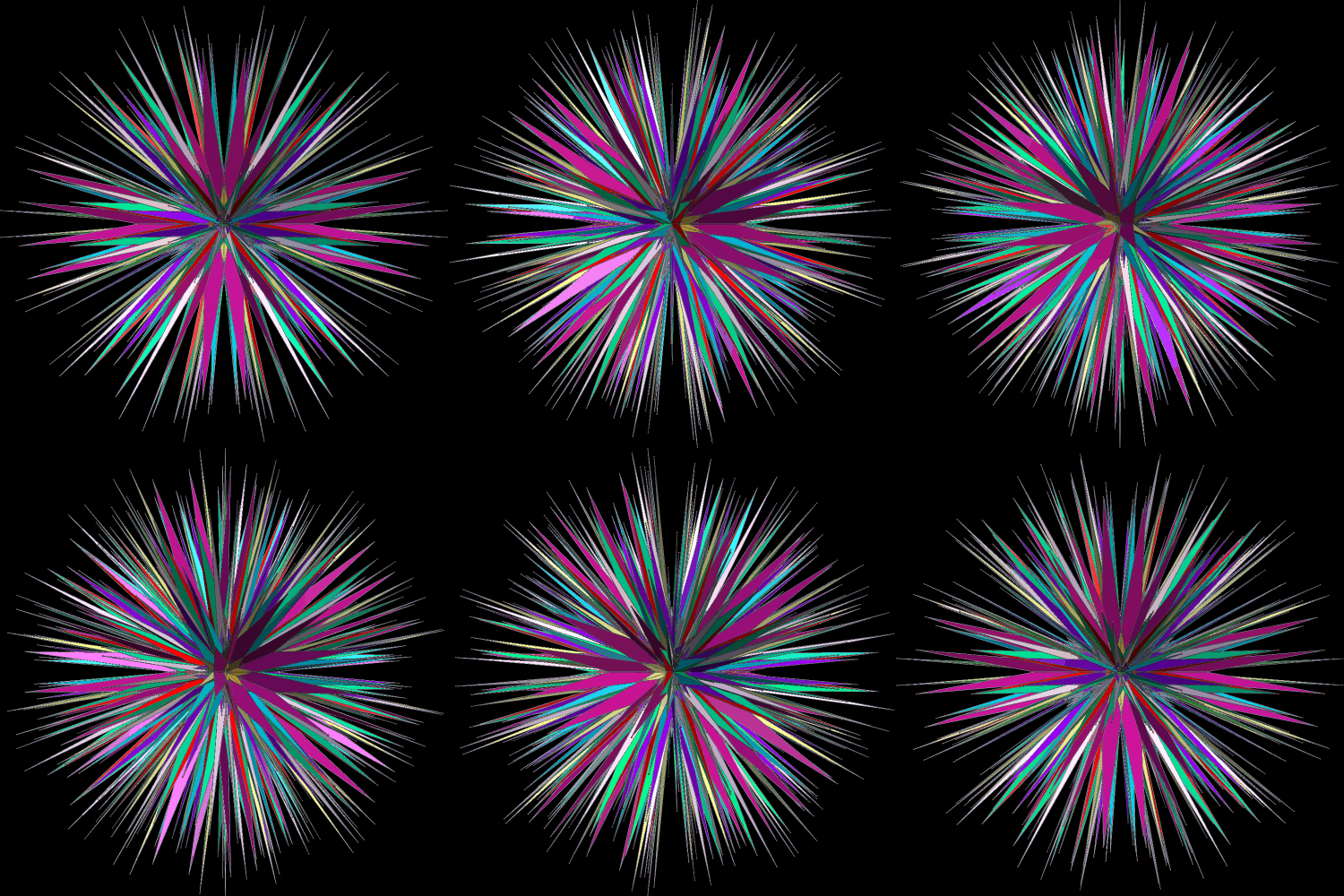
The Final Stellation of the Compound of Five Cubes

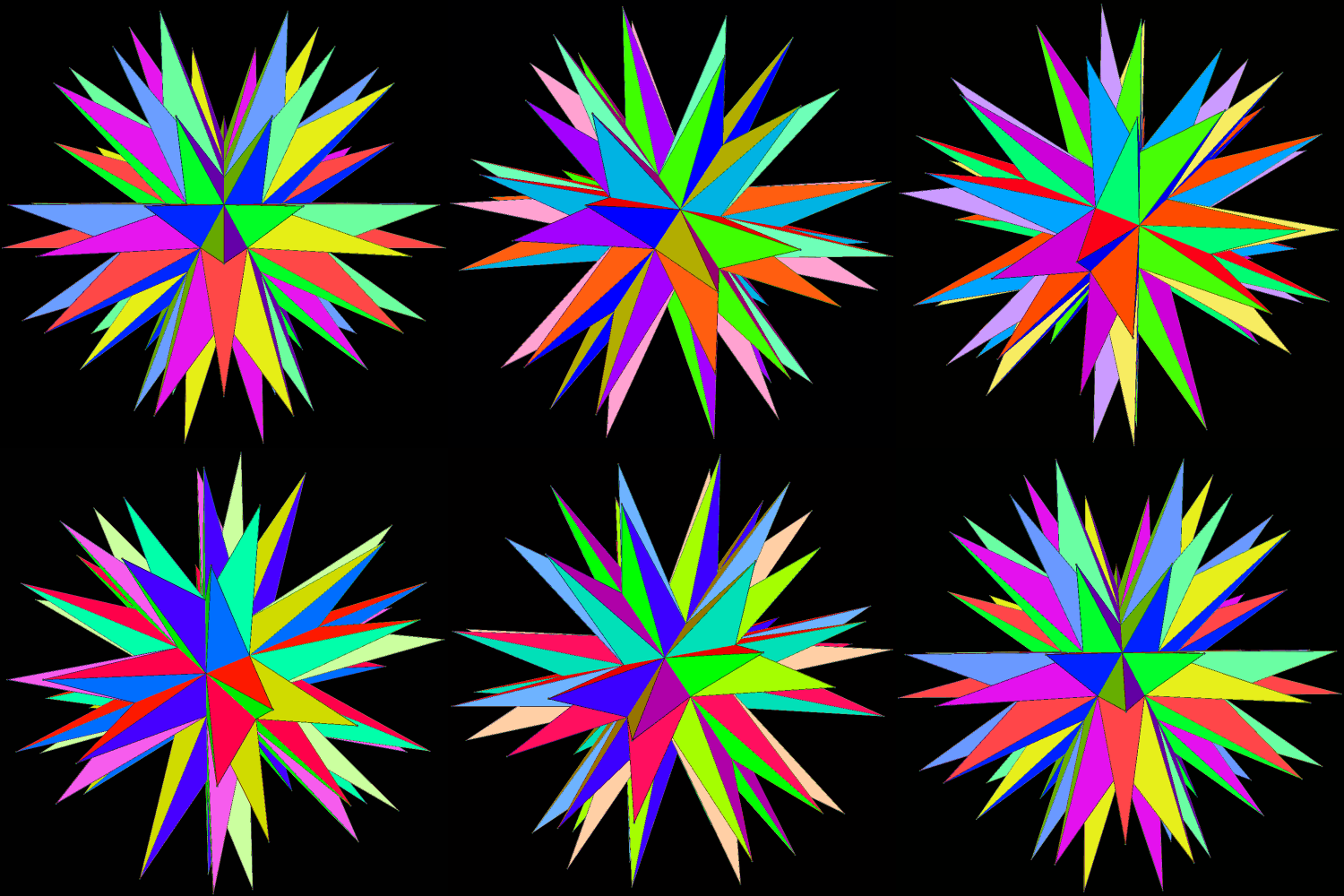
Stellated 5 Cubes final stellation colors derived from compound

The version of the final stellation of the compound of five cubes shown above has its colors derived from the traditional five-color version of the original compound, itself. The one below, by contrast, has its colors selected by face-type, without regard for the original compound.

Stellated 5 Cubes final stellation colored by face type

Both of these virtual models were created with Stella 4d: Polyhedron Navigator, software available at this website. Also, for more about this particular polyhedron, please see the next post.

A Compound of an Icosahedron and the First Stellation of the Rhombic Triacontahedron

Compound of an icosahedron and a stellation (find out which one) of the RTC

I made this compound using software called Stella 4d: Polyhedron Navigator. This program may be purchased (or a trial download tried for free) at this website.

Flying Kites into the Snub Dodecahedron, a Dozen at a Time, Using Tetrahedral Stellation

I’ve been shown, by the program’s creator, a function of Stella 4d which was previously unknown to me, and I’ve been having fun playing around with it. It works like this: you start with a polyhedron with, say, icosidodecahedral symmetry, set the program to view it as a figure with only tetrahedral symmetry (that’s the part which is new to me), and then stellate the polyhedron repeatedly. (Note: you can try a free trial download of this program here.) Several recent posts here have featured polyhedra created using this method. For this one, I started with the snub dodecahedron, one of two Archimedean solids which is chiral.

Snub Dodeca

Using typical stellation (as opposed to this new variety), stellating the snub dodecahedron once turns all of the yellow triangles in the figure above into kites, covering each of the red triangles in the process. With “tetrahedral stellation,” though, this can be done in stages, producing a greater variety of snub-dodecahedron variants which feature kites. As it turns out, the kites appear twelve at a time, in four sets of three, with positions corresponding to the vertices (or the faces) of a tetrahedron. Here’s the first one, featuring one dozen kites.

Snub Dodeca variant with kites

Having done this once (and also changing the colors, just for fun), I did it again, resulting in a snub-dodecahedron-variant featuring two dozen kites. At this level, the positions of the kite-triads correspond to those of the vertices of a cube.

Snub Dodeca variant with kites 1

You probably know what’s coming next: adding another dozen kites, for a total of 36, in twelve sets of three kites each. At this point, it is the remaining, non-stellated four-triangle panels, not the kite triads, which have positions corresponding to those of the vertices of a cube (or the faces of an octahedron, if you prefer).

Snub Dodeca variant with kites 2

Incoming next: another dozen kites, for a total of 48 kites, or 16 kite-triads. The four remaining non-stellated panels of four triangles each are now arranged tetrahedrally, just as the kite-triads were, when the first dozen kites were added.

Snub Dodeca variant with kites 3

With one more iteration of this process, no triangles remain, for all have been replaced by kites — sixty (five dozen) in all. This is also the first “normal” stellation of the snub dodecahedron, as mentioned near the beginning of this post.

Snub Dodeca variant with kites 4

From beginning to end, these polyhedra never lost their chirality, nor had it reversed.

There Are Many Faceted Versions of the Dodecahedron. This One Is the Dual of the Third Stellation of the Icosahedron.

Faceted Dodeca

The twelve purple faces of this faceted dodecahedron show up on Stella 4d‘s control interface as {10/4} star decagons, which would make them each have five pairs of two coincident vertices. I’m informally naming this special decagon-that-looks-like-a-pentagram (or “star pentagon,” if you prefer) the “antipentagram,” for reasons which I hope are clear.

Stella 4d, the program I use to make most of my polyhedral images, may be tried for free at http://www.software3d.com/Stella.php.

Selections from the Second Hundred Stellations of the Rhombicosidodecahedron

This survey began in the last post, with selections from the first hundred stellations of this Archimedean solid. In this survey of the second hundred stellations, the first one I find noteworthy enough for inclusion here is the 102nd stellation.

Rhombicosidodeca 102nd stellation

A similar figure is the 111th stellation:

Rhombicosidodeca 111th stellation

There followed a long “desert” when I did not find any that really “grabbed” me . . . and then I came to the 174th stellation.

Rhombicosidodeca 174th stellation

The fact that it is monocolored, the way I had Stella 4d set, told me immediately that this stellation (the one above) has only one face-type. There are twenty of these faces; they are each equilateral hexagons which “circumscibe,” in a way, the triangular faces of an icosahedron. For this reason, I suspect this is also one of the stellations of the icosahedron; I’m making a mental note to do exactly that.

I also make a second virtual model of the 174th stellation of the rhombicosidodecahedron, with the faces colored in such a way as to make the interpenetrating equilateral hexagons more obvious.

Stellated Rhombicosidodeca

After that interesting stellation, the next one to caught my attention is the 179th stellation.

Rhombicosidodeca 179th stellation

Next of note, the 182nd stellation is similar to the icosahedron/dodecahedron compound, but with the dodecaheron larger than it is in that compound, so that edges, one from each component polyhedron, do not intersect, but are instead skew. Another way to view it is that the dodecahedron is encasing the icoahedron, but with enough room left for portions of the icosahedron to protrude from the faces of the “dodecahedral cage.”

Rhombicosidodeca 182nd stellation

Next is the 183rd stellation.

Rhombicosidodeca 183rd stellation

Here is the 187th stellation, which is quite similar to the last one shown. The pulsating effect, first seen in the last post above, is an accident, and not discovered until after these images were already made, using Stella 4d, which may be tried here. Why didn’t I re-create the .gifs? Simple: I don’t feel like taking the ~10 minutes each to do so.

Rhombicosidodeca 187th stellation

The 190th stellation may also be viewed as a dodecahedron, augmented with variations of pentagonal pyramids on each face:

Rhombicosidodeca 190th stellation

Next, the 191st stellation:

Rhombicosidodeca 191st stellation

And, after that, the 192nd stellation.

Rhombicosidodeca 192nd stellation

The next stellation which grabbed by attention: the 198th.

Rhombicosidodeca 198th stellation

Finally, I’ll close this set of highlights from this part of the rhombicosidodecahedron’s stellation-series with that solid’s 199th stellation.

Rhombicosidodeca 199th stellation