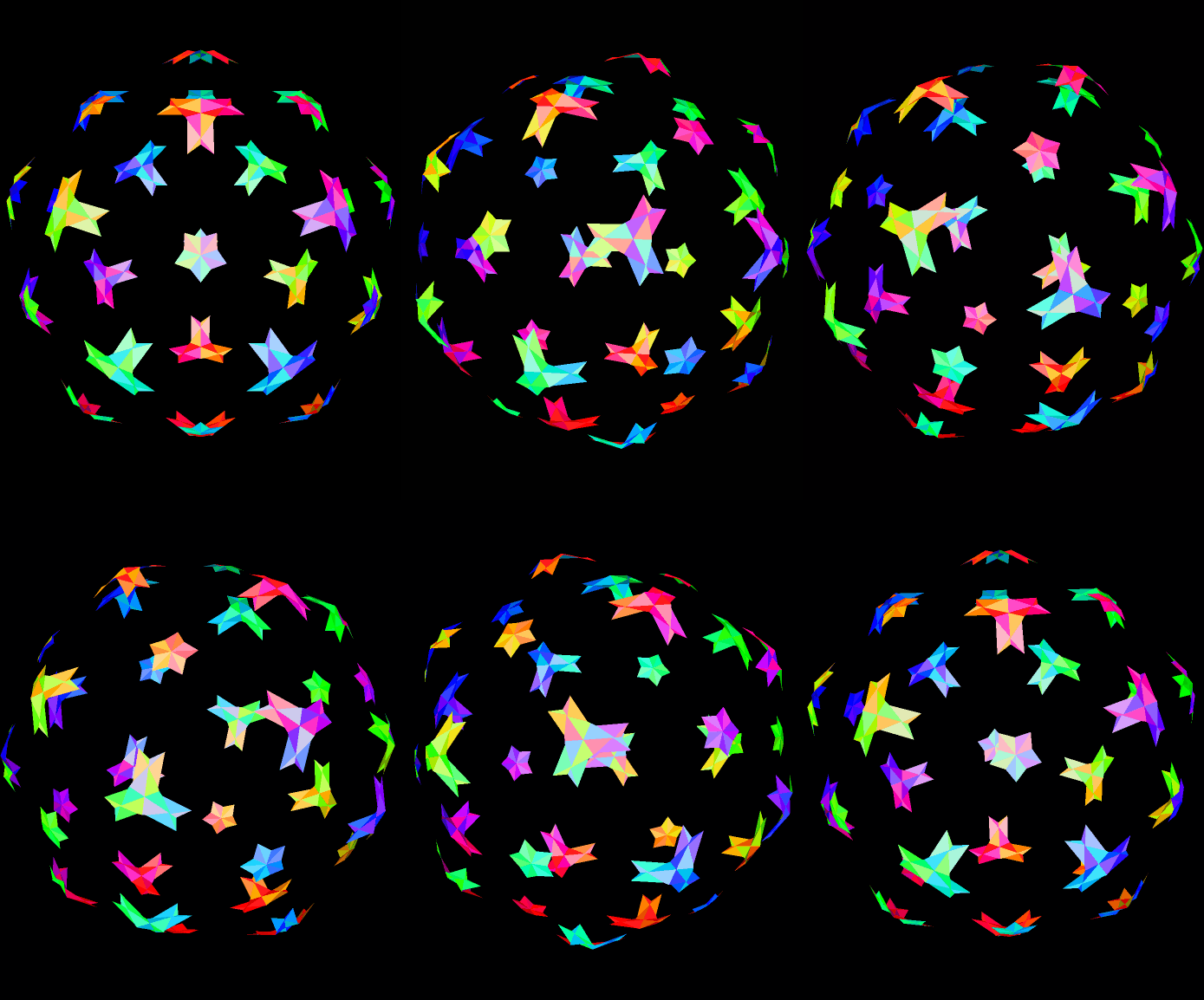
A Snowflake Made of Circles

Image

A Snowflake Made of Circles

20-Thex: A Four-Dimensional Polytope

Image

The 20-Thex:  A Four-Dimensional Polytope

In hyperspace, or four-space, there are six regular polychora, analogous to the Platonic Solids in three-space. Beyond the Platonics in the study of polyhedra comes, of course, the Archimedean Solids, which include many truncated forms of Platonic polyhedra.

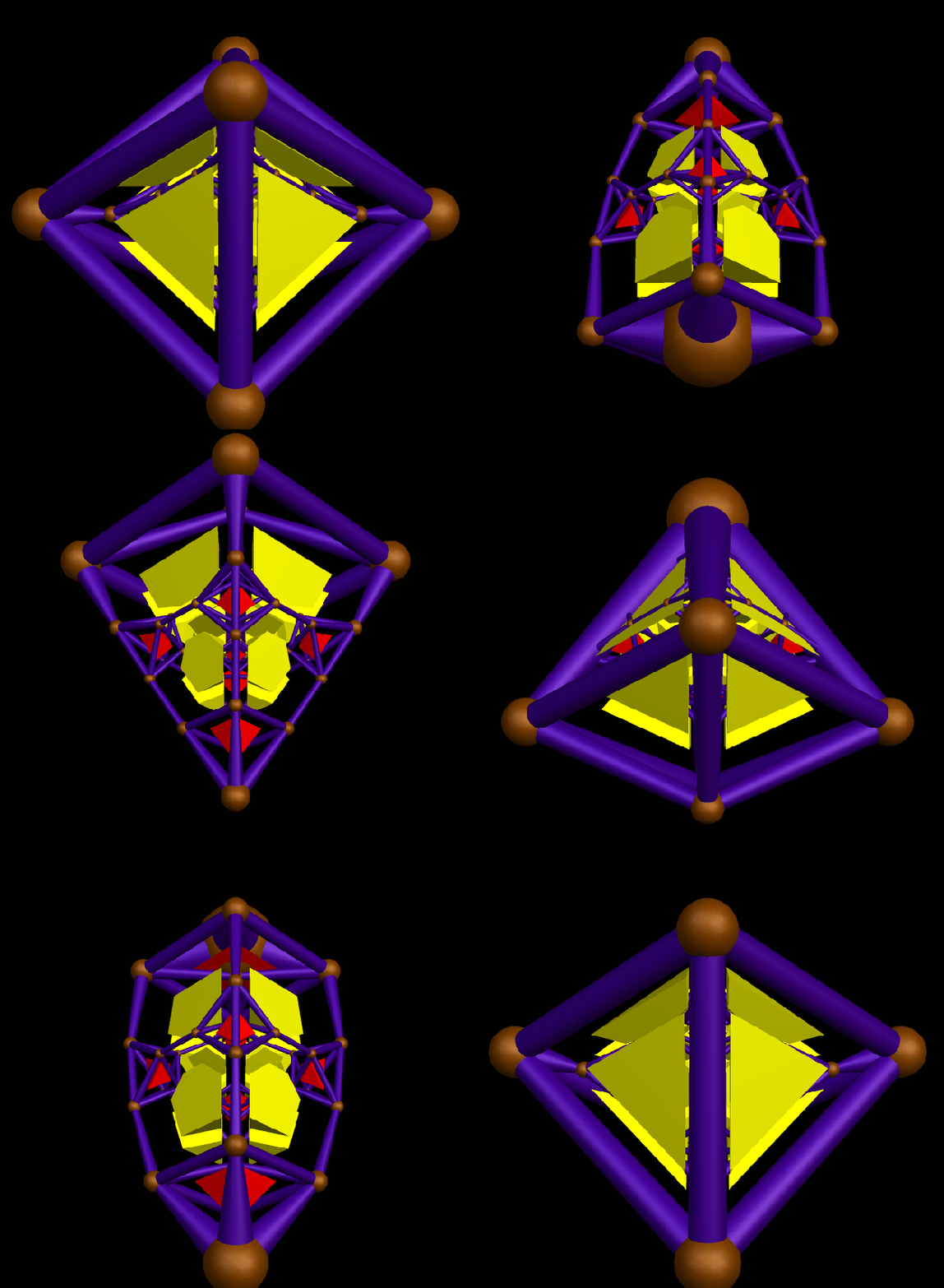
In hyperspace, there are varieties of progressively-less regular polychora, also, and one of these, in a group called the truncates, is called 20-thex, or simply the “thex.” (Those are short names for this polychoron; it’s also called the truncated hexadecachoron, or truncated 16-cell.) What you see above is a (seemingly) three-dimensional projection of a thex, as it rotates in hyperspace.

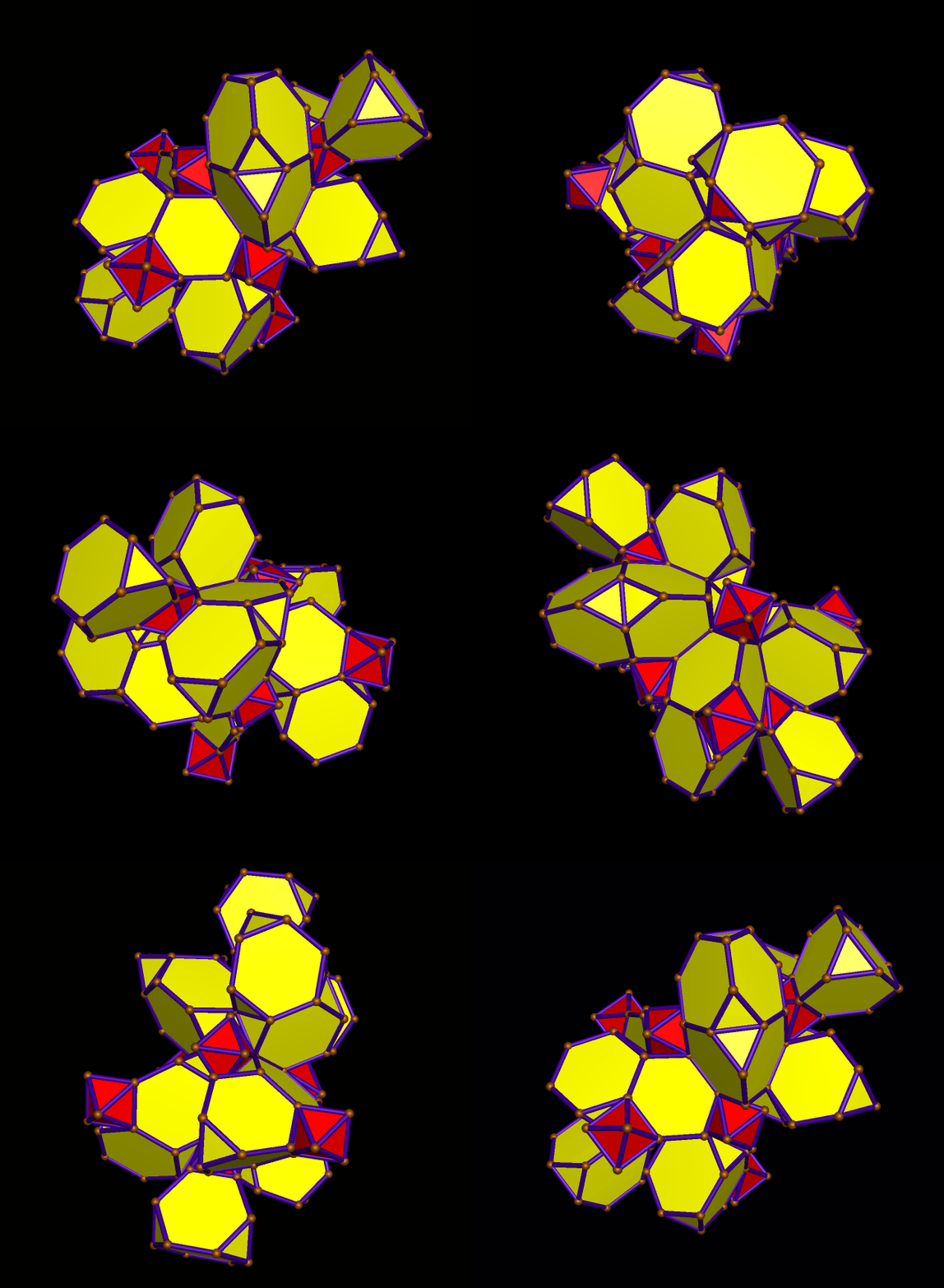
Just as polyhedra have polygons as faces, polychora have polyhedra as unit cells. This is the net for the thex. As you can see, the thex is composed of both truncated tetrahedra and octahedra.

20-Thexnet

Both of these images were created using Stella 4d, which you can try for yourself at http://www.software3d.com/Stella.php.

Twenty Irregular Hexagons, Rotating Around a Common Axis

Image

Twenty Irregular Hexagons, Rotating Around a Common Axis

This image was produced using Stella 4d, which you may try for free, right here: http://www.software3d.com/Stella.php.

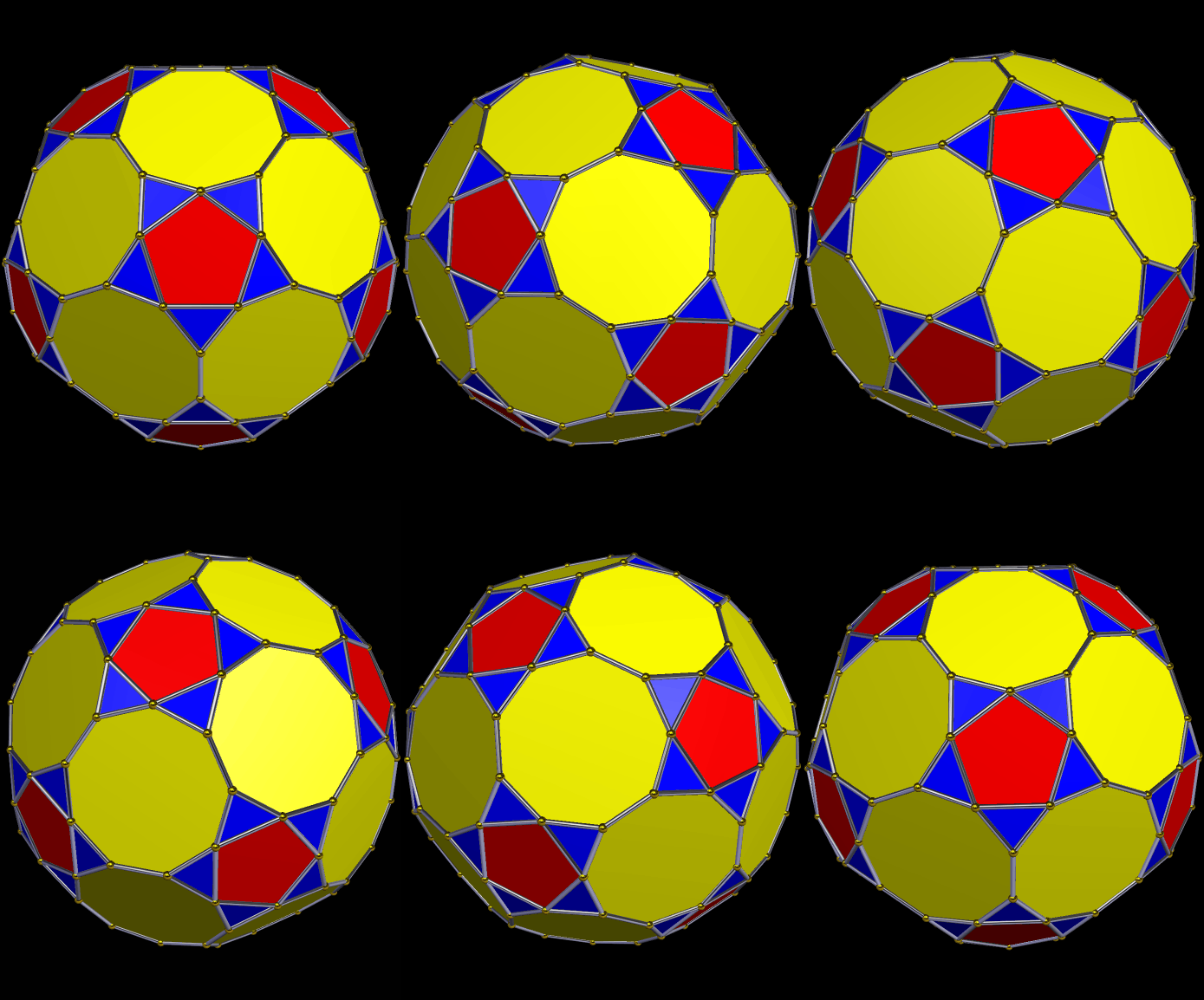
Polyhedron Featuring Twenty Regular Enneagons, Twelve Regular Pentagons, and Sixty Isosceles Triangles

Image

Polyhedron Featuring Twenty Regular Nonagons, Twelve Regular Pentagons, and Sixty Isosceles Triangles

If the isosceles triangles in this polyhedron were close enough to being equilateral that close inspection would be required to tell the difference, this would be a near-miss to the Johnson Solids. However, in my opinion, this doesn’t meet that test — so I’m calling this a “near-near-miss,” instead.

Software credit: visit this website if you would like to try a free trial download of Stella 4d, the program I used to create this image.

A Hypothetical Question from Dan Abdo

Image

A Hypothetical Question from Dan Abdo

Source: Dan Abdo’s work may be found here — http://hornetinc.com/site/project.php?id_project=120

Compound of a Slightly-Truncated Isocahedron and a Rhombic Triacontahedron

Image

Compound of a Slightly-Truncated Isocahedron and a Rhombic Triacontahedron

Software used: Stella 4d, available at http://www.software3d.com/Stella.php (including a free “try it before you buy it” trial download).

Mark Twain, on Education and Cats

Image

Mark Twain, On Education and Cats

Countdown

Image

Countdown

Eighteen more days of school. Eighteen more days of school. Eighteen more days of school. Eighteen more days of school. Eighteen more days of school. Eighteen more days of school. Eighteen more days of school. Eighteen more days of school. Eighteen more days of school. Eighteen more days of school. Eighteen more days of school. Eighteen more days of school. Eighteen more days of school. Eighteen more days of school. Eighteen more days of school. Eighteen more days of school. Eighteen more days of school. Eighteen more days of school.

Orbital Flight

Image

Orbital Flight

I made this using Stella 4d, software you may try or buy at http://www.software3d.com/Stella.php.
A Polyhedron Made of Kites and Rhombi

Image

A Polyhedron Made of Kites and Rhombi

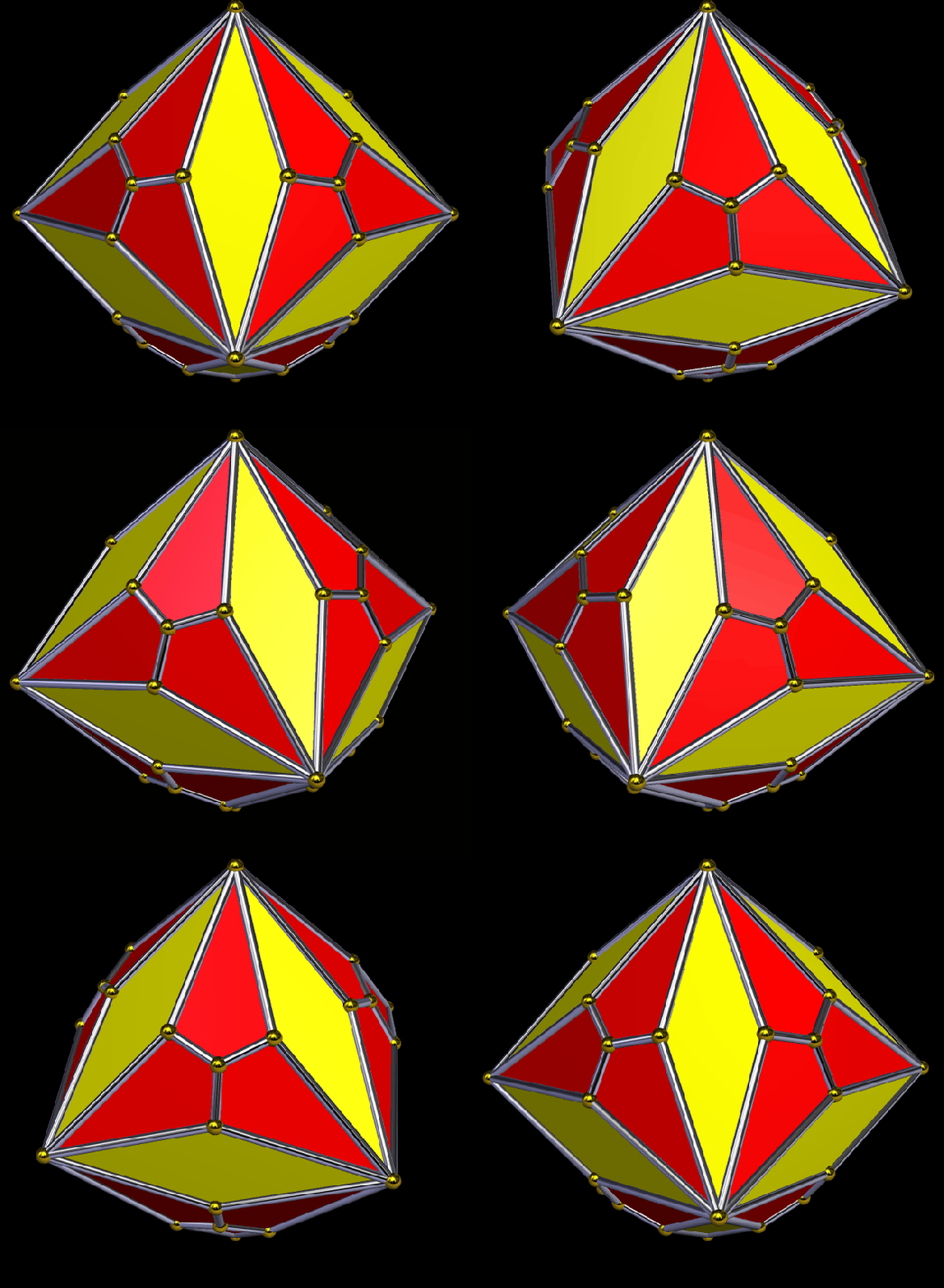
In this polyhedron, the twelve rhombic faces are in the same position as the faces of a rhombic dodecahedron — but narrowed, so as to make room for the kites. As for the kites, there are 24 of them — in eight sets of three. These set-of-threes’ positions correspond to those of the faces of an octahedron.

Software credit: I made this with polyhedron-manipulation software called Stella 4d. If you wish to purchase it, or try the free trial download, here’s the site to visit:

http://www.software3d.com/Stella.php