A Polyhedral Boomerang, in Flight

boomerang

Most of the polyhedra I post here have one of the symmetry-types which are collectively called “polyhedral” symmetry: tetrahedral, cuboctahedral, icosidodecahedral, or chiral variants of these. For polyhedral representations of most real-world objects, though, such as this one, these symmetry-types must be abandoned.

Image credit:  I made this using Stella 4d, available at www.software3d.com/Stella.php.

A Collection of Rotating Polyhedra with Cuboctahedral Symmetry

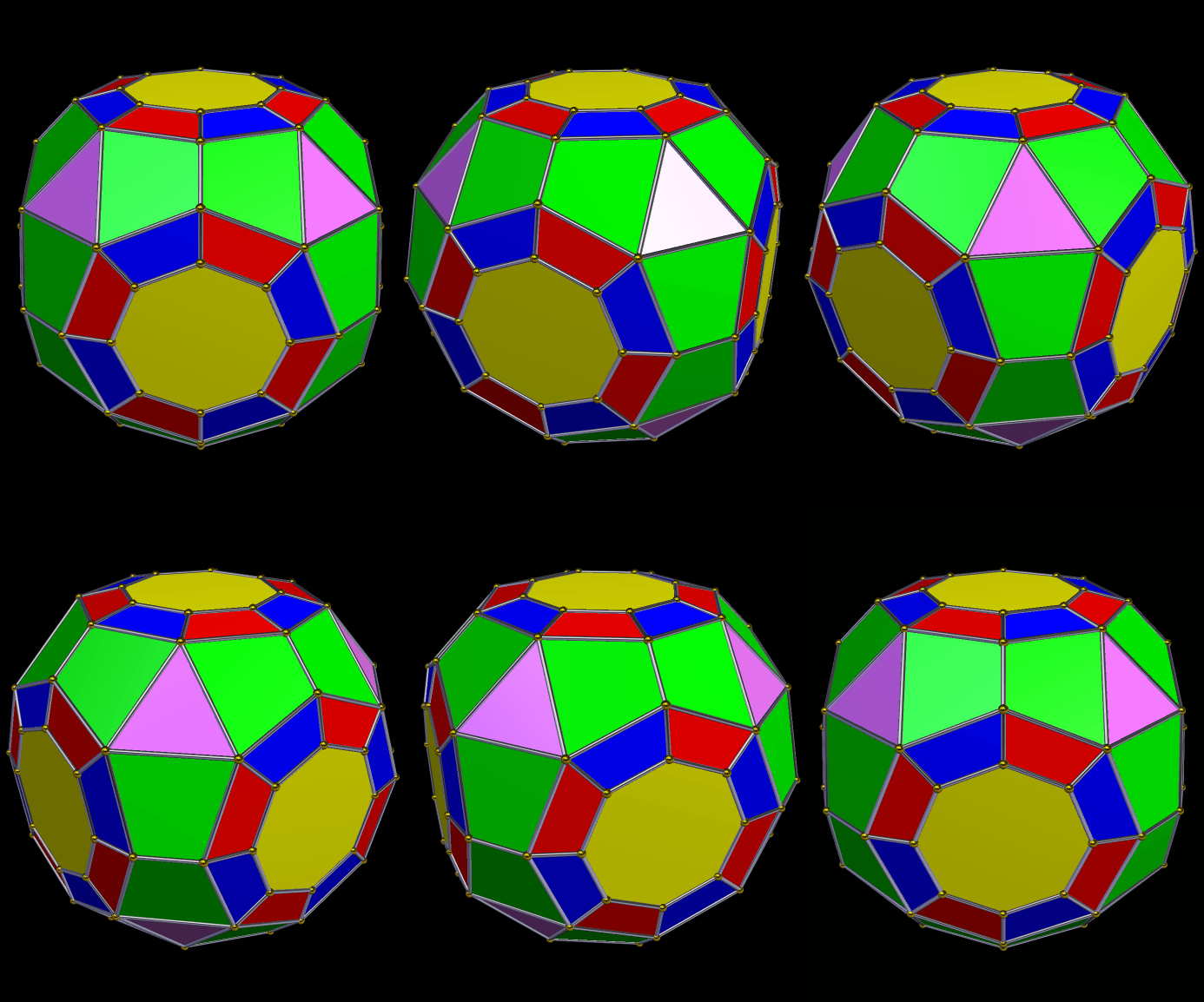
I have received a request to slow down the rotational speed of the polyhedral models I make and post here, and am going to try to do exactly that. First, though, I need to empty my collection of already-made image files which haven’t yet been posted, so that I can start again, with models which rotate more slowly, after deleting all the “speedy” ones. From my backlog of polyhedral images to post, then, here are some which have cuboctahedral symmetry.

Convex hull

Convexhgdfb hull

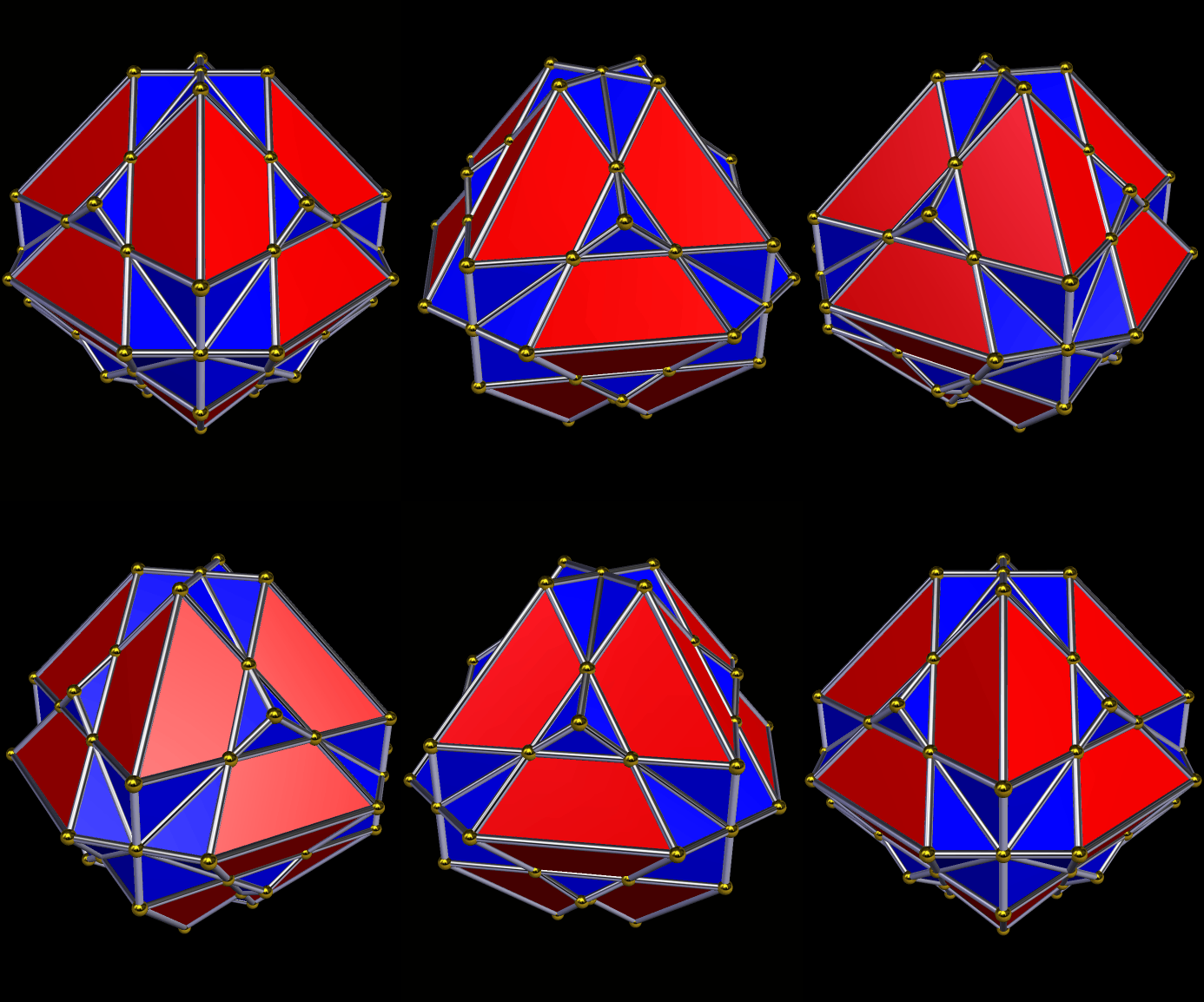
Compound of jhfjhdgdtuare-based pyramids

stellated Compound of Cubocta and dual

Unnamed Duhgddal

This last one actually has the symmetry of a snub cube — a chiral variant of “normal” cuboctahedral symmetry.

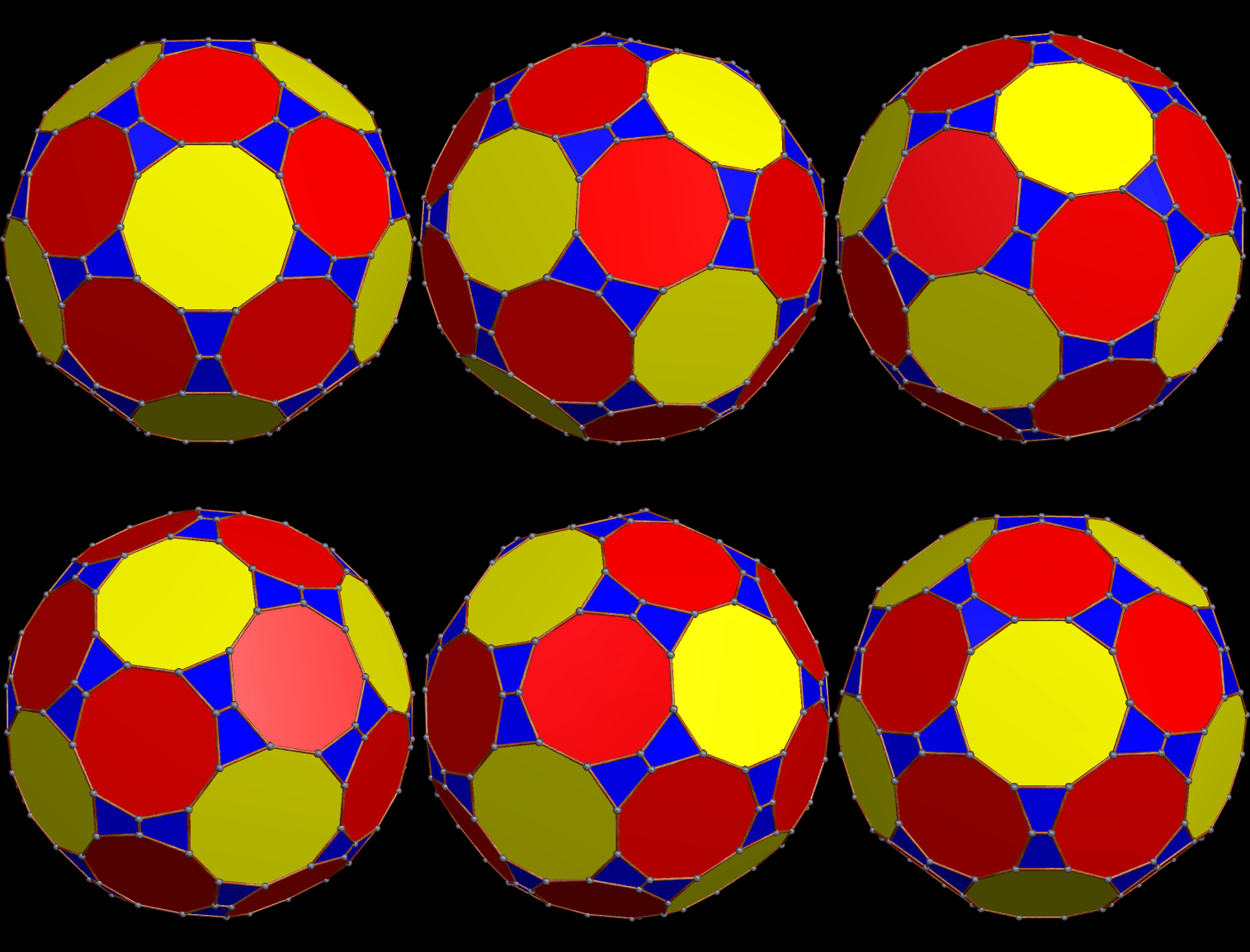
Convsdgtagaqex hull

All these images were created using Stella 4d:  Polyhedron Navigator. If you’d like to try this program for yourself, the website to visit for a free trial download is www.software3d.com/Stella.php.

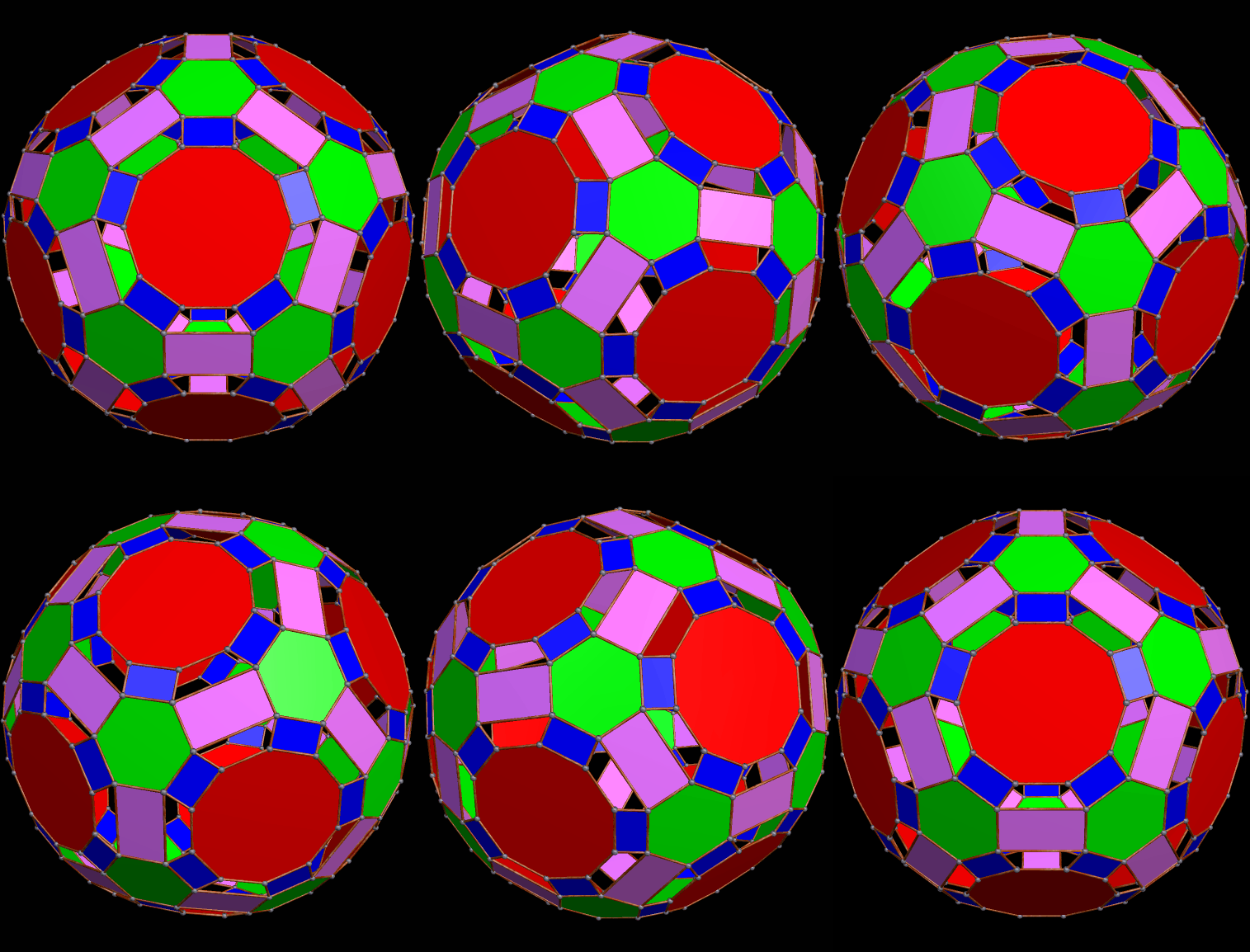
A Collection of Rotating Polyhedra with Icosidodecahedral Symmetry

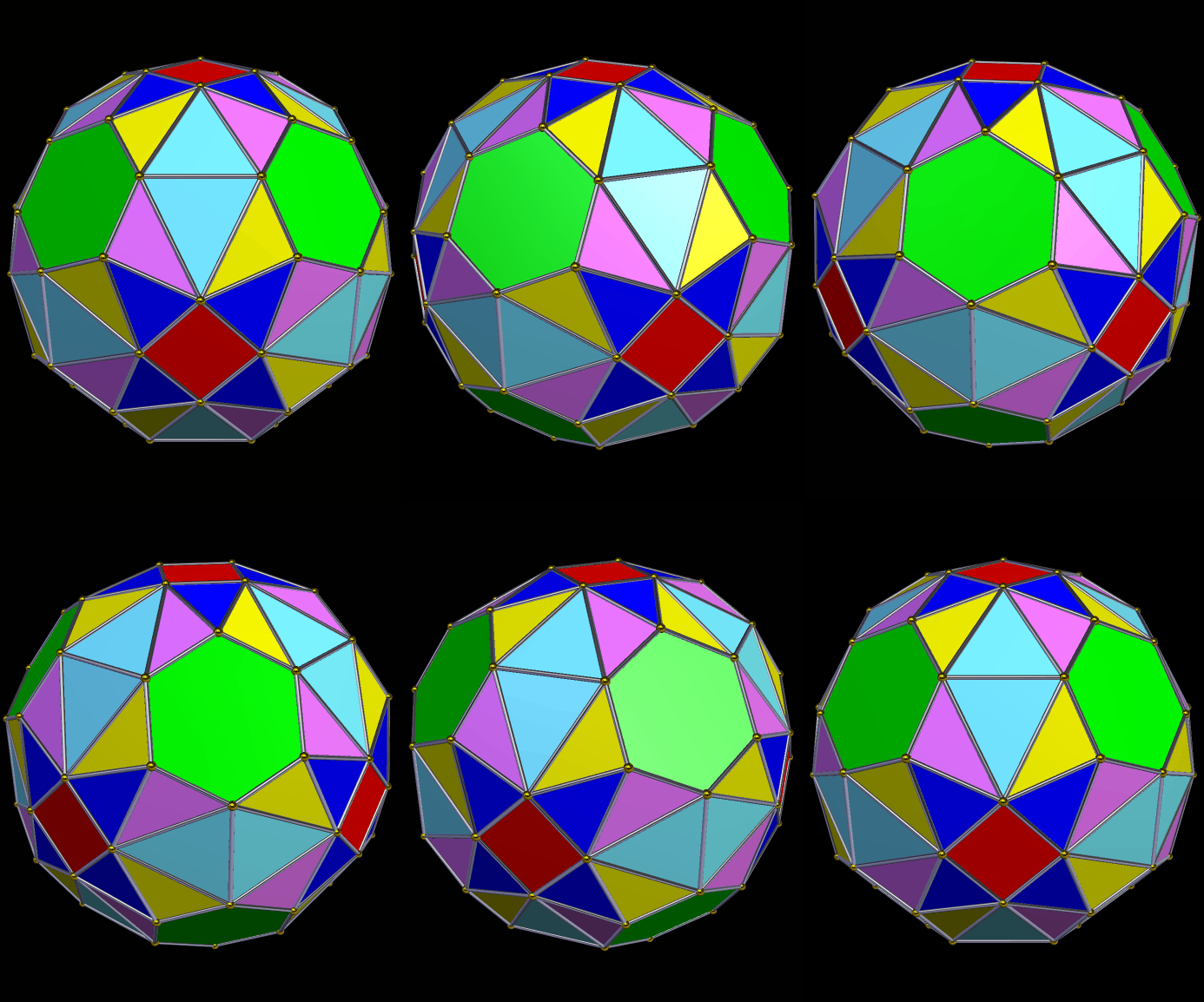
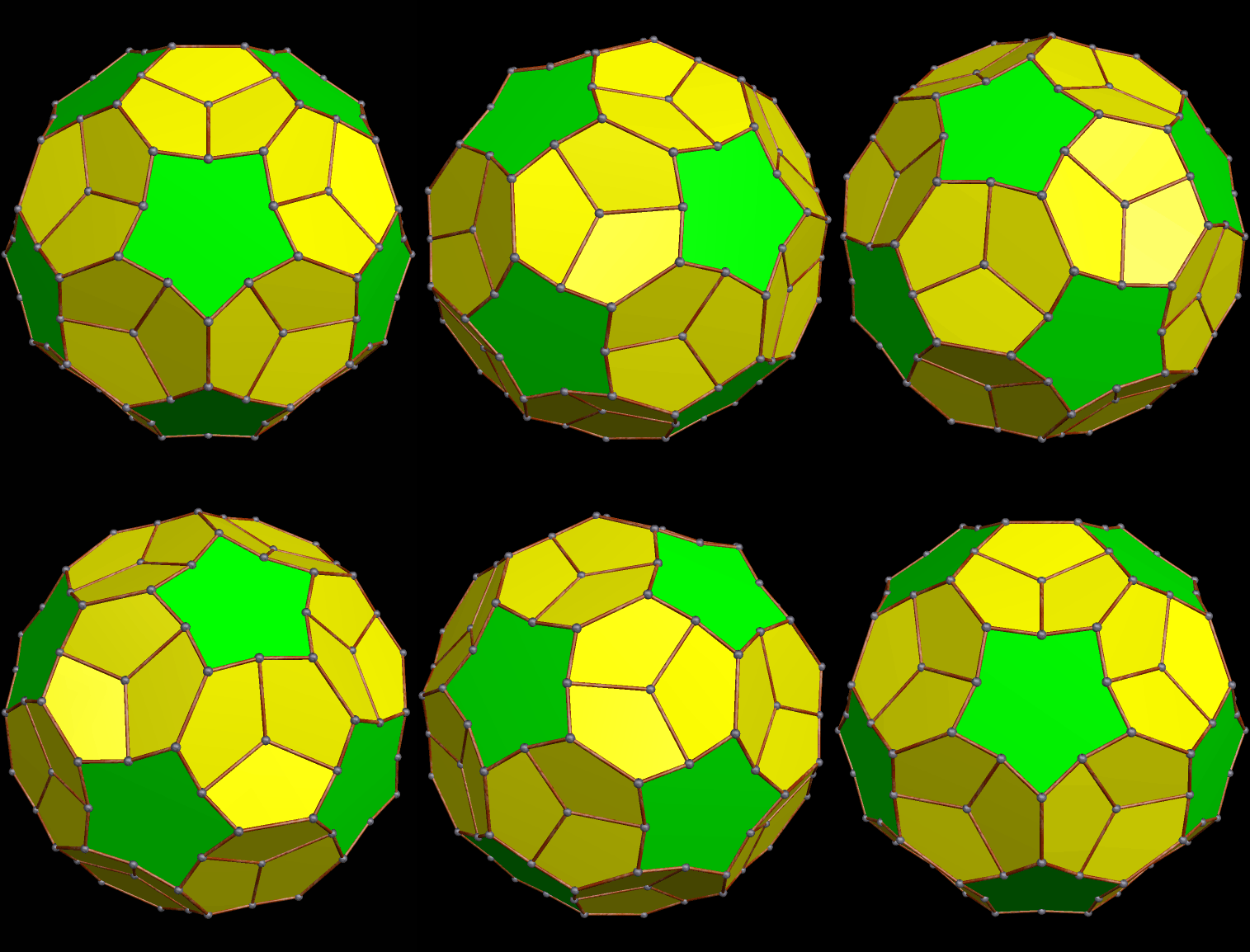
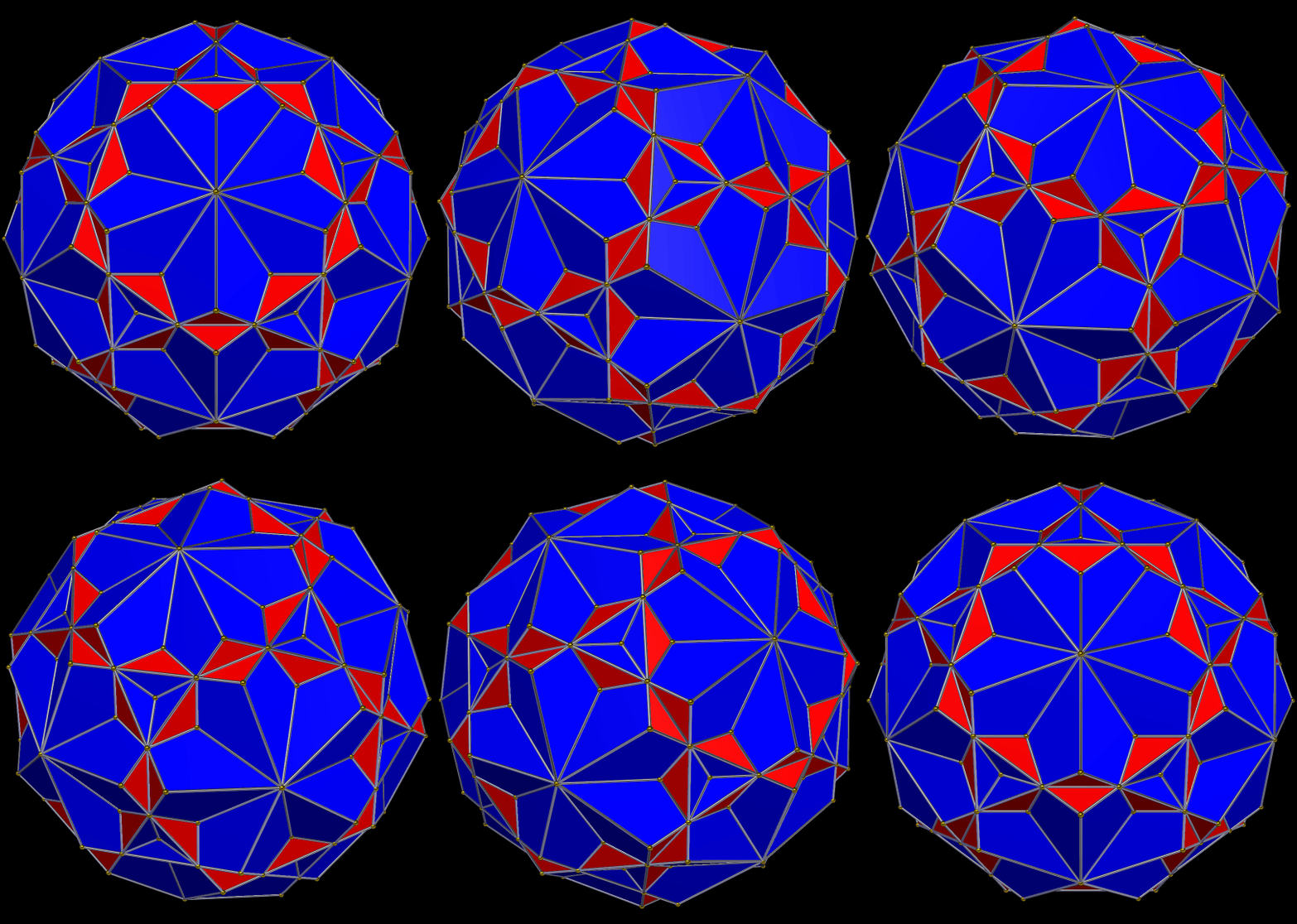
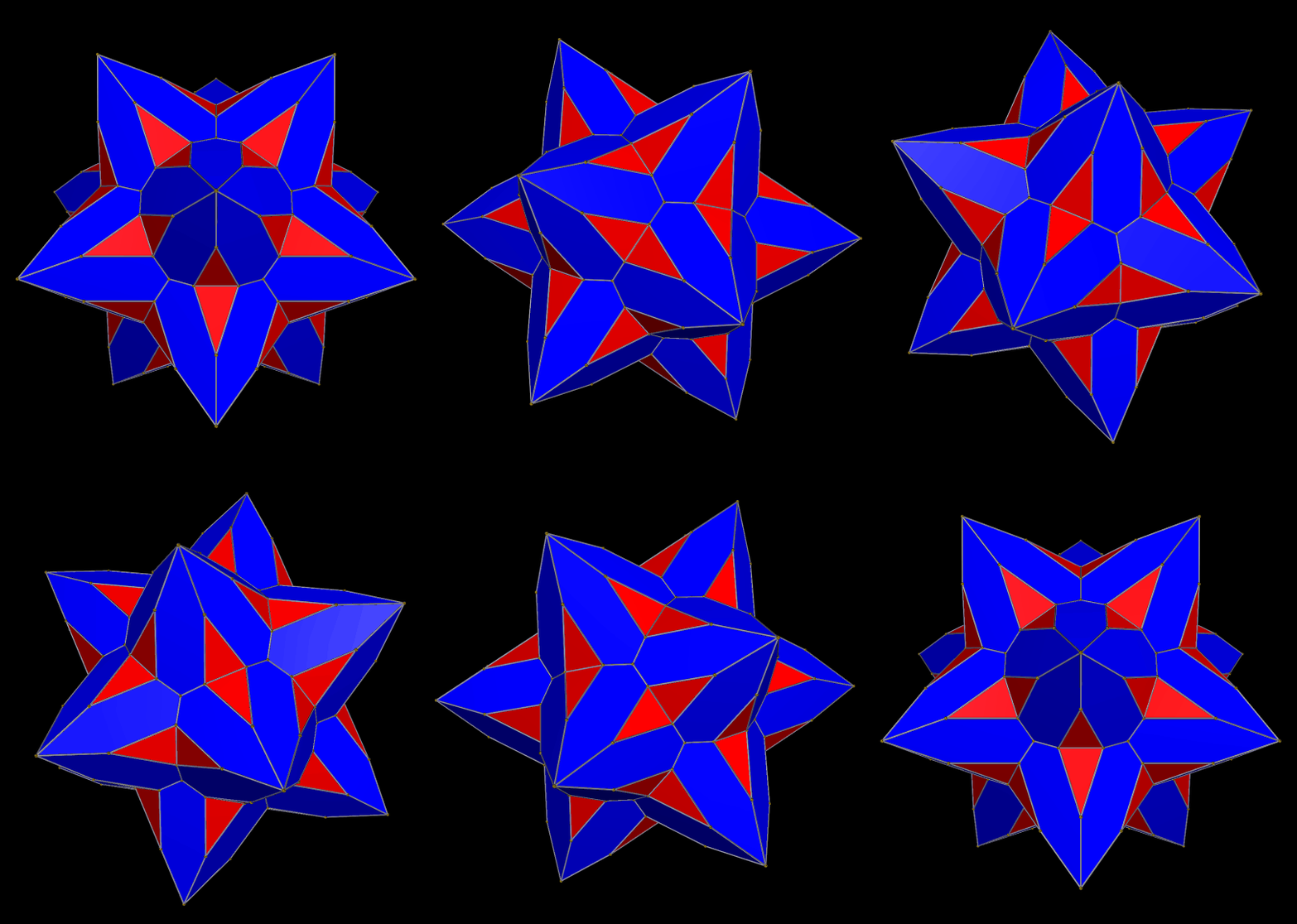
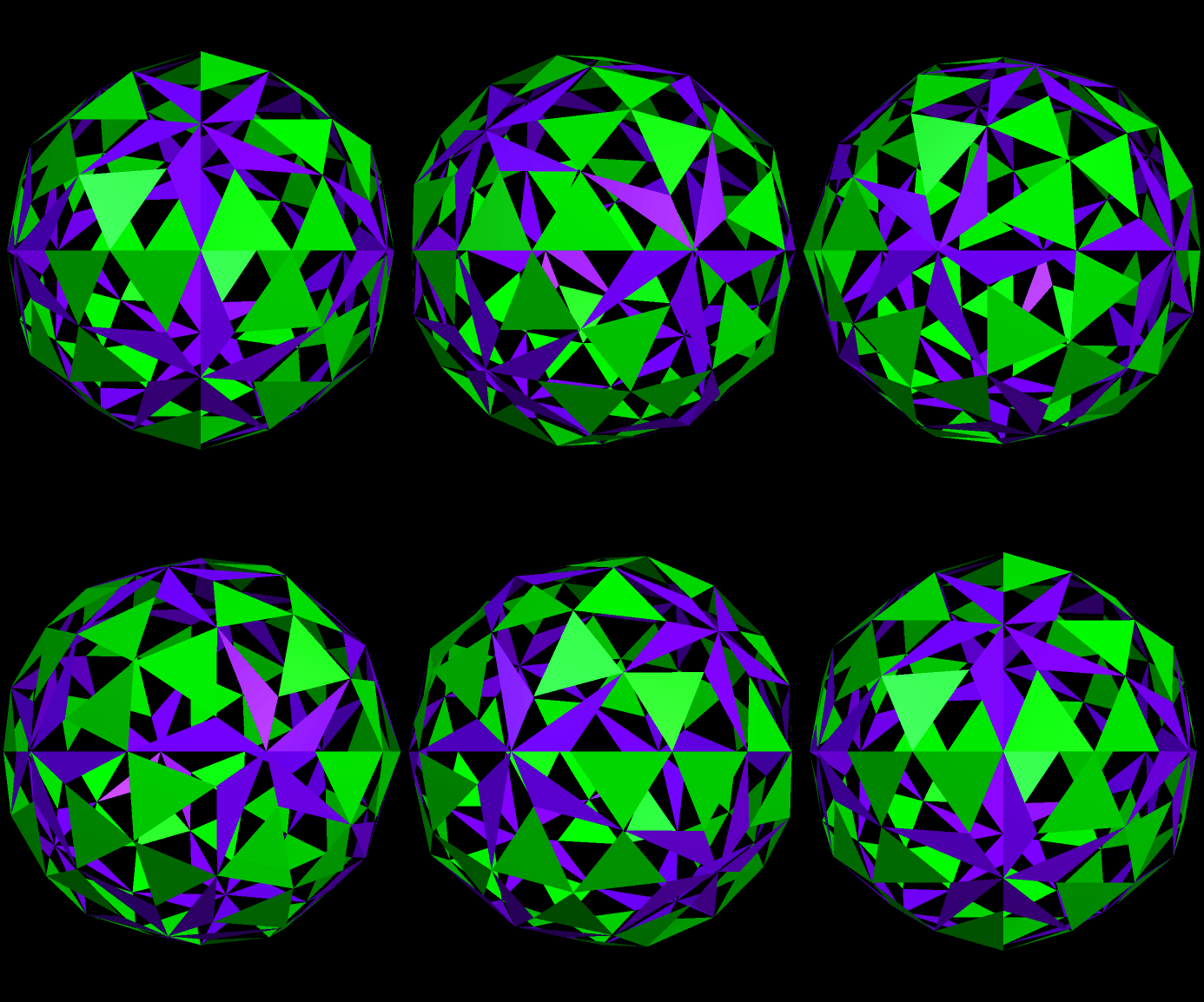
I’ve received a request to slow down the rotational speed of the polyhedral models I make and post here, and am going to try to do exactly that. First, though, I need to empty my collection of already-made image files which haven’t yet been posted, so that I can start again, with models which rotate more slowly, after deleting all the “speedy” ones. From my backlog of polyhedral images to post, then, here are most of the ones with icosidodecahedral symmetry.

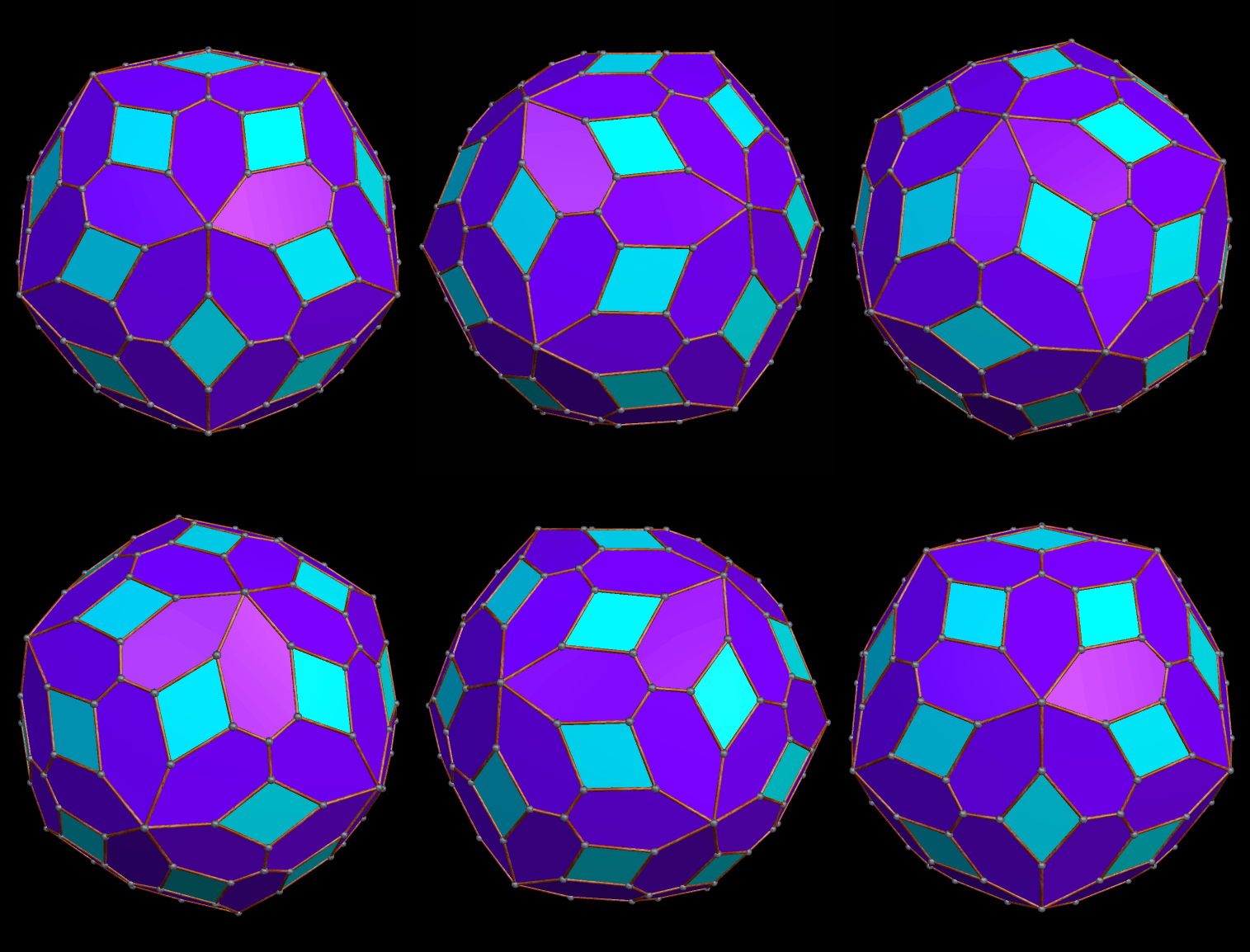
60 hexagons and 30 rhombi

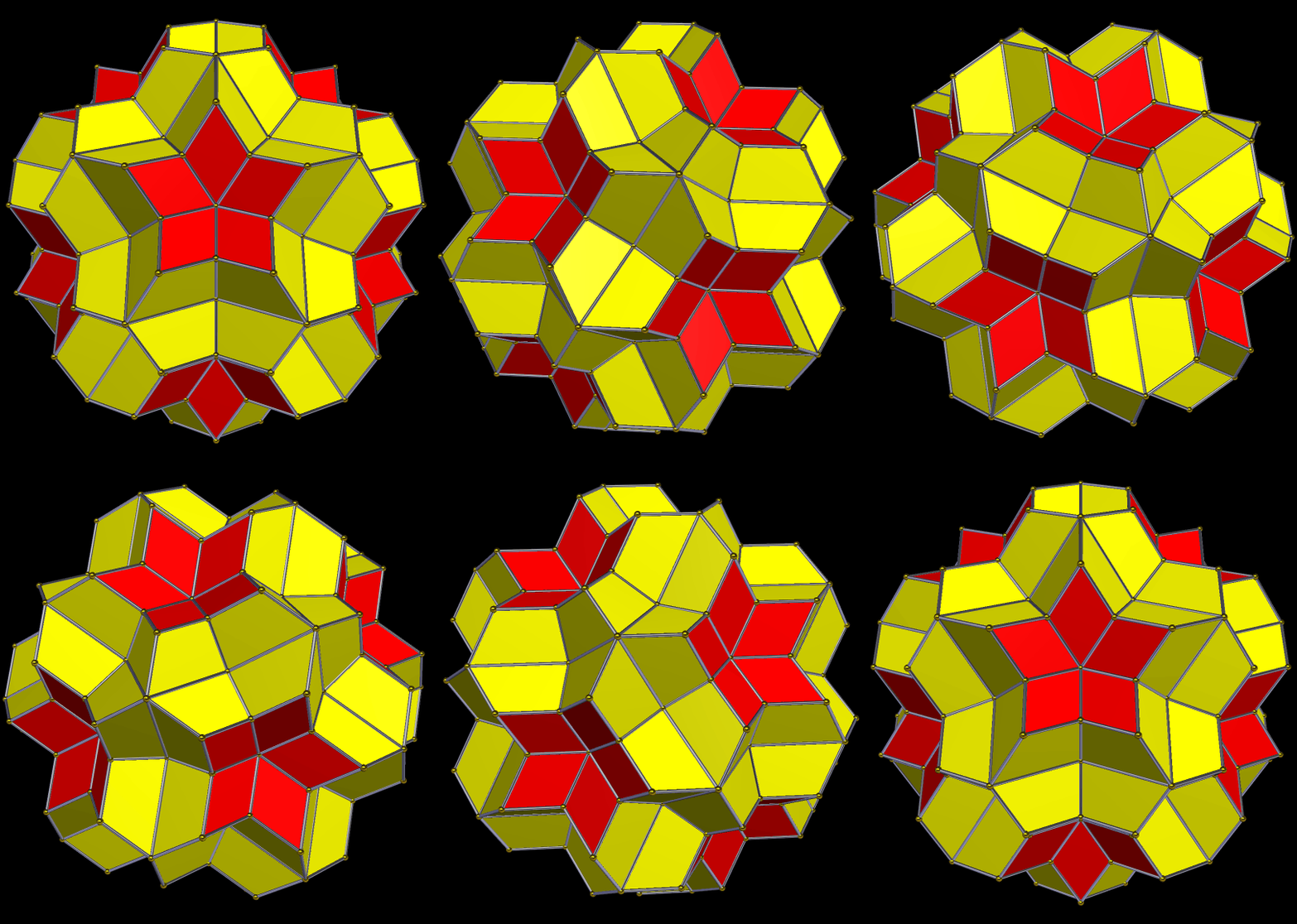
60 rhombi and 120 trapezoids92 faces including 20 enneagons120 of traingle A and 120 of triangle B and 60 rhombi for 300 faces in all

The next one shown has 362 faces — the closest I have come, so far, to a polyhedron with a number of faces which matches the number of days in a year.

362 faces close to a year

big Convex hull

bowtie polyhedron with 20 enneagons and 12 decagons

Convex hhgdull

cool

cool too

irregular pentagons and hexagons

The next one is a variant of the rhombic enneacontahedron, with that polyhedron’s wide rhombic faces replaced by kites, and its narrow rhombi replaced by pairs of isosceles triangles.

kite and triangle variant of the REC

multiple stellated pentagonal dokaiheptacontahedrongif

stellated

Stellated Convex hull

Stellated Convex hull 2

Stellated Convex hull 3I call this next one a “thrice-truncated rhombic triacontahedron.”

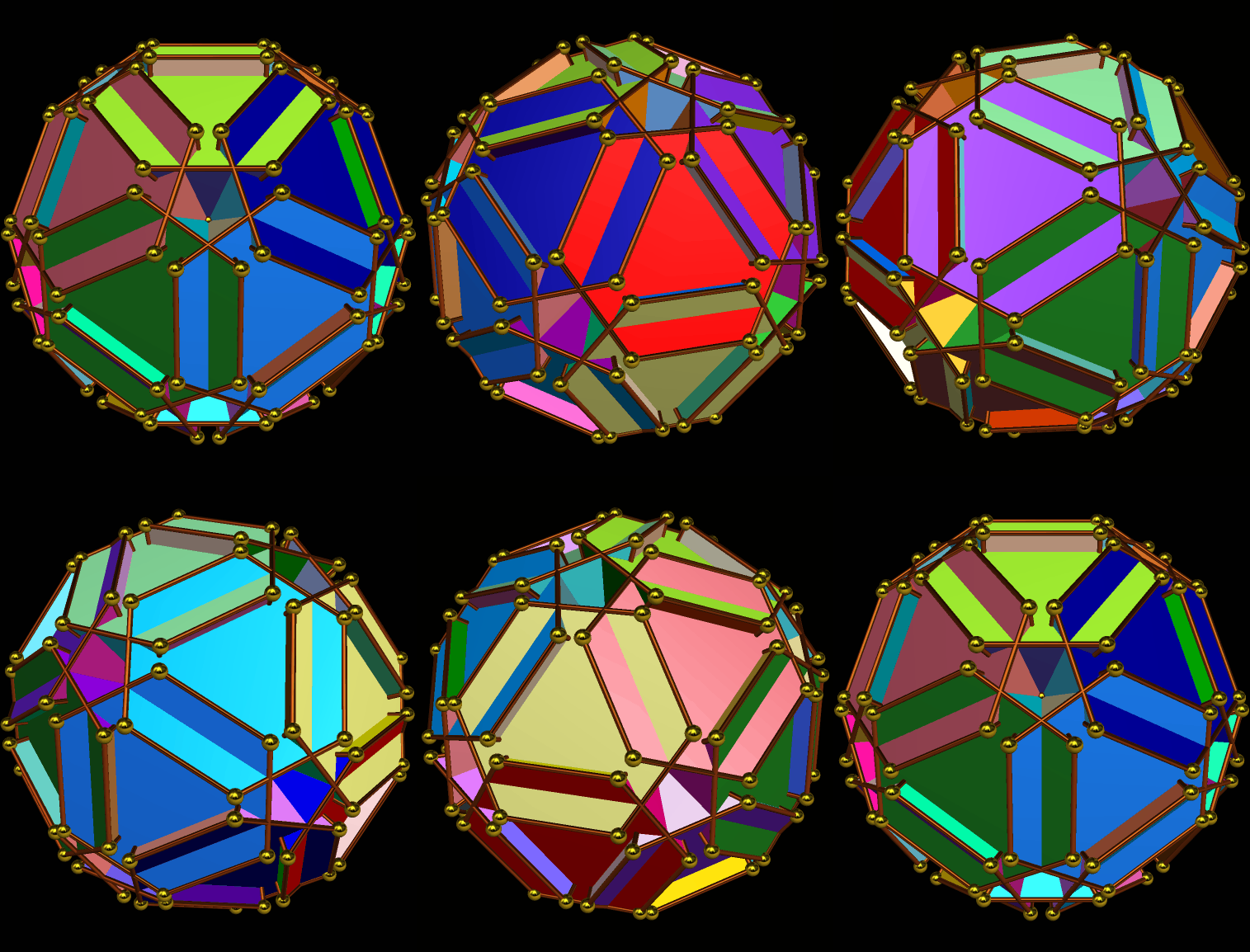
Thrice-truncated RTCIn the remaining polyhedral images in this post, some faces have been rendered invisible. I do this, on occasion, either so that the front and back of the polyhedra can be seen at the same time, or simply for aesthetic reasons.

CoGSHSnvex hhgdull

Expanded GRID shell

Stellated Convex hull 2b

Stellated Convex hull 3b

All of these images were created using Stella 4d:  Polyhedron Navigator. If you’d like to try this program for yourself, the website to visit for a free trial download is www.software3d.com/Stella.php.

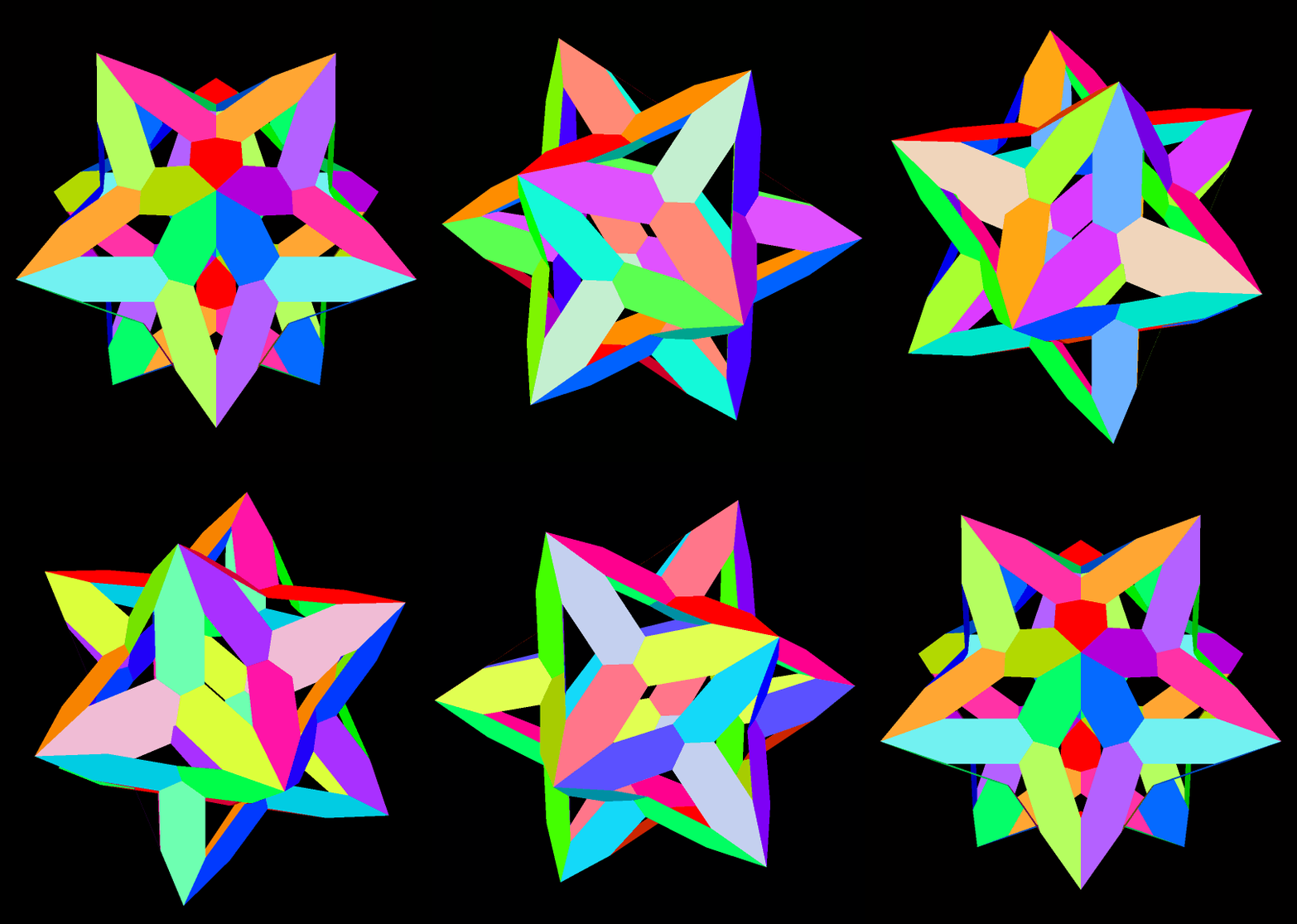
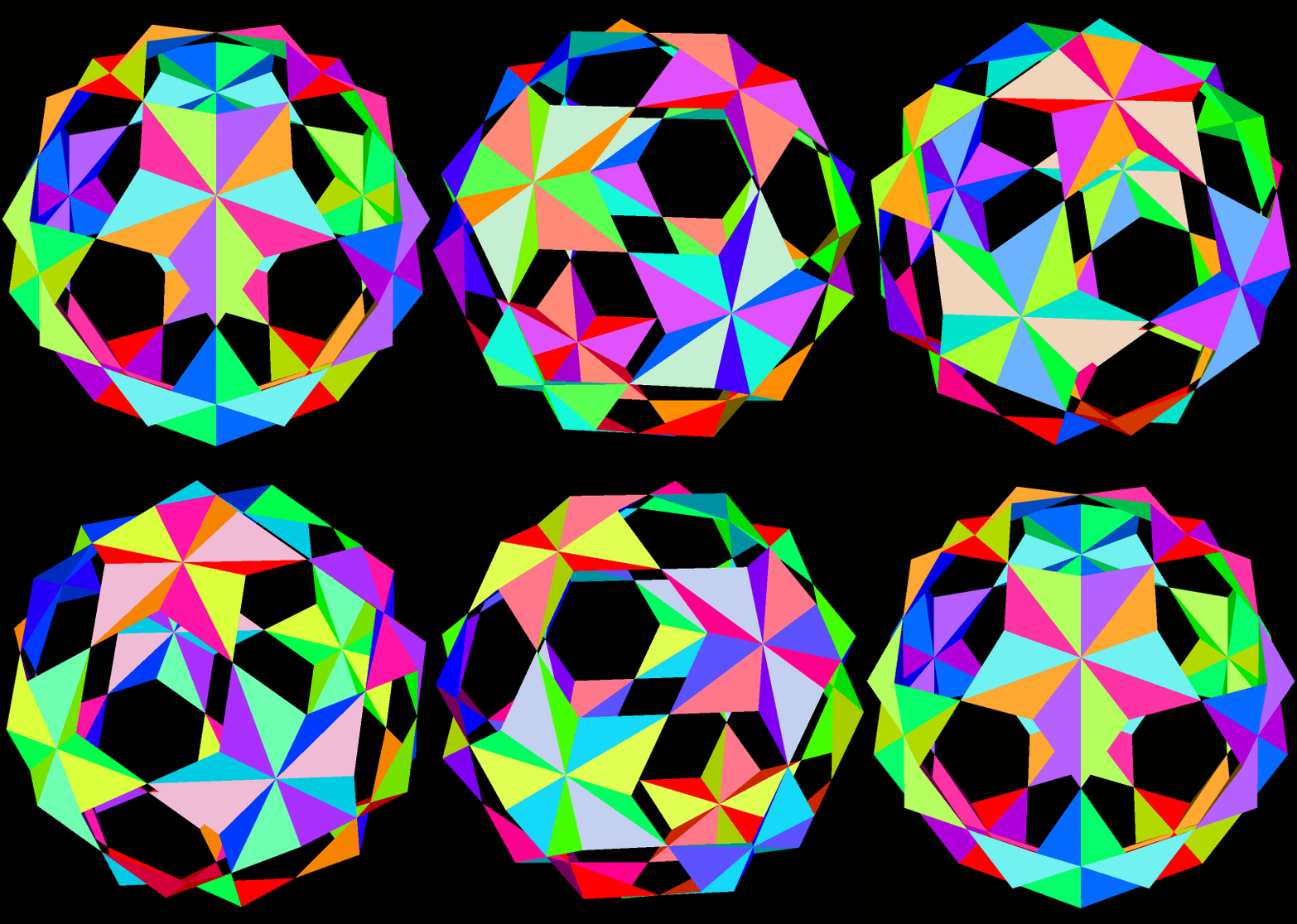
An Icosahedron, Augmented with Twenty Triangular Cupolae, Together with Its Dual

Icosahedron Augmented with Triangular Cupolae

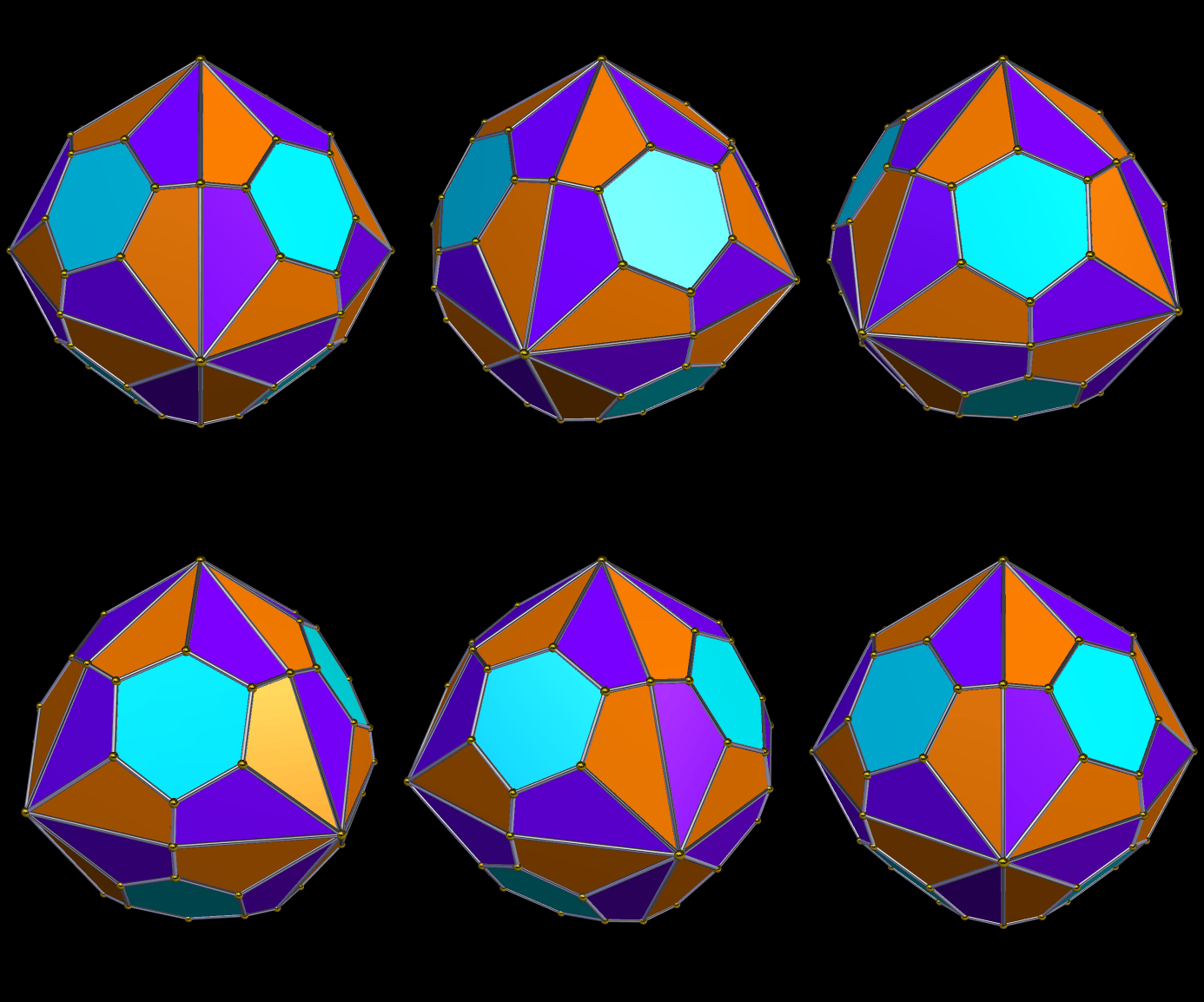
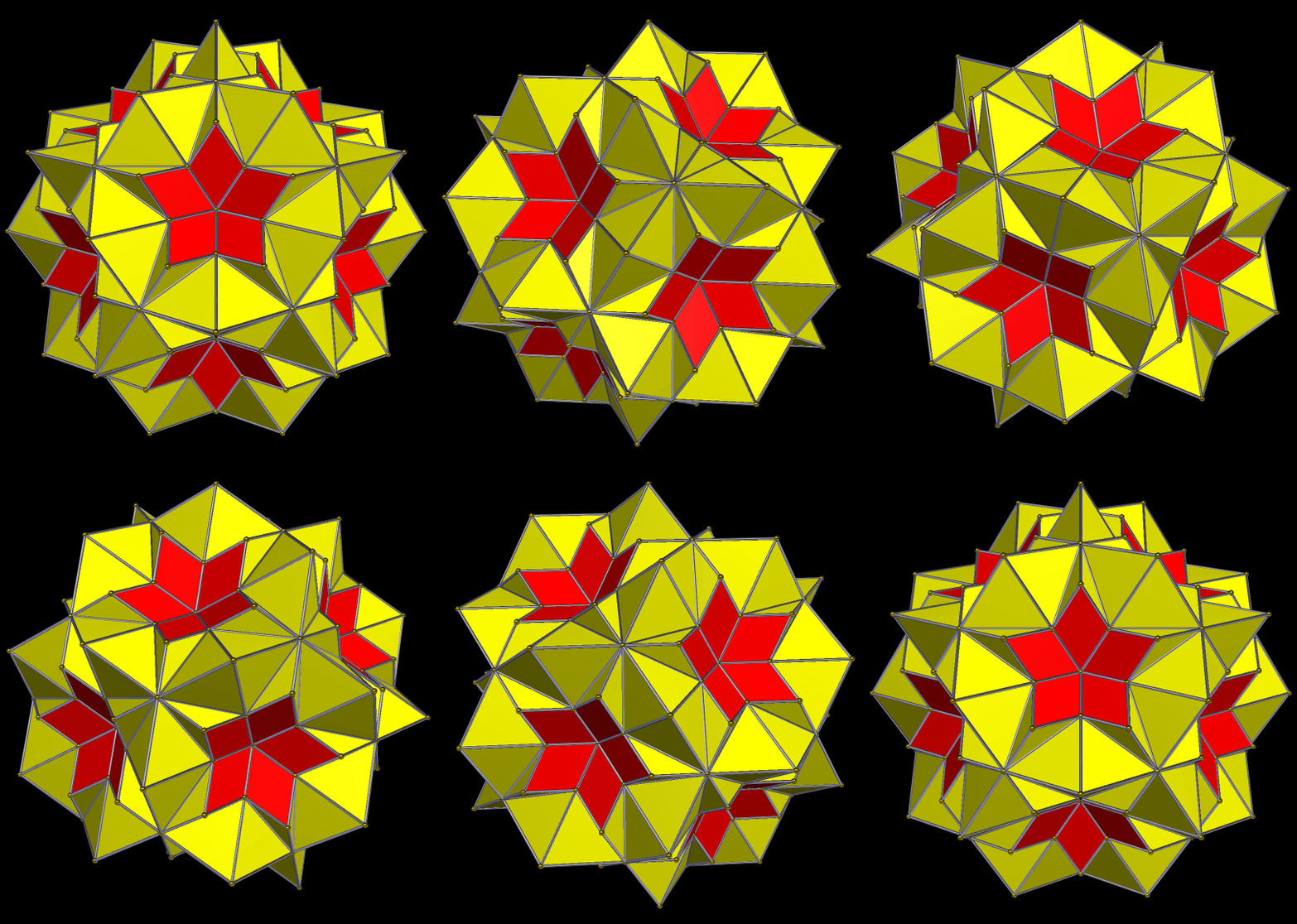
After making the above polyhedron using Stella 4d (a program you can try for free at www.software3d.com/Stella.php), I checked its dual, which is shown below. I was surprised at its appearance, for it resembles a stellated polyhedron, even though it was created by a completely different process.

Icosahedron Augmented with Triangular Cupolae's Dual

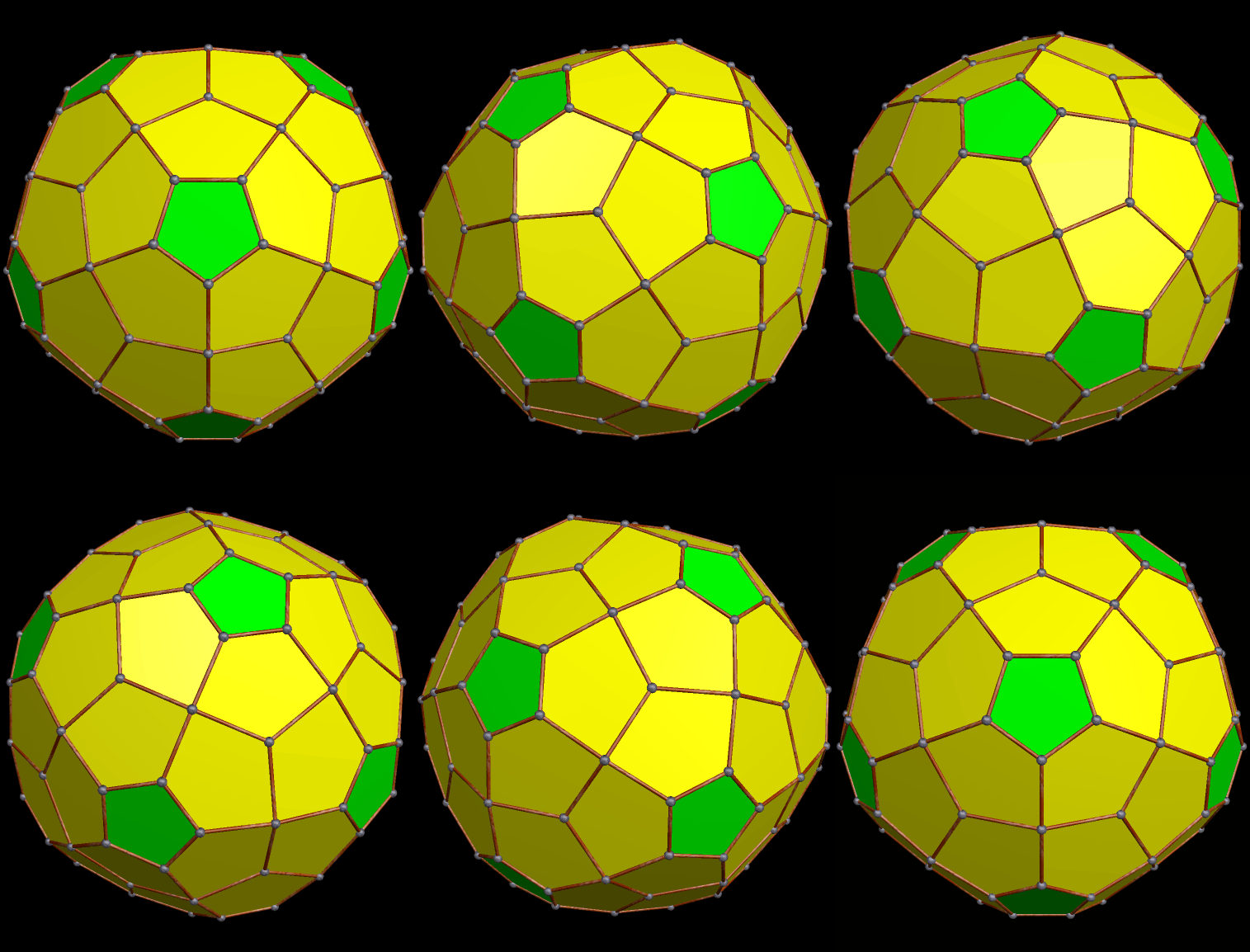
A Pentagonal Dokaiheptacontahedron

pentagonal dokaiheptacontahedrongifThe 72 faces of this polyhedron are all pentagons. Twelve are regular, while the other sixty are not. Something I do not know, but would like to find out:  is 72 the maximum number of faces a convex polyhedron can have, if all its faces must be convex pentagons? 

[Update:  72 is not the maximum, as was explained to me on Facebook. I’ll try to find ways to generate images of more all-pentagon polyhedra, with more faces, for future posts here.]

Side note:  this is the 1000th post on this blog. To all who follow and comment, thank you.

The program I use for these polyhedral investigations is Stella 4d, available at www.software3d.com/Stella.php.

How to Distinguish Between the Waxing and Waning Moon, At a Glance

DC

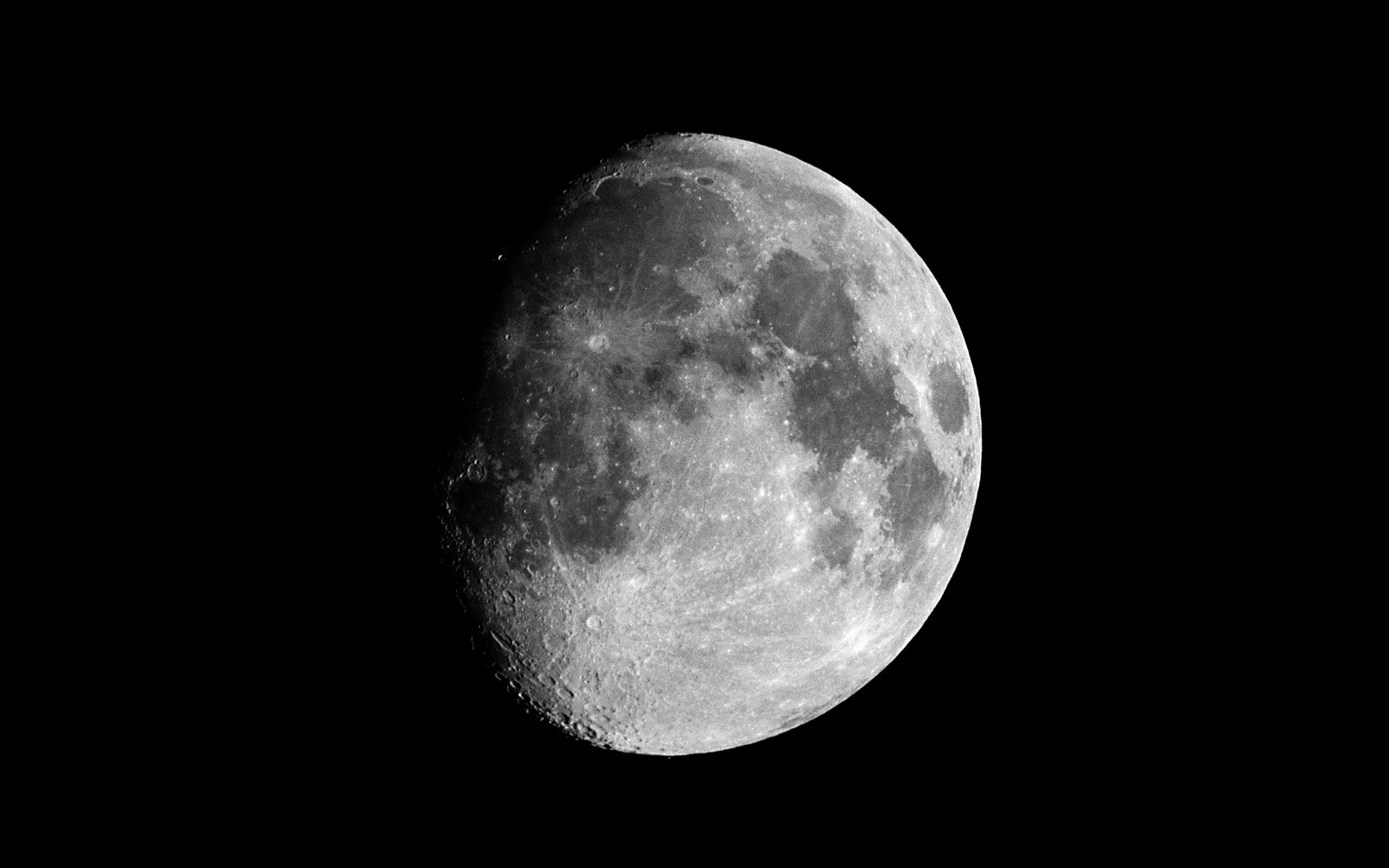
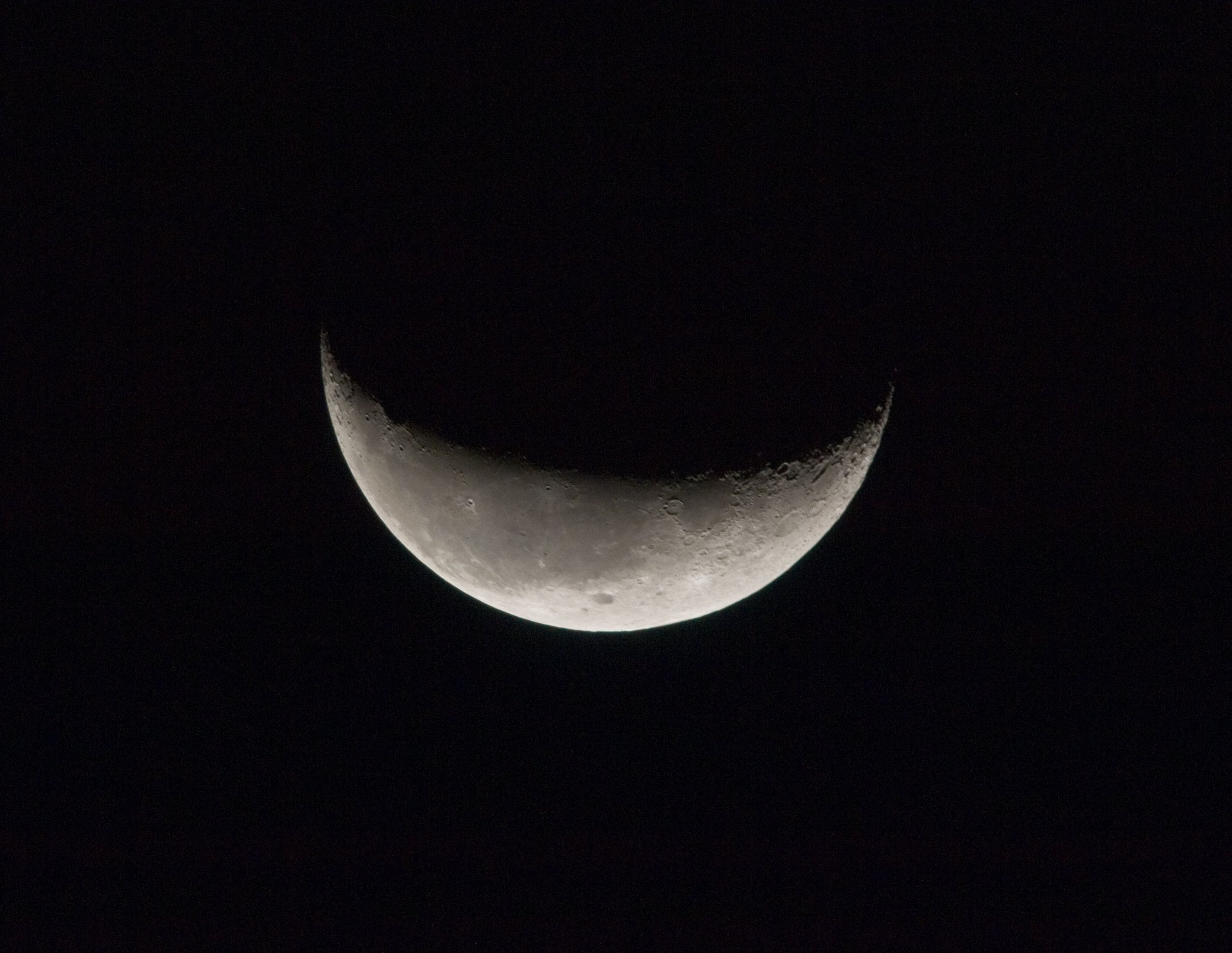
This is a waxing moon, meaning the sunlit portion we can see is growing. The outer curve also makes this view of the moon shaped more like the letter “D,” compared to the letter “C.” For the useful mnemonic here, remember that “D” stands for “developing.” D-shaped moons are in the waxing part of their cycle of phases, growing larger for about two weeks.

DGLater in the waxing portion of the moon’s cycle of phases, it becomes a gibbous moon — but retains its “D-like” shape. It is still slowly getting larger, approaching the full moon state.

CG

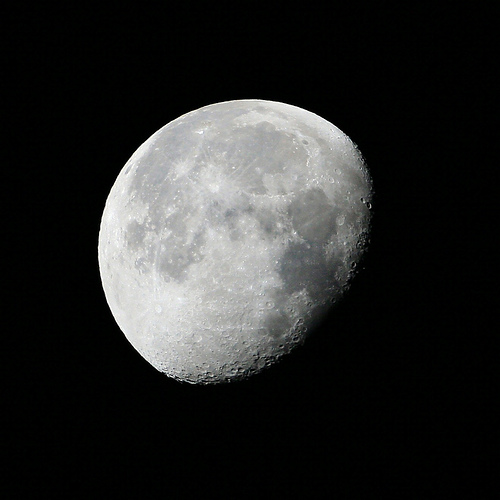
Here is another gibbous moon, but it is shaped more like the letter “C” than the letter “D,” and, in this mnemonic, “C” stands for “concluding.” This moon’s sunlit portion is shrinking, moving away from fullness, towards the new moon state — in other words, it is a waning moon. All “C-shaped” moons, as viewed from Earth’s Northern hemisphere, are waning moons.

CC

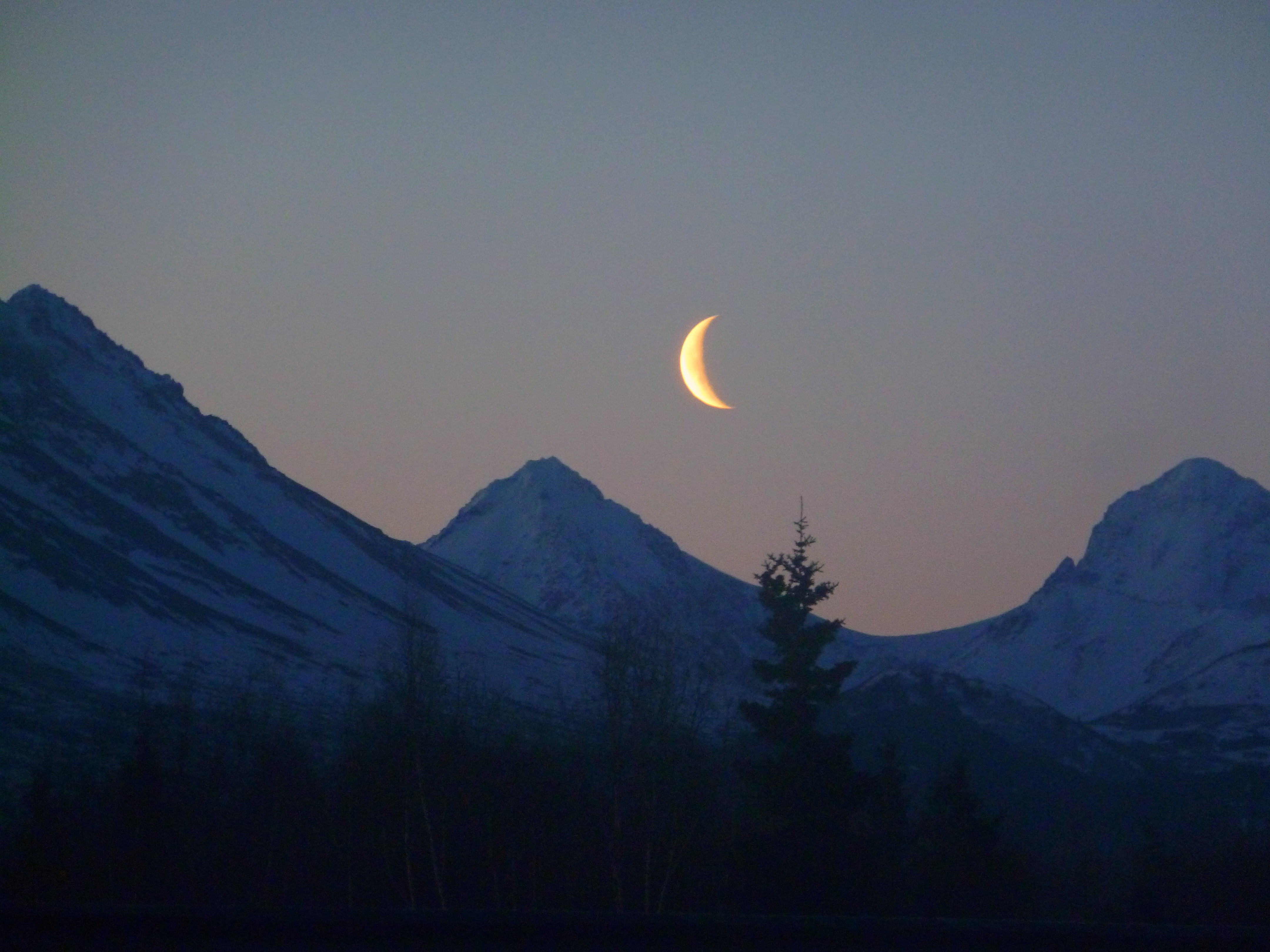
This crescent moon more closely resembles a “C” than a “D,” which is how I know, at a glance, that its phase cycle is concluding, and it is a waning crescent, soon to become invisible as a new moon.

AC

This last picture shows the most difficult configuration to figure out:  the points of the crescent near the moon’s North and South poles both point up. Having them both point down would pose the same problem. Here’s the solution, though:  check to see which crescent-tip appears higher in the sky. In this case, it is the one on the left. That shifts the curve at the bottom of the moon (the one that is an actual moon-edge, rather than the terminator) slightly left-of-center, making the visible moon-edge more closely resemble a “C” than a “D.” This crescent moon, therefore, is a waning crescent.

Later addition:  as a commenter pointed out, below, this method does not work from Earth’s Southern hemisphere — in fact, in that half of the world, the “D”/”C” rule must be completely reversed, in order to work. To accomplish this, “D” could stand for “diminishing,” and “C” could stand for “commencing,” instead.

[Image/copyright note:  I did not take these photographs of the moon. They were found with a Google-search, and I chose images with no apparent signs of copyright. I am assuming, on that basis, that these images are not copyrighted — but, if I am wrong, I will replace them with other images, upon request.]

On the Direction of Motion of Spinning Polyhedra, the Rotating Earth, and Both the Rotation and Orbital Revolution of Other Objects in the Solar System

twistedIn which direction is the polyhedron above rotating? If you say “to the left,” you’re describing the direction faces are going when they pass right in front of you, on the side of the polyhedron which faces you. However, “to the left” won’t really do . . . for, if you consider the faces hidden on the side facing away from you, they’re going to the right. What’s more, both of these statements reverse themselves if you either turn your computer over, or stand upside-down and look at the screen. Also, if you do both these things, the situation re-reverses itself, which means it reverts to its original appearance.

Rotating objects are more often, however, described at rotating clockwise or counterclockwise. Even that, though, requires a frame of reference to be made clear. If one describes this polyhedron as rotating clockwise, what is actually meant is “rotating clockwise as viewed from above.” If you view this spinning polyhedron from below, however, it is spinning counterclockwise.

Since I live on a large, spinning ball of rock — of all solid objects in the solar system, Earth has the greatest mass and volume, both — I tend to classify rotating objects as having Earthlike or counter-Earthlike rotation, as well. Most objects in the Solar system rotate, and revolve, in the same direction as Earth, and this is consistent with current theoretical models of the formation of the Solar system from a large, rotating, gravitationally-contracting disk of dust and gas. The original proto-Solar system rotated in a certain direction, and the conservation of angular momentum has caused it to keep that same direction of spin for billions of years. Today, it shows up in the direction that planets orbit the sun, the direction that most moons orbit planets, and the direction that almost everything in the Solar system rotates on its own axis. Because one direction dominates, astronomers call it the “prograde” direction, with the small number of objects with rotation (or revolution, in the case of orbital motion) in the opposite direction designated as moving in the “retrograde” direction.

So which is which? Which non-astronomical directional terms, as used above when describing the spinning polyhedron there, should be used to describe the prograde rotation of Earth, its prograde orbital revolution around the sun, and the numerous other examples of prograde circular or elliptical motion of solar system objects? And, for the few “oddballs,” such as Neptune’s moon Triton, which non-astronomical terms should be used to describe retrogade motion? To find out, let’s take a look at Earth’s revolution around the Sun, and the Moon’s around the Earth, for those are prograde is well. This diagram is not to scale, and the view is from above the Solar, Terran, and Lunar North poles.

animation

[Image found reblogged on Tumblr, creator unknown.]

Prograde (Earthlike) motion, then, means “counterclockwise, as viewed from above the North pole.” To describe retrograde (counter-Earthlike) motion, simply substitute “clockwise” for “counterclockwise,” or “South pole” for “North pole,” but not both. Here’s the spinning Earth, as viewed from the side:

just_earth_800

[Image source: http://brianin3d.wordpress.com/2011/03/17/animated-gif-of-rotating-earth-via-povray/ ]

If you’ll go back and check the polyhedron at the top of this page, you’ll see that its spin is opposite that of this view of the Earth, and it was described as moving clockwise, viewed from above. That polyhedron, and the image of Earth above, would have the same direction of rotation, though, if either of them, but not both, were simply viewed upside-down, relative to the orientation shown.

Stella 4d, the software I use to make rotating polyhedral .gifs (such as the one that opened this post), then, has them spin, by default, in the same direction as the Earth — if the earth’s Southern hemisphere is on top! As I live in the Northern hemisphere, I wondered if that was deliberate, for the person who wrote Stella 4d, available at www.software3d.com/Stella.php, lives in Australia. Not being shy, I simply asked him if this were the case, and he answered that it was a 50/50 shot, and simply a coincidence that it came out the way it did, for he had not checked. He also told me how to make polyhedral .gifs which rotate as the Earth does, at least with the Northern hemisphere viewed at the top:  set the setting of Stella 4d to make .gifs with a negative number of rotations per .gif-loop. Sure enough, it works. Here’s an example of such a “prograde” polyhedron:

negative spin

Three Different Stellations of the Rhombic Triacontahedron

Rhombic Triaconta stellation

These polyhedra are selected from the the (long) stellation-series of the rhombic triacontahedron. Stellating polyhedra, and manipulating them in other ways, is easy with Stella 4d, which you may try, as a free trial download, here:   www.software3d.com/Stella.php.

stellated RTC one of many

stellated RTC another of many

A Tessellation Using Regular Octagons, Squares, Rhombi, and Non-Convex, Equilateral Hexakaitriacontagons

Regular Octagons Squares Rhombi and Nonconvex Hexakaitriacontagons

A Radial Tessellation Including Regular Pentagons and Hexagons, As Well As Expanding Gap-Polygons

pentagons and hexagons

Radial tessellations are described in the previous post. This is a continuation of the idea, but with both regular pentagons and hexagons included. As before, the largest resulting gap-polygons expand as one recedes from the center.