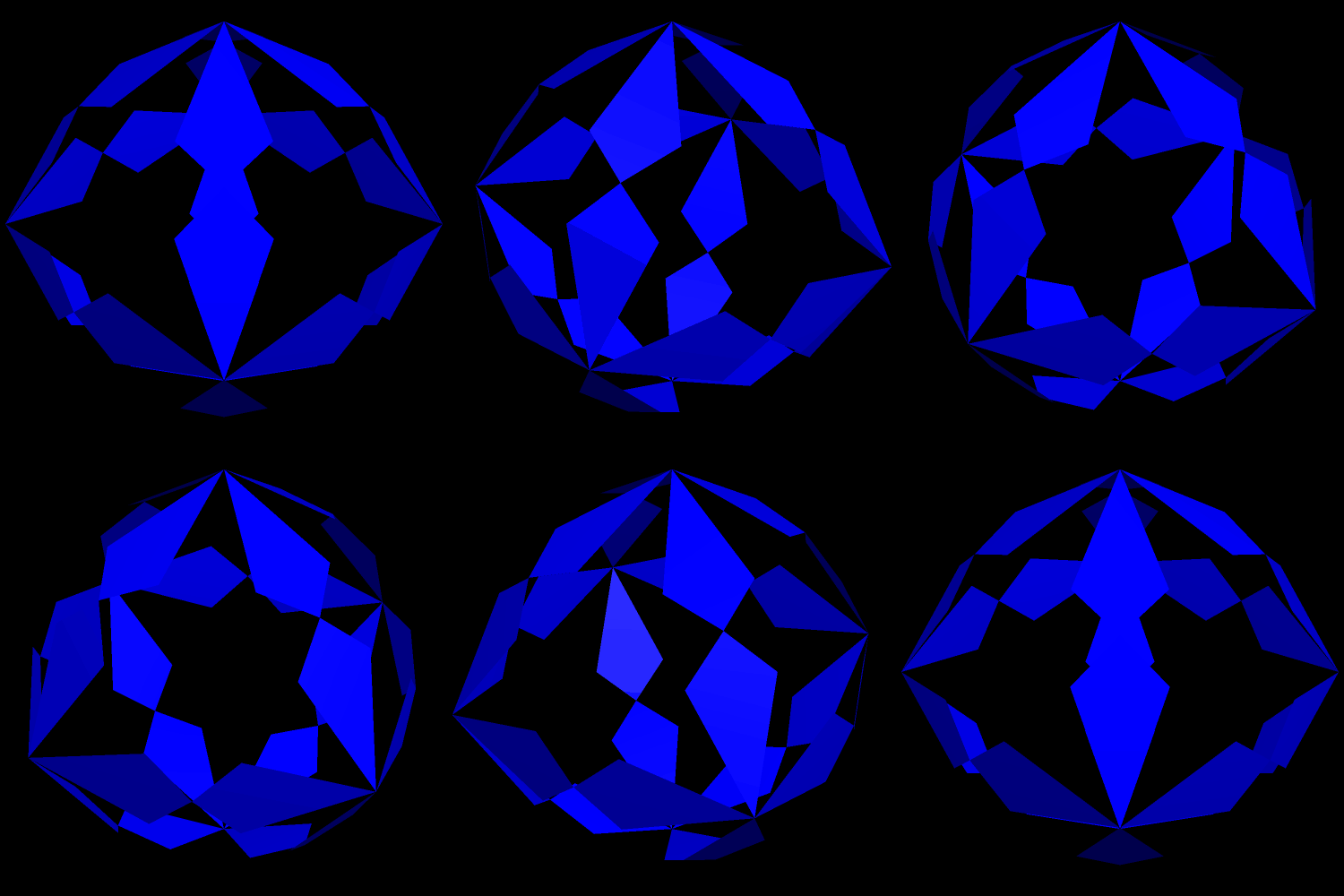
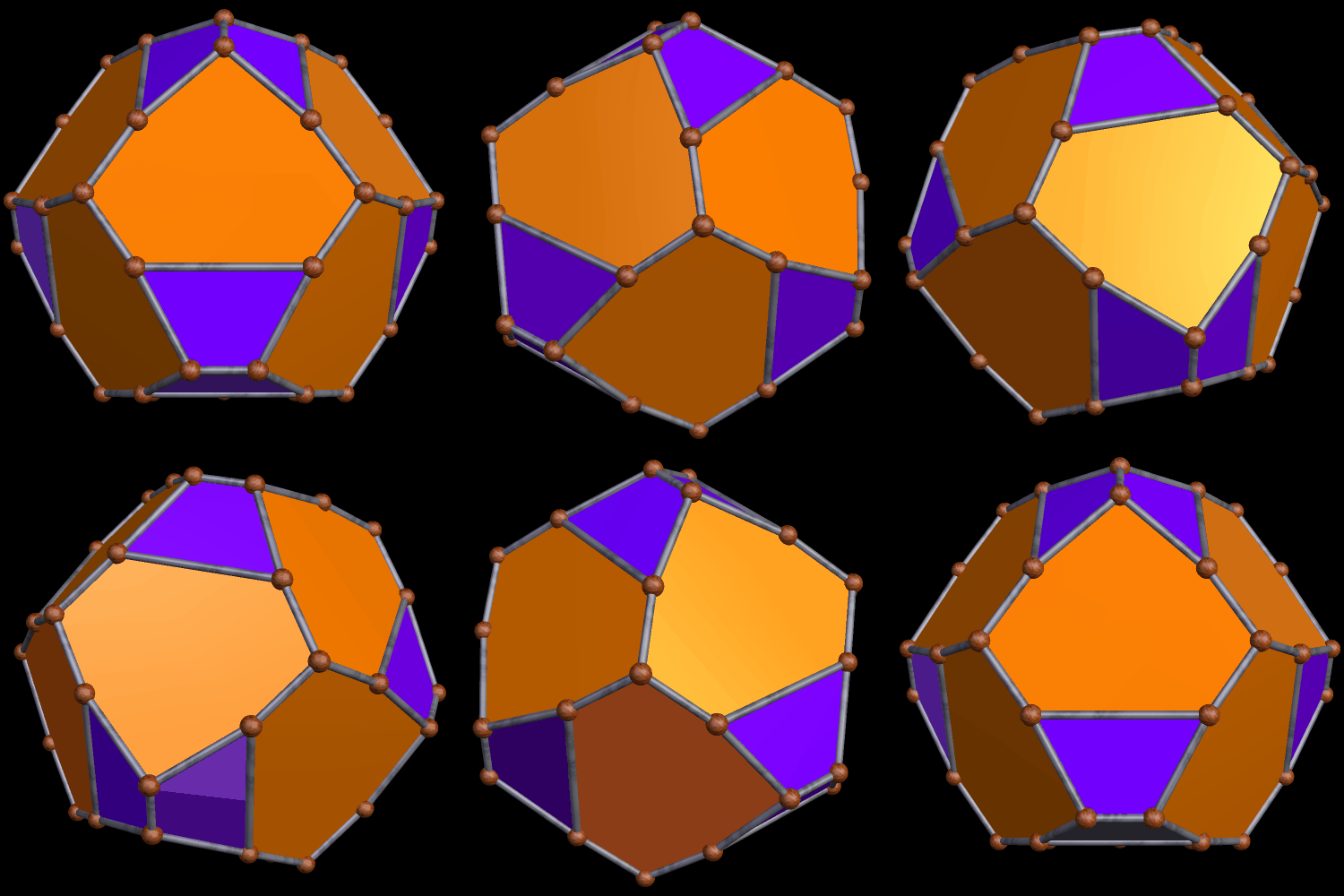
Octagons, Hexagons, and Squares

octagons hexagons squares

Hexagons and Octagons

hexagons and octagons

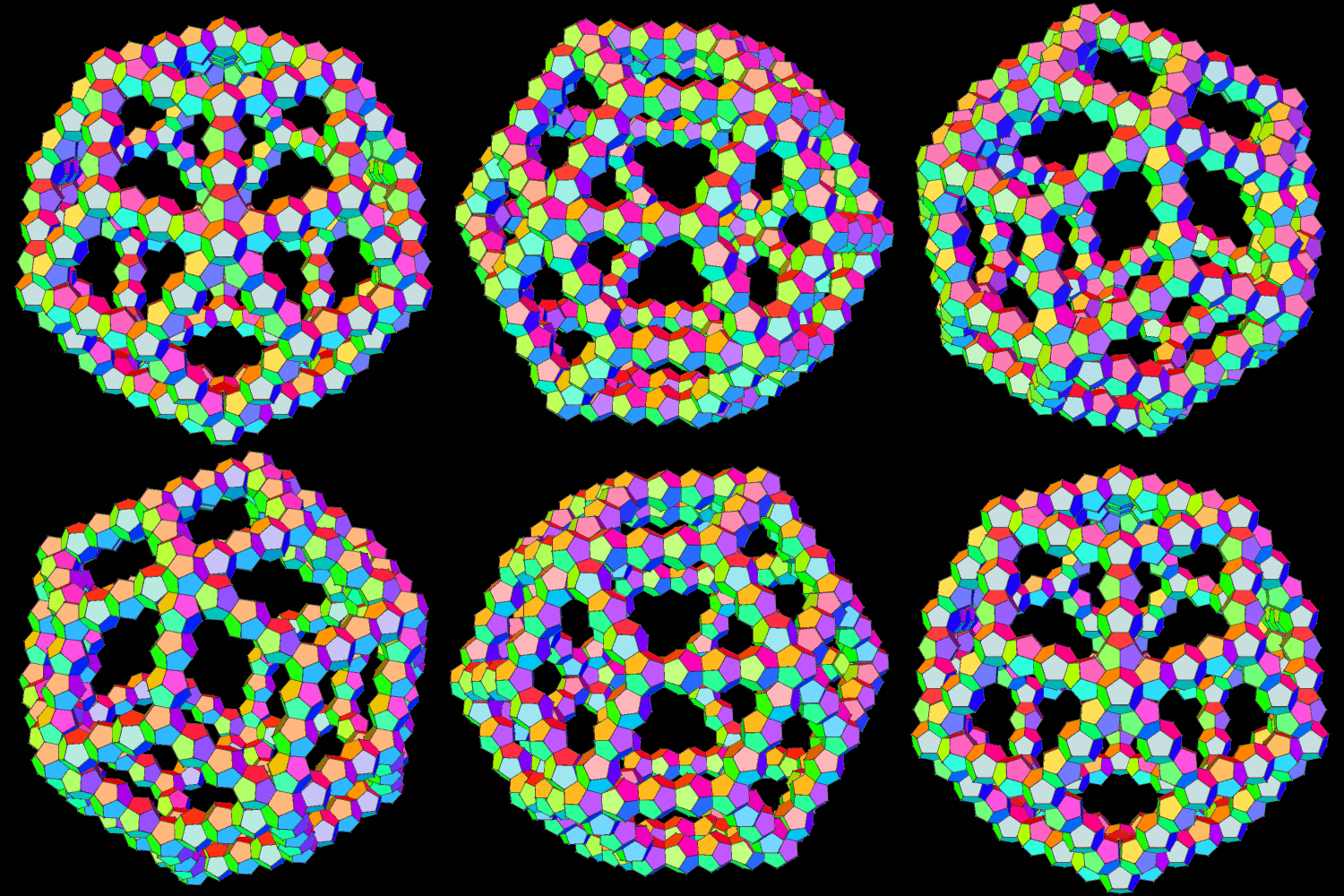
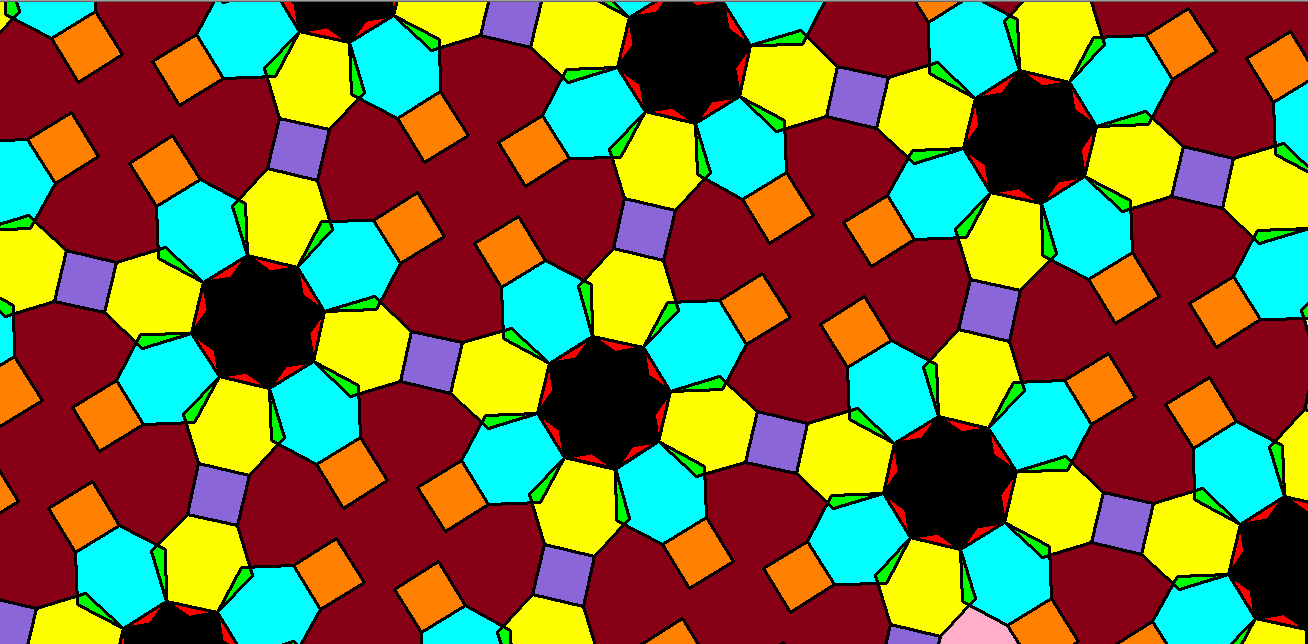
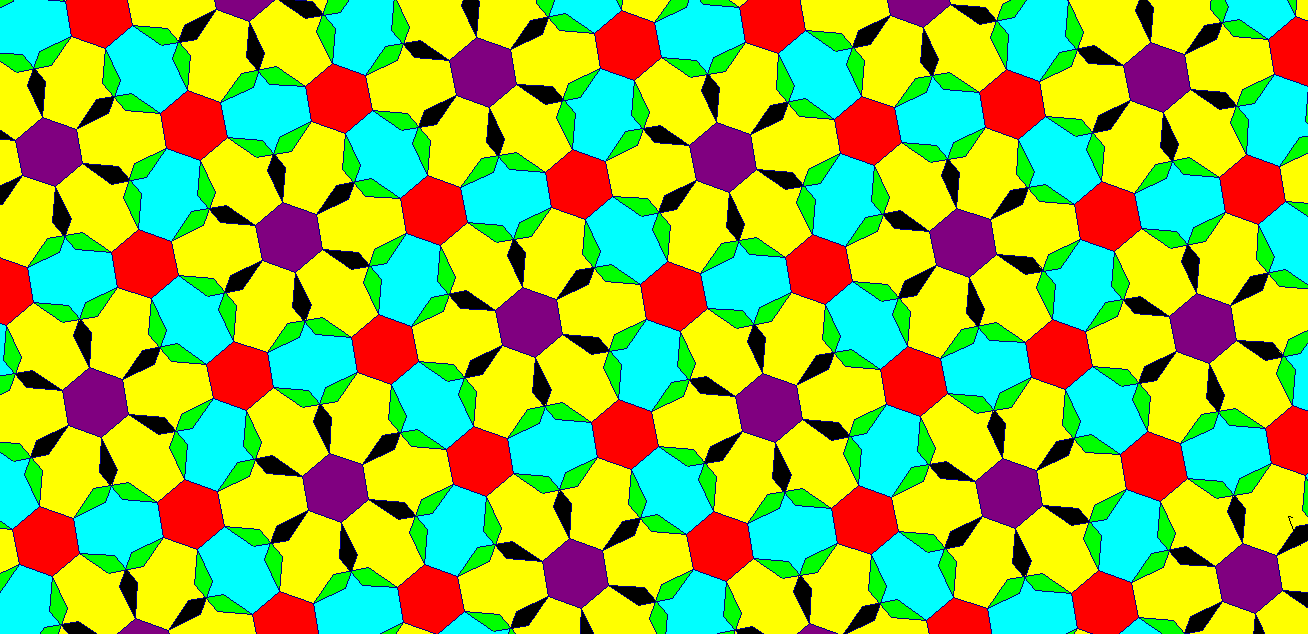
A Tessellation Featuring Multicolored, Regular Tetracontagons, as Well as Tetraconcave, Black, and Equilateral Hexatriacontagons

40

A Kite-Faced Polyhedron Based on the Cube, Octahedron, and Rhombic Dodecahedron

related to rd look at colors

Above is the entire figure, showing all three set of kites. The yellow set below, though, lie along the edges of a rhombic dodecahedron.

related to rd look at colors yellow rd shell

The next set, the blue kites, lie along the edges of an octahedron.

related to rd look at colors blue octahedron edges

Finally, the red set of kites lies along the edges of a cube — the dual to the octahedron delineated by the blue kites.

related to rd look at colors red cube

These images were made using Stella 4d, which is available here.

“Fractured” Octahedra

These are variations of the octahedron. I made them all with Stella 4d, which is available here. “Fractured” isn’t an official term, as “truncated or stellated” are, but I can’t come up with a better description, at least not yet. Other suggestions are welcome.

fractured octahedron 2

fractured octahedron 3 rb

fractured octahedron

Unnamed Dual xUnnamed Dual xy

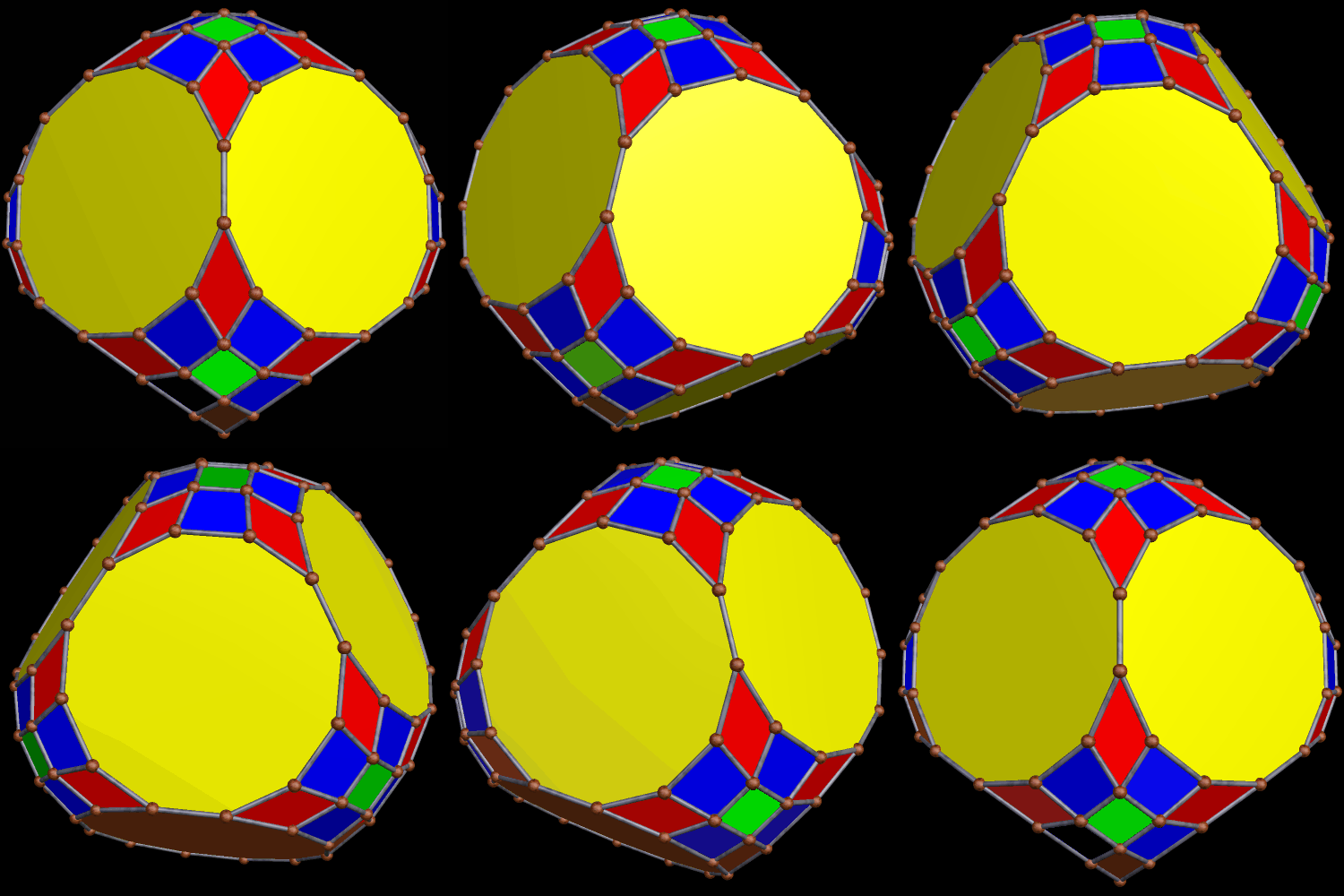
A Variant of the Octahedron Which Features Regular Dodecagons and Quadrilaterals of Three Types

8 dodecagons etc

(See here for more information on Stella 4d, the software used to create this image.)

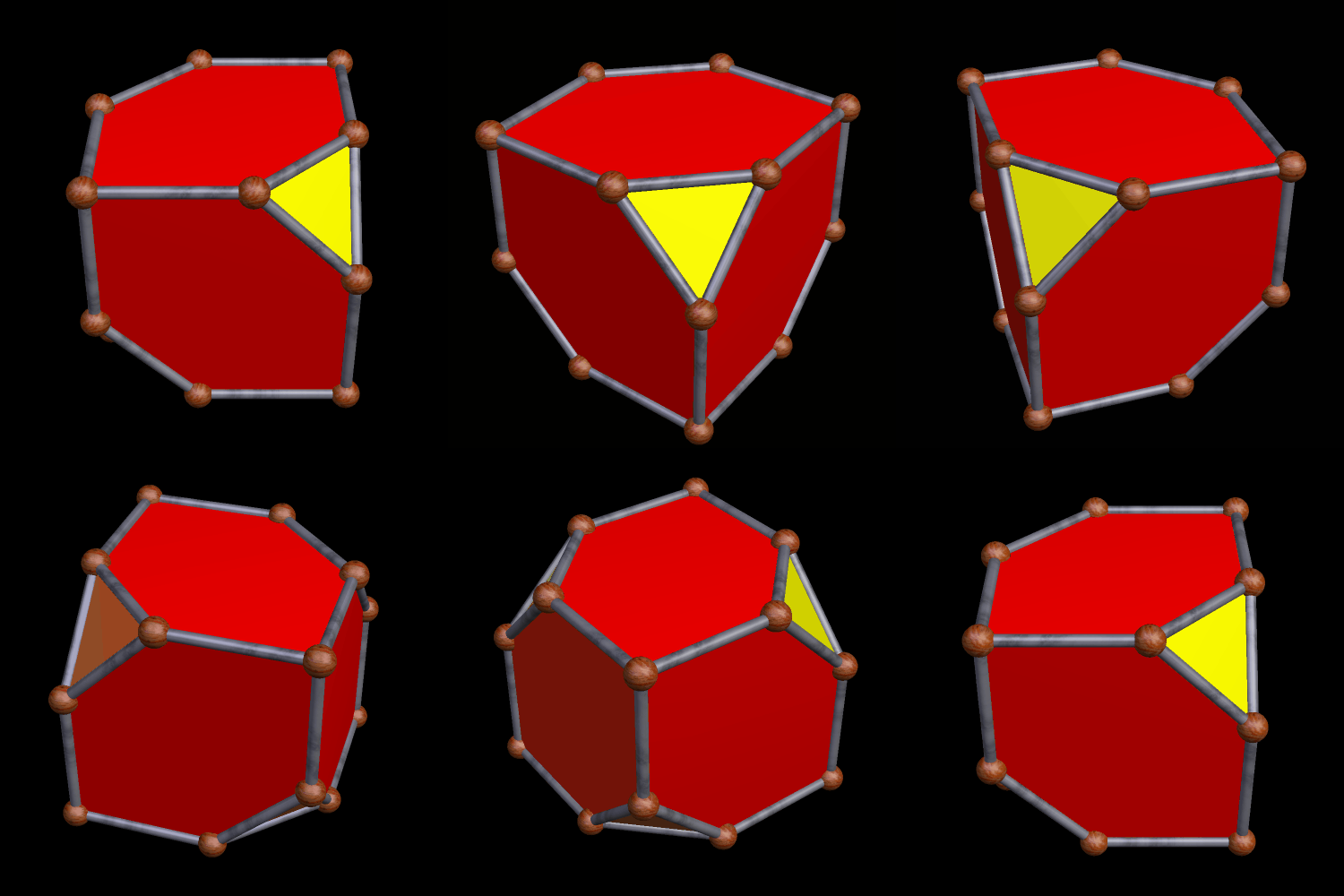
Six Hexagons and Four Triangles, As Faces of a Small Polyhedron

6 hex and 4 tril

One could call this a half-truncated cube. A fully truncated cube has eight triangular faces, created by truncation, and this has half as many.

(See here for more information on Stella 4d, the software used to create this image.)

A Survey of Polyhedra with Pyritohedral Symmetry

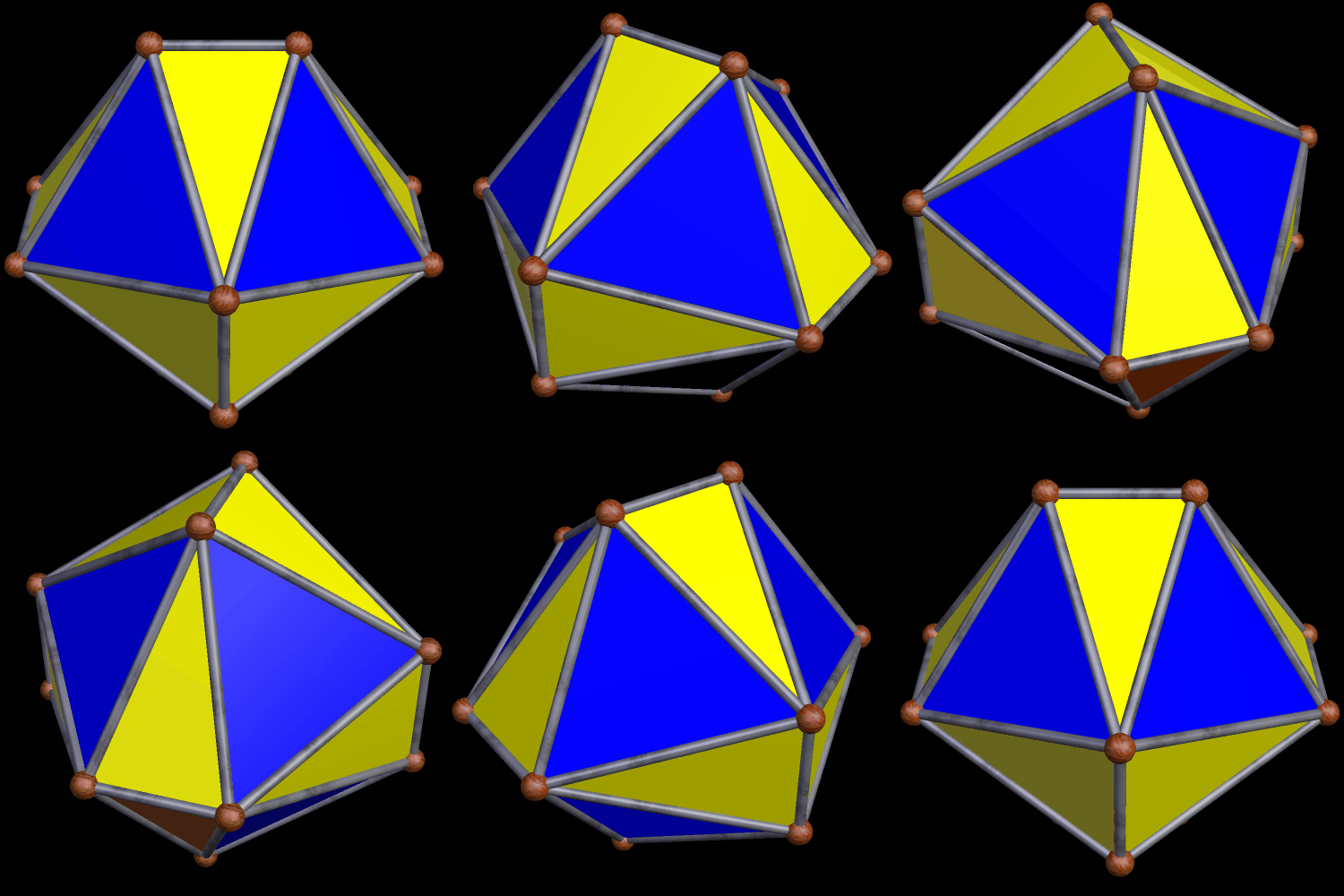
The simplest way for many to understand pyritohedral symmetry is simply to realize that it is the symmetry of the seams in a volleyball. The first time I encountered this unusual symmetry-type was in the golden icosahedron I blogged about here, a figure which much resembles this pyritohedral icosahedron, except the dozen isosceles triangles in this one have a leg-to-base ratio which is not the golden ratio.

non golden pyritohedral icosahedron

Earlier today, I went on a search for polyhedra with pyritohedral symmetry. I found several, but the worthwhile findings from the search are far from exhausted. Here are some others I found, exploring and manipulating polyhedra using Stella 4d, which you can try at this website.

another pyritohedral version of an icosahedronIn the version of the pyritohedral icosahedron above, the twelve green triangles have become heptagons which use very short sides to approximate triangles. The one below is of a similar figure, but one in which truncations has happened, so I call it a truncated pyritohedral icosahedron.
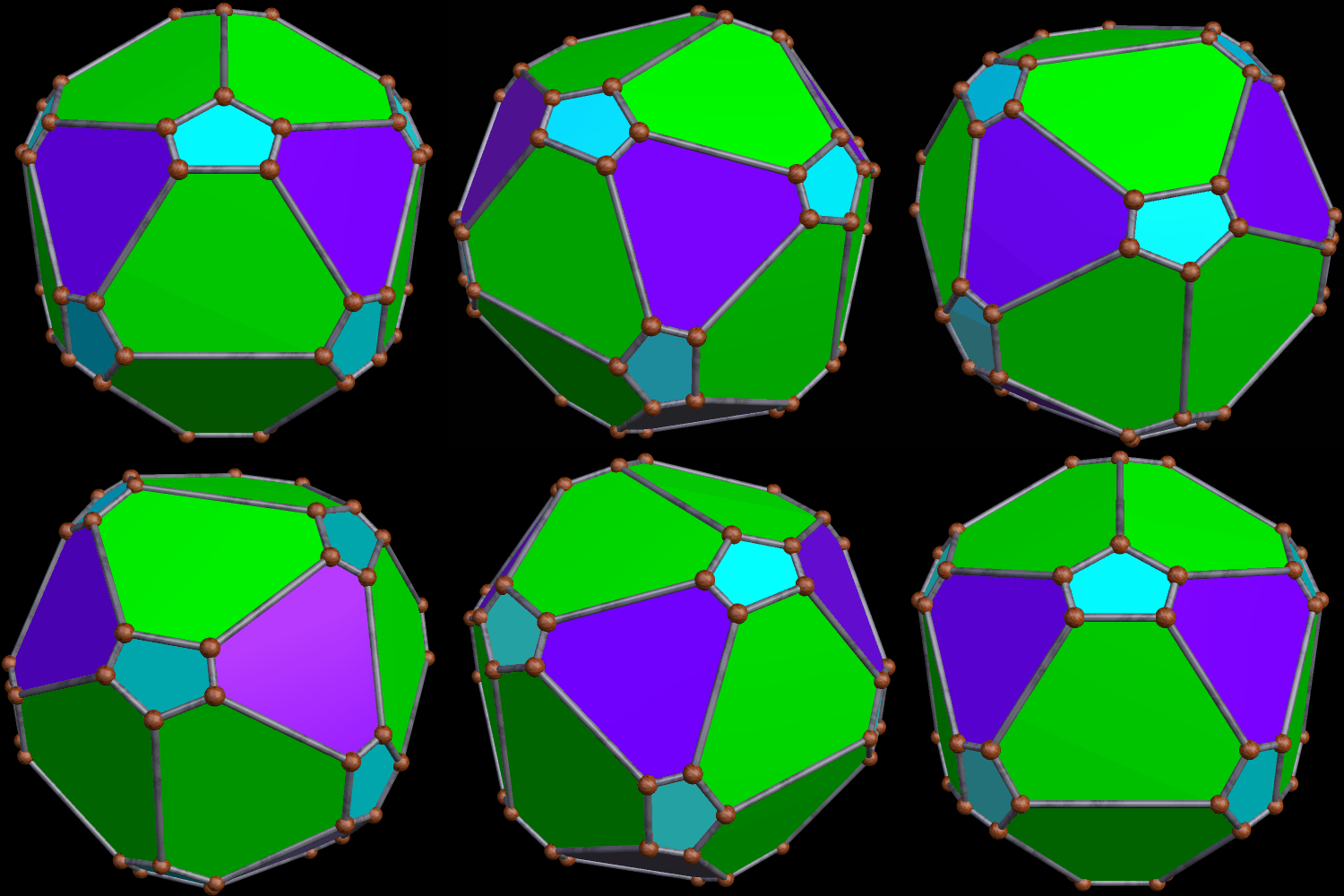
pyritohedral version of a truncated icosahedron

There also exist many pyritohedral polyhedra based, more or less, on the cube. These are a few I have found:
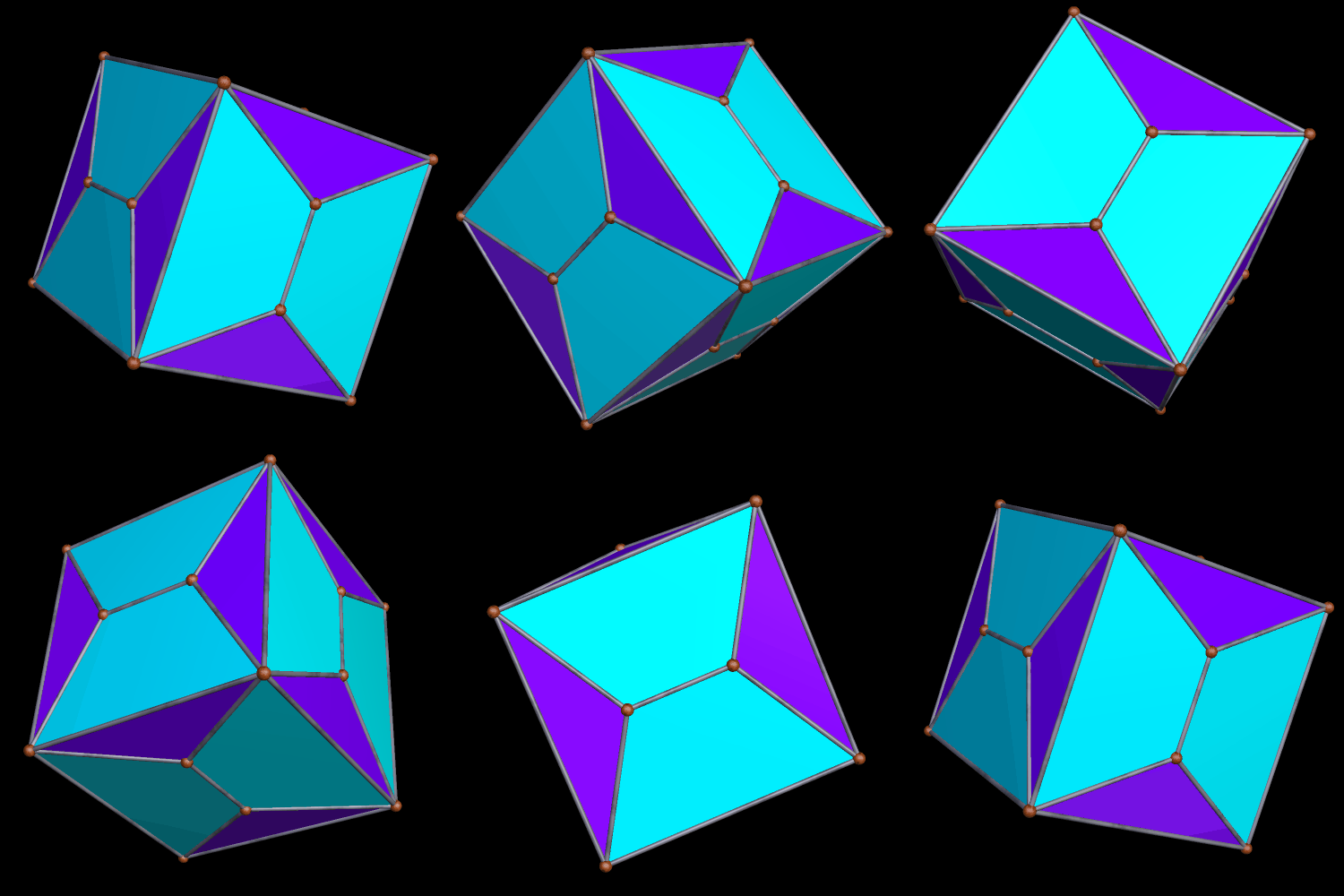
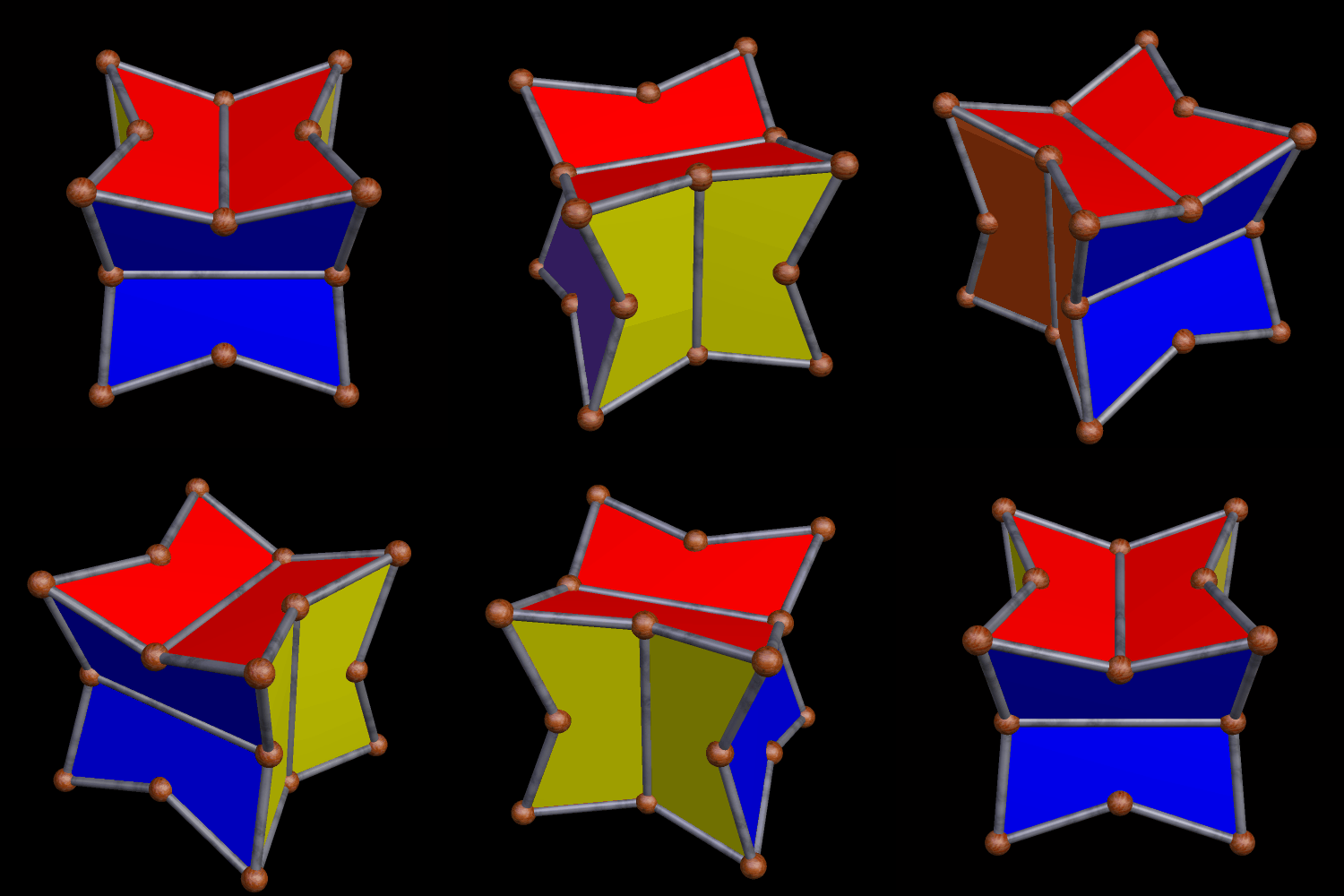
pyritohedral cube

pyritohedral cube variant

another pyritohedral cube

Now, is this next one a pyritohedral cube, or a pyritohedral dodecahedron? A case could be made for either, so it inhabits a “gray zone” between varying categories.
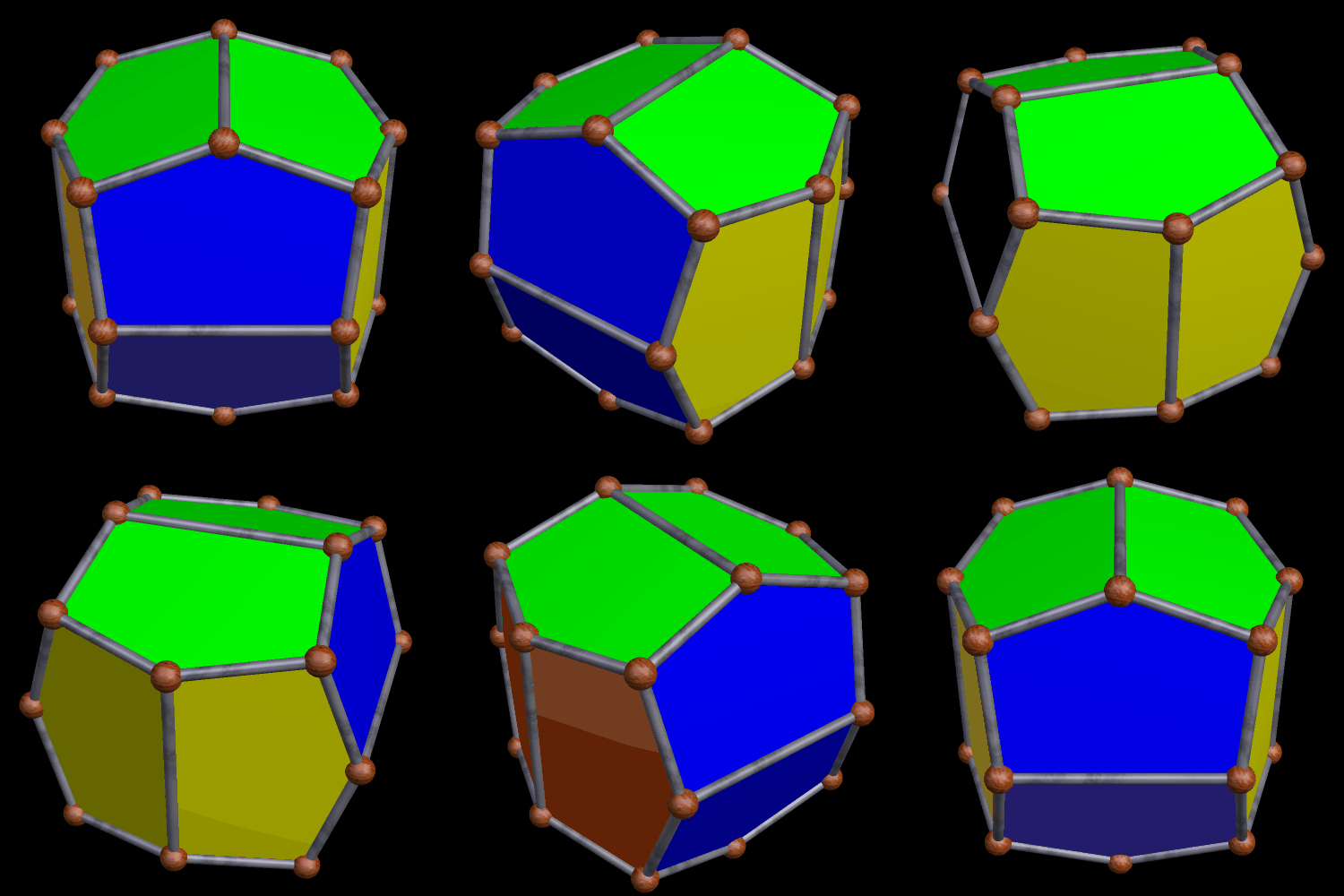
pyritohedral dodecahedron

Here is a pyritohedral icosidodecahedron:
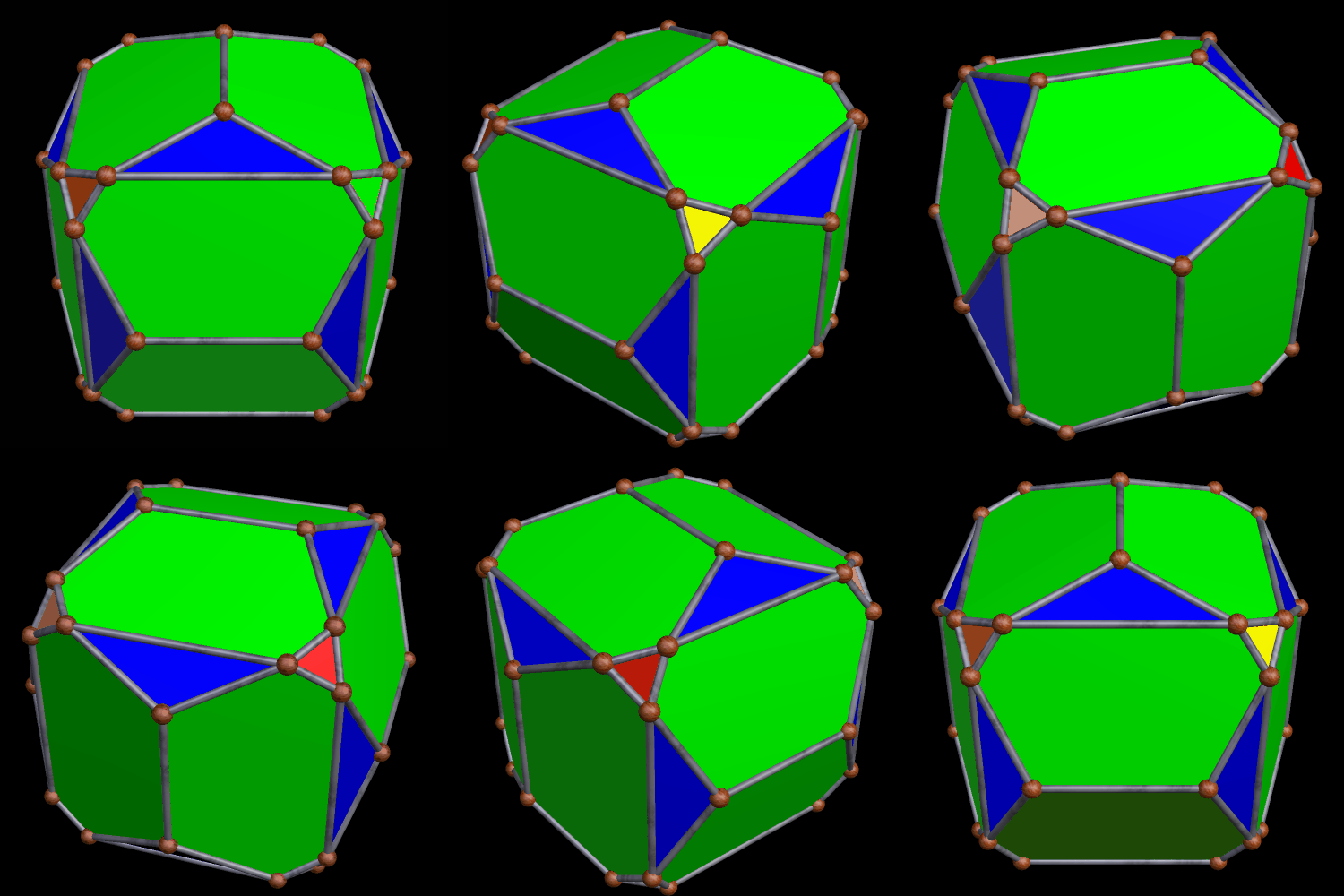
pyritohedral icosidoecahedronl

This one could probably be described in multiple ways, also, but it looks, to me, like a rhombic dodecahedron with its six four-valent vertices being double-truncated in a pyritohedral manner, with pairs of isosceles trapezoids appearing where the truncations took place.

Convex hull of icosahedron plus CO

One thing that this one, and the last, have in common is that the largest faces are heptagons. It appears to be a pyritohedral dodecahedron which has been only partially truncated.

12 helptagons and 8 trianlgesl

This survey could not have been performed without a program called Stella 4d, which I rely on heavily for polyhedral investigations. It may be purchased, or tried for free, at http://www.software3d.com/Stella.php.
If You Have Enough Platonic Dodecahedra Around, and Glue Them Together Just Right, You Can Make a Rhombic Triacontahedron.

Aren’t you glad to know that? As soon as I found out icosahedra can form a rhombic dodecahedron (see last post), I knew this would be true as well. Why? Zome explains why, actually. It’s at http://www.zometool.com. Anything buildable with yellow Zome can be built out of icosahedra. Dodecahedra con form anything buildable with red Zome. Finally, if you can make it with blue Zome, it can be built out of rhombic triacontahedra. It follows that rhombicosidodecahedra can build anything Zome-constructible — but one look at a Zomeball makes that easy to believe, since Zomeballs are modified rhombicosidodecahedra.

Anyway, here’s the rhombic triacontahedron, made of dodecahedra:

Augmented Dodeca

[Image created with Stella 4d; see http://www.software3d.com/Stella.php for more info re: this program.]

A Rhombic Dodecahedral Lattice, Made of Icosahedra

Augmented Icosa

I used Stella 4d: Polyhedron Navigator to make this. You can find this program at http://www.software3d.com/Stella.php.