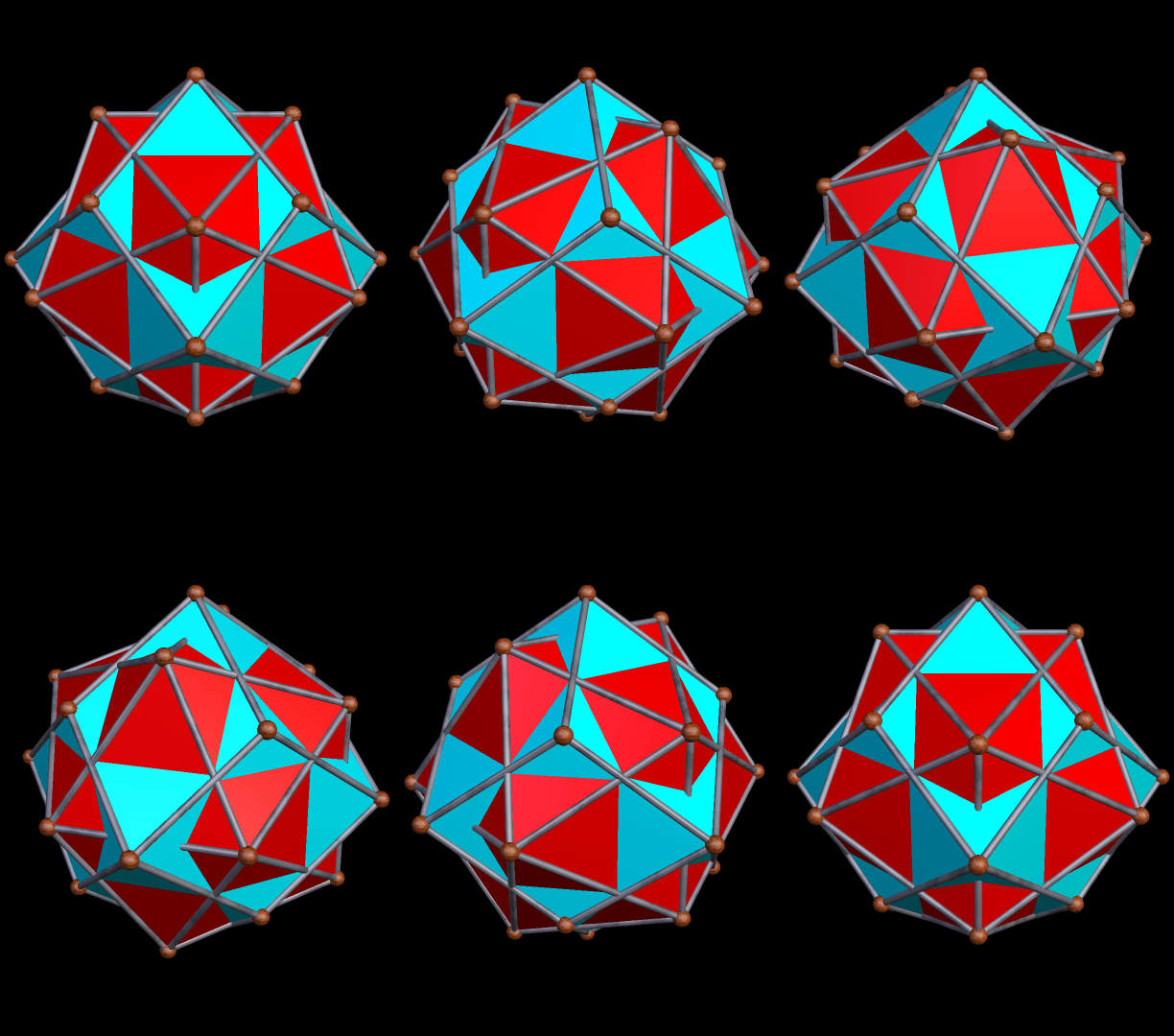
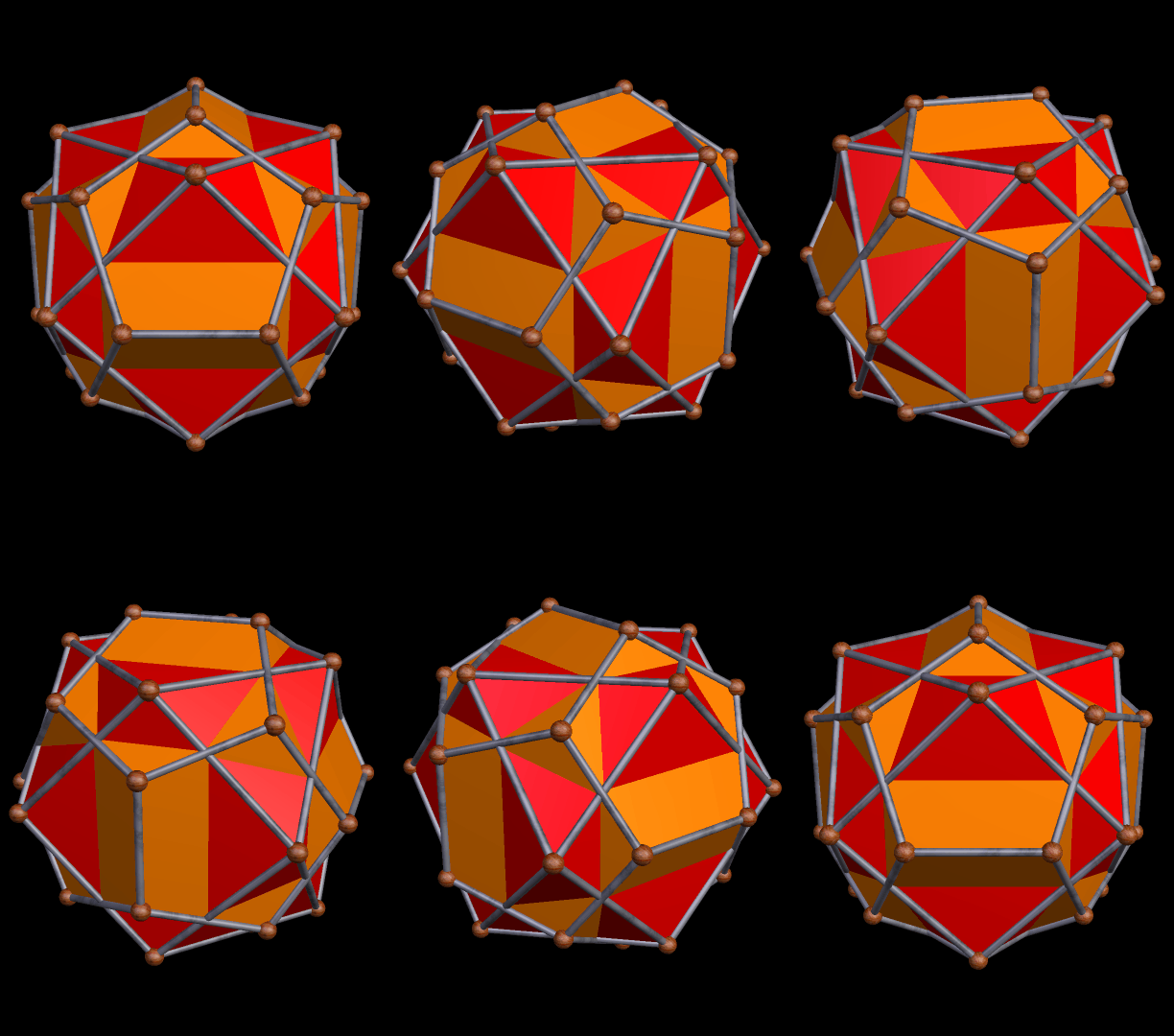
The Compound of the Pyramid-Excavated Dodecahedron and Tetrahedrally-Excavated Icosahedron, Together with Its Interesting Dual

Compound of Augmented Dodeca and Augmented Icosa

This is the familiar dodecahedron/icosahedron compound, but with each face of both components of the compound altered by the excavation of an equal-edge-length pyramid. To make it, as well as the rotating image below, I used Stella 4d, which you can find here.

Also, here is the dual of the compound above:

Compound of Augmented Dodeca and Augmented Icosa

Stellating the Great Dodecahedron, by Twentieths, to Beethoven’s Ninth

In this video, the great dodecahedron is stellated, by twentieths, into the great stellated dodecahedron, while a selection from Ludwig van Beethoven’s Ninth Symphony plays. The images for this video were created using Stella 4d, a program you can try for yourself (free trial download available), right here: http://www.software3d.com/Stella.php.

Richard Feynman, on Computers

feynman on computers

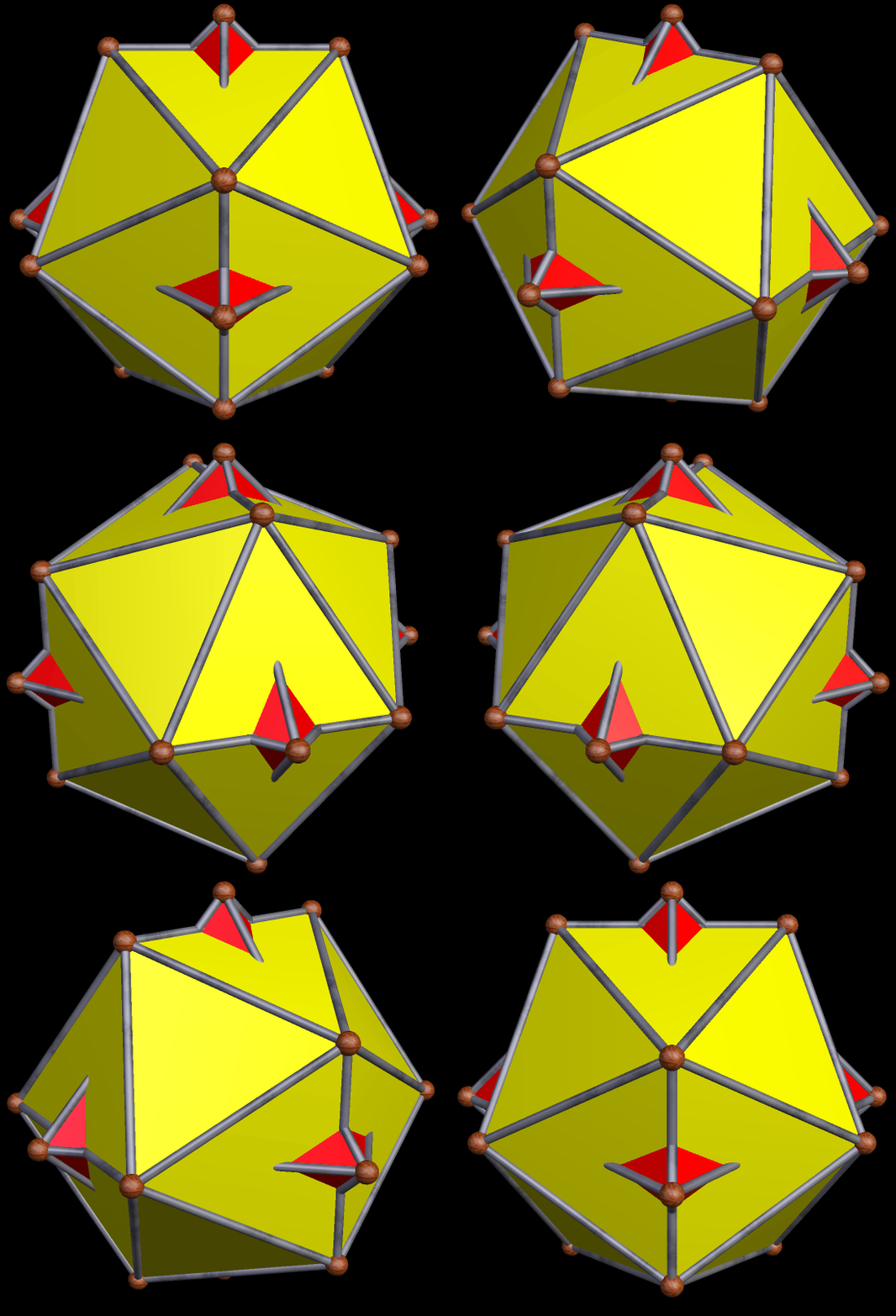
A Non-Convex Variant of the Great Rhombcuboctahedron

Cuboctahedron variant

I made this with Stella 4d, software you can try here.

Four-Part Compound of the Icosahedron, the Dodecahedron, the Cuboctahedron, and the Rhombic Dodecahedron

Compound of Cubocta and Dodeca and RD and Icosa

This compound was created using Stella 4d, software you can try for yourself here.

Nested Trigonometric Functions: Sine and Cosine

The sine and cosine curves themselves are shown for reference, and all four possible combinations of sine and/or cosine which nest one function inside another (with values for the outer function to evaluate ranging from -2π to 2π) are also shown.

six functions

A Platonic/Catalan Compound and Its Dual, a Platonic/Archimedean Compound

Compound of Rhombic Dodeca and Icosa

Shown above: the compound of the icosahedron and the rhombic dodecahedron. Below is its dual, the compound of the dodecahedron and the cuboctahedron.

Compound of Dodeca and Cubocta

Both these compounds were created using the “add/blend polyhedron from memory” function in Stella 4d: Polyhedron Navigator. To check out this program for yourself, just follow this link.

“You Majored in WHAT?”

I’m in my twentieth year of teaching mostly science and mathematics, so it is understandable that most people are surprised to learn that I majored in, of all things, history.

It’s true. I focused on Western Europe, especially modern France, for my B.A., and post-WWII Greater China for my M.A. My pre-certification education classes, including student teaching, were taken between these two degree programs.

Student teaching in social studies did not go well, for the simple reason that I explain things by reducing them to equations. For some reason, this didn’t work so well in the humanities, so I took lots of science and math classes, and worked in a university physics department, while working on my history M.A. degree, so that I could job-hunt in earnest, a year later, able to teach physics and chemistry. As it ended up, I taught both my first year, along with geometry, physical science, and both 9th and 12th grade religion. Yes, six preps: for an annual salary of US$16,074.

History to mathematics? How does one make that leap? In my mind, this explains how:

  • History is actually the story of society over time, so it’s really sociology.
  • Sociology involves the analysis on groups of human minds in interaction. Therefore, sociology is actually psychology.
  • Psychology is the study of the mind, but the mind is the function of the brain, one of the organs of the human body. Psychology, therefore, is really biology.
  • Biological organisms are complex mixtures of interacting chemicals, and, for this reason, biology is actually chemistry.
  • Chemistry, of course, breaks down to the interactions of electrons and nuclei, governed by only a few physical laws. Chemistry, therefore, is really physics.
  • As anyone who has studied it knows, physics often involves more mathematics than mathematics itself.

…And that at least starts to explain how someone with two history degrees ended up with both a career, and an obsession, way over on the mathematical side of academia.
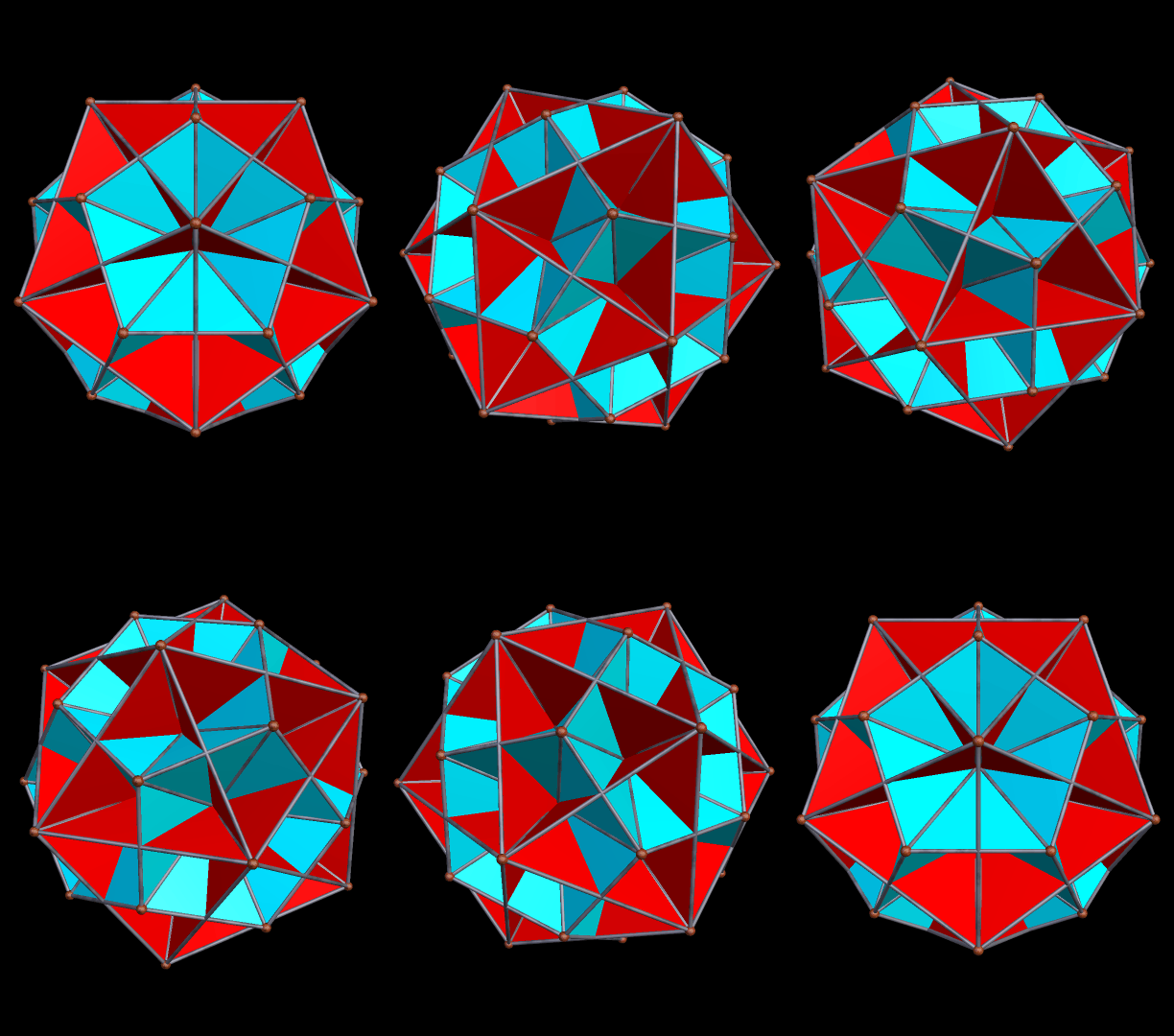
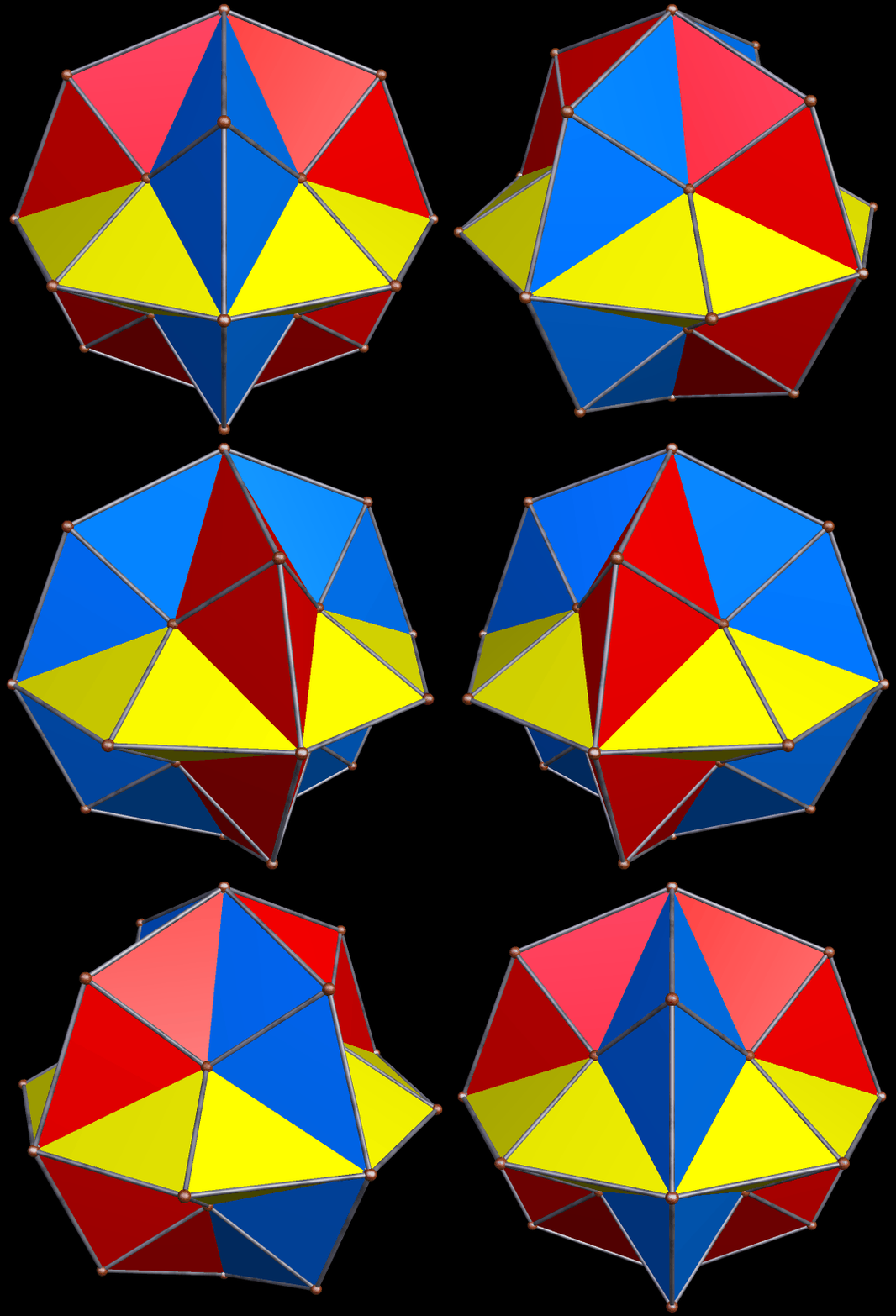
Compound of Three Octagonal Dipyramids

Yo color this thing as a compound

This compound was created using Stella 4d, software you can try here.

Combining Octahedral and Icosahedral Symmetry to Form Pyritohedral Symmetry

Compound of Octa and Icosa

Pyritohedral symmetry, seen by example both above and below, is most often described at the symmetry of a volleyball:

volleyball-306791_640

[Image of volleyball found here.]

To make the rotating polyhedral compound at the top, from an octahedron and an icosahedron, I simply combined these two polyhedra, using Stella 4d, which may be purchased (or tried for free) here.

In the process, I demonstrated that it is possible to combine a figure with octahedral (sometimes called cuboctahedral) symmetry, with a figure with icosahedral (sometimes called icosidodecahedral) symmetry, to produce a figure with pyritohedral symmetry.

Now I can continue with the rest of my day. No matter what happens, I’ll at least know I accomplished something.