Unknown's avatar

About RobertLovesPi

I go by RobertLovesPi on-line, and am interested in many things, a large portion of which are geometrical. Welcome to my own little slice of the Internet. The viewpoints and opinions expressed on this website are my own. They should not be confused with those of my employer, nor any other organization, nor institution, of any kind.

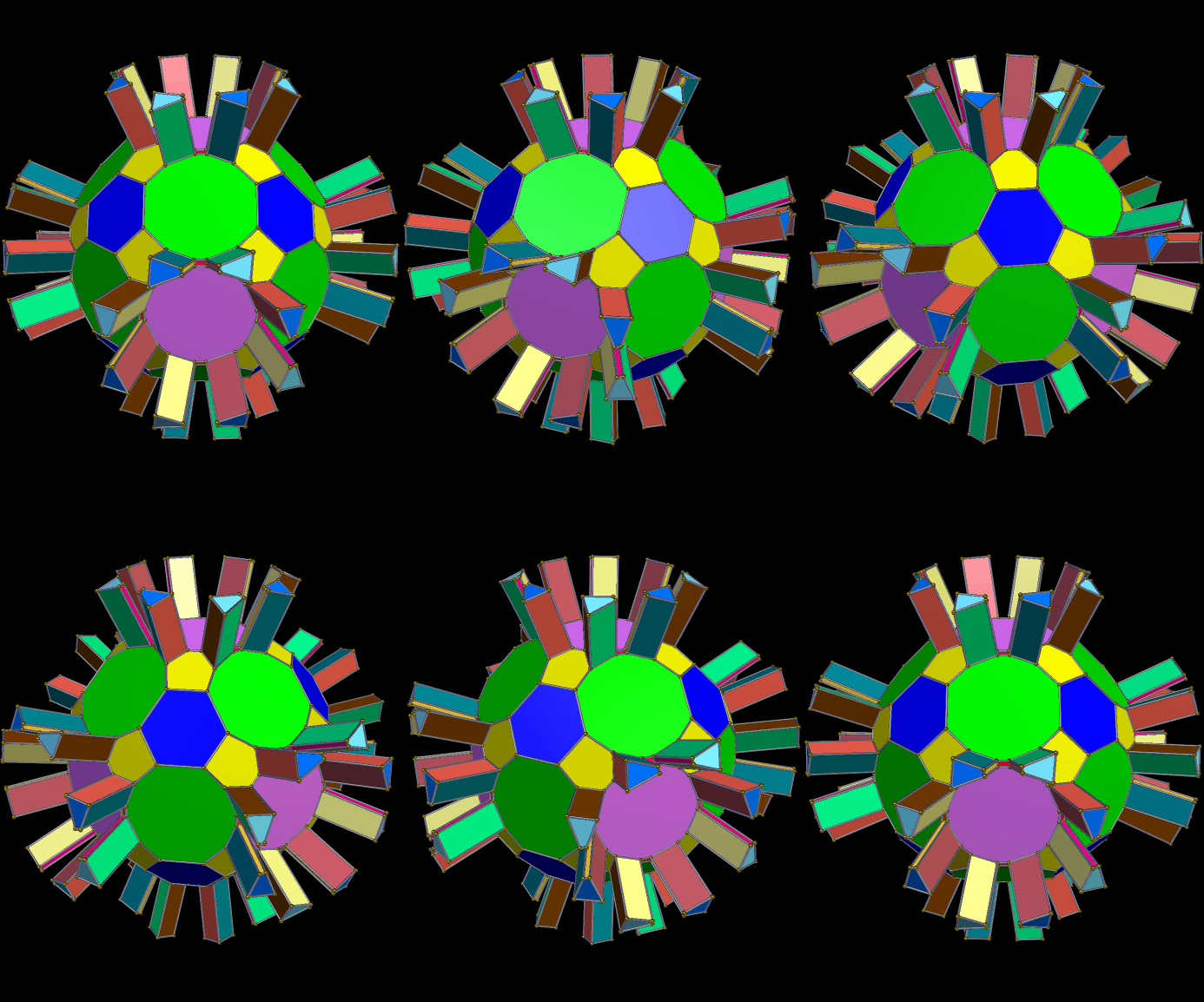
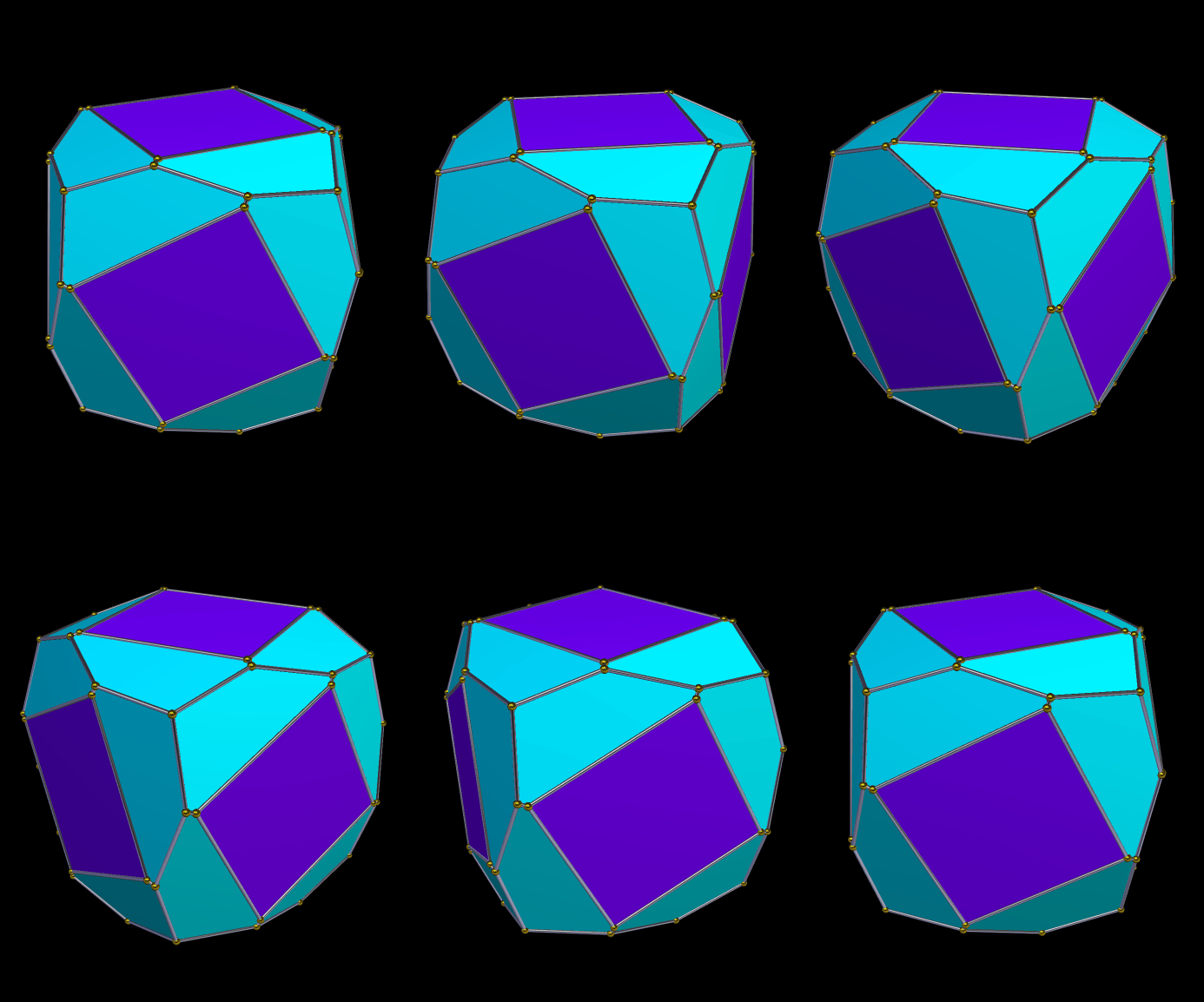
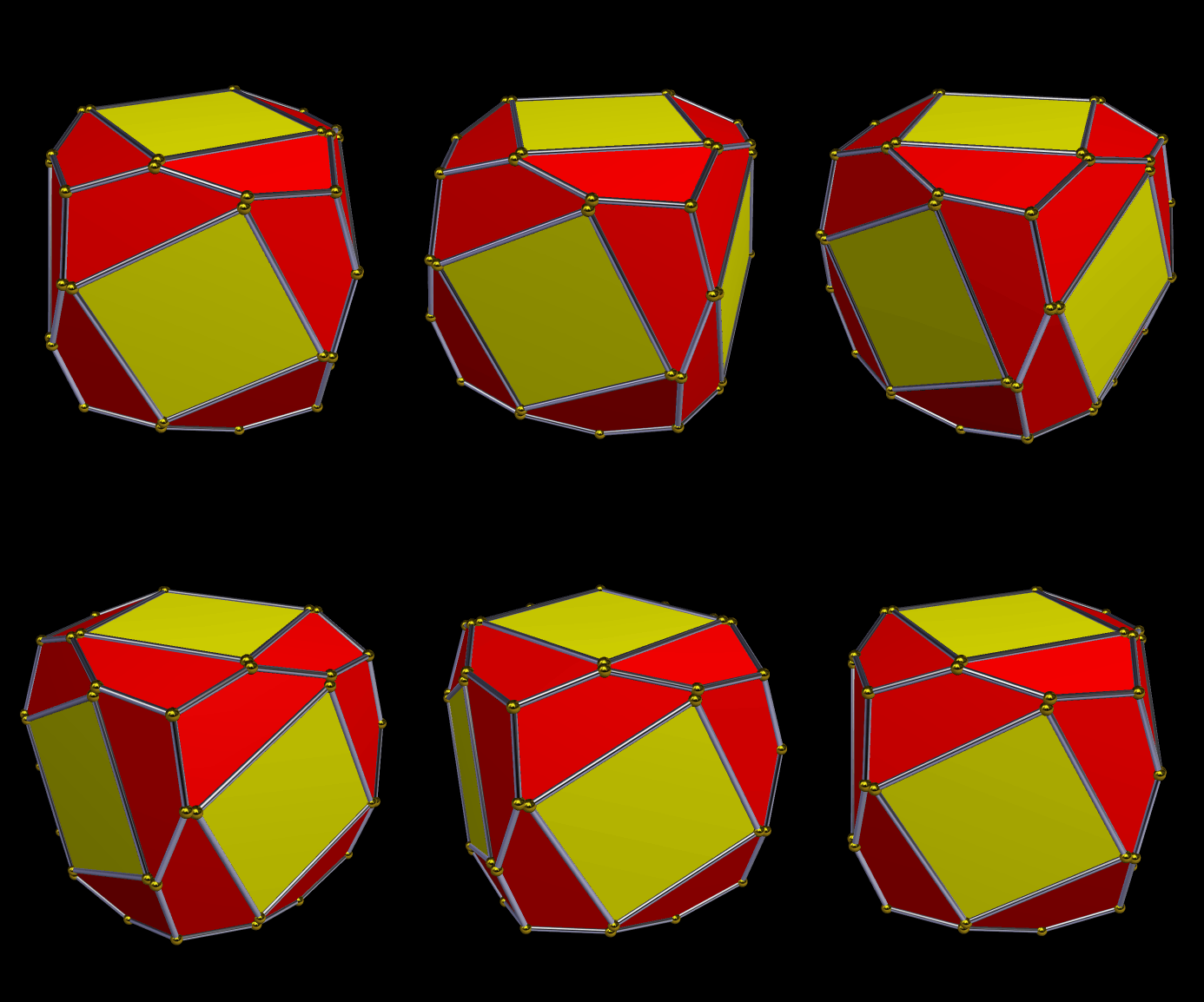
Odd Polyhedral Cluster

Image

Odd Polyhedral Cluster

I stumbled upon this while using Stella 4d to modify existing polyhedra. You may find this program at http://www.software3d.com/Stella.php.

Octagonal Mandala II

Image

Octagonal Mandala

If the colors are inverted, but the background remains black, this is what it turns into:

radial octagonal mandala ic

Astronomy Update

Image

Astronomy Update

The brightest star in the picture above is Mintaka, from Orion’s Belt. We just adopted a cat, and named her Mintaka. I think that calls for an astronomy update — just the basics, stuff that everyone should know much of.

  1. Starting with our solar system:
    1. Planets:
      1. Mercury, smaller than earth’s moon, no atmosphere to speak of, no moons, tidally locked with the sun
      2. Venus, no moons, hottest planet in solar system due to thick carbon dioxide atomsphere
      3. Earth, one planet-sized moon, only known location of life
      4. Mars, thin carbon dioxide atmosphere, two small, irregularly-shaped moons
      5. (Many asteroids in main asteroid belt, between orbits of Mars and Jupiter)
      6. Jupiter, largest of four gas giants and everything else in the solar system except the sun, 67 known moons (four are planet-sized, and three of those four have known or suspected sub-surface water oceans — Europa, Callisto, and Ganymede)
      7. Saturn, gas giant with most extensive ring system in the solar system, 150 known moons and moonlets, including one planet-sized moon, Titan, with a thick atmosphere and possible subsurface ocean, and another moon with a known subsurface water ocean, Enceladus)
      8. Uranus, planet with axis of rotation closest to the ecliptic, 27 known moons
      9. Neptune, one large moon, Triton, among 14 known moons
    2. Dwarf Planets:
      1. Ceres, only dwarf planet in the asteroid belt
      2. Pluto/Charon double dwarf planet system
      3. Haumea
      4. Makemake
      5. Eris, largest dwarf planet
      6. Sedna
  2. Other known solar systems:
    1. 1,795 exoplanets
    2. 461 exoplanets in multiplanet systems
    3. Total of 1,114 exoplanet systems, all within our galaxy
  3. Nearest known star, other than the sun: Proxima Centauri, 4.2 light-years distant
  4. Number of stars in the Milky Way, our galaxy:  ~300 billion
  5. Number of galaxies in the known universe:  ~100-200 billion

Camping In Hexagonal Tents On a Tessellated Plane

Image

Camping In Hexagonal Tents On a Tessellated Plane

Squares and Triangles

Image

Squares and Triangles

Here’s what it looks like with different colors (click to enlarge it):

tess with sq & tri 2

A Gallery of Nine Tessellations Using Hexagons

Image

hextess

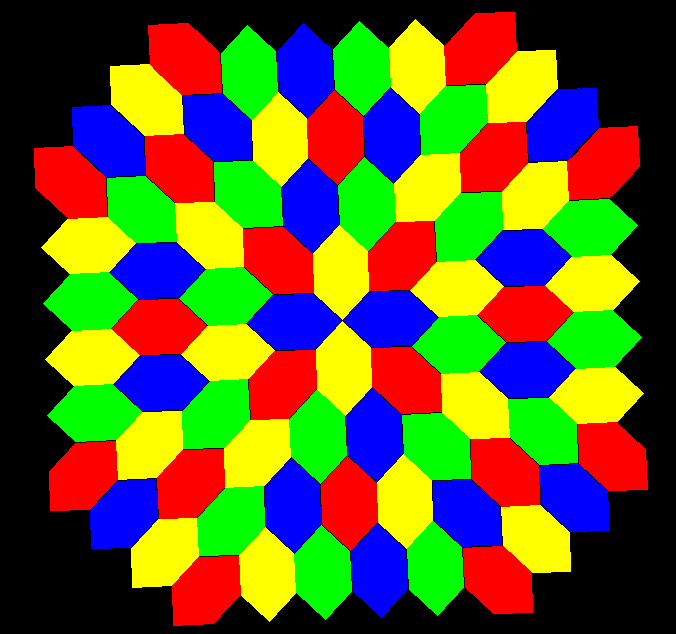
Pictured above is the most familiar hexagonal tessellation. I’ve found some additional tessellations which use equilateral (but non-equiangular) hexagons, and have radial symmetry. They appear, using various coloring-schemes, below.

Hex radial tessellationHex radial tessellation 2Hex radial tessellation 3Hex radial tessellation 4radial octagonal mandala 2radial octagonal mandala 2Buntitleduntitled ic

A Rhombic Dodecahedron Featuring Rotating Pentagonal Mandalas

Image

A Rhombic Dodecahedron Featuring Rotating Pentagonal Mandalas

Geometer’s Sketchpad and MS-Paint were both used to make the images on the faces of this polyhedron, and then Stella 4d was used to put it all together and create this rotating image. Stella may be bought, and/or tried for free, at www.software3d.com/Stella.php.
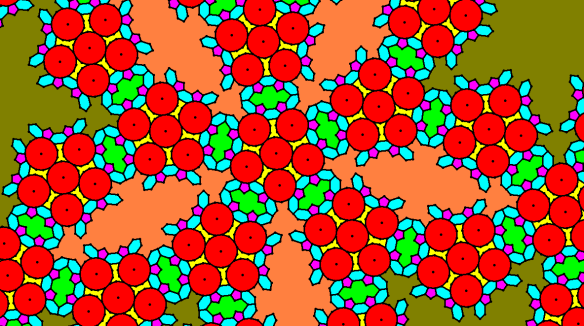
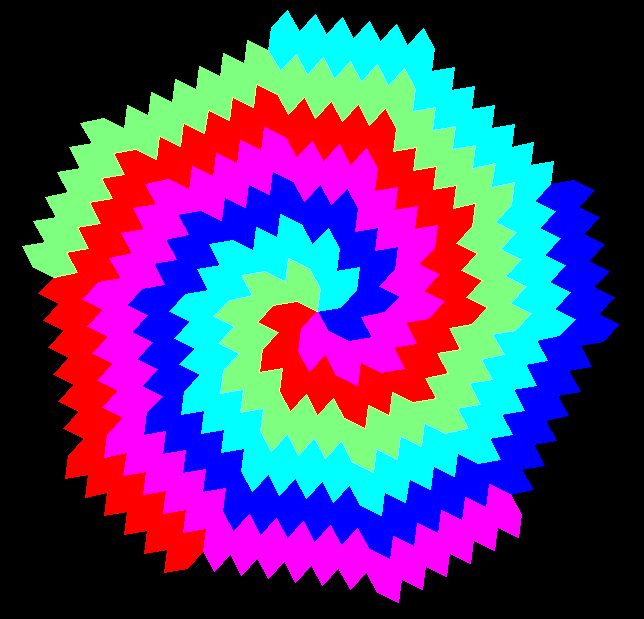
A Pentagonal Mandala In Primary Colors

Image

A Pentagonal Mandala In Primary Colors

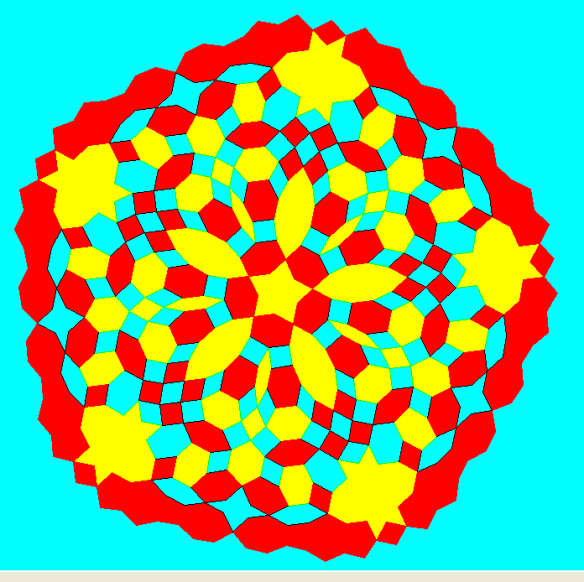
The Center of a Radial Tessellation Featuring Regular Pentadecagons

Image

The Center of a Radial Tessellation Featuring Regular Pentadecagons

A Gallery of 27 Polyhedra with Cuboctahedral Symmetry

Image

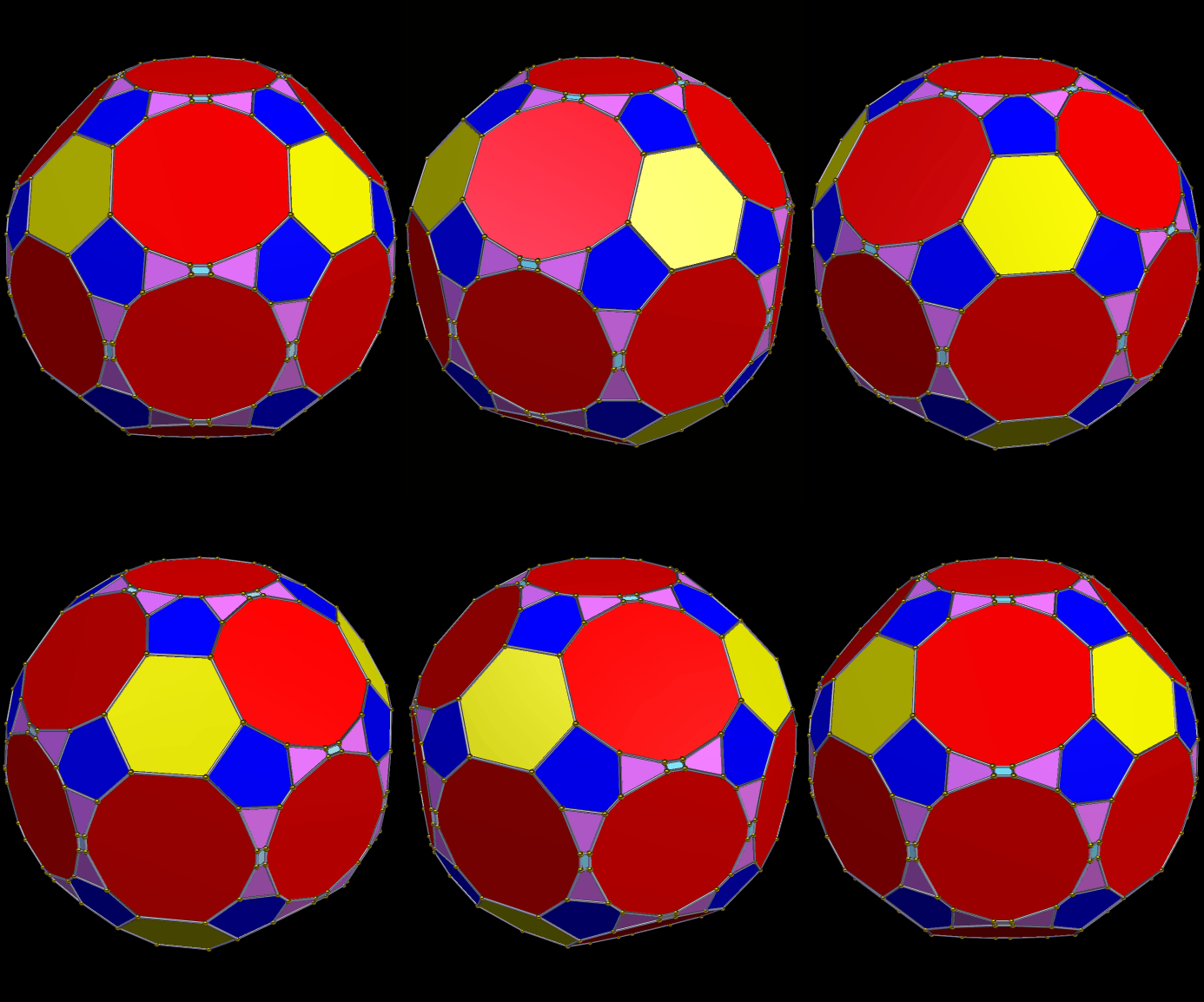
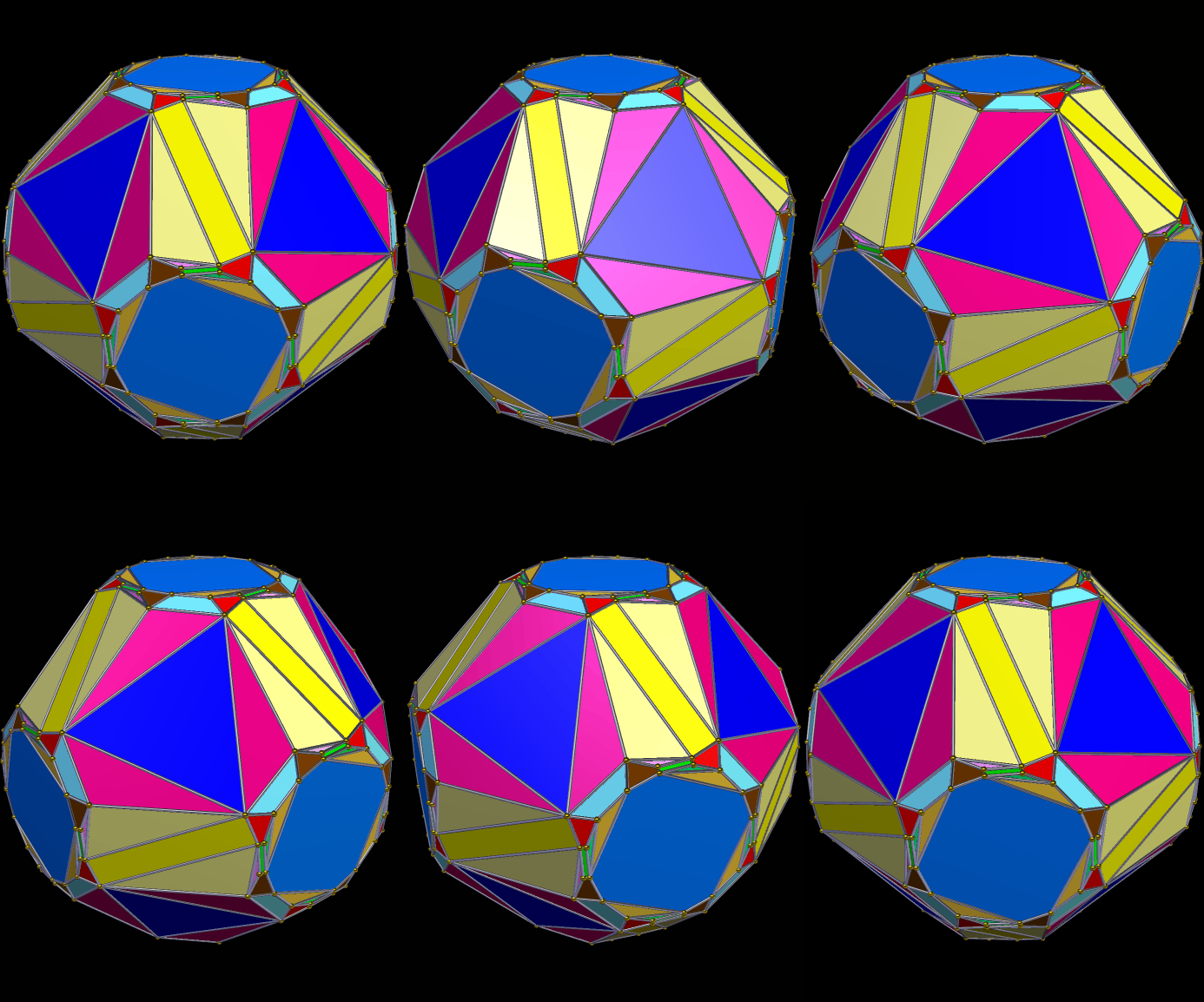
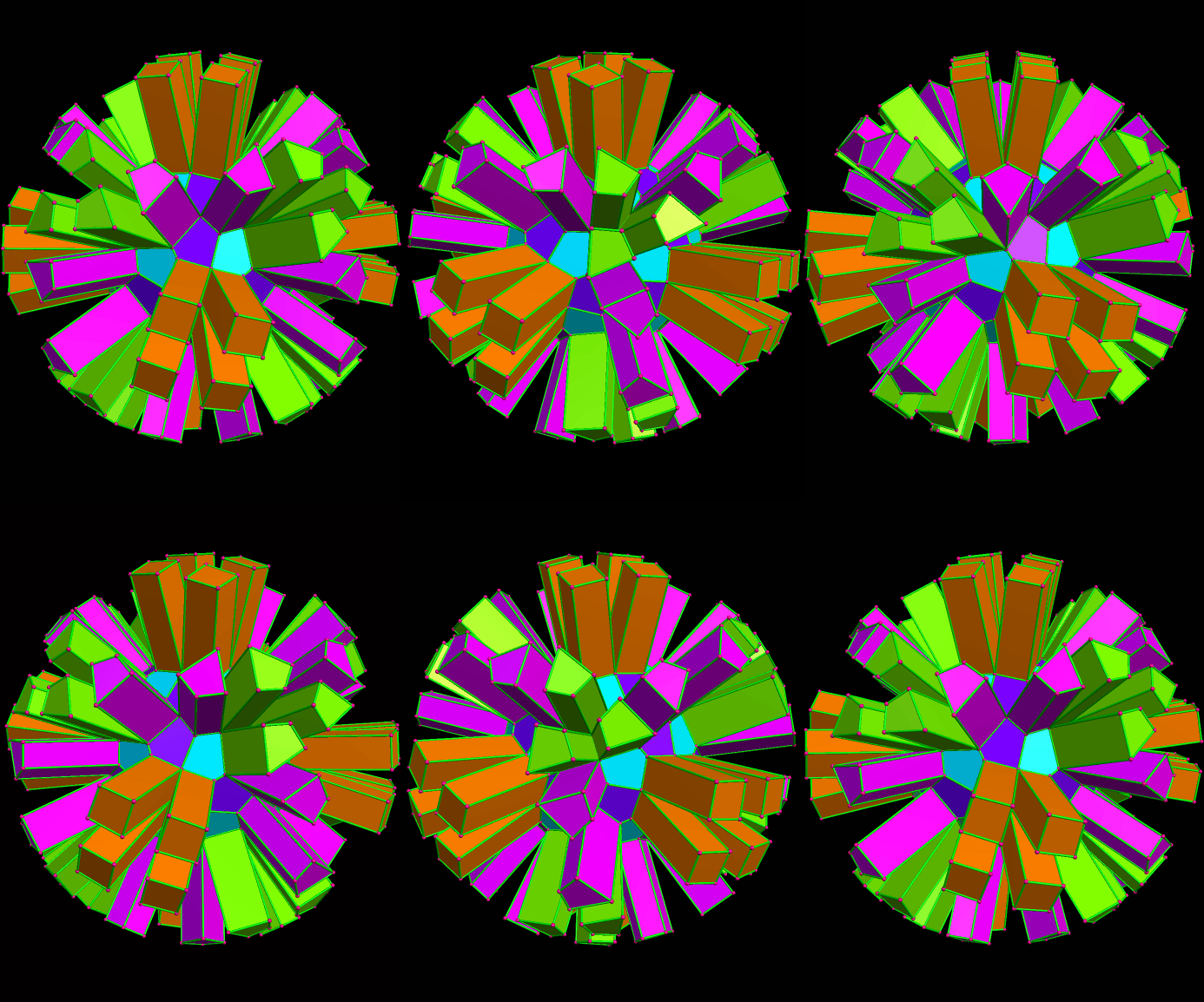
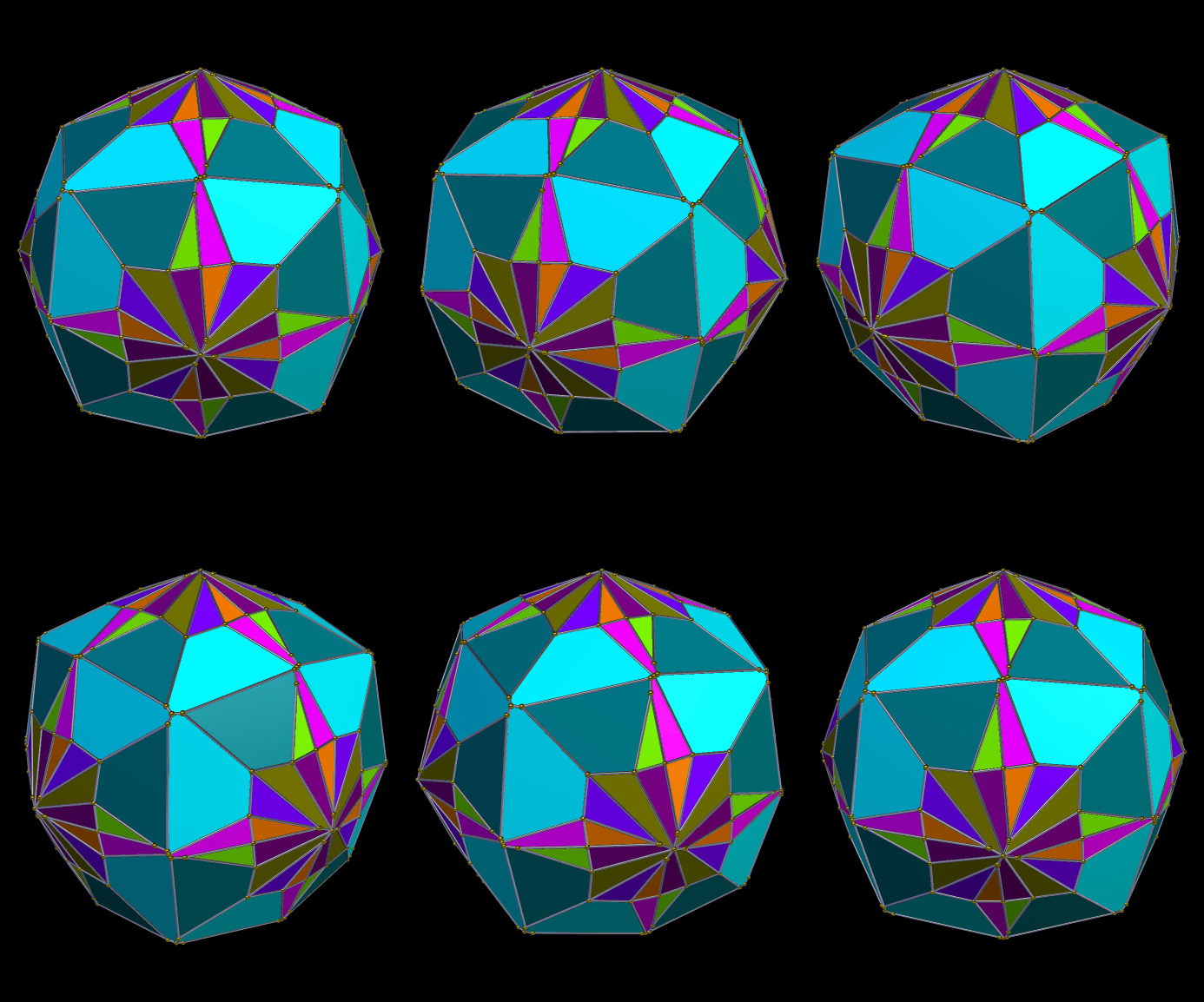
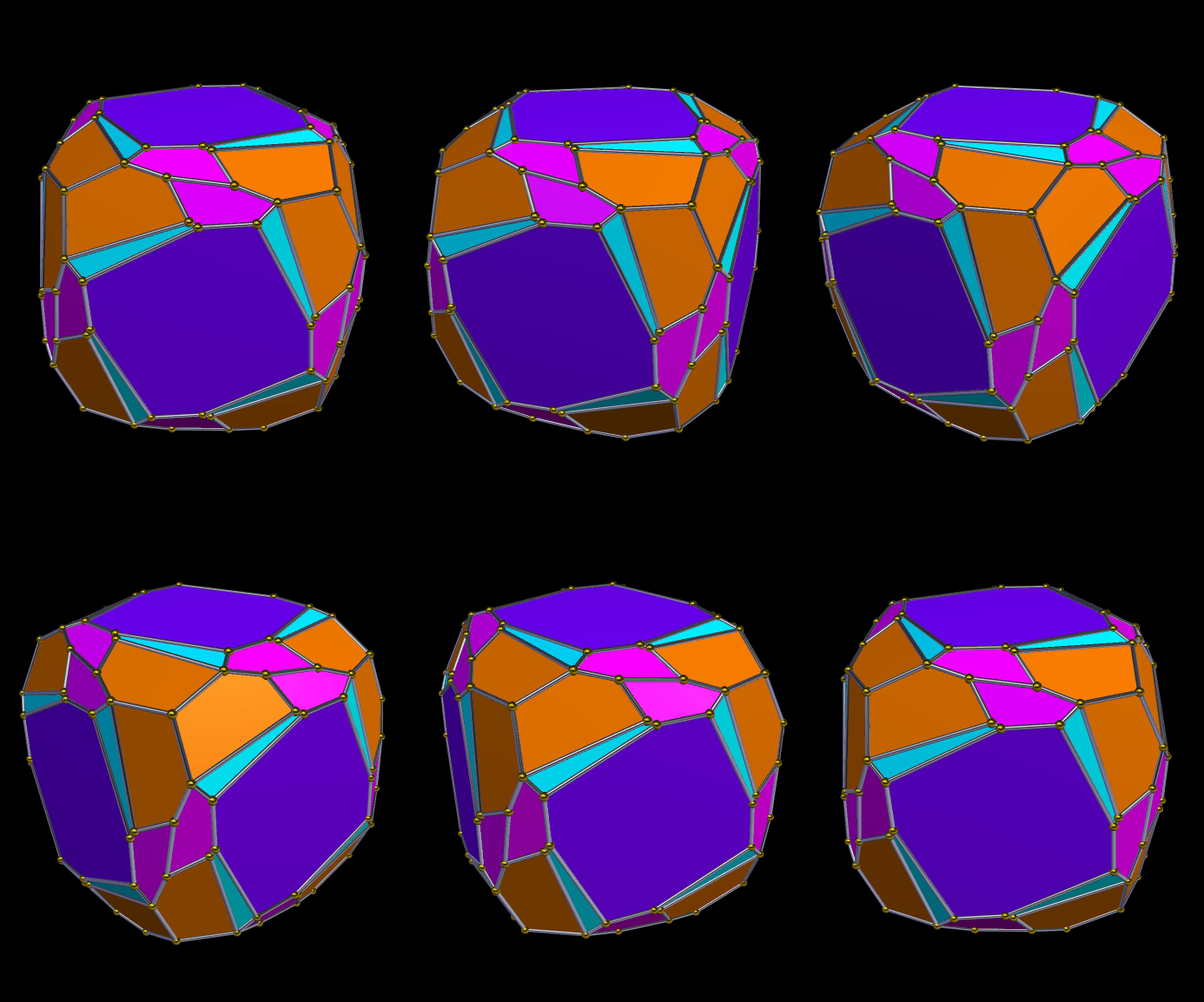
Some of these polyhedra have “normal” cuboctahedral symmetry, while others have the chiral variant of that symmetry-type — in other words, the same type of symmetry found in the snub cube.
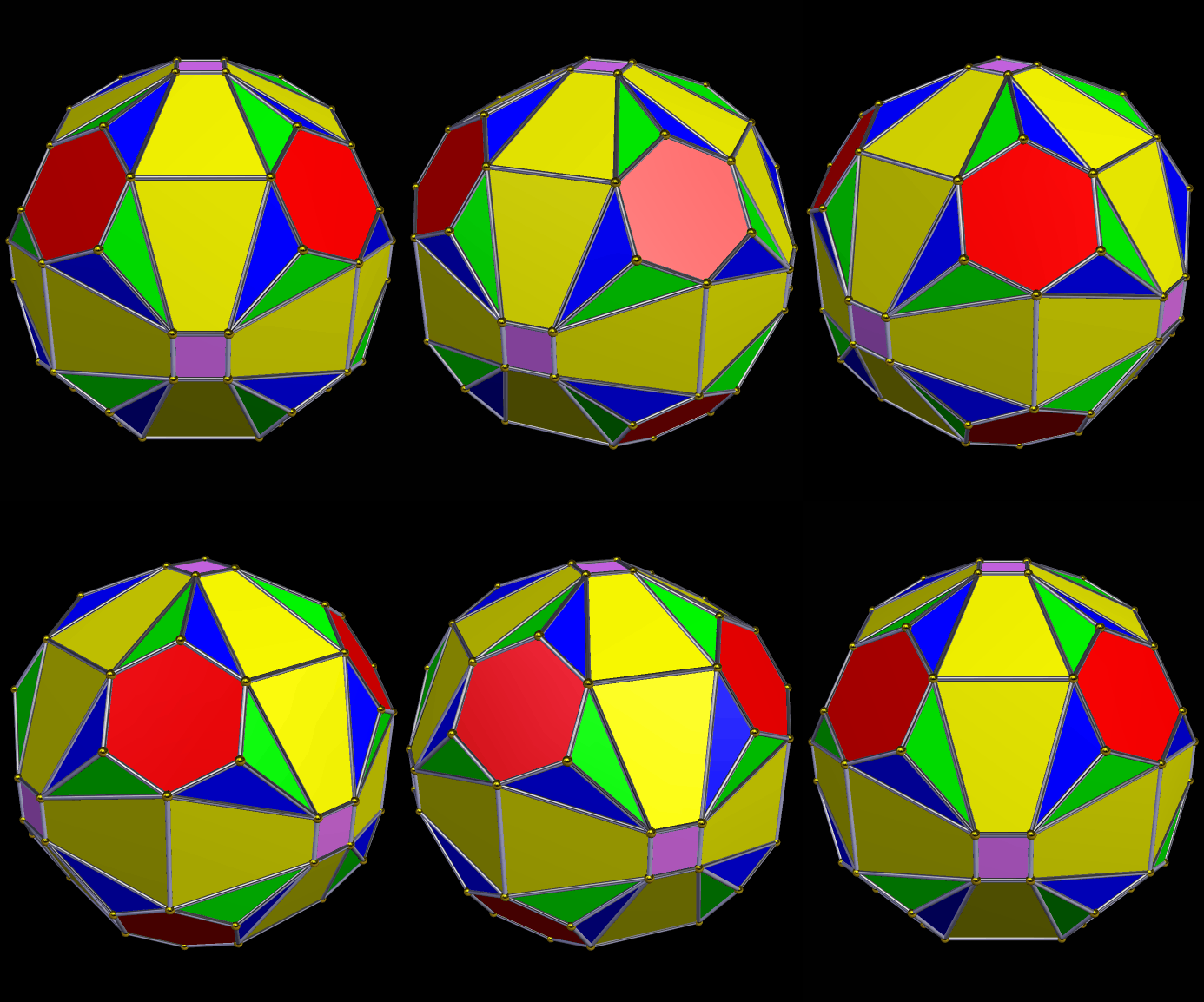
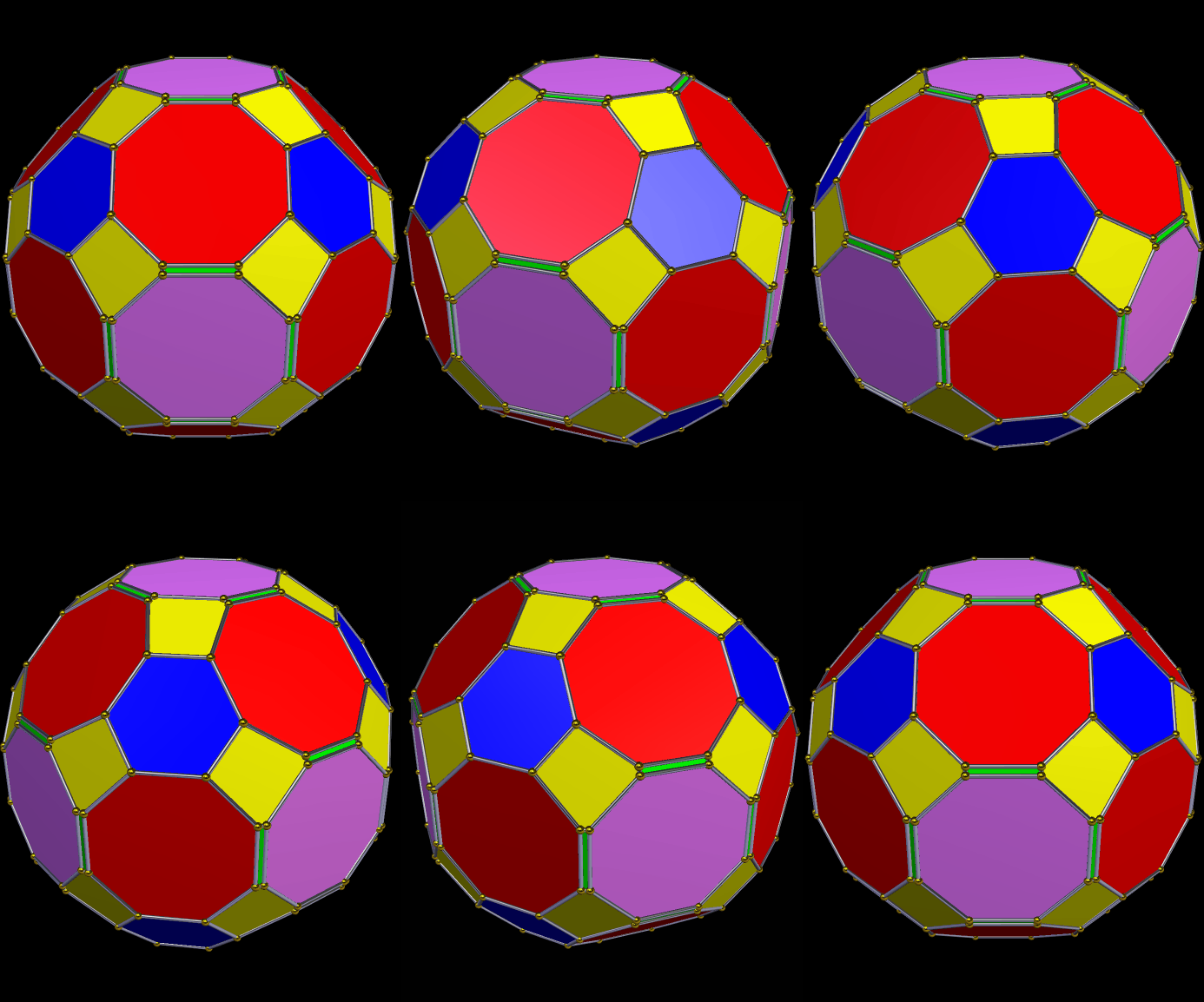
Some Polyhedra with Cuboctahedral Symmetry

CO1Convex hullCO2 Convex hullCconvex hullDual of Convex hullhexagons and squaresStellated Convex hullStellated Convex hulllAugmented Stellated Convex hullCoonvex hullConvex hull of prism-augmented snub cubedual of Coonvex hulllreaugmented dual of Convex hull of prism-augmented snub cubeStellated Polydual of Convex hull of prism-augmented snub cubeanother augmentation of dual of Convex hull of prism-augmented snub cubedual of Coonvex hullFaceted Convex hullStellated Poly2Stellated Poly3Faceted Convex hulllStellated Poly4Dual of Convex hulglDual of Convex hugFaceted Convex hulfgdsgthxlFaceted Convex hulfgdsgthgfsxlFaceted Convex hufdlfgdsgthgfsxl

I used Stella 4d:  Polyhedron Navigator to make these images, and you can find that program at http://www.software3d.com/Stella.php.