Judge Strikes Down Same-Sex Marriage Ban in Arkansas

Image

Judge Strikes Down Same-Sex Marriage Ban in Arkansas

Same-sex couples are getting legally married for the first time in Arkansas — today. I live in Arkansas. I didn’t expect to see this happen in my state for at least a decade.

Thank you, Judge Piazza.

(For more information, simply google “Arkansas gay marriage.” It’s all over the news.)

James Randi, on the Limited Effectiveness of Belief

Image

James Randi, On the Effectiveness of Belief

One of the high points of my life was the day I got to have several conversations with James Randi. I enjoyed them. Some others who were there, though, not so much.

An example of how one of the question-and-answer sessions went:

Question: What happens to us after we die?
Randi’s answer: What happens to a computer after you turn off the power?

Apparently the questioner was rather upset by this reply, but I didn’t figure that out myself, even though I was present. I learned about it later, from others. Randi’s response simply made sense to me.

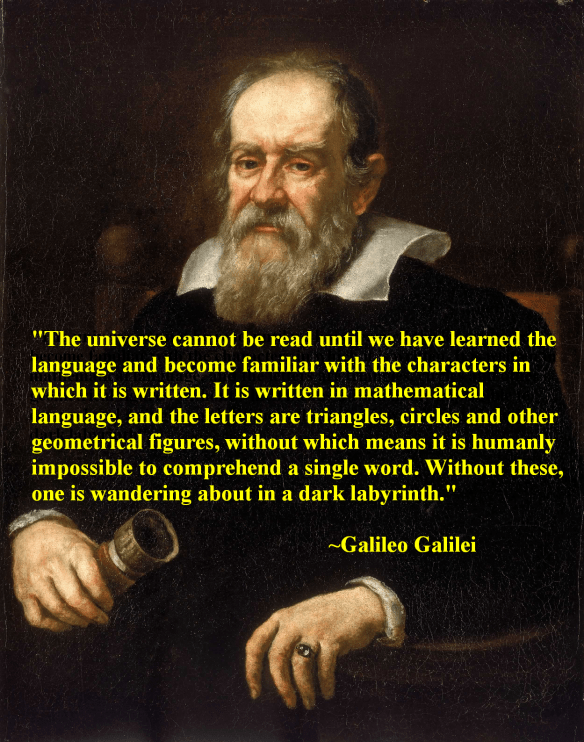
Galileo Galilei, on the Language of the Universe

Image

Galileo Galilei, On the Language of the Universe

Source for quote: https://en.wikipedia.org/wiki/Portal:Mathematics

“Give us reliable evidence and we will change our minds.”

Image

This is a good way to explain the viewpoint known as agnostic atheism. A lot of people don’t realize this, but most atheists are also agnostic, simply because we don’t claim to have absolute certainty that no deities exist. We are atheists because we possess no beliefs in any gods, and we are also agnostics because we are willing to admit that we could, possibly, be wrong.

What’s more, many agnostic atheists find the other type of atheist (gnostic atheists, who are few in number, and who do claim certainty that no deities exist) quite irritating. It simply is not rational to claim that one knows, without doubt, that there are no gods, for one simple reason: lack of supporting evidence. There is no evidence that no gods exist. There is also no evidence for the non-existence of, say, leprechauns.

Something else many people don’t know: theists (that is, religious believers) also come in the same two types. Agnostic theists believe in at least one deity, but don’t claim absolute certainty in that belief. Gnostic theists, by contrast, are believers who do not doubt, nor question, their religious beliefs. They claim to know they are right — and, in that one way, they are just like gnostic atheists. Gnostics, of whatever type, aren’t willing to admit there is the slightest chance that they might be wrong. It’s much easier to have reasonable, productive conversations with agnostics than with gnostics — regardless of whether they are they are theists or atheists. Also, when it comes to debate, there’s simply no point in debating anything with a gnostic. One might as well argue with a rock, for a rock is exactly as likely as a gnostic to have a change of opinion.

(Note: unlike most images on this blog, this picture is not one I created myself. Only the words below the image, in this post, are mine.)

Bell Hooks, on Rage

Image

Bell Hooks, On Rage

Stephen Hawking, on His Own IQ, and IQs in General

Image

I have had my IQ tested, but, like Stephen Hawking, I have no idea what it is. The people conducting the test did not share the results with me.

This does not bother me in the slightest. Why? Because I agree with Hawking on this subject, that’s why!

“Strong Grape Juice”

Image


My earliest memory of a church service involves a trip to visit relatives, and I started discovering how different from others I was at a very young age. This is one of the episodes which played a major role in that discovery.

I was only four or five years old, and had already developed an intense hatred of being bored. Ignoring the sermon seemed like an even more boring prospect that actually paying attention to it, so I consciously chose the latter, which I’ve observed is often not the choice young children make.

This church’s denomination is one of those that teaches that drinking alcohol is sinful. They are also Biblical literalists. This, of course, poses a problem, for there is a lot of drinking of wine to be found in the Bible. This preacher didn’t avoid the contradiction, though. His task, that Sunday morning, was to deal with it head-on, and he did so with the following claim: when Jesus, his disciples, and numerous other people from the Bible are described as drinking wine, that wine actually contained no alcohol. It was not wine as we know it today. It was, rather, merely “strong grape juice.” Those were his exact words.

Even at that young age, I had already started working on building, in my own mind, the best crap-detector I could possibly create. (Improving it is still something I work on today.) I didn’t yet realize that real wine would be far safer, before refrigeration existed, than grape juice, simply because alcohol, at the concentrations found in wine, kills lots of disease-causing bacteria. However, that morning, I had learned enough to instantly recognize this “strong grape juice” claim as absolute crap.

Dismissing the preacher as not worthy of further attention, I stood up in our pew, and turned around to face the back of the church. We were sitting near the front, so this let me see most of the congregation. I didn’t need to speak to them — I just wanted to look at them. I remember being stunned by what I saw. Nearly everyone appeared quite attentive to the sermon. Some mouths were half-open, and numerous heads were nodding in agreement with the preacher’s droning nonsense. I figured it out: they were actually accepting what this man was saying as the truth, and were doing so without question! They believed him! At first, I felt dizzy, and then, later, I felt sick. The more I thought about the experience, the worse I felt, and I could think about nothing else for a long time after that church service finally ended.

I’d been exposed to religion many times before, but it always seemed to me that adults didn’t really believe what they were saying, any more than when they told children my age about the Tooth Fairy or Santa Claus. At that moment, though, I realized I had been mistaken. This was no act. These people, in that church that day, actually believed what they were told. Why? I didn’t know. I still don’t. If that man told them that two plus two equals six, would they believe that? I suspected they would.

I was surrounded by a herd of sheep. That moment of clarity, when I realized this fact, scared me. It made me wonder, and not for the last nor first time, if I had been secretly planted on earth by aliens, as a baby, and without a guidebook.

This is only one of many experiences that convinced me of the importance of skepticism. The fact that it is so clear, in my memory, leads me to think it was one of the more important of those experiences. It cemented, in my mind, a scary truth: the world is infested with large numbers of incredibly gullible, deluded people. They weren’t like me. I didn’t understand them. They were everywhere. I wasn’t anything like them, and didn’t want to be, either. I was, however, stuck here with them.

I was stranded on the wrong planet, with no prospect for escape, any time soon. That was over forty years ago, and I’m still here.

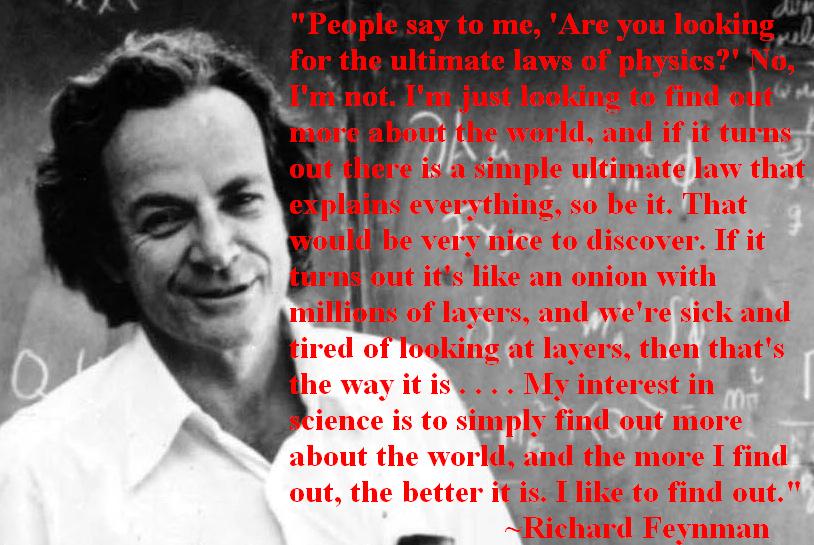
Richard Feynman: “I like to find out.”

Image

“He wrote that . . . .”

Quote

“He wrote that he cared not a whit whether a neighbor believed in no god or in many gods, since such a private opinion ‘neither picks my pocket nor breaks my leg.'”

The above is from a book by the late Christopher Hitchens, writing about, and then quoting, Thomas Jefferson.

In my opinion, we’d all be better off if those atheists who actively try to destroy the faith of believers would follow Jefferson’s example, as described here, and follow the simple advice of the saying, “live and let live.”

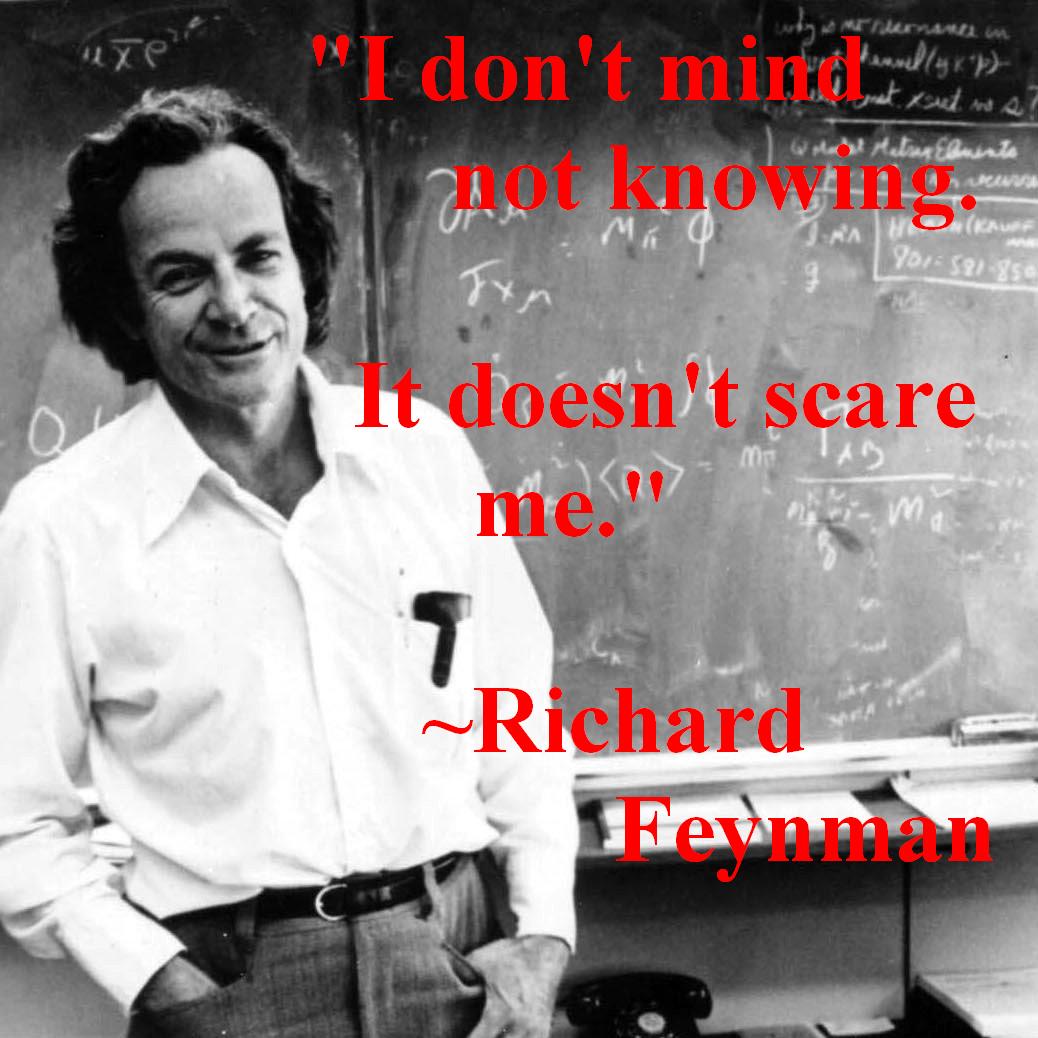
Richard Feynman, on Not Knowing

Image

Richard Feynman, On Not Knowing