Richard Feynman, on Not Knowing

Image

Richard Feynman, On Not Knowing

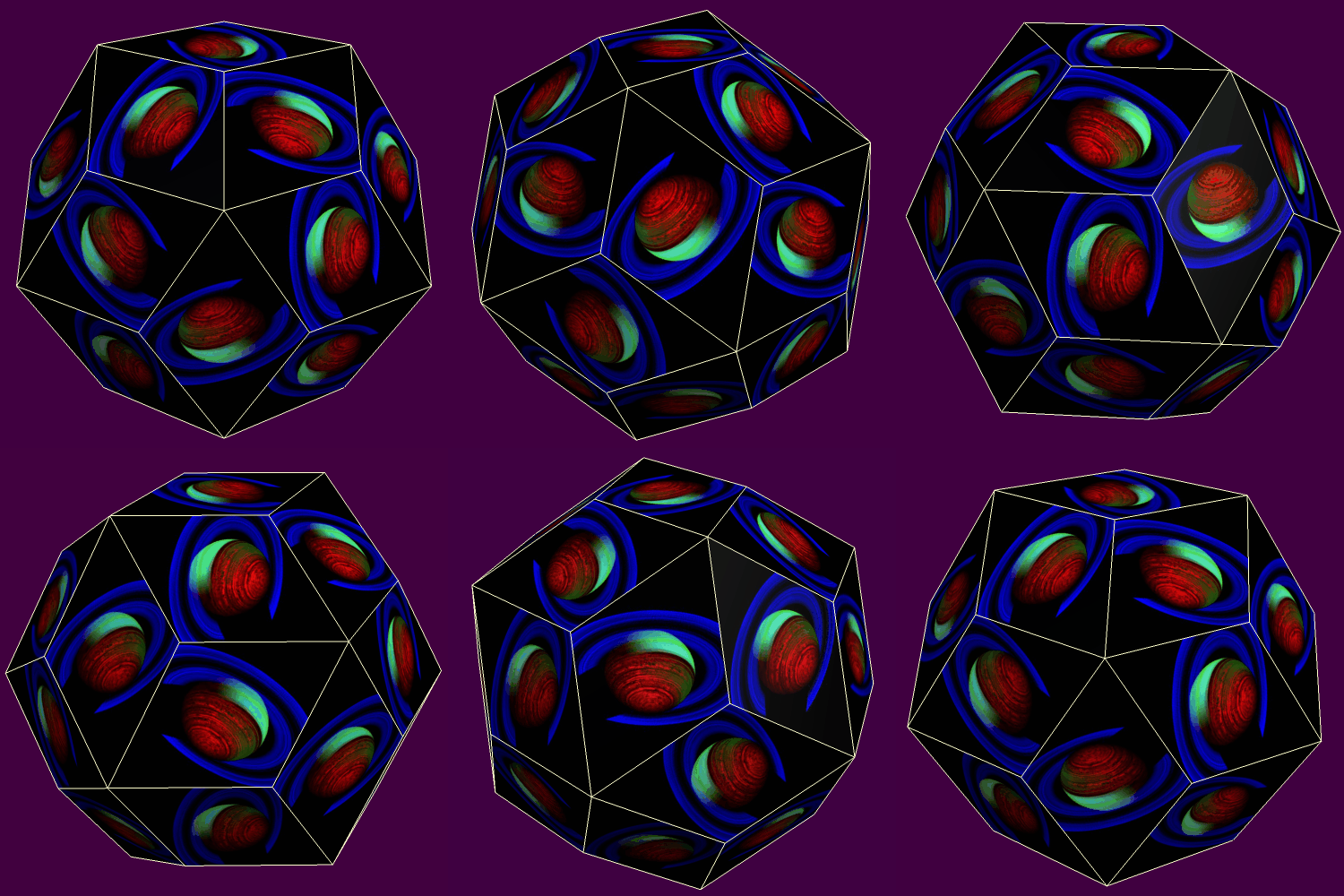
Rhombic TriacontaSaturn

Image

Rhombic TriacontaSaturn

One of many photographs of Saturn provided by the Cassini spacecraft, and then projected onto the faces of a rhombic triacontahedron with the software available at http://www.software3d.com/stella.php.

Two Saturnian Moons Adorning a Rhombic Dodecahedron

Image

Two Saturnian Moons Adorning a Rhombic Dodecahedron

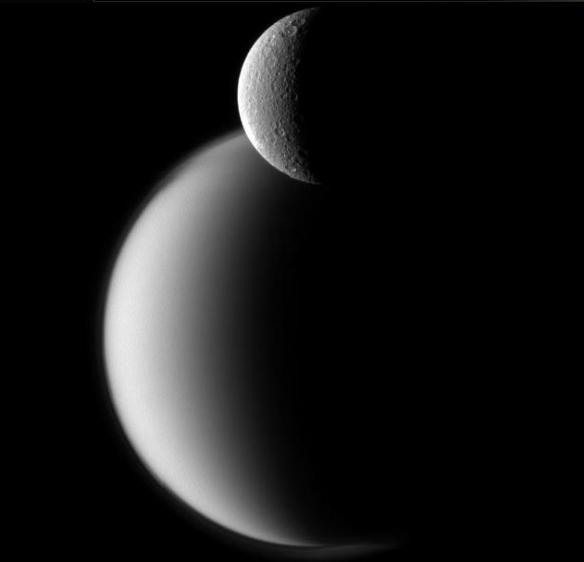
The larger moon shown, Saturn’s largest, is Titan, recognizable by its hazy atmosphere. The smaller one, which looks more like our own moon, is Rhea.

This image was captured by the Cassini spacecraft, which has been investigating the Saturnian system now for years.

Projecting the images onto the faces of a rhombic dodecahedron was done with Stella 4d, software you may try for free at http://www.software3d.com/stella.php.

Rhea Before Titan

Image

Rhea Before Titan

I found this here: http://www.nasa.gov/mission_pages/cassini/multimedia/gallery-indexRhea.html

If I had a “bucket list,” things like seeing this with my own eyes would be on it.

If you shoot for the moon….

Image

If you shoot for the moon....

Ripples

Image

Ripples

An interference pattern / op art piece created with Geometer’s Sketchpad and MS-Paint.

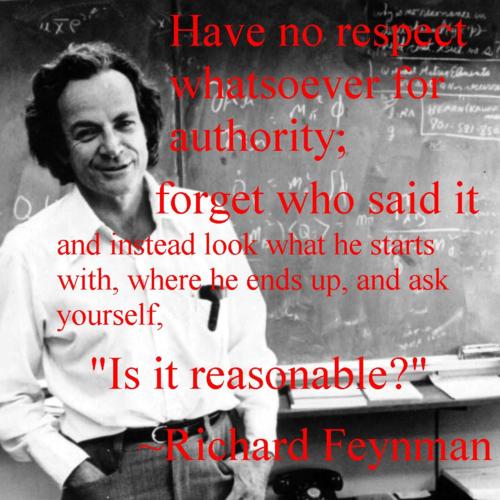
Richard Feynman, on Respect and Authority

Image

Richard Feynman, On Respect and Authority

The Evolution of Sam Harris’s Writing

Image

The Evolution of Sam Harris's Writing

Sam Harris is my favorite author of non-fiction, but this has not always been the case. He is usually classified as one of the “Four Horsemen” (along with Richard Dawkins, Daniel Dennett, and the late Christopher Hitchens), to the point where he has remarked that some treat them as “one creature with four heads.” I’ve read books by all four men, and they are very different. Harris started as my least favorite of the four, and has become my favorite. How did this happen? Well, it took some time.

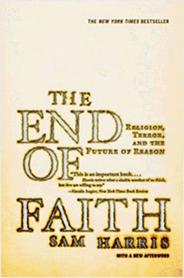
Sam Harris began his career as a writer with a book called The End of Faith, written in the wake of, and largely in response to, the 9/11 attacks of 2001.

book-cover1

Despite my atheism, I did not care for this book. It bashes Islam too much for my tastes, and Harris is still criticized for this fact, generally by people who have not read the rest of his work. Reactions like mine to this book are rare among atheists, for one simple reason: most atheists have a far less favorable view of Islam than I do. For more on that, please see my previous blog-post, and the earlier one it links to.

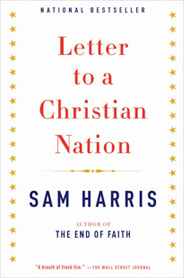
Islam is not the only religion criticized by Harris in his first book — not by any means. As someone who has never had a Muslim attempt to harm me, but who has suffered greatly at the hands of certain Christians, I was far more receptive to his arguments against the Christian religion. Many members of that religion noticed those arguments as well, and Harris was deluged with hate mail, much of it from enraged Christians in the USA. He wrote his second book as a response to this torrent of criticism.
book-cover2

This second book paid much less attention to Islam, and far more, as the title implies, to Christianity. I enjoyed it more, but admit that this likely has as much to do with my personal history as anything else. Still, Letter to a Christian Nation remains the only book I have ever read in a single sitting; it was so compelling that I was unwilling to stop reading it until the last page.

Both of Harris’s first books may be described as “beating the drum of atheism,” an activity which is interesting and useful only up to a certain point. To his credit as an author, he realized that writing more books which repeat this process would be waste of time. He therefore decided to move on to other subjects — and, in my opinion, his books improved greatly as a result of that decision. Here’s his next one:

moral-landscape-rev

The Moral Landscape is not a book about atheism, nor religion. Sam Harris is a neuroscientist, and this book considers human values from a scientific point of view:  questions of good and evil, and whether or not such questions can be addressed scientifically. Ethics and morality are things for which some people consider religion essential. Rather than belaboring the fact that he disagrees with this, Harris, in this book, simply makes a compelling case that such topics can indeed be addressed using the scientific method.

This was Harris’s first book after he made the excellent decision to move out, beyond his previous focus on atheism and religion. Were it not for this decision, I would not name Harris as my favorite non-fiction author. The arguments in this book are compelling, I learned much from reading it, and recommend it highly.

Harris’s fourth book tackles the topic of honesty, and its opposite:
lying_cover_184

Is there ever a situation in which lying is justifiable? Most people would say “yes.” Harris disagrees, and, in this very short book, makes a compelling argument for honesty. His move away from the “drum of atheism” continues in this book, and the rule with Harris is simple:  the further away he goes from his original topic of choice, the better his writing becomes.

This brings me to his fifth book, the amazing Free Will.

free-will

Do I have free will?  Do you?  Does Harris?  It certainly seems as if we do, but Harris takes the point of view that free will is an illusion, and supplies ample evidence to support this position. Denying free will is a dangerous game, of course, for, without free will, how can anyone be held responsible for their actions? Harris does not avoid this problem, but tackles it directly. Reading this book has had a powerful impact on how I view a great many things.

There is more of Harris to read, for those who are interested. I follow his blog regularly (http://www.samharris.org), and he has a new major book release coming soon, as well. Since he keeps getting better with each new book, I am looking forward to it with anticipation.

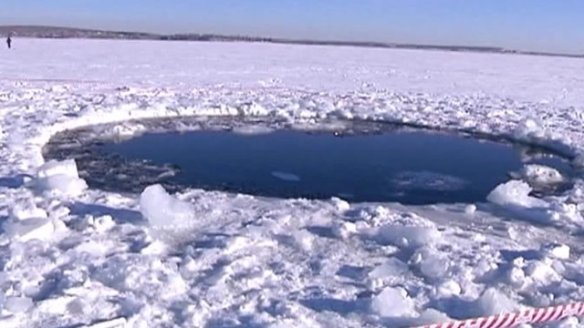
Russian Impact Crater Found in Frozen Lake By Fishermen

Image

Russian Impact Crater Found in Frozen Lake By Fishermen

Can you imagine what it would be like to encounter such a thing as this crater?

Can you imagine what it is like to have every window in your whole region suddenly turned into a shower of broken glass, with the temperature at -15 degrees Celsius, as many thousands did?

Thus far, no deaths are known to have happened from this February 15 airburst, nor the 1908 Tunguska Event, the largest in recorded history. In that sense, the Russians lucked out. Twice.

[image source: screenshot posted to Wikipedia]

An Alternative Explanation for ADD and ADHD

ADD and ADHD are being treated, mostly in children too young to give informed consent themselves, with powerful, addictive, dangerous stimulants. How dangerous? Children have died because of such drugs as Ritalin and its relatives, all of which are amphetamines (feel free to check that with Google). Amphetamines are, of course, commonly known as speed. A large experiment is being conducted with many of America’s youth, with no control group, and woefully inadequate safety protocols.

The ADD/ADHD genes have not been found, nor has the virus, bacteria, nor parasite. Either the cause of ADD and ADHD is very good at hiding, or there simply isn’t one. Serious consideration is due to whether the term “disorder” actually applies to these conditions.

Consider this alternative explanation to the “disease model.” Humans evolved with certain characteristics related to paying attention, which is an obvious survival trait. One can try to pay attention to the myriad things going on, which I call a “wide focus,” or one can tune out most things to focus on one particular thing — a “narrow focus.”

I naturally have a narrow focus, and it takes considerable effort (and is exhausting) to widen it for sustained periods. There’s evidence on this blog:  all those geometrical patterns I like to make require intense concentration, for substantial periods, on a single activity. If ADD is real, I have its opposite.

By contrast, those who have a wide focus are more likely to notice, say, an approaching attacker than I am. Therefore, wide-focus attention is an even better survival trait that merely paying attention, or at least it has been for most of human history. Noticing lots of things, though, makes one naturally distractable, and that doesn’t mesh well with the expectations modern schools have for students — so a lot of students end up labeled and drugged, simply because they are more adapted to certain un-schoollike environments than is the average person. The natural environment in which our species evolved is, of course, nothing like school. If I were alive in the Stone Age, that wouldn’t remain true for long; some sabre-tooth tiger would easily catch me while I was drawing triangles in the dirt with a stick.

The people with a wide focus aren’t sick. There’s nothing wrong with them — except that a characteristic of theirs is not liked by many in education, who then encourage parents to turn to the medical profession — simply to alleviate conflict, in many cases, despite the very real risks to the students who are drugged, often against their will.

Evolution is a natural part of the universe. School, on the other hand, is a human invention. If there is a mismatch, as there often is, where, then, truly lies the disorder? In the students . . . or in the schools themselves?