
This is the compound of the icosahedron and its dual, the dodecahedron. I made this rotating image using Stella 4d , which is available here.
This is the compound of the icosahedron and its dual, the dodecahedron. I made this rotating image using Stella 4d , which is available here.

I recently re-discovered this “lost work,” which I made using Geometer’s Sketchpad, in 2011 — before I started this blog, which is why it has not appeared here before.
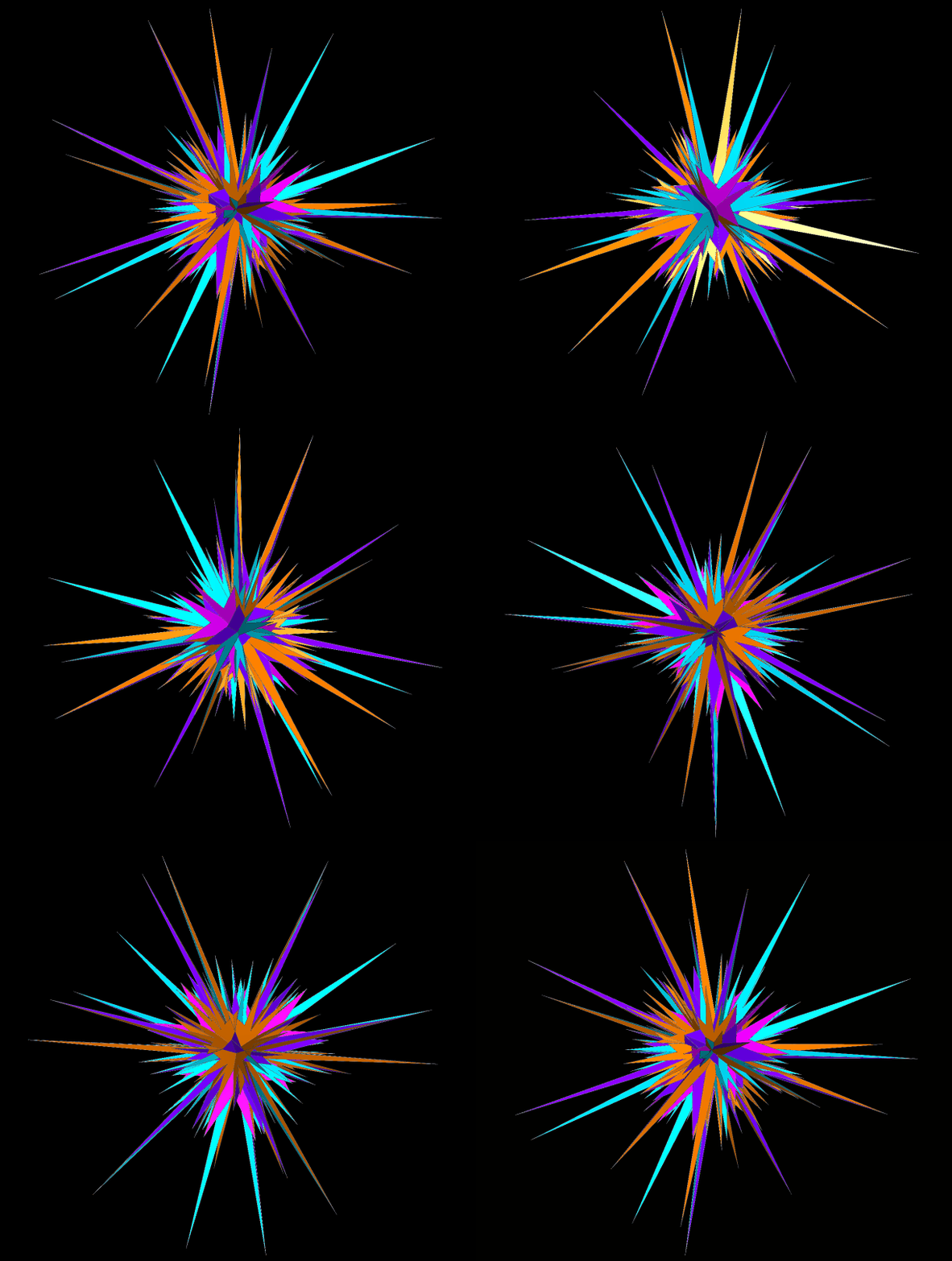
Image created using Stella 4d, available here.
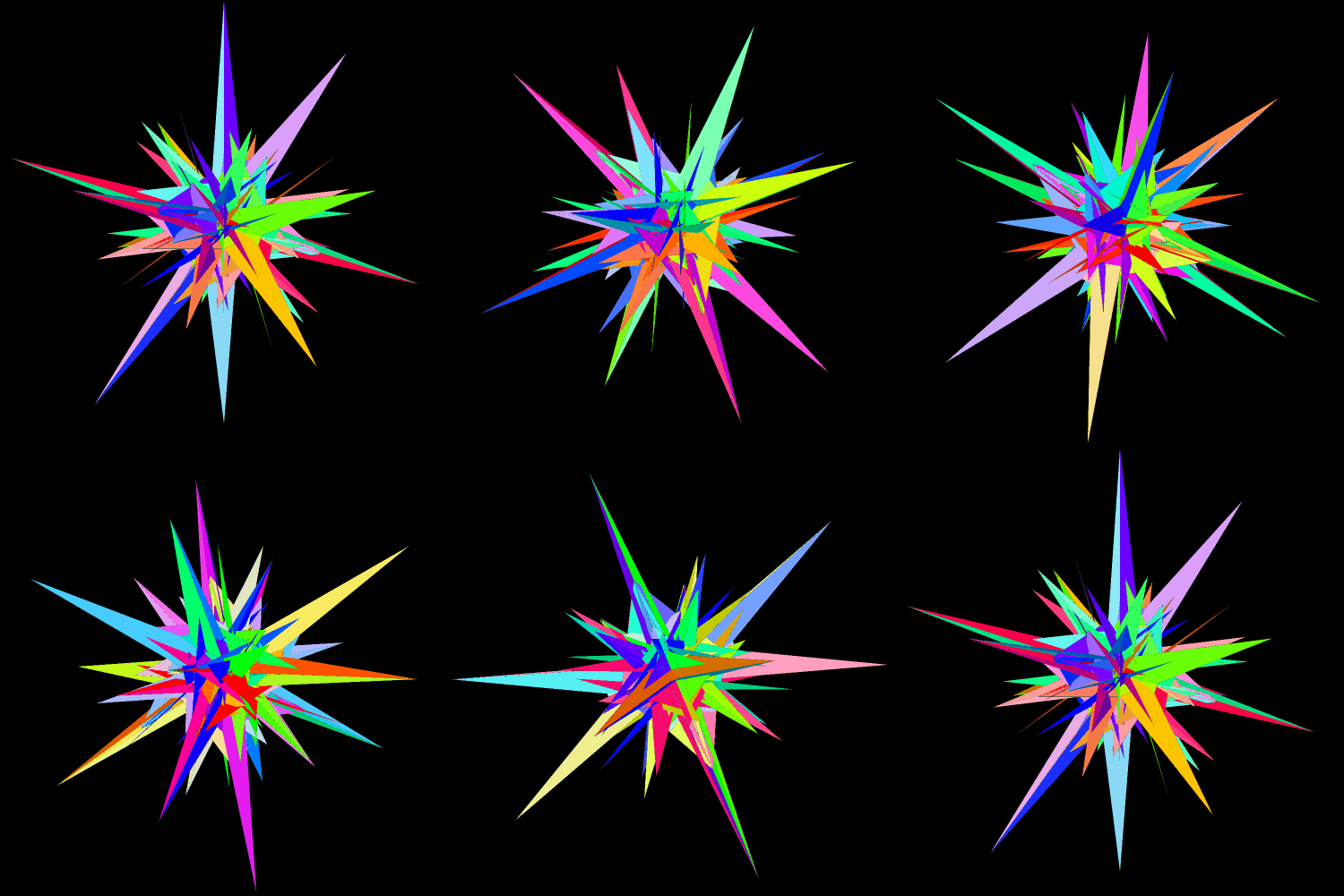
I made this using Stella 4d, which you can find here.

Created using Stella 4d, available here.
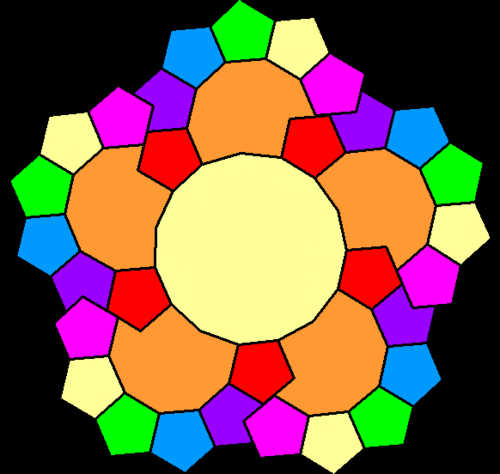
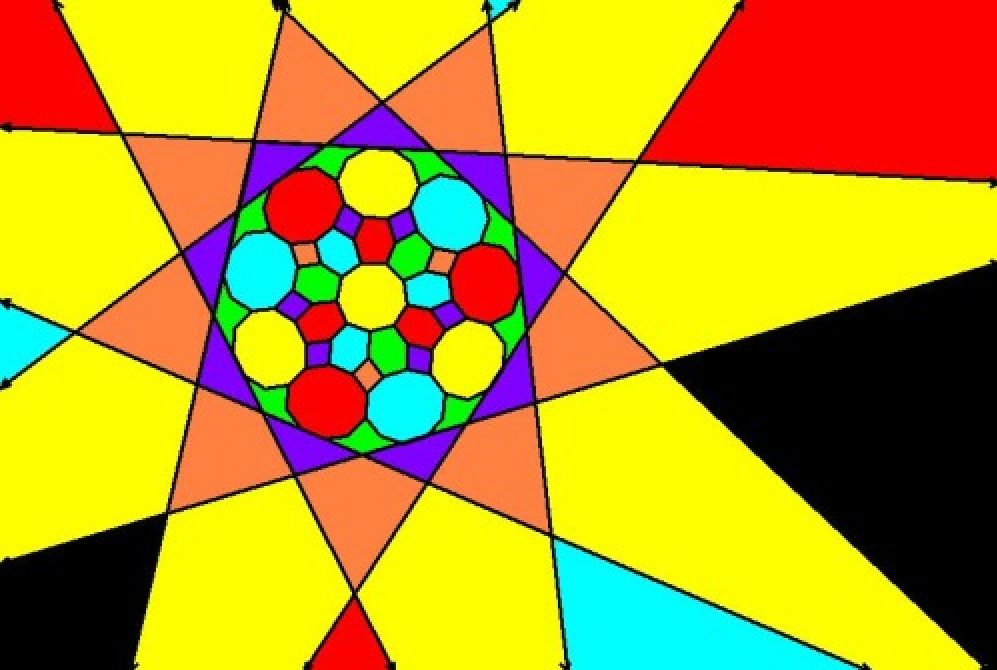
I recently found a bunch of my “lost” geometrical art which never found its way to this blog before, and here’s the latest piece of it. Created in 2012, it has a central pentadecagon, five orange decagons partially hidden behind other polygons, and many pentagons, all of them regular.
First, the newer version I just made:
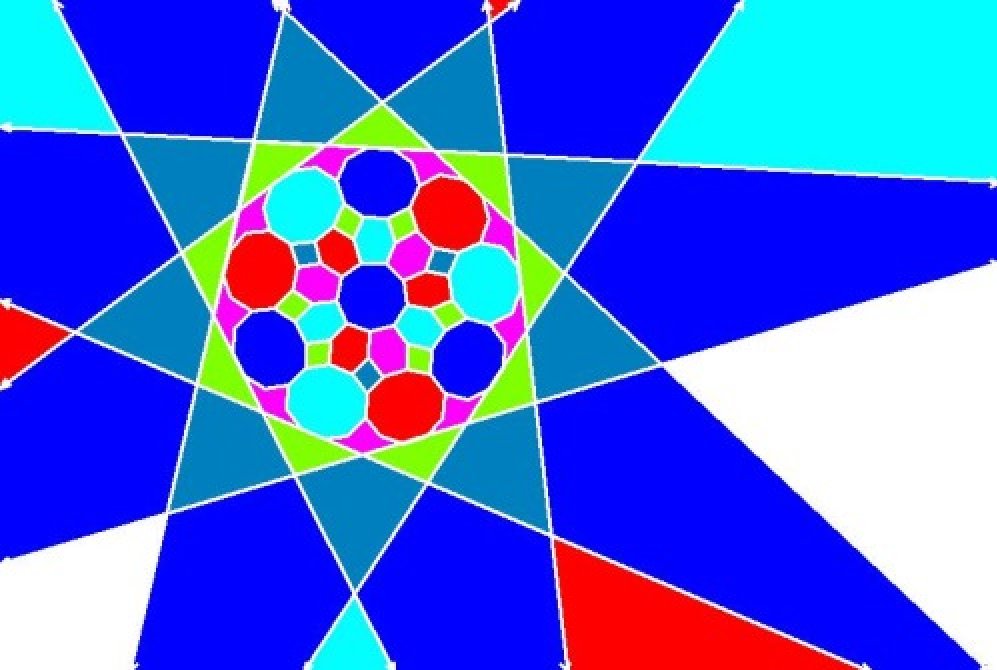
Next, the 2013 version, which I recently found, along with a bunch of other previously-lost stuff from around then. The two are simply color-inversions of each other, according to the rules for color-inversion used by MS-Paint.
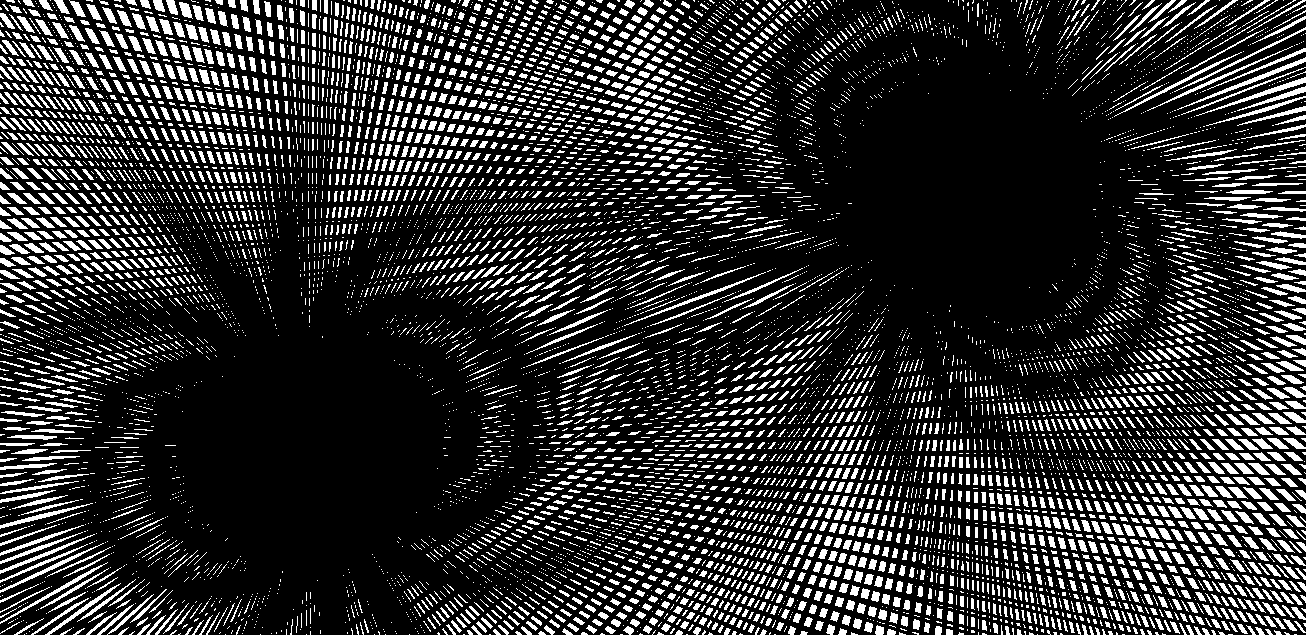
The image of two black spiders above is created by interference, and is an example of an interference pattern. The figures which are interfering are four points (and the rays which go with them), two close together on the right, and two close together on the left, but with the two pairs in different orientations. Each point has 240 rays emanating from it, and the rays are equidistant (in terms of angle measure), making each of these rays one euclid (1.5º) apart from its nearest neighbors.
First, Protostar:
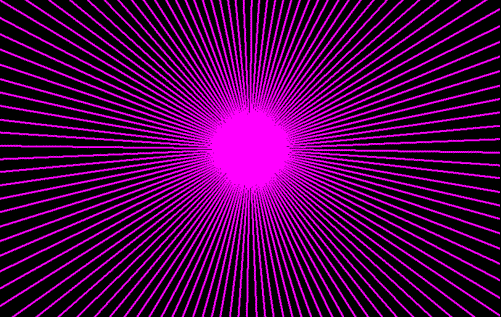
In nature, protostars collapse under their own gravity until enough heat is generated to ignite nuclear fusion, at which point they become stars. The image above is my interpretation of a protostar, just before the moment it becomes a star. As for Star, my post-ignition interpretation, here it is:
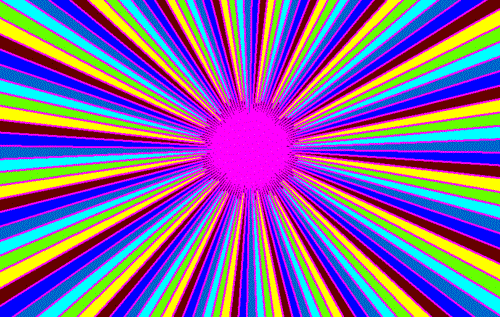
While I did just make these images, they are simply inverted-color versions of images I made back in 2012, using Geometer’s Sketchpad. Here are the original-color versions (which I don’t like as much, myself), presented in a smaller size. You may enlarge either or both with clicks, if you wish.


 RobertLovesPi.net