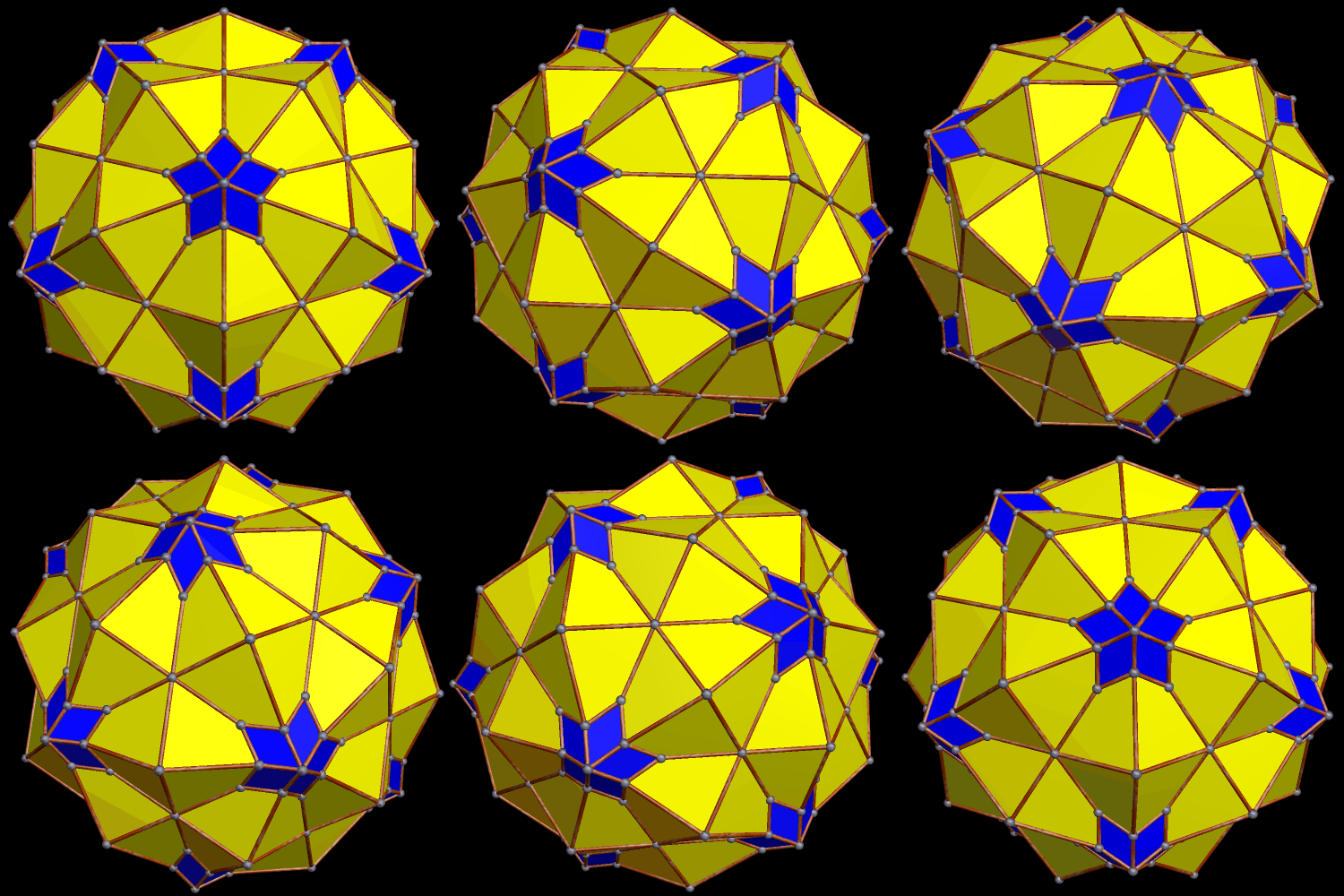
I made this compound using software called Stella 4d: Polyhedron Navigator. This program may be purchased (or a trial download tried for free) at this website.
I made this compound using software called Stella 4d: Polyhedron Navigator. This program may be purchased (or a trial download tried for free) at this website.
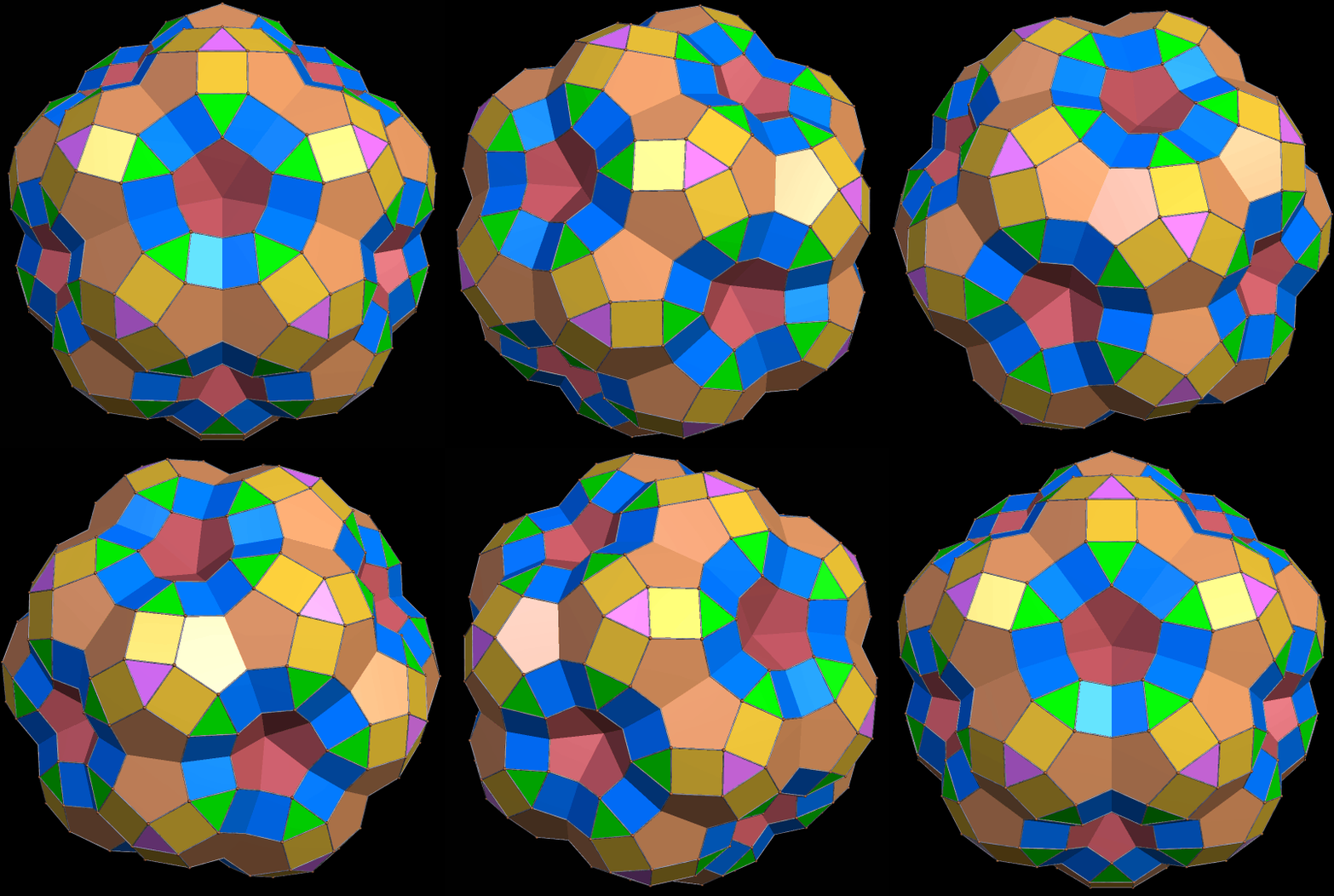
A model this complex would have taken days to build by hand. With software called Stella 4d: Polyhedron Navigator, however, making this “virtual model” was easy. This program is available for purchase at this website — and there is a free trial download available there, as well.
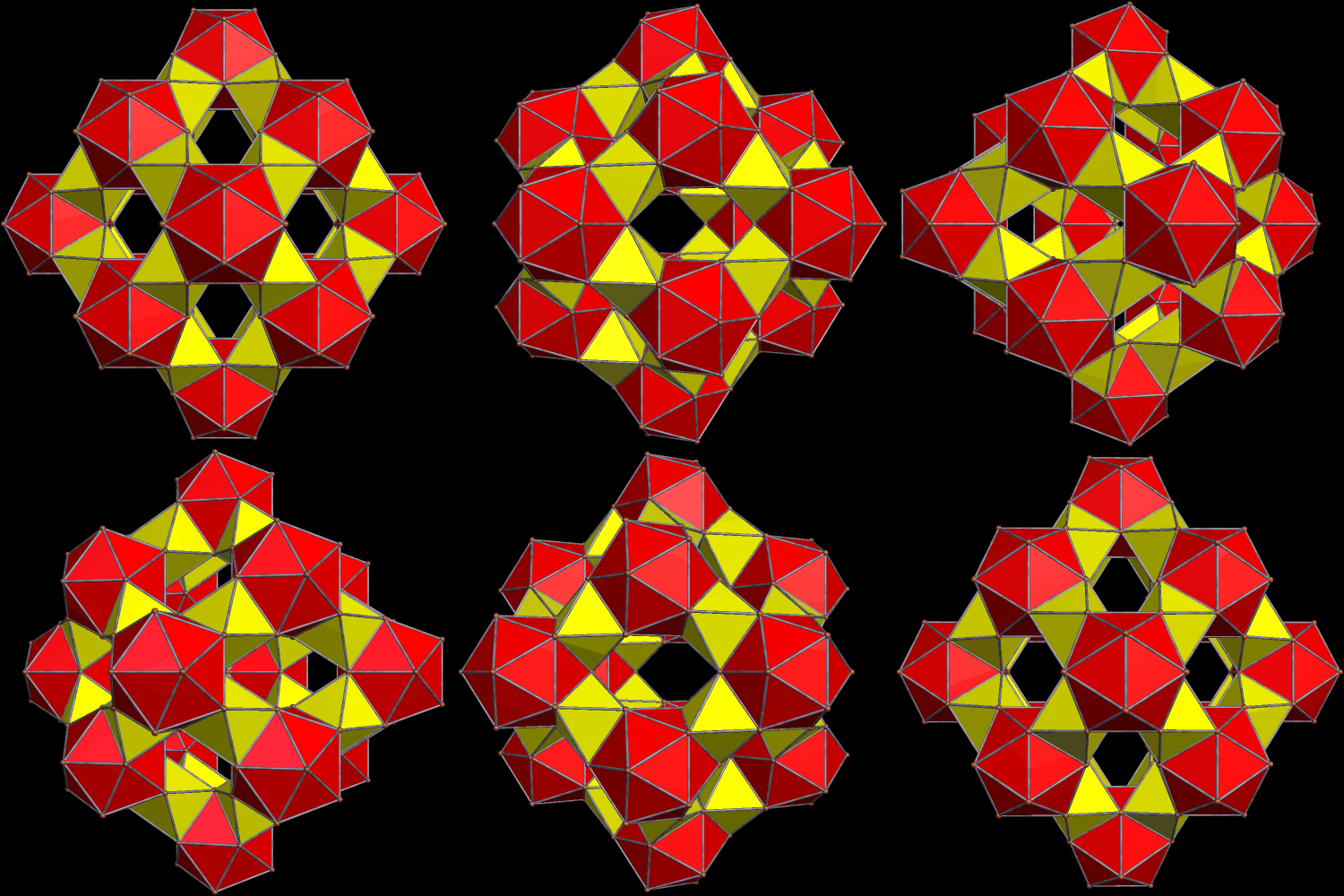
As it turns out, eight icosahedra form this rhombic ring, by augmentation:

Measured from the centers of these icosahedra, the long and short diagonal of this rhombus are in a (√2):1 ratio. How do I know this? Because that’s the only rhombus which can made this polyhedron, a rhombic dodecahedron, dual to the cuboctahedron.
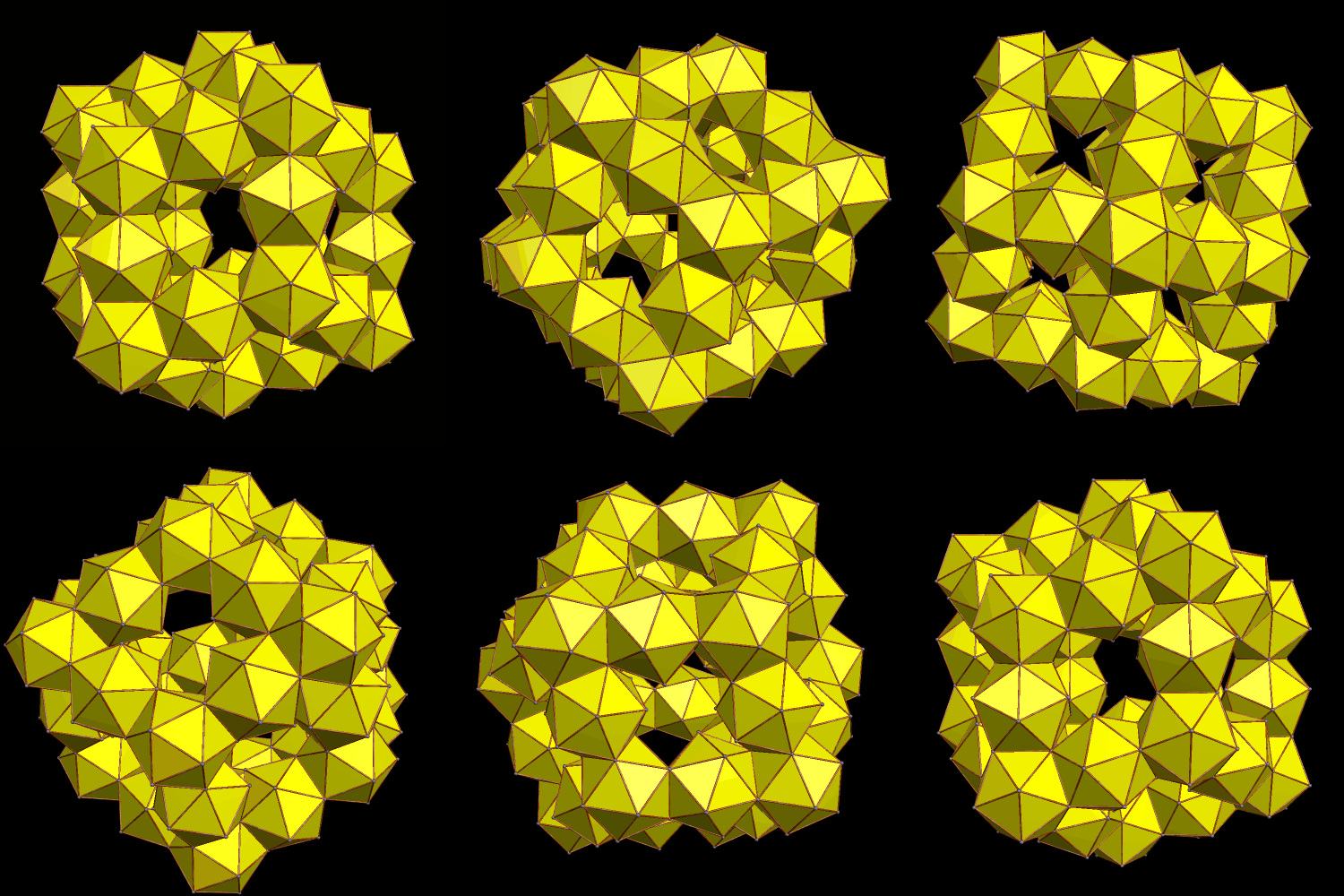
This rhombic dodecahedral cluster of icosahedra could be extended to fill space, since the rhombic dodecahedron itself has this property, an unusual property for polyhedra. Whether space-filling or not, the number of icosahedron per rhombic-dodecahedron edge could be increased to 5, 7, 9, or any greater odd number. Why would even numbers not work? This is a consequence of the fact that opposite faces of an icosahedron are inverted, relative to each other; a pair of icosahedra (or more than one pair, producing odd numbers > 1 when added to the vertex-icosahedron) must be attached to the one at a rhombic-dodecahedron-vertex to make these two inversions bring the triangular face back around to its original orientation, via an even number of half-rotations, without which this consruction of these icosahedral rhombi cannot happen.
Here’s another view of this rhombic dodecahedron, in “rainbow color” mode:

All images above were produced using Stella 4d, software which may be tried for free right here.
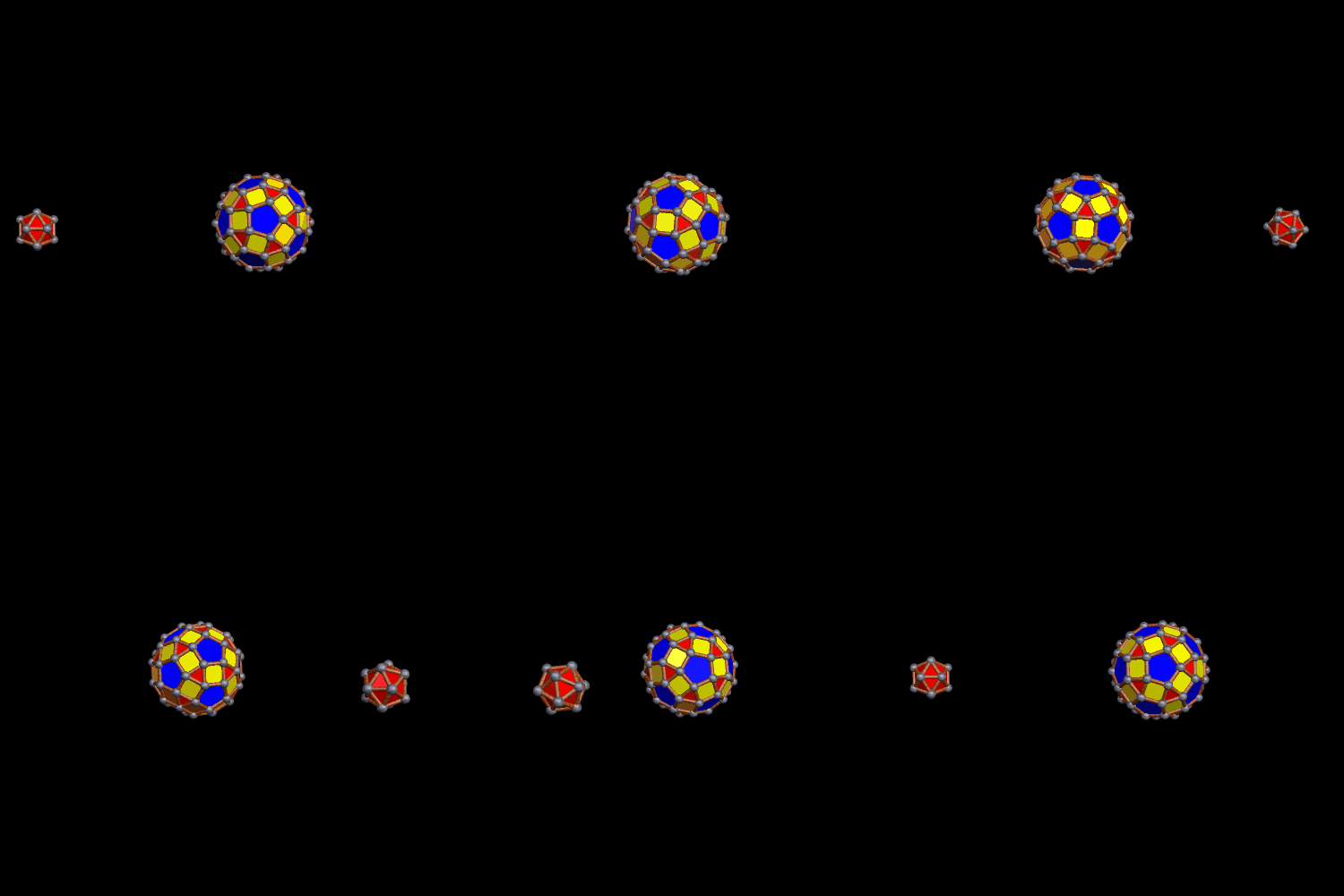
This image of binary polyhedra of unequal size was, obviously, inspired by the double dwarf planet at the center of the Pluto / Charon system. The outer satellites also orbit Pluto and Charon’s common center of mass, or barycenter, which lies above Pluto’s surface. In the similar case of the Earth / Moon system, the barycenter stays within the interior of the larger body, the Earth.
I know of one other quasi-binary system in this solar system which involves a barycenter outside the larger body, but it isn’t one many would expect: it’s the Sun / Jupiter system. Both orbit their barycenter (or that of the whole solar system, more properly, but they are pretty much in the same place), Jupiter doing so at an average orbital radius of 5.2 AU — and the Sun doing so, staying opposite Jupiter, with an orbital radius which is slightly larger than the visible Sun itself. The Sun, therefore, orbits a point outside itself which is the gravitational center of the entire solar system.
Why don’t we notice this “wobble” in the Sun’s motion? Well, orbiting binary objects orbit their barycenters with equal orbital periods, as seen in the image above, where the orbital period of both the large, tightly-orbiting rhombicosidodecahedron, and the small, large-orbit icosahedron, is precisely eight seconds. In the case of the Sun / Jupiter system, the sun completes one complete Jupiter-induced wobble, in a tight ellipse, with their barycenter at one focus, but with an orbital period of one jovian year, which is just under twelve Earth years. If the Jovian-induced solar wobble were faster, it would be much more noticeable.
[Image credit: the picture of the orbiting polyhedra above was made with software called Stella 4d, available at this website.]
I assembled this using Stella 4d, software available here.

The twelve purple faces of this faceted dodecahedron show up on Stella 4d‘s control interface as {10/4} star decagons, which would make them each have five pairs of two coincident vertices. I’m informally naming this special decagon-that-looks-like-a-pentagram (or “star pentagon,” if you prefer) the “antipentagram,” for reasons which I hope are clear.
Stella 4d, the program I use to make most of my polyhedral images, may be tried for free at http://www.software3d.com/Stella.php.

These twenty great icosahedra were excavated from the faces of a central icosahedron, which is concealed in the figure’s center. These excavations exceed the limits of the central icosahedron, resulting in each great icosahedron protruding in a direction opposite that of the face from which it is excavated. In a certain sense, then, the figure above has negative volume.
To make this, I used software called Stella 4d: Polyhedron Navigator. It can be researched, bought, or tried for free here.
Also, here is the dual of the polyhedral cluster above, made with the same program.

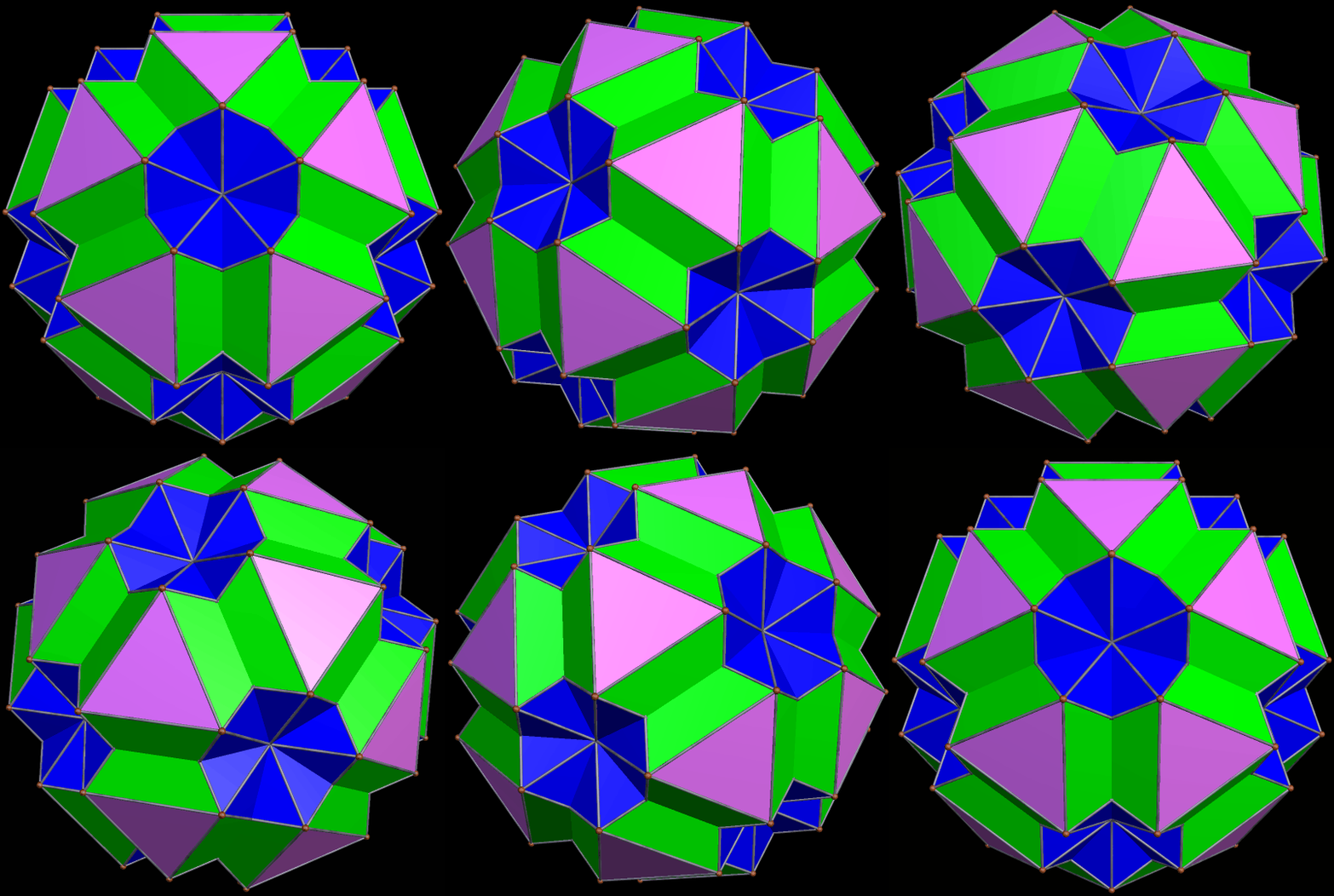
The polyhedral clusters above and below use different coloring-schemes, but are otherwise identical. Invisible, in the center, is a great icosahedron. Each of its faces has been augmented by a (Platonic) icosahedron.
 Both images were created using Stella 4d, software you can try here.

That’s the compound of the dodecahedron and the truncated octahedron above. Shown next is its dual, the compound of the icosahedron and the tetrakis cube. Both compounds were made using Stella 4d: Polyhedron Navigator, which you may try here.


This compound was created using Stella 4d, software you can try for yourself here.
 RobertLovesPi.net