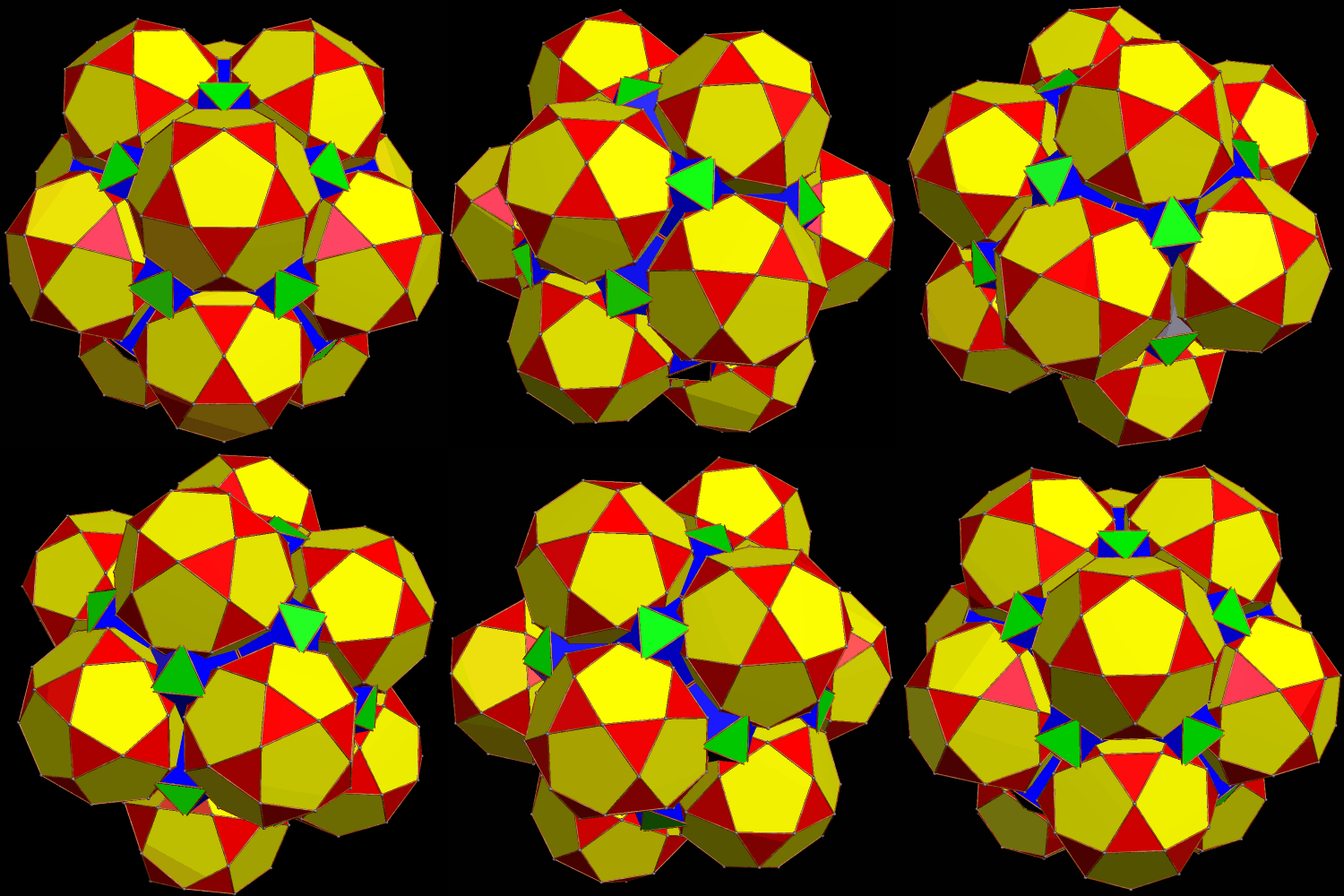
Above and below, you will find two different coloring-schemes for this particular cluster of polyhedra. I made both of these rotating images using Stella 4d, software you can buy, or try for free, right here.

Above and below, you will find two different coloring-schemes for this particular cluster of polyhedra. I made both of these rotating images using Stella 4d, software you can buy, or try for free, right here.
A model this complex would have taken days to build by hand. With software called Stella 4d: Polyhedron Navigator, however, making this “virtual model” was easy. This program is available for purchase at this website — and there is a free trial download available there, as well.

Ordinarily, with Zometools, the compound of five cubes is an all-blue model. However, I wanted to build one in which each cube is a different color, so I made a special request to the Zometool Corporation (their website: http://www.zometool.com) for some off-color parts, to make this possible.
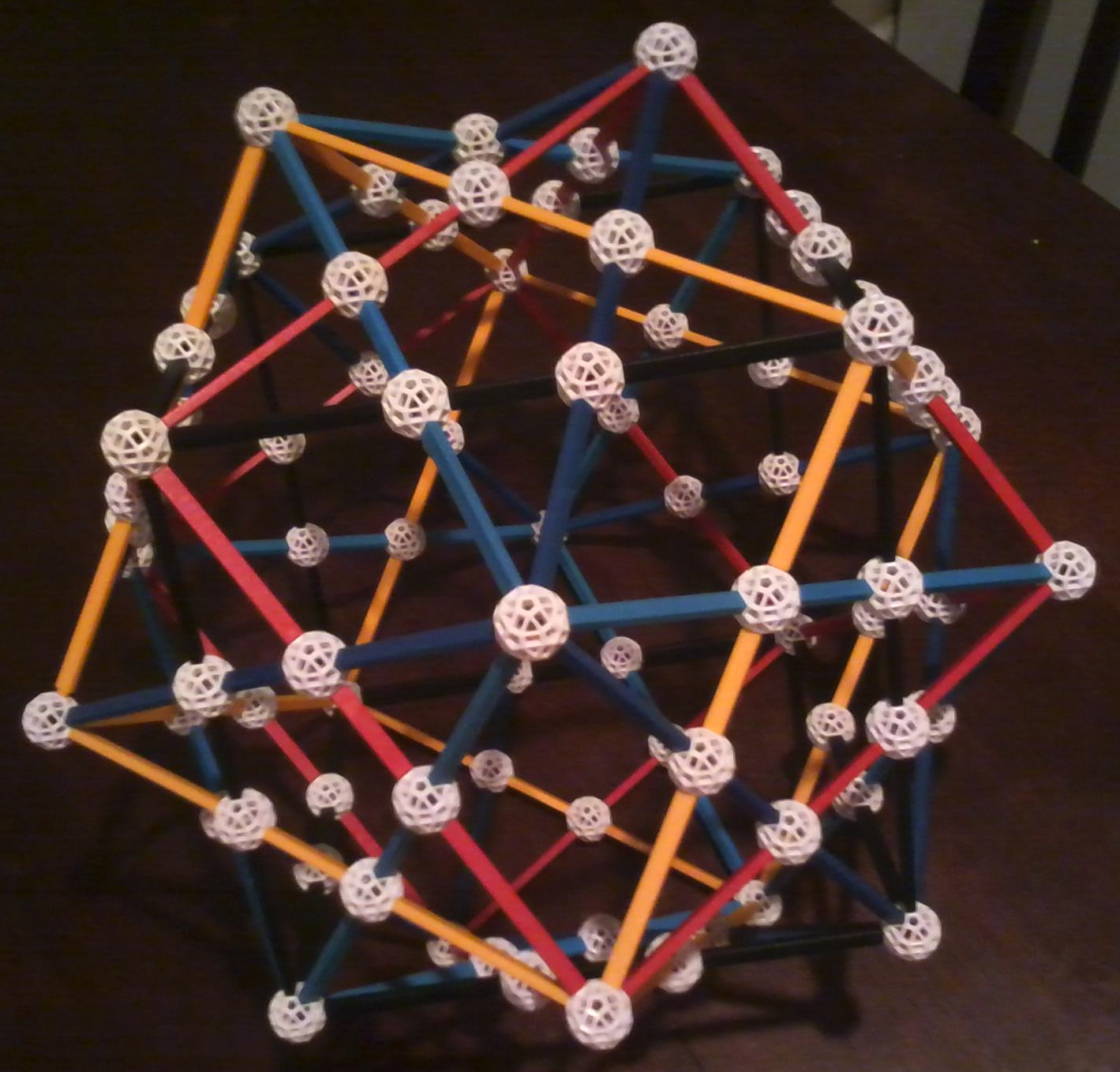
The five colors used in this model are standard blue, a darker shade of blue, red, yellow, and black.
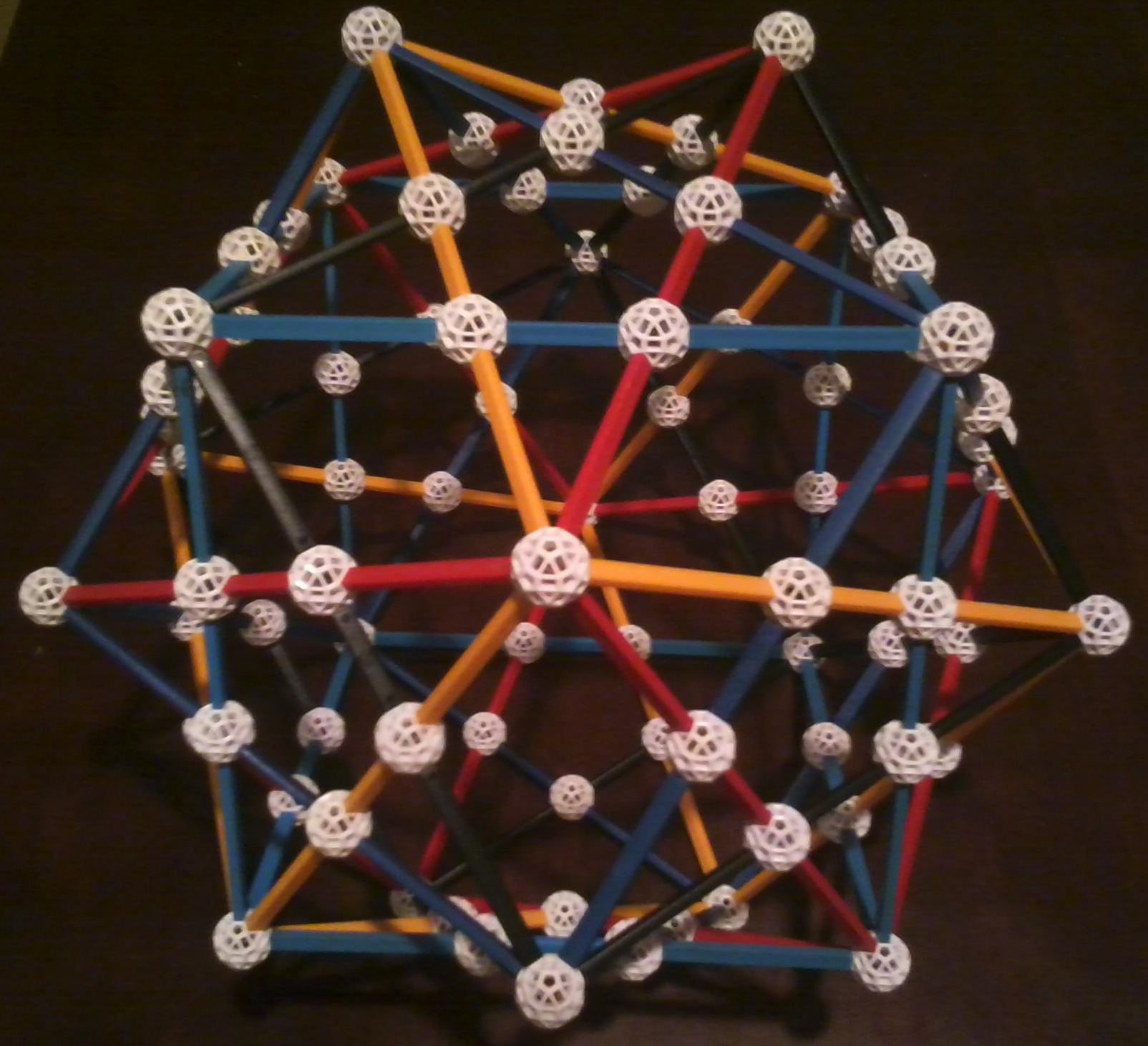
I also received the struts needed to build this model with one cube in white, so I will be making a second version of this soon. I didn’t want the Zomeballs used to match any strut color, though, so I will have to wait for the shipment of purple Zomeballs I ordered, today, to arrive, before I can build that model.
Zome is a fantastic tool to use for mathematical investigations, as well as education, and other applications as well. I recommend this product highly, and without reservation.
If one starts with the great rhombicosidodecahedron, then makes a compound of it, and its dual, and then forms the convex hull of that compound, this is the result:
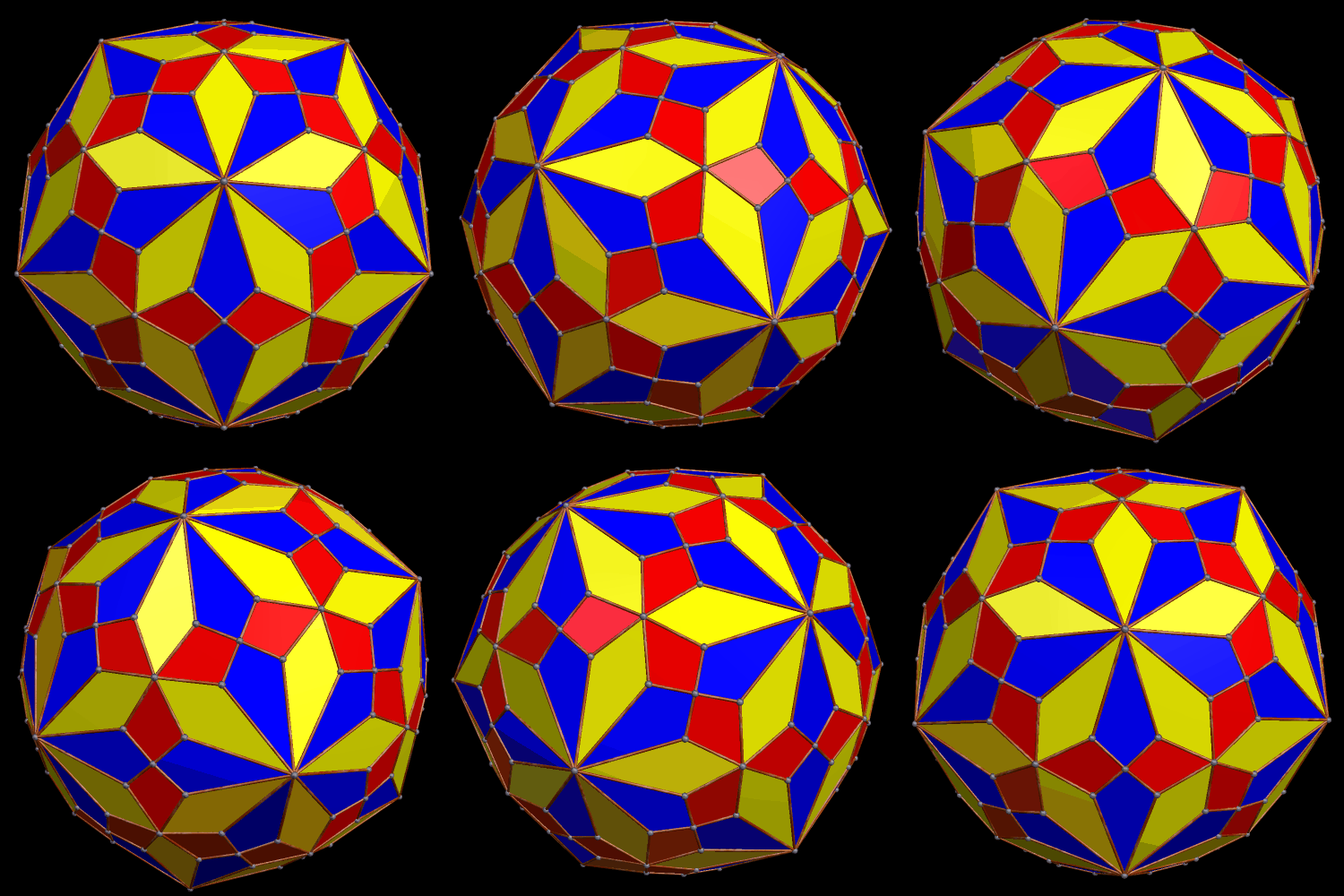
This polyhedron has 180 faces, all of them kites. What’s more, there are equal numbers — sixty each — of the three different types of kites in this polyhedron.
It also has an interesting dual:
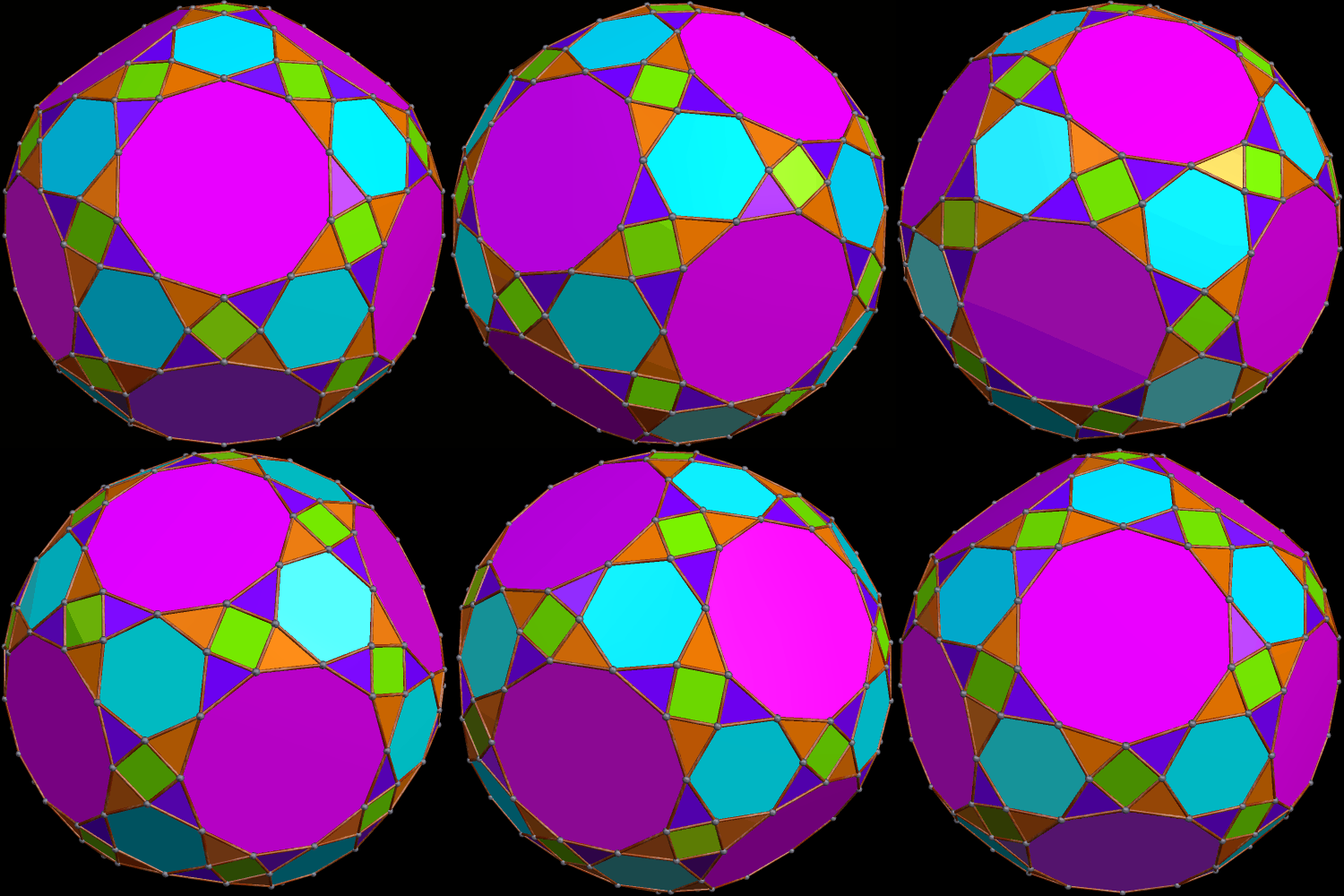
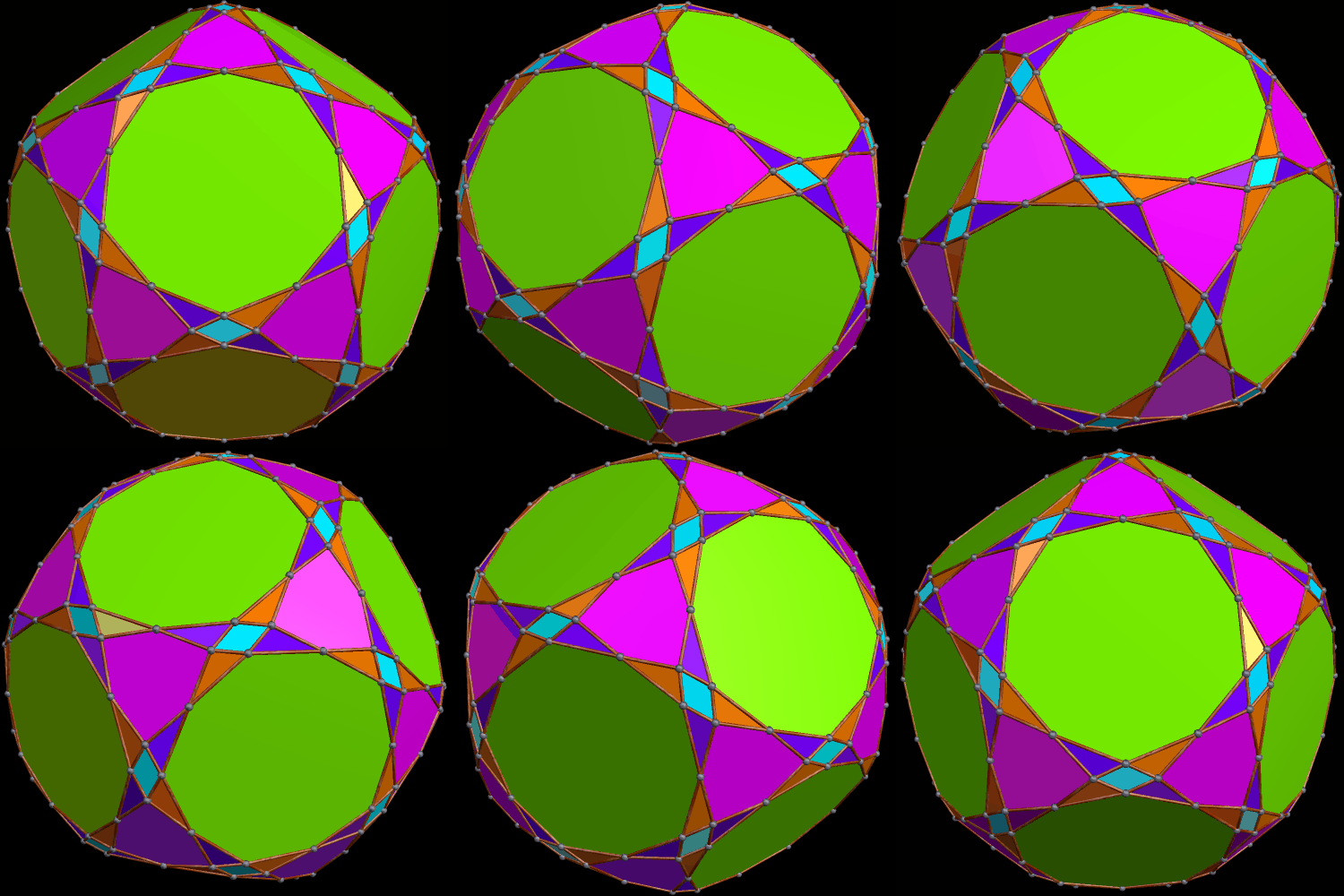
These virtual polyhedral models were created using Stella 4d: Polyhedron Navigator, which you can buy, or try for free, right here. Stella contains a “try to make faces regular” function, and here is what appears if that operation is applied to the dual shown above:
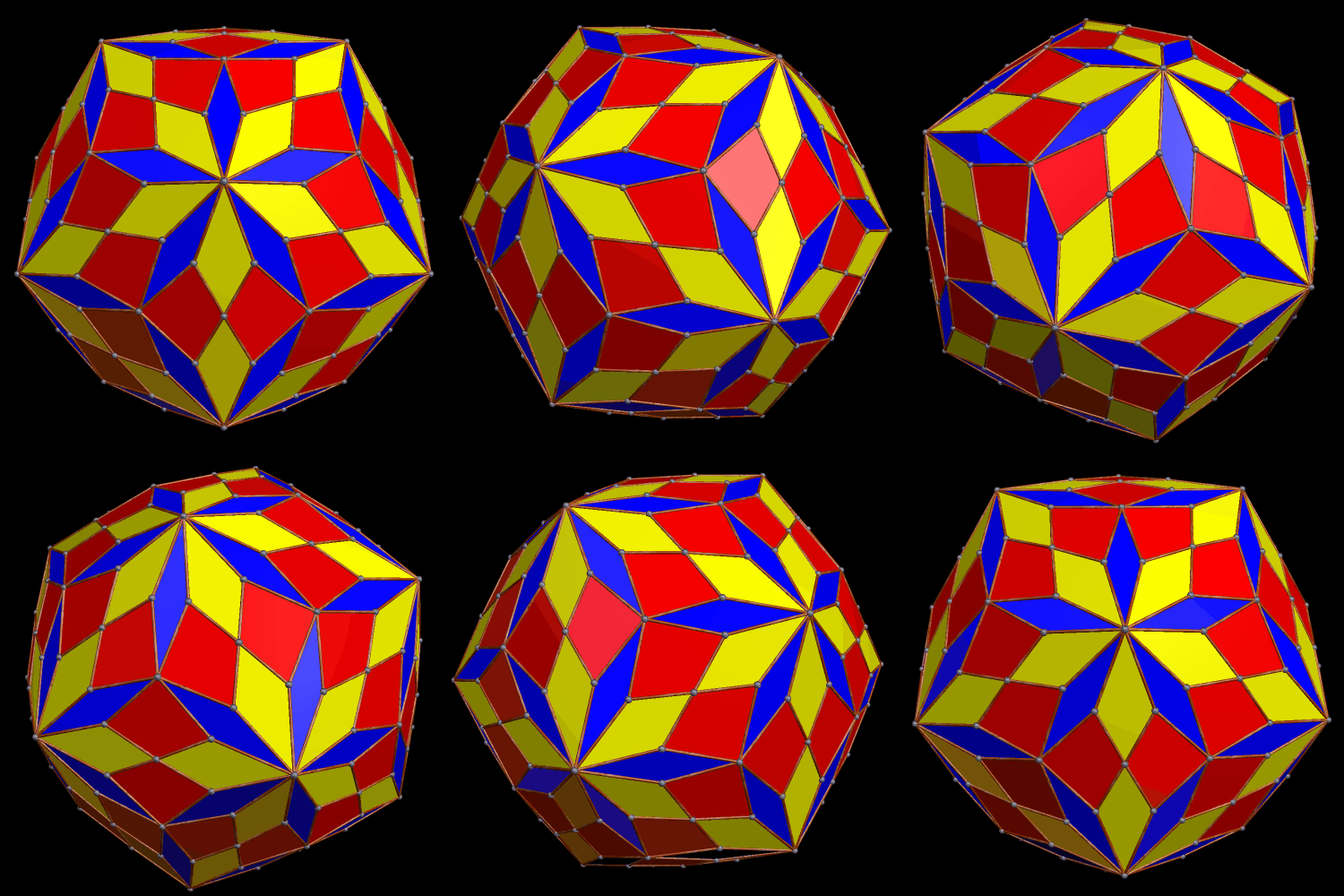
The dual of this figure is similar to the original polyhedron at the top of this post, featuring 180 kites, again: sixty each, of three different types:
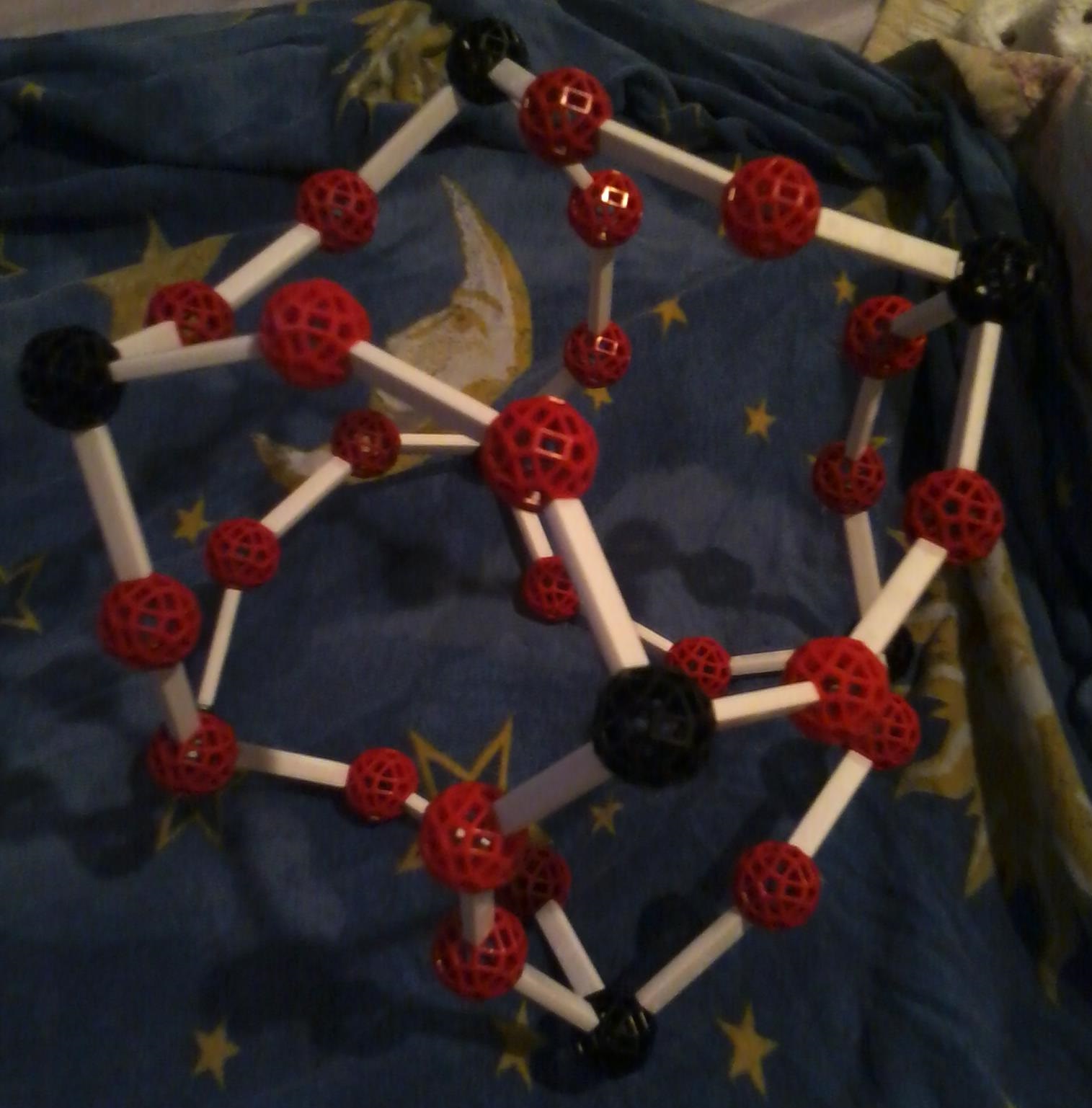
The President of the Zometool Corporation, Carlos Neumann, gave me a challenge, not long ago: find a solution to the Zome Cryptocube puzzle which uses only B0s, which I call “tiny blue struts.” For the Cryptocube puzzle, though, these “blue” struts actually appear white. Carlos knows me well, and knows I cannot resist a challenge involving Zome. Here is what I came up with, before the removal of the black cube, which is what the Zome Cryptocube puzzle starts with.

In a “pure” Crypocube solution, the red Zomeballs would also be white — not just the “blue” struts. However, when Carlos issued this challenge, I was at home, with all the white Zomeballs I own located at the school where I teach — so I used red Zomeballs, instead, since I had them at home, and did not wish to wait.
Here’s what this Cryptocube solution looks like, without the black cube’s black struts. You can still “see” the black cube, though, for the black Zomeballs which are the eight corners of the black cube are still present. As is happens, this particular Cryptocube solution has pyritohedral symmetry — better known as the symmetry of a standard volleyball.
While the Cryptocube puzzle is not currently available on the Zome website, http://www.zometool.com, it should be there soon — hopefully, in time for this excellent Zome kit to be bought as a Christmas present. Once a child is old enough so that small parts present no choking hazard, that child is old enough to start playing with Zome — and it is my firm belief that such play stimulates the intellectual growth of both children and adults. As far as a maximum age where Zome is an appropriate Christmas gift, the answer to that is simple: there isn’t one.
Also: while I do openly advertise Zome, I do not get paid to do so. I do this unpaid advertising for one reason: I firmly believe that Zome is a fantastic product, especially for those interested in mathematics, or for those who wish to develop an interest in mathematics — especially geometry. Also, Zome is fun!
Most polyhedra I post have cuboctahedral, tetrahedral, or icosidodecahedral symmetry, or some pyritohedral or chiral variation of one of these symmetry-types. These, however, are exceptions. I call them “polar polyhedra” because they each have an identifiable “North Pole” and “South Pole,” which are, in three of these five images, at the ends of their axes of rotation.
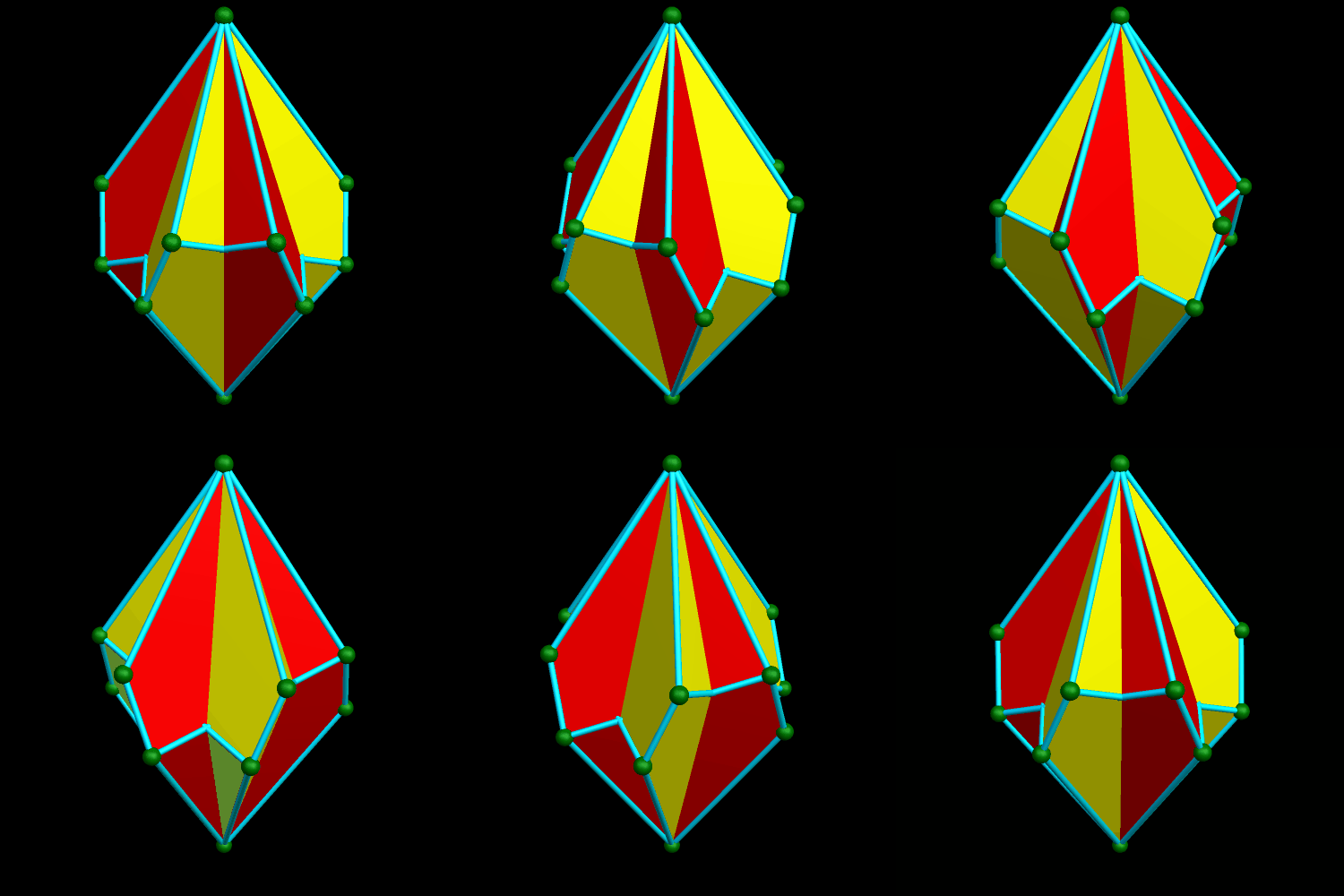
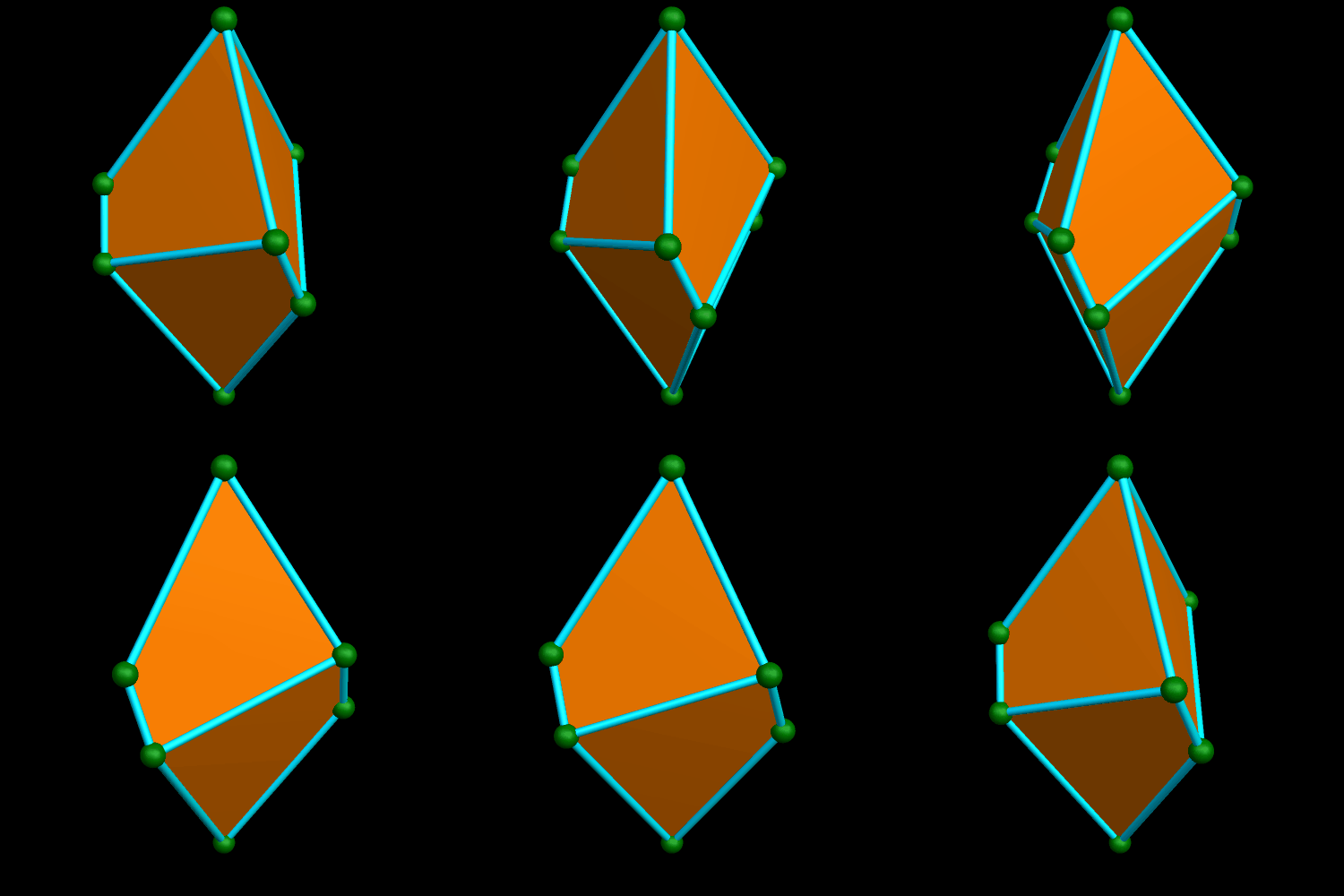


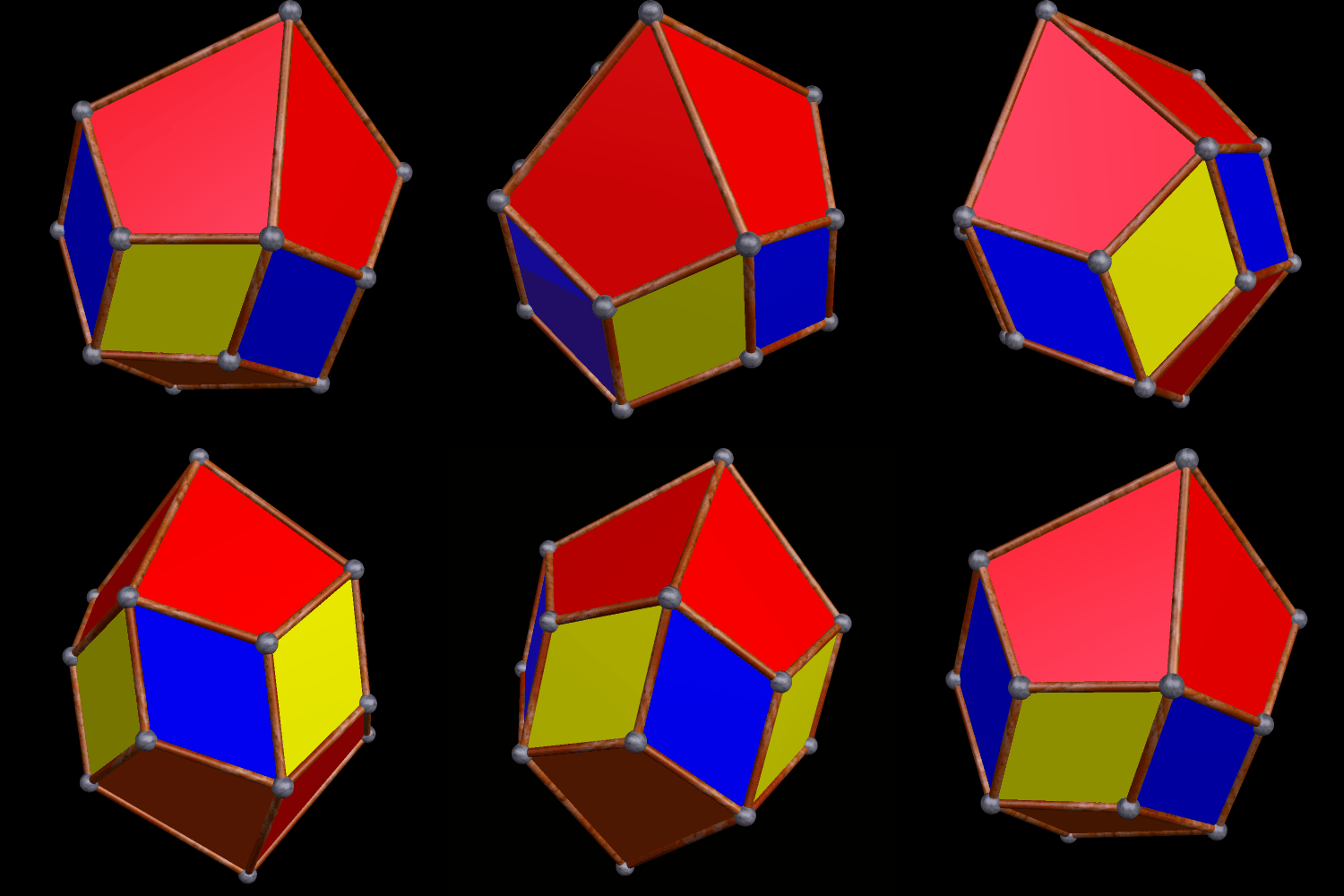
These rotating images were created using Stella 4d, software you may try for yourself, right here.

First, let’s face facts: the numerical prefixes currently in use, in English, are a horrible mess. Most of the ones used with polyhedra, for example, such as tetra- (4) and penta- (5), are derived from Greek. For polygons, however, a four-sided figure is usually called a quadrilateral, with “quad-” derived from Latin, just as it is in “quadrillion,” or “quadruplets.” Why use two prefixes for the number four? It would be more consistent (and therefore better), since four-faced polyhedra are called tetrahedra, for four-sided polygons to be called tetragons, just as we call five-sided polygons pentagons. Consistency improves comprehension, simply by reducing the number of prefixes one needs to understand, and can therefore aid in both teaching and learning. Inconsistency, though, has the opposite effect, and that benefits no one.
The Greek-based prefix for 5, “penta-,” has a Latin-based rival, also: “quint-,” as in quintuplets, or the number quintillion. It doesn’t make sense to use two different prefixes for the same thing, for both English, and mathematics, are complicated enough without adding unnecessary complications. The necessary complications are quite enough!
My preference is for Greek-based prefixes, for two reasons: (1) more of them are in use than their Latin counterparts, and (2) the Latin-speaking Romans appropriated ideas from the ancient Greeks, not the other way around.
Even the number one is not immune from this problem. For one, we use “mono-,” “uni-,” “un-,” “uni-,” “en-, “and “hen-,” all to mean “one,” and each has at least a slightly different derivation. Examples include “monomer,” “monologue,” “unicycle,” “undecillion,” “undecagon,” “endecagon,” and “hendecagon,” the last three of which all name the same polygon. (Also, these last three prefixes are for 11, actually, formed by combining a prefix for the one with the Greek-based “deca-” prefix for ten. Combinations of prefixes will be addressed later.) I call 11-sided polygons “hendecagons,” for both prefixes in that word are derived from Greek.
Prefixes for the number two are also unnecessarily numerous, as well as ambiguous. “Bi-” is used in “bicycle,” “binary,” and “billion,” but that’s a horrible idea, since “bi-” is also used, in some cases, for ½. This shows up, for example, in chemistry: the bulk of a carbonic acid molecule, if fully ionized, is called the carbonate ion. However, if it is only half-ionized, it is often called the bicarbonate ion, as in sodium bicarbonate, better-known as baking soda. In chemistry, “di-” is used for two, as in carbon dioxide, a molecule containing two oxygen atoms. “Do-” and “duo-” are also both used for the number two, with the first derived from Greek, and the second from Latin. When combined with the Greek prefix for ten, to make twelve, these prefixes appear in words such as “dodecagon,” “dodecahedron,” and “duodecimal.” I find the word “duodecimal” particular irritating, for it combines Greek and Latin prefixes in a single word. If one person had deliberately designed this entire system, with the goal of causing confusion, it would have taken a lot of work to invent a system more confusing than the one we actually use.
If, for ½, we only used “bi-,” that would be nice, but that isn’t what we do. Half a circle is a semicircle, and then half a sphere is a hemisphere. Since it originates from Greek, my preference is for “hemi-.”
At least three’s prefix is usually consistent, with “tri-” being all-but-universal. The only exception I know of appears when “tri-” is combined with “deca-,” to create a prefix for thirteen, and the Greek work for “and,” which is “kai,” often appears with it, as in triskaidecaphobia, the fear of the number thirteen — in this word, “tri-” is modified to “tris-.” However, a thirteen-sided polygon is simply called a “tridecagon,” with no “s” attached to “tri-,” and the “kai” omitted.
I don’t actually care if we use “kai,” or not, in numerical prefixes, but we should pick one or the other, and stick with it. It makes no sense that a fifteen-sided polygon is usually called a “pentadecagon,” while sometimes called a “pentakaidecagon.” Why do we not simply choose just one?
Six and seven are similarly troublesome. The numbers “sextillion” and “septillion,” as well as the month of September, all use Latin-derived prefixes for these numbers. I prefer the Greek-derived prefixes used with polygons and polyhedra: “hexa-,” and “hepta-.” With eight, though, as in the case of three, English-speakers lucked out, with “octopus,” “octillion,” “octagon,” and “octahedron” all starting with the same three letters.
With nine, however, our system falls apart again. In high school, geometry students are taught the Latin-prefix-containing word “nonagon” for a nine-sided polygon, and “November” contains yet another Latin-based prefix meaning nine. (It was named the ninth month, rather than the eleventh, because the start of each new year was marked with the first day of Spring in ancient times, rather than the first day of January.) A professional mathematician, however, is more likely to call a nonagon an “enneagon,” for “ennea-” is derived from Greek, making “enneagon” consistent with its “neighbors,” the octagon and the decagon. Ten is not a problem, though, for the Greek-based “deca-” was simply appropriated by the Latin-speaking Romans, who named their tenth month December — using a prefix close enough to “deca-” that it is unlikely to cause confusion.
One numbers exceed ten, though, a new problem is encountered, in addition to the issue of whether or not we use “kai.” Numbers such as 12 and 24 require us to combine prefixes, but there is no consistency in the order in which this is done. For example, a twelve-faced polyhedron is a “dodecahedron” — using a prefix for two, followed by a prefix for ten: the smaller number, and then the larger number. We continue this practice with words such as “pentadecagon,” already described above. Then, however, we have this thing, the dual of the snub cube:

The faces of this polyhedron are 24 pentagons, and it isn’t the only well-known polyhedron with 24 faces, so “pentagonal” is part of this polyhedron’s name, which makes sense. However, if its name followed the pattern in the paragraph above, that would make it a “pentagonal tetraicosahedron,” or perhaps a “pentagonal tetrakaiicosahedron” — the smaller “tetra-,” meaning “four,” would come before the larger “icosa,” meaning twenty. At least both these prefixes originated in the Greek language, but, for mysterious reasons, the prefixes are put in the reverse order, relative to the order used for the dodecahedron: it is called the “pentagonal icositetrahedron.” Polyhedral names are hard enough to learn without arbitrary switches between “smaller, then larger,” and its opposite, “larger, then smaller.” We should choose a method, one or the other, and then stick to it.
[Note: the rotating polyhedron above was created using Stella 4d, software you can buy, or try for free, at this website.]
In chemistry, naming-disputes (what to call a newly-synthesized element, for example) are settled by the IUPAC: the International Union of Pure and Applied Chemistry. I know of no organization with a corresponding role in the field of mathematics, but, if one were created, perhaps that would help get this mess cleaned up.

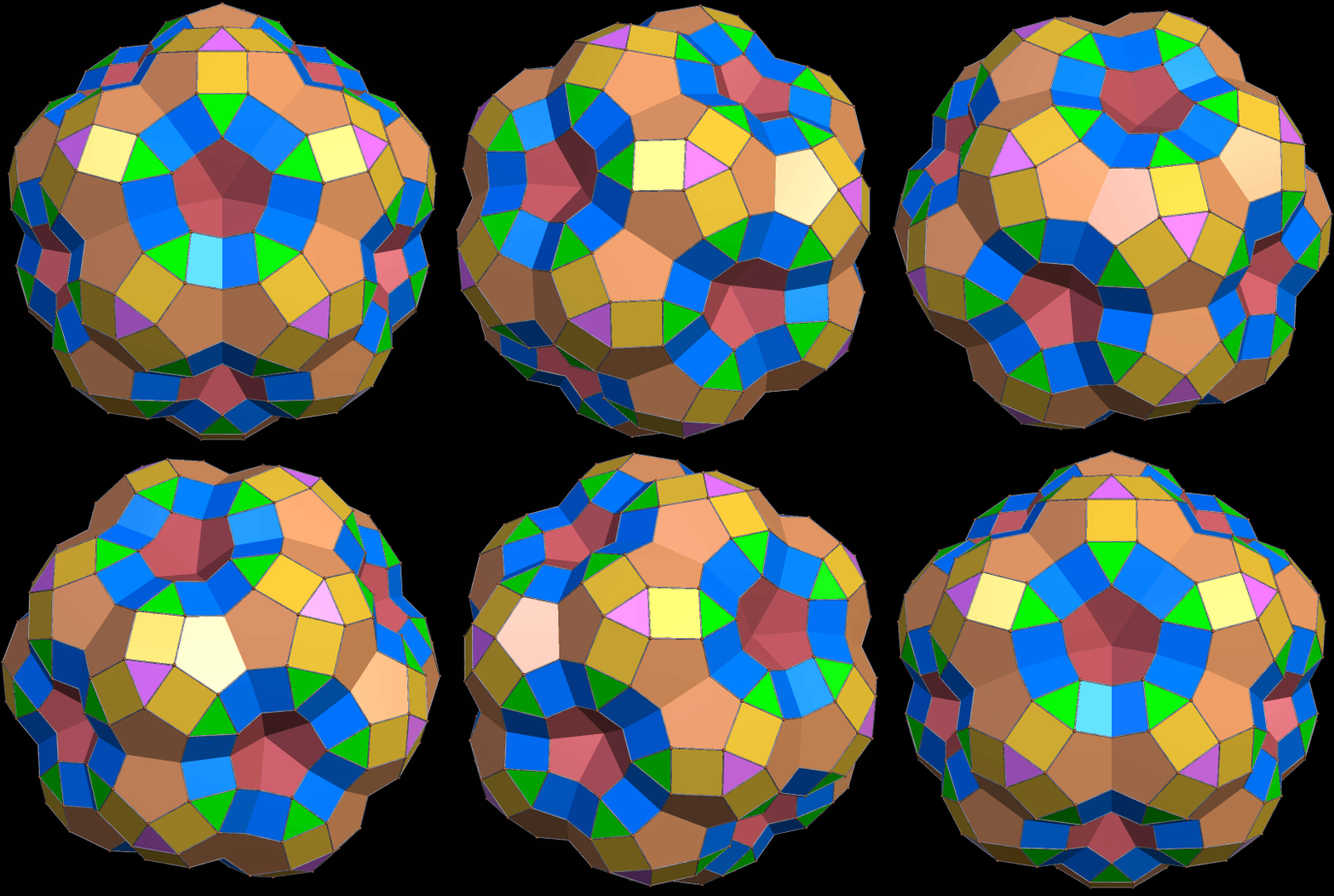
This polyhedron is chiral, meaning that (unlike many well-known polyhedra) it exists in “left-handed” and “right-handed” forms — reflections of each other. These “reflections” are also called enantiomers. I call this polyhedron “sixty and sixty” because there are sixty faces which are irregular, purple quadrilaterals, as well as sixty faces which are irregular, orange pentagons.
I stumbled upon this polyhedron while playing around with Stella 4d: Polyhedron Navigator, software you can try right here. For those who research polyhedra, I know of no better tool.
To see the other enantiomer, there is a simple way — just hold a mirror in front of your computer screen, with it showing the image above, and look in the mirror!
With any chiral polyhedron, it is possible to make a compound out of the two enantiomers. Here is what the compound looks like, for this “sixty and sixty” polyhedron cannot be seen this way, so here is an image of it, also created using Stella 4d.

As it turns out, eight icosahedra form this rhombic ring, by augmentation:

Measured from the centers of these icosahedra, the long and short diagonal of this rhombus are in a (√2):1 ratio. How do I know this? Because that’s the only rhombus which can made this polyhedron, a rhombic dodecahedron, dual to the cuboctahedron.
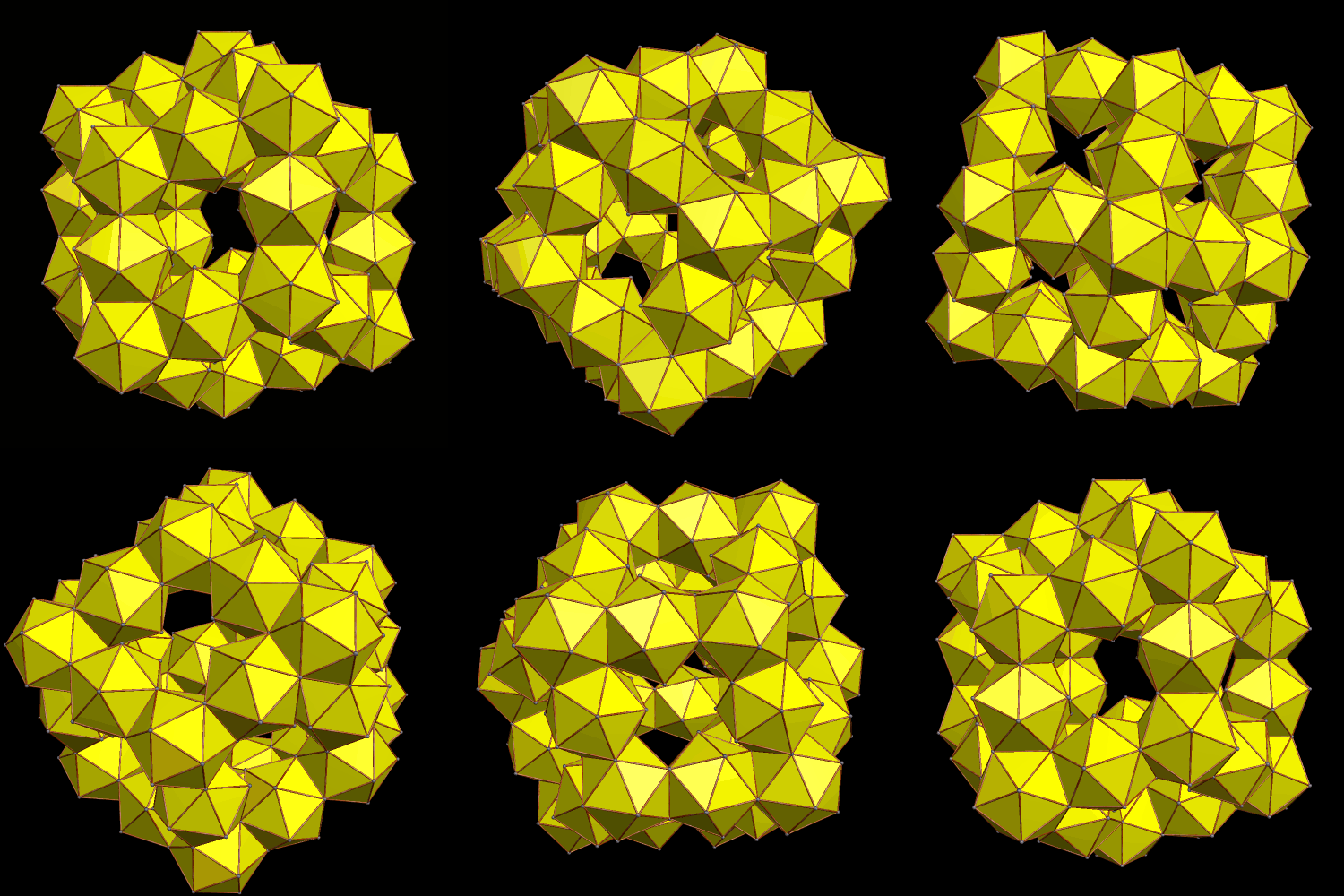
This rhombic dodecahedral cluster of icosahedra could be extended to fill space, since the rhombic dodecahedron itself has this property, an unusual property for polyhedra. Whether space-filling or not, the number of icosahedron per rhombic-dodecahedron edge could be increased to 5, 7, 9, or any greater odd number. Why would even numbers not work? This is a consequence of the fact that opposite faces of an icosahedron are inverted, relative to each other; a pair of icosahedra (or more than one pair, producing odd numbers > 1 when added to the vertex-icosahedron) must be attached to the one at a rhombic-dodecahedron-vertex to make these two inversions bring the triangular face back around to its original orientation, via an even number of half-rotations, without which this consruction of these icosahedral rhombi cannot happen.
Here’s another view of this rhombic dodecahedron, in “rainbow color” mode:

All images above were produced using Stella 4d, software which may be tried for free right here.
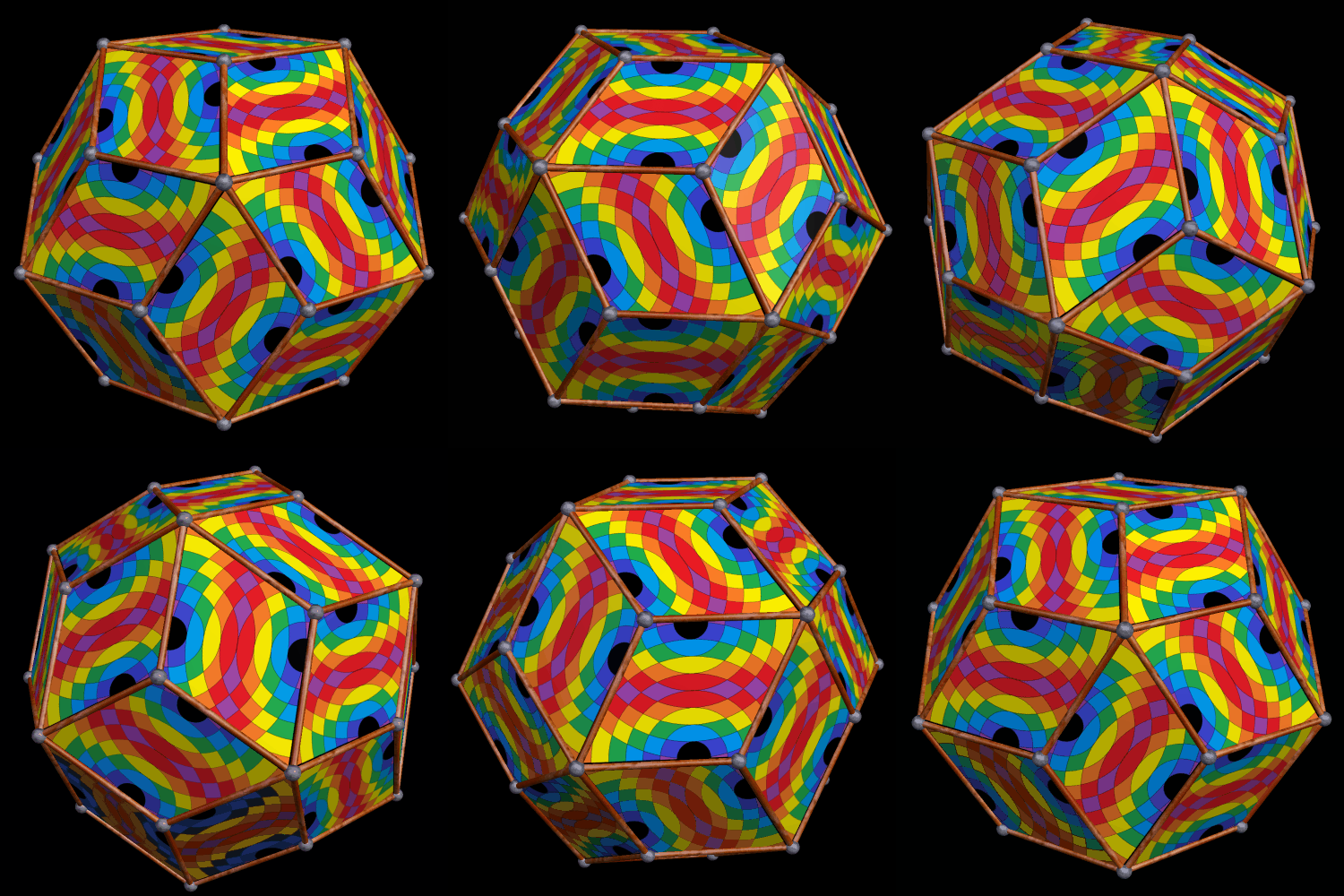
It took three programs to make this. First, outlines of the “double rainbow” patterns on each face were constructed using Geometer’s Sketchpad. A screenshot from that program was then pasted into MS-Paint, which was used to add color to the outline of the pattern on each face. Next, the colorized image was projected onto each face of a rhombic triacontahedron, using Stella 4d: Polyhedron Navigator — the program that put this all together, and what I used to generate the rotating .gif above. Stella is available at http://www.software3d.com/Stella.php, with a free trial download available.
Interestingly, while this polyhedron itself is not chiral, the coloring-pattern of it, shown above, is.
With only small modifications, Stella can produce a very different version:
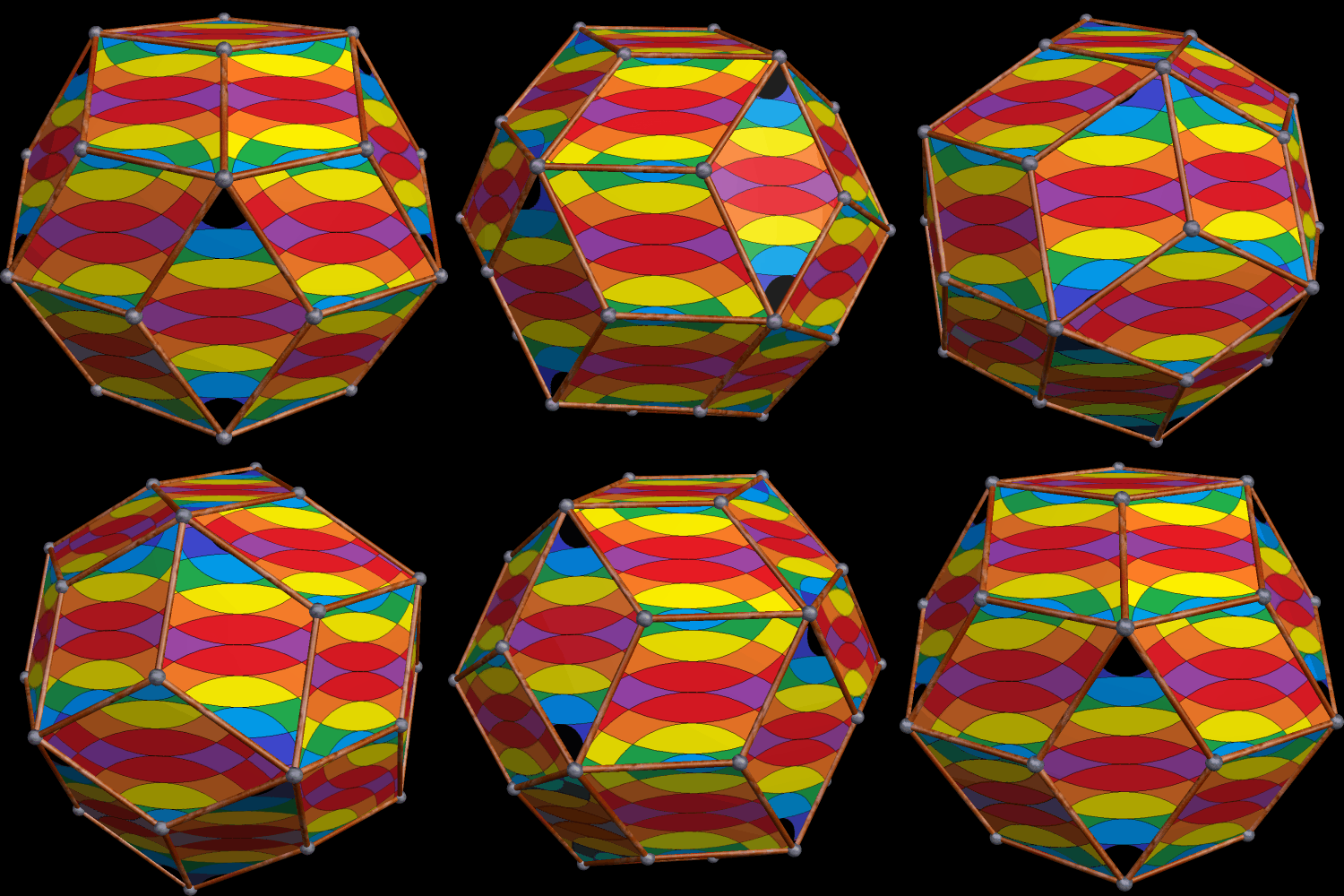
Which one do you like better?
 RobertLovesPi.net