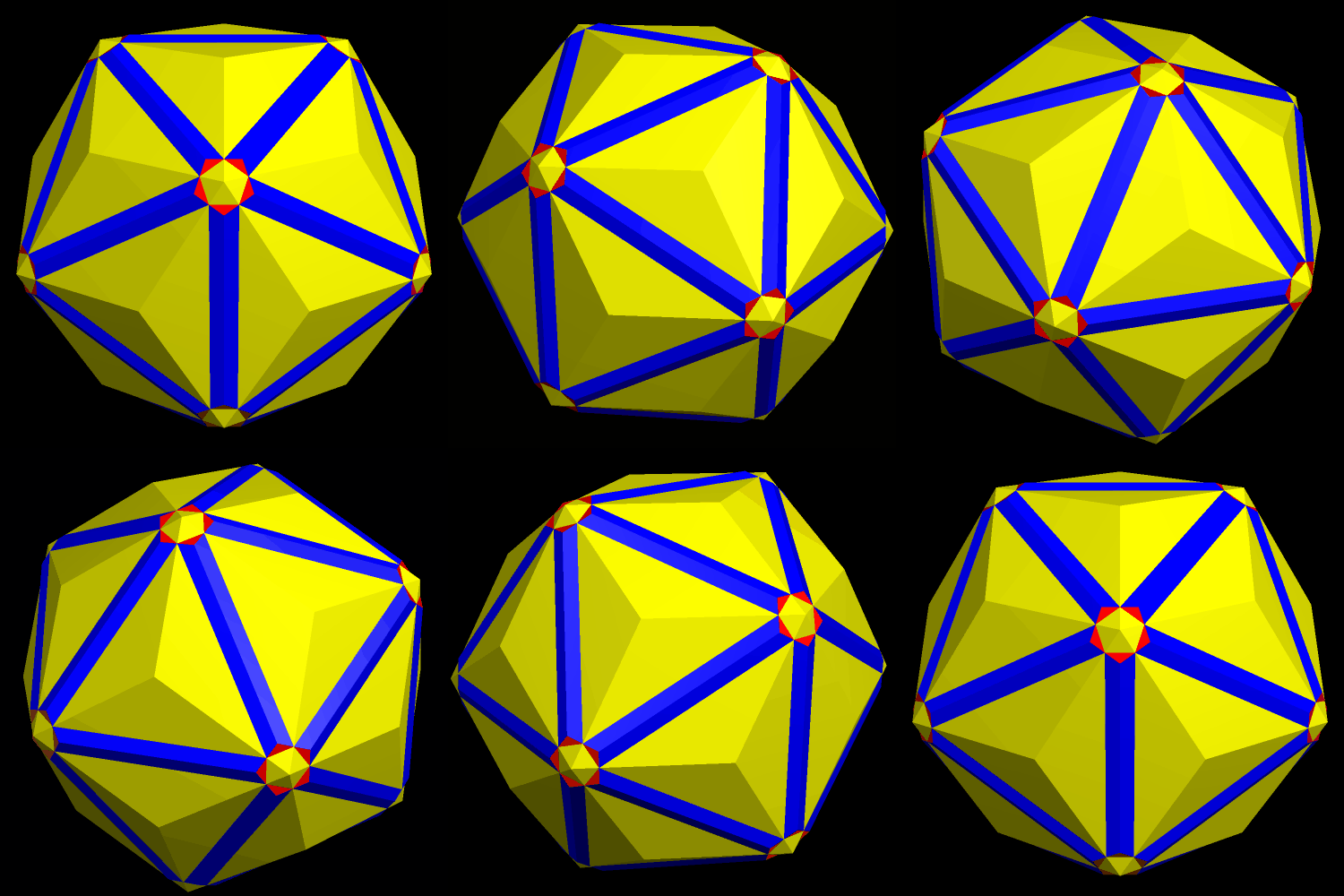
A Compound of a Slightly-Truncated Icosahedron and the Rhombic Triacontahedron
Image
2

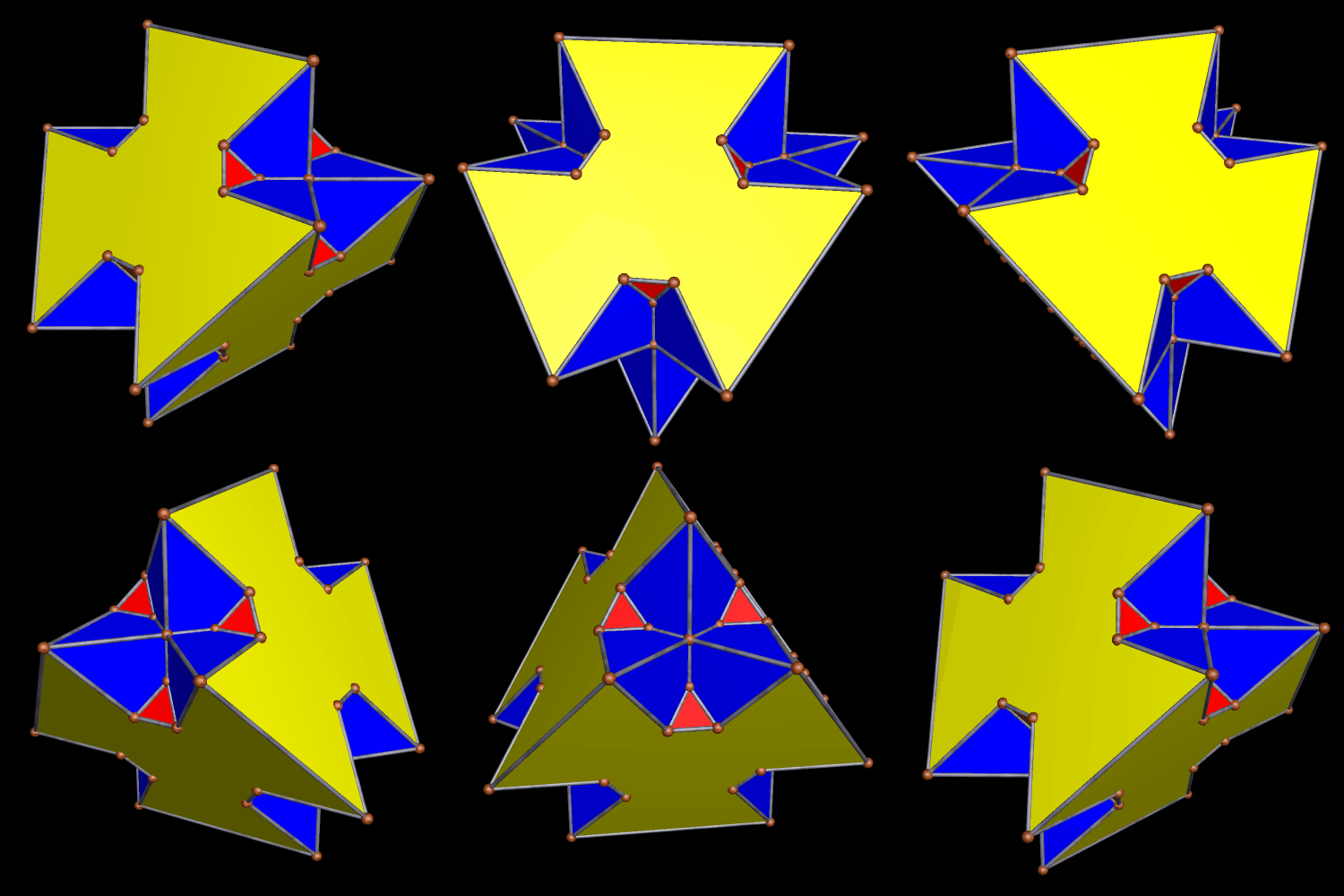
This compound has three parts: two tetrahedra, plus one smaller cube. I made it using Stella 4d: Polyhedron Navigator, which you can try for free at http://www.software3d.com/Stella.php.
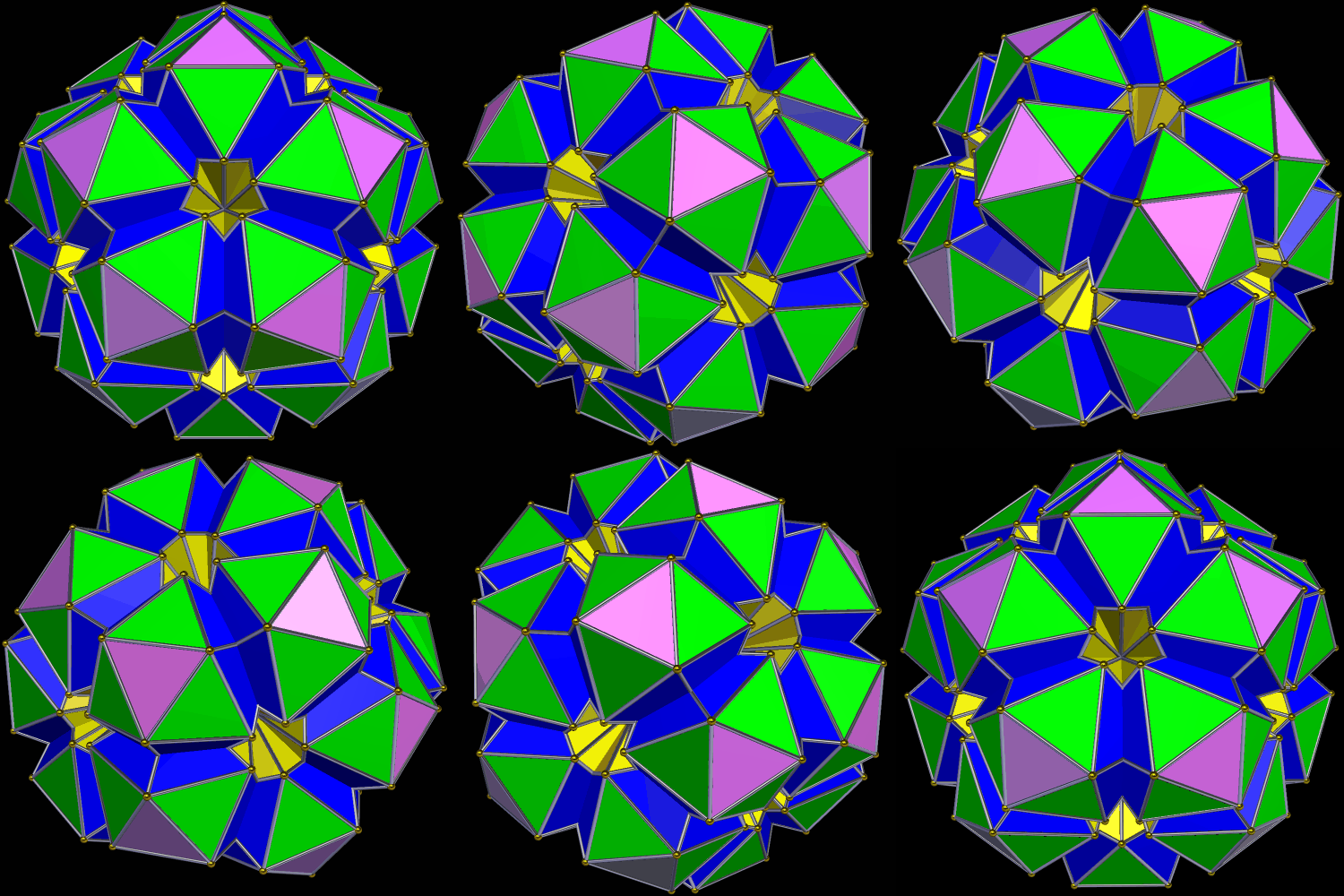
A reader of this blog, in a comment on the last post here, asked what would happen if each face of an icosahedron were augmented by another icosahedron. I was also asked what the convex hull of such an icosahedron-cluster would be. Here are pictures which answer both questions, in order.

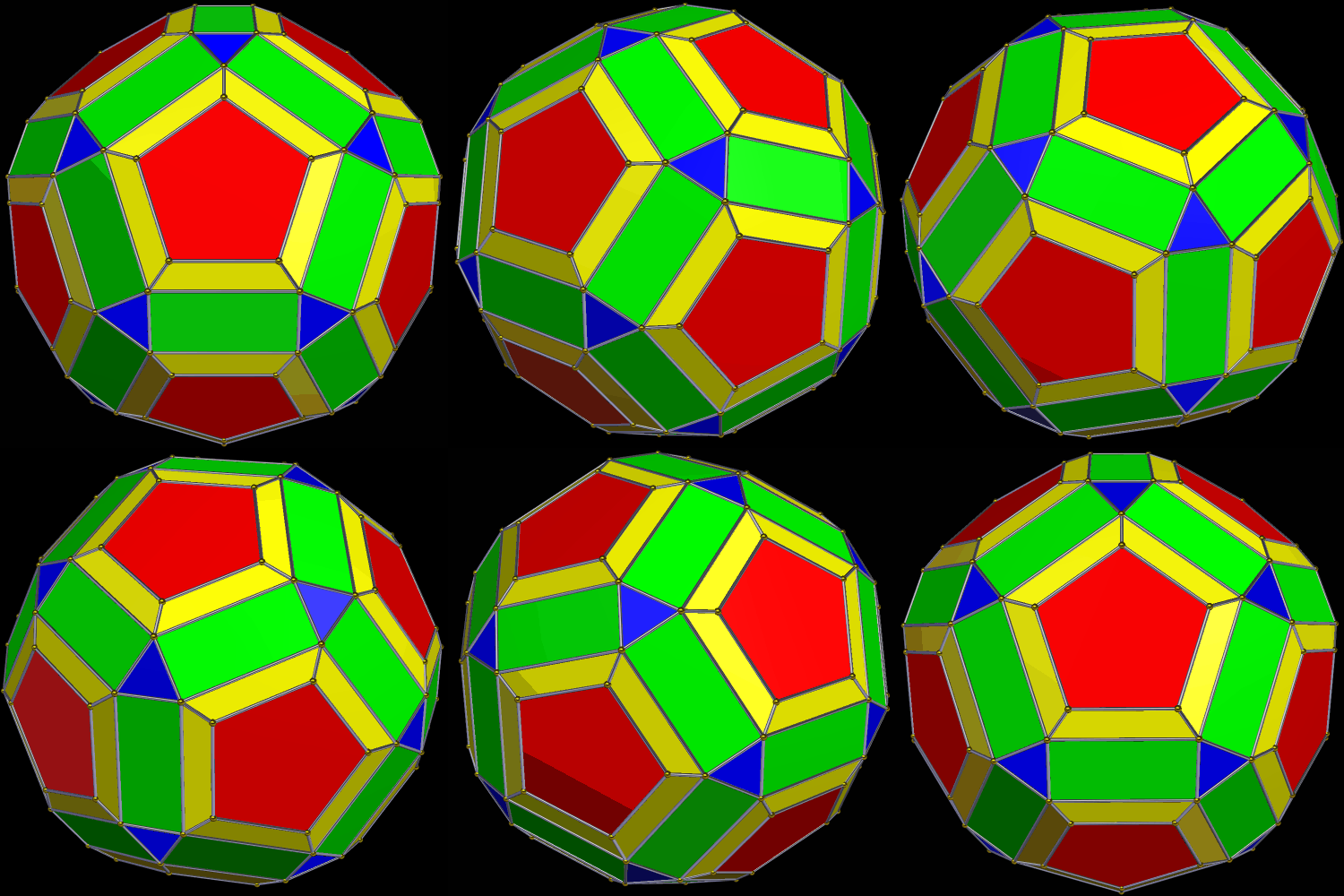
While the icosahedron augmented by twenty icosahedron forms an unusual non-convex shape, its convex hull is simply a slightly “stretched” version of the truncated dodecahedron, one of the Archimedean solids.
The reader who asked these questions did not ask what would happen if the icosahedron-cluster above were to be augmented, on every face, by yet more icosahedra. However, I got curious about this, myself, and created the answer: the following cluster of even-more numerous icosahedra. This could be called, I suppose, the “reaugmented” icosahedron.

Finally, here is the convex hull of this even-larger cluster. No one asked for it; I simply got curious.
To accomplish the polyhedron-manipulation and image-creation for this post, I used a program called Stella 4d: Polyhedron Navigator, which is available at http://www.software3d.com/Stella.php. A free trial download is available there, so you can try the software before deciding whether or not to purchase it.

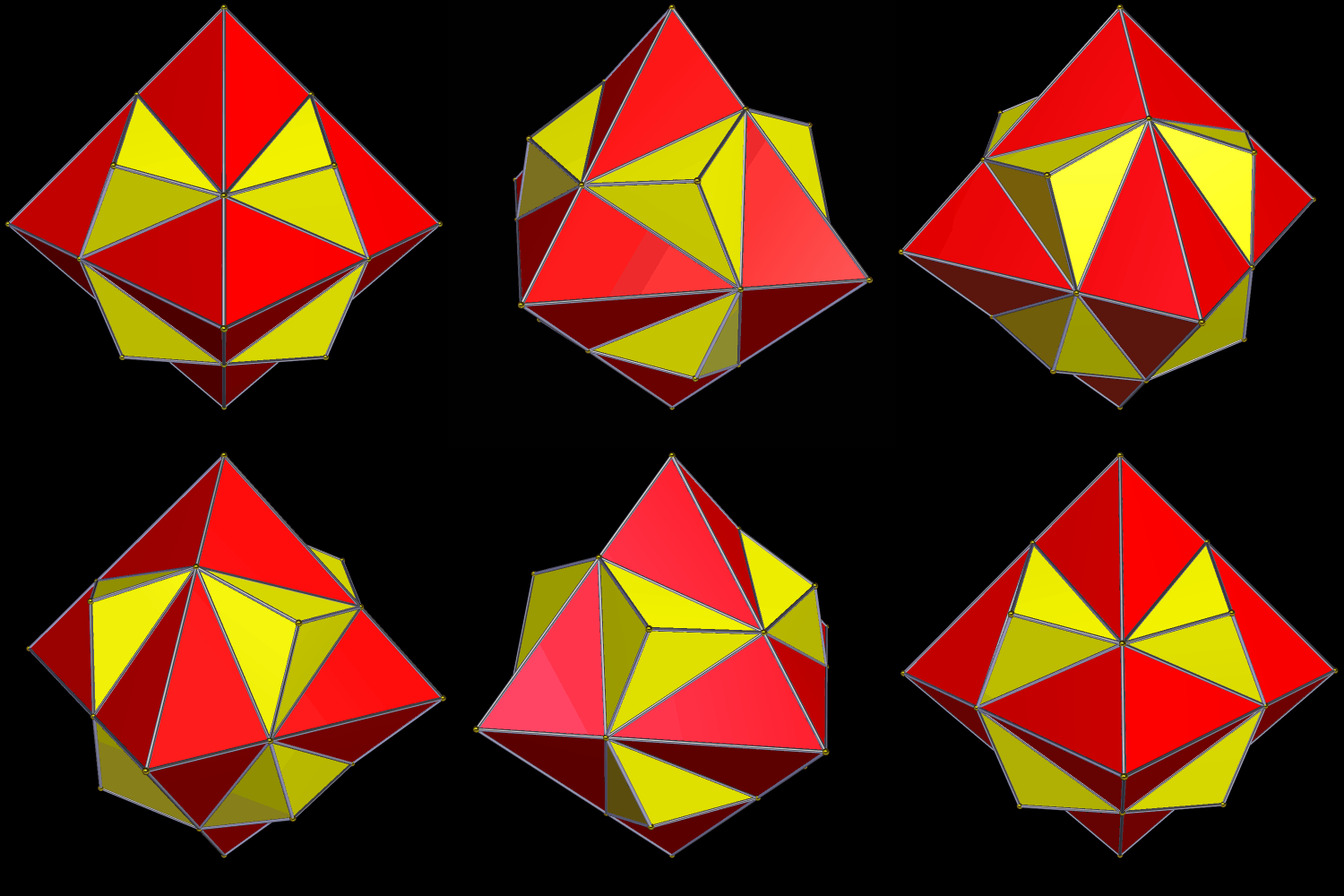
I made this rotating virtual model using Stella 4d: Polyhedron Navigator, which you can try for yourself at http://www.software3d.com/Stella.php. This solid is different from most two-part polyhedral compounds because an unusually high fraction of one polyhedron, the yellow octahedron, is hidden inside the compound’s other component.
While examining different facetings of the dodecahedron, I stumbled across one which is also a compound of ten elongated octahedra.

Here’s what this compound looks like with the edges and vertices hidden:

Next, I’ll put the edges and vertices back, but hide nine of the ten components of the compound. This makes it easier to see the single elongated octahedron which is still shown.

Here’s what this elongated octahedron looks like with all those vertices and edges hidden from view.

I made all these polyhedral transformations using Stella 4d, a program you can try for yourself at this website. Stella includes a “measurement mode,” and, using that, I was able to determine that the short edge to long edge ratio in these elongated octahedra is 1:sqrt(2).
The next thing I wanted to try was to make the octahedra regular. Stella has a function for that, too, and here’s the result: a compound of ten regular octahedra.

My last step in this polyhedral exploration was to form the dual of this solid. Since the octahedron’s dual is the cube, this dual is a compound of ten cubes.

I made this using Stella 4d: Polyhedron Navigator. You can try this program for free at http://www.software3d.com/Stella.php.

To make this cluster, start with a cuboctahedron, then augment each of its square faces with rhombicosidodecahedra. Although the cuboctahedron has cuboctahedral symmetry, this cluster does not — rather, it has tetrahedral symmetry. I created this using Stella 4d, which is available here.

Software used — Stella 4d: Polyhedral Navigator, available as a free trial download at http://www.software3d.com/Stella.php.
Software used: Stella 4d, available at www.software3d.com/Stella.php.

I made this using Stella 4d: Polyhedron Navigator. You can try this program for yourself at this website.
 RobertLovesPi.net