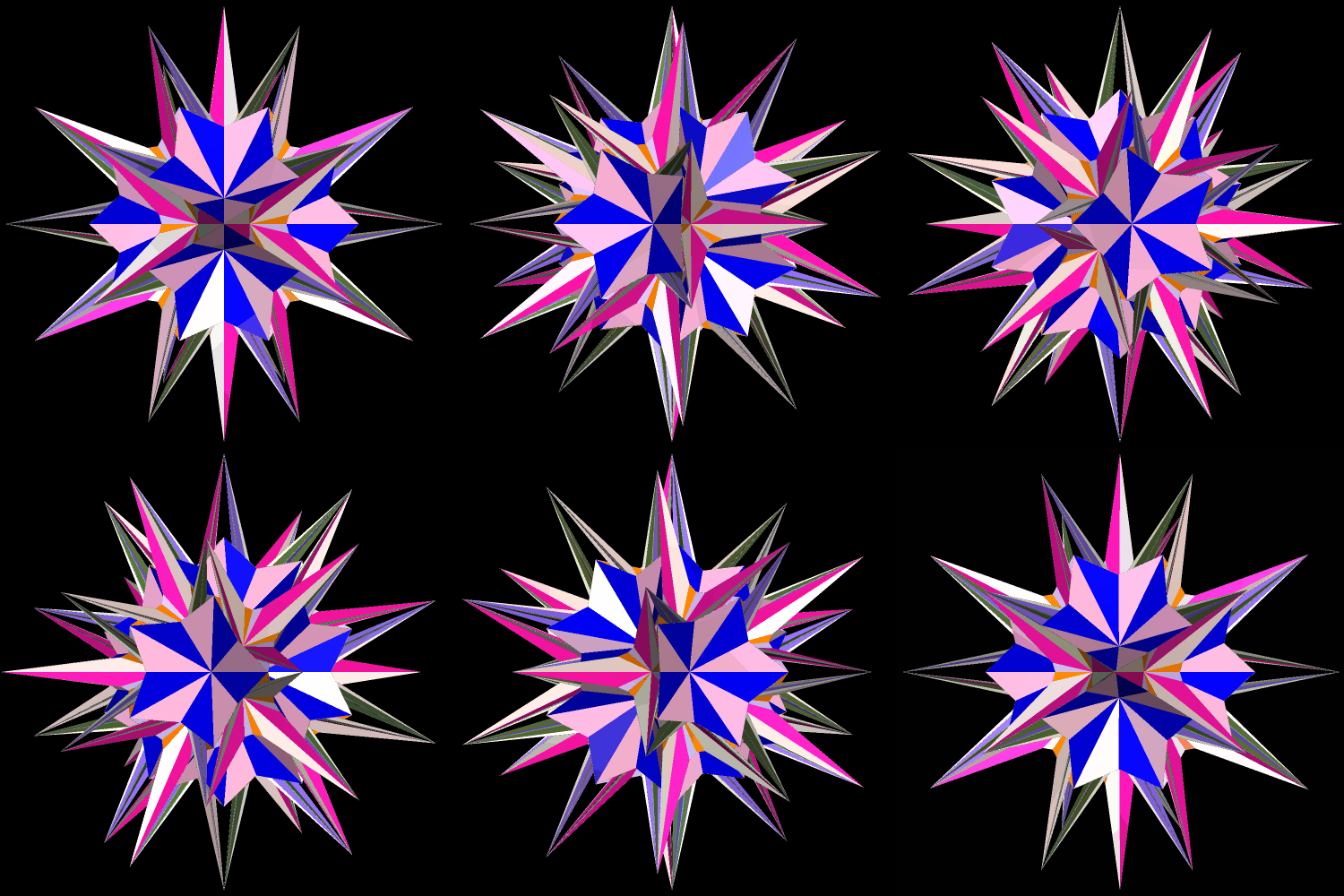
The Final Stellation of the Rhombic Triacontahedron, Together with Its Dual, a Faceting of the Icosidodecahedron

final stellation of the Rhombic Triaconta

Sharp-eyed, regular readers of this blog will notice that this is the same polyhedron shown in the previous post, which was described as the “final stellation of the compound of five cubes,” due to the coloring scheme used in the first image there, which had five colors “inherited” from each of the differently-colored cubes in the five-cube compound. This image, by contrast, is shown in rainbow-color mode.

How can the rhombic triacontahedron and the compound of five cubes have the same final stellation? Simple: the compound of five cubes is, itself, a member of the stellation-series of the rhombic triacontahedron. Because of this, those two solids end up at the same place, after all possible stellations are completed, just as you will reach 1,000, counting by ones, whether you start at one, or start at, say, 170.

I am grateful to Robert Webb for pointing this out to me. He’s the person who wrote Stella 4d, the software I use to make these images of rotating polyhedra. His program may be found at http://www.software3d.com/Stella.php — and there is a free trial version available for download, so you can try Stella before deciding whether or not to purchase the fully-functioning version.

Since faceting is the reciprocal process of stellation, the dual of the polyhedron above is a faceted icosidodecahedron, for the icosidodecahedron is the dual of the rhombic triacontahedron. Here is an image of that particular faceting of the icosidodecahedron, colored, this time, by face-type:

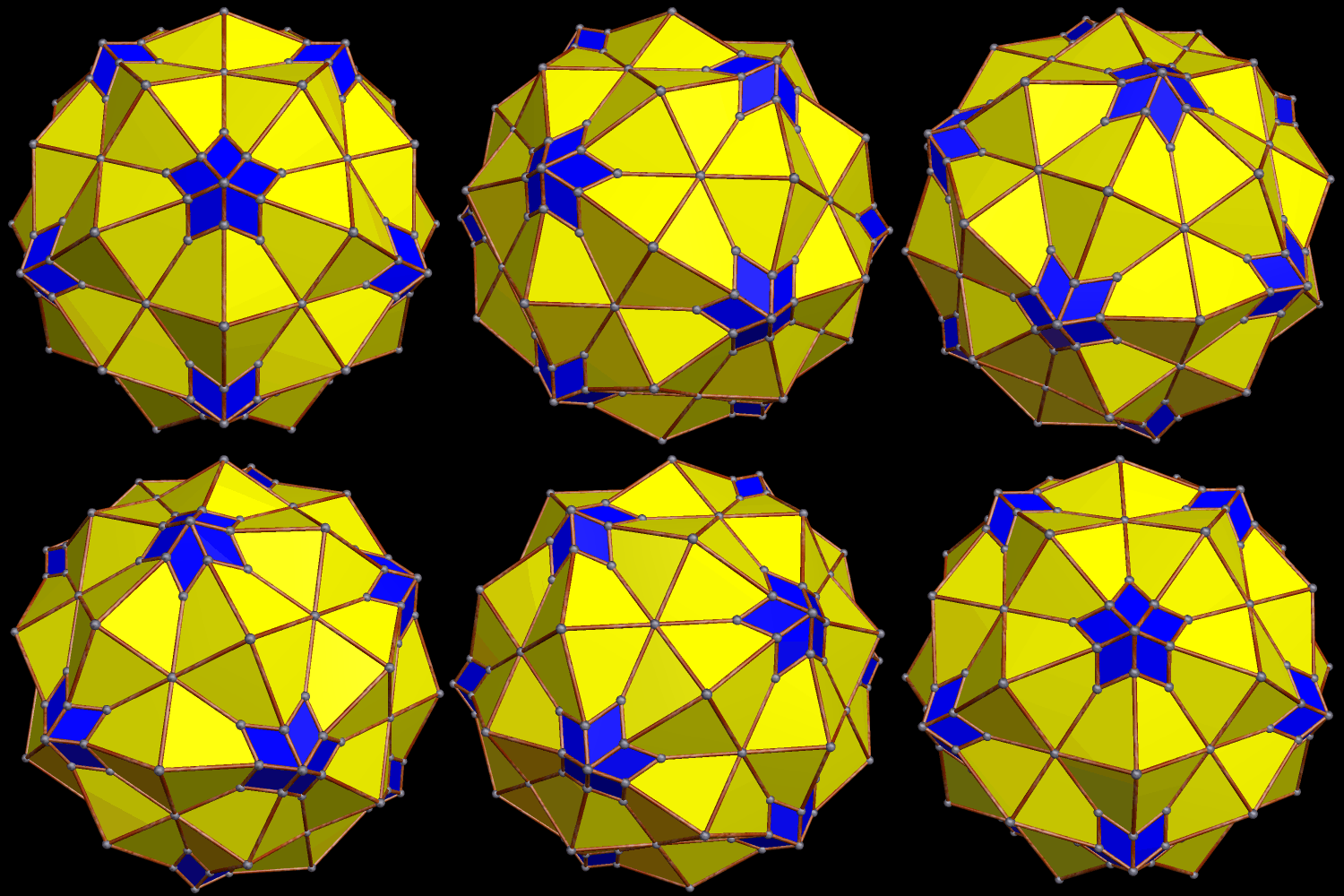
Faceted Icosidodeca dual of final stellation of RTC

A Compound of an Icosahedron and the First Stellation of the Rhombic Triacontahedron

Compound of an icosahedron and a stellation (find out which one) of the RTC

I made this compound using software called Stella 4d: Polyhedron Navigator. This program may be purchased (or a trial download tried for free) at this website.

Two Versions of a Slowly Rotating Rhombic Triacontahedron, Adorned with Spectral Patterns on Each Face

Rhombic Triaconta

It took three programs to make this. First, outlines of the “double rainbow” patterns on each face were constructed using Geometer’s Sketchpad. A screenshot from that program was then pasted into MS-Paint, which was used to add color to the outline of the pattern on each face. Next, the colorized image was projected onto each face of a rhombic triacontahedron, using Stella 4d: Polyhedron Navigator — the program that put this all together, and what I used to generate the rotating .gif above. Stella is available at http://www.software3d.com/Stella.php, with a free trial download available.

Interestingly, while this polyhedron itself is not chiral, the coloring-pattern of it, shown above, is.

With only small modifications, Stella can produce a very different version:

Rhombic Triaconta

Which one do you like better?

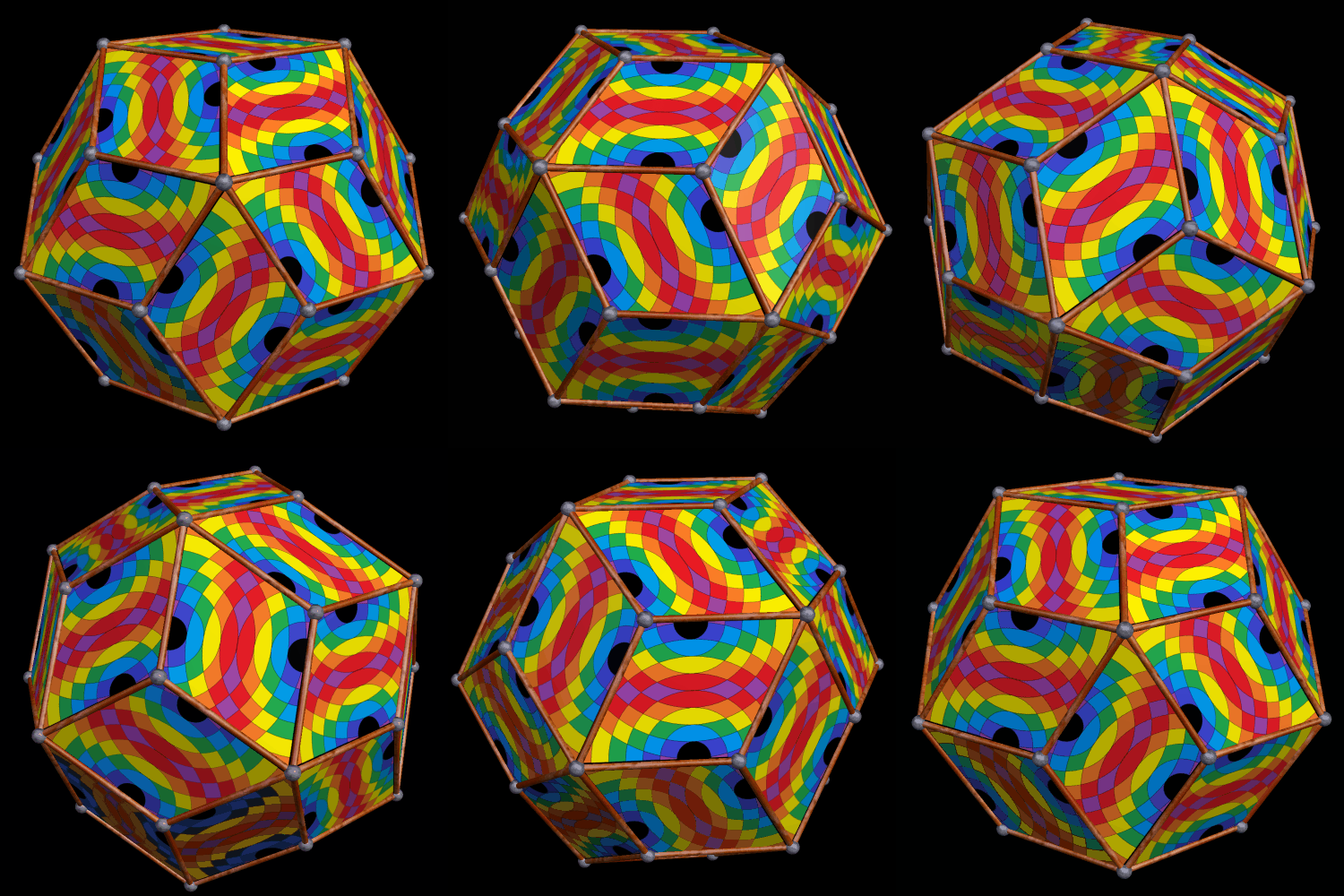
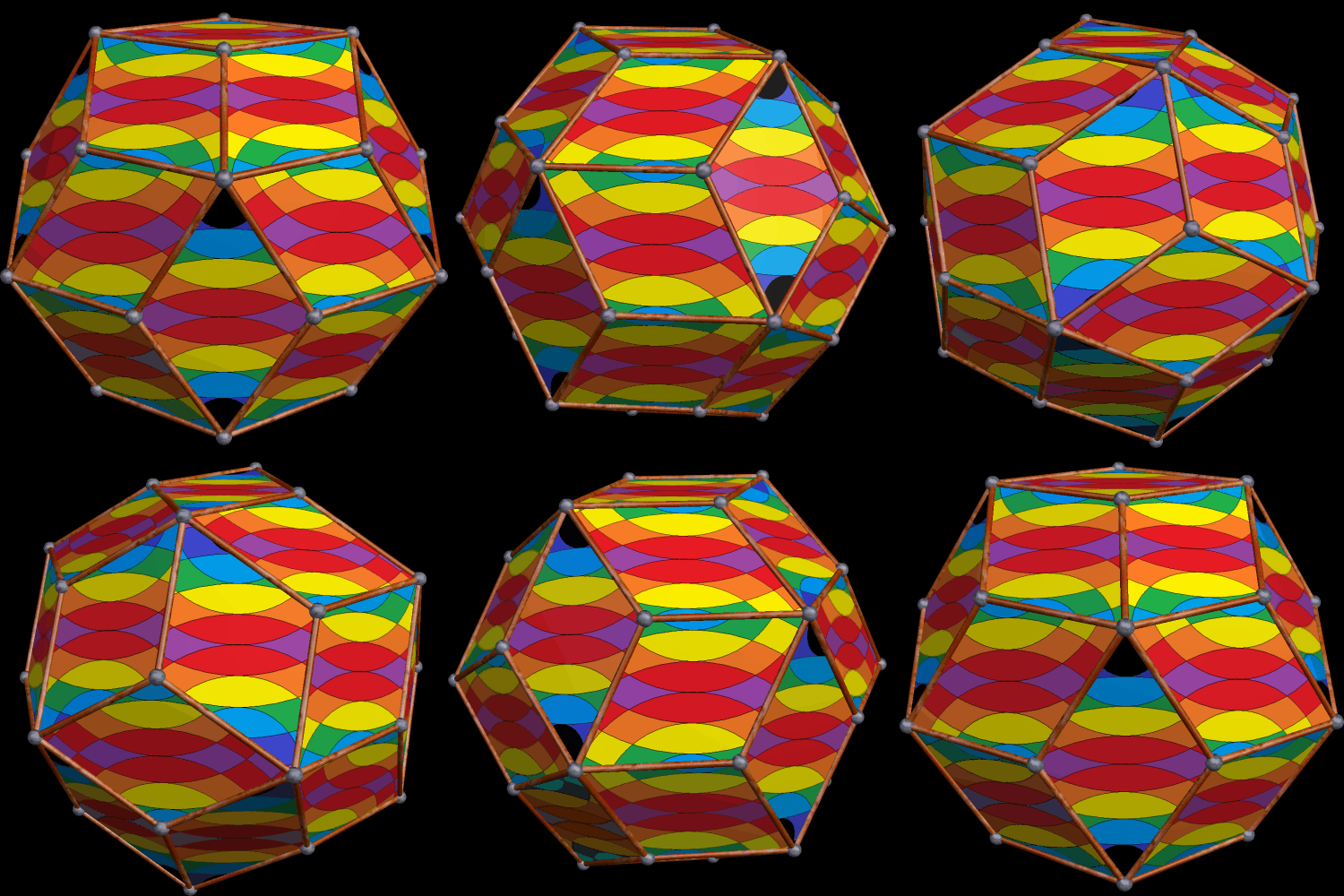
The Great Rhombicosidodecahedron, Built from Rhombic Triacontahedra, and Its Dual

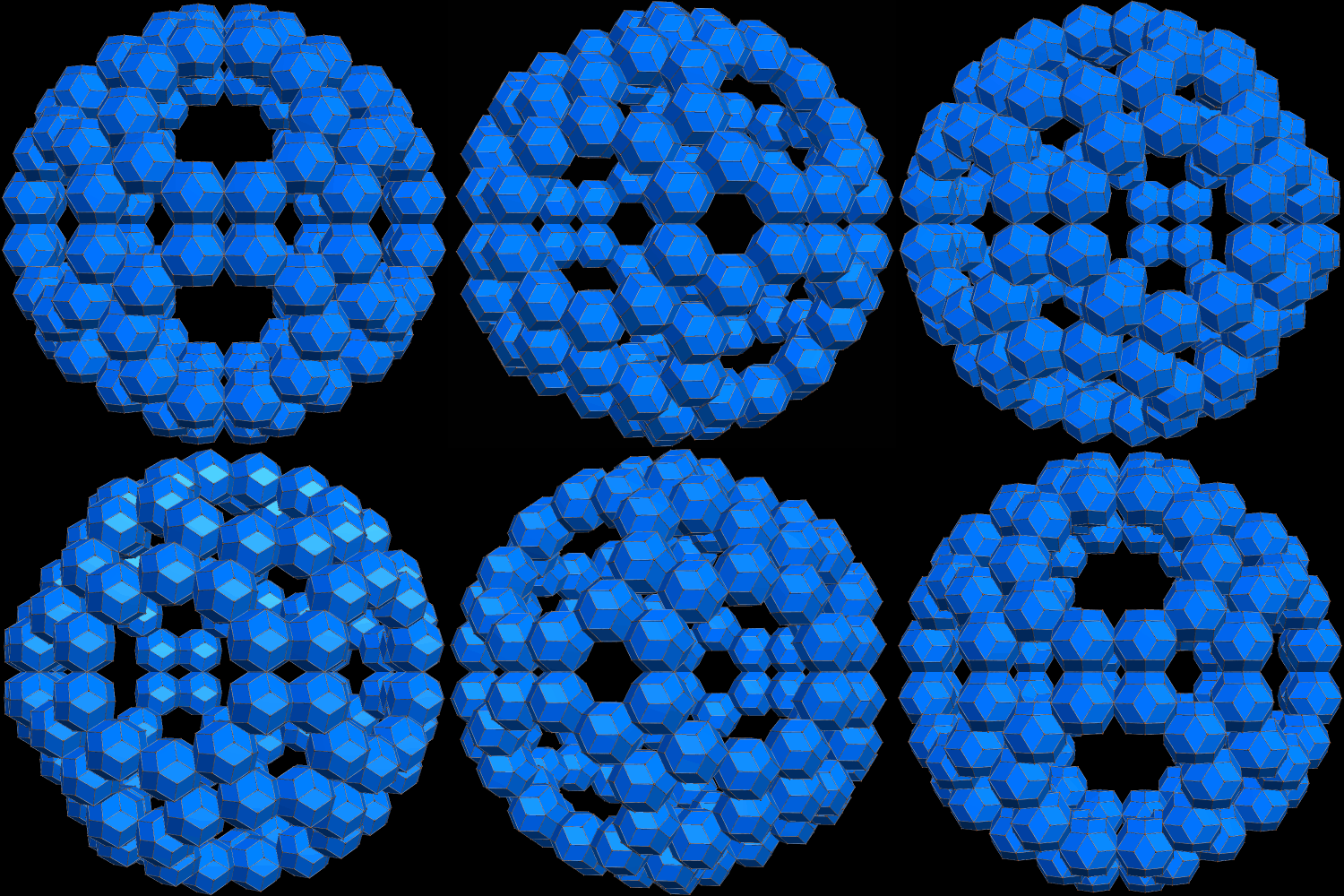
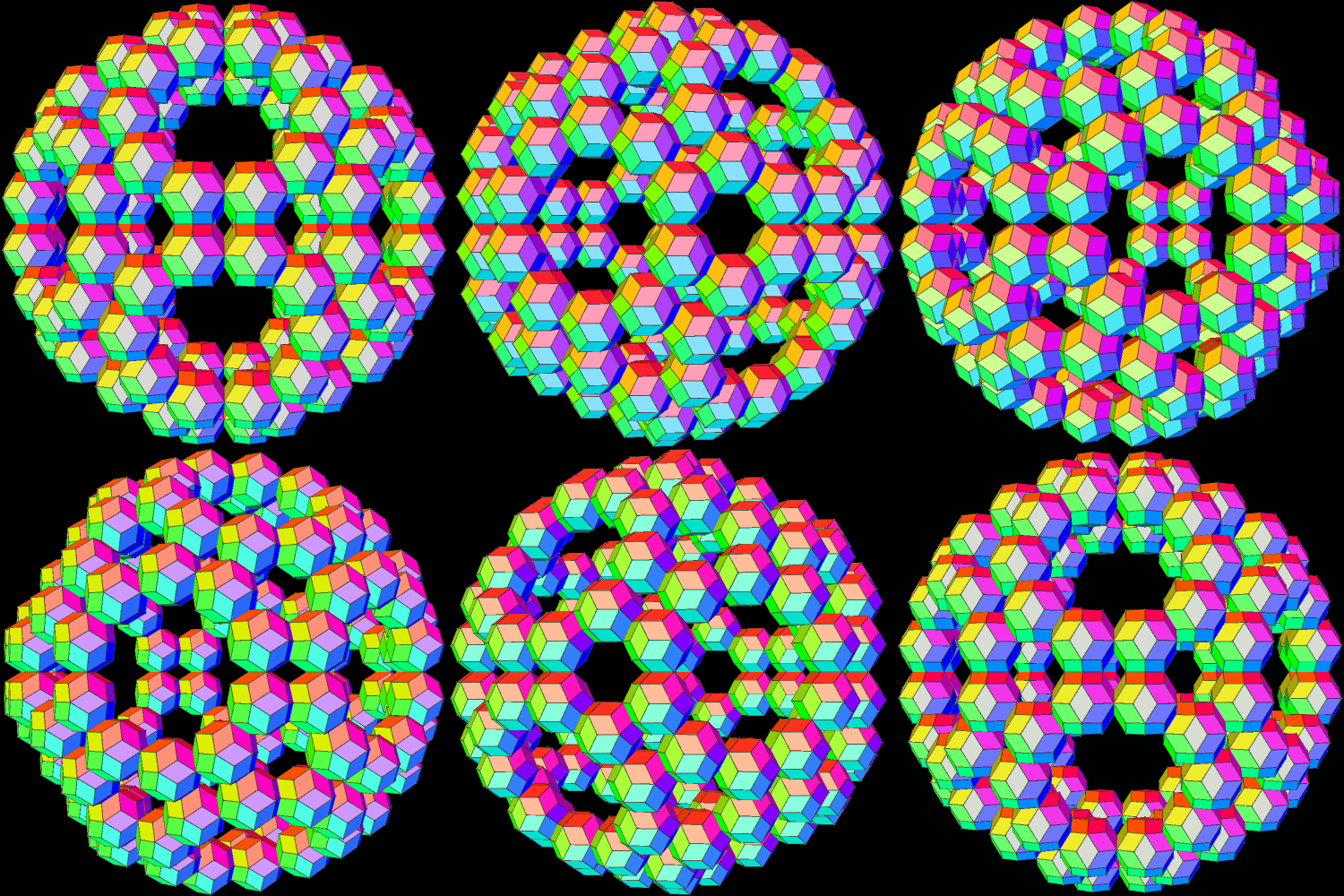
The great rhombicosidodecahedron is also known as the truncated icosidodecahedron (and, confusingly, several other names). Regardless of what it’s called, these pictures demonstrate that this Archimedean solid can be constructed using rhombic triacontahedra as building-blocks.

First, here’s one in the same color I used for the decagonal ring of rhombic triacontahedra in the last post:

GRID of Rhombic Triaconta

The next one is identical, except I used “rainbow color mode” for it.

GRID of Rhombic Triaconta RB

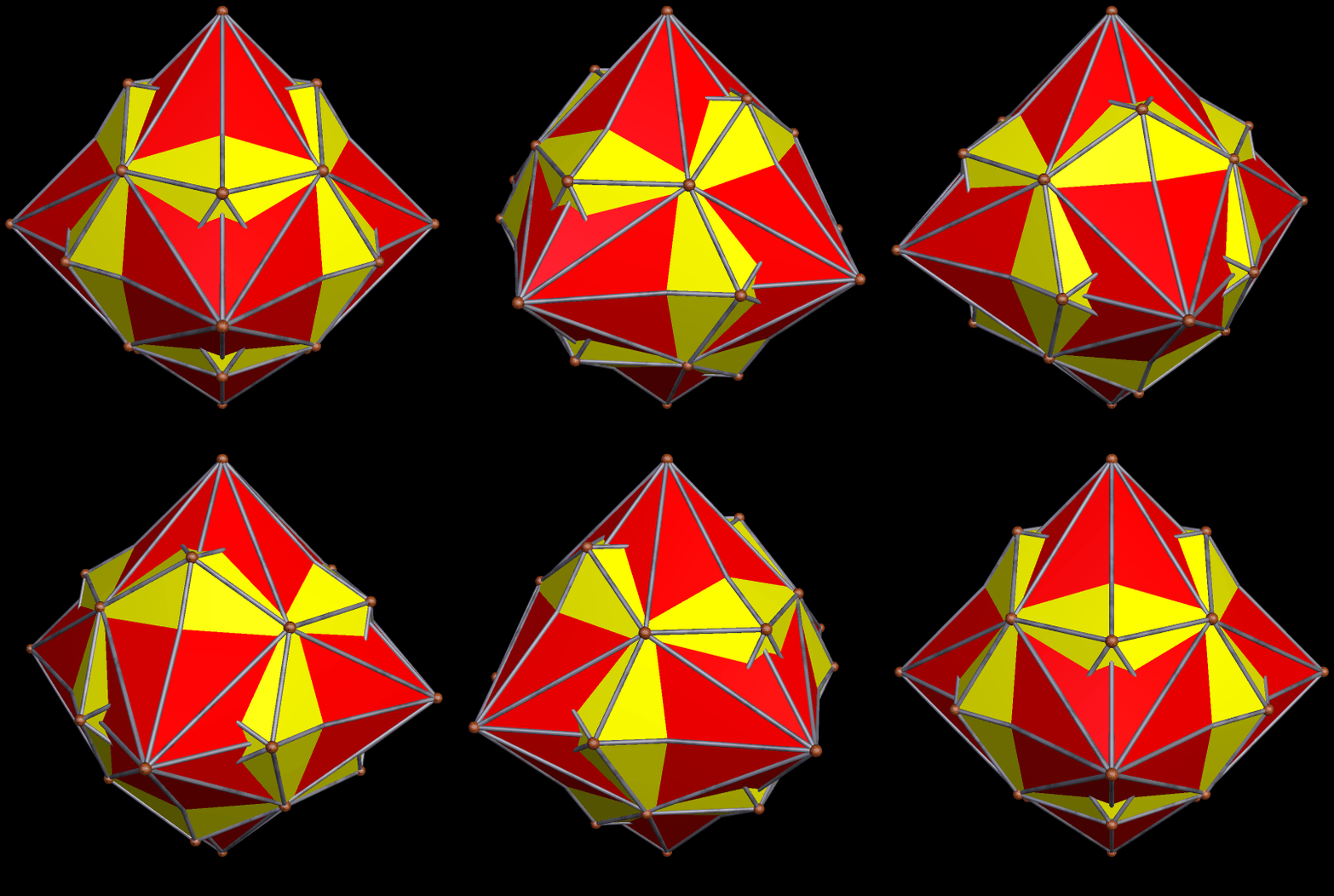
Also, just in case you’re curious, here’s the dual of this polyhedron-made-of-polyhedra — this time, colored by face-type.

dual of GRID of Rhombic Triaconta

These virtual models were all built using Stella 4d, software you may buy, or try for free, right here.

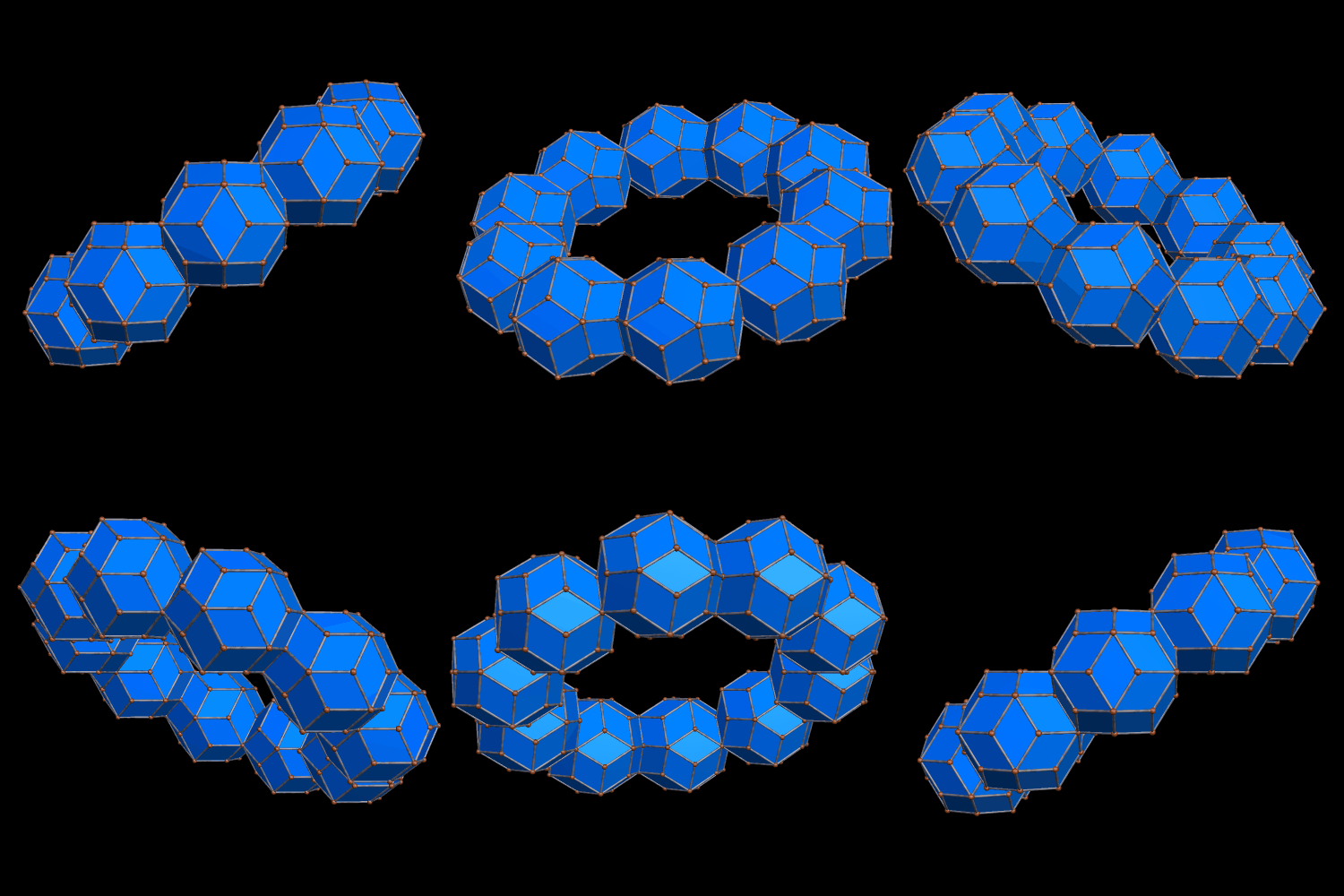
Decagonal Ring of Rhombic Triacontahedra

ring of ten Rhombic Triaconta

Ten rhombic triacontahedra fit perfectly into a decagonal ring. It’s not a “near-miss” — the fit is exact.

I made this with Stella 4d, software you can try for free, or purchase, at http://www.software3d.com/Stella.php.

The Compound of the Truncated Icosahedron and the Rhombic Triacontahedron

Compound of Rhombic Triaconta and Trunc Icosa

I put these two polyhedra together using Stella 4d: Polyhedron Navigator. If you’d like to try this program yourself, for free, this website is the one to visit: http://www.software3d.com/Stella.php.

Two Polyhedral Compounds: the Icosidodecahedron with the Truncated Cube, and the Rhombic Triacontahedron with the Triakis Octahedron

Compound of Icosidodeca and Trunc Cube

These two compounds, above and below, are duals. Also, in each of them, one polyhedron with icosidodecahedral symmetry is combined with a second polyhedron with cuboctahedral symmetry to form a compound with pyritohedral symmetry: the symmetry of a standard volleyball.

Compound of RTC and Triakis octahedron also pyritohedral

A program called Stella 4d was used to make these compounds, and create these images. It may be purchased, or tried for free, at this website.

Two Compounds with Pyritohedral Symmetry: the Icosidodecahedron / Truncated Octahedron Compound, and the Rhombic Triacontahedron / Tetrakis Cube Compound

Compound of Icosidodeca and Trunc Octa its pyritohedralCompound of RTC and tetrakis cube its pyritohedral

Stella 4d, a program you can try here, was used to create these two compounds. Both have pyritohedral symmetry: the symmetry of a standard volleyball. The two compounds are also duals.

At 47, My Age Is a Prime Number Again =D

For some reason, I like having my age be a prime number of years. Today, I turn 47, so I get to have a prime-number-age for a whole year now. This hasn’t happened since I was 43, so I made this 47-pointed star to celebrate:

47

I also make birthday-stars for composite-number ages as well, just because it’s fun, and you can find at least two others on this blog, on January 12, in past years. Also, I wouldn’t want to have to wait until I’m 53 (my next prime age) to make another one of these.

At the moment, I certainly don’t feel 47. There are times when I feel twenty-two . . .

There are also times when I feel six.

calvin-on-learning

At the moment, however, I feel about thirty. For that reason, I put the 47-pointed stars on the thirty faces of a rotating rhombic triacontahedron, because (a) it’s my birthday, (b) I want to, and (c) I can.

Rhombic Triaconta

Image/music credits:

  1. I created this using Geometer’s Sketchpad and MS-Paint.
  2. “When Yer Twenty-Two,” by The Flaming Lips, via a YouTube posting.
  3. Two panels from a Calvin and Hobbes cartoon, by Bill Watterson. (Calvin is perpetually six years old.)
  4. Created using the image at the top of this post, and the program Stella 4d: Polyhedron Navigator, which is available here.

My First Solution to the Zome Cryptocube Puzzle, with Special Guest Appearances by Jynx the Kitten

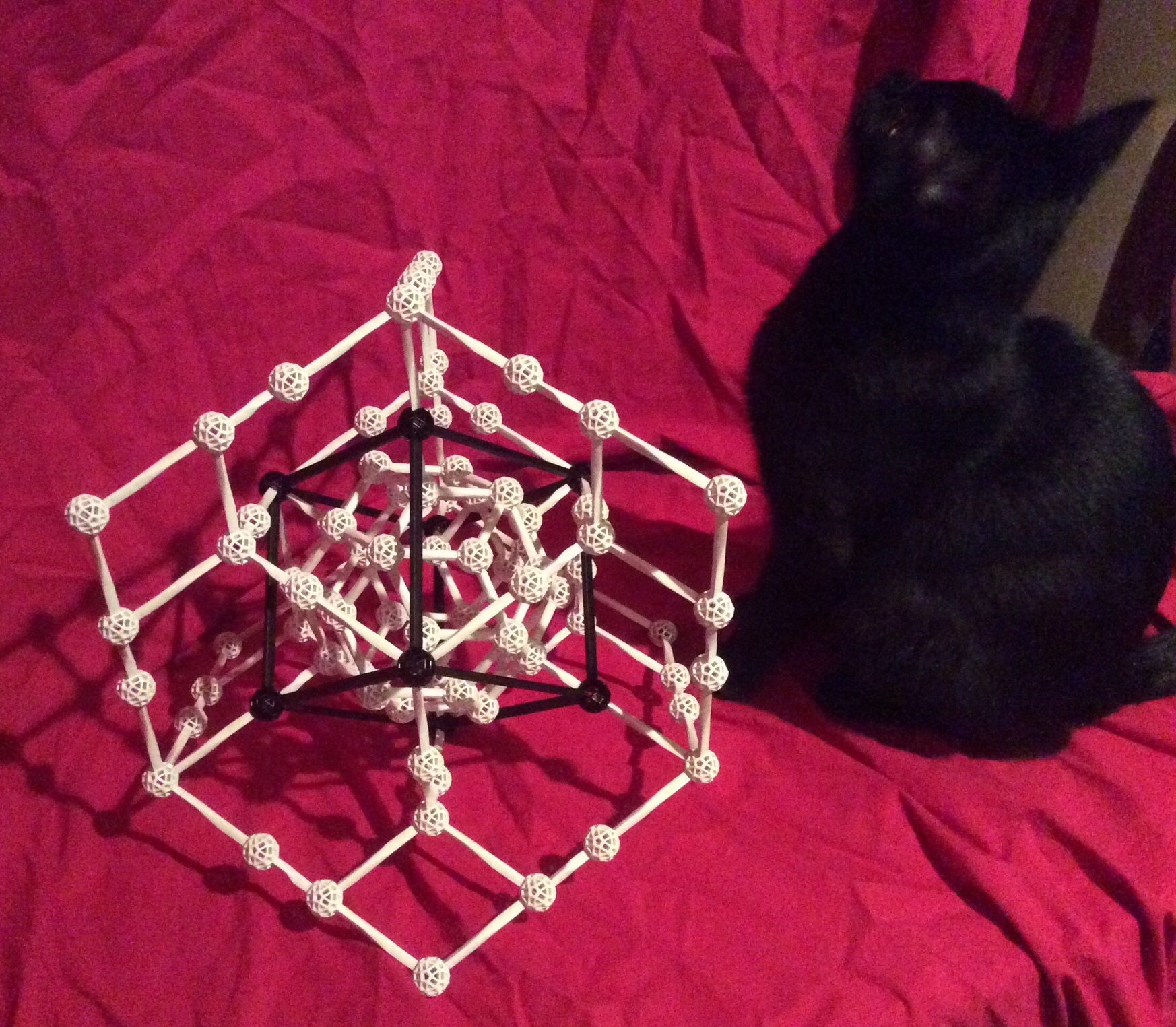
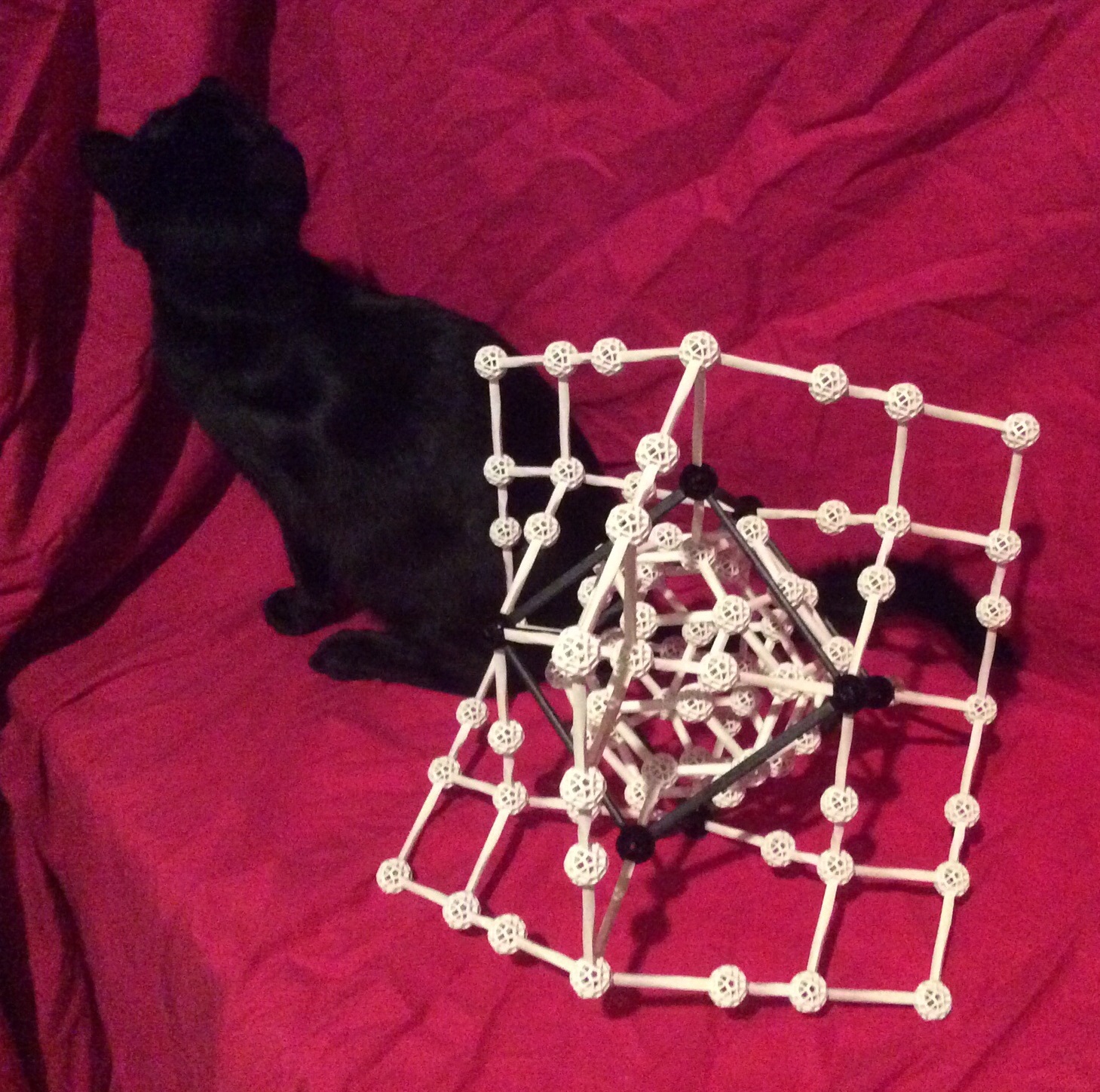
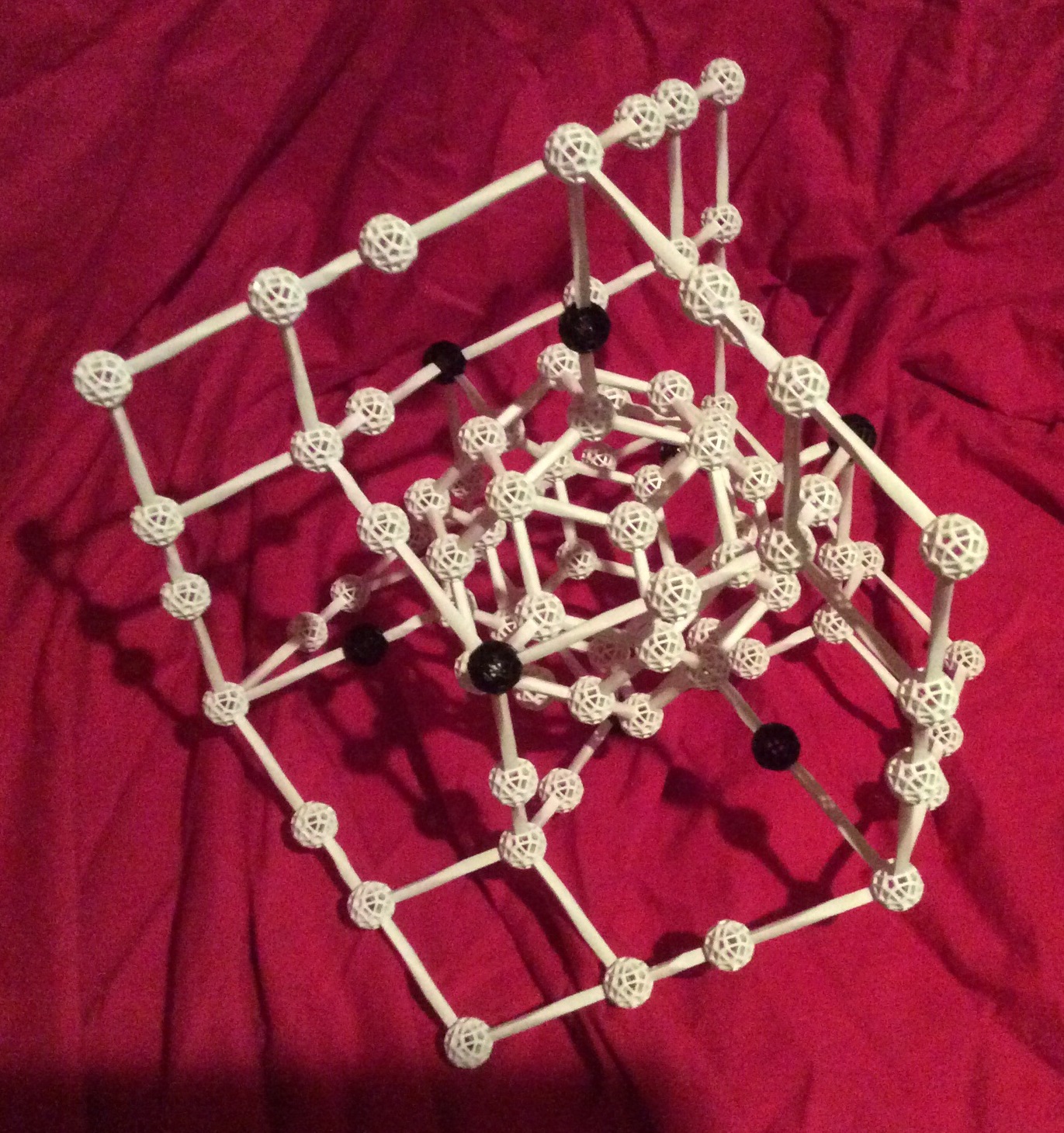
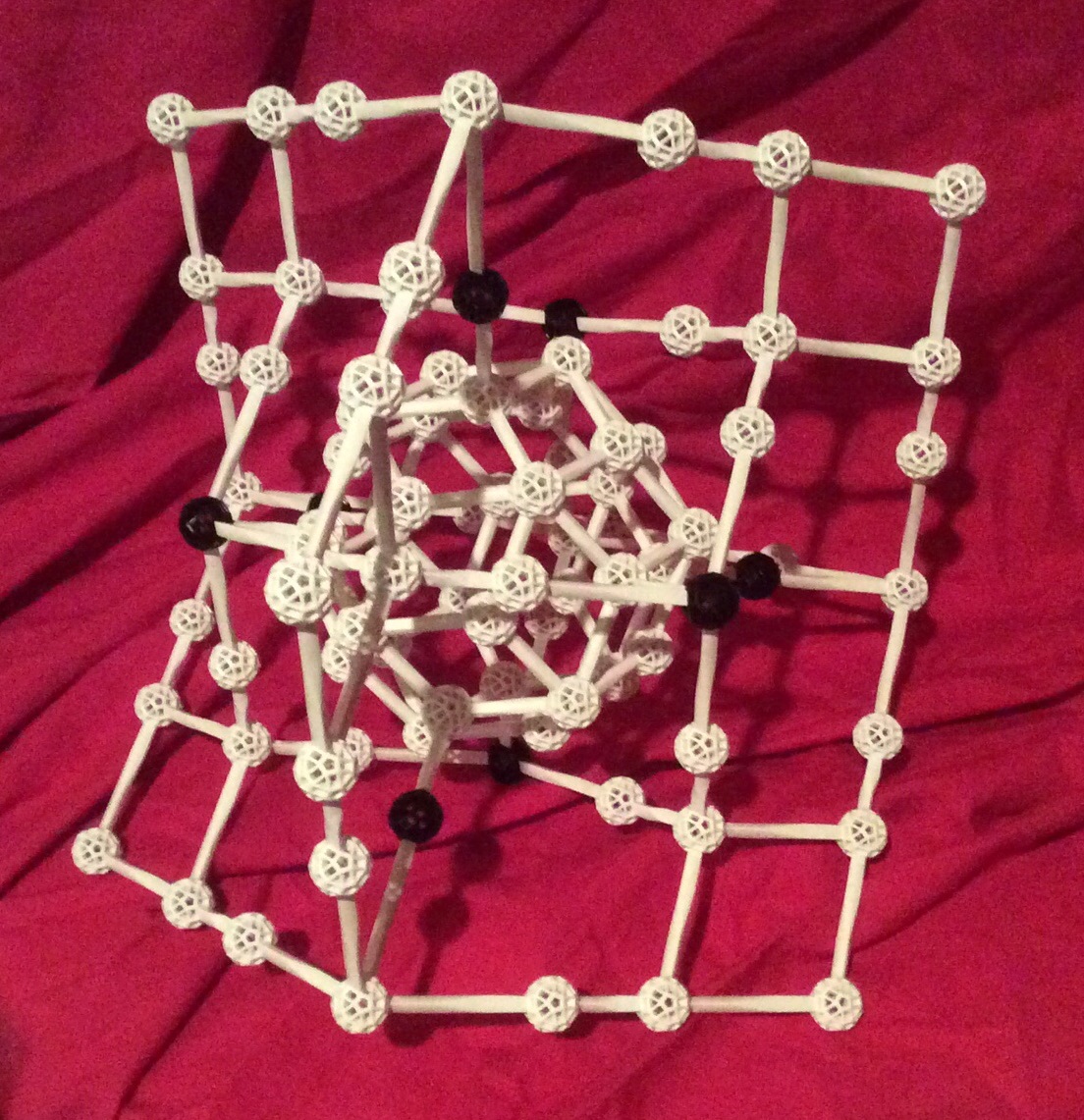
Last month, in a special Christmas promotion, the Zometool company (www.zometool.com) briefly sold a new kit (which will return later) — a fascinating game, or puzzle, called the “Cryptocube.” Zome usually comes in a variety of colors, with each color having mathematical significance, but the Cryptocube is produced in black and white, which actually (in my opinion) makes it a better puzzle. Here’s how the Crypocube challenge works:  you use the black parts to make a simple cube, and then use the smaller white parts to invent a structure which incorporates the cube, is symmetrical, is attractive, and can survive having the twelve black cube-edges removed, leaving only the cube’s eight black vertices in place. I had a lot of fun making my first Cryptocube, and photographed it from several angles.

imageIf this was built using standard Zome colors, the round white figure inside the cube, a rhombic triacontahedron, would be red, and the pieces outside the cube, as well as those joining the rhombic triacontahedron to the cube (from inside the cube), would be yellow.

It isn’t only humans who like Zome, by the way. Jynx the Kitten had to get in on this!

image (1)

Jynx quickly became distracted from the Cryptocube by another puzzle, though: he wanted to figure out how to pull down the red sheet I had attached to the wall, as a photographic backdrop for the Cryptocube. Jynx takes his feline duties as an agent of entropy quite seriously.

image (2)As usually happens, Jynx won (in his never-ending struggle to interfere with whatever I’m doing, in this case by pulling the sheet down) and it took me quite a while to get the red sheet back up, in order to take kitten-free pictures of my Cryptocube solution, after removal of the black cube’s edges.

image (3)

Here’s the view from another angle.

image (4)

The Cryptocube will be back, available on the Zometool website, later in 2015. In the meantime, I have advice for anyone not yet familiar with Zome, but who wants to try the Cryptocube when it returns: go ahead and get some Zome now, at the link above, in the standard colors (red, blue, and yellow, plus green in advanced kits), and have fun building things with it over the next few months. The reason to do this, before attempting to solve the Crypocube, is simple: the colors help you learn how the Zome system works, which is important before trying to solve a Zome puzzle without these colors visible. After gaining some familiarity with the differing shapes of the red, blue, yellow, and green pieces, working with them in white becomes much easier.

On a related note, Zome was recommended by Time magazine, using the words “Zometool will make your kids smarter,” as one of the 14 best toys of 2013. I give Zome my own strong, personal recommendation as well, and, as a teacher who uses my own Zome collection in class, for instructional purposes, I can attest that Time‘s 2013 statement about Zome is absolutely correct. Zome is definitely a winner!