The Great Rhombicosidodecahedron, Adorned With Images From the Saturnian System

In this rotating image of a great rhombicosidodecahedron, the decagonal faces show images of Saturn and its rings. The hexagons show Saturn’s largest moon, Titan. The moon Mimas, with its giant crater that makes it resemble the “Death Star,” from Star Wars, is shown on the square faces. These either are, or are close to, the true colors of these astronomical images. Titan appears to have little or no detail because of its thick, hazy atmosphere. Also, these three images are not shown to scale.

I found these images using Google-searches, and the only one that requires personal credit is the photograph of Titan, which was taken by Kevin M. Gill. Also, I assembled them onto this polyhedron, and created the rotating .gif above, using Stella 4d, a program you can try for free at http://www.software3d.com/Stella.php.

Two Deceptively Similar Solids

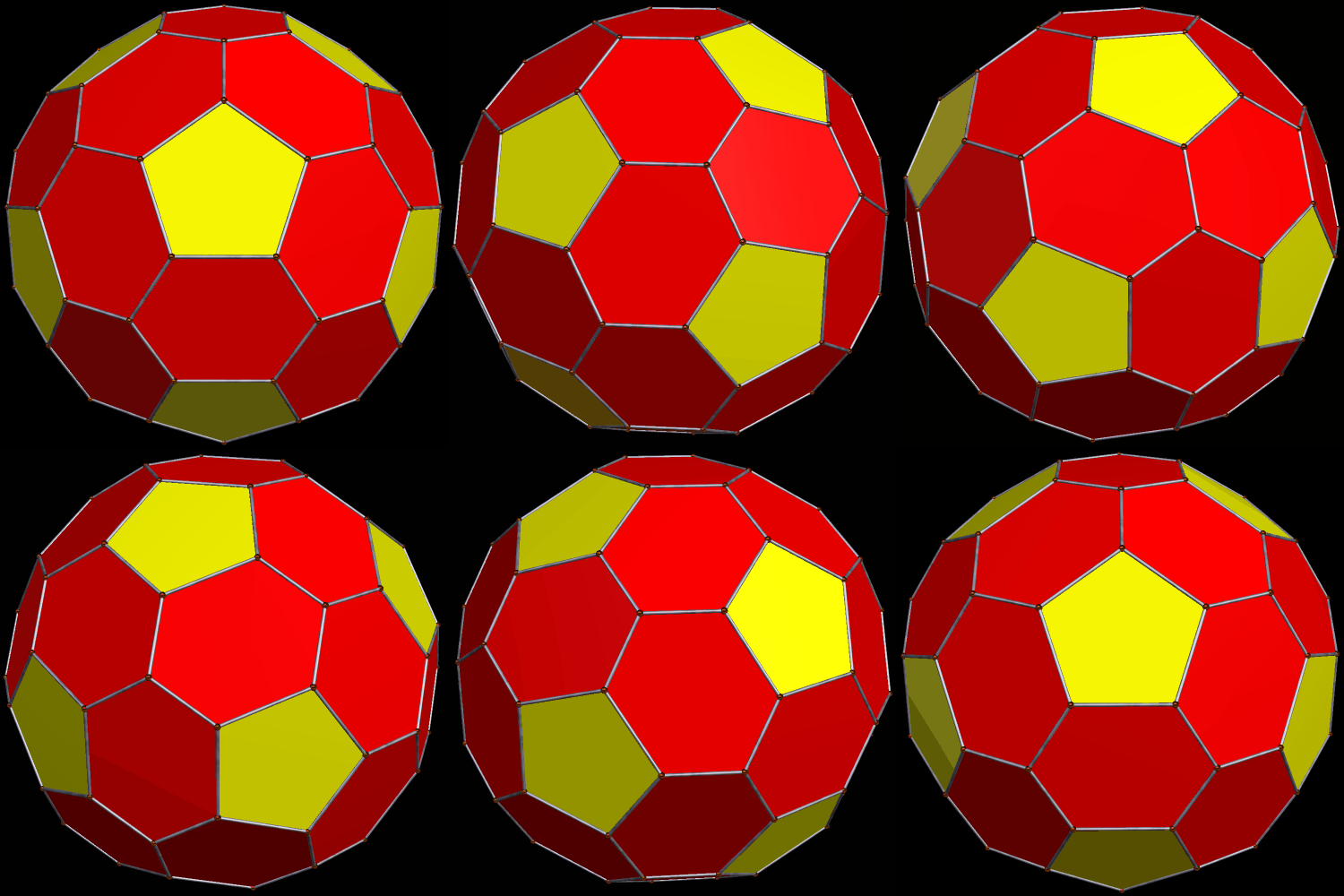
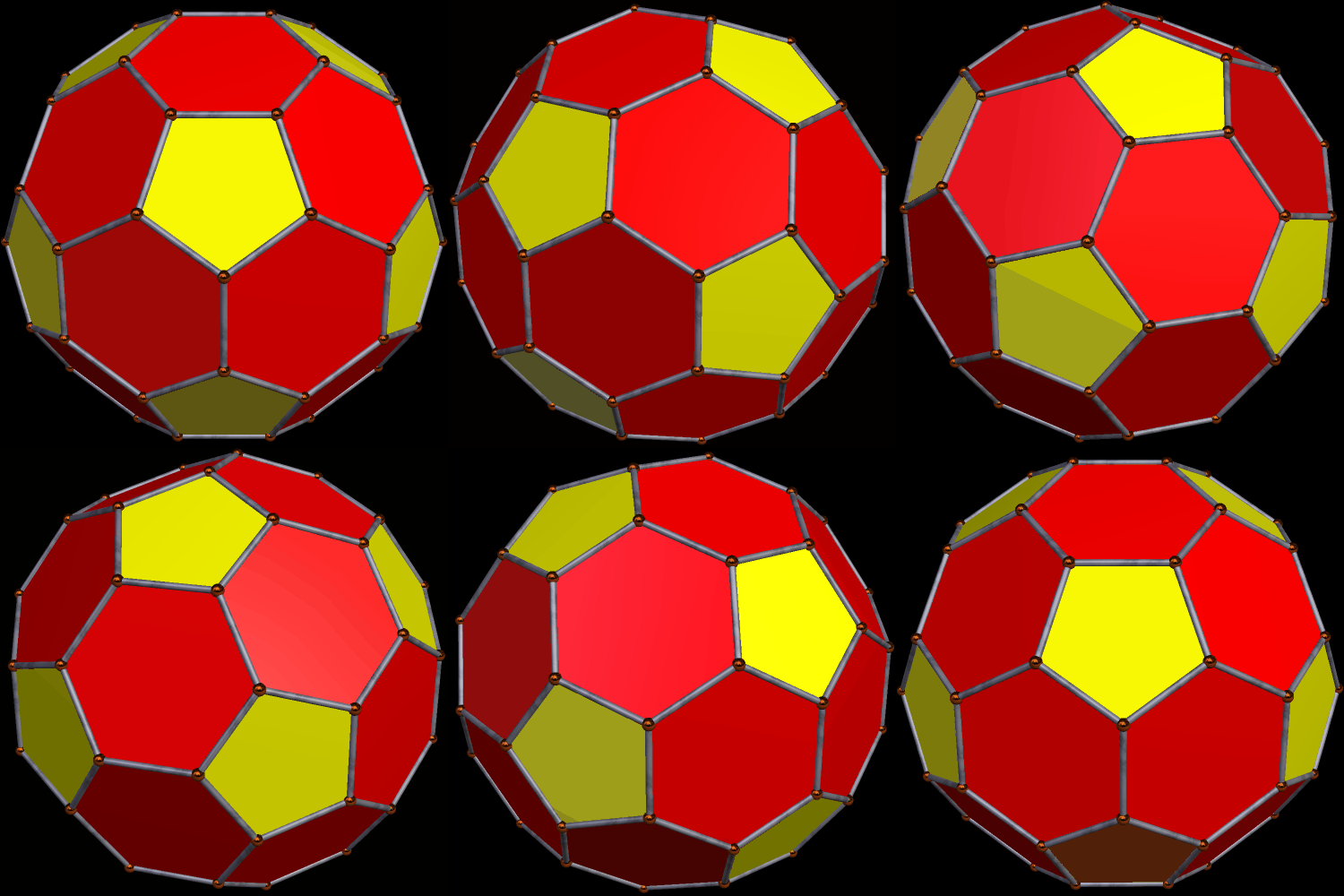
Give the polyhedron below a quick glance. Can you name it?

Since there are twelve regular pentagons, and a bunch of hexagons, it looks like a soccer ball. The shape of the most widely-used soccer ball is a (rounded) truncated icosahedron. Therefore, you can be forgiven if you thought this thing was a truncated icosahedron. Take a close look at those hexagons, though. Can you see that they are not regular?

Contrast the solid above to the shape below, which is a real truncated icosahedron.

The hexagons in this second image are regular, but that isn’t the only difference between the two. Examine the vertices of solid #2. At each vertex, one pentagon meets two hexagons. Scroll up and take another look at solid #1, and you can easily find vertices there which also have two hexagons meeting a pentagon — but not all of the vertices are like that. Some of the vertices have three hexagons meeting there, without any pentagons at all. This allows more hexagons into the mix, while the number of pentagons stays steady, at twelve, in both polyhedra.

There are also other differences. For example, the “fake” truncated icosahedron has eighty vertices, while the real one has sixty. The first solid is actually the dual of a frequency-2 geodesic sphere. It’s not an Archimedean solid at all. It is, in chemistry, a fullerene; in fact, both shapes are fullerenes. One is the well known C60 molecule, while the other is a less familiar fullerene with the formula C80

Both of these polyhedra can be built using Zometools (available for sale at http://www.zometool.com). The truncated icosahedron requires sixty Zomeballs, and is made of all blue struts. The geodesic-sphere dual takes eighty Zomeballs, and is made of blue and red struts.

Both images here were made with a computer program called Stella 4d, which you can try for free at http://www.software3d.com/Stella.php.
An Astronomical Dodecahedron

NASA’s Artemis I spacecraft snapped this picture of the Earth moving out from behind the far side of the Moon. I put it on this rotating dodecahedron using Stella 4d, which you can try for free at http://www.software3d.com/Stella.php.
A Cosmic Rhombic Dodecahedron

Image credit: NASA/ESA/CSA. This was one of the first images from the new James Webb Space Telescope.

Software credit: Stella 4d, available here.

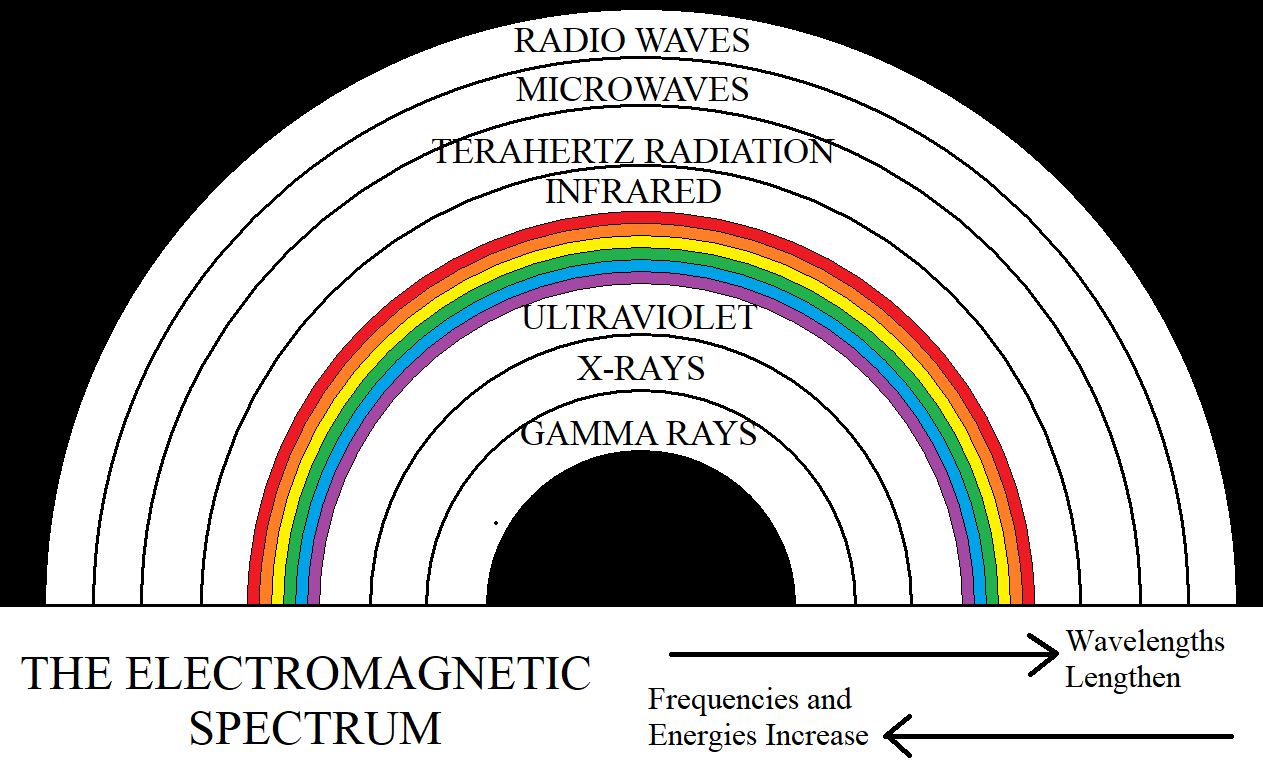
A Rainbow Diagram of the Electromagnetic Spectrum

Nothing in this diagram is shown to scale.

Seeing Red

These vandalized goggles were found in my science lab at school yesterday. When I tried them on, they literally had me seeing red.

“Spiders Aren’t Animals!” Well, Actually….

spider 240px-Kaldari_Phidippus_audax_01

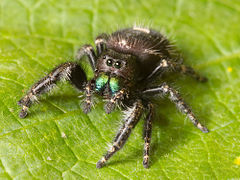
Over the years, literally hundreds of people have told me that spiders are not animals. This seems to happen the majority of the times that the topic of spiders comes up in conversation.  When I reply that spiders are, in fact, animals, the usual response is “Spiders are insects!” This gives me headaches, because (1) spiders aren’t insects, and (2) insects are also animals.

Spiders happen to be my favorite animal, so this is quite confusing to me. Hopefully, this screenshot from my Google-search for “animal definition” will help spread the word that spiders are, indeed, part of the animal kingdom.

animals

[Spider image from https://en.wikipedia.org/wiki/Phidippus_audax. Also, I added the red arrow and ellipse to the Google-screenshot, using MS-Paint.]

The Moon Unit Proposal

moon unit

I propose that 384,400 km (238,855 miles), the average distance from the Earth to the Moon, be called a “moon unit.” Example: “The mileage of my car is over one moon unit.”

The C-320 Fullerene Polyhedron

The duals of the geodesic domes are polyhedra with hexagonal and pentagonal faces. This particular one has 320 vertices, with those vertices representing carbon atoms in the molecular version of this solid. Here is C320 as a polyhedron.

C320 Dual of Geodesic Icosa

The next image shows this molecule as a ball-and-stick model.

C320 ball and stick.gif

Finally, here it is as a space-filling molecular model.

C320 space filling.gif

All three images were created with Stella 4d: Polyhedron Navigator. This is the page to visit if you want to try Stella for yourself: http://www.software3d.com/Stella.php.

The Construction of a Zome Model of a 240-Atom Fullerene Molecule, In Seven Pictures

20170725_175814

20170725_175907

20170727_085350

20170727_090058

20170727_090557

20170727_090936

20170727_100033

You can buy your own Zome at http://www.zometool.com.