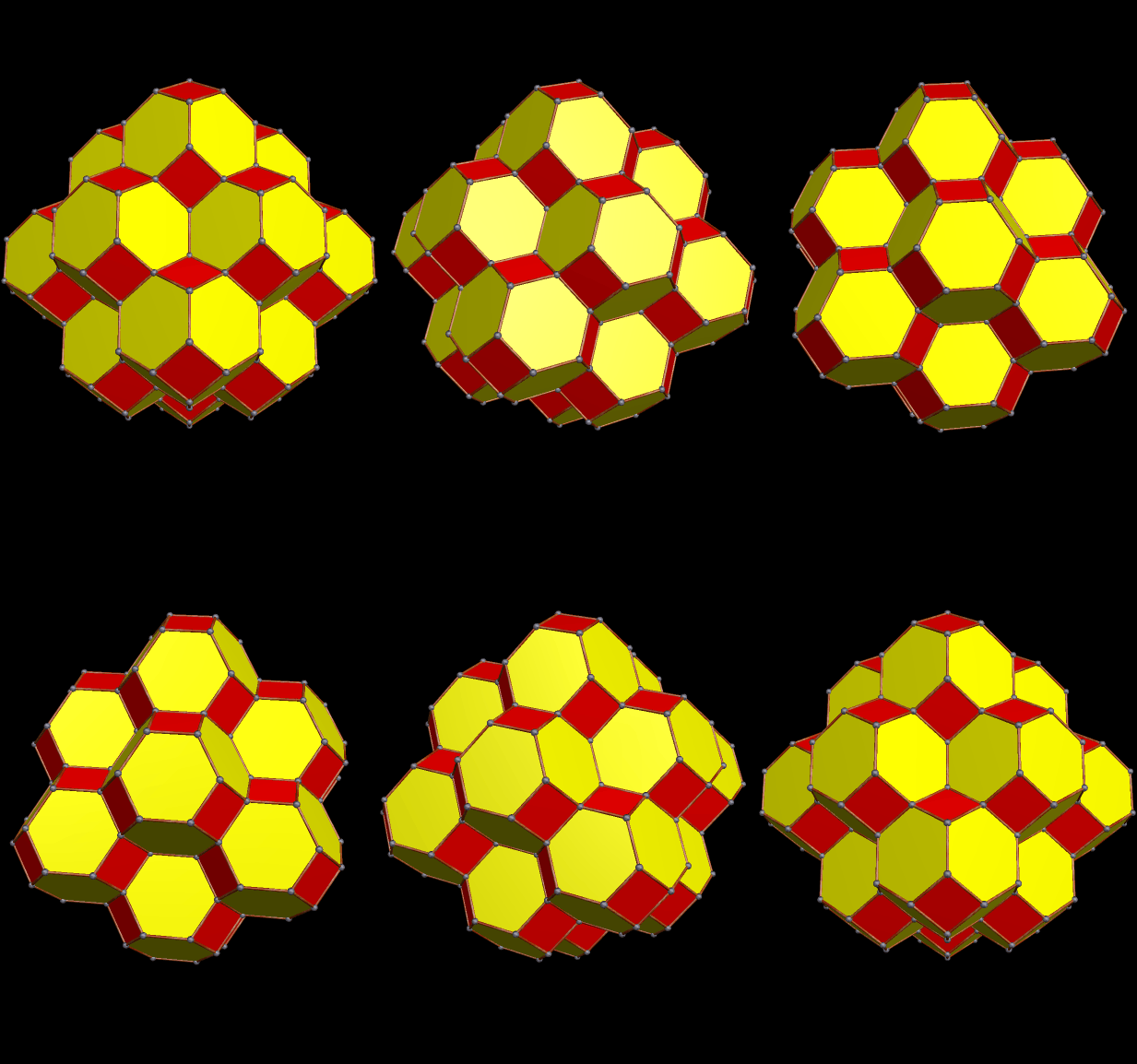
A Cluster-Polyhedron Formed By 15 Truncated Octahedra, Plus Variations

15 Trunc Octa

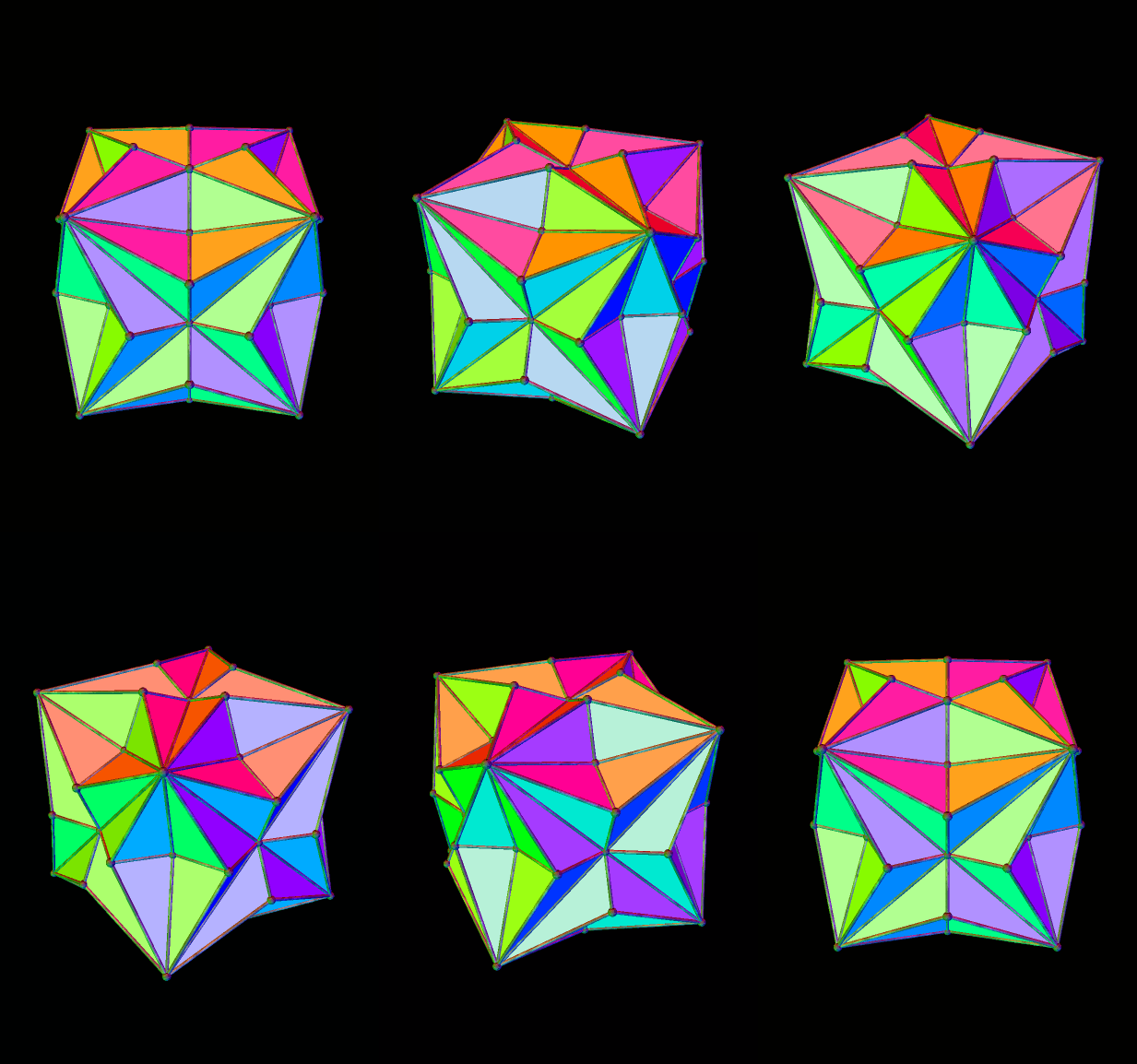
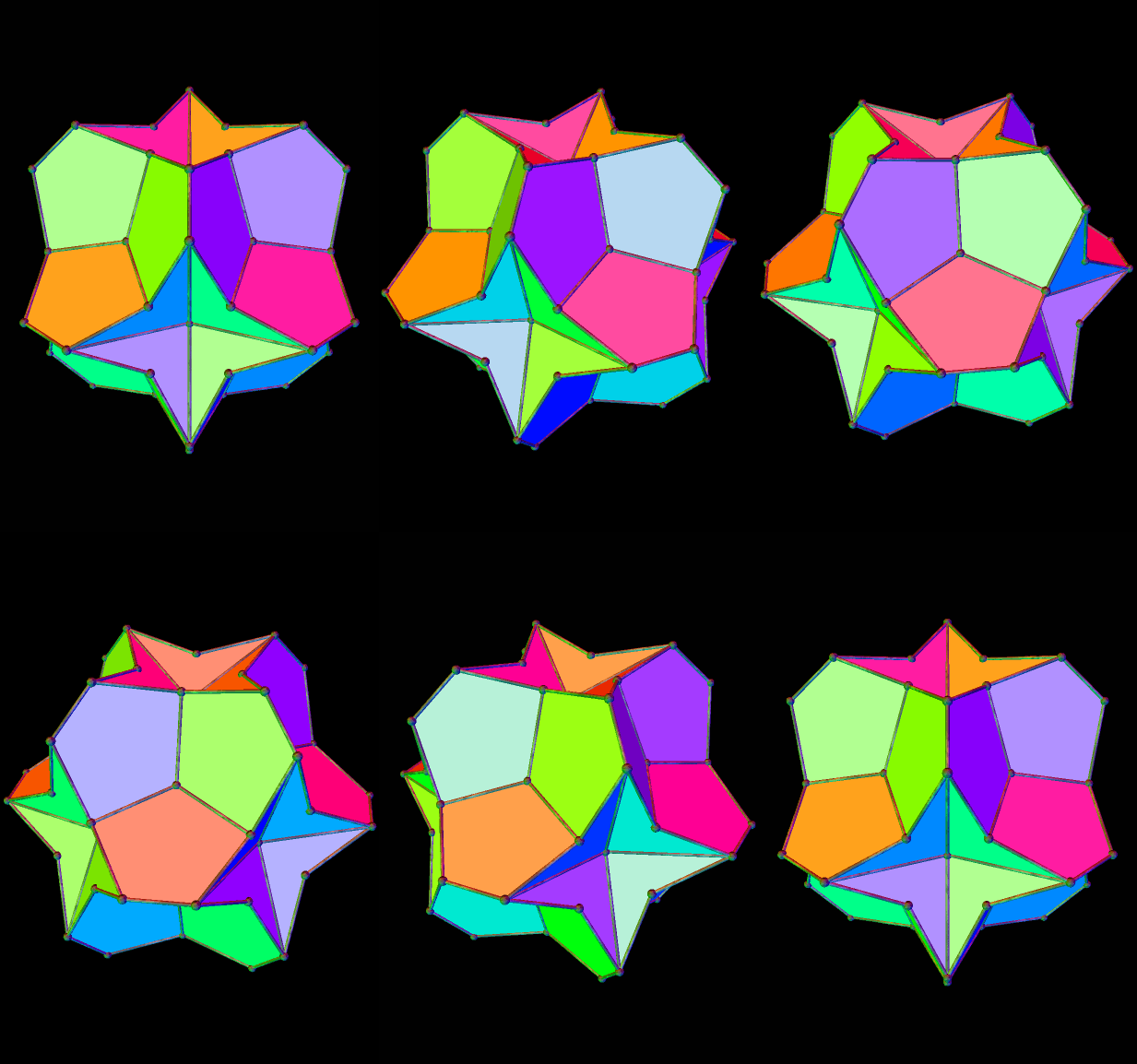
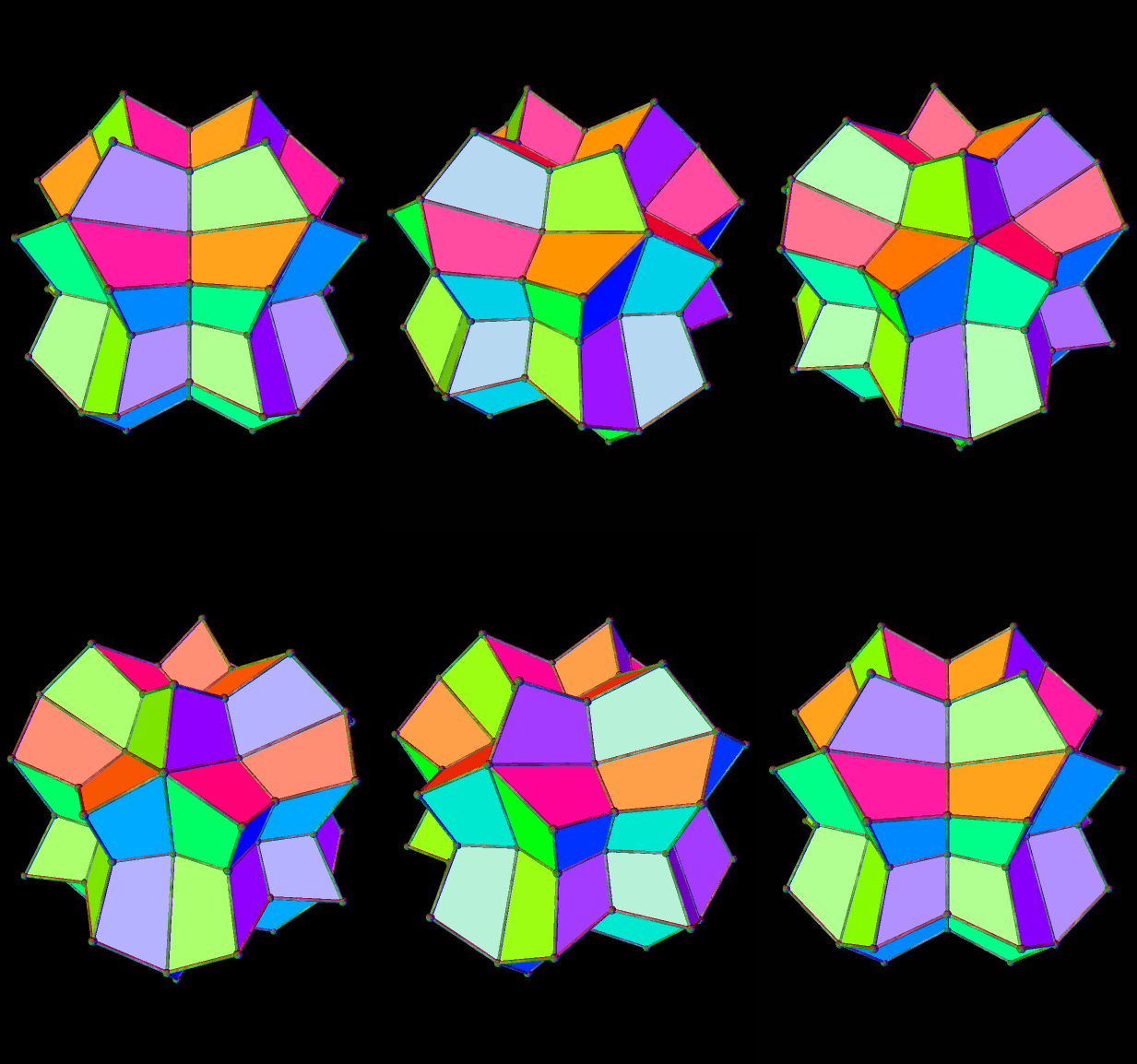
To form the cluster-polyhedron above, I started with one truncated octahedron in the center, and then augmented each of its fourteen faces with another truncated octahedron. Since the truncated octahedron is a space-filling polyhedron, this cluster-polyhedron has no gaps, nor overlaps. The same cluster-polyhedron is below, but colored differently:  each set of parallel faces gets a color of its own.
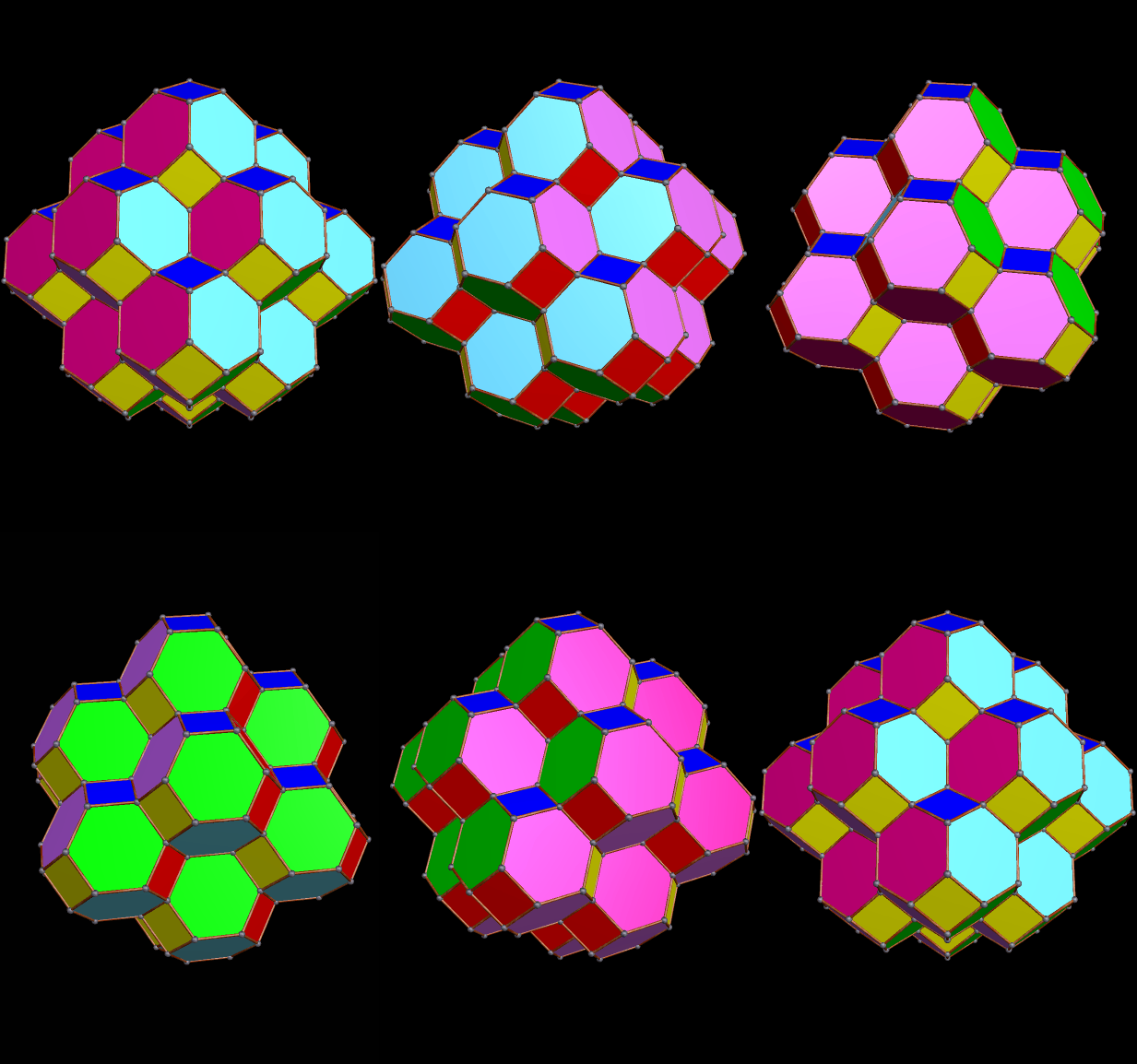
15 Trunc Octa color by face unless parallel

This is the cluster-polyhedron’s sixth stellation, using the same coloring-scheme as in the last image:

15 Trunc Octa color by face unless parallel 6th stellation

Here’s the sixth stellation again, but with the coloring scheme that Stella 4d:  Polyhedron Navigator (the program I use to make these images) calls “color by face type.” If you’d like to try Stella for yourself, you can do so here.
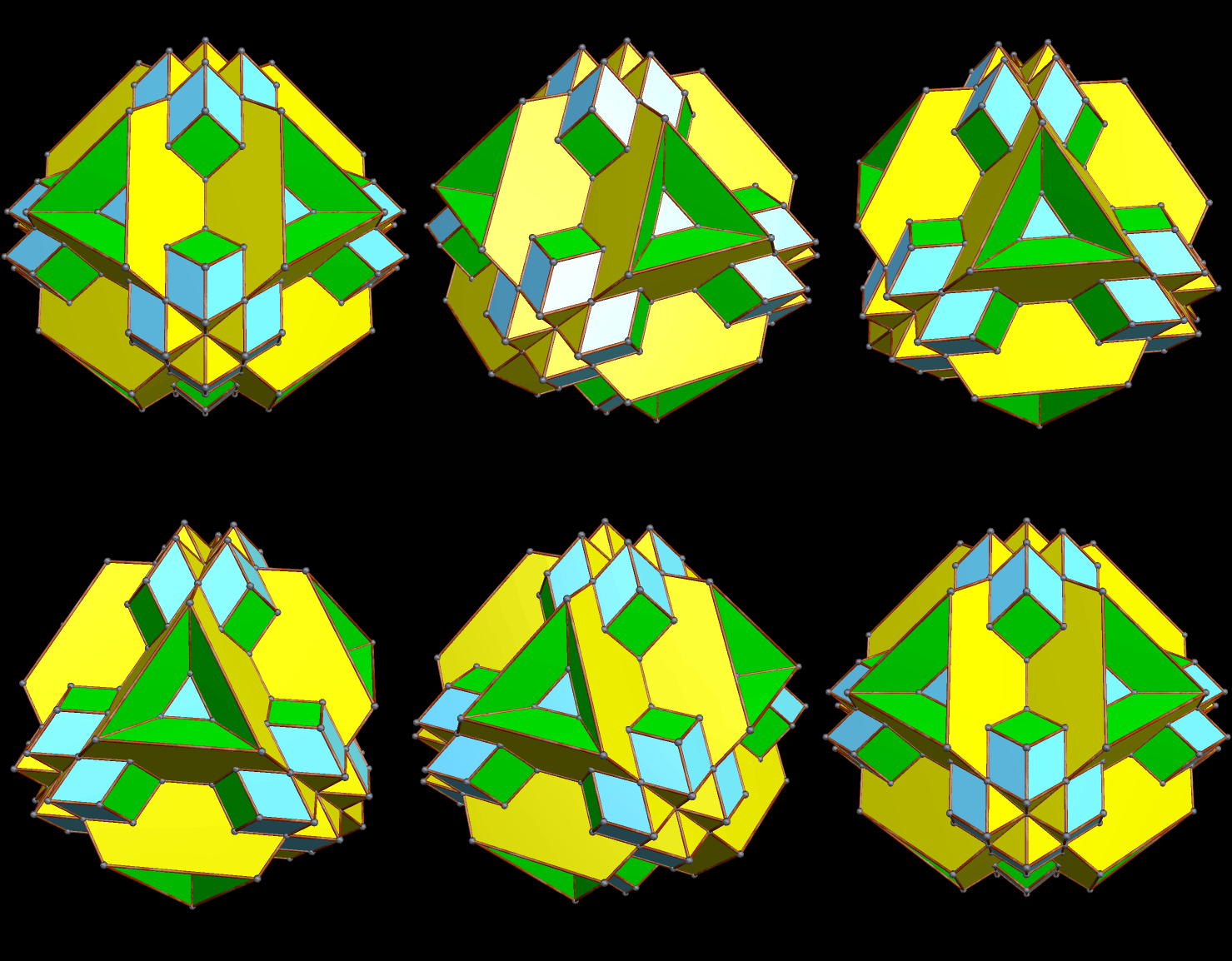
15 Trunc Octa color by face type 6th stellation

Also colored by face-type, here are the 12th, 19th, and 86th stellations.

15 Trunc Octa color by face type 12th stellation

15 Trunc Octa color by face type 19th stellation

15 Trunc Octa color by face type 86th stellation

Leaving stellations now, and returning to the original cluster-polyhedron, here is its dual.
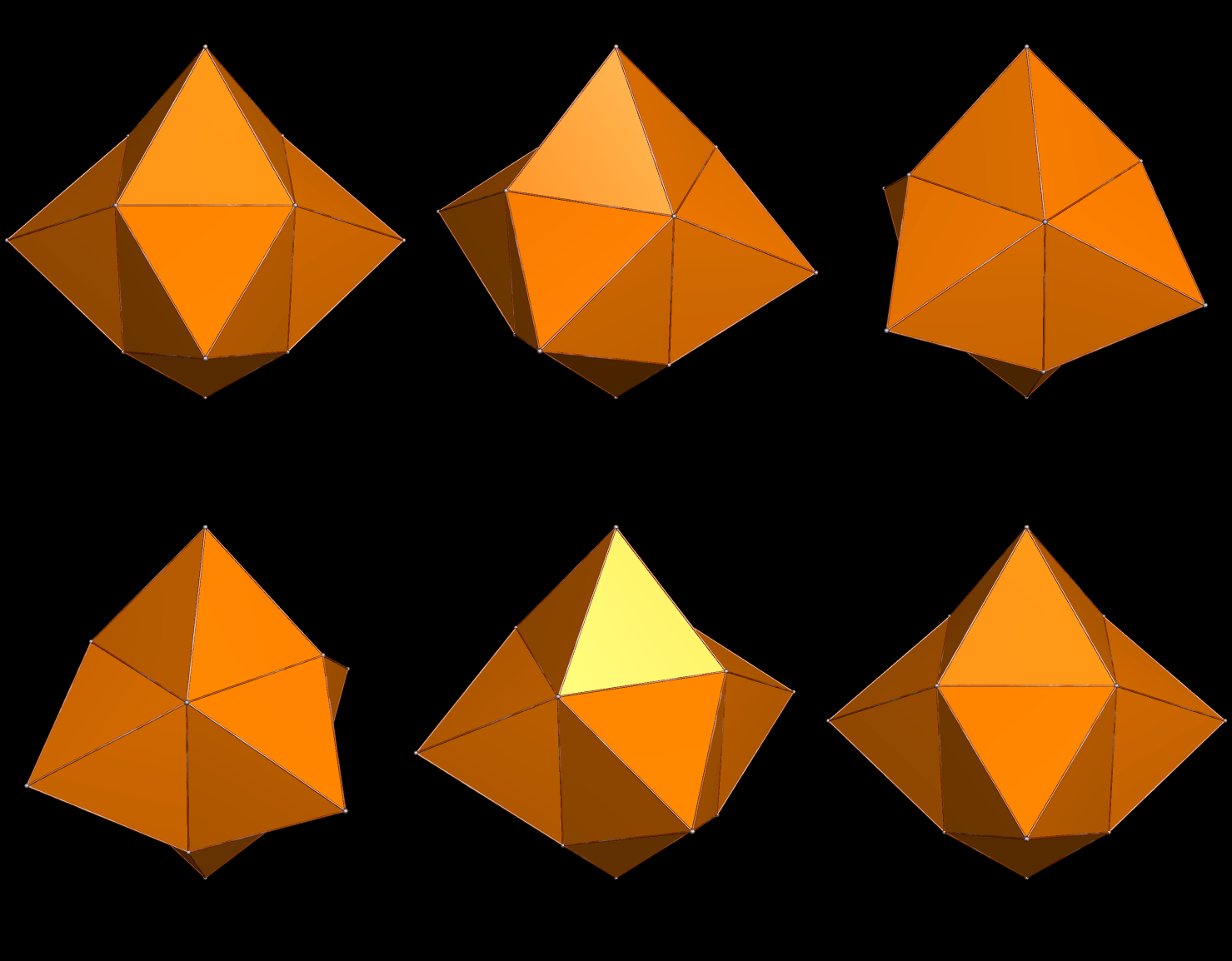
15 Trunc Octa dual

This image reveals little about this dual, however, for much of its structure is internal. So that this internal structure may be seen, here is the same polyhedron, but with only its edges visible.
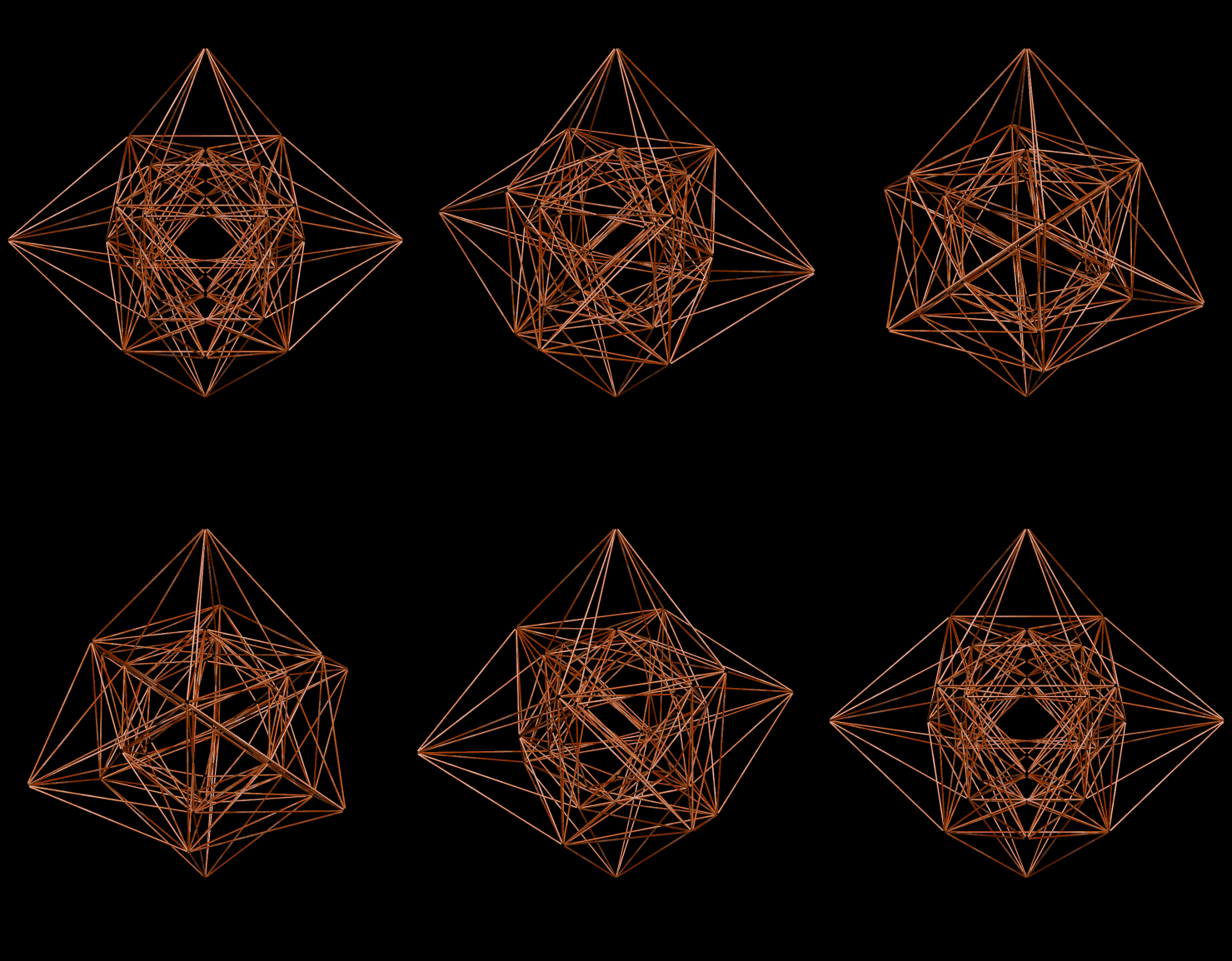
15 Trunc Octa dual wirre-frame

Finally, here is an edge-rendering of the original cluster-polyhedron, but with vertices shown as well — just not the faces.
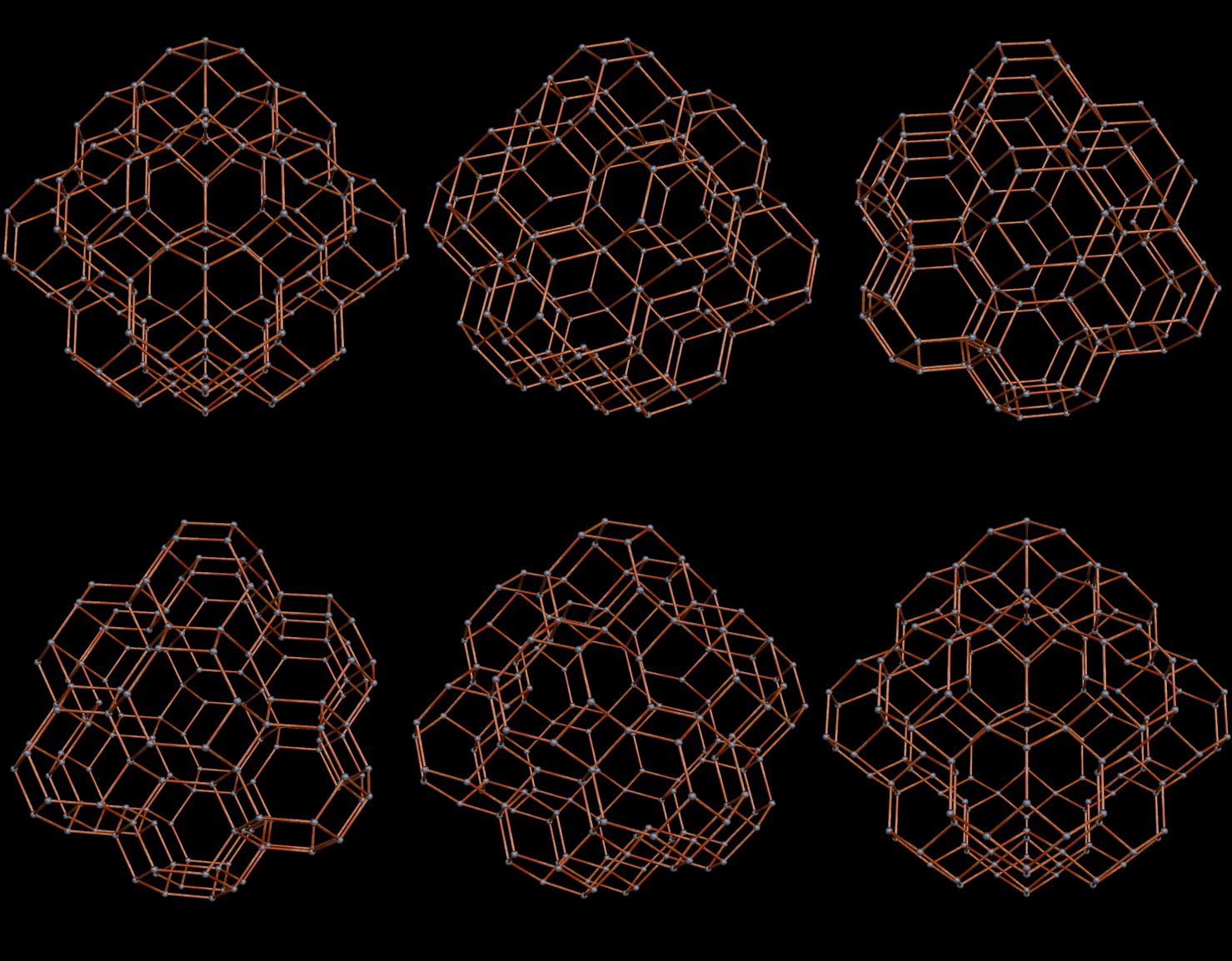
15 Trunc Octa wirre-frame

Selections from the Stellation-Series of the Strombic Icositetrahedron, Including Some Polyhedral Compounds

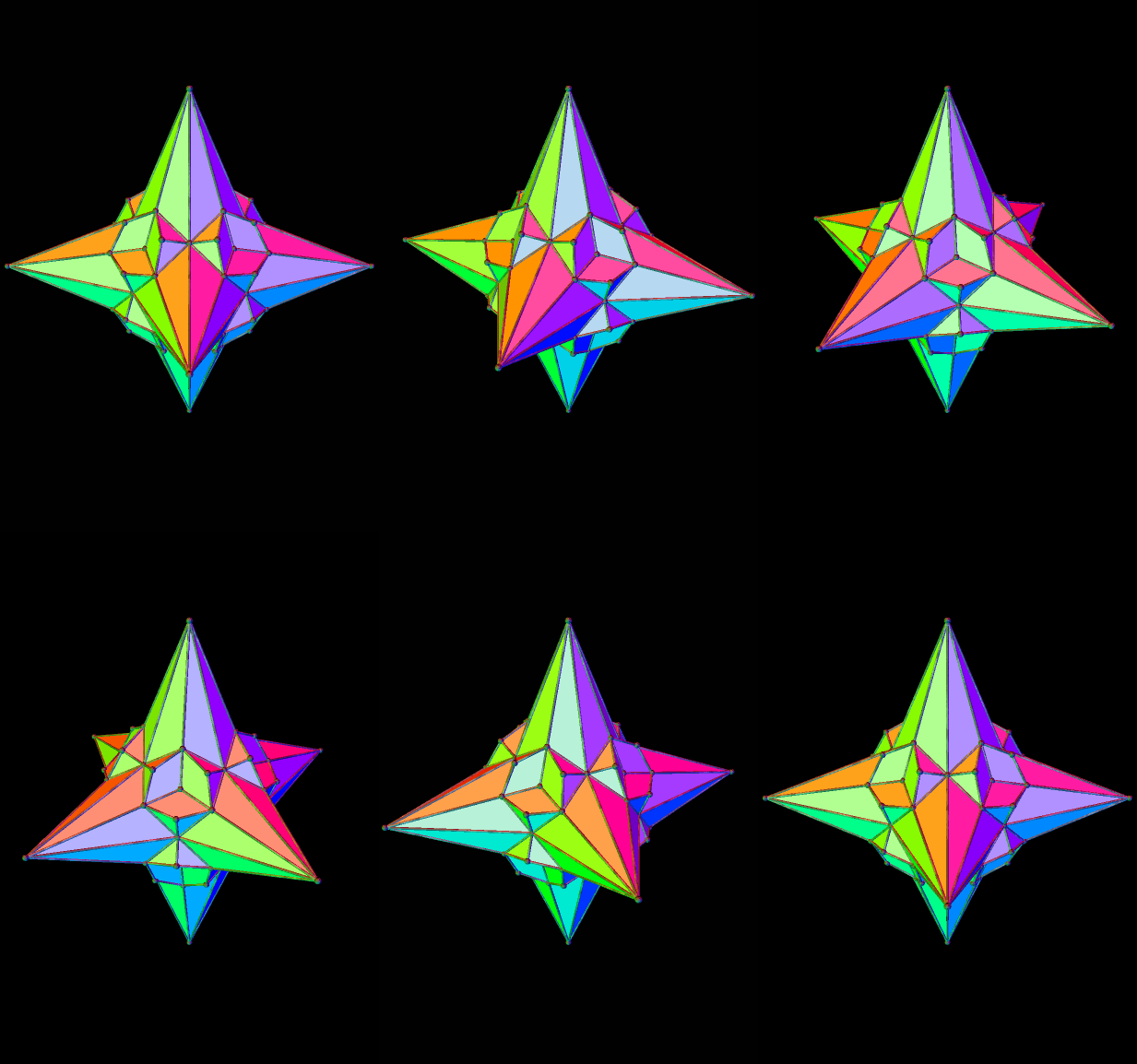
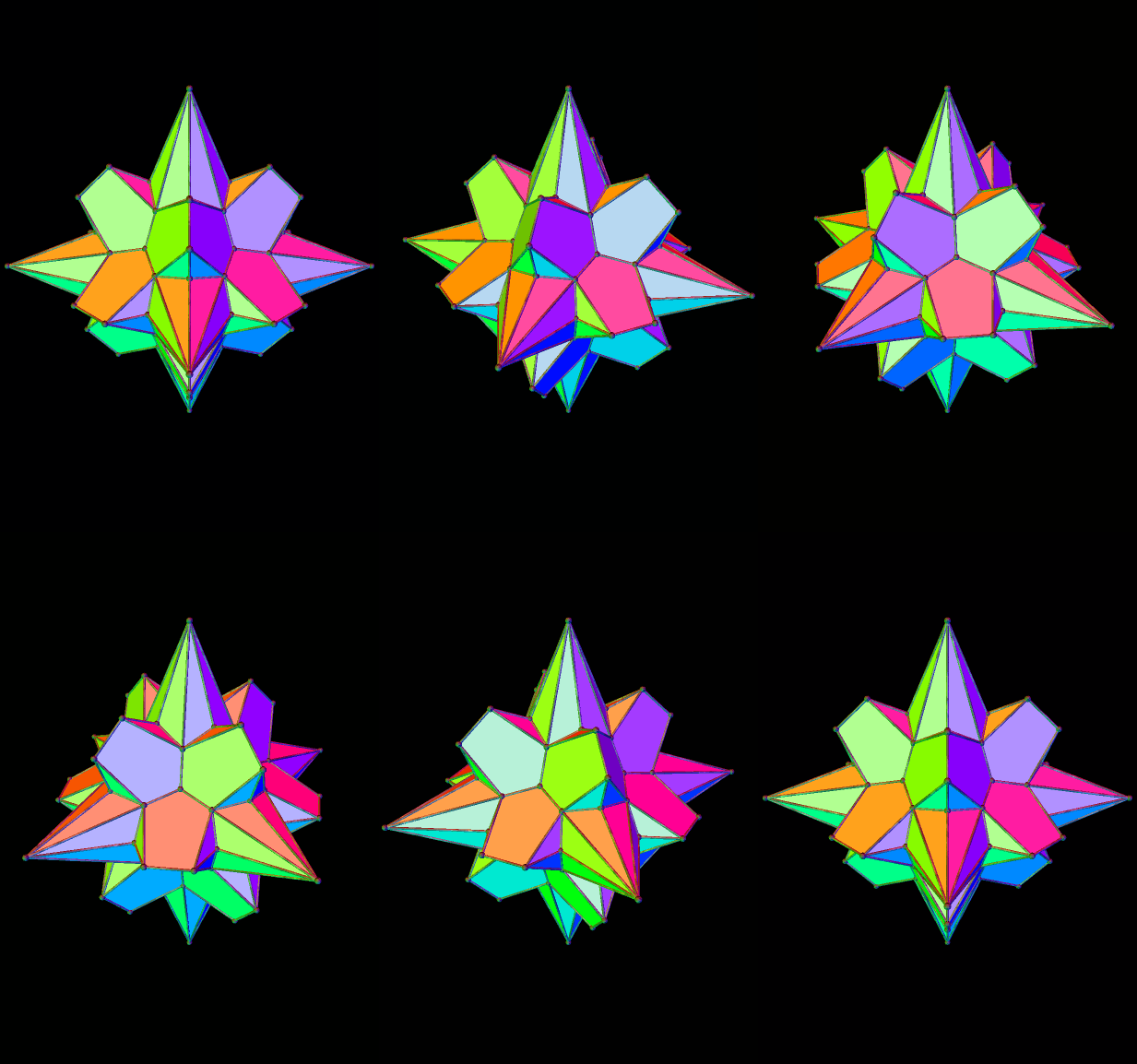
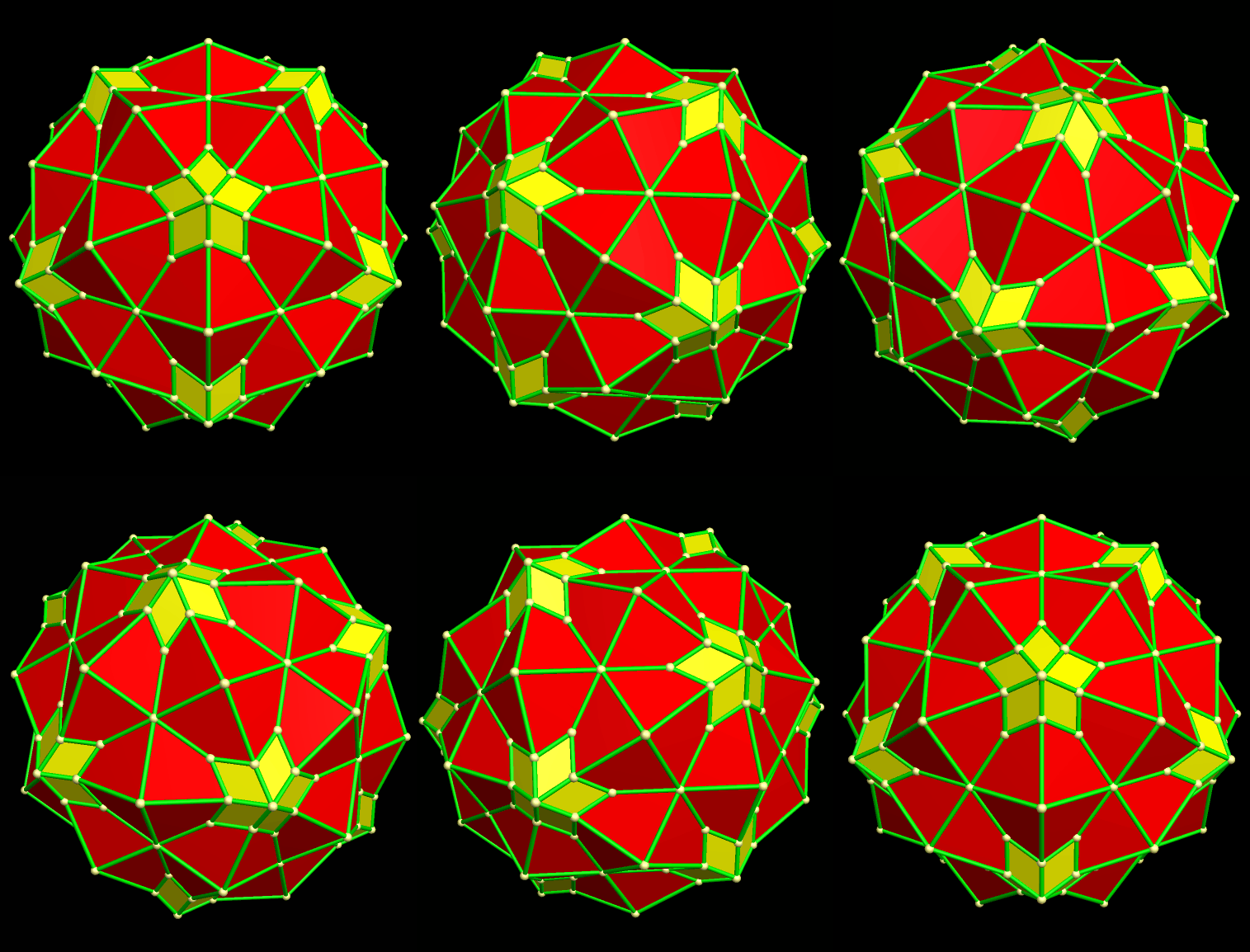
The strombic icositetrahedron is the dual of the rhombcuboctahedron, and has many interesting polyhedra in its stellation-series. Here are a few of them, starting with the 10th stellation.

10th stellation of Strombic Icositetra

Here’s the strombic icositetrahedron’s 16th stellation:

16th stellation of Strombic Icositetra

And the 19th:

19th stellation of Strombic IcositetraAnd the 21st:

21st stellation of Strombic Icositetra

And the 23rd:

23rd stellation of Strombic Icositetra

And the 25th:

25th stellation of Strombic Icositetra

And the 26th:

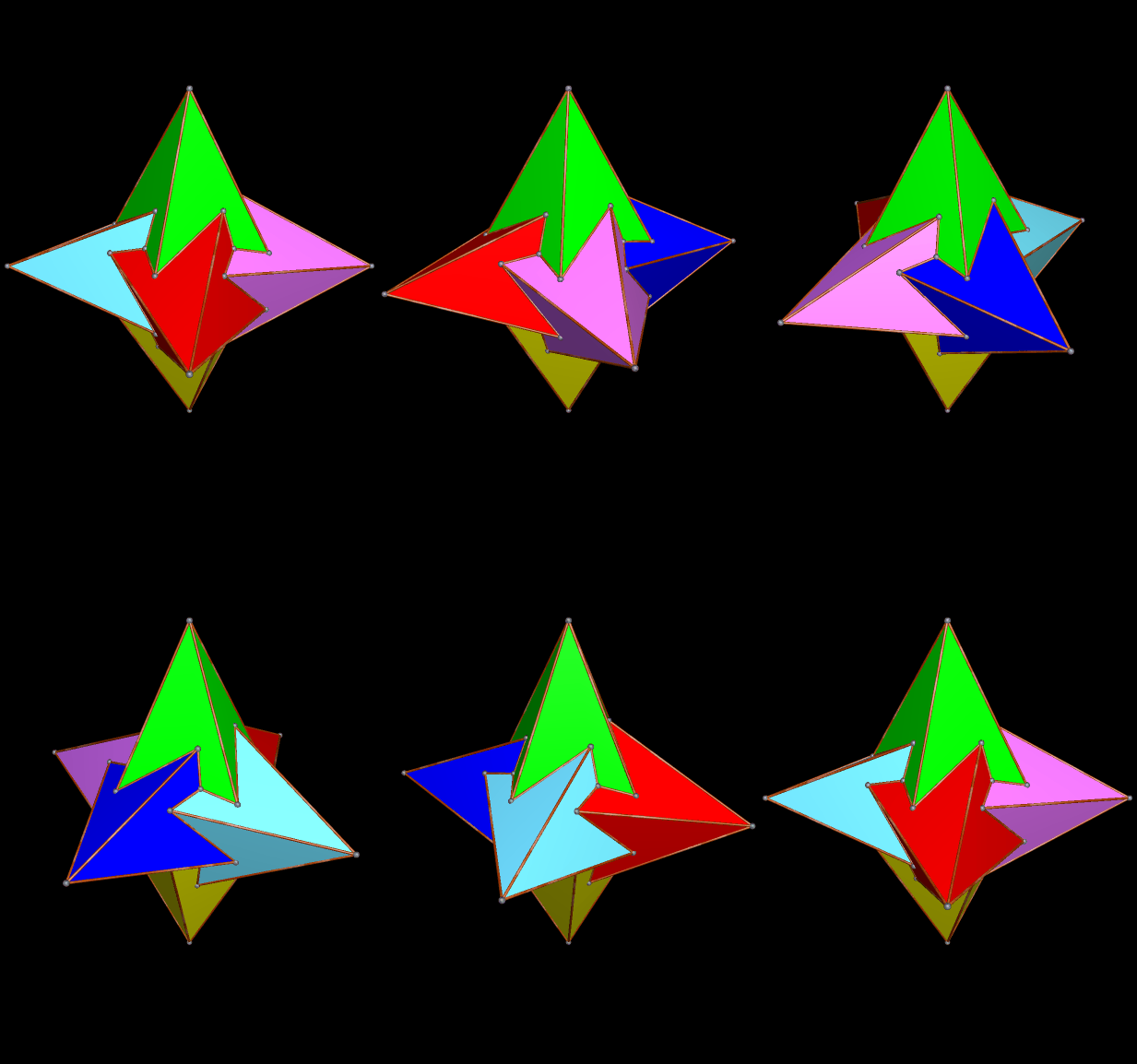
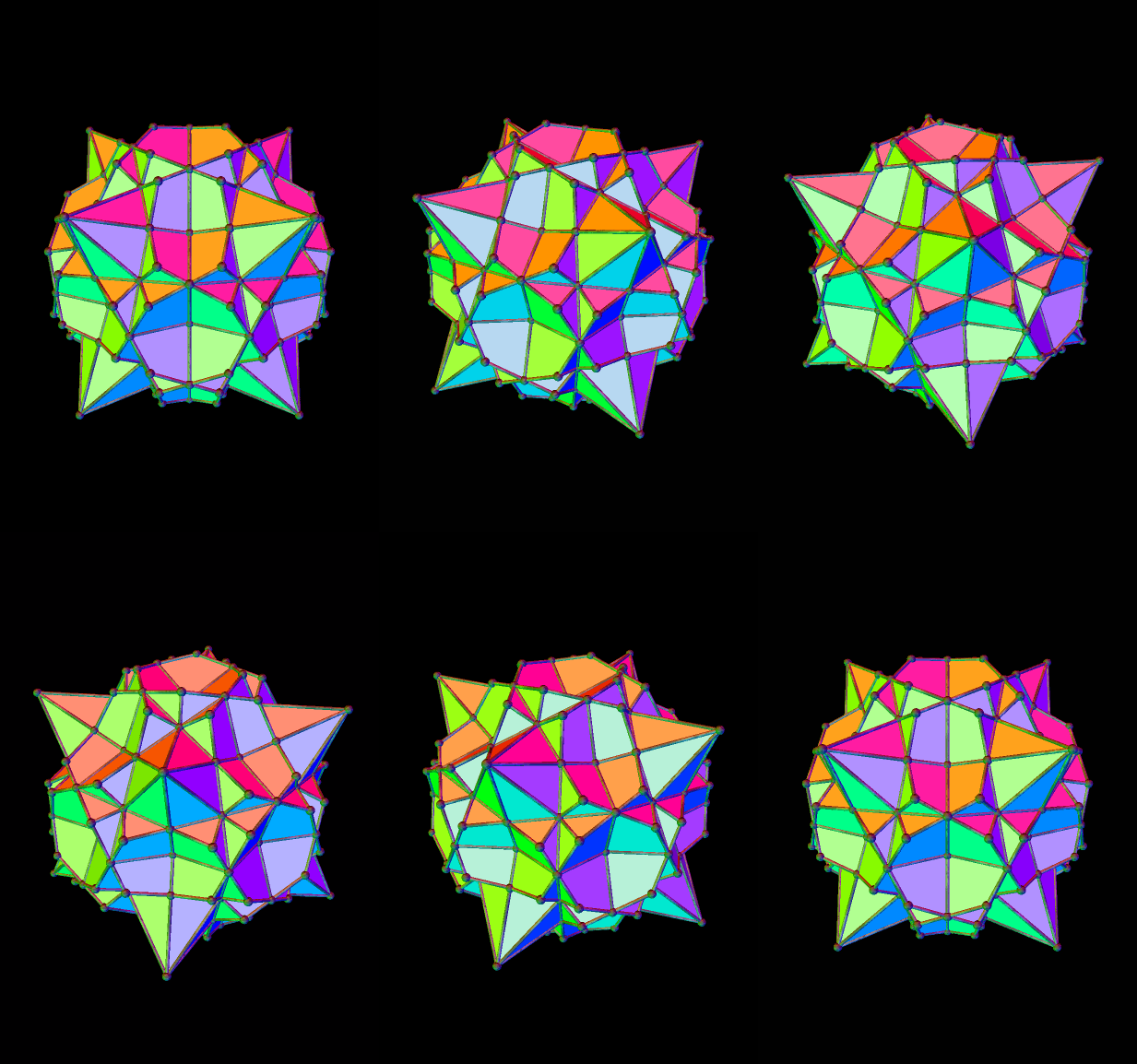
26th stellation of Strombic IcositetraNext, the 28th stellation. It isn’t colored as the other stellations above are colored, simply because it is also a compound of six off-center square-based pyramids.

28th stellation of Strombic Icositetra

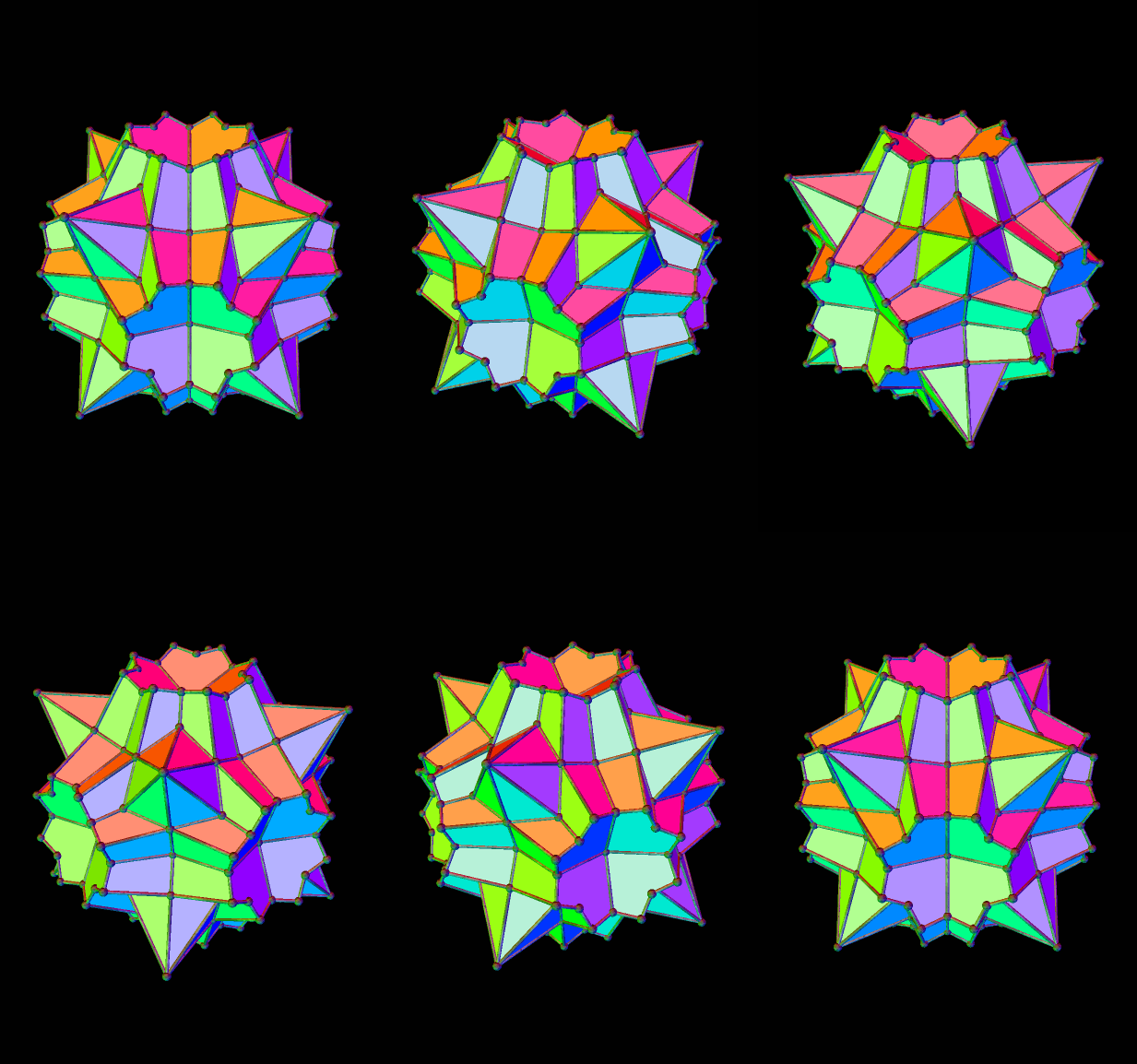
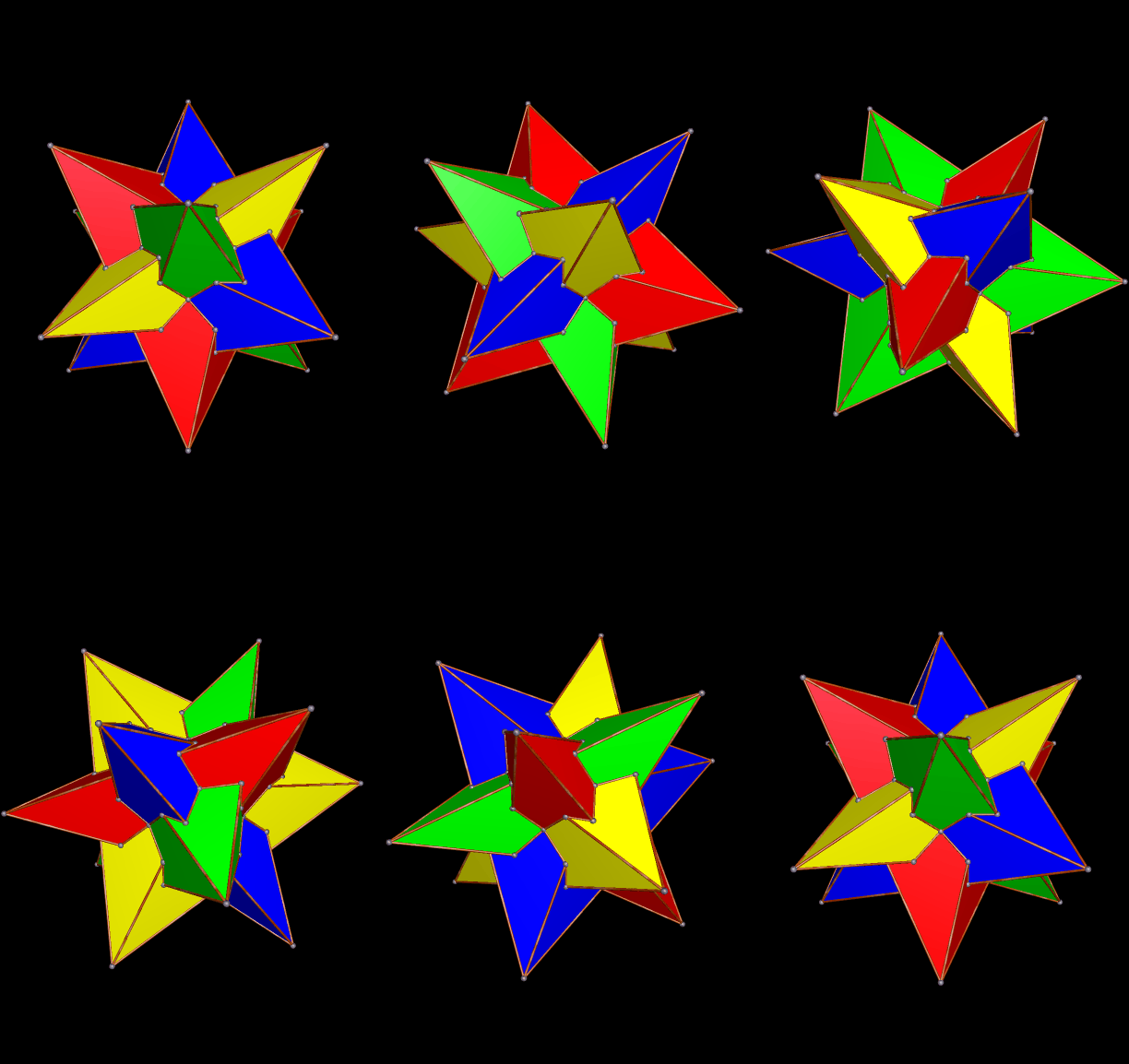
The 34th stellation is even more interesting. It’s a symmetrical four-part compound, but the component polyhedra have irregular faces, and are much less symmetrical than the compound itself.
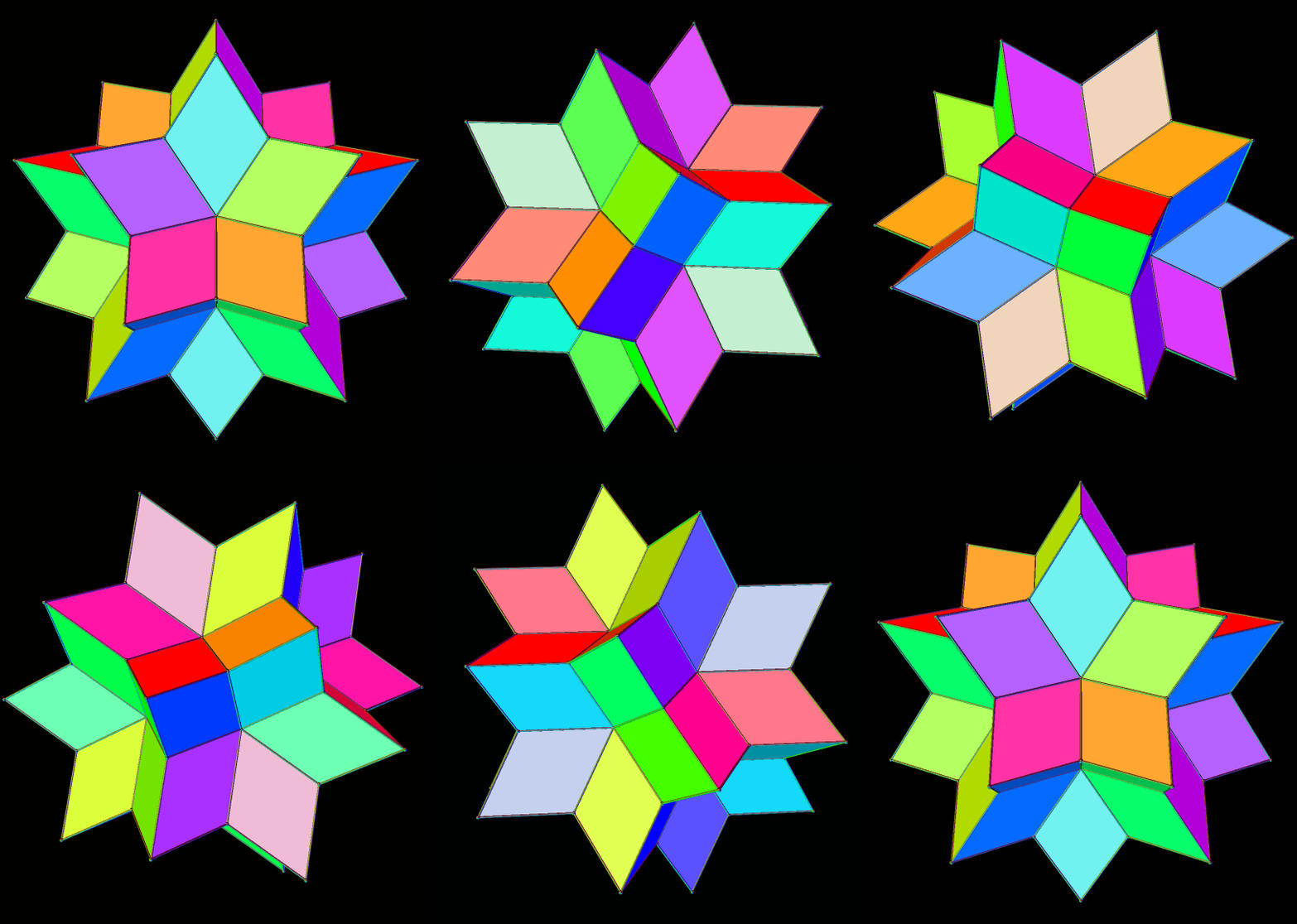
34th stellation of Strombic Icositetra

Here is the 37th stellation in this series:

37th stellation of Strombic Icositetra

And the 43rd:

43rd stellation of Strombic Icositetra

And the 44th:

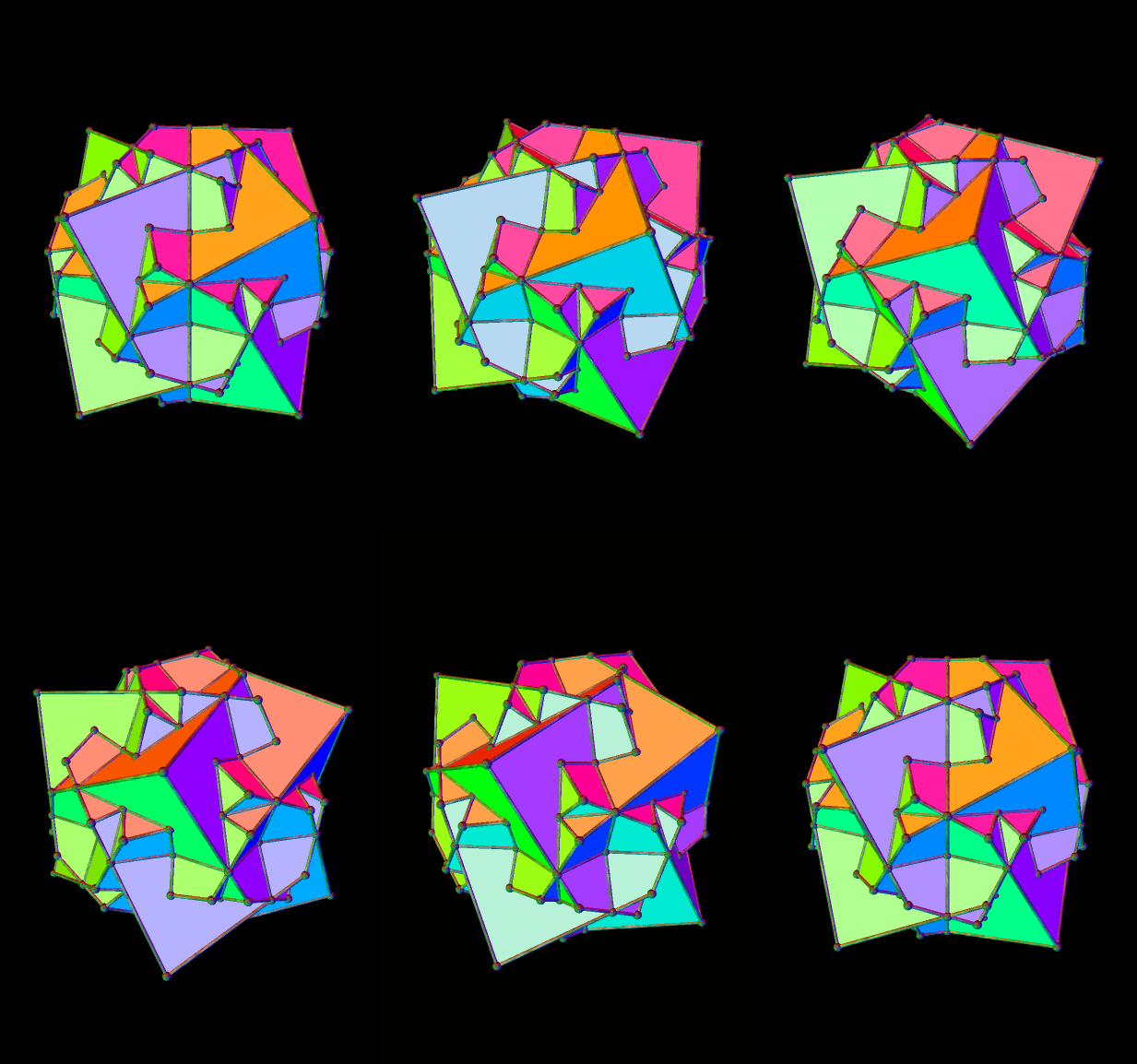
44th stellation of Strombic IcositetraThe 59th stellation in this series is an octahedron, with each face excavated by short, triangle-based pyramids. It can also be seen as a compound of three shortened square-based dipyramids, but coloring it as a compound proved difficult, so it is presented here in rainbow-color mode:

59th stellation of Strombic Icositetra

Here’s the 61st stellation:

61st stellation of Strombic Icositetra

And the 68th:

68th stellation of Strombic Icositetra

And the 71st:

71st stellation of Strombic Icositetra

And the (quite different from the 71st) 72nd stellation:

72nd stellation of Strombic Icositetra

And the 73rd:

73rd stellation of Strombic Icositetra

And, finally, the 74th, which is an interesting two-part compound.

74th stellation of Strombic Icositetra

And the 79th:

79th stellation of Strombic Icositetra

And the 82nd stellation:

82nd stellation of Strombic Icositetra

The last one I’m showing here is the 93rd stellation, another four-part compound.

93rd stellation of Strombic Icositetra

All these images were created using Stella 4d:  Polyhedron Navigator, which you may try for yourself at http://www.software3d.com/Stella.php.

More Polyhedra, Including Some Compounds, from the Stellation-Series of the Tetrakis Cube

Tetrakishexa stellation

The next one is a compound of eight off-center pyramids. By this point, I had gone so far into the stellation-series (a search I began when preparing the post before this one) that I had lost count.

compound of eight off-center pyramids

This one is a compound of three short square-based dipyramids:

compound of three short square dipyramids

This one, according to Stella 4d, is a compound of three parts, but I can’t quite figure out what the parts are!

more from the stellation series of the tetrakis cube

Here is another “mystery compound,” this one with two parts:

bizarre two-part compound

Stella 4d, which I used to make these, may be tried here.

Two Compounds of Dipyramids from the Stellation-Series of the Tetrakis Cube

The 16th stellation of the tetrakis cube, the dual of the truncated octahedron, is a compound of three elongated octahedra, or square dipyramids:

Tetrakishexa

The 65th stellation of this same polyhedron is of another compound of dipyramids, but these are triangular dipyramids with obtuse faces, and there are four of them:

Tetrakishexa stellation 4

I generated both of these images with Stella 4d:  Polyhedron Navigator, available right here.

Three Different Stellations of the Rhombic Triacontahedron

Rhombic Triaconta stellation

These polyhedra are selected from the the (long) stellation-series of the rhombic triacontahedron. Stellating polyhedra, and manipulating them in other ways, is easy with Stella 4d, which you may try, as a free trial download, here:   www.software3d.com/Stella.php.

stellated RTC one of many

stellated RTC another of many

A Compound of an Icosahedron and the First Stellation of the Rhombic Triacontahedron

Compound of an icosahedron and the 1st stellation of the RTC

I stumbled across this compound yesterday, an example of exploratory polyhedral manipulation using Stella 4d producing an unexpected result. If you would like to experiment with a free trial download of this program, before deciding whether or not to purchase the fully-functioning version, simply click here:  www.software3d.com/Stella.php.

Four Stellations of the Truncated Icosahedron

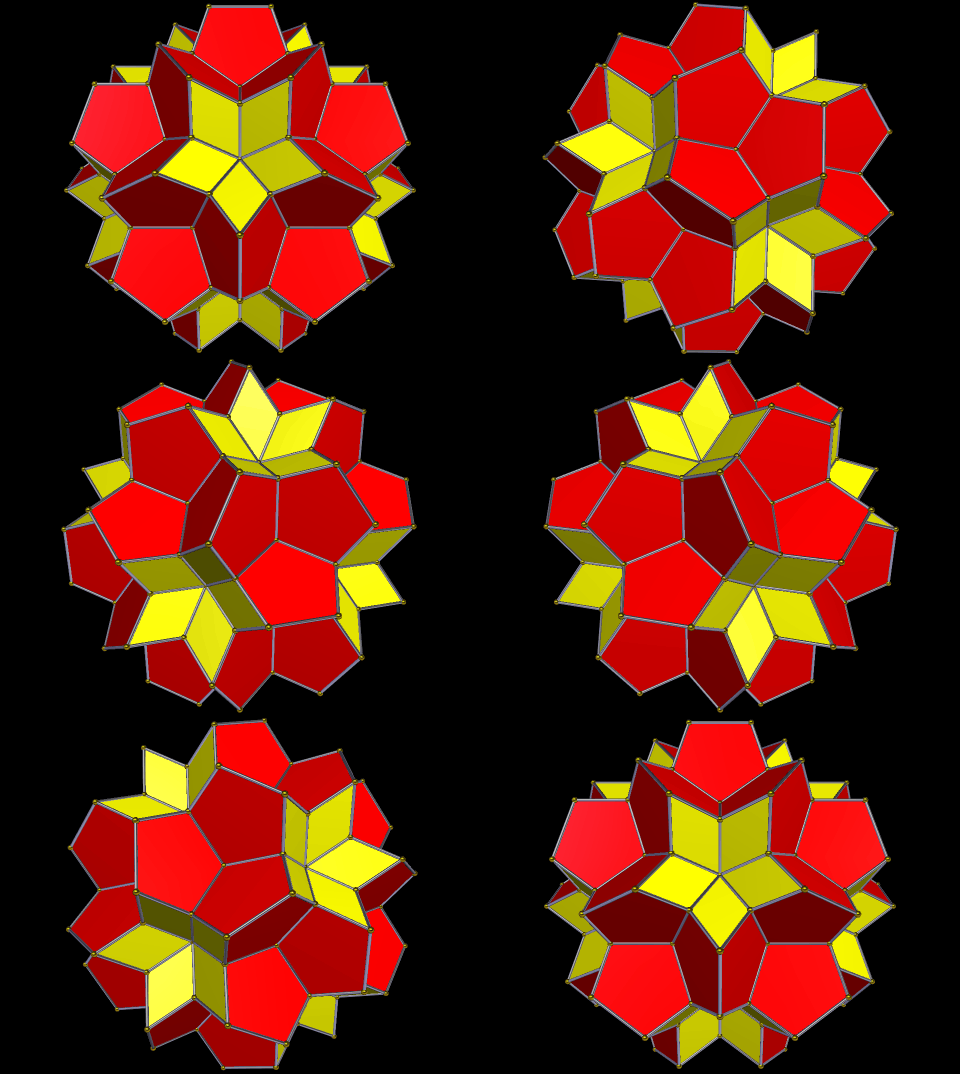
The truncated isocahedron has an interesting (and long) stellation series. Here are some of the stellated forms of this polyhedron which I find particularly interesting and attractive, starting with its 41st stellation.

41st stellation Trunc Icosa

This one is the 42nd stellation:

42nd stellation Trunc Icosa

Jumping far ahead in the series, this is the 126th stellation:

126th stellation Trunc Icosa

And, finally, the 148th stellation.

148th stellation Trunc Icosa

All four images were produced using Stella 4d:  Polyhedron Navigator. You can try this program for yourself at www.software3d.com/Stella.php.


The Rhombic Hexacontahedron

rhombic hexacontahedron

The rhombic hexacontahedron (sometimes spelled “hexecontahedron”) is one of many stellations of the rhombic triacontahedron. Its sixty faces, like the thirty faces of the rhombic triacontahedron, are golden rhombi — rhombi with diagonals in the golden ratio.

The rotating image above was produced using Stella 4d:  Polyhedron Navigator, a program available at www.software3d.com/Stella.php

Two Rotating Polyhedral Stellations

3rd stellation of Triamond Pentagonal Bifrustum

These are the third (above) and fifth (below) stellations of the triamond pentagonal bifrustrum, which I previously posted here: https://robertlovespi.wordpress.com/2014/07/30/my-lost-discovery-from-2006-the-triamond-pentagonal-bifrustrum/. These rotating images are made with Stella 4d, a program available at www.software3d.com/Stella.php.

5th stellation of Triamond Pentagonal Bifrustum

Music Video: Murder By Death’s “Those Who Stayed” & “I’m Afraid of Who’s Afraid of Virginia Woolf”

Music: the first two tracks from the Murder By Death album Like the Excorcist, But More Breakdancing. Please visit their website, http://www.murderbydeath.com, to buy this band’s music and merchandise. While you’re there, I recommend checking their concert calendar, to see if they may be playing near you soon. Murder By Death concerts, which I’ve seen six times now, are not to be missed!

Visuals: rotating polyhedra, all with icosidodecahedral symmetry, generated using Stella 4d: Polyhedron Navigator, which you can try for yourself at http://www.software3d.com/Stella.php. The polyhedra shown are, in order of appearance:

  1. The icosahedron
  2. The compound of the icosahedron and its dual, the dodecahedron
  3. The dodecahedron, with all faces the same color
  4. The small stellated dodecahedron, or first stellation of the dodecahedron, in a single color
  5. The small stellated dodecahedron, with only parallel faces having the same color (six-color arrangement)
  6. The great dodecahedron, or second stellation of the dodecahedron, six-color arrangement
  7. The great stellated dodecahedron, or third stellation of the dodecahedron, six-color arrangement
  8. Stellating the dodecahedron a fourth time, to return it to its original form, but in the six-color arrangement this time
  9. The icosidodecahedron, with triangular faces invisible, and pentagonal faces shown using the six-color arrangement
  10. The icosidodecahedron, all faces visible now, and colored by face type
  11. The fourth stellation of the icosidodecahedron (its first stellation is the dodecahedron, the second is the icosahedron, and the third is the compound of the first two, all of which have already been seen)
  12. The fifth stellation of the icosidodecahedron
  13. The convex hull of the fifth stellation of the icosidodecahedron, which is a slightly-truncated icosahedron
  14. The truncated icosahedron which is a true Archimedean Solid, since all its faces are regular
  15. The truncated icosahedron’s second stellation (the first is the already-seen icosahedron)