Silly U.S. Map Puzzles #4a and 4b

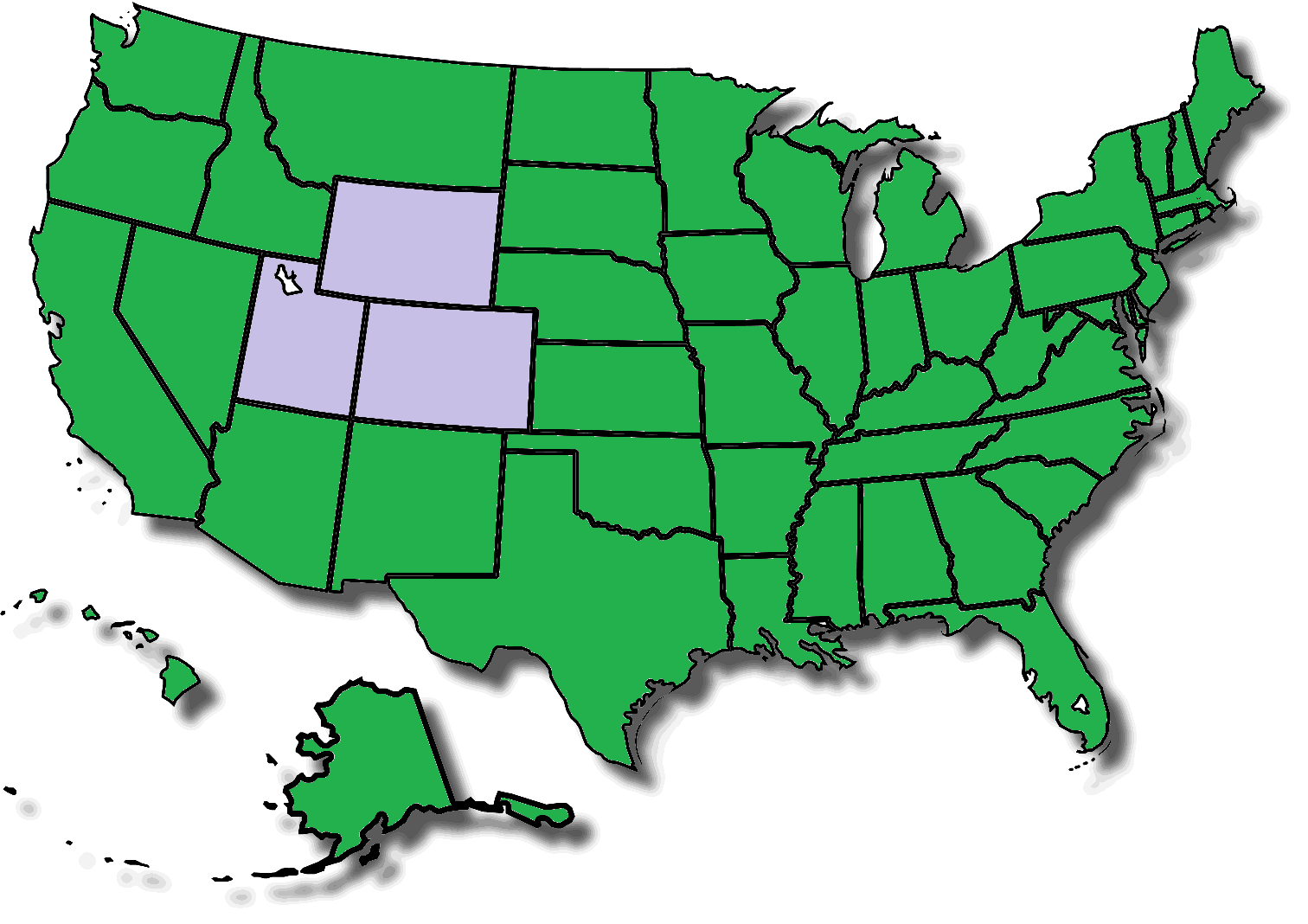
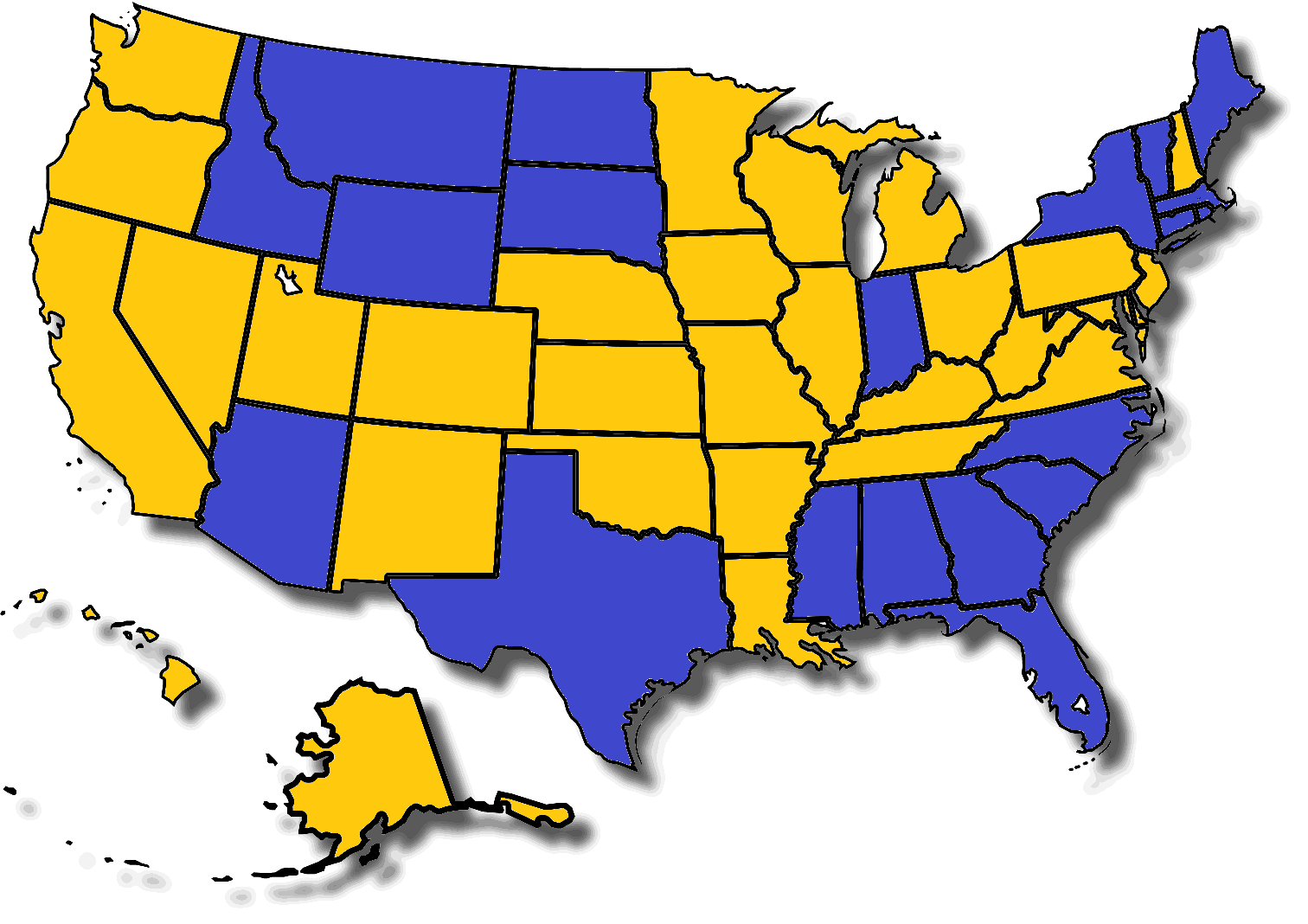
First, for puzzle #4a, what are the meanings of the colors on this map?

mapquiz4a-letters

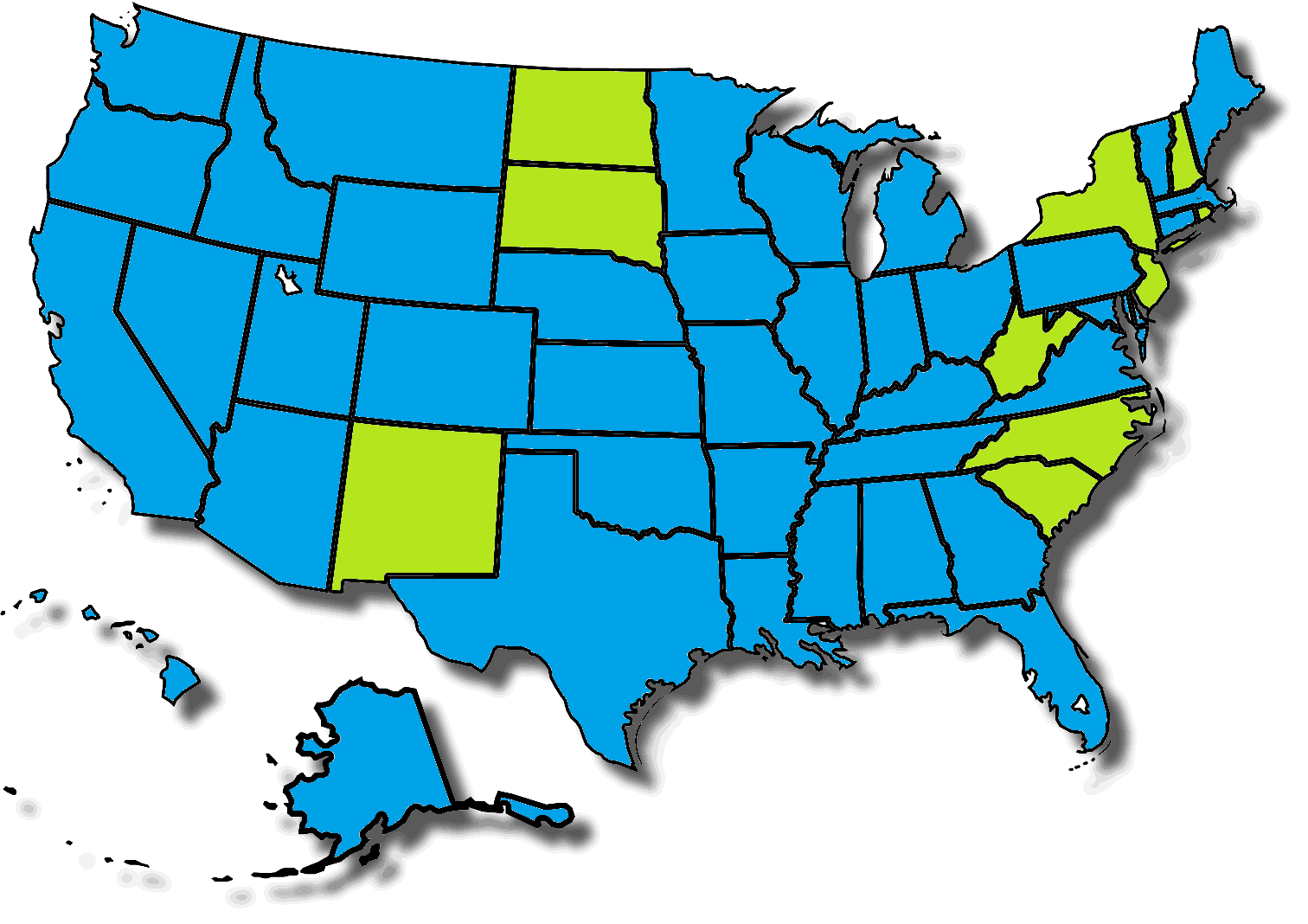
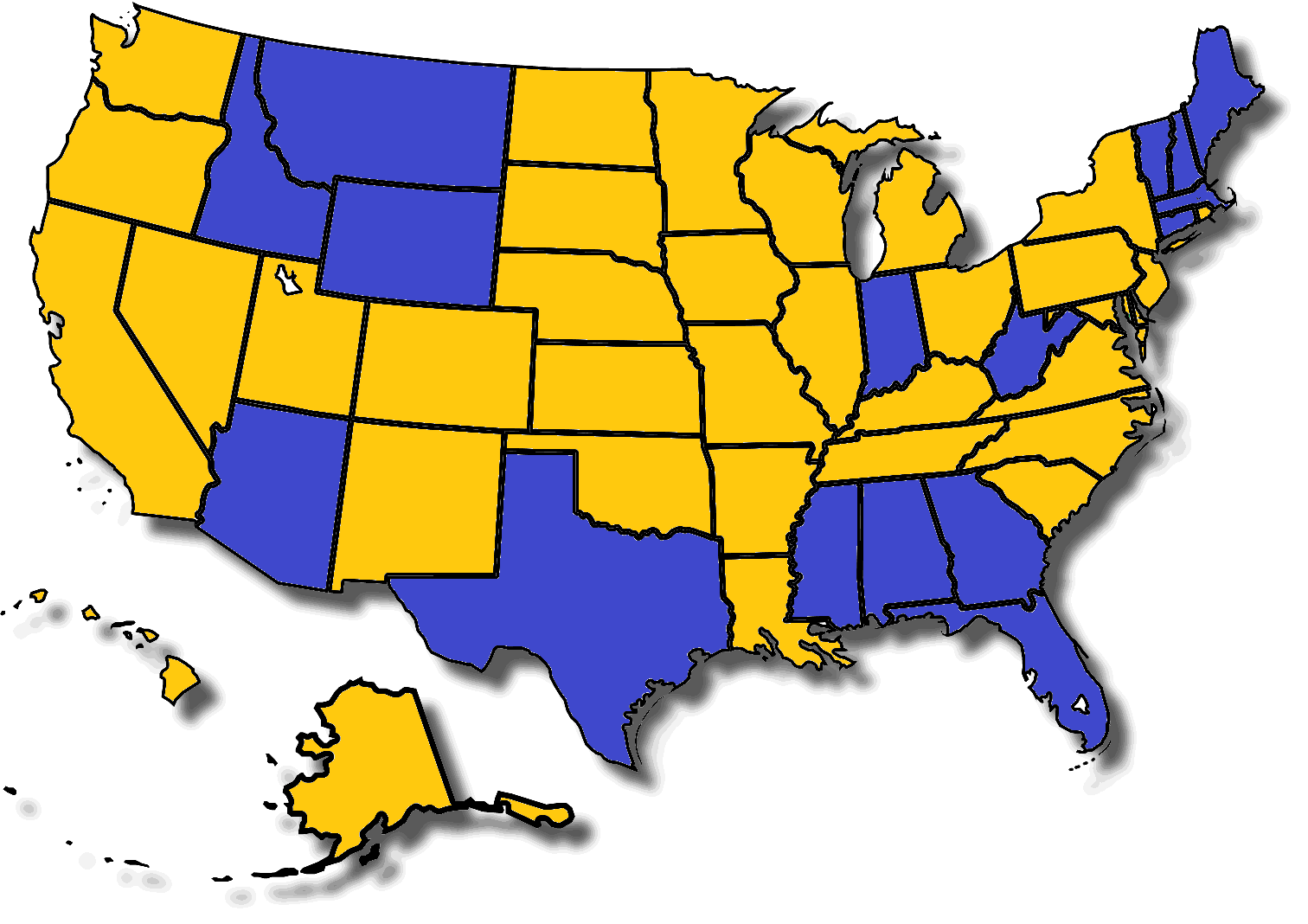
For puzzle #4b, what do the colors mean on this second, similar map?

mapquiz4b-characters

To find the answers, simply scroll down.

.

.

.

.

.

.

Keep scrolling….

.

.

.

.

.

Solution:

In the first map, consider the number of letters in the name of each state. Is this number prime or composite?

In the second map, consider the number of characters, rather than letters, in each state’s name. This number is different for states with two-word names, due to the single character, a blank space, needed to separate the two words. Again: prime, or composite?

Silly U.S. Map Puzzle #3

What is represented by the colors on this map?

mapquiz3

The answer may be found by scrolling down.

.

.

.

.

.

.

.

Keep scrolling….

.

.

.

.

Answer:

Do any of the borders of this state contain squiggles? (Note: if you think New Mexico is the wrong color, check the part of that state which borders El Paso, Texas.)

Silly U.S. Map Puzzle #2

What is represented by the colors on this map?

mapquiz2

If you give up, you can scroll down to find the answer.

.

.

.

.

.

.

Keep scrolling….

.

.

.

Answer: the colors show whether the name of each state starts with a letter in the first, or second, half of the alphabet.

Silly U.S. Map Puzzle #1

What is represented by the colors on this map?

mapquiz1

If you decide to give up, you can scroll down for the answer . . . but, I promise, the solution to this puzzle is extremely simple.

.

.

.

.

.

.

.

.

.

.

.

.

.

.

.

.

.

.

Keep scrolling, if you’re looking for the answer….

.

.

.

.

.

Answer:

The map shows how many words are in the name of each state.

Earth’s Oceans’ and Continents’ Relative Surface Areas, Analyzed, with Two Pie Charts

I’ll start this analysis with a simple land/water breakdown for Earth’s surface:

land and water

The two figures in the chart above are familiar figures for many — but how does “land” break down into continents, and how does “water” break down into oceans, as fractions of Earth’s total surface area? That’s what this second chart shows.

continents and oceans

With continents, I placed them on the chart to make it easier to see physically-connected continents as sets of adjacent wedges of similar color, separated only by thin lines. The most obvious example of this is Europe and Asia, which are considered separate continents in the first place only for historical reasons, not geographical ones. Combine them, into Eurasia, and it has 36.3% of Earth’s total land area, which is (36.3%)(0.292) = 10.6% of Eath’s total surface area. Even then, Earth’s three largest oceans (the Atlantic, Indian, and Pacific Oceans) are each larger than Eurasia.

There are other naturally-connected continents, albeit with much smaller land connections — narrow enough for humans to have altered this fact, only a “blip” ago on geographical time-scales, by building the Suez and Panama Canals. In the case of the Suez, its construction severed, artificially, the naturally-occurring land connection between Eurasia and Africa, and the term “Afro-Eurasia” has been used for the combination of all three traditionally-defined continents. Afro-Eurasia has 56.7% of Earth’s land, but that’s only (56.7%)(0.292) = 16.6% of Earth’s total surface area. That’s larger than the Indian Ocean, at (19.5%)(0.708) = 13.8% of Earth surface area. However, both the Atlantic Ocean, at (23.5%)(0.708) = 16.6% of Earth’s surface area, and the Pacific Ocean, at (46.6%)(0.708) = 33.0% of Earth’s surface area, are still larger than Afro-Eurasia.

The Pacific Ocean alone, in fact, has a greater surface area than all of Earth’s land — combined.

The other case that can be made for continent-unification involves North and South America, since their natural land connection was severed, only about a century ago, by the construction of the Panama Canal. Combine the two, and simply call the combination “the Americas,” and that’s 28.5% of earth’s land, which is (28.5%)(0.292) = 8.3% of Earth’s surface area. (I didn’t simply call this combination “America” to avoid confusion with the USA.) The Americas, even in combination, are not only smaller than each of Earth’s three largest oceans (the Atlantic, Indian, and Pacific), but also smaller than Afro-Eurasia, or Eurasia — or even Asia alone, by a narrow margin.

By the way, there are lots of things that don’t show up on the second chart above: islands, inland seas, lakes, rivers, etc., and there’s a good reason for that: on the scale of even the larger pie chart above, all these things are so small, compared to the oceans and continents, that they simply aren’t large enough to be visible.

On Binary Planets, and Binary Polyhedra

Faceted Augmented Icosa

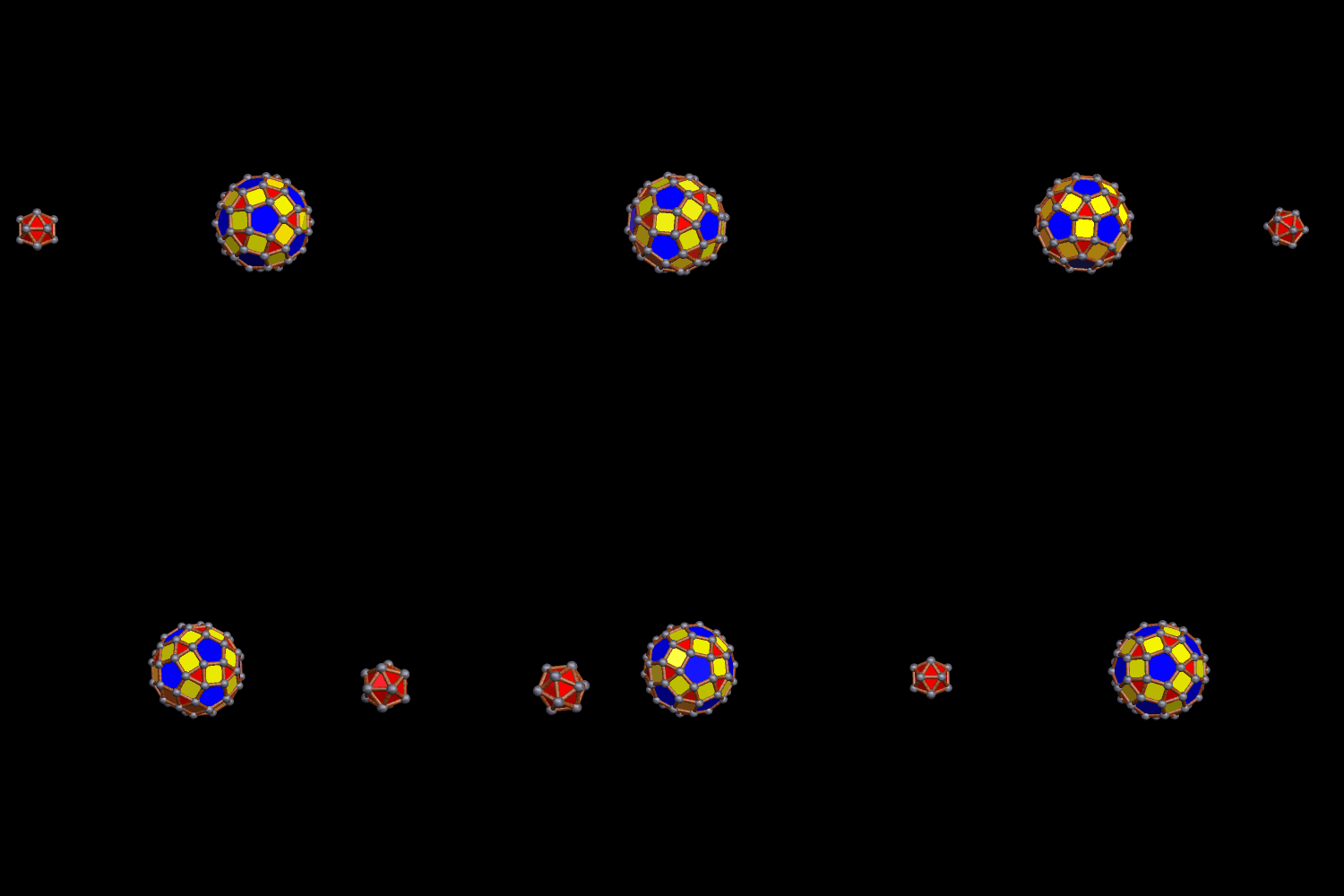
This image of binary polyhedra of unequal size was, obviously, inspired by the double dwarf planet at the center of the Pluto / Charon system. The outer satellites also orbit Pluto and Charon’s common center of mass, or barycenter, which lies above Pluto’s surface. In the similar case of the Earth / Moon system, the barycenter stays within the interior of the larger body, the Earth.

I know of one other quasi-binary system in this solar system which involves a barycenter outside the larger body, but it isn’t one many would expect: it’s the Sun / Jupiter system. Both orbit their barycenter (or that of the whole solar system, more properly, but they are pretty much in the same place), Jupiter doing so at an average orbital radius of 5.2 AU — and the Sun doing so, staying opposite Jupiter, with an orbital radius which is slightly larger than the visible Sun itself. The Sun, therefore, orbits a point outside itself which is the gravitational center of the entire solar system.

Why don’t we notice this “wobble” in the Sun’s motion? Well, orbiting binary objects orbit their barycenters with equal orbital periods, as seen in the image above, where the orbital period of both the large, tightly-orbiting rhombicosidodecahedron, and the small, large-orbit icosahedron, is precisely eight seconds. In the case of the Sun / Jupiter system, the sun completes one complete Jupiter-induced wobble, in a tight ellipse, with their barycenter at one focus, but with an orbital period of one jovian year, which is just under twelve Earth years. If the Jovian-induced solar wobble were faster, it would be much more noticeable.

[Image credit: the picture of the orbiting polyhedra above was made with software called Stella 4d, available at this website.]

Initial Transmission After Arrival, from the First Automated Spacecraft from the Pluto/Charon System, “Wizonn Shore,” to Visit the Mysterious Planet Earth, Surrounded by Its Atmosphere of High-Pressure Nitrogen (and Toxic Oxygen) High-Temperature Vapors

[Source: This is the lead story in the most recent issue of The Charon Space Central Daily, published electronically every 6th or 7th Earth day, since Pluto’s day lasts almost as long as our week. I simply translated it into English, after I intercepted the transmission, so that at least some other humans can read it.]

Earth is the most massive of the inner rocky planets, with the mass of 459 plutos, according to the most accurate measurements relayed so far by Wizonn Shore, in recent days, on the robotic spacecraft’s approach to the giant rocky world. Earth’s radius, 5.5 times that of Pluto, gives it a volume of about 160 plutos, so it is almost three times as dense as either of our homeworlds. Its surface area, as the largest rocky body in the solar system, is almost 23 times greater than that of Pluto and Charon combined. However, as this chart shows, much of Earth’s surface is covered with deadly oceans, utterly useless for any form of life as it evolved in the Pluto / Charon system. These enormous accumulations of liquid dihydrogen monoxide are the largest yet discovered anywhere, so incredibly hot (averaging ~300 kelvins) that, at Earth’s high atmospheric pressure, that compound exists as a freely-flowing, highly-reactive liquid covering over 70% of earth’s surface, except for rare areas where it is frozen, mostly near the poles and/or at the top of Earth’s taller mountains. Unfortunately, 300 kelvins is about seven times what natives of Pluto, Charon, or our colonies are used to, in terms of temperatures above absolute zero, so Earth is believed by most scientists to hold no potential for colonization.

It was this high temperature that prevented exploration of the inner solar system’s rocky planets — until recent developments in high-temperature adaptive technology made it possible for us to begin our exploration of the inner solar system, breaking the previously-inviolable heat-barrier at the asteroid belt, and sending our now more heat-resistant spacecraft into the previously “forbidden” region — first, Mars, which has been studied already with two separate mission; and now, finally, Earth. The exploration of Venus and Mercury by robot craft, however, at least for now, awaits further improvements in heat-resistant materials science.

The first surface-reconnaissance rover, similar to those used on Mars, was sent to a place with relatively low large-alien population density, as estimated by artificial light-output from different parts of the land surface, during Earth’s night. However, of course, its landing position had to be somewhere in the 29.2% of Earth’s surface not covered with oceans — for a rover landing in liquid dihydrogen monoxide would instantly be destroyed, as it sank to ever-more-crushing pressures in a hot liquid often called, on decoded Earth voice-transmissions, “water.” On both Pluto and Charon, in all laboratory experiments, this dangerous “water” has quickly rendered inert any electronic components — of anything — to which it is exposed. (Indeed, this, as well as the numerous deaths which resulted, was the reason that such “water” experiments have largely been abandoned, except by Earth-colonization advocates who have, a few admit, no good answers to the questions about Earth already being inhabited, nor how to deal with the toxic oxygen gas making up nearly one-fifth of Earth’s atmosphere.)

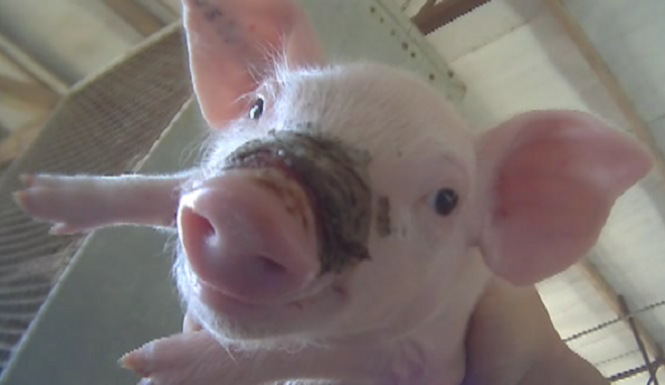
Despite the care given to choosing a landing-spot, this was still the first and only image sent before our spacecraft’s first rover was unexpectedly deactivated, for unknown reasons. These reasons are suspected to be related to the strange, pink alien creature dominating the image, although that is, at this point, speculation.

With data transmissions from the first landing probe ceased, Pluto/Charon’s automated spacecraft Wizonn Shore, launched from Charon eight years ago, continues to take pictures, from Earth-orbit, as fast as it can, while waiting on instructions from Charon Space Central regarding when to risk launching a second landing rover. Transmission of the images taken from orbit is a secondary priority to actually taking the pictures, as is happening now, so our news services do not yet have images of Earth of any higher resolutions than those already sent as Wizonn Shore approached Earth over the last few weeks.

While there has been some speculation in the press that the alien pictured in the one image sent from Earth might be the dominant species on Earth, that is not supported by visual transmissions decoded in the radio part of the electromagnetic spectrum, most of which depict the activity of a relatively hairless biped which compensates for its nudity, for reasons unknown, by covering itself with “clothes,” the buying and selling of which is, judging from the transmissions we have decoded so far, a major activity for Earth’s bipedal inhabitants.

It is these mysterious bipeds, and their activity as observed by our own devices, which all of Pluto, Charon, and our colonies on the outer moons are waiting to see images of, as taken by Wizonn Shore. Will it match what they beam out in all directions, using radio waves, with what seems to be careless abandon — or will the “as seen on TV” version of Earth prove to be an elaborate deception, on the part of Earth’s inhabitants?

Of course, the computers processing these images do not care about our collective frustration, and so we continue to wait. Might “clothes” be adopted only at a certain age by Earth’s dominant bipeds? Might that single, naked, pink-skinned alien, photographed by our short-lived landing-rover, simply be an immature form of the same species? At this time, those questions, and more, remain open.
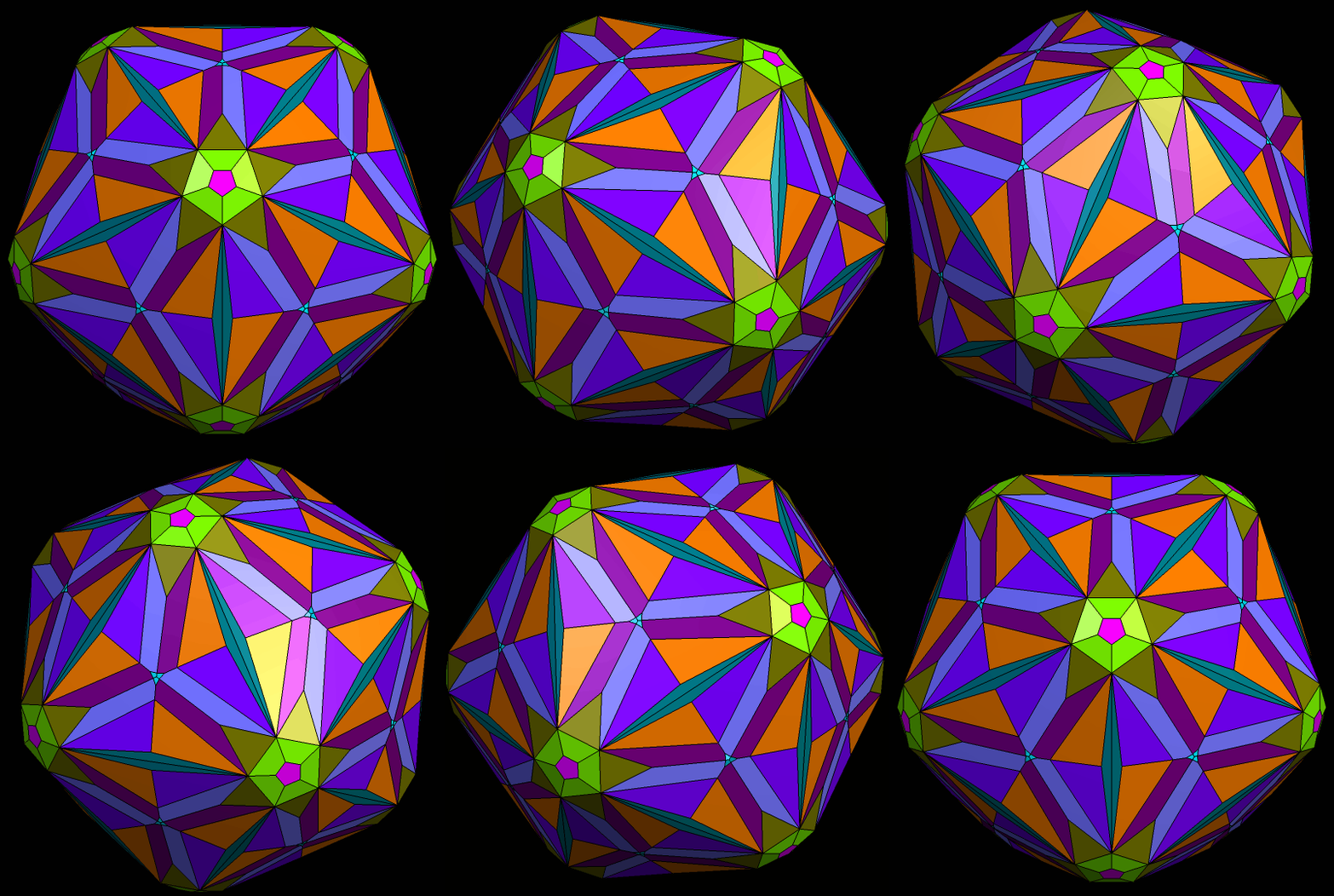
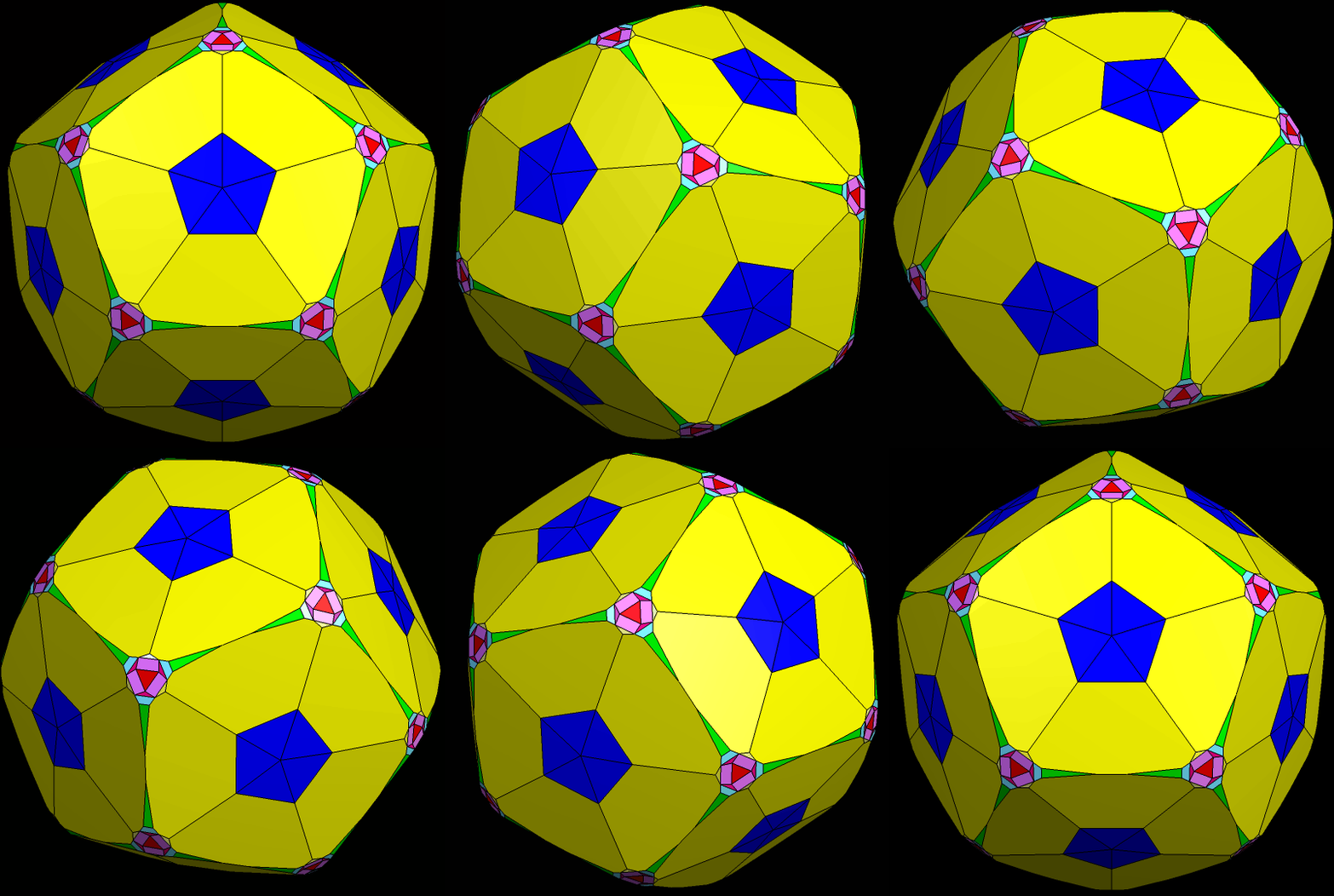
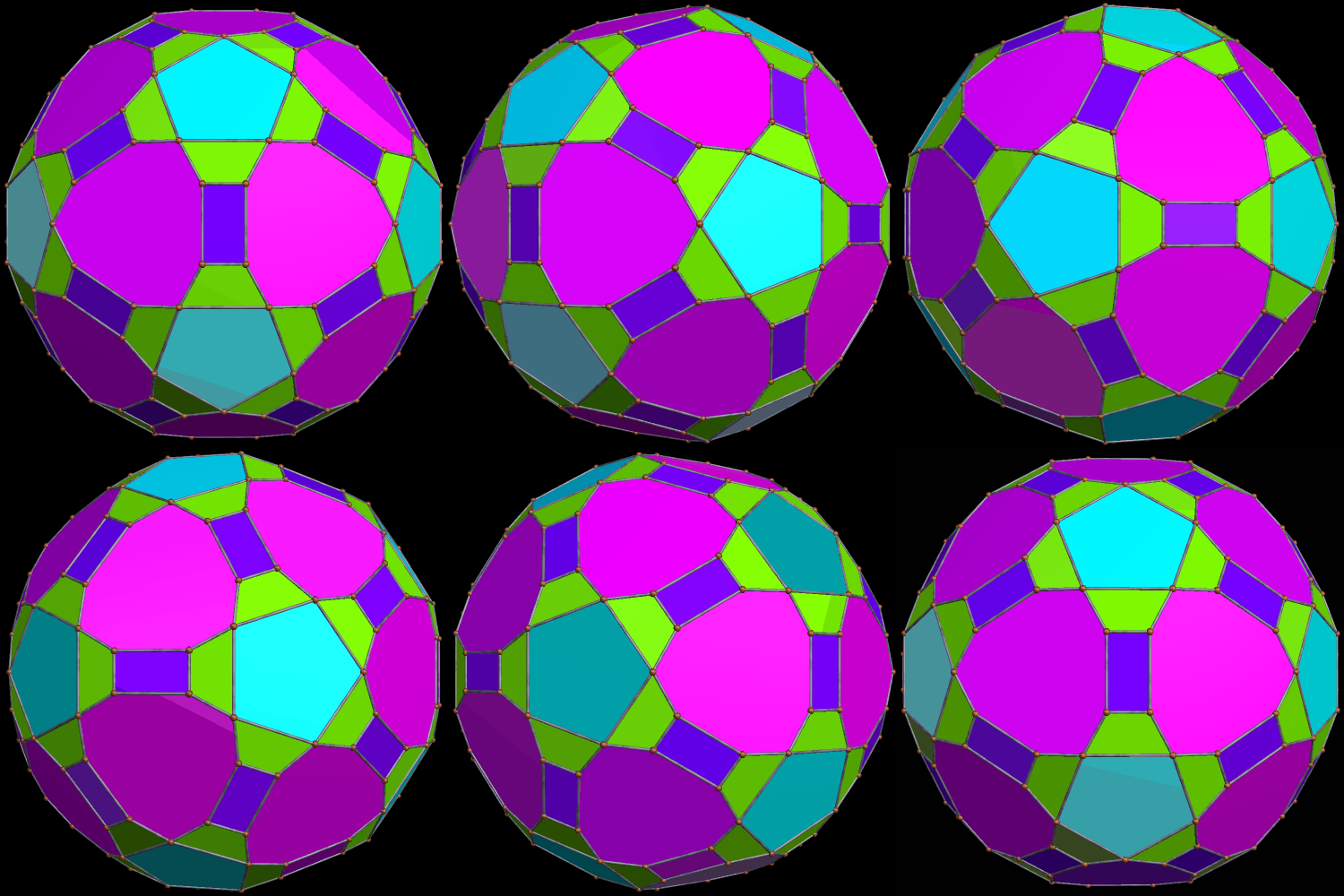
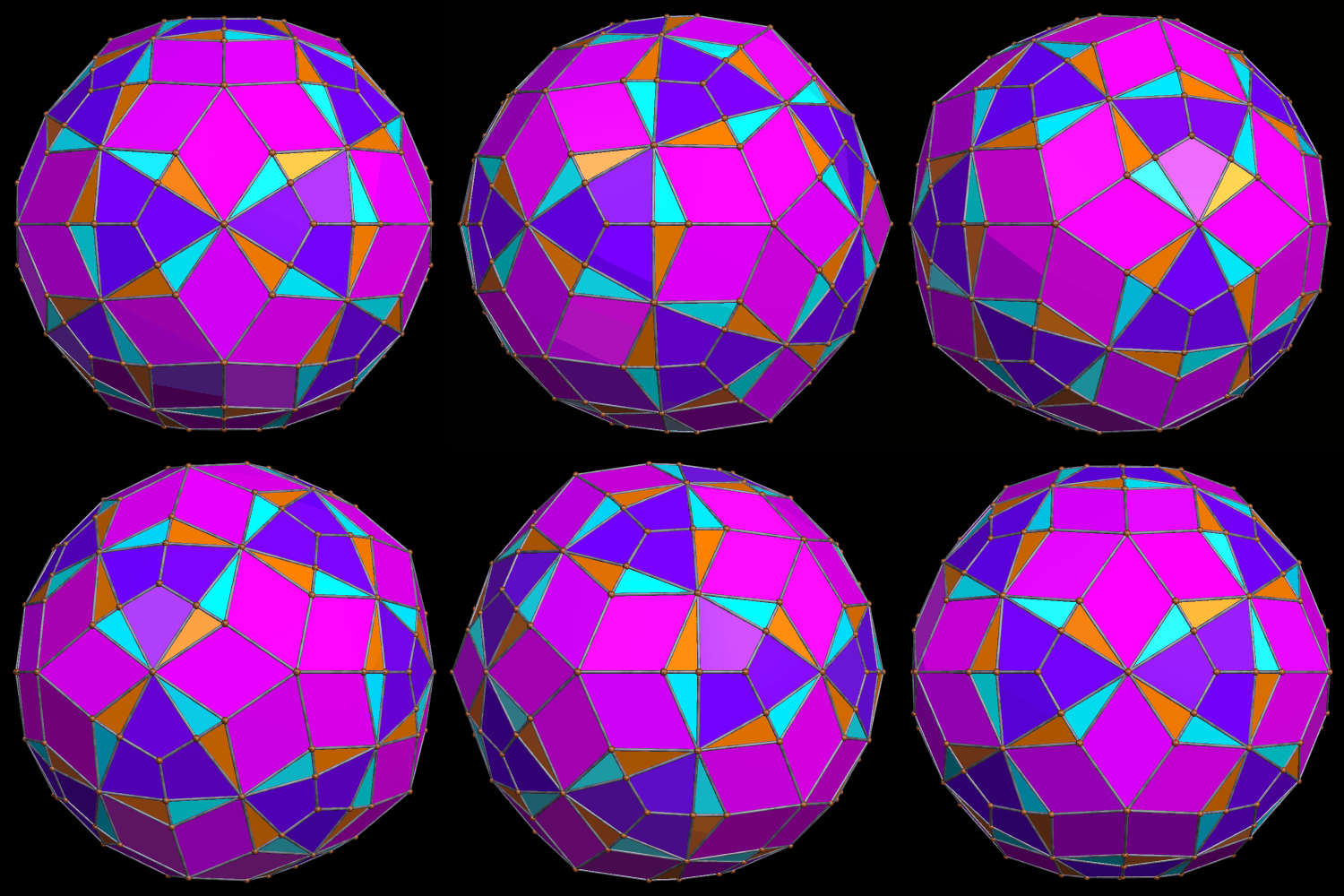
Thirty-Four Rotating, Convex, and Non-Chiral Polyhedra with Icosidodecahedral Symmetry

Most in the field call this type of symmetry “icosahedral,” but I prefer the term George Hart uses — along with “cuboctahedral” in place of “octahedral.”

Each polyhedral image here was created with Stella 4d: Polyhedron Navigator. At this linked page, you can try a trial version of that program for free.

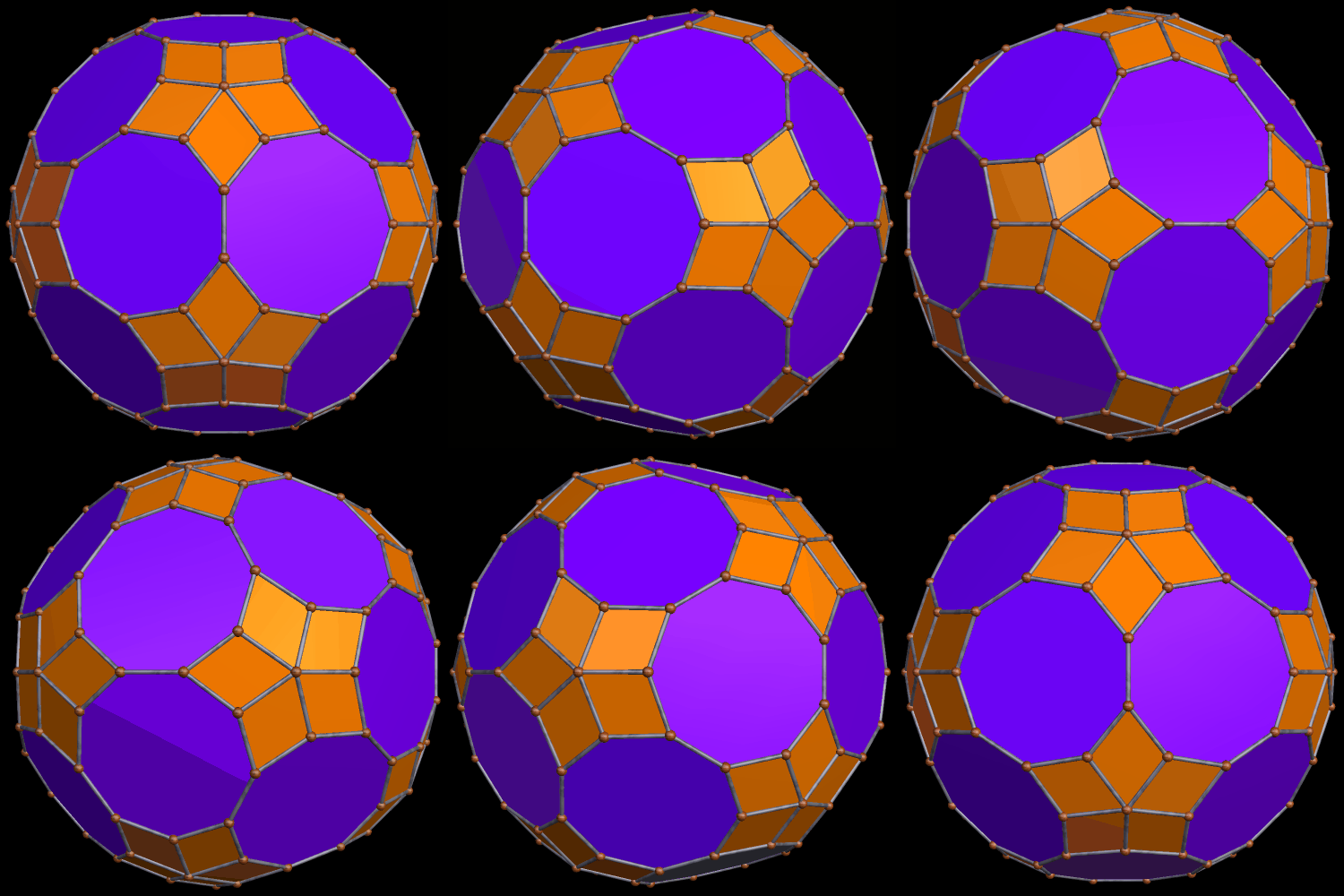
12 icosagons and stuff

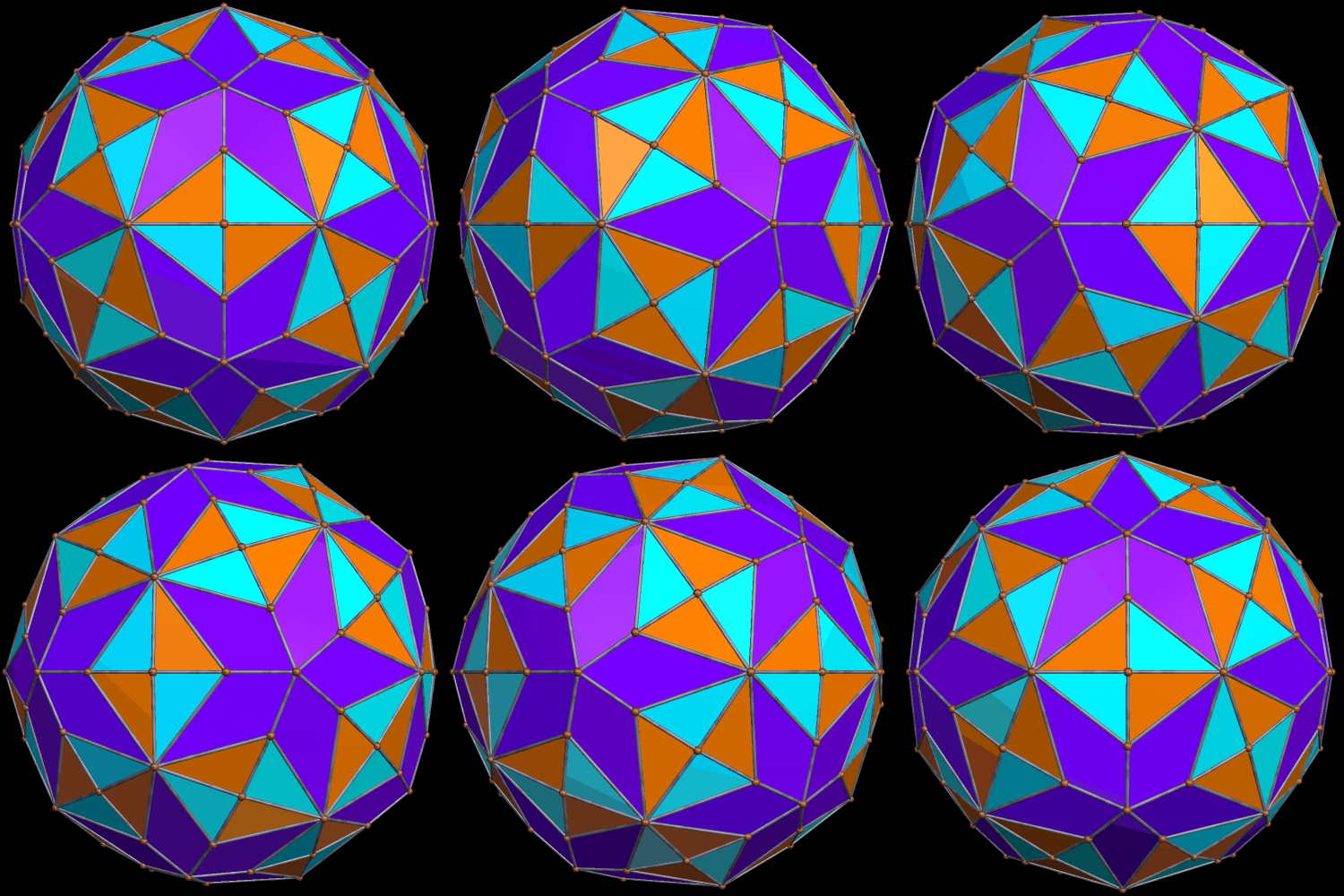
Dual of Convex huull

272 faces in 12 reg dec & 120 scalene triangles and 60 isos triangles and 60 isos traps and 20 reg hexagons

Convex hnbghjull

Convex hull 20 8 and 12

By the way, when I described these polyhedra, in this post’s title, as non-chiral, I was not referring to the coloring-schemes used here, many of which obviously are chiral, but only the shapes themselves.

Convex hull LP

convex hull of synthetic comet nucleus

Dual of Convex hull

Convexxx hull

Convhgfehgx hull

That 10 GB space-upgrade, which most bloggers don’t ever need, is really coming in handy right now. In other words, some of these .gif files are huge!

Convhgfex hull

Dual of Chgonvex hulgfl

Dual of Chgonvex hull

Dual of Cjhfjonvex hull

Dualhhc of Convex hull

Why, yes, I am including some words after every fifth polyhedron. That will help, later, when I count them for the title of this post.

Dual of Conjhvex hull

enneagons and kites

Enneagons, Pentagon, isostraps, and rectangles

exansiaon Convex hull

Expanded GRID

I’m not sure why that last one is spinning the opposite direction from the others. Perhaps this polyhedron is trying to start a trend. On the other hand, it could just simply upside-down.

Faceted Stellated Dual of Convex hull

metaexpanded RID

ID variation

intermediate form

jdshfgs

That’s twenty-five so far.

metaRID

pentadecagons two types hexagons and trapezoids

RID variant

RTC and RID blend

Stellated Poly

Clearly, I should have checked the number of files in that file folder before deciding to simply post them all together, based on what they have in common. That’s thirty so far.

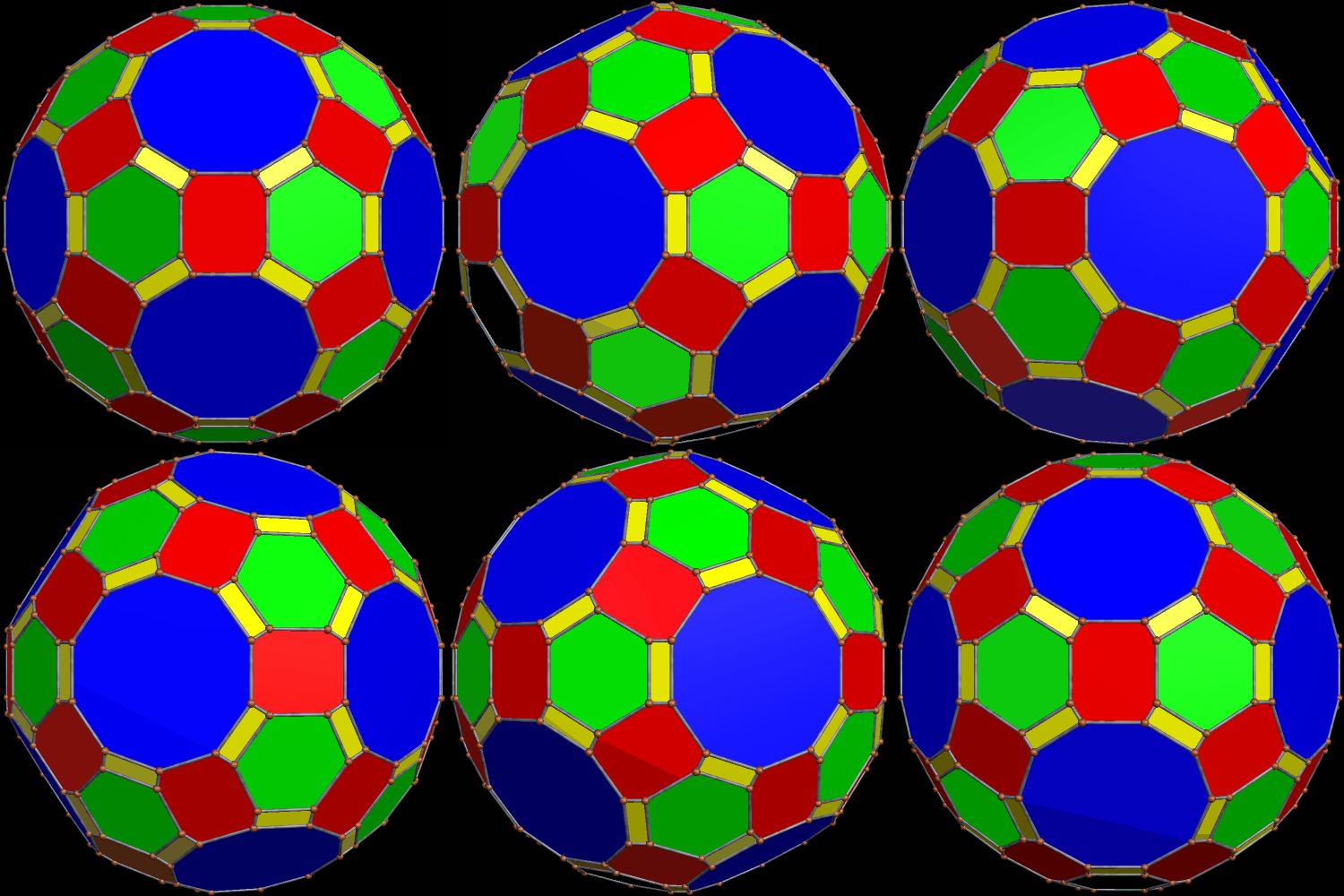
sixty pentagons and twenty hexagons

twenty regular dodecagons

Unnabsghfmed

what is this thing

Order-Six Radial Tessellations of the Plane, Using Elongated and Equilateral Hexagons, Rendered with Twelve Different Coloring-Schemes

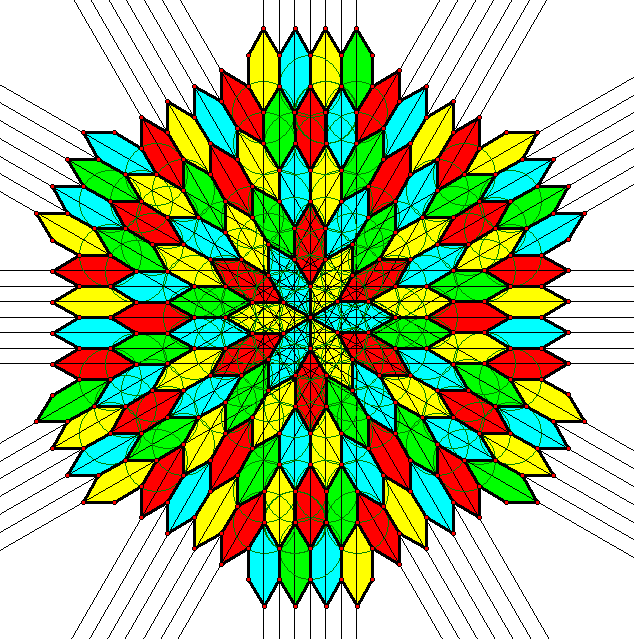
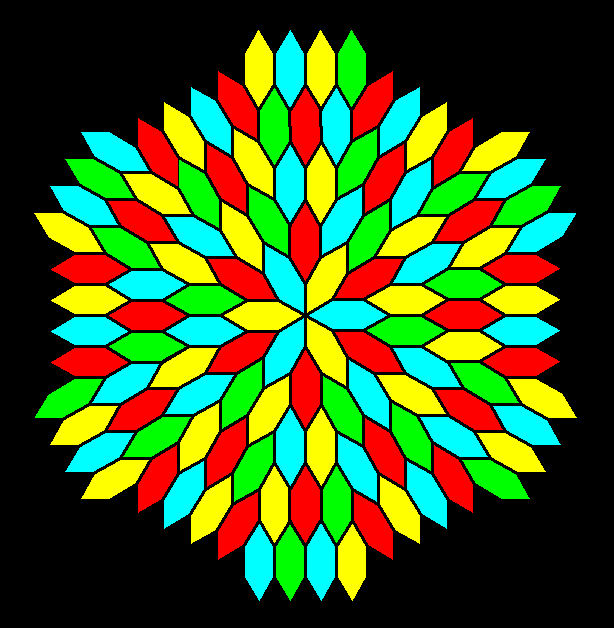
I explored radial tessellations of the plane, using only hexagons, in this earlier post. Order-three tessellations of this type are the familiar regular-hexagon tessellations of the plane. With higher-order all-hexagon radial tessellations, though, the hexagons must be elongated, although they can still remain equilateral, and all congruent, with bilateral symmetry. In that previous post, examples were shown of order 4, 5, and 8, in addition to the familiar order-3 regular-hexagon tessellation.

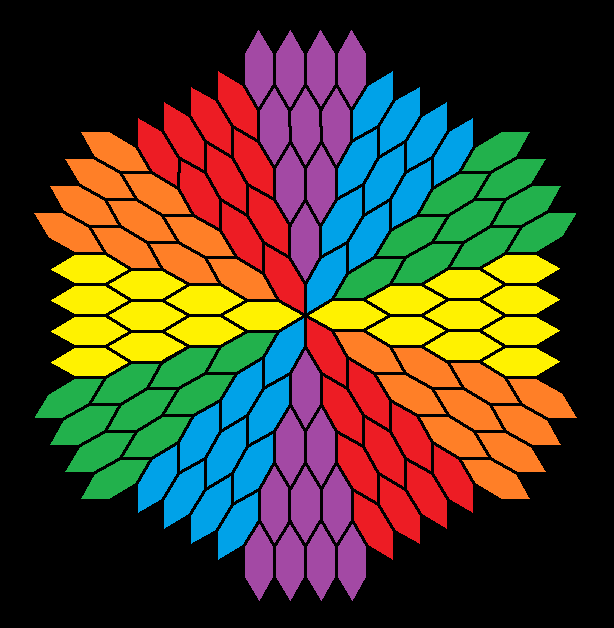
This left out order-6, of which I show many examples below. As it turns out, this particular radial tessellation lends itself particularly well to a variety of coloring-schemes. In the first picture, the construction-circles, -points, and -lines I used are shown; in the rest, they are hidden.

No upper limit exists to the order-number of these all-hexagon radial tessellations — although the larger that number gets, the thinner the hexagons become, relative to their edge length. At some point (which I expect would vary from person to person), as the order-number increases, the hexagons needed will become so thin that they will no longer be recognizable as hexagons.

frequency 6 radial tessellation of hexagons with construction lines

Next, with construction artifacts hidden, are some two-color designs I found.

frequency 6 radial tessellation of hexagons without construction lines 2-color

frequency 6 radial tessellation of hexagons without construction lines 2-color version two

Here are some which use three colors each:

frequency 6 radial tessellation of hexagons without construction lines 3-color version colored by another system

frequency 6 radial tessellation of hexagons without construction lines 3-color version two

frequency 6 radial tessellation of hexagons without construction lines 3-color

frequency 6 radial tessellation of hexagons without construction lines 3-color version colored by rings

I also found some four-color patterns with interesting symmetry:

frequency 6 radial tessellation of hexagons without construction lines

frequency 6 radial tessellation of hexagons without construction lines. four colors version 2png

Finally, here are some which each use six colors.

frequency 6 radial tessellation of hexagons without construction lines 6-color version two

frequency 6 radial tessellation of hexagons without construction lines 6-color version colored by another system

frequency 6 radial tessellation of hexagons without construction lines 6-color

Two Different Versions of an Expanded Snub Dodecahedron, Both of Which Feature Regular Decagons

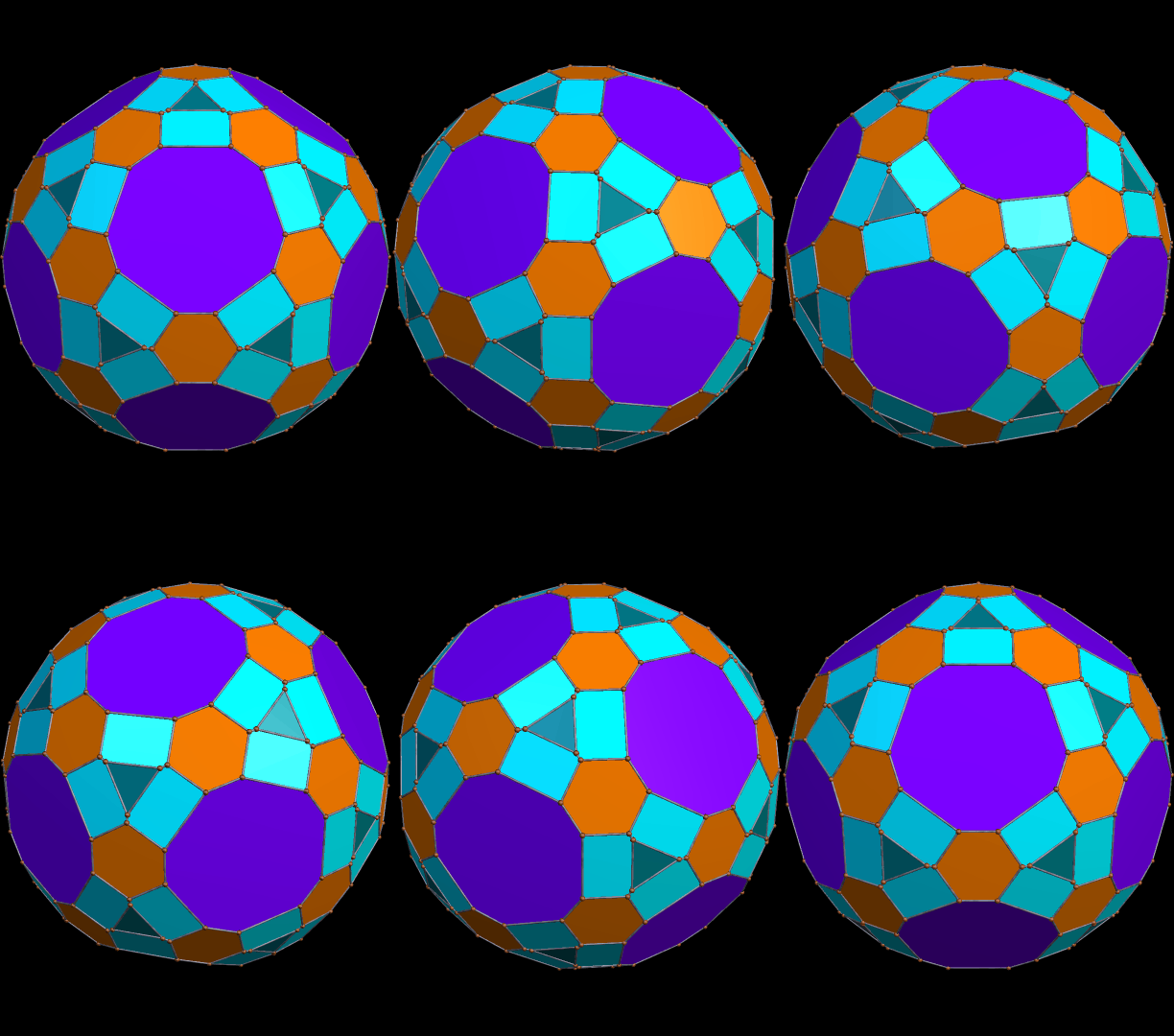
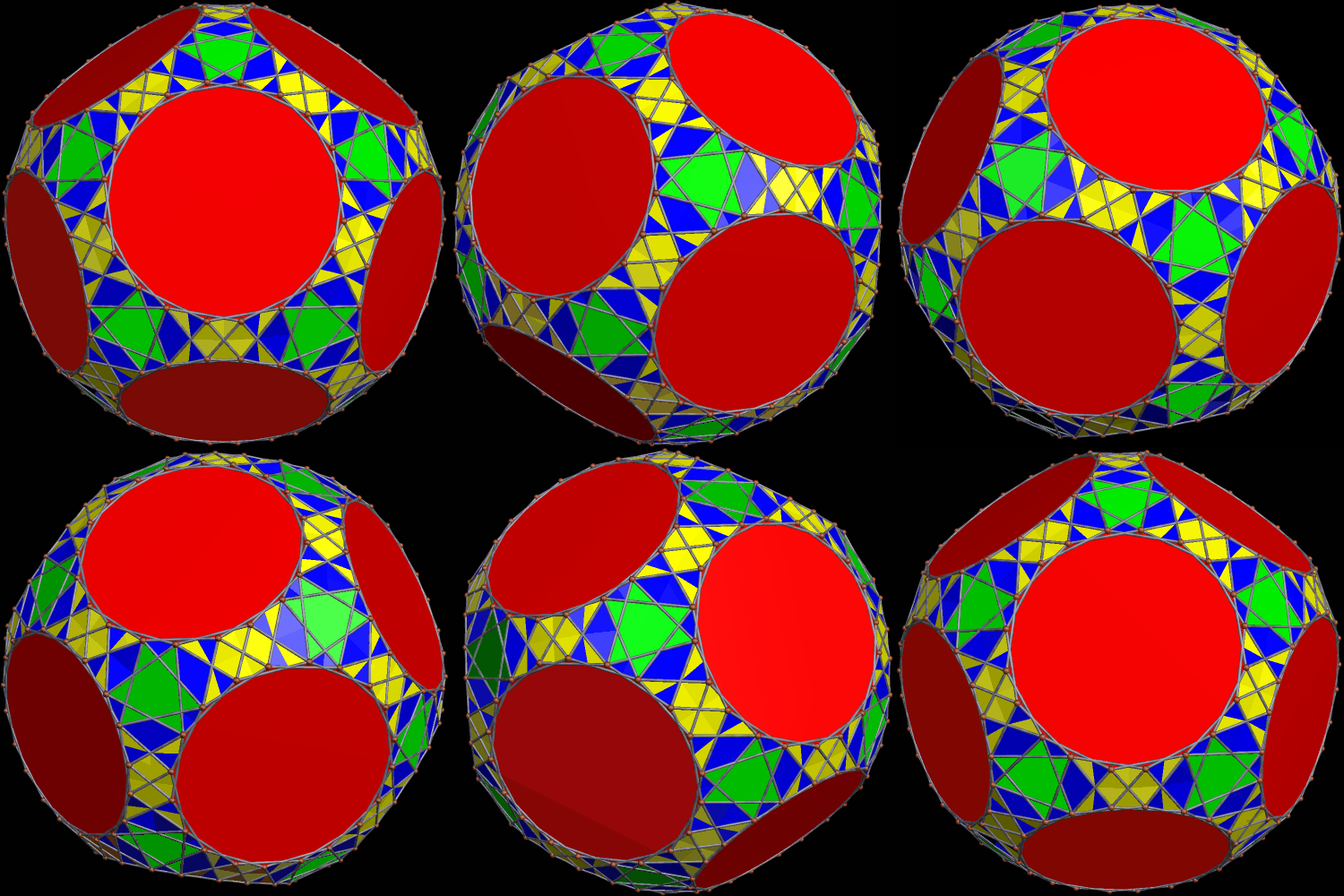
The snub dodecahedron, one of the Archimedean solids, can be expanded in multiple ways, two of which are shown below. In each of these expanded versions, regular decagons replace each of the twelve regular pentagons of a snub dodecahedron.

exp sn dodeca 2

Exp Sn Dodaca

Like the snub dodecahedron itself, both of these polyhedra are chiral, and any chiral polyhedron can be used to create a compound of itself and its own mirror-image, Below, you’ll find these enantiomorphic-pair compounds, each made from one of the two polyhedra above, together with its own reflection.

exp sn dodeca 2 compound of enantiomophic pair

exp sn dodaca Compound of enantiomorphic pair exp snub dodeca

All four of these images were created using Stella 4d: Polyhedron Navigator, software available (including a free trial download) at this website.